Remembering Ray | Kanika Aurora
Rabindranath Tagore wrote a poem in the autograph book of young Satyajit whom he met in idyllic Shantiniketan. The poem, translated in English, reads: ‘Too long I’ve wandered from place to place/Seen mountains and...
Four bite-sized film reviews of OTT films that touched a chord or two in me,: First, The Irregulars–a really weird Holmes pastiche. Also reviewed Mrs. Dalloway, Searching for Sheela, A Beautiful Day in the Neighborhood.
Rajasthan is well famous for its vibrant traditions, enthusiastic dance forms and elegant culture. Ghoomar is just another spectacle of this diversity and culture that started with the Bhil tribe to worship Goddess Sarasvati and is now embraced by other Rajasthani communities. Typically performed by women, Ghoomar gained popularity during the reign of Rajputanas, who ruled Jaipur after defeating the Bhils. It showcases the rich culture of Rajasthan through aesthetically pleasing movement and traditional attire. Tourism in Rajasthan has boosted due to the peculiarities of regions, their manner of dressing, traditions, and folk dances. Ghoomar was a tribal dance that graduated to a folk routine that has now assumed international proportions thanks to a vibrant culture and its recognition as a pride of India.
Nautanki is one of South Asia’s most famous folk theatre performances, especially in northern India. Nautanki was the most significant source of entertainment in most of the cities and villages in north India. Nautanki’s rich musical compositions and humorous storylines hold a strong influence over rural people’s imagination. Nautanki, also known as svang, originated in the late 19th century in Uttar Pradesh and steadily gained popularity. Nautanki’s origins lie in the Saangit, Bhagat, and Swang musical theatre traditions of Northern India. One Saangit called Saangit Rani Nautanki Ka became so popular that the whole genre’s name became Nautanki.
Yakshagana is a traditional folk art developed in the western parts of Chikmagalur districts in Karnataka and Kasaragod district in Kerala. Yakshagana comprises music, dance, theatre, costumes, and makeup with a blend of unique style and forms. It is said to have evolved from pre-classical music forms and theatrical arts during the Bhakti movement. Yakshgana is referred to as ‘Thenku thittu’ towards the south from Dakshina Kannada to Kasaragod in Tamil Nadu, whereas it is referred to as ‘Badaga Thittu’ north of Udupi.
Raas Leela, commonly referred to as Krishna dance, is a folk dance form that predates ancient history and is part of the traditional stories of Krishna in which he dances with his lover, Radha. Raas means aesthetics, and Leela means to act or play, which translates to “play of aesthetics”.
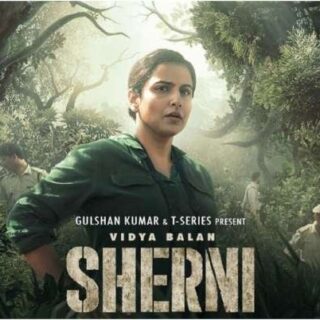
The ensemble cast empowers the film with authenticity and some memorable moments. The patriarchy, the inner wranglings, the greed, the romance – it’s all there in this saga featuring three generations. Sanya Malhotra shines gloriously in an understated performance.
The pandemic is growing rapidly all over the world. With aim of spreading hope and remembering Pandit Rajan Mishra ji (who passed away on the 25th of April), SPIC MACAY dedicates its online 3-day...
Art / Dance / Music / Play / Poetry / Theatre
by Sezal Chug · Published 25 April 2021 · Last modified 13 May 2021
Tamasha is considered a major traditional dance form of the Marathi theatre, which includes celebration filled with dancing and singing and is performed mainly by nomadic theatre groups throughout the Maharashtra region. Marathi theatre marked its journey at the beginning of 1843.3 In the following years, Tamasha primarily consisted of singing and dancing, expanded its range.
Bihu is a merry dance emphasizes the Assamese tradition’s cultural roots symbolizing the beginning of the agricultural season in the Northern parts of India. It represents the integral relationship between agriculture and fertility and embodies growth and celebrates bountiful harvests and abundance. These traditions of songs and dances depict the feeling of support and love of the community with each other.
More
Editor-in-chief
Manohar Khushalani
Brief Profile
Actor/Director Profile
Environment Profile
Arts Analyst
Archana Hebbar Colquhoun
Columnists
Krishan Tyagi
Anisha S. Mukherji
B.B. Nagpal
Divya Raina
Archana Hebbar Colquhoun
Anil Goel
Dr. R. Nagaswamy
Gouri Nilakantan
Sezal Chugh
Jai Chandiram
Joya John
K.B. Khushalani
Keval Arora
Krishan Tyagi
Laxmi Shanker Bajpai
Naveen Gupta
Prateeksha Sharma
Preminder Singh
Ravindra Tripathy
Seema Bawa
Sharon Moist
Sonal Parmar
Ute Margaret
Victor Vijay Kumar
Contributors
A.K. Chopra
Akbar Wali Khan
Alessandro Pinto
Alessio Zanelli
Antonio Blunda
B.B. Nagpal
Chetan Pandit
Dr. Anu Aneja
Dr. Bharat Gupta
Dr. Himadri Roy
Mrs. Neelam Jain
Dr. Ravi Bhatia
Dr.Reshma
Gayatri Keswani
Geeta Chandran
HS. Shivaprakash
Iffat Fatima
Indah Widiastuti
Kunal Puri
Lola Chatterji
Manish Vidhani
Margaret Saine
Malyan Pereira
Moanaro Ao
Neville Tuli
Ojaswini Trivedi
Paromita Vohra
PhotoSwami
Piyali Dasgupta
Rachna Seth
Radha Rayasam
Savita Singh
Sandra Fowler
Sushmita Mukherjee
Sharon Lowen
Shikha Jhingan
Sonnet Mondal
Sukrita Paul Kumar
Suryakanthi Tripathi
Tarini Sridharan
Vijay K. Sharma
Pallavi Mishra