Spic Macay – Pt. Rajan Mishra – IIT Delhi Program
The pandemic is growing rapidly all over the world. With aim of spreading hope and remembering Pandit Rajan Mishra ji (who passed away on the 25th of April), SPIC MACAY dedicates its online 3-day...


The pandemic is growing rapidly all over the world. With aim of spreading hope and remembering Pandit Rajan Mishra ji (who passed away on the 25th of April), SPIC MACAY dedicates its online 3-day...

Art / Dance / Music / Play / Poetry / Theatre
by Sezal Chug · Published 25 April 2021 · Last modified 13 May 2021
Tamasha is considered a major traditional dance form of the Marathi theatre, which includes celebration filled with dancing and singing and is performed mainly by nomadic theatre groups throughout the Maharashtra region. Marathi theatre marked its journey at the beginning of 1843.3 In the following years, Tamasha primarily consisted of singing and dancing, expanded its range.

Bihu is a merry dance emphasizes the Assamese tradition’s cultural roots symbolizing the beginning of the agricultural season in the Northern parts of India. It represents the integral relationship between agriculture and fertility and embodies growth and celebrates bountiful harvests and abundance. These traditions of songs and dances depict the feeling of support and love of the community with each other.

One of India’s famous classical dances that represent the historical enchantress avatar of the Hindu god Vishnu was developed in Kerala called Mohiniyattam. The Mohini myth forms the heart of every Mohiniyattam performance as it stands for good prevailing over evil. It utilizes the sign language (mudra) to expressing emotions through a musical performance wherein the performer identifies herself with the character and resonates her sentiments.

Kathakali is a major classical dance form from Ancient India. It is a “story play” of art that includes elaborate, colourful makeup, beautiful mesmerizing costumes and face masks traditionally performed by male dancers. It is a Hindu folk dance performed in the Malayalam speaking southwest region of Kerala. Kathakali combines drama, dance, music, storytelling, costumes, makeup and devotion into a divided experience. It brings humanity into Hinduism and expresses emotions beyond words.

Folk music, dance and theatre represent the traditions and cultural richness of an area. It sheds light on rural life, which is closely associated with inherent customs. Uttrakhand has a vibrant culture, and the diverse, authentic folk dance forms reflect the same. Folklore of Uttarakhand represent the love, passion, agony, sacrifice, misery, and compassion of these locals and help us relate to them to share their feelings.

Kuchipudi is one of the major Indian classical dance folk forms performed in India. It derives its name from its village of origin, Kuchelapuram and is one of the favourite dance forms of Lord Krishna. Kuchipudi is known for its fast rhythms and fluid movements, creating a blend of delicacy and strength. Kuchipudi has for sure occupied a special place among other Indian classical dance forms by being a country-wide celebrated dance folk form and is recognized worldwide in many international traditional festivals.

The desert state’s iconic Kalbeliya dance form performed and enjoyed by the Kalbeliyan community of Rajasthani snake charmers encompasses swirling and graceful movements that make this dance a treat to behold. Their dances and songs are a matter of pride and a marker of belonging for the Kalbelias, which reflect the imaginative adaptation of this group of snake charmers to ever-changing socioeconomic circumstances in their Rajasthani society.

The Glittering night of Natsamrat Theatre Awards. This was the most memorable moment of that year for StageBuzz Ed, Manohar Khushalani To be Awarded The 2019 Natsamrat Best Theatre Critic Award. It was indeed a fulfilling moment and an acknowledgement of his decades of consistent and persistent work as a critic for Pioneer (Column: Foot Lights), Mid Day (Culture Cocktail) and of course StageBuzz (Editor).
Sahir Ka Khayal Aaya (Urdu) – The play celebrated Sahir Ludhianvi’s 100th Birth Anniversary on March 8 this year. It is presented as a ‘Monologue’ (performed by Sharique Aziz) as it showcases young Sahir in the state of crafting his long poem Parchhaiyan, arguably the best and definitely the longest anti-war poem of the last 100 years.
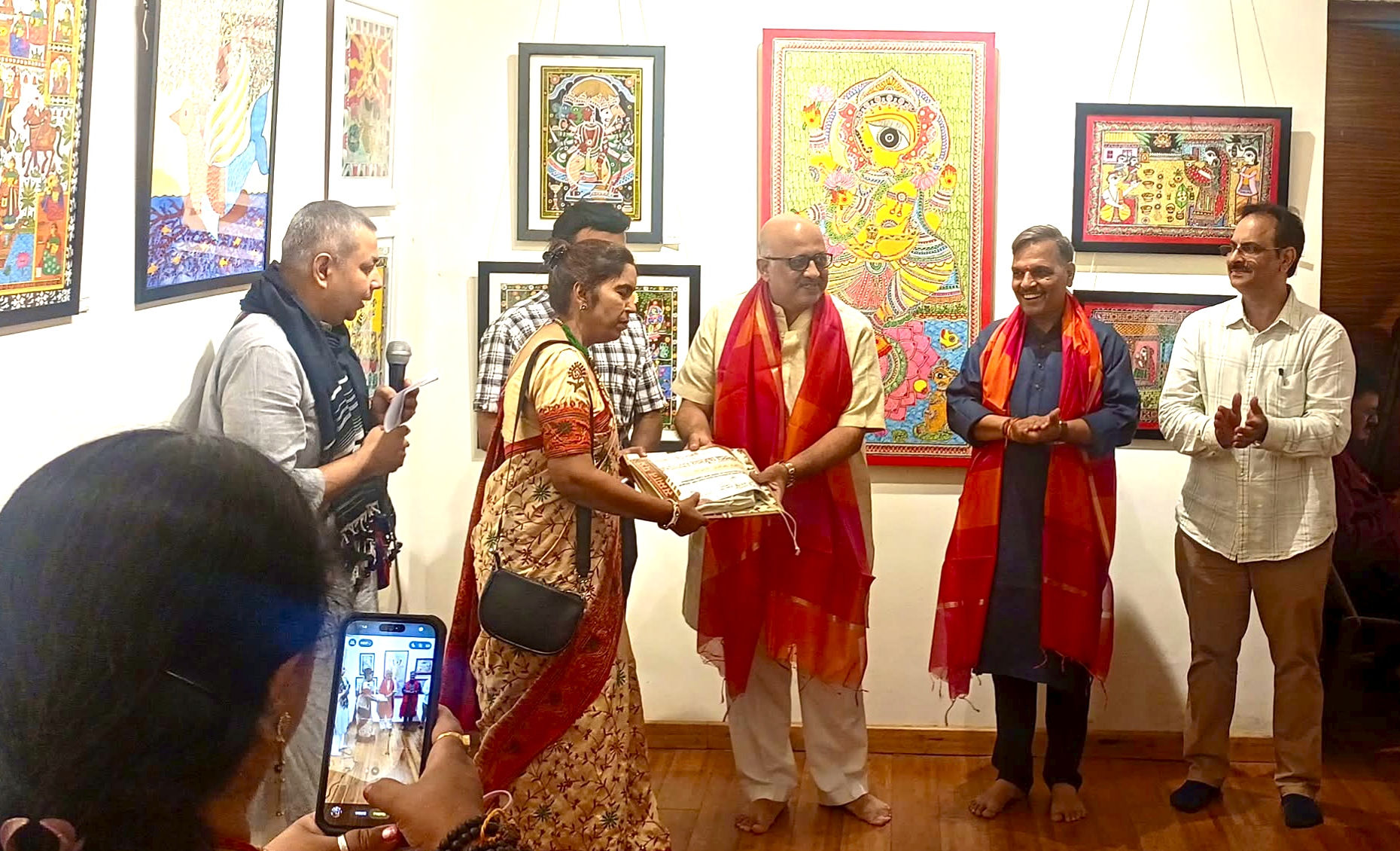
Rangmanjusha Brings India’s Folk and Traditional Art Traditions Together
30 September 2026

Dance / Music / Performing Arts / Personalitites
Kathak at Kala Sankul: Where Tradition Meets Contemporary Vision
27 September 2026

More
Editor-in-chief
Manohar Khushalani
Brief Profile
Actor/Director Profile
Environment Profile
Arts Analyst
Archana Hebbar Colquhoun
Columnists
Krishan Tyagi
Anisha S. Mukherji
B.B. Nagpal
Divya Raina
Archana Hebbar Colquhoun
Anil Goel
Dr. R. Nagaswamy
Gouri Nilakantan
Sezal Chugh
Jai Chandiram
Joya John
K.B. Khushalani
Keval Arora
Krishan Tyagi
Laxmi Shanker Bajpai
Naveen Gupta
Prateeksha Sharma
Preminder Singh
Ravindra Tripathy
Seema Bawa
Sharon Moist
Sonal Parmar
Ute Margaret
Victor Vijay Kumar
Contributors
A.K. Chopra
Akbar Wali Khan
Alessandro Pinto
Alessio Zanelli
Antonio Blunda
B.B. Nagpal
Chetan Pandit
Dr. Anu Aneja
Dr. Bharat Gupta
Dr. Himadri Roy
Mrs. Neelam Jain
Dr. Ravi Bhatia
Dr.Reshma
Gayatri Keswani
Geeta Chandran
HS. Shivaprakash
Iffat Fatima
Indah Widiastuti
Kunal Puri
Lola Chatterji
Manish Vidhani
Margaret Saine
Malyan Pereira
Moanaro Ao
Neville Tuli
Ojaswini Trivedi
Paromita Vohra
PhotoSwami
Piyali Dasgupta
Rachna Seth
Radha Rayasam
Savita Singh
Sandra Fowler
Sushmita Mukherjee
Sharon Lowen
Shikha Jhingan
Sonnet Mondal
Sukrita Paul Kumar
Suryakanthi Tripathi
Tarini Sridharan
Vijay K. Sharma
Pallavi Mishra