
‘Sunta Hai Koi’ — A Theatre Reading that Questions Power, Silence, and the Common Voice


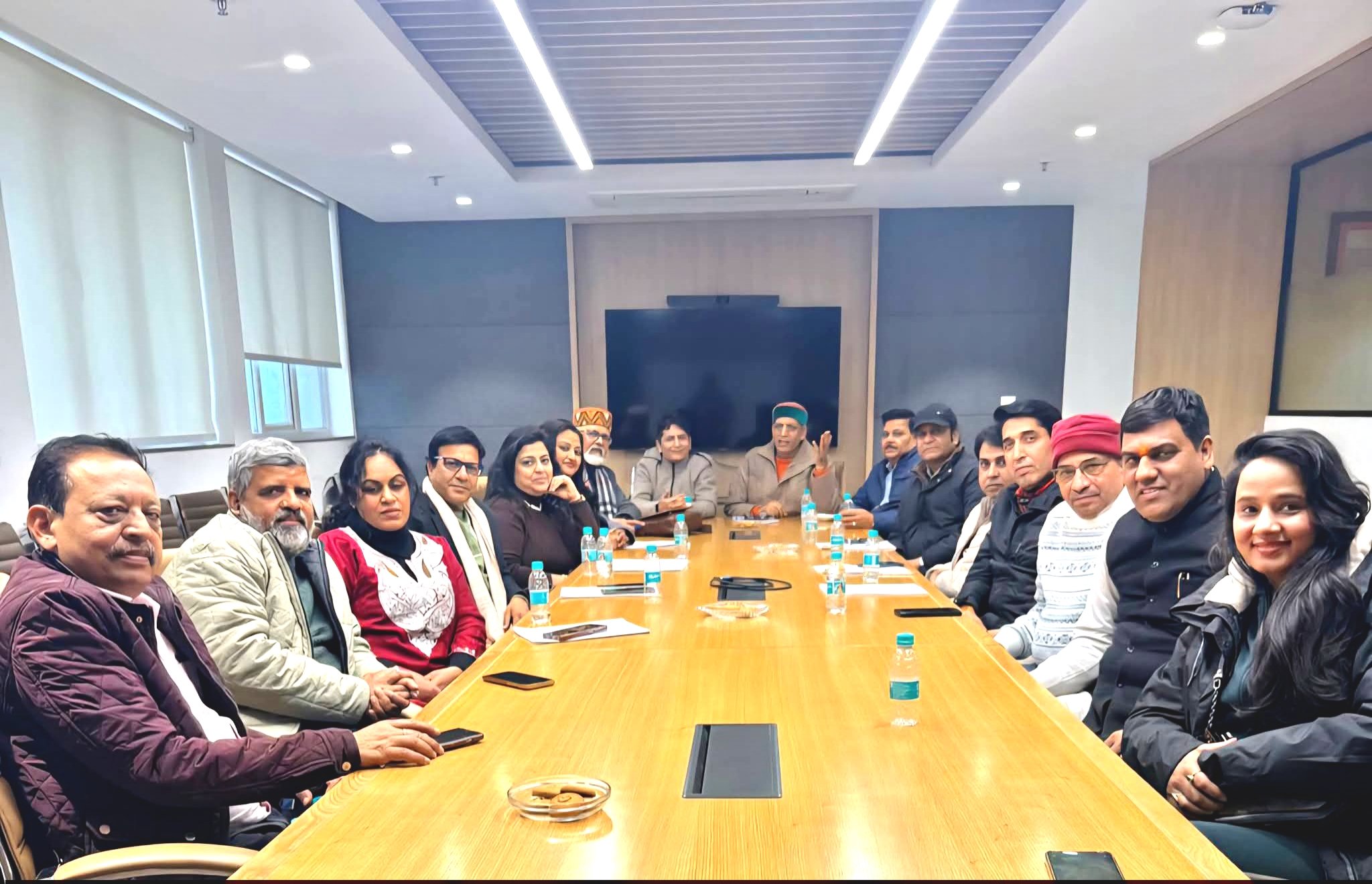
A reading of playwright Dr. Harisuman Bisht’s new play Sunta Hai Koi was held on 2 February 2026 at Anuvrat Bhavan, New Delhi. The event witnessed the presence of senior theatre directors, playwrights, and active theatre practitioners from Delhi, transforming the reading into a meaningful space for dialogue rather than a routine literary exercise.
‘Sunta Hai Koi’ explores an invisible yet omnipresent system—one that governs lives without ever fully revealing itself. The play does not raise loud slogans against authority; instead, it quietly exposes the growing insensitivity within systems, the complexities of bureaucratic mechanisms, and the helplessness of the common citizen trapped inside them. This restrained and reflective approach gives the play its mature political and social depth.
One of the most striking structural elements of the play is the use of off-stage voices, which emerge as metaphors for power and authority. While certain sections of dialogue and ideological articulation may demand tighter theatrical compression from a performance perspective, the play’s conceptual clarity and symbolic language remain its greatest strengths. Characters—ranging from ordinary individuals like Ramswaroop and Mohan to representatives of institutional machinery—appear as recognisable faces of contemporary social reality.
The reading was followed by an in-depth discussion among theatre practitioners including Dr Harisuman Bisht, Dr Suvarn Rawat, J. P. Singh, Shyam Kumar, Mun Mun, Ashraf Ali, Rajesh Bakshi, Daksha Sharma, Mamta Karnatak, Priyanka Sharma, Bhupesh Joshi, Sanjeev Agnihotri, Manoj Chandola, Charu Tiwari, Hem Pant, Sudhir Pant, and Ramesh Kandpal (Anuvrat). The discussion highlighted the play’s strong relevance in the present socio-political context.
The collective response clearly indicated that ‘Sunta Hai Koi’ holds strong performative potential, and with focused direction, it can establish a powerful dialogue with contemporary audiences. The reading reaffirmed that ideologically driven theatre continues to be both alive and necessary within today’s Hindi theatre landscape.
On this occasion, Ramesh Kandpal from the Anuvrat organisation introduced the gathering to Anuvrat’s ideological vision, its cultural activities, and the architectural and cultural significance of the Anuvrat Bhavan. He also facilitated an interaction between the theatre practitioners and Munishri Udit Kumar, who appreciated the artists’ work and encouraged them to pursue more meaningful, serious, and socially relevant creative practices in the future.





Excellent n expressive
Thank you so much 🙏
Excellent
Wonderful ,