“Gutur-Gu! Gutur-Gu!” — A Playful Symphony of Laughter, Music and Meaning


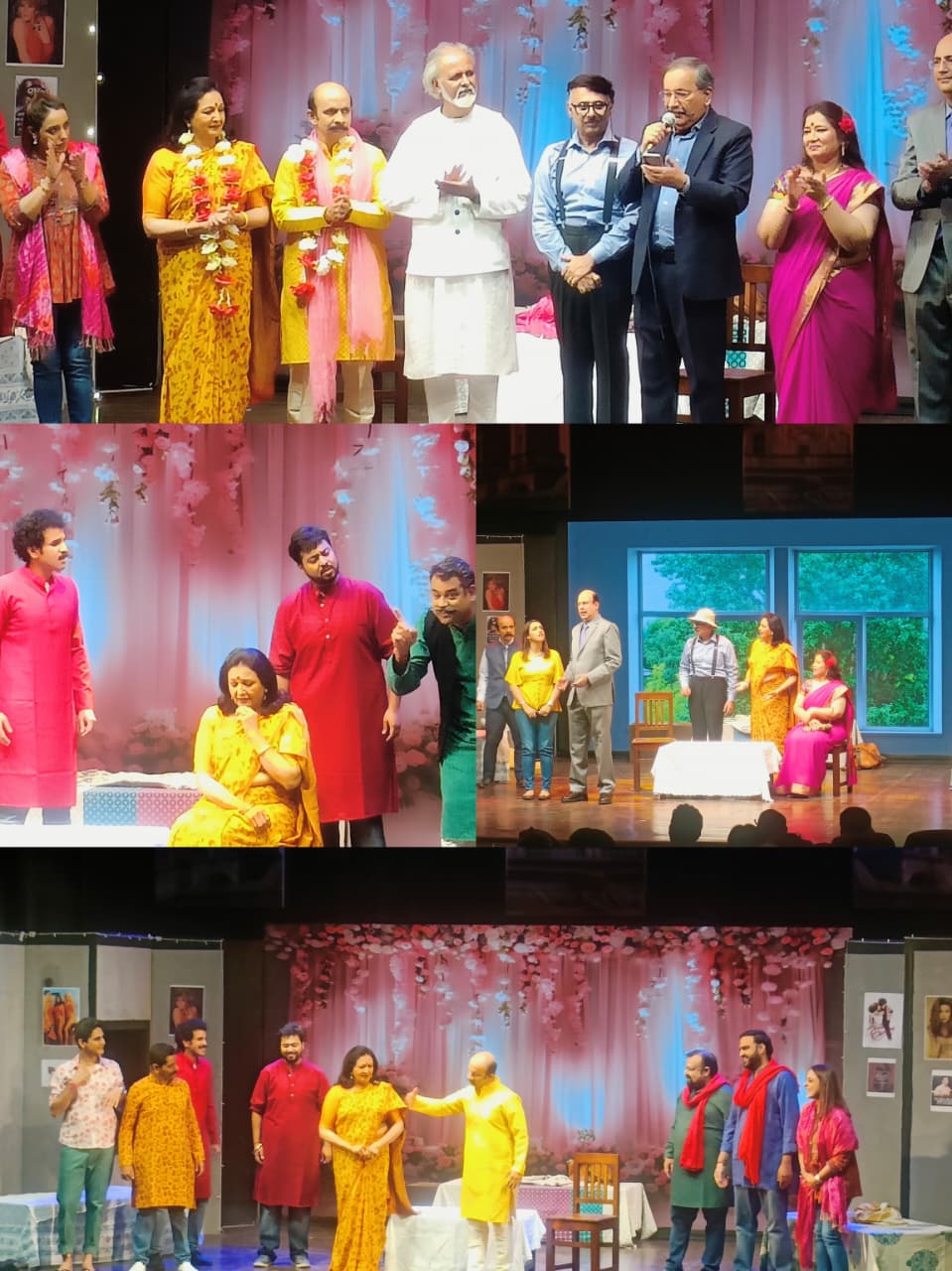
In a theatrical landscape where comedy often skims the surface, “Gutur-Gu! Gutur-Gu!” stands out as a refreshing blend of humour layered with emotional depth. This vibrant production, presented by Modern School Old Students’ Association as its landmark 60th show, was staged at Shri Ram Centre, New Delhi from April 2 to 4, 2026. What unfolded on stage was not just a comedy of situations, but a carefully crafted experience that kept the audience laughing, reflecting, and thoroughly engaged.
Presented under the direction and design of J. P. Singh, this production—originally based on Prof. Toradmal’s Marathi work—emerges as a lively Hindustani farcical comedy, with strong creative support from co-director Aditi Sharad. A seasoned theatre practitioner with nearly four decades of experience, Singh brings to the stage a keen understanding of rhythm, timing, and emotional layering. His direction ensures that the narrative flows effortlessly—never overstaying its welcome, never losing its energy. There is a sense of control and confidence in the staging that allows both humour and emotion to breathe naturally.
The play opens on a strikingly memorable note. Pradeep Kukreja’s poetic introduction is a delightful prelude that immediately wins over the audience. With a lyrical cadence and a sharp comic edge, his performance evokes laughter and applause in equal measure. It is not merely an introduction—it is an invitation into the world of the play, setting the tone with finesse and flair.
Set against the familiar yet ever-engaging backdrop of a university hostel, the narrative celebrates the carefree spirit of youth with infectious enthusiasm. The characters move through a world of friendships, harmless mischief, budding romances, and playful banter. These moments are crafted with such ease and relatability that the audience finds itself smiling in recognition. There is an unmistakable warmth in these scenes—an echo of shared memories and youthful abandon.
Yet, what elevates “Gutur-Gu! Gutur-Gu!” beyond a light-hearted comedy is its emotional undercurrent. Running parallel to the youthful vibrancy is the quieter, more introspective world of senior teachers. Their loneliness, their subtle anxieties about ageing, and their attempts—sometimes humorous, sometimes poignant—to reconnect with a fading sense of youth are portrayed with sensitivity and nuance. This juxtaposition creates a compelling duality: laughter on the surface, introspection beneath.
The ensemble cast delivers a consistently engaging performance, bringing authenticity and charm to every scene. The on-stage chemistry between Rashmi Vaidialingam, Sanjiv Saluja, and Attin Rastogi was exceptional, with their impeccable comic timing adding great charm to the performance. Sanjeev Saluja and Roopak Kathpalia contribute effectively with their nuanced performances, while Attin Rastogi adds a distinct presence on stage.
Among the younger ensemble, Sivain Vaidialingam, Sachin Wahi, and Sahil Arora infuse the play with energy and spontaneity. Their natural comic timing and effortless interactions make the lighter moments truly enjoyable. Vaidehi Sharma brings grace and balance to the narrative, while Rajkamal Sharma, Roopak Kathpalia, Kshitz Sanghi, Aakash Narula, Aarti Arora Khanna, Mohit Agrawal, Bhanu Sethi, Nandini Sharma, Pawan Kumar, Reet Bhatia and Ridhi Dish ensure that the ensemble remains cohesive and lively throughout.
One of the most delightful aspects of the production is its clever use of popular film tunes woven seamlessly into the narrative. These musical interludes act as emotional cues as well as comic enhancers—heightening the impact of scenes without ever feeling forced. At times nostalgic, at times playful, they keep the audience connected and add a rhythmic charm to the storytelling.
The technical aspects of the play—its stage design and lighting—are marked by a refreshing simplicity. Choreography by Bharti Dang. Rather than overwhelming the narrative, they complement it, allowing the performances and the writing to take centre stage. The pacing of the play is particularly commendable; it moves with a steady rhythm that keeps the audience invested from beginning to end.
What ultimately makes “Gutur-Gu! Gutur-Gu!” memorable is its ability to strike a delicate balance. It entertains without being frivolous, and it reflects without becoming heavy-handed. It reminds us that behind every burst of laughter, there often lies an unspoken truth—and it is in acknowledging both that theatre finds its true power.
In the end, this is not just a play you watch—it is an experience you carry with you. Light-hearted yet meaningful, humorous yet humane, “Gutur-Gu! Gutur-Gu!” leaves you smiling… and thinking, long after the curtain falls.