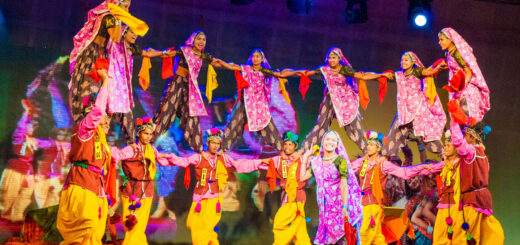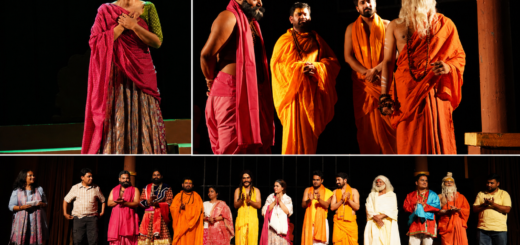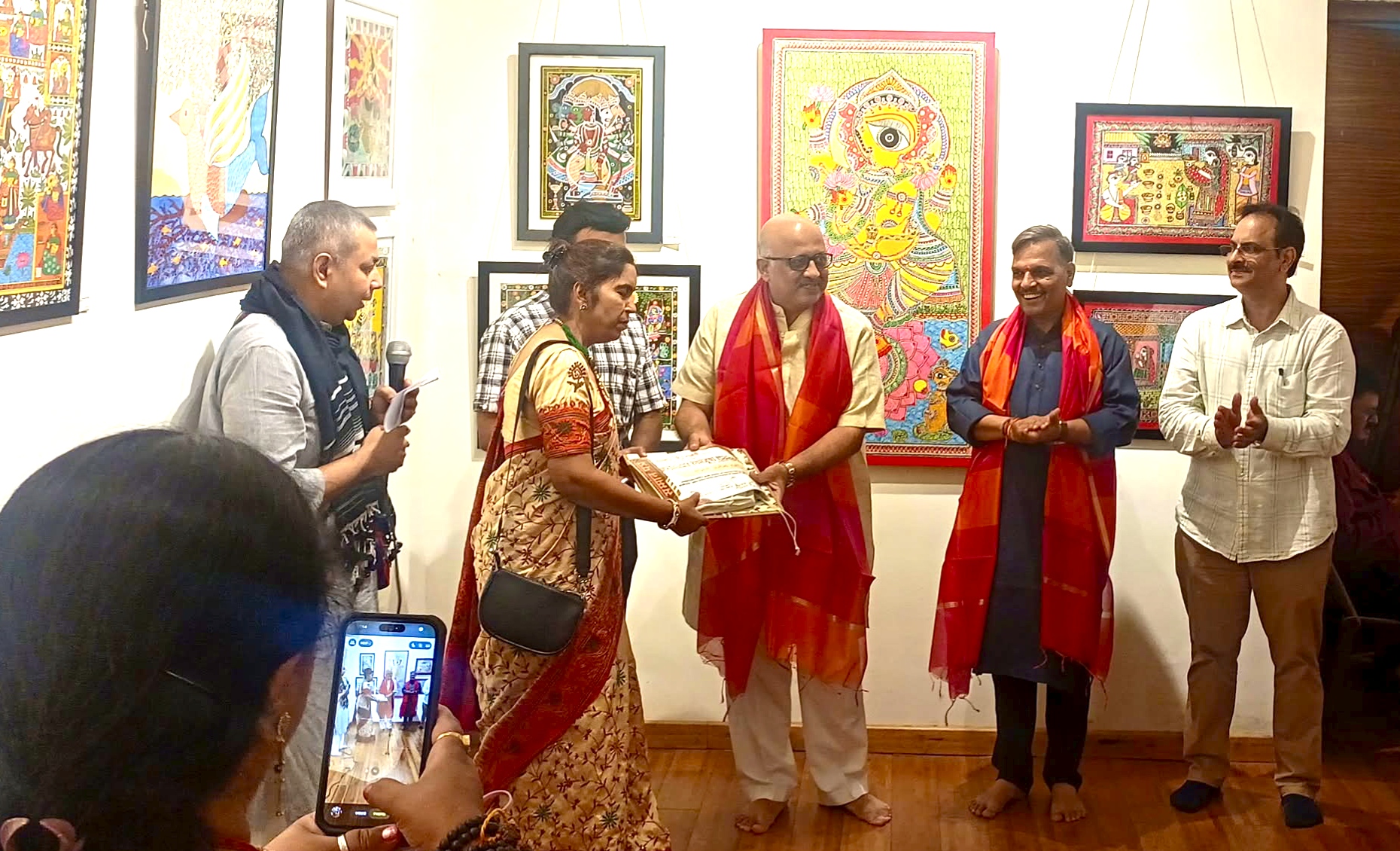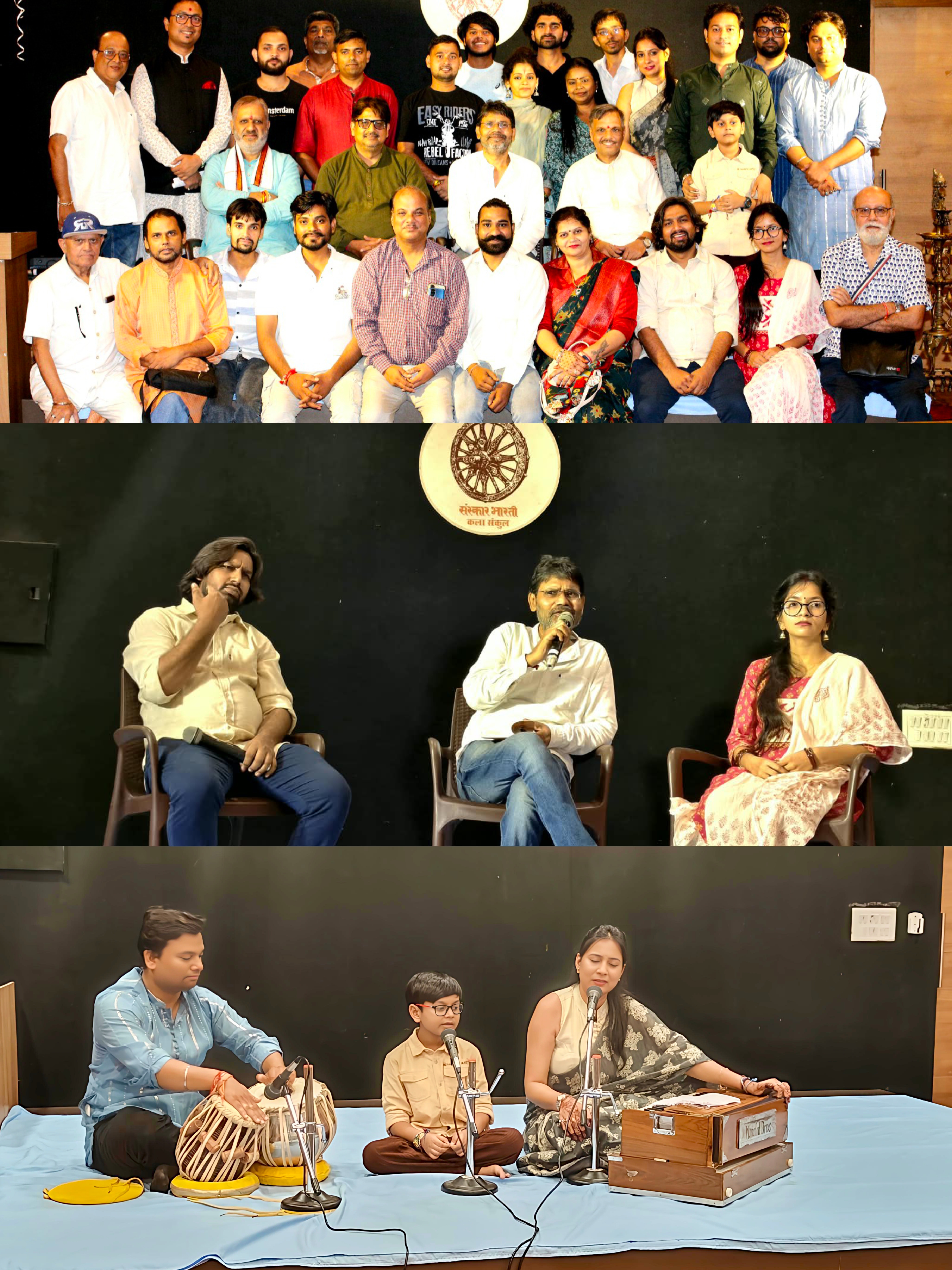
Kaveri’s ethralling Bharatanatyam recital showcased exceptional grace and a commanding stage presence


A Review by Manohar Khushalani
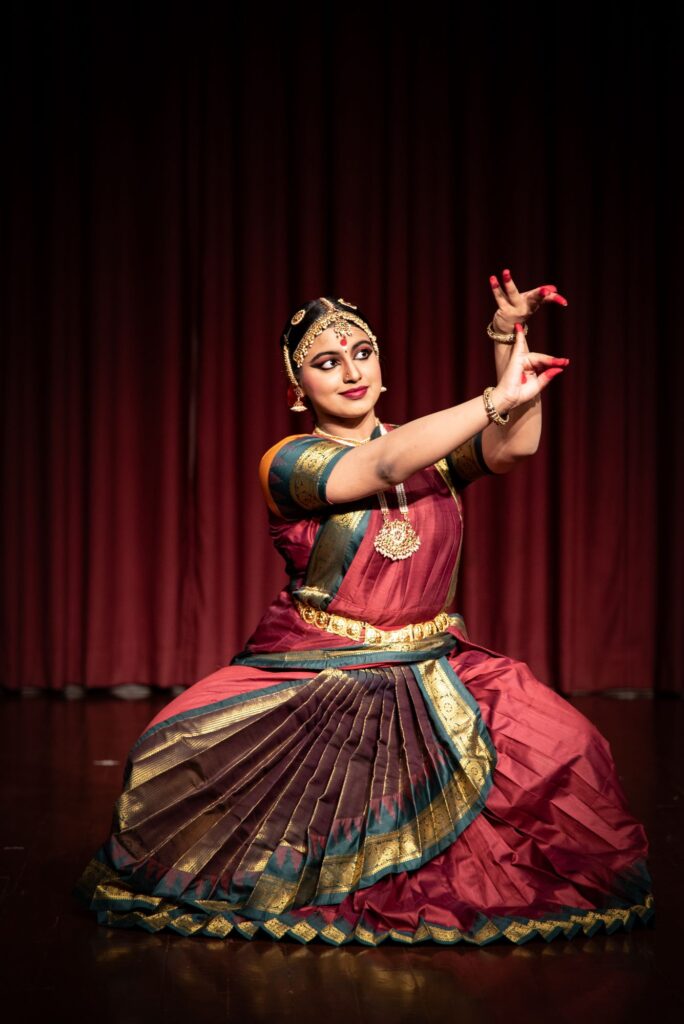
In a performance that combined technical rigor with profound emotional depth, Kaveri delivered a Bharatanatyam recital that showcased exceptional grace and a commanding stage presence. From the initial invocation to Ganesha to the high-energy finale, the evening was a testament to her disciplined training and innate artistry.
Kaveri’s command over Nritta (pure dance) is characterized by dexterity and surgical precision. During the jathis and swarams of the Varnam and the concluding Thillana, she navigated intricate patterns of adavus with a lightness of foot that belied their complexity. The Varnam—the centerpiece of the evening—was trellised with racy, complex jati patterns. Impressively, Kaveri maintained a perfect equilibrium; while the pace was brisk, she never transcended the three cycles of speed, ensuring every beat was executed with crisp, unwavering clarity. Above all she displayed amazing stamina in such a lengthy perfomance executed effortlessly with so much dexterity and grace.
The hallmark of the performance was her absolute adherence to the ancient axiom:
“Yatho hastha thatho drishti…” (Where the hand goes, the eye follows).
Her mudras were clean and fluid, serving as a seamless bridge to the narrative. Whether portraying the mischievous wisdom of Narada or the spirited pride of Satyabhama, she exemplified the iconographic attributes of these deities with ease. Her eyes, inherently expressive, carried the bhava (emotion) with such intensity that the “divine dualities” of the stories felt tangibly present. This was particularly evident in the Vanajaksha Varnam, where the theme of love toward Krishna was beautifully realized. Kaveri moved effortlessly between the yearning of a Gopi and the meditative devotion of a Muni, her ability to inhabit the entire stage space speaking volumes of her rigorous grounding under Guru Acharya Jayalakshmi Eshwar.
The performance was elevated by a stellar musical ensemble that provided a rich tapestry of sound. Guru Acharya Jayalakshmi Eshwar provided a rock-solid rhythmic foundation on the nattuvangam, while Sri K. Venkateshwaran’s melodious vocals added a layer of soulful resonance. The rhythmic play of Thanjavur Keshavan on the mridangam and the lyrical musical contours provided by G. Raghavendra Prasath on the violin tied the performance together into a cohesive, sensory experience. The evening reached its crescendo with an evergreen Thillana in Raagam Kuntaravarali, leaving the audience with a sense of vibrant, rhythmic completion.
Dvitva: Concept Note
Before creation and before space and time, Prakṛti lay merged with the Supreme Spirit, suspended in the Uncreate without separate existence, resting in eternal timelessness. When the germ of desire for creation stirs, the Supreme Unmanifest Spirit divides itself—its right half becoming Puruṣa, and the left, Prakṛti. This cycle repeats yuga after yuga.
In Indian cosmology, Puruṣa represents not only the transcendental Self or pure consciousness but also masculinity, maleness and the vital sentient truth- Satya. This activates the visible world or Prapañca. Prakṛti embodies nature, Śakti, the informing creative force, and the feminine—the matrix within which śṛṣṭi (creation) is born. While Puruṣa refers to the “cosmic being,” hidden and latent, Prakṛti is manifest and expressive. The world itself is born of their union; duality is thus the very foundation of existence.
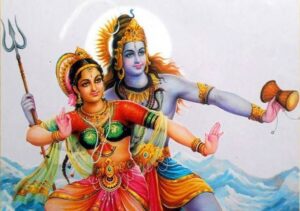
Distinct but Interdependent: While they are distinct, Purusha and Prakriti unite to create the universe, where Purusha acts as the source of light, and Prakriti becomes the form, much like a dancer moving in front of an audience.
This philosophical duality finds expression in classical arts, both performative and visual through the motif of the God and his/her spouse, the lord and the devotee, the deity and the created world. These dualities manifest in divine dyads / divine-human dyads such as Uma-Maheśvara, Lakṣmī-Nārāyaṇa, Rādhā-Kṛṣṇa, Murugan-Valli, Ganesh, Riddhi and Buddhi.
This production traces the Leela or divine play of the gods through narratives of dance performance, through a spectrum of rasa-bhāva—from śṛṅgāra that is romantic love to śānta-bhakti that is tranquil devotion. From domestic harmony to ecstatic surrender. Through nuanced movement and expression, the performance becomes an offering of sattva—an essence of reverence, grounded in penance, play, and prayer. Music and Dance, Guru and Shishya come together to create this as the ultimate unison of elements that make rasa and rasika harmonise their energies.
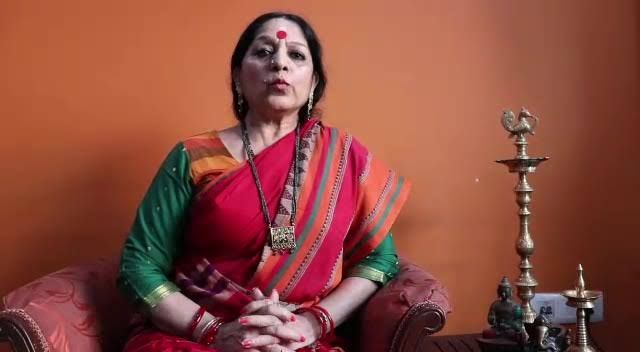
Acharya Jayalakshmi Eshwar
Item: Ganapati Taalam
Raga
Tala
Composer:
Choreography: Acharya Jayalakshmi Eshwar
The first offering is to Ganapati , to the god who within Himself encompasses and transcends all contradictions, He is the Lord of Beginnings and Vigneshwara the Lord of Obstacles. The invocation through dance celebrates the ultimate surrender of the devotee to the God. Ganesha’s creation myth is relived through this miraculous birth, his beheading and getting of the elephant head, his iconographic description as being ek-dant- one tusked, Sukesha- having beautiful hair, and his partaking all contradictions is brought to life through beautiful choreography and music.
Item: Vanajaksha Varnam
Raga
Tala
Composer:
Choreography: Acharya Jayalakshmi Eshwar
This varnam having multiple layers explores the many ways that the devotee views Lord Krishna. Krishna the Supreme through manifestation with his devotees resolves many dualities. Through his wives, through Draupadi, the gopas and gopis, the flute and Rsis and the inhabitants of Braja. The first story relates to Krishna’s marriage to Rukmini, from her longing for Krishna and subsequent summons to rescue her, his going to Vidarbha post haste, their elopement and her brother Rukma’s interception. Rukmini begged Krishna to spare her brother’s life which he does and their ultimate blissful union.
The second story focuses on Krishna the protector who grants his grace to Draupadi who prays to him to save her honour, when all forsake her. She is dragged to the court by the Kauravas after Yudhishtra loses the gamble, where Dushasana tries to disrobe her. Krishna provides an unlimited quantity of fabric (symbolism of his grace) till the villain is tired and gives up.
The third story again views Krishna who provides protection and grace to his devotees, in this case the inhabitants of Braja, who seek shelter under the Govardhan hill from incessant rain which Krishna lifts to enable all inhabitants, the cowherds, the cattle, the rshis, like he saves all of humanity.
The fourth story is Venu Gopala that shows all beings, the gopas and the gopis, the cows of Vrindavan, drawing devotees into ecstatic union through enchanting melodies that awaken longing and bliss. It signifies the heart becoming an instrument for the divine, surrendering ego for divine purpose, and transcending the material world through devotion (Bhakti). Krishna is the most beautiful and attractive of all beings, equal to a koti Kamadevas or Manamattas
The last story is about Satyabhama, one of the primary ashtabharyas or 8 principal wives of Krishna who is instigated by Narada to test Krishna’s love for her, in contrast to Rukmini. He asks her to weigh Krishna against all her ornaments and if Krishna remains heavier Narada would take him in servitude. Despite putting all her jewels and those of all the other wives, the scales do not move in her favour. She then asks Rukmini for help, who then puts a single leaf of tulsi and Krishna rises in the scale, proving that under what appears to be dual all is samta – primal sameness and all is Krishna’s creation. Krishna he loves both Rukmini and Satyabhama equally, as he does all his devotees. The material and metaphysical all dwell in Krishna and they equal and balance each other
Item: Pasa Khelat
Raga
Tala
Composer:
Choreography: Acharya Jayalakshmi Eshwar
In order to make the world understand the profound nature and the depth of duality, Leela and khela or sportive play is often used as a device. In this evocative composition, Krishna and Radha are shown playing a game of charusar, which seemingly is lost and won by one or the other in their turns but in the end it is revealed that the autonomous play of chance is only the lila of Krishna who beguiles the world which too is all his Creation.
The game is played on a jewelled board, with Radha asking Krishna to bet his pitambhar- yellow garment, his identity as the Lord of the World which he loses to her, He asks her to stake something precious to her and she bets and loses her nose ring, a symbol not only of her femininity but also of marital bliss. She then ask Krishna to stake his flute to give the game real weight. He is reluctant to part with the instrument that is divine call to the soul, representing spiritual love (Prema), divine attraction, and the union of the individual soul (Jivatma) with the Supreme (Paramatma). Radha uses a ruse to win the bansi or flute, and Krishna says I will stake all my ornaments but return the flute, but ultimately reflects that the flute, Radha and all the created beings are all Him/His and that the only truth is the Union in which all delight. the composer the spectators and verily the universe participate in the Leela
Item: Varattam Svami
Raga
Tala
Composer:
Choreography: Acharya Jayalakshmi Eshwar
This padam expresses a devotee’s deeply personal longing for Lord Murugun ( Bala Kumaran). The absence of the deity is expressed through the leitmotif “Let him come if he comes I will show him” being expressed by the khandita nayika, or the angered heroine through whom the bhakti-shringara dualities are expressed and ultimately resolved. The duality between the deity and the devotee is also highlighted through the Khandita Nayika who rebukes Murugan or Karttikeya. The intimate bond between the two is shown here where the lord is indulgent to the many moods and accusations of his devotee and allows her to dally while through his counters establishing that Murugun is greater than any lakshans or characteristics that a devotee may like to attribute.
Item: Kuntaravali Thillana
Raga
Tala
Composer:
Choreography: Acharya Jayalakshmi Eshwar
The Thillana is a vital, penultimate performance in a traditional Bharatanatyam Margam recital. It is a vibrant, high-energy climax that showcases the dancer’s technical virtuosity, rhythm, and grace. It represents the culmination of pure dance (Nritta) and rhythm (laya) and seeks to balances the dancer’s mastery of rhythm, space, and technique with a final, elegant nod to devotion The Kuntarvali is Raga is playful, Vibrant joyfull in which all can participate.