‘Kamla’: A Timeless Story of Womanhood, Exploitation and Social Hypocrisy


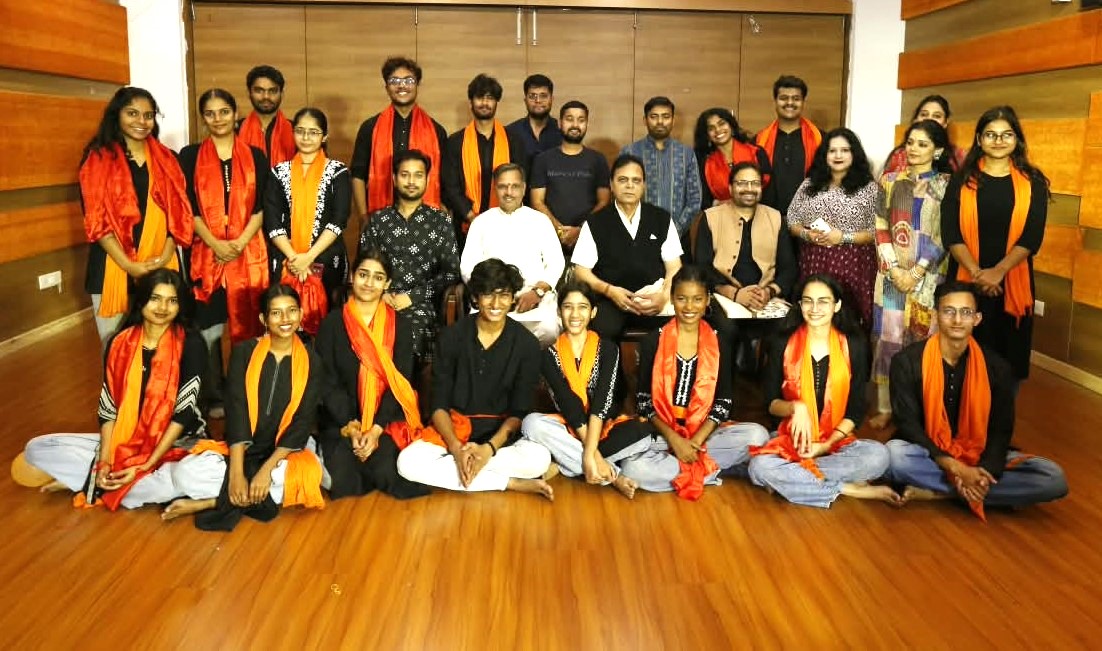
Bela Theatre Karwan revisits Vijay Tendulkar’s celebrated play, bringing its uncomfortable questions about women’s dignity, identity and social attitudes to the stage.
NEW DELHI: Some plays do not belong to a particular era; they continue to speak to every generation. Vijay Tendulkar’s Kamla is one such work. Written in 1981, the play remains a compelling examination of gender inequality, the exploitation of women and the hypocrisy hidden behind the respectable face of society. Bela Theatre Karwan brought this celebrated work to the stage on October 31 at Shri Ram Centre, Mandi House, in a production directed by Amar Sah.
Inspired by a real-life journalistic investigation by Ashwini Sarin, the play raises questions that extend far beyond its central incident. Its journey from the Marathi stage to different languages, numerous theatrical productions and cinema reflects the enduring relevance of its subject. The play was also adapted into a Hindi film, Kamla, directed by Jagmohan Mundhra, featuring Deepti Naval, Shabana Azmi and Marc Zuber in prominent roles. Its continued reinterpretation by theatre directors, including Subhas Gupta, Monica Mehta Chitkara and Subrata Das, demonstrates how its central concerns continue to engage performers and audiences across different cultural settings.
A Narrative That Challenges Society
At the centre of the story is Jaisingh Jadhav, a journalist who purchases a woman named Kamla from a rural flesh market and brings her to Delhi. He views the incident as a major journalistic achievement, hoping to expose the exploitation of women and establish his professional reputation. However, the manner in which he treats Kamala reveals an uncomfortable contradiction: while attempting to expose the exploitation of women outside his home, he himself treats her as an object.
The arrival of Kamla in his household becomes a turning point for his wife, Sarita. Her interaction with Kamala makes her question not only her husband’s actions but also her own position within marriage. Although she belongs to an educated and relatively privileged household, she gradually recognises the unequal power dynamics governing her personal life.
This parallel between Kamla and Sarita forms one of the strongest dimensions of Tendulkar’s writing. One woman suffers from direct exploitation, while the other experiences a more socially acceptable form of subordination. Their circumstances may be different, but both reveal the restrictions imposed on women’s freedom and individuality.
The Strength of Tendulkar’s Dramatic Writing
What makes Kamla an enduring theatrical work is its ability to expose social contradictions without turning the narrative into a conventional moral lecture. Tendulkar uses ordinary domestic situations, sharp exchanges and interpersonal conflicts to reveal deeper structures of power.
The journalist’s professional ambition, Sarita’s gradual awakening and Kamla’s innocence create a dramatic triangle through which the playwright examines the difference between public morality and private behaviour. The play also raises an important question about journalism: when does the pursuit of a sensational story begin to overshadow the dignity of the person whose suffering becomes its subject?
Rather than offering easy answers, Tendulkar allows these contradictions to unfold before the audience. This is perhaps why the play continues to invite fresh interpretations even decades after its creation.
Performances and Character Portrayals
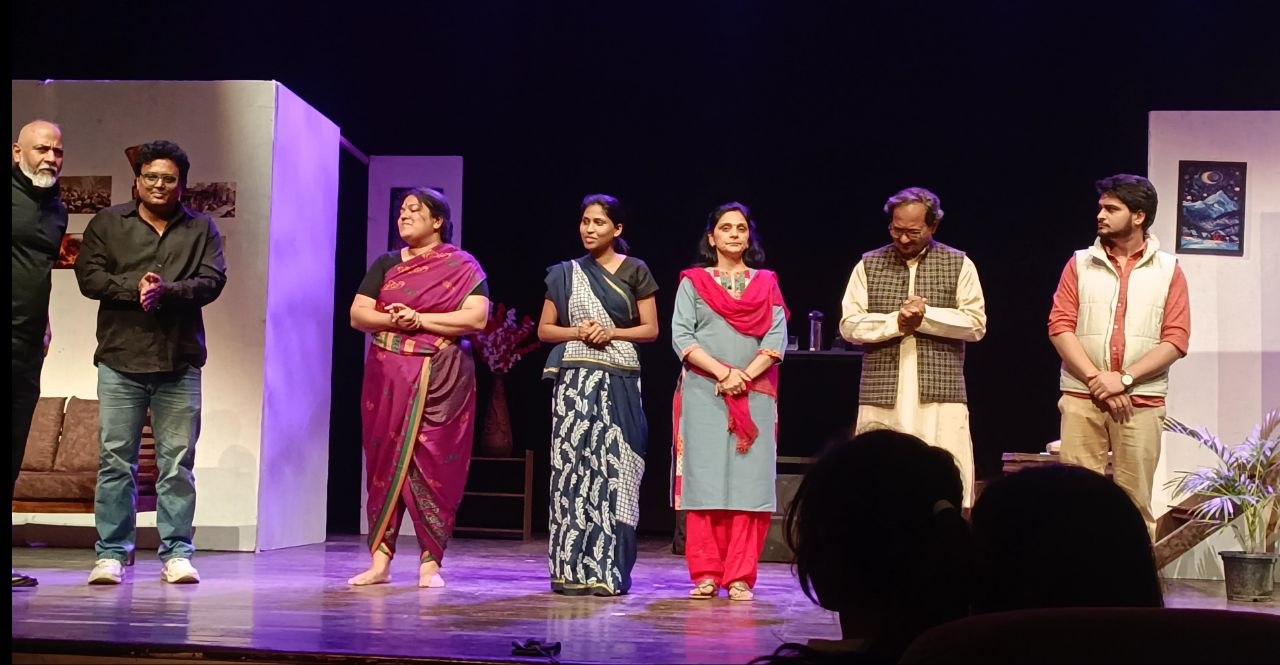
In the Bela Theatre Karwan production, Rajesh Bakshi portrayed Jaisingh Jadhav, presenting the character of a journalist driven by professional ambition and personal authority. Vani Kumar, as Sarita Jadhav, brought out the character’s growing discomfort and inner conflict as she confronted the contradictions in her marriage.
Bharti Rajput played Kamla, a character central to the emotional and social concerns of the play. Her role represents a woman whose dignity is challenged by circumstances and by the attitudes of those around her. Pallavi Mishra appeared as Kamla Bai, while Karan (Das Kripa) portrayed Jain and Ravindra Vats essayed the role of Kakasaheb.
The characters together brought different shades of the play’s social conflict to the stage, keeping the focus on the relationships and unequal power structures that drive the narrative.
Amar Sah’s Directorial Approach
Director Amar Sah brought Tendulkar’s socially relevant text to the stage with an emphasis on its central conflicts and character relationships. The dramatic exchanges between Jaisingh, Sarita and Kamla form the backbone of the production, allowing the underlying tensions to emerge through dialogue and confrontation.
Riyaz handled the lighting, which helped establish the visual atmosphere and supported the progression of the dramatic sequences. The technical presentation complemented the narrative, keeping the audience’s attention on the characters and their interactions.
An important aspect of staging a well-known play like Kamla is the challenge of presenting a familiar story without losing its immediacy. The director’s task is not simply to recreate the events but to make their questions meaningful for a contemporary audience. This production once again brought those questions into the theatrical space.
A Play That Continues to Speak to the Present
The lasting significance of Kamla lies in its refusal to let the audience remain comfortable. It questions the assumption that education, professional success or social standing automatically make an individual progressive in their outlook towards women.
Kamla’s story is not merely about one woman rescued from exploitation. It is also about the larger social environment in which women are judged, controlled and denied the freedom to define themselves. Sarita’s journey further reminds us that inequality does not always appear in its most visible or extreme form; sometimes it exists within relationships that society considers perfectly respectable.
More than four decades after its creation, Kamla continues to hold up a mirror to society. Bela Theatre Karwan’s presentation under Amar Sah’s direction revisited this powerful text and brought its central concerns before a contemporary audience.
The curtain may fall on the performance, but the questions raised by Kamla remain long after the audience leaves the auditorium.