Rabindranath Tagore University Pays Tribute to Teejan Bai with Sanskrit Theatre Performances
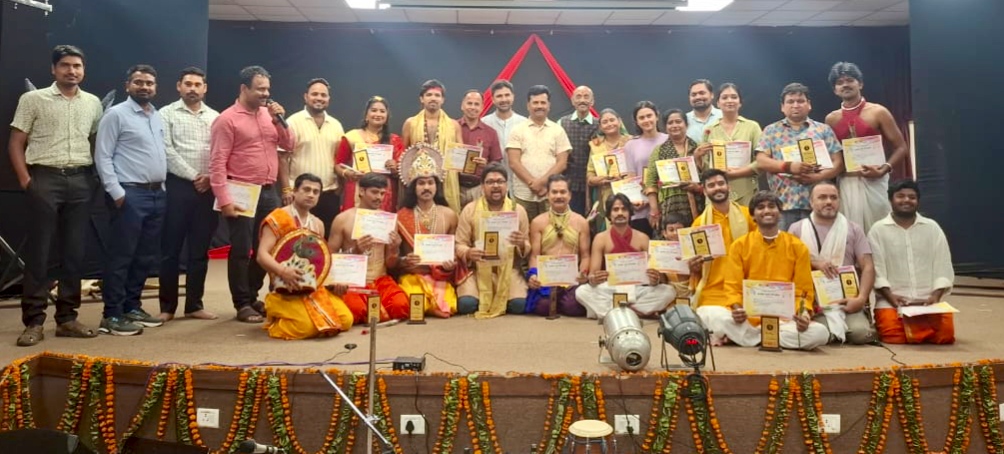
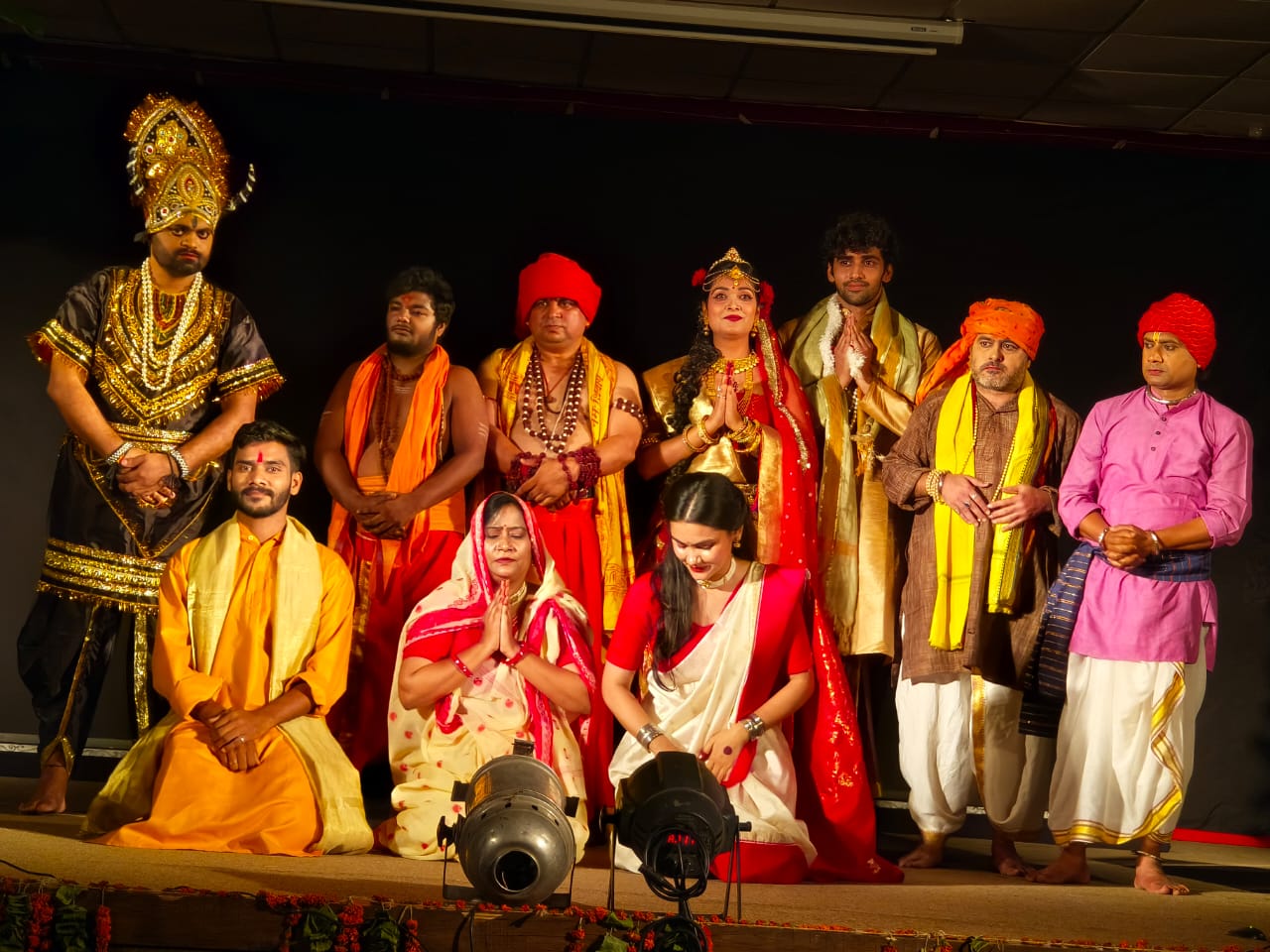
The Centre for Sanskrit, Oriental Languages and Indian Knowledge Systems at Rabindranath Tagore University presented a remarkable evening of classical theatre on 6 July 2026 at 2:30 PM in the Sharda Auditorium. The performances were staged by the students of the Master of Performing Arts (MPA) and Postgraduate Diploma in Natyashastra programmes.

The event featured Hindi adaptations of two celebrated Sanskrit classics—Bhagavadajjukam, written by Maharshi Bodhayana, and Urubhangam, composed by the renowned playwright Mahakavi Bhasa. The entire theatrical presentation was dedicated as a heartfelt tribute to the legendary Pandavani exponent and Padma Vibhushan awardee, Teejan Bai, celebrating her unparalleled contribution to India’s rich performing arts tradition.

The programme was graced by Mr. Sanjay Srivastava, Director, MPSD, as the Chief Guest, while Prof. Sanjeev Gupta, Pro Vice-Chancellor, Rabindranath Tagore University, presided over the event. Prof. Verma attended as a distinguished guest. Addressing the gathering, Mr. Srivastava applauded the students for their impressive performances and encouraged them to pursue theatre with dedication, discipline, and artistic commitment.

The productions were directed by eminent Sanskrit theatre director Dr. Santosh Sahu. The event was organised under the guidance of Dr. Sanjay Dubey, Head of the Centre for Sanskrit, Oriental Languages and Indian Knowledge Systems, and Dr. Savitri Singh Parihar, Programme Coordinator.

The cast included Naveen Chandra, Anil Kumar, Vipin Kumar, Sangeeta Suyal, Anshuman Miglani, Amrit Raj, Naman Mishra, Rohit Singh, Sheetanshu Pal, Aman Kumar Kushwaha, Nitin Srivastava, Sandeep Rathore, Vanshika Pandey, Meghna Agrawal, Swati Srivastava, Swati Singh, Shubham Srivastava, Himanshu Rai, Avi Pandey, and Ravi, all of whom received widespread appreciation for their compelling performances.

The musical score was collaboratively arranged by Tarun Thakur, Vanshika Pandey, Aman Kumar, and Sheetanshu Pal. Rohit Rajak, Shubham Pandey, and Naveen Chandra served as Assistant Directors, while Rohit Rajak handled the lighting design. Technical support for the production was provided by Abhishek Deshmane.

The event concluded with a standing ovation and resounding applause, reflecting the audience’s appreciation for the students’ artistic excellence and the successful presentation of India’s classical theatrical heritage. The production served as a fitting tribute to Teejan Bai, reaffirming the timeless relevance of Sanskrit drama in contemporary performance culture.

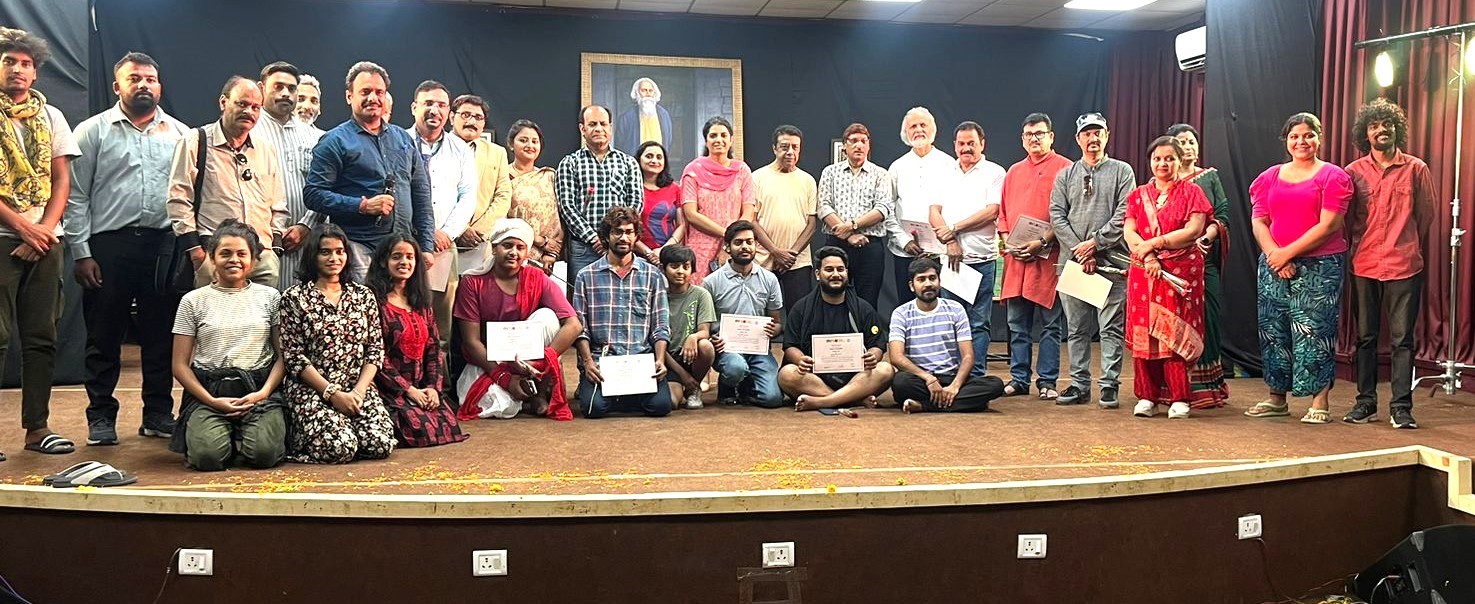
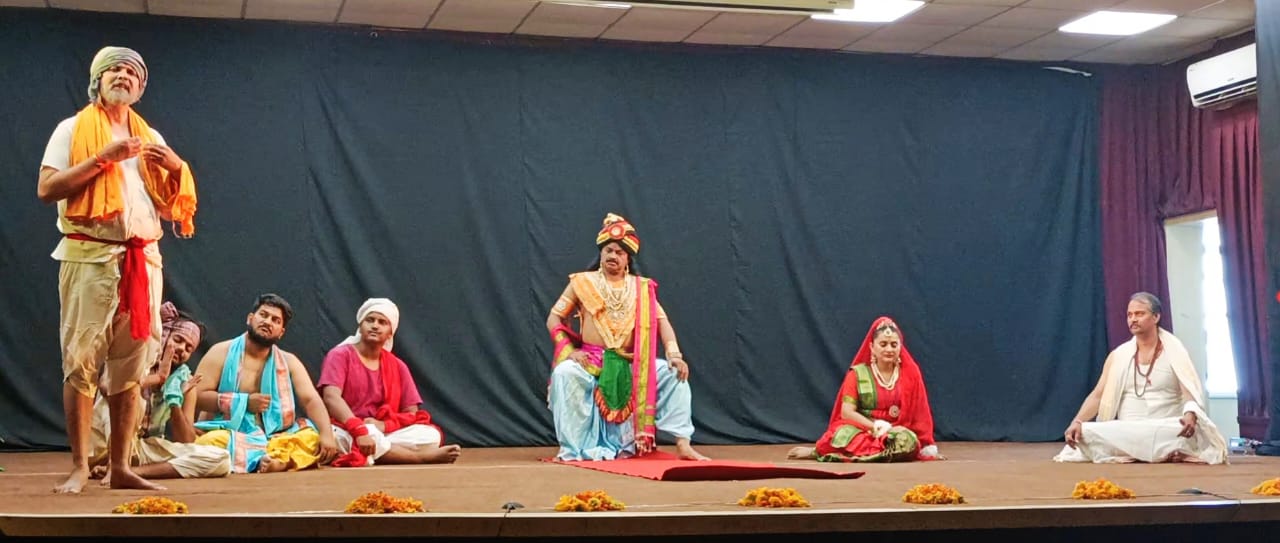
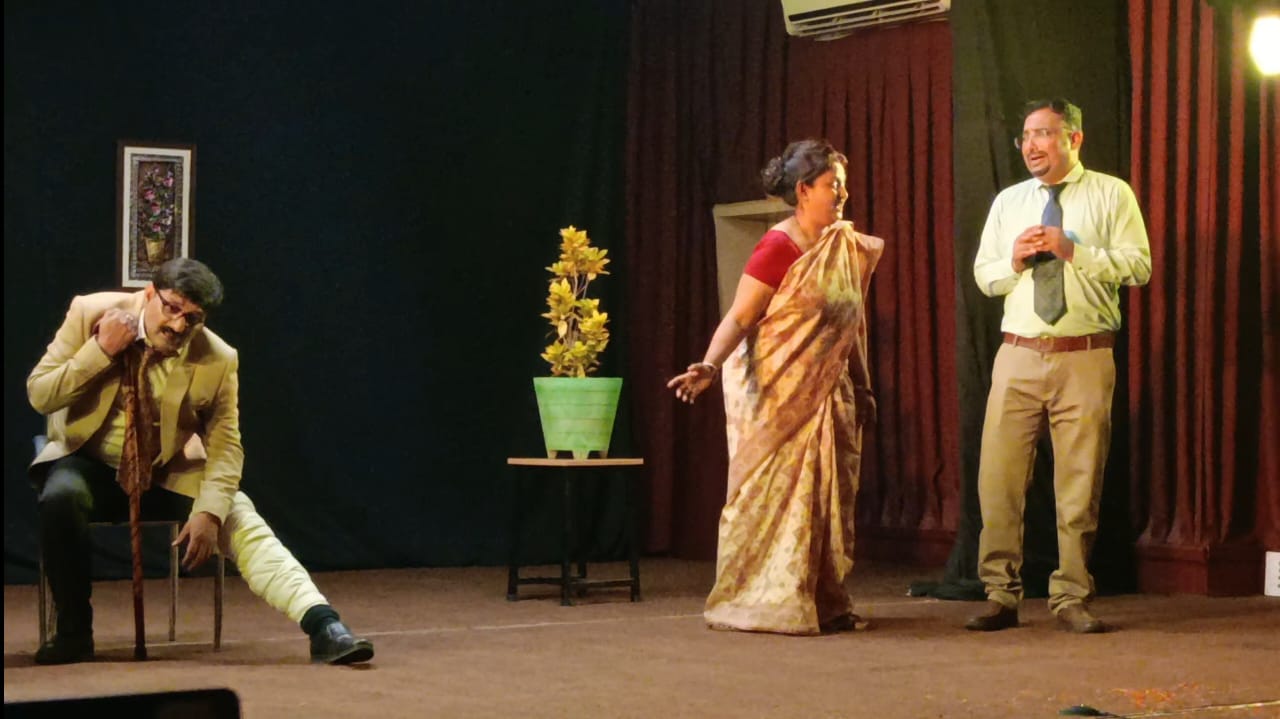
Theatrical Brilliance at Rabindranath Tagore University: A Journey from Chekhov’s Irony to Bhasa’s Tragedy

On June 14 and 16, 2025, the Faculty of Humanities and Liberal Arts at Rabindranath Tagore University, Bhopal, witnessed the powerful staging of two stylistically diverse plays — “Chekhov Ki Duniya” and “Urubhanga”. These productions were presented by the students of the MPA (Drama) and PG Diploma in Natyashastra as part of a national theatre workshop held from May 7 to 16, marking the culmination of their second semester curriculum. Through these performances, the students skillfully bridged classical Indian theatrical traditions with modern experimental aesthetics.

The two productions stood as compelling contrasts. While one portrayed the ironic absurdities of modern Western society through humour, the other breathed life into the deep emotional undercurrents of Indian mythology through poignant tragedy.

“Chekhov Ki Duniya” — A Humorous Reflection of Social Irony

Staged on June 14, “Chekhov Ki Duniya” was based on three comic one-act plays by Russian literary master Anton Chekhov — Cheeenk, The Bank Manager, and Surgery. Under the seasoned direction of Shyam Kumar and co-direction of Shraboni Saha, the play brought forth the complexities hidden in seemingly trivial incidents. From the social awkwardness triggered by a simple sneeze, to the oppressive nature of bureaucratic banking systems, and the cold commercialization of healthcare — each vignette was rendered with biting humour and subtle irony.

The ensemble cast brought these stories to life with remarkable authenticity. Sehej Harjai served as the narrator, with Ankit Chaudhary (Pyare Mohan), Tanshree Rane (Pyare Mohan’s wife), Sainand Valvaikar (General), and Oindrila Goswami (General’s wife) portraying Chekhovian characters with flair. Supporting roles by Santosh Rajput (Bank Manager), Sauptik Bhattacharya (Assistant Manager), Pooja Kewat (Woman), Praveen Namdev (Compounder), Davinder Singh Grover (Patient), and Deepak Bhardwaj (Audience Member) were met with hearty applause from both guests and viewers.

The backstage team worked with admirable precision. Stage management was handled by Davinder Singh Grover and Sehej Harjai. Costumes were designed by Deepak Bhardwaj, Santosh Grover coordinated props, lighting by Praveen Namdev, and musical direction was led by Vansh Rathore.

“Urubhanga” — A Mythological Tragedy That Stirred the Soul

Performed on June 16, “Urubhanga” is a poignant classical tragedy written by the Sanskrit playwright Bhasa. The play explores the psychological turmoil, remorse, and transformation of a wounded Duryodhana on the eighteenth day of the Mahabharata war. Under the direction of Dr. Sheetanshu Tripathi, the production delved into the devastating aftermath of war and internal conflict, deeply moving the audience.

Shubham Srivastava’s sensitive and intense portrayal of Duryodhana left an indelible mark. As the narrator, Pankaj Diwan effectively connected the audience with both the intellectual and emotional threads of the narrative. Supporting roles were performed by Adeeb Ansari, Sanjay Singh Negi (Ashwatthama), Prateek Chauhan (Dhritarashtra), Neeraj (Krishna), Richa Kalra (Gandhari), Shikha (Pauravi), Nisha Kudaikar (Malavi), Shubham Shivalikar (Durjaya), Unnish Pratap Singh (Baladeva), and the younger characters — Rahul Gupta, Prashant Kumar (Harshit), and Kartik Namdev — all delivering memorable performances.

The scenic design and costuming, supervised by Deepak Bhardwaj with active involvement from Kartik Namdev, enriched the stage with symbolic depth and aesthetic elegance.

Both performances were graced by distinguished guests — Chancellor Shri Santosh Choubey, Vice-Chancellor Prof. R. P. Dubey, and Dr. Prasad Bhide from Central Sanskrit University, Bhopal. After witnessing “Chekhov Ki Duniya”, the Chancellor lauded it as a sharp portrayal of social reality and commended both cast and crew. Regarding “Urubhanga”, Dr. Bhide praised its seamless fusion of ancient dramaturgy with modern theatrical techniques. Vice-Chancellor Prof. Dubey described both plays as commendable and emphasized the importance of sustaining such creative academic endeavours at the university.

The entire event was coordinated under the guidance of Dr. Sanjay Kumar Dubey, Dr. Savitri Singh Parihar, and Sh. Abhishek Deshmukh, whose leadership transformed this semester-end production into a rich academic and cultural experience.

“Chekhov Ki Duniya” and “Urubhanga” stand as testaments to the theatrical acumen, emotional insight, and creative potential of the students at Rabindranath Tagore University. These productions point towards a promising future — where tradition meets innovation, theory meets experience, and Indian roots engage meaningfully with global perspectives.


Dramatic Showcase: Masters in Performing Arts (Drama) Present’s Two Plays “Kaalchakra” and “Bank Manager” at Rabindranath Tagore University

A three-day workshop (28 to 30 in 2024) was organized at Rabindranath Tagore University under the Faculty of Sanskrit Prachaya Bhasha Kendra Manviki Udaar Kala Sankay. Its participants were students of Masters in Performing Arts (Drama). Two plays were prepared by them. The play “Kaalchakra” written and directed by J.P. Singh and the other play “Bank Manager” written by Anton Chekhov and directed by Shyam Kumar were staged in the Sharada Auditorium of the University on 30 May. The play “Kaalchakra” is based on the legend of Raja Bhoj and Gangu Teli, in which the lead roles were played by J.P. Singh as Raja Bhoj and Tarun Jalota as Gangu Teli. Vaidyanath Sharma as Vaidya and Amatya, Vashishtha Upadhyay played the role of Ang Raj, Jyoti Upadhyay as Chandramukhi, Ashfaq as Musician, Vansh Rathore as Singer, Neeraj played the role of Dwarpal and Lights Designed by Shyam Kumar. The play Kaalchakra was started with a Jarjar Puja as per the rules of Natyashastra. A unique amalgamation of music and acting was seen in the play.

The second story full of humour “Bank Manager” is about a woman who comes to a bank, forces the manager to fulfill her unreasonable demands, the play is full of some humorous exchange of dialogues between the two and ends with the manager literally losing his mind. Nagendra Sharma played the role of the bank manager, the role of the woman was played by Shraboni Saha, Sachin Verma played the role of the assistant manager, music was directed by Vansh Rathore and lighting was designed and directed by Shyam Kumar.

In both the presentations, senior theatre artist and former director of M.P.S.D. Alok Chatterjee and the Vice-Chancellor of the University Dr. Aditi Chaturvedi Vats and the Vice Chancellor of the University graced their dignified presence as the chief guests. Alok Sir appreciated the play and praised the acting of all the artists. Dr. Aditi Chaturvedi Vats called the students’ presentation commendable and called it the heritage of the University. All the students were given certificates after the play. The coordinators of this workshop were Dr. Sanjay Dubey and Dr. Savitri Singh Parihar, co-coordinator Dr. Deepak Tiwari, cooperation from the Faculty of Humanities and Liberal Arts and Mr. Sharad Mishra, Abhishek Deshmane.