Jalam Amritam: A Theatrical Reflection on Water and the Five Elements at Kala Sankul
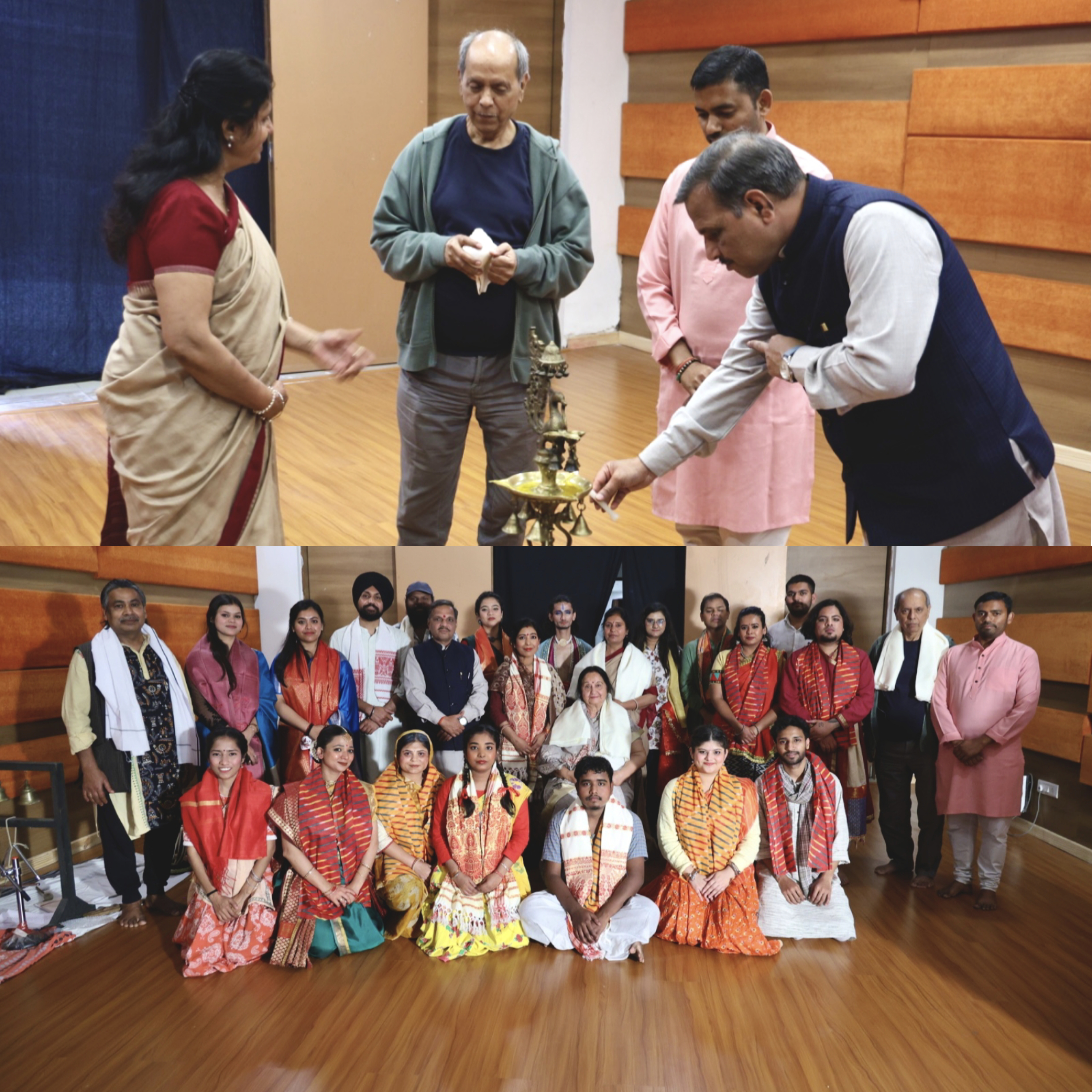
At the theatre seminar organized at Kala Sankul by Sanskar Bharati, Abhigyan Natya Association, Delhi presented a compelling staging of “Jalam Amritam.” The research-based music and dance theatre production was written by Dr. Madhu Pant and directed by senior theatre practitioner Nisha Trivedi. Rooted in the philosophy of the five elements (Panchamahabhuta), the play examined the fractured relationship between humanity and nature in the context of contemporary ecological crises.
The programme formally commenced with a traditional ceremonial lamp-lighting (Deep Prajwalan), symbolizing the invocation of wisdom and creative energy. The lamp was lit by Shri Ashok Tiwari, Central Office Secretary of Sanskar Bharati Kala Sankul; Dr. Madhu Pant, the playwright; Nisha Trivedi, the director; senior theatre practitioner Lokendra Trivedi; and seminar convener Brijesh.
Kala Sankul: Vision and Cultural Commitment
Kala Sankul is dedicated to nurturing creative thought, cultural awareness, and value-based consciousness through art and literature. It is not merely a venue for performances, but a vibrant center for intellectual exchange and creative dialogue. Engaging with contemporary issues through an Indian cultural perspective and positioning art as a medium of social awareness remain its defining characteristics.
A production like “Jalam Amritam” strongly reflects and fulfills this vision.
Theme and Presentation
Opening with a Vedic invocation, the play re-established water as the sacred and life-sustaining element among the five elements of nature. Through evocative visuals and symbolic characterization, it portrayed environmental degradation—drying rivers, deforestation, and the commodification of water in the name of development.
Characters such as Varun and Prithvi embodied nature’s anguish. Group choreography and symbolic stagecraft enhanced the emotional depth of the narrative.
Music, Research, and Stagecraft
The production’s strength lay significantly in its music and research. The contribution of Lokendra Trivedi in music composition and research was especially noteworthy. He seamlessly blended Vedic tonalities with traditional and contemporary musical textures, transforming the performance into a deeply immersive and spiritual experience.
The choreography by Bhumikedhwar Singh demonstrated a balanced integration of classical and folk elements, marked by expressive movement and emotional intensity.
Lighting and sound design were thematically aligned and impactful, while costumes and props remained simple yet symbolically meaningful.
Post-Performance Review Discussion
A review discussion followed the performance, during which audience members shared thoughtful reflections. Many described the play not merely as an environmental narrative but as a call for introspection and responsibility. Young participants emphasized the importance of practicing water conservation in daily life, while senior attendees appreciated the cultural and Vedic grounding of the production.
Conclusion
At the conclusion of the programme, Shri Ashok Tiwari delivered an inspiring address, stating:
“Kala Sankul is not merely a building, but a temple of artists and art. It is a sacred space where creation becomes a form of spiritual practice and expression guides the conscience of society. We believe in addressing contemporary issues through art to foster awareness and positive transformation. Kala Sankul will continue to advance creative dialogue through such initiatives.”
His words resonated deeply with the spirit of the evening and reaffirmed the institution’s commitment to socially conscious artistic engagement.
The event was gracefully anchored by Mun Mun. The vote of thanks was delivered by Shruti Sinha, and the seminar concluded with a peace invocation led by convener Brijesh. The dedicated efforts of seminar members — Garima Rani, Sneha Mukherjee, Shyam Kumar, Raj Upadhyay, Ritambhara, Mrityunjay, and Bijendra Kumar — contributed significantly to the success of the event.
Overall Assessment
The synergy of Dr. Madhu Pant’s writing, Nisha Trivedi’s sensitive direction, Lokendra Trivedi’s research-driven musical composition, and Bhumikedhwar Singh’s expressive choreography made “Jalam Amritam” a powerful and memorable theatrical experience.
More than a performance, the production stands as a cultural appeal to restore water to its rightful reverence as “Amrit” — the nectar of life.