Artistic Expression: Freedom and Boundaries — A Thought-Provoking IGNCA Symposium Marking 75 Years of the Indian Constitution
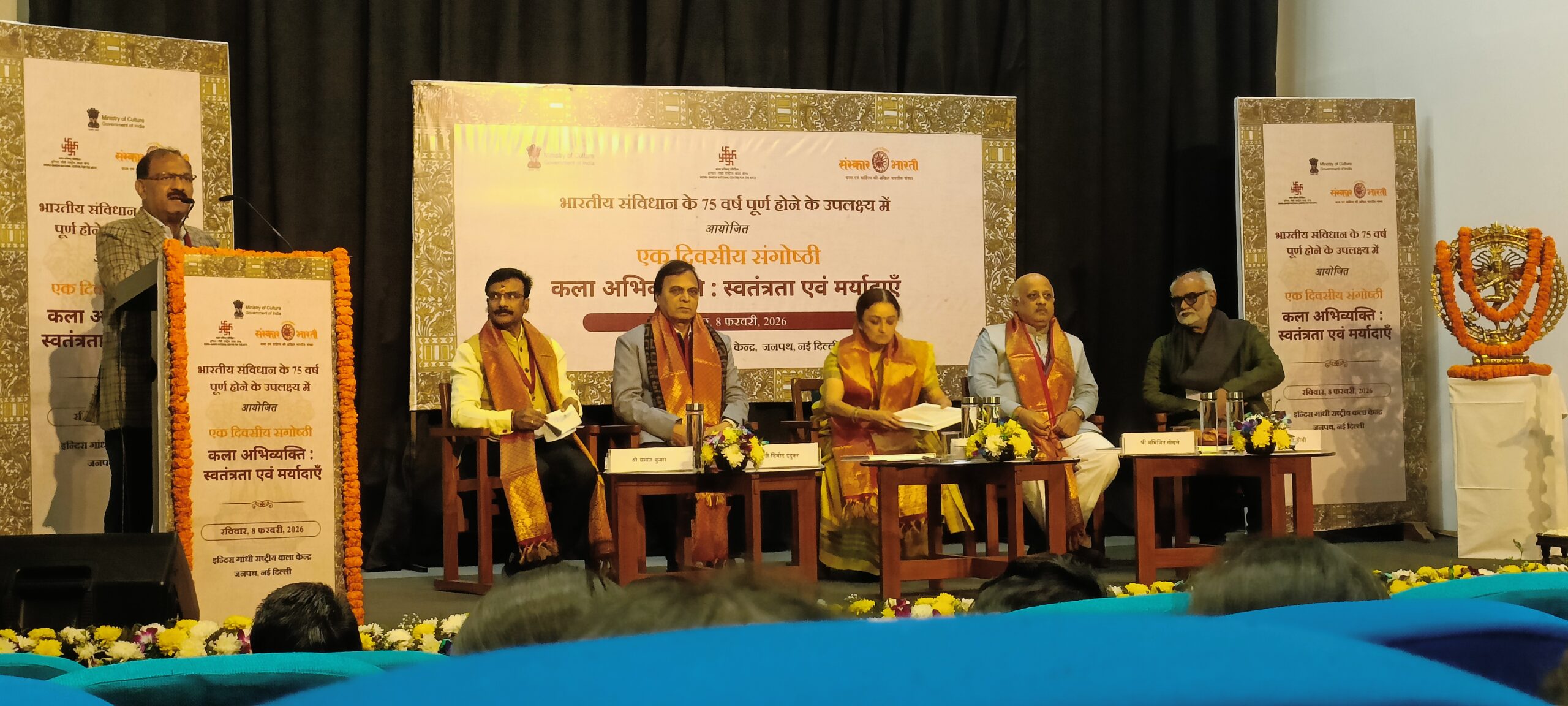
New Delhi, 8 February 2026:
Commemorating 75 years of the Indian Constitution, a one-day national symposium titled “कला अभिव्यक्ति : स्वतंत्रता एवं मर्यादाएँ” was jointly organised by the Ministry of Culture, Sanskar Bharati and the Indira Gandhi National Centre for the Arts (IGNCA). Held at the IGNCA auditorium on 8 February 2026, the event unfolded in a dignified yet intellectually vibrant atmosphere, emerging as a meaningful cultural platform that explored the dynamic relationship between art, constitutional values and contemporary society during the ongoing Amrit Mahotsav period.
The programme commenced with a ceremonial lamp-lighting by Dr. Sachchidanand Joshi, Dr. Sandhya Purecha, Shri Abhijeet Gokhale, Shri Vinod Narayan Indurkar and Shri Prabhat Kumar. In their opening remarks, the speakers highlighted the intrinsic connection between the Constitution, culture and artistic practice. They emphasised that the Indian Constitution is not merely a legal framework but a living embodiment of cultural consciousness — one that empowers artists with freedom of expression while simultaneously reminding them of social responsibility and ethical boundaries.
The first session, devoted to literature, featured insightful reflections by Dr. Sachchidanand Joshi, Dr. Alka Sinha and Shri Kishor Makwana. The panel discussed literature as a bridge between power structures, social realities and human sensitivity. Speakers observed that while the Constitution grants writers the freedom to articulate truth fearlessly, it also calls for thoughtful and responsible use of language.
In the second session on visual arts, Dr. Nandlal Thakur, Shri Neeraj Gupta and Ms. Situ Kohli explored the evolving landscape of contemporary and digital visual expression. They emphasised that visual art communicates beyond words and holds the power to mirror society. Constitutional freedoms, they noted, enable artists to challenge norms and provoke dialogue, provided that sensitivity and cultural balance remain central to creative practice.
The third session, centred on performing arts, brought together Dr. Sandhya Purecha, Shri Chetan Joshi and Ms. Vidya Shah. Through discussions on theatre, music and stage traditions, they reflected on the stage as a powerful medium for social engagement. Artists, they suggested, carry the responsibility to foster awareness, inclusivity and dialogue through their performances.
Cinema formed the focus of the fourth session, where Shri Atul Pandey, Shri Mustaza Ali Khan and senior journalist-film critic Shri Anant Vijay examined the wide-reaching influence of films on society. The panellists stressed the delicate balance between creative liberty and social accountability, highlighting the growing relevance of ethical storytelling in contemporary media landscapes.
During the valedictory session, Sanskar Bharati’s National Organisation Secretary Shri Abhijeet Gokhale drew connections between Bharat Muni’s Natyashastra, the rights and duties enshrined in the Constitution, and the need for contextually relevant artistic creation. He underscored that artistic freedom achieves its true significance only when aligned with cultural awareness and societal responsibility.
A distinctive feature of the symposium was the presentation of short street plays before each session, offering audiences an engaging thematic introduction. Complementing the discussions was an exhibition showcasing the contributions of women artisans involved in the making of the Constitution and highlighting the artistic dimensions embedded within its spirit.
Overall, the symposium emerged as an enriching and reflective cultural initiative — encouraging artists, scholars and audiences to re-examine the Constitution’s 75-year journey through the lens of creative practice. By fostering dialogue across disciplines, the event reinforced the enduring role of art as both a mirror to society and a catalyst for thoughtful change.
