“Astitva” – A Powerful Theatrical Reflection on Struggle, Identity, and Survival
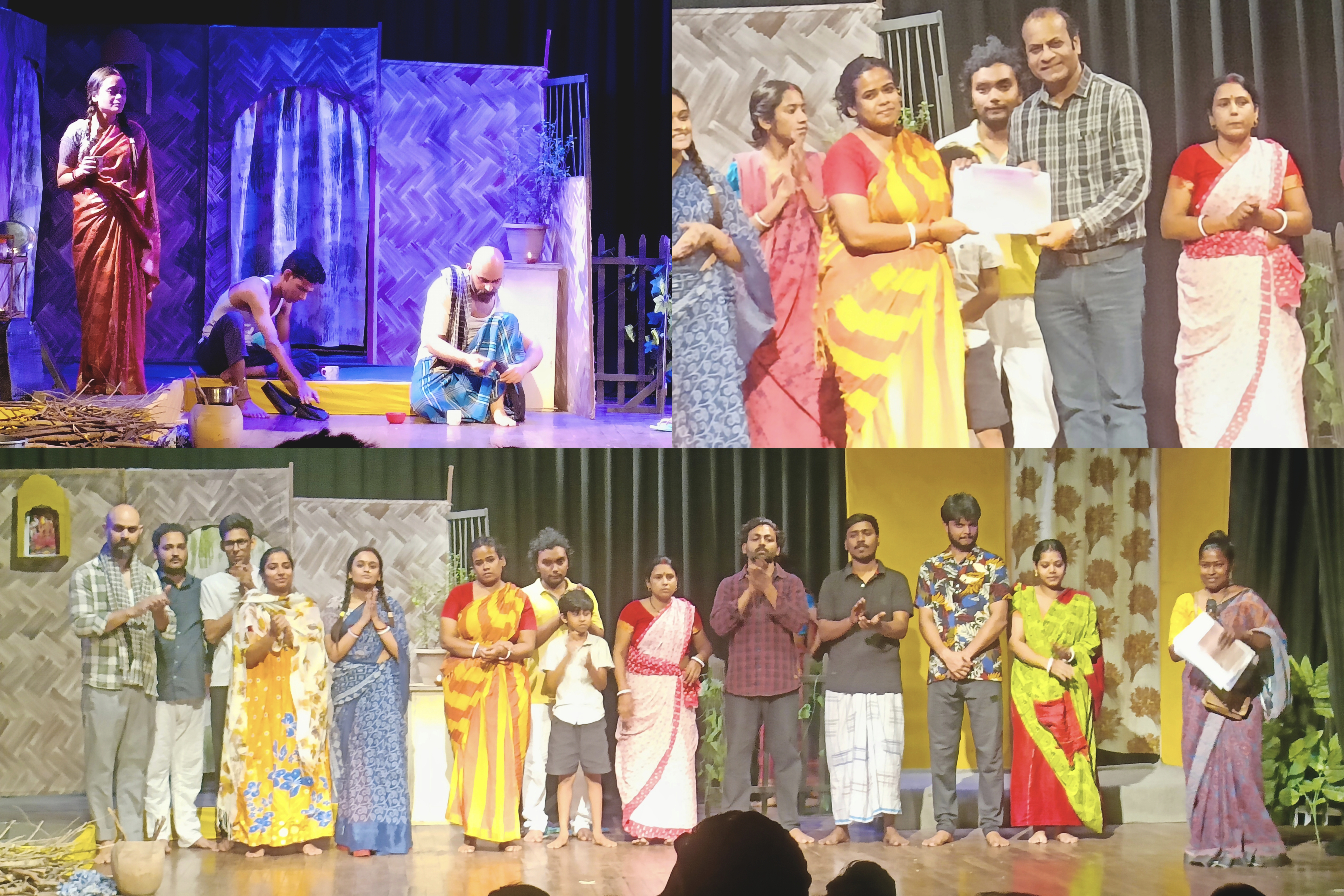
On 16th April, at Muktadhara Auditorium, Gole Market, New Delhi, Drishyam Trust presented the poignant play “Astitva”, written and directed by Sampa Mandal. The production emerged as a deeply moving theatrical experience that explored the emotional and socio-economic struggles within a fragmented family structure.
Set against the backdrop of a Bengali household, Astitva unfolds the story of a family that, despite having several members, lacks a stable male figure to shoulder responsibility. At the center of this narrative is Shabbo, a resilient woman who becomes the sole pillar of the household. Through her journey, the play examines themes of sacrifice, gender roles, emotional neglect, and survival under pressure. Her children—Nirmala, Parvati, and Abhijeet—represent different shades of vulnerability and conflict, while the absence and indifference of the male members intensify the crisis within the family.
As the narrative progresses, Shabbo is seen working in others’ homes to sustain her family, often borrowing money and enduring humiliation. The play skillfully portrays how even in such dire circumstances, familial bonds weaken instead of strengthening. The climax is both tragic and thought-provoking, culminating in Shabbo’s ultimate act of despair, leaving the audience shaken yet introspective about societal apathy and the cost of silent endurance.
The performances were sincere and emotionally grounded. Shikha Arya, as Maa (Shabbo), delivered a compelling portrayal filled with depth and restraint. Harsh Sharma (Subhash), Mani Thareja (Nirmala), Astha Sharma (Parvati), and Gagan Chaudhary (Abhijeet) contributed effectively to the layered family dynamics. Sachin Kumar (Mama) added nuance to the unfolding tension. The ensemble of neighbors—Koyena Mondal, Kiran Sharma, Megha, Prashant Kumar, Muhammad Siraj, Laxmi Khang, and Shamshad Ali—brought a sense of realism and community presence to the stage. The child actor Daksh Sharma stood out with a natural and unaffected performance.
Behind the scenes, the technical team played a crucial role in enhancing the narrative impact. Aditya Mukul (props) ensured authenticity in the visual detailing, while Arun Mishra’s costume design reflected the socio-economic background of the characters effectively. The set designed by Sudeep Biswas remained minimal yet functional, allowing the performances to take center stage. The music, curated by Sampa Mandal, subtly heightened the emotional undertones without overpowering the scenes. Video support by Saif Ali Khan and poster design by Gagan Chaudhary complemented the production aesthetically. Shikha Arya, as Assistant Director, provided strong support in maintaining the coherence and rhythm of the performance.
At the conclusion of the play, the evening was further marked by a gesture of appreciation, as the artists were felicitated with certificates by senior theatre practitioners Shyam Kumar and Dr. Satya Prakash, acknowledging their dedication and contribution to the theatrical arts.
What makes Astitva stand out is its unflinching honesty. It does not rely on dramatic exaggeration but instead presents a stark, realistic portrayal of life’s hardships. The play raises important questions about familial responsibility, societal indifference, and the emotional toll of unacknowledged labor—especially that of women.
In conclusion, “Astitva” is not just a play but an experience that lingers. It compels the audience to reflect on the meaning of existence, dignity, and human connection. Drishyam Trust’s presentation, under the thoughtful direction of Sampa Mandal, succeeds in delivering a performance that is both artistically rich and socially relevant.