‘Aapatnama’: A Powerful Theatrical Reflection on India’s Emergency
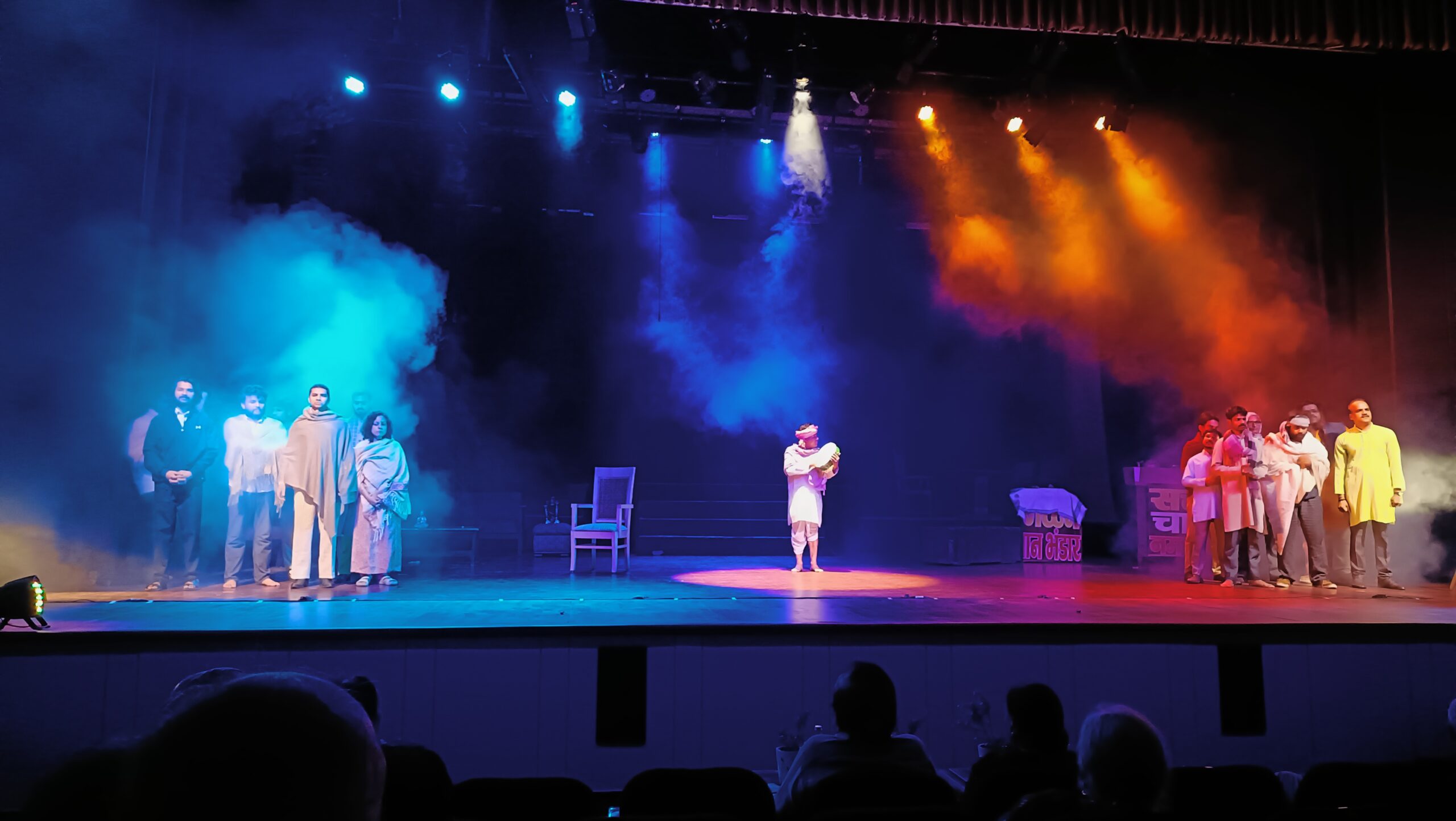
New Delhi | 8 July 2026

Kamani Auditorium witnessed a deeply moving theatrical experience as ‘Aapatnama’, based on Anil Goyal’s acclaimed novel Naya Savera, was staged under the auspices of the Hindi Academy, Department of Art, Culture & Languages, Government of Delhi. Adapted and directed by Sunil Rawat, the production revisited one of the most defining chapters of India’s post-independence history—the Emergency of 1975.
Rather than presenting history as a mere sequence of political events, Aapatnama brings to life the stories of ordinary people whose lives were transformed by fear, uncertainty, and state control. The production portrays the atmosphere of censorship, arbitrary arrests, restrictions on civil liberties, and the silent struggles of countless families. The controversial forced sterilization drive also finds its place within the narrative, illustrating how government policies deeply affected the everyday lives of common citizens.

At the heart of the production is Anil Goyal’s compelling writing. His narrative goes beyond political commentary, capturing the courage, resilience, and quiet resistance of people who endured one of the darkest periods in India’s democratic journey. The play succeeds in transforming historical memory into an emotionally engaging theatrical experience.

One of the production’s greatest strengths was its music. Thoughtfully woven into the narrative, the songs became an emotional bridge between scenes, enriching the storytelling and adding depth to the dramatic moments. Their powerful lyrics and soulful compositions remained with the audience long after the performance ended.

The ensemble cast delivered sincere and engaging performances, creating a convincing portrayal of life during the Emergency. The principal cast included Kapil Pal, Komal Munshi, Raj Sharma, Prasoon Narayan Srivastava, Komal Singh, Prajanya Arora, Meenakshi Rajdan, Priyanka, Abhishek Anand, Ishwarchand, Aarav, Ritesh, Aditya, Vikramaditya, and Vishnu. The production was further elevated by Rajeev Singh’s music, Dalchand’s costume design, Divyang’s lighting, and Rashid Khan’s makeup, all of which contributed significantly to the overall theatrical experience.

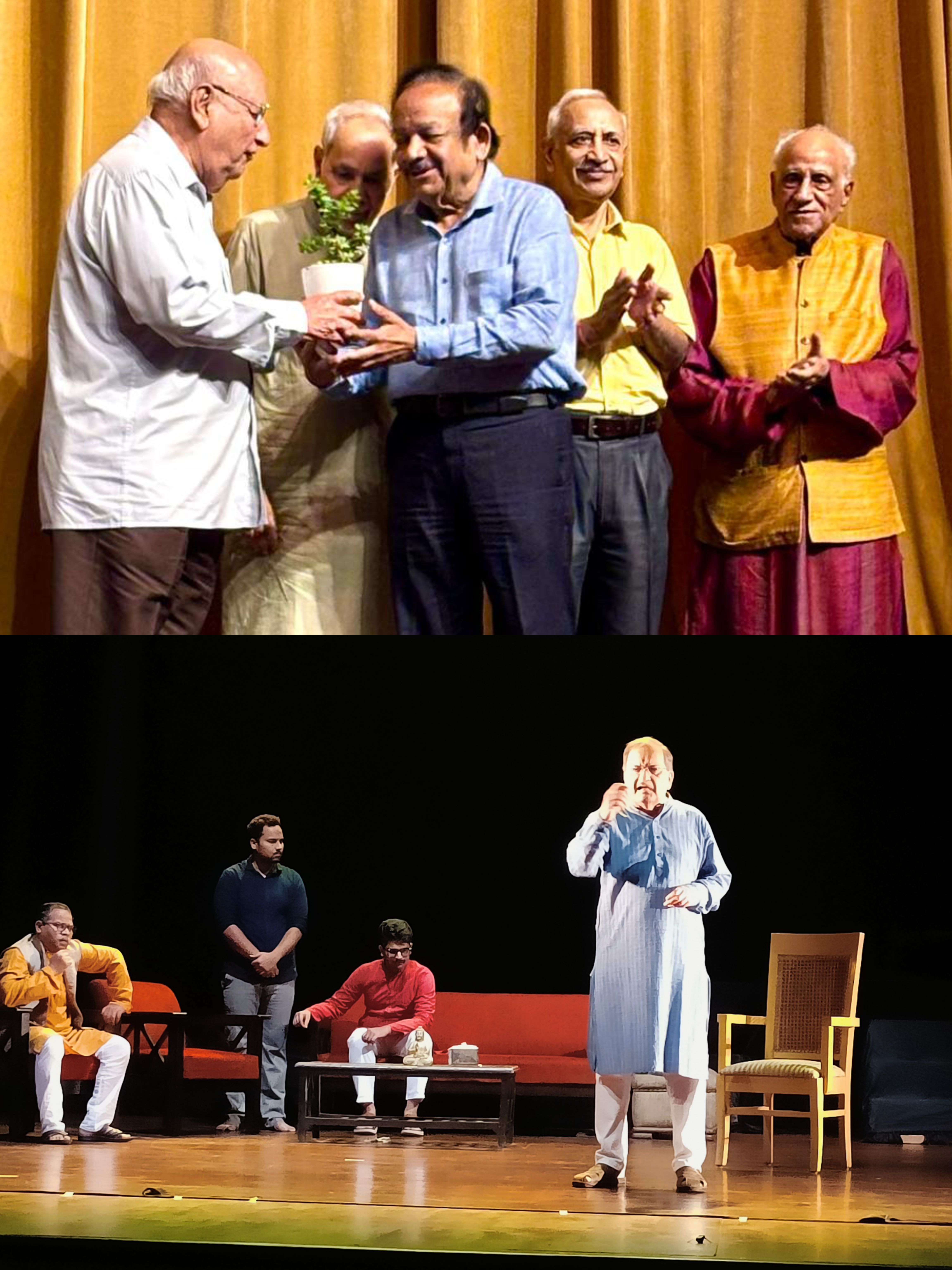
The evening was graced by several distinguished personalities, including former Union Health Minister Dr. Harsh Vardhan, Ram Bahadur Rai, Chairman of the Indira Gandhi National Centre for the Arts, senior journalist K.N. Gupta, eminent playwright Prof. Pratap Sehgal, and renowned theatre writer Dr. Harisuman Bisht, along with leading theatre practitioners, journalists, and literary figures. Adding a profound historical dimension to the occasion were individuals who had been imprisoned during the Emergency, as well as those who had courageously provided shelter to people during those difficult times.

In his address, Ram Bahadur Rai described the production as a significant effort to preserve an important chapter of India’s history through literature and theatre. Dr. Harisuman Bisht praised Anil Goyal for his insightful portrayal of the period and the remarkable way in which historical realities were woven into the narrative.

The evening concluded with the introduction of the entire cast, warmly applauded by the audience. As a gesture of appreciation, Dr. Harisuman Bisht felicitated director Sunil Rawat by presenting him with a sapling, symbolizing creativity, growth, and the enduring spirit of theatre.

More than a historical play, Aapatnama is a poignant reminder of the value of freedom, democracy, and human dignity. With its compelling narrative, evocative music, committed performances, and thoughtful direction, the production emerged as an unforgettable theatrical experience that left the audience reflecting on the lessons of history and their relevance today.

Ek Thi Ladki Urf Ve Kuch Pal: A Tale of Three Generations Unveiled at Bharat Rang Mahotsav 2026

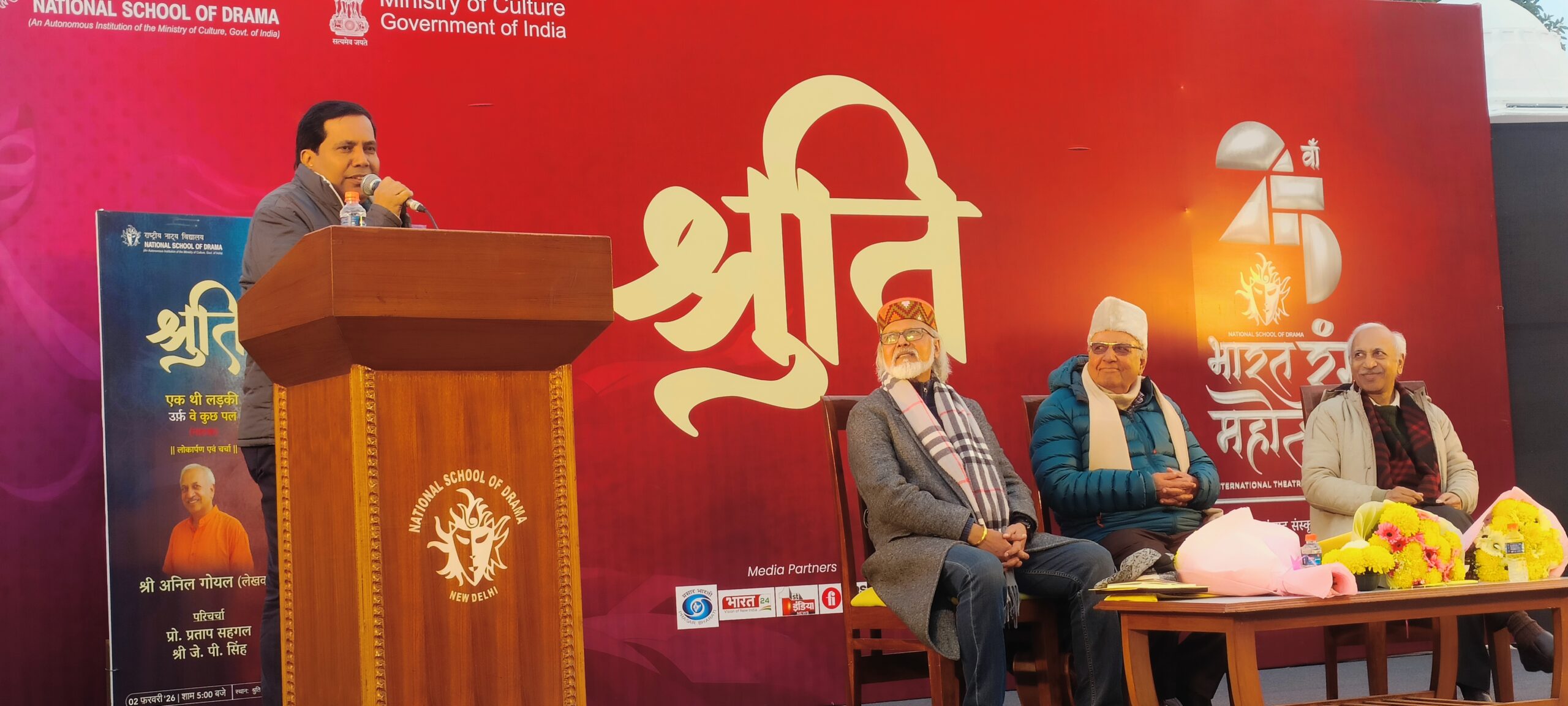
As part of the ongoing Bharat Rang Mahotsav (BRM) 2026, the National School of Drama (NSD) recently hosted a compelling book launch and panel discussion for Ek Thi Ladki Urf Ve Kuch Pal, a new play by veteran journalist and playwright Anil Goyal.

Far more than a mere showcase of performances, BRM continues to serve as a vital intellectual hub where theater practitioners, scholars, and students converge to explore the evolving landscape of dramatic literature.
Memory as a Narrative Tool
Held at the Shruti Manch within the NSD campus, the event was moderated by Prakash Jha, who steered the conversation toward the play’s unique structural and linguistic nuances.

Anil Goyal described the work as a pure love story, spanning a vast temporal arc from 1974 to the present day. By weaving together the experiences of three generations, the play offers a panoramic view of changing emotional sensibilities.
Key highlights of the discussion included:

  • Non-Linear Storytelling: The play eschews a traditional chronological plot, moving instead through the fluid corridors of memory and emotion.
  • Dual Personification: In a striking directorial choice, the protagonist is represented by two versions on stage simultaneously—the younger self and the elder self—symbolizing the internal dialogue between past and present.
  • The Language Debate: Addressing the “Ritikaal” (classical/ornate) influence on his prose, Goyal noted:

“Today’s youth possess a remarkable sensitivity. Even if the language feels ‘old-world,’ their willingness to embrace its depth is a heartening sign for the future of Indian theater.”

Distinguished speakers Prof. Pratap Sehgal and Shri J.P. Singh emphasized that the play prioritizes the “state of mind” over mere plot points. They noted that because the narrative returns to the past as frequently as a flickering memory, it defies conventional scene-and-act structures, lending it a distinct, avant-garde identity.

The panelists praised the work for its delicate portrayal of womanhood, time, and the ephemeral nature of “lost moments.”

The launch of Ek Thi Ladki Urf Ve Kuch Pal underscores the true essence of the Bharat Rang Mahotsav: viewing theater not just as a staged spectacle, but as a living tradition of dialogue and ideas. Anil Goyal’s latest contribution is a testament to the enduring power of simplicity and the complexity of the human heart.


गली दुल्हन वाली

गली दुल्हन वाली
टिप्पणी — अनिल गोयल

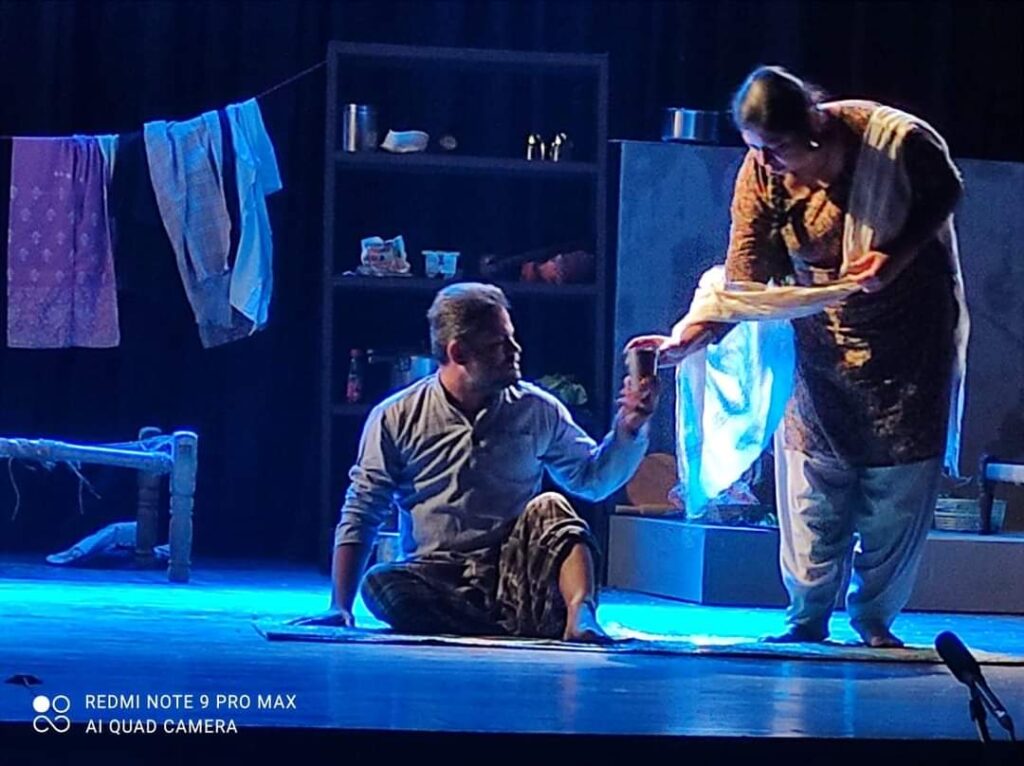
दिल्ली की रामलीला से अपने अभिनय-जीवन का प्रारम्भ करने वाले सुभाष गुप्ता 1975 में ‘नाटक पोलमपुर का’ में समरू जाट की भूमिका से ‘अभियान’ रंगसमूह से जुड़े. अभियान की स्थापना इसके कुछ ही पहले, 1967 में, दिल्ली के कुछ उत्साही रंगकर्मियों ने की थी. सुभाष गुप्ता के द्वारा ‘अभियान’ के लिये रूपान्तरित और निर्देशित नाटक ‘गली दुल्हन वाली’ का प्रदर्शन 15 अप्रैल 2023 को दिल्ली के लिटिल थिएटर ग्रुप प्रेक्षागृह में हुआ. यह नाटक मीरा कान्त की इसी नाम की कहानी पर आधारित है. केवल सन्दर्भ के लिये, मीरा कान्त अपनी इस कहानी को स्वयं भी एकल नाटक के रूप में रूपान्तरित कर चुकी हैं.

‘गली दुल्हन वाली’ नगीना नाम की एक अनपढ़ स्त्री के संघर्ष की कथा है. नगीना विवाह के पश्चात् एक कसाई रज्जाक की ‘दुल्हन’ बन कर आती है, और अपने पति के द्वारा पीटे जाने और दुर्व्यवहार का शिकार होती है. वह जिस गली में रहती है, वह गली ही नगीना के दुल्हन वाले रूप का वहन करती हुई ‘गली दुल्हन वाली’ के नाम से पहचानी जाने लगती है. नगीना काफी समय तक अपने पति के दुर्व्यवहार को सहती रहती है. लेकिन जब वही सब कुछ उसके बच्चों के साथ होता है, तो वह इस सब को अस्वीकार करके अपने बच्चों की रक्षा के लिये खड़ी हो जाती है. वह शिक्षा को ही अपने बच्चों के उद्धार का माध्यम मानती है, और इस विषय पर अपने पति से किसी समझौते के लिये तैयार नहीं होती. अपनी नाबालिग बेटी के एक बड़ी वय के आदमी के साथ विवाह के प्रश्न पर वह खुल कर अपनी बेटी की रक्षा में आ जाती है. उसके पड़ोस में रहने वाली एक हिन्दू महिला, गौरी की माँ एक पड़ोसन के नाते उसके इस संघर्ष में उसका साथ निभाती है. किस प्रकार से अत्यन्त साधारण से लगने वाले प्राणी छोटे-छोटे संघर्ष कर के समाज में बड़े परिवर्तन ले आते हैं, इस नाटक को देखने से नजर आता है. यह नाटक मनुष्य की इच्छा-शक्ति के बल को रेखांकित करता है. अपने पति से लगातार पिटते रहने वाली वह अनपढ़ स्त्री एक सीमा के बाद, केवल अपनी इच्छा-शक्ति के बल पर ही, उसके विरुद्ध खड़ी हो पाती है और उसके सामने झुकने से इंकार कर देती है.

बहुत वर्ष पूर्व, दिल्ली में एक बंगाली नाटक ‘शानु रॉयचौधरी’ में स्वातिलेखा सेनगुप्ता को एकल अभिनय करते देखा था. भाषा का अवरोध होते हुए भी, लगभग ढाई घंटे के नाटक में मंच पर स्वातिलेखा अकेले ही लगातार दर्शकों को बांधे रही थीं. कुछ वैसा ही अनुभव इस नाटक में श्रुति मेहर नोरी को नगीना की भूमिका में देख कर हुआ. सुभाष गुप्ता ने इस एक-पात्रीय कहानी को रूपान्तरित करते हुए नगीना के पति रज्जाक का भी चरित्र नाटक में बना दिया है. रज्जाक की भूमिका में नीतीश पाण्डे के पास सीमित ही सम्भावनाएँ उपलब्ध थीं, जिनका उन्होंने अच्छे से उपयोग किया. लेकिन नगीना के चरित्र में विद्यमान अपार सम्भावनाओं का श्रुति ने भरपूर उपयोग किया, और नाटक को दर्शनीय बनाया. नीतीश और श्रुति दोनों ही कलाकार हैदराबाद के निवासी हैं, हालाँकि नीतीश का मूल स्थान उत्तर भारत है.

और इसी कारण, नाटक के संवादों में विशुद्ध पुरानी दिल्ली या दिल्ली छः के उच्चारण को प्राप्त कर लेने का श्रेय नाटक के निर्देशक को भी जाता है. हैदराबाद के भारी-भरकम लहजे वाली उर्दू को छोड़ कर उन्होंने श्रुति से पुरानी दिल्ली वाले लहजे को इस नाटक में बहुत सफलता के साथ प्रयोग करवाया. दिल्ली छः की भाषा का उसकी बारीकियों को जाने बिना ही विभिन्न फिल्मों में बड़ा व्यापारिक उपयोग किया गया है. लेकिन सुभाष गुप्ता का स्वयं का बचपन वहाँ बीता है, अतः वे इस नाटक की भाषा के साथ न्याय कर पाये हैं.

एकल नाटक में एकरसता या मोनोटोनी की समस्या सदैव ही रहती है. यों भी, दिल्ली का आजकल का दर्शक बहुत जल्दी ऊब जाता है. ऐसे में, एक तो नाटक के आलेख को सम्पादित करके कुछ छोटा करने की आवश्यकता है. दूसरे, इस नाटक में एकरसता की समस्या कुछ अधिक ही अनुभव की गई, विशेषकर नाटक के पूर्वार्द्ध में, जब तक रज्जाक का प्रवेश नहीं हुआ था. दर्शकों को बांधे रखने के लिये निर्देशक को इस पक्ष पर विचार करना होगा. आलेख में कुछ छोटे-मोटे परिवर्तन करके नगीना के इस सशक्त चरित्र को कुछ और अधिक बहुआयामी बनाने की सम्भावनाएँ नाटक में हैं. लगातार फ्लैशबैक में चलने वाले इस नाटक में, गली में बहुत सी घटनाएँ घटित होती हैं. गली में घटित होने वाली घटनाओं को दिखाने के लिये, घर के दरवाजे को किसी अन्य स्थान पर स्थानान्तरित करके भी बहुत सशक्त तरीके से प्रस्तुति की एकरसता को समाप्त किया जा सकता है. इससे नगीना और रज्जाक दोनों ही का चरित्र और अधिक उभर कर आयेगा.

एकल नाटक होने के कारण कलाकारों के परिधान में बहुत अधिक सम्भावनाएँ नहीं थीं. और अभियान तो बिना टीम-टाम के, अपनी सादगीपूर्ण, यथार्थवादी प्रस्तुतियों के लिये ही जाना जाता है. फिर भी, फ्लैशबैक के दृश्यों में यदि एकाध स्थान पर कलाकारों के परिधान बदले रहते, तो नाटक की एकरसता को तोड़ा जा सकता था.

अभियान पिछले पचपन वर्षों से अधिक से नाटक करता आ रहा है. उनके पास मंच पर और मंच के पीछे एक बहुत सशक्त टोली है. उस सशक्त आधार को प्रयोग करके, और कुछ नये नाटकों और आलेखों का प्रयोग करके अभियान दिल्ली के सुप्तप्रायः रंगमंच-जगत में नई जान फूँकने की क्षमता रखता है. इसके साथ ही साथ, उनके पास अपना एक बहुत सशक्त दर्शक-वर्ग भी है. ऐसे में दिल्ली के दर्शकों की अभियान से कुछ अलग विषयों पर, और कुछ नये नाटकों की अपेक्षा करना अनुचित नहीं होगा! हिन्दी में पुराने और नये भी बहुत से अच्छे नाटक हैं. आशा है कि अभियान इस ओर ध्यान देगा.

आजकल दिल्ली में नाटक करने के लिये प्रेक्षागृह तीसरे पहर दो बजे ही मिल पाता है! और पाँच या छः बजे शो होता है. उसके पहले कलाकारों के द्वारा एक रिहर्सल भी जरूरी होती है. ऐसे में, मंच-आलोकन करने वाले व्यक्ति को कठिनाई से एक-दो घंटे का ही समय लाइट-डिजाईन करने के लिये मिलता है! इतने कम समय में क्या मंच-आलोकन सम्भव है? और यदि यह सम्भव नहीं है, तो क्या दिल्ली में मंच-आलोकन की कला समाप्त हो जायेगी? इस प्रश्न पर दिल्ली के रंगकर्मियों को गम्भीरता से विचार करना होगा, और इस विषय में कुछ कदम उठाने ही होंगे; अन्यथा, आजकल की तथाकथित “इंटैलीजैंट लाइट्स” मंच-आलोकन की प्रयोगशीलता को समाप्त कर देंगी!


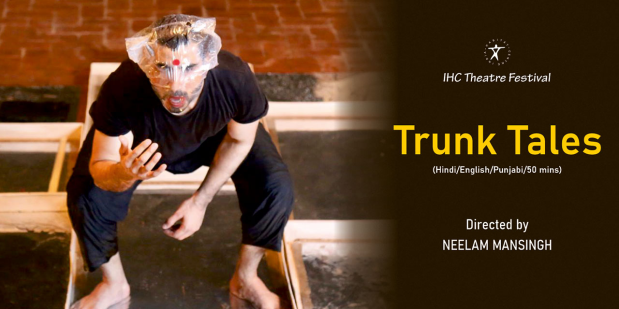
‘TRUNK TALES’ lives up to Neelam Mansingh’s unique presentation style

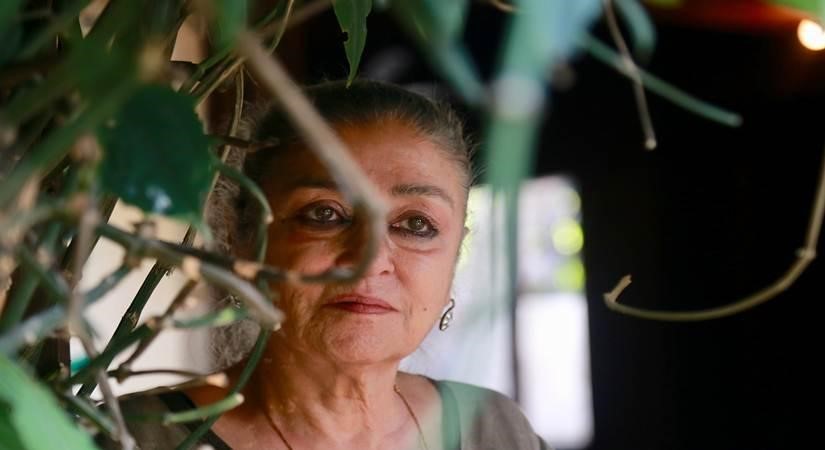
Neelam Mansingh Choudhry is a well-known name in Hindi theatre world.  A student of Ebrahim Alkazi at the National School of Drama, she has been running her group, The Company in Chandigarh since 1983.  Her work always shows the high standards of production in her presentations, displaying the values inculcated by Alkazi in his students.  Her plays like Kitchen Katha, Yerma, Naked Voices, Nagmandal etc. have received loud applause from the public, as well as received rave reviews from the critics.  Her work has also earned her well-deserved international recognition.

Recently she brought her Hindi/English/Punjabi play ‘Trunk Tales’ to the IHC Theatre Festival in Delhi.  It was a solo performance, although bearing the same old well-known mark of hers on the production.  Her plays are generally based on her everyday observations and experiences of day-to-day life.  She is master of creating magical moments out of the daily mundane chores of household.  Remember the childhood games… ‘Akkad bakkad bambe bo assi nabbe poore sau…’, or ‘Machhli jal ki rani hai…’?  That innocence of the childhood was present on the stage in this play… the innocence, which remains with us through our life-time, but which also becomes the ‘other’ thing of our life as we grow old!

A non-scripted performance piece, the play ‘Trunk Tales’ revolved around telling stories in a Dadi-Nani style, bringing out stories out of their ‘potlis’… only that, here, the ‘potlis’ have been replaced in this play by four trunks kept on the stage.  Stories tumble out of these trunks one by one, bringing us face to face with that ‘otherness’ in life.  The point she wanted to stress upon was that we generally live within certain boundaries, as per the set rules of behaviour.  Anything not conforming to these sets of rules creates a sense that the person going beyond these boundaries of rules is not one of us… he is the ‘other’ person in the society.  She takes support of poems, childhood stories and little play-songs, small episodes, some memories for presenting her ‘non-linear’ stories, to tell about the people who don’t really fit in,” she said to someone in an interview.

These stories strived to present the ‘otherness’ in life… stories on politics of water, body-abuse including rape and child abuse representing no control on one’s own body, hunger, and finally trans-gender behaviour…  It is difficult to present the ‘otherness’ in gender in a palatable way, but Vansh Bhardwaj deserves applause for performing this difficult task so well… he knows how to use his body on the stage.  “I had to develop different body languages and understand the psychology of the characters.” Vansh said in an interview some time ago!  I have seen Swatilekha Sengupta performing a full two and a half hours long solo ‘Shanu Roychoudhury’ on this very stage many many years ago.  I hope to watch Vansh repeat that wonder some time, under the direction of Neelam Mansingh Choudhry sometime in future.

A Scene from Trunk Tales

In ‘Trunk Tales’, she had kept a few trays filled with water on the floor of the stage.  With water, she wanted to present an essential element of life, which has a flexible nature, a fluidity, and gets easily moulded to take any shape.  Water worked as the element of life represented in the stories told by the actor on the stage, who presented stories full of vigour and vibrancy of every daily life!  Keeping the sets to a minimal is her known style as well as the need of the hour in today’s constrained situations as far as presenting a play in an auditorium is concerned.  Keeping the sets to a minimal also helps her create the ambience through the props and the activities of her actors on the stage.

She has done a play ‘Kitchen Katha’ on the theme of fire (although she concedes that the theme of fire was not on her mind when she did ‘Kitchen Katha’, neither was water on her mind while doing this play).  Now she has done a play with water as its theme.  We hope she comes out with the remaining three elements of life, earth, air and pran!

The thing that we missed the most in this play was live music by the folk singers of Punjab, her famous hallmark.  She has done a lot in the past to revive Punjab’s folk music, which had suffered a severe blow in the troubled times of Khalistani terrorism in Punjab in the eighties of the twentieth century.  She tells that it is Corona to be blamed for missing on music… our theatre-persons have not been able to come out of the after-effects of Corona still.  She avers, “we are still coming out of the effects of Corona, and it will take some time before we can come back to our own basics”.

Best thing about her plays is that she does not try to make them a make-believe world… she actually brings the reality to the auditorium.  Some of you might have enjoyed hot jalebis prepared by the ‘halwai’ in the auditorium itself while watching her play ‘Kitchen Katha’!  Alas, the jalebis did not reach me, as I was sitting in the sixth-seventh row on that day!  She had taken inspiration from her childhood impressions of the tradition of ‘langar’ in Punjab for ‘Kitchen Katha’, where community cooking used to take place.  In ‘Trunk Tales’ also, Vansh has a thali full of real food, and enjoying it actually on the stage, instead of empty thalis, cups and glasses, through which the directors ask the actors to pretend eating or drinking … this adherence to ‘reality’ makes Neelam’s plays a REAL treat for the eyes!

She plans to do Girish Karnad’s Hayavadana in Hindi coming February.  It is being planned to be done on a big scale.  She avers that the actors from across the country will be a part of this production.  She is using Karanth’s translation for this production, although with some new insights into the play, keeping in mind the sensibilities of the modern times.

Neelam Man Singh
Neelam Man Singh

On the issue of the trends in play-writing these days, she does feel that more new plays are needed with newer sensibilities in mind.  She feels that there should be deeper connection between the writer and director while developing new plays.  Making one’s own script by the director, in collaboration with the actor/s, is a new trend according to her, although it is not new… it has always been resorted to by the directors and writers.  She quoted the making of Mohan Rakesh’s plays by Alkazi, and also pasting of the new plays on the walls of Paris by Moliere, to solicit the response from the public directly during the writing of the play!