The General having crossed a Torii boundary – Drawing with a Torii and a figure
The trajectory of my art practice takes on a zigzag path sometimes; and at other times a circuitous one or a U-turn that I didn’t expect to take. The work “The General” is one such. I started off with figure sculptures and then went on to study life drawing at Boston University.
AstroVish with Manohar Khushalani : Consequences of the Conjunction between Saturn and Jupiter
Astrology with AstroVish
StageBuzz is a Lifestyle Magazine. Any thing creative, cultural, insightful that adds to your quality of life, finds its way here. So why not Astrology for those who believe in it With this webinar we begin a column on Astrology
Watch the webinar below. Vishwanath Hiremath alias AstroVish, the Astrologer, in Conversation with Manohar Khushalani on the much hyped conjunction between Saturn and Jupiter which happened on 21st Dec. 2020. This was webcast on TheStageBuzz youtube channel on 28th December 2020. Publishing it for those who havent yet watched it.
AstroVish has an infinite fascination for Lord Saturn● Shani Dev. He would drive from Goa to Pune then Shanishinganapur carrying Honey, Oil, Bananas, Dry fruits, Mithai for his worship and has been praying every Saturday for 5 years. It all started with a book gifted to him: The Greatness of Saturn by Robert Svoboda. Deep studies of 11 years. A gifted Vedic Astrologer combines Indian Mythology, Planets and Blessing of Lord Saturn. – Radheka Shrinagesh
Watch AstroBuzz created by The Cosmic Dance of Heavenly Bodies See All Episodes
30 Best Spanish Movies on Netflix (2021) | Second-Half Travels
Watching Spanish-language movies on Netflix is a great way to practice vocabulary and listening skills. Spanish films also allow you to learn about other cultures and gain exposure to different accents and slang.
Here are some of the top Spanish movieson Netflix streaming in the US as of January 22, 2021. If you’re not in the US, just click the title to check if the show is available in your country. Watch these films while you can, because content disappears as licensing agreements expire. See the current list on the link below. If you are not in USA share in the message box below which of these films were available in your country.
Theatre Union’s plays on Feminist Issues and those of Social Relevance
Firstly since Women’s Day just happened this month, it is important to recall the innumerable street plays we did on women’s issues mostly under the banner of Theatre Union and Workshop Theatre
But here we are discussing only Theatre Union
‘Om Swaha‘ was about dowry and bride burning. It contributed towards sensitizing the media and the nation on this issue.’
‘The Rape Bill” was about custodial rape and insensitive cross examination of victims in courts. It was performed when a select committee was examining the new rape bill before it became an act in the parliament. It also informed women about their rights.
‘Pardon ka Parcham’ was prepared by us after Roop Kanwar an 18-year old Rajput woman committed Sati on 4th September 1987 at Deorala village of Sikar district in Rajasthan. These plays were collectively evolved by our group Theatre Union.
Marz ka Munafa was about Drugs (medicines) banned abroad because of their side effects, but dumped in the third world by Multinational Companies. We were assisted in research by Mira Shiva of barefoot doctors
Toba Tek Singh the legendary story by Sadat Hasan Manto was developed into a super successful street play about partition. It took us six months to evolve the play, finally one of our members, Umesh Bist, finalised the script.
All our plays were not street plays. Theatre Union did two proscenium plays both written by the radical nobel prize laureate Dario Fo
Can’t Pay Won’t Pay directed by Manohar Khushalani was a feminist play in which women shoppers protest against high prices in a Super Market in a very unusual way
Accidental Death of an Anarchist directed by Manohar Khushalani was about custodial death in a prison
Dario Fo had scripted both plays in his black comedy comic farce style
I would also like to recall our brothers and sisters in arms, an endless procession of street theatre co-warriors who came, sometimes stayed for a while and sometimes stopped briefly for a production or two and moved on. In no particular order they were: Anuradha Kapoor, Ravi Shankar, Umesh Bisht, Maya Rao, Vandana Bisht, Sushil Prashar, Sujasha Dasgupta, Chandrashekhar Iyer, Urvashi Butalia, Ragini Prakash, Vibhuti Nath Jha, Dr. Harivansh Chopra, Krishan Tyagi, Kumkum Sangaria, Rati Bartholomew, Dr.Ravi Mahajan, Satyajit Sharma, Tapush Chanda and me, Manohar Khushalani. If I have forgotten anybody then please remind me.
SLING SHOT: Let’s say we loved each other! Ojaswini Trivedi
Barbed chains
I don’t feel me when I’m with you For someone who swayed to your heart beat Stumbled upon the dancing shoes of our lives I don’t feel me anymore like the time when we were true. Like the two loyal birds living in a cage It was real? Right? Even if it was forced We learnt to grow, didn’t we? Even if you were my oxygen & I your only life jacket The last thread the lost hope The only chance at survival But let’s say we loved each other. Let’s believe the two birds lived in a seamless crave for freedom, where the abyss melted into the horizon. Shouldn’t you bring me closer to me, me to me, me to you, you to me? Then how are we here Resentful. Angry. When the thought of leaving you is like breathing in the first gasp of air Like every step away from you, Is one step closer to bliss.
Leading scholar of Indian classical dance, architecture, art history, culture Kapila Vatsyayan no more
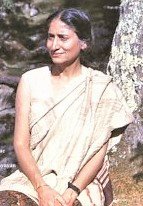
Kapila Vatsyayan in her younger days.
Dr Kapila Vatsyayan passed away peacefully at her residence (No.85, SFS Flats, Gulmohar Enclave, New Delhi), Wednesday 16th September, 2020 at about 0900 hrs, this morning, . She was a leading scholar of Indian classical dance, art, architecture, and art history. Many people felt she was the most authoritative commentator on these subjects.
She was formerly a member of parliament and also served as Secretary to the Government of India in the Ministry of Education, where she was responsible for the establishment of a large number of national institutions of higher education. She served as the founding director of the Indira Gandhi National Centre for the Arts. She was former President of India International Centre (IIC) and an IIC Life Trustee and the Chairperson of the IIC International Research Division. Bornon 25 December 1928 she was over 91 when she passed away
In 1970, Vatsyayan received the Sangeet Natak Akademi Fellowship, the highest honour conferred by the Sangeet Natak Akademi, India’s national academy for music, dance and drama; this was followed by the Lalit Kala Akademi Fellowship, the highest honour in the fine arts conferred by Lalit Kala Akademi, India’s national academy for fine arts in 1995. In 2011, the Government of India bestowed upon her the Padma Vibhushan, India’s second highest civilian honour.
Lamenting her demise, Film actor Sharmila Tagore said “I guess the final curtain comes to us all. I too have had some endearing moments with her.There was so much to learn from her.I admired & was inspired by her. Today where do we see people like her? With her knowledge & drive?Who is there to appreciate her legacy?”
Check Your Covid 19 Safety Zone Here
Keep this Blog open as you travel. Be sure if you are living in or traveling in a safe zone in India. Very effective try your address; it will show whether you are in a hot spot.
Click the link below and travel fear free.
For india.. Very effective try your address; it will show whether you are in a hot spot.
https://www.covidhotspots.in
Under the Grid of Sub Reality / Susmita Mukherjee
Hag
The old hag lay face down, Her dried hair up in the air, Like dry twigs after harvest. Her scrawny left arm upturned at an angle, as if not sure, whether for alms or in benediction; Her other hand, mottled, was tucked way under, gripping her squashed belly bag.
She lay there for eons, under the grid of the sub reality radars that were new in the neighborhood, their flickering light beams stinging her, serpent like, into convulsions.
Sometimes she moaned. At times she farted, and, noxious fumes volcano like, filled the air.
Too tired to be angry,she lifted her aged bum to pee, And out flowed waters that swirled and twirled in dizzy vortexes and caused unnecessary delay around the area.
Too tired to get up, she shook her head and colours, like flashing lightning, danced with the grid overhead and trapped her in place.
” I don’t like being watched, you wretches” she said, But the soundless sound, rumbled into the countless clatter of car honks, and busyness, as another coin dropped into her upturned hand.
” Can’t you spare an old hag who has done you no harm”? Her moan took the shape of a saliva drop that fell under her breath.
No, no, she must not give up! Not yet!
The hag knew that as long as she wrapped herself around her belly bag, her little ones would survive.
She remembers the hard years, when the singeing blast had ripped her right breast, her milk buds had scattered and mushroomed in the sky,
She remembers how her pubic rain forest had been blazed down by a careless cigarette.
She remembers not so long ago,bullets, bayonettes, bombs and blasts, whistling over her body,as she curled around her belly bag.
“Stop it”! she warned “Stop it”! she wailed “Stop it”! she whimpered a command.
But no one was listening to the old hag, Old Mother Earth, as she lay face down, Under the giant grid, Walked over, used and thrown, An old useless Mother.
Susmita Mukherjee 9- 4-2020
Balasubramanian G’s Play: Thoothukudi Massacre 13
Dramaturge & Director: Balasubramanian G
Group: NSD Diploma Production, New Delhi
Language: Hindi
Duration: 1 hr
The Play
The play aims to give voice to the dramatic event of Tuticorin Massacre and how non-democratic practices thrive, law and order deteriorates, the high-handedness of military and security forces prevails, and the common man’s life loses meaning. The play begins with the scene of protest against environmental pollution caused by a factory. The police resorts to baton charge and starts shooting at the unarmed innocent people. The play inevitably invites the audience to identify the hypocrisy of the so-called civilization in the contemporary world. The play also portrays the politics of atrocity and its ultimate purpose of acquiring power and wealth by exploiting and sacrificing the common people, who do not even understand the purpose for which they fight and die. The authoritarian body of the state and factory officials justifies this slaughter of democracy in the name of action against injustice. The people who are killed are neither the perpetrators of injustice, nor are they aware of the injustice. By showing how the authority and the management justify this massacre of innocents, the play tries to project the ambitions of the global powers to assimilate wealth and resources, and how these ambitions are realized through wars, neo-imperial political treaties and so on. The competing forces among the global powers work together but from different directions and for the same target – towards the ultimate and complete exploitation of the resources and territories of the people. Almost always, history has repeated itself in this way all around the world.
Director’s Note
The play centres on the brutal killing of unarmed innocent civilians in Tuticorin who were murdered for protesting against the toxic Sterlite Copper plant factory. The government itself seems to have ignored rules on the use of force to quash protests by firing at the heads of protesters rather than their legs. The government killed its own people without any mercy. This shows the fascist dictatorship mentality of the so-called democratic country. The greatest political invention of mankind is nothing but democracy. It enables for the people to regulate their leaders and to overthrow them without the need for a revolution. Collecting and documenting the data from the newspaper articles about those who became the victim of this protest against the Sterlite Copper plant factory, the play is a documentary theatre form with fictional elements. The play provokes questions in the mind of common people who believe in democracy. Who ordered the policemen to fire on the protestors? Why were highly advanced weapons used to disperse the crowd and under what law was this permitted? Why was no warning given before the firing? Is it really a ‘democratic’ country?
The Director & Dramaturge
Balasubramanian G is a director, designer and dramaturge. He is also an actor, light-designer, set-designer, sound designer and projection designer. He holds a Diploma in Dramatic Arts, with Theatre Technique and Design as specialization from the National School of Drama (NSD), New Delhi, India, M.P.A. in Theatre Arts and B. Tech. in Electrical and Electronics from Pondicherry University, and Film Appreciation Course from FTII, Pune. He has participated in many theatre workshops in New Delhi, Goa and Pondicherry.
The Group
This play is a part of National School of Drama’s graduate showcase of class 2019. It aims to provide a platform to encourage emerging theatre practitioners to share their work with a wider audience.
Set and Lights Sarthak Narula
Sound and Video Saras Kumar Namdeo
Music Marthandan, Abhishek, Prerna
Guitarist Raman Kakkar, Sounak Karmakar
Costume Boomisutha Das
Properties Suman Purthy, Snigdha Mondal
Stage Manager Harishankar Ravi
Video Guidance Sourov Poddar
Poster & Brochure Vishala R Mahale
Translation Vishala R Mahale
Carpentry Jiyual Hassan, Rizwan Ahmad
Sound Sourov, Ahsan
Dramaturgy & Direction Balasubramanian G
Contacts
Balasubramanian G
No.11, I-Block
Thiogue Mudaliar Nagar, Mudaliarpet
Puducherry, India – 605004
M: +91 7291001102
E: dir.balan@gmail.com
NSD Diploma Production, New Delhi
This play is a part of National School of Drama’s graduate showcase of class 2018. It aims to provide a platform to encourage emerging theatre practitioners to share their work with wider audience.