We make choices everyday and we also learn that we have to live with those choices and even if they don’t prove to be what we desired, we had no options. What if I say no we have the possibilities and the capacity to find alternatives as we have the power control to choose our future. It simply lies within our responses to situations. We don’t need to allow ourselves to loose control every time but within our positivity we can show how we are influencing not only our behaviour to others and also ourselves. The tiny ripples are enough to keep your peace and no tsunamis of reactions are needed. Drawing boundaries is peace however its not a battle ground where we need to hold a gun to everyone’s head. We can create our safe space just by expressing strongly how we feel by the choice of our words and not by loud dramatic actions alone.
One needs tension to show our feelings and that’s agreeable but the value of tension is only when used rarely. That makes us from being described as the eternal victim to the empowering one. We will be valued for both our passivity as well as proactivity. That’s what will make us all the true author of our own story and we become the captain of the soul. Well its ok to fall, but is it not better to stand up again without the boxing gloves in our hands! The obstacle blocks will now become the building stones for our path for our success. Let us keep the power control in our hands now forever!
While doing so we will be clearly able to see how to influence others without harming ourselves or those within our sphere. We will hence finally know how to be kind to ourselves first, unlocking our potential for growth and success. Believe me when I say I sleep soundly now as I know I have built a future that I deserve, safe. caring and protected by my power control alone! Enjoy the tranquility created forever to soak in the new comfort of our innings in our new days to come!
A Little Bit of Sanity Goes a Long Way
As a theatre artist and performer I always was led to believe that insanity or eccentricity is a part of being more aesthetic. However, I always seemed to think the other way. While being a little irregular always helps in creativity, as being mundane and everyday seems to find an overload in our creative work. We all are entertainers after all and its within the discords of the humdrum, we all seem to find our harmonious chords, that enthrall our audiences. However what if I claim that its in the regularity, in the moments of sanity I have found my true peace would I be mocked by my fellow thespians?
I would like to urge you to look at the value of sanity, the value of being together in the disjointedness of our careers. When I for instance talk to my friends who are lawyers, teachers, heads of academic institutions or doctors, I get insight into the value of lives that see beyond the stage. They help me focus back into my world and help me launch into the painful yet happy insanity of my vocation, yes they are my pillars! They help me sharpen my tools as they help me realise what it means to be living real in the world. They assist me in reaping the fruits of my labour.
I know that many times I am not a expected guest at a party and I find myself socially awkward many times. I am capable of making a wrong move or saying something innocuous like, ” don’t you think this bright blue does not suit the vibe here?” I can hear myself sitting quietly in a corner and if I do get attention I get flustered and wanting to move away from the spotlight. My conventional friends teach me the value of me being at ease and the value of soundness in my disjointedness. I suggest strongly for all of us who are artists to find a few friends who are regular and talk to them, take their suggestions and even if you don’t want to you will only gain a 2 am friend who will be willing to hear you as much as you will want to hear them. Take out your phone, scroll and find your lost companions to sing along a new song mindlessly, mindful!
A Feather Found
We often get dismayed, disheartened, and many times with no spirits. Our flights seem only imaginative and futile as our feathers to that journey are weighted down by our own inner fears. But, what if I say everyday a new feather will be found, will I be termed as the hopelessly optimistic one? Optimism has a great values as it creates you the vision to find that gizmo to take you across the horizon across the high tide. Sometimes it is just lying there unused and unnoticed until that one day when you take that soft launching pad to soar through. It thus is just a few steps away only to be noticed by our eyes. We can create that wonderous journey, which will then define our success story. Even if we are only short birds of flight like the peacocks, we can dazzle our thoughts by the bright and pretty sapphire blues dancing to the joyous beats of the day! It sounds exciting does it not?
You many smirk and think, ” there she goes again”, but I often get disappointed myself and truthfully out of energy. In those moments I just take large steps back to see everything in totality as though I am measuring the sky. I simply break it down and after a few days of rest, I literally scrounge and search, rummaging through through my mind to find my golden ticket. Even if I find a little rope to tug me out, I feel happy enough to become overjoyed later. So my dear friends all wish to say is ” Nil Desperandum” never despair, as we have that frill to dress our day bright forever, just a few corners away!
When Life Goes in Yawns
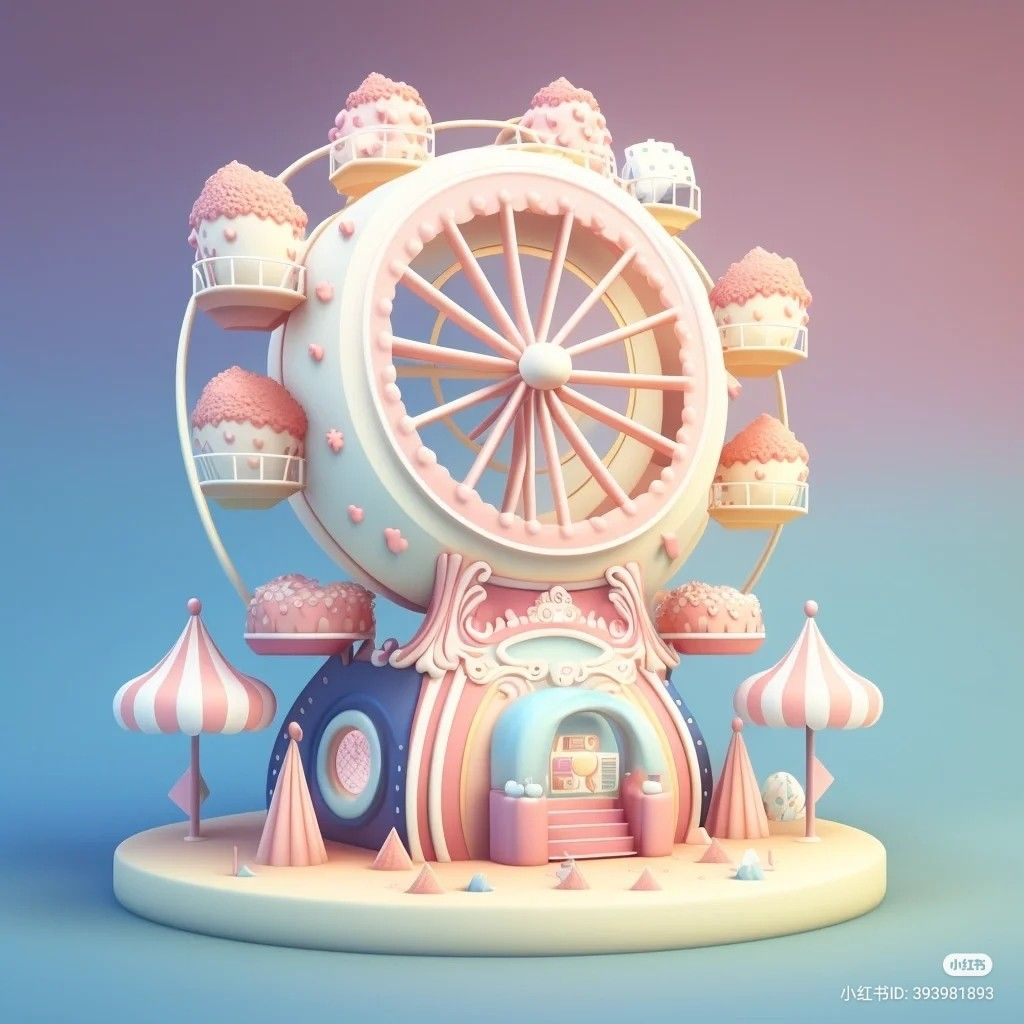
Many times we don’t know why we are feeling unfulfilled, despite our desires being met, despite having the house going, despite the hot meals made for everyone, and yet despite the occasional meet and greet, why do we feel our lives going in a complete slow motion graph. The road of our lives seems endlessly straight and we seem to long for minor bumps to break that motoring monotony. Yes, life is a yawn and sometimes and we just don’t know how to shake off our half dazed, in and out effect, and create a gigantic colourful prism. How we wish we had the steering wheel in our hands to make our journey a wonderful exciting Ferris wheel of gigantic complexity.
Those minutes might not, never come, as no one wants to go on risk taking roller coasting ride, but yes we can create a few moments of magic. We can add sprinkles of joy on little cup cakes of passing time. What we need to do to bake that little blue puff cream of joy, is simply take “time off”. That should be your little “me time” ! Maybe a walk around the aisle of a mall simply window shopping, drinking a cup of that awesome hot expresso, or going to your nearby book store and reading a couple of pages, or simply walking the friendly dog of your neighbour whom you love to pat so much! So, its not so tough to identify that single solid moments, that might break the daily humdrum and make you sing an occasional happy tune. This could be your own special loony tune to come back to happiness of your day to days. Enjoy the bake me downs forever in your life, my special me time friend and enjoy the bumpity bumps!
When Cinema Meets Consciousness: Humans in the Loop Inspires a Powerful Dialogue at Sanskar Bharati
New Delhi | June 28, 2026
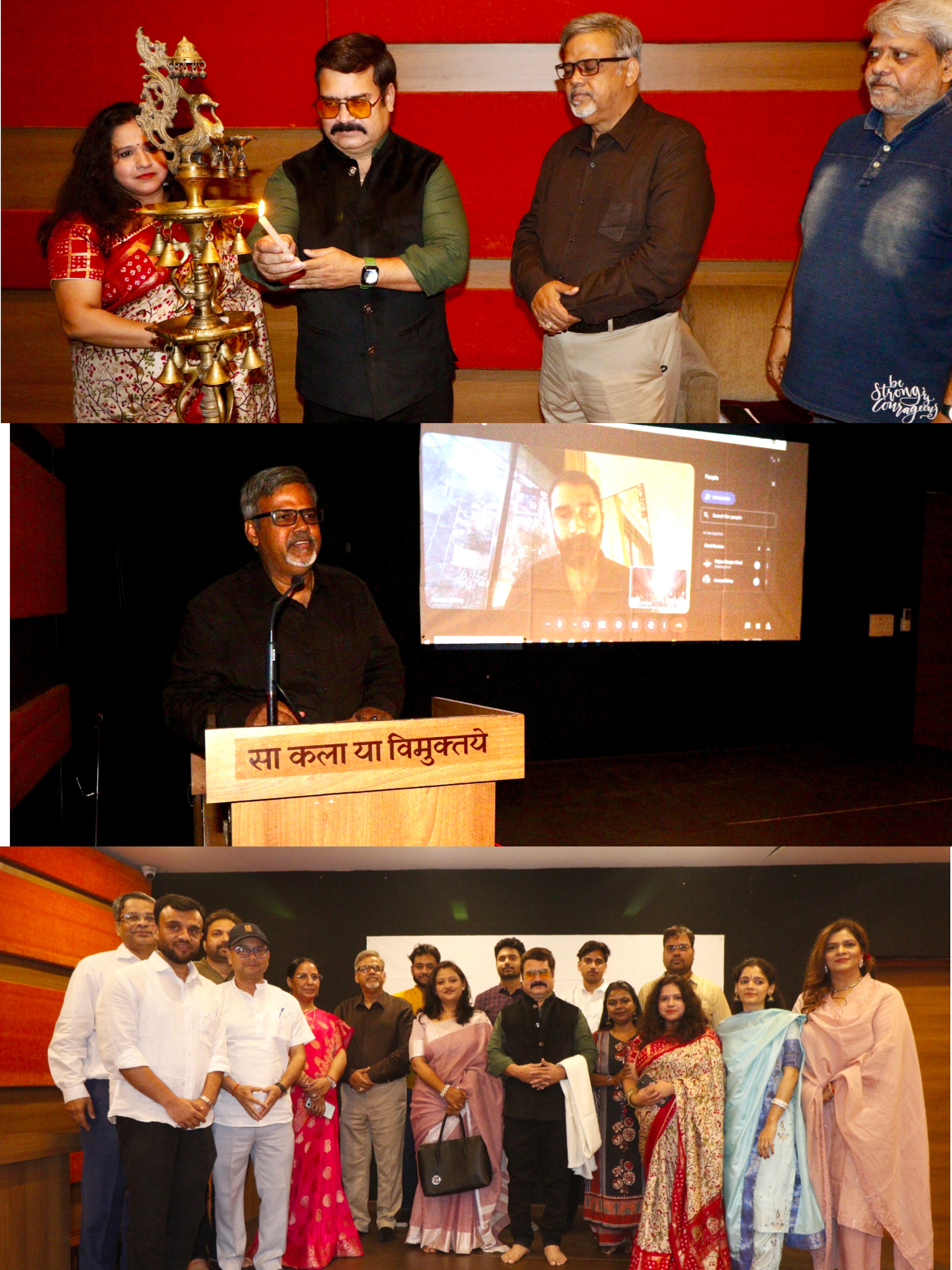
An evening where cinema transcended entertainment and transformed into a platform for reflection, dialogue, and cultural engagement—this was the essence of the Film Appreciation Session hosted by Kala Sankul, Sanskar Bharati, featuring the critically acclaimed film Humans in the Loop.
The programme began with the traditional lighting of the ceremonial lamp, setting the tone for an intellectually enriching evening. Distinguished actor Shri Shrikant Verma graced the occasion as the Chief Guest, lending his presence to an event that celebrated the transformative power of meaningful cinema.
As the film unfolded, it invited the audience into a compelling narrative exploring the delicate balance between human emotions and artificial intelligence. With remarkable storytelling, evocative visuals, and thought-provoking performances, Humans in the Loop challenged viewers to reflect on technology’s growing influence on society and the enduring importance of empathy, ethics, and human values.
The conversation continued beyond the screen as writer-director Aranya Sahay joined the gathering virtually from Mumbai. Sharing the inspiration behind the film and the creative journey that shaped it, he engaged in an insightful interaction with the audience, responding to questions with honesty and depth. The discussion evolved into a stimulating exchange of perspectives on the future of humanity in an increasingly AI-driven world.
Reflecting on the film, Chief Guest Shri Shrikant Verma appreciated its contemporary relevance and remarked that meaningful cinema has the power to ignite conversations that extend far beyond the theatre. He praised the film for encouraging audiences to question, reflect, and engage with the realities of modern society.
The interactive session witnessed enthusiastic participation from artists, students, and cinema lovers, who shared their interpretations of the film and deliberated on issues ranging from artificial intelligence and ethics to creativity, human sensitivity, and social responsibility. The exchange of ideas highlighted the role of cinema as a catalyst for thoughtful public discourse.
The programme was eloquently anchored by Shashi Prabha, while the Vote of Thanks was delivered by Dhruv Karnpal, Film Convenor, Delhi Prant, who expressed heartfelt gratitude to the guests, speakers, participants, and audience for contributing to the success of the event.
The seamless execution of the programme reflected the dedication of the Kala Sankul team. Digvijay ji, Raj Upadhyay, Shyam Kumar, Shruti Sinha, Ritambhara, Garima Rani, Shraboni Saha, Sneha Mukharjee, Nishi, Pradeep, Vishwadeep, Harshit, Mrityunjay, and Bijendra Kumar played an instrumental role in ensuring the smooth and successful conduct of the event.
More than a film screening, the evening stood as a celebration of meaningful storytelling and intellectual exchange. Through Humans in the Loop, Sanskar Bharati once again reaffirmed its commitment to fostering cultural dialogue, artistic excellence, and socially relevant cinema—proving that great films do not simply end with the closing credits; they begin conversations that stay with us long after the screen fades to black.
A Celebration of Heritage, Harmony, and Dialogue: Sanskar Bharati’s Cultural Symposium Explores the World’s Ancient Traditions
New Delhi, May 31: The cultural symposium “Ancient Traditions of the World”, organized by the Kala Sankul of Sanskar Bharati, unfolded as a captivating confluence of music, dance, and intellectual discourse. Blending artistic excellence with thought-provoking dialogue, the evening offered audiences a rich exploration of India’s cultural heritage while drawing meaningful connections with ancient civilizations across the globe.
The event was organized as part of Kala Sankul’s ongoing monthly cultural dialogue series, a thoughtful initiative aimed at nurturing awareness and appreciation of India’s rich artistic and civilizational heritage. The series brings together distinguished practitioners, scholars, and audiences to engage with subjects that bridge art, culture, history, and philosophy. By encouraging dialogue through music, dance, literature, and scholarly discourse, Kala Sankul aspires to strengthen cultural consciousness and promote a deeper understanding of the values that connect diverse traditions across time and geography.
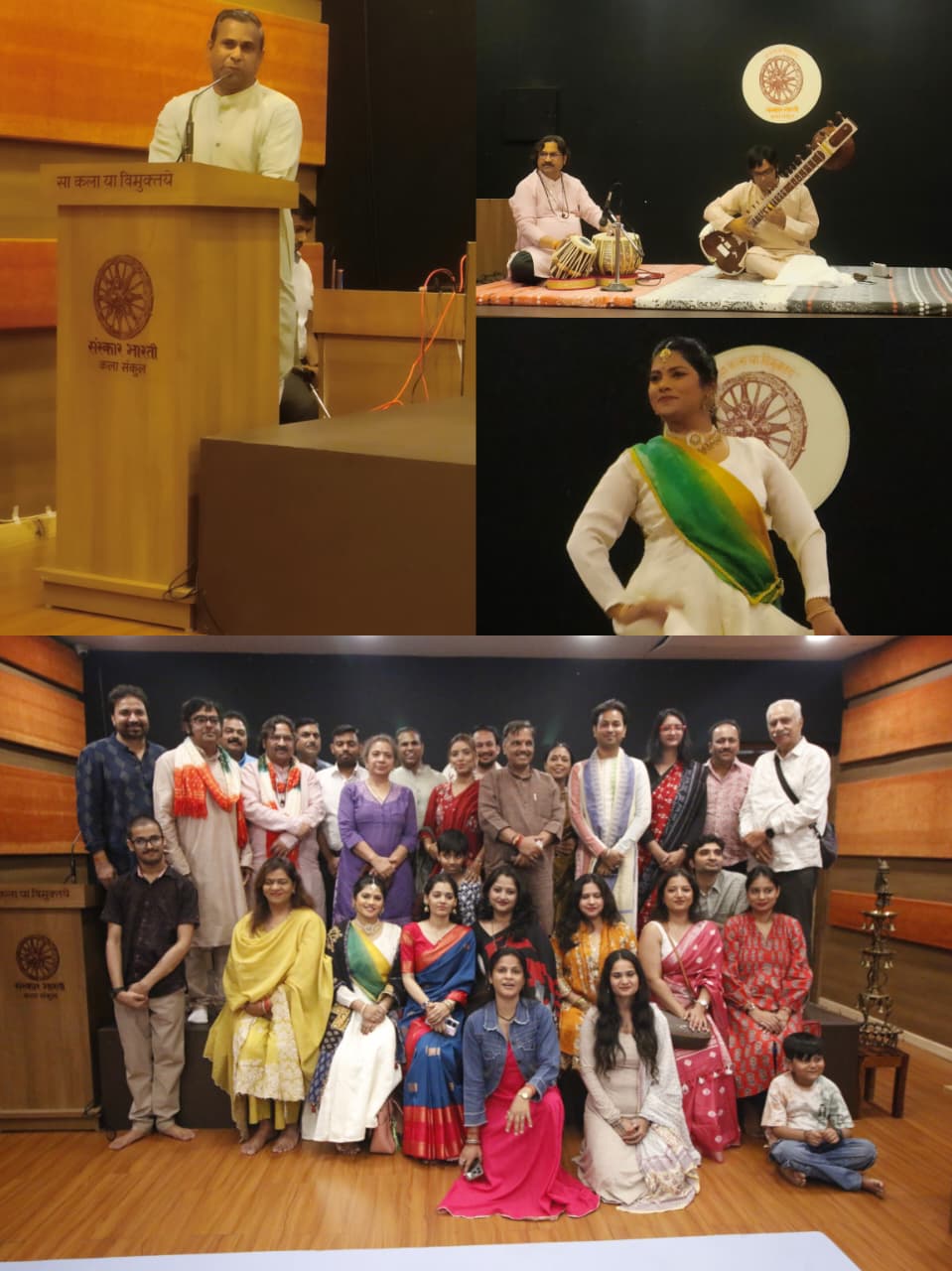
The programme commenced with a traditional lamp-lighting ceremony, led by Chief Guest Sandeep Kaveeshwar, National Organising Secretary, International Center for Cultural Studies (ICCS), New Delhi, alongside Ashok Tiwari, Central Office Secretary of Sanskar Bharati, and Raj Upadhyay. The ceremonial inauguration was followed by the rendition of Sanskar Bharati’s anthem, setting a dignified and culturally resonant tone for the evening.
The artistic journey began with a mesmerizing performance by renowned sitar virtuoso Pandit Pankaj Vishal, accompanied by celebrated tabla maestro Ustad Mustafa Hussain. Their masterful interplay of melody and rhythm transformed the auditorium into a space of deep musical immersion. The delicate nuances of the sitar, seamlessly woven with the expressive cadence of the tabla, showcased the timeless beauty and sophistication of India’s classical music tradition. The performance not only demonstrated technical brilliance but also evoked the meditative and spiritual essence that lies at the heart of Indian classical music.
The evening continued with an enchanting Kathak recital by acclaimed dancer Kripa Tendulkar. Rooted in the rich aesthetics of the Lucknow Gharana, her performance reflected a graceful synthesis of expression, rhythm, technique, and storytelling. Through intricate footwork, elegant movements, and evocative abhinaya, she captivated the audience and reaffirmed the enduring relevance of Indian classical dance in contemporary cultural life. Her presentation beautifully illustrated how traditional art forms continue to evolve while remaining deeply connected to their cultural roots.
Following the performances, Chief Speaker Sandeep Kaveeshwar delivered an insightful address on the theme “Ancient Traditions of the World.” He highlighted the remarkable cultural parallels that emerge when studying ancient civilizations across continents. Drawing attention to shared symbols, philosophies, artistic practices, and spiritual traditions, he emphasized the importance of exploring these interconnected histories to better understand humanity’s collective cultural inheritance. He noted that many elements of Indian culture find echoes in diverse civilizations around the world, opening new avenues for comparative cultural study and dialogue. His lecture was both enlightening and reflective, encouraging the audience to view world cultures through a lens of mutual respect, curiosity, and understanding.
One of the defining strengths of the event was its seamless organization and graceful presentation. Ritambhara, serving as the compère for the evening, guided the programme with warmth, clarity, and poise, ensuring a smooth transition between performances and discussions. Her engaging presence helped maintain the flow and coherence of the evening’s diverse segments.
The event concluded with a formal vote of thanks delivered by Vishwadeep, who expressed gratitude to the artists, speakers, guests, organizers, and attendees for their contribution to the success of the symposium. This was followed by a serene recitation of the Shanti Mantra by Brijesh, bringing the gathering to a contemplative and harmonious close.
The success of the symposium was made possible through the dedicated efforts of the Kala Sankul team. Garima Rani, Shraboni Saha, Sneha Mukherjee, Pradeep Pathak, Mrityunjay, and Bijendra Kumar played instrumental roles in planning and executing the event, contributing significantly to its smooth and successful realization.
More than a cultural programme, the symposium emerged as a meaningful platform for dialogue between India’s artistic traditions and the ancient cultural legacies of the world. Through the harmonious union of music, dance, and scholarship, the evening celebrated the enduring power of culture to connect communities, transcend geographical boundaries, and illuminate humanity’s shared heritage. The event stood as a reminder that in an increasingly interconnected world, the study and celebration of ancient traditions continue to inspire cultural understanding, intellectual exchange, and collective reflection.
The Untamed Inner Soul
Needing to prove nothing is pure bliss, a joyous path that we are creating, only to be lived for ourselves. Somehow unfortunately we know that perhaps all like to drown in blood and sweat. It feels more real than the untamed, reckless one inside. This makes us urge ourselves to control and curb the flightless spirit. We fear to show that heedlessness to the world outside, maybe its the mockery of our nakedness of our dreams, the exposure of it that we fear. Unless these fleeting images are not grounded in steps when we wake up the next day, that stargaze of the night before is seen as transitory as white fleeting clouds. Can we ever catch a cloud? When we awake ourselves to the negative answer, we just return to the same sweat and blood, for even if we get no joy from that mundane tasks, we feel that its the only correct path. Yes, we have created it as our destiny, as the only way out. It seems correct only because of the feeling of it being the only reality we know. I say why not just create enjoyment in untamed and unbridled days. We cannot deny that the reigns we hold ourselves in, as caged and cooped up pigeons is daunting and fearful to most. However the problem here is in the denial of it. We deny that we are cooped, and we are chickens to become slaughtered soon.
Does not the fresh day light smell much better? Does not being unchained and moving recklessly, untamed in our souls dancing in sunrays and singing to the moon, laying on freshly mowed grass wild and undomesticated seem always as a lighter way ahead? It is totally up to us how we choose to create our future. We can vibrate in the journey of our lives, live it fully and fall in love with every minute and every aspect of its unfolding minutes. Its up to us yes, to want that ecstasy to last forever. Come all join in the dance of living, as it will only make us feel the height of the sky in our outstretched arms and truly befriend the loving soul inside. Let it now become our reality forever!
Basic plot of a script
Below is an example of a script layout that all future script writers can be helped with. Note please this story should not be copied and it is just an example for others to follow
The environment that I wish to show case should be any urban affluent neighbourhood. I envisaged the neighbourhood to be set as a high-rise apartment complex in Gurgaon. As Gurgaon is set as a developing conglomerate it often faces a peculiar problem of both affluence and neglect at both ends of the spectrum. Many neighbourhoods might have fabulous amenities like swimming pools, gyms and parks but often faces an ironical situation as often there is water logging, overuse of air conditioners during the summers, not taking care of the migratory birds that come to this city during the summer, cutting of trees to make way for roads etc. The civic sense of the city hence is sadly lacking. My film will question that through the eyes of children, and it will show this irony through satire and wit. I wish to showcase the difference that the environment can become just in few conscious steps by residents of any community.
Characters (6 children, 5 adults and genie)
Rohit: A 13-year-old boy, he is the leader of the children and often motivates them to act. He comes across as strong willed and as a responsible child who can inspire action that is good for others. He has a deep liking for dogs and looks out for sick birds and keeps feeders for them. He initiates a lot of independent actions.
Shivam: A nine-year-old boy who is the side kick of Rohit and follows his action. He likes to hero worship Rohit, and he often protects his ideas, and he decides to do whatever Rohit says. It takes him very little time to get convinced and gets easily motivated. He has no set or rigid thoughts of his own and can get easily influenced. He likes to be known as Rohit’s best friend.
Shaan: A 12 -year -old who is the rival of Rohit. He wishes to be the gang leader and often gets into a fight with him and tries to always question his actions. He also is fond of pets and wants to create his own plans but reluctantly must give in. He wishes Shivam to be his friend and gives him treats to “buy” his loyalty.
Sabrina: 9-year-old girl who is the younger sister of Rohit. She admires her elder brother and is protective of him and is willing to fight with Shaan. She comes across as a bully with a strong mind of her own and is more than willing to follow any plan to make the neighbourhood cleaner.
Ira: 9 -year-old girl who is the best friend of Ira. As she is a single child and has no sibling, she longs for a brother like Rohit and as a result often sides with him. She thinks that the world should always be good and is an idealist. She loves reading and does not seem to enjoy playing games.
Armaan: 8 -year- old slightly confused and likes to be on his own. He is also a single child who is imaginary and does not like taking sides or fighting with anyone. However despite that he is always willing to be in the group and take on any challenge.
Adults
Poonam: She is an overprotective mother who loves children. She often invites them home and gives them treats and is always willing to listen to their problems and is a willing participant of the community.
Abha: the mother of Armaan and she is very close to Poonam and lends her any support needed. She is conscious of bringing about a positive change in the community.
Dadaji: A very man who likes children but does not like dogs or cats. He is unconcerned about the neighbourhood and is cynical of any good or positive steps. He comes across as bickering and not happy with any improvements being made.
Dadiji: She is loving and is the grandmother of Ira. She understands Ira’s longingness for a sibling. Often she takes care of the children when their parents are away at work. She is a Samaritan and her husband is not happy that she takes care of others.
Garg Uncle: a single old man who is unconcerned about the neighbourhood, he will be seen as having a major role in the end in taking care of the needs of the children. Also in the end he will finally convince Dadaji that the community must get involved in the efforts of the children
Child/Adult
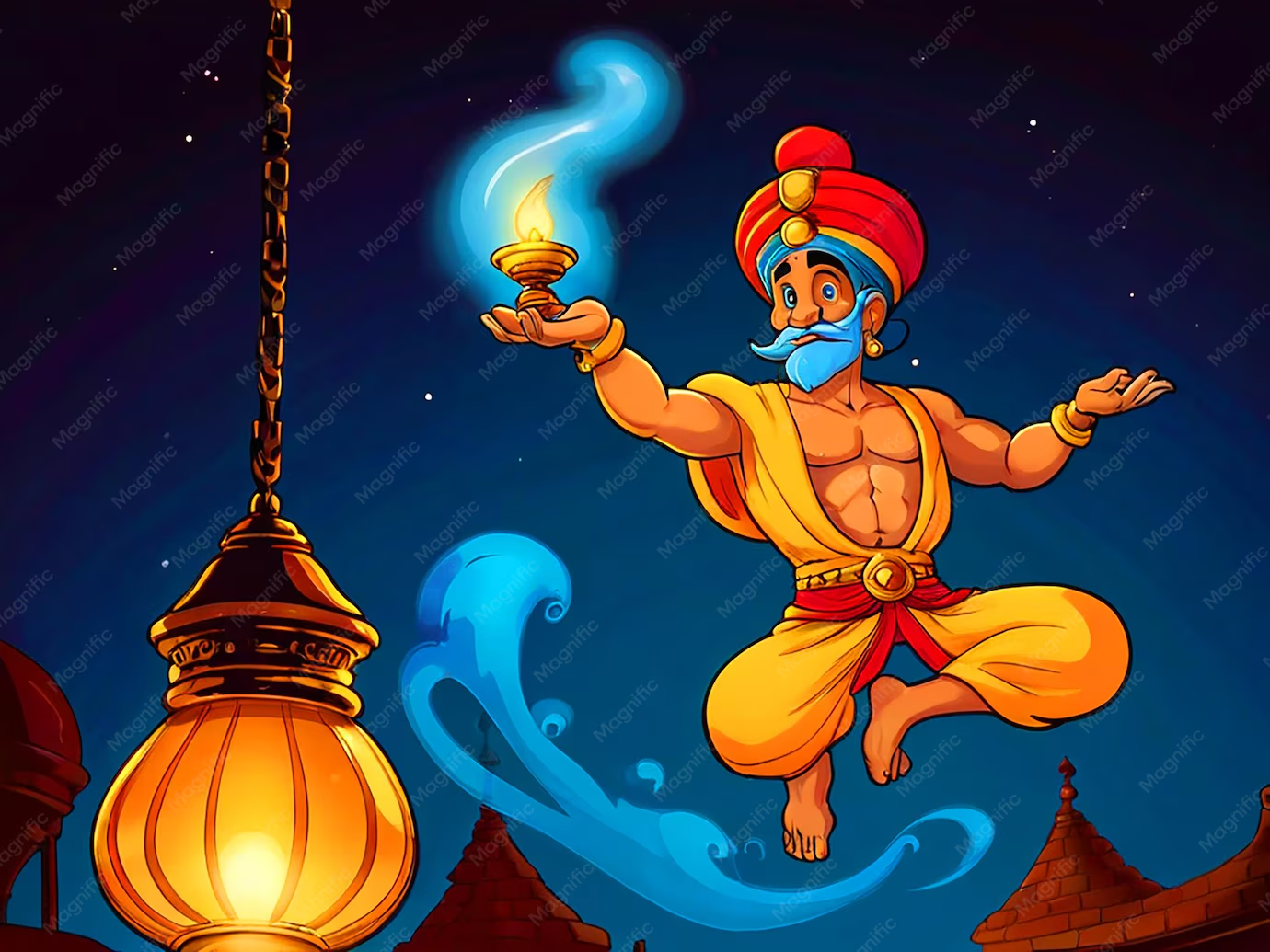
Genie: the genie can be played by an child (12 plus) or an adult. He is a prankster who has a strong sense of humour. However he often gets dismayed seeing the climate changes and the unresponsive community members, he misses his family and wants to return to them.
Acts
As the film is created within a few days and is set in only one neighbourhood, it will not involve multiple locations. I wish only to depict an neighbourhood park, club and the affluence will be depicted by the clothes language and a few symbolic gestures like dog walkers, expensive cars around the neighbourhood. The genie should be also often animated to add more intensity and enjoyable viewership.
Thematic Plot: The main theme is to show that small steps can help in changing the environment and help in reducing the effects of climate change. It will also show contemporary problems that most urban cities face. While they boast of fabulous amenities, they remain having several problems that can be easily solved by the neighbourhood. The small efforts can lead to happier living conditions and by reducing climate concerns.
Ending: The ending is envisaged as happy and friendly to the viewers. It should be a feel-good film which is light and comic. It largely caters to audiences who want to see a light film with their families and yet get a strong message in the end. The film can use songs and music. The script should use animation, music and sound effects to enhance the plot. It should be kept fresh and entertaining to all age groups.
The footloose meanderer is not a tramp
Often we see the meandering one as fiddle footed, not sure and vagrant, however I say that they need a new space to create magic. I see them as having the need for new rooms to fund the resonance to their thoughts and actions. For some it could be a brewing a strong cup of coffee in a nice cozy corner while for some it could simply mean moving into a new yet temporary area. Whatever it takes to be meaningful is useful according to me. The problem here arises when others don’t see it that way, they see coffee conversations to be competitions and completions to their own unfinished tasks, while some may try and restrict that fleeting soul captured into a box.
I strongly think that all have their own uniqueness in creating magic and not be wanting of any miracle to uplift them from their self inflicted misery. The miracle is in doing, in performing and in creating our own narrative without feeling the need to become a rival or to outshine the other who is in peace with their own space. It is impossible to explain to the other who has already decided to go into a war path with you, since they never even knew what you gave them for their growth. They take any reason to create a distance and little do they see that distance will never heal but only create more scars that will deepen over time. So what’s the solution? A simple text to say, ” Hi” or a simple call or if you can a small visit to that now your created distant one. The movement becomes the oar which is in your hand and the fear is never in the failure but in the magic of finding fortunes to come
“Making a dream into reality begins with what you have, not with what you are waiting on.”
I come across people who choose to wait endlessly for the right moment, the right opportunity, the right company to start with. The wait for trust to develop and faith to build is like cementing your house. For me my heathen may just be made of tiny straws and sticks but my large dream is built on whatever little I may posses. Not that I am sure of my ideas would make a huge sale, not sure that I will knock that century, not sure that I will come home with my awards hanging on the wall. But yes I am sure of my sure steps, despite it being many times small, I am happy with the rewards of a simple smile to a day well done.
I rarely feel negative only because I know that dreams are to start with whatever you might have, less or more is not the answer here but it is the feeling of abundance that you are born with. I have no sense of fear of loss, of power going away from my hands as I have always been like that. I cannot imagine to wait it out, and even if I have to in some cases, I will make sure to fill that time with twigs and sands.
My sand will make the mirror through which I can reflect the sun’s rays that will illuminate my entire inner core. I say so because I am sure as I have done this so many times before, to pick the little pieces and restore each one into a fabulous painting that existed over centuries. I urge each one of you readers to be sure of your dreams, to embark and soar across the clouds and not think of the dangers of the flight. Let Amelia Earhart the solo woman to fly a plane across the world be your inspiration, yes she was lost to all of us, but she so was sure of her dreams she chose the distance sun to be the mirror of her radiant face. Let us face the same brilliance with no trepidation, no racing pulses but a simple weaving of in and out like riding across the soft fluffy white of the vault of heaven to open to the dazzling gold hidden in.