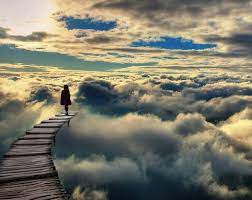
A home is without any doubt a safe space, an extant that has the infinite capacities to being ourselves; where our clothes need not be washed or ironed and made to be presentable all the time; our unkempt unshaven looks draws no contempt from the gazing mirrors; cutlery can be limited to eating straight out of the pizza box with greasy tissues thrown carelessly all over the floor; and leisure is our pass time and idyllic conversations the only competing games. The debate arises then, if we choose to keep this space out of bounds for others, however familial or close. It is the truth that only when we get this free entitlement to closing these doors of our room, shutting out those as being totally non transgerressable, barring these latitudes out of anyone’s reach, do we get a veracious sense of belonging. The arguments arise loud and the cacophony grows louder only when we keep these augmented heavens exclusive for our winged flights, leaving others alone and far behind in what they see as their black earth.
Adoring such realities, one, is discerned to be “ unconventional” or can I say “ odd” to the normal public eye. However, if we all sieve through the thoughts running in our minds, we come to this realization, that all of us wish for an exclusive home, that only belongs to us and only to us. This hearth does not see the privilege only of the “single status” fancy holding few, but to all, men, women or children. All, I see as wanting to create an expanse of an unparalleled area that echoes our only headrooms. We then come to conclude that we are faithfully heard. Our tete-a tete might be limited to the capacity of recording random intramural thoughts, however, inner, however wordless, or however out of tune for others, it forever plays as a beautiful melody for our ears.
We, unfortunately, are created as social byproducts and often have to assume suggestive capacity giving roles, inundated with responsibility and risk. The risk that we can carve out then, for our own employment seems much easier and much more responsible. If created exclusively for us, they are results of accurate victories as being free of failure in the eyes of others. As the endeavours seeked are for our own purview; and we are un-mockingly forgiving towards ourselves, we sense a literal liberty. Thus being unrestrained from scorn, and disdain, we seek everlasting joy in solitude, and despite being born into a home, I see the human mind seeking and wandering eternally in the search of this unerring habitat. If our birth homes can define and allow such unconfined liberties, uncontested un-contemptuous ways, will only then, this never ending sojourns of seeking of ours to belong, cease and stop to identify the true borders of a hinterland. Let’s become companions to the exodus of the few and return thus to our realistic homes.
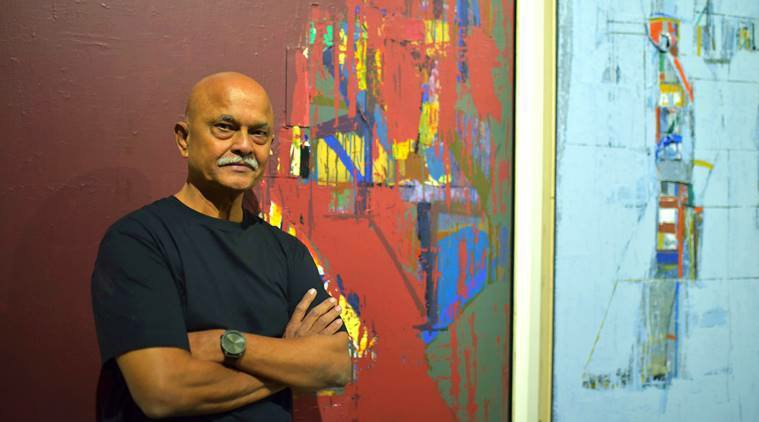
Abstractionist Prabhakar Kolte’s Exhibition,’The Mind’s Eye’ opens 9th Oct
Prabhakar Kolte was born in 1946 and received his Diploma from the Sir J.J. School of Art, Mumbai in 1968. He also taught there between 1972 and 1974. His early works show a strong influence of Paul Klee, the Swiss artist and teacher whose child like figures belie the sophistication of his richly textured surfaces.
Treasure Art Gallery cordially invites you to the Preview of this
Veteran Abstractionist, Prabhakar Kolte’s the seminal exhibition The Mind’s Eye
Curated by Uma Nair Inauguration by Ritu Beri
The other dignitaries who will be a part of the exhibition opening and inauguration are Shri. Adwaita Gadanayak, Director General, NGMA; Shri. Dinesh K Patnaik, Director General, ICCR; Diplomats; Eminent Artists; Prominent Gallerists & Art Collectors.
The Mind’s Eye by Prabhakar Kolte Treasure Art Gallery 9th October, 2021, 6pm onwards D/24, Defence Colony, New Delhi – 110024
The Preview will be followed by wine and cheese The exhibition will be on view until 10th December, 2021. Monday-Saturday, 11am-7pm
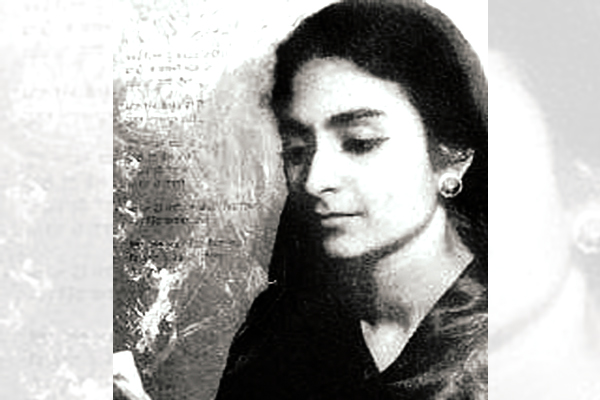
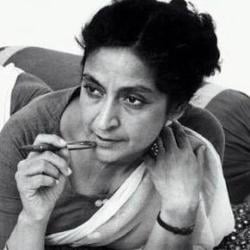
These are the words of Amrita Kaur; born a hundred and two years ago, sparkling with uncommon fire in Gujranwala, Pakistan who afforded us a glimpse of her promise shortly after her mother had passed away despite her furious and fervent prayers to the Almighty. Questioning her grandmother about the perplexing tradition at home of keeping her father’s Muslim friends’ utensils in a segregated corner in the kitchen, an activist at eleven, refusing to drink in any other glass until all glasses belonged to one religion. Her first ‘baghavat(rebellion)’, as she called it.
Constantly unafraid, she wrote with much fervour and managed to churn out her first collection of poems published in 1936, at the age of sixteen entitled ‘ Amrit Lehrein (Immortal Waves)’.Getting married off soon after to Pritam Singh did not rob her of her resolve or gift and write she did; finding solace in her inner world and words as Amrita Pritam.
Her first distinguishable progressive streak in writing became rather apparent when she wrote of the anguish and the socio-economic concerns of the hour in ‘Lok Peed’ (People’s pain), in 1944. Here, she criticized the state of the economy after the Second World War and the terrible agony suffered by all during the Bengal famine in 1943. It was however in 1948, post the Indian Partition in 1947 and its innumerable and unspeakable horrors, that Amrita wrote her now iconic poem ‘Ajj aakhan Waris Shah nu’ ( Today, I invoke Waris Shah)which made her a household name in India and Pakistan alike.
Ajj Akkhan Waris Shah nu/ Today I invoke Waris Shah
Speak from the depths of the grave
To Waris Shah I say
And add a new page to your saga of love
Today.
Once wept a daughter of Punjab
Your pen unleashed a million cries
A million daughters weep today
To you Waris Shah
They turn their eyes.
Awake, decry your Punjab
O sufferer with those suffering!
Corpses entomb the fields today.
The Chenab is flowing with blood,
Mingled with poison by some
And the waters of five rivers
And this torrent of pollution
Unceasingly covers our earth.
And heavy with venom were the winds,
That blew through forests
Transmuting into a snake
The reed of each musical branch
With sting after sting did the serpents
Suppress the voice of people….
Where can we seek another like Waris Shah today?
Only you can speak from the grave
To Waris Shah I say
Add another page to your epic of love today. (Translated by Amrita Pritam)
In 1950, her novella Pinjar(Skeleton); arguably one of the finest and foremost depiction of the Partition from a woman’s perspective was published and gained much acclaim. It was adapted and made into a Hindustani movie in 2002 produced in Bollywood(Mumbai). In this story, Amrita wrote passionately about the plight of scores of Hindu, Muslim and Sikh ‘nowhere women’ who were abducted, raped or killed as well as those who somehow managed to return but were never accepted back into their families for being ’tainted’. It was a strong comment on the hypocrisy of the societal norms of the day and fiercely feminist and critical in tenor and managed to make quite an impact on the conservative collective consciousness at the time. Some of her later work, notably ‘Kaal Chetna’(Consciousness of Time), Aksharon ke saaye(The shadow of words) and Kaala Gulab(Black Rose) all had a serious rebellious flavour.
The trauma of partition and the shackles of patriarchal society which relegated Punjabi women to the kitchen, behind the veil forever lamenting their unspeakable grief in hushed tones to each other or in innumerable pathos laden Sufi folk songs; Amrita Pritam emerged as a fearless voice from amongst them and made a name for herself despite being criticized, condemned and even threatened braving the odds.
Speaking of socially relevant purposeful literature and the Progressive Writers Movement (from1930s till after Independence) which sought to inspire people through the written word championing the cause of equality and condemning social injustice; one tends to recall Munshi Premchand, Faiz Ahmed Faiz, Kaifi Azmi, Sajjad Zaheer , Majaz, Manto, Ismat Chugtai, Krishan Chander and Bhishm Sahni to name a few; Amrita Pritam who initially indulged in romantic poetry had joined the movement and went on to create and express her own brand of revolutionary ideas in an original voice strongly and soldiering on.
Post Partition, she began working at the Punjabi service of All India Radio in Delhi, where she had moved from Lahore and continued serving there till 1961.
Mera Pata/My Address
Today I erased the number from my house
and got rid of the street name from the top of the road
Wiped off the names from all the street posts
But if you are really keen on finding me
Then go knock on the door of each house
Of every street, of every town in every country
This is a curse
This is a blessing
For wherever you come across a liberated soul
Think of it as my home
As an alternative view of history luminously shines through her poems and stories that cut deep, laying bare raw grief and palpable despair which find little solace but for her words; her refuge; her “Akkhar’(Words).
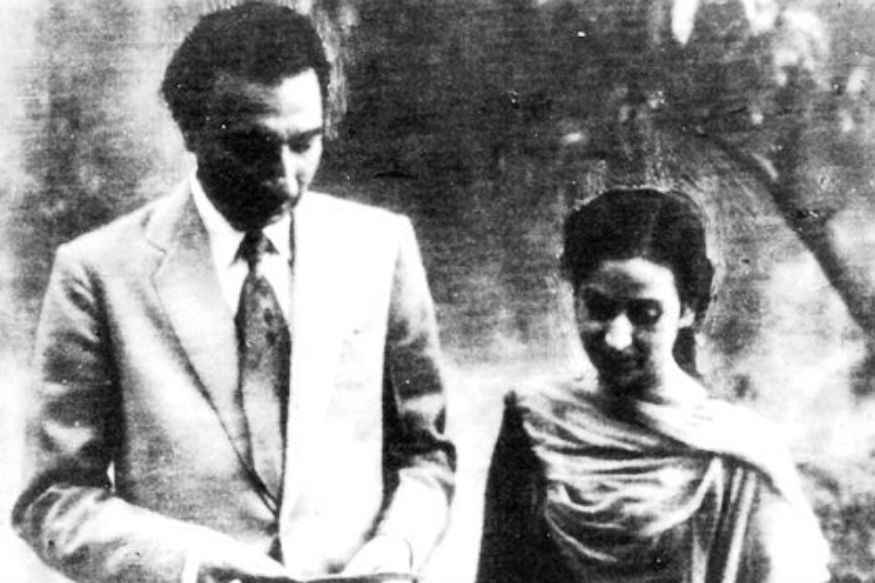
In her personal life, love came to her outside her marriage in the form of Sahir Ludhianvi, the celebrated poet who became her muse of sorts and fiercest lifelong attachment… She was enamoured by his charm and did not keep her feelings under wraps and wrote him ‘Sunehey’(Messages) which won her the Sahitya Academy award in 1957. Interestingly, at the time her intense involvement with him which she describes in great detail in her autobiography “Raseedi Ticket(Revenue Stamp) recounts moments of prolonged silence between them with him smoking cigarettes and her saving the stubs and reigniting them in private. Another famous anecdote has her recalling a time when she was being photographed by a press reporter posing with a pen and paper on her table; she would scribble his name “Sahir”, filling up the age in a trance like state. That she would get turned on by languidly applying Vicks on his throat when he was a little under the weather and describe it in minute detail was considered extremely sensuous and not at all appropriate at the time. Her first meeting with him has been recorded for posterity in “Aakhri Khat” (The last Letter) and his dalliance with Sudha Malhotra, a singer in Mumbai resulted in Amrita suffering a clinical emotional breakdown. Her poems obviously took on a different hue speaking volumes of her unfulfilled longings, all rather semi erotic in nature and completely frowned upon in public yet devoured with relish in private fomenting some of the most original, paradigm shifting poetry of its time…
You do not come
Spring awakens and stretches its arms
Flowers weave their silk threads
For the festival of colour
You do not come.
Afternoons grow long
Red has touched the grapes
Sickles are kissing their wheat
You do not come.
Clouds gather
Earth opens its hands to drink
The bounty of the sky
Yet, you do not come…she laments.
Her desire for him is almost tangible and she openly professes to the poems being dedicated to him and admitting that her marriage was a loveless burden which she finally freed herself of in 1960.
Sahir and Amrita
In an interview to Carl Copolla she articulates, “The bonds and conventions of society are certainly reflected in my poetry, negatively, of course. But I think every intelligent person has to suffer…Suffering is the price the intelligent person has to pay. As for women, I feel that women in literature are different from women in other fields…Basically; there is a prejudice against women in literature. Men take women’s writing lightly; they doubt a women’s sincerity. For example, when I got this Sahitya Akademi Award, and with it fame, the leading English daily in Delhi wrote that I got my popularity in Punjabi literature because of my youth and beauty. I felt very sorry to read that. Why not talent? They can admire a beautiful woman, but not a talented one.”
In spite of innumerable constraints, she continued writing in her native tongue and started the publication of a Punjabi literary journal, ‘Naagmani’ (Serpent’s jewel) in 1964.
Translating poems of Edgar Allan Poe and Robert Frost n Punjabi as well as highlighting the work of emerging Punjabi poets and women writers; she worked relentlessly to create a healthy, aesthetic platform showcasing marginalized thought and voice.
It was an uphill task but she had a companion and a lover extraordinaire called Imroz who spent the last 45 years of her life dedicating his own to her cause.
Imroz allowed her to be.
Living with Imroz in an unconventional, uninhibited way, without formally marrying him at the time was again Amrita’s way of following her inner truth and at the time considered a remarkable revolutionary life choice.
In another instance, when she insisted, he roam around the world before taking any final decisions about them; he apparently got up and circumambulated around her seven times and said; “That’s done”.
Amrita and Imroz
“Father, Brother, Friend and Husband…the labels mean nothing.
When I set my eyes upon you, all these words became meaningful at once…she said of Imroz.
That was our tryst, yours and mine
We slept on a bed of stones
And our eyes, lips and fingertips,
Became the world of our bodies; yours and mine
They then made translations of this first book
The Rig Veda was compiled much later.
(An excerpt from her poem ‘Kufr’ )
Her book ‘Aurat(Woman)’deserves a special mention which carries interviews of scores of women activists and writers , translations of feminist writings from other languages and her own essays on issues such as prostitution, bride burning, women’s rights and the quest for liberation.
Her strength lay in her knowledge that her vision was shared by many others in other times and places.
She would often implore all who vociferously criticized her to give her a fair chance.
“I wish to ask all those who condemn me and my writings, do you wish to allow the fire of Punjabi writing to spread light all over or do you forcibly wish to bury it, silence it forever?
In her self- portrait poem, ‘Amrita Pritam’, she attempts to mirror her innermost core in very sparse, simple words.
“There was a pain
I inhaled it silently
Like a cigarette
There are a few songs
I have flicked off
Like ashes from the cigarette…
In a career that spanned over six decades, Amrita Pritam penned over a hundred works including poetry, essays, stories novels and biographies. Her works have been translated into several Indian and foreign languages.
Apart from the Sahitya Academy award for Sunehede in 1956, one of the highest awards for literature, Bhartiya Jnanpith Award was conferred upon her in 1982 for Kagaj Te Canvas (Paper and Canvas).
She also received the Padma Vibushan, India’s second highest Civilian Award in 2004.
“An award is not the ultimate goal for any writer. The only goal is to reach people, touch their souls. If an award aids that process, then it actually means something, becomes important.”; she said.
But apart from her very passion laden emotional poems, her influences were of multiple nature which lead her to produce an alternative, exceedingly intelligent, often explosive, unique, inspirational body of work.
So she wrote on as a progressive-romantic writer who promises her lover that she shall return to him and live on.
Her most quoted poem which is also a promise to Imroz reads
Maiyn tenu phir milangi (I shall meet you again)
I shall meet you yet again
Where and how
I know not
Perhaps I shall become a
figment of your imagination
or maybe splaying myself
as a mysterious line
on your canvas
I shall keep gazing at you.
Perhaps I shall become a ray
of sunshine and
dissolve in your colours
or embraced by your colours
I will paint myself on your canvas
How and where
I do not know –
But I shall meet you for sure.
It’s possible that I shall transform into a spring
and rub foaming
droplets of water on your body
and like a tender coolness I shall
rub your chest
I do not know enough
But that whatever time might do
this birth shall run along with me.
When the body perishes
All perishes
but the strings of memory
are woven with cosmic atoms
I will pick these particles
Re-weave the strings
and I shall meet you yet again.
And live on she shall, for all those who are concerned with the truth of life.
Constantly challenging the status quo, her legacy is her philosophy which still inspires;
“My life shall be my answer.”
(All translations are done by the author unless mentioned otherwise).
Bookmark: New Age Theories for Architectural Practice by Prof. Sagar Desai
About the Book This book is based on the practical aspects of Architectural Profession in India, which the students in their final year of Bachelor of Architecture must understand before being exposed to the professional world. This book throws light on various topics in a concise form with simplified understanding. Some of the topics like banking and introduction to financial markets etc. are also included to help the students understand the system of monetary circulation.
The Book has received appreciation from teachers and students alike: Good to read! Students are finding it engrossing and readable. It highlights important aspects and contemporary developments in the subject. Some readers of the subject have described it as a ready-reckon-er for the students and budding professionals. Author had made sure that book covers all essential topics. Its a comprehensive compilation of the entire syllabus and very easy to understand. Topics covered are like a to-do list for a young professional: Chapter 1 Role of an Architect. Chapter 2 Duties, Powers and Functions of Architects. Chapter 3 Professional Works & Scale of Charges. Chapter 4 Valuation & Introduction of banking & Financial Markets. Chapter 5 Contracts, Tenders & introduction to Easements. Chapter 6 Opening an Architect`s Office, from Small to Mid-Size.
About the Author Prof. Sagar Desai is currently working as an Associate Professor, at P P Savani University, Surat. He graduated from SCET (Sarvajanik College of Engineering & Technology), Surat and pursued his Post Graduation from CEPT University, Ahmedabad. He is also an IGBC-AP (Indian Green Building Council-Accredited Professional). With an extensive experience in academia & as a professional he has also contributed at Calcutta Riverside Project. As a researcher his area of interest is smart cities and published many papers on the same. He is actively involved in Institutional Consultancy Projects at various places and also in the board of certain international institutes for research paper reviews. Not only this he has also pursued PG Diploma in Urban Planning and Environmental Development & Sustainability. He is in continues process of knowledge gaining and sharing through workshops and lecture series like GICEA (The Gujarat Institute of Civil Engineers & Architects).
Prefaceby the Author It gives me great pleasure to introduce this book for Architecture students studying Professional Practice. Often, I have observed that the professor in the class keeps talking about contracts although he may be explaining it very well but the students does not seem to understand. After thorough introspection I realized that its now time to add few more topics to the entire subject like, to understand contract and its formation better. One needs to understand what a company is? What banking and financial markets are? This is an effort where utmost care is taken to be precise, to the point and include only what an architect is required to understand. The main audiences of this book are students studying Professional Practice in their final year. Many difficult topics are simplified. This is an effort by an architect for the upcoming architects to understand the scenario better.
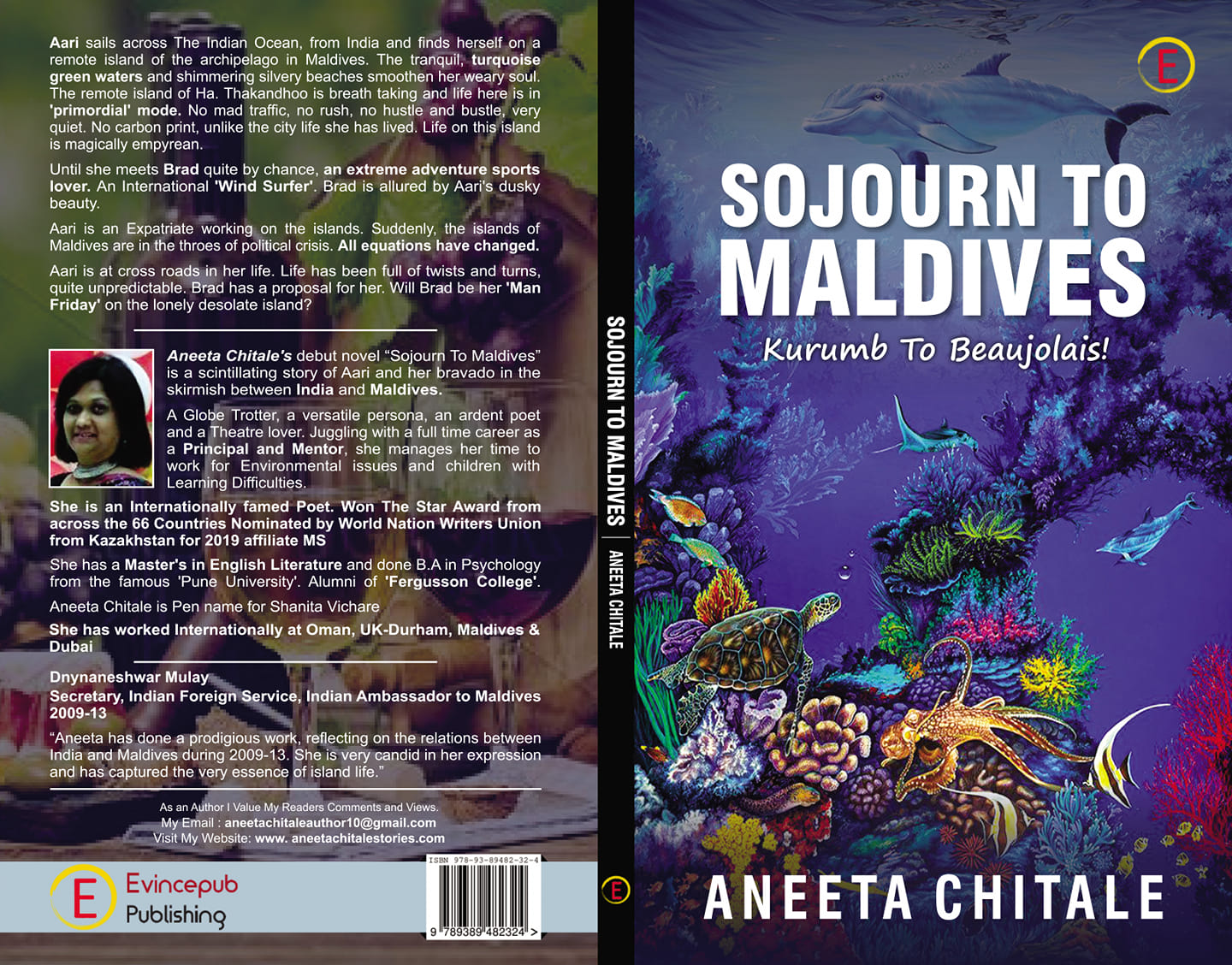
Aneeta Chitale: Sojourn to Maldives – Book Review / Interview
Book Cover: Sojourn to Maldives
Manohar Khushalani: You are a poetess at heart Aneeta Chitale, and, with an anthology to be released soon, how did you think of writing a novel?
Ans. I have been penning poems since the age of eleven. I used to write and keep them as treasures! I was a bit shy I think when it came to presenting it. But I had strong streaks of an artist; I was very active in theatre and writing, even during my Pune University days.
Q2. Can you tell more about your journey as an: “ Appreciated Poet-from India”. You have just received “Gujarat Sahitya Academy Certificate from Government of India Year 2020- and Motivational Strips” the largest Forum for writers all over the world.
Ans. I have been very fortunate to write poems on varied topics, especially on the environment, unprecedented times of the Covid 19 – where life has become a challenge to lead a normal lifestyle. I wrote on a wonderful theme: ‘Striving For Survival’ collection of my poems OPA Forum, out of which three of my poems have featured in OPA International Magazine this year. I am happy to say that my poems were selected from more than 600 + poems from Global Poets-
Most of my poems are on Europe’s most acclaimed ‘atunis.portal’. I am most humbled by The Chief Editor Sir Agron Shele’
My poems ‘ The Three Witches’,’ Gypsy’ and ‘Rhapsody’ made waves. The Best Poets almost 162- contributed to a Quarterly OPA@ E- magazine/Print Year-2020 & For the month –July 2020. And the best part was I have got accolades & given an ‘International Spot Light- fromThe Government of Seychelles – Island and by World’s Largest Forum Motivational Strips.’ My three poems were widely read: Devi, Grasshopper and Himalayas.
I give my sincere ‘Thanks’ to Ms. Maggie Vijay Kumar & Sir Shiju H. Pallithzeth Founder President of (MS) Motivational Strips.
Recently on 17th August 2020, I received the news that my writings; my novel “Sojourn To Maldives” and poems have been ‘Globally’ appreciated and in India as well overseas. I also write in ‘Bi-Lingual’ journals. Have contributed to few journals especially in Egypt and Greece.
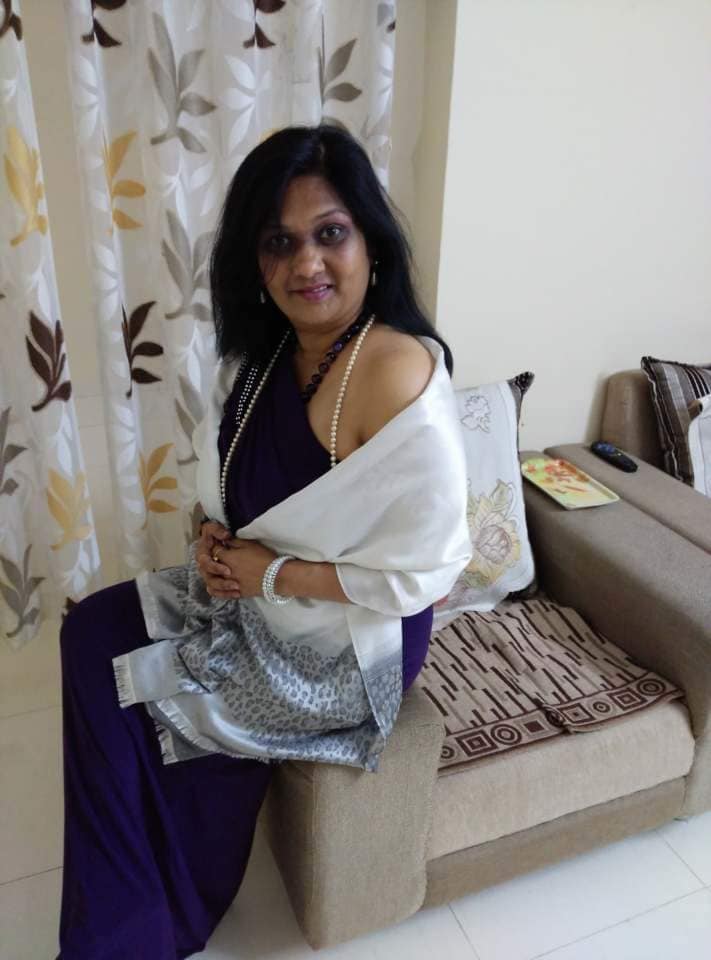
Aneeta Chitale : Author
Q3. You have been associated with the teaching profession for the last twenty years in different countries. How did writing happen to you amid such a demanding lifestyle?
Ans. I have been lucky enough to have travelled to different foreign countries like Sultanate of Oman, UK, and The Republic of Maldives during my long service, in teaching filed. When you are working abroad, you have to work hard and cope up with the international standards, and which is highly qualitative work according to the quality frameworks. I have taught to the ‘Sophomores’ which again is very challenging, but at the same time very eclectic I should say. I was always on new locations and amidst the ‘multi-cultural’ society, which provoked me to write. I had been writing in my diary all along. It was only recently, I could write the full novel. I had to write brick by brick, I must admit.
Q4. Having travelled to various countries across the globe; why did you choose Maldives as the setting of your debut novel, ‘Sojourn to Maldives’?
Ans. The Republic of Maldives is an archipelagos, it is formed by a chain of tiny islands; one thousand, one hundred and ninety-nine islands. It’s situated to the south west of India, in the Indian Ocean. It has bioluminous beaches and most exotic water villas, in the whole world. I was mesmerized by the turquoise green waters and the serenity, and its unique topography. Some islands are absolutely remote and miniscule and situated in the deep ocean. When I saw all this, I was fascinated and I knew this was the going to haunt me. Much later, it emerged as a backdrop for my debut novel. Maldives is famous for adventure- water sports
Q5. How is the story of Aari, and Brad in ‘Sojourn to Maldives’ different from the run of the mill romance?
Ans. The protagonist in the novel, Aari is a strong willed woman of today, who has embarked her professional journey on the islands of Maldives. She is an ‘expatriate’ who faces many challenges in her personal and professional life. She explores the new found land. She meets Bard Marquez, a Spaniard, who is an ‘International Champion’ a wind surfer, on these exotic islands; quite by chance the romance blossoms. But the islands of Maldives have a political unrest and fate plays its part. Brad is an adventure freak, an novum and Aari an aficionado of altruism! The relationship has a roller coaster ride! It is for the readers to find out. I would say.
Q6. What kind of research you had to conduct before writing this book which touches on the “political dimensions” between the two counties- India and The Republic of Maldives?
Ans. I had to do extensive research, as my novel is set in the backdrop of the Indian Ocean. The life on the ocean and especially on the remote island; is in total contrast compared to the urban lifestyle I have lived in India. The ocean routes, the seafarer’s and the boat journeys, was minutely, studied by me. The Muslim culture is the fabric woven in this novel. The social, cultural and religious beliefs and sentiments are much valued, respected and penned by me. The ‘Political Crisis’ is the discerning perspective here and it is a glaring reality, portrayed by me.
Q7. As an Indian author, writing a novel of this magnitude depicting an era of ‘Political Turbulence’ how difficult was it for you to incorporate the real – socio cultural milieu in your novel?
Ans. This writing is not just a piece of fiction but it has charted the ‘International Boundaries and routes’ inked with skirmish between India and Maldives. Being a neighbor, have its pros and cons.
The turbulent times between the years spanning from 2008 to 2014 is presented on the canvas. The relations between the two countries were totally raptured in this era. The entire plethora of Indian nationals and foreigners had gone berserk. I had to study it in detail and follow it consistently.
Q8. Your bio describes you as a ‘Solo Traveller’ round the globe. How has this helped you groom as a Poet/author?
I got my highs and lows both in this journey as a teacher. But ‘Highs’ has a price tag too! One learns to be more independent minded, be more brave and learn to face challenges with a smile! As an ‘Expatriate Teacher’ you have to walk on the unchartered routes be it on an ocean or a desert. You have to walk that extra-mile. I had to face many obstacles too and the moment you leave your native country, and after the initial euphoria has died, one is left in a vacuum. That time is most difficult and one has to mature as a person. Being solo – as my son was very young that time. And I had to leave him in India with my parents and my husband. One learns from the book of life! There is no gain without pain.
Q9. With an anthology to be soon published how did you think of writing a novel?
Ans. I have been penning poems since the age of eleven. I used to write and keep them as treasures! I was a bit shy I think, when it came to presenting it. But I had strong streaks of an artist; I was very active in theatre and writing, even during my Pune University days. But this novel is a surprise for me. I had my stories talking to me. Writing a book is a huge task. I had the passion for writing for sure. Being an artist has always paved my way to success. I have done a small role in a Marathi movie when I was 21 years old.
Q10. You have written a story on ‘India’s Bi-Lateral Relations with Maldives’. Can you shed some light on this international relationship between the two countries?
Ans. Maldives is our neighboring country and has got a great strategic importance in ‘The Indian Ocean’. The recent political crisis had turned the friendly ties, into a feud with this nation. There was a dark patch that altered the relations between the two neighboring counties for more than a decade. But India has always been very helpful and friendly. The other great powers, like China had a major role to play a gambit. But the bilateral relations were handled very sensitively by the Indian High Commissioner and Ambassador India, His Highness Dnyaneshwar Mulay -To the Republic of Maldives. Indian High Commission did a commendable job then. Indian Defence Services did a brilliant job, with the precision of eagle’s eye.
One has to read the story, to know about it.
Q11. In this book you have touched on ‘global the water’ crisis? Do you think this is a burning question even in Maldives?
Ans. The one thousand and one hundred and ninety one islands of Maldives have its own fate to face. With the sea levels rising everyday a great climatic shift is going to happen any time in future. The land which is habitable is only 300 kms and the mineral water is most scare here. One has to depend on the two monsoons- this country gets annually. The rain water is the most treasured resource and some islands are totally isolated and if the water perishes there is no future for these islands. Rain water harvesting is a great practice Water is a Global Crisis. Indeed.
Q12. Which authors have influenced you the most in your journey as a writer?
Ans. I have be most impressed with the writings of Khushwant Singh, Girish Karnad, JK Rowling. Poets like Pablo Naruda , S. Coleridge, Maya Angelou and Rabindranath Tagore.
Margaret Mitchell, William Shakespeare. I have always loved reading Henrik Ibsen’s plays.
Q13. With a large number of paperbacks, as well as ebooks being published, how difficult is it for the emerging authors/ poets to sustain the competition?
Ans. I think writing world has got its highest spurt now and the eBooks and paperbacks are both equally, relevant in todays’ fast paced, high tech world. It is a healthy world, where one has both the choices available. But it’s always a great pleasure, to hold the fresh mint paperback copy in your hands. New authors have to learn to ride over this wave.
Q14. In today’s publishing world, a constant debate is going on about ‘Traditional vs Self-Publication’, what is your take on this?
Ans. I am sure the new authors/poets have a great choice to make and enjoy the benefits of Self-Publishing too. One can be happy to self-publish his/ her work, than be frustrated about not being approved by the traditional publishing houses. Both has it’s plus and minus points, I feel.
Q15. What is the message you would like to convey to the budding authors/ poets?
Ans. If you have the skill and desire to write you must write and not be in a dilemma, should I or shouldn’t I write? You must follow your heart’s passion. Writing should be a long term affair. There is no short cut to success.
Folk Theatre Forms of India: Tamasha
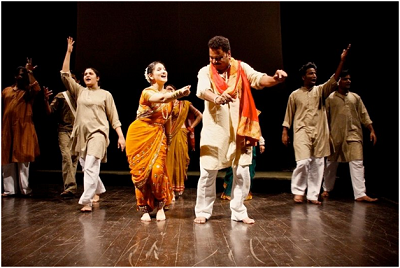
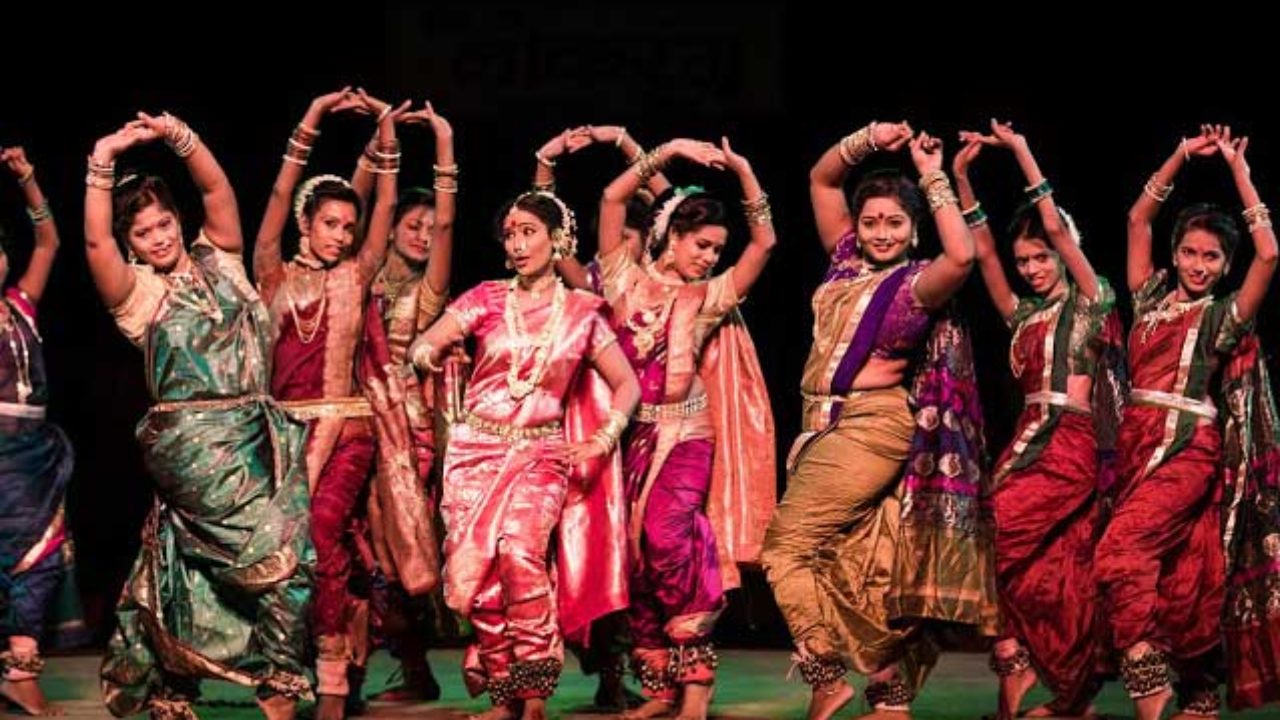
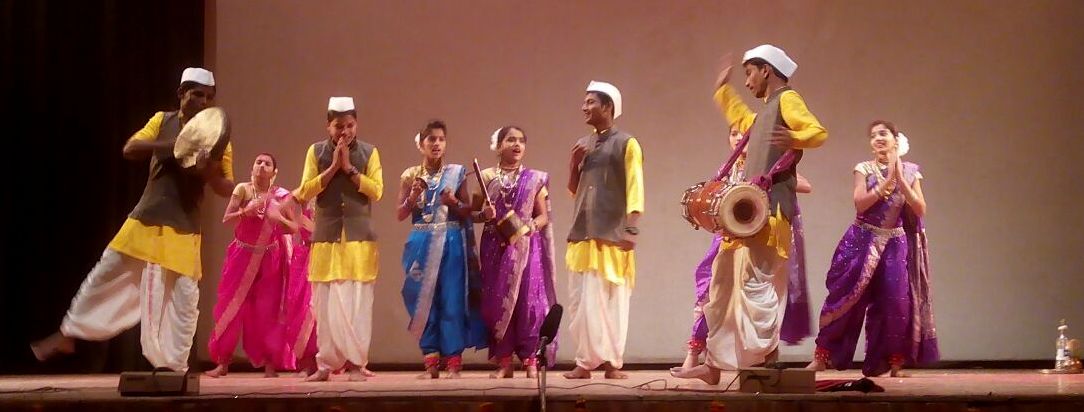
Tamasha is considered a major traditional dance form of the Marathi theatre, which includes celebration filled with dancing and singing and is performed mainly by nomadic theatre groups throughout the Maharashtra region. The word “Tamasha” is loaned from Persian, which in turn loaned it from Arabic, meaning a show or theatrical entertainment.1 In the Armenian language, “To do a Tamasha” means to follow an exciting and fun process or entertainment. Unofficially, this word has come to represent commotion or display full of excitement.1 The traditional form of Tamasha was inspired by a lot of other art forms like Kathakali, Kaveli, ghazals etc.
The region of Maharashtra had a long theatrical tradition, with early references to the cave inscriptions at Nashik by Gautami Balashri, the mother of the 1st-century Satavahana ruler, Gautamiputras Satakarni. The inscription mentions him organizing Utsava’s a form of theatrical entertainment for his subjects.1 Tamasha acquired a distinct form in the late Peshwa period of the Maratha Empire and incorporated elements from older traditional forms like Dasavatar, Gondhal, Kirtan etc. Traditional Tamasha format consisted of dancing boys known as Nachya, who also played women’s roles, a poet-composer known as Shahir, who played the traditional role of Sutradhar, who compered the show. However, with time, women started taking part in Tamasha.2
Marathi theatre marked its journey at the beginning of 1843.3 In the following years, Tamasha primarily consisted of singing and dancing, expanded its range and added small dramatic skits known as Vag Natya.3 These included long narrative poems performed by the Shahir and his chorus, with actors improvising their lines. There are two types of Tamasha dance forms: dholki bhaari and the older form known as sangeet baari, which contains more music and dance than drama.4
The government of Maharashtra has instituted annual awards in the memory of the late Vithabai Narayangavkar Lifetime Achievement Award for those who had extensively contributed to the preservation of the Tamasha Art form throughout the world.1
_________________________________ Independent Project by Sezal Chug Guide: Prof. Manohar Khushalani __________________________________
Leading scholar of Indian classical dance, architecture, art history, culture Kapila Vatsyayan no more
Kapila Vatsyayan in her younger days.
Dr Kapila Vatsyayan passed away peacefully at her residence (No.85, SFS Flats, Gulmohar Enclave, New Delhi), Wednesday 16th September, 2020 at about 0900 hrs, this morning, . She was a leading scholar of Indian classical dance, art, architecture, and art history. Many people felt she was the most authoritative commentator on these subjects.
She was formerly a member of parliament and also served as Secretary to the Government of India in the Ministry of Education, where she was responsible for the establishment of a large number of national institutions of higher education. She served as the founding director of the Indira Gandhi National Centre for the Arts. She was former President of India International Centre (IIC) and an IIC Life Trustee and the Chairperson of the IIC International Research Division. Bornon 25 December 1928 she was over 91 when she passed away
In 1970, Vatsyayan received the Sangeet Natak Akademi Fellowship, the highest honour conferred by the Sangeet Natak Akademi, India’s national academy for music, dance and drama; this was followed by the Lalit Kala Akademi Fellowship, the highest honour in the fine arts conferred by Lalit Kala Akademi, India’s national academy for fine arts in 1995. In 2011, the Government of India bestowed upon her the Padma Vibhushan, India’s second highest civilian honour.
Lamenting her demise, Film actor Sharmila Tagore said “I guess the final curtain comes to us all. I too have had some endearing moments with her.There was so much to learn from her.I admired & was inspired by her. Today where do we see people like her? With her knowledge & drive?Who is there to appreciate her legacy?”
About Charan Das Sidhu and his Plays by Manohar Khushalani
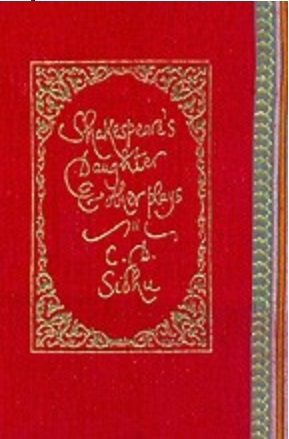
Shakespeare’s Daughter & Other Plays
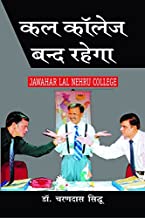
College Will Be Closed Tomorrow
This article was supposed to be a book review, but because one had known the playwright, Dr. Charan Das Sidhu, so intimately, the personal note is unavoidable. My mind races back to 1978 when I started my theatre career with Badal Sircar’s ‘There is No End’ an English rendition of his Bengali play ‘Shesh Nei’ directed by Tejeshwar Singh. Among the elite IIC Theatre Club audience was a stocky, dark, bespectacled professor of English from Hans Raj College, Delhi University, who spoke in what I later came to know as his irreverently rude but affectionate style. I saw this gentleman again in the next play that I acted in; Utpal Dutt’s Chayanat directed by Rati Bartholomew, and also the next and the next. Out of the 47 odd plays that I acted in, he was invariably there in the audience. This is not to suggest that he was a fan of mine or a critic who was following my career vigorously. I saw him invariably in the audience even in the hundreds of plays in which I too was in the audience. Dr. C.D. Sidhu was an avid theatre connoisseur who can take your breath away by the intensity and seriousness with which he follows theatre of all kinds, good bad and ugly. No wonder that when the Sahitya Akademi Award winner set out to write his first play in his mother tongue, Punjabi, it had to have the wisdom of so much theatre distilled into his script.
May 1979 was the first time I saw the play ‘Bhajno’, written, produced and directed by Dr. Sidhu was in ‘theth’ (pure) Punjabi as it is spoken in rural Punjab. It was a refreshing experience. Because it was very different from the urban Punjabi dialect one had heard all the time in Delhi. The spoken dialect was earthy and one became aware for the first time of the great depth in this vivacious language. The same can be said about his other plays such as Baba Bantu. These plays were also staged at a time when Punjabi theatre had got associated with double entendres. By contrast his theatre came like a breath of fresh air. WritersWorkshop has come out with an English translation of his collected works under the title ‘Shakespeare’s Daughter & other plays’ and who could be more competent than the English professor to do it himself. In fact he is also a well known expert on GBS and his book The Pattern of Tragicomedy in Bernard Shaw (published by Bahri and Sons) is a study on Shaw’s dramatic work in the light of his theory of drama in general and of tragicomedy in particular. Some of his students, like Vinod Dua, swear by him as an English literature teacher. “He introduced me to Shaw whose ‘outlook to life’ and Dr. Sidhu’s ‘act of life’ have been a great source of inspiration for me.” Vinod also recalls that although Sidhu was a MA PhD from University of Wisconsin, he wasn’t a victim of snobbery. In fact he had no hesitation in even teaching English BA pass course students – something that lesser qualified Professors would consider infra dig. In those early days of theatre funds were not easily available (not that things have changed radically now) Sidhu was known to have produced his plays by withdrawing funds from his provident fund. Sidhu has been awarded both as a playwright and as a Director. Although opinion about him as a director may vary, there are no two opinions about his abilities as a playwright.
While the scope of this review is not to go into each of the plays in great depth but one will dwell briefly on them in general Indumati and Satyadev was the first play that Dr. Sidhu wrote, way back in 1973 but it saw the light of day many years later. It was planned as a sequel to Kalidas’s Shakuntala. On the surface it appears to be about conflict between Aryans and Tribals. It inks some of his early thoughts about nations, war, peace, truth & falsehood. He has used Icons like Rama, Ravana, Krishna, Manu, Chanakya freely to project the viewpoints they represent and some times his own opinions about the way the lead their life. Laxman is the devoted keeper of his brother, Rama, whose wife he worships while neglecting his own Baba Bantu is about a feudal lord Sarban and his terrorizing a bonded labourer, Bantu, who is also an expert on curing people from snake bites. Bantu has been blessed with these powers on the condition that he cannot refuse to cure anybody of snake bites. While the Landlord sexually exploits Bantu’s daughter, Satti, the landlord’s wife does the same to his son, Bihari – using him as a sex object. In a series of twists and turns, Bihari is electrocuted and Sarban snake bitten but Bantu refuses to heal the oppressor and loses his power of healing in the process. The College Will Be Closed Tomorrow is a seething expose of University politics that cuts mercilessly across political as well as hierarchic divide. Built around a sex scandal and a suicide, it spares neither the leftist nor the rightist, neither the teacher nor the student. Each of the scripts is radical and also radically different from each other. Shakespeare’s Daughter is about the personal renaissance of a newly married Kamla who overcomes her timidity and shyness to emerge as a bold and daring writer thanks to a visitation of William Shakespeare in her dream. The girl is beset with typical in-law problems related to Dowry taunts and blames of Infertility but finally dares to leave her husband – her famous last line to her husband, Dwarka, “I may be a sinner. With Shakespeare’s King Henry V I repeat:
But if it be a sin to covet honour I am the most offending soul alive I will continue to commit this sin! I will continue to covet honour! All my life!
That thought in fact seems to be the basic string in all his plays. The search for dignity truth and honour
Social Distancing or Physical Distancing? / Archana Hebbar Colquhoun
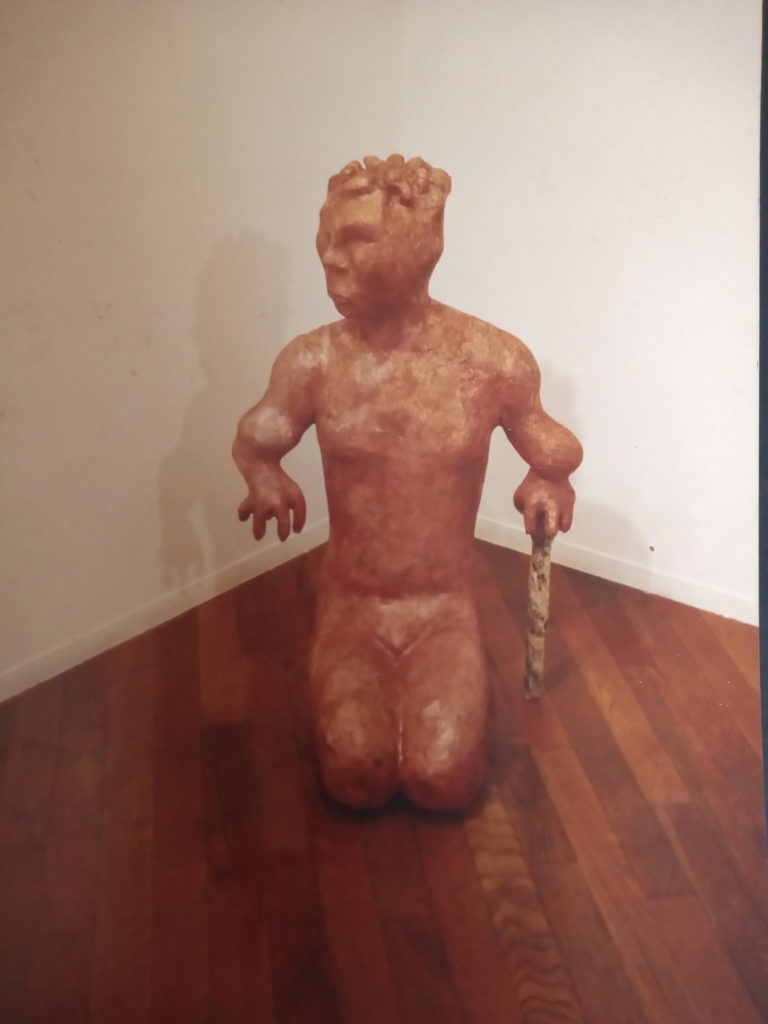
a sculptural representation
Seated Man
Covid-19 and Social Distancing
The current global coronavirus pandemic leading to COVID-19 shows no signs of dying a natural death; far from it, we are nowhere near finding a solution to arresting the spread of the virus. The virus appeared mysteriously and suddenly, infected some, multiplied rapidly, hitch-hiked by various means and entered all parts of the world – sparing no region. It underwent numerous mutations during its journey around Planet Earth and half a year later still stays firmly away from the grasp of human comprehension.
This uncontrolled, worldwide pandemic has completely transformed our lives and we have come up with one rather simple behavioral method and the only known effective one so far to cope with this situation. The world’s lingua franca has given it the name “Social Distancing.” The English language is highly adaptive. But the language is also very adept at coining specious terms. These terms are then taken up unquestioningly by anyone speaking any language, anywhere in the world.
I would like to discuss, using one of my sculptural works, the connotative meanings of the term “Social Distancing.” As a more suitable term to use in the COVID-19 context, I would suggest the term “Physical Distancing.
A Sculptural representation
The subject of this article is a sculpture of a seated man. It is the third in the series of five sculptures that I made in Tokyo, in the late 80s. These sculptures are based on specific people I saw on the streets of “Calcutta,” in the early to mid-80s. I did not and could not strike up a conversation with any of them. Perhaps I did not have the strength of spirit to connect with them through verbal communication. I had my own problems and I felt just as helpless as they did or perhaps they did not even feel the same sort of disempowerment I felt. They were, for all I know, stronger in spirit than most and had the mental strength to accept their condition and live a functional life with a reasonable level of happiness and fulfillment.
The reason for the absence of an interaction with any of the individuals I saw and passed by on the streets of Calcutta that year in the early to mid-80s was revealed to me gradually, over the years. This happened through certain specific experiences I had with people, belonging to different groups, in various countries. These experiences were, what I would call, mundane and of little import when taken from the point of view of a day to day existence. To me, however, they were eye openers. These experiences signified to me the true meaning of the currently much bandied about term “Social Distancing.”
I posted a write-up about my second sculpture in the series, crawling man, titled “The World on its Hands and Knees,” since the person the sculpture was modeled on represented to me the condition that all of us are in now – our lives ruthlessly controlled by a global pandemic caused by a bio-chemical entity, the coronavirus, that exists in that nebulous state between living and nonliving.
The fear of COVID-19 is real, palpable, and terrifying because we have no understanding of the workings of the coronavirus. A term with a very specific meaning has been coined to describe the physical distance each of us needs to maintain with everyone except for the few people with whom we share a living space, excluding even your blood relatives if they happen to live in separate accommodation.
This physical distancing is termed “Social Distancing.”
Social Distancing vs Physical Distancing
“Social Distancing” is entirely erroneous as a term to describe the sort of distancing we need to maintain between each other during this pandemic. The ‘distancing’ is necessary so as to not catch the virus from people with whom interaction is unavoidable, termed essential workers, and spreading the virus to other individuals.
Social Distancing as a practice is nothing new; it has always existed in all societies, in one form or another. It is implemented and controlled by a small minority of agents of power, be they the ruling elite, the strong amongst the weak etc. Using the term “Social Distancing” in the present situation to describe a prescriptive behavioral form of maintaining physical distance to avoid spreading of COVID-19 that applies to all, irrespective of their social standing, performs the task of validating, insidiously, the deep social divide, wide-spread all over the world. The term gives credence to the institutionally managed segregation of communities that disempowers large groups of people based on their color, ethnicity, economic standing, gender, etc., and people with physical disabilities. These groups of people live a socially distanced life. I have not included other groups or even people with disabilities that are not to do with the visible physical body, in this discussion.
Persons with physical disabilities
Among the many disempowered groups of people, such as those listed above and others, it is the group of people with physical disabilities that are uniquely placed as the ones whose lives are more severely affected by social isolation and the resulting social distancing. A person with physical disabilities is a single individual, often experiencing a sense of separation even within their own family. Although living a socially distanced life like many other groups of people, a person with a physical disability is alone in their disability as each form of disability is different from another. The extent and nature of the disability depends on individual factors and the person with a disability does not belong to a clearly identifiable collective.
Examples of a ‘collective’ would be an ethno-racial social group or a community of economically deprived families, living in ghettoized, marginalized conditions. Accordingly, a person with disabilities lacks the emotional support system that individuals belonging to other disempowered groups with shared problems and a common identity have.
The social and emotional isolation of people with a physical disability may be the result of congenital factors, of deliberate acts of cruelty, accidents, and even more shockingly and tragically due to poorly understood medical treatments. These treatments are administered hastily, not having been properly verified but widely hailed as effective, and any side-effects resulting from the treatment, which may be severe and irreversible are identified only when the damage is already done.
As mentioned earlier, physical disabilities can include a whole range of conditions, including ones that are not readily visible to others or those that entirely escape the notice of people who are strangers to the person with a disability.
A physical disability of a particular kind and why it became the subject of my sculptures
The form of physical disability I chose to highlight through the set of five sculptures belong to the one category of people (four of the sculptures referring to actual individuals I saw), who are either born with or developed later in life anomalies (in medical terms a “deformity”) in their bodily structure. Their limbs, extremities, and craniofacial features affect how they are viewed by others and the bodily movement and functionalities of the people in this category are restricted to various degrees. Often, the stark visual nature of their physical characteristics, entirely unique to each individual and the disabilities being specifically their own, marks them apart from others. They are denied a sense of belonging to a community. Inarguably, the social and emotional isolation that the people in this group experience compounds their day to day difficulties and increases their dependency on others. The subject was compelling and I was and still am deeply affected by the life situation of people with disabilities who have readily visible “malformations” of the body.
Before I talk about my sculpture, seated man, and the form and content of the work, I would like to make clear my rationale and impetus behind selecting, as subjects of my artwork, people with physical characteristics that restrict their mobility and whose body structure does not conform to expected norms. If the motivation for doing the set of sculptures is not already evident from the foregoing discussion, I would like to stress that by doing these works I want to bring to light the pain and suffering of these individuals, which is singularly their own.
These set of sculptures may be deemed voyeuristic, distasteful, and even lacking in basic human sensitivity and compassion on the part of the artist. This is one reading of the work, and from the point of view of the artist, that is me, the reading reflects the reader’s/viewer’s own point of view, which does not allow them to extend their understanding of what an art work stands for, the compelling motivations of the artist for doing works of this kind, and the complex web of meanings the artwork holds. These meanings of the artworks constantly change and come to light depending on the context in which they are presented and the nature of the audience. There may be no specific target audience in the mind of the artist when a work is created, unless the work is commissioned by a specific patron with clear-cut requirements. My set of works are entirely self-motivated and created with no specific audience in mind.
It is my conjecture that the seated man, who in all probability was homeless, had a congenital condition that caused the shortening of his arms but evidently with strong musculature in the upper and forearms, both structurally relocated and joined in such a way as to provide for an elbow function. The formation of the arms had a certain degree of symmetry, in that the arms had the same proportion and structurally related to the rest of the body in a similar manner.
The Sculpture of a seated man
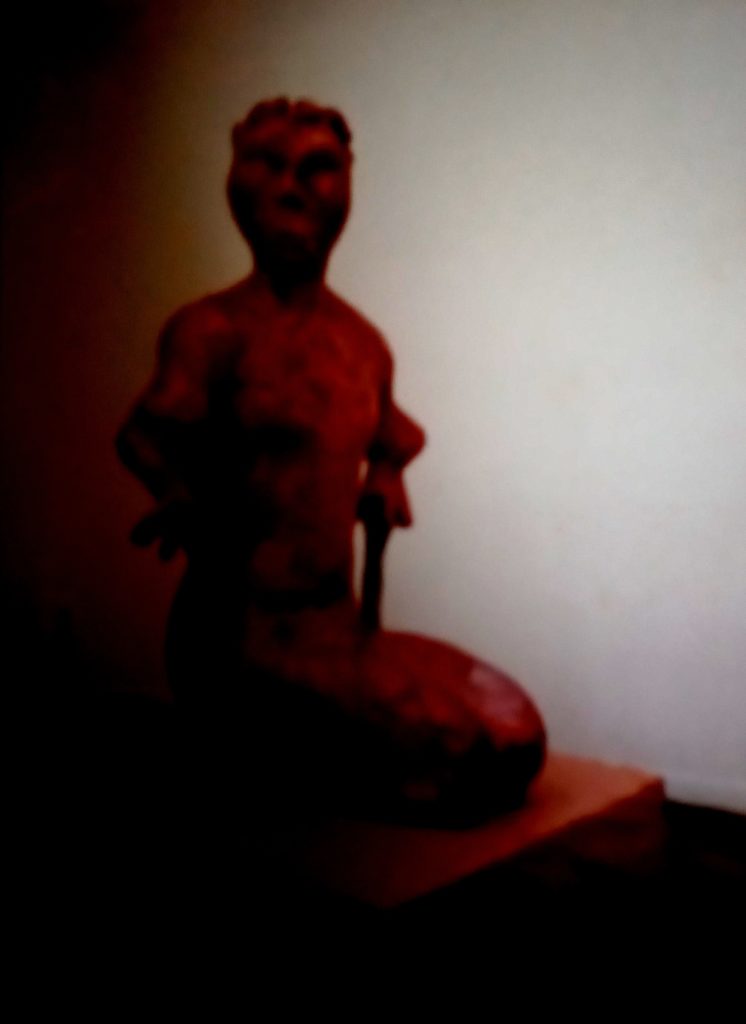
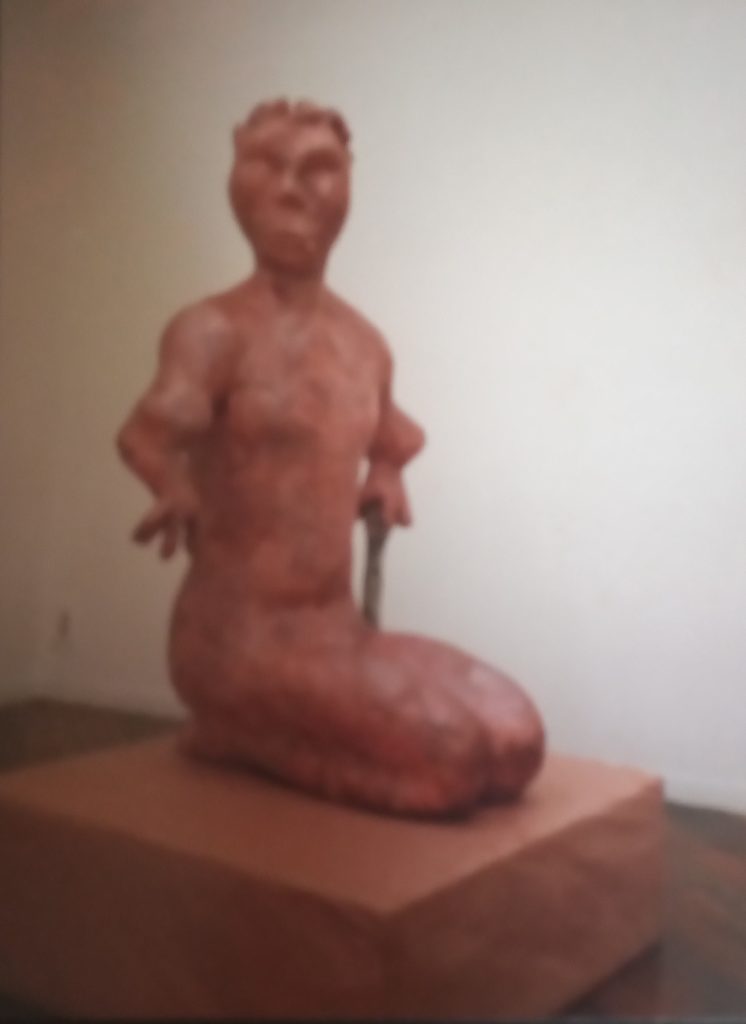
A seated man, homeless perhaps, his posture is almost that of a yogi. His torso is upright and handsome. He sits with his legs folded under in the yoga pose of Vajrasana, holding a stick in one hand for support. His arms are strong, although shortened. They are connected securely to his shoulders in a “standard” anatomical position. His head is turned sideways to view something that he caught sight of from the corner of his eyes. He used his very own form of transport, a little trolley, which I edited out from the sculpture. This I did so as to give prominence to the figure of the man who bore himself with dignity to the extent he could, given his circumstances. The trolley would have been a distraction and would have drawn attention to his disability.
Whatever innate dignity his physical demeanor may have presented, he was still an outcast – homeless, living on the streets, and displaying those physical features that the vast majority of people could not relate to and from whom they maintained a clear social distance.
The social distancing of people such as the seated man has no relation to the “Social Distancing” prescribed by the governments of all countries for tackling COVID-19. What is needed in the present circumstances is “Physical Distancing.”
If the indignity of a subtle form of social distancing was not enough, the seated man spending most of his time on the pavement had people walking past him, occasionally tossing a few coins in his bowl, who practiced a more blatant form of “physical distancing;” whereby, when they passed him on the street, they kept a distance that was more than necessary. This they did to make certain that they avoided contact with him. They walked past him by making a wide arc of a semi-circular curve using a quick motion to go past him, in the shortest possible time.
Practicing social distancing in relation to people isolated from the mainstream of society existed way before COVID-19 gripped our lives.
Displaying the work in an art gallery
In order to express the combined qualities of dignity and social isolation of the seated man, the figure was placed directly on the floor of the gallery on the first day of the show, and from the second day of the show until the closing of the show the figure was placed on a pedestal, which not only isolated him but also provided him with an elevating platform, giving him the dignity he deserves.
Erebus and I / Ojaswini Trivedi
Night Sky
Who saves us? What protects us? Or are we just living our lives with the illusion of being protected. Of being saved.
Hurt is the chalice of nothingness, writhing through the voiceless screams. The mind crawled up in a desperate embrace, bleeding, shivering, hangs itself from the ceiling.
With nothing to hold on, with everything to let go. What is the truth? What is right? Who decides what our conscience speaks? Who lives through, who survives the maelstrom of starlit sighs.
I remember that night, alone, terrifyingly-complete. The lights turned down and the darkness eager to consume me. For a first, it didn’t charge at my insecurities with vengeance but tip toed with a docile ambiguity that allowed me to accept it with arms wide open. Night was kind to me. Maybe the moon was watching.
The background rhythm played in sync with my closing ventricles, expanding lungs and perhaps possessed arms. The sanctity of its beauty transcended into every cell, each tissue. Unbiased with the form or function.
Only one song played that night.
“Bottom of the Deep Blue sea” by MISSIO. The song. Ironical? I know.
My feet ached, and I swayed endlessly. Almost as if the night was my guide, the security man outside my window. Convincing me that Pain and Anguish would have to cross the seven seas, climb the tallest peaks, jump across the chasms, speak the strangest of languages to reach me.
I was safe.
As if maybe for the first time, being numb was equivalent to being happy. Maybe sometimes feeling everything is like feeling nothing at all. Like a snake swallowing its tongue. Or a snowball exploding against a Pine tree.
Au contraire, I never felt more alive. Like the first breath of air after plunging out of the water. Gasping, lungful of the escaped nuances- All gushing back into the realms of my truth.
The soothing audacity of hurt comes in unabashed like the lust for love. It’s heavy. It’s bored. It’s engraving.
Dancing barefoot on the wooden floor, with nothing but a mirror around me. It broke my heart in a different way. It crumpled my soul in an unfittingly. I felt distorted, perfectly.
All of a sudden in those frail moments everything I did and didn’t do made sense to me. Almost as if a gospel truth unravelled beneath the sheaths of my eye lids, trotting through my veins, into the earth.
With every move, my heart imploded, it succumbed to the bliss, the night had to offer.
Is that what love looks like? Oh the shear godliness of it.
Somewhere through my illicit affair with the night, as I laid on the floor, breathing the earth, staring into the sky across the translucent concrete above me.
My toes crinkled.
The desire and occurrence of complete degradation followed by the innocent upheaval of honesty, lastly toppled with the cool embrace of bliss.