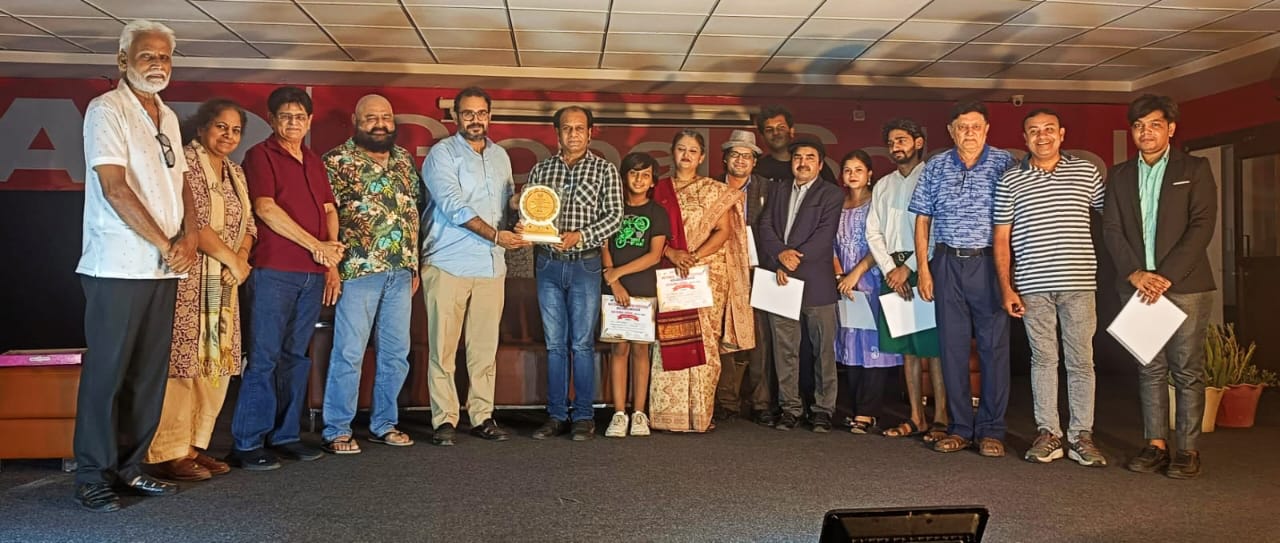
National Drama Festival in Rohtak Showcases Diverse Plays and Talents
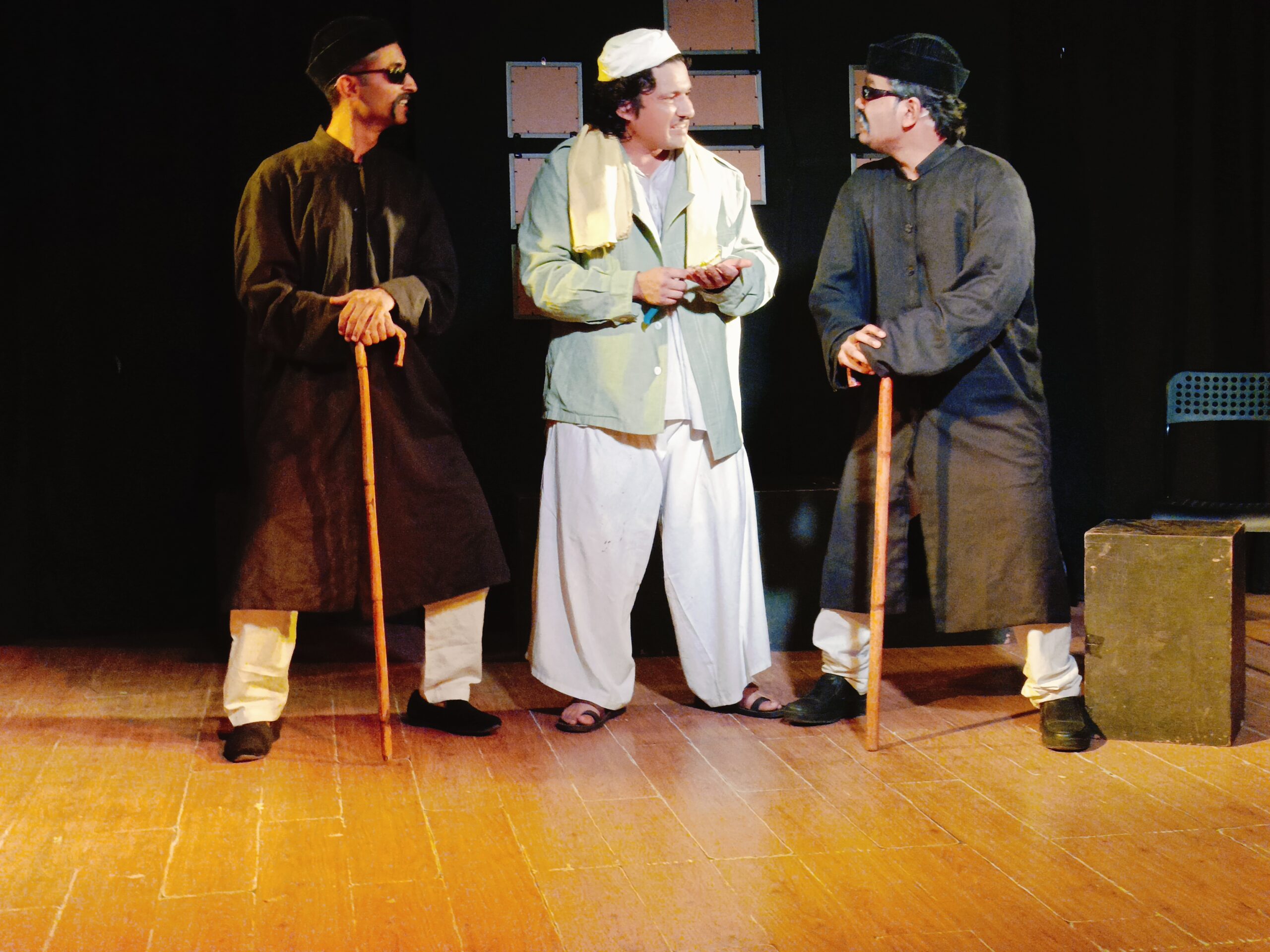
Rohtak. Five different plays are being staged in the five-day National Drama Festival organized by Haryana Institute of Performing Arts Rohtak, Pathania World Campus, Zad Global School and Department of Art and Cultural Affairs Haryana. The play “Popcorn” directed by Kedar Thakur of Shimla and written by Ashish Pathak, the play Kambakht Ishq directed by Shyam Kumar of Delhi and written by Satya Prakash Darwa, “Sandhya Chaya” directed by Sunil Chauhan of Delhi and written by Jayant Dalvi, the play “Saiyaan Bhaye Kotwal” directed by Vishaw Deepak Trikha of Rohtak and written by Vasant Sabnis and the play “Bonus Show” directed by Kajal Suri of Delhi and written by Aziz Qureshi will be staged.
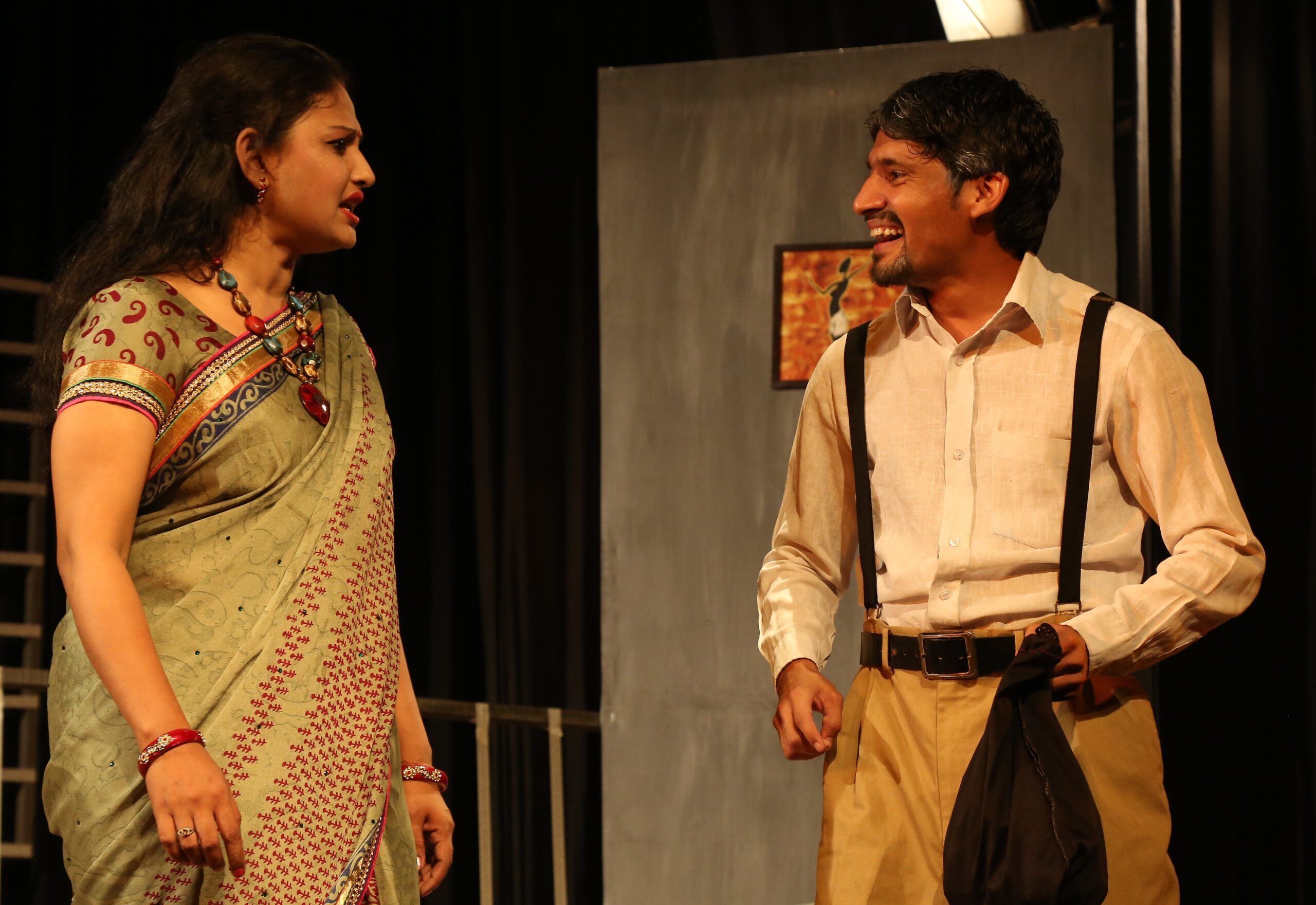
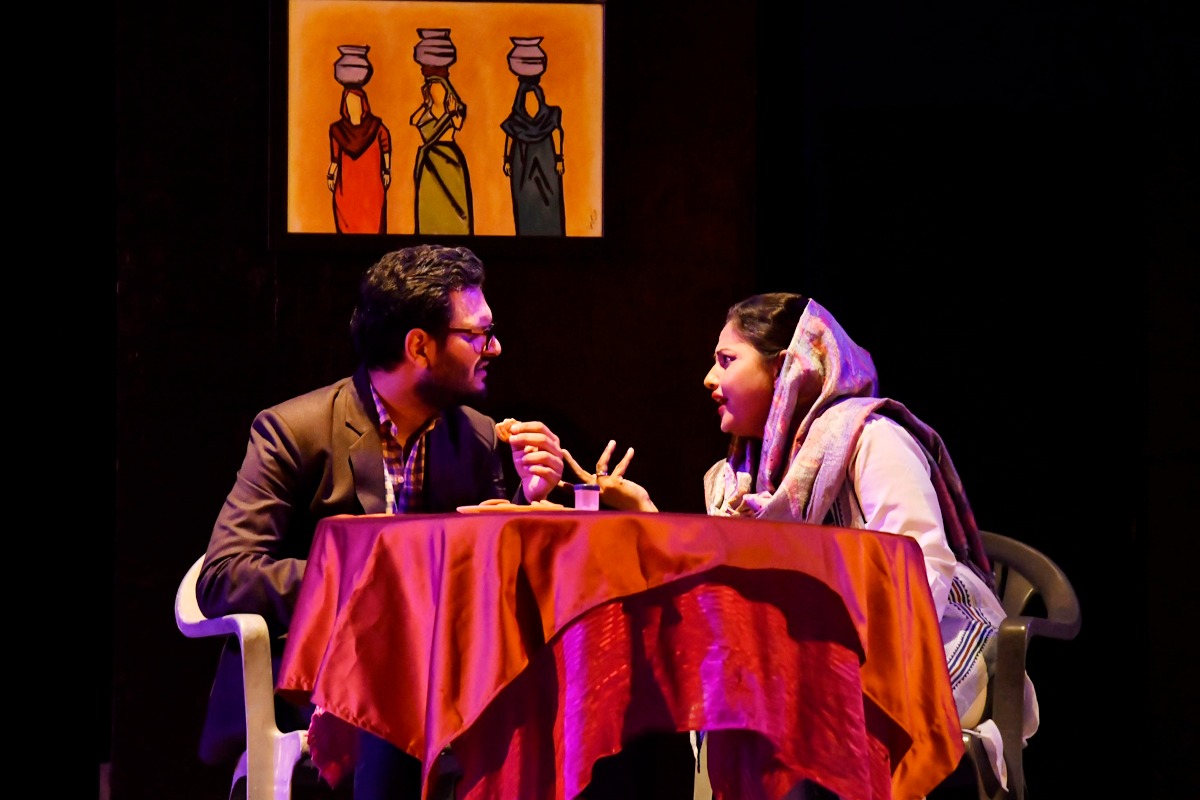
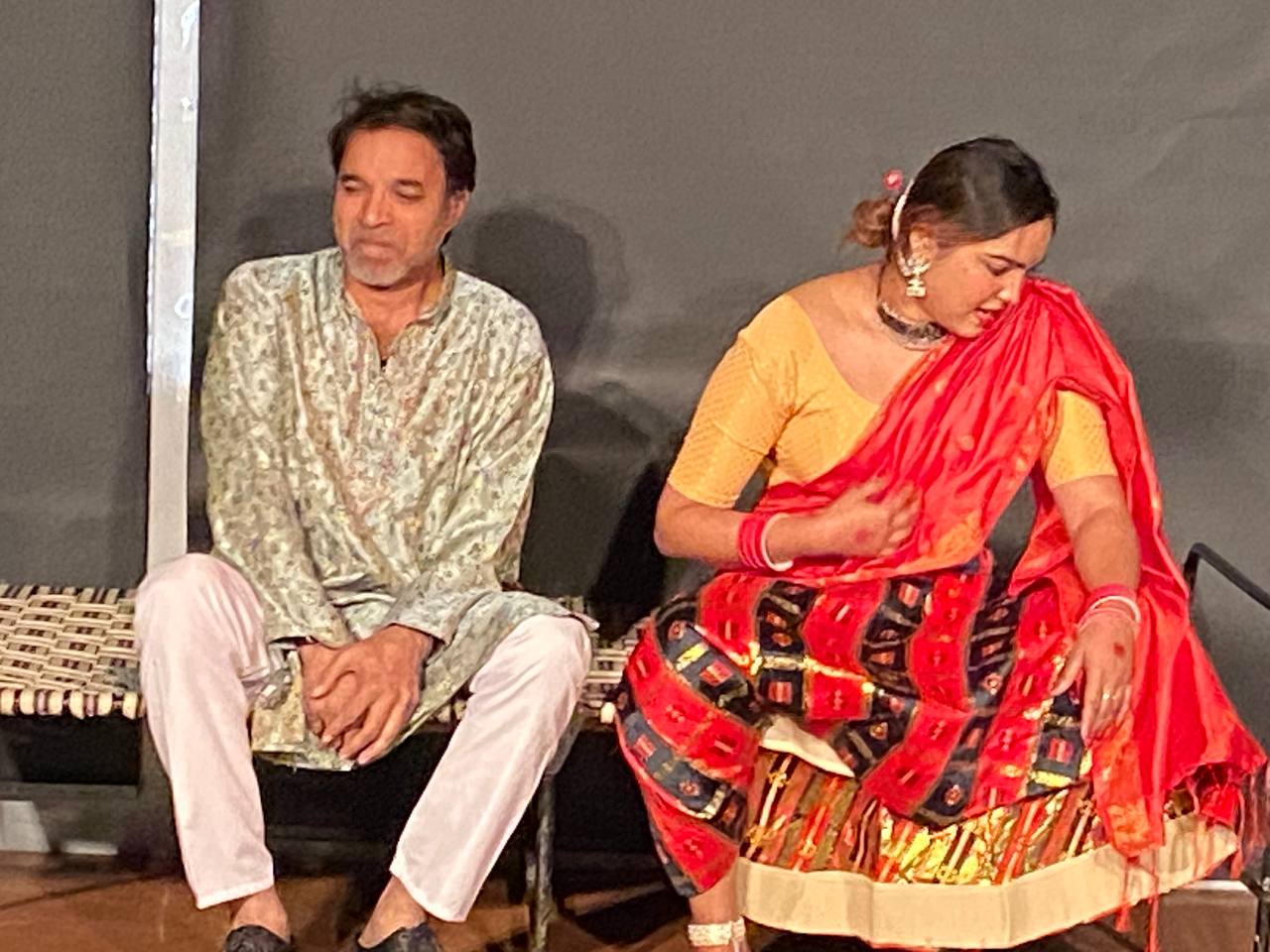
The second evening of the five-day National Drama Festival was dedicated to the presentation of Natsamrat Delhi’s ‘Kambakht Ishq’. In this play directed by Shyam Kumar, the truth and essence of the life of the elderly was depicted in a very interesting way. This presentation full of humor tickled the audience a lot.
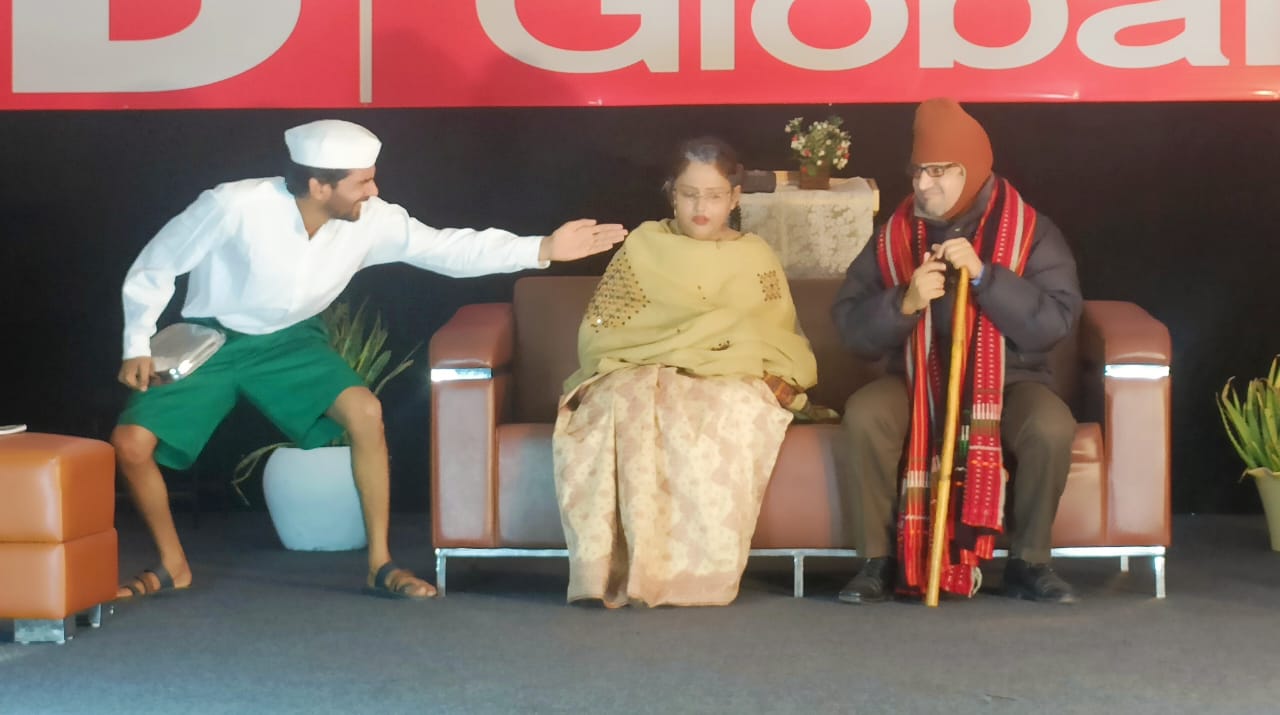
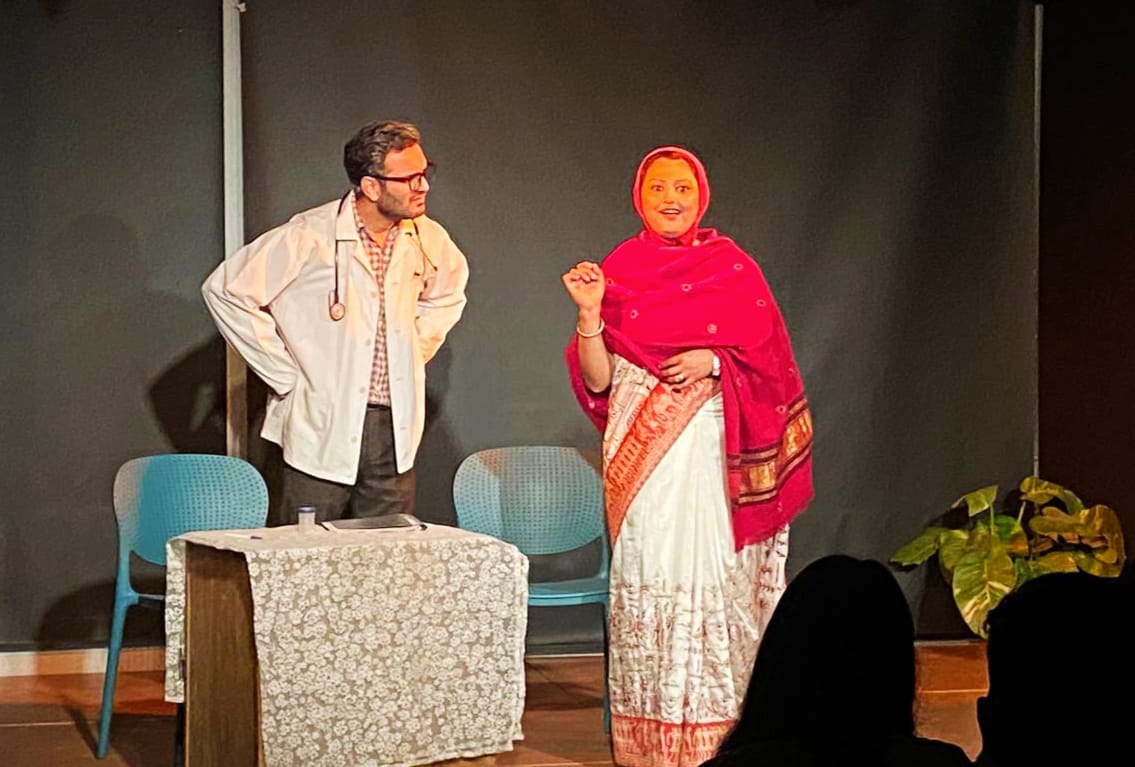
The plot of the comedy drama Kambakht Ishq revolves around two elderly people for whom their children do not have time. Due to the busy life and lack of love from children, the elderly try to attract the attention of children in the guise of love. The children’s problems increase when both the elderly people fall in love with each other and start meeting secretly.
The drama was successful in giving the message that people forget that ‘a true companion is needed the most in old age, to share one’s feelings.’ This problem and the struggle of loneliness in old age was seen in this presentation with a touch of laughter.
The actors presented the story of the drama in a very interesting manner and received a lot of applause from the audience. Sanjay Basliyal in the role of Kishan and Munmun in the role of Radha won everyone’s heart with their excellent acting. PK Khyal in the role of doctor, Aman Kumar in the role of Jai, Shivangi in the role of Leela and Raman Kumar as compounder also impressed. Sunil Rathore and Rohit Prasad were the stage managers while Suraj and Lokesh took care of the stage material. Make-up was done by Rajrani and costumes by Payal. Music direction was done by Vansh Rathore and lighting design was done by Natsamrat director Shyam Kumar.
Memorable Plays Staged at Natsamrat’s ‘5th Mumbai Theatre Festival’
The 5th Mumbai Theatre Festival organized by Natsamrat was successfully held from 21st to 23rd June at Creative Adda Auditorium, Versova, Mumbai. The director of all the plays is Shyam Kumar.
On the first day of the Theatre Festival, 21st June at 7 pm, the play Satya Prakash’s “Kambakht Ishq” was staged. This play explained deep themes while making the audience laugh. The story revolves around Jai’s father Kishan and Leela’s mother Radha, who face loneliness due to their children’s busy schedules. They meet at a clinic and start spending time together, which alleviates their loneliness. However, their children misunderstand this relationship and prevent them from meeting, causing both to fall ill again. Eventually, the children realize their parents need each other’s support.
Later that evening at 8:30 pm, the play “The Proposal” written by Anton Chekhov was staged. This play tells the story of a young man proposing marriage to his neighbor’s unmarried daughter. The story becomes more complicated as they argue over property and dogs.
On June 22, at 7 pm, “Haye Mera Dil” written by Ranbir Singh was staged. This play depicts the story of a hypochondriac husband who, due to a misunderstanding, believes he is going to die soon. He plans a wedding for his wife, but she mistakes his behavior for infidelity.
At 8:30 pm, the play “Kuchh Tum Kaho Kuchh Hum Kahen” written by Ashish Kotwal was staged. It tells the story of Anand and Mansi, who have different outlooks on life. Their poignant banter left the audience emotional.
The Natya Mahotsav concluded on June 23 with the play “Kallu Naai MBBS” written by Moliere. This play is about a barber who is always drunk and beats his wife. His wife devises a plan with the help of servants to teach him a lesson.
In all the plays, actors Sanjay Basliyal, Munmun, P.K. Khayal, Aman Kumar, Shivangi, Raman Kumar, Sudhir Khanna, Naveen, Vishwajeet, and Saumya Yadav gave excellent performances. Backstage management was handled by Sunil Rathore and Naushad, stage management by Suraj Singh, makeup by Payal and Raj Rani, costumes by Chhobi Saha and Rohit Prasad, and lighting was designed by Shyam Kumar.
The audience greatly appreciated these plays and praised the messages contained within them.
Dramatic Showcase: Masters in Performing Arts (Drama) Present’s Two Plays “Kaalchakra” and “Bank Manager” at Rabindranath Tagore University
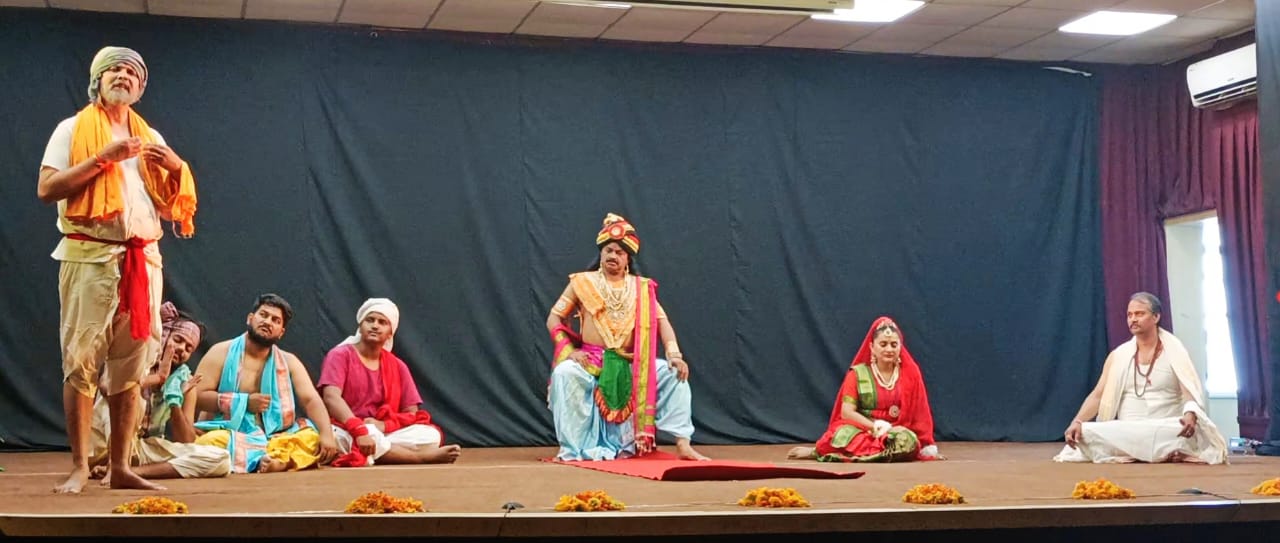
A three-day workshop (28 to 30 in 2024) was organized at Rabindranath Tagore University under the Faculty of Sanskrit Prachaya Bhasha Kendra Manviki Udaar Kala Sankay. Its participants were students of Masters in Performing Arts (Drama). Two plays were prepared by them. The play “Kaalchakra” written and directed by J.P. Singh and the other play “Bank Manager” written by Anton Chekhov and directed by Shyam Kumar were staged in the Sharada Auditorium of the University on 30 May. The play “Kaalchakra” is based on the legend of Raja Bhoj and Gangu Teli, in which the lead roles were played by J.P. Singh as Raja Bhoj and Tarun Jalota as Gangu Teli. Vaidyanath Sharma as Vaidya and Amatya, Vashishtha Upadhyay played the role of Ang Raj, Jyoti Upadhyay as Chandramukhi, Ashfaq as Musician, Vansh Rathore as Singer, Neeraj played the role of Dwarpal and Lights Designed by Shyam Kumar. The play Kaalchakra was started with a Jarjar Puja as per the rules of Natyashastra. A unique amalgamation of music and acting was seen in the play.
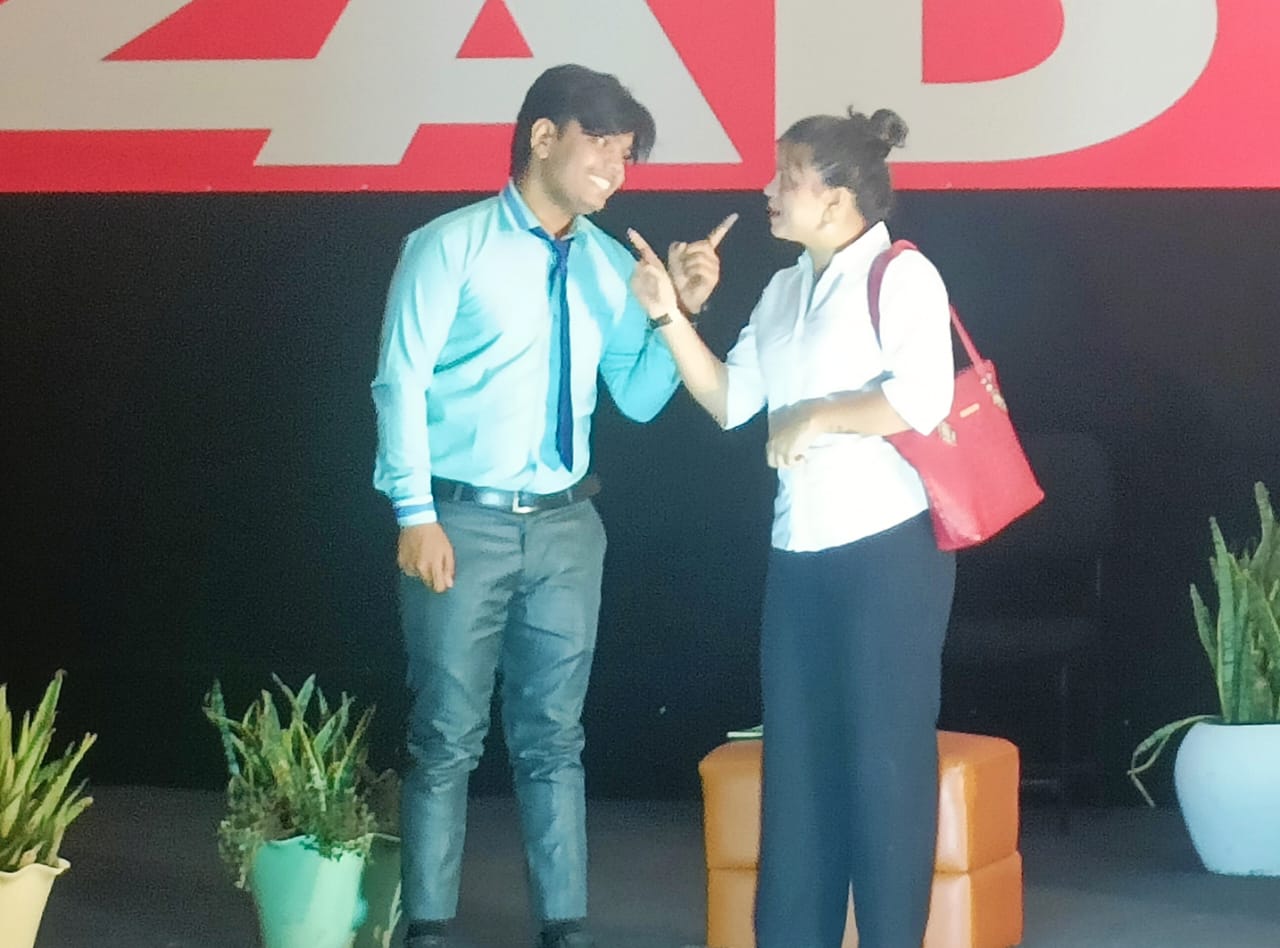
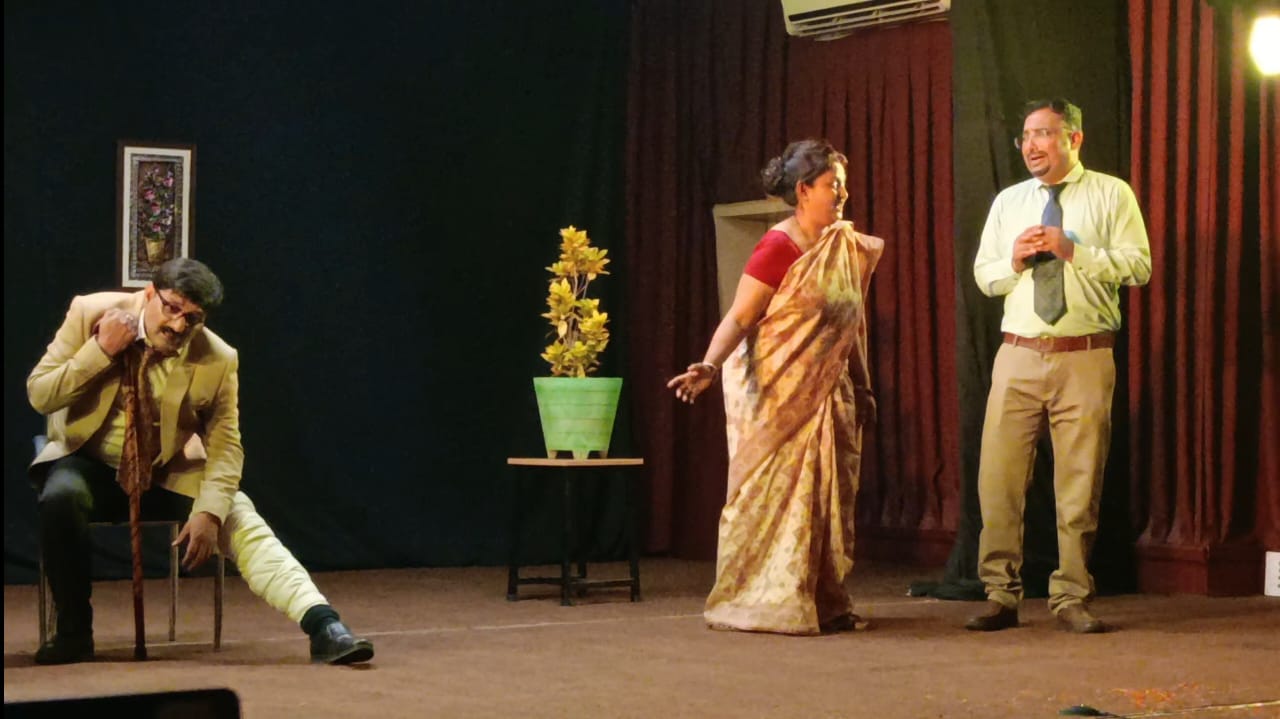
The second story full of humour “Bank Manager” is about a woman who comes to a bank, forces the manager to fulfill her unreasonable demands, the play is full of some humorous exchange of dialogues between the two and ends with the manager literally losing his mind. Nagendra Sharma played the role of the bank manager, the role of the woman was played by Shraboni Saha, Sachin Verma played the role of the assistant manager, music was directed by Vansh Rathore and lighting was designed and directed by Shyam Kumar.
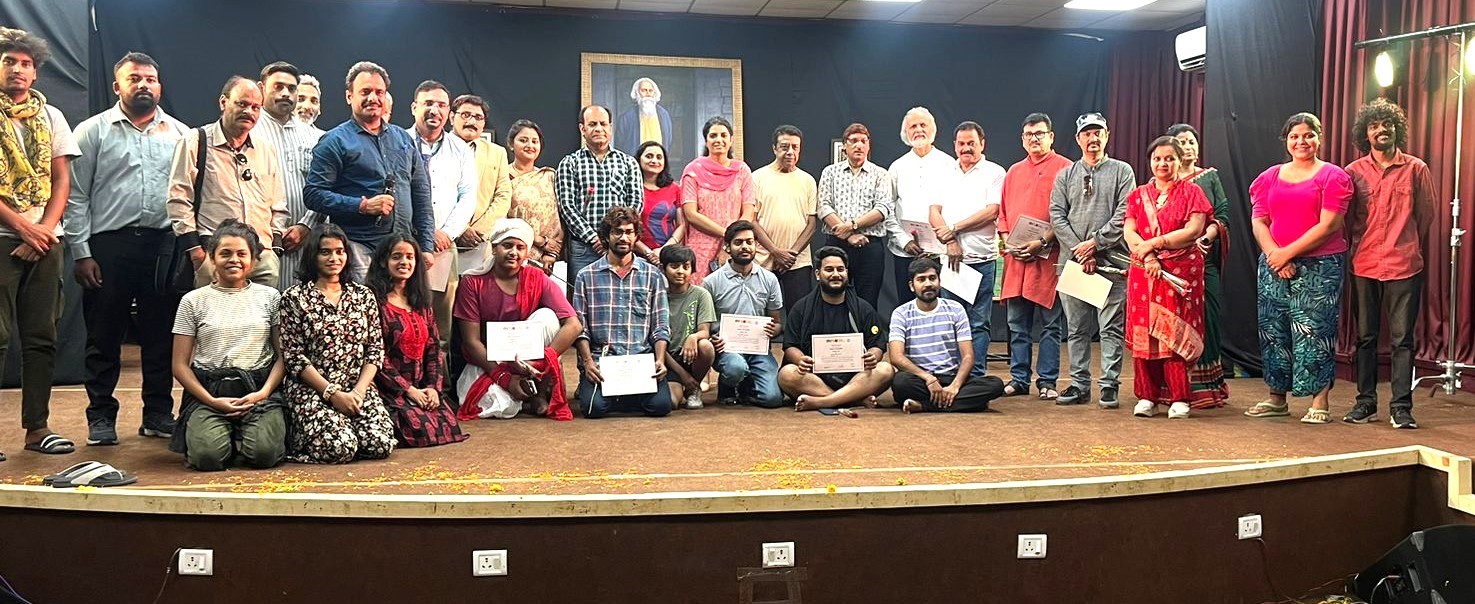
In both the presentations, senior theatre artist and former director of M.P.S.D. Alok Chatterjee and the Vice-Chancellor of the University Dr. Aditi Chaturvedi Vats and the Vice Chancellor of the University graced their dignified presence as the chief guests. Alok Sir appreciated the play and praised the acting of all the artists. Dr. Aditi Chaturvedi Vats called the students’ presentation commendable and called it the heritage of the University. All the students were given certificates after the play. The coordinators of this workshop were Dr. Sanjay Dubey and Dr. Savitri Singh Parihar, co-coordinator Dr. Deepak Tiwari, cooperation from the Faculty of Humanities and Liberal Arts and Mr. Sharad Mishra, Abhishek Deshmane.
Triumphant Tale of Love and Laughter: ‘Mirza Saheb Pyar Ka Dushman Haye! Haye!
What happened when despite all the efforts of Mirza, he could not break the relationship of his daughters Saba and Fiza with their lovers Farhan and Akhtar?
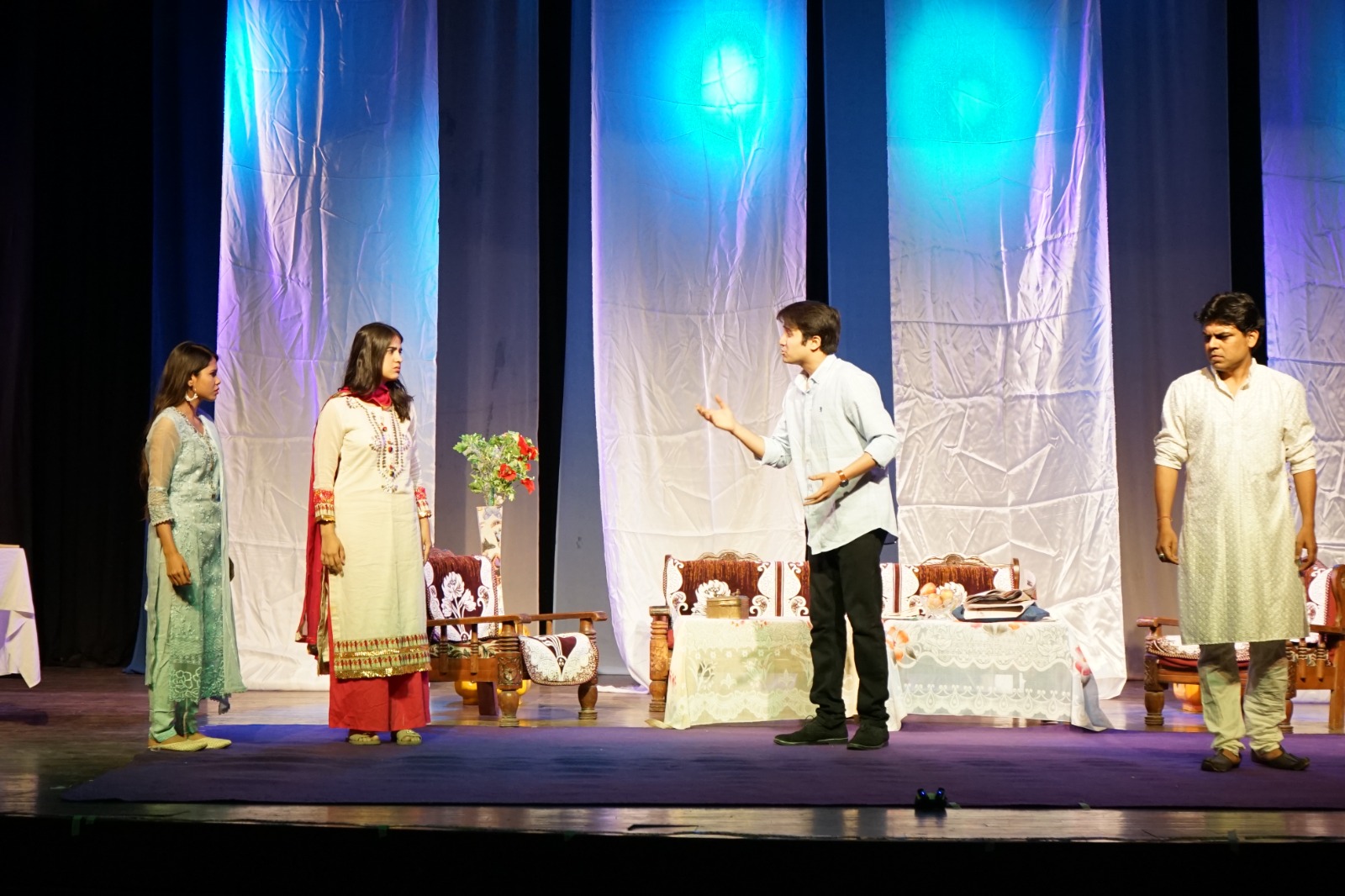
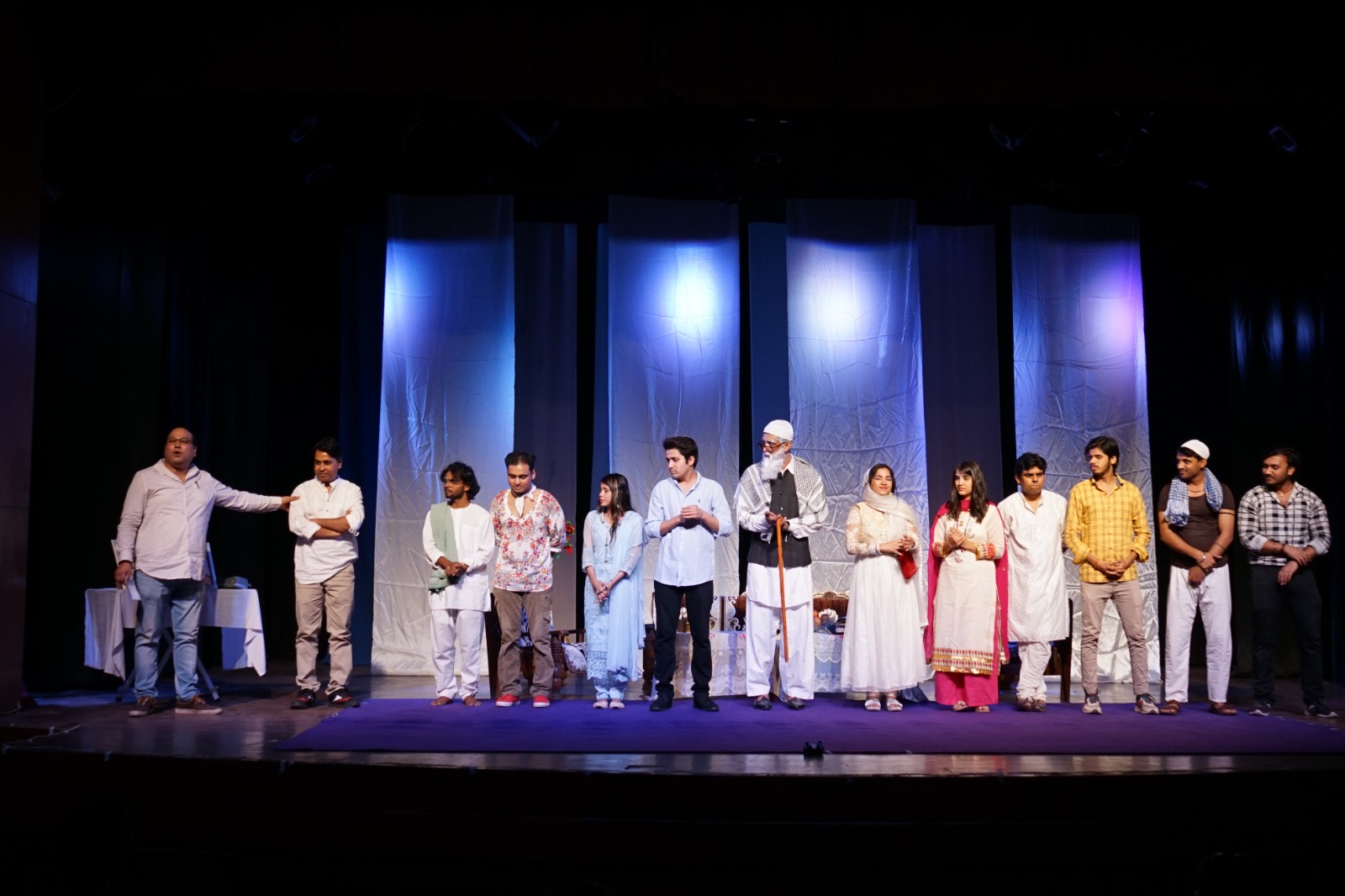
The Comedy Play ‘Mirza Saheb Pyar Ka Dushman Haye!Haye!’ written and directed by Ashraf Ali was staged in LTG Auditorium, Mandi House, New Delhi on 5th May 2024 at 4:30 p.m. The laughter and applause of the audience sitting in the auditorium shows that the audience liked the play very much.
Mirza (Azad Sherawat) who does not want to marry his two daughters Saba (Noor Chawla) and Fiza (Shilpa Das) to their lover boys which are Farhan (Ankit Sati) and Akhtar (Naresh Kumar). Mirza’s wife is Khalida (Shalini Sita) and a hard-working servant is Fakhru (Ritesh). Every scene of the play was very connected due to which the audience remained connected till the end of the play. The audience appreciated the acting of Armaan (Chirag Goyal). The acting of Sharafat Ali (Vishal Shukla) was good. Every character played its role well. Fakhru’s character was full of enthusiasm but at some places his behavior towards his master seemed too loud. Many times an issue was being repeated again and again, which could lead to editing. Azad Sherawat’s performance in the role of Mirza was quite strong.
According to the play, the background music was selected by the play’s writer and director Ashraf Ali. The backstage partners were Shikhar Tiwari, Manik Sharma, Vinay Kumar, Rajan Kumar, Simran and Amar Shah. Noor Islam was in videography. The stage decoration and lighting concept further enhanced the scenes of the play.
“Mirza Saheb Pyar Ka Dushman Haye! Haye!” was a hit with the audience! It’s always great to hear about successful theater productions. It seems like the actors really brought their characters to life, and the backstage crew did an excellent job too. The director’s choice of background music must have added a lot to the atmosphere of the play. And kudos to the playwright for crafting such an engaging story.
EMPATHY- A FARCE :A play by Dr. Payal Trivedi
(For performing this play read the corollary at the bottom)
CHARACTERS: Dhruv, Vrushali, Dhruv’s friend
Dhruv- I cannot love you. I have tried a lot vrushali but I cannot.
Vrushali- Just because I have scars on my face!
Dhruv- Vrushali I know what you mean! But I have tried to like u, I mean love ypu . I know you are immensely talented. You have a sweet voice. But…I cannot love ypu and Im sorry.
Vrushali- Dhruv why did you preach to everyone that don’t judge a book by its cover! You cannot love me because you see these scars and…
Dhruv- Vrushali am sorry but I cannot somehow develop feelings for you.
( some days later Dhruv is talking to his friend)
Dhruv- Rishab I know I have to forget her face and love her because we need to love the character not the body but Im helpless. I cannot just overlook her ugliness ans I would not be able to do any justice to her.
Rishab- Amazingly double standard. You talk about the futility of looks and you make the same mistake now!
Dhruv- I am trying.
Rishab- You BETTER.
( A few days later)
Dhruv- Vrushali I will marry you. Come.
Vrushali- Dhruv!!!!!! WHAT HAPPENED TO YOUR FACE??????( IS SHOCKED SEEING HEAVY SCARS ON HIS FACE)
Dhruv- Vrushali EMPATHY is a FARCE. I CANNOT UNDERSTAND YOUR NEED unless I become YOU. Let us start a new venture today. And yes I agree never judge a book by its cover. But cover is the unfortunate first thing that everyone sees. Come Vrushali let us start a new beginning.
The playwright permits theatre practitioners to perform this play Royalty free with one request. Please message us in the comment box if you are interested in doing this play. Also, if and when you schedule your play, inform us and our readers in the comment box about it. Who knows someone might amble into your show after reading your message.
SHIV PARVATI SAMVAD: THE DIVINE MASCULINE AND THE DIVINE FEMININE – A FACE OFF (PART 1)
(Enter Shiva as a mendicant)
Mendicant: O Tripurasundari! How shocking it is to see a paradigm of delicacy as you performing such a rigorous penance! What is it that has provoked you to leave your father’s paradise and come to this snowy wilderness to cause yourself such agony?
Parvati: Salutations to you shree Guru. I am here to fulfil my most coveted desire to marry the Lord of the three worlds!
Mendicant: O! Is it? Yes. Indeed, I must say then your desire is worthwhile.
Parvati: I am so pleased to hear this from you shree Guru. Indeed. I tried explaining this to my mother and father who are so adamant in their standpoint of labelling my desire to marry Shiva as unwarranted!
Mendicant: What? You are performing the rigors to marry SHIVA?
Parvati: Yes. Be doubtless about your listening skills Shree Guru. They are flawless. You have heard it right. It is him…My Lord and Master Shiva. I want to be his ardhangini! It is he whose desire has instigated this urge in me to continue appeasing him with my offerings unless he agrees to bless me by granting my wish to marry him.
Mendicant: And I am sure this all would have been planned by that shrewd Narada if I am not incorrect in my conjecture?
Parvati: Yes. And I am so glad he explained it all to me that I needed to perform this enduring penance in order to win my Lord’s grace in my favour. So blessed will I consider myself if he happens to accept me as his sevika.
Mendicant: Sevika…you mean his slave. What a menial desire! O! Tripurasundari, have you seen yourself ever in the mirror to speak so lowly of yourself! How can you be so unfair to your unparalleled beauty that can stimulate many to submit in front of your unprecedentedly captivating, indomitably alluring visage, your incessantly long black tresses that can powerfully entwine the fate of many who claim to have solved the most intricate of all labyrinths and the above all your charming and graceful personality, your sweet voice that can cause even the best of nightingales to shame! Your doe-like eyes impair the best of sights when they dare to even compete with them! Perhaps you do not seem to have an idea of the unbeatable strength of your indisputable attraction that can hypnotize anybody who proclaims to stay indifferent to Kama’s shoot!
Parvati: Shree Guru. First and foremost, I bow down to you for your kind words. I think I am not worthy of such appreciation as had I been the way you have described myself to me, the god of Love would not have failed in his attempt, the way he did! I am just another ‘ordinary’ woman with no such extraordinary appearance as you have described me. All I can say is – ‘thanks’ for the adjectives you have used for me as they are indeed flattering for any woman and do give her the joy of being “recognized” and the pride of not being “bypassed”.
Mendicant: I do understand Tripurasundari. I do construe the immense sadness caused when a MAN ignores a woman. I heard the way HE did to you! Simply intolerable! To just reject the advances of a celestial nymph as YOU! Horrible! But you know. You need not feel sad. He is just unworthy of your attention. Trust me! He deserves to be left the way he is! My beautiful lady! You simply do not know you can avail ANY MAN you want in your life! What have you to do with such a personality as Shiva? I fail to understand!
Parvati: Shree Guru. Applying conventional wisdom to my understanding of a personality as you, I do acknowledge that if someone as respectable as YOU is stating something, it has to be in my favor as you cannot be unkind towards me and wish ill of me. Having said so, I hereby request you to explain me the cause of your concern. I wish to obtain the Lord of the three worlds as my husband. As mendicants are not oblivious of past, present and future, you, I suppose, already KNOW my association with him is not of this birth but of the past many births and that we are destined to be together as we are inseparable. My earthly form as Parvati is germinated as per the need of the hour but YOU certainly possess the caliber of viewing us in our ardhanareshwara swaroopa the indivisible Shiv and Shakti. Therefore, I am incapable of fathoming your LEELA at the moment shree Guru! What on earth has provoked you to deter me from following my determination? Kindly explain.
Mendicant (laughs): Now that you are so resigned to gather the reason of my objections towards your desire Trailokyasundari! Let me tell you the full-fledged TRUTH that is unavoidable and that has provoked me to express my concern and thwart you from making the same mistake that you’ve been making since eons! Listen to this very carefully. YES. Indeed I am well aware that you are the incarnation of Shakti that is born to seek Shiva. In the countless births that you’ve taken since the inception of this universe, you have been desiring the inseparable UNION of shiva. But…THAT IS NOT THE POINT. The point here is did you EVER OBTAIN SHIVA? The answer is NO. NEVER! You have been perpetually seeking his union and have perpetually remained incomplete. The inception of Shakti as the embodiment of Shiva and yet left to yearn for eternal union with him! Remember your birth as SATI. What did you attain? You had to finally give up your life! Again the chakra continued. Your incarnation as Parvati – And in this birth too…you are being tortured for attaining his union. Remember, even after you unite with him, you will have to bear the agony of separation. It is written in your destiny Parvati, you will have to suffer. You will have to take numerous births and in every birth, you will have to pass through the continual strife for uniting with him. My question is…when you already KNOW this; why on earth do you want to undergo this hellish experience again and again? Why do you not stop this? Why do you agree to experience this travail when you have the power to discontinue this tradition? Why do you wish to endure the torture? Disagree. Tell that ruthless shiva you no longer want to participate in the cycle of striving to unite with him. Tell him to let you be in your original form as Shakti, the power within the shiva that gives him life and the strength to sustain the universe. Deny; Parvati or else you’ll never be able to attain beatitude. You will be incomplete for infinity! Mind you! This division that shiva has inflicted upon you is nothing but a CURSE!
Parvati: Shree Guru, firstly, I express my sincere gratitude to you for your concern. Having said so, I would like to make certain clarifications with the limited intelligence of mine that I have obtained by the grace of many a learned people as you. The ceaseless travail that I have been undergoing since the inception of this universe is the self-imposed strife that I have chosen to experience as without experiencing separation, it is virtually impossible to experience LOVE. Since my feelings for my lord and master are beyond definition, I have always wanted to feel every bit of him. As I happened to recognize myself in him, I yearned for a separate identity; a form different from that of his because only by extricating myself from him could I avail the pleasure of pining for his union and valuing it so dearly. Remaining within him I was simply lifeless. I obtained my “identity” in the process of separating myself from him and became KNOWN as “Shakti”, shiva’s “better half”. I was no longer shiva’s entity- somebody of Shiva. I was another “entity” who was important for defining his existence as he required my presence to introduce himself fully as ardhanareshwara the composite of Shiva and Shakti wherein both are equal- not a tinge of gender difference. So, when we both are one in our separate identities, why do you think I should erase every possibility of the divine union happening through acknowledging the “difference” between the two of us? Why should I refuse to become his ardhangini, his wife when I know that it is only by choosing to be one I would be able to attain the inseparable union with him that would give me the recognition I truly deserve- of becoming indispensable element in his life. Remaining unrecognized within him, I lose the privilege of making my presence felt as the energy in him that keeps him charged for anything and everything, as the divine soul that keeps an entity alive, as the motivation that he avails of breathing life into this lifeless universe. Shree Guru. With utmost humility I hereby declare that Shakti is the requisite of shiva and when despite very well recognizing this, if Shiva chooses to ignore or bypass the eternal truth, it is Shakti’s duty to make him realize her mandatory presence in his life. I am NOT here to give up so easily. I am here to stay. I am here to remind shiva of his promise of enabling me attain unison with him because HE NEEDS ME to keep the cycle of creation and destruction ongoing, to regulate this cosmos or else, everything pertaining to creation will come to a halt. Everything will become unresponsive if the sublime prakriti that is the root of all creation does not unite with shiva to engender CREATION. I hope your doubts are clear shree Guru?
Mendicant: O! So you think so. But, Tripurasundari. Let me tell you. Listen carefully. That shiva does not believe in a tinge of what you have told me right now I suppose. Had he thought the same about your indispensable presence in his life, he would not have caused you this agony. And if he is testing you, I do not see any point in doing so as he already happens to KNOW you since eons. So, why is he being so unkind towards you and why do you take the onus of getting back his short-lived memory of your importance in his life since time eternal is my point. Can’t be he accept you without causing you such misery? What is the point in making you suffer so much? He is behaving foolish that’s all I can say by refusing to accept your pre-destined presence in his life? Can someone who is actually the Lord and the master of the three worlds be so gullible? I doubt in his so-called divinity now after seeing you in such misery!
(To be continued)
For comments (if any) please enter in the box given below.
By: Dr. Payal Trivedi
‘Manjula and I have a dream of performing the play in ten languages’ – Md Safeer.
Jahnabi Bora /Reharshal photo by Utpal Datta
Guwahati is about to experience an International Drama Production, likely the first of its kind, a play that brings together theatrical talent from several countries worldwide. Gathering such talent in one place for a purpose is incredibly challenging in terms of communication, time, money, and the arduous labour required. The point is that such plays impact the intellectual and cultural environment of the time, stirring the minds of creative individuals. This impact may initially be small, but it delves deep, illuminating the realm of creation with new possibilities. Creative individuals from different countries come together for work and reach a consensus after discussions—this creative process is challenging. However, these challenges give rise to new possibilities and experiences. It’s not just the creators who experience this but also the audience. Many such experiments are underway worldwide, but this will be the first artistic experiment of its kind in Guwahati, which is exciting news for the cultural community.
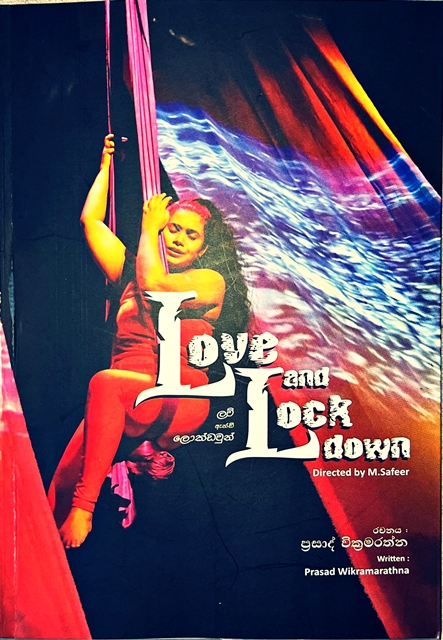
This production is organized by a theatre group titled AANK, led by Dr Mrinal Jyoti Goswami, an academic who works in a state university and is passionate about theatre. He initiated an international theatre festival last year. At this festival, a theatre troupe from Sri Lanka staged two plays that captivated the audience. Safeer directed one of those plays, ‘Love and Lockdown,’ and will also direct this new play, while the allure of his previous work still lingers. Naturally, the audience is excited about the upcoming play.
Safeer combines various elements in drama production, transforming the play into a unique experience. He has been invited from various countries worldwide to showcase the achievements of his art. He is also an established book publisher and has made his debut as a film director. The film has already been screened at several film festivals.
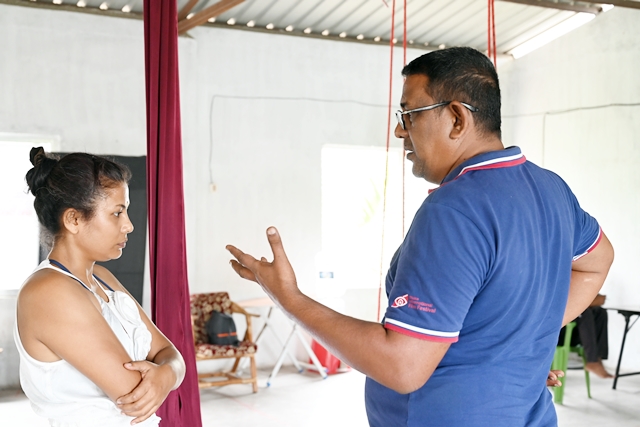
Witnessing the first performance of a play, movie, exhibition, etc., is a satisfying and often rare experience. We will witness the first performance of Safeer’s latest production here in Guwahati. I had the opportunity to witness a rehearsal of the production and engage in a brief discussion about it.
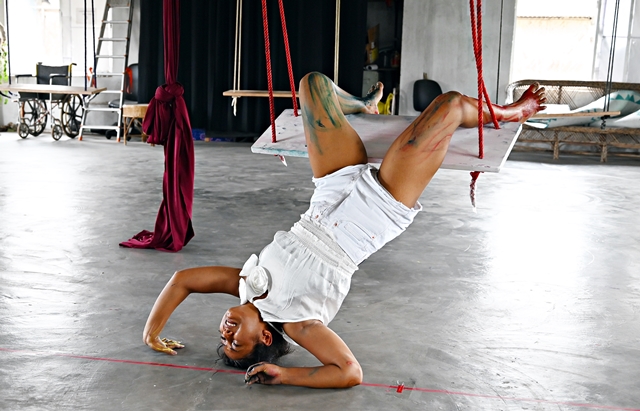
‘The author of the play, Manjula Wedivardhana, originally from Sri Lanka but now living in France, is a renowned novelist and poet. I had a concept like this: there will be five scenes—five different colours, representing five men—and there will be one woman. She will be the last woman on earth, acting in front of the five men, her final act. He wrote a play based on this concept, a poetic play written in Sinhalese. The play was translated into English by the Australian author Dilini Areawala. In 2016, I met an Italian actress named Julia Filippo at the Colombo National Theater Festival. She was seeking an opportunity to work with an Asian director, having already worked with many European directors and wanting to gain new experiences and knowledge. We began working on the play, which premiered in Dubai at the Foreza Monodrama Festival. The festival is attended by thousands of theatre professionals from different countries worldwide. The play was well-received by audiences worldwide. The main feedback was that monodrama is usually centered around the actor, but this play incorporates a combination of set design, lighting, dance, music, and acting. The play received invitations from many countries, and we performed it in several, including Korea and Azerbaijan. I also staged the play in Pune, India, and in Sri Lanka. My friends expressed the need for a Sinhalese version of the play, so I staged it in Sinhalese with a Sinhalese actress. Then came COVID, and the play was put on hold. Last year, I spoke to Mrinaljyoti Goswami, and finally, we are here. Mrinal translated the play into Assamese, and we will perform it with an Assamese actress,’ Safeer said.
Safeer directs Jahnabi Bora. photo Utpal Datta
“How will the play continue after this, and what are your plans?” ‘Manjula and I have a dream – we will perform the play in ten languages. It has been performed in English and Sinhalese, and it’s currently being performed in Assamese. Next year, it will be performed in French. The initial plans to perform the play in Hindi and Korean have been completed.’
“A play, not just a play, any artwork, has its roots in the soil of its place. How can the context of those roots be preserved during such phases of transformation?’ ‘It’s quite simple. In this Assamese play, we have incorporated elements that evoke the essence of Assam. As a director, I don’t rely solely on the text of the play. I take the dialogue, and the rest is my own interpretation. Manjula wrote many things, and I have selected only certain parts. We have created several versions of the play, which means we have interpreted it in various ways. Each production is an interpretation.’
“You are an advocate and practitioner of physical theatre. How do you view physical theatre?’ ‘Many people consider gestures alone as the essence of physical theatre. However, I believe and practice differently—physical theatre is not just about gestures. It encompasses dance, music, lights, sets—all components contribute to physical theatre.’
The play is translated by Dr. Mrinal jyoti Goswami and will be staged on April 28 and 29 at the Madhavdev Auditorium of Srimanta Sankardev Kalakshetra. ‘Premar Dolna (Swings of Love)’ introduces Jahnabi Borah, a promising talent and National School of Drama, Sikkim Centre alumnus, to Guwahati’s theatre aficionados. Under the guidance of director M Safeer, Jayadewa Upeksha Sandeepani, and H.M. Pasindu Nirmal Perera from Sri Lanka contributed as associates, with Dhrubajyoti Deka from Assam serving as the production manager.
The Triumph of Theater on Delhi’s Stage through Natsamrat Natya Utsav
Recently, Delhi’s theater organization Natsamrat presented a total of eight of its seven different plays. Where the audience appreciated all the plays very much. The special thing about Natsamrat’s plays is that this organization performs plays that touch the souls of the audience, giving heart-touching messages to the society through laughter or simplicity. These plays were staged in LTG Auditorium, Mandi House, New Delhi.
The play ‘Fauji’, written and directed by Sanjay Basliyal, was staged on 16 March at 3 pm and the play “Sakharam Binder”, written by Vijay Tendulkar and directed by Vishwajit Alexander, was staged at 4:15 pm on the same evening. The play “Kuch Tum Kaho Kuch Hum Kahan” written by Ashish Kotwal and directed by Shyam Kumar was staged on 17 March at 3 pm and the play “Kambakht Ishq” written by Satya Prakash and directed by Shyam Kumar was staged on the same evening at 4:15 pm. Went. The play “Comedy Junction”, written by Anton Chekhov and directed by Fareed Ahmed, was staged on March 23 at 3 pm and the play “Chandralok.com”, written by Harishankar Parsai and directed by Rakesh Kodinya, was staged at 4:15 pm. The comedy drama “Kallu Nayi MBBS”, written by Molière and directed by Shyam Kumar, was staged on 30 March at 6:30 pm and 7:45 pm (2 shows).
All the actors associated with the drama created a different place in the minds of all the viewers with the magic of their acting. One audience even said that our family always waits for your plays. Another viewer said that Natsamrat’s plays are such that every age member of the family feels happy. Natsamrat director Shyam Kumar said that we will continue to bring such plays in front of the audience and through our plays will continue to give messages to the society on deep topics through laughter.
Natsamrat Natya Utsav Lights up Delhi’s Stage with its Plays
Natsamrat Natya Utsav has started in Delhi Theater. Amidst the fast-paced life of the city, there must be some moments of happiness and to fulfill the same, the audience can come to Natsamrat Natya Utsav which is going on at LTG Auditorium, Mandi House, New Delhi.
The first play “Fauji”, written and directed by Sanjay Basliyal, was highly appreciated by the audience. The drama ‘Fauji’ is the story of an 80-year-old ex-serviceman (Diler Singh) from Uttarakhand, whose family has a legacy of serving the Indian Army. A news channel wants to cover their story and present it sensationally to increase their TRP ratings. Parallely, the news anchor who will cover the story (Kritika) and the cameraman (Kishore) were once in a relationship and have stopped working with each other since the breakup. They are now forced to work together on this story. As the play highlights the life of Diler Singh, a soldier who paid a great price to serve the country, it leaves a lasting impact on Kritika and Kishore’s relationship. Suresh Chandra played the role of editor, Sumita Sharma played the role of Pinky, Mantu had Prateek Rawat, Krutika, Roshan played the role of Kishore and Sanjay Basliyal, the writer and director of this play played the role of Diler Singh. P.K.Khayal conducted the lighting, Ashu conducted the music, Hardeep Singh and Mr. Om Sharma took charge of the backstage. All the actors played their roles beautifully and the audience also got engrossed in their phenomenal acting. It was staged on 16 March at 3:00 pm.
The second play of the evening was “Sakharam Binder” written by Vijay Tendulkar and directed by Vishwajeet Alexander. The play’s title alludes to Sakharam who is alone, devoid of familial ties, and whose profession as a book-binder enables him to stay away from the milieu of conservative society and live a quaint life on his own terms. Vishwajeet played the role of Sakharam, Ekta played the role of Lakshmi, Krutika played the role of Champa, Shammi played the role of Faujdar and Naveen played the role of Dawood. The acting of all the actors was impressive. Yash and Sachin were in music, Archana Kumari did the arrangement and Naina was in lighting operations. The play was staged on 16 March at 4:15 pm.
Two plays were staged on the second day of Natsamrat Natya Utsav. The first play was “Kuch Tum Kaho Kuch Hum Kahe” and the second play was “Kambakht Ishq”.
Kuch Tum Kaho Kuch Hum Kahein” exemplifies excellence from the pen of Ashish Kotwal and directed by Shyam Kumar, which premiered on 17th March at 3:00 PM. Dr. Anand, closing the doors of happiness, gives life Meets Mansi who wants to be adopted. Vivek Sharma and Munmun’s heart-touching banter immersed the audience in emotions. The lead actors of the drama, Vivek Sharma and Munmun, sometimes have sweet and sour banter and sometimes support each other. The performance of both of them left the audience emotional. The audience appreciated the play a lot.
In the play “Kambakht Ishq” written by Satya Prakash, it was shown that the elderly, being victims of loneliness, create a separate world within themselves and fall ill, even though they are not ill. Two elderly people, one Kishan and the other Radha, fall ill due to their loneliness. The director of the play, Shyam Kumar, has given a very beautiful message to the society that in old age, when children become busy in their life’s work, they find it difficult to find time for their parents. Then how bad the condition of those elderly people becomes.
In the drama, Sanjay Basliyal played the role of Kishan and Munmun played the role of Radha, Vivek Sharma played the role of the son and Savita Gupta played the role of the daughter, P.K. Khayal played the role of the doctor. Aman played the role of compounder. The stage managers were Sunil Rathore and Rohit Prasad Prasad, Sooraj and Lokesh were in stage props, Rajrani was in makeup, Payal was in costume, Raman Kumar and Mahendra Kumar took charge of the backstage, Aman and Vansh Rathore were in song management. Light Designed was conceptualized by Natsamrat director Shyam Kumar. This play was staged on March 17 at 4:15 pm. This Natya Utsav is still going on. On 23rd March, two plays are being staged by “Comedy Junction” and “Chandralok.Com”, and on 30th there is a comedy play Kallu Nai MBBS. The festival is being held in LTG Auditorium, Mandi House, New Delhi.
Natsamrat’s Theatrical Showcase: A Tapestry of Emotions Unveiled in Delhi’s Stage
Natsamrat unfolded a captivating display of theatrical brilliance, showcasing four remarkable plays. Commencing with “Kuch Tum Kaho Kuch Hum Kahen,” written by Ashish Kotwal and directed by Shyam Kumar took stage on 20th January at 6:30 pm & 7:45 pm. The narrative delves into the collision of two disparate worlds. Dr. Anand, shutting doors to happiness, encounters Mansi, aspiring to embrace life. Vivek Sharma and Munmun’s poignant exchange left the audience immersed in emotions.
Following this, “Sakharam Binder” by Vijay Tendulkar, directed by Vishwajeet Alexander, took center stage on January 21 at 3 pm & 4:15 pm.. Vishwajeet portrayed Sakharam alongside Shruti, Krutika, Nasir, and Naveen, delivering an impressive performance. The timeless narrative, dating back to 1972, resonated, with Akash handling music and lighting, Archana overseeing aesthetics, and Sangeeta managing props.
The comedic gem, “Kambakht Ishq,” written by Satya Prakash and directed by Shyam Kumar, unfolded on January 26 at 6:30 pm & 7:45 pm. Offering a humorous take on the loneliness in old age, Vishwajeet, Munmun, Sanjay Basliyal, and Savita Gupta, among others, left the audience oscillating between laughter and tears. A meticulous production, featuring Sunil Rathore and Rohit Prasad as stage managers, showcased the multifaceted talents of the Natsamrat team.
Closing the theatrical extravaganza was “Chandralok.com,” an adaptation of Harishankar Parsai’s story, directed by Rakesh Kodinya on 28th January at 3 pm & 4:15 pm. The ensemble cast, including Munmun, Vivek Sharma, Sanjay Basliyal, Sudhir Khanna, Jagbir Choudhary, and Aman, not only evoked laughter but also conveyed a profound message through their performance. With music conducted by Shivangi and lighting envisioned by Shyam Kumar, this play added a delightful conclusion to the series.
These four enthralling plays graced The Blank Canvas (LTG Auditorium), Copernicus Marg, Mandi House, New Delhi, leaving an indelible mark on the audience.