Sanskar Bharti Kala Sankul Once Again became the Witness of a Mesmerizing Journey of Art, Devotion, and Dialogue

The monthly symposium began with a heartfelt tribute to the innocent civilians martyred in the recent terrorist attack in Pahalgam. All present members observed two minutes of silence, expressing their emotions in an unspeakable way. The entire atmosphere seemed to be immersed in a silent prayer.

On the auspicious occasion of the lighting of the lamp, all distinguished guests performed the lamp lighting ceremony, illuminating the stage.

Following this, a melodious stream of music began. The soulful singing by Mr. Vijay Rawal and Mr. Veer Mani Trivedi touched the hearts of everyone present. Their mastery of voice filled the atmosphere with unseen compassion and hope.

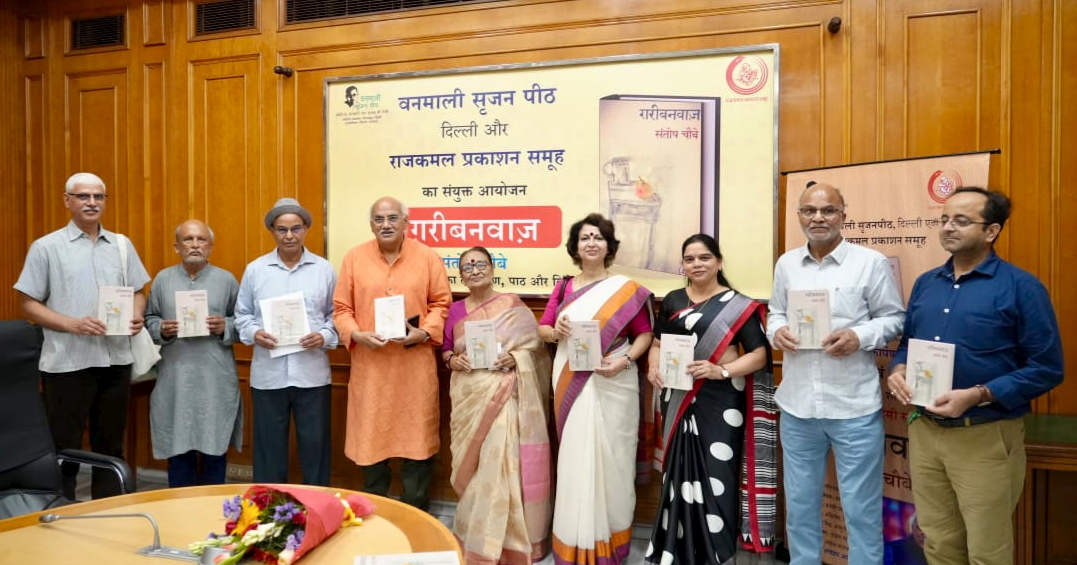
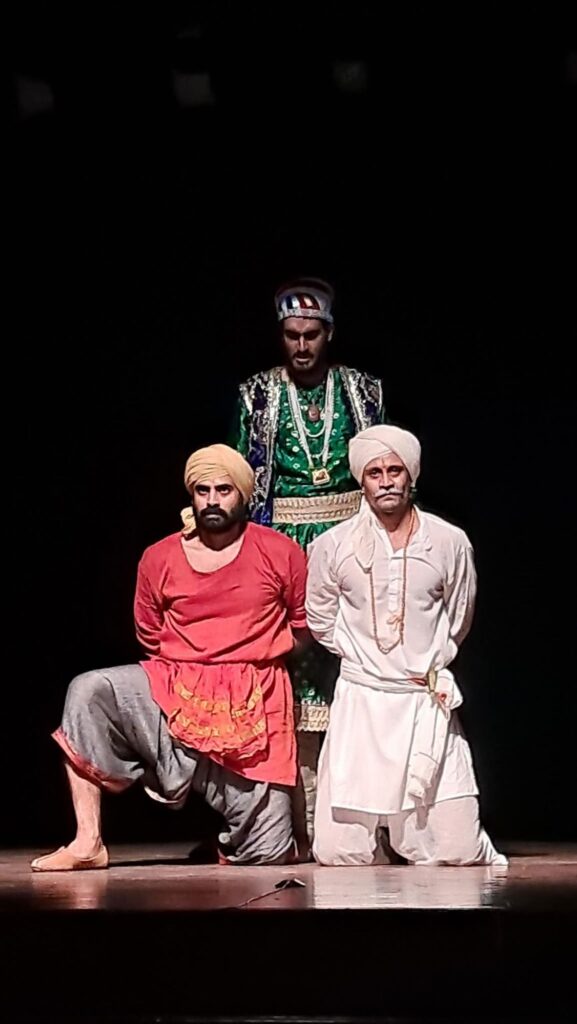
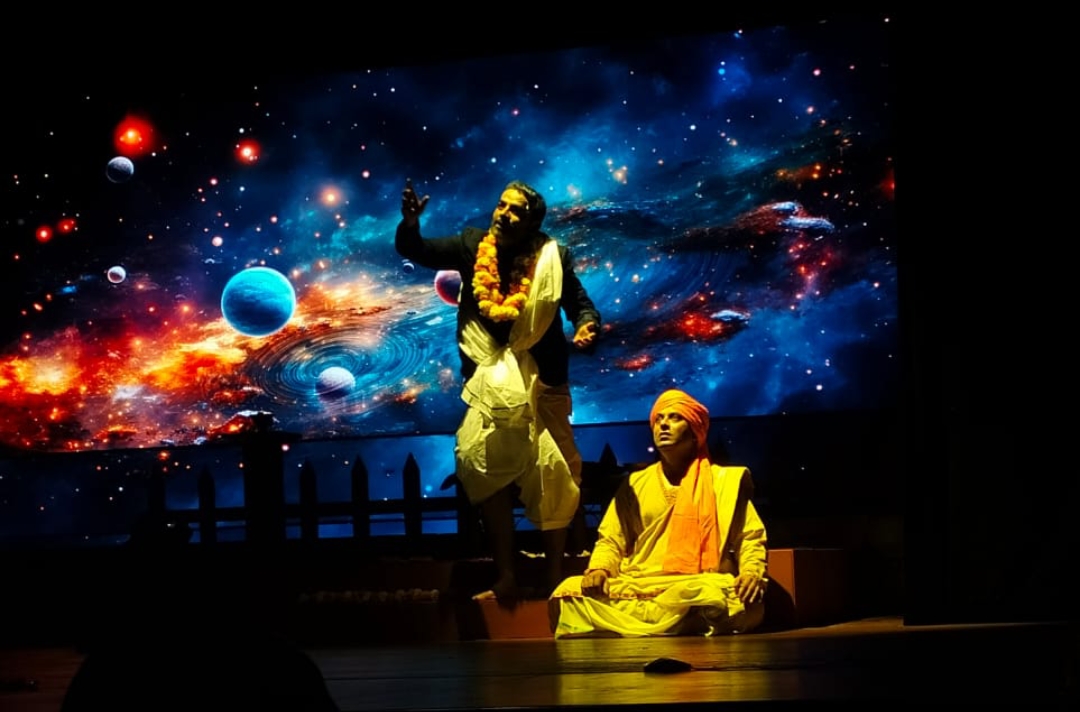
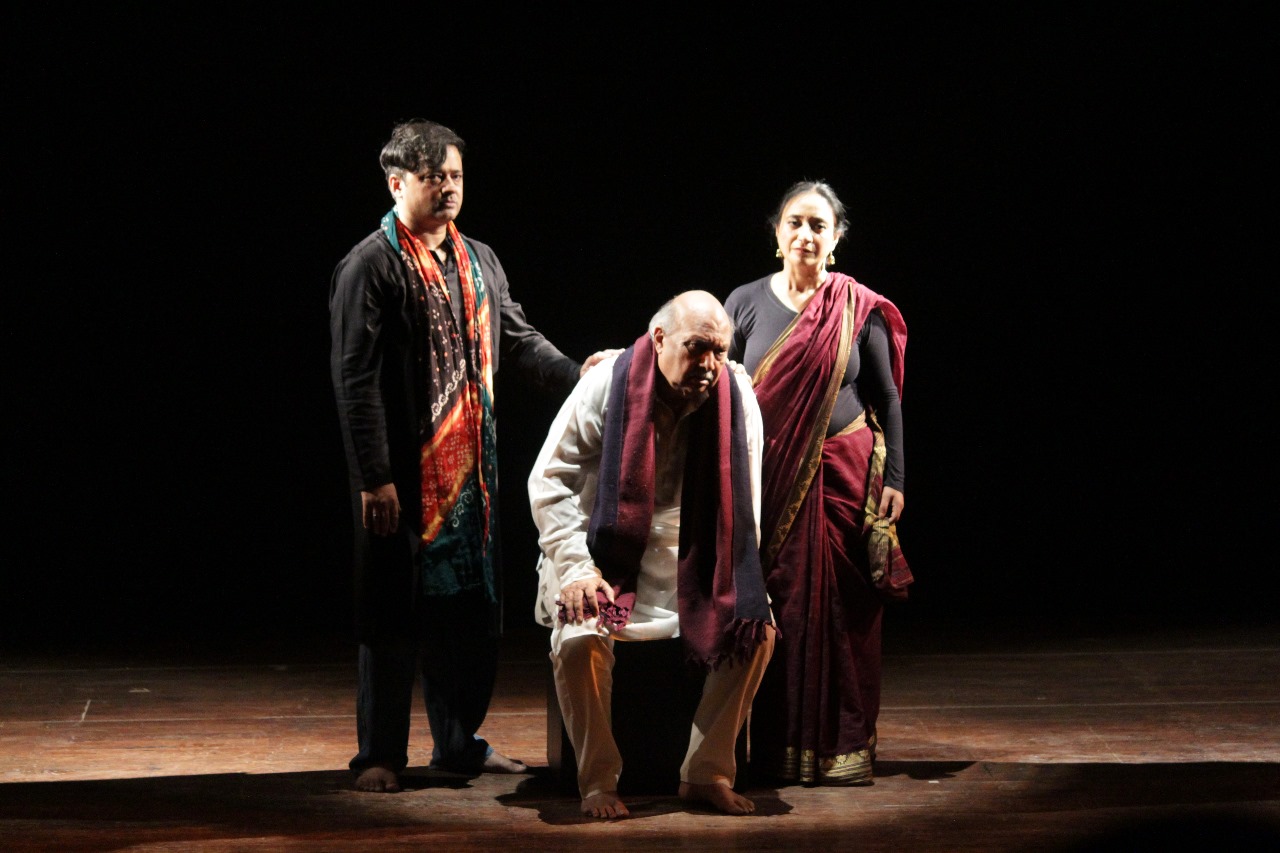
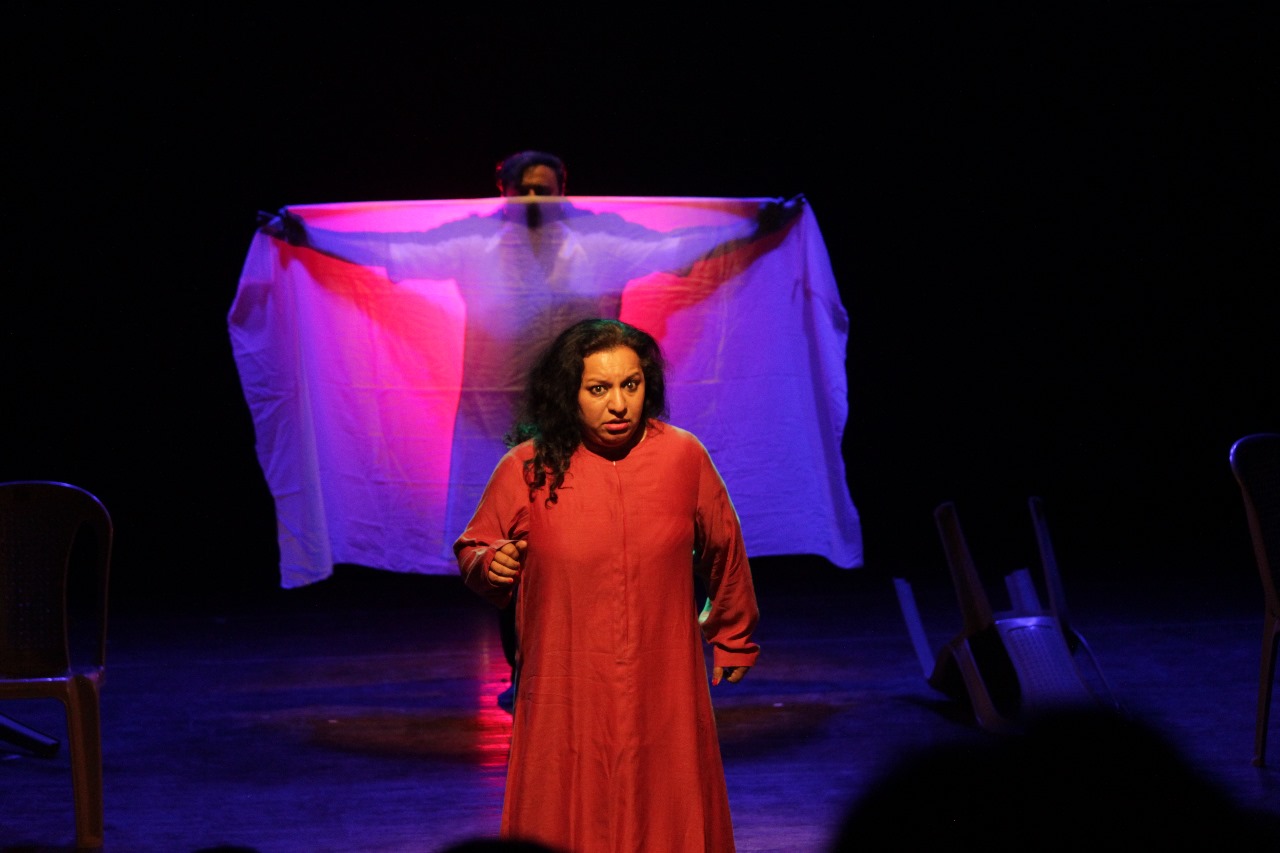
The main attraction of the symposium was the analytical discussion on the theatrical presentation ‘Arey Gadbadi Ho Gayi’, inspired by the Sanskrit play ‘Bhagavadjukkam’ by Bodhayan, directed by Raj Upadhyay, and performed by Navras Group.

In this discussion, the depth of the story, authenticity of the acting, the liveliness of the stage arrangement, and the artistic features of the entire presentation were examined in detail. Critics appreciated the dedication and effort of the Navras Group artists, stating that the presentation not only entertained but also sparked deep contemplation.

The Navras Group artists were deeply moved after hearing such a heartfelt and in-depth review of their performance. They expressed that such analytical discussions inspired them to further deepen their theatrical practice. They also expressed their gratitude to Sanskar Bharti for providing such a valuable platform.

To elevate the dignity of the event, the presence of several distinguished guests was noteworthy. Dr. Prashant Upadhyay, Delhi Province Minister, Senior NSD theater artist Mr. Pradeep Mohanty, Mrs. Shashi Prabha Tiwari, educationist Dr. Ruchika, and Mr. Manish Jha honored the event with their esteemed presence.

The success of the program was greatly aided by the contributions of Delhi Province’s stage art coordinator Mr. Raj Upadhyay, senior theater artist Shyam Kumar, Shraboni Saha, Garima Rani, Vishwadeep, Sneha Mukherjee, Raman Kumar, Saurav Tripathi, Pradeep Pathak, Mrityunjay, Brijesh, Shivam, Sushank, and Sakshi.

The event was skillfully and warmly conducted by Bharti Dag, and Mrs. Shruti Sinha concluded the art-filled evening with a heartfelt vote of thanks.


Natsamrat Theatre Festival: A Celebration of Dramatic Excellence

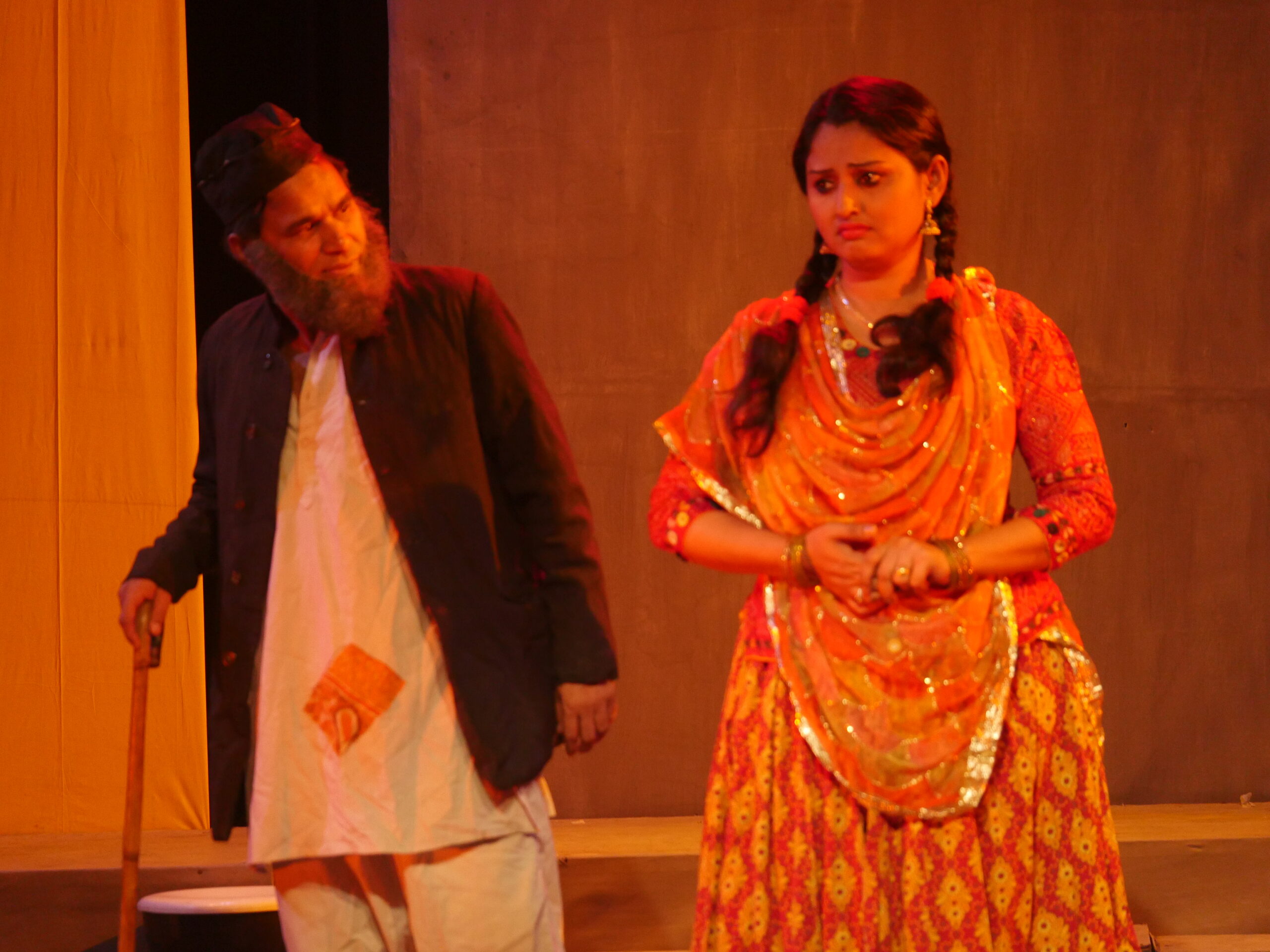
Play Scene

Delhi’s renowned theatre group “Natsamrat” once again mesmerized audiences with the 22nd Natsamrat Theatre Festival. This grand theatrical event brought together a collection of eight remarkable plays, each offering a unique blend of humor, drama, and thought-provoking narratives. With powerful performances and engaging storytelling, the festival successfully captured the essence of theatre, leaving a lasting impression on spectators.

The festival commenced on March 15 at 6:15 PM with Anton Chekhov’s “The Proposal.” This classic farce, filled with witty dialogue and situational humor, kept the audience engaged. The actors skillfully portrayed the irony of a marriage proposal turning into a heated argument over land and a pet dog. Their impeccable timing and expressive performances made the play a delightful experience. Following this, at 7:30 PM, the satirical play “Kallu Nai MBBS” took the stage. This play blended comedy with social critique, addressing themes of domestic violence and gender dynamics. The protagonist, a drunken barber, finds himself in a bizarre situation where he must endure beatings to prove his worth as a doctor. The fast-paced narrative and lively performances ensured continuous laughter while subtly conveying a deeper message.

On March 16, the audience witnessed “Chekhov Ka Sansar,” a dramatization of two of Chekhov’s iconic stories. The play beautifully combined humor and profound emotions, bringing out the essence of human relationships and social contradictions. The nuanced portrayal of characters and their inner conflicts made it an enriching theatrical experience. Later that evening, at 7:30 PM, “Kambakht Ishq” explored the theme of companionship in old age. The story of two elderly individuals navigating loneliness and seeking emotional support struck a chord with the audience. The actors delivered heartfelt performances, making the play both touching and thought-provoking.

The festival continued on March 22 with “Kuch Tum Kaho Kuch Hum Kahein” by Ashish Kotwal. The narrative revolved around an elderly doctor and a lively woman, Mansi, whose contrasting worlds collide unexpectedly. The interplay of their personalities created a compelling and engaging storyline. At 4:15 PM the same day, “Meri Biwi Ki Shaadi” by Ranbir Singh entertained audiences with its hilarious premise. The protagonist, a hypochondriac, believes he is nearing death and becomes obsessed with planning his wife’s future after his demise. His anxious attempts to arrange her remarriage lead to an unexpected twist, making the play both humorous and insightful.

On March 29 at 3:00 PM, the thought-provoking drama “Aadhi Raat Ke Baad” by Dr. Shankar Shesh was staged. The story followed a thief who, instead of stealing, breaks into a judge’s house to confess a crime he witnessed—a powerful businessman’s involvement in a journalist’s murder. Afraid for his life, he seeks imprisonment as his only refuge. The intense dialogues between the thief and the judge exposed the flaws in the judicial system, leaving a lasting impact on the audience. The festival concluded with “Kaisa Hai Yeh Paisa” by Shyam Kumar at 4:15 PM. This emotional drama explored the complexities of family relationships and material greed. A devoted father, who spent his life caring for his children, is neglected in his old age. However, when the children discover he is about to receive a large fortune, their attitude takes a drastic turn. The play’s gripping narrative and emotional depth made it a memorable finale to the festival.

The festival’s success was driven by the stellar performances of actors Vishwajeet, Munmun, Shivangi, Aman Kumar, Raman Kumar, Dhananjay, Ansh Rathore, and Rajan K. Bhatheja. Their dynamic portrayals brought depth and realism to each character, making every play a remarkable experience. Behind the scenes, Sunil Rathore and Suraj Singh managed stage operations efficiently, assisted by Himanshu and Nisha. Raj Rani’s makeup artistry enhanced the visual appeal of the characters, while Rohit Prasad and Rekha Devi contributed to costume design. Vansh Rathore handled the musical arrangements, enriching the dramatic atmosphere. Under the expert direction of Shyam Kumar, each play maintained a unique artistic essence. Hosted at LTG Auditorium, Mandi House, the festival witnessed enthusiastic participation, with audiences applauding every performance. The overwhelming response reaffirmed the timeless charm of theatre and the vital role of groups like Natsamrat in preserving and promoting this rich cultural tradition.


22nd Natsamrat Theatre Festival: A Captivating Blend of Humor, Satire, and Human Emotions

The prestigious Delhi-based theatre group Natsamrat mesmerized audiences with a diverse range of plays at the 22nd Natsamrat Theatre Festival. Held on March 15 and 16, the festival showcased four plays, each offering a unique theatrical experience. From comedy and satire to deep human emotions, the performances left a lasting impression on theatre enthusiasts.

The festival opened with “The Proposal”, a play by Anton Chekhov that brilliantly captured his signature satirical style. The story revolved around a young man proposing marriage to his neighbor’s unmarried daughter, but instead of a romantic conversation, a hilarious argument over land and a pet dog ensued. The humor was not just in the dialogues but also in the absurdity of the situation and the characters’ temperaments, keeping the audience thoroughly entertained.

Next came “Kallu Nai MBBS”, a play that delivered a blend of humor and social commentary. The story followed a drunken barber who regularly abused his wife, only to be outwitted by her cleverness. Meanwhile, two servants searching for a doctor to treat their master’s mute daughter were tricked into believing that the barber was a doctor—but only after receiving a sound beating. The fast-paced narrative, physical comedy, and sharp dialogues made this play a crowd favorite.

On March 16, “Chekhov Ka Sansar” brought two of Anton Chekhov’s most celebrated stories to life. This performance not only delivered humor but also highlighted the depth of Chekhov’s storytelling, capturing the irony and struggles of human existence. The interplay of light-hearted comedy with underlying social commentary made this an engaging production.

The final play, “Kambakht Ishq”, struck a chord with the audience by portraying the loneliness of two elderly individuals who find solace in each other’s company. The play beautifully explored the importance of companionship in old age, making it a deeply emotional experience. The actors’ nuanced performances and heartfelt dialogues ensured that the message resonated with the audience.

Directed by Shyam Kumar, all four productions were masterfully staged, bringing out the essence of each story while maintaining their distinct theatrical styles. The performances by Vishwajeet, Munmun, Shivangi, Aman Kumar, Vansh Rathore, Raman Kumar, Dhananjay, Kaushal Chauhan, Ansh and Rajan K. Bhatheja were outstanding. Stage management was efficiently handled by Sunil Rathore and Suraj Singh, with Himanshu and Nisha assisting. Payal and Raj Rani managed makeup, while Rohit Prasad, Rekha Devi, and Manu Kumar Singh worked on costumes. Vansh Rathore’s contribution to music operation, played a significant role in enhancing the theatrical experience. The Natya Utsav was held at LTG Auditorium, Mandi House, New Delhi.

Overall, the 22nd Natsamrat Theatre Festival was a resounding success, offering a delightful mix of humor, satire, and emotional depth. Each play had a unique appeal, ensuring that the audience left with unforgettable memories of this vibrant theatrical celebration.


Natsamrat’s Theatrical Saga: A Celebration of Drama, Depth, and Delight

Delhi’s esteemed theatre group Natsamrat recently staged a grand theatrical festival at LTG Auditorium, Mandi House, New Delhi. Held on January 18, January 25-26, and February 1, 2025, the festival featured nine performances of seven different plays. This remarkable achievement showcased the group’s commitment to presenting diverse themes and its ability to offer audiences a rich and varied theatrical experience.

The festival opened on January 18 with plays infused with humor and satire. Anton Chekhov’s The Proposal brought laughter with its witty depiction of a marriage proposal entangled in disputes over land and dogs. Kallu Nai MBBS, a satirical take on domestic violence, used humor to highlight a serious social issue while engaging the audience with its sharp writing and compelling performances.

On January 25 and 26, the festival continued with a variety of plays exploring different themes. Meri Biwi Ki Shaadi depicted a man’s paranoia about his own death and his wife’s uncertain future, blending comedy with emotional depth. Kambakht Ishq sensitively portrayed loneliness and old age with a humorous touch. The following day saw a repeat performance of The Proposal, which once again delighted audiences. Chekhov Ka Sansar offered an insightful look into two of Chekhov’s stories, capturing his signature satire and deep understanding of human nature. The evening concluded with another staging of Kallu Nai MBBS, reinforcing its impact with a fresh yet equally engaging performance.

The festival culminated on February 1 with Kuch Tum Kaho Kuch Hum Kahein, a play that explored the complexities of relationships, made even more compelling by the stellar performances of Munmun and Vishwajeet. Kallu Nai MBBS was staged for the third time, proving its popularity and ability to captivate audiences with every rendition.

Each play was brought to life by an ensemble cast, including Vishwajit, Munmun, Shivangi, Aman Kumar, Vansh Rathore, Raman Kumar, Shammi, and Archana. Under the skilled direction of Shyam Kumar, the performances struck a fine balance between humor and depth, making each scene memorable. The sharp, thought-provoking dialogues kept the audience engaged, while the well-crafted set design and costumes added to the immersive experience.

Natsamrat’s theatre festival was not just a celebration of performance arts but also a reflection of the richness of Indian theatre. The event demonstrated the power of humor as a vehicle for social messaging and reinforced the boundless potential of the stage. Staging nine performances of seven different plays is a significant accomplishment, and Natsamrat executed it flawlessly. The festival left the audience with a deeper appreciation for theatre, making it an unforgettable experience.


Natsamrat’s 6th Mumbai Theatre Festival Won the Hearts of the Audience

The “6th Mumbai Theatre Festival” organized by Natsamrat at the Creative Adda Auditorium in Versova, Mumbai staged many wonderful plays on 3rd, 11th & 12th January. These plays not only entertained the audience but also presented deep social and emotional issues effectively.

3rd January: ‘Nithalla’ and ‘Napunsak’ staged

On the first day of the festival, the play ‘Nithalla’ based on the story of Harishankar Parsai was staged. It was adapted by Kuldeep Kunal and directed and solo acted by Nagendra Kumar Sharma. This play was the story of an ideal ‘Nithalla’ who selflessly devotes his life for the betterment of the society. The play deeply impressed the audience by highlighting the conflict between selfishness and selflessness.

Nipunsak was then staged, written and directed by Manjul Bhardwaj. This play presents the life struggle and agony of eunuchs. The director brought this complex subject to life with his acting and sensitive presentation. Shivani’s music made the presentation more effective.

January 11: Presentation of ‘Darogaji Chori Ho Gayi’

On January 11, the play ‘Darogaji Chori Ho Gayi’ written by Jaivardhan and directed by Chandra Shekhar Sharma was staged. Presented by Mask Players Art Group, this play exposed the corruption prevailing in the government system and the deviant tendencies of the youth through humor and satire.

In this play, Nikhil Jha (Daroga and Detective), Ashish Sharma (Babu), Shipra Jain (Deepak), and Eva Dandona (Pooja) made the audience laugh with their impressive acting. The play tried to show how the youth running after a glamorous life take the path of crime. This presentation gave a social message along with humor.

12 January: ‘The Proposal’ and ‘Kuch Tum Kaho Kuch Hum Kahen’ staged

On the last day of the festival, Anton Chekhov’s famous play ‘The Proposal’ was staged. This comedy-satire play was based on family relations and property disputes. Vishwajeet, Munmun, Aman Kumar, and Raman Kumar made the audience laugh a lot with their excellent acting. The story showed funny arguments during a marriage proposal by a young man, which the audience applauded.

The second play ‘Kuch Tum Kaho Kuch Hum Kahen’ presented an emotional story. Vishwajeet and Munmun played the roles of Dr. Anand and Mansi in this play directed by Shyam Kumar. The play beautifully presented the themes of life’s struggle, human emotions and inspiration. The chemistry of both the actors moved the audience.

The contribution of the technical team in all the plays was commendable. Stage manager Sunil Rathore, music coordinator Aman, makeup experts Payal and Chhobi Saha, and Shyam Kumar in lighting design played an important role in bringing the plays closer to reality.

The audience appreciated all the plays. Nithalla and Napunsak touched upon sensitive issues deeply, while Darogaji Chori Ho Gayi gave a social message with humour. The Proposal and Kuch Tum Kaho Kuch Hum Kahen presented complex topics of life in a light-hearted manner.

The festival proved that theatre is not only a medium of entertainment, but it is also an effective medium to show the mirror to the society and inspire it to think deeply.


An Enriching Discussion on Indian Folk Theatre Tradition at Sanskar Bharati’s Monthly Symposium

The monthly seminar organized at Sanskar Bharti’s central office ‘Kala Sankul’ in New Delhi proved to be a memorable occasion for art and culture lovers. In this year’s event, renowned theatre artist and Sangeet Natak Academy Award winner Shri Lokendra Trivedi presented his views on the topic “Our rich theatre-music tradition woven in folk theatre and its use in the present times”.

The programe began with lighting of lamps and the motto song of Sanskar Bharti. On this occasion, along with the team of Sanskar Bharti, many senior litterateurs, theatre artists and artists of the city were present. Prominent guests included former Secretary of Hindi Academy, Delhi, Hari Suman Bisht, senior theatre artist J.P. Singh, Nisha Trivedi, renowned Chhau Guru Sapan Acharya, Suresh Shetty, Vashisht Upadhyay, Bhupesh Joshi and many other eminent names.

Lokendra Trivedi’s lecture organized in the monthly seminar of Sanskar Bharati was an excellent effort to highlight the depth of Indian folk theatre tradition and its rich cultural heritage. Trivedi discussed his topic “Our rich theatre-music tradition woven in folk theatre and its use in present times” in a very simple, effective and factual manner.

His lecture style not only brought forth the features of folk theatre like Nautanki, Yakshagana, Bhavai, Tamasha, but also explained the relevance of these genres in the perspective of the new age. He stressed the need to preserve these ancient genres in the technological age and explained how connecting the new generation to them is the need of the hour.

The most notable part of the programme was that he raised the issue of making the collection of folk theatre available to the general public at the government and non-government level. This suggestion can be an important step towards preserving the Indian cultural heritage and taking it to new heights.

The Q&A session in the seminar made the dialogue between the audience and the lecturer more effective. The management, conduct and participation of the program show that Sanskar Bharti is not only a pioneer in the promotion of Indian art and culture, but is also active in connecting it with the new generation.

The seminar was conducted very effectively by Garima Rani. The contribution of “Kala Sankul” arrangements in-charge Mr. Digvijay Pandey, coordinator of the dance music seminar Shruti Sinha, co-convenor Vishwadeep, guide senior theatre artist Shyam Kumar and Raj Upadhyay was especially commendable in the success of the program. Apart from this, Harshit, Brajesh, Vijendra, Satyam and Shivam also played an important role in making the event successful.

In the end, the theatre seminar coordinator Mr. Kuldeep Sharma presented the vote of thanks. This event proved to be inspirational and informative for Indian folk art and theatre lovers. Such initiatives will definitely help in preserving and enriching our cultural heritage.


Natsamrat Delights Delhi Audiences with Laughter-Filled Performances

Play Scene

Delhi based Natsamrat again came up with its plays which were full of laughter and four plays which were loved by the audience.

Two plays were staged on 16th November. At 3:00 PM Anton Chekhov’s famous story “The Proposal” was staged. The Proposal is the story of a young man who proposes marriage to his neighbour’s unmarried daughter. The story turns worse when the three of them start arguing over whose property it is and whose dog is better. At 4:15 PM the same evening, the play “Kallu Barber MBBS” written by Moliere was staged in which a barber is always drunk and beats his wife. The barber’s wife promises herself that she will teach her husband a lesson. During this time she meets two servants who are looking for a doctor to cure their master’s daughter’s muteness. The barber’s wife tells him that there is such a doctor here, but he does not consider himself a doctor until he is beaten up properly. Both the servants beat up the barber and force him to become a doctor and take him to their master. Later on, the play takes a very interesting turn.

On 17th November, two plays were staged. At 3 pm, the play “Haye Mera Dil” written by Ranbir Singh, which is the story of a delusional patient who believes that he is going to die and is worried about what will happen to his wife after him, she is very innocent, she will not be able to take care of herself, so he wants to get his wife married again. And later on, the play takes a different turn. At 4:15 pm the same evening, the play “Kambakht Ishq” written by Satya Prakash, which is the story of two old people who have fallen ill due to loneliness and when they meet each other, they understand that they need a support, so that they can share their loneliness.

All the four plays were directed by Shyam Kumar. Among the actors Vishwajeet, Munmun, Shivangi, Arvind Shandilya, Aman Kumar, Vansh Rathore, Raman Kumar and Shammi played their roles brilliantly. Stage managers Sunil Rathore and Suraj Singh, stage manager assistants Himanshu and Nisha, makeup Payal, costume assistants Rohit Prasad and Rekha Devi, music director Vansh Rathore. The play was staged at LTG auditorium Mandi House New Delhi.


A Masterful Comedy of Deception: *Gorakhdhanda* Delights Audiences with Humor and Insight

On November 10, the Mask Players Art Group brought to life Jayvardhan’s comedy play Gorakhdhanda at Gurugram’s Rang Parivartan Auditorium, delighting audiences with laughter and charm under the skilled direction of Chandrashekhar Sharma.

The storyline of Gorakhdhanda is a clever, layered satire on deception and morality, following the antics of a crafty property dealer and his equally sly servant. The two exploit a unique business model—illegally renting out government houses. Enlisting the help of a resourceful actor friend, they devise numerous ways to extract extra money from unsuspecting tenants. They pose as fake police officers, manufacture absurd emergencies, and even cut off tenants’ cable wires, all to manipulate and swindle money out of them.

However, their clever games reach a turning point when they encounter a new tenant, Geeta, a quick-witted woman who begins to see through their schemes. Unlike previous tenants, Geeta decides to fight back, taking matters into her own hands. Her pushback throws the scheming trio into a spiral of missteps, confusion, and unintended consequences. This leads to a brilliantly funny climax, where each character is forced to confront the absurdity of their deception, making for a deeply engaging and humorous plot twist.

Chandrashekhar Sharma’s direction is seamless, reflecting both his understanding of the play’s humor and his ability to highlight social commentary without losing the comedic essence. Sharma managed to balance the farcical elements of the story with a simplicity that made the scenes relatable and accessible. His careful pacing kept the audience engaged, and he ensured that every punchline landed. The transitions between scenes were smooth, and the intricate dynamics between characters were allowed to unfold naturally, making for a cohesive performance that held the audience’s attention from start to finish.

The cast of Gorakhdhanda shone on stage, each actor embracing their character with authenticity and energy. Ashish Sharma, Nikhil Jha, Eva Dandona, Pushkar Sagar, Ashutosh Srivastava, Jatin, and Mayank Sharma added rich layers to the play with their roles, enhancing the comedic timing and providing moments of slapstick that were both skillful and hilarious.

Together, the ensemble cast displayed a natural chemistry, enhancing each other’s performances and creating a lively atmosphere on stage. Their nuanced expressions, quick timing, and humorous dialogues conveyed not only the humor but also the subtle social critique embedded in the play.

Behind the scenes, a dedicated technical team brought the world of Gorakhdhanda to life with admirable precision. Sarita Rana, Manoj, Rakesh Sharma, Sangeeta Suyal, and Mamta Rani were instrumental in handling the set changes, props, and lighting that supported the narrative. Their efforts ensured that each scene flowed effortlessly, with no disruptions, adding polish to the production. The set design was simple but effective, allowing the audience to focus on the characters while still providing the necessary realism for the setting. Lighting and sound cues were timely, which helped to heighten the comedic moments and emphasized the shifts in tone as the story progressed.

For those who missed the Gurugram performance, there’s good news—the play will be staged again on November 16 at Blank Canvas Studio, Mandi House, New Delhi, promising another evening of laughter and insight.


Corruption, Comedy, and Music: Saiyan Bhaye Kotwal Enthralls Delhi Audience

On the 14th and 15th of September, *Saiyan Bhaye Kotwal* was staged by New Delhi Performers at Alliance Française de Delhi, Lodi Estate, New Delhi, under the direction of Basab Bhattacharya. This musical comedy play, a Hindi adaptation of the renowned Marathi play *Vichha Majhi Puri Kara*, originally written by Vasant Sabnis and translated into Hindi by Usha Banerjee, focused on the theme of corruption. Through humor, music, and lively performances, the play delivered sharp satire.

Performed by the talented cast of *New Delhi Performers*, the play balanced entertainment with a strong message. It offered incisive commentary on power, greed, the inefficiency of administrative systems, making critical observations through its humorous lens.

The music and dance elements were key in keeping the audience engaged. The main objective of the play highlighting corruption through satire was successfully conveyed. Costumes and choreography were commendable, adding a vibrant touch to the performances. The inclusion of contemporary film songs connected the play to the present day, allowing the audience to relate to the storyline more effectively.

The performances were a highlight, with Dhruv Sharma playing Maharaj, Animesh Singhal as Hawaldar, Arpan Arora in the role of Pradhan, and Abhishek as the energetic Sipahi. Chetna portrayed Mainavati, while Ritwik Marwah took on the role of Kotwal. Saurabh Bhutoria, in the role of Sakhiya, won the audience’s applause with his stellar performance. The narrators, Hardik and Sheetal Marwah, added a guiding presence to the story. Behind the scenes, Vedant and Rinki lent their voices, while Dinesh played the harmonium and Harsh took charge of the dholak. Ved Deep led the Music, and Ritesh handled the lighting design.

Overall, *Saiyan Bhaye Kotwal* offered an engaging musical experience where the blend of music and lively performances drove the story forward. The cast’s energetic presentation ensured that the audience left the theater entertained and impressed.


“Prem-Parinde”: A Tale of Changing Social Values in the Name of Love

On August 4, 2024, Mask Players Art Group performed the play “Prem-Parinde” at the Rangparivartan Auditorium in Gurugram. Written and directed by Chandrashekhar Sharma, the play delves into the modern trend of forming romantic relationships without understanding their depth, turning it into a social pressure for today’s youth. This phenomenon is leading to crimes in the name of love and causing familial disintegration. Additionally, social media is exacerbating the situation, with students prioritizing creating reels over building their future.

The play conveys its serious message in a humorous manner. The main character, Nisha, is a fan of a superstar and is so obsessed with movies that she lives her life in a cinematic way. This obsession leads her to fall in love with Rajan, a loafer who resembles a superstar, and she even finances his expenses. Their movie-like love story reaches a point where they realize they have only been deceiving each other under the guise of love and don’t truly understand what love is.

The roles were well-portrayed by Pooja Singh as Nisha, Ashish Sharma as Rajan, Rakesh Sharma as the father, Hansika Jain as the wife, and Parth Srivastava as Bhola. The actors’ timing was impeccable, adding to the entertainment of the audience. Behind the scenes, Nikhil Jha handled the lights and Mayank Sharma managed the music, both contributing significantly to the success of the presentation.

The play, while tickling the audience’s funny bones, conveyed a profound message relevant to today’s youth.