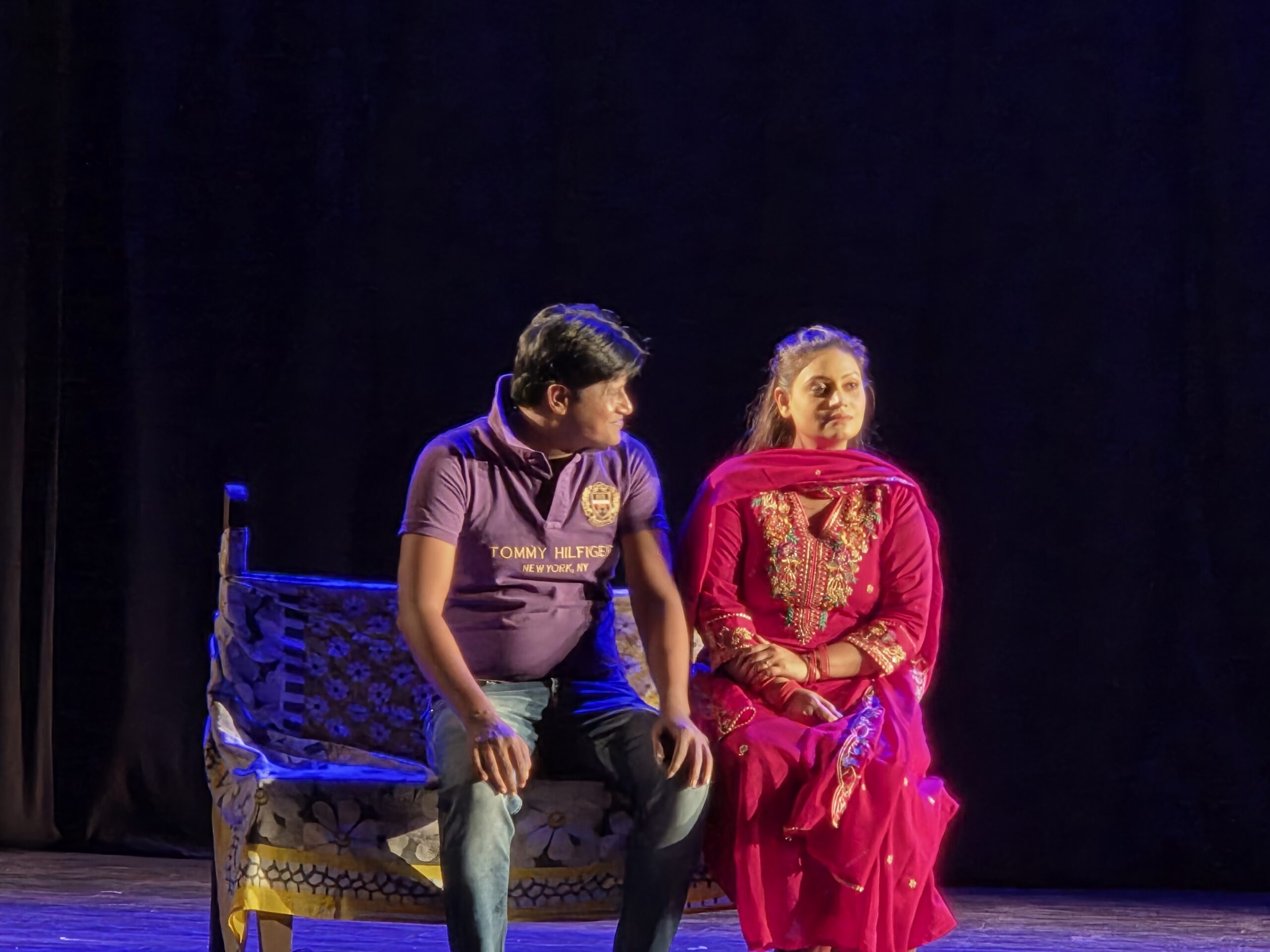
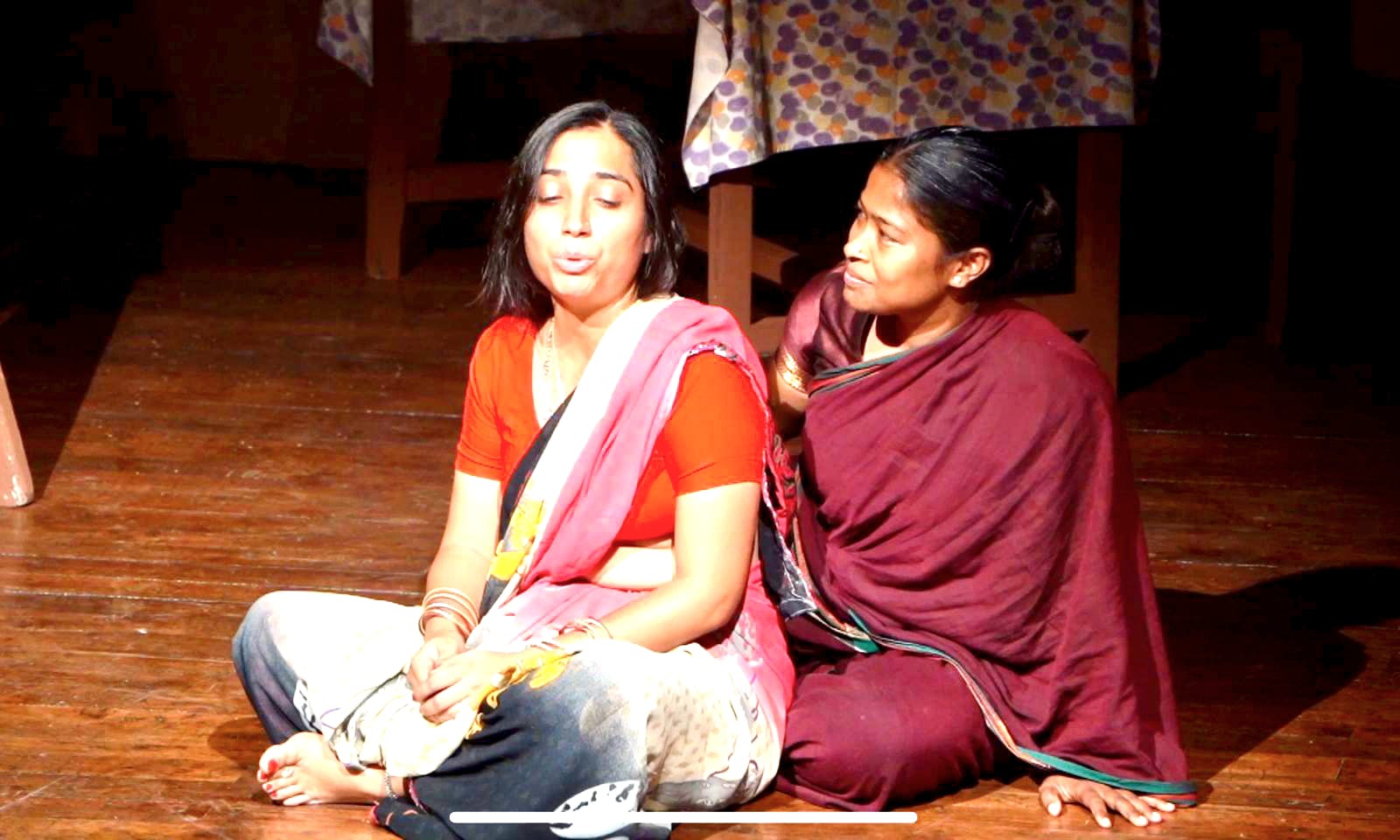
A Profound Solo Performance of “Paagal Ki Diary”

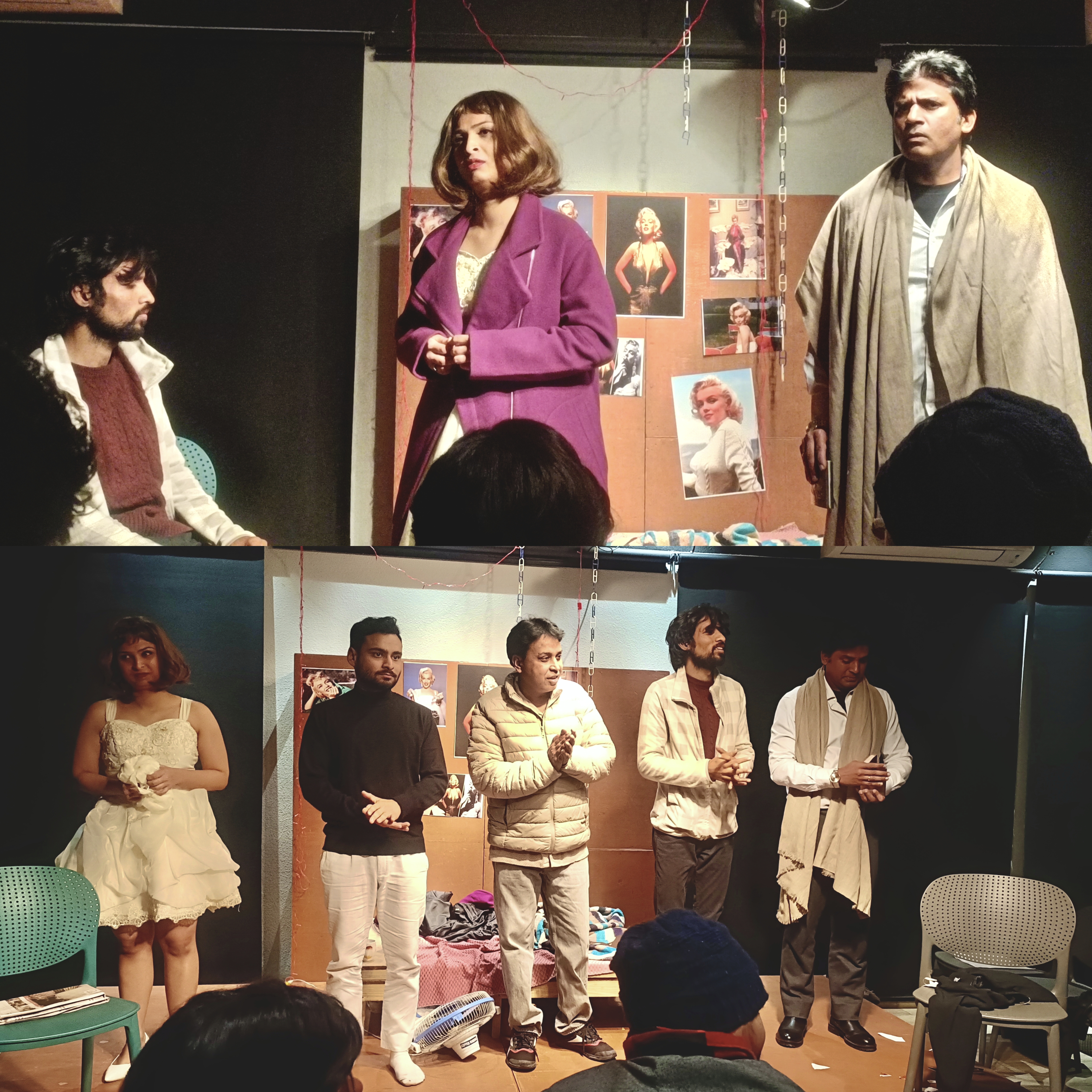
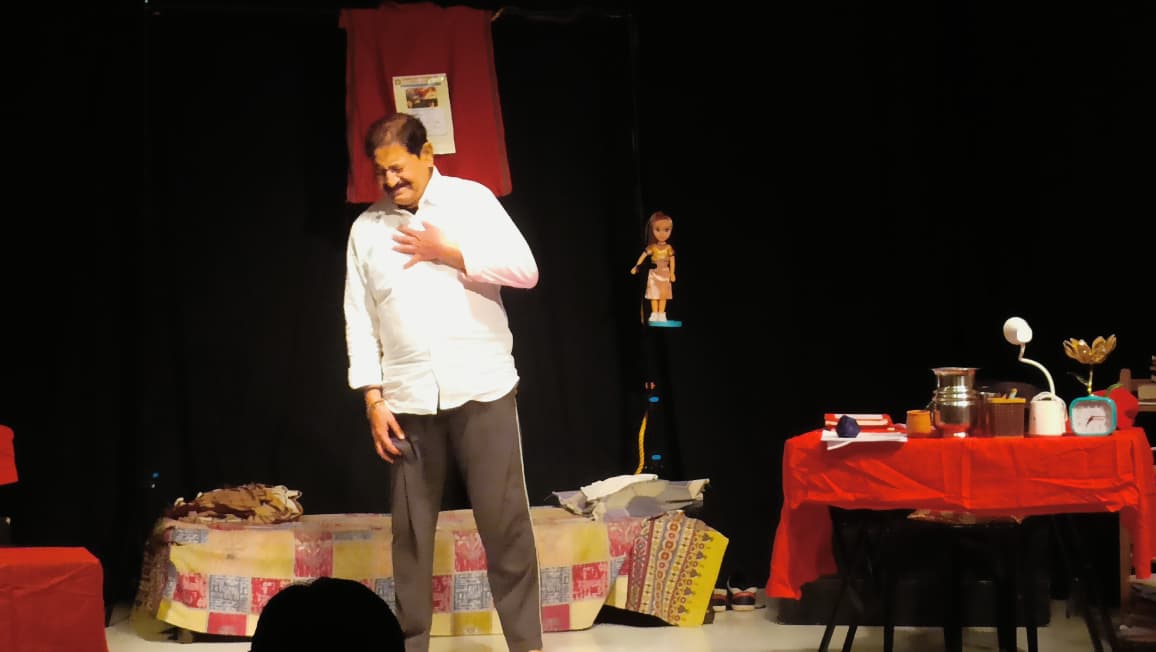
On the evening of 12th November in Laxmi Nagar, Delhi, the cultural organization “Shyama Gautam”, Ranchi presented the solo play Paagal Ki Diary at 191 School Block, with the support of Third Bell Art & Cultural Society and of 13th November in Mitra Rangmanch, Patparganj, Delhi. Based on Lu Xun’s celebrated short story “A Mad Man’s Diary”, the play was adapted for the stage by Rajesh Kumar and performed as well as directed by Malay Mishra.

The narrative follows the inner journey of a man whose sensitivity compels him to see the world through an unsettling new lens. As he questions long-accepted beliefs, habits and inherited ideas, his diary becomes a reflection of his turmoil—filled with doubt, fear, rebellion and a relentless search for meaning. Malay Mishra portrayed this psychological depth with remarkable intensity, drawing the audience into the character’s fractured inner world.

His performance stood out as the strongest pillar of the production. With subtle shifts in expression, controlled modulation of voice, and a body language that oscillated between restlessness and eerie stillness, he brought the protagonist’s mental disintegration vividly to life. There were moments when the boundary between the stage and the audience seemed to dissolve, making viewers feel as though they had stepped into the character’s mind themselves.

The stage design was minimal yet deeply evocative—a chair, a bookshelf and a handful of objects that created the claustrophobic atmosphere of a solitary, enclosed world. The lighting played a crucial role in shaping the emotional landscape, moving from dim warmth to stark illumination and creating a visual rhythm that mirrored the protagonist’s spiralling thoughts.

The play resonates on multiple levels. Beyond depicting one man’s struggle, it raises unsettling questions about the pressures and unquestioned traditions that often shape human behaviour. The blend of satire and sensitivity allows the story to comment on the fragility of perception and the elusive nature of what society calls “normal”.

As the play progresses, the character’s anxiety intensifies, and this emotional surge reaches the audience as well. Many viewers later described the experience as gripping, disturbing and poignantly insightful. Despite its serious tone, the play holds attention throughout, leaving a lingering impact.

Ultimately, “Paagal Ki Diary” emerges as a powerful theatrical experience—one that goes beyond entertainment to explore the conflicts, contradictions and silent battles within the human mind. Malay Mishra’s direction and performance elevate the narrative to an impressive artistic height. The Delhi staging by “Shyama Gautam”, Ranchi turned out to be a memorable evening of profound thought and compelling theatre.


35th Urdu Drama Festival: “Jeb Qatra” — A Living Portrayal of Manto’s Human Sensitivity

New Delhi | November 12
The 35th Urdu Drama Festival at Shri Ram Centre, Mandi House, came alive with emotion and introspection as Adakar Theatre Society presented “Jeb Qatra”, a sensitive stage adaptation of Saadat Hasan Manto’s celebrated short story. The play was directed by Himmat Singh Negi, with Prince Rajput as the assistant director.

🌙 A Mirror to the Human Conscience

Few writers have captured human vulnerability like Manto. His world is one where morality blurs, and truth emerges in the unlikeliest of hearts. “Jeb Qatra” (The Pickpocket) unfolds the story of a thief who, after stealing a woman’s purse, is struck by remorse upon realizing her pain. What begins as a simple act of theft becomes a journey of awakening — revealing that compassion and humanity never truly die within us.

Manto’s world is not black and white — it’s painfully, beautifully human.”

🎬 Direction: Simplicity with Depth

Director Himmat Singh Negi handled the play with remarkable restraint and clarity. Using minimal stage material and precise visual language, he transformed Manto’s prose into a living, breathing experience. Through dialogue, gesture, and silence, Negi underlined a universal truth — “Humanity is the real religion; Hindu and Muslim are but names.”

The lighting and music intertwined beautifully to highlight emotional shifts, while the staging remained both symbolic and grounded — a hallmark of thoughtful direction that never overshadows the writer’s soul.

🌟 Performances that Breathe Life into Words

Javed Sameer (as Kashi) and Nidhi Mahawan (as Bimla) led the cast with extraordinary poise and authenticity. Their chemistry, command over Urdu diction, and emotional restraint brought Manto’s text vividly to life.
Director Himmat Singh Negi, appearing briefly as the character Pandit, made a lasting impact through his controlled yet powerful presence.

The ensemble — Asif Khan, Mukesh Gupta, Nikunj Raj, Deepika Bisht, Mayank Tiwari, Sachin, Ishika Khankwal, Deepika Sharma, Angel Suryavanshi, Prateek, Ashish Singh, Mohammad Umar, Suraj, and Rahul — delivered strong performances that maintained rhythm and realism throughout.

“Each performer seemed to live inside Manto’s sentences, not merely act them.”

🎨 Behind the Curtains: The Invisible Strength

The backstage team lent quiet brilliance to the performance. The play’s lighting, designed by Dev, deepened the emotional tone, while Sham Najim Khan’s music lent poignancy and flow. Nikunj, Ashish, and Dalchand designed costumes that reflected cultural subtlety and simplicity. The make-up by Umar and Angel was balanced and character-driven, while Rishabh, Mukesh, and Mayank handled sets and properties with an understated elegance that allowed the focus to remain on the actors and emotions.
Together, they created a seamless aesthetic that reflected Manto’s realism — raw, restrained, and real.

💭 Final Takeaway

Jeb Qatra” was not merely a performance — it was a conversation between stage and soul. The fusion of Manto’s empathy, Negi’s direction, and the ensemble’s sincerity crafted an experience that lingered beyond the final curtain.

Manto’s stories are not meant just to be read — they are meant to be felt, staged, and lived.

As the audience rose in applause, it was clear that this rendition of “Jeb Qatra” had not only entertained but touched hearts — reminding us that even in darkness, humanity glows quietly within.


“Abhi Raat Baaki Hai” — A Deeply Moving Portrayal of Human Struggle and Social Reality

Presented under the joint banner of Drishyama Trust and Disha Group of Visual and Performing Arts, the acclaimed Marathi playwright Jayant Pawar’s play “Abhi Raat Baaki Hai” was staged on October 24, 2025, at 6:30 p.m. in the Sammukh Auditorium at the National School of Drama (NSD), New Delhi.

Based on insights shared by Dr. Satya Prakash, the play draws inspiration from the industrial strikes of the 1980s, portraying the struggles of the working class. It powerfully reflects the economic disparities that divide society and the fragile emotional bonds that hold families together.

The narrative centers around Aai, a mother who, after her husband’s death, strives to keep her family united amid growing emotional and financial turmoil. Her four children, each absorbed in their own ambitions and conflicts, gradually drift apart — one toward literature, another into sports, one down a destructive path, and the daughter misled under the guise of work.

Shampa Mandal, who both directed the production and essayed the role of Aai, delivered a performance marked by depth, restraint, and emotional precision. Her portrayal of maternal resilience and fatigue formed the beating heart of the play.

The ensemble cast — Shikha Arya, Aditya Mukul, Gagan Chaudhary, Aryan Singh, Sufiyan, Sachin, Mani, Saif, and Udit — performed with sincerity and control. Deepak Rana’s stage design authentically recreated the humble atmosphere of a working-class home, while Dhirendra’s lighting and Vishal Jodi’s music amplified the emotional cadence of the narrative.

The costume design teamNitin Tiwari, Nitish Kumar, Chanchal Agarwal, and Neeraj Singh — enhanced the realism of the characters, supported by Vikas Verma’s photography, Noor Khan’s videography, Madhvi’s post-production, and props by Udit Kohli and Aryan Singh.

Mr. P.K. Mohanty, Registrar of the National School of Drama, who attended the show, praised the direction and performances, calling it “an artistically accomplished and emotionally stirring experience.”

According to Dr. Satya Prakash, the audience was deeply moved by the performance. “There was a profound silence in the hall — the kind that speaks of shared empathy,” he observed. “This play did not just unfold on stage; it lingered in the hearts of those who watched it.”

In essence, “Abhi Raat Baaki Hai” stood out for its thoughtful direction, powerful performances, and sensitive depiction of social and emotional realities. It was not merely a play — it was an experience that resonated long after the curtain fell.


Kala Sankul Brings Art, Reflection and Devotion Together through “Yugpurush”

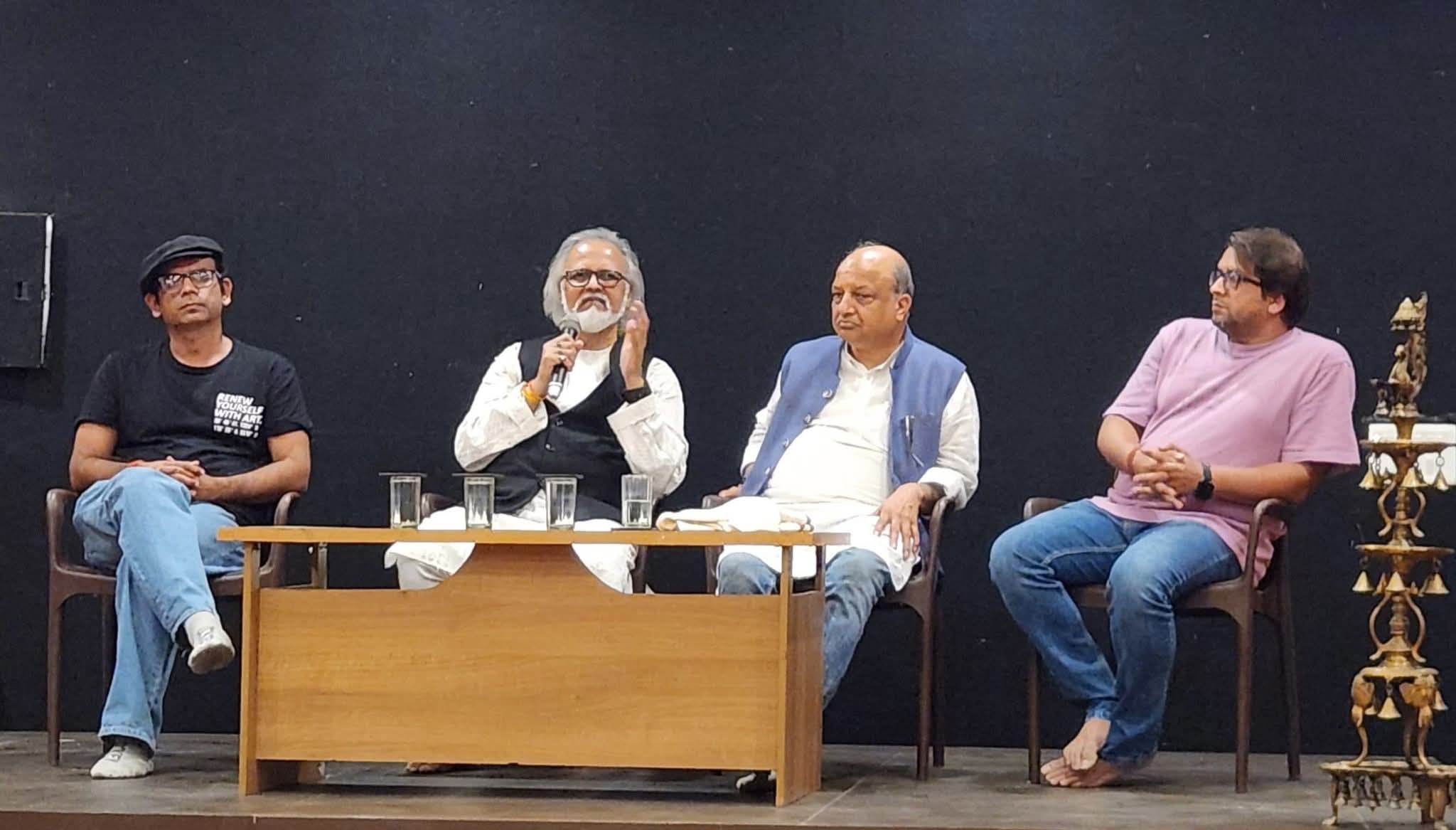
New Delhi, October 26, 2025 — A thought-provoking Theatrical Review Symposium was organized at Kala Sankul, the cultural hub of Sanskar Bharati, on Sunday. The event commenced with the traditional lighting of the lamp, symbolizing the illumination of knowledge and creativity. Present on the occasion were Mr. Ashok Tiwari, Convenor of Kala Sankul; Mr. Rajesh Jain “Chetan”, Chief Guest; Mr. J.P. Singh, playwright and director of the featured play; and veteran theatre artist Mr. Avtar Sahni and Mr. Raj Uadhyay.

Kala Sankul, a vital initiative of Sanskar Bharati, aims to bring together the diverse dimensions of Indian art and culture on a shared platform. It is not only a space for artists to engage in dialogue, critical reflection, and self-exploration, but also a medium for the promotion of Indian life values and creative traditions.

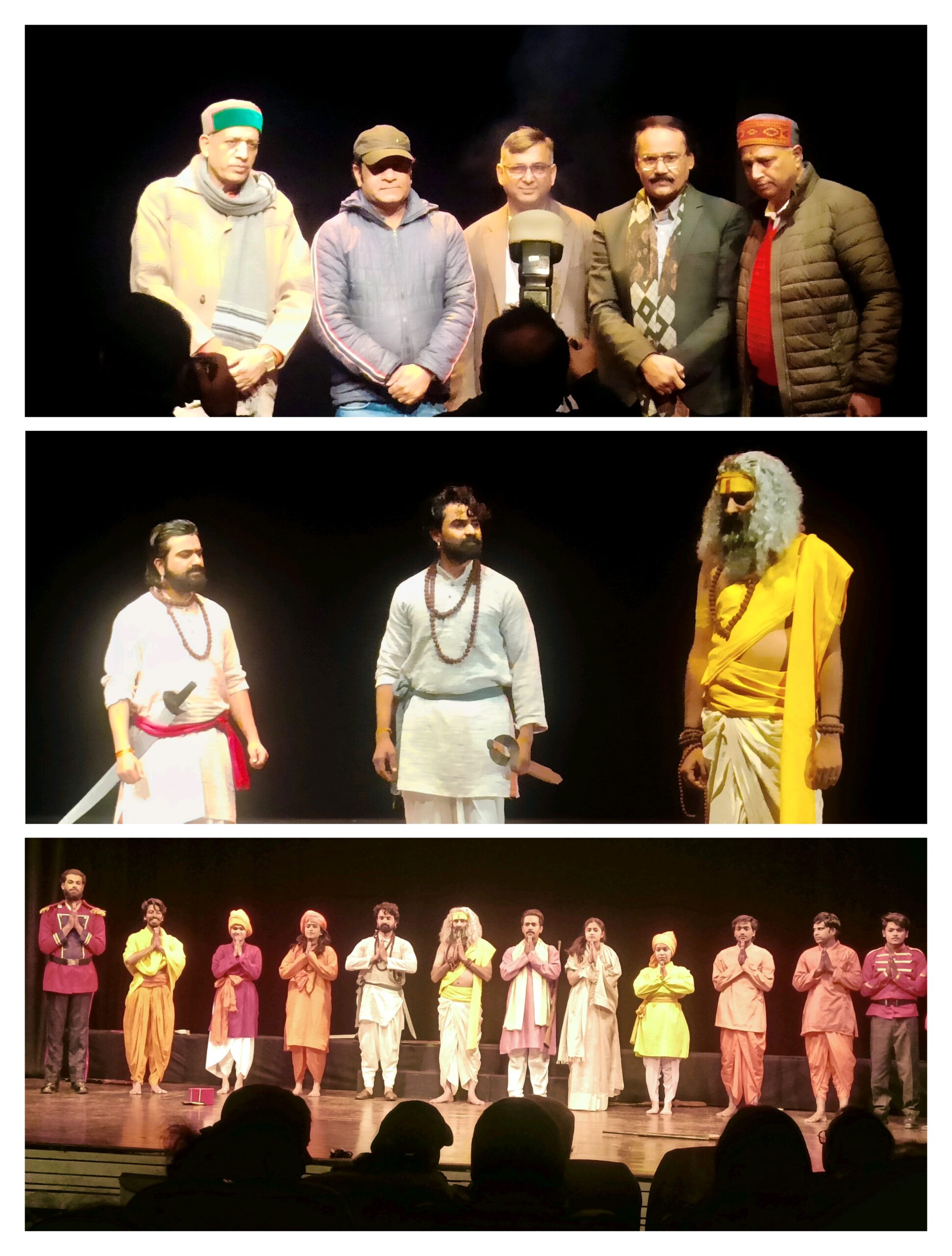
As part of this ongoing initiative, a theatrical review session was held on “Yugpurush”, a play presented by Rangbhoomi Delhi. The play is based on the lives of Sri Ramakrishna Paramhansa and Swami Vivekananda, portraying the era when young Narendra had not yet become Vivekananda but was progressing toward self-realization and spiritual awakening.

Before the discussion, select impactful scenes from the play were screened for the audience. This was followed by an engaging interaction with the play’s director Mr. J.P. Singh, along with Mr. Vipin Kumar (as Ramakrishna Paramhansa), Mr. Sudhir Rikhari (as Swami Vivekananda), and Chief Guest Mr. Rajesh Jain “Chetan”.

During the session, Mr. Rajesh Jain recited one of his beautiful poems, which resonated deeply with the spiritual essence of “Yugpurush.” The discussion explored how the actors internalized such profound and spiritual roles—how portraying these revered personalities influenced their own perspectives and inner journeys.

Playwright Mr. Jayvardhan (J.P. Singh) shared insights into the creative process, explaining that “Yugpurush” is rooted in the sacred guru-disciple relationship, where both teacher and student act as reflections and complements of one another—together forming a spiritual unity that continues to inspire generations.

Following the review, Mr. Sudhir Rikhari rendered a soulful bhajan that filled the hall with emotional and devotional serenity, perfectly complementing the theme of the play. The musical moment brought an air of peace and reverence, leaving the audience deeply moved.

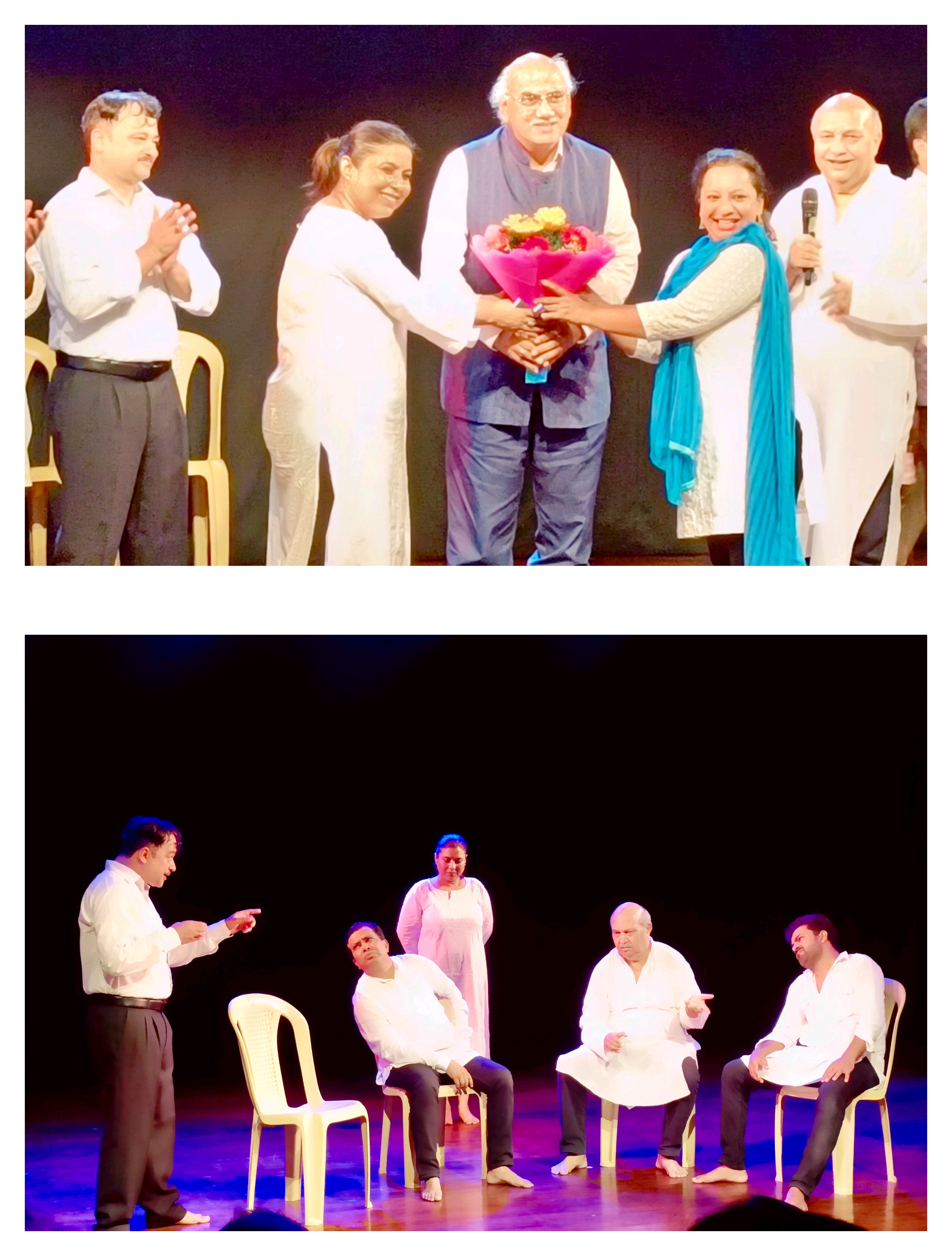
The play also featured notable performances by Arun Sode, Tripti Johri, Shuddho Banerjee, Gaurav Verma, Jitendra Chauhan, Ravi Parcha, Kaustubh Pandey, Anurag Malik, Sangeeta Suyal, Shreya Agarwal, and Hari Singh Kholiya. All the artists were felicitated by the Kala Sankul family with traditional angavastras and potted plants as a mark of respect.

The success of the event was made possible through the dedication of many committed contributors, especially Ms. Bharti Dang, who served as the Convenor and gracefully anchored the entire evening. Special appreciation was also extended to Shruti Sinha, Garima Rani, Sneha Mukherjee, Raj Upadhyay, Shraboni Saha, and Harshit Goyal, whose efforts and enthusiasm ensured the program’s memorable success.

With every monthly symposium, Kala Sankul strengthens its resolve to celebrate India’s artistic heritage and inspire new generations of creative thinkers. It stands as a living testament to the belief that art, when rooted in cultural values, becomes a guiding force for individual and social transformation.


A Theatrical Ode to the Stories of Santosh Choubey

A celebration of Santosh Choubey’s literary world on stage

New Delhi, September 5, 2025. The Sammukh Auditorium at the National School of Drama (NSD), New Delhi, witnessed a powerful confluence of literature and theatre with the staging of two acclaimed stories by Senior Poet–Novelist, Director of Vishwarang, and Chancellor of Rabindranath Tagore University, Sh. Santosh Choubey—*Unke Hisse Ka Prem* and Garibnawaz. The plays were directed by veteran theatre director Devendra Raj Ankur and presented by Sambhav Art Group, Delhi, under the aegis of Vanmali Srijan Peeth.

Sh. Santosh Choubey, celebrated for his profound and sensitive contribution to Hindi literature and theatre, has carved a niche through his exploration of human emotions and the complexities of contemporary society. His stories, marked by simplicity of language and depth of expression, continue to inspire both readers and performers.

In Unke Hisse Ka Prem, the fragmented relationships and emotional struggles of an institutional boss are revealed through the unique perspectives of inanimate objects—his desk, pen, chair, diary, and mirror. By transforming these objects into living witnesses, Shri Santosh Choubey’s pen captures the poignancy of solitude and the delicate nuances of human vulnerability.

Garibnawaz, on the other hand, starkly contrasts capitalist success with the resilience of the working class. The clash between Vishwamohan’s opulent BPO office—symbol of globalized affluence—and the modest yet spirited Garibnawaz Chicken Shop next door, becomes a metaphor for the strength of labor and grassroots survival. Here, Sh. Santosh Choubey incisively exposes the paradoxes of urban politics, unauthorized encroachments, and local power nexus.

The stage came alive through remarkable performances by Nidhi Mishra, Gauri Dewal, Rachita Verma, Amitabh Srivastava, Amit Saxena, Prakash Jha, Harikesh Maurya, and Sahaj Harjai. The evocative musical design by Rajesh Singh and Sahaj Harjai, complemented by the lighting design of Raghav Prakash Mishra, intensified the impact of the narratives. The evening was skillfully anchored by Vikrant Bhatt, Associate Director of Tagore Theatre School.

Adding a visual dimension, an exhibition based on the works and books of Shri Santosh Choubey was curated by Prashant Soni, Vikrant Bhatt, Upendra Patne, and Yogesh Kumar. The Sammukh Auditorium was packed with an enthusiastic audience, who responded with admiration for this rare blending of literature and performance.

Without relying on elaborate sets or theatrical gimmicks, the evening reaffirmed that the strength of theatre lies in the richness of writing and the precision of direction. The pen of Sh. Santosh Choubey and the direction of Devendra Raj Ankur together proved that great stories are as alive on stage as they are in the imagination of the reader.


Summer Theatre Festival: Natsamrat’s Celebration of Stagecraft

The LTG Auditorium at Mandi House, New Delhi, reverberated this August with the vibrancy of theatre and the thunder of applause. Organized by Natsamrat, the Summer Theatre Festival offered audiences a kaleidoscope of performances that made them laugh, stirred their emotions, and provoked deep reflection. Each play was directed by the acclaimed Delhi-based theatre director Shyam Kumar, whose creative vision and disciplined stagecraft elevated every production into a memorable experience.

The festival commenced on 2nd August with Anton Chekhov’s celebrated one-act play The Proposal. What begins as a simple marriage proposal soon spirals into a heated quarrel over land and dogs, leaving audiences in peals of unexpected laughter. On the same day, the satirical Kallu Nai MBBS was staged—an incisive portrayal of rural ironies through the comic clashes of a drunken barber and his wife. Both plays were so well received that they were restaged on 10th August, once again drawing enthusiastic applause.

On 15th August, marking Independence Day, the same two plays returned to the stage. Amid laughter and wit, audiences were invited not only to reflect upon rural contradictions but also to rediscover the sharp brilliance of Chekhov’s pen.

The evening of 23rd August brought a unique blend of sensitivity and humor. Kuch Tum Kaho Kuch Hum Kahein by Ashish Kotwal presented an intense dialogue between a lonely elderly doctor and the free-spirited Mansi, unraveling layers of relationships, empathy, and self-realization that touched the hearts of spectators. Following this, R.B. Singh’s satirical gem Meri Biwi Ki Shaadi had the audience roaring with laughter, as a hypochondriac patient, obsessed with his own imaginary death, entangled himself in absurd worries about his wife’s future.

The 30th August evening immersed the audience in the layered world of Chekhov and the eternal theme of love. Chekhov Ka Sansar offered glimpses into the Russian master’s life philosophy and stories, while Satya Prakash’s Kambakht Ishq sensitively explored the loneliness of the elderly and their longing for true companionship—making the audience laugh as much as it moved them to tears.

The festival concluded on 31st August with two powerful performances. J.N. Kaushal’s Kya Karega Qazi kept audiences entertained with the hilarious failures and fumbling efforts of the clumsy barber Fakhruddin. This was followed by Bichchu, inspired by Molière’s classic, which humorously portrayed the tug-of-war between lovers and fathers, blending satire with sparkling wit.

Throughout the festival, performers such as Vishwajit, Munmun, Shivangi, Aman Kumar, Raman Kumar, Dhananjay, Ansh Rathore, Rajan K. Bhatheja, and Adyasha Mohanty brought each story alive through their powerful stage presence and spirited dialogue delivery. Balanced use of set design, lighting, and music added to the immersive experience, keeping the audience spellbound.

Equally significant was the contribution of the technical team, who worked tirelessly behind the scenes. Sunil Rathore, Suraj Singh Pawan, Nisha, Raj Rani, Payal Rani, Rohit Prasad, and Poonam managed costumes with precision, while Vansh Rathore created the musical atmosphere that enriched every performance.

More than a series of plays, the Summer Theatre Festival of NatSamrat Sanstha was a celebration of the diversity and power of Indian theatre. With humor, satire, and heartfelt storytelling, the festival not only entertained but also offered profound glimpses into the truths of life. For an entire month, LTG Auditorium pulsated with theatrical energy, leaving audiences with memories that will linger long beyond the final curtain call.


Gareebnawaz: Santosh Choubey’s New Story Collection Unveiled in Delhi

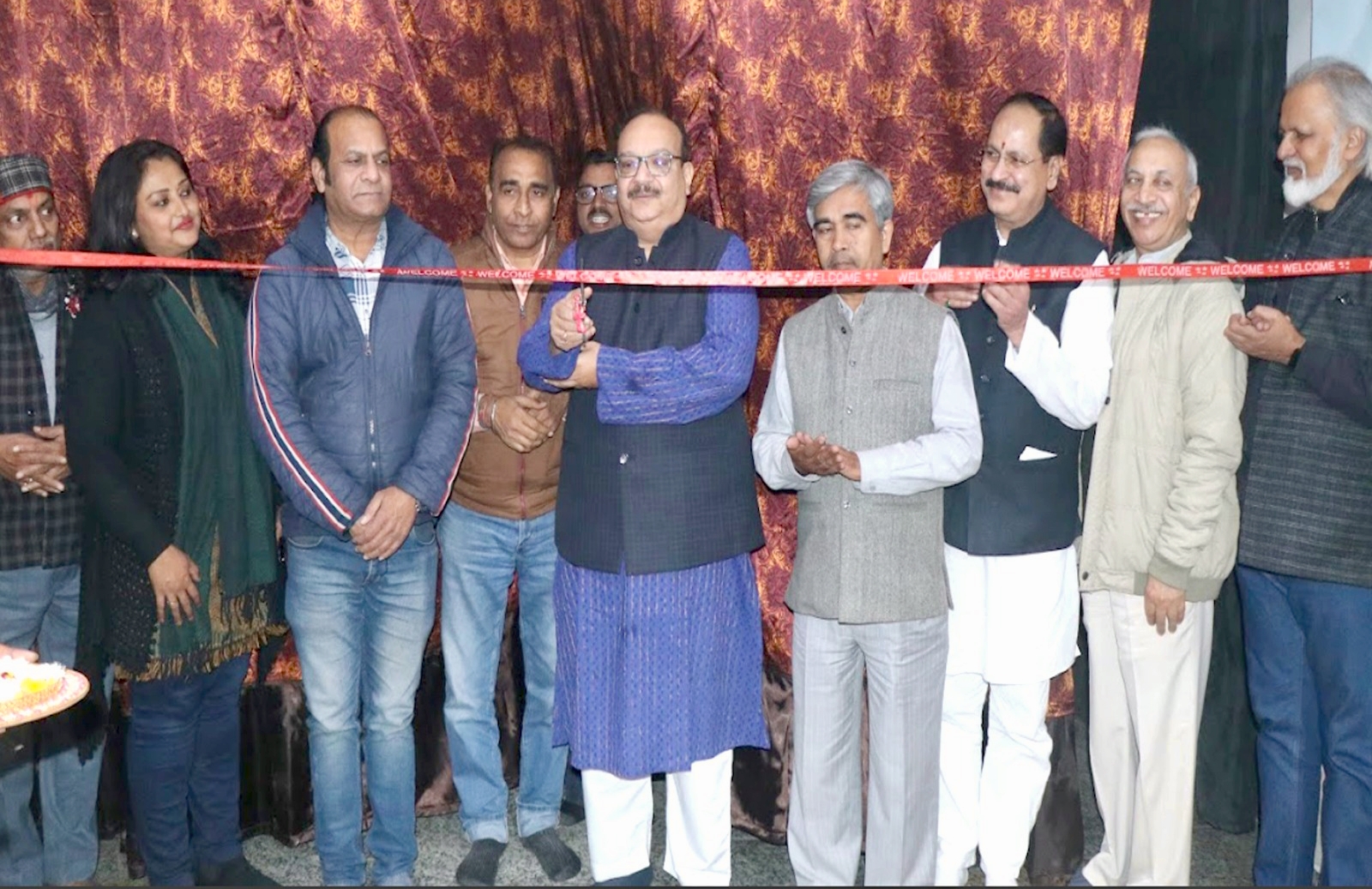
The Sahitya Akademi auditorium in Delhi recently hosted the grand launch of senior poet, storyteller, and Chancellor of Rabindranath Tagore University Santosh Choubey’s much-awaited short story collection “Gareebnawaz”. Jointly organized by Vanmali Srijan Peeth, Delhi, and Rajkamal Prakashan Group, the event drew the participation of many noted writers, critics, and literature enthusiasts. Prior to this collection, Choubey had already published six widely acclaimed volumes including Halkey Rang Ki Kameez, Restauran Mein Dopahar, Nau Binduon Ka Khel, Beech Prem Mein Gandhi, Magar Shakespeare Ko Yaad Rakhna, and Pratinidhi Kahaniyan. The new book was released in the presence of celebrated author Mamata Kalia and senior writer Janki Prasad Sharma, who presided over the ceremony. Choubey himself read the title story “Gareebnawaz” and shared insights into his creative journey, emphasizing that readability, innocence, and visual intensity remain central to his craft.

Mamata Kalia praised Choubey for his commitment to social realities, describing “Gareebnawaz” as a powerful portrayal of class conflict and human resilience. Presiding guest Janki Prasad Sharma remarked that Choubey’s greatest strength lies in his extraordinary readability, noting that his stories sweep readers along while raising urgent questions of contemporary life and weaving memory and critique into their very fabric. Noted critic Akhilesh highlighted the originality of Choubey’s storytelling, pointing out how his works resist conventional forms while engaging with the distortions of capital, technology, and power, ultimately defending the beauty of life. Senior critic Vinod Tiwari observed that the long stories in this collection will be remembered in the history of Hindi fiction, as they carry recurring motifs of love, compassion, humanity, and sensitivity while also transcending genres.

Writer Alpana Mishra admired the intimate pace of Choubey’s stories that culminate in profound realizations, while young author Ashutosh noted how Choubey begins and ends his stories with curiosity, keeping them firmly in narrative control and marked by a scientific and humanistic outlook. The event began with a welcome address by senior poet Leeladhar Mandloi, Chairman of Vanmali Srijan Peeth, and greetings from Jyoti Raghuvanshi. It was skillfully anchored by young writer Pranjal Dhar and Kunal Singh, with Ashok Maheshwari of Rajkamal Prakashan extending a heartfelt vote of thanks. With the presence of distinguished writers, critics, and literature lovers from across Delhi NCR, the launch of “Gareebnawaz” became not just a book release but a vibrant celebration of Santosh Choubey’s enduring contribution to contemporary Hindi literature.


भारतीय इतिहास की एक भूली-बिसरी कहानी ‘वीर गोकुला’

वीर गोकुला

समीक्षा: अनिल गोयल

18 अगस्त 2025 को देव फौजदार ने दिल्ली के एल.टी.जी. प्रेक्षागृह में भारतीय इतिहास की एक भूली-बिसरी कहानी ‘वीर गोकुला’ प्रस्तुति की।  धर्मान्ध औरंगजेब के अत्याचारों से बृज क्षेत्र के साधारण-जन बहुत परेशान हो जाते हैं।  हिन्दुओं के मन्दिर तोड़े जाते थे, उनकी स्त्रियों को दुर्व्यवहार का शिकार होना पड़ता था।
         शिवाजी के गुरु समर्थ गुरु रामदास उन दिनों मथुरा आए हुए थे।  उनसे प्रेरणा और मार्गदर्शन लेकर वहाँ के तिलपत का एक जाट जमींदार गोकुलसिंह या गोकुलराम या गोकुला आस-पास के गाँव वालों को संगठित करता है, और सन 1669 में औरंगजेब की सेना से लोहा लेता है।  समर्थ गुरु रामदास उन लोगों को गुरिल्ला युद्ध की तकनीकें भी इन्हें सिखाते हैं।
         इसमें एक महत्वपूर्ण बात निर्देशक ने दिखाई कि वहाँ की महिलाओं ने भी गोकुला के इस संघर्ष में बढ़-चढ़ कर हिस्सा लिया था।  पुरुष-स्त्री सभी विशाल मुगल सेना के साथ युद्ध करते हैं।  प्रारम्भ में गोकुला की बीस हजार सिपाहियों की इस सेना को कई छोटी-छोटी सफलताएँ भी मिलीं, लेकिन मुगलों की विशाल सेना से वो भला कब तक लड़ता?
         अन्त में वह औरंगजेब की सेना के द्वारा बन्दी बना लिया जाता है।  वे लोग गोकुला को इस्लाम स्वीकार करने को कहते हैं, जिसे वो अस्वीकार कर देता है।  इस पर मुगल सेना 1 जनवरी 1670 को उसे मौत के घाट उतार देती है।  उसकी पत्नी और अन्य स्त्रियाँ जौहर करने को मजबूर हो जाती हैं।  लेकिन यहाँ का जौहर अग्नि में जल कर नहीं हुआ था, बल्कि यहाँ पर स्त्रियों ने कटार से आत्महत्या की थी!
         यह घटना भरतपुर के जाट राजा सूरजमल से चार पीढ़ी पहले हुई बताई जाती है।  कहा जाता है कि इस छोटी सी घटना ने आगे चल कर भरतपुर राज्य की नींव डालने में महत्वपूर्ण भूमिका निभाई थी।  नाटक के निर्देशक देव फौजदार स्वयं इस बृज क्षेत्र से ही आते हैं, अतः उनकी प्रस्तुति में प्रामाणिकता का होना निश्चित माना जा सकता है; क्योंकि इतिहास केवल वही नहीं होता जिसे विजेता लिखवाते हैं, अपितु ऐसे कठिन काल का इतिहास प्रायः ही लोककथाओं में घुल-मिल जाता है!  और फिर, हमारे इतिहास की तो लाखों पुस्तकें और पाण्डुलिपियाँ जला भी दी गई थीं!  ऐसे में इतिहास की तथाकथित “प्रामाणिकता” का प्रश्न भारत में निरर्थक हो जाता है।
         देव फौजदार बताते हैं कि कुछ ही समय चल पाये इस संघर्ष में ब्राह्मणों, वैश्यों, यादवों, गूजरों, जाटवों, और बाल्मीकि सहित सभी जातियों ने अपना सहयोग दिया था।  माथुर वैश्य समाज ने इन युद्धों के लिये धन उपलब्ध करवाया था… और गोकुला की मृत्यु के बाद इस क्षेत्र में माथुर वैश्यों के तीन सौ गाँवों को जला दिया गया था।  देव बताते हैं कि गोकुला के खजाने की रक्षा का काम चमार या जाटव तथा बाल्मीकि जाति के लोगों ने सम्भाला था, जो परम्परा सूरज मल जी तक भी इसी प्रकार चलती रही!
         नाटक को निर्देशित करने के अतिरिक्त, एक दर्जन के लगभग पुस्तकों से शोध करके इस नाटक को लिखा भी देव फौजदार ने ही है।  एक ऐतिहासिक नाटक में सबसे अधिक महत्वपूर्ण होता है कलाकारों का अपनी ऊर्जा को बनाये रखना।  उस हिसाब से यह एक सफल नाट्य प्रस्तुति रही – सभी कलाकारों ने नाटक के अन्त तक पूरी ऊर्जा के साथ नाटक को खेला।  नाटक की ऊर्जावान गति को बनाये रखने में संगीत ने पूर्ण सहयोग दिया।  देव फौजदार ने अपनी रचनात्मक परिकल्पना से ऐसे दृश्यबन्ध तैयार किये कि दर्शक सम्मोहित हो जाते थे।
         नाटक का संगीत मोहन सागर और प्रसून ने दिया था, और तलवार चलाने का प्रशिक्षण गुरु विश्वजीत ने दिया, जिससे दृश्यों में एक जादुई प्रभाव पैदा हुआ।  लड़ाई के दृश्य फाईट मास्टर रूपेश चौहान ने तैयार किये थे, जबकि सृजनात्मक पक्ष की जिम्मेवारी प्रसिद्ध दृश्यबन्ध निर्माता जयन्त देशमुख ने निभाई।


Yugpurush: The Soul of the Guru–Disciple Tradition and the Splendour of the Stage

On 18th August, the historic Kamani Auditorium in New Delhi witnessed a theatrical evening that transcended performance and turned into a soulful experience. “Yugpurush”, written and directed by Jayvardhan (J.P. Singh), offered precisely such a rare journey. Through this play, the director dared to bring to the stage the confluence of the guru–disciple tradition, spirituality, and human inquiry—and this daring vision succeeded on every level.

The performance began with the grand worship of Goddess Kali. The resounding beats of the dhak, the echo of conch shells, and the chanting of priests transformed the stage into a sacred temple. This was not just a religious tableau, but a conscious theatrical choice, transporting the audience to the spiritual ground where the journeys of Vivekananda and Ramakrishna began. Here, the culture of Bengal does not remain a mere backdrop but emerges as an inseparable part of the narrative. Costumes, music, and dance brought the stage alive—red-bordered saris, traditional dhotis, the melodic flow of kirtans, and classical gestures combined to transcend time and space, carrying the audience to nineteenth-century Calcutta.

One of J.P. Singh’s greatest strengths lies in his ability to balance tradition with modern theatrical technique. Stage design and lighting were not confined to creating atmosphere; they actively deepened the play’s philosophical resonance. Whether it was the steps of the Dakshineswar temple or the historic moment of the Chicago Parliament of Religions, projections and scene transitions provided not only dramatic flair but also symbolic depth. Light at times expressed Vivekananda’s inner turbulence, and at other times lingered on the compassionate smile of Ramakrishna.

The soul of the production was carried by its performances. Vipin Kumar, as Ramakrishna Paramhansa, infused the role with simplicity and spiritual radiance, making the presence of divinity palpable on stage. His compassionate gaze and subtle smile did not merely represent the character—they embodied it. Sudheer Rikhari, as Swami Vivekananda, brought to life the disciple’s inquisitive, logical, and energetic spirit. His voice and body language rekindled the memory of that historic moment when Vivekananda introduced Indian philosophy and spirituality to the world in Chicago. Together, their performances created the heartbeat of the play—the tender assurance of the guru alongside the restless questioning of the disciple, ultimately merging into a profound philosophy of life.

The greatest strength of Yugpurush is that it is not a simple dramatic recreation of historical or mythological figures. It is, at its core, a philosophical journey. Vivekananda’s scientific rationality and Ramakrishna’s devotional fervor converge to remind us that even today the true path of life lies in balancing these two poles.

A special note must be made of Jayvardhan (J.P. Singh). As both playwright and director, he proves that theatre for him is not merely an art form but a medium to bring life-philosophy to society. His writing lends depth to the dialogues, while his direction renders them alive both visually and aurally. For him, theatre is not simply “entertainment” but a path to “self-realization”—and this is the play’s greatest achievement.

In the end, “Yugpurush” is not just a stage production; it is a call of the soul. It demonstrates that the union of devotion and reason is the true essence of life. Even after the curtain falls, the experience resonates within the mind for long—and that is the hallmark of truly great theatre.


Theatrical Brilliance at Rabindranath Tagore University: A Journey from Chekhov’s Irony to Bhasa’s Tragedy

On June 14 and 16, 2025, the Faculty of Humanities and Liberal Arts at Rabindranath Tagore University, Bhopal, witnessed the powerful staging of two stylistically diverse plays — “Chekhov Ki Duniya” and “Urubhanga”. These productions were presented by the students of the MPA (Drama) and PG Diploma in Natyashastra as part of a national theatre workshop held from May 7 to 16, marking the culmination of their second semester curriculum. Through these performances, the students skillfully bridged classical Indian theatrical traditions with modern experimental aesthetics.

The two productions stood as compelling contrasts. While one portrayed the ironic absurdities of modern Western society through humour, the other breathed life into the deep emotional undercurrents of Indian mythology through poignant tragedy.

“Chekhov Ki Duniya” — A Humorous Reflection of Social Irony

Staged on June 14, “Chekhov Ki Duniya” was based on three comic one-act plays by Russian literary master Anton Chekhov — Cheeenk, The Bank Manager, and Surgery. Under the seasoned direction of Shyam Kumar and co-direction of Shraboni Saha, the play brought forth the complexities hidden in seemingly trivial incidents. From the social awkwardness triggered by a simple sneeze, to the oppressive nature of bureaucratic banking systems, and the cold commercialization of healthcare — each vignette was rendered with biting humour and subtle irony.

The ensemble cast brought these stories to life with remarkable authenticity. Sehej Harjai served as the narrator, with Ankit Chaudhary (Pyare Mohan), Tanshree Rane (Pyare Mohan’s wife), Sainand Valvaikar (General), and Oindrila Goswami (General’s wife) portraying Chekhovian characters with flair. Supporting roles by Santosh Rajput (Bank Manager), Sauptik Bhattacharya (Assistant Manager), Pooja Kewat (Woman), Praveen Namdev (Compounder), Davinder Singh Grover (Patient), and Deepak Bhardwaj (Audience Member) were met with hearty applause from both guests and viewers.

The backstage team worked with admirable precision. Stage management was handled by Davinder Singh Grover and Sehej Harjai. Costumes were designed by Deepak Bhardwaj, Santosh Grover coordinated props, lighting by Praveen Namdev, and musical direction was led by Vansh Rathore.

“Urubhanga” — A Mythological Tragedy That Stirred the Soul

Performed on June 16, “Urubhanga” is a poignant classical tragedy written by the Sanskrit playwright Bhasa. The play explores the psychological turmoil, remorse, and transformation of a wounded Duryodhana on the eighteenth day of the Mahabharata war. Under the direction of Dr. Sheetanshu Tripathi, the production delved into the devastating aftermath of war and internal conflict, deeply moving the audience.

Shubham Srivastava’s sensitive and intense portrayal of Duryodhana left an indelible mark. As the narrator, Pankaj Diwan effectively connected the audience with both the intellectual and emotional threads of the narrative. Supporting roles were performed by Adeeb Ansari, Sanjay Singh Negi (Ashwatthama), Prateek Chauhan (Dhritarashtra), Neeraj (Krishna), Richa Kalra (Gandhari), Shikha (Pauravi), Nisha Kudaikar (Malavi), Shubham Shivalikar (Durjaya), Unnish Pratap Singh (Baladeva), and the younger characters — Rahul Gupta, Prashant Kumar (Harshit), and Kartik Namdev — all delivering memorable performances.

The scenic design and costuming, supervised by Deepak Bhardwaj with active involvement from Kartik Namdev, enriched the stage with symbolic depth and aesthetic elegance.

Both performances were graced by distinguished guests — Chancellor Shri Santosh Choubey, Vice-Chancellor Prof. R. P. Dubey, and Dr. Prasad Bhide from Central Sanskrit University, Bhopal. After witnessing “Chekhov Ki Duniya”, the Chancellor lauded it as a sharp portrayal of social reality and commended both cast and crew. Regarding “Urubhanga”, Dr. Bhide praised its seamless fusion of ancient dramaturgy with modern theatrical techniques. Vice-Chancellor Prof. Dubey described both plays as commendable and emphasized the importance of sustaining such creative academic endeavours at the university.

The entire event was coordinated under the guidance of Dr. Sanjay Kumar Dubey, Dr. Savitri Singh Parihar, and Sh. Abhishek Deshmukh, whose leadership transformed this semester-end production into a rich academic and cultural experience.

“Chekhov Ki Duniya” and “Urubhanga” stand as testaments to the theatrical acumen, emotional insight, and creative potential of the students at Rabindranath Tagore University. These productions point towards a promising future — where tradition meets innovation, theory meets experience, and Indian roots engage meaningfully with global perspectives.