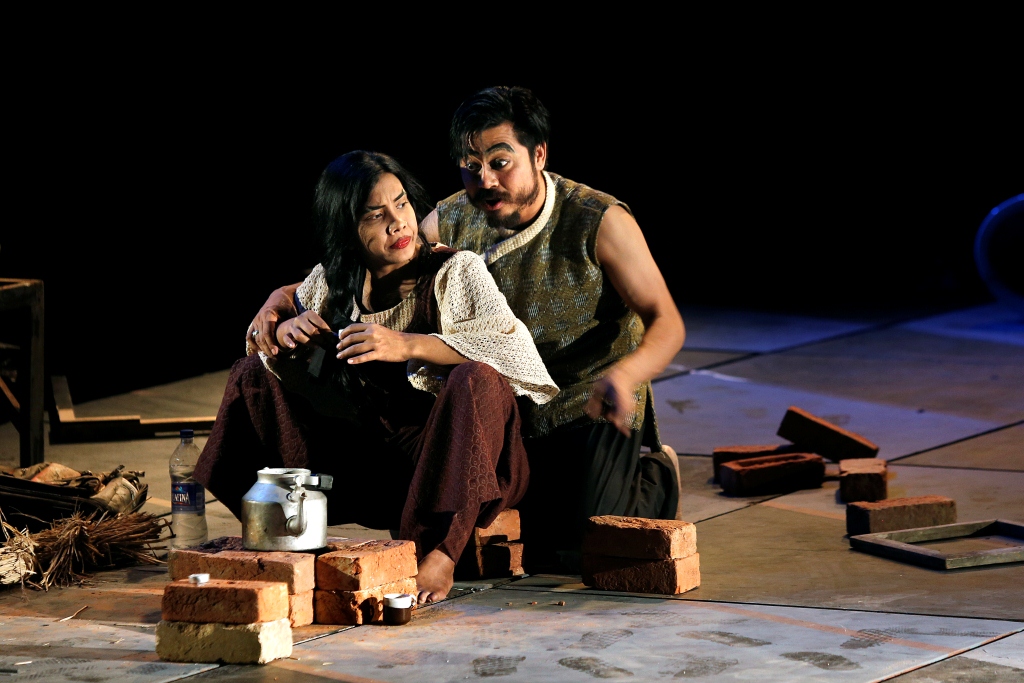
Lisa Perterson & Denis O’Hare’s AN ILIAD Directors: Guy Roberts & Rebecca Greene Udden

Playwrights: Lisa Perterson & Denis O’Hare

Directors: Guy Roberts & Rebecca Greene Udden

Group: Prague Shakespeare Company, Czeh Republic

Language: English

Duration: 1 hr 45 mins

The Play
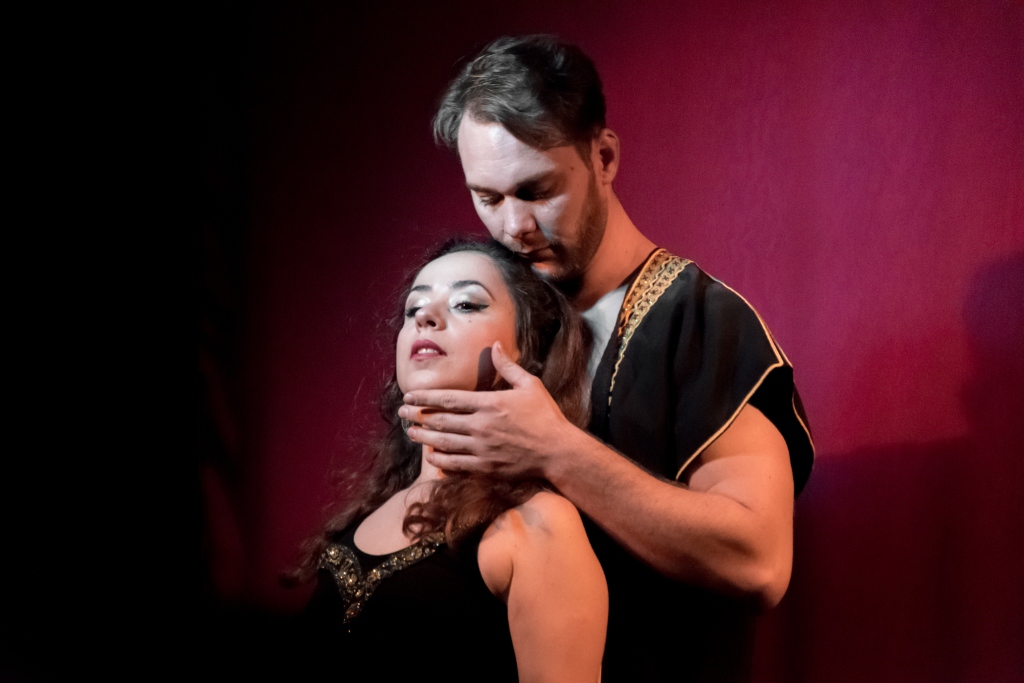
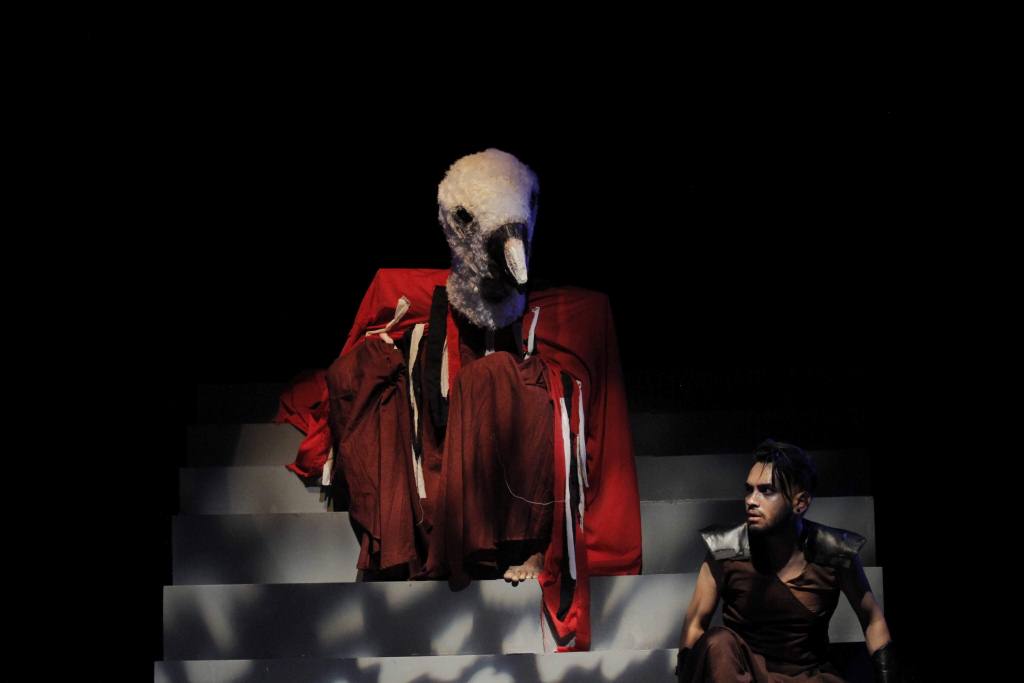
Aided by two Muses, a single, modern day storyteller takes the stage—possibly Homer, possibly one of the many bards who followed in his footsteps. He retells Homer’s classic tale of the Trojan War – The Iliad, specifically focusing on the story of the great fighters Achilles and Hector. As he shares his tale with a modern audience, references with wars throughout the ages collide with the ancient story of Greeks and Trojans. As a traveling storyteller, he uses poetry, music, humor, and poignant accounts of war to share the experience from the perspective of a fighting Greek soldier and a poet, a tale he is fated to tell throughout time.

Director’s Note
The Iliad is the foundational epic of Western civilization — all of our basic ingrained beliefs about men and women, the role of the individual to the group; duty to country/tribe vs. duty to individual/family; what is just and correct action when faced with injustice and corruption —are brought wonderfully to life in The Iliad. This production brings these thrilling questions to a very human and relatable level in an easily digestible evening of theater. The audience will leave with a keen understanding not just of the story of Achilles and Helen of Troy but also hopefully with a renewed hunger to think about and address the timeless questions in their own lives. The phenomenal original score by Patrick Neil Doyle, lifts the entire experience and transports us back 2500 years ago to the plains of Troy making us feel that we are there with the great people of legend.

The Directors
Guy Roberts – Artistic Director of Prague Shakespeare Company, Guy won the 2018 Best Actor Houston Theatre Award for his performance of The Poet in An Iliad. He is a 2015 recipient of the Tomas Garrigue Masaryk Medal of Honor, in recognition for his work promoting arts and artistic freedom. In 2014 Guy received the inaugural Sidney Berger Award from the Shakespeare Theatre Association. His award-winning work as actor, director and producer has been seen in over 200 productions in the United States, Czech Republic, France, the Netherlands, Hungary, Austria, Slovakia, Poland, Qatar and Egypt and has been honored with multiple awards. Guy served as Artistic Director of the Austin Shakespeare Festival (USA) from 2001-2007. He received his BFA from Boston University. Guy resides in Prague, Czech Republic with his wife, the actress Jessica Boon.
Rebecca Greene Udden- co-Director An Iliad and Founding Executive Artistic Director of Main Street Theater Company located in Houston, Texas USA. Some of her major works as director are- Enemies, Wolf Hall and Bring Up the Bodies (First American Productions), Twelfth Night (Prague Shakespeare Company), Silent Sky, Peace in Our Time, Heartbreak House, The Real Thing, The Heidi Chronicles, Arcadia, The House of the Spirits, Copenhagen, The Little Foxes, Pride and Prejudice, and many more. She is also a celebrated actor Memory House and Richard III are two such productions of Prague Shakespeare Company in which she acted. Her some other acting assignments have been The Last Night of Ballyhoo, The Sisters Rosensweig, Hapgood, Hamlet, and more. She has also designed costumes of numerous productions.

The Playwrights
Lisa Peterson is a nationally renowned director who works in NYC and regional theatres around the USA. She was for ten years Resident Director at the Mark Taper Forum. She won an Obie Award for her direction of Caryl Churchill’s Light Shining in Buckinghamshire at New York Theatre Workshop.
Denis O’Hare is a writer and Tony Award-winning actor who has performed on Broadway and off-Broadway as well as in numerous regional productions and in film and television. His TV work includes roles on HBO’s True Blood and FX’s American Horror Story.

The Group

Based in Prague, Czech Republic, the award-winning Prague Shakespeare Company presents professional theatre productions, workshops, classes, lectures and other theatrical events of the highest quality, conducted primarily in English by a multinational ensemble of professional theatre artists, with an emphasis on the plays of William Shakespeare. Celebrating its 11th year, PSC has entertained, enriched, enlightened and inspired students and audiences not only in the Czech Republic but in the United States, Hungary, France, Egypt, Qatar, the Netherlands and elsewhere around the world with performances that are fresh, bold, imaginative, thought-provoking, and eminently accessible, connecting the truths of the past with the challenges and possibilities of today.

CASTS & CREDITS
The Poet: Guy Roberts
Muse / Athena: Jessica Boone
Muse / Musician: Fanette Ronjat

Composer & Sound Designer: Patrick Neil Doyle
Director of Production & Stage Manager: Eric Sammons
Light, Set Designer & Technical Director: Adam Thornton
Sound Engineer : Jacob Sanchez

Playwrights: Lisa Perterson & Denis O’Hare

Directors: Guy Roberts & Rebecca Greene Udden


Rhishikesh Vaidya’s MORPHOSIS Director: Bapi Bose

Playwright: Rhishikesh Vaidya

Director: Bapi Bose

Group: Circle Theatre Company, Delhi

Language: Hindi

Duration: 2 hrs 30 mins

The Play

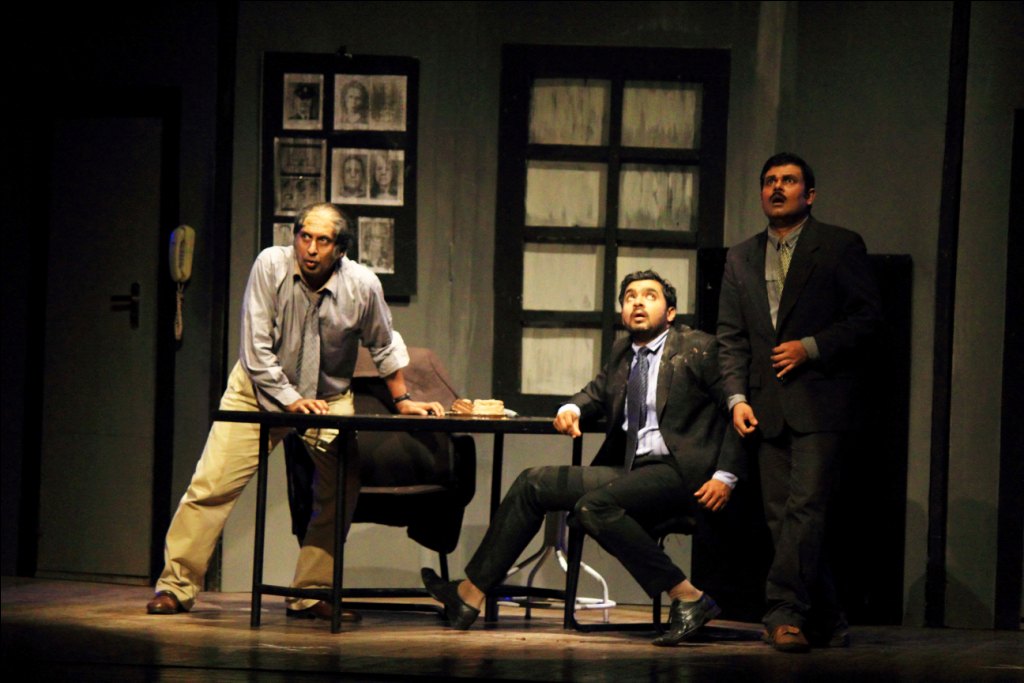
Prasad is a popular theatre actor, who considers himself to be the best and doesn’t value his co-actresses. His ego is quite visible during his conversation with his secretary Mohit. During the days of his struggle, Bhowmik, a fellow actor & friend, comes to meet him with an issue which leads to a heated argument between the two. Bhowmik challenges Prasad to work in the play titled Morphosis, since Prasad doesn’t have enough talent for the lead role of Manas. Prasad accepts the challenge and approaches Guruji, the director of the play. Guruji had once insulted Prasad and this time too he leaves no stone unturned to humiliate him, and yet chooses Prasad for the role of Manas. The process begins – tireless preparation for the character, journey of commitment, strict discipline, dedication, sacrifice, love and self-analysis…. and finally a ‘Morphosis’.

Director’s Note

The play is based on the real story of an arrogant actor and a top ranking film director in Bollywood who appeared in the actor’s life as a blessing in disguise and turned him into a very successful, and one of the highest paid actors in the industry. It is a play about what an actor and acting is all about. The text of the play has been kept as it is.    

The Director

The multifaceted Bapi Bose is a prominent and radical director, activist, ideologue and thinker of Contemporary Indian Theatre. Mr. Bose is a practitioner of New Media and Installation Art which he incorporates consistently in many of his productions. He teaches in many theatre institutes and theatre departments of various universities including the National School of Drama, New Delhi. At present he is working as a freelance designer, director, and teacher, and is the Founder & Artistic Director of Circle Theatre, a professional theatre company in Delhi. He has been awarded scholarships and fellowships, Netaji Samman (Gold Medal), Natsamrat Award, Patliputra Lifetime Achievement Award etc. Bapi Bose has been bestowed with the National Award, conferred by the Central Sangeet Natak Akademi, New Delhi.

The Playwright

Rhishikesh Vaidya’s first literary work was Krishna Nahi Ban Paunga, a collection of Hindi ghazals and poetry. During the preparations of civil services, he came across the works of Mohan Rakesh. These inspired him to become a playwright. He has written stage plays and Radio plays. Jawab Do Gandhi, Uske Baad, Khat-Khat-Khat, Kaun and Morphosis are some of his noted plays. He bagged the Mohan Rakesh Award by Sahitya Kala Parishad and a short film was produced on his play Ateet Aur Vartman based on Birsa Munda. His plays are broadcast by All India Radio, Indore.

The Group

Formed in 2002, under the leadership of Bapi Bose, Circle Theatre staged its first production in the 4th Bharat Rang Mahotsav (the International Theatre Festival of NSD). All its productions have excelled in terms of artistic quality, expression and social message. It has been awarded by the Sahitya Kala Parishad and the Govt. of NCT Delhi; and has participated in Bharat Rang Mahotsav and its Satellite Theatre Festival in Kolkata, and also in the 8th Theatre Olympics held in India. Circle Theatre has a library of over a thousand books and journals on theatre, and has been regularly engaged in organizing training programs and other theatre activities.

Cast & Credits

Prasad: Sahil Singh Sethi

Gurujee : Suman Vaidya

Disha: Swati Kumar

Bhowmick: Akhilesh Dwivedi

Kumar: Hurmat Ali Khan

Doorva: Anupama Kaushik

Mohit: Kamal Kashyap

Chowkidar: Akhilesh Dwivedi

Malati: Tanu Suneja

Artists of the Company: Prince Mishra, Raju Sharma, Jagdish Mali, Shailendra Kumar, Akash Sarraf, Ashwani Saini, Ashish Singh, Amitesh Raj, Maitreyee Kuhu                        

Stage Manager: Akhilesh Dwivedi

Set, Costume & Property Design: Bapi Bose

Set Execution: Dalvir Singh (Billa)

Set In charge: Prince Mishra

Set Assistance: Ashish Singh                       

Light Design: Bapi Bose

Light Execution : Barun Kar

Costume In charge (Male): Akash Sarraf

Costume Assistance (Male): Ashwini Saini

Costume In charge (Female): Maitreyee Kuhu                        

Costume Assistance (Female): Swati Kumar

Property In charge: Raju Mishra

Property Assistance: Shailendra Kumar

Sound, Music Design & Selection: Bapi Bose

Sound Editing & Mixing: Shubhanjan

Sound & Video Operation: Barun Kar

Video Installation & Editing: Vishal Mahale

Choreography: Arun Kumar

Make-up: Rajeev Roychowdhury

Brochure & Poster Design: Bapi Bose

Layout & Printing: Gautam, Zen Advertisement

Still Photography: Piyal Bhattachariya, Samik Sen

Exhibition & Research: Bapi Bose

Liaison & Publicity: Vikas Bahari

Production In charge: Shahbaz Khan

Technical In charge: Barun Kar

Assistant to Director: Jagdish Mali

Assistant Director: Vikas Bahari

Playwright: Rhishikesh Vaidya

Concept, Scenography & Direction: Bapi Bose


Harold Pinter’s THE DUMB WAITER Director: Thawai Thiyam

Playwright: Harold Pinter

Director: Thawai Thiyam

Group: Chorus Repertory Theatre, Imphal

Language: Manipuri

Duration: 1 hr 13 mins

The Play

Two hit-men, Abo and Tomba, are waiting in a basement room for their assignment. As the play begins, Abo, the senior member of the team, is reading a newspaper, and Tomba, the junior member, is tying his shoes. Tomba asks Abo many questions as he gets ready for their job and tries to make tea. They argue over the semantics of “light the kettle” and “put on the kettle”. Abo continues reading his paper for most of the time, occasionally reading excerpts of it to Tomba. Abo gets increasingly animated, and Tomba’s questions become more pointed, at times nearly nonsensical. In the back of the room is a dumbwaiter, who delivers occasional food orders. This is mysterious and both characters seem to be puzzled why these orders keep coming; the basement is clearly not outfitted as a restaurant kitchen. Tomba goes to the bathroom. Abo listens carefully—we gather from his replies that their victim has arrived and is on his way to the room. Abo shouts for Tomba, who is still out of the room. The door, that the target is supposed to enter from, flies open. Abo rounds on it with his gun, and Tomba enters, stripped of his jacket, waistcoat, tie and gun. There is a long silence as the two stare at each other before the curtain comes down.

Director’s Note

The play is an expression of absurdity of life portraying the psychological contrast in human behaviour and analysis of inner truth and freedom.

The Director

Thawai Thiyam was born in Imphal on 15 August 1982. He received training in Dramatics and Performing Arts at the Chorus Repertory Theatre, Imphal. This included stagecraft, design, martial arts, direction etc. Because of his passion for theatre-arts he joined the prestigious Institute of Calcutta Puppet Theatre, Kolkata to study theatre design, theatre architecture, scenic design, property and mask making, and a section of puppetry and performance under the able guidance of Padmashree Suresh Dutta. He has participated in quite a number of major national and international theatre festival held in India and abroad. Thawai Thiyam has directed many plays in his debut including Bachae, Shaknaidaba Waree, Maharaj Indrajit, Rajya Abhishek, Punaragomon, Andha Yug, and The Dumb Waiter.

The Playwright

Harold Pinter (10 October 1930 – 24 December 2008) was a Nobel Prize-winning British playwright, screenwriter, director and actor. One of the most influential modern British dramatists, his writing career spanned more than 50 years. His best-known plays include The Birthday Party (1957), The Homecoming (1964), and Betrayal (1978), each of which he adapted for the screen. His screenplay adaptations of others’ works include The Servant (1963), The Go-Between (1971), The French Lieutenant’s Woman (1981), The Trial (1993), and Sleuth (2007). He also directed and acted in radio, stage, television, and film productions of his own and others’ works.

The Group

The Chorus Repertory Theatre was established in the valley of Manipur, a small hill state in the easternmost part of India, in April 1976 under the able and dynamic guidance of Ratan Thiyam. Located on the outskirts of Imphal, Manipur’s capital city, Chorus Repertory Theatre’s two acre campus has been slowly built (and six times rebuilt after disastrous monsoons) to accommodate a self-sufficient way of life with housing and working quarters for the company. It is now an important regional and national centre for contemporary theatre.  On its 25th anniversary, the company dedicated its first permanent theatre called ‘The Shrine’, a 200 seat auditorium conceived and designed by Ratan Thiyam with space for set construction and storage.

Cast & Credits

Abo: Ibomcha Sorok / Robindro

Tomba: Somo

Stage Manager: Jilasana Meetei

Set & Props: Tarpon, Lokendra

Costume: Somo, Tarubi

Light: Angoutombi

Music: Tomba, Basanta

Production Manager: Ibomcha Sorok

Administration & Publicity: Dolendro

Back stage: Vijay, Tarpon, Tarubi, Rahul, Ajitkumar

Front of the House: Sandhyarani, Rojita, Russia

Playwright: Harold Pinter

Adaptation in Manipuri: Ratan Thiyam

Design & Direction: Thawai Thiyam


Sadhana Ahmed’s SAPTAPARNEE Directors: Sohag Sen, Sima Mukhopadhyay, Suranjana Dasgupta, Tulika Das, Adrija Dasgupta, Abanti Chakraborty, Ishita Mukhopadhyay

Playwright: Sadhana Ahmed

Director: Sohag Sen, Sima Mukhopadhyay, Suranjana Dasgupta, Tulika Das, Adrija Dasgupta, Abanti Chakraborty, Ishita Mukhopadhyay

Group: Rangakarmee, Kolkata

Language:  Hindi & Bengali

Duration:   1 hr 30 mins

The Play

Saptaparnee is a collage of seven mono-acts shaped after seven women characters sketched by Tagore. They have been chosen from his novels, dramas, poems and short stories. A craving for love, and an unending search for fulfilment run through them.

Director’s Note

Saptaparnee is a tribute to the creative genius of Rabindranath Tagore and his oeuvre. We find his texts extremely rich in nuances. They motivate us to read between the lines, to search for more and more meaning hidden underneath. Rabindranath has this rare ability to keep us together at a time which is out of joint.

The Directors

Sima Mukhopadhyay, Director of Chandara, is a director, playwright and actor from Kolkata. She received Master’s Degree in Drama (Acting) from Rabindra Bharati University in 1985. At present she heads Rangroop.

Suranjana Dasgupta, Director of Kadambini, is a director, playwright, actor and singer from Kolkata. Suranjana made her film debut in Aparna Sen’s 15 Park Avenue. She has also acted in a telefilm titled Antigone Chatterjee with Anjan Dutta.

Tulika Das, Director of Chitrangada, is a director and actor from Kolkata. She was associated with Bohurupee theatre group for 28 years. In 2015, Tulika directed Nero. At present she is associated with the theatre group Bohuswar.

Adrija Dasgupta, Director of Malati, is a director, designer and actor from Kolkata. She received her PG Diploma-in-Drama (with Specialization in Acting) from NSD. Adrija is a committed theatre worker who keeps conducting theatre workshops and directing children’s productions for the economically deprived and physically challenged children.

Sohag Sen, Director of Damini, is a theatre-director and actor-trainer based in Kolkata. Her association with theatre and allied media spans a period of almost forty years. As an actor, she started her career under the guidance of the legendary Utpal Dutta, in the year 1969. Sohag Sen has been a visiting faculty at National School of Drama, Satyajit Ray Film and Television Institute, Rabindra Bharati University, Kolkata Film and Television Institute, The Film and Television Institute, and The Calcutta Media Institute.

Abanti Chakraborty, Director of Nandini, is a theatre director based in Kolkata. A Masters in Applied Linguistics and Translation Studies from Hyderabad Central University, Abanti had been a Special Fellow in Directing, at Yale School of Drama in 2010. In 2010 she received the Bismillah Khan Yuva Puraskar in Theatre Direction from Sangeet Natak Akademi.

Ishita Mukhopadhyay, Director of Ela, is active in Bengali theatre for more than three decades. Her first directorial venture was an adaptation of The Room by Sartre. Her group Ushnik was formed in 1984.

The Playwright

Sadhana Ahmed is a cultural activist and a poet-cum-playwright based in Dhaka, Bangladesh. Sadhana participated in various artistic movements that led to the fall of military rule in Bangladesh in the late-1980s. She was the Founder-President of Sparsha Abritti Parishad that operated from Bhairab. Sadhana Ahmeder Duti Natak, her first book consisting of Domer Madar and Maatbring, was published in February 2017.

The Group

Established in 1976 with a small set-up, Rangakarmee today spearheads the Hindi theatre in Kolkata with 43 productions in its repertoire. Rangakarmee has performed not only in India but also in countries like Pakistan, Bangladesh, Germany and USA.

Cast & Credits

Chandara of Shasti: Karuna Thakur

Director: Sima Mukhopadhyay

Kadambini of Jibito O Mrito: Mrinmoyee Biswas

Director: Suranjana Dasgupta

Chitrangada of Chitrangada: Anubha Fatehpuria

Director: Tulika Das

Malati of Sadharan Meye: Maya Ghosh

Director: Adrija Dasgupta

Damini of Chaturanga: Senjuti Mukherjee

Director: Sohag Sen

Nandini of Raktakarabi: Kathakali

Director: Abanti Chakraborty

Ela of Char Adhyay: Sanchayita Bhattacharjee

Director: Ishita Mukhopadhyay

Calligraphy: Hiran Mitra

Production Coordinator: Tripti Mitra

Production Assistant: Anirudh Sarkar

Set in-charge: Shankar Dey

Music operator: Pradeep Dutta

Light operator: Shashanka Mondal

Stage Design: Sanchayan Ghosh

Light Design: Badal Das

Music Score: Bhadra Basu

Dramaturge: Anshuman Bhowmick

Original Scrip: Sadhana Ahmed

Concept: Usha Ganguli


Joseph Stein’s KHAMOSHI SILI SILI Director: Suresh Sharma

Please listen to Prof. Manohar Khushalani’s Review & Discussion with Prof. Suresh Sharma

Playwright: Joseph Stein
Adapter: Asif Ali Haider Khan
Director: Suresh Sharma
Group: NSD Repertory Company, New Delhi
Language: Hindi
Duration: 2 hrs 20 mins

The Play

This play is a translation of Fiddler on the Roof written by Joseph Stein. It is a musical that deals with the displacement of communities. The story is neatly bound to the Kashmiri situation in our country. Prithvi Nath loves his daughters, and goes against the traditional norms, allowing them to marry men of their choice. Shuhul, the third daughter chooses to marry a Muslim…

Director’s Note

Going along with the central theme of the play, the contemporary situation of our society took the forefront. The final situation chosen is the plight of the Kashmiri Pandit community. This choice is to support the script with a relevant social background which can be projected on a larger canvas, and can highlight the pain and problems of the people who have been displaced from their own land.

The Director

Suresh Sharma did PG diploma with specialization in Acting from National School of Drama in 1985.

In 1987-88 he established the only non-government Repertory in the district of Mandi (Himachal Pradesh). From 1996-98 he worked as the Artistic Director of Sri Ram Centre for Performing Arts, Delhi. In 1998 he established the first non–government fully residential Theatre Academy in Mandi, Himachal Pradesh. Mr. Sharma has been felicitated by Sahitya Kala Parishad. Sangeet Natak Academy awarded Mohana, a play written and directed by him, under the Young Director’s Scheme.

The Playwright

Joseph Stein (May 30, 1912 – October 24, 2010) was an American playwright best known for writing the books for the musicals Fiddler on the Roof and Zorba. His greatest success came from writing the book for the 1964 musical play Fiddler on the Roof, for which he won three major awards, including two Tonys.

The Adapter

A playwright, actor and director of great repute, Asif Ali Haider Khan obtained a PG diploma with specialization in Acting from Nation School of Drama. Later, he worked with NSD Repertory Company as an actor for many years. He received the Sangeet Natak Academy’s Ustad Bismillah Khan Yuva Puraskar for playwriting in the year 2006. Currently, he is teaching Modern Indian Drama at National School of Drama, New Delhi.

The Group

Established in 1964 with only four members, the Repertory Company is the regular performing wing of the School. It was set up with the dual purposes of establishing professional theatre on one hand and continuing with regular experimental work on the other.

Cast & Credits

Prithvinath Jutsi: Shanawaz Khan

Jungaash: Shruti Mishra/ Sampa Mandal

Shuhul: Meenu/Anamika Sagar

Sheen: Sakshi Sharma

Nonika: Anamika Sagar/Rukmani Sarkar  

Himaal: Aparna Menon

Didda: Bornali  Borah

Leelawati: Sampa Mandal/ Shruti Mishra

Shambhunath: Deep Kumar

Gaffara: Sikandra Kumar

Bakshi Singh (Kimma): Shubham Pareek

Brijlal: Raju Roy

Rajguru: Rahul Kumar

Policeman: Naveen Singh Thakur

Somnath: Naresh Kumar

Badrinath: Virendra Singh

Paadshah: Shiddheshwar Kashinath Thorat

Makkhan Lal: Khwairakpam Punsilemba Metei

Krishanpir: Parag Baruah

Firdous: Ashutosh Banerjee

Grandmother: Shruti Mishra / Sampa Mandal

Chorus: Moti Lal Khare, Abdul Kadir Shah, Naveen Singh, Thakur, Md.Suleman, Dharam Singh Bisht, Naresh Kumar, Virendra Singh

Bijja: Aparna Menon

Male: Naresh Kumar

Male-1: Naresh Kumar

Male-2: Virendra Singh

Kukka: Moti Lal Khare

Woman-1: Meenu

Woman-2: Shruiti Mishra / Sampa Mandal

Male-1: Dharam Singh Bisht

Male-2: Rampratap/Pradeep Aggarwal

Set Design: Bansi Kaul

Set, Props Execution: Rajesh Bahl

Set Execution: Ram Pratap, Dharam Singh, Manoj Kumar

Light Design & Operation: Govind Singh Yadav

Assistance: Md. Suleman, Pradeep Aggarwal

Costume Design: Kirti V. Sharma

Assistance: Pushpa Vishwakarma

Costume in-charge: Budh Ram

Chief Costume Coordinator: C.S. Bhatia

Assistance: Parvati Bisht

Sound Operation: Mukesh Kumar

Sound & Music Recording: S. Manoharan, Subhanjan

Property Design : Suresh Sharma

Property in-charge: Motilal Khare

Music: Kajal Ghosh

Rhythm Sequencing: Pakaj Banai

Key Board: Kishore Kumar Malhotra

Mixing & Mastering: Mayur Malhotra

Recording Studio: Ved Films

Tabla & Dholak : Om Prakash

Octopad: Narender Kumar

Harmonium: Naveen Singh Thakur

Tumbkh: Feroz Ahmed

Rabab: Gulam Qadir

Gara: Fearoq Ahmed

Sarangi: Syed Yaseen

Kashmiri Diction: Ashwath Bhatt

Dance Classes: Sonal Modi Vorah

Choreography: Norbu Tshering

Make-up: Raju Roy, Shruti Mishra

Assistance: All Repertory Artists

Playwright: Joseph Stein

Adapter: Asif Ali Haider Khan

Director: Suresh Sharma

Watch Meet the Director segment for the play


Manoranjan Das’s BUXI JAGABANDHU Director: Debabrata Pattanayak

Playwright: Manoranjan Das

Director: Debabrata Pattanayak

Group: Dynamic Platform, Bhubaneshwar

Language: Odiya

Duration: 1 hr 45 mins

The Play

The Great Paika Rebellion of 1817 happened under the leadership of Buxi Jagabandhu, the commander of the forces of the King of Khordha. Colonel Harkot, who was in-charge of the British East India Company in 1803, was planning to capture Odisha, which was strategically placed between Bengal and Madras, after the British had conquered Bengal in the North and Madras in the South. To achieve this, the first target was to make a treaty with Deogan and slowly bring Odisha under the Company’s control. Colonel’s scheme was to conquer Puri via Chilika Lake. Mukunda Dev II was the then king of Odisha. Colonel managed to get Maludar Fateh Mahammad into his fold and entered Odisha. Subsequently, they imprisoned King Mukunda Dev II. The Minister of Mukunda Dev II, Jai Rajguru was brutally killed fighting against the British. In the end, despite Buxi’s perseverance and constant resistance, he was killed by British officer Fletcher and a rumour was spread that a tiger killed Buxi. Fletcher saluted Buxi for his heroism and bravery to protect his motherland.

Director’s Note

The play is based on the hero of Paika rebellion, Bidyadhar Bhramarabara Rai. He is popularly known as ‘Buxi Jagabandhu’. With the support of common people, he became the leader of the first rebellion of the Paika (Soldiers of Odisha) against the British Rule. I thought of doing this play, written by Padmashree Manoranjan Das, on the occasion of 200th anniversary of Paika rebellion, to encourage the youth of Odisha by reminding them about Buxi’s heroism, love towards the nation, and the Paika rebellion.

The Director

Born on 28th January 1989 in Odisha, Debabrata Pattanayak is a Post Graduate in Drama (Direction) from Utkal University of Culture, Odisha. He has acted in about 30 Odia plays, written 7 plays and designed-directed 25 plays till now. Mr Pattanayak formed his own theatre group Dynamic Platform in 2015. He has undergone serious training under Rudra Prasad Sengupta, Satyabrat Rout and Subodh Patnaik. He has been recognised as a regular practitioner of contemporary theatre in Odisha. Presently he is serving as an Art Education Instructor (Theatre) in DIET, Puri, Odisha. He has been conducting theatre workshops with children and university students in different educational institutions.

The Playwright

Manoranjan Das was a contemporary Odia writer. He received many prestigious awards like Orissa Sahitya Academy Award (1964), Central Sahitya Academy Award (1971), Orissa Sangeet Natak Academy Award (1978), Central Sangeet Natak Academy Award (1981), Sarala Award (1989), Governor’s Plaque of Honour for play writing (1992), Padma Shri (2004), and Govt. of  India’s Senior Fellowship and Emeritus Fellowship, etc. He was a pioneer in the New Theatre movement in Odisha, had acted in stage plays and films, and written screen plays and Radio plays.

The Group

Being established as a contemporary theatre group in 2015, Dynamic Platform, has been producing plays since 2013. It was started with a mission to encourage the creative young talent by using theatre as a tool with systematic practice and training. The group has produced many significant plays and has participated in state as well as national theatre festivals such as International Peoples’ Theatre Festival of Natya Chetana, Panchamveda, and Arohan. The group also organises children’s theatre workshops to promote their creative potential and expression.

Cast & Credits

On Stage : Ch. Jayaprakash Das, Naveen kumar Parida, itendra Pattanaik, Pranjya Ranjan Khatua, Udit Guru Mohapatra, Subrat Kumar Dash, Dharmasis Behera, Rakesh Kumar Parida, Nilakantha Parida, Chiranjib Biswal, Ganesh Chandra Jena, Jyotirmayee Mishra, Hemanta Kumar Behera, Aditya Kumar Jena, Swarup Ranjan Das, Bhakti Ranjan Das, Saunika Sahu, Barshabasini Barik, Subhasmita Sing

Music: Pratap Chandra Rout

Set Design: Pranjyadutta Sahoo

Light Design: Bikas Kumar Pradhan

Costume: Prasana Kumar Satapathy

Make-up: Ramesh Chandra Sahu

Playwright: Manoranjan Das

Design & Direction: Debabrata Pattanayak


Badal Sircar’s PAGLA GHODA Director: Bipin Kumar

Playwright: Badal Sircar

Translator: Pratibha Agarwal

Director: Bipin Kumar

Group: Yuva Rangmanch, Ranchi

Language: Hindi

Duration: 1 hr 45 mins

The Play

The play is woven around the simple promise of four men, from different walks of life, chatting at the funeral of a young woman. The play is set in a Shamshaan Ghat (Cremation ground) where the girl’s dead body is being exhumed on the funeral pyre while the four men, drink and play cards. A mystery shrouds her death but, when they try to examine the reason/truth behind her death, skeletons from their past start falling on them. Unraveling the deep secrets of their – external and internal worlds. The woman’s specter haunts, staring down on the four, compellingly to encounter their lost, love and guilt, while revealing her lifelong longing for true love.

The Director

An Alumnus of National School of Drama, Bipin Kumar has directed approximately 30 plays in various Indian languages with theatre groups & corporate sectors in India. He was conferred with Sangeet Natak Akademi Award for Direction in 2018. Formed Kshitij Theatre Group (1988) in Delhi, and has been associated with it since then. He is a visiting faculty member of drama departments at Ranchi and Gwalior University. Co-produced feature film Kaala Heera for Zee channel, on Chasnala coal mine disaster; a comedy serial of 13 episodes name Gadbad Ghotala for Doordarshan. Currently he is deputed as zonal director of the National School of Drama’s Sikkim Theatre Training Centre, Gangtok, Sikkim.

The Playwright

Badal Sircar (15 July, 1925–13 May, 2011), was an extremely influential Indian dramatist and theatre director, most known for his anti-establishment plays during the Naxalite movement in the 1970s. He was responsible for taking theatre out of the proscenium and into the public arena, when he founded his own theatre company, Shatabdi in 1976. He was a pioneering figure in street theatre as well as in experimental and contemporary Bengali theatre with his egalitarian ‘Third Theatre’, and continues to be one of the most translated Indian playwrights. He was awarded the Padma Shri in 1972, Sangeet Natak Akademi Award in 1968 and the Sangeet Natak Akademi Fellowship, the highest honour in the performing arts by government of India, in 1997. He was proffered with the Padma Bhushan by the government of India, in 2010.

The Group

With some young artists trained in NSD workshop held in B.I.T. Mesra Ranchi in 1981 along with some unemployed youth, hailing from tribal and backward areas and some engineers, journalists, teachers, students and industrial workers, Ajai Malkani, Avinash Singh, Bipin Kumar founded the Yuva Rangmanch, with an aim to motivate common people through theatre and other cultural activities, for their active participation in bringing about a change for the betterment of society.  The group has organized 50 workshops in the tribal region and has trained about 1000 budding talents and has successfully given a scientific direction to the theatre movement in Jharkhand by staging 500 shows of almost 50 plays inspiring both rural and urban youth. With its founder director, Ajai Malkani the group members are theatre professionals from NSD, BNA Lucknow and Department of Indian Theatre, Punjab University.

Cast & Credits

Kartik: Ajai Malkani

Sattu: Pulkit Raj

Shashi: Shankar Pathak

Himadri: Pawan Kumar/ Ajay Kumar

Ladki: Kumari Pooja

Malti: Sikha Swaroop

Mili: Meera Singh

Lakshmi: Neha Prasad/ Puja Kumari

Stage Manager: Abhiraj Kumar

Set design assistant &Light Design: Chakra Bahdur Chetrri

Set Execution: Tashi Lepcha, Munna Lohar

Properties: Munna Lohar, Pawan Kumar

Music (Score): Abhiraj Kumar

Assistant Director, Costume & Choreography: Gargi Malkani

Production Coordinator: Purnashish Ghosh

Playwright: Badal Sircar

Hindi Translation: Pratibha Agrawal

Design & Direction: Bipin Kumar


Dario Fo & Franca Rame’s THE OPEN COUPLE Director: Sara Zaker

Playwright: Dario Fo & Franca Rame

Director: Sara Zaker

Group: Nagorik Natya Sampradaya, Bangladesh

Language: Bengali

Duration: 1 hr

The Play

The Open Couple, written by Dario Fo and Franca Rame, and adapted by Sara Zaker, is the story of a couple where the husband is having multiple affairs. The wife is going crazy and wants to kill herself each time she discovers her husband’s latest affair with yet another woman. As the play proceeds the husband convinces his wife to accept the concept of an ‘open relationship’. As the story moves on the husband discovers that the wife too has fallen in love with another man. Seeing the wife so happy and in control, makes him very angry and jealous. Now, the husband behaves in the same manner as his wife earlier did i.e. trying to jump off the window of a four-storied building, attempting to shoot himself with a revolver etc. The wife, in turn, now pacifies him and urges him to have a dialogue in exactly the same way he had urged her when she was going crazy. 

Director’s Note

I adapted The Open Couple when my family was going through a crisis. My husband was detected with stomach cancer and was treated for more than six months in a foreign land. I took my mind away from all the side effects he had due to chemotherapy by working on this play. Adapting this play gave me relief from stress. I am primarily a performer so writing feeds the actor in me. Even though it was a trying time for the family, I liked to imagine (as a director) that one day this performance would see the light on stage. Also, as an observer of the society and as an actor-director, I felt it was time we articulated the polygamous relationship that permeates all levels of society.

The Director

Sara Zaker has been active on the stage since 1973 as an actress. She belongs to Nagorik Natya Sampradaya, the foremost theatre group of Bangladesh. She was trained at the British Theater Institute in 1981 for Direction. Some of the noteworthy plays directed by her are Ariel Dorfman’s Death and the Maiden, Anton Chekhov’s The Sea Gull, and Dario Fo and Franca Rame’s The Open Couple. She is the recipient of Bangladesh’s second highest civilian award Ekushey Padak.

The Playwright

Dario Fo was an Italian actor, playwright, comedian, singer, theatre director, stage designer, songwriter, painter and political campaigner. The Virtuous Burglar, Archangels Don’t Play Pinball, Mistero Buffo, Accidental Death of an Anarchist, Can’t Play! Won’t Pay!, Trumpets and Raspberries, Elizabeth: Almost by Chance a Woman, The Pope and the Witch are some of his popular plays. In 1997, Dario Fo received the Noble Prize in Literature.
Franca Rame was an Italian theatre actress, playwright and political activist. She was married to Dario Fo who dedicated his Noble Prize to her. In the 1970s, Rame began writing plays of her own, such as Grasso e Bello! and Tutta Casa.

The Group

Nagorik was established in 1968. It won recognition by the Shilpokala Academy and four of its leading actors Aly Zaker, Ataur Rahman, Abul Hayat and Sara Zaker won the second highest National Award Ekushay Padak for their contribution to theatre. Another member of the group, the present honorable minister for culture Asaduzzaman Noor has been awarded the highest National Award the Shadhinata Padak.

Cast & Credits

On Stage: Sara Zaker, Ziaul Hasan

Team Leader: Aly Zaker

Light Designer: Md. Nasirul Haque

Light Technician: Mir Badal Rahman

Sound Controller &Production In-Charge: Fakhruzzaman Choudhury

Production Assistant: Nima Rahman

Subtitles: Sara Zaker

Assistant: Ruhe Tamanna Labonyo

Stage Manager: Md. Mahfuzur Rahman

Assistant: Mishu Nasreen

Playwright: Dario Fo & Franca Rame

Director: Sara Zaker


Sapan Kumar Acharya’s CHHAU (SERAIKELLA & MAYURBHANJ)

Directors: Sapan Kumar Acharya

Group: Acharya Chhau Nrutya Bichitra, Jharkhand

Language: Non- Verbal

Duration: 1hr 15 mins

The Forms

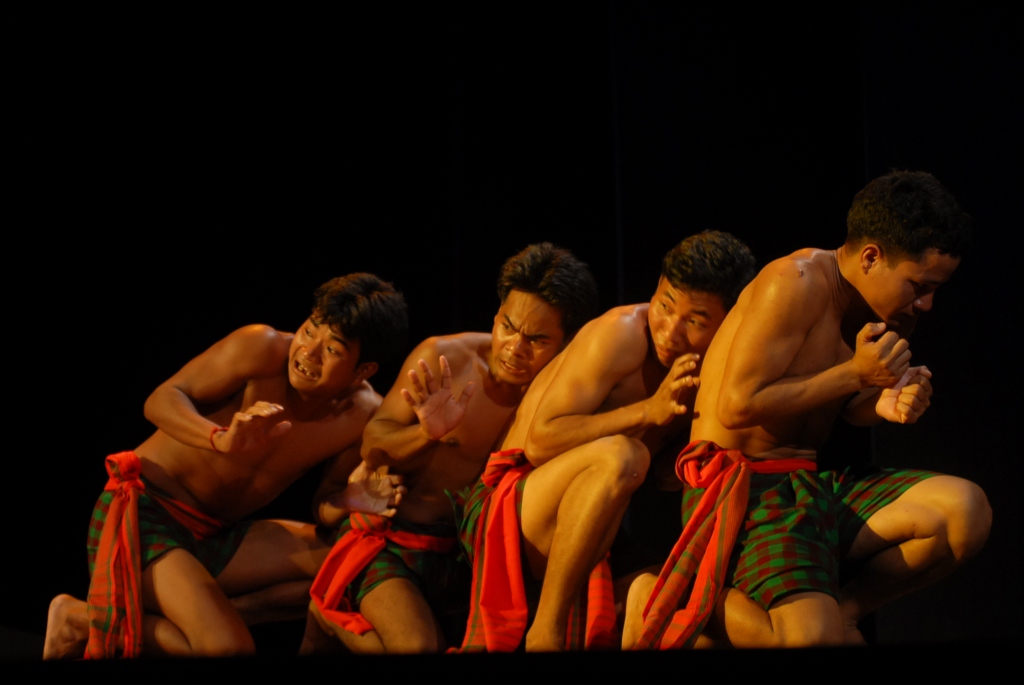
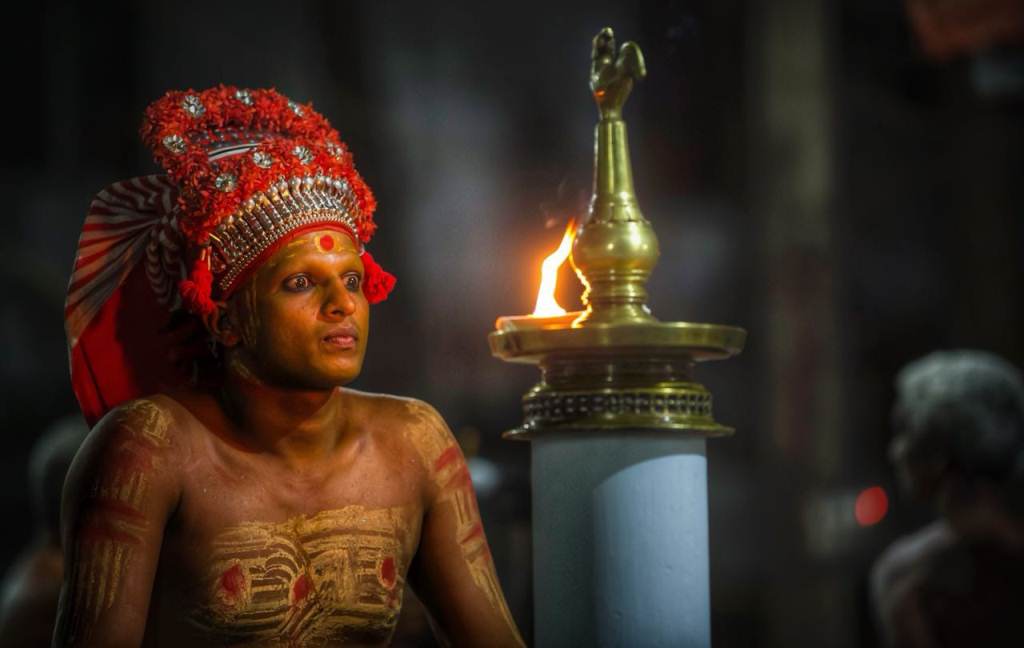
Seraikella Chhau – Based on martial arts, the Seraikella Chhau follows the tenets of Natya Shastra as propounded in our scriptures. The use of masks is its uniqueness and the dancer uses these to clarify and depict the theme of the dance. The dancer expresses different emotions, notions and ideas with the drum beats (Tal) and musical rhythms. The dance runs in three phases i.e. Sthayee (Permanent posture), Madhyala (Intermediate movements), and Drut (Faster movements). Various topics from Ramayana and Mahabharata, abstract ideas, and common social incidents form the subject matter of these dances.

Mayurbhanj ChhauMayurbhanj Chhau dance form has a long history. Originally a tribal dance, which originated from the forests of Mayurbhanj, Odisha, in the 18th century, it got the status of a martial art form in the 19th century.

Slowly & steadily Mayurbhanj Chhau left its martial character and got mellowed. Under the royal patronage it received proper attention & direction and showed a bright future and utmost perfection as a dance of excellent style in the field of eastern art and culture of India. Mayurbhanj Chhau is performed without masks and is technically similar to the Seraikella Chhau.

The Performances

Jatraghat It is a musical offering that evokes the gods and marks the beginning of a Seraikella Chhau & Mayurbhanj Chhau dance performance.

Radhakrishna by Govind Mahato & Veena Choudhary (Seraikella Style)

In this particular dance composition Krishna’s mellifluous flute forms an intrinsic part of the love imagery.

Hansa by Satish Kumar Modak

This depicts the beauty of the stately swan as it swims in its natural habitat of water.

Dandi by Niroj Kumar Mohanta & Phudan Majhi (Mayurbhanj Style)

This episode is taken from the Upanayana ceremony of a Brahmin boy.

Mayura by Sukant Acharya (Seraikella Style)

The peacock is a bird known for its grandeur and beauty. This bird of extraordinary beauty- its feelings of joy and vanity, and the qualities of grace in its movements are given an anthropomorphic representation.

Geeta by Bibhuti Bhusan Mohanta & Rajkapur Mohanta. (Mayurbhanj Style)

The dance depicts an episode from the Mahabharata, the epic based on the concept of Shrimad Bhagavad Geeta’s Sainya Darshana Yoga.

The Director

Representing the fifth generation in a family of traditional performers who have significantly contributed in the evolution and development of Chhau dance, Sapan Kumar Acharya is steeped in the tradition of Seraikella Chhau. He has inherited the knowledge of this art form from his father Guru Lingaraj Acharya. He has been awarded with Junior and Senior Fellowships from Ministry of Culture, Government of India. He is a visiting faculty of Chhau at Attakalari Movements of Arts, Bangalore, an Artistic Director of Acharya Chhau Nrutya Bichitra, Seraikella, and a Teacher at Triveni Kala Sangam, New Delhi. He has been training students of both dance and theatre for the past 15 years.

The Group

Acharya Chhau Nrutya Bichitra was founded by Late Guru Lingaraj Acharya in the year 1980. Since then the institution has been training several artists in Seraikella Chhau dance. Guru L.R. Acharya was one of the last gurus of the Purthosahi Akhada, one of the eight Akhadas of Seraikella Chhau dance schools. 
Apart from training dancers, the institution has participated in various national and International dance festivals in India as well as abroad like India International Mask Dance Festival, the first international festival and seminar on Dance and Martial Arts of Asia, Yuva Mahotsava, a festival of all styles of Chhau dance, and Chidambaram and Ikeri temples. It has also been selected as one the training centers by the Sangeet Natak Akademi under its project to support to Chhau dance.

Cast & Credits

The Team: Sukant Kumar Acharya, Satish Kumar Modak, Ranjit Kumar Acharya, Shubham Acharya, Govind Mahato, Veena Choudhary, Bhibhuti Bhusan Mohanta, Rajkapur Mohanta, Niroj Kumar Mohanta, Phudan Majhi, Surendra Nath Soren, Yogesh Kumar Shankar, Bhagaban Behera, Shashadhar Acharya

Guru: Sapan Kumar Acharya


Suranjana Dasgupta’s WHEELCHAIR

Playwright & Director: Suranjana Dasgupta

Group: Nirbak Abhinay Academy, Kolkata

Language: Bengali

Duration: 1 hr 15 mins

The Play

Ashim and Joyita lives in their apparently normal household leading a conjugal life which seems to be a normal one, but gradually, their inner turmoil and unnatural co-existence penetrates the audience’s mind. Their attendants Mahadev and Chapala, are also dragged into the collisions somewhat unwillingly. Ashim is a crippled man, sitting all day in his wheelchair, due to an accident. The atmosphere turns claustrophobic when a mysterious apparition of Ashim is seen in the house. Joyita’s mind is troubled by the ghostly presence of a man who looks like her husband and is moving around the house like the past Ashim. She becomes psychologically ill and tries to escape. She provokes Ashim to commit suicide and Ashim turns her attempts to another game of clever torture. The play ends with Joyita’s ailing mind left to choose between the two – natural and the unnatural – where would she go?

Director’s Note

Directing plays for almost 25 years I have had a number of subjects to choose from, so I did social, mythological, historical and other plays. I kept the ‘time’ and ‘society’ as a consideration for choosing the subjects for my plays. The long journey as a theatre director taught me a number of things and brought me to these troubled times, when relationships and conjugal lives of men and women are at stake. A teleplay by a famous writer moved me and sowed the seed of Wheelchair. Though I did not take anything from that story, it somehow inspired me to write about the two characters Ashim and Joyita and their peculiarities. I had a discussion with one of my associates and getting positive inspiration from her, I chalked out the storyline immediately. Many sequences of the play were built during the rehearsals as we went on creating and discarding sequences. The play actually took shape while rehearsing – just like we do in workshops. I kept simple commonplace sentences for dialogues and the entire tension builds up mainly through acting and visual treats for the eye, taking the cinematic license of two similar looking men, at the same time using a dummy which is a novel thing. Apart from the technical marvels, what drove me strongly is the inner tension of the two characters and their collisions which gives the play its uniqueness. I believe in keeping a thriller short, as unnecessary stretching destroys its crispness. So only seven sequences say it all …

The Director & Playwright

Suranjana Dasgupta has acted in lead roles in productions directed by eminent directors of Kolkata. As a singer-actress she made a tremendous impact in Madhab Malanchi Koinya directed by Bibhas Chakrabarty and winning the prestigious West Bengal State Natya Academy award for the best actress in 1988, and in 2006 for Kanan Pisir Japomala. She has done workshops with Peter Brook in 1989, Marcel Marceau in 1986, Jean-Guy Lecut in 2006, and a playwright’s workshop with Alan Brody in 2007. She has written many original plays like Manadasundari, Kanan Pisir Japomala, Tukaalaam Durganaam and Wheelchair.

The Group

Nirbak Abhinay Academy, Kolkata was established in the year 1981 as a mime group by eminent mime artist Anjan Deb. The group participated in Natya Swapna Kalpa twice with their productions Dulai and Aar Ekjon Mahapurush. The group has produced children’s plays like Monikahini, Gachpakhalir Dukkhogatha, Bhusandir Maathe. It has produced Sita Theke Suru and Ratmohana based on Salman Rushdie’s novels and adapted by Sharmila Maitra.

Cast & Credits

On Stage: Anjan Deb, Suranjana Dasgupta, Sharmila Maitra, Anindita Biswas, Tanmoy Mazumdar

Set Design: SuranjanaDasgupta

Set Making: Madan Halder

Music Design: Kathakali Bhattacharya

Music Operation: Koushik Sajjan

Light Design: Niladree Bhattacharya

Light Operation: Raju Dhar

Make-up: Mahammad Israfil

Direction & Script: Suranjana Dasgupta