Ebrahim Alkazi: An uninhibited scholarly Tale of a Towering Thespian
Review by By Manohar Khushalani
The launch and discussion at the India International Centre (IIC) of a multilayered narrative, “Ebrahim Alkazi: Holding Time Captive,” shed light on the life and legacy of Ebrahim Alkazi, a towering figure in twentieth-century Indian theater and visual arts. Amal Allana, Alkazi’s daughter, presents a meticulously researched account of her father’s life, offering insights into his role in shaping the cultural landscapes of Mumbai and Delhi from the 1940s to the 2000s.
Ebrahim Alkazi, renowned as a theater doyen and pedagogue, passed away at the age of 94, leaving behind a monumental legacy in Indian theater. His career spanned an impressive 74 years, during which he directed iconic plays such as Girish Karnad’s “Tughlaq” and mentored generations of actors, including Naseeruddin Shah and Om Puri. Alkazi’s upbringing, education, and early associations with the Bombay Progressive Artists’ Group laid the foundation for his groundbreaking contributions to Indian theater.
As the longest-serving director of the National School of Drama, Alkazi revolutionized Hindi theater with his visionary approach and technical precision. His establishment of the Repertory Company and the School of Dramatic Arts showcased his commitment to nurturing talent and promoting theatrical excellence. Beyond theater, Alkazi’s influence extended to the visual arts, as evidenced by his founding of the Art Heritage Gallery in Delhi with his wife, Roshan Alkazi.
Allana’s biography not only celebrates her father’s professional achievements, but also delves uninhibitedly into his personal life, providing a nuanced portrait of a multifaceted individual. Through interviews, archival research, and personal recollections, Allana, herself a renowned and celebrated theatre director, offers readers a glimpse into Alkazi’s emotional journey and his profound impact on modern Indian cultural history.
The discussion at the IIC, moderated by Naman Ahuja, further enriched the narrative, with Allana engaging in conversation about her father’s legacy and the process of writing his biography. Dramatic readings by two actors, Sonam Kalra and Rehaan Engineer, added depth and resonance to the event, underscoring the theatricality inherent in Alkazi’s life and work.
Overall, “Ebrahim Alkazi: Holding Time Captive” stands as a testament to the enduring legacy of a cultural icon. Allana’s narrative, both enthralling and critically astute, pays homage to Alkazi’s monumental contributions while situating him within the broader context of modern Indian cultural history.
First Published in IIC Diary February-March 2024
Symposium on “Bharatmuni’s Natya Shastra – Tradition and Experimentation” with Professor Bharat Gupt
New Delhi, July 28, 2024: The “Bharatmuni’s Natya Shastra – Tradition and Experimentation” symposium, hosted by Sanskar Bharati’s ‘Kala Sankul,’ was graced by the presence of renowned classical artist and theater theorist Professor Bharat Gupt. His insights on the significance and deep aspects of ancient Indian theater added great value to the event.
In his address, Professor Gupt highlighted the crucial elements of ancient Indian theater. He remarked that while the British sought to revive Indian drama through European theatre during the Islamic period in India, Indian historians have not done justice to the native dramatic traditions. He also expressed concern that successive governments since independence have largely ignored the importance of drama.
Professor Gupt questioned why, from Kashmir to Kanyakumari, there is no memorial for Bharatmuni, the father of Indian theatre, despite India having one of the oldest theater traditions in the world. He praised the linguistic integration in ancient Indian dramas as a unique example of Indian tradition and lamented the lack of due respect due to conflicting historical narratives among scholars.
He stressed the need to unify the two streams of Indian tradition—ancient and urban—and underscored the significance of linguistic integration in theatre. The symposium saw participation from students, professors, playwrights, and theatre practitioners who discussed the necessity of innovation in drama.
Sanskar Bharati ‘Kala Sankul’ organizes monthly symposia on various subjects like music, dance, folk dance, literature, and visual arts on the last Sunday of each month. These symposia, held at the Kala Sankul on Deen Dayal Upadhyay Marg, review and discuss the challenges and integration of Indian art perspectives.
The event was attended by notable artists such as Padma Shri Ram Sutar, Padma Shri Ranjana Gauhar, Bharatanatyam dancer Rama Vaidyanathan, Flutist Pandit Chetan Joshi, Jayaprabha Menon, Abhay Sopori, Meenu Thakur, and Professor Chandan Chaubey.
The success of the symposium was attributed to the efforts of the organizing team, including Coordinator Kuldeep Sharma, Advisor Raj Upadhyay & Shyam Kumar, Assistant Coordinator Raman Kumar, Anjali Kumari, Sujata Kumari, Saurabh Kumar, Shruti Sinha, Vishwadeep, Sakshi Sharma, and Dr. Prashant Upadhyay, Brajesh Bhatt, Dr. Shailesh Srivastava, Brijesh, Shivam, Vijendra and Mani Kumar.
Prominent theatre artists, playwrights, directors such as Professor Chandan Chaubey, Delhi University theater critic Lokendra Trivedi, Senior Social Worker Khulna Sahni, theater director Rohit Tripathi, J. P. Singh and Chandrakanta Tripathi were also present. The symposium was successfully conducted by Garima Rani.
National Drama Festival in Rohtak Showcases Diverse Plays and Talents
Rohtak. Five different plays are being staged in the five-day National Drama Festival organized by Haryana Institute of Performing Arts Rohtak, Pathania World Campus, Zad Global School and Department of Art and Cultural Affairs Haryana. The play “Popcorn” directed by Kedar Thakur of Shimla and written by Ashish Pathak, the play Kambakht Ishq directed by Shyam Kumar of Delhi and written by Satya Prakash Darwa, “Sandhya Chaya” directed by Sunil Chauhan of Delhi and written by Jayant Dalvi, the play “Saiyaan Bhaye Kotwal” directed by Vishaw Deepak Trikha of Rohtak and written by Vasant Sabnis and the play “Bonus Show” directed by Kajal Suri of Delhi and written by Aziz Qureshi will be staged.
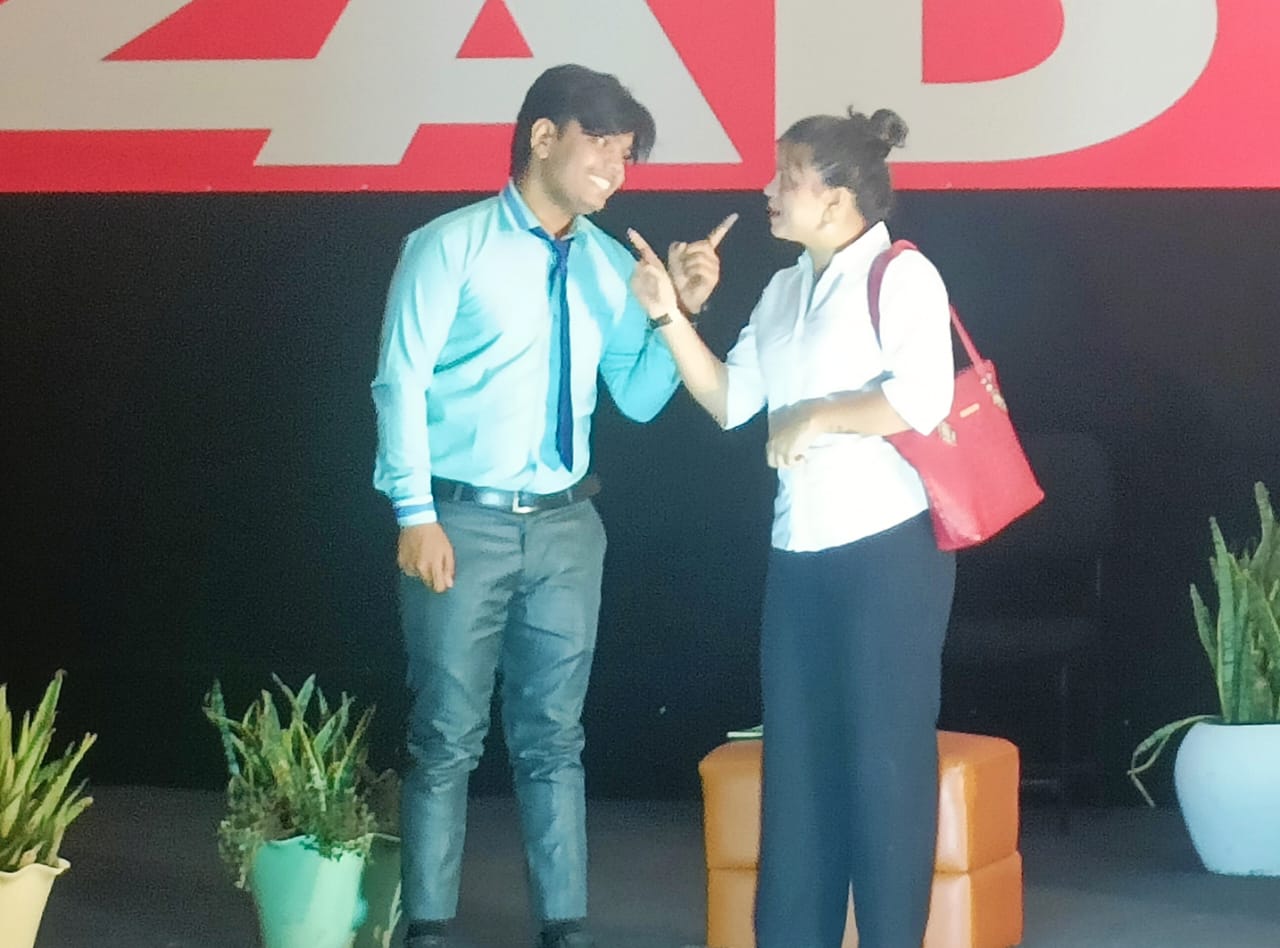
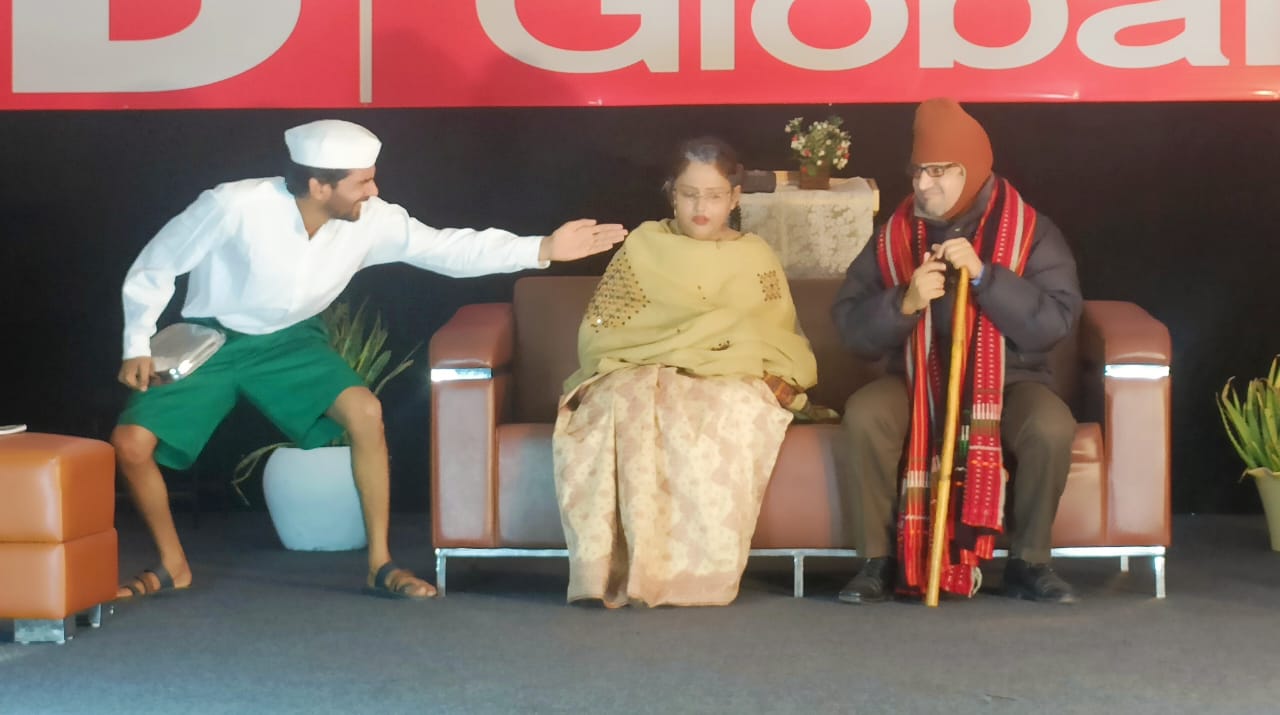
The second evening of the five-day National Drama Festival was dedicated to the presentation of Natsamrat Delhi’s ‘Kambakht Ishq’. In this play directed by Shyam Kumar, the truth and essence of the life of the elderly was depicted in a very interesting way. This presentation full of humor tickled the audience a lot.
The plot of the comedy drama Kambakht Ishq revolves around two elderly people for whom their children do not have time. Due to the busy life and lack of love from children, the elderly try to attract the attention of children in the guise of love. The children’s problems increase when both the elderly people fall in love with each other and start meeting secretly.
The drama was successful in giving the message that people forget that ‘a true companion is needed the most in old age, to share one’s feelings.’ This problem and the struggle of loneliness in old age was seen in this presentation with a touch of laughter.
The actors presented the story of the drama in a very interesting manner and received a lot of applause from the audience. Sanjay Basliyal in the role of Kishan and Munmun in the role of Radha won everyone’s heart with their excellent acting. PK Khyal in the role of doctor, Aman Kumar in the role of Jai, Shivangi in the role of Leela and Raman Kumar as compounder also impressed. Sunil Rathore and Rohit Prasad were the stage managers while Suraj and Lokesh took care of the stage material. Make-up was done by Rajrani and costumes by Payal. Music direction was done by Vansh Rathore and lighting design was done by Natsamrat director Shyam Kumar.
Memorable Plays Staged at Natsamrat’s ‘5th Mumbai Theatre Festival’
The 5th Mumbai Theatre Festival organized by Natsamrat was successfully held from 21st to 23rd June at Creative Adda Auditorium, Versova, Mumbai. The director of all the plays is Shyam Kumar.
On the first day of the Theatre Festival, 21st June at 7 pm, the play Satya Prakash’s “Kambakht Ishq” was staged. This play explained deep themes while making the audience laugh. The story revolves around Jai’s father Kishan and Leela’s mother Radha, who face loneliness due to their children’s busy schedules. They meet at a clinic and start spending time together, which alleviates their loneliness. However, their children misunderstand this relationship and prevent them from meeting, causing both to fall ill again. Eventually, the children realize their parents need each other’s support.
Later that evening at 8:30 pm, the play “The Proposal” written by Anton Chekhov was staged. This play tells the story of a young man proposing marriage to his neighbor’s unmarried daughter. The story becomes more complicated as they argue over property and dogs.
On June 22, at 7 pm, “Haye Mera Dil” written by Ranbir Singh was staged. This play depicts the story of a hypochondriac husband who, due to a misunderstanding, believes he is going to die soon. He plans a wedding for his wife, but she mistakes his behavior for infidelity.
At 8:30 pm, the play “Kuchh Tum Kaho Kuchh Hum Kahen” written by Ashish Kotwal was staged. It tells the story of Anand and Mansi, who have different outlooks on life. Their poignant banter left the audience emotional.
The Natya Mahotsav concluded on June 23 with the play “Kallu Naai MBBS” written by Moliere. This play is about a barber who is always drunk and beats his wife. His wife devises a plan with the help of servants to teach him a lesson.
In all the plays, actors Sanjay Basliyal, Munmun, P.K. Khayal, Aman Kumar, Shivangi, Raman Kumar, Sudhir Khanna, Naveen, Vishwajeet, and Saumya Yadav gave excellent performances. Backstage management was handled by Sunil Rathore and Naushad, stage management by Suraj Singh, makeup by Payal and Raj Rani, costumes by Chhobi Saha and Rohit Prasad, and lighting was designed by Shyam Kumar.
The audience greatly appreciated these plays and praised the messages contained within them.
“Sankhaninda: An Innovative Ode to Jyotiprasad Agarwala’s Legacy”
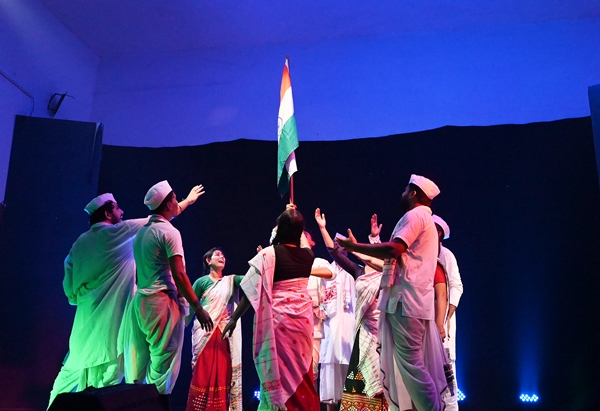
Dr Subrat Jyoti Neog’s latest play, Sankhaninda (The Chant of Conch), is not just an experimental endeavour interpreting the life and creative genius of Jyotiprasad Agarwala but a profound tribute to a man who was a renowned Assamese polymath – a poet, lyricist, playwright, composer, thinker, prose writer, music director, producer, and the creator of the first film from North East India. Despite his prolific creative journey, following Mahatma Gandhi’s principles, he plunged into the freedom struggle, faced imprisonment, later changed his stance, and joined the revolutionary group ‘Mrityu Bahini’ (Commando of Death). During the freedom movement days, he penned and composed numerous patriotic songs sung by volunteers, still resonating in the Assamese consciousness. His life and works continue to inspire and connect with us; this play is a testament to that.
Dr. Neog’s daring approach to Jyotiprasad’s spirit, philosophy, ambition, aspiration, determination, and ability to inspire others towards the noble cause of independence, as reflected in his writings, is a testament to his creative prowess. The play’s slender plot thread involving young artists rehearsing a musical based on Jyotiprasad’s works presented unconventionally is a masterstroke. The writer-director’s initial hesitation, fearing the public might not accept his avant-garde approach that defied prevailing norms, adds to the intrigue. Lost in thought, he suddenly envisioned Jyotiprasad appearing before him, engaging in a dialogue and debate. This discourse led them to explore Jyotiprasad’s life, and the playwright discovered his life and works’ inherent connection and amalgamation. The drama culminated on a positive note, encouraging creative souls.
Dr. Neog had little dramatic material to use for writing the play, except for a few incidents from Jyotiprasad’s life. Most of the dialogues reflected Jyotiprasad’s thoughts, which Dr. Neog tried to dramatise. The dialogues were mainly taken from Jyotiprasad’s writings, allowing the audience to connect with the essence of the legend. He also added that Jyotiprasad wrote the tragic stories of Manbar and Tileshwari, emphasising that the lesser-known Assamese fighters who sacrificed for India’s freedom struggle should get proper recognition. These two stories injected a few dramatic moments into the play.
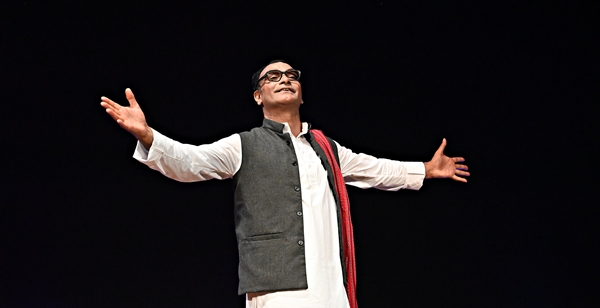
Sangeet Natak Academi awardee Gunakar Dev Goswami directed the play, facing a challenge due to the stage’s limited facilities and the content’s non-traditional dramatic elements. However, his extensive experience helped overcome the stage-related limitations. Goswami portrayed Jyotiprasad himself and gave a believable performance. As a socio-cultural icon revered in Assamese hearts and minds, describing such a sensitive and respected character demanded great reverence from the actor, a quality Gunakar Dev Goswami demonstrated. Nevertheless, he could have added more vocal variation to his dialogue delivery.
The most creative aspect of the direction was the innovative presentation of Jyotiprasad’s songs and poems. Goswami, who also composed the music, preserved the original texts and tunes but creatively utilised the songs to enhance the presentation, adding variety. Such creative endeavours inject vibrancy into tradition and encourage the younger generation to explore our heritage curiously. This innovative writing and presentation approach made the production so successful.”
Dramatic Showcase: Masters in Performing Arts (Drama) Present’s Two Plays “Kaalchakra” and “Bank Manager” at Rabindranath Tagore University
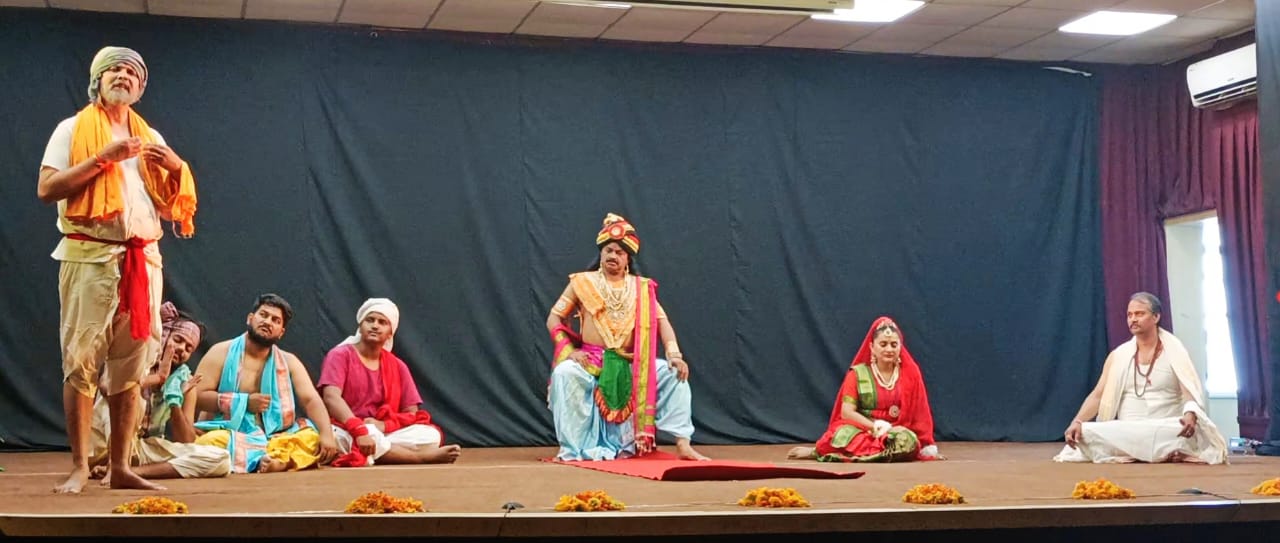
A three-day workshop (28 to 30 in 2024) was organized at Rabindranath Tagore University under the Faculty of Sanskrit Prachaya Bhasha Kendra Manviki Udaar Kala Sankay. Its participants were students of Masters in Performing Arts (Drama). Two plays were prepared by them. The play “Kaalchakra” written and directed by J.P. Singh and the other play “Bank Manager” written by Anton Chekhov and directed by Shyam Kumar were staged in the Sharada Auditorium of the University on 30 May. The play “Kaalchakra” is based on the legend of Raja Bhoj and Gangu Teli, in which the lead roles were played by J.P. Singh as Raja Bhoj and Tarun Jalota as Gangu Teli. Vaidyanath Sharma as Vaidya and Amatya, Vashishtha Upadhyay played the role of Ang Raj, Jyoti Upadhyay as Chandramukhi, Ashfaq as Musician, Vansh Rathore as Singer, Neeraj played the role of Dwarpal and Lights Designed by Shyam Kumar. The play Kaalchakra was started with a Jarjar Puja as per the rules of Natyashastra. A unique amalgamation of music and acting was seen in the play.
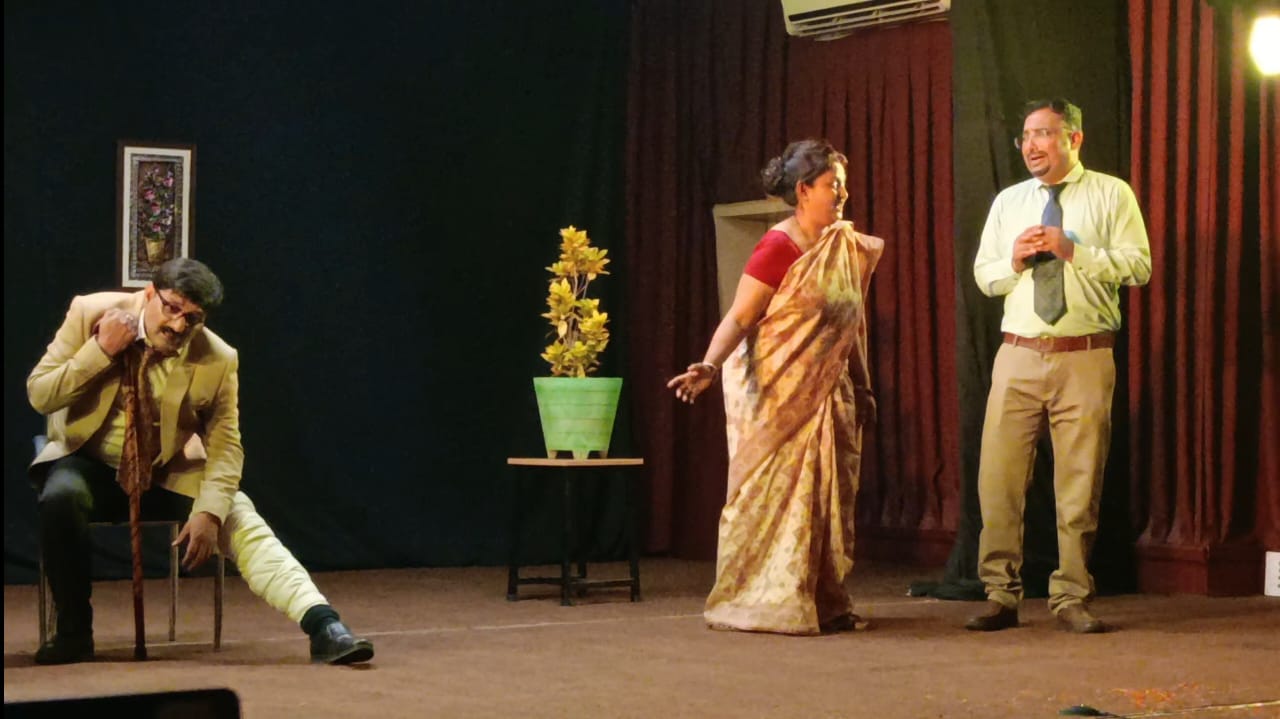
The second story full of humour “Bank Manager” is about a woman who comes to a bank, forces the manager to fulfill her unreasonable demands, the play is full of some humorous exchange of dialogues between the two and ends with the manager literally losing his mind. Nagendra Sharma played the role of the bank manager, the role of the woman was played by Shraboni Saha, Sachin Verma played the role of the assistant manager, music was directed by Vansh Rathore and lighting was designed and directed by Shyam Kumar.
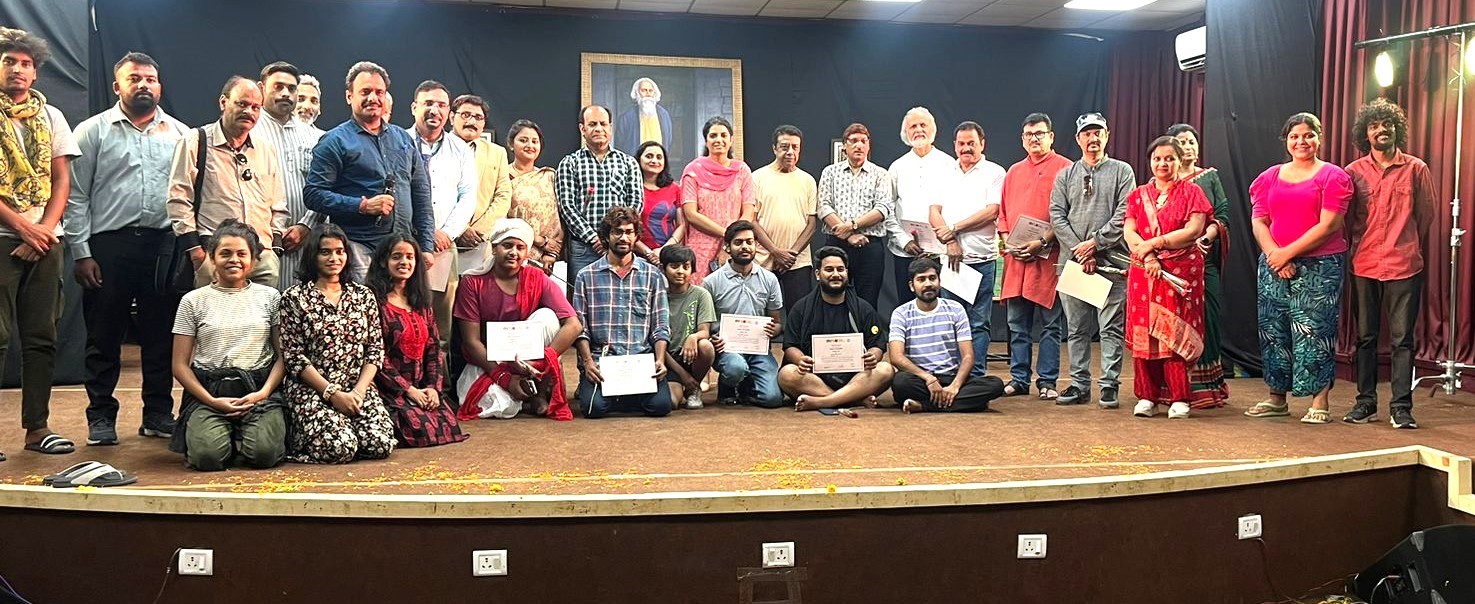
In both the presentations, senior theatre artist and former director of M.P.S.D. Alok Chatterjee and the Vice-Chancellor of the University Dr. Aditi Chaturvedi Vats and the Vice Chancellor of the University graced their dignified presence as the chief guests. Alok Sir appreciated the play and praised the acting of all the artists. Dr. Aditi Chaturvedi Vats called the students’ presentation commendable and called it the heritage of the University. All the students were given certificates after the play. The coordinators of this workshop were Dr. Sanjay Dubey and Dr. Savitri Singh Parihar, co-coordinator Dr. Deepak Tiwari, cooperation from the Faculty of Humanities and Liberal Arts and Mr. Sharad Mishra, Abhishek Deshmane.
आत्महत्या और संस्कृतियों का विमर्श / अनिल गोयल
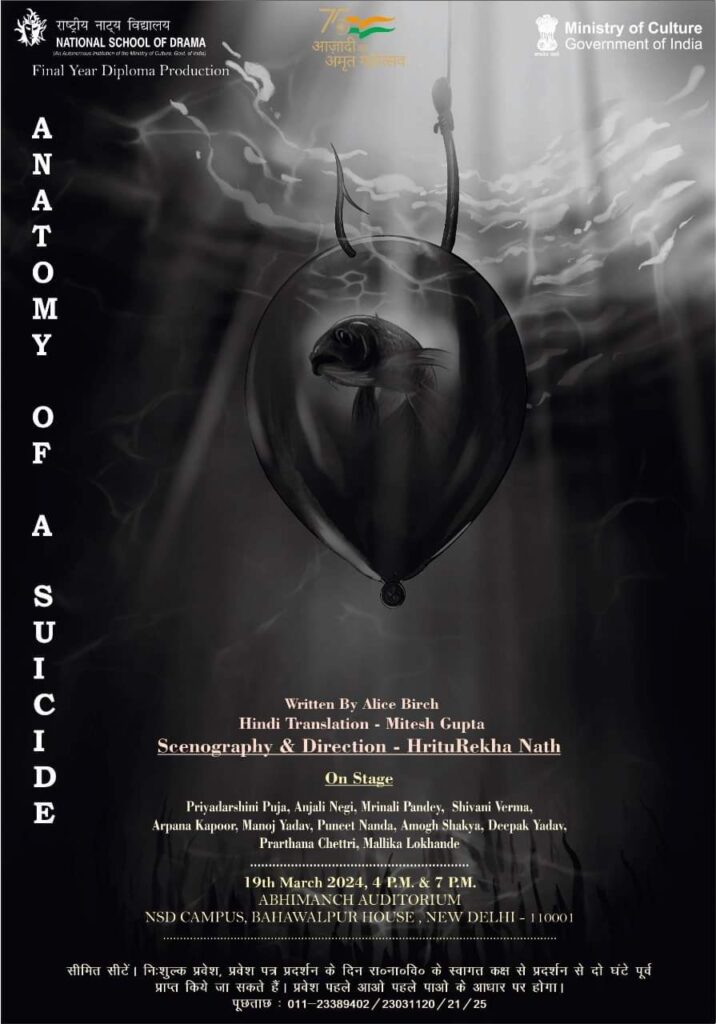
आत्महत्या और संस्कृतियों का विमर्श: NSDडिप्लोमा की विवेचना
समीक्षा: अनिल गोयल
(लेख थोड़ा ज्यादा लम्बा हो गया है, इसे पढ़ने के लिये थोड़े धैर्य की आवश्यकता रहेगी)।
मनुष्य द्वारा किये गये पापों का हिसाब उसे कभी ना कभी चुकाना ही पड़ता है, ऐसा सभी संस्कृतियों, सभ्यताओं, वैचारिक धाराओं और धर्मों में कहा गया है। हालाँकि, पाप की परिभाषा सब की अपनी-अपनी है, और समय या काल की भी सबकी अपनी अलग-अलग परिधियाँ हैं। जहाँ हिन्दू धर्म पुनर्जन्म में विश्वास रखता है, वहीं कुछ अन्य धर्म पुनर्जन्म की धारणा में विश्वास नहीं रखते। ऐसे में, आत्महत्या के विषय पर भी सबकी अलग-अलग अवधारणाएँ होना स्वाभाविक ही है। इस स्थिति में, यह प्रश्न समीचीन है कि क्या एक ही परिवार की तीन अलग-अलग पीढ़ियाँ, किन्हीं कारणों से अपने-अपने काल में एक-के-बाद एक आत्महत्या करने के लिये विवश हो सकती हैं?
पश्चिमी विचार-पद्धति में ‘पिता के पाप पुत्र तक’ पहुँचने, और पुत्र के द्वारा पिता के पापों की सजा भोगने की परिकल्पना है, जो भारतीय विचार-पद्धति के एकदम विपरीत है, जहाँ एक व्यक्ति को अपने पापों की सजा स्वयं ही भुगतनी होती है, चाहे किसी भी जन्म में क्यों ना हो। डकैती के कृत्य के लिये वाल्मीकि के परिवार ने उसे ही जिम्मेवार ठहराया था! “पिता के पाप” की अवधारणा बाइबिल में आती है, और उससे पहले के पुरातन पश्चिमी लेखन में भी दिखाई देती है। पाप के एक पीढ़ी से दूसरी पीढ़ी तक स्थानान्तरित होने की अवधारणा पश्चिमी साहित्य, फिल्म और यहाँ तक कि लोक-संगीत में भी पाई जाती है।
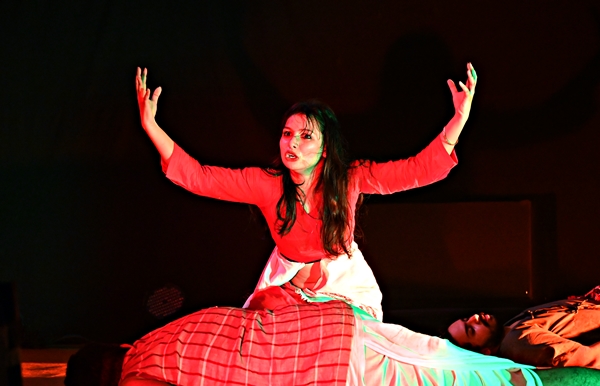
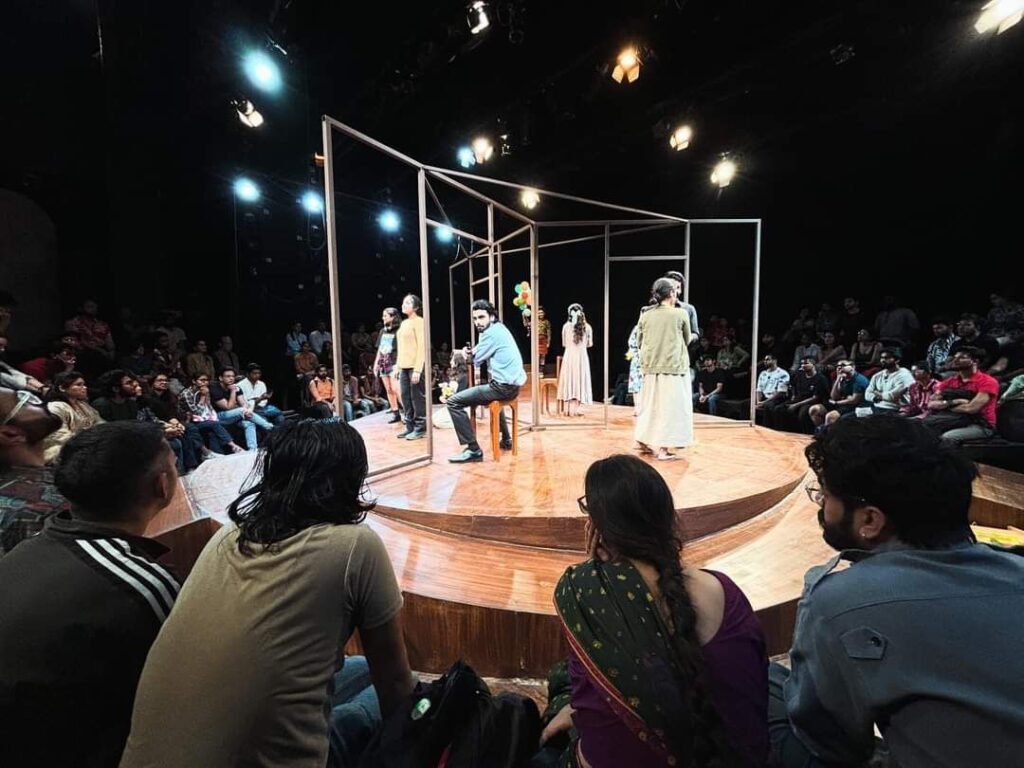
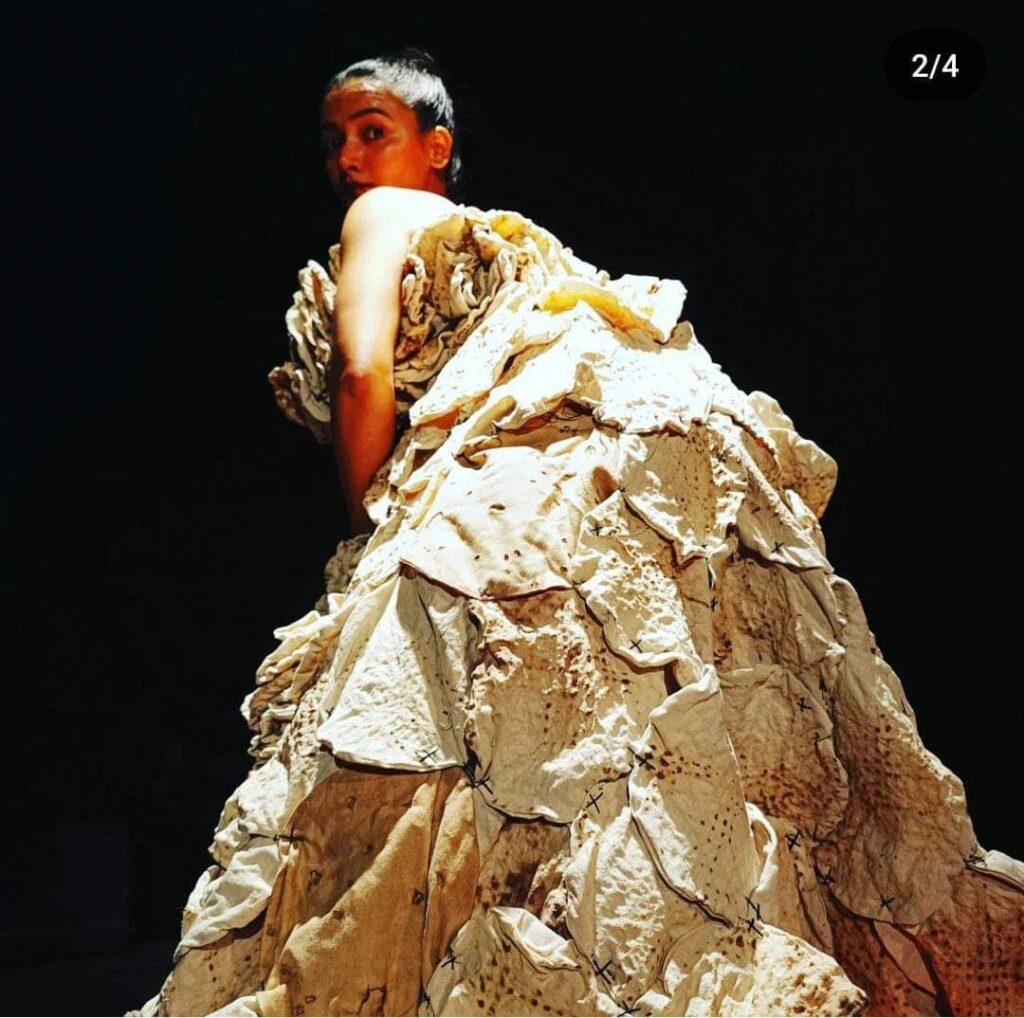
पश्चिम में पुनर्जन्म की परिकल्पना नहीं है, तो उन पापों की सजा को तो व्यक्ति की सन्तानों को ही भुगतना होगा! अर्थात, पाप किसी ने किया, और सजा किसी और ने भोगी! वही चीज ऐलिस बिर्च ने अपने इस नाटक में उठाई है, हाँ, उन पापों के पिता से पुत्र को स्थानान्तरित होने को, माँ से पुत्री को स्थानान्तरित होने में परिवर्तित कर दिया है। हालाँकि यह भी तथ्य है कि विश्व भर में महिलाओं से कहीं अधिक संख्या में पुरुष आत्महत्या करते हैं। आत्महत्या का एक रूप भारत के कोटा नगर में युवा विद्यार्थियों के द्वारा किये जाने वाली आत्महत्याएँ भी हैं। उन पर भी कोई दृष्टि पड़ेगी, ऐसा विश्वास किया जा सकता है। राष्ट्रीय नाट्य विद्यालय (रानावि) की तीसरे वर्ष की छात्रा रितुरेखा नाथ ने अपनी डिप्लोमा-प्रस्तुति के लिये आत्महत्या के विषय पर आधारित एक ऐसा ही नाटक चुना, जिसमें माँ, उसकी बेटी और फिर उसकी भी बेटी आत्महत्या की सन्त्रासित दशा से गुजरती हैं। नाटक ‘एनाटोमी ऑफ अ सुसाइड’ युवा ब्रिटिश लेखिका ऐलिस बिर्च के द्वारा लिखा गया है, और पश्चिम में काफी खेला जा कर बहुत चर्चित भी रहा है। वर्ष 2019 में राष्ट्रीय नाट्य विद्यालय (रानावि) में प्रवेश लेने वाले विद्यार्थियों को विद्यालय के अपने पहले ही वर्ष में करोना की विभीषिका का सामना करना पड़ गया था। तीन वर्ष की शिक्षा पाँच वर्षों में पूरी हो सकी, और शिक्षा पूरी हो जाने के बाद प्रस्तुत किया जाने वाला इनका डिप्लोमा, जो वर्ष 2022 में होना चाहिये था, इस वर्ष 2024 में पूरा हो पाया है। इस वर्ष के आठ में से चार डिप्लोमा प्रस्तुतियाँ देखने का अवसर मुझे मिला। और संयोगवश, वे चारों ही प्रस्तुतियाँ विदेशी कथानकों पर आधारित रहीं। यह रानावि के अध्यापकों की दूरदर्शिता का ही परिणाम है, कि वहाँ के विद्यार्थी कुछ नये विदेशी नाटकों को कर पाने का अवसर पाते हैं… अन्यथा हिन्दी में विदेशी नाटकों का किया जाना प्रायः ब्रेख्त, मोलियर और चेखोव तक ही सीमित रह जाता है। इन या अन्य किन्हीं पुराने पश्चिमी लेखकों के नाटकों में कोई कमी निकालना मेरा उद्देश्य नहीं हो सकता। लेकिन हमें वहाँ के, और भारत के भी, समकालीन लेखन पर भी तो ध्यान देना ही होगा ना! डिप्लोमा के लिये नाटकों के चयन के विषय में रानावि के डिजाईन की विशिष्टता वाले विद्यार्थियों से मेरी बात हुई है। वे बताते हैं कि नाटक चुनने के लिये उनकी अपने अध्यापक-मण्डल के साथ चर्चा हुई, जिसमें कुछ विद्यार्थियों ने बोला कि वे रानावि में आने के पहले तक भारतीय नाटकों पर ही काम करते रहे हैं, विदेशी नाटकों, विशेषकर आधुनिक पश्चिमी नाटकों पर उन्होंने काम नहीं किया है; ऐसे में, उन्हें अपने डिप्लोमा के लिये किसी विदेशी नाटक को प्रस्तुत करने की अनुमति दी जाये। लम्बे विचार-विमर्श के बाद अध्यापक-मण्डल ने उन्हें अपने चुने हुए विदेशी नाटकों को प्रस्तुत करने की अनुमति दी। साथ ही, उन्हें अपने डिप्लोमा के लिये अल्पकालिक, ‘एक्सपैरिमैंटल’ नाटक के स्थान पर पूर्णकालिक नाटक को भी तैयार करके प्रस्तुत करने की अनुमति दी। रजनीश मन्नी, शेखर काँवट, ओवैस मुहम्मद खान और रितुरेखा, सभी का यही कहना था। एक नई दृष्टि अपना कर, इन दोनों ही बातों के लिये अनुमति देने के लिये रानावि के अध्यापक बधाई के पात्र हैं! रितुरेखा कहती हैं, “प्रशिक्षण-काल में हमारे बैच के साथ वैस्टर्न या मॉडर्न को ले के ज्यादा बातचीत हुई है… यह भी एक कारण हो सकता है, कि हमारे आठ में से पाँच डिप्लोमा वैस्टर्न प्लेज के थे। हमारे अध्यापकों ने वैस्टर्न प्लेज पर हमें ज्यादा बताया… हम लोग भी, ट्रेडिशनल समाज से होते हुए भी, शायद नयेपन को ढूँढ़ते हुए वैस्टर्न प्लेज पर पहुँचे होंगे…” इसमें प्रश्न हिन्दी में आज लिखे जा रहे नाटकों पर भी उठता है। हिन्दी सहित अन्य भारतीय भाषाओं में नाट्य-लेखन की एक विशिष्ट शैली है, जिससे बाहर हमारे नाटक प्रायः नहीं निकल पाते हैं। ऐसे में, विद्यार्थियों को डिप्लोमा के लिये विदेशी नाटक कुछ अधिक उपयुक्त भी नजर आने लगते हैंक्योंकि वे “अधिक क्रिस्प होते हैं, एब्सर्ड नाटक करना हो तो वहीं अधिक सम्भावनाएँ होती हैं!” हिन्दी और अन्य भारतीय भाषाओं के नाटककारों को इस बारे में सोचना चाहिये! ‘एनाटोमी ऑफ अ सुसाइड’ बहुत घना अन्दर तक उतरते चले जाने वाला नाटक है! तीन पीढ़ियों का आत्महत्या की स्थिति से गुजरने का सन्त्रास पूरे प्रेक्षागृह में पसरा रहता है, “मैं रो नहीं पाती हूँ… मैं अपने को अन्दर से रीता हुआ अनुभव करती हूँ… मेरी शिराएँ सुन्न पड़ गई हैं…” इस नाटक को देखने के बाद किसी आलोचक ने लिखा था! नाटक में तीसरी पीढ़ी की बोनी का चरित्र दर्द से इतना घिर चुका है, कि वह किसी को अपने दर्द के बारे में जानने भी नहीं देना चाहती! इस एब्सर्ड नाटक में कहीं-कहीं माता और बेटी और उसकी बेटी उन्हीं संवादों को एक साथ बोल रही हैं। अन्य स्थानों पर बार-बार दोहराई जाती दृश्यावली और संवाद… गुब्बारे, कांच के बर्तन में मछलियाँ, एक छोटे से मकान की अनुकृति, फलदार पेड़, मंच पर बिखरे कपड़े… जीवन को जीने की अभिलाषा, सम्बन्ध, निराशाएँ, हताशाएँ, और फिर आत्महत्या…!!! भारत में आजकल कोटा नगर में युवा विद्यार्थियों के द्वारा किये जाने वाली आत्महत्याएँ चर्चा का विषय बनी हुई हैं। क्या ऐसे नाटक आत्महत्या की मनोस्थिति को समझने में मदद करेंगे? हर समाज में कई मनोवैज्ञानिक समस्याएं होती हैं… उनमें हमारी अपनी-अपनी हिस्सेदारी होती है। क्या हमें अपने नाटकों में इसे समझने की कोशिश नहीं करनी चाहिए? यह एक ऐसा नाटक है जो जवाब देने के बजाय कई सवाल खड़े करता है। लेकिन इसने मुझे लगातार दो घंटों तक बाँधे अवश्य रखा। मंच पर ही दर्शकों के बैठने का प्रबन्ध किया गया था, जिससे पिट का सा अनुभव देने वाली व्यवस्था में इंटिमेट थिएटर का आभास हो रहा था। और यह इस नाटक के लिये आवश्यक भी लगा। पारदर्शी दीवारों के द्वारा तीन भागों में बाँटे गये एक घेरे के अन्दर, एक समय में एक साथ ही तीन पीढ़ियों की गतिविधियाँ चलती रहती थीं। छाती के अन्दर तक भेदती हुई तीखी वेदना को दर्शकों को गहनता के साथ अनुभव करवाने के लिये इससे अच्छा और क्या उपाय हो सकता था? नाटक के दृश्यों को देखने में दर्शकों को असुविधा अवश्य हो रही थी, लेकिन इस नाटक को दर्शकों को दिखाना कम और अनुभव करवाना अधिक आवश्यक था…! मंच पर एक ही समय में तीन जगहों पर चल रहे कार्यकलापों से समय की रेखा धूमिल पड़ जाती है, चरित्रों के बीच का दर्द का सम्बन्ध और गहरा जाता है, और पात्रों की वेदना दर्शकों तक सहजता से पहुँच कर उन्हें सुन्न कर देती है। यह नाटक, नाटक के आलेख को पढ़ कर देखने वाला नाटक है, कहानी को समझने वाला नहीं, नाटक के भाव को गहरे से अनुभव करने वाला नाटक है। इस अनुभव को भोगने के लिये मंच की इस प्रकार की संरचना आवश्यक थी, ताकि दर्शक इसे बर्दाश्त कर सकें, नाटक का अनुभव उनके अन्दर गहरे तक सिंच जाये! रितुरेखा कहती हैं, “रानावि के अध्यापकों के काम करने के पोस्ट-मॉडर्निस्ट तरीके ने मुझे बहुत प्रभावित किया था, जिस कारण मुझे ‘एनाटोमी…’ के एक अलग किस्म के आलेख ने आकृष्ट किया। ‘एनाटोमी…’ ने मुझे जैसे पकड़ लिया, ‘मुझे लगा, यही मुझे बोलना है!’ इस आलेख में एक फैमिली स्ट्रक्चर है, और उन तीन पीढ़ियों में एक साथ कैसे बातचीत हो रही है, यह देखने योग्य है! मैं स्वयं तीन पीढ़ी वाले परिवार में रही हूँ; और मेरे दादाजी के चले जाने के बाद मैं उन्हें शारीरिक रूप में उन्हें देख नहीं पाती हूँ, लेकिन तो भी मुझे लगता है कि वो मेरे साथ थे, या अभी भी हैं। इस स्क्रिप्ट को चुनने का मेन मोटिवेशन वहाँ से मिला है, वैसे ही इस नाटक में दीखता है… रहने या ना रहने पर भी तीन पीढ़ियाँ एक साथ जी रही हैं! इसीलिये मैंने यह स्क्रिप्ट चुनी! मुझे हमेशा सायकोलॉजिकल ट्रिगर वाला प्ले ज्यादा पसन्द आता है! आधे अधूरे भी सायकोलॉजिकल और समसामयिक है, लेकिन ‘एनाटोमी…’ का जो राइटिंग है, वो मुझे बहुत ज्यादा पसन्द आया। डिप्लोमा के कारण मुझे यह नाटक एक घंटे में करना था, इसलिए बहुत सारी एडिटिंग करनी पड़ी, लेकिन यदि यह पूरा किया जाये, तो यह एक वंडरफुल स्क्रिप्ट है! मैंने बचपन में शेक्सपियर सहित डिवाइज्ड प्लेज बहुत किये, इम्प्रोवाइज करते-करते डिवाइज्ड प्ले करते थे… शायद वो मेरे काम को प्रभावित किया। आधुनिक काम मुझे बहुत पसन्द आता है। और टॉकेटिव चीज मुझे बहुत ज्यादा पसन्द है… अब्स्ट्रैक्ट, अब्सर्ड…! मैं बहुत पारम्परिक समाज से हूँ, तो यह तो मुझे और भी अच्छा लगा कि मैं अब्सर्डिटी में घुस पाई! त्रिपुरा में बंगाली समाज में चैत्र और वैसाख मास की संक्रान्ति की मध्यरात्रि में शिव जी और काली या दुर्गा की चरक पूजा होती है। उसमें फिशिंग रॉड को खाल में घुसाया जाता है, यह ट्रेडिशनल के साथ अब्सर्ड भी है… मैं जब ट्रांस में चली जाती हूँ, और वह ही तो अब्सर्ड है… एक मनोवैज्ञानिक यात्रा है… तो अब्सर्ड तो मुझे अपनी परम्परा से ही मिला है… मेरे घर में रोज सुबह और शाम को पूजा होने पर धूप जलाते हैं, शंख बजाना, घंटा बजाना… उससे नेगेटिव पॉवर चला जायेगा… तो कंटेम्पररी थॉट में वो साउंड क्या कर रहा है? हमारी साधारण साउंड से वो अलग साउंड है… और वो अब्सर्ड लगता है! तो अब्सर्ड तो हमारी संस्कृति में हैं ही! हमारे आदिवासी इत्यादि समाजों के अनुष्ठान… और वही पारम्परिक अब्सर्ड मेरे मॉडर्न एजुकेशन के साथ मिल कर यह नाटक बना! यह मेरी अपनी इनर सेल्फ एंड थॉट है… वैस्टर्न थॉट से मैं इन्फ्लुएंस नहीं हुई…” और आँखों में कुछ सुनहले सपने लिये, पारम्परिक समाज से आकर अत्याधुनिक पश्चिमी रंग-सिद्धान्तों का अनुसन्धान करने की धुन में लगी इस युवती की आवाज रोमांच और भावावेग से काँपने लगती है! क्या परम्परा और आधुनिक के मेल से किसी नयी नीलम मानसिंह या रतन थियम का उदय होने को है? भविष्य ही इस प्रश्न का उत्तर दे सकेगा! पश्चिम में इस नाटक की प्रस्तुति में मंच को क्रमशः बाएँ से दाएँ तीन भागों में विभाजित किया गया है, लेकिन प्रस्तुति-क्षेत्र को गोल घेरे में बना कर, उस घेरे के तीन हिस्से करके उसकी एक-एक त्रिज्या में एक-एक प्रमुख चरित्र को दिखने का डिजाईन शायद पहली बार रितुरेखा ने किया है। तीन भागों में विभाजित करने का कारण नाटक के आलेख में ही निहित है… आलेख में एक ही पृष्ठ पर तीन अलग-अलग दृश्य एक-साथ घटते हुए दिखाये गये हैं… नाटक को तीन कॉलम वाली शैली में लिखना इसलिए आवश्यक था, ताकि तीनों पीढ़ियों के बीच के काल-अन्तराल को समाप्त करके तीन पीढ़ियों की वेदना को एक साथ दिखाया जा सके! रितुरेखा बताती हैं: “मैंने स्टेज को भारतीय सोच के अनुसार, सर्किल ऑफ लाइफ या जीवन-चक्र के सिद्धान्त के आधार पर डिजाईन किया। नाटक वीमेन-सैंट्रिक है, तो महिला का पेट, जहाँ बच्चा रहता है, जिस से सृष्टि का चक्र आगे बढ़ता है, वह भी तो राउंड है! इंडियन थॉट प्रोसैस भी चक्रीय है, हर चीज घूम कर वापिस आती है… मैंने अपनी कॉस्टयूम क्लास में मारकीन के कपड़े से रोटियाँ बनाईं, उन्हें रोटी की तरह तवे पे सेंका, और उनका गाउन बनाया था! कपड़े की वो रोटियाँ भी गोल थीं। तो मेरे सारे साथी बोले, कि तूने तो रोटियों से स्त्री को दिखा दिया! मेरे इस प्ले के सैट के मॉडल को देख कर भी वे लोग बोले कि तूने तो रोटी बेलने का चकला बना दिया! तो मुझे लगा, कि हाँ, दैट्स दी आईडिया… मैं कर रही हूँ वैस्टर्न प्ले, और मैं भारतीय स्त्री के रोटी बेलने वाले चकले पर ही तो यह नाटक कर रही हूँ! मेरे इस सैट में फर्श तो वहीं पर रहता है, लेकिन दीवारें ही घूम कर आगे चली जाती हैं, जिससे एक्टर्स आगे चले जाते हैं, और उनका एक्टिंग एरिया बदल जाता है! और दीवारें आगे चले जाने पर भी, एक एक्टिंग एरिया में रखा गया घर का मॉडल वहीं स्थित रहता है, वह आगे नहीं जाता… अर्थात, माँ, बेटी और उसकी बेटी आगे चलते चले जाते हैं, लेकिन घर अपनी जगह पर ही रहता है!” तीन कॉलम वाली एक अनोखी ही शैली में लिखे गये इस नाटक को पढ़ना, और फिर उसे समझ पाना बहुत ही दुष्कर कार्य है, लेकिन रितुरेखा नाथ ने इस काम को सफलता के साथ किया। करोल के रूप में प्रियदर्शिनी पूजा, ऐना के रूप में अंजलि नेगी और बोनी के रूप में मृणाली पाण्डे ने तीनों ही प्रमुख चरित्रों को बहुत कुशलता से निभाया। यह एक महिला-प्रधान नाटक है, अतः पुरुषों की भूमिका का गौण रहना स्वाभाविक ही था। मनोज वैरागी (यादव), पुनीत नन्दा, दीपक यादव, शिवानी वर्मा, अपर्णा कपूर, अमोघ शाक्य, प्रार्थना क्षेत्री और मल्लिका लोखंडे ने अन्य भूमिकाएँ निभाईं। प्रकाश परिकल्पना रितुरेखा के सहपाठी रजनीश मन्नी की रहने वाली थी, परन्तु उसके बीमार पड़ जाने पर रितुरेखा की एक वर्ष-वरिष्ठ सहपाठी तमिलारासी आनन्दवल्ली ने की, संगीत अभिषेक कौशल ने दिया। हिन्दी अनुवाद मितेश गुप्ता द्वारा किया गया है, ड्रामाटर्जी प्रेरणा जोशी की, और दृश्य परिकल्पना सैट-डिजाईन, परिधान इत्यादि रितुरेखा नाथ ने ही किया था।
Triumphant Tale of Love and Laughter: ‘Mirza Saheb Pyar Ka Dushman Haye! Haye!
What happened when despite all the efforts of Mirza, he could not break the relationship of his daughters Saba and Fiza with their lovers Farhan and Akhtar?
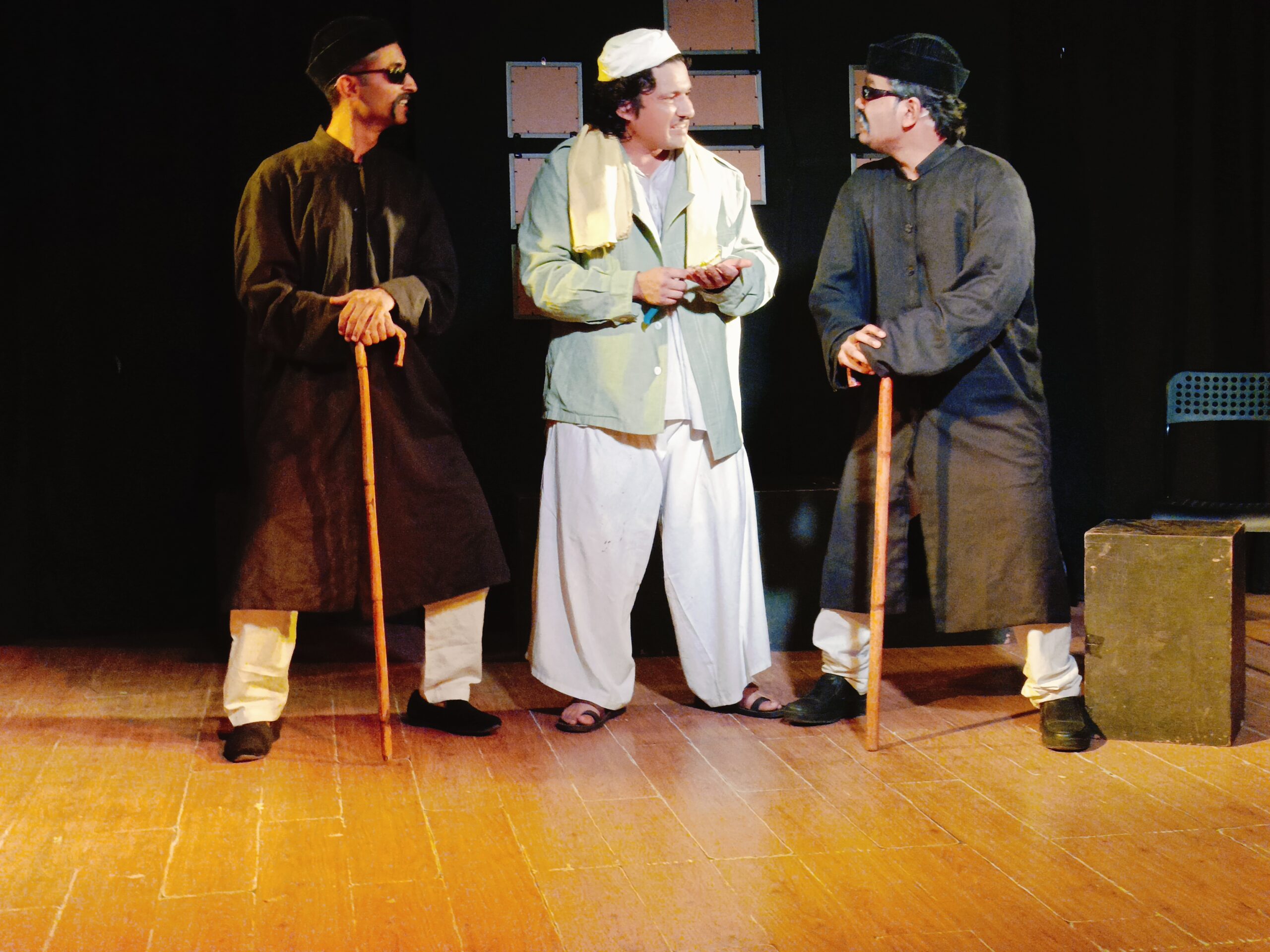
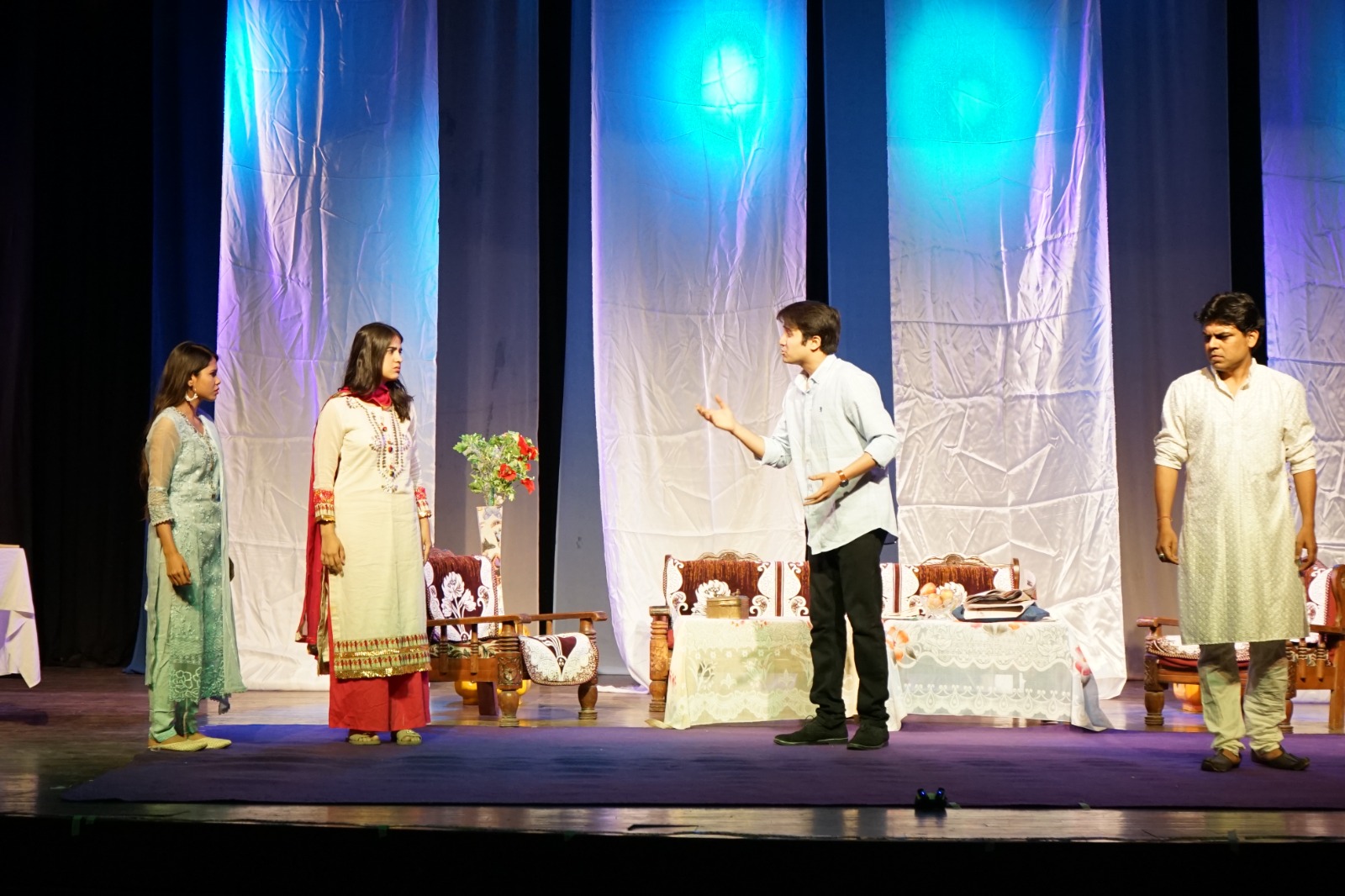
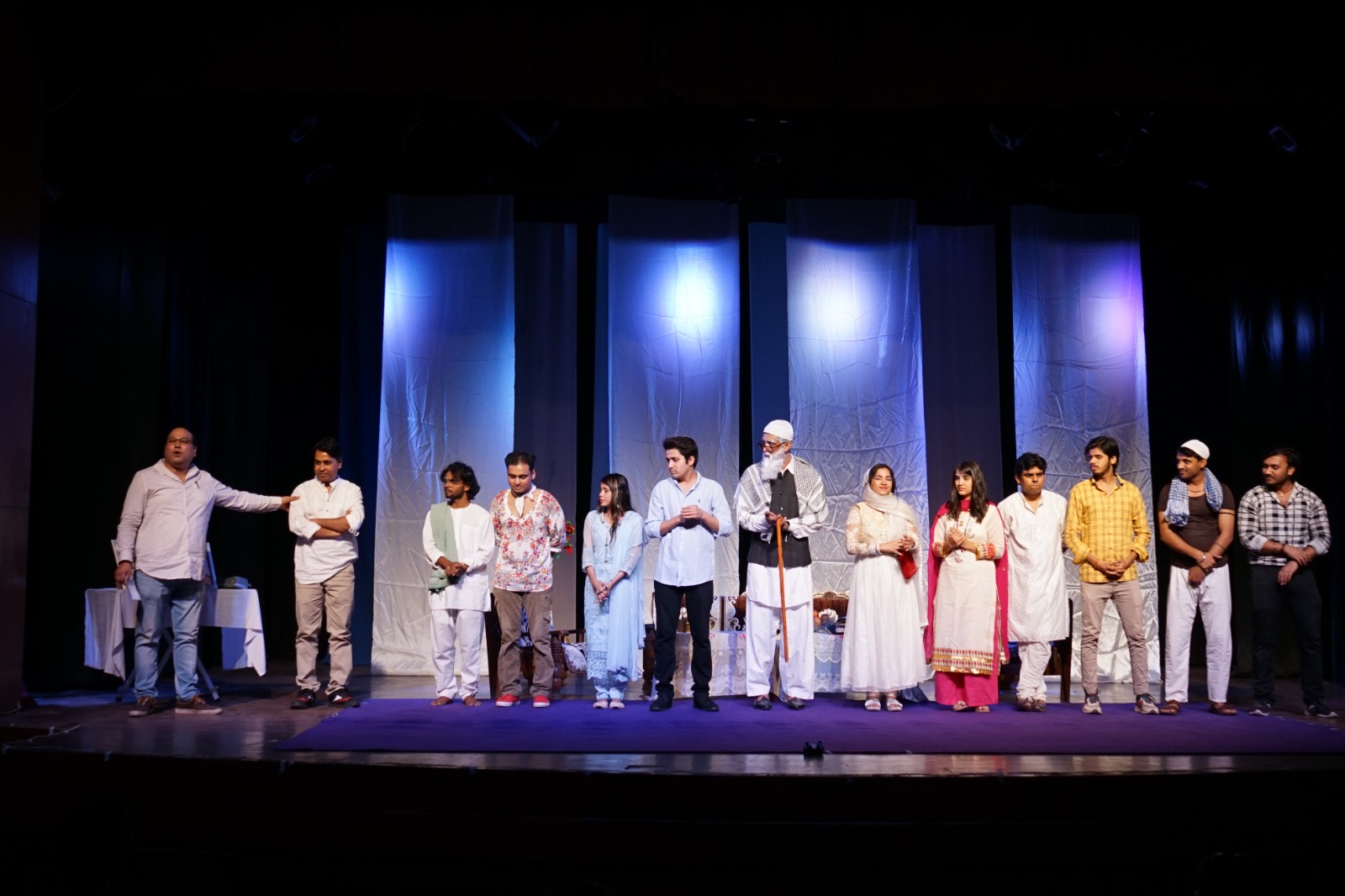
The Comedy Play ‘Mirza Saheb Pyar Ka Dushman Haye!Haye!’ written and directed by Ashraf Ali was staged in LTG Auditorium, Mandi House, New Delhi on 5th May 2024 at 4:30 p.m. The laughter and applause of the audience sitting in the auditorium shows that the audience liked the play very much.
Mirza (Azad Sherawat) who does not want to marry his two daughters Saba (Noor Chawla) and Fiza (Shilpa Das) to their lover boys which are Farhan (Ankit Sati) and Akhtar (Naresh Kumar). Mirza’s wife is Khalida (Shalini Sita) and a hard-working servant is Fakhru (Ritesh). Every scene of the play was very connected due to which the audience remained connected till the end of the play. The audience appreciated the acting of Armaan (Chirag Goyal). The acting of Sharafat Ali (Vishal Shukla) was good. Every character played its role well. Fakhru’s character was full of enthusiasm but at some places his behavior towards his master seemed too loud. Many times an issue was being repeated again and again, which could lead to editing. Azad Sherawat’s performance in the role of Mirza was quite strong.
According to the play, the background music was selected by the play’s writer and director Ashraf Ali. The backstage partners were Shikhar Tiwari, Manik Sharma, Vinay Kumar, Rajan Kumar, Simran and Amar Shah. Noor Islam was in videography. The stage decoration and lighting concept further enhanced the scenes of the play.
“Mirza Saheb Pyar Ka Dushman Haye! Haye!” was a hit with the audience! It’s always great to hear about successful theater productions. It seems like the actors really brought their characters to life, and the backstage crew did an excellent job too. The director’s choice of background music must have added a lot to the atmosphere of the play. And kudos to the playwright for crafting such an engaging story.
EMPATHY- A FARCE :A play by Dr. Payal Trivedi
(For performing this play read the corollary at the bottom)
CHARACTERS: Dhruv, Vrushali, Dhruv’s friend
Dhruv- I cannot love you. I have tried a lot vrushali but I cannot.
Vrushali- Just because I have scars on my face!
Dhruv- Vrushali I know what you mean! But I have tried to like u, I mean love ypu . I know you are immensely talented. You have a sweet voice. But…I cannot love ypu and Im sorry.
Vrushali- Dhruv why did you preach to everyone that don’t judge a book by its cover! You cannot love me because you see these scars and…
Dhruv- Vrushali am sorry but I cannot somehow develop feelings for you.
( some days later Dhruv is talking to his friend)
Dhruv- Rishab I know I have to forget her face and love her because we need to love the character not the body but Im helpless. I cannot just overlook her ugliness ans I would not be able to do any justice to her.
Rishab- Amazingly double standard. You talk about the futility of looks and you make the same mistake now!
Dhruv- I am trying.
Rishab- You BETTER.
( A few days later)
Dhruv- Vrushali I will marry you. Come.
Vrushali- Dhruv!!!!!! WHAT HAPPENED TO YOUR FACE??????( IS SHOCKED SEEING HEAVY SCARS ON HIS FACE)
Dhruv- Vrushali EMPATHY is a FARCE. I CANNOT UNDERSTAND YOUR NEED unless I become YOU. Let us start a new venture today. And yes I agree never judge a book by its cover. But cover is the unfortunate first thing that everyone sees. Come Vrushali let us start a new beginning.
The playwright permits theatre practitioners to perform this play Royalty free with one request. Please message us in the comment box if you are interested in doing this play. Also, if and when you schedule your play, inform us and our readers in the comment box about it. Who knows someone might amble into your show after reading your message.
SHIV PARVATI SAMVAD: THE DIVINE MASCULINE AND THE DIVINE FEMININE – A FACE OFF (PART 1)
(Enter Shiva as a mendicant)
Mendicant: O Tripurasundari! How shocking it is to see a paradigm of delicacy as you performing such a rigorous penance! What is it that has provoked you to leave your father’s paradise and come to this snowy wilderness to cause yourself such agony?
Parvati: Salutations to you shree Guru. I am here to fulfil my most coveted desire to marry the Lord of the three worlds!
Mendicant: O! Is it? Yes. Indeed, I must say then your desire is worthwhile.
Parvati: I am so pleased to hear this from you shree Guru. Indeed. I tried explaining this to my mother and father who are so adamant in their standpoint of labelling my desire to marry Shiva as unwarranted!
Mendicant: What? You are performing the rigors to marry SHIVA?
Parvati: Yes. Be doubtless about your listening skills Shree Guru. They are flawless. You have heard it right. It is him…My Lord and Master Shiva. I want to be his ardhangini! It is he whose desire has instigated this urge in me to continue appeasing him with my offerings unless he agrees to bless me by granting my wish to marry him.
Mendicant: And I am sure this all would have been planned by that shrewd Narada if I am not incorrect in my conjecture?
Parvati: Yes. And I am so glad he explained it all to me that I needed to perform this enduring penance in order to win my Lord’s grace in my favour. So blessed will I consider myself if he happens to accept me as his sevika.
Mendicant: Sevika…you mean his slave. What a menial desire! O! Tripurasundari, have you seen yourself ever in the mirror to speak so lowly of yourself! How can you be so unfair to your unparalleled beauty that can stimulate many to submit in front of your unprecedentedly captivating, indomitably alluring visage, your incessantly long black tresses that can powerfully entwine the fate of many who claim to have solved the most intricate of all labyrinths and the above all your charming and graceful personality, your sweet voice that can cause even the best of nightingales to shame! Your doe-like eyes impair the best of sights when they dare to even compete with them! Perhaps you do not seem to have an idea of the unbeatable strength of your indisputable attraction that can hypnotize anybody who proclaims to stay indifferent to Kama’s shoot!
Parvati: Shree Guru. First and foremost, I bow down to you for your kind words. I think I am not worthy of such appreciation as had I been the way you have described myself to me, the god of Love would not have failed in his attempt, the way he did! I am just another ‘ordinary’ woman with no such extraordinary appearance as you have described me. All I can say is – ‘thanks’ for the adjectives you have used for me as they are indeed flattering for any woman and do give her the joy of being “recognized” and the pride of not being “bypassed”.
Mendicant: I do understand Tripurasundari. I do construe the immense sadness caused when a MAN ignores a woman. I heard the way HE did to you! Simply intolerable! To just reject the advances of a celestial nymph as YOU! Horrible! But you know. You need not feel sad. He is just unworthy of your attention. Trust me! He deserves to be left the way he is! My beautiful lady! You simply do not know you can avail ANY MAN you want in your life! What have you to do with such a personality as Shiva? I fail to understand!
Parvati: Shree Guru. Applying conventional wisdom to my understanding of a personality as you, I do acknowledge that if someone as respectable as YOU is stating something, it has to be in my favor as you cannot be unkind towards me and wish ill of me. Having said so, I hereby request you to explain me the cause of your concern. I wish to obtain the Lord of the three worlds as my husband. As mendicants are not oblivious of past, present and future, you, I suppose, already KNOW my association with him is not of this birth but of the past many births and that we are destined to be together as we are inseparable. My earthly form as Parvati is germinated as per the need of the hour but YOU certainly possess the caliber of viewing us in our ardhanareshwara swaroopa the indivisible Shiv and Shakti. Therefore, I am incapable of fathoming your LEELA at the moment shree Guru! What on earth has provoked you to deter me from following my determination? Kindly explain.
Mendicant (laughs): Now that you are so resigned to gather the reason of my objections towards your desire Trailokyasundari! Let me tell you the full-fledged TRUTH that is unavoidable and that has provoked me to express my concern and thwart you from making the same mistake that you’ve been making since eons! Listen to this very carefully. YES. Indeed I am well aware that you are the incarnation of Shakti that is born to seek Shiva. In the countless births that you’ve taken since the inception of this universe, you have been desiring the inseparable UNION of shiva. But…THAT IS NOT THE POINT. The point here is did you EVER OBTAIN SHIVA? The answer is NO. NEVER! You have been perpetually seeking his union and have perpetually remained incomplete. The inception of Shakti as the embodiment of Shiva and yet left to yearn for eternal union with him! Remember your birth as SATI. What did you attain? You had to finally give up your life! Again the chakra continued. Your incarnation as Parvati – And in this birth too…you are being tortured for attaining his union. Remember, even after you unite with him, you will have to bear the agony of separation. It is written in your destiny Parvati, you will have to suffer. You will have to take numerous births and in every birth, you will have to pass through the continual strife for uniting with him. My question is…when you already KNOW this; why on earth do you want to undergo this hellish experience again and again? Why do you not stop this? Why do you agree to experience this travail when you have the power to discontinue this tradition? Why do you wish to endure the torture? Disagree. Tell that ruthless shiva you no longer want to participate in the cycle of striving to unite with him. Tell him to let you be in your original form as Shakti, the power within the shiva that gives him life and the strength to sustain the universe. Deny; Parvati or else you’ll never be able to attain beatitude. You will be incomplete for infinity! Mind you! This division that shiva has inflicted upon you is nothing but a CURSE!
Parvati: Shree Guru, firstly, I express my sincere gratitude to you for your concern. Having said so, I would like to make certain clarifications with the limited intelligence of mine that I have obtained by the grace of many a learned people as you. The ceaseless travail that I have been undergoing since the inception of this universe is the self-imposed strife that I have chosen to experience as without experiencing separation, it is virtually impossible to experience LOVE. Since my feelings for my lord and master are beyond definition, I have always wanted to feel every bit of him. As I happened to recognize myself in him, I yearned for a separate identity; a form different from that of his because only by extricating myself from him could I avail the pleasure of pining for his union and valuing it so dearly. Remaining within him I was simply lifeless. I obtained my “identity” in the process of separating myself from him and became KNOWN as “Shakti”, shiva’s “better half”. I was no longer shiva’s entity- somebody of Shiva. I was another “entity” who was important for defining his existence as he required my presence to introduce himself fully as ardhanareshwara the composite of Shiva and Shakti wherein both are equal- not a tinge of gender difference. So, when we both are one in our separate identities, why do you think I should erase every possibility of the divine union happening through acknowledging the “difference” between the two of us? Why should I refuse to become his ardhangini, his wife when I know that it is only by choosing to be one I would be able to attain the inseparable union with him that would give me the recognition I truly deserve- of becoming indispensable element in his life. Remaining unrecognized within him, I lose the privilege of making my presence felt as the energy in him that keeps him charged for anything and everything, as the divine soul that keeps an entity alive, as the motivation that he avails of breathing life into this lifeless universe. Shree Guru. With utmost humility I hereby declare that Shakti is the requisite of shiva and when despite very well recognizing this, if Shiva chooses to ignore or bypass the eternal truth, it is Shakti’s duty to make him realize her mandatory presence in his life. I am NOT here to give up so easily. I am here to stay. I am here to remind shiva of his promise of enabling me attain unison with him because HE NEEDS ME to keep the cycle of creation and destruction ongoing, to regulate this cosmos or else, everything pertaining to creation will come to a halt. Everything will become unresponsive if the sublime prakriti that is the root of all creation does not unite with shiva to engender CREATION. I hope your doubts are clear shree Guru?
Mendicant: O! So you think so. But, Tripurasundari. Let me tell you. Listen carefully. That shiva does not believe in a tinge of what you have told me right now I suppose. Had he thought the same about your indispensable presence in his life, he would not have caused you this agony. And if he is testing you, I do not see any point in doing so as he already happens to KNOW you since eons. So, why is he being so unkind towards you and why do you take the onus of getting back his short-lived memory of your importance in his life since time eternal is my point. Can’t be he accept you without causing you such misery? What is the point in making you suffer so much? He is behaving foolish that’s all I can say by refusing to accept your pre-destined presence in his life? Can someone who is actually the Lord and the master of the three worlds be so gullible? I doubt in his so-called divinity now after seeing you in such misery!
(To be continued)
For comments (if any) please enter in the box given below.