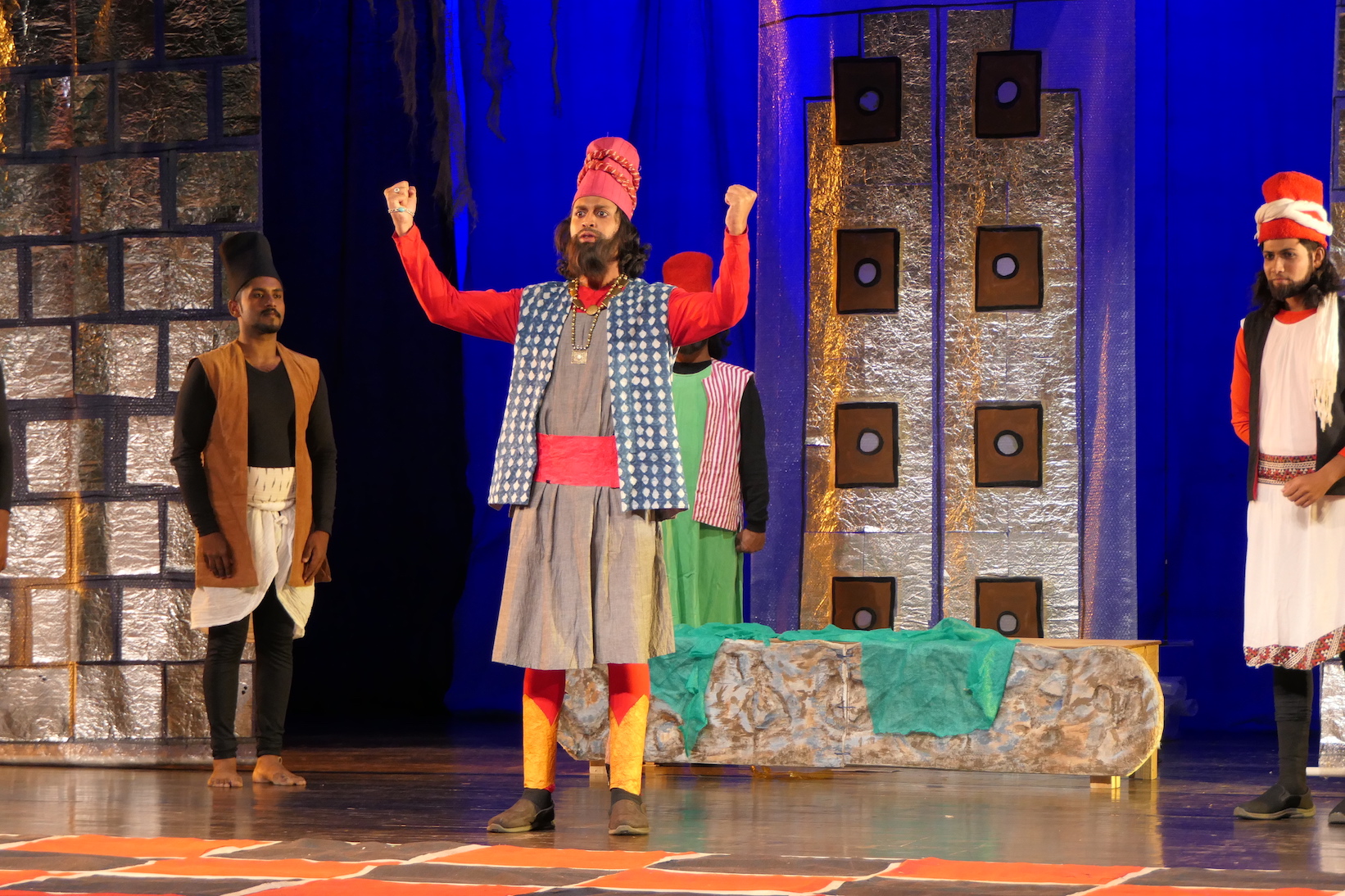
Welcome Zindagi

THE PLAY
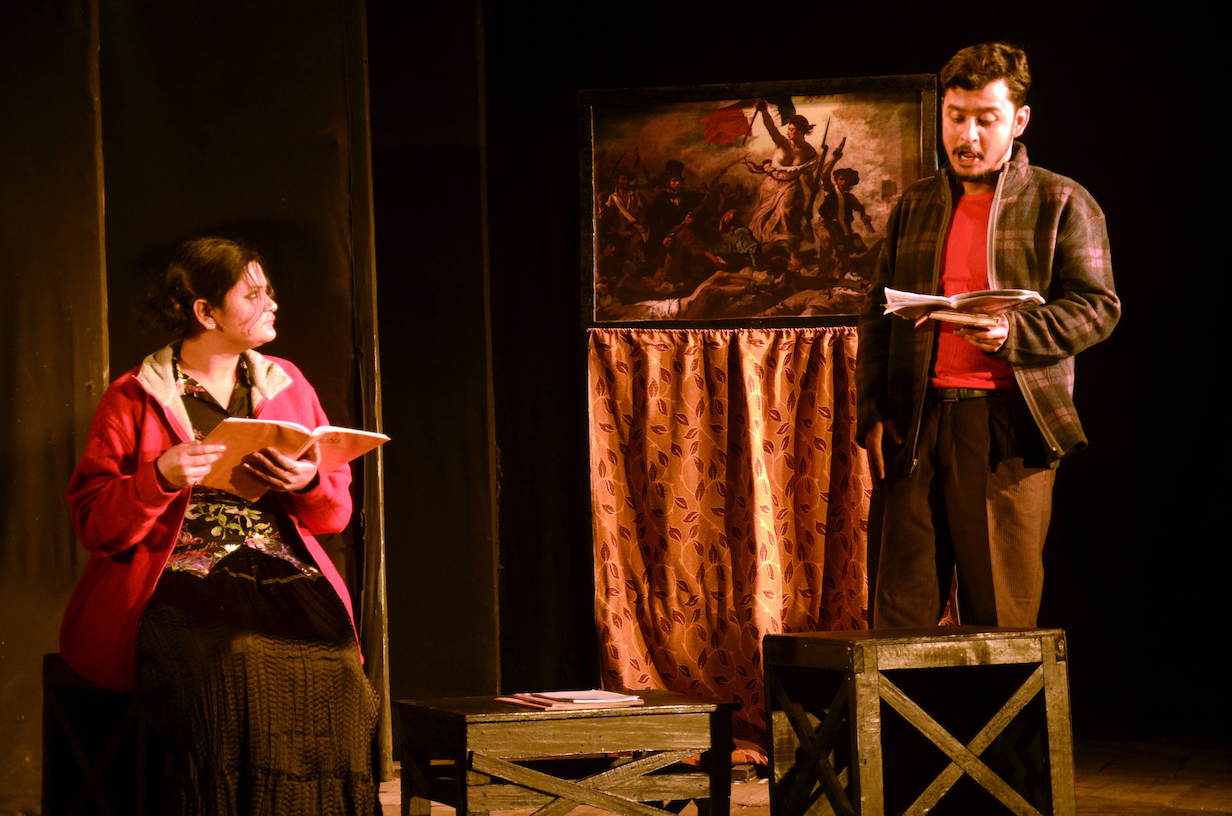
Welcome Zindagi examines the relationship between a Mumbai family- a father, son, and
mother. An ordinary head clerk, Arun Ganatra, is on the verge of retirement. His wife, Bhanu
Ganatra, is a simple but sensible woman. Their son, Vivek Ganatra, has recently completed his
Masters in Business Administration. At the heart of the story is the father-son relationship.
While secretly caring for each other, they have different mindsets that prevent them from
communicating. The play delves into the complex emotions and psychological interplay that
prevents people from accepting another's point of view. In all of this the mother is the bridging
factor, doing her best to set things right. She is also a tongue-in-cheek Sutradhar (narrator) with
the keenest sense of humor.

Director’s Note
Welcome Zindagi is written by Saumya Joshi, a successful young playwright from Gujarat. I
believe that theatre enthusiasts typically watch original Hindi plays and, translations and
adaptations of western plays. Unfortunately, regional plays are no longer being translated into
Hindi and tend to not get the recognition they deserve. The 1970’s-80’s were a time when Indian
theatre was introduced to many plays written in regional languages and translated or adapted into
Hindi. These plays enriched the theater scene and I feel it is time we reintroduced translations
and adaptations from regional languages. Welcome Zindagi is my attempt at this goal.

The Director
Suresh Bhardwaj graduated from National School of Drama in 1980. He recently retired as
Professor of Theatre Lighting from National School of Drama. He is the former Technical
Director of Rangmandal, Bharat Bhavan, Bhopal. He is the founder member of Sambhav- a
theatre group of Delhi. Along with theater he has also worked in films and television. He created
and directed popular programmes like Aap Ki Adalat and Lekhu. He has conducted a number of
theatre workshops throughout the country and abroad. He served as a member of the
International Jury for UNESCO's meet of World Drama School in Sinaia. His major theatre
productions includ Adhe Adhure, Prem Samvaad, and Chatushkon. He is recipient of prestigious
Sangeet Natak Akademi Award and Rosco (UK) award of Chaman Lal Memorial Society.

The Playwright
Saumya Joshi is a Gujarati poet, writer, playwright, director and actor. Joshi founded the Fade-In
Theatre in 2010 and in September 2011 quit his job to pursue the theatre full-time. He is best
known for his plays Welcome Zindagi, 102 Not Out and Dost Chokkas Ahin Ek Nagar Vastu
Hatu, a musical black comedy based on the 2002 Gujarat Riots.
In 2013 he was awarded the Chandravadan Chimanlal Mehta Award for his contributions to
Gujarati theatre. He has also received the Yuva Gaurav Puraskar (2007), the Takhtasin Parmer

Prize (2008- 09), the Ravji Patel Award, the Balvantray Thakor Prize and the Sadbhavna Award
(2014).

The Translator
Rahil Bhardwaj did his graduation in theatre from M. S. University, Baroda and got his PG
diploma from National School of Drama in 2016 with specialization in Acting.

The Group
Akar Kala Sangam (AKS) is a group of artists interested in innovative drama. Many of them
have studied at institutes like NSD, Bhartendu Natya Akademi, and Shri Ram Center. AKS
participates in many workshops to keep its members up to date with different styles of
contemporary theatre. Their artists also get an opportunity to work with global pioneers and
leading theatre experts.
AKS has participated in Bharat Rang Mahotsav (2002 and 2003) with their productions Prem
Samvaad and Saari Raat. Aur Agle Saal performed in 2004 was viewed as one of the best plays
in Delhi and included in the Bhartendu Natya Mahotsav of Sahitya Kala Parishad. AKS has an
extensive repertoire, which it performs throughout the country.

Cast & Credits

Arun Ganatra Ramesh Manchanda
Bhanu Ganatra Anju Jaitley
Vivek Ganatra Rahil Bhardwaj
Lights Kiran Kumar Sharma
Set Execution Ram Pratap
Music Suman Vaidya
Photography S. Thyagrajan
Video Recording Sahil Bhardwaj
Costume and Properties Veena Sharma
Make-Up Ramesh Manchanda, Anju Jaitley & Rahil
Poster and Brochure Rahil Bhardwaj
Asst. Director Suman Vaidya
Playwright Saumya Joshi
Translator Rahil Bhardwaj
Design & Direction Suresh Bhardwaj


Phantom

The Play
Phantom is the compilation of 15 different short pieces. It shows the best of the theatre group HILT’s work in last ten years.Black light theatre is the very special theatre genre based on optical effects of darkness and UV lighting. This genre originated in The Czech Republic in 1955. Costumes and stage props shine in the dark creating visual illusions. Each piece of this show is has a different style – love, autumn, winter or Africa, India, Czech folklore and more.

Director’s Note
To celebrate 10 years of my theatre group HILT Black Light Theatre is a very special moment in my life. I still remember how we started 10 years ago and I am grateful to all my actors and dancers. Especially to Stepanka Pencova, the lady who helped me lead our group all these years. My life is theatre and I cannot imagine living without it. It gives me an immense pleasure to be able to communicate a story to the audience. Sure, my work is still evolving and with every experience I feel my shows are more advanced. Phantom is the biggest part of my heart – it
shows many different sides of my personality and of each person sitting in the audience as well.

The Playwright & Director
Theodor Hoidekr was born in 1980 in Czech industrial town Ostrava. While at the business school, Theodor was secretly visiting a dance school. In the year 2001, he moved to capital city Prague and soon became the lead dancer in many theatre shows. Later he was dancing in TV shows. His biggest love is black light Theatre. After being to different parts of the world, like India, Poland, Malta, Greece, Germany, Slovakia and Ecuador, Theodor Hoidekr formed his own theatre group in 2007 called HILT Black Light Theatre.

The Group
HILT Black Light Theatre, Prague was founded in 2007. The main idea was to put together experienced black theatre actors and dancers and to use these different experiences in a new theatre group. HILT is the abbreviation of "Hoidekr Interactive Light Theatre" – its founder and director is Theodor Hoidekr – and this group often likes to break the barrier and interact with the audience. This group has visited many countries with their show – Malta, Slovakia, Germany, Greece, Poland, Ecuador and India. Their most beloved and successful tour was in 2009 – the Bharat Rang Mahotsav festival in India.

Cast & Credits

Phantom man Theodor Hoidekr
Phantom Lady Stepanka Pencova
Frozen Lady Veronika Ehlenova
Romantic Lady Sophia Silhankova
Black light effects actors Pavla Mlejnkova, Martin Mackovic, Rene Zounar
Costume Designer Blazena Pokorna
Lights and Sound  Frantisek Penc
Playwright and Director Theodor Hoidekr


Mere Gaadi Waale Dheere Gaadi Hank

The Form
Bharud is one of Maharashtra’s important folk forms. Its presentations are a source of joy all over Maharashtra. It is the second most popular folk form after ‘Tamasha’, and is an integral part of annual fairs, Jnaneshwari Paraayan (recital/presentation of Saint Jnaneshwara’s Gita), and Tukaram Gaatha (compilation of Saint Tukaram’s Abhangs). Bharud is not only entertaining, but also spiritually educative with its theatrical, witty and musical qualities. Sant Eknath is known to be the ‘Janak’ of this form.

The Play
The presentation begins with Gan Bharud which comprises of Ganesh Stavan. This is followed by Yedicham Barud i.e. various songs sung by the performers. Next is the Kabir Panth Barud – Mere Gaadi Waale Dheere Gaadi Hank. The act conveys that this body is like a bullock-cart which can move smoothly only if God resides in the heart of the driver. The presentation will end with Ambabaicha Jogra which will talk about the elimination of blind faith, through Araadheen Geet and Bhutancha Geet. This performance is unique in its ability to enrapture the audience with its songs, dances, dialogues, speeches & chorus.

Group Leader’s Note
Bharud is a folk form of Maharashtra that is saturated with dance, drama and music. It conveys the voice of Eknath Maharaj and Kabeer, denouncing the harmful rituals and traditions of the society. Along with these, it also hits hard on current social issues, using mythological and cultural tales, joyful melody, devotional music, and dramatic characterisation. It persuades the audience to self- introspect.

The Group
Shivrudra is an institute that has been actively involved in theatre and cultural activities. It has been working towards the revival, research and growth of the rich folk-art and traditions of Maharashtra. It conducts workshops for the youth. For the past 40-50 years Shri Sant Jnaneshwar Mauli, Bhajani Mandal has been constantly working towards eradication of social discrimination, through Bharud. Today, the youth is willingly participating in this art. The group has received many state and national awards.

Cast & Credits

On stage Sheikh Allamin Umar, Mali Phoolchand Rambhau, Ingole Mukund Anna, Ingole Ramkrishna Hari Mukund, Sawant Balaji Digamber, Shingate Datatreya Bhagwan,
Shingate Vibhishan, Babruvan, Sawant Kashinath Kalidas, Moorey Babasaheb
Bhagwat, Sawant Navnath Dattu, Shinde Vibhishan Shahaji, Barpe Madhukar
Tukaram, Sawant Sajrerav Dayal, Varpe Dagdu Ramling, Pawar Sadhu Narhari,
Varpe Nana Bhau Eknath, Sawant Jaggannath Dayal, Varpe Subash Khanderav,
Sawant Sachin Shivaji, Owhal Ramesh Buwaji 
Backstage Samir Habib
Light design Avinath Khedkar
Stage Chief Shrimant D.M.
Stage assistant Thorat Nanabhau Utreshvar
Team leader Sunil Ginhe


The Restaurant of Many Orders

The Play
The Restaurant of Many Orders, is a dance-drama which focuses on the relationship between human beings and nature. Inspired by Japanese fairy tale writer, Kenji Miyazawa's novel by the same name, Hiroshi Koike created this production where three performers play the role of human beings and the beasts in the forests. Three young men go to the mountain for hunting. The weather becomes bad and there is a storm. They try to take shelter from rain but they can't find a good shelter. Suddenly, they see a restaurant, The Mountain Cat Inn Restaurant. On entering the restaurant the hunters get many written ‘orders’. Feeling strange, they do what is written. Meanwhile, two of them realize that the third man is missing. They enter another room and find delicious food laid on the table. Eating greedily, they find a piece of cloth of the third hunter in the dish. They realize that they have eaten the body of their friend and run out of the restaurant facing the big storm.

Director’s Note
The Restaurant of Many Orders, is a comedy plus a tragedy. Some people think it is a scary story because the hunters open the hidden door of the forest continuously. However, what makes this fact scary? That’s my question. The world is human-centered, but is it of any benefit for us? This production is not the exact rendition of the story of the original novel by Miyazawa. I hope you not only follow the storyline, but see and feel the thought behind it.

The Director
Hiroshi Koike is a director, writer, choreographer, and the president of Performing Arts Institute. After working as a TV director, he established the performing arts group Papa Tarafumara in 1982. Since then he has worked on the production, direction and choreography of 55 works. In 2012, the following year of the big earthquake of 11 th March in Japan, he launched Hiroshi Koike Bridge Project. He had collaborative projects with three ideas of education, dissemination and creation based on creativity. He has produced 9 works until now. His shows have been presented in about 40 countries so far. He has conducted many workshops in Japan and abroad. He has served as the Artistic Director for Tsukuba Performing Arts Center; Chairman of the Asian Performing Arts Forum; and Committee Member of Japan Foundation (2005 – 2011).

The Group
Hiroshi Koike Bridge Project (HKBP) is a theatrical company started on June 2012 by Hiroshi Koike, after he had closed his former theatrical company Pappa Tarahumara, the forefront of performing arts of Japan for 30 years until it was disbanded on 31 May 2012. Not only does HKBP produce performing arts, but also makes use of various media, such as film, photography, installation works and essays. By means of events, lectures, workshops, and educational programs, it aims to educate people who can think through their body and create bridges between the world, time and culture.

Cast & Credits

On Stage Tetsuro Koyano, Ayako Araki, Akira Otsuka
Stage Manager Kazuki Nakahara, Noriko Ohashi
Light Designer Takayuki Tomiyama
Composer Toshio Nakagawa, Kensuke Fujii
Recording Musicians Toshio Nakagawa (Piano), Akikazu Nakagawa (Shakuhachi), Shitamachi Kyoudai (Percussion), Yumi Kimura (Voice)
Mask Designer WayanTanggu, Made Sutiarka
Set Designer Makoto Matsushima
Props Designer Seiichiro Mori
Company Project Manager Hitomi Akuzawa, Noriko Ohashi
Playwright, Director & Choreographer Hiroshi Koike

Based on the novel The Restaurant of Many Orders by Kenji Miyazawa


Deyal Likhon

The Play
The play is set in Berlin, Germany, in early thirties of the past century. Dr. Mamlok, an eminent Jewish surgeon, a patriot who had served in the national army, gets upset on finding the jeopardy of national unity in the name of caste-creed-religion and political beliefs, under the rising of Nazi regime. He and his daughter are molested by Nazi-hooligans, and he is barred from working in his own hospital. He is threatened by his subordinate Dr. Helpach, now a Nazi official, to be publicly molested with his whole family. Mamlok’s pride cannot take it anymore. He commits suicide in order to escape the life of endless torture.

Director’s Note
The play Professor Mamlok written by German playwright Friedrich Wolf, and translated in Bengali by Utpal Dutta inspired me to write and direct this new play Deyal-Likhon (The WallPost). I found this a challenging offer to handle such intricate shades of human emotions and relationships in the whirlpool of socio-political unrest. Its original realistic pattern doesn’t suit my current text, rather demands nearly an expressionistic Epic-Theatre style, with input of a lot of modern theatrical imaginations and innovations. With a great challenge I enjoyed it thoroughly as a director.

The Director & Playwright
The career of Asit Basu as a playwright and director spans over more than half a century in the field of performing arts in West Bengal. Being a close associate, assistant director, and leading actor of the late maestro Utpal Dutta, he established himself with a keen sense of socio-political awareness in his works. He presented legendary stage productions like Kolkatar Hamlet, Raangtar-Mukut, Mrtyuheen Praan, E-Maha Jagaran, Charandas Mla Evam Nautankilal, etc. in the group Theatre Movement. His directorial works like Kirat-Parva and Kusha-Puttalika and his designed production Jaan-E-Kalkatta enjoyed the honour of being showcased in BRM with great appreciation. He has also excelled in the field of Jatra (Traditional Theatre of Bengal), TV and Film, and as a documentary film maker.

The Group
Paikpara Akhor was formed in 2007 under the guidance of Guru Asit Basu. The group endeavours to practice theatre with national and regional cultural identity that is facing a fatal threat due to the world-wide invasion of ‘Global Culture’ in present times. Sri Basu has trained new directors, actors and playwright under his esteemed guidance. As a result Ms. Bhadra Basu has emerged as an eminent playwright-director since 2009 with productions like Jaan-E-Kalkatta, Preetilata, Mala-Chandan etc. This group is trying to bring theatrical awareness amongst children with proper training and practice. Since its inception this group has successfully staged Shiber Gajon, Pratirodh (a Street Play), Jaan-E-Kalkatta, Kathtaamrita, Preetilata, MalaChandan, Dukhiram, Meni(Binodini)-o-Kolkatar Theatre, Dukhiram, Manik, Rupmoti-Gatha, and recent production Deyal-Likhon. The group has performed hundreds of shows altogether, winning the hearts of the audience, all over the country.

Cast & Credits

Dr. Hans Mamlok Asit Basu
Frau Ellen Mamlok Bhadra Basu
Frauline Ruth Mamlok Shubharupa Chatterjee
Rolph Mamlok Tayhagata Caudhuri
Dr. Inge Ruyof Shipra Mukherjee
Dr. Helpachk Shubhankar Ray
Dr. Harsch Asit Baran Mitra
Dr. Karlsen Partha Mukherjee
Ward-Boy Simon Indrajit Midye
Nurse Frau Hedwik Sudakshina Cowdhury
Nurse Shraboni Halder
Frau Ruyof Swapna Bhowal
Verner Djidel Prasenjit Ghosh
The Injured Worker Anup Das
Nazi-Guard Bidhan Halder
Ernst Biswajit Das
Martin Priyanath Mukherjee
Papen Madhukor Guha
Light Design Dipankar Dey
Sound Operation Somnath Das
Script, Design & Direction Asit Basu


Ab Aur Nahi

The Play

Ab aur Nahi has been inspired by Shakespeare’s Romeo and Juliet. The play begins with a fight between Wi-fi and Hi-fi gangs. They are always fighting for their land, their existence and their identity with each other. Finally, Blue Ray explains to both the gangs that what they have been doing all these years is futile. The gangs realize that fights, hatred, ego is all meaningless and worthless. At last, in this play, Time unites everyone.

Director’s Note

In the 21st century, which celebrates Globalization, people have been given the choice to live in a boundary-less world. Yet they are divided by insignificant aspects of religion, culture and community. The futile argument over the superiority of a certain community or caste over the other, has led to a huge setback on the overall development of the nations and humans. It has been the most detrimental to the youth of this world. The youth is equipped with a lot of potential to achieve greater goals, but is held back due to the myopic mind-set and cultural barriers instilled since childhood. It is hoped that it would eventually realise the impediments caused by these petty issues, and approach it in a more radical manner to achieve higher goals.

The Director

The Group

Sikkim Theatre Training Centre is the first centre of the National School of Drama outside Delhi. Situated in the lush green picturesque valley of Gangtok, the centre offers one –year of extensive training in theatre. The first phase of the course is devoted to training and grooming of the participants. The second phase focuses on technical training, Set design, Lighting, Make-up and other aspects of theatre. In the third phase, the participants experience a series of professional tours in and around Sikkim and other places of India.

Orkut  Lapchen Lepcha Hacker  Bikram Lepcha Format  Hasta Chettri Blue Ray  Ranjana Manger Julie  Tila Rupa Sapkota/Chandrika Chettri Search Engine  Nitlesh Chhetri Torrent  Prem Kumar Pradhan Dongle  Uttam Gurung LCD  Tashi Lepcha Floppy  Birbal Subba
Xender  Buddhiman Rai
Instagram  Anil Kumar Manger
Pintrest  Satyam Gurung
Linkdin  Suman Rai 

Samay

Deepjyoti Kalita, Ripam Bhardwaj

Mannequin

Balsrame A. Sagma, Indira Devi

Aerial Dancers

Buddhiman Rai, Prem Kumar Pradhan, Satyam Gurung

Costume Design  Dipankar Paul
Assistant  Anil Kr. Manger
Light re-design   Himanshu B. Joshi
Assistant  Chakra Bdr. Chettri
Lyrics  Kajol Ghosh
Background Music  Nilotpal Bora
Music Operator  Umesh Thapa
Assistant  Uttam Gurung
Singers  Uttam Gurung, Birbal Subba, Remanti Rai, Nikita Century
Set Design  Dipankar Paul
Assistant  Chakra Bdr. Chettri, Nitlesh Chhetri, Tashi Lepcha
Set (Art Work)  Dhiraj Pradhan
Sisir Thapa
Nepali Translation  Hasta Chettri

Hasta Chettri, Bikram Lepcha

Translation English  Gyurmila Bhutia, Dorjee Ghumpu Bhutia.
Props Making  Jeewan Limboo
Assistant  Prem Kumar Pradhan, Buddhiman Rai, Satyam Gurung
Choreography  Kishore Sharma
Assistant  Chandrika Chettri
Aerial  Deb Kumar Paul
Make-up  Sanjoy Samanta
Assistant  Ranjana Manger, Hasta Chettri
Assistant Director  Pabitra Kumari Gautam
Writer  Asif Ali Haider Khan
Bipin Kumar


Balladyna

The Play
Balladyna and Alina are sisters who live with their mother in a poor hut in the middle of a forest. A nymph Goplana – the queen of the Gopło Lake – is in love with Balladyna’s beloved, Grabiec, and because of her jealousy she intervenes in peoples’ lives and changes their destiny. To the sisters’ hut comes a rich prince Kirkor, who was led there by Skierka, Goplana’s servant. Goplana wanted Kirkor to fall in love with Balladyna so that Grabiec could be just hers. However, Skierka made a mistake and Kirkor fell in love not only with Balladyna, but also Alina. In order to get a husband, the sisters compete with each other in collecting raspberries; the one who fills a pitcher first will marry Kirkor. When Balladyna finds out that Alina is winning, she kills her with a knife.
Director’s Note Balladyna becomes the Polish queen (“against contradictions and history,” as the author says). Her career is a band of crimes and lies, but also a hell of remorse and horror. She is constantly accompanied by the
belief that someone else controls her life. It was the enraged Goplana, the malicious sister, the possessive, the primitive mother, and in the background men obsessed with power. Although Slowacki’s work is almost 200 years old, the question of whether to stop the machine of evil and live honestly after reaching one’s dream destination remains as up-to-date. The world is changing: instead of legends, we have a virtual reality, instead of a sword, sophisticated tools of crime, but human feelings, ambitions, hatred and jealousy remain the same.

The Director
Katarzyna Deszcz is a graduate of the Faculty of Law at the Jagiellonian University and the Faculty of Direction in Drama at the Academy of Fine Arts in Cracow. In 1982, together with her husband Andrzej Sadowski, she founded the Mandala theater group in Cracow, which exhibited nearly twenty experimental shows on stage in thirty-four countries. In the repertoire she has been directing since 1991, initially with her husband. In 1995, she collaborated with the Scarlet Theater in London, where she has been working on projects in England, Ireland and Scotland. She conducts workshops for directors and actors in theater centers in Poland, England, Egypt, India, Ireland, Japan, Germany and the USA. In 1993-94 she was a lecturer at the English Dartington College of Art in Devon. In the years 1999-2008 she was a lecturer at the Academy of Fine Arts in Cracow. The Playwright Juliusz Słowacki was a Polish Romantic poet. His works often feature elements of Slavic pagan traditions, Polish history, mysticism and orientalism. His style includes the employment of neologisms and irony. His primary genre was the drama, but he also wrote lyric poetry. His most popular works include the dramas Kordian and Balladyna and the poems Beniowski and Testament mój. The Group The Aleksander Węgierko Drama Theater, in Białystok, is the only facility of this sort in the Podlaskie Voivodship. Its main stage can hold as many as 500 audience members. Along with mainstream
productions, the group also has a selection of performances for young viewers i.e. adaptations of classic
literature for children as well as staging of contemporary fairy tales.

Cast & Credits

Woman III Danuta Bach
Balladyna Justyna Godlewska-Kruczkowska
Woman I Arleta Godziszewska
Widow Krystyna Kacprowicz-Sokołowska
Alina Urszula Mazur Goplana KatarzynaSiergiej
Woman II JolantaSkorochodzka
Sparkfire Monika Zaborska-Wróblewska
Von Kostrin Bernard Bania
Chancellor Andrzej Sadowski
Impling Patryk Ołdziejewski
Servant, Man II Sławomir Popławski
Gralon, Man I Piotr Szekowski
Hornbeam Marek Tyszkiewicz
Hermit Franciszek Utko
Kirkor Leszek Żukowski
Costumes Andrzej Sadowski, Elżbieta Wysocka
Music Katarzyna Deszcz, Patryk Ołdziejewski
Visualizations Krzysztof Kiziewicz
Stage manager Jerzy Taborski
Scenography Andrzej Sadowski
Playwright Juliusz Słowacki
Direction Katarzyna Deszcz


ATTENDS, ATTENDS, ATTENDS… (POUR MON PÈRE)

The Play
In Attends, Attends, Attends… (Pour Mon Père) the son has an imaginary exchange of thoughts with his father… a dialogue in which he bids his father to wait and be patient. He asks his father to open himself up to his son’s time. He asks his father to withdraw into his son in order to become a child again and prepare for death. The son reveals himself as Charon, the ferryman that prepares the father for the last passage. He knows death like none other. Like the performer he’s become, he’s a specialist in dying. Every night again he allows death and birth to come. Every night again he crosses the Styx, he is after all the accomplice of the spiritual, he awakens phantoms and sends them back to their heaven and hell from which they were born. He knows his role well, it is on, he has played it so often. Father will you join me?
For this solo, Jan Fabre was inspired by the life of Cédric Charron, a dancer with whom he has worked closely since As Long as the World Needs a Warrior’s Soul (2000). In this performance Jan Fabre explores the art of postponing. The postponement creates a reserve, an instant in which everything is still possible, in which you don’t have to make
choices yet. You reserve yourself in time, as well as in space: respite will also create a distance, will retreat upon itself in a movement of patience. There is something erotic even about postponement: opening oneself up for what is yet to come. But not quite yet.

The Director & Playwright
Jan Fabre is a graduate of the Municipal Institute of Decorative Arts and the Royal Academy of Fine Arts. He is well known both at home and abroad as one of the most innovative and versatile artists of his generation. Over the past 30 years, he has produced works as a theatre maker, author and visual artist. Jan Fabre is renowned for expanding the horizons of every genre to which he applies his artistic vision. In the late 1970s, still very young, Jan Fabre
caused a furore as a performance artist.
He makes a clean break with the conventions of contemporary theatre by introducing the concept of ‘real-time performance’ – sometimes called ‘living installations’ – and explores radical choreographic possibilities as a means of resurrecting classical dance. Fabre has been writing his own plays since 1975, although it was not until 1989 that they were first performed. His recent 24-hour project Mount Olympus, to Glorify the Cult of Tragedy is
internationally praised as one of the most outstanding theatre productions of the last decade.

The Performer
Cédric Charron, born in Bretagne, France, completed his MA, and decided to study performance and dance at P.A.R.T.S in Brussels, in 1997. He started to work with Jan Fabre in 1999, and has performed many of Fabre’s works. He also collaborated onPreparatio Mortis, a solo for Annabelle Chambon, and dances in Pierre Coulibeuf’s filmLes Guerriers de la beauté. He founded the Label Cedana, together with Annabelle Chambon and collaborated with artists such as Boris Charmatz, William Forsythe, Thierry de Mey, Michèle Anne de Mey, Fatou Traoré, Filip Sangdor etc.

The Group
Troubleyn is a theatre company with an extensive international practice, and home base is Antwerp. Troubleyn's mission is two-fold: creating and presenting the stage work (theatre, dance …) and by extension coordinating research projects, book publications, films, lectures and giving shape to the working of the Troubleyn / Laboratory that houses both the rehearsal studios and the offices. This building not only functions as a rehearsal room and as a workplace for emerging talent, but also as a laboratory for independent research into body and language.

Cast & Credits

On Stage Cédric Charron
Music Tom Tiest
Dramaturgy  Miet Martens
Light Jan Fabre, Geert Van Der Auwera
Costume  Jan Fabre, Andrea Kränzlin
Translation to French Michèle Deghilage
Production Troubleyn / Jan Fabre
Co-Production Festival Montpellier Danse
Text, Direction & Choreography  Jan Fabre


Across The Sea (Puppet Play)

The Play
This is a non-verbal musical puppet performance for children aged 4 +. Across the Sea, as the title suggests, is about an adventure that takes a baby penguin from Antarctica across the sea to Africa. In this journey the baby penguin meets many new & strange creatures, and makes friends fearlessly and without judgment. This is a story of friendship between diverse people in today’s global world. This play addresses issues like being separated from family, adjustments and being free of prejudice and judgment. It celebrates diversity, differences and the spirit of childhood.

Director’s Note
This piece was created over a month of devising with the actors of TIE (Theatre-in-Education) Company. The story of a little lost creature emerged and became the story of a lost penguin baby, separated from his family but determined to survive and make new friends. The story emerged in pieces as the actors responded to stimuli like story-telling without words, playing with material and with different forms of puppetry. The little penguin has all the qualities of little children, and lives their fantasies of travel and adventure while learning about Africa and Antarctica. We hope that with this play would make the children in the audience fall a bit in love with theatre and puppets.

The Director
Anurupa Roy is a Puppeteer, Puppet Designer & Director. She has trained at the Marionette Teatern, Dramatiska Institute, University of Stockholm, and at the Scoula De La Marionette. In 1998 she started Katkatha Puppet group which was registered as the Katkatha Puppet Acts Trust in 2006. Anurupa has been an artist-in-residence at Rote Fabrik, Zurich; APPEX, Bali, Indonesia; University of California, Los Angeles; Deutches Forum for Figunrenteater, Germany; and Charleville Mezeires, France. She is a recipient of the Bismilla Khan Yuva Puraskar (SNA) 2006.

The Group
The Theatre-in-Education Company (Sanskaar Rang Toli) of the National School of Drama was established on October 16, 1989, and is one of the important educational resource centres in the country. The TIE Co. consists of a group of actor-teachers working-with and performing-for children. The major focus of the company is to perform creative, curriculum based, and participatory plays in school, designed and prepared specially for children of different age groups. The company holds a one month long intensive Summer Theatre Workshop for Children organized in May-June every year. TIE Co. also participated in the International Theatre Festival at Warsaw (Poland). Participated in International Symposium on Actor’s Training Theatre Showcase at Beijing (China), Manila (Philippines) and also performed in International Theatre Festival at Shinzouka (Japan). Jashn-e-Bachpan and Bal Sangam are biannual festivals organised by the company where it invites plays by and for the children from different parts of the country. Bal Sangam is a festival of Indian performing folk and traditional arts presented by children practicing these arts from different regions of the country.

Cast & Credits

Baby Penguin Soumita Kundu
Penguin’s Parents Aparna Kapoor, Manoj Sharma
Penguin  Manoj Kumar, Nidhi, Mahesh, Soumita, Manoj Sharma, Aparna, Mridul, Jayotsna
Egg  Soumita, Jyoti Bala, Piyush
Fish Manoj Sharma, Aparna, Mridul, Nidhi
Ants  Aparna, Mahesh, Jyoti, Piyush
Ostrich Aparna, Mahesh
Giraffe Tasabber, Nidhi, Mridul, Manoj Sharma
Flamingo Jyotsna, Piyush, Aparna, Jyoti, Kaleem, Mahesh
Crab Manoj Kumar
Baby Elephant Tasabber Ali
Crocodile Nidhi S Shashtri
Bird Jyoti Bala
Mother Elephant Jyotsna, Mahesh, Kaleem
Hunter Mridul
Tourist Manoj Sharma, Aparna
Mountain & Water Set- Up Tasabber, Piyush, Manoj Kumar, Jyoti, Mahesh
Shadow Jyotsna, Piyush
Light Operation Meeta Mishra
Light Assistant Dhirendra
Music Operation Vikramjeet Singh
Stage Manager Tasabber Ali
Director Anurupa Roy
Chief of TIE Co. Abdul Latif Khatana


Crossings : Exploring the facets of Lady Macbeth

The Play

Four performers represent the facets of Lady Macbeth, in constant conflict, to create a fluid performance, bringing together elements of Indian classical dance, movement, the original text of Macbeth, Hindustani classical, folk and tribal music.
Crossings mirrors the journey of Lady Macbeth through Shakespeare’s original play. She receives a letter from Macbeth telling her of his encounter with three witches who foretell that he will be King. This plants the idea of killing King Duncan in Lady Macbeth’s mind to further her husband’s ambition. Battling her own conscience and femininity, she plans and executes a gruesome murder. She is consequently haunted by the images of blood even as she plays a gracious hostess at the coronation banquet where the guests become suspicious of the truth. Bereft of support and company from her equally guilt-ridden husband, her world crumbles towards a lingering death.

Director’s Note
Poetry, lyricism, allegory, metaphor, repetition, imagery, rhythm, representation, symbolism – all imbue both Shakespeare and classical dance. Lady Macbeth is arguably Shakespeare’s most complex and layered female character. When I watched a Schezuan Opera actress in a riveting solo rendition of the character, I asked – could one interpret Lady Macbeth through Indian classical dance?
We embarked on this remarkable journey in December 2003, with text, music, movement and design responding to each another in a myriad different ways, encountering parallels in Indian mythology and iconography, finding fresh possibilities in rendering both text and dance. The performance, as it stands today, has been distilled through several versions since the first workshop production in April 2004, and presents Lady Macbeth in all her magnificent complexity.

The Director
Vikram Iyengar is a dancer, choreographer, theatre director, performing arts researcher, writer and curator based in Calcutta. He is the co-founder and artistic director of Ranan and project initiator of The Pickle Factory – a hub for dance and movement work. Noted for the conscious bringing together of kathak dance, movement, spoken drama and design, his production work spans choreography for stage and film, dance and theatre explorations, and performance collaborations. His international credits include co-choreography with Helena Waldmann for the Faust Prize nominated Made in Bangladesh. He also works regularly with contemporary choreographer Preethi Athreya. He was the co-editor of India Theatre Forum’s web-based e-Rang from 2009 to 2015, and is a guest lecturer/ presenter at several universities in India and abroad. He is an ARThink South Asia Arts Management Fellow (2013-2014) and Global Fellow of the International Society for the Performing Arts (ISPA), 2017. A member of Kick Start – an international platform for arts entrepreneurs, Vikram is currently one of the four Asian participants in the International Arts Leaders programme of the Australia Arts Council. He was awarded the Ustad Bismillah Khan Yuva Puraskar for contemporary dance by the Sangeet Natak Akademi in December 2015.

The Group
Ranan is a kathak-based performance company with the express desire to demystify classical dance and make it accessible and enjoyable for a range of audiences. Its work is committed to sharing the magic of the arts, and spans three areas: practice, production, promotion. The group works with kathak dancers, actors, and designers, creating connections between different performance languages, and keeping kathak at the centre of our experiments.

Cast & Credits
Created With / Performers Anubha Fatehpuria
Dana Roy
Debashree Bhattacharya
Jayati Chakraborty

Original Music and Vocal Nageen Tanvir
Percussion Siddhartha Bhattacharyya
Stage and Costume Design Vikram Iyengar
Lighting Design Sudip Sanyal
Production Amlan Chaudhuri

Concept, Design, Direction Vikram Iyengar