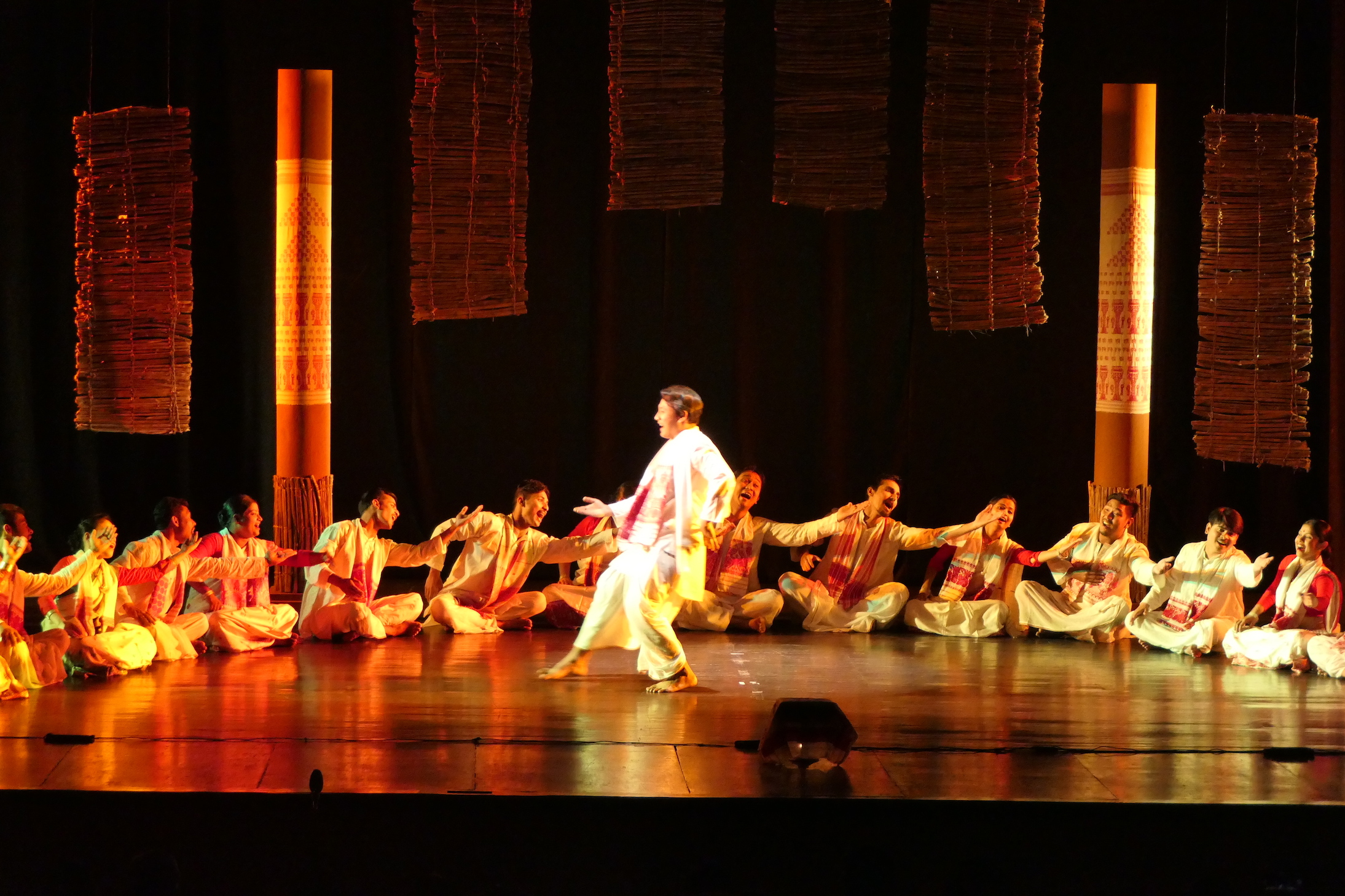
Ashok Ki Chinta by Dr. Vinaye Goodary

The Play & Director’s Note
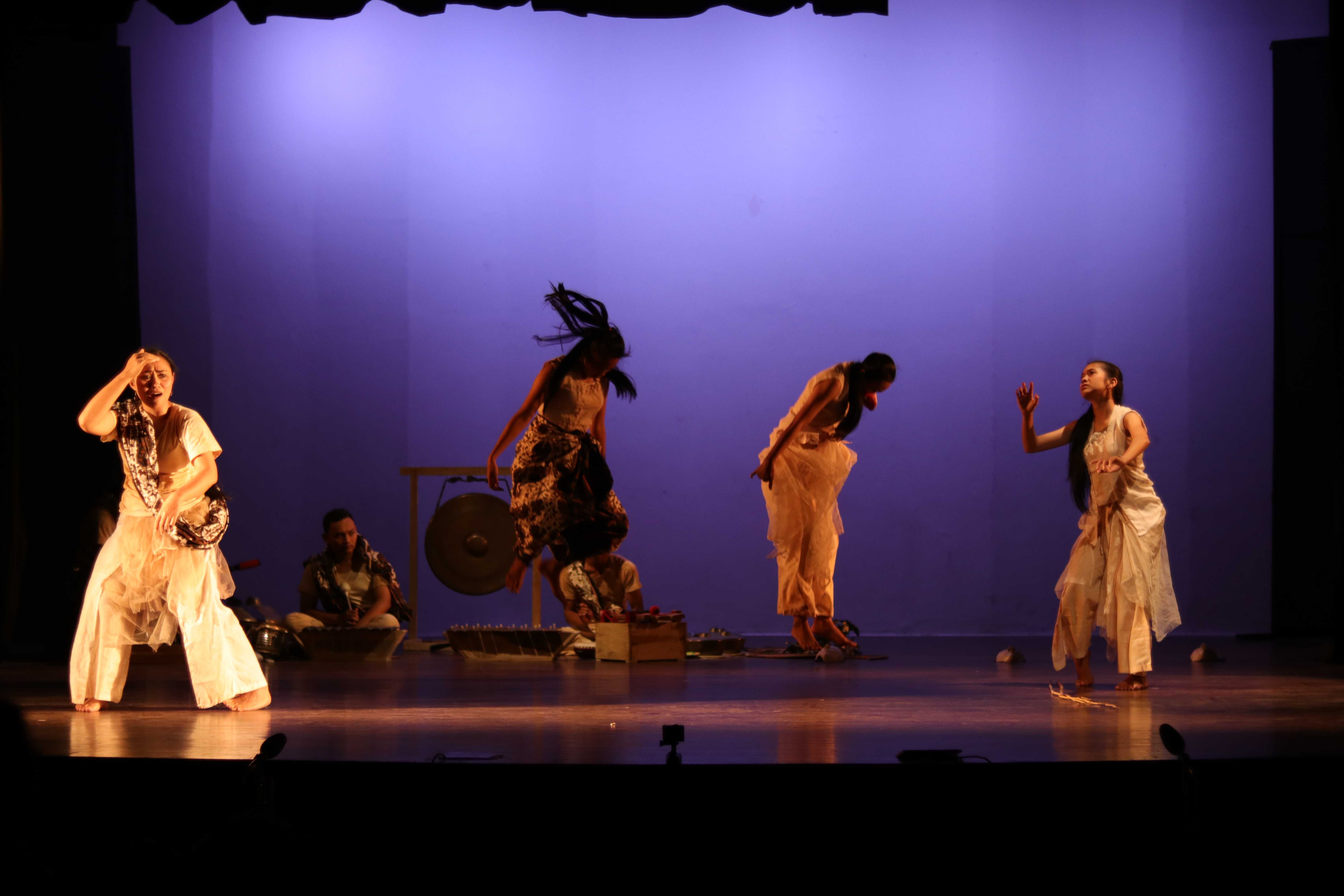
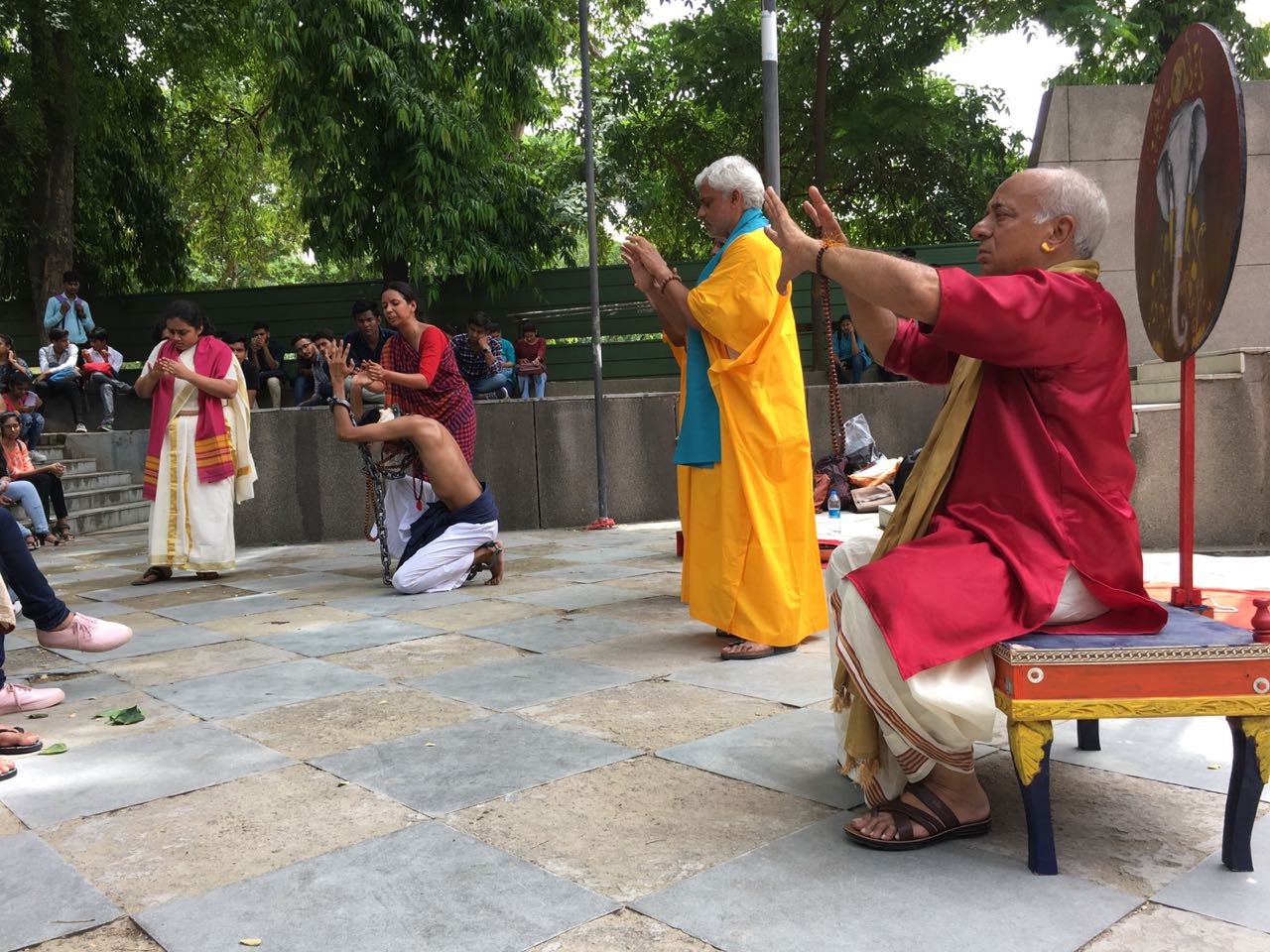
The journey for Ashok Ki Chinta started when I was thinking about my new Hindi play for 2017. Iasked Dr. Vinaye to write something for me. He showed me the script of Ashok ki Chinta. The play is  the journey of Samrat Ashok, the great emperor, conveying the contemporary issues like war, oppression and misuse of power. Ashok has been portrayed as not only the one who rules the state but also, as one who tries his best to keep the power in his hands. Three specific situations, that are contemporary to Mauritius, have been retained in this play – war and terrorism, conquering world- market through money and power, and marginalization of the Diego Garcia people by uprooting them to Mauritius. Having won various wars, Ashok starts realizing his ultimate goal towards life – his love for simplicity and Nature. Ultimately, after winning the Kalinga war, Ashok’s heart is truly transformed by grief and love and he becomes the proponent of humanity by adopting the path of Buddhism.

The Director
Rajeshwar Seetohul won his first award as Best Junior Actor in 2010 at the age of 14. He became the youngest actor ever who won the Best actor award at National level in Bhojpuri language at the age of 17, and Hindi language at the age of 18. He became the youngest Director in Mauritius. After that he won many awards for his performances. After winning three Best Actor awards at the National Level, he was offered his first play in Hindi for direction in 2015. That was his initiation into direction. He directed the play Shakuntala, authored by the greatest poet and dramatist Kālidāsa, and won the second-best director award. He is also a cinematographer and has made several short movies for social awareness and competitions organized by Mauritius film Development Corporation.

The Playwright
Dr Kumarduth Goodary (Vinaye) is presently Senior Lecturer at the School of Indian Studies withabout 17 years of experience in teaching and research at tertiary level. His interests vary from creative writing, leadership skills and motivational pedagogies to multi-disciplinary research. He is the presenter of Srijan-Your Rendez-vous with Culture, a talk show programme aired on MBC 1 TV weekly, since 2015 with some 60 interviews with scholars in Hindi. He has also acted in local serials and short films in Hindi, Creole, Bhojpuri, French and English. He has directed a short film Reperkision based on domestic violence. He wrote a film on mother's day named Merci which was
projected at Jaipur International Film Festival in which he played the lead role. He has been scriptwriting for numerous films and serials. Having authored Ashok ki Chinta, a contemporary play, he won the best local writer and best actor awards for the national drama competition. He has been awarded at several occasions for his contribution to Hindi in Mauritius.

The Group
The Vacoas Rang Bhoomi Kala Mandir (VRBKM) was founded in 1977 by Late Shri Gawkurrun Seetohul. VRBKM presents plays and films in English, Hindi, Bhojpuri, Urdu and Mauritian Creole (Local Language). In the Past 40 years, VRBKM has presented more than 150 one-act plays and 200 Radio Bhojpuri Jokes on the National Radio. Lately, VRBKM has been producing short films to create awareness on social issues.

Cast & Credits
Ashok : Goodary Kumarduth
Radhagupt : Seetohul Rajeshwar
Sushim/ Soldier : Mohundin Mounesh
Dancer/ Keem Loo/ Villager : Gunesh Girisha

Dancer/ Bankarm/ Chanda : Sooroop Sonam
Dancer/ Widow : Ghurbhurrun Joshita Devi
Village Child : Reetam Keshav
Buddha/Senapati : Seetohul Rajiv
Soldier/Buddha’s Disciple : Gooljar Shakshi
Light Designer : Dabydoyal Leenisha
Music / Sound Effect : Konnjah Yashveer
Stage Manager : Ramdeny Krishnanand Singh
Technical : Seerkissoon Rakesh, Sovida Sunkur
Head of Delegation : Rashid Neerooa

Playwright : Dr. Vinaye Goodary
Director : Rajeshwar Seetohul


Aparichit

The Play
A man and a woman meet in a waiting room of a deserted railway station. Is it real?

Director’s note
The relationships between human beings always push me to explore them. They excite me to go beyond what we see at the surface level. Human minds are fascinating and at the same time complicated too. The way we act sometimes, probably not just by a single command of mind but a rather nascent desire of our mind. What we see and what we perceive are different. What we carry and hat we want are different too. In reality, our minds are bounded by a web of socio-cultural norms which sometimes create incompleteness inside us. How to come out from it? Fantasising is a very common phenomenon to fulfil our incompleteness.
How does it feel to fantasise someone with whom we live 24 X 7, in a different way?

The Director
Born in Kolkata, Souti Chakraborty started theatre in 1984. He was associated with the Grips theatre in Kolkata for 6 years. He graduated from National School of Drama in the year 2001 with specialization in Design and Direction. He has worked in National School of Drama Repertory Company for 7 years as a Designer, Director and Actor. He has worked with almost all the renowned theatre directors of India. As a director, he has done Chanakya Vishnugupta for
NSD’s Repertory Company, and Look Back in Anger. As an actor, he has done almost 1000 performances across India. As a light designer he has designed more than 70 productions. He represented India in Young Theatre-Workers’ Workshop in Berlin, Germany. For the last 5 years, along with other theatre activities, he is also teaching at NSD, various universities and theatre institutes across India.

Cast & Credits
On Stage : Teekam Joshi, Sonia Mahajan
Music : Rajesh Singh
Video Creation : Sourav Poddar
Concept, Design & Direction : Souti Chakraborty


Under Construction

The Play
Three men wake up in the morning and slowly head in one direction – towards the kettle – the magic key for the new day. They press the button and wait, cups in their hands. But the world is unpredictable, and nothing can be taken for granted. Just when the tea is about to be poured, all phones and gadgets start to ring at once. Then a huge cockroach jumps out of the kettle. Then it turns out that there was no water in the kettle to start with, and a trip from the bathroom can be quite complicated if one follows the GPS… Once the water’s in the kettle, men start to boil instead of the kettle; pipes burst, flat fills up with smoke, mosquitos attack… And the kettle seems to be dead. But these gentlemen want to have tea, and they will have it! In the pursuit of their modest desire, the heroes of the play gradually destroy their apartment, and finally discover that the kettle was unplugged!
Happy end follows and everybody is welcome to the tea party.

DAVAI’s Note
The show was written and directed through the collective work of DAVAI group. Our genre is physical theatre, or non-verbal comedy. In our shows, it is important for us to tell a simple story -like this one.Three lonely men, each one with his bizarre character, wake up in the morning and want to have a cup of tea, and they have to go through an entire odyssey to get it. Using such a minimal plot helps our concentration during the show’s creation, and provides a steady base for the flight of our imagination. The atmosphere of the show is reminiscence of our Soviet childhood.Three of us were born in the former USSR and moved to Israel when we were teenagers. Throughout these years, we have preserved a sense  of belonging to another culture, and we still feel "aliens" in our country of residence. In this show we invite the audience to join our "alien" capsule, get carried away in our daydreams and laugh together with us at the absurdity of our life.

DAVAI
As a group, we have written and directed Under Construction, That Round Thing (a show for the entire family), and Mama (an outdoor show). As individuals, we have directed shows for adults: The Benefit For Don Vitorio, Baby Faust, One Thing Show; shows for children: Red Riding Hood, Apchee, Smartphone Bros., Old Hag With A Bag; street shows: The Lost Wheels Of Time, Everything Show; as well as 4 family shows with live orchestral music.

The Group
DAVAI was formed in Tel-Aviv (Israel) in 2013 by Fyodor Makarov, Alexey (Losha) Gavrielov and VitalyAzarin. Our common interest is physical theatre. Background training includes drama, clown, voice, photography, philosophy, cinematography, circus and music. The company is based in Tel-Aviv, Israel. DAVAI is an independent theatre group, supported by the Israeli Ministry of Culture (in regard to new productions) and by the Israeli Ministry of Foreign affairs (in regard to international travels).

Cast & Credits
Set Design : Losha Gavrielov
Costumes : Yasmin Wollek
Sound Design : Losha Gavrielov
Original music : Daniel Sinaisky
Technical Director : Iliya Gerchikov

Producer : Alina Feldman
Written, Directed and Performed by DAVAI i.e. Vitaly Azarin, Losha Gavrielov, Fyodor Makarov


It’s me, Edith Piaf by Nina Mazur

The Play
It’s me, Edith Piaf is a monodrama performance in German or Russian (both are possible) with songs of Edith Piaf’s repertoire in original language. When alive, she was called ‘The Soul of the French Nation’. After she died she became an icon of French music. The songs of her repertoire are still popular in the whole world. The legendary singer, who began her career on the Parisian pavements, answered the question about the meaning of her life with “Love. What else?” This production on the play written by Nina Mazur has been created by the alumnae of St. Petersburg Theatre Academy.

The Director
Evgenia Boginskaya, theatre director and actress, born in 1984, lives in St. Petersburg. She graduated as an actress from the Theatre Academy of Vadivostok. While being an actress she felt that the boundaries of her activity could be wider. She moved to St. Petersburg, where she studied at the Academy of Theatre Arts under the Russian legendary theatre teacher, V. Filshtinsky. In 2016 she graduated and got the diploma for being a theatre director. She has been working as a theatre director and a teacher of acting, with professional actors since 2008. Her directorial works include A Wife written by A. Chekhov, Antony and Cleopatra by W. Shakespeare, A holiday long sleep by N.
Ostrovsky, The choir is dying by A. Volodin, Three Stories based on A. Skivko-Korovkina’s play Bugs, It’s me, Edith Piaf by N. Mazur, and Rainbows over Hiroshima by Inoue Hisasi. Evgenia has worked as an acting teacher at Teatr Nowy im. T. Łomnickiego, Poznan, Poland; Teatr Zagłębia, Sosnowiec, Poland; and Teatr Współczesny im. Edmunda Wiercińskiego, Wroclaw, Poland.

The Playwright
Nina Mazur (Germany, Hanover) was born in Bishkek, Kirgizstan. She graduated from Moscow State Theatre Academy (GITIS), Faculty of History and Theory of Theatre, and post-graduated at St. Petersburg Academy of Theatre, Music and Cinema. Before leaving for Hanover, she worked at the theatre department of Ukrainian Ministry of Culture and Arts (Kiev), and was a professor of History of Art in the University. Nina Mazur is the creator, coordinator and consultant of many international theatre festivals all around the world. Her activity in ITI, UNESCO is well-known. She is the Vice- President of Monodrama Forum, International Theatre Institute, UNESCO, and a member of German Centre of ITI. Nina Mazur is also a member of the International Association of Theatre Critics (IATC) and a member of the International Dance Council by UNESCO. She is a theatre critic and author of
many articles on theatre in professional magazines. She is also the author of the book The Stage Interpretations of the Ballets of Ukrainian Composers. Nina Mazur is a member of literature society Die Faehre (Hanover, Germany) and a member of literature association APIA (London, UK). She is a playwright and her plays have been translated into many languages and staged in many countries.

The Group
Internationales Berliner Drama Theater (International Berlin Theatre of Drama) was founded in 2014 by the German actress, Anastasia Weinmar and her stage partner and an honorary actor of Russia, A. Ivanov, as an international company of professional theatre artists. It aims to exchange scenic experiences between West and East European theatre traditions and to promote the culture of each other. In three years of its existence, the IBDT has created 3 plays. The 4 th production is being rehearsed. The last production of the company, a monodrama after Nina Mazur’s play, It’s me, Edith Piaf has been performed all-over Europe and was/is invited to numerous monodrama festivals, such as Saint Muse in Ulaanbaatar (Mongolia), Impulse in Bishkek (Kirgizstan), Maria in Kiev (Ukraine),
Small Theatre Festival in Lublin (Poland), and Albamono in Albania.

Cast & Credits
Edith Piaf : Anastasia Weinmar
Set & Costume : Ilshat Vildanov
Musical Arrangement : Natalia Smotritskaya
Playwright : Nina Mazur
Direction : E. Boginskaya


Lavani

The Form
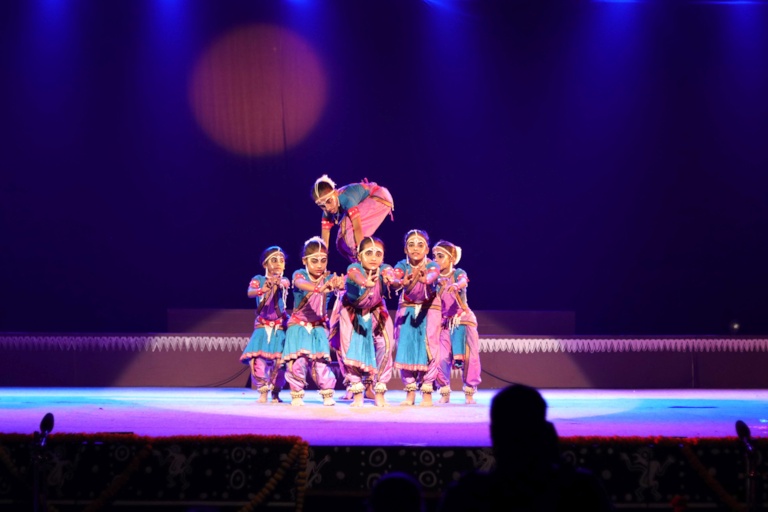
It is said that the word Lavani is derived from the wordlavanya which means beauty. Lavani is a genre of
music popular inMaharashtra. It is a combination of traditional song and dance, which is performed on
the beats ofDholki, a percussion instrument. Lavani is noted for its powerful rhythm. This traditional
form has contributed substantially to the development of Marathi folk theatre. In Maharashtra, Southern
Madhya Pradesh and North Karnataka, it is performed by female performers wearing nine-yard longsaris.
The songs are sung in a quick tempo.

The Performance
The presentations in this performance will be as following:
Mujra, Gan – Natrang Ubha
Gavalan – Kheltana Rangbai Holicha
Baithakichi Lavani – Bharal Abhal Pausali Pavan Ga Bai Shravanacha Un Mala Zhepena
Phadachi Lavani: Rajasa Dhya Va Govind Vida
Chhakkad: Bai Ga Bai Ga Kasala Naura Hawa Ga Tuzhla Saang Mala

The Director & Danseuse
Vaishali Jadhav is a popular dancer and actor known for her work in the Marathi film industry. From a
very young age Vaishali has been participating in dance competitions and has been a winner for three
years consecutively. She has travelled to the USA to participate in a cultural programme. For the first
time she appeared in an ‘Item Song’ in the film Jau Tithe Khaad directed by Abhay Kirti in 2007.Vaishali
has also performed a Lavani song in Malak, a film produced in 2015. Her film Ghuma, directed by
Abhishek Datar was released in 2017.

Cast & Credits
On Stage : Vaishali Jadhav, Rupali Jadhav
Dholki : Ram Gondhali
Tabla : Vikas Dawale
Harmonium : Vinayak Aundhkar
Co-artists : Sandeep Gaadhe, Hanmant Mandwale, Sonali Jadhav, Shubhangi Jadhav, Puja Jadhav, Rani Musle, Ragini Kale, Maya Andhare, Lata Shinde, Tejaswini Shinde, Shama Sheikh

Choreography : Sarla Bai Nandorekar, Yogesh Deshmukh
Make-up & Hair : Yogesh Deshmukh, Vijay Gaekwad
Group Leaders : Asha Bai Jadhav, Anika Jadhav
Proprietor : Kishan Appa Jadhav
Director : Vaishali Jadhav


Syaah Hashiyon ki Roshni by Kaj Himmelstrup

The Play
Syaah Hashiyon ki Roshni revolves around three people who are caught in an isolated place situated near the merging borders of two regions which may have a common ethnic background. The dialects spoken by the characters differ from each other, aggravating the conflict further to the level of violence.
The whole world, including India, stands at a juncture where internal boundaries are being created due to political reasons. Marxists, Jihadis, Hindu fundamentalists and other such groups have emerged in the last decade or so due to political dissatisfaction and nonchalance of the government’s attitude towards civil liberty and human rights. This play is an attempt to touch the depths of the human psyche by permeating through the layers of culture, religion,
ethnicity and language.

Director’s Note
Many opinions are made and many are changed when the characters of this play start questioning each other. The situation may have been caused due to war. But a much more sinister battle is happening within the confines of one’s soul. These characters meet at a point where no ideological jargon can support their voices. It is a situation where no pretensions or false notions find a place.

The Director
Rajesh Singh was born in West Champaran district of Bihar in 1979. He completed his graduation from Bihar University and studied theatre at Shri Ram Centre for performing arts. After completing the course he worked with the Sahitya kala Parishad repertory and Shri Ram Centre repertory. Then, he studied at National School of Drama, New Delhi with specialization in Theatre Techniques and Design. He also took training in music from Gandharva Mahavidyalaya, Delhi. In 2008 he was awarded with INLAKS Scholarship and went to London Academy of Music and Dramatic Arts, UK for a course in Theatre Design, Direction and Stage Management. After completing his NSD & LAMDA training he engaged creatively with many theatre groups as designer, director and music designer and also actively participated in various theatre workshops organized by National School of Drama, Extension
Department as a resource person. He was awarded the Mahindra Award for Excellence in Theatre Arts for Sound design of the play Laila Majnu. Currently, he is working as the artistic show director for the musical theatrical production in Kingdom of Dream Company, Gurgaon. He is also running a theatre company Flying Feathers Art Association.

The Playwright
Kaj Himmelstrup is a retired teacher, musician and playwright from Denmark. He was the member of the Board of the Danish Dramatists' Association for 8 years in the 1970s and the federal representative of the Danish Art Council. He has written many screenplays for television and is the recipient of numerous awards. Some of his famous plays are Clatta, The Mansion, The Dear Little Ones, Black Laces Green Olives, Richard’s Guest and The
Spoilsport amongst others.

Cast & Credits
Man : Teekam Joshi

Girl : Nidhi Mishra
Soldier : Shaurya Shanker
Light Design : Govind Singh Yadav
Scenic Painting : Aruna Malik
Sound Design : Sandy
Poster & Brochure : Vishala R Mahale
Backstage : Mazibur Rehman, Souti Chakraborty
Original Playwright : Kaj Himmelstrup
Hindi Translation : Nalini R Joshi
Scenic Design & Direction : Rajesh Singh


Sorry Mamma and Top Secret by Abdul Latif Khatana

The Plays
Sorry Mamma
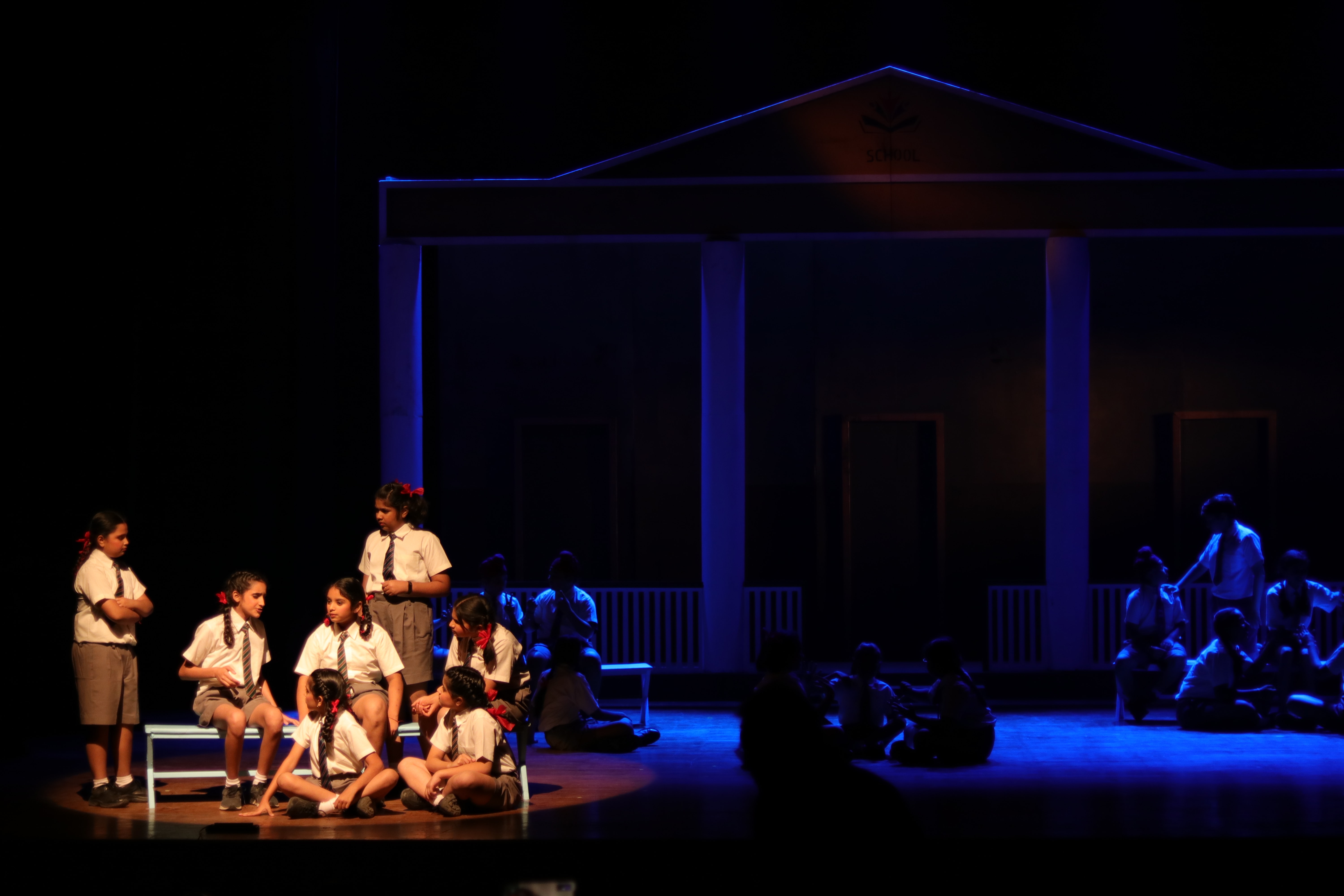
In this play, the mother thinks that she is aware of her daughter and son’s activities, whereas, on the other hand the children are thinking vice-versa.The things they see, listen and observe, affect them, and according to the provided stimulus, they react and act genuinely.

Top Secret
In the play,the landlord threatens Vicky’s father toeither clear the rent that is due for last five monthsor vacate the house. Vicky’s father has hardly earned anything in those five months. Vicky gets deprived of going for a picnic from school. His school friends arrange money for Vicky. But the landlord asks Vicky’s father to leave the house.
Director’s NoteIn context of children as well as the dramatic world, we started with the five psycho-social developmental stages of childhood as explained by Erik H. Erikson. All the developing phases of childhood have a through line of super-speed action for a child to trace his/her journey on the scale of life with parents, family, neighbourhood, school, peers, friends and role models, before entering into adulthood. During this rushed journey into the unknown, the child develops the desired qualities of hope, will, purpose, competence and the virtue of staying true to others. All these ideas were explored on floor with practical exercises, tasks and improvisation in sub-groups, encouraging students to understand childhood on one hand and develop a creative working experience with all the members of the group on the other.

The Director & Playwright
Abdul Latif Khatana graduated from NSD in 1986 with specialisation in Acting. In addition to devising, writing and directing several plays that have been nationally and internationally performed, he has conducted numerous workshops on acting. He is the founder of Adabi Sangat(Kashmir) and the theatre group- Kirdar. He is a founder member and the Chief of NSD’s Theatre-in-Education Company. He is credited with conceptualising and organising the company’s first national theatre festival for children called ‘Jashn-e-Bachpan’, followed by another national festival, ‘Bal Sangam’, of folk and traditional performing arts by children. He has contributed in designing the theatre/drama syllabus of NCERT for classes 1 to 12. He has taught in various theatre institutions, colleges,
universities, and NGOs throughout the country and abroad. Currently, he is an Associate Professor of acting at NSD, Delhi besides looking after its TIE Company. The GroupThe National School of Drama is a premier theatre institution imparting training in dramatic arts. It is an autonomous organization, fully financed by the Govt. of India. Over the year the school has progressed on various aspects of theatre including a rapid expansion of its activities in all part of the country. Under its outreach program the National School of Drama (T.I.E. Wing) Tripura started one-year certificate course in Theatre-in-Education on 9th August, 2012.

Cast & Credits

Sorry Mamma
Sushant : Samiran Brahma
Dinesh : Didwm Basumatary
Anand : Ankit Lohar
Riki : Rajat Singha
Rupa : Thokchom Roshni Devi
Mom : Haobam Hemlata Devi / Sharmistha Chakraborty
Teacher : Sharmistha Chakraborty

Top Secret
Vicky : Birendra Ganju
Mother : Dipika Dutta Mukherjee
Teacher : Dipika Dutta Mukherjee / Rupasree Debnath
Scrap Collection & Rocky : Kilang TemsuImsong / Raju Debnath
Father : Sonit Jyoti Saikia

Landlord & Champak : Binoytosh Ghosh / Rakesh Bora
Binto : G. Imotomba Sharma
Pinky : Ila Das
Assistant Director : Manik Roy
Designer : Babita Pandey
Music Director : Suneet Bora
Assistant Music : Surajit Debbarma
Choreography : Vikram Mohan
Light Design : G. Imotomba Sharma / ManojitDebroy
Light Operation : Manik Roy & G. Imotoba Sharma
Stage Manager : JayantaDey
Back Stage : Bansing Basumatary / UttamChakraborty / Pabitra Mashahary& Kajal Das

Programme Coordinator : Subir Roy
Assistant : Jagmohan Singh Negi
Camp Director : Vijai Kumar Singh
Playwright & Director : Abdul Latif Khatana


Afternoon + Evening With A Faun by Artour Astman

The Play
Afternoon + Evening With A Faun is a show in two parts, without a clear separation. It departs from Nijinski's 12 minute piece & The Afternoon of a Faun', which Astman first recreates and explains to his audience in his own words. Soon, Nijinski’s biography gets interwoven with the performer’s own: his life in Russia, his intensive dance training from an early age, his famous but absent mother. As the afternoon of the faun turns into evening, we find ourselves revisiting shadows of the past; defining moments and shifts in relationships
that have seduced and betrayed the artist. The audience gets a front row seat at his audition for a Tel Aviv night club, before stripping down to the most fragile layers of his adolescence. As the evening comes to a close, we find ourselves at a familiar place, where Astman connects past and present to find peace in being an artist.

Director’s Note
Afternoon + Evening With A Faun is a daring personal clearance sale by Artour Astman. The solo crashes the idea of performative virtuosity, moving through regions of male identity, expanding the borders of the authentic and the fake and creating a unique synergy between theatre, movement, visual arts and even culinary
performance. The first part replicates the world famous piece 'The Afternoon of a Faun' (1912) by Vaslav Nijinksi, which was considered a provocation, especially at the time it premiered for breaking with theatrical traditions. It transcends into Astman’s early life at the unscrupulous boot camps of the Soviet ballet school, where his professional career as a dancer started at the age of four. But as he skillfully guides his audience through the winding and poetic paths of his life, they become increasingly involved in the performance. They join him in his immigration to Israel, where he works as a stripper and turns into a reality TV star, before finally deciding
how to live the life of an artist. Afternoon + Evening With A Faun is an autobiographical auction of Astman’s life where whatever happens, no one can remain innocent and being an artist he has to pay a price.

The Director
Idit Herman (Tel Aviv, 1971) was trained as a professional dancer and choreographer. She joined the prestigious Batsheva Dance Company from 1989-1991 and continued her dance career till she met with actor and musician Dmitry Tyulpanov. Their partnership yielded a unique visual language, encompassing movement, sound, light and design. In 1995, their first piece Clipa ('Peel' in English) led to the establishment of Clipa Theatre,
whose signature style over the years has become synonymous to its many theatrical productions, creating 2-4 new works each year.

The Group
Clipa Theater was established in 1995 in Tel Aviv by dancer and director Idit Herman (Israel) and actor-creator-musician, Dmitry Tyulpanov (Russia). Their encounter and partnership led to the emergence of a unique theatrical language, interweaving the arts of theater, dance, design and music. The theatrical style synonymous with Clipa is characterized by a totality encompassing each and every element of the performance. It entails absolute knowledge and command of all the elements of creation: movement, space, costume, set, sound, lighting and direction. In the group’s work, these components are fundamental tools of expression alongwith the performer’s action on stage. Clipa Theater had performed at the 17th BRM in 2015.

Cast & Credits
Creator and Performer : Artour Astman
Artistic direction : Idit Herman
Lighting design : Yanir Liberman
Sound design : Yoni Tal
Light & sound operation : Rafael Haugas
Producer & tour manager : Zoya Bronshteyn / Dror Liberman
Director : Idit Herman


Soutan by Balwant Gargi

The Play
The play is about one of the many incidents that have happened in the life of Balwant Gargi. Soutan deals with the incestuous relationship between a mother, a son and a daughter, in the mud courtyard of a village. Two hags unfold the action with song and drum; a witch doctor questions and lashes the characters, aiming at healing them; in the end the mother possessed by the spirit, of the dead daughter, in a fit of hate, strangles the daughter in law. What follows is a macabre scene of incest.

Director’s note
The play is about a triangular relationship of a mother, her son and her daughter in law. It revolves around the themes of lust, sarcasm, atrocity and the struggle between financial and physical possession. The characters mentally disguise themselves and enact all the forbidden feelings realizations and try to find the reality of their incomplete desired dreams.

The Director
An alumnus from National School of Drama, Satwinder Singh has come a long way since the day he started his career in Punjab. He developed his interest in set designing at an early stage of his life. He has designed sets for productions like Daughter of the Bin, Kudesan, Baba Bantu, Damroo, Mando, Vadda Banda Chotta Banda. At NSD, he did back-stage work for many plays. Now he is working with his own Amritsar based theatre group, Artistically Busy Unit.

The Playwright
A renowned personality of Punjabi Literature, Balwant Gargi is known for his raw presentations. nspired from an incident that happened in his childhood, he started writing this play in 1964 and completed its first draft in 1970. The incident left him an everlasting impression on his mind and he couldn't resist but thinking about it and penned it down.

The Group
This play is being presented as part of National School of Drama’s Graduate Showcase (Class of 2017), which aims to provide a platform for emerging theatre practitioners, allowing them to share their work with a wide audience.

Cast & Credit
On Stage : Aamir, Brinda,Pallavi, Manohor, Swati, Niranjan, Gurleen, Priyanka, Lakshmi, Gaytri, Talwar, Anjali, Deputy, Prabhjot

Stage Manager : Gopi
Music : Ravi Nandan
Lights : Ujjwal
Design & Direction : Satwinder Singh (Sunny Masson)


Shri 420 by Molière

The Play
Shri 420 is an Indian adaptation of Molière’s masterful 17th century French comedy Tartuffe. It was adapted into Hindi by Atul Tiwari and performed for Australian audiences in 2017. The plot revolves around a wealthy expat Indian, Om Prakash Bhatti who is a devout follower of a Charlatan Swami Tarkeshwarnath Anandpunjanandji. It is a hilarious play that explores how, in seeking a shortcut to spirituality, people fall prey to phony ‘420’ Babas and face its consequences.

Director’s Note
Be it Bhas, Kalidas, or Shakespeare, the great classics of literature remain alive since they explore social
dynamics that remain relevant throughout the ages, and across cultural boundaries. These stories engage with audiences because they are meaningful and touch a chord with the universal human experience. This phenomenon can be seen in Molière’s oeuvre, notably in his masterpiece Tartuffe. The hallmark of Molière’s works is his examination of serious social subjects through a comedic, playful lens. The spirit of Molière is thus transposed in our Indian adaptation, Shri 420. We hope you enjoy the play as much as we have enjoyed the process. We have had the pleasure of working with a delightful team of both experienced and young actors, and backstage crew from both India and Australia.

The Directors
Saba Zaidi is a graduate of AMU, Aligarh; NSD, Delhi; and UTS, Sydney. She began her career as a TV drama director and producer at Doordarshan. Having established her career in TV, she moved on to be a designer, director and actor in films and theatre in India and Australia. She has won a national award for costume design in Trikaal and Doordarshan Awards for her plays Wapsi and Zewar ka Dibba. Presently she is the founding Artistic Director of Adakar.  Atul Tiwari is a graduate from NSD, Delhi. He has directed plays for professional repertories, theatre
companies, and drama schools in India and abroad. Apart from the production of classical and modern Indian plays, Atul has a repertoire of over 30 productions in different languages consisting of famous Western playwrights. He has written screen-plays and dialogues for feature films and has also acted in films like Three Idiots, PK and The Second Best Exotic Marigold Hotel. Atul is an executive member of Sangeeta Natak Academy and has recently been awarded Yash Bharti Samman by U.P. Government.

The Playwright
Moliere, a French playwright and actor, is considered one of the greatest master of comedy in Western literature and theatre. He brought elements of Commedia dell’arte to refine French comedy and amongs this best-known works are The Misanthrope, The School for Wives, Tartuffe, The Miser, The imaginary invalid and The Bourgeois Gentlemen.

The Group
Adakar was formed in 2014. It is committed to bring Australian sub-communities together through theatre and cultural exchanges. It staged Kanjoos (Molière’s The Miser) as part of the Parramasala Festival in 2014, and Wedding Album and Shri 420 at NIDA’s Parade Theatres.

Cast & Credits
Swami Tarkeshwarnath Anandpunjanand : Vipul Vyas

Ammaji Panna Bhatti : Saba Zaidi Abdi
Om Prakash Bhatti : Nisar Sirguroh
Sweety, Ira Bhatti : Aparna Vats
Mahi Bhatti : Jyotsna Sharma
Dev Prakash : Abhishek Mehrotra
Deepal : Avantika Tomar
Krishna Kant : Smarajit Dey
Phulki : Aditi Dey
Vivek : Jagat Sharma
Police Officer : Farjad Mahmood
Set Design : Jayant Deshmukh & Rajeev Maini
Light Design : Tushar Bose & Dhruv Jyoti Ghose
Costume Design : Mala Mehta & Richa Sharad
Music : Amod Bhatt
Sound : Sunil Kumar
Make-up : Sandhya Bose
Graphic Design : Shahid Malik & Katrina Lee
Photography : Freddy Handa &Prugya Maini
Choreography : Consultant Pooja Pant
Magic Consultant : Mangesh Desai
Production Manager & Ticketing : Smarajit Dey (Bapi)
Stage Manager : Aparna Tijoriwala
Properties : Saral Somaiya & Aditi Dey
Media & Communications : Tamanna Abdi
Playwright : Molière
Adaptation : Atul Tiwari
Direction : Saba Zaidi Abdi & Atul Tiwari