Theatre Review: Pagla Ghoda by Gouri Nilakantan


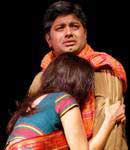
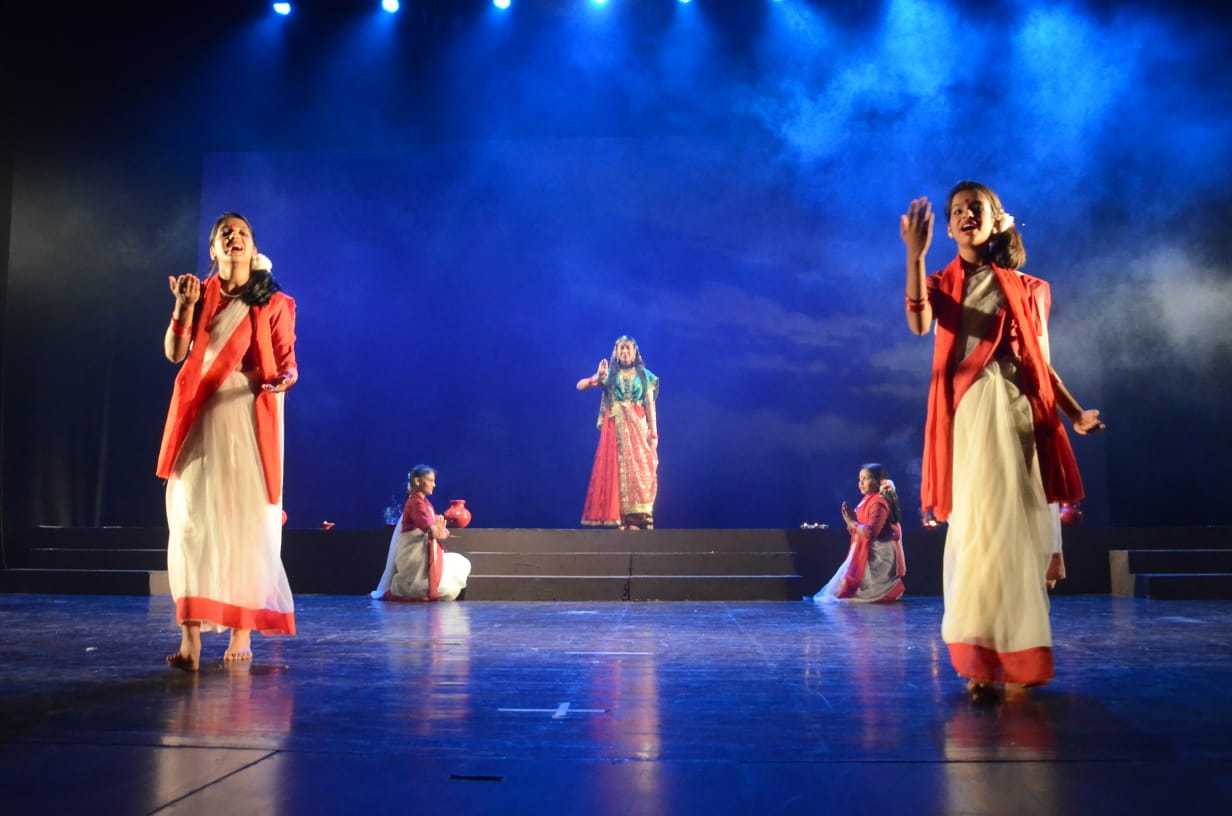
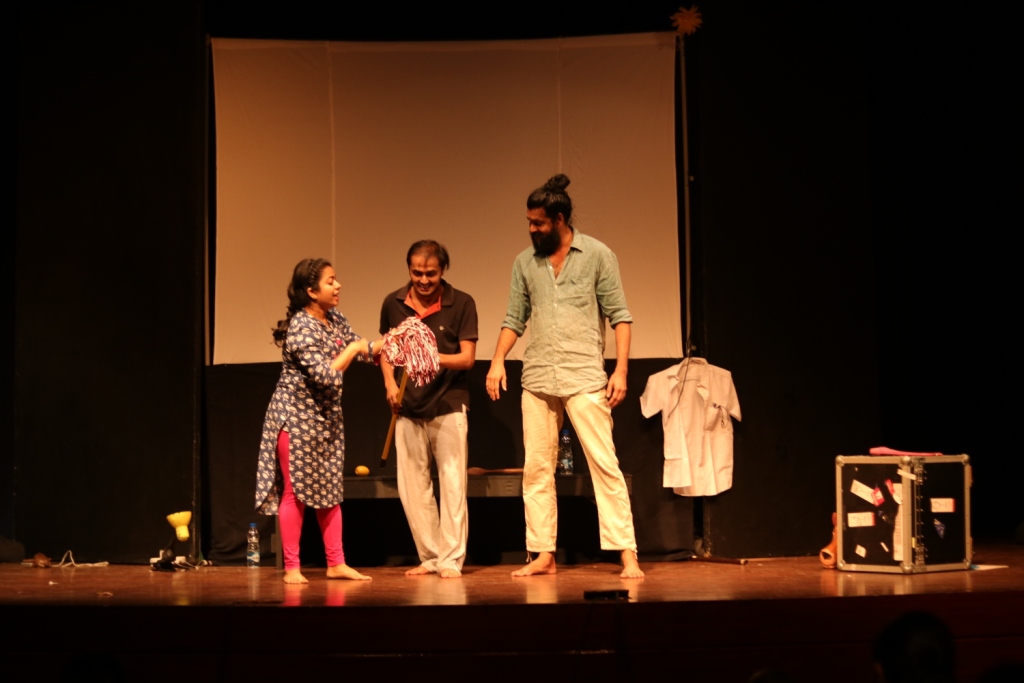
A scene from the play


Pagla Ghoda of Badal Sircar was performed by a newly formed amateur group of Gurgaon AAKUTAM directed by Mahesh Prasad at Epicenter on the 17th of April 2011.  Pagla Ghoda cleverly uses contemporary situations and social problems to life in death attitude of modern life.  The play sees four drunk young men in the cremation grounds talking about the love in their lives.  They keep themelves entertained through stories about these women that they have loved and lost in their own manner.  The anguish in the characters has been beautifully crafted by Badal Sircar that has strong social moorings.  While the play at one level speaks on psychological and social problems with the images of a badly bruised Malati or a crying Laxmi it also speaks of the four men and their deep relationship with the women.

While Mahesh Prasad has clearly made an honest interpretation of the play the hidden problems lying within the play and subtext could not reach out to the audiences.  The actors were too deeply involved in speaking their lines with clarity and focus loosing sight of their characterization.  The female actors struggled to keep pace with the better counterparts, the men.  The female actors often broke into hysteria, sobs and tears and thus giving a single dimension to their acting style.  At one level the play is also about the residue of the middle class to have failed to adjust and align and ceases to aspire amongst the intellectually alive urban middle class.  These social adjustments were lacking in the play as the acting appeared tired and fatigue seems to have hit both the audiences and the actors as the play over ran its time limit by a good half an hour.

The lighting of the play was extremely well designed and significantly added value to the mood of the play.  The quiet introspection and the inner contemplation of the characters were used imaginatively by the choice of dim lights and blue overtones.  The set design also needs special mention as was well crafted and the use of the space provided was covered excellently with good preferences of fabric material and wood.

Pagla Ghoda is about the guilt of men in personal and social relations with a continuation of the conventional mode of living.  The acting of the character Laxmi must be mentioned as it was genuine and spoke well.   Perhaps Sircar wants each of his characters to suffer from the awareness of their social responsibility.  It is important for the director to read that sense of guilt, responsibility and social problems so that it can further enhance the acting style, convention and speech patterns used in the production.

As the body of the actor and its relation on stage is one of the immediate concerns of Badal Sircar the director has correctly used breakdown of the conventions of theatrical time and space.   The production would have been even more interesting if the simultaneous action of the play had been broken down by using the female actors as the focal points of entry an exit and also if non sequential modes of narration had been used more often.   Overall the play could not speak well enough despite the technical excellence as it requires more dramaturgical analysis and theatrical inputs.


Final Solutions: Untold Stories of Religious Freedom and Resentment from the Eyes of a Female / Gouri Nilakantan


Above: A poster of Dattani’s play


A paper  read by Gouri Nilakantan Mehta at the North American Conference of Social Philosophy at Marquette University, USA

Nothing can be more painful than carrying an unseen tale desiring religious freedom within one self.  Often we come across extreme situations in our lives whereby these concealed stories expressing both religious freedom and resentment expression. Often a paradox, such occurrences while rekindling our tolerance exposes hidden resentments and bitterness towards religion that lie dormant within us.  Mahesh Dattani, one of India’s leading playwrights, cleverly portrays these strong emotions by using the lens of his characters, particularly females in his play Final Solutions.  Dattani uses the eyes of his female characters to display their inner secretive narratives of freedom at the same time rendering the religious antipathy held by them.


Mahesh Dattani was born on 7th August 1958, eleven years after the independence of India in 1947, and studied in the elite St. Joseph’s college at Bangalore. He worked primarily as a copywriter and formed his theatre Playpen in 1984.  In 1986, he wrote his first full-length play, Where There’s a Will, and  in 1986 and he won the Sahitya award from the Government of India, for his book Final Solutions and Other Plays.  He presently resides in Bangalore, a large metropolitan, popularly called the Silicon Valley of the East, with its “high tech, state of the art” buildings and it having own popular culture.  The plays of Mahesh Dattani, hence are largely seen as being “elitist” and is often met with open hostilities in parochial universities.  As Final Solutions primarily focuses on religious relationships between both the Hindus and Muslims it challenged by many.

Dattani himself declares,

I love it when I am confronted with remarks such as ‘Your plays are  preaching to the converted. You should do final solutions in the     villages.’  Such prejudice! How can anyone be blind to their own             remarks?  Assumptions galore that citified English-speaking people are  all liberal minded and villagers are communal and bigoted.

(Dattani, Collected Plays, xi)


Dattani is thus well aware about the repercussions that his plays carry.  He has displayed his immense dramatic vision and skill in his play Final Solutions.  This play centrally focuses on communal tensions particularly religious anxiety set within complex human relationships and emotions. The hidden religious anger in the characters are exposed through unknown stories expressing intense freedom.


Right in the onset of the play Dattani makes a comment of freedom as expressed by Daksha, one of the central female characters. We see young Daksha, a newly married girl of fifteen writing her dairy reflecting her yearning of self will.  She writes, “Dear Diary, today is the first time I have dared to put my thoughts on your pages (Dattani, 165).  Daksha is thus aware that these feelings of independence might cause anxiety as she declares that ‘maybe it isn’t fair to trouble you with my sadness.’ (166)  Dattani hence propels the audiences to ponder and reflect on her condition of limited sovereignty.  The fact that she can no longer sing and is married to Hari at such a young age denies her existence of freedom so much so that  that Daksha’s being is merged into that of Hari’s as the newly born Hardika and she is rechristened.


While Daksha subsumes in her apparent reality, she emerges time to time again in the play, not forgetting her free will, confronting Hardika and wanting her self to rise like a phoenix from the ashes.  We see this especially in times of crisis; when Hardika is confronted with apparent fear and danger from the malicious and dangerous mob outside her house, Daksha comes forward from her soul.  It is cleverly written by Dattani as questions of Hardika which Daksha answers.

HARDIKA. Why did he do it?

DAKSHA. Oh God! Why do I have to suffer?

HARDIKA.  Didn’t he have any feelings for me?

DAKSHA.  I just wanted them to be my friends!

HARDIKA. How could be let these people into my house?

DAKSHA. Oh! I hate this world!

HARDIKA. They killed his grandfather! (Dattani, 179)


Religion plays a central role in the play and Hardika’s position as a Hindu woman is constantly reiterated.  Thus in one way her “class consciousness” is maintained throughout the play as being a “chaste Hindu woman.  Her husband, Hari and Father in law, Wagh, the family, whom she must respect and obey impose these conditions on her and any disobedience to them is met with severely.  Female freedom is thus being thwarted by so called religious sanction.  According to Lyn Spillman,


Closer to a class unconscious than to a “ class consciousness” in the  marxist sense, the sense of the position one occupies in the social space  (what goffman calls the ‘sense of ones place) is the practical mastery  of the social structure as a whole which reveals itself through the sense  of the position occupied in that structure.  The categories of perception  of the social world are essentially the product of the incorporation of  the objective structures of the social space.  Consequently they incline  agents to accept the social world as it is, to take for granted, rather than  to rebel against it, to put forward opposed and even antagonistic  possibilities.  The sense of one s place, as the sense of what one can or  cannot ‘allow oneself’, implies a tacit acceptance of one’ s position, a  sense of limits (“ that’s not meant for us) or what amounts the same  thing-  sense of distances, to be marked and maintained, respected, and  expected of others.  (Spillman,70)


Daksha’/Hardika’s religious and gender position is strictly maintained and her limit as a female is demarcated by the men of her household.  This is further seen    when she questions Hari about his reluctance in offering a job to Zarine’s father (her Muslim friend’s father) he gets angry with her.


The reason why Hari was looking at me so strangely was because I just  asked him why we couldn’t give Zarune’s father a loan or something to  start his business again…Then why did he come to our mill I         questioned Hari.  This is when for the first time Hari became angry  with me.  I never expected him so.  He shouted so loudly, he sounded  just like Wagh.  And he called me names.  Names that are too shameful  to mention to you.  My cheeks went red. (Dattani, 216)


Her resentment towards her husband and her agony becomes well known to the audiences as she unburdens her feelings. “He beckoned me to lie with him on the bed. And I did. And my cheeks went red again. Not with shame but with anger at myself.”  Mahesh Dattani frequently takes as his subjects, within the complicated dynamics of the modern urban family. His characters struggle for some kind of freedom and happiness, under the weight of tradition, cultural constructions of gender and repressed desire. His dramas are often played out on multi level-layers where interior and exterior identities of human subjects, especially the females, sometimes become one to defy and challenge cultural locations of India, typically seen through the collapse of religious structures.


In the play Final Solutions Dattani is challenging the construction of religion and its inner tension.  He is questioning the fundamentals of religion and he uses the female protagonists of the play Smita and Daksha as the focal points.  Both Smita and Daksha in their way challenge the overriding authority of religion and create a new dimension to being female and give a new meaning to female autonomy.  The actions of Daksha visiting the house of Zarine or Smita questioning her mother’s religious beliefs can be seen as creating a new aspect of tolerance.  Smita while confronting and challenging her mother asks her,


SMITA.  How can you expect me to be proud of something which stifles everything around it?  It stifles me! Yes! Maybe I am prejudiced  because I do not belong.  But not belonging makes things so clear.  I  can see so clearly how wrong you are.  You accuse me of running away from my religion.  Maybe I am …embarrassed mummy.  Yes  maybe I shouldn’t be.  What if I did what you do?  Praying and fasting  and…purifying myself all day.  Would you have listened to me if I told  you were wrong?  You will say yes, because you are certain I  wouldn’t say that then.  All right both are prejudiced, so what do you  want to do?  Shall we go back to sleep?

ARUNA. You said it stifles you?

SMITA. What?

ARUNA. Does being a Hindu stifle you?

SMITA. No living with one does. (Dattani, 211)


Dattani, through Smita creates a new category of being female and its autonomy, one who defies and tries to understand traditions in her own context.  She is one way refusing to accept a category, of being woman that her mother wants her to fit into.  Smita thus creates a new identity for herself that expresses strong freedom.  This female freedom has been well explained by Judith Butler creating new identity politics.

The premature insistence on a stable subject of feminism, understood  as a seamless category of women, inevitably generates multiple  refusals to accept the category. These domains of exclusion reveal the  coercive and regulatory consequences of that construction, even when  the construction has been elaborated for emancipatory purposes.  Indeed, the fragmentation within feminism and the paradoxical          opposition to feminism from “women” whom feminism claims to  represent suggest the necessary limits of identity politics.

(Butler 1990: 4)


Aruna, Smita’s mother projects the other end of the spectrum as she laments this condition of her daughter and blurts out,


ARUNA.  I never felt like that.  I have always taken pride in my religion.  I never felt my mother was stifling me.  I was so happy   knowing that I was protected.  I grew up listening to the stories of our   gods and how they slew the demons to protect the good people of their   land.  And I was thankful to my mother for showing me the path of   truth.  I was happy.  (Dattani, 211)


Anita thus represents the other spectrum of religious tolerance.  Dattani clearly shows some condescension in the representation of this character. She is seen picking up the glasses of water cautiously drunk by Javed and Bobby , the two Muslim boys who have taken refuge in her house against the marauding mob, keeping them far away from her “pure” glasses.  Dattani is well aware of the religious implications such acts carry and he declares,


It’s to do with my perceptions. I don’t mean to say that this is a   definitive view of life. But several of the images that we carry  around in our minds are politically generated images and we   accept them to be as true. However I don’t think so and my  characters are simply a personification of my perceptions.

                                (Nair, The Invisible Observer)  


Each character in the play Final Solutions carries a hidden tale within their heart that carries their religious prejudices or tolerance forward.  Ramnik, the father, of Smita, in his tolerance and sympathy for the two Muslim men wants in one way to amend his hidden past.  This concealed history of religious intolerance and violence is hoped to be altered in the present by Ramnik   He also seeks freedom from his guilt and he finally tells his mother Hardika,


RAMNIK (looks at her with pity) It’s their shop.  It’s the same burnt- up shop we bought from them, at half its value.

(Pause.)  And we burnt it.  Your husband.  My father.  And his father.   They had burnt it in the name of communal hatred, because we wanted  a shop.  Also they learnt that…those people were planning to start a  mill like our own.  I can’t take it any longer.  I don’t think I will be  able to step into that shop again…when those boys came here, I thought I would…I hoped I would be able to…set things right.  I-I wanted to tell them that they are not the only ones who have destroyed.   I just couldn’t.  I don’t think I have the face to tell anyone.

(Pause.)  So, it wasn’t that those people hated you.  It wasn’t false   arrogance. (A Noor Jehan song can be heard very faintly.)  It was anger.  (Dattani, 226)


Ramnik clearly seeks atonement to his guilty past and his tolerance of the two intruders is an amendment to the faults of his forefathers.  He hence carries this untold burdening story yearning freedom from guilt and hoping to find relief in his actions.  He thus offers Javed a job in the very shop that his father had burnt- “It will be my pleasure to give you that job.  That shop, it used to be (pause.)  Take that job please.”


Smita the daughter on the other hand can’t cope with her hidden love for Babban or Bobby.  Smita by this further strengthens her religious sympathies and tolerance.


JAVED.  So, I just wanted to ask you whether there is anything between you and Bobby –still.

SMITA.  No.  I am not making any sacrifices.  There’s nothing between us anymore.  It was just a…There  wasn’t much between us.

(ibid)

SMITA.  Oh no! Please.  Don’t say that, I won’t be able to take that kind of guilt.  But…just now you said that you loved her too.

BOBBY.  Yes, I do.  But I would be lying if…I said I had completely forgotten you.  (Dattani, 217)


Even though Smita suppresses her own desires one realizes that she does carry the hidden feelings of love that emerge in her interaction with Babban.  One wonders whether her tolerance and her resentment to her mother religious views stems out of this hidden love.


As a paradox to Daksha, Hardika’s violent bitterness to the outsiders residing in her house, encounters with her childhood friend Zarine.  As the young Daksha writes in her dairy that her visit to Zarine’s house made her anger grow towards her.  She writes,


Later I learnt from Kanta that Wagh and Hari had felt sorry for them  and had even offered to help them by buying their burnt up little shop.   Zarine’s father wanted much more so the resentment.  What wretched  people.  All this fuss over such a small matter.  I hate people with false  pride.  As if it is their birthright to ask for more than they deserve. Such wretched people! Horrible people!


Little does Daksha know the whole truth? When the reality about the fact that the shop was burnt by her father in law and husband is dawned on her, all her concealed rage is nullified.  She knows that she will live in the same guilt and shame as Ramnik’s.  This silent story that she carries hence will burden her forever, finding no release.


Dattani uses the female characters to emphasize the prejudice (as shown in the anger of Hardika) and the tolerance (as shown in the love of Smita) that leads to religious resentment.  He uses the female protagonists to mirror the views of society and uses their feelings and yearnings of religious freedom to reflect upon the issues of communal hatred and violence.  One is forced to ponder whether such religious resentments are baseless and whether they have any validity.  Dattani hence realizes his audiences well and establishes the whole concern of communalism in a unique way by ingeniously using the eyes of the female protagonists.


Readings

Dattani, Mahesh.  Collected Plays.  Penguin Books: New Delhi, 2000.

 Mahesh Dattani: The Invisible Observor“. Gentleman, May, 2001. 19th April,2004. < http://www.anitanair.net/pages/profiles-md.htm>.


Spillman, Lyn., Cultural Sociology NY: Blackwell Publishers, 2001.

Butler, J., Gender Trouble: Feminism and the Subversion of Identity, NY: Routledge, 1990.


A Comparative Study of Chhau Masks of Eastern India and Ancient Greek Masks / Gouri Nilakantan


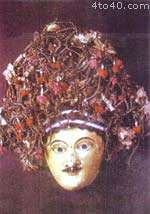
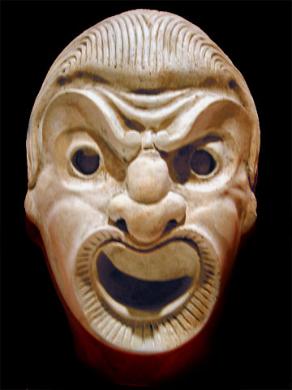
  Purulia Chhau Mask                                Greek Theatre mask                               Saraikela Chhau Mask 

pics courtesy : 4to40.com / classicalwainui.wordpress.com

Theatre is a powerful means of communication; it essentially is a transformation that allows both the spectators and performers to come into contact with one another.  The actors are thus able to play the role of another fictional persona.  This is created with the aid of theatrical devices and objects.  The mask is one such tool that helps the performer to alter his personality and thus recreate a totally new one.  Most theatrical traditions of the East, in particularly, India, employ the powerful use of masks and they are essential to many ritual customs.  Chhau, a major theatrical folk form of easternIndia namely Purulia (Bengal state) and Seraikela (Jharkhand) makes use of highly stylized masks to dramatize narratives.  The antecedents of this masked folk form resound with ancient theatrical practices of the west.  Chhau bears close semblance to the ancient Greek theatre and its origins may lie in the ancient tradition of Greece.  My paper will closely examine these cross connections between Chhau and Greek theatre with special reference to the usage of masks.

Both Chhau and the Dionysiac religion were from the beginning inclined towards transformation.  The individual persona in Chhau and Greek drama alters into a higher human being.  According to Rajkumar Suvendra, an ace Chhau performer,

When I put on the mask I become impersonal.  It is easier to slip into the body of another character.  It passes its function to the body.  Expression does not follow from my face to my body, but is transmitted from my body to my face. (53, Deo)

  The best aid in both the theatrical forms would be hence costume and the masks.  The generic words of both Chhau and tragedy in Greek drama give us important clues to this alteration of character.  The Greek word tragos, from which tragedy is arrived also, means one who dresses up and performs.  Tragedy is song in honor of the Greek gods. Komos the word from which comedy is arrived is where the members of the Greek drama when dressed up as animals take part in a happy parade.  Thus this cult contains all the elements which are necessary for the development of a serious drama or gay comedy by disguised human beings.

Greek drama essentially developed as a mark to celebrate the god Dionysus.  This fertility god is associated with both birth and death.  He is the only god whose parents were not divine.  He was twice born, his mother Semele died before he was born and his father Zeus removed him and deposited him in his thigh allowing the development of the offspring to emerge and develop later.  Dithyramb (double birth) is a religious hymn that is sung and danced by a chorus to honor the god, a precursor to tragic drama.

Double-ness plays an important role here that emphasizes the imagery and myth.  Dionysus was also the god of wine that elevated the followers into an ecstatic religious rapture.  This gives them an exalted condition and the singing and dancing changed them into satyrs or sacrificial goat.  They in the bliss is said to have direct effect and union with the gods.  Humans therefore could become god like.  Tragedy as mentioned before is also derived from the word tragoidia or goat song.  The tragedy drama developed out of the Dithyramb which was a song of rejoicing and the chorus led the dance in honor of the Dionysus. This was originally performed by men in disguise of the demonic followers of god; they were the satyrs who had equine ears and tails as depicted in the vases.  It was from this satyr the final form of drama developed.

The transformed individual thus required some façade or disguise.  The significance thus of masking arises. The very act of wearing a mask and transformation into another character is a form of worship in itself.  This double-ness, masked transformed individual in worship can be seen in the origin of Chhau.  Scholars are divided in their opinion about the etymology of the word Chhau.  Some researchers say that the word chhau is derived from the word Chhauni that means military camp. As this form involves the use of vigorous martial art techniques the form is said to have militaristic fervor.  However one can also opine that the word Chhau is derived from the Sanskrit word Chhadma (Shadow) or hindi word Chhaya.  This word clearly resounds to the mask or the disguise which is a sort of shadow that is created.  In the eastern state of Assam masks are also called Chhon that bear a close resemblance to Chhau.

Both Chhau and the Greek theatre are closely related to ritual festivals.  Greek theatre developed when the city of Dionysia celebrated the worshipping of the fertility God Dionysus.  The city Dionysia lasted for about week not only celebrated the religious and the artistic achievements but display of wealth, power and public spirit.  The tragedies were the center piece of the festival.  They were performed on the fourth, fifth and sixth day of the festival week, each day devoted to a single playwright.

It is interesting to observe that Chhau is celebrated during the spring festival or the Chaitra parva in March- April.  The festival lasts for about 13 days and Chhau is also the focal point of the festival.  Chhau folk dance drama, similar to the Greek counterpart is not a part of the religious festivity but is purely for the entertainment of the people.  This dance drama is also not performed everyday but is performed on the first, third and forth day.

  While the rituals of the Chaitra Parva take place every year, the dances take place for a few days.  13 days of the rituals are performed by 13 people of different castes, who perform the customs daily.  These people are called the bhagats who perform the ceremonies.  Quite similar to the Greek festivals in which the people are transformed into satyrs the Bhagats also are transformed to gods during the festival.  They gather around the Shiva temple and are given a sacred thread.  By wearing that they hence become shiva gotra, belonging to the same caste as Shiva and they alter their caste and thus getting some socio-legal sanction to perform the rituals.

The bhaghats start the procession from the majna ghat or the bathing ghat with the accompaniment of music and dance.  A flag staff is held by the man who is leading the festival called the Jarjar.  They have a dip in the river and proceed to the temple and to the palace where the flag is kept all the time. On the first day they also visit the performance area to purify it. This ceremony is called the Akhada mada. The next day the jatra ghata takes place that is followed by the Chhau.  The following evening is a ceremony called Brindabani in which god hanuman, the monkey god is prayed to. On the third night takes place the Garai bhar in which an episode relating to Krishna and the milkmaids is depicted.  The god Krisna is depicted as stealing the clothes of the milkmaids who have gone to take a bath in the pond.  A Chhau performance takes place in the evening.  Chhau is not performed on the fifth night and it can be done only if a small fee is paid to the Shiva temple in the form of a fine.

The dances that take place are uniquely artistic and not ritualistic.  There are no direct links between the festival and the dances and they provide entertainment for the people.  The complex relationships developed among mythological narratives, social circumstances and theatrical displays are evident in the masked variants of Chhau.  This grew out of tributes to Shakti or the primordial energy associated with exorcist practices developed during the Chaitra parva under different systems of patronage.  Interestingly, Shakti like the god Dionysus is also worshipped widely as goddess of fertility in many parts of India.

In India many fertility festivals are often associated with wine and dance.  During the spring time another major festival takes place in India called the Holi where by merry making, wine drinking and playing with colors is popular.  Incidentally the God Shiva, who is worshipped in Chhau is also said to be fond of wine or Bhang, a heady drink made of milk, almonds and cannabis, which bears close resemblance to Dionysus the god of wine.  During the Siva Ratri or the festival that honors the god Shiva many devotees indulge in drinking of Bhang.

Both Chhau and the Greek theatre have a participatory flavor.  In Greece it was said to be the civic duty to perform in the festival, and nearly 500 citizens performed.  Chhau too is based on cooperation amongst the people and it is also considered to be a public participation.  The mask hence gives both Chhau and Greek theatre a corporate personality. It gives the actor the actor contact with god and removes him from everyday mundane existence.

Both chhau and Greek theatre developed under royal patronage.  The wealthy Athenian citizens were obliged among their aristocratic duties to sponsor a play.  This way they made their way to public education. The Athenian government officially sanctioned and gave support to a theatre festival for the best tragedy written.  The government has made a record of these events.  The dramatic festivals took place once a year and three writers were presented to for three continuous days.  A separate day five comical writers were also presented.

Both in Seraikela and Purulia Chhau was fostered under royal patronage.  In Seraikela the kings were not only patrons but are dancers as well, both Aditya Pratap Deo and princes Suvendra and Brojendra are quite famous and well known.  Similar to the Greek theatre an annual competition is held between the various dancing groups.  The maharaja or the king gives the annual prize.  The whole town is divided into groups or akharas in which the dramatic form is developed.  The town is divided into eight akharas the Bajar Sahi, Mera khodara Sahi, Brahman sahi, hunja sahi, kansari sahi, khodara sahi beribahu, uttar sahi and dakshin sahi.  Chhau in Purulia is supported through households and there are also active competitions supported by rival political parties.

In Greece, famed actors were held in great honor and were even selected for diplomatic embassies.  They were granted special privileges and received help and protection of sovereigns and leading personalities of the state.  Aristodemus was invited to the court of Philip of Macedon and Thettalus to the court of Alexander the great, they were sent on important political missions.  They belonged to certain guilds along with the stage managers, costumers, dancers and musicians.  They produced epic, dramatic and lyrical plays old as well as new tragedies and comedies.

Chhau on the other hand is also organized into troupes that are under a leader or a guru.  Instrumentalists, stage managers, directors and actors all form the essential part of the troupe.  Chhau artists are given much social respect and honor. Many Chhau performances were taken abroad and Haren Ghosh, a troupe leader took Chhau toEurope as early as 1937-38.

Unlike Greek theatre there is no spoken word in Chhau and there are no dialogues.  Conflicting emotions are concealed and they mainly focus on the mood or the theme of the drama.  The whole body therefore has to give totality to expression and hence the actor liberates himself from the body through masks. By Angikabhinaya or expression through body the actor explores the dominant bhava or emotions.

Mask helps to express the bhava or the mood and the aesthetic sentiment or the rasa.  This helps the shirobheda, the head movements and the girvabhed the neck movements, as it emits glances.  Skill becomes the only determining factor as the age and the sex of the dancer is concealed through masks.  It resounds to the lord of the world Shiva as the cosmic lord is Shiva and the whole universe is nothing but postures and postures and Shiva both sustains the life force as well as destroys it.  Masks hence become the main aspect of this life force and it helps in the open acceptance of all and is in unison with nature and the universe.

Harmonies, movements and rhythms express the basic ideas of Chhau narratives.  The basic movements are based on the parikhanda or the exercise of the shield and sword; they are a set of Chalis or movements that are performed from back to front in single duple and quadruple tempo.  The movements are based on the daily activities and are therefore close to nature.  For example gaits of animals are incorporated like bagh chali crane walk, goumutra chali the walk of a cow after passing urine and harin dain the jumping of deer.  The activities of human beings, animals and birds are the inspiration behind the movements.


In Greek theatre it is said that Thespis or the first actor stepped away from the chorus and began to speak his own dialogue.  He invented the first actor as he is said to have put a hypocrites, i.e. an answer and response giver, the opposite being exarchos.  The leader and the chorus wore different costumes.  Thepsis is said to have treated the face of his actors with white lead, then covered with cinnabar and rubbed it with wine lees and finally introduced masks of unpainted linen.  Choerilus the successor of Thepsis made further experiments with masks and Phrynichus introduced the woman’s masks.  Aeschylus introduced the second actor; dialogue thus could develop more freely and had greater dramatic significance.  Aeschylus introduced new things to improve the fixed conventions in theatre.  He introduced novelty in costume by giving the players sleeves, increased their height and introduced dignified masks.  Greek tragedy was always a sacred ceremony in honor of the god and therefore the sacred robe, masks stayed as a symbol of god.  In the later periods masks became larger and had more exaggerated features, but in the 5th century, as told by scholars, neither size nor shaper were overtly large and that the mask covered the entire head, included the appropriate hairstyle, beard, ornaments and other features as well.

Quite similar to Chhau, in the given  structure of Greek theater, acting was close to dancing in which broad gestures and body posture and movements were very important. And of course the actors had to have excellent voices, with clear articulation and good breath control. Although much of the actor’s performance was spoken dialogue, he sometimes sung lyric solos.  The mask served as a device to help make the actors voice be heard and it is said that something was constructed in the mouth of the mask so that the voice could be raised and heard.  The mask made the actions more clear and the spectators would therefore be able to pay more attention to the actor’s movements rather then his appearances.

Both Chhau and Greek theatre’s performance space is outdoors.  In Chhau, the acting area is circular and a wooden platform is erected to one side. The musicians sit on one side of the open area of about 20 feet.  Performances take place in the night at about 10p.m. and goes on till sunrise.  Drummers prelude the performances and display their talent. The show starts with the entry of the elephant god Ganesha and dramatic access of new characters. The audience yells intermittently and gives encouragement to the presentation. Initially lighting was with kerosene oil and now electrical lights are used for illumination.  The mask thus provides the audiences with the much needed relief and help in the total involvement of the display.

In Greek theatres the performance took place outdoors in large amphitheatres.  The city was well evolved and developed and nearly about 5000-20,000 people were participants. Therefore a large open space was needed for viewing, thus the amphitheatre developed by the end of the 5the century B.C.  Audiences were seated in a semi circle and there were wooden bleachers for them to sit on.  The enlarged and exaggerated expressions of the masks made it possible for the audiences to see the faces of the actors.  The movements and gestures of the actors were very expressive and physical movements enabled the audiences to view them and these complementing the large masked face.

In Chhau each character is studied well and represented.  Chhau masks can be divided into five categories, gods, goddesses, kings and queens, common men, demons and animals.  The mask had both the facial portion and the head region. The demons had the extended eye, big lips, prominent chin shapely ears, moustaches, whiskers and eyebrows.  They are painted in rich vibrant colors such as green, brown or deep purple.  The gods are in softer pastel colors and the images are in the classical style so that they do not hurt the sentiment of the people.   The head portion of the mask is highly decorated with golden and silvery paper, flowers, glass beads and nylon strings are used for hair.

Similarly masks of the Greek world were portrait masks as they depicted a particular character.  The birds, frogs and the clouds the chorus represents the titles of the comedy masks.  These masks had exaggerated features long beards, baldness or ugly noses. Comic masks less morphological elements and are asymmetrical features they also express strong emotion such as weeping, anger and acquiescence, agreement.  Characters were easily identifiable and from every day life, they could be easily satire Socrates in Aristophanes Clouds and God Dionysus in the frogs they resembled the main characteristics and helped in creating a humorous ambience.

   The masks covered the entire head and depicted hairstyle, facial features, beard and decorations.  They were made up of perishable material and specific masks were created for each character. For instance, the chorus members in the tragedyl wore same masks so that one could clearly identify them as a group.  The chorus   in the Agamemnon was old men, too old to take part in the Trojan War.  They would have hence been probably been bearded old and shriveled.  The chorus would all thus appear to be similar, a notion widely held, if they all wore the same mask. The idea of having a group of individuals appear the same would be very hard unless masks were used.

The masks worn had the same effect as the costumes as they were personalized for each character. Special emotions were expressed on the mask, so the audience knew if a character was happy, upset, tired, or scared. Since the masks could be seen even in the last rows, the audience could hence tell how the character was feeling.   For instance, Oedipus, or other royal figures, might have a higher forehead or crown on his head to signify his rank, whereas a comic slave might have large eyes and a huge mouth to show that he is observant and not unwilling to gossip. These physical characteristics of the mask made it easier to tell who was who onstage.   The masks had to represent the outstanding features of the personality of the character.

Mask was a representation of the dramatist’s vision.  Many Princes in Chhau wee also skilled mask makers and Rajkumar Aditya Pratap Deo personally supervised the making of masks.  There are some special masks that represent two characters both in Chhau and Greek theatre.  In Greek theatre it is believed that different masks were used for a powerful king who became blind.  Helen was also represented in two different ways as she cut her hair and had a different spectacle.  Each half of the mask represents a different expression and the performer performs laterally and suddenly turns showing the different face.  Versatility of the actor was thus possible and it was easy for him to switch roles.

In Chhau the two faces of Shiva or the Ardhanariswara is represented in a unique way. It is shown in one mask itself and not by the usual division of the mask. The half male and female energy is shown by a three pronged mark on the forehead that shows the male energy and the lips curl into a small pout expressing affection.  By thus tilting the mask one can get a different perspective and each half character is well studied and represented.

It is interesting to note that in both Chhau and Greek theatre women did not participate.   Actor did not have specific characters but archetypes to represent them.  The personality of the actors is hence lost and the main characteristic of the theatrical role is bought into prominence.  The actor also has to perform many roles the mask helps him take up different personae and also in impersonating the female roles.  The actor could be adaptable and change his personality and mood of the different characters that he was playing and his mask helps him make the transition into female parts.

In Greek theatre theatrical masks were constructed by linen cloth and then fortified by plaster by flour glue and fish glue and then it was painted.  Male masks were more intense and female paler.  They also covered the head with hair and the head was covered with a helmet and wool was attached to the head and then styled as hair.  The mouth was left open in the tragedy masks and as the expressions showed more perturbation and passion and the opening became bigger.

The history of masks in India dates back t the Mesolithic periods.  Excavations have revealed small hollow masks in the Indus Valley Civilization (2500 B.C. – 1200 B.C.  At Chirand in Bihar, a northern state of India, a terracotta mask belonging to the fourth century was unearthed.  The Natyasastra (8th century B.C.), a treatise on music and drama mentions masks or Partishirsa which seems to be very similar to the Greek counterparts.  According to the text,

Different masks (pratshirsa) are to be used for men and gods according to their habitation, birth age…ashes or husks of paddy mixed with the paste of leaves of the bilva tree.  This should be applied on the cloth.  After the cloth dries one should pierce holes in it.  These holes should be made after dividing the cloth into two equal halves.

Initial masks of Chhau were made of wood and earth that was heavy and made breathing very difficult.  It passed down from cruder forms and became slowly sophisticated.  Many techniques were introduced in the mask making process.  The chhau mask is first made up of the clay that is found on the banks of the KharakeiRiver.  The artist fixes the clay and lets it cool down to harden on a plank.  This process is called the Mati gada or making of the clay.  Then muslin gauze is pasted on it with two or three players giving it thick coating or paper, which is called kagaz chitano.  The mask is then scrubbed off with the help of a sharp instrument called karni and it is polished.  It is then painted in flat pastel colors the stylization being given on the eyebrows and mouth.  This process is called Kabij lepa or painting.  The flat pastel colors give it frankness, simplicity and boldness.  The mask maker avoids realistic identification and the Mask of birds and animals such as deer (harin) or the prajapati (butterfly) is well stylized.

Mask making is a traditional occupation passed from father to son. The mask makers of Chhau live in Chorida village in Bengal and come from a set class and they bear the surname of Sutradhar or Das.  The mask is made from February to June as it does not rain and in other seasons the artisans are engaged in carpentry and image making.    Masks are rather frail they cannot stand the stress and strain of the performance.  As it does not last for more than a year, it is always in high demand.

Masks therefore have been a part of the integral world of theatre rituals both in the eastern and western parts.  The use and meaning behind the masks has evolved in many ways since the 5th century B.C.  The dramatized rituals of India are very close in their resemblance to the ancient Greek ones. As correctly pointed out by Turner, rituals often use symbols such as objects, words relationships, events, gestures, or spatial units (19).  Chhau is one such popular ritual folk drama of Eastern India (Mayurbhanj, Seraikela and Purulia) that uses such symbols i.e. elaborate and highly decorated masks.  The masks used in the Chhau folk drama not only reveal crucial social and religious values that transform human attitude and behavior but also disclose influences of other ancient civilizations.   Mask are thus a signifying object, it provided the much needed experience to both the actor and the spectators.  Chhau masks hold our fascination and we can say that so much its history has its roots in ancient Greece that is evident in it.


This article was a paper that Gouri had read in a conference held at Waseda University in Japan, 2008 on Masks.


Kerala: Girl performs azaan in Kerala play, sparks stir | India News – Times of India

https://m.timesofindia.com/india/girl-performs-azaan-in-kerala-play-sparks-stir/amp_articleshow/66790824.cms


Jashnebachpan: Puberty


Puberty
Director: Sachithra Rahubadda
Group: Red Apple International Theatre Gathering, Sri Lanka
Language: Non-Verbal
Duration: 45 Minutes

About the Group
Red Apple Theatre Gathering seeks to develop appreciative skills in youth and children to create a new dimension in theatre while finding new methodology. It has received the highest award in Sri Lanka at the State Drama Festival twice. This year Red Apple Theatre Gathering has participated in the National Children’s Drama Festival. It will now be participating in the Colombo International Drama Festival, Kathmandu International Children’s Drama Festival, and Jashn -e- Bachpan International Children’s Theatre Festival, held by National School of Drama, Delhi, India.

About the Play
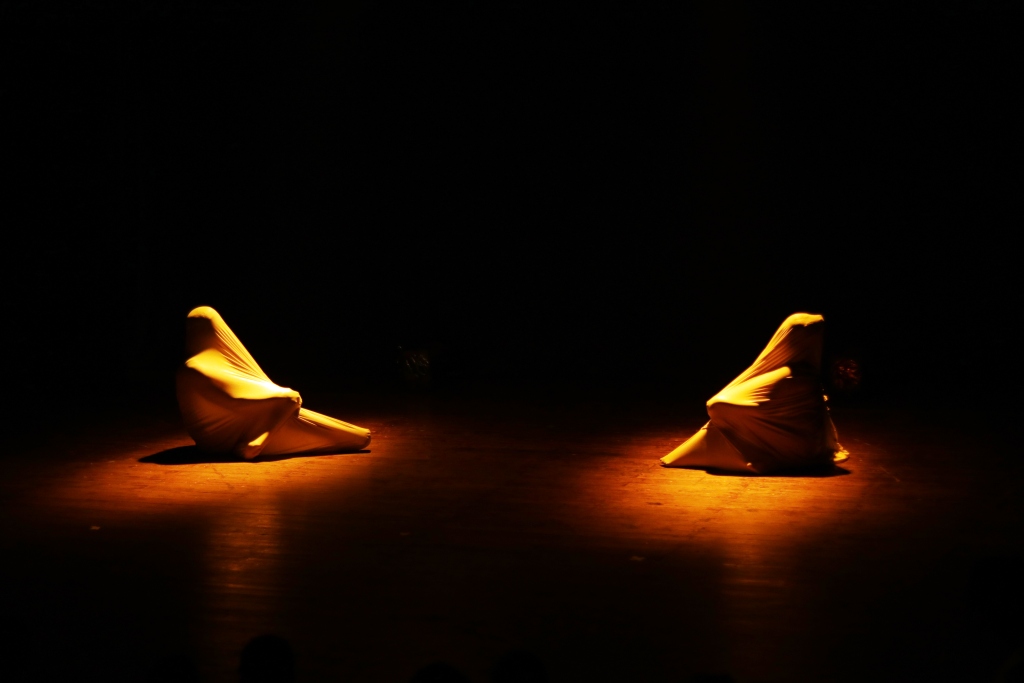
This is the story of the journey of a sperm and an ova. They get together and make a child. Be it a girl or a boy, the sperm and ova do not discriminate – same power, same energy and same hope. Just a different gender in the world. And then? Pink for the girl and blue for the boy which they never ask; car for the boy and doll for the girl which also they never ask. We divide them. We make different laws and rules for each. Then comes puberty!
In Sri Lanka we care so much about our ‘nationality’, but do not care about the nation of our girls. As an Asian country, our society is concerned more about the virginity of girls than the girls themselves, more about their discipline than their life, love or hope. Puberty makes it worst. This play talks about the difference in the life journey of a baby girl and a baby boy.

Director
Sachithra Rahubadda is an active director of children and youth theatre in Sri Lanka. He began his study of theatre at school. He began producing plays while still in school and later did a Diploma course in Drama and Theatre at the Institute of Sinhala culture, and then a Diploma in Script writing and Communication at the University of Sri Jayawardenapura. He obtained his BA degree in Drama and Theatre from the University of Kaleniya. He conducts workshops and stage shows in schools around the country, as a result of which Red Apple Theatre Gathering was founded. He gives the children and youth of Sri Lanka necessary training and makes all the effort to bring their talents forth. Many of his students are contributing in many creative fields throughout the country.

Director’s Note
Children’s world is totally different from that of the adults. It is difficult to understand them. Our interpretation of children’s imagination can be erroneous. Puberty reveals the modern children – instant and innovative. But with roots that are cultural and social. Within the Asian cultural background, life circle of two new born children is the theme of the play. The structure of the production is modern, choreographic, non-verbal and musical.

Cast & Credits
On Stage
Jayawardhana Pedige Yeshmi Thakshila Madhumali Jayawardhana, Samarasinghe Dhanushka, Sooriyaarachchige Nadun Tharanga, Dewathanthri Arachchige Tharindu Madusanka, Ambanwala Gedara Chandima Lakmali Sirinayake, Ilandari Pedige Jeewan Madusanka Kumara

Off Stage
Ilandari Pedige Janaka Sumith Kumara, Samarasinghe Vithana Pathirannahelage Chana Thushsari, Koralegama Hewage Ruwan Chandana

Direction      Sachithra Rahubadda

Contacts
Red Apple Theatre Gathering
17, Bandaranayake mw
Papiliyana, Sri Lanka
Tel: +94112732619
Fax: +94112732619
M: +94711900514
E: rat.srilanka@gmail.com
Fb: www. Facebook/Red+Apple+Theatre+Gathring.com


Jashnebachpan: Ichhapuran

Ichhapuran
Writer: Rabindranath Tagore
Director: Rajesh Bakshi
Group: Theatre Actor Studio, Delhi
Language: Hindi
Duration: 1 hr

About the Group
Theatre Actor Studio has been participating in children’s workshops for a long time now. Rajesh Bakshi, the founder of this group, has been directing these workshops for the last 10 years. Some of the group’s important productions are Ichhapuran (Rabindranath Tagore), Kalakar (Phanishwar Nath Renu), Paazeb (Jainendra Kumar), Wizard of Oz (adapted by Bharti Dang) etc. Some of the short plays directed by Rajesh Bakshi are Savdhani Hi Suraksha, Rishi Ki Seekh, Swachh Bharat Abhiyan, Beti Bachao Beti Padhao, Nasha Mukti, Say No to Crackers, Sadak Yatayat Ke Niyam, Shiksha, Changu-Mangu, Ghogha Sant etc. Rajesh Bakshi has long been associated with Hindi Akademi, Sahitya Kala Parishad, Shri Ram Centre, Udyan Orphan Trust, Yuva Sanstha, Ayam Sansthan and Dramabaaz Company.

About the Play
The play is about a father and son who wish to live each other’s life. Devi Ichhapuran grants them their wish but living each other’s age, joys and sorrows becomes unbearable for both.

Director
Rajesh Bakshi has acted in more than 45 plays and participated in many cultural theatre festivals including Bharat Rang Mahotsav, Nandikar Rang Mahotsav, Bharatendu Natya Utsav, Bharat Muni Rang Mahotsav, Sarang Rang Mahotsav, Uttar Pradesh Sanskritik Mahotsav, IPTA Rashtriya Utsav etc. He has 12 years of experience in teaching theatre. He has conducted many theatre workshops for children with organisations like Hindi Akademi, Dramabaaz, Multivalent, Ayam, CCRT etc. Some of the plays directed by him are Jasma Oden (folk play), Aankh Micholi, Doosra Admi – Doosri Aurat, and Ila.

Director’s Note
Childhood, with its restless playfulness, can be understood only with love and intelligence, whereas adulthood brings not only independence but also responsibility along with it. To make this story written by Rabindranath Tagore, more interesting and meaningful, a few of Tagore’s poems and another story by him ‘Vidhyarthi Ki Pariksha’ have been incorporated.

Cast & Credits
On Stage
Mrinalini Jindal, Aman Sharma, Vikrant Sharma, Jitesh Sharma, Olive Jain, Eshna Jain, Nandika Chadda, Gurjas Bhatia, Samaira Grover, Shivaye Madan, Diva Gandhi, Yuvraj Mavi, Maya Parashar, Saksham Gupta, Saksham Parashar, Ragav Mehta, Siya Singh, Ananaya Mukerjee, Rahul Mukherjee, Samarth Girotra, Yatharth Gaurav Gupta, Ayam Sharma, Sneha Chaubey, Dattatreya Buddhiraja Haldar, Ira Jasuja. Naisha Prem, Dipti Purohit, Mahua Aggarwal

Off Stage
Music                               Bharti Dang
Music Operator              Garima Arya
Property in-charge        Aman, Vikrant, Jitesh, Narendra
Light Design                   Rahul Chauhan
Make-up                         Narendra Kumar
Choreography                Vikram Mohan
Costume                        Yashasvini Bose
Creative Input                Bharti Dang
Special Thanks             Dramabaaz Company & Garima Arya

Playwright                          Rabindranath Tagore
Design & Direction            Rajesh Bakshi

Contacts
D-301, Aggarwal Estate
Sector- 28, Rohini
Delhi-110042
M: +91 9891192267, 8920461628
E: ssrajeshsharma@gmail.com


Jashnebachpan: How Cow Now Cow


How Cow Now Cow
Director: Vinod Ravindran
Group: Sandbox Collective, Bangalore
Language: English
Duration: 1hr

About the Group
Sandbox Collective is a creative services organisation that curates, produces and tours performances. It acts as a catalyst facilitating meaningful collaborations nationally and internationally between artists, cultural agencies and arts spaces creating an explosion of innovative artistic expression.

About the Play
Rosamma the Cow is fast turning into an unbearable pain. She scolds, rants and raves, and makes life miserable for all the other animals on the beautiful farm. Find out what happens to Rosamma when she’s sent off to a mysterious country far, far away. A group of actors combine storytelling, object theatre, and shadow puppetry to tell a compelling tale of patience, love, adventure, and imagination.

Director
Vinod Ravindran has worked in the theatre in various capacities. He started his career in theatre with B. Jayashree’s Spandana Theatre in Bangalore. As an actor he has worked with directors like B. Jayshree, Atul Kumar, Ajay Krishnan, Manav Kaul, Abhishek Majumdar, Kirtana Kumar and Sachin Gurjale. He wrote and directed Somewhat like a Balloon which opened at the Jagriti Curtain Raisers 2013, he wrote and directed Raja Tantra Choo Mantra, a play for children which opened at the AHA, Ranga Shankara International Theatre Festival for children. He also directed Ajay Krishnan’s Touching and Moving.

Director’s Note
Stories are everywhere and everyone has a story… and we can tell stories together. What worked most importantly for us about How Cow Now Cow is the simplicity of the story. We wanted to work on this play in a way that it leaves enough space for our audience to have questions and thoughts. That is what keeps us excited about this play. We are often asked questions about the play that we ourselves have never thought about. We used common every-day household objects to bring the story to life. The play uses a now archaic technology of the overhead projector (OHP). The rudimentary nature of the OHP technology and the physical interaction that is required to bring images to life is the kind of rawness that we wanted in the play.

Cast & Credits
On Stage
Anirudh Mahesh
Shweta Desai
Vinod Ravindran

Off Stage
Light Design and Execution     Parthasarathi S
Producers                                     Sandbox Collective

Direction            Vinod Ravindran

Contacts
Beagles Loft
37/5, 2nd Floor, Yellappa Chetty Layout
Ulsoor Road
Bangalore – 560042
M: +91 9686865638
E: sandbox.medha@gmail.com


Jashnebachpan: She Stood Up


She Stood Up
Writer & Director: Zubin Mehta
Group: Wings Theatre Academy & Vivek High School, Chandigarh
Language: English, Hindi & Punjabi
Duration: 1 hr 25 mins

About the Group
Wings Theatre Academy was established in 2012. The aim of the academy was to give a platform to the students in and around Chandigarh, whereby they could hone their skills, grow as individuals, and work constantly to grow the faculties of their mind, while simultaneously opening up the world of theatre to a city still in the process of finding its pulse. The academy is currently 150 students strong, all of whom are in the age group of 7 to 30 yrs. The academy has staged over 20 annual plays in the last six years.

About the Play
She Stood Up, directed by Zubin Mehta, focuses on different aspects of school life. The story is about two girls who despite having different personalities and backgrounds come together, become good friends, and take little steps of courage to change people’s perspectives. They empower girls through a soccer match. It is a very simple, realistic and relatable story which comes with a strong message of motivation and courage to stand up for what is right, and of breaking gender stereotypes from an early age. While highlighting the above, it has light, innocent and humorous moments for the audience to enjoy. This play was devised with a lot of inputs and ideas from the young actors who come from various schools in and around Chandigarh. The cast of the play comprises entirely of children between the ages of 8 and 11 years, who have been training with Wings Theatre Academy at Vivek High School, over the last few years.

Director
Zubin Mehta, started his theatre journey at the age of 8 as a child artist. He travelled extensively to the interiors of Punjab to perform plays based on socially relevant topics, using theatre as a medium of social reform. In 2004 at the age of nineteen, Zubin was appointed as a theatre teacher by Yadavindra Public School, Mohali to establish a dramatics society which later became a part of the curriculum. During his tenure, he directed school productions, worked with children of various age groups and developed content for theatre workshops. In 2012, he founded Wings Theatre Academy. He has worked with more than 3000 actors – children, adolescents and young adults.

Director’s Note
The movement of Woman Empowerment has been gaining momentum in our country in the last decade, but we are still dealing with the horrors of Nirbhaya and Kathua. The real empowerment should happen at a young age. It is the young girls that we need to empower to make a significant difference. She Stood Up was devised with 45 students from 6 years to 12 years of age, studying in different schools of Chandigarh. We started the rehearsals with the wish to do something for young girls, but what and how, we had no idea. I sat with my young cast for the first few days and just explored the idea with them. I tried to gauge what was it that they wanted to share on the subject, what empowerment meant to these young children. Brainstorming happened for the next few days and we had the outline of our story with us. It was a simple story of a young girl fighting with the school authorities for something that she thought was her right.

Cast & Credits
On Stage
Chamanlal                      Eklavya Mogla
Satish                             Aditya Goyal
Saurabh                          Anhad Mogla
Sandhu Sir                      Kanwardeep Singh
Pranay’s father                Kevinpratap Singh Sidhu
Ravi Bhaiya                     Aarav Joshi
Lata                                 Kashish Aggarwal
Pooja                               Ridhi Ahluwalia
Promila                            Navika Singh
Ria                                   Saira Mamik
Birso                                 Paakhii
Principal                           Hiral Thakur
Mrs Subramaniam           Aahana Gupta
Mrs Chaddha                   Simer Suri
Miss Negi                        Kashish Dhingra
Mrs Misra                        Dia Lekhi
Mrs Shergill                     Rabbani Lehal
School Nurse                   Ishrat
Sunny Singh                    Abhaydeep Singh
Aakash                            Angad Singh Tur
Gurfateh                          Inderpal Singh
Pinky Singh                     Pranit Singh
Umang Shankar              Adhiraj Sehgal
Pranay                            Dev Pannu
Raghav Jain                   Samay
Param                            Sumeir Ahluwalia
Seerat                            Saanvi Kanwar
Pallavi                            Mishika Singh
Kaveri                            Aanvi Bahri
Mili Mittal                       Sohaya Aulakh
Pavni Chaddha             Aaina Chaddha
Jhanvi Goyal                 Mannat Verma
Priya Chauhan              Inayat Dhingra
Mrs Verma                    Kashvi Wadhwa
School children            Sidak Singh Talwar, Navya Singhal, Vaanya Pathak,
Rehmat Sandhu, Brinda Thamman, Meher Kumar, Sarah Setia,
Nikasha Luthra

Off Stage
Assistant Director                  Namita Chandhoke
Overall Coordination              Amrita Patti & Dashveen Kaur
Light Design & Execution      Zubin Mehta
Set Design                             Zubin Mehta
Background Music                 Manav Bhinder
Costumes                              Amrita Patti, Dashveen Kaur
Make-up                                Balaji
Backstage Assistance          Puneet
Produced by                         Wings Theatre Academy, Vivek High School, Chandigarh

Playwright,
Design & Direction               Zubin Mehta

Contacts
Wings Theatre Academy, Vivek High
Sector 38-B, Chandigarh- 160036
M: +919888577481; +918288040900
E: wingstheatreacademy@gmail.com


Jashnebachpan : Dry Leaf

Dry Leaf
Director: Agung Gunawan
Group: Sampang Agung Centre for Performing Arts (SACPA), Indonesia
Language: Javanese
Duration: 1 hr

About the Group
Sampang Agung Centre for Performing Arts (SACPA) is located at Pelem village in East Java (Indonesia). The centre strives for the preservation of Javanese cultural heritage and traditions, and its members are committed to further exploration on new artistic ways of expression submerged within such heritage and also the contemporary arts. SACPA’s performers (known as Breathing Forest Dance Theatre) have been recognised by the unique movements in the choreography of their performances inspired by the day to day movements of the village and the interactions of humans, animals, spirits and nature. ‘Whiffling of the Forest Gamelan Ensemble’ is a music group formed in 2015 at SACPA. Under the direction and mentorship of the established musician and composer, Johan Adiyatma Baktiar, the ensemble offers distinctive and theatrical Javanese gamelan based music.

About the Play
A fallen leaf never hates the wind. It falls itself as it does. Never against anything, there is only sincere acceptance and surrender. Wisdom offered by the harmony of the four elements of nature – Fire, Wind, Water, and Earth – shapes the expressions and characters in the body. Nature as a human being sometimes becomes the axis of problems, while nature quietly and permanently creates peace. Lessons from the fallen leaf to understand peace – whenever it should fall it falls, whatever makes it fall, it lets it do so, and wherever it takes off, the leaf will not complain and accept what God gives.

Director
Born in 1971, Agung Gunawan is a renowned and established dancer, artistic director, choreographer and vocalist. Since the beginning of his career in 2006 as an independent solo dancer and choreographer, he has worked with many multi-disciplinary artists, in companies and projects both inside and outside Indonesia.
He was a founder and artistic director of the Arts Island Festival from 2010 to 2014, and of Pelem Festival since 2016. His motivation to create the festivals was a manifestation of his conviction that “If they are not accessible to the poor, the arts are neither innovative nor revolutionary”. This belief has been the pillar of his daily practice. Currently, he is based in the rural village in East Java, as a co-director of SACPA, and a choreographer of ‘Breathing Forest Dance Theatre’ while continuously touring numerous countries for performances and projects.

Director’s Note
After having undergone years of intensive training and performances as a Yogyakarta classical court dancer in Indonesia, I moved to the country side in East Java, named Pelem village in 2008. At first, I felt that traditional dance and theatre performance in the village had not been refined and was edgy. However, it struck me that their dance was full of energy, intensity and power of human creativity of arts. I sat in the forest for hours, searching for the meaning of the relationship between art and life, myself and nature, and nature and local people – now our people. A leaf is such a symbolic and artistic metaphor for me – it grows, and turns brown, and falls as it is. It is such a simple, peaceful life which casts a question to me. What is it behind the last moment of the leaf, not complaining and in total surrender? How does this relate to us, human beings?

Cast & Credits
On Stage
Performers (Breathing Forest Dance Theatre)
Anes Ayu Pratiwik
Ariesta Maharani
May Widhiyastuti
Yasinta Wenda Mulasari
Fitria Dania Julianti
Umi Royani
Very Muharyanti
Windiasari
Musicians (Whiffling of the Forest Gamelan Ensemble)
Anang Setiawan
Aryasa Yusuf Pratama
Deasylina da Ary
Diana Nur Hayati
Johan Adiyatma Baktiar
Anik Puji Rahayu
Agung Gunawan

Off Stage
Operation Manager Takashi Takiguchi
Production Assistant Kien Fei Lee

Design & Direction Agung Gunawan

Contacts
Sampang Agung Centre for Performing Arts (SACPA)
Jln. Punung-Gondosari Km 6,5
Krajan 1, Pelem, Pringkuku, Pacitan, Jawa Timur, Indonesia, 63552
M: +61 478 634 052 (English)
M: +62 823 28282801 (Indonesian)
E: info@takashitakiguchi.com
W: https://sacpa-pelem.com
Media/Enquiry: Takashi Takiguchi (ImPermanence Productions)


Jashnebachpan: Celeberating Childhood


Nine-day little actor’s theatre festival Jashnebachpan begins

  • Around 500 artists from across the globe will be a part of the fest.
  • Children from Sri Lanka and Indonesia will showcase their art form
  • 10 directors are making debut this time at Jashnebachpan
  • Seminar will be held to discuss the importance of theatre in children 

New Delhi, November 17, 2018: With a colourful representation of the various folk dance and music from the diverse states of India including Assam, Rajasthan, Punjab and Manipur under the guidance of Dr. Laique Hussain, National School of Drama today inaugurated the much-awaited biannual theatre festival for children, Jasnebachpan, at the lush green lawns of the campus amid much fanfare.

The grand opening ceremony of the 14th edition of the theatre carnival saw the presence of Shri Arun Goel, Secretary, Ministry of Culture and eminent theatre personality-director Shri Rudraprasad Sengupta. Also present were Dr Arjun Deo Charan, Acting Chairman NSD, Suresh Sharma, director-in-charge, NSD, and Abdul latif Khatana, Chief TIE Co.

Shri Arun Goel said festivals like Jashnebachchan help them to develop their personality.

 “I congratulate the National School of Drama for organising the 14th edition of the international theatre festival for children. Besides organizing festivals for children, they also organise various short term courses like Sunday Club, which is a very good initiative. Theatre is something which is not given to us by the colonial powers, rather it is our own art form which was born in our own land and has been practiced since ages,”Arun Goel said.

 Shri Rudraprasad Sengupta, who was one of the guest of honours at the event, dedicated the recognition bestowed to him to the various theatre workers in the country.

“I am thankful to my NSD friends for honouring me. I don’t know whether I am worthy of this honour. But I am glad to receive the honour. I am accepting this honour on behalf of all the theatre workers, who probably don’t have money to give shape to their craft. Theatre is expensive and it needs money more money than any other art form because it doesn’t depend upon technology. Man power is involved in every stage,”Rudraprasad Sengupta highlighted.

 Dr Arjun Deo Charan pointed out why theatre is important in a child’s life.

“Theatre plays an important role in children’s life because it raises the observation power in a child. As plays are mostly based on the issues of our society, therefore it raises awareness among the kids and enable them to become a responsible citizen,” said Arjun Deo Charan.

Abdul Latif Khatana shared the highlights of this year’s Jashnebachpan.

“We have plays talking about various issues be it gender discrimination or parent-child relationship. We also have theatrical interpretation of Ramayana and Alice & Wonderland. This time we have three-year old play group to 133-year old play group,”he said.

Suresh Sharma said, “Ministry of Culture has allotted Rs 180 crore for the betterment of NSD. We have also proposed the formation of four new Sanskar Rang Toli and we are assured that ministry will help us in expanding theatre across the country.”

The opening ceremony act titled as Udaan was comprised of four presentations by groups — Thangata Pung Cholam (Manipur), Kalboliya (Rajasthan), Gotipua (Odisha) and Bhangra/folksong (Punjab). Even folk dances from Assam (Bihu), Sikkim (Lion Dance), Nagaland (Kabul Naga Dance) and Manipur (Stick Balance) were received with loud applause from audience.

Almost 800 underprivileged kids from various NGOs across Delhi and NCR attended and enjoyed the opening ceremony. The idea behind this initiative was to bring those children to the mainstream and inculcate enthusiasm for art and culture along with entertainment at a global platform.

Debuted in 1998, Jashnebachpan, is a venture of T.I.E Company of NSD, started in order to contribute to the growth and development of children’s theatre across the country. Post its successful stint year after year; it has now become one of the largest and most important theatre festivals in India for children. This year 23 plays will be staged in the four auditoriums – Sammukh, Abhimanch, Abhikalp and Little Theatre Group (LTG).