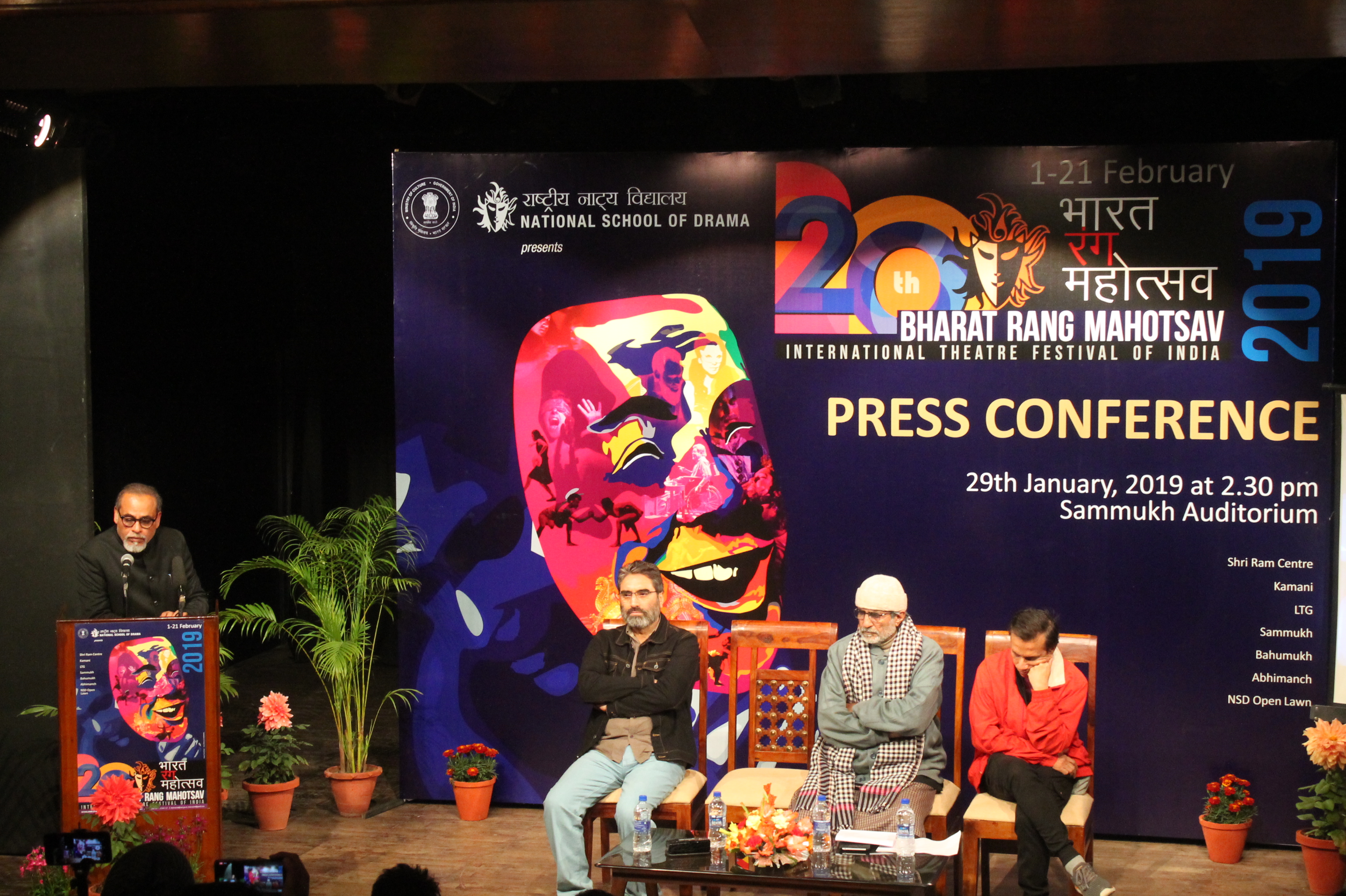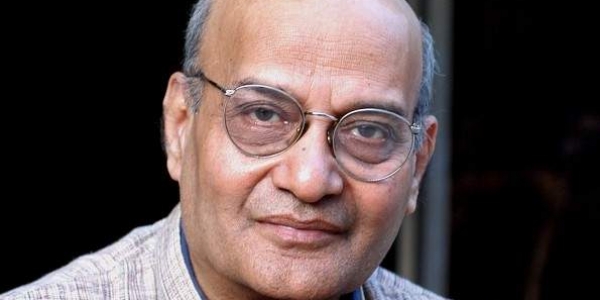
Tripurari Sharma’s SHIFA… THE HEALING Director: Teekam Joshi

Playwright: Tripurari Sharma

Director: Teekam Joshi

Group: Individual,Delhi

Language: Hindi

Duration: 1 hr 35 mins

The Play

Shifa is based on HIV+ people talking about the positivity of life, and about searching within oneself to find a new way of life. It is a play within a play where three real characters share their life experiences with the audience, not for consolation but about social stigma, discrimination, empowerment, acceptance and primarily, healing.

Director’s Note

One needs an inspiration for doing things, and I had several for doing this play. The first reason was Shri Ravi Nagar Ji, and the second was the need to fight against odds like illness, loneliness, stigma and discrimination that one sees and feels all around in society. Theatre can be inspiring, entertaining, and a platform for sharing. But sharing needs courage, and this play gives you that courage, to talk about those deeper experiences which you generally don’t and can’t share. This play is like opening a window on those subjects about which society has many reservations. I would like to convey my humble thanks to Tripurari Sharma Ji who gave me the permission to do it.

The Director

Teekam Joshi did P.G. diploma in Dramatic Arts from National School of Drama in 2001. He has received many awards including SangeetNatakAkadmiBismillah Khan YuvaPuruskar, Nat Samrat, IftekharAkadmi Award, and State Youth Festival Award. He has worked with the National School of Drama Repertory Co. and has been anexpert faculty for NSD extension program;visiting faculty at NSD for acting, voice and speech;visiting faculty at NSD Sikkim Centre,Gangtok for acting;Actor (consultant) Kingdom of Dreams;Associate and Assistant Director for NSD students productions;Associate Director of some NSD repertory productions;expert faculty for communication skills in different private universities;Executive Director of Aaj Theatre company(founded by BhanuBharti);Artistic Director of Unicorn Actor’s Studio;and Artistic Director of Flying Feather’s Art Association. He has participated in many national and international festivals.Teekam has worked with eminent theatre personalities like HabibTanvir, B.V.Karanth, Mohan Maharishi, M.K.Raina, BansiKaul, BhanuBharti, AnuradhaKapur, Kirti Jain,Ramgopal Bajaj,Robin Das, Tripurari Sharma, Rita Ganguly,D.R.Ankur, KavalamNarayan Panniker, John RusselBrown, WamanKendre, Prasanna, Kumar Verma, AlokChatterji, Sanjay Upadhyay, Raghunandan, K.S.Rajendran, Suresh Sharma, Bapi Bose, Ashok SagarBhagatetc.

The Playwright

Tripurari Sharma completed her diploma in direction from National School of Drama in 1979. She is a playwright, translator and director of repute. She has written and directed various plays for groups and institutions all over India. She has conducted workshops all over India and abroad. She has also written scripts of critically acclaimed films like Mirch Masala and HazarChaurasi Ki Maa. She has been honoured with the Sanskriti award and SangeetNatakAkademi award. Ms. Sharma retired as Professor of Acting fromNational School of Drama.

Cast & Credits

Sanjeev: Teekam Joshi

Chhaya: Nalini R Joshi / Nidhi Mishra

Barkha: PriyadarshiniPooja / ShradhaVasdev

Vinay: Manish Karnatak / Vaibhav Raj

Nani: GauriDewal / MuskanDua

Purush: Shaurya Shankar

Stage Manager: Harshvardhan / RajatDahiya

Reporter: MuskanDua / GauriDewal

Doctor: Akshay Sharma

Prof. Ganapati: AniruddhSagar

Students: Harshvardhan, Rajat, Akshay, Muskan, Shradha, Pooja

Child Artist: Nandini R Joshi , Lucky Lakshya

Group Actors: Harshvardhan, Rajat, Akshay, Akash, Muskan,Shradha, Nidhi, Nalini,     Praveen Parashar, Nirbhay Jain, Vaibhav Raj, Nikhil Singh Bhatti

Music: LateShri Ravi Nagar

Light Design: SoutiChakraborty

Set Design: Rajesh Singh

Sound Design: Sandy Singh

Poster Image: Indira Tiwari

Poster, Brochure & Video: Happy Ranjit

Choreography: HarshitKhatana

Sculpture: AniruddhSagar

Property: Sachin Shrivastav

Production Manager: GauriDewal

Production Assistant: Vaibhav

Sound Operation: ShubhamPaliwal


Pratap Phad’s ANANYA

Playwright & Director: Pratap Phad

Group: Suyog Production, Mumbai

Language: Marathi

Duration: 2 hrs 30 mins

The Play

We often get inspired by various icons but seldom an ordinary person, who is just like one of us, steps out of all stereotypes, to do something unimaginable. This is a story of an ordinary girl, Ananya, who possesses the potential to do something extra – ordinary. Being a bright student, she was always showered by praise and her confidence never seemed to cease. She was a free girl with a lot of ambitions and had also got engaged to the person she saw a future with. Everything was pretty and full of sunshine until she meets with an accident. Things start turning upside down in no time and begin to change. But she doesn’t quit. What she does to overcome the obstacles becomes a story which is beyond one’s wildest imagination.

The Director & Playwright

Pratap M. Phad, born on 15th August 1980, has written & directed various one act plays and experimental plays in Marathi and Hindi. He has been awarded with the Best Play and Best Director at Malhar ’03, TESPO 2005-06, Parangat Sanman ’08 and various other competitions. For Ananyaa, he has been awarded Best Director Maharashtra Shasan Puraskar, 2018, Best Writer Sanskruti Kala Darpan Puraskar 2018, Shreshtha Natakakar Aacharya Atre Puraskar 2018. He has also worked and contributed in film industry.

The Group

Mr. Sudhir Bhat formed Suyog Production on 1st January 1985. In 32 years, around 80 plays were produced by Suyog production. Moruchi Mavashi, Gandhi Viruddha Gandhi, Vyaki aani Valli, Sandhyachaya, Char Divas Premache, Sunder Me Honar, Mitra, Lekure Udand Jhali are some of the best plays of Suyog Production. Dilip Prabhavalkar, Prashant Damale, Bharat Jadhav, Vijay Chavhan, Atul Parchure, Vandana Gupte, Bharati Aacharekar and Neena Kulkarni are amongst the known personalities who have performed under this production. Suyog Production is one of the best production houses in Marathi theater industry. Ananyaa is 85th presentation of Suyog Production and in 2018 Ananyaa received 34 awards in various competitions.

Cast & Credits

Baba: Pramod Pawar               

Ananyaa: Rutuja Bagwe               

Priyanka: Anagha Bhagare  

Dhananjay (Dada): Vishal More               

Shekhar Sarpotdar: Karan Bendre               

Jay Dikshit: Siddharth Bodke  

Setting: Pravin Gavali aani Mandali

Lights: Devidas Shivgan, Akshay Jadhav

Music and Projector: Prathamesh Bhuvad, Ruchir Chavhan, Sanjay Umbarkar

Make-up and Hair Dressers: Sharad Sawant, Jyotsna, Chhaya

Costume and Property: Pravin, Prashant, Nilesh

Manager: Santosh Mahadik

Producer: Rajesh Patil, Sandesh Bhat, Pratap Phad


G. Krishanan’s ABIMANYA SUNDARI THIRUKALYAM, Director: D. Elumalai

Playwright: G. Krishanan

Director: D. Elumalai

Group: Sri Thanthoni Amman Therukkuthu Nadaga Sabha, Thiruvannamalai

Language: Tamil

Duration: 1 hr 30 mins

The Play

Duryodhana’s son, Lakshmana Kumaran, is eligible to marriage and Sakuni suggests he may be married to the daughter of Dhurgapuri’s Lord  Krishna. Duryodhana agrees and goes to Dhurgapuri Darbar. Entering, Duryodhana asks Lord Krishna to marry his daughter to his son. But Krishna decided to first speak with his wife. Duryodhana agrees. Mangalakshmi, wife of Lord Krishna, listenes to Krishna, but reminds him that he has promised his daughter’s marriage to Arjun’s son. Lord Krishna says that as Arjun has lost almost all his land, we must reconsider the match. They finally decide to marry their daughter to Duryodhan’s son and announcement of the same intent is made. When their daughter, Sundari, hears this, she gets upset, and sends a message to Abhimanyu through Vayu Bhagvan that he should come immediately and marry her. Abhimanyu gets the message and straightaway sets out to stop the wedding.

Director’s Note

This play is dramatized from Mahabharata’s story of Abhimanya Sundari Thirukalyanam. It was performed in our rural villages. The audience would eagerly wait for Sundari’s entry. Whenever we performed this play, the Kattiya Karan (Narrator), makes jokes and adds humour to the whole play.

The Director

At the age of sixteen, after finishing his school, D. Elumalai underwent training with two Koothu teachers, Kishtappa Meshtri and Srinivasa Meshtri. He learnt Adavu and songs from them. Later he joined Purisai Kalaimamani Subramaniya Thambirar Therukoothu group as an actor. There he learnt Adavu from Kannappa Thambiran and Sambanthan in 1987-88. He founded the Sri Thanthoniamman Therukoothu Nadaga Sabha in the year 1997. He gave training to Thalai -K-kol, a modern theatre group in Pondichery and organised the performance of Nadu Koothan there. In 2006-2008, he got trained in Therukoothu at Pondichery University. He also conducted a 10 days’ workshop at National School of Drama’s Bangalore Centre. He is the chief trainer for Therukoothu. He got Kalai Nan Mani award from the Government of Tamil Nadu.

The Playwright

G. Krishnan has been writing for the last 30 years. His plays have been translated in German and French. He teaches Thabasu and Krishnan Doodhu to the village youths. Thakkayagam, Arjunan Thabasu, Lavakusha, Baratham, Sundari thirukalyam are some of his famous plays.

The Group

Sri Thanthoniamman Therukoothu Nadaga Sabha is the leading Tamil folk Theatre group that promotes the traditional folk art form of Therukoothu. It was established in 1985 by a Group of folk theatre enthusiasts who were involved in promoting Therukoothu in the districts of Thiruvannamalai, Kanchipuram, Chennai, Vellore, Dharumapuri, Pondicherry. They have performed in the National Theatre festival (19th BRM at New Delhi) and have also conducted a number of workshops with college students, foreign research scholars and school children.

Cast & Credits

On Stage: Ravichandran, Madhavan, Vijay, A. Ramakrishnan, M. Haridass, Ethiraj, E. Manikandan, Subramanian, Mukundan, Elavarasu, S. Rajesh, Venkatesan,

Harmonium: Seetharaman

Mirudangam: Krishnamoorthy

Mughaveenai: S. Chandiran

Lighting: E. Sukumar

Design & Props: E. Suresh

Translator & Coordinator: M. Manivanna


Ram Gopal Bajaj, the founder of Bharangam to be felicitated on the Inaugural


National School of Drama’s 20th Bharat Rang Mahotsav, the International Theatre Festival of India, is Back with a Bang; Gears Up to Dazzle India

The International theatre festival of India, Bharat Rang Mahotsav, BHARANGAM,  will kick off in New Delhi on 1st February, 2019 and culminate on 21st February, 2019 and will cover 6 cities in India with 111 shows and various allied events.

A key feature of the inaugural ceremony of the festival is the felicitation of its founder Ram Gopal Bajaj, who was the Director of National School of Drama. It was his visualisation of the idea of bringing best of theatre from India and later all over the world, to help the students of NSD to see the possibilities of theatre and also an experience for the audience to absorb and be enriched. 

Bharat Rang Mahotsav (BRM), the annual theatre festival is organized by the National School of Drama (NSD), was established two decades ago, by Ramgopal Bajaj to stimulate the growth and development of theatre across India. Originally a national festival showcasing the work of the most creative theatre workers in India, BRM has evolved to international scope, hosting theatre groups from around the world, and is now the largest theatre festival of Asia. Till date, BRM was celebrated in New Delhi and has travelled to several cities in India, presenting an overwhelming 1787 plays, and riveted thousands of audiences who basked in the glory of heart-winning stories and superior performances.

The 20th edition of BRM will include various national and international performances, and associated events such as, ‘Director’s Meet’, ‘Living Legends’, and ‘Master Class’. This year, the festival pays a tribute to Mahatma Gandhi, the ‘Father of the Nation’, on his 150th birth anniversary and will stage plays depicting the Gandhian philosophy and the dilemmas Bapu had as a person. The 20th Bharat Rang Mahotsav also hold parallel festival in other cities including Dibrugarh (Assam), Varanasi (Uttar Pradesh), Ranchi (Jharkhand), Mysore (Karnataka), and Rajkot (Gujarat).

The 21-day long festival will stage plays in Hindi, English, and other regional and international languages. International productions from Bangladesh, Poland, Russia, Sri Lanka, the Czech Republic, Italy, Nepal, Romania, and Singapore will also enthrall the audience during the festival.


Apart from plays, the festival will also host folk performances and other traditional performing art forms, street plays by around 50 dramatic societies of colleges in Delhi, and national and international seminars discussing the theatre scenario in India and abroad.BRM is organized by National School of Drama (NSD), an autonomous institution under the Ministry of Culture, Govt. of India and one of the foremost theatre training institutions in the world.

20th Bharat Rang Mahotsav (BRM), the largest theatre festival in Asia, organized by the National School of Drama (NSD), is all set to bring its bouquet of plays, interactive sessions, and other cultural events to cheer up the winter afternoons of theatre enthusiasts in the city.

The inaugural ceremony will be held at Kamani auditorium on 1st February, 2019 at 6:00 PM followed by the performance of ‘Karanth ke Rang’, directed by Amod Bhatt. The 50-minute long performance is a medley of songs composed by late Shri B V Karanth, a stalwart of Kannada and Hindi theatres. Shri Karanth was a prolific composer of songs and scripts for theatre and directed and acted in many productions.

The festival, which enters its 20th edition this year, is celebrating the 150th birth anniversary of Mahatma Gandhi – 4 of the plays to be staged on the life, philosophy, and principles of the ‘Father of the Nation’. The festival will host 69 Indian and 15 foreign plays across India, selected after screening. Additionally, 9 folk productions, 5 plays by NSD diploma students, 1 production from the Sikkim center of NSD, 3 plays by the NSD Repertory as well as 5 invitee plays by eminent theatre practitioners will captivate the theatregoers across India.

The national capital will host 89 plays: 25 plays in Hindi, 16 in Bengali, 5 in Kannada, 2 in Marathi, 2 in Odia, 2 in Gujarati, 2 in Manipuri, 3 in English, 2 in Assamese, 2 in Malayalam and 1 each in Maithili, Telugu, Nepali, and Sanskrit, in addition to 15 foreign plays, the festival also brings 8 folk performances to theatre aficionados in the city.

The 21-day long festival this year will include plays in Hindi, English, and other regional languages. International productions from countries such as Bangladesh, Poland, Russia, Sri Lanka, the Czech Republic, Italy, Nepal, Romania, and Singapore as well as non-verbal, folk, and multi-lingual performances will enthrall the audience during the theatrical spectacle.

The performances in New Delhi will be held at Bahumukh and Chahumukh (7:30 PM), Open Lawn (6:00 PM), and Abhimanch (8:30 PM) at the NSD’s Bahawalpur House campus as well as nearby Sri Ram Centre (4:00 PM), LTG (5:30 PM), and Kamani (7:00 PM) auditoriums.

Apart from the spellbinding performances and interaction with thespians and eminent personalities from the world of theatre, the festival in Delhi will also have 2 international and 2 national seminars on theatre. The national seminars to be held in New Delhi will attend to the topic ‘Is Modern Theatre Inclusive?’ and will hold sessions dedicated to ‘Notion of State and Representation’, ‘Unrepresented Form’, and ‘Non-Governmental Curating and Funding Policy’.

Besides, the NSD campus will be abuzz with street plays, ambience shows, and ‘Theatre Bazar’, a motley of stalls offering a range of products and culinary delights. The youth forum shows will comprise performances by dramatic societies of nearly 50 colleges in Delhi while ambience performances will bring folk dance and other traditional performing art forms.

In keeping with its concerted efforts to promote theatre among people and take select performances to other parts of the country, the NSD arranges parallel festivals in Dibrugarh (4th to 10th February, 2019), Varanasi (7th to 13th February, 2019), Ranchi (9th to 15th February, 2019), Mysore (11th to 17th February, 2019), and Rajkot (13th to 19th February, 2019).

“The art of theatre is the oldest and the strongest medium that conveys human emotions in a manner that defies temporal boundaries. We are delighted to usher in the Bharat Rang Mahotsav to its 20th year and have made all efforts to bring a selection of quality plays, choosing the best out of 960 submissions. There are 9 folk performances being presented in Delhi as well as invitee plays and productions in regional languages. We have tried to accommodate as many young theatre enthusiasts as we can, since the institution aim to foster the growth of young talents through the platform of BRM,” says Shri Suresh Sharma, Director In-charge, National School of Drama (NSD).

“Theatre is a celebrated art form across the world and I am happy that this festival gives us a chance to witness many of the plays which have received critical acclaim globally. BRM aims at bringing together people and hence, we have spread the festival across the country so that theatre reaches more and more people. BRM has been a very successful festival attracting a lot of audience, including first-timers and we hope a similar run this year too,” says Dr. Arjun Deo Charan, Acting Chairman, NSD Society.

About National School of Drama (NSD)

The National School of Drama is one of the foremost theatre training institution in the world and the only one of its kind in India. It was set up by the Sangeet Natak Akademi as one of its constituent units in 1959. In 1975, it became an independent entity and was registered as an autonomous organization under the Societies Registration Act XXI of 1860, fully financed by the Ministry of Culture, Government of India. It offers 3-years training program in every aspect of theatre with a special focus on the practical implementation of theories. The NSD has two performing wings – the Repertory Company and Theatre-in-Education Company (TiE) that started in 1964 and 1989, respectively.
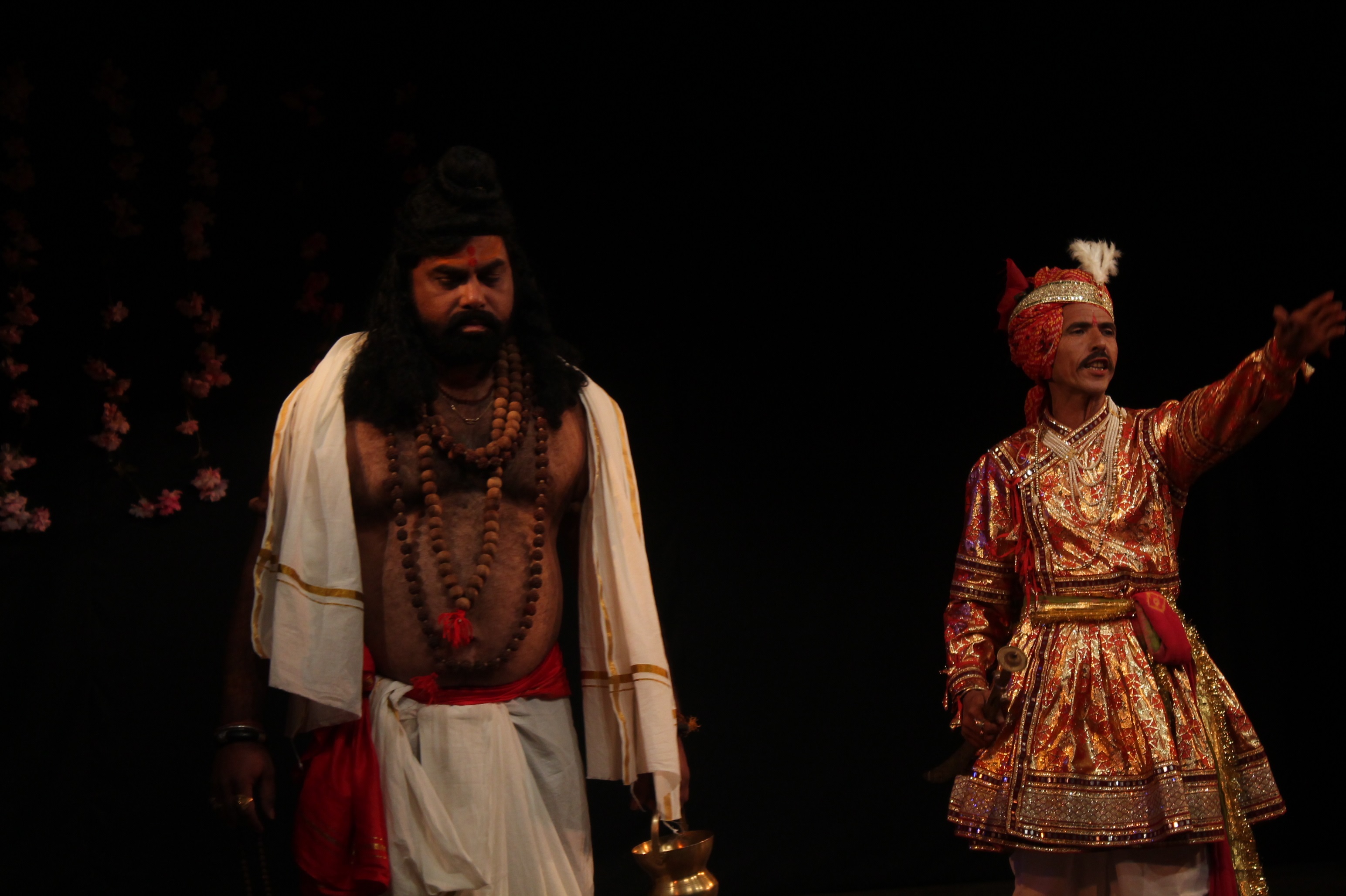
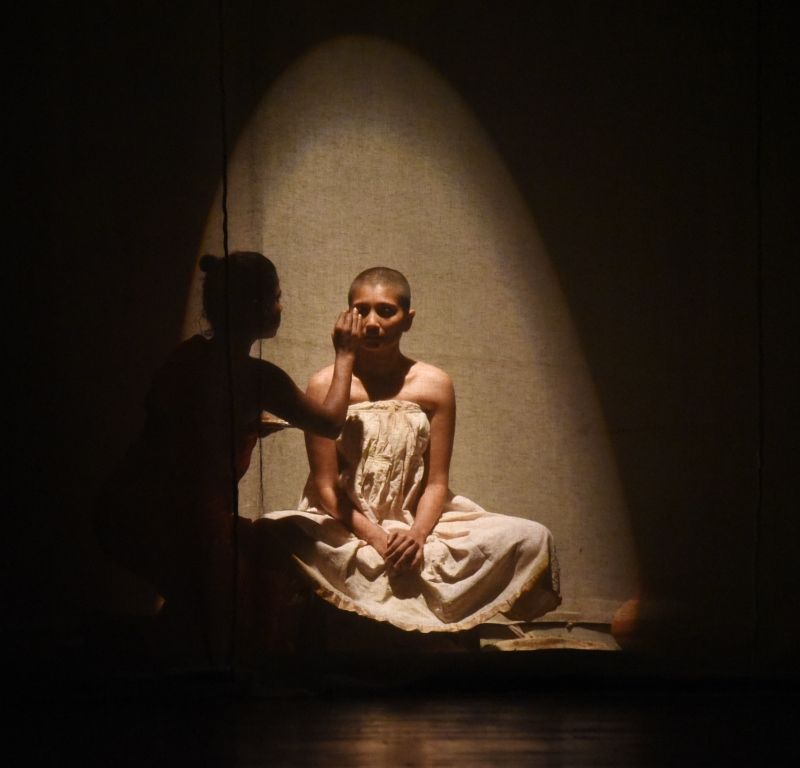

The Owl and the Pussy Cat / Seema Bawa


Actors: Kavita Dang and Kumud Mishra                           Director: Satyajit Sharma

The Owl and the pussy cat went to sea in a beautiful pea green boat…

Thrown together in a low-rent bachelor’s flat instead of a ‘pea-green boat’, the odd couple in this highly amusing Bill Manhoff comedy, is certainly not at sea! ‘The Owl’, Felix played by Kumud Misra, a highly accomplished actor, is a self-styled intellectual author – while ‘the Pussycat’ played by Kanika Dang, is a wannabe actress and model – however, to pay the bills she entertains gentleman callers, a prostitute but not promiscuous.

Having noticed the stream of gentlemen caller at her apartment through his binoculars, the peeping owl does his ‘civic’ duty by informing the superintendent of the building. The pussycat with nowhere to spend the night seeks revenge by imposing on the owl for a bed. And then, through a battle of wits, words, and wisdoms they both start to ‘educate’ each other as well as the audience in ways they never knew they could.

The current production by Dotted Line Productions has wisely kept it simple and has not endeavored to create convoluted and over intellectualized caricatures of the protagonists. The director, Satyajit Sharma, an NSD Alumni with several outstanding acting and directorial performances to his credit, takes two great actors who handle some good old fashioned repartee rather well; coupled with adept handling of a witty script to put together an eminently watchable show.

The play focuses on two people who get to know each other, have sex, and eventually fall in love. As in most romantic comedies, one-liners abound and the protagonists are shown falling from their own self constructed identities. The fight in Felix’s apartment after Doris barges in at the beginning is hilarious. She gets upset by his use of big words, but eventually buys her own guide to extending one’s vocabulary. He is horrified by her “filthy” animal existence exemplified in his use of words like gutter slime and filth for her, but delights in the new experiences she has to offer. The two show each other new ways of looking at things and which is why Doris and Felix’s chemistry works for the audience. It’s is akin to what happens in real life. Their romance is played for laughs, but it’s also sweet and touching. Felix, like most men, has to have a near nervous breakdown before deciding Doris is the one for him through a bitter-sweet dream sequence that evokes meta-theatre. As each displays their softer selves, the audience realizes they have more in common than they think. The two are in transition; looking for that obscure goal of success; he in writing, she in acting. This shared ground draws them together and reflects to the audience a very real struggle that we all experience in relationships.

Odd couples, whether of the same or different sexes have been a comedy formula for decades. The play enthralls with its at times salty language. Most importantly, Kumud and Kanika have a very definite chemistry. Though Kanika’s is better delineated and in intrinsically is the more outrageous and attractive character (being the underdog) in the script, it does not steal the focus. Kumud interprets the inherent wimpy-ness and prissyness of the character with a paradoxical male strength and libido. This makes for a powerful performance that converts the essentially mono-dimensionality of the character into a rather complex and conflicted one. The interlude when the wimpy Felix transforms briefly to a randy ‘baby’ is remarkably executed with Kumud performing from each pore of his being.  Kanika has put in a lot of effort into building her character but while she is able to bring to fore the tartness of Doris, the vulnerability written into the character does not come out as well as it may have. Though this prostitute has a heart and it shows.  While the play per se is not deep enough to allow for great acting, it does give scope to the two protagonists to demonstrate impressive technical finesse; the director who is apparently debuting for the group needs to be complemented for this.

In order to be memorable theater, the discovery by Felix and Doris that they are good for each other need  not be revelatory in the vein of a metaphysical revelation, but should be funny. The director and his cast achieve this with ease. The humor in “The Owl and The Pussycat,” depends largely on sarcasm, insult and the sort of logic that has Doris announce: “I may be a prostitute, but I’m not promiscuous.” A lot of the humor of the play depends on language and the “play” thereon. Much is made of the fact that Doris doesn’t understand words like despicable, aesthetic, assimilate and intrinsic while Felix who seeks to define himself through words or concepts finds them completely incapable of addressing his feelings for Doris. A comedy based largely on language and timing is always a difficult ask and the current production delivers in aces.

Directorial skill is amply demonstrated in terms of technique, stage craft and spatial usage. The fundamentals of good stagecraft such as blocking, body language and use of space have a refreshing rehearsed certainty and professionalism fast disappearing from current productions.  Interludes of well chosen music pieces and the intermittent use of gaps during the play deserve to be commended. This despite the somewhat inadequate lighting arrangement around the proscenium of the LTG auditorium


Small is Beautiful / Keval Arora


When listening to people speak of how difficult it is today for theatre groups to survive, and therefore of the feasibility of theatre itself, I find it difficult to share the general air of regret that envelops such discussions. Sure, it isn’t easy to produce plays on a regular basis, especially for those who intend to make a living solely off performance. But it probably never has been – at any rate, far longer than many doomsayers would care to remember. Theatre today is pushed into a corner. The sooner we accept that fact as a given condition, and make our adjustments and interventions with such shrinkage in mind, the better we will be able to renew our appreciation of theatre’s strengths and possibilities. Hankering for a return to glory days is a nice theme for lazy winter afternoons, but not for the evenings when rehearsal time is upon us.

Is this an unfounded optimism? I think not; in fact, it’s not even an ‘optimism’ in the first place. If anything, it’s impatience with the habitual passivity, the automatic funereal tone of the way we think about our work. If ‘the death of the theatre’ will ever come to pass (the way in which there has been talk for some time about ‘the disappearance of the playwright’), I suspect it’ll come from the failure of its aficionados to look forward from the present. By this, I do not mean that we accept the current scenario as a value in itself, for there is no need to infect our appreciation of theatre’s function with the market-driven models of today. But, we do need to see where we can go from here, rather than talk as if our future lies in returning to the past. I sometimes hear the 70s being spoken of with some fondness. But I began watching theatre in the 70s, and I don’t ever remember feeling free of the same anxieties then, the way retrospection today persuades us to believe. Unfortunately, for many people, the past has always been a better place, much in the way that the dead have only good things said about them.

There is always an audience available for plays. Correction: there will always be an audience available for plays. In the several years that I have been attending performances, I have not come across too many instances of plays running to absolutely empty houses. It is another matter that some plays that deserved fuller houses did not get them, while others that ought to have been less popular had spectators arriving in droves. (Given the troubled state of theatre attendance and solvency, comments on such anomalies were rarely aired aloud, being more a matter for internal envy rather than for public pride.) The point is not whether there is or isn’t an audience for theatre; rather, what is our expectation of an audience – what is the minimum number required for spectators to be regarded as an audience?

It is essentially a numbers game. An ‘empty house’, or a ‘FULL House’, is a relative term, relative to the capacity of the auditorium and varying in tone according to the amount paid out as rental. Take a 500-seater, sell 50 tickets and you have a cavernous hole that depresses producers, deadens actors and embarrasses spectators by its silence. Place the same 50 people in a space designed for 75, and there is no way you can remain immune to the palpable buzz of togetherness. Performances in smaller spaces get charged in a manner that is impossible to replicate in the bigger auditoria. Amidst all this talk of dwindling attendance, why then do we insist on opting for large auditoria as our venues?

Admittedly, 50 tickets (not a terribly inspiring number in itself) is still only 50 tickets, irrespective of whether the number left unsold is 450 or 25. In the 75-seater auditorium, it still adds up to the same absolute number of spectators, and generates roughly the same amount of income; so why is this supposed to be a rosier picture? Before I am accused of dipping into the bag of ingenious tricks perfected by finance ministries to manufacture their statistics of health, let me quickly say that it is the economics of play production that makes me see in smaller venues an answer to our woes in the theatre. That is, even if we disregard the value of such space in terms of performance and spectating, there are still financial advantages to working in the 75-seater auditorium.

Smaller theatres cost much less to rent than the bigger ones. As hall rentals form a substantial and recurring portion of production expenditure, any reduction in this area will contribute substantially to financial health. What most theatre groups do when they book the 500-seat auditorium is express a hope for attractive returns; what they end up doing is investing in 450 empty seats.

Small auditoria cannot of course meet the needs of all plays. Some texts require the machinery of large stages, or the space required for big casts. Such productions will necessarily have to exclude the 75-seater auditorium from its range of options. But, the majority of plays are geared for, or amenable to, intimate stagings. Especially contemporary plays, for playwrights too have wised up to the need to cater to groups with few actors and limited means.

The other advantage to performing in small spaces is of course enough to make such venues attractive even if they were by some quirk more expensive to hire. In the small theatres, the proximity of the actor to the spectator confers an intensity and directness upon performance that is difficult to match in the anonymity of larger spaces. When I think of performances that got under my skin when I saw them and are still with me now, I am struck by how many of them were played at intimate venues: Woyzeck and Adhe Adhure at the NSD Repertory’s Studio Theatre, Nagamandala at the Prithvi in Mumbai, Mother Courage at the Modern School Gym….  How much of their magic owed to the setting in which they were performed, whether that quality would have been preserved had they transferred to larger, more conventional spaces, are difficult speculations. Productions are conceptualised with physical spaces and visual relations in mind; the best actors play within the altered chemistry that proximity brings; and therefore it is naïve to think of theatre productions as manufactured items that function with the same stability no matter the shop in which they are sold.

Such intensity may not always be comfortable or desired. First time actors quickly experience the disorientation of performing in close-up, and learn to tone down volume and gesture, cull emotion of its theatricality, and re-locate their focal centre within themselves; in other words, they learn to work pretty much as actors do for a camera. Spectators can sometimes be discomfited too, especially when actors fail to work within the reduced scale – as in the case of performances at the now unavailable for theatre IHC Basement, where actors sometimes project their voices and bodies as if they are addressing back rows 75 feet away, they effectively end up bombarding the audience rather than speaking to it. But, there is no denying that special feeling of being sucked into the fiction when spectators are virtually thrust into the performance space.

This sensation is heightened in those small theatres that are not designed as the poor cousin, mimicking the proscenium methods and apparatus of the Big Brother. The real strength of the small stage lies in the flexibility that reduction in size brings – in its potential to leave seating and lighting arrangements to the director and the set designer and to let them determine the physical and visual relation best for their production, as in the Bahumukh theatre at the NSD. However, even when the audience seating area is physically demarcated and fixed (as in the case of Bombay’s Prithvi Theatre and the NSD Sammukh Theatre), the fact of being seated at an informal distance, at virtually the same level as the actors (the Bahumukh) or at scattered angles (the Prithvi) makes watching a performance here very different from the regular experience. The effect of a heightened intimacy, a direct (and sometimes even private) connection with fictional space, powerfully underscores theatre’s function as a persuader.

That’s why it’s not the same thing to being seated in the first row of a regular auditorium. If you’ve had the misfortune of being stuck up front, you’ll know what I mean when I say that it’s possibly the worst row in the house. Great for being looked at perhaps, especially if you make arriving late a habit; but lousy if you’ve come to look at the show. The angle at which you have to look upwards is all wrong (especially at the Kamani), and it’s virtually impossible to take in the width of the stage without feeling that you’ve wandered into a tennis match. (Great exercising for the neck, of course, so let’s not trash the hidden benefits of the theatre?) Watching a street performance in the round does not produce a similar effect of intimacy either, though there is little physical distance between the actors and spectators, and the performance area does not call for callisthenics of any sort. I’d imagine that it is the ‘public’ nature of such theatrical practice that overlays all such ‘proximity’ with a public air.

Where are such performance spaces in Delhi? The SRC Basement is the first name to crop up, but that apology of a performance space merits first mention only because it’s been around a long while – no longer, though: it closed down some years ago – and a home to several theatre groups. There is no other comparable space. The Basement Theatre at the IHC had begun to witness a lot of activity, but that was mainly because of a dearth of venues at that price. For the IHC Basement to have fulfilled its potential, it had needed to alter the performance space to allow multiple-entry access to actors, to install a lighting grid that covered the entire space and to install more lights of much lower wattage. I speak of all this in the past tense because today the IHC Basement Theatre is unavailable to theatre performance courtesy the objections of some municipal committee. Other spaces such as the Sammukh and the Bahumukh theatres are performance-friendlier spaces but unfortunately available only to programmes run by the NSD.

That makes this discussion on the merits of small performance spaces a purely academic one. The small auditorium, like so much else in the theatre, sadly exists more as idea than as fact.

An earlier version of this article was first published in FIRST CITY (November 2001)


Keval Arora’s Kolumn


Come admission time in Delhi University, a strange ritual involving drama is enacted every June and July in several colleges. This ritual concerns admissions where the minimum marks required for entry into various courses are lowered for candidates with a demonstrable talent in theatre. Well, not just theatre: other Extra-Curricular Activities (generally described as ECA) such as music, debating, dance, the fine arts and photography also qualify. I’ll confine my comments to the situation concerning theatre, though much of what happens here is broadly true of the other activities as well.

The ritual is interesting for several reasons, not the least of which is the keen interest shown in it by those members of the University community who do not subscribe to either its aims or its methods. For those who do, it’s a gratifying time because artistic activity is now granted however grudgingly some place in the sun. For the greater majority of those who don’t, it’s gratification time when non-academic achievement becomes the means by which academic under-achievement can be given the go-by. And, at a time when eligibility criteria and admission irregularities are being closely monitored by the media and sometimes even mediated by the courts, the little ‘discretion’ that ECA admissions allow seems to go a long way indeed!­

As for the candidates, it goes without saying that this opportunity is embraced gladly by those who stand to benefit, without any grumbling of the kind that ‘reservation quotas’ inspire from those who don’t. It must be remembered though that ECA admissions have always been used by candidates as an insurance against their not getting admission into the course/college of their choice rather than as a first-choice option. In fact, if one were to go by the quality of most of the applicants, being unable to secure an admission through the general channel appears to be the main eligibility criterion! Yet, listening to these applicants introduce themselves as being driven by a great thirst for theatre, one can see that the natak begins well before they have mounted the stage!­

That’s the questionable underside of such admissions; but there are other questions, more legitimate and no less problematic for all that.

For instance, these admissions bring to a head the difficulty of evaluation and ranking. A prickly procedure at the best of times, acts of ranking becomes decidedly iffy when it involves no more than a one-off stab at serialising creative achievement and potential. Moreover, with subjectivity being both dominant practice and cognitive tool in art appreciation, how does this intermesh with a policy of ranking which necessarily invokes the application of some kind of objective or at least commonly acceptable criteria? Also, is it possible to set up a grid of checks and balances to shape and circumscribe such evaluation?

Of course, art activity is judged one way or another all the time, by way of reviews and commentaries in the media, or through selections for scholarships, grants and festivals. But rarely do such judgements, upsetting as these are sometimes, stamp actors or grade performances with the kind of hierarchical finality that is found in the admissions process. ECA committees are known to blithely wield axes that even the most rabid of reviewers would flinch from using.

After all, the one thing that loosens a reviewer’s tongue is the comforting lack of tangible consequence. The knowledge that reviews (often published after the event and therefore having a negligible impact on ticket sales, as in Delhi) are primarily cud for discussion enables reviewers to offer free and easy critical response. In contrast, the hardening of subjective opinion into summary judgements that slam the door shut on young hopefuls cannot but be a frightening responsibility. Sadly, it is rare to see this responsibility being judiciously exercised. All too often, ECA committees make their choices, unperturbed by the insufficient evidence on which these are based.

Another interesting aspect of this admission policy lies in what it reveals of attitudes towards and the space given to cultural activity within our educational institutions. (There is surprisingly little difference between schools and colleges in this regard.) At first glance, the fact that provision is made for such admissions appears an enlightened measure, for it implicitly acknowledges that artistic achievements can be factored into determining the worth of a candidate. The obsessive pursuit of better and better marks in the Board examinations has made most schools downgrade non-academic creative activity as a secondary and even irrelevant practice. Students who spend time nurturing diverse interests and talents do, in all probability, end up with lesser marks than single-minded swotters, but they are not poorer students for that. In fact, the opposite is more likely to be true. So, what’s the harm if extra-curricular talent is used, in a little reverse flow, to enhance the candidate’s chances of admission, right?

No harm at all, especially as you can’t remember the last time when you saw cultural practice command a premium in the marketplace. Yet, things aren’t quite hunky-dory. A second glance reveals that this ‘enlightened measure’ is riddled with contradictions that float around unacknowledged as institutions blunder on with quaint notions of the education process. Why, I sometimes wonder, do colleges embark on these valuations of artistic worth if nothing changes down the line? It is the rare college that takes theatre activity seriously enough to offer realistic support in terms of scheduling, administrative support, budgetary grants and end-of-term honours. When institutional calendars designate cultural activity as mere recreation, it is understandable why admission processes too value and evaluate creativity in confusing terms.

The real problem, therefore, with this process is not, as is commonly argued, chicanery or the underhand attempts to buck the system – great Indian malady that: “have system, will buck!” – but that it lacks clarity of purpose. It is far easier to tackle the depredations of corruption or nepotism than it is to tackle the mess created by a muddle-headed approach to sports and cultural activity.

An instance of this mess is the divergence in the methods employed by different colleges to select candidates. The fact that there are no University guidelines for such admissions doesn’t help because it leaves college administrations free to flounder. In the absence of tested procedures, the time spent on evaluating an applicant’s artistic ability varies enormously. At some colleges, theatre candidates are disposed of with brutal efficiency in a flat 10-15 minutes each: 5 minutes for a brief performance of a prepared piece and the balance for displaying their general knowledge (‘name three Indian dramatists’) and their certificates to an interview panel. On the other hand, at another college that I shall leave unnamed, some 40 candidates are processed through several elimination rounds (comprising prepared pieces, extempore performances, text-analyses, solo and group improvisations, and interviews) that add up close to 30 hours over 2 days.

Unlike a casting audition where the playscript provides some framework for selection, general testing for talent in drama is fraught because of the absence of clear-sighted goals, the procedures by which these can be sought, and a level playing field where applicants from different backgrounds and schools are played off against one another. For instance, does one or does one not distinguish between applicants who have studied in schools that possess a reasonable equipped auditorium, employ a drama teacher and place theatrical activity in the weekly timetable and those whose schools have no time or money for such things? This is probably why admission committees rely on applicants’ certificates and brief presentations as a safe option. This procedure has the merit of appearing so objectively quantifiable that its inadequacy never ever comes to the fore.

Relying on certificates merely transfers the problem elsewhere, for then how does one assess the worth of such certification? In the absence of recognised inter-school drama festivals or training institutes, the drama certificates that most applicants produce relate to internal school activity, often indicating no more than the school’s initiative in matters cultural. This is a far cry from the creditworthiness of certificates produced by sportspersons to gain concessional admissions into colleges. With several tournaments organised for different age and proficiency levels in which students of different schools compete on relatively more level playing fields, sports certificates are fairly reliable indicators of achievement and potential — reliable enough, in fact, for forgery to have become a regular proposition!

It is equally risky to judge these young candidates by their prepared pieces alone, for it may be someone else’s ability – an adult teacher/director through whose hands the candidates have passed – that gets judged. (Of course, this cuts both ways when you consider the quality of drama instruction available in even our best schools.) Another problem is that these presentations often drip with mechanically heightened emotion — in the mistaken but understandable conviction, given the all-pervasive television soaps in which whole generations are being rinsed, that powerful acting is always exhibitionistic in intent. Finally, the ‘prepared piece and certificates’ formula is inadequate because it merely ascertains, however dubiously, the candidate’s past achievement without assessing her future potential. Admissions determined through these criteria end up looking like rewards for work already done, like certificates of merit that conclude rather than initiate a new activity. Surely the purpose of special admissions is the benefit that the college aims to derive from the student’s stay at the institution. What is therefore needed is a selection process that offers a more accurate picture of the candidate’s potential to work in the college – a process that tries, in a manner of speaking, to get beneath the skin, with the aim of observing individuals at work rather than superficially evaluating the packaged product that they make of themselves.

Such a process will still acknowledge past achievement, but only to the extent that it throws light upon the candidate’s potential. It will focus on assessing individual creativity by challenging it through the unpredictable structure of solo and group improvisation exercises. Apart from checking the candidate’s ability to work within a group, to accept direction and to critically analyse his own creative choices, the fact that all this takes an enormous amount of time will also make this process a test of stamina. The pressure to be creative under conditions of tension and fatigue is arguably the best test of performance ability, though one has to be careful not to overdo such terms of endurance.

Finally, the efficacy of any selection procedure, even the most enabling one, depends upon its rationale being understood and its implications worked out. The selection process’s emphasis on ‘potential’ and ‘usefulness’ rather than ‘past achievement’ means that in the case of over-qualified candidates, some hard decisions have to be taken. Some years ago, the son of a renowned violinist, a budding violinist himself, was granted an ECA admission at the college where I teach. But, between his classes and his tours with his father, he had no time left for playing in or for his college, and finally graduated from the institution having graced it with his instrument just a couple of times during that period. In drama too, many applicants today pop up with some experience of having acted for television. That sounds impressive alright, but this can be a real pain in the neck. For, not only are such candidates infected by the work ethic of the television studio, their commitments to the small screen leave them with little time for participating in college drama activity. Only colleges which bask in the reflected glory of their alumni welcome such stars. Others, with work goals defined in the present, continue their work with ordinary mortals and realisable potential.

Potential for what, is another question altogether. The academic year begins well with ECA admissions, but a couple of months down the line cultural activities get treated like the proverbial stepchild. For sports, there is a hectic University calendar; culture gets left to college students and their fizz-drink sponsors for whom culture is confined within Ramp Displays (ubiquitously christened Fashion Shows’) and Rock Shows. (The University does have a Culture Council in place but that is badly in need of some counsel and resuscitation.) Sports budgets are large and inviolate; ECA budgets are less than a tenth and constantly eaten into. Sports activities are run by faculty members appointed for the purpose; cultural activities are supervised, if at all, by regular teachers on a voluntary basis.

It is therefore not unusual to find that the categories under which the ECA admissions are made have precious little to show by the end of the year. Lack of accountability is in fact built into the system with teachers not being directly responsible for ensuring that the ECA students work, in the same manner in which they are accountable for taking classes or finishing their courses. In such a context, it is not out of place to wonder why colleges go through the trouble of having these admissions in the first place. The answer, I’m afraid, is not flattering at all.

If this is an unrelievedly depressing picture, let me point out that all cultural initiatives in the University have not collapsed. It is merely the system of the ECA admissions that has not delivered, not because it has been hijacked by vested interests but because the anxiety to appear just (more than the desire to be just) has led to the selections being carried out in thoroughly unimaginative fashions. Meanwhile, plays have been staged, instruments played, sketches made and photographs displayed, often on the strength of students who have not had to declare their artistic talents in order to gain admission.

Interestingly, the ECA admissions have worked when college administrations have not shied away from acknowledging the subjectivity of the selection process, and have insisted merely on it being an informed, committed and transparent subjectivity. In that lies the only insurance against possible abuse of such ‘licence’. Testing has to be entrusted to those teachers and senior students (and alumni) who have formulated projects for the year and will be responsible for carrying them out. An audit of each year’s activities will also prove useful. Finally, as in so much else, the viability of the system boils down to the integrity and commitment of the persons involved. There is no getting beyond this basic fact. At any rate, are these not crucial ingredients in any form of cultural practice?


Curtain Call / Keval Arora


For most of us, the curtain call is a ritual that marks the close of a performance. As a ritual it cuts both ways. It’s gratifying when we’ve enjoyed the show and wish to demonstrate our appreciation. Or, it’s a tiresome chore when we haven’t and are keen to duck our heads and run. Understandably, this spectacle of playmakers lined up to receive applause is often regarded as simply an appendage to the main event, a polite form of ‘goodbye’ and nothing more. But, I sometimes wonder if we have anything else, amongst the wide variety of conventions that govern the theatre, to match the curtain call in the way it underlines, with economy and assurance, the ‘live’ aspect of theatrical performance.

 For, until that moment when performers shed their fictional selves and return to the stage in their own persons, the actor-spectator relation in the theatre is essentially no different from that found in other kinds of performance, such as the television or the cinema. That is to say, it is a relation where performers and audiences are hermetically sealed off from each other, each inhabiting qualitatively different zones of being. Sure, when compared to the actor in cinema/television who is a fixed and unvarying aggregate of pre-recorded decisions, the theatre actor is available as a ‘live’, volatile presence that forever holds out the promise of doing things differently in each performance. However, the degree to which the spectator is separated from the ‘character’ised actor in both these cases is remarkably similar. It is only with the curtain call in the theatre that the boundaries which segregate the two are comprehensively dissolved.

 When actors slip out of their ‘characters’ and step up to receive the audience’s applause, when spectators gesture their appreciation directly to the actors, the world of make-believe finally ceases to be. The actor re-enters his own (and the audience’s) world, so to speak, and a different, informal, and more ‘real’ compact between the two parties in the performance equation comes into being. On the occasions when performers and spectators have interacted after the show, either through Q&A sessions or in cocktail-fuelled get-togethers, such cohabitation has taken on a life of its own. But, even when there is no post-performance transaction, the curtain call remains an acknowledgement, albeit brief and perfunctory, of the basic contract that underlies all theatre performance and consumption. As a gathering together of distinct strands of being, the curtain call affirms in its own way the communitarian nature of the theatre – a place where people come together to enact and to witness. It is therefore possible to celebrate the humble curtain call as a distinctive marker of theatrical performance.

 Am I reading too much into what is today an automatic practice rather than a deliberated expression of pleasure and praise? Perhaps. But, the fact that we often feel guilty when we do not play our part as spectators (and therefore compensate by applauding the actors’ effort even when there is little of merit in their achievement) is proof that we attach value to such gestures, even when they are at their most mechanical.

 Incidentally, we ought not to confuse such transitions, as formalised by the curtain call, with similar moments in the work of Bertolt Brecht. In Brecht’s theatre, we do find transitions from a fictive world peopled by actors to the everyday world of the audience, from the magic of ‘another place, another time’ to the reality of the ‘here and now’, but here these categories are sequential and mutually exclusive. Brecht’s theatre challenges the conventions that separate actor from character, and embeds the performer’s political responsibility within such equivalence. However, he works it out mainly as an interruptive device – that is, as a rupture which is most effective when it subverts the common assumption that the best works of art ought to possess an organic unity.  The sequential and exclusionary quality of transition that is intrinsic to the curtain call is thus completely alien to the Brechtian project both in method and intent.

 It is interesting to note that in Ebrahim Alkazi’s time at the National School of Drama, the NSD Repertory did not take curtain calls. Not (though one can never be sure of the reasons for this policy) in spite of its celebratory nature, but because of it. For, the one danger with curtain calls is that these can be hijacked, by performer and spectator alike, into re-structuring relations in terms that are quite inimical to the collaborative nature of theatre production. An instance: curtain calls, especially in our English-language theatre, are often arranged as a series of separate entrances, with actors in the leading roles being the last to complete the line-up while minions in the minor parts are thrust in right at the beginning. The purpose may well be to lead the audience into a swelling applause which culminates in a final burst of appreciation for the lead actors. But talent isn’t always marked by such an easy lineage – the lead may have been boringly flat, whereas a small cameo may have provided the production’s abiding memory. Also, when audiences are encouraged to applaud each actor’s contribution separately, and when the play’s cast is stratified in a hierarchy of minor and major actors, theatre groups’ claims to being ensembles of equal contributors stand embarrassingly exposed.

 It is now the accepted thing, after the clapping is over and done with, for actors to call the backstage and production crew on stage, to gesture towards the lights and sound booths, and then to invite the director onto the stage. Which most directors do after a decent pause, as if caught short by an unexpected request. Apart from the peculiar arrangement of this credits sequence, I’ve always found it interesting that directors preface their arrival on stage by an ‘invitation’ extended by the cast, especially as it is usually the director who orchestrates the curtain call in the first place! What is this – humility, coyness, or self-celebration?

 Role-playing of course isn’t confined only to the performers. You can find it even in something as uni-dimensional as applause. The recent tendency of Delhi’s English-language theatre audiences to offer standing ovations – or, as a friend pointed out the other day, “an ovation while standing” – to even mediocre productions, in apparent deference to the pedigree of the performing group, is evidence of yet another kind of hijacking of the curtain call, and that by the spectators this time!

 One spin-off of austerity such as the NSD’s is that it reminds actors to look at the work at hand as something to be done for its own sake rather than for the plaudits that could come their way. I must however confess that, despite my belief that this is a good thing (especially in the environs of a training school), I too have felt cheated and resentful, when I have thoroughly enjoyed a production, at being denied an opportunity to demonstrate my appreciation. Perhaps the mainstream theatre too needs a dose of such self-denial, for it could do with less self-congratulatory preening and greater attention to quality.

 The curtain call, like most artistic conventions, can be employed to great effect. Either through silence and a no-show (as in Rabih Mroue’s Looking for a Missing Employee, performed at NSD’s Theatre Utsav 2006); or through a technique of ironic quotation (as in the TAG production of Peter Weiss’ Marat/Sade several decades ago).

 The curtain-call Peter Brook devised for his well-known production of Marat/Sade closed with the chorus of asylum inmates breaking into a slow handclap in mimicry of the audience’s end-of-show applause. Each time this happened during the TAG production at the Kamani (Barry John had picked up the idea from Brook’s production, lock, stock and barrel), the audience’s applause had petered out, as if to demonstrate that audiences are capable of lapping up even the most savage spectacles of non-conformism only so long as they aren’t made to feel they’re the victims. By thus undermining the sanctity of this ‘last of meeting places’ and challenging the comforting superiority that spectators usually feel in their capacity as observers, Brook seemed to have made his audiences experience a truth which was till then for them only an aspect of the fiction.

 It’s of course another matter that Brook’s decision to make the actors, who played the inmates of the lunatic asylum, stay within their characters as they mimicked and parodied the audience’s behaviour during the curtain call dilutes its subversive thrust considerably. With spectators finding it easy to deflect whatever discomfort they may have initially felt (these guys are mad after all!), Brook’s innovation shows up as surprisingly inelastic, an innovation that agitates the surface but leaves the essential structure placidly intact.

 Mroue’s Looking for a Missing Employee was a solo narration of a man trying to piece together ­– through print and TV news clippings, interviews, and of course logical deduction – the story of a real bureaucrat who suddenly went missing in Beirut. The performance’s highlight lay in the narration being delivered entirely through live and recorded videocam feeds projected simultaneously on three video screens. The stage, consisting of just a table and chair, remained unused throughout the performance. What then could be a more fitting conclusion to this brilliant performance of a tale of a missing man, by an actor missing from the stage, than a no-show by the performer-director during the curtain call? The audience at the Abhimanch that January night had hung on, applauding no one in particular and testing Mroue’s determination to stay away from the stage. But, as the minutes went by and the audience milled about confusedly, it struck me that we were experiencing an unscripted, impromptu performance that could be titled ‘Looking for a Missing Performer’. As in the case of Marat/Sade, this production too extended its thematic dynamics into a space that properly does not belong to the fiction, but for precisely that reason can be used to extend meanings in a different and perhaps more resonant register.


Presence Perfect / Keval Arora


1. Barry john as Iago in ‘Othello’                2. Naseeruddin Shah in ‘Prophet’

Mulling over oddities that years of familiarity have lulled us into accepting as normal, one curious habit that comes to mind is the way we respond – or, to be specific, don’t respond – to the physical presence of the actor in our estimation of plays and performances. It is strange that this dimension of playmaking rarely crops up in reviews and analyses. Even if it does, the enormous contribution that the actor’s physical presence makes to his role or to the play’s meaning is often insufficiently acknowledged. We tend instead to focus on such qualities as are amenable to correction, training and control. (This is understandable. If skill is to be celebrated, surely skills for which we can claim authorship will come higher in our estimation than will those over which we have little control.)

Yet, our immediate experience and our lasting memories of the performances we see are mediated by and interwoven with the actor’s physical presence — the actor in the flesh, so to speak. Think of Barry John’s fleshy middle (he even punned on the Shakespearean word “pate” with the Hindi word for stomach) in Roysten Abel’s Othello: A Play in Black and White, and you realise a leaner actor just couldn’t have intimated that whiff of seedy corruption which Barry’s Iago did. Or, remember the classic reviewer’s comment about how a pimply actor in the role of Hamlet completely alters our understanding of the line that something is rotten in the state of Denmark.

Jokes apart, this last comment is suspect because it suggests the argument that the core meaning of plays needs to be freed from the tactless exigencies of their performance. To my mind, this is not simply a defensive position but also an odd one, for it leads directly to a contradiction in the practice of theatre criticism.

Theatre scores over cinema through the simple fact of corporeal presence. Its qualities of face-to-face contact and physical proximity give theatre a visceral power that the technologically disembodied cinematic image can never possess. (Does that explain the pressure on the cinema to push towards greater and greater realism?) Naseeruddin Shah often speaks of the high that actors experience when performing in front of a live audience. Audiences experience an equal if not a greater high when watching Naseeruddin Shah live on stage. This compact of physical immediacy is the true strength of the theatre. Deny it, and you dilute the medium.

How then can we speak of the physical presence of the actor as a threat to the production of meaning? Worse, how can we not speak of it at all? Theatre criticism and play reviews in Delhi tend to tread a safe path by ignoring physical and stage presence altogether. Reviewers go into all kinds of intricate details, but commenting on the physical attributes of the performers, even when it is germane to the play-text, is apparently a “no-no”, and akin to an invasion of privacy. But, can one avoid commenting on the physical, in a performance art that is of the flesh? The actor’s medium is his body. No analysis of a product can ever be complete if the critic fights shy of talking about its tools.

Take Yatrik’s Harvest. Ginni, an American who contracts the body of a poverty-stricken Third World “donor”, is described in the stage directions by playwright Manjula Padmanabhan as “the blonde and white-skinned epitome of an American-style youth goddess. Her voice is sweet and sexy”. The actress cast in the role, Monsoon Bissel, did a competent job of emoting her role. But even with only a close-up to go by (we see only her face on television monitors), it was apparent to all that the director had taken liberties with the playwright’s vision of a cellophane-packaged desirability.

Surprisingly, not a peep about this was heard from the critics who otherwise tore up the production. Probably because any comment on the actress’s appearance would inevitably imply, no matter however politely hedged, that she isn’t the type to fuel a fantasy ride. Such comments, though valid as a response to the production, could appear as a personal and therefore an unwarranted attack on an individual. The fear of appearing tasteless makes cowards of us all.

Considerations of taste and tact prevent issues from being tackled head-on, even when facts stare you in the face and remaining silent becomes a sign of professional ineptitude. No one, to the best of my knowledge, has yet pointed out that much of the popularity of the English-language ‘Musical’ theatre rests upon its flagrant display of nubile bodies dancing in gay abandon. That this is an unstated premise of the musical was unwittingly revealed by Delhi Music Theatre when it advertised its Fiddler on the Roofby plastering Bengali Market with posters which read in effect that 5 broad-minded girls were on the look-out for men!

Such blurring of the critical gaze becomes evident in those cases where comments on physical presence would in fact be appropriate. For instance, in the English language comedy that came to be known as the Sex Comedy in the shorthand of the print media. In a script where the male roles are envisaged as dogs on a leash, the female leash, sorry lead, usually went to an actress in whom acting talent was a bonus but the requirement of “oomph” was non-negotiable. The reviews, however, treated these productions like any other. When talking about body parts would have been far more attuned to the aesthetics of the show(ing), their focus on acting skills seemed perversely cruel to the audience, the director and the ‘act’ress.  Especially as (like in Harvest) the gap between intention and fact was often embarrassingly acute.

What is ironical about such silence is the fact that everybody on the other side of the curtain trades extensively on the physical in shaping textual meaning and audience response. After all, playwrights, directors and performers don’t go through casting auditions with their eyes closed. But, when it comes to concluding the pact from this side of the curtain, the protocols of viewing shift from the aesthetic to the social. Decency and propriety suddenly stake a claim as aesthetic criteria. Comments on physical presence are derided as “nasty” reviewing, and banished to gossip boudoirs. What better proof does one need of Delhi’s theatre community being a large club (of course there’s much heartburn amongst its members, but which club is free of squabbling?) than the fact that even its reviewers observe the social protocols?

I can understand analyses being circumspect if the actor’s physical attributes are, as seen from a mainstream perspective, socially disadvantaged. Saying that an actor has too thin a voice to play the swaggering bully is a ‘no-no’. But laudatory descriptions bring other problems. For example, there’s no denying the fizz in Rahul Bose’s stage presence. But, in Seascapes with Sharks and Dancer, this strength militated against his role as a reclusive writer. Bose thus seemed to play a man who was quiet by choice rather than situation, cool rather than conservative, and sexy rather than scared stiff. Much praise was heaped on Bose as if stage presence is a talent in its own right, regardless of the way it mangles the script.

The real complications in critical response occur when a production does not fit neatly into the black and white categories of convention. When normative perceptions of the physical are inverted, when what is conventionally regarded as ‘inferior’ is celebrated and the ‘superior’ is destabilised, the degree of difficulty gets too much for polite reviewers to handle.

Maya Rao, for instance, wouldn’t win anybody’s vote at a beauty contest (I say this with all the presumption of a friend), and it is this absence of the ‘media’ted sense of the feminine that imparts a hypnotic quality to her stage presence. Whether it is Maya cupping her belly and speaking of the distinctive female muscles of the underbelly and the thigh in the course of her stage performance of Bertolt Brecht’s short story The Job, or Ritu Talwar similarly challenging cultural codes of the feminine by physically emphasising the masculine aspect of her presence (in Anuradha Kapur’s production of the same Brecht short story), the principle is the same. Both refuse to conform to picture-frame ideals of the feminine as endlessly replicated by the media and internalised by a whole generation of anorexic feel-gooders, (This feminine icon is seen best in our younger film heroines. They are such clones – physically, mentally: who can tell – of each other that like quality assembly line products, it is difficult to tell them apart.) Maya and Ritu’s refusal to conform marks the primary source of these actresses’ challenging, transgressive power.

How can any discussion of such performances be complete if the critical discourse makes no accommodation for the body as a site of meaning? Obviously, the body is not just fair but necessary game in the business of reviewing. If sociality and its norms are allowed to thus infect the critical will, reviews may end up displaying the very symptoms that such productions seek to challenge.

Not that this solves the problem, for there is another side to the tale. Steven Berkoff explains why actors will forever be sensitive to criticism that accommodates discussions of the body: “The actor’s working material is his own body. With painters, sculptors, etc, your work is separate and distinct from you. Criticism is therefore far more personally wounding to the actor that it is for other kinds of artists.” In fact, in talking so carelessly of the actor’s physical presence, I too may have presumed upon the insurance of friendship. It’s another matter that Maya may cancel the insurance. Or, she may insist as a well-known director had declared at a workshop, that there can never ever be friendship between performer and critic.

Which simply begs the question: Why in that case should protocols of the public and the personal be so religiously observed? The actor’s medium is the body. The critic must factor that into the analysis. Amen.

An earlier version of this article was first published in FIRST CITY (July 1999)


The Sense of an Audience / Keval Arora


Most discussions – and demonstrations, now that the next edition of the Bharangam is upon us – of what ails contemporary theatre rarely take into account the role of the audience. In an environment where the audience’s contribution to the making of meaning is barely acknowledged, it is unlikely that its responsibility for the state of the theatre will ever be admitted. Audiences do of course get noticed, but only in the context of dwindling attendance at plays, or strategies to entice spectators back to the theatre. Such ‘concern’ for the audience masks a worryingly patronising attitude. It sees spectators as little more than passive receptors of other people’s intention, dry vessels waiting open-mouthed for the filling. One may as well not invoke the audience for all the insight that such invocations offer.

At first glance, it seems logical to exclude the audience from analyses of the theatre, for the audience does not concoct the brew being poured down its gullet. In fact, it often resists being bottle-fed and sometimes even resents the after-taste. So, on the face of it, no audience can be held directly responsible for the spectacle that theatre often makes of itself.

However, theatregoers cannot thereby wash their hands of the matter. The sense of an audience — an expectation of whom the play is being performed for — creeps into the decisions that performers make, both before and during the enactment, to such an extent that it shapes the final outcome as directly as if the audience had sat in on the creative process. This happens all the time, regardless of how accurate or credible the group’s idea of its target audience may be. There is, therefore, a point beyond which audiences can no longer claim ‘innocence’. Spectators cannot escape responsibility for what is performed for them. Or, put more accurately, for what they accept as passable in performance. Complicity is structured into the relation between performers and spectators, even if the relation is a silent one.

Perhaps, the fact of complicity stems from such silence. No complicity is as demeaning as that in silent acquiescence. This is especially glaring in the theatre where performers and spectators inhabit the same physical space, and where exchange is immediate, tangible and therefore possible. It can be argued that it is naïve to expect a dialogue between patrons and performers when there is so little traffic between theatre groups themselves. Some groups attempt to reach out and ‘talk’ to its spectators beyond the footlights, but most are content or resigned to interpret their audience through ticket-sales and applause.

Nevertheless, I’d imagine that the responsibility for creating a stimulating theatre rests equally ­– if not finally – on those who dole out good money to see these performances. The failure of a play is often the failure of its audience, especially when spectators are unwilling, whether through politeness or indifference, to call a spade a spade. When was the last time a Delhi audience collectively protested against the quality of a production?  In silently ingesting whatever is on offer — or, in protesting quietly and privately — spectators do a great disservice to those who have stopped going to the theatre, as also to those who stay away from it.

The argument that audiences are powerless to effect change is not as reasonable as it initially appears. Accomplices do not have power handed to them on a platter. What sullen accomplices do have is unlimited opportunity to seize power for change. ‘Ticket-sales’ and ‘applause’, for instance, are two vocabularies through which spectators can register their protest. Theatre groups understand these vocabularies, for no group can afford to alienate that miniscule minority which still visits the theatre. Can you imagine any group churning out tripe, production after production, if nobody sat through it all? (As the old Sixties slogan ran: ‘Suppose they gave a war and nobody came¼’.) It is all very well for us high-minded types to have criticised Aamir Raza Husain and his theatre group Stagedoor for having inundated Delhi with a particular variety of prurient bedroom comedy a decade ago. The fact is that the Kamani auditorium had then run to full houses, and night after night, you couldn’t get tickets half an hour before the show. Husain was merely giving the audience what it wanted; it’s the spectators who turned out to be the idiots and the fools.

But Stagedoor is a soft target, one about which it is impossible to disagree. A less obvious arena of disaffection is the NSD Repertory. With most of its productions bearing the chhap of vintage years, several of the Repertory’s productions today seem like museum pieces that are not noticeably different from the memories of past productions enshrined in its theatre museum. Yet, the Repertory manages an audience, an army of the faithful that sees nothing wrong about being caught in a time warp. So, the NSD Repertory blithely continues on its narcissistic path of self-imitation.

In both these cases, the audience’s uncritical acceptance of the plays pre-empts self-evaluation. Surely the idea that theatre ought to reflect the aspirations of the people is not intended as a re-formulation within aesthetics of the law of supply and demand. But that is precisely how so much of so little worth gets by: after all, runs the argument, how can something be bad if the audience doesn’t think it so? That old argument of supply & demand turns a contingent moment into a principle, and confers virtue upon the opportunist. Whenever there is a demand, there will always be somebody willing to supply the need. As to which is the cause and which the effect, you can argue yourself blue in the face and remain none the wiser. One way out of the trap, as some do-gooders have tried, is to unilaterally decide what is beneficial for the audience, irrespective of what the audience thinks is good for itself, and sanguinely offer just that for the edification and pleasuring of a benighted public. And, in the process, move from undermining the theatre from below to corroding it from the top.

Why should a group of seemingly normal people lapse into appalling taste when assembled? What is the combustion that makes otherwise alert individuals metamorphose into an uncritical, slumbering mass that is content to be led by the nose? A common explanation is that Delhi’s theatre-going fraternity is a large club; and it is difficult to be honest, even with oneself, within these spiralling circles of friendship.

But social niceties alone cannot explain an audience’s generosity of spirit when confronted by a poverty of imagination and taste. Of the other reasons, the feel-good factor is surely relevant. In the peculiar arrangements of our mainstream theatre, it is remarkable how a public that is lukewarm about the prospect of taking plays seriously, actually finds its anxieties evaporating into a careless geniality once it walks through the auditorium doors. The reasons for such geniality may vary. It could be a media-fuelled expectation of a good time, the grapevine recommendation of a place where “it’s happening”, or simply a forced attendance with obligatory smiles in tow. The consequence, however, is always the same: a frame of mind conditioned by expectation or habit into evading any kind of alert and critical response.

Watching a play is not an autonomous activity. Peter Brook defines an act of theatre as, “A man walks across [an] empty space while someone else is watching him, and this is all that is needed for an act of theatre to be engaged”. But his definition leaves out the vital dimension of community that characterises the theatrical experience. (Isn’t that why watching a play all alone in an auditorium leaves you feeling so terribly lonely?) The act of collective viewing has its own rhythm, which is distinct from, say, the rhythm of watching the TV by oneself. We’ve all sensed, as part of an audience, how our responses have been imperceptibly but steadily shaped by the responses of others in the auditorium. This is exhilarating when you are one with everybody else, but it can become enormously repressive should you find yourself out of sync with the rest of the crowd.

In non-consensual situations, collective viewing constricts free response by jostling and eroding individual stances of resistance to the performance. The invidious push ‘n’ shove between people of different persuasions and profiles reduces an audience’s collective potential for reading a performance against the grain. This is why the spectator, as a member of that amorphous collective, has less interpretative control over the text than the single reader engaged in a private act of reading. Sanity is restored only when the individual spectator withdraws into looking upon his neighbours as another kind of text.

Surprisingly, spectators are often unwilling to exercise even a minimal control: witness our readiness to vocalise our appreciation of plays but not our dissent. Laughing and applauding are okay, but booing is out. By a similar compact, spectators happily exchange evaluations of the performance’s technical features — acting, costumes, etc — but are far more circumspect in reacting to the meaning of the play.

Nowhere do we find a better instance of such degradation of individual spectator response than in the mass hysteria evident now when an entire nation of TV-gazers has been turned into one huge audience of the grand theatre called Mumbai 26/11. Such is the pressure of the people’s response (as selectively promoted through privately-owned media channels) that the bloody, messy business of killing and revenge has been cleansed and glorified through the quavering rhetoric of patriotism and sacrifice into a superior civilisational activity. (Interestingly, the hawks talk of killing, while the doves talk of sacrifice. The distinction between the two remains blurred because for both, war as a routine response is here to stay.) There are a few sane voices that refuse to be swept up in this general feeling. But where are these to be heard in the clamour of the warmongers who glibly espouse counter-violence as a simple solution to complex problems?

Be it the larger theatre or the small play, failings in public discourse can usually be traced back to the failure of audiences – and, to our irresponsible habit of lapping up whatever is served. So much then for our audiences’ ability to make sense.

An earlier version of this article was first published in FIRST CITY (July 1999)