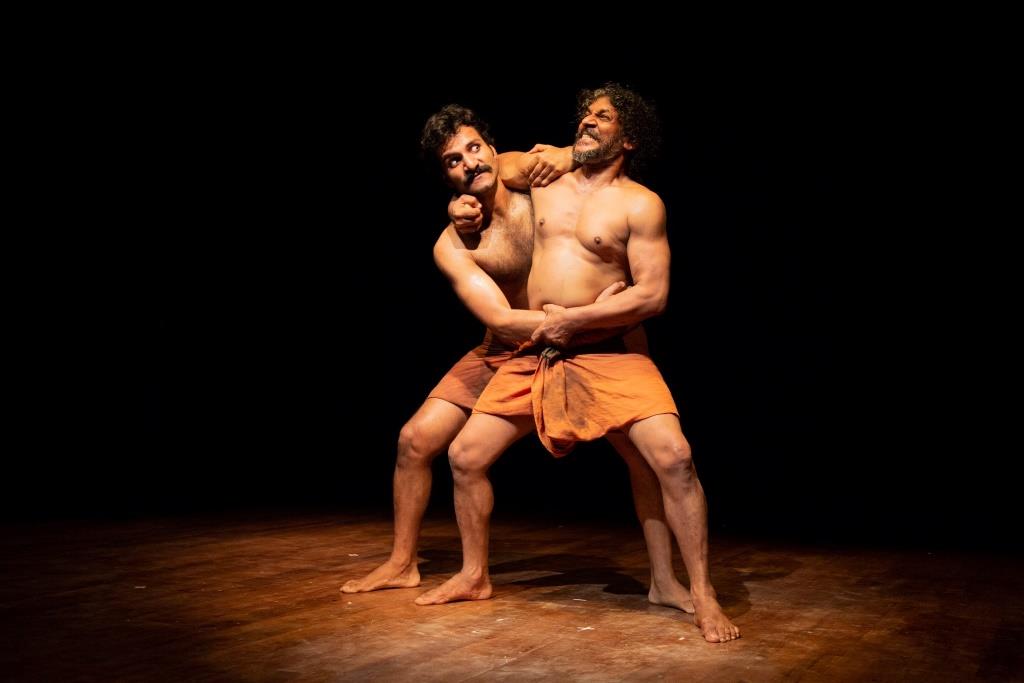
Koumarane Valavane’s KARUPPU

Director: Koumarane Valavane

Group: Indianostrum Theatre, Pondicherry

Language: English

Duration: 1 hr 5 mins

The Play

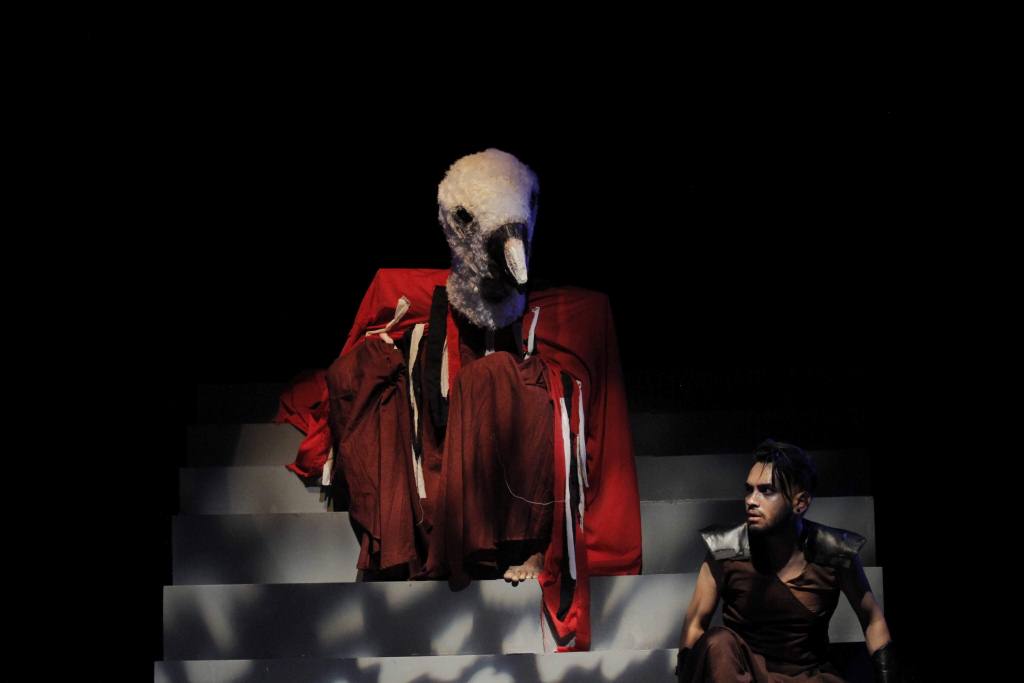
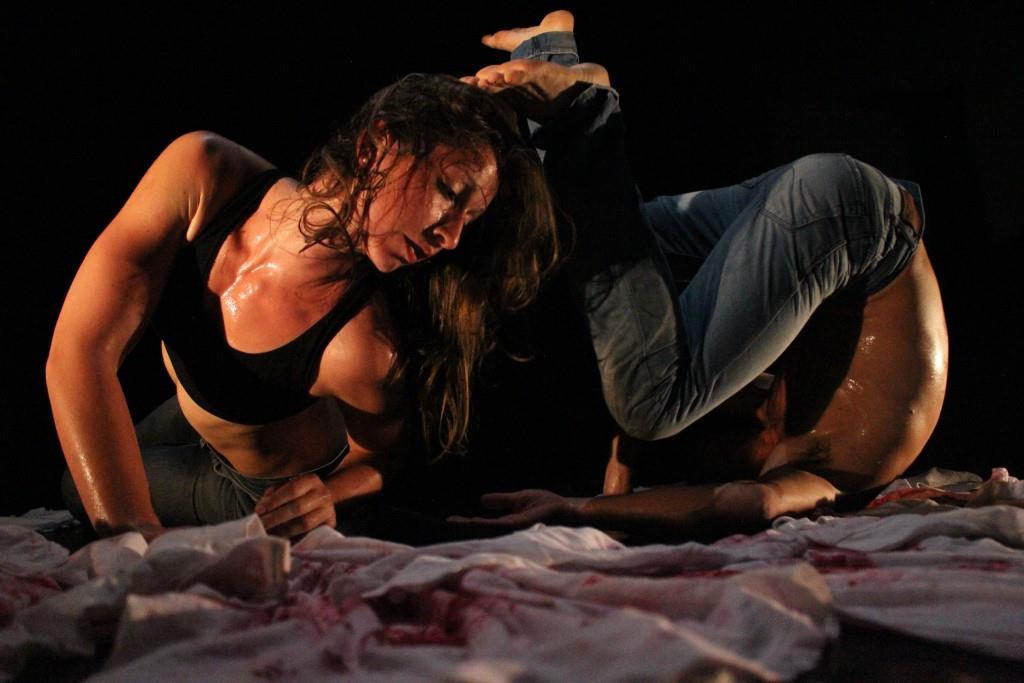
Karuppu is a dance-drama representation of the movement of Purusha and Prakriti energies through the birth, destruction and rebirth of the universe. The separation of Purusha from Prakriti destroys the universe; but the destruction is not permanent as nothing is. Only in the powerful destruction of the world and all its constituent materials and forms, by Karuppu (Dark) energy, is the reunion of Consciousness and Nature possible, giving rebirth to all of existence. Karuppu depicts a universe absorbing all imbalances making itself a black hole from which rebirth of everything anew is possible.

Director’s Note

Karuppu, this is the black spot that we put on the cheek of a newborn. . .

Karuppu, is the nocturnal silhouette that will try to seize us at the corner of a deserted street. . .

Karuppu is the spirit that keeps the man alert. . .

Karuppu is the goddess Kali, the ultimate form of energy, the one needed to destroy everything. . .

Karuppu is also a world without God, without a creator, without the paternal guru omnipresent where the Man, alone in the face of his destiny, learns to tame the dark forces.

Karuppu is not evil but the darkness contained in him of whom he is wary, he conjures the hold through rituals. . .

Karuppu is the vision of a world born simply from the union between Pakriti (the feminine) and Purusha (the masculine). This union between energy and consciousness, dynamic of a whole universe is as fragile as the relationship between man and woman. . .

In the form of a dance-theatre we make and break the bonds that unite Purusha (the man) and Pakriti (the woman) through mythical characters including Iphigenia, Ophelia, Clytemnestra, Medea and Kali.

The Director

Koumarane Valavane, a Franco-Indian, who left for France in his early years for studies, started practicing theatre at a very young age. In the University of Marseille, he along with his friends created a cultural association which was called Centre Culturel de Luminy, and which made theatre its primary element. After completing his research in Theoretical Physics, he founded his own theatre company Natya. For 3 years he worked as an actor at Theatre du Soleil, the renowned theatre company in Paris, before returning to India in 2006. With the rich experience of contemporary theatre gained in France, Koumarane returned home with a decision to continue exploring theatre at home. His thought began to spread its roots when he met a few young people at Alliance Francaise de Madras. This small group connected by the passion to do theatre, decided to form a theatre group and created Indianostrum in 2007.

The Group

Indianostrum Théâtre was founded by Koumarane Valavane, a French-Indian director in the year 2007, along with few young actors who were ready to gamble their flourishing careers in conventional fields for their passion for theatre. Indianostrum’s core aim is to expand the role of modern theatre in the cultural life of the country, by developing new modern texts, finding the specificities of Indian modern theatre, exploring its relationship with traditional forms, and transcending political, social and historical divides.

Cast & Credits

On Stage: Abinaya Ganeshan, David Salamon P., Mani Bharathi G., Priyadarshini Chakravarty, Ruchi Raveendran, Santhosh kumar. C, Saranjith N. K., Vasanth Selvam

Music: Jean – Jacques Lemetre, ‘Requiem’ by Mozart, Tribal Oppari, Tibetan ritual music, ‘The rite of spring’ by Igor Stravinsky, ‘Therenody for the Victims of Hiroshima’ by Krzysztof Penderecki

Voice-Over: Kalieaswari Srinivasan (The Seagull by Anton Chekhov)

Light Design Execution: Baby Charles

Administration: Priti Bakalkar, Sudheesh K

Direction: Koumarane Valavane


Sumbel Gaffarova’s ALIEN Director: Farid Bikchantaev

Playwright: Sumbel Gaffarova

Director: Farid Bikchantaev

Group: Galiaskar Kamal Tatar National Academic Theatre, Russia

Language: Tatar

Duration: 1 hr 20 mins

The Play & Director’s Note

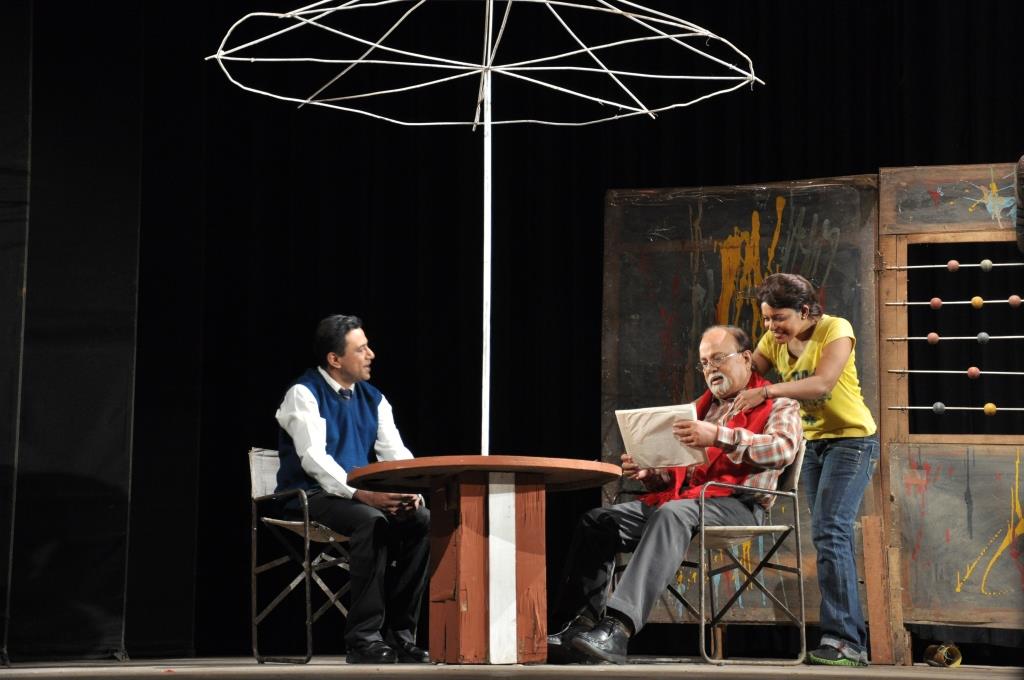
After the fall of the Iron Curtain and the collapse of the USSR, the peoples of the former autonomous republics started to look into the blank pages of their history. One of these sad topics for Tatars, the second largest nation of Russia, was the fate of the captured Second World War soldiers and officers who refused to cross over to the side of fascist Germany and passed all the hardships of Hitler’s concentration camps, and after the collapse of the Third Reich became prisoners of the Stalin’s GULAG. Those of them who were lucky enough to return home in the fifties only recently received the status of participants of the Second World War. However, there were some of them who, sensing a new arrest, did not return to their homeland and scattered all over the world…Naqip, the main character of the play, after the war, stayed in Canada by the will of fate and started his life with a clean slate. In a small town in the Canadian outback, he arranged a kind of a Tatar village, started growing potatoes and ….

The Director

Farid Bikchantaev was born in Kazaninin 1962. In 1991 he graduated from GITIS (Russian Institute of Theatre Arts) with a degree in Theatre Direction, a course run by Maria Knebeland Boris Golubosky. In 2002 he became the Artistic Director of Galiaskar Kamal Tatar National Academic Theatre. In 2011 Farid took on the role of head of the Republic of Tatarstan Theatre Union. In addition to his directing career, Farid has taught in the Kazan State Institute of Culture since 2002, first as the Head of the Acting Department, then as a Professor. Farid has also delivered two acting courses in the Kazan Theatre School.

He has received the Laureate of the Gabdulla Tukay State Prize of the Republic of Tatarstan. He was a nominee for the NationalTheatre Award ‘Golden Mask’ and is the winner of the XXII InternationalStanislavskyPrize ‘For the contribution to the Russian theatrical art development’. He is the Chairman of the Theatre Union of Tatarstan.

The Playwright

A prose writer, journalist and playwright Gaffarova Sumbel Gabdulahatovna graduated from the classical Tatar grammar school named after Sh. Mardzhani. Then she studied at Kazan State University (now KFU), Faculty of Tatar Philology, Literature and English. She has authored a collection of children’s fairy tales Long ago, recently …and a children’s novel A dream that will come true. She is a member of Kazan Opera Laboratory – Kazan Opera Lab. Sumbel collaborates with the youth creative organization Caleb. She writes in both Tatar and Russian languages.

The Group

Galiaskar Kamal Tatar National Academic Theatre was founded in 1906 and is the oldest national theatre in the Russian Federation. It is the winner of the national theatre award Golden Mask. The theatre is located in the heart of the city of Kazan, which is recognized as the ‘Third Capital of Russia. The repertoire of the Kamal Theatre harmoniously combines the classics of world literature and drama, and works of Tatar playwrights and contemporary authors. All performances are in the Tatar language, as is the tradition. A simultaneous interpretation of all the performances in English and Russian is also provided. Since 1998 the theatre, in cooperation with the Ministry of Culture of Russia and the Republic of Tatarstan, has held the International Theatre Festival of Turkic people ‘Nauruz’, the main theatre festival of the Turkic world. Since 2010 the same collaboration has held eponymous international theatrical and educational forums which consist of seminars, training sessions, and lectures by leading theatre professionals from around the world.

Cast & Credits

Naqip: Radik Bariev

Naqip in youth: Rail Shamsuarov

Joanna: Lyutsiya Bikchantaeva

Samuel, Sergeant: Minvali Gabdullin

Zeytuneh, Mariambikeh: Aigul Abasheva

Khairullah, Head of the Concentration Camp, Captive,Military in the Cafe: Ilnur Zakirov

Hismatulla: Almaz Sabirzyanov

Production Designe: Albert Nesterov

Light Designer: Taras Mikhalevsky

Managing Director of the Theatre: Ilfir Yakupov

Playwright: Sumbel Gaffarova

Musical Design & Direction: Farid Bikchantaev


Jit Sarkar’s BAPU Director: Samir Biswas

Playwright: Jit Sarkar

Director: Samir Biswas

Group: Mangolik, Kolkata

Language: Bengali

Duration: 1 hr 50 min.

The Play

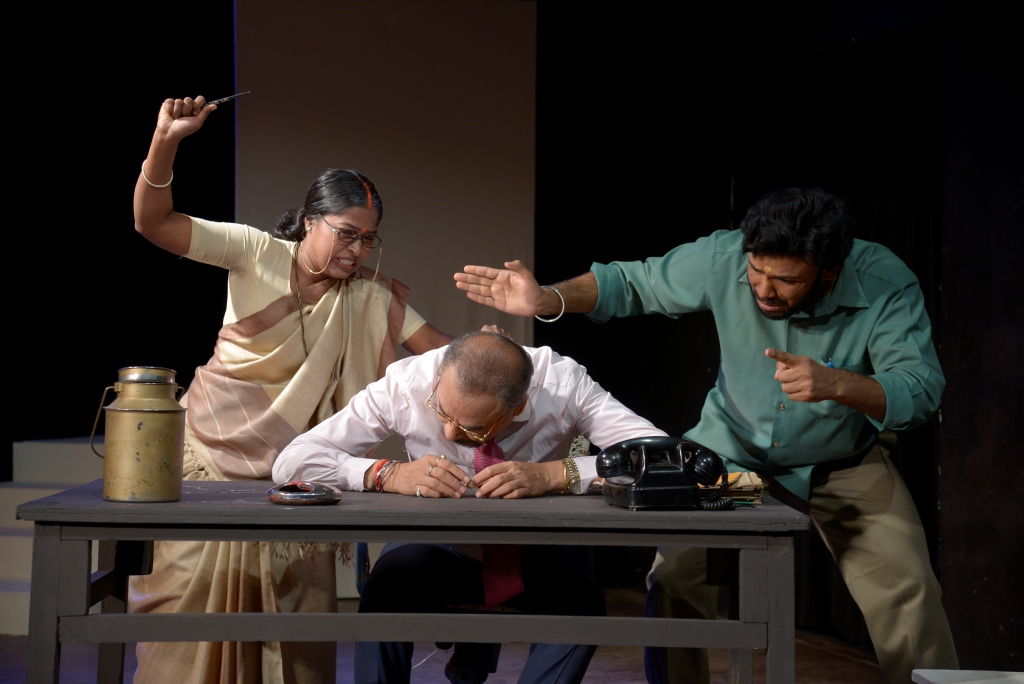
Mohandas Karamchand Gandhi was one of the prime leaders at the forefront of India’s fight for freedom from British rule. He was a leading architect, who eschewed violence in every form, of non-violent civil disobedience that would influence the world. When the protest at Chouri Choura against using British goods and attires, became violent Gandhi shouldered its responsibility and called for a cease of Non-co-operation Movement and Satyagraha and began five days fast subsequently. He was arrested and interned to the Sabarmati jail for six years on charges of instigating public through his anti-establishment literature. From the jail in South Africa Gandhi wrote on Satyagraha to spread the message of peaceful protests. Madeleine Slade, daughter of British Rear-Admiral Sir Edmond Slade, was an ardent admirer of his and was inspired enough to live in the ashram. Gandhi renamed her, Mirabehen. The British prime minister, Winston Churchill cast aspersions on BAPU’s attire referring him as “half-naked fakir”. Followers reacted but Bapu accepted it to describe the true condition of Indians under the British rule. He was left alone after wife Kasturba, his partner and fellow-fighter in the freedom struggle, passed away. We hereby try to recreate the essential relevance of Mahatma Gandhi’s vision for coming generations in, Bapu.

Director’s Note

The entire world is now a victim to intolerance which is a painful cause of concern for us. Our vast India is in panic by acts of violence. The warmth of father – son relationship is corroding and an icy coldness is spreading across the nation. We are meant for reviving the warmth of human values whereas factors of jealousy and brutality prevail. At this crucial juncture we refresh our collective memory by invoking an inspiring life of Mohandas Karamchand Gandhi also called, Bapu, as a reminder to our society. This Indian activist through his honesty, dedication and perseverance handled the non-violent movement and inspired movements for civil rights and freedom across the world winning hearts of the common masses. This flash back is a tribute to our freedom fighters.

The Director

Born on 12th April, 1947 his career on stage started as child artist in Tagore’s play, Dakghar in the role of Amal. His fascination for drama and allied arts grew with age joining a theatre group in 1962. He started his group, Mangolik on 12th December, 1968. He has also worked with other major groups like Rangarup, Chetna, Samabeta Prayash etc. as an actor and director in last 50 years. He acted in the lead role in film, Manush Bhoot and the play Bapu.

He has received the Drama Academy of India’s Jyosthna Makha Das Smarak Samman and Lebedev Drama awards.

The Playwright

Jit Sarkar has consistently scripted several radio dramas, TV documentaries, telefilms, serials and films in Hindi and Bengali ever since his career as writer began in 1982.  Some of his acclaimed works are – Dayen (The Witch) and Sundari (Quest for Beauty) Hindi feature films selected in children’s film section of the 4th Kolkata Film Festival 1998 and Samporko in Bengali selected in the 9th Kolkata Film Festival 2003 under telefilm section.

The Group

Formed on 12th December, 1968 Mangolik, is one of the few groups that have managed to sustain their creativity in Bengali theatre. Its founder, veteran actor-director, Samir Biswas has devoted his entire life to acting and designing serious theatre. They do not gather performers for their own sake rather believe in doing responsible theatre for social change and harness new talents. It seeks encouragement and inspiration from the audience. It grooms members towards struggle that is an inherent nature of theatre. The group celebrated its golden jubilee last year only.

Cast & Credits

Bapu: Samir Biswas

Nathuram Godse: Shouvik Majumdar

Mahadev Desai: Soumya Biswas

Kasturba Gandhi: Upali Ghosh Bose

Madeleine Slade (Mirabehn): Debjani Mukherjee

Harilal: Debashish Ganguly

Md. Ali Jinnah: Samiran Mukhopadhyay

Sardar Vallabh Bhai Patel: Ujjal Biswas

Jawaharlal Nehru: Partho Roy Chowdhury

Lakhan: Nanigopal Pramanik

Manu Gandhi: Sanchita Chowdhury

Abha Chatterjee: Satabdi Bose

Nayar: Sudip Chatterjee

Rioters, Revolutionaries & Ashramwasi: Murari Chakraborty, Adrija Basu, Tanish Chatterjee, Priyotosh Dhar, Khokan, Biswas, Ashim Bose, Sanatan Hari

Lights: Bablu Sarkar

Music: Shanto Adhikary

Make Up: Ramen Chakraborty

Set: Swapan Das


Watch The Director’s Meet for the play


Probir Guha’s TITAS EKTI NODIR NAAM

Playwright & Director: Probir Guha

Group: Alternative Living Theatre, Kolkata

Language: Bengali

Duration: 2 hr 10 mins

The Play

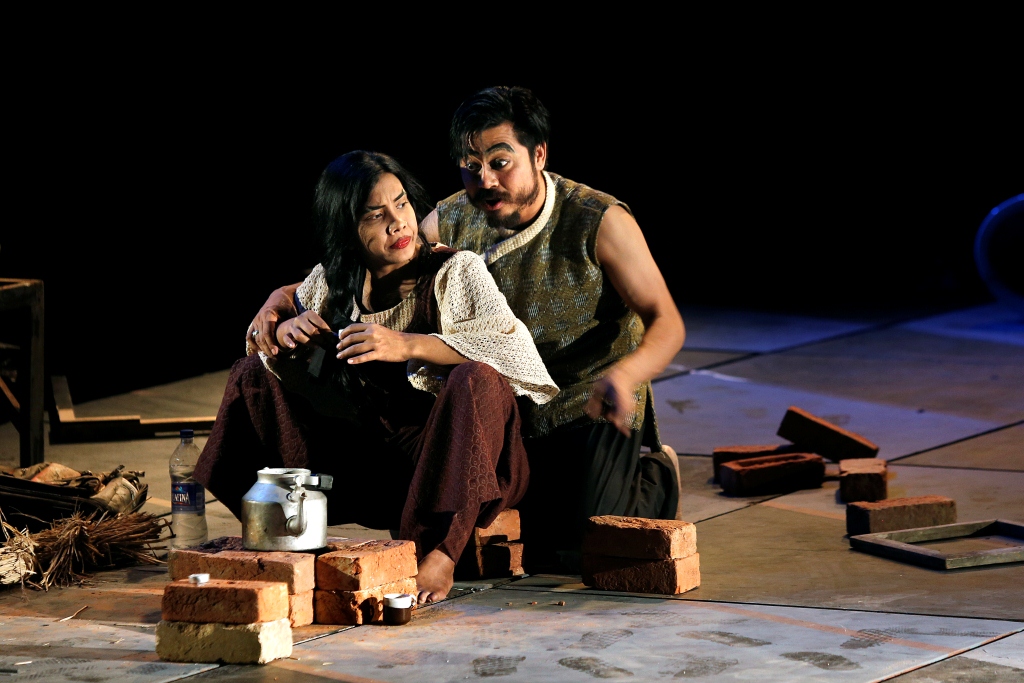
On the centenary year of Adwaita Mullaburman, we decided to prepare a play based on his momentous novel, Titas Ekti Nadir Naam. The play talks about fishermen societies residing on the banks of Titas in Bangladesh. The play talks about Titas’s change throughout years and its effect on the socio-economic structure of societies around. The love and loss of the main characters is the central attraction of this play. The play enters into climax when the fishermen society finds out that Titas is drying up. What will the fishermen do now? How will they survive? How does it really feel to lose the only means of life? How does it feels to lose a river?

Director’s Note

The plan of making Titas Ekti Nadir Naam was there since my college days. The novel had a great influence on me, and I always wanted to express those elements with my language, my way of understanding. The first attempt at this play was in Tripura some years ago. Then in 2015, I directed this play but due to some unexpected situation we could not work with the play anymore, but the urge stayed. In 2017 I remade, rearranged, and rejuvenated the play in my style under the banner of my theatre group Alternative Living Theatre. Hope my attempt at this classic piece will be acceptable to the audience.

The Director & Playwright

Born on 5th May, 1947, acclaimed playwright and director Probir Guha embarked on his career as a street theatre activist after graduation from Calcutta University. Initially he began working in Kolkata but soon becoming disillusioned with elitism, he established his own company, the Living Theatre, in 1977 at Khardaha. In 1991, Living Theatre was renamed as Alternative Living Theatre. From then till now he has been working as a writer-director of this group of rural-urban thought. He has worked with many renowned directors of theatre and dance worldwide. He is also a lecturer and teacher at several theatre schools and universities. Guha has been a common name among Alternative Theatre activists. He has received the Sangeet Natak Akademi Award for his excellence, along with other felicitations and awards for his contribution in alternative theatre practice.

The Group

Living Theatre was formed by Mr. Probir Guha in 1977 at Khardaha, a suburb in West Bengal. Later in 1990 it was renamed and re-registered as Alternative Living Theatre. It was formed with an earnest resolution to break the clichéd rules of theatre. It was determined that it would not merely entertain people, but will work towards waking them, as it believes that not just entertainment but theatre can also be the voice of the grass-root people. It dealt with difficulties of marginal people so instead of heading for the city it started penetrating into the interior of the villages and has performed in a small class room for ten years. Hence it has discarded monotonous grammatical acting and has experimented and evolved a new aesthetics of theatre where physicality is the language. Later on, it built its residential workshop and rehearsal space named Akhara at Madhyamgram, where theatre lovers from all over the world come to learn.

Cast & Credits

On Stage: Aftar Ali, Bikash Bose, Arkajyoti Ganguly, Avijit Biswas, Dhiman Bhattacharya, Pritam Chakraborty, Debobrata Banerjee, Raja Biswas, Santanu Sarkar, Chirantan Chakraborty, Sujoy Chakraborty, Anasua Das, Mousumi Sengupta, Anushka Sen, Ria Das, Ankita Ghosh, Abheepsha Ghosh, Sylvia Sharma Bhattacharya, Swagata Sen

Live Musicians: Subhadeep Guha, Chakrapani Dev, Madhuparna Debnath, Sushruta Goswami

Art & Set Designer: Arpita Burman

Costume Designer: Arpita Burman

Light Designer: Sadhan Parui

Light Execution: Samar Parui

Music Designer: Subhadeep Guha

Choreography: Sanchaita Basu

Production Controller: Shilpi Sarkar

Novelist: Adwita Mullabarman

Script & Direction: Probir Guha


Sophocles’ King Oedipus Director: Ashim Das

Playwright: Sophocles

Director: Ashim Das

Group: Fame School of Dance, Drama & Music, Bangladesh

Language: Bengali

Duration: 1 hr 20 mins

The Play

The abode of Cadmus was burnt to ashes because of the wrath of the Gods. After a long struggle Cadmus and his later posterity came to power one after another. At one point Oedipus came to the throne of Thebes. But predestined suffering dragged him to the brink of the formidable sin, and execution of the Oracle came true without his prior-knowledge. The Oracle said that he was destined one day to kill his father and to become his own mother’s husband. At the end of the play, after the truth finally comes to the light, Jocasta hangs herself, and Oedipus, horrified at his patricide and incest, precedes to gouge out his own eyes in despair. Then on an empty space the Chorus repeats the common Greek maxim, that ‘no man should be considered fortunate until he is dead’.

Director’s Note

Staging the Theban play, King Oedipus, the first and the best one of the Trilogy, of the great master playwright Sophocles was a challenge for me. I read Oedipus and other plays more than a 100 times. In every read I was thrilled, mesmerized and spell-bound by the knitting of plots and use of the riddles, and the power of the unwritten. References to eyesight and vision, both literal and metaphorical, are very frequent in all three plays of the trilogy. Quite often, the image of clear vision is used as a metaphor for knowledge and insight.

The Director

A graduate from National school of Drama, Ashim Das is the Director of Fame School of Dance, Drama & Music, Chittagong, Bangladesh. He is an Assistant Professor of the Department of Dramatics, University of Chittagong, Bangladesh. Has directed and designed more than 80 plays. He has adapted a number of classics and written some plays for children. Ashim has conducted several workshops on acting and direction, organized by Bangladesh Group Theater Federation and others. He has traveled to UK and France on the invitation of Human Rights Forum, UK, and Marie de Paris. He received the Zakaria Smriti Padok and the best director award for the play The Madwoman of Chaillot in International French Drama Festival, Dhaka.

The Playwright

Sophocles (496-406 B.C.) born in Colonus, not far from Athens, was one of the best dramatists in his age. Sophocles tragedies gained recognition as among the best dramas written at a time when competition was at its highest. The fact that his works are studied today, approximately 2,400 years after they were written is a testament to the power of his words and the impact that his stories have on current culture.

The Group

Fame School of Dance, Drama & Music was established in 1998 at Chittagong. In addition to other courses, it provides a year-long theatre appreciation course in acting and design, and a short course on acting, inspired by the teaching methodology of NSD. Some of the plays staged by the group include Antigone, Catastrophe, All That Fall, The Leader, The Lesson, A Trilogy (Oedipus, Oedipus at Colonus & Antigone), Raktakarabi, George Dandin, The Mad Woman of Chaillot, etc.

Cast & Credits

Oedipus: Mubidur Rahman Sujat

Jocasta: Ashrafa Hossain

Creon: Dipta Chakraborty

Tiresias: Kamal Barua

Boy leading Tiresias: Anwesha Das

Priest, Messenger: Hasibul Alam

Shepherd: Kamal Barua

Attendant: Bappi Sikder

Guard: Md. Jahed Ali

Little Ismene & Antigone: Titly Biswas & Anwesha Das

Chorus of Theban Elders: Poly Chowdhury Boby, Utpal Dasgupta, Bappi Sikder, Khadijatul Kubra Rishika, Sabiha Binte Jashim, Syful Sarder, Md Farhadul Abedin, Umme Kulsum Farhana, Md. Jahed Ali, Md. Farhad Hossain, Poly Chowdhry, Regan Barua

Citizens of Thebes: Boby, Utpal, Hasib, Bappi, Ashrafa, Rishika, Sabiha, Syful, Farhad, Jahed, Farhana, Pappu, Poly, Regan, Anwesha & Titly.

Music, Light, Costume & Set Design: Ashim Das

Choreography: Tilottoma Sengupta

Music Control: Mohammed Rukan Uddin

Props Making: Amlan Barua

Mask Making : Showkat Ali

Technical Assistant: Ali Afsar Bhuiyan

Make-up: Shahenoor Sarwar

Set Making: Abdul Malek

FOH: Fameans

Production Manager: Showmen Rudra


Tripurari Sharma’s SHIFA… THE HEALING Director: Teekam Joshi

Playwright: Tripurari Sharma

Director: Teekam Joshi

Group: Individual,Delhi

Language: Hindi

Duration: 1 hr 35 mins

The Play

Shifa is based on HIV+ people talking about the positivity of life, and about searching within oneself to find a new way of life. It is a play within a play where three real characters share their life experiences with the audience, not for consolation but about social stigma, discrimination, empowerment, acceptance and primarily, healing.

Director’s Note

One needs an inspiration for doing things, and I had several for doing this play. The first reason was Shri Ravi Nagar Ji, and the second was the need to fight against odds like illness, loneliness, stigma and discrimination that one sees and feels all around in society. Theatre can be inspiring, entertaining, and a platform for sharing. But sharing needs courage, and this play gives you that courage, to talk about those deeper experiences which you generally don’t and can’t share. This play is like opening a window on those subjects about which society has many reservations. I would like to convey my humble thanks to Tripurari Sharma Ji who gave me the permission to do it.

The Director

Teekam Joshi did P.G. diploma in Dramatic Arts from National School of Drama in 2001. He has received many awards including SangeetNatakAkadmiBismillah Khan YuvaPuruskar, Nat Samrat, IftekharAkadmi Award, and State Youth Festival Award. He has worked with the National School of Drama Repertory Co. and has been anexpert faculty for NSD extension program;visiting faculty at NSD for acting, voice and speech;visiting faculty at NSD Sikkim Centre,Gangtok for acting;Actor (consultant) Kingdom of Dreams;Associate and Assistant Director for NSD students productions;Associate Director of some NSD repertory productions;expert faculty for communication skills in different private universities;Executive Director of Aaj Theatre company(founded by BhanuBharti);Artistic Director of Unicorn Actor’s Studio;and Artistic Director of Flying Feather’s Art Association. He has participated in many national and international festivals.Teekam has worked with eminent theatre personalities like HabibTanvir, B.V.Karanth, Mohan Maharishi, M.K.Raina, BansiKaul, BhanuBharti, AnuradhaKapur, Kirti Jain,Ramgopal Bajaj,Robin Das, Tripurari Sharma, Rita Ganguly,D.R.Ankur, KavalamNarayan Panniker, John RusselBrown, WamanKendre, Prasanna, Kumar Verma, AlokChatterji, Sanjay Upadhyay, Raghunandan, K.S.Rajendran, Suresh Sharma, Bapi Bose, Ashok SagarBhagatetc.

The Playwright

Tripurari Sharma completed her diploma in direction from National School of Drama in 1979. She is a playwright, translator and director of repute. She has written and directed various plays for groups and institutions all over India. She has conducted workshops all over India and abroad. She has also written scripts of critically acclaimed films like Mirch Masala and HazarChaurasi Ki Maa. She has been honoured with the Sanskriti award and SangeetNatakAkademi award. Ms. Sharma retired as Professor of Acting fromNational School of Drama.

Cast & Credits

Sanjeev: Teekam Joshi

Chhaya: Nalini R Joshi / Nidhi Mishra

Barkha: PriyadarshiniPooja / ShradhaVasdev

Vinay: Manish Karnatak / Vaibhav Raj

Nani: GauriDewal / MuskanDua

Purush: Shaurya Shankar

Stage Manager: Harshvardhan / RajatDahiya

Reporter: MuskanDua / GauriDewal

Doctor: Akshay Sharma

Prof. Ganapati: AniruddhSagar

Students: Harshvardhan, Rajat, Akshay, Muskan, Shradha, Pooja

Child Artist: Nandini R Joshi , Lucky Lakshya

Group Actors: Harshvardhan, Rajat, Akshay, Akash, Muskan,Shradha, Nidhi, Nalini,     Praveen Parashar, Nirbhay Jain, Vaibhav Raj, Nikhil Singh Bhatti

Music: LateShri Ravi Nagar

Light Design: SoutiChakraborty

Set Design: Rajesh Singh

Sound Design: Sandy Singh

Poster Image: Indira Tiwari

Poster, Brochure & Video: Happy Ranjit

Choreography: HarshitKhatana

Sculpture: AniruddhSagar

Property: Sachin Shrivastav

Production Manager: GauriDewal

Production Assistant: Vaibhav

Sound Operation: ShubhamPaliwal


Pratap Phad’s ANANYA

Playwright & Director: Pratap Phad

Group: Suyog Production, Mumbai

Language: Marathi

Duration: 2 hrs 30 mins

The Play

We often get inspired by various icons but seldom an ordinary person, who is just like one of us, steps out of all stereotypes, to do something unimaginable. This is a story of an ordinary girl, Ananya, who possesses the potential to do something extra – ordinary. Being a bright student, she was always showered by praise and her confidence never seemed to cease. She was a free girl with a lot of ambitions and had also got engaged to the person she saw a future with. Everything was pretty and full of sunshine until she meets with an accident. Things start turning upside down in no time and begin to change. But she doesn’t quit. What she does to overcome the obstacles becomes a story which is beyond one’s wildest imagination.

The Director & Playwright

Pratap M. Phad, born on 15th August 1980, has written & directed various one act plays and experimental plays in Marathi and Hindi. He has been awarded with the Best Play and Best Director at Malhar ’03, TESPO 2005-06, Parangat Sanman ’08 and various other competitions. For Ananyaa, he has been awarded Best Director Maharashtra Shasan Puraskar, 2018, Best Writer Sanskruti Kala Darpan Puraskar 2018, Shreshtha Natakakar Aacharya Atre Puraskar 2018. He has also worked and contributed in film industry.

The Group

Mr. Sudhir Bhat formed Suyog Production on 1st January 1985. In 32 years, around 80 plays were produced by Suyog production. Moruchi Mavashi, Gandhi Viruddha Gandhi, Vyaki aani Valli, Sandhyachaya, Char Divas Premache, Sunder Me Honar, Mitra, Lekure Udand Jhali are some of the best plays of Suyog Production. Dilip Prabhavalkar, Prashant Damale, Bharat Jadhav, Vijay Chavhan, Atul Parchure, Vandana Gupte, Bharati Aacharekar and Neena Kulkarni are amongst the known personalities who have performed under this production. Suyog Production is one of the best production houses in Marathi theater industry. Ananyaa is 85th presentation of Suyog Production and in 2018 Ananyaa received 34 awards in various competitions.

Cast & Credits

Baba: Pramod Pawar               

Ananyaa: Rutuja Bagwe               

Priyanka: Anagha Bhagare  

Dhananjay (Dada): Vishal More               

Shekhar Sarpotdar: Karan Bendre               

Jay Dikshit: Siddharth Bodke  

Setting: Pravin Gavali aani Mandali

Lights: Devidas Shivgan, Akshay Jadhav

Music and Projector: Prathamesh Bhuvad, Ruchir Chavhan, Sanjay Umbarkar

Make-up and Hair Dressers: Sharad Sawant, Jyotsna, Chhaya

Costume and Property: Pravin, Prashant, Nilesh

Manager: Santosh Mahadik

Producer: Rajesh Patil, Sandesh Bhat, Pratap Phad


G. Krishanan’s ABIMANYA SUNDARI THIRUKALYAM, Director: D. Elumalai

Playwright: G. Krishanan

Director: D. Elumalai

Group: Sri Thanthoni Amman Therukkuthu Nadaga Sabha, Thiruvannamalai

Language: Tamil

Duration: 1 hr 30 mins

The Play

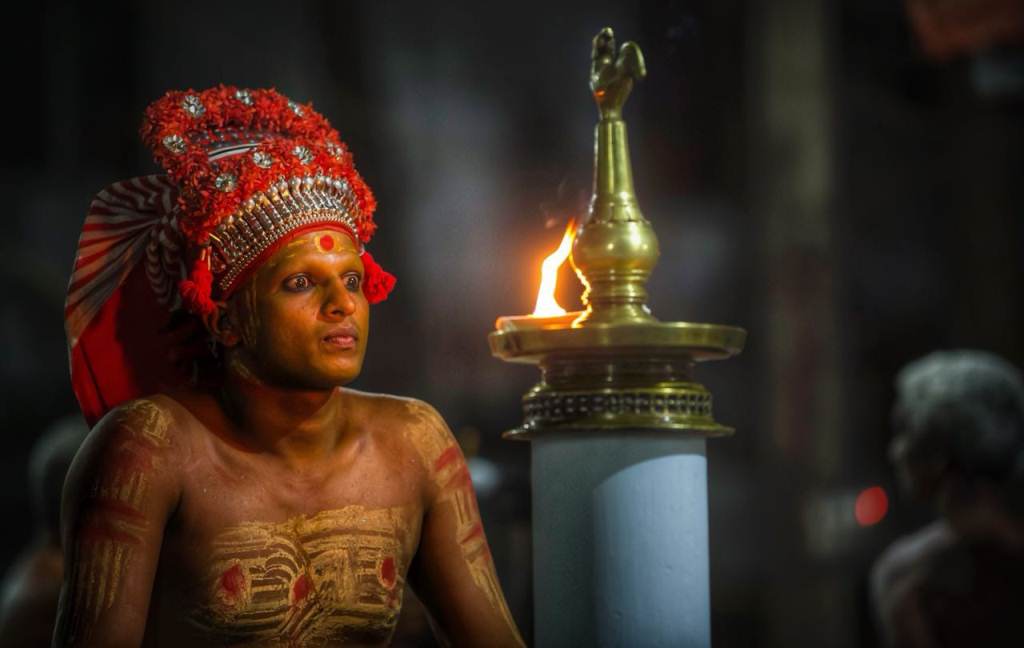
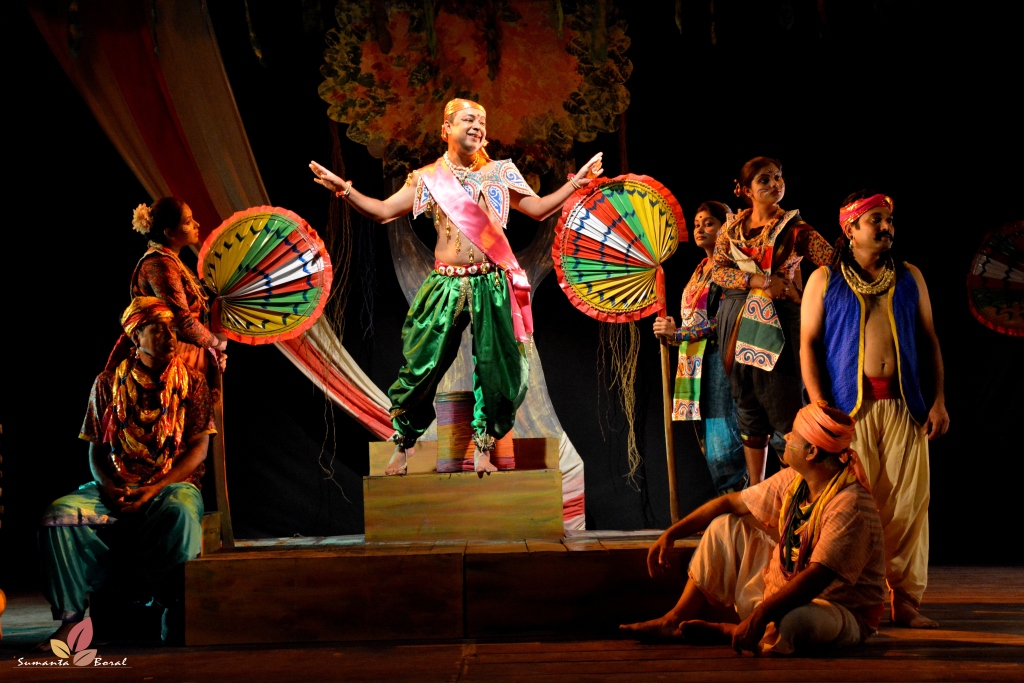
Duryodhana’s son, Lakshmana Kumaran, is eligible to marriage and Sakuni suggests he may be married to the daughter of Dhurgapuri’s Lord  Krishna. Duryodhana agrees and goes to Dhurgapuri Darbar. Entering, Duryodhana asks Lord Krishna to marry his daughter to his son. But Krishna decided to first speak with his wife. Duryodhana agrees. Mangalakshmi, wife of Lord Krishna, listenes to Krishna, but reminds him that he has promised his daughter’s marriage to Arjun’s son. Lord Krishna says that as Arjun has lost almost all his land, we must reconsider the match. They finally decide to marry their daughter to Duryodhan’s son and announcement of the same intent is made. When their daughter, Sundari, hears this, she gets upset, and sends a message to Abhimanyu through Vayu Bhagvan that he should come immediately and marry her. Abhimanyu gets the message and straightaway sets out to stop the wedding.

Director’s Note

This play is dramatized from Mahabharata’s story of Abhimanya Sundari Thirukalyanam. It was performed in our rural villages. The audience would eagerly wait for Sundari’s entry. Whenever we performed this play, the Kattiya Karan (Narrator), makes jokes and adds humour to the whole play.

The Director

At the age of sixteen, after finishing his school, D. Elumalai underwent training with two Koothu teachers, Kishtappa Meshtri and Srinivasa Meshtri. He learnt Adavu and songs from them. Later he joined Purisai Kalaimamani Subramaniya Thambirar Therukoothu group as an actor. There he learnt Adavu from Kannappa Thambiran and Sambanthan in 1987-88. He founded the Sri Thanthoniamman Therukoothu Nadaga Sabha in the year 1997. He gave training to Thalai -K-kol, a modern theatre group in Pondichery and organised the performance of Nadu Koothan there. In 2006-2008, he got trained in Therukoothu at Pondichery University. He also conducted a 10 days’ workshop at National School of Drama’s Bangalore Centre. He is the chief trainer for Therukoothu. He got Kalai Nan Mani award from the Government of Tamil Nadu.

The Playwright

G. Krishnan has been writing for the last 30 years. His plays have been translated in German and French. He teaches Thabasu and Krishnan Doodhu to the village youths. Thakkayagam, Arjunan Thabasu, Lavakusha, Baratham, Sundari thirukalyam are some of his famous plays.

The Group

Sri Thanthoniamman Therukoothu Nadaga Sabha is the leading Tamil folk Theatre group that promotes the traditional folk art form of Therukoothu. It was established in 1985 by a Group of folk theatre enthusiasts who were involved in promoting Therukoothu in the districts of Thiruvannamalai, Kanchipuram, Chennai, Vellore, Dharumapuri, Pondicherry. They have performed in the National Theatre festival (19th BRM at New Delhi) and have also conducted a number of workshops with college students, foreign research scholars and school children.

Cast & Credits

On Stage: Ravichandran, Madhavan, Vijay, A. Ramakrishnan, M. Haridass, Ethiraj, E. Manikandan, Subramanian, Mukundan, Elavarasu, S. Rajesh, Venkatesan,

Harmonium: Seetharaman

Mirudangam: Krishnamoorthy

Mughaveenai: S. Chandiran

Lighting: E. Sukumar

Design & Props: E. Suresh

Translator & Coordinator: M. Manivanna


Ram Gopal Bajaj, the founder of Bharangam to be felicitated on the Inaugural


National School of Drama’s 20th Bharat Rang Mahotsav, the International Theatre Festival of India, is Back with a Bang; Gears Up to Dazzle India

The International theatre festival of India, Bharat Rang Mahotsav, BHARANGAM,  will kick off in New Delhi on 1st February, 2019 and culminate on 21st February, 2019 and will cover 6 cities in India with 111 shows and various allied events.

A key feature of the inaugural ceremony of the festival is the felicitation of its founder Ram Gopal Bajaj, who was the Director of National School of Drama. It was his visualisation of the idea of bringing best of theatre from India and later all over the world, to help the students of NSD to see the possibilities of theatre and also an experience for the audience to absorb and be enriched. 

Bharat Rang Mahotsav (BRM), the annual theatre festival is organized by the National School of Drama (NSD), was established two decades ago, by Ramgopal Bajaj to stimulate the growth and development of theatre across India. Originally a national festival showcasing the work of the most creative theatre workers in India, BRM has evolved to international scope, hosting theatre groups from around the world, and is now the largest theatre festival of Asia. Till date, BRM was celebrated in New Delhi and has travelled to several cities in India, presenting an overwhelming 1787 plays, and riveted thousands of audiences who basked in the glory of heart-winning stories and superior performances.

The 20th edition of BRM will include various national and international performances, and associated events such as, ‘Director’s Meet’, ‘Living Legends’, and ‘Master Class’. This year, the festival pays a tribute to Mahatma Gandhi, the ‘Father of the Nation’, on his 150th birth anniversary and will stage plays depicting the Gandhian philosophy and the dilemmas Bapu had as a person. The 20th Bharat Rang Mahotsav also hold parallel festival in other cities including Dibrugarh (Assam), Varanasi (Uttar Pradesh), Ranchi (Jharkhand), Mysore (Karnataka), and Rajkot (Gujarat).

The 21-day long festival will stage plays in Hindi, English, and other regional and international languages. International productions from Bangladesh, Poland, Russia, Sri Lanka, the Czech Republic, Italy, Nepal, Romania, and Singapore will also enthrall the audience during the festival.


Apart from plays, the festival will also host folk performances and other traditional performing art forms, street plays by around 50 dramatic societies of colleges in Delhi, and national and international seminars discussing the theatre scenario in India and abroad.BRM is organized by National School of Drama (NSD), an autonomous institution under the Ministry of Culture, Govt. of India and one of the foremost theatre training institutions in the world.

20th Bharat Rang Mahotsav (BRM), the largest theatre festival in Asia, organized by the National School of Drama (NSD), is all set to bring its bouquet of plays, interactive sessions, and other cultural events to cheer up the winter afternoons of theatre enthusiasts in the city.

The inaugural ceremony will be held at Kamani auditorium on 1st February, 2019 at 6:00 PM followed by the performance of ‘Karanth ke Rang’, directed by Amod Bhatt. The 50-minute long performance is a medley of songs composed by late Shri B V Karanth, a stalwart of Kannada and Hindi theatres. Shri Karanth was a prolific composer of songs and scripts for theatre and directed and acted in many productions.

The festival, which enters its 20th edition this year, is celebrating the 150th birth anniversary of Mahatma Gandhi – 4 of the plays to be staged on the life, philosophy, and principles of the ‘Father of the Nation’. The festival will host 69 Indian and 15 foreign plays across India, selected after screening. Additionally, 9 folk productions, 5 plays by NSD diploma students, 1 production from the Sikkim center of NSD, 3 plays by the NSD Repertory as well as 5 invitee plays by eminent theatre practitioners will captivate the theatregoers across India.

The national capital will host 89 plays: 25 plays in Hindi, 16 in Bengali, 5 in Kannada, 2 in Marathi, 2 in Odia, 2 in Gujarati, 2 in Manipuri, 3 in English, 2 in Assamese, 2 in Malayalam and 1 each in Maithili, Telugu, Nepali, and Sanskrit, in addition to 15 foreign plays, the festival also brings 8 folk performances to theatre aficionados in the city.

The 21-day long festival this year will include plays in Hindi, English, and other regional languages. International productions from countries such as Bangladesh, Poland, Russia, Sri Lanka, the Czech Republic, Italy, Nepal, Romania, and Singapore as well as non-verbal, folk, and multi-lingual performances will enthrall the audience during the theatrical spectacle.

The performances in New Delhi will be held at Bahumukh and Chahumukh (7:30 PM), Open Lawn (6:00 PM), and Abhimanch (8:30 PM) at the NSD’s Bahawalpur House campus as well as nearby Sri Ram Centre (4:00 PM), LTG (5:30 PM), and Kamani (7:00 PM) auditoriums.

Apart from the spellbinding performances and interaction with thespians and eminent personalities from the world of theatre, the festival in Delhi will also have 2 international and 2 national seminars on theatre. The national seminars to be held in New Delhi will attend to the topic ‘Is Modern Theatre Inclusive?’ and will hold sessions dedicated to ‘Notion of State and Representation’, ‘Unrepresented Form’, and ‘Non-Governmental Curating and Funding Policy’.

Besides, the NSD campus will be abuzz with street plays, ambience shows, and ‘Theatre Bazar’, a motley of stalls offering a range of products and culinary delights. The youth forum shows will comprise performances by dramatic societies of nearly 50 colleges in Delhi while ambience performances will bring folk dance and other traditional performing art forms.

In keeping with its concerted efforts to promote theatre among people and take select performances to other parts of the country, the NSD arranges parallel festivals in Dibrugarh (4th to 10th February, 2019), Varanasi (7th to 13th February, 2019), Ranchi (9th to 15th February, 2019), Mysore (11th to 17th February, 2019), and Rajkot (13th to 19th February, 2019).

“The art of theatre is the oldest and the strongest medium that conveys human emotions in a manner that defies temporal boundaries. We are delighted to usher in the Bharat Rang Mahotsav to its 20th year and have made all efforts to bring a selection of quality plays, choosing the best out of 960 submissions. There are 9 folk performances being presented in Delhi as well as invitee plays and productions in regional languages. We have tried to accommodate as many young theatre enthusiasts as we can, since the institution aim to foster the growth of young talents through the platform of BRM,” says Shri Suresh Sharma, Director In-charge, National School of Drama (NSD).

“Theatre is a celebrated art form across the world and I am happy that this festival gives us a chance to witness many of the plays which have received critical acclaim globally. BRM aims at bringing together people and hence, we have spread the festival across the country so that theatre reaches more and more people. BRM has been a very successful festival attracting a lot of audience, including first-timers and we hope a similar run this year too,” says Dr. Arjun Deo Charan, Acting Chairman, NSD Society.

About National School of Drama (NSD)

The National School of Drama is one of the foremost theatre training institution in the world and the only one of its kind in India. It was set up by the Sangeet Natak Akademi as one of its constituent units in 1959. In 1975, it became an independent entity and was registered as an autonomous organization under the Societies Registration Act XXI of 1860, fully financed by the Ministry of Culture, Government of India. It offers 3-years training program in every aspect of theatre with a special focus on the practical implementation of theories. The NSD has two performing wings – the Repertory Company and Theatre-in-Education Company (TiE) that started in 1964 and 1989, respectively.


The Owl and the Pussy Cat / Seema Bawa


Actors: Kavita Dang and Kumud Mishra                           Director: Satyajit Sharma

The Owl and the pussy cat went to sea in a beautiful pea green boat…

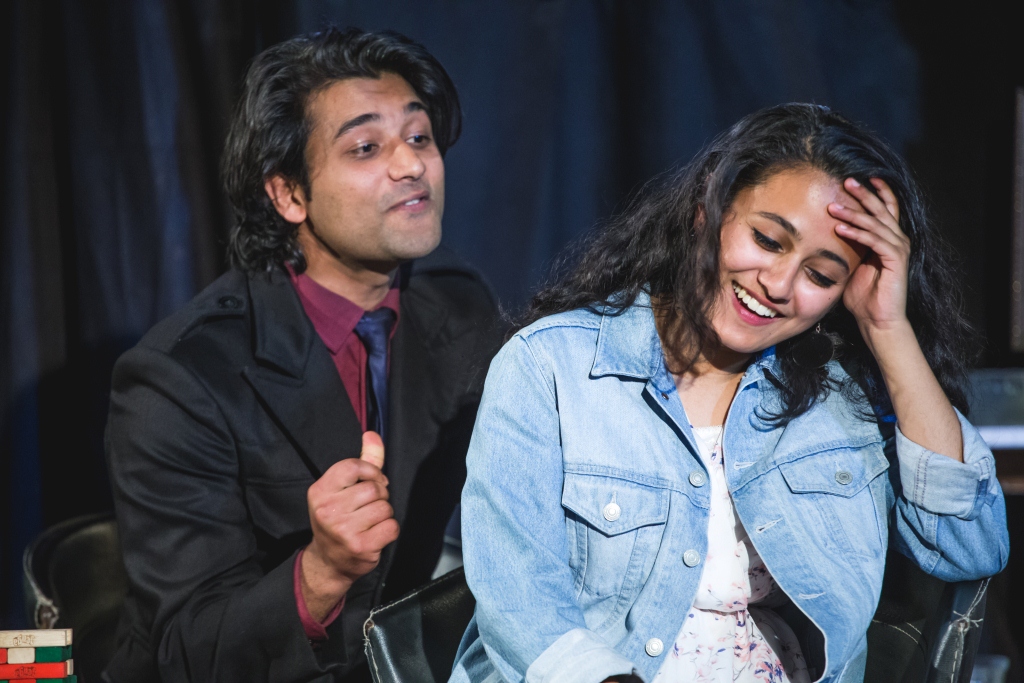
Thrown together in a low-rent bachelor’s flat instead of a ‘pea-green boat’, the odd couple in this highly amusing Bill Manhoff comedy, is certainly not at sea! ‘The Owl’, Felix played by Kumud Misra, a highly accomplished actor, is a self-styled intellectual author – while ‘the Pussycat’ played by Kanika Dang, is a wannabe actress and model – however, to pay the bills she entertains gentleman callers, a prostitute but not promiscuous.

Having noticed the stream of gentlemen caller at her apartment through his binoculars, the peeping owl does his ‘civic’ duty by informing the superintendent of the building. The pussycat with nowhere to spend the night seeks revenge by imposing on the owl for a bed. And then, through a battle of wits, words, and wisdoms they both start to ‘educate’ each other as well as the audience in ways they never knew they could.

The current production by Dotted Line Productions has wisely kept it simple and has not endeavored to create convoluted and over intellectualized caricatures of the protagonists. The director, Satyajit Sharma, an NSD Alumni with several outstanding acting and directorial performances to his credit, takes two great actors who handle some good old fashioned repartee rather well; coupled with adept handling of a witty script to put together an eminently watchable show.

The play focuses on two people who get to know each other, have sex, and eventually fall in love. As in most romantic comedies, one-liners abound and the protagonists are shown falling from their own self constructed identities. The fight in Felix’s apartment after Doris barges in at the beginning is hilarious. She gets upset by his use of big words, but eventually buys her own guide to extending one’s vocabulary. He is horrified by her “filthy” animal existence exemplified in his use of words like gutter slime and filth for her, but delights in the new experiences she has to offer. The two show each other new ways of looking at things and which is why Doris and Felix’s chemistry works for the audience. It’s is akin to what happens in real life. Their romance is played for laughs, but it’s also sweet and touching. Felix, like most men, has to have a near nervous breakdown before deciding Doris is the one for him through a bitter-sweet dream sequence that evokes meta-theatre. As each displays their softer selves, the audience realizes they have more in common than they think. The two are in transition; looking for that obscure goal of success; he in writing, she in acting. This shared ground draws them together and reflects to the audience a very real struggle that we all experience in relationships.

Odd couples, whether of the same or different sexes have been a comedy formula for decades. The play enthralls with its at times salty language. Most importantly, Kumud and Kanika have a very definite chemistry. Though Kanika’s is better delineated and in intrinsically is the more outrageous and attractive character (being the underdog) in the script, it does not steal the focus. Kumud interprets the inherent wimpy-ness and prissyness of the character with a paradoxical male strength and libido. This makes for a powerful performance that converts the essentially mono-dimensionality of the character into a rather complex and conflicted one. The interlude when the wimpy Felix transforms briefly to a randy ‘baby’ is remarkably executed with Kumud performing from each pore of his being.  Kanika has put in a lot of effort into building her character but while she is able to bring to fore the tartness of Doris, the vulnerability written into the character does not come out as well as it may have. Though this prostitute has a heart and it shows.  While the play per se is not deep enough to allow for great acting, it does give scope to the two protagonists to demonstrate impressive technical finesse; the director who is apparently debuting for the group needs to be complemented for this.

In order to be memorable theater, the discovery by Felix and Doris that they are good for each other need  not be revelatory in the vein of a metaphysical revelation, but should be funny. The director and his cast achieve this with ease. The humor in “The Owl and The Pussycat,” depends largely on sarcasm, insult and the sort of logic that has Doris announce: “I may be a prostitute, but I’m not promiscuous.” A lot of the humor of the play depends on language and the “play” thereon. Much is made of the fact that Doris doesn’t understand words like despicable, aesthetic, assimilate and intrinsic while Felix who seeks to define himself through words or concepts finds them completely incapable of addressing his feelings for Doris. A comedy based largely on language and timing is always a difficult ask and the current production delivers in aces.

Directorial skill is amply demonstrated in terms of technique, stage craft and spatial usage. The fundamentals of good stagecraft such as blocking, body language and use of space have a refreshing rehearsed certainty and professionalism fast disappearing from current productions.  Interludes of well chosen music pieces and the intermittent use of gaps during the play deserve to be commended. This despite the somewhat inadequate lighting arrangement around the proscenium of the LTG auditorium