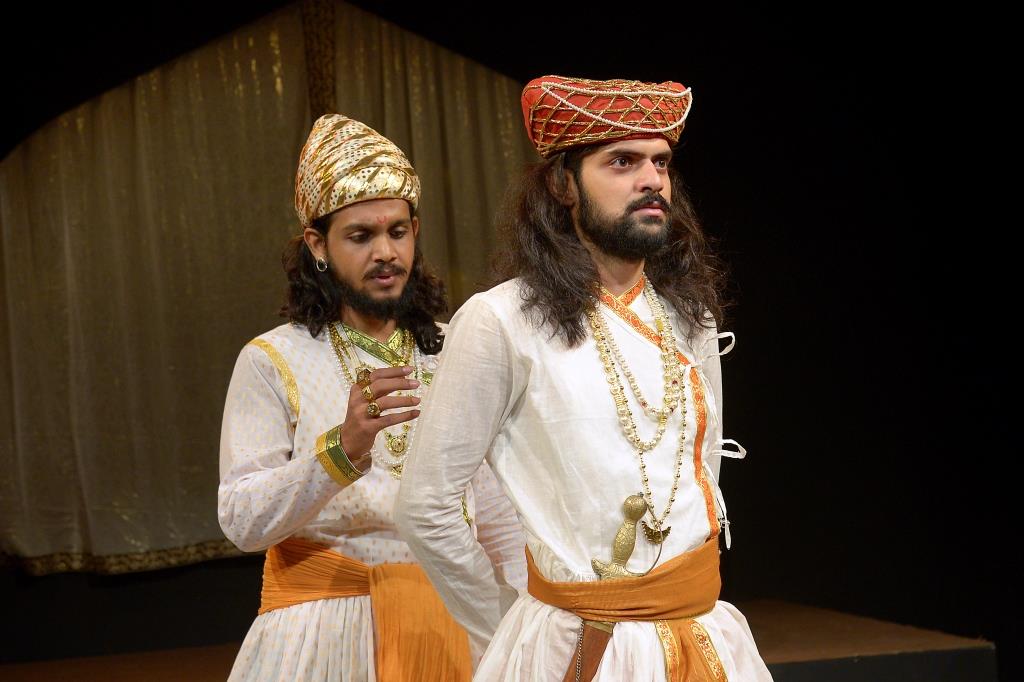
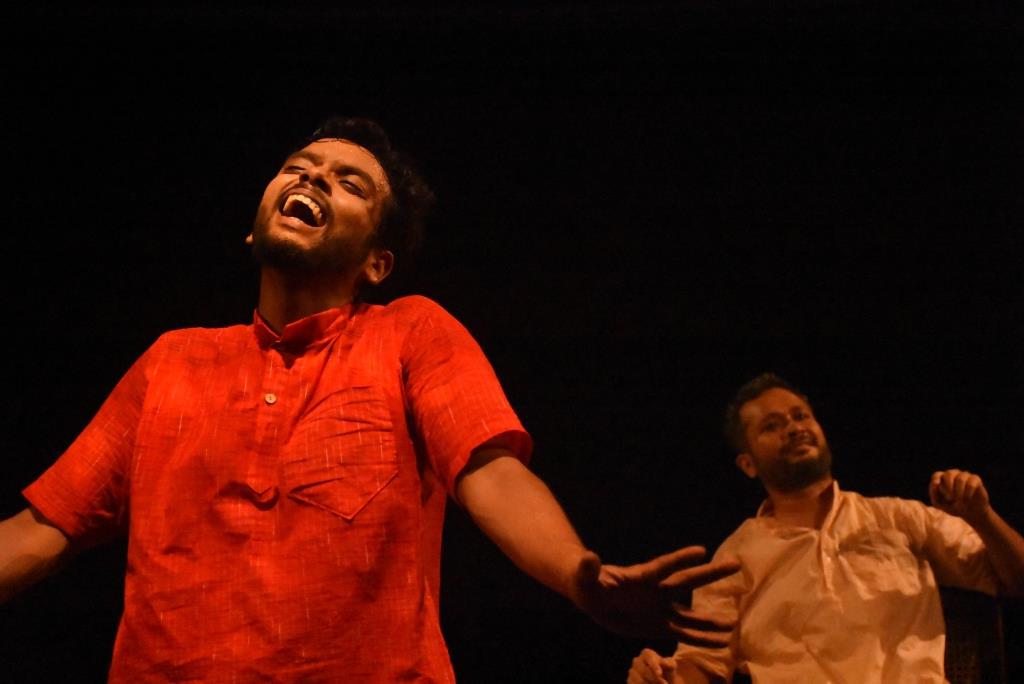
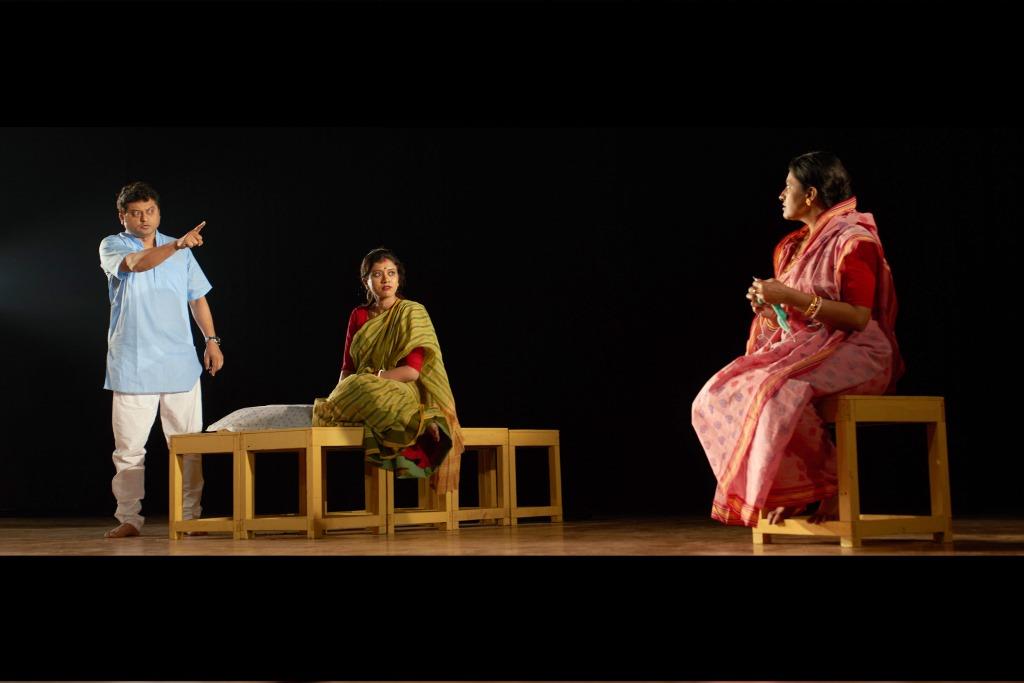
Peter Brook & Jean-Claude Carrière’s CHARAHARUKO SAMMELAN (Conference of the birds) Director: Deeya Maskey

Playwright: Peter Brook & Jean-Claude Carrière
Director: Deeya Maskey
Group: Actors’ Studio, Nepal
Language: Nepali
Duration: 1 hr 30 mins

The Play
Birds from all over the world gather together for a great conference. The nation of birds is in crisis, and urged by one of their flock, the Hoopoe, they have to chart a path to find their king Simurgh. For this they need to travel a long way towards the mountain called Kaf. During this journey, some die, some drop out, while others continue their quest of discovery, love, understanding, disappointment, destruction, unity and death. At last the survivors come into the presence of the great one, and discover that they themselves are the embodiment of the divine.

Director’s Note
Seven years ago, I came across Conference of the Birds while attending a physical theatre workshop jointly organized by Actors’ Studio and Embassy of US in Nepal. Description of the seven valleys seemed mythical and ancient on one hand and new and ultra-modern on the other. It was the perspective and relevancy that enabled me to stage the ancient masterpiece in today’s context. Through physical gestures and dialogues, each actor has tried to convey different unexplored meanings of the text. I have left a few things as mystery.

The Director
Deeya Maskey is a renowned actor, dancer and TV personality in Nepal. She initially trained as a professional Indian classical dancer from Allahabad, India and later completed her training in acting at Actors’ Studio, Nepal. Since then she has been practicing contemporary dances to explore a unique style by using the body, spatial relationship, kinesthetic responses and voice. Some of the famous films that she has acted in are Kagbeni, Soongava, and Fitkiri. She has worked as a choreographer for several theatre and film productions. She is also a judge in the Nepali edition of MTV Roadies show, Himalayan Roadies.

The Playwrights
Peter Brook contributed significantly to the development of 20th century’s avant-garde stage. He established the International Centre of Theatre Research in 1970 in Paris. He has won multiple Tony and Emmy Awards, a Laurence Olivier Award, the Praemium Imperiale, and the Prix Italia. He has been called ‘The greatest living theatre director’.

Jean-Claude Carrière is a renowned French novelist, story-writer and actor. He is known for his works as writer and actor in Luis Buñuel’s films Unbearable Lightness of Being, The Discreet Charm of the Bourgeoisie, and Birth. He has received Best Live Action Short Film Award (1963) as well as Academy Honorary Award (2014) for lifetime achievement. He has also been honoured with the Padma Shree, award in India.

The Group
The Actors’ Studio has been performing in Nepal and abroad for more than one and a half decade. It has carved a niche in Nepali theatre by staging artistic yet committed and socially relevant plays, and establishing the presence of Nepali theatre in the international arena by producing radical and experimental works.

Cast & Credits
The Hoopoe: Suraj Malla
Heron Aayushman: Pyakurel
Partridge/Slave 2: Arjun Neupane
Sparrow: Roshani Tamang
Falcon: Gaurav Bista
King 1/Dervish/Slave 1: Sudam CK
First Exotic Bird: Anup Neupane
Second Exotic Bird: Manoj Thapa Magar
King 2/Walking Bird/ Bat: Anoj Pandey
Old Man/Mahatma: Anup Baral
Duck/ Thief 1: Prakriti Rayamajhi
Nightingale/Cal bird/ Slave: Binita Thapa Magar
Princesses: Sadhana Bhandari
Parrot: Anu Dahal
Peacock: Deeya Maskey
Owl: Keshav Thagunna
Thief 2: Aashish Shrestha
Chamberlain/Executioner: Suryaman Limbu
Double Bird: Shiksha KC
Hermit: Bikas Neupane
Guilty Bird: Ranjana Bhattarai
Dove bird: Hena Nagarkoti

Production Manager: Dev Neupane
Set Construction: Hum BC / Sagar BC
Stage Props: Suryaman Limbu / Anil Subba
Marketing Manager: Aayushman Pyakurel
Costume Design: Sunu Rai / Binita Thapa Magar /Sadhana Bhandari
Finance Manager: Keshav Thagunna
Light Design: Anup Baral
Light Operator: Dev Raj Sunuwar
Sound Craft / Operator: Devendra Neupane
Stage Manager: Anoj Pandey / Roshani Syangbo
Documentation: Sushil Paudel
Translation: Pushpa Raj Acharya

Playwrights: Peter Brook and Jean-Claude Carrière
Direction: Deeya Maskey


Anil Saha’s ARSHINAGAR Director: Debasish Chakraborty

Playwright: Anil Saha
Director: Debasish Chakraborty
Group: Tala Dhrupad Natya Sanstha, Hooghly
Language: Bengali
Duration: 2 hr 10 mins

The Play
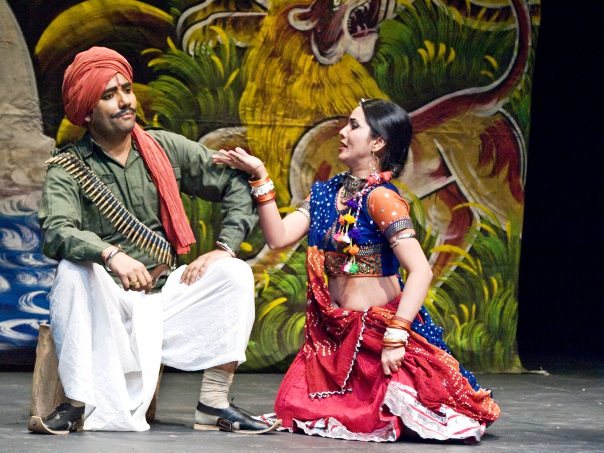
Arshinagar speaks about love and true emotions. In this era, where love has been commoditized, this story talks about the real definition of love and the magic it can create. Chaya Kumar, son of a rich merchant has to leave his wife on the next day of his marriage for business expansion.The newly wedded bride, Lilabati, lives with her in-laws, but feels a vacuum. But the power of love brings joy in Lilabati’s life and helps her overcome the void.

Director’s Note
Presented in a folk form, the flight of imagination in the play soars without any bondage of religion, cast or culture. To express the language of love and fathom its power, music is a vital character in this play. Various folk songs in the traditions of Jhumur, Bhadu, Tusu, Sari, Jari and Sufi are wonderfully tuned in the atmosphere through which the story runs smoothly. Various workshops and endless brainstorming sessions on choreography, costumes, light, set and editing resulted in this brilliant play.

The Director
Debasish Chakraborty, a theatre student of Sri Bivas Chakraborty since 1998, is a promising director of this generation. He joined Annya, a theatre group, under the direction of Sri Bivas Chakraborty and acted in numerous plays. He started his own theatre group Dhrupad in 2002 at Serampore. He has acted in many tele-serials. He has also acted in the feature film One, directed by Birsa Dasgupta, and performs in other theatre groups of Kolkata as well.

The Playwright
Anil Saha was born in Bagbazar, Kolkata. He is a retired employee of State Bank of India. He joined a theatre workshop and is now a full-time theatre worker. He has acted in many plays and has been writing plays for 30 years.

The Group
Tala Dhrupad Natya Sanstha started its theatre journey in 2002. The group has produced Simantika written by the eminent dramatist Chandan Sen, Hastabud dramatized by Pradip Moulik and based on the story of Sahajad Firdous, The Numbers based on Nikolai Gogol’s story, Ranger Haat by Manoj Mitra, Bodli by Anil Saha, Bhan by Amiya Chattaraj, Uro Megh by Mohit Chattopadhyay, Punajjanma by Dwijendralal Roy and many more.

Cast & Credits
Chaya Kumar: Dhrubo Adhikari
Lilabati: Shreya Biswas
DebokiNandan: Arup Manna
Surobhi Devi: Mita Roy
Sarkar Mosai: Jayanta Chattopadhyay
Bhnaru: Biswanath Saha
Kanai: Parikshit Chattopadhyay
Maya Kumar: Jayanta Chakraborty
Raja & Sutrodhar: Debasish Chakraborty
Paharadar Gautam: Bikash Chandra
Panchir Maa: Mausumi Goswami/Sanchita Singha Roy
Sokhi Dol Poulobi: Sarkar Gupta, Moumita Chakraborty Basu, Priyanka Dey, Sukla Pal, Sanchari Singha Roy
Grambasi: Abhijit Chatterjee, Tanay Banerjee, Wasim Ali, Suman Chakraborty, Utsab Chattopadhyay, Iman Das, Jayanta Dhar
Baul: Sourabh Dutta

Backstage: Suman Mukhopadhyay, Subhankar Mukherjee, Tapan Mallick
Lyrics & Music: Bhaskar Choudhury
Choreography: Abhijit Mahato
Light: Debabrata Sarkar
Set: Moni Shankar
Make-up: Pratap Roy
Title: Utpal Ghosh
Harmonium: Subir Sanyal
Rhythm: Tanmoy Sashmal
Sound: Control Bivas Gupta
Photograph: Sumanta Bora

Playwright: Anil Saha
Director: Debasish Chakraborty


Ota Shogo’s VACANT LOT Director: Apoorva Anagalli


Playwright: Ota Shogo
Director: Apoorva Anagalli
Group: NSD Diploma Production, New Delhi
Language: Hindi
Duration: 1 hr

The Play
Sarachi relates to Ota’s many preoccupations; dispossession; wandering; a search for connectedness; questioning, comforting and reaffirmation of reality. Likewise, Sarachi contains virtually no socio-political themes as reference points, as Ota searches for a philosophical understanding of life and human relationships on what he evidently perceives a universal level. The ideological vacuum in which the play seems to operate might strike some western readers as swimming against the tide of times. No matter how one judges Ota’s recent work in this regard, it is overtly apolitical. As such, it is in step with much contemporary Japanese drama. Sarachi involves much hauling, pulling and crawling. It is a work that offers both a preliminary look at Ota the playwright and a more rounded picture of Ota the theatre artist. The play reveals a middle aged couple forced to come to grips with a sense of ennui that has fallen over their lives, a fact represented literally by the sudden disappearance of their house. Wife and husband push, pull, drag and crawl their way through the theatre-space and their lives embark upon a search for the meaning of reality.

Director’s Note
To go from place to place is a species-specific instinct among humans. What is at the back of it? This is the object of exploration in this play. People’s search for a dwelling place and its directly opposite impulse to abandon it is ordained in the pages of the Vacant Lot. In this course of a to and fro ticking in a pendulum – like fashion there is a movement of universal phenomenon. Reciting a human desire for- sex & marriage, children & home, job & income. Residing within the bowels of ‘location’ is a lingering boundless and endless wandering lust that shies away and beyond! Inspired by a simile of a constantly ticking pendulum from left to right in search of? Like a hapless kinetic energy propelling towards actions that behove in the horizon perhaps. Or mostly like spiralling into depth from heights! An abstract – turn and twirl – like art.

The Director
Apoorva Anagali started her theatre carrier as a child actor from Koshika cultural organization and Benakamakkalanataka Kendra (headed by B. V. Karanth and Prema Karanth). She trained in Carnatic classical music and Bharatnatyam in both Kalashetram and Valavur styles. Has trained in make-up and mime workshop, NSD. She debuted as a director with B V Karanth’s Heddayana. She has acted in almost 25 plays and directed eight. She pursued a – year long diploma course in Neenasam theatre institute. Has experience of participating in international theatre festival of India like Jashne Bachpan, Bharat Rang Mahotsav, Multilinguistic Theatre Festival – Kerala, Tamilnadu, Pondicherry, Mumbai and Goa.

The Playwright
Ota Shogo (b.1939) is one of the notable artists to emerge from the new Japanese theatre of the 1960s. His work received recognition in Japan in the 1970s and he gained an international reputation in the 1980s. To a great extent attention outside Japan has been received for his wordless theatre pieces, such as Water Station which consists of extremely slow, mostly silent movement. From the beginning of his carrier, Ota has relied heavily on works structured on dialogue. First published in the theatre magazine Teatoro in February 1992, Sarachi (Vacant Lot) is his latest example of work. Ota has ever since been associated with Tenkei Gekijo (Transformation Theatre), he found in 1968 also marks a new phase of his involvement in theatre.
Currently he functions as an independent artist and an artistic director of the new Civic Theatre, a municipal theatre in the Tokyo suburb of Fujisawa.

The Group
This play is a part of National School of Drama’s graduate showcase of class 2018. It aims to provide a platform to encourage emerging theatre practitioners to share their work with wider audience.

Cast & Credits

On Stage: Debarati Sikder, Indira Tiwari, Punsilemba, Ravi Chahar

Music Direction: Bhushan Bhatt
Music Assistance: Ravishankar Sharma
Poster & Brochure Design: Indira Tiwari, Saras
Costume Assistant: Debarati Sikder
Light Design & Operation: Sarthak Narula
Stage Manager: Paramanad
Literary Guide: Asif Ali

Translation Vishal Mahale
Playwright Ota Shogo
Director Apoorva Anagalli


Anton Chekhov’s THREE SISTERS Director: Rose Schwietz

Playwright: Anton Chekhov
Director: Rose Schwietz
Group: One World Theatre, Nepal
Language: English
Duration: 2 hrs 15 mins

The Play
The story takes place in a modern, provincial town that is in the Russian countryside and simultaneously far away from it. The three Prozorov sisters, Olga, Masha, and Irina, are celebrating the 20th birthday of Irina, the youngest. Moods are light and festive, despite this also being the first death anniversary of their father. The play is a window opening into four moments across four years of their lives, showing the emotions that humans experience in a lifetime. The sisters spend their days longing for their youth in Moscow and staving off malaise with the officers from the nearby artillery post. As the years pass, the sisters fall in and out of love, attempting and failing to create the beautiful life they dream of. Unfulfilled in work and in love, they face despair as Moscow becomes a continually more distant dream.

Director’s Note
Though set in a traditional 1900s provincial Russian town, this production is reimagined into a modern, less classically Russian setting to make it relevant for South Asian audiences. One thing I adore about the play is that the Prozorovs’ world is as real and full as the one we know in our daily lives, and that is the lasting beauty, and heartache, of this show. We cannot help but see ourselves in each character. We cannot help but feel what they feel. Whether Russian or Nepali or somebody else, this play speaks to what it means to work, to suffer, to love… to be human.

The Director
Rose Schwietz is a director, actor, musician, and teacher currently based in New York City. She has directed five shows—most recently Chekhov’s Three Sisters and Stoppard’s Rosencrantz & Guildenstern Are Dead—with high school and professional actors. Acting credits include notable stage roles (Mrs. Edith Frank, Lieutenant Colonel Vershinina) as well as leads in ads, short films, and one feature length film. She is an accomplished musician, with years of training in voice, saxophone and piano, and performs regularly in Kathmandu and New York City. She teaches in theatre workshops for students and professional theatre-makers in the US, Nepal, and India. She also works with the Wooster Group and SITI Company. Her interests include discovering new cultures and places, literature, crossword puzzles, and taekwondo.

The Playwright
Anton Pavlovich Chekhov (1860-1904) was a Russian medical doctor, short-story writer, and playwright. He is considered one of the originators of early modernism in the theatre. He worked closely with Stanislavsky and Moscow Art Theatre later in his career. He is most famous for his four classics: The Seagull, Uncle Vanya, Three Sisters, and The Cherry Orchard.

The Translator
Paul Schmidt (1934-1999) was an American translator, poet, playwright, and essayist. His work as a translator led him to serve in the US Army Intelligence; his work in mime and acting with Marceau and Charon led him back to the theatre. He taught at a Texas university and at Yale. He wrote several plays, and is best known for his translations of Euripides, Chekhov, Brecht, Genet, Gogol, and others.

The Group

One World Theatre (OWT) is a non-profit English and Nepali language theatre company in Kathmandu, Nepal, dedicated to presenting intercultural, social justice productions, especially plays from South Asia, the Western canon, and contemporary American plays that are affordable, professional, experimental, and relevant.

Cast & Credits
Olga: Loonibha Tuladhar
Masha: Akanchha Karki
Irina: Samapika Gautam
Chebutykin: Rajkumar Pudasaini
Tuzenbach: Utpal Jha
Solyony: Sandeep Shrestha
Anfisa: Surabhi Sapkota
Ferapont: Saroj Aryal
Vershinina: Rose Schwietz
Andrei: Bijay Tamrakar
Kulygin: Hemanta Chalise
Natasha: Pooja Lama
Fedoti:k Razen Thapa
Rohde: Amrit Dahal

Stage Manager: Saraswati Adhikari
Sound: Ragendra Shrestha
Lights: Diljung Gurung

Producer: Deborah Merola
Playwright: Anton Chekhov
Translator: Paul Schmidt
Director: Rose Schwietz


Ajay Shukla’s TajMahal ka Tender Direction: Chittaranjan Tripathy

Playwright: Ajay Shukla
Direction: Chittaranjan Tripathy
Group: NSD Repertory Company, Delhi
Language: Hindi
Duration: 2 hrs

The Play
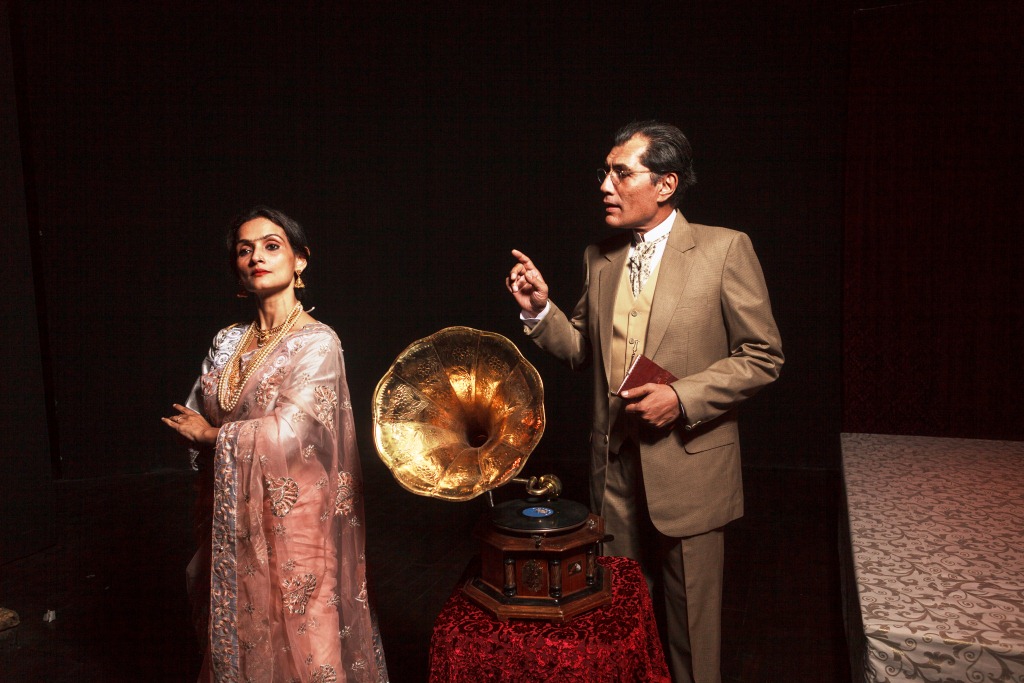
Emperor Shah Jahan invites the chief engineer of CPWD, Guptaji and shares his dream of building a monument in the memory of his late, wife, Mumtaz. After much deliberation he comes to the conclusion that a mausoleum be built in her memory and he wants it to be named Taj Mahal.
Guptaji, a shrewd, corrupt, official, entraps the Emperor in the snares of bureaucracy and red- tapism leading to many hilarious situations. The ridiculous bureaucratic procedure takes 25 years only to float the tender notice of Taj Mahal.
TajMahal Ka Tender is one of the successful satires of contemporary times.

Director’s note
The state is the best creation of man as it is not an imitation of anything that existed before. With the emergence of the State, a primitive society is transformed into a civil society, leading to the germination of division of labour, division of time, rank, file, red-tape etc., thereby giving birth to official dom. TajMahal ka Tender is a satire on rank –file, red tapism and the sad state of officialdom. It focuses on the organizational diseases that India is suffering due to – corruption, idleness, favoritism, arrogance and insensitivity to public needs.

The Director
Chittaranjan Tripathy graduated from National School of Drama in 1996 with specialization in acting. He was also enrolled in the musical theatre department in the Guildford School of Acting (GSA), Guilkdford, UK, under the Charles Wallace fellowship.
Shri Tripathy has directed plays for many leading theatre groups and repertory companies including the National School of Drama Repertory Company, the Shri Ram Centre Repertory and the Sahitya Kala Parishad Rang Mandal. Some of his most popular plays include TajMahal Ka Tender with NSD Repertory Company, Capitol Express, Arre Mayavi Sarovar with SRC Repertory; Ladi Nazaria and Humare Sheher Ke Romeo Juliet with Sahitya Kala Parishad Rang Mandal.

The Playwright
Born in 1955, at Agra Ajay Shukla is a post–graduate in history from Lucknow University and then joined Indian Railway Traffic Service. His play, Doosra Adhyaay was directed by Ram Gopal Bajaj in 1998, and was broadcast from All India Radio later the same year. In 1993 he received the Delhi Sahitya Kala Parishad’s Playwright – Award for Doosra Adhyaya and Mohan Rakesh Samman for his play Tajmahal Ka Tender. In 2000 he received the National Award by All India Radio (Akashvani) for his play Hum Honge Kaamyab.

The Group
Established in 1964 with a membership of only four persons, the Repertory Company is the regular performing wing of the School. It was set up with the dual purposes of establishing professional theatre on one hand and continuing with regular experimental work on the other. Over the years it has produced a variety of plays ranging from stylized musicals to realistic contemporary Indian drama to translations and adaptations of foreign plays. In addition, several eminent persons of national and international repute have worked with the Company, and it has performed over one hundred and eighty one plays by ninety-eight playwrights and has worked with ninety directors. Quite a few of its actors have emerged as celebrities in theatre, cinema and television. The Company has toured extensively in India and abroad. It is celebrating fifty years of its existence this year.

Cast & Credit
Shahajahan: Shahnawaz Khan
Gupta: Suresh Sharma
Sudhir: Siddeshwar Kashinath Thorat
Bhaiyaji: Deep Kumar
Mohila: Neta Sampa Mandal/Shruti Mishra
Kanhaiyalal: Sikander Kumar
Murarilal Sharma: Naveen Singh Thakur
Shethi: Shubham Pareek
Ladka: Ashutosh Banerjee/Rahul Kumar
Ladki: Sakshi Sharma
Aurangzeb: Parag Baruah
Mummo/Mumtaz: Bornali Borah
Darbari: Ashutosh, Punshi, Rahul, Naresh, Virender
Jahanara: Anamika Sagar
Shaktiman: Raju Roy
Four Friends: Naresh, Virender, Ashutosh, Rahul
Dancer: Aparna
News Paper Hawker: Sampa, Shruti, Bornali,Aparna

Production Coordinator: Md. Abdul Kadir Shah
Set Designer: Pankaj Jha
Set execution: Ram Pratap, Dharam Singh, Manoj Kumar
Light Design: Govind Singh Yadav
Light Execution: Md. Suleman, Pradeep Aggarwal
Costume Design: Sunita Chand Rajwar
Costume Helping: Shurit Mishra, Akhil Pratap Gautam
Costume In –Charge: Bharat Singh Negi, C.S. Bhatia
Assistant: Budhram
Dance Choreography: Meghna Malik
Dance Execution: Annapurna Soni
Singers: Mohan Lal, Yetendra Bahuguna, Akhil Pratap, Gautam, Siddheswar Kashinath Throat, Sampa Mandal, Annapuran Soni, Anamika Sagar, Ankita Gusain,Shurti Mishra & Chittranjan Tripathy

Playback Singers: Sneha Mishra & Chittranjan Tripathy
Music rearrangement: Santosh Kumar (Sandy)
Property In-charge: Moti Lal Khare
Sound recording & Editing: S. Manoharan, Subhanjan
Sound Operation: Mukesh Kumar
Make Up In- Charge: Raju Roy, Reena Saini
Photography: S. Thyagrajan, Deepak Kumar
Poster & Brochure Design: Rajesh Bahl
Brochure: Materials Govind, Satyender, Tikaram Bhatt
Exhibition: Prithvi Singh Negi
Stage Manager: Govind Singh Yadav
Assistant Director: Md. Abdul Kadir Shah

Playwright: Ajay Shukla
Lyrics, Music, Design & Direction: Chittaranjan Tripathy


Nalini Nihar Nayak’s BRUNDABANARA SHESA DHUPA

Playwright & Director: Nalini Nihar Nayak
Group: New Quest Repertory, Rourkela
Language: Odia
Duration: 1 hr 40 mins

The Play
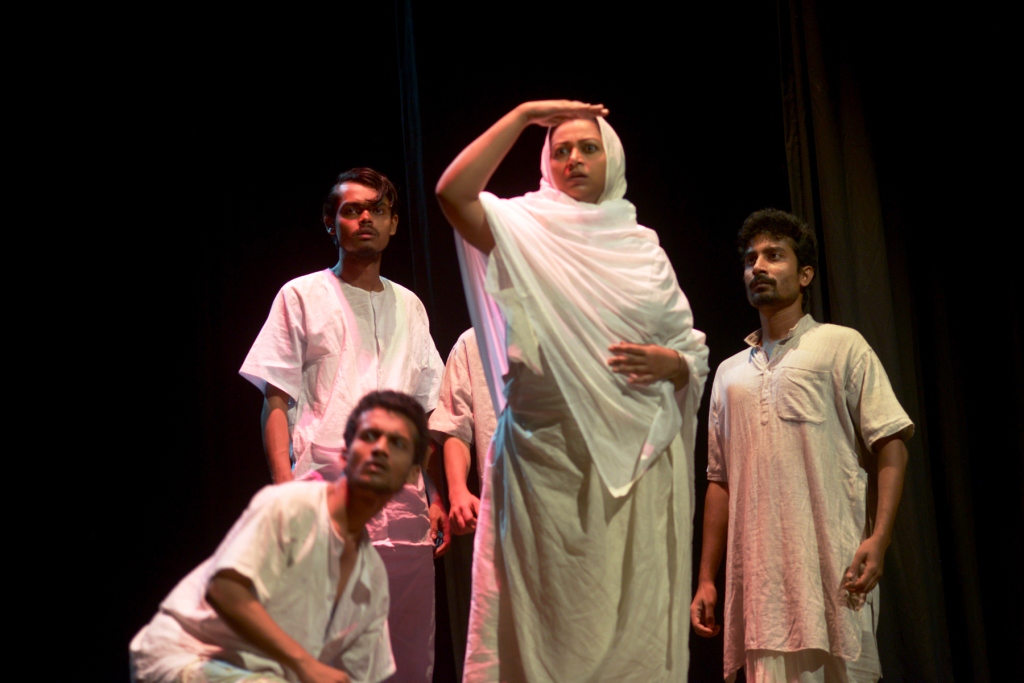
The Bhakti Movement flourished in Eastern India, and the temples provided shelter to the destitute, abandoned children, widows and community dancers. The play talks of a modern day situation where, as time passes, darkness spreads on those glorious days. The priest, failing to receive patronage of the modern generation, is accused of inheriting temple property. The successor, a differently abled and abandoned child once picked up by the temple priest, shoulders the responsibility of the spiritual world. The spiritual world of women and the devadasi tradition are accused of prostitution. The last hope of the destitute suffers major losses in the claws of modernity. The prayers are often interrupted by DJ’s music that profoundly challenges the existence of traditional bhajans and dances. Threatened, abandoned and unprotected, the temple shrine suffers much on all fronts. It becomes a meeting places for junkies who steal temple ornaments for drugs and accuse the priest for the theft. A vicious plan to smuggle a two thousand year old Krishna idol is about to be executed by robbers when the differently abled priest self immolates himself along with the idol, destroying the attempt of plunderers, thereby offering the last ‘rite’ to the lord. The plot is centred on changes and transgressions of human attitude towards religious devotion, and how the new generation responds to devotion and spirituality.

Director’s Note
This widely acclaimed story by Mohapatra Nilamani Sahoo was considered for production for its emotional and spiritual values, devotion to God, and of the laudable concept that in modern times too there exists spiritualism and devotion. The play blends folk dance, classical music, culture, rituals and customs of Odisha.

The Director & Playwright
Nalini Nihar Nayak is not only a well-known theatre director of Odia plays but also an actor, designer, and music composer. He earned his Masters and M.Phil in Drama (Direction) from Utkal University of Art and Culture. He is now pursuing Ph.D. in Analytical Practice with Classical Indian Theatre. He has also learnt Chhau dance in Mayurbhanj style. He has received prestigious awards like Ustad Bismillah Khan Yuva Puraskar, Rajiv Gandhi Professional Award, National Youth Award, Konark Samman, Master of Odisha Award, Baisakhi National Excellency Award, Shrestha Natua Samman and more than 120 Government and Non-Government awards. He has acted in about 80 play and directed about 35 plays staged in India, Malaysia, Singapore, Bangladesh etc. Nalini is serving as a student activity officer at National Institute of Technology, Rourkela and is striving hard to encourage the students towards art and culture.

The Group
New Quest Repertory made its debut in the year 2003 under the visionary leadership of Nalini Nihar Nayak, with the objective to train young artists in theatre and resurrect the dying art forms of Odisha. It has participated in the theatre festival organised by Odisha Sangeet Natak Academi, Yuva Pratibha Mahostav by Sangeet Natak Academi, New Delhi; Experimental theatre festivals by EZCC, Kolkata; National Youth Festival; Bharat Rang Mahotsav by NSD, National Theatre Festival by Bharat Bhavan, Bhopal; Konark festival and many more across the country, besides theatre festivals organised by government and non-government organisations.

Cast & Credits
On Stage: Niranjan Acharya, Pragyan Ranjan Khatua, Bhisma N arayan Swain, Dinesh Mohanty, Kishore Chandra Moharana, Manash Barik, Sagar Rout, Ashutosh Pati, Chinmaya Panda, Samir Patri, Sapan Routray, Abhijit Mishra,
Swagatika Mohanty, Sunayana Mishra, N. Sweeta, Monalisa Sahoo, Subrata Nayak, Debasmita Nayak, Rashmita Lakra
Music: Kailash Chandra Moharana
Sound: Jasobanta Narayan Ray
Make-up & Costume: Ashok Pattnayak
Set: Amit Meher
Team Manager: Swayam Sampurna

Story: Mohapatra Nilamani Sahoo
Playwright, Design & Direction: Nalini Nihar Nayak


Nicola Pianzola’s DESAPARECIDOS#43 Director: Anna Dora Dorno

Playwright: Nicola Pianzola

Director: Anna Dora Dorno

Group: Instabili Vaganti

Language: English & Spanish

Duration: 55 mins

The Play

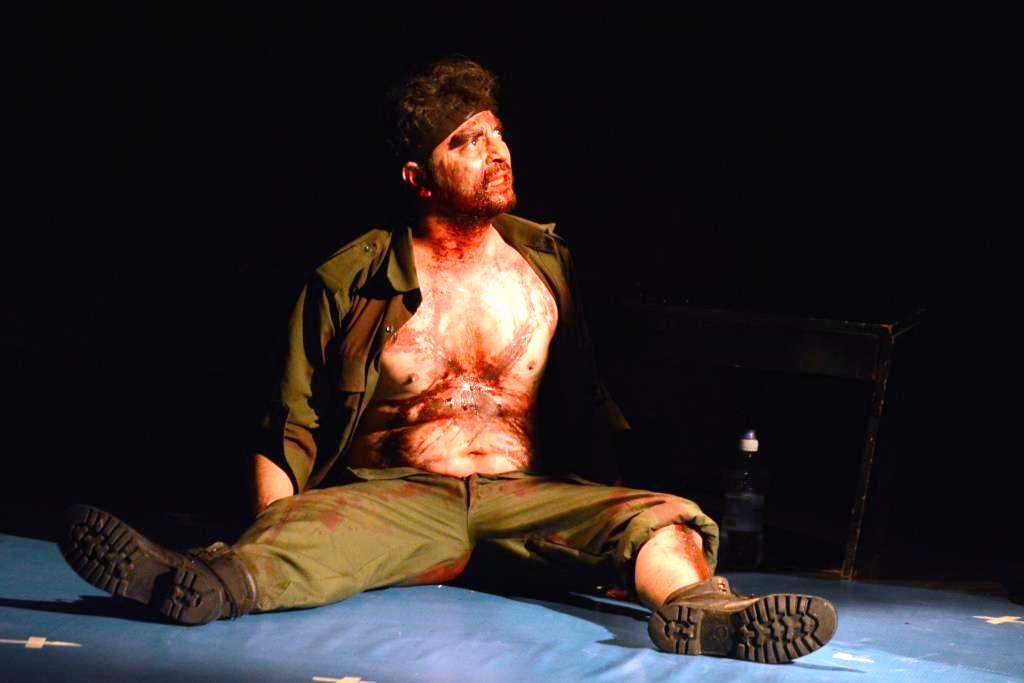
Desaparecidos#43 aims to give voice to the dramatic event of the 43 Mexican students of Ayotzinapa who disappeared on 26th September 2014. It is a strong performance of great emotional impact, an artistic Re-Action to a tragic reality: the en-forced disappearances afflicting Mexico, and an original dramaturgy, made not only of words but also of physical actions, sounds, songs and projected images.

Director’s Note

Desaparecidos#43 is not only a performance but also an authentic act of rebellion, a work exalting freedom of opinion, expression and demonstration, which are being worldwide threatened. It is an artistic example of the international influence of mass media and globalization and how they can sensitise the public opinion and help to ask for justice. It is a hope hymn, able to let red flowers grow from a stack of bloody clothes – ‘They wanted to bury us but they didn’t know we were seeds’.

The Director

Anna Dora Dorno was born in 1976 in Italy. She graduated at the University of Bologna – Department of Music and Performance. In 2004 she founded the experimental theatre company Instabili Vaganti. She has directed and acting in – Avan-lulu, which received the special award of the Jury at the 6th   International Festival of Theatre and Visual Arts, Zdarzenia (Poland), The Ritual, the result of a 10-year research project all around the world and performed at the 18 Bharat Rang Mahostav in Delhi, Ausencia – Alone in the crowd, premiered at the 32nd  Fadjr International festival of Teheran (Iran), Made In Ilva, which received a nomination at the Total Theatre Awards at the Edinburgh Fringe Festival 2014 and was the winner of 10 national awards for the best performance, Desparecidos#43 based on the true story of the missing students in Mexico and winner of the patronage of Amnesty International. She holds workshops for performers in universities and academies all over the world including: Grotowski Institute in Poland, Shanghai Theatre Academy in China, National School of Drama in India, and UNAM in Mexico.

The Playwright

Born in 1977 in Italy, Nicola Pianzola graduated at the University of Bologna – Department of Music and Performance. He graduated in physical theatre at the Nouveau Cirque school of Bologna and at the Grotowski Institute of Wroclaw (Poland). He is currently a performer and playwright in all the productions of Instabili Vaganti Theatre Company. He has won several national and international awards as a performer of the solo show Made in Ilva including the nomination at the Total Theatre Awards at the Edinburgh Fringe 2014. He collaborates with the University of Bologna, Department of Music And Performance where he gives workshops, work demonstrations, lectures and film screenings about physical theatre. He won the DAMS award for his research and experience in theatre with actors with handicaps. He writes for Hystrio theatre magazine and fattiditeatro theatre webzine.

The Group

Founded in 2004 by Anna Dora Dorno and Nicola Pianzola, the company focuses on an experimental ongoing research in physical theatre and performing arts. Anna Dora Dorno works worldwide, producing performances and directing projects, collaborating with international artists, performers, musicians and video makers. Their poetic work is able to overcome the labels and the divisions between theatre, dance, visual arts, and to communicate strong, emotional, impacting messages. Their performances have been translated in 3 languages and presented in more than 20 countries in Europe, Middle East, North Africa, Latin America and Asia, winning several awards, including the nomination to the Total Theatre awards at the Edinburgh Fringe, and premiering in important festivals such as FIDAE in Uruguay, NLGX in Beijing, and 8th Theatre Olympics in India. Their methodology is valued and requested in many universities and academies all over the world.

Cast & Credits

Main Performers: Anna Dora Dorno, Nicola Pianzola, Armida Pieretti

Original dramaturgy: Nicola Pianzola

Production: Instabili Vaganti

With the patronage of Amnesty International Italy
Playwright: Nicola Pianzola

Design & Direction: Anna Dora Dorno


David Auburn’s NIRNOY Translator & Director: Arun Mukherjee


Playwright: David Auburn

Translator & Director: Arun Mukherjee

Group: Nirnoy, Kolkata

Language: Bengali

Duration: 2 hrs 10 mins

The Play

Catherine, a troubled young woman of 25 spends years caring for her brilliant but unstable father, a famous mathematician. Following his death she has to deal with her own volatile emotions, the arrival of her estranged sister, Claire, and the attention of Hal, a former student of her father who hopes to discover valuable works in the 103 note books that her father left behind. Over the long weekend that follows, a burgeoning romance and the discovery of a mysterious notebook draws Catherine in to the most difficult problem of all – how much of her father’s madness or genius does she inherit!

Director’s Note

The first reading of the play Proof written by David Auburn had a mesmerising effect on me. The second made me love it. And the subsequent readings slowly but steadily arouse in me the desire to stage it in my language. Thoughts of adapting it to Indian situations, I found, was unnecessary. Male chauvinism is a great leveller. The content of the play amply exposes the same being prevalent in a very developed country too. I therefore thought of translating it in my language with hardly any alteration. Some small changes were incorporated though to adjust them to Indian values. I decided to go for minimum set- light- music for more than one reasons. Such a poignant content demands soulful acting. And to bring out the best in all my actors we rehearsed for more than a year before the inaugural show. My actors were encouraged to argue on any point of confusion, find out his/her own way guided by me. For music Beethoven came in handy. Set was designed simple yet meaningful. Doing this play was a very enriching experience indeed.

The Director & Translator

Arun Mukherjee, born in 1937, has been practicing theatre since 1955. Main director of theatre group Chetana, he has written many plays- Mareech Sangbad, Jagannath, Nirnoy, Putul Nacher Itikatha etc.. He is an actor and music director also. He toured USA, Canada, France, Norway and London as the leader of the troupe. He was a member of the delegation sent to Moscow film festival in 1978. He was awarded Bharat Puroshkar in 1978 for his acting in the title role of the film Parashuram directed by Mrinal Sen. He received SNA award for theatre direction. He has been awarded Dinobondhu Puroshkar by the State Government. A number of his plays have been published in Bengali, Hindi and English.

The Group

The theatre Group Nirnoy began its journey on 22nd August 2013. In essence Nirnoy is an open platform for likeminded performing artists not only for practicing theatre but also other genres of art and culture. Till date Nirnoy has produced three full length plays- Ras, Nayanchander Byabsa, Jodi and one short play. All the three plays were directed by Sangita Pal. Nirnoy has performed its plays at Allahabad National Theatre Festival organized by West Bengal State Drama Academy, Natyaswapnakolpo, Minerva Natya Sanskriti Charcha Kendra National Theatre Festival, Narir Mancha National Theatre Festival and various other prestigious theatre festivals of India. Ras has been awarded best theatre production in the full length drama competition organized by Sayak in 2016. Nirnoy has organized two theatre and dance workshops with Silvia Viufona, theatre personality and dance guru of Italy and renowned Odissi dancer Rina Jana.

Cast & Credits

Catherine: Manisha Adak

Claire: Sangita Pal

Hal: Suman Nandy

Robert: Pradip Chakraborty

Set Assistant: Kamal Kumar Awon

Set Assistant: Jit Sundar Chakraborty

Makeup Assistant: Debjit Paul

Props Assistant: Rahul Sen

Light Designer: Dipak Mukhopadhyay

Board Assistant: Sadhan Parui

Light Assistant: Samar Parui

Music: Bandan Mishra

Team Manager: Angshuman Bhowmick

Stage Manager: Subhankar Dassharma

Costume Assistant: Barnali Roy Chowdhury

Production Controller: Tanmay Bhattacharyya

Set Design: Hiran Mitra

Costume Design: Sangita Pal

Playwright: David Auburn

Translation, Music Direction & Direction: Arun Mukherjee


Nimmy Raphel’s BALI

Playwright & Director: Nimmy Raphel

Group: Adishakti Laboratory for Theatre Art Research, Pondicherry

Language: English

Duration: 1 hr 40 mins

The Play

One of the unsung heroes of the Indian epic Ramayana is the army of monkeys from the land of Kishkindha that helped King Ram win his war against the demon king Ravana. But before these simian soldiers followed him into war, the ruler of Kishkindha, Bali commanded them. A meditation on justice, ethics and morality, Adishakti’s Bali is a retelling of the crucial events surrounding the death of king Bali, which helped Rama to ally himself with the army. Through a seamless transition from the epic to the everyday, Adishakti’s Bali explores the notion of right and wrong in this tale of brotherhood and revenge.

Director’s Note

The Indian epics, Ramayana and Mahabharata, have shaped our country’s politics, arts and culture. Its stories have been retold and its characters reimagined in many ways through various retellings, which have been a part of the literary and performative traditions in India. Each retelling has challenged the traditional narrative by subverting the dominant versions of the text to throw a light on various other interpretations. Often, these interpretations strongly reflect the writer’s subjective preferences with respect to his/her identity and ideologies. An excerpt from the Indian epic Ramayana, Adishakti’s Bali is a retelling of various events that led to the battle between Bali, the ruler of Kishkindha and Ram, the King of Ayodhya and eventually, the death of Bali. Here, the writer has tried to explore the notion of right or wrong through its various characters, while steering clear of any subjective influences. Through this play, we explore how one evaluates this notion, and how it can change when each and every character is given an opportunity to voice thoughts and opinions. The play weaves multiple stories through the points of view of Bali, Tara, Sugreev, Angad, Ram and Ravan and talks about how each of them make decisions and take actions based on the ethics that define their lives.

The Director & Playwright

Nimmy Raphel studied Mohiniyattam and Kuchipudi dance in Kerala Kalamandalam from 1995-2001, and has performed all over India. She is currently a resident actor, dancer, musician, and puppeteer at Adishakti, practicing its methodology of theatre since 2001. In 2010 Nimmy received the APPEX Fellowship, which took her to Bali. She collaborated with Indonesian dancer Sardono W. Kusumo to create a theatre production called Rama, Hanuman, Ravana which premiered in Adishakti. The production also went to The International Conference on Ramayana: Reinterpretation in Asia, in Singapore. In 2012 she was part of an exchange programme held in Korea between Adishakti and the performing group Tuida. As part of Adishakti’s three-year Ramayana Project, in 2011 she created a play called Nidrawathwam which she wrote, directed, and performed in. Nimmy was also the recipient of the Junior Fellowship from the Ministry of Culture for the year of 2012-13. She is currently performing in the play The Tenth Head directed by Veenapani Chawla, and also in Veenapani’s next production, Sita. Nimmy is also a recipient of Vinod Doshi Fellowship in 2015.

The Group

Adishakti Laboratory for Theatre Art Research was founded in 1981 in Mumbai. It now has its campus on the outskirts of Pondicherry, where artists and experts from a variety of other fields come for residency programs, sabbaticals, performances and workshops. Adishakti also engages with different spaces and disciplines. Adishakti’s work and experiments are driven, quite simply, by its comprehension of art/aesthetic practice as a unique bridge between a range of diverse realms, which are not normally, or visibly, in communication with each other.

Cast & Credits

On Stage: Vinay Kumar, Arvind Rane, Ashiqa Salvan, Kiyomi Mehta, Rijul Ray

Music Arrangement & Composition: Vinay Kumar

Sound Operation: Meedhu Miriyam

Light Desig: Vinay Kumar

Light Operation: Anand Satheendran

Creative Guidance: Anmol Vellani & Vinay Kumar

Stage Manager: Dhavamani Arumugam

Production Manager: Bharavi

Costumes: Viji Joy

Playwright & Director: Nimmy Raphel

Watch The Director’s Meet for the play


Apu Bhardwaj’s SWABHAV Adaptation & Direction: Baharul Islam

Story: Apu Bhardwaj

Adaptation & Direction: Baharul Islam

Group: Seagull Theatre, Guwahati

Language: Hindi

Duration: 1 hr 20 minutes

The Play

Daya Phukan, a young photographer, lives in an old Assamese house. He is bored of his stress-free, simple and easy life. The kind of life he leads is getting intolerable for him. To bring a change and excitement in his life he decides to beat an old man. An unexplainable situation takes place, and he is sent to jail, gets fired from his job and thrown out of his rented house. But as always, he manages everything and begins a simple and monotonous life once again. Once again he is confused and upset with his life and wishes for a life with fun and excitement…

Director’s Note

After graduation in Acting (1990) from National School of Drama, I came back to Assam and started doing theatre regularly. I prefer simple presentations with meaningful expression and theatrical aesthetics. I refrain from the execution of a play with a huge back drop, but I enjoy carrying out tiny details of a small situation from modern life. It gives me pleasure in discovering masks, dilemmas, dreams, conflicts, love and unhappiness of the human being.

In this play I have tried to blend two stories by a young writer Apu Bhardwaj. The protagonist is a successful young man with a job, money and social status, but is discontented for no reason. He wants a change in his mundane life. He is isolated from his family, lives in a metro city, enjoys internet more than obeying his grandmother’s advice and religious rituals.

The play is an analytical depiction of a human being’s desire, void, frustration and the reality. 

The Director & Adapter

Born in Rangjuli, Assam, Baharul Islam is a film and theatre actor, and theatre director. He graduated in acting from National School of Drama, New Delhi in 1990 and thereafter formed his own theatre group, Seagull in Guwahati, Assam in the same year. He joined Tara Art, London in 1992-93 for the production of the play Heer Ranjha and directed a short film Rani Gaidenleu in 1997, produced by Girish Karnad for Doordarshan Kendra, New Delhi. He worked as a coordinator in the film Dil Se (Directed by Mani Rathnam), and directed the film Rodor Sithi (Scare Crow) in 2014 which received many awards including the Best Foreign Film award in the Canada International Film Festival in 2015. He has acted in feature films, some TV serials, Tele films and 80 plays. He has designed and directed almost 30 plays for Seagull; plays for NSD Repertory, New Delhi; Ninasam Repertory, Karnataka; Rangayana, Mysore; Banjara Theatre, Mumbai and for many commercial theatres in Assam.

The Story Writer

Apu Bhardwaj was born in 1980 at Jorhat, Assam. He is a writer, journalist and sub editor of Satsari Magazine. He is a recipient of Chandraprasad Saikia Memorial Award and Munin Borkotoki Award. His works have been adapted in various languages.

The Group

Seagull was established in 1990 in Guwahati by a few young and dedicated theatre activists, including some graduates from NSD. It runs a theatre academy and conducts a one-year training course under NSD Drama Extension Programme. It has its own infrastructure including an open air theatre, studio theatre, rehearsal hall, class rooms and a library, and various wings, each responsible for diverse activities and functions like theatre-in-education, publication, organizing theatre festivals, working for spastic children in association with Sishu Sarothi, conducting theatre workshops for children and youth, and the Seagull Repertory company. The troupe has participated in various national and international theatre festivals.

Cast & Credits

On Stage: Baharul Islam, Dibosh Baruah, Partha Bordoloi, Safdar Arif Ahmed, Prasanta Kalita, Kunal Sarma, Arup Deka, Megha, Prarthana Sharma, Meghali Kalita, Neeha Mullah, Ompratim Gogoi,Saibal Krishna Sharma, Nirmali Sharma 

Music Design: Birinchi Kumar Gogoi

Light Designing: Rajiv Medhi

Story Writer: Apu Bhardwaj

Script, Design & Direction: Baharul Islam


Watch Meet the Director for this play