Epic Narrative in Regional Theatre Traditions of South India | Manohar Khushalani

 
Event: A Talk by Prof. Paula Richman
Learning from Performance: Epic Narrative in Regional Theatre Traditions of South India
Venue: Seminar Rooms I & II, Kamaladevi Complex at IIC
Date: Sept. 7  2013
First Published in IIC Diary Sept-Oct 2013 Issue
 

Paula Richman, Danforth Professor of South Asian Religions at Oberlin
College in Ohio, USA, gave a talk on Learning from Performance using Epic
Narrative in Regional Theatre Traditions of South India. Supporting her as
the moderator was Prof. Rustom Bharucha, from the School of Arts and
Aesthetics, JNU, where Paula is also doing a short term Fellowship.
Richman’s passion for Ramayana is well known, so much so, that her name
has become synonymous with the topic. Paula has travelled to many parts of
the world in hot pursuit of the ‘Many Ramayanas ‘, which is also the title of
one of her books. According to her, people for whom Ramayana is central
now live throughout the globe in countries as diverse as South Africa,
Trinidad, Surinam United Kingdom, Australia, USA, Canada, parts of Europe,
besides South East Asia, “it has indeed become a global text as well as a
global piece of theatre” she added. But the subject of her current research
was South India.

She began her talk with a Tamil ‘Morning Sickness Song’, relating to Queen
Kausalya’s condition when she was pregnant with her son Rama.   The song
describes rituals that King Dasharatha and other women performed to
support her during her pregnancy, and her food cravings too. One day she
wants murukku, then idli, as another woman wants dosas! Idlis in Ayodhya?
Sounds weird, but, Tamilians can relate more easily to pregnant women who
crave for local dishes. Indian folklore believes in anthropomorphism. It bring
Gods closer by imagining that they behave like humans.

Paula also discussed a Kattaikkuttu play called RamaRavana.  It expressed
the yearning for virtuous governance.  One of its songs talks about how
people are still waiting to have an ideal, fair, and compassionate leader rule
– somewhat reminiscent of Ram Rajya.

Richman hopped from one topic to another as she gushed about Yakshagana
dance-dramas of coastal Karnataka and finally, about how the legendary
actress Usha Nangiar enacted the role of Mandodari in one of her
performances.

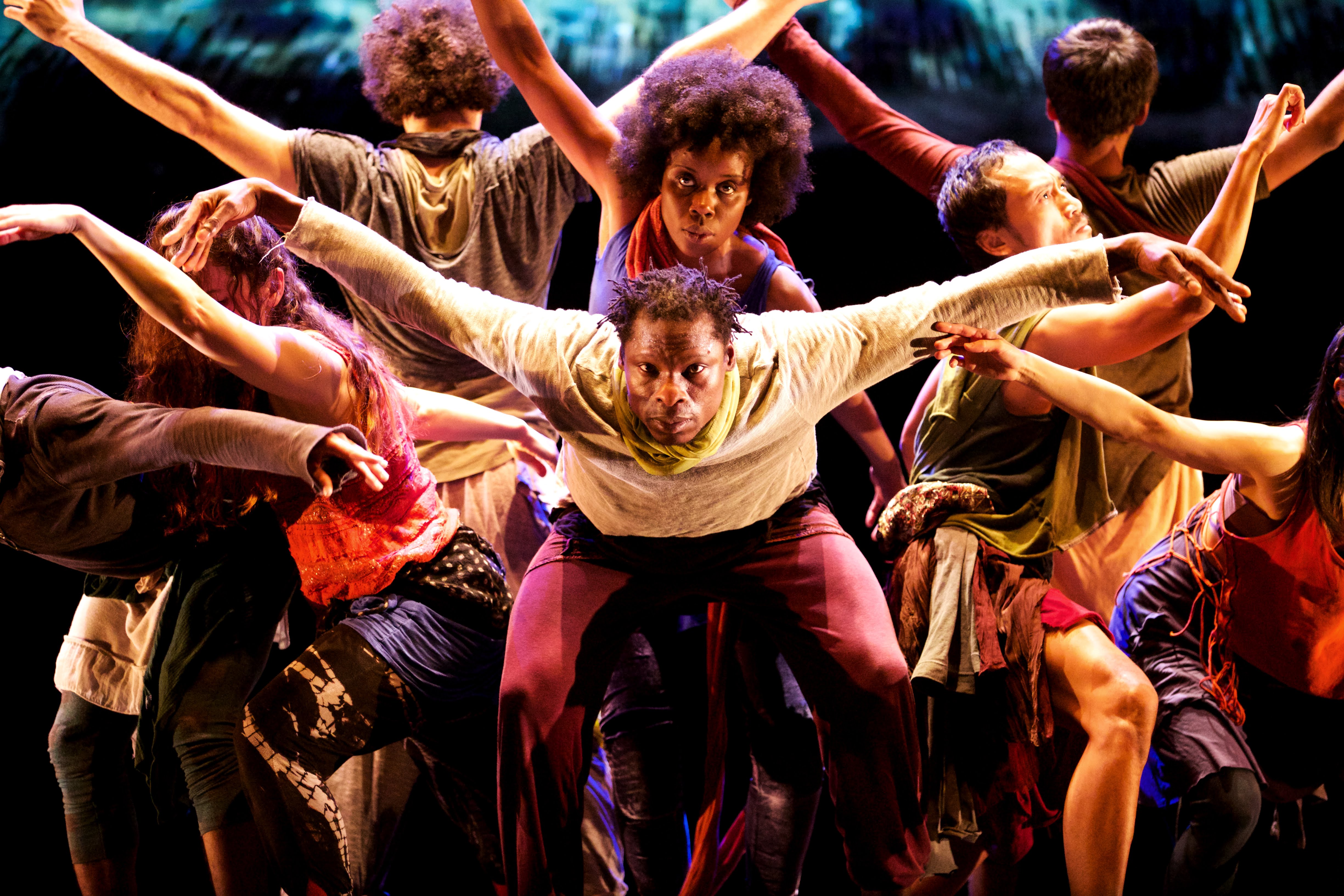
Her underlining thrust was that live performances offer new ways of
understanding the experiences of Ramayana characters.

 
IIC Diary Sep-Oct 2013 Issue


DU Professor and Thespian Lola Chatterji Passes Away

Lola Chatterji (26 July 1924 – 5 June 2019)

Lola Chatterji, who died peacefully on 5th June 2019 was a well-recognized figure in theatre circles in the capital. As a member of the English Department at Miranda House for over two decades, she was involved in many theatre productions in Delhi University in the sixties and seventies. Among the plays she directed or co-directed at Miranda House were: Easter (Strindberg), The Rape of the Belt (Levy), The Member of the Wedding (McCullers), Ring Round the Moon (Anouilh), Mourning Becomes Electra (O’Neill), and The Importance of Being Earnest (Wilde). She was also closely involved as staff advisor and mentor in three plays put up by DUMADS (Delhi University Music And Drama Society): Rhinoceros (Ionesco), A Man for All Seasons (Robert Bolt), and Rosencrantz and Guildenstern Are Dead (Stoppard).

Lola’s life-long interest in the theatre continued for many years after her retirement. She served for many years as Vice President of the Shakespeare Society of India and as a board member of Yatrik. She was particularly known for her make-up skills. There would e few actors in Delhi University theatre or in Yatrik who did not have their make-up doen by her.

A memorial event for Lola Chatterji will be held on 4th July 2019 at 6:30 pm in the Multipurpose Hall, Kamladevi Wing, India International Centre, New Delhi. All are cordially invited to the event


The Elusive Mr Tanvir / Partha Chatterjee

Habib Tanvir (Courtesy Outlook)

       Habib Tanvir (1923-2009), was perhaps the most famous Theatre personality in north India. An actor-manager in the Old-School mould, he led a crowded professional life, which, over the years, had invariably spilt over into private moments with family, friends and lovers, often to detrimental effect. The Raipur-born Habib Ahmed Khan assumed the nom-de-plume of Tanvir after he started writing poetry in Urdu in his senior years at school. He rose to fame as the founder-director of Naya Theatre along with his wife, Moneeka MisraTanvir, a strong,dedicated and talented theatre person in her own right. The actors were from the folk-theatre of Chattisgarh, near Raipur in Madhya Pradesh. It was through his unknown but highly accomplished actors and actresses that Tanvir was able to create a body of work in the Hindustani (Hindi-Urdu) theatre that stands alone.  Two plays that come to mind and were hugely popular in their time, are Agra Bazar, based on the times of Nazir Akbarabadi( d-1830), the great Urdu poet, and, Charandas Chor  taken from a Chattisarhi folk tale.  Not without reason, he has remained for many, the most important director- playwright in the region. He was, for all his artistic accomplishments, a sadly flawed man. Without purporting to be a review of his memoirs, simply titled ‘’Habib Tanvir : Memoirs’’,  (publisher-Penguin-Viking) this piece is a rebuttal of some of its contents to set the record straight.

The book is a translation from the Urdu by Mahmood Farooqui, a well-known historian and performer of Dastangoi, a near extinct art of story-telling, popular in 19th century Avadh, of which Lucknow was the cultural centre. Habib Tanvir’s life has been reconstructed through a series of remembrances dictated to Farooqui. One of the problems to arise from such an excercise is the propensity of the person remembering, to distort facts that may be too painful or embarrassing to remember. There were many such instances in Tanvir’s life but his letting down  of Barbara Jill Christie nee Macdonald, a fine trained singer from Dartington Hall, Devonshire, England is the worst because it had a far reaching psychological effect on Anna, the talented singer daughter born of this relationship, on Nageen , his daughter from his marriage to Moneeka. The shadows of Anna and her mother Jill, through no fault of their own, always hovered over Nageen and her late mother Moneeka.  Tanvir continued to visit Anna and her mother Jill, in England and France till 1996, when he was seventy three.

When Habib Tanvir had first met Jill, in England, he was thirty two and she, an easily impressionable sixteen. The year was 1955. He was handsome, dashing, a poet, and a student at RADA (Royal Academy of Dramatic Arts) in London. There was no Moneeka Misra then, on the horizon. He was already a man of the world, though with the airs of an idealist. It was easy to capture Jill’s heart. She loved him with a kind of sincerity and intensity that possesses the starry-eyed young, who in their optimism can go through hell and high water in search of the pure and the beautiful. One must also remember that when Habib and Jill had met the Second World War had ended only eight years ago, and the world, then as now, was desperately in need of love and hope.

It was indeed a pleasure and a revelation meeting Barbara Jill Christie and Anna, a couple of years earlier at the India International Centre in New Delhi. An elegant, handsome lady of seventy two, Jill, came across as a cultured, really educated, as opposed to highly literate, though she was that too, person who viewed the past, that is, her relationship with Habib Tanvir, with warmth, and a certain detachment. She was quite aware of the fact that in spite of being treated irresponsibly by him, she had played an important role in his life, not the least because of Anna, their daughter and the three grandsons. Anna’s first son, Mukti, is eighteen; his grandmother has addressed her memoirs titled, ‘’Dreaming of Being’’ to him.  The recollections are written as a long letter to him, interspersed with his grandfather Habib’s letters written to Jill, his grandmother, over a period of nearly twenty years; beginning in  1955, and with the last letter dated 15 April, 1964.


The following quotation  appears on page one of the manuscript:-

The desire to write a letter, to put down what you don’t want anybody else to see but the person you are writing to, but which you do not want to be destroyed, but perhaps hope may be preserved for complete strangers to read, is ineradicable. We want to confess ourselves in writing to a few friends, and we do not always want to feel that no one but those friends will ever read what we have written.”

_ T S Eliot

This beginning, on a note of seriousness, is sustained throughout the narrative of 153 pages. Barbara Jill Christie writes with deep but controlled emotion and respect for her chosen subject.

Anna Tanvir has written the foreword to her mother’s Memoirs. She begins thus, “ I first read my father’s letters written to my mother a few months after his death. I was sitting in the aeroplane on my way to India to attend a festival celebrating his life and work that was taking place in Bhopal in October 2009. It was a confusing moment as I had not been to the state funeral held in held in Bhopal a few months earlier, and had not had the time to absorb the finality of his absence, nor was I sure why I was undertaking this journey at this particular moment. I simply felt I had to go to where he lived, meet the actors of Naya Theatre whom I knew well, and meet my Indian family; I needed to be in India, on his home-ground, to properly accept that he was no longer physically there.“

Nageen, Habib and Moneeka’s daughter, and Anna’s half-sister, always remained deeply unhappy at  her father’s philandering with various women over the years, though she would dutifully accompany  him  when he visited Jill and Anna in England and France in his old age. Once, in Exeter, Nageen, having gone to stay with Jill and Anna, turned hysterical. She kept saying that Jill did not really know Habib, for the compulsive womaniser he was. She also held Jill responsible for her mother’s continuous unhappiness. Nageen, all too aware of her father’s failings, loved him  unconditionally.  She could not tolerate the fact that she had to always share her father’s love with Anna and Jill. Habib, in his old age called Anna and Jill, “my two pearls”. He was spot on. Anna, born in Ireland, seven months before Nageen, is a gifted singer and has several albums to her credit. Nageen is a fine singer of the folk songs of Chattisgarh she learnt from the actors in her father’s troupe,  is also  a trained singer, she has also learnt Hindustani vocal music from the famous Salochana Yajurvedi. Anna and Nageen continue to be distanced from each other.

The release of Habib Tanvir’s memoirs on 28 May, 2013  at the Habitat Centre, New Delhi  was a sham Public Relations job. Translator Mahmood Farooqui went on stage with Nageen, and together the two, lionised the deceased Tanvir. The announcer, a young lady, set the proceedings in motion by calling him one of the greatest Indian theatre directors of the 20th century; a fact that can be challenged by the serious followers of the work of Shambhu Mitra, Utpal Dutt and Ajitesh Bandopadhyay, all stalwarts of the Bengali theatre, and Jabbar Patel, a major figure of the Marathi stage. It was a veritable love-in, where critical judgement had been completely suspended. Habib Tanvir, the uncanny spotter of talent hardly got a mention. He was instead hailed as a messiah of Indian theatre, who worked with hardly any props, in the last twenty five years of his career. No one said while his minimalist approach was often very effective, he was not the first to use it well. There was not a word about Jill and Anna, for all practical purpose they did not exist. They are mentioned, albeit in passing, in the closing portion of the book. What Tanvir, with his cavalier attitude to facts related to his private life, could not ignore, his craven fans did.

As stated earlier, this is not a review of his memoirs but an attempt to redress a wrong committed fifty years earlier. Habib,, at forty, is still playing the ‘young Lochivar’; this is after his marrying the constant, deeply loving but neurotic Moneeka, and the consigning of Jill far into the background. In a letter dated 21 December 1963, written to Jill from Raipur, MP, he says thus :-

Dearest Jill,          

                                                                      Yes, I know. You have every right to feel sore. It is five weeks since I arrived. Well, this is the first time I am writing any letter at all. But darling, not for a day have you ever been out of my mind. I was having the sweetest thoughts about you and your wonderful letter was so welcome. It came in very good time. And I began to visualise all kinds of lovely things about you. Actually this is the first time we have ever shared life at all properly and for any length of time – and the whole things haunts.

He proceeds to tell about the acute paucity of funds and how theatre groups were falling all over him to work with them. To quote from the letter once more, “My mind goes back to each detail whenever parallel situations occur striking a contrast and I even think of the peace with which we shared our monies. Oh thank you so much Jill darling for all that most wonderful period of time”. Jill, writing to her grandson nearly fifty years after receiving the letter said, “I like this letter so much Mukti and I remember being overjoyed to get it – the longest Habib ever wrote to me and full of warmth and interesting news.”

Domesticity never suited him, though he had schooled himself into accepting it, lest he seem an ingrate to Moneeka and Nageen, and vital, rejuvenating romance that had awakened the artist in him after he fell in love with Jill, became a dream he could not sustain with any degree of consistency or loyalty. He was cleaved right down the middle of his being, if such a thing were possible.

Jill remembers in her memoirs, “By this I was still living in London but had to move into the house of a friend called Betsy Phillips, a rare and wonderful being. She had been an art teacher who taught me when i was a child. I had loved her lessons and we had always kept in touch.  … She was not censorious, either of myself or Habib, nor particularly worried, which was most unusual under the circumstances! She seemed to be more than a little excited that a baby was coming along. I think the idea of a new life appealed very much to her sensitive, creative nature and she knew that I had loved Habib for many years, and that I would cope. That such a thoughtful person actually believed in me was indeed a great help.”

Habib ‘s take on Jill, her pregnancy, and then motherhood, in his memoirs is weary and  resigned.

“Somehow, Jill managed to trace me in Dallas, Texas, and landed there. From there she accompanied me to New Orleans, East Virginia and Washington D.C.  and stuck to me like a shadow. This was a great phase for my poetry. .. I came back via London and went to Edinburgh from there. Jill’s dream eventually bore fruit. Anna was born on 6 May 1964. Later Jill married Christie who gave her another daughter. … When both daughters joined school, Jill wanted them to have separate identities – one should have Christy as a surname and the other should be called Tanvir. She sent me the school form, and I signed it and sent it back. … But Moneeka did not like it.” (pg 308, Habib Tanvir : Memoirs).

He goes on to say how Moneeka, who had earlier lost their first child in Panchmarhi, had three miscarriages in quick succession. This was after Tanvir’s return to Delhi in 1963. Thanks to the timely intervention of Sheela Malhotra, who advised Moneeka to use a bolster under her feet while lying down, Nageen was born 28 November 1964. “Moneeka was amazed and always considered Sheela to be Nageen’s second mother.” (pg 308, Habib Tanvir : Memoirs).

Habib’s life, over the years, thus rolled on amongst the comings and goings of girl friends, with whom, to his amazement, Moneeka, invariably bonded! Jill, of course was an exception, she was the great love of his life and the mother of his child, and so, was the ‘outsider’ whom, Habib, could  neither forget, nor give up. He visited Mother and daughter, whenever he could.  His silence, for some years following the birth of Anna was, in retrospect, not inexplicable. He just did not know how to accept responsibility for his actions, especially in his private life, not that he would acknowledge, much less accept, responsibility for his feckless and even cruel behaviour towards colleagues in his professional life. Deep down inside he seemed to be convinced that since he was an artiste, he was entitled to behave as he pleased.

Habib Tanvir’s training in England in Theatre, first at Rada in direction, following which, a stint in acting at the Bristol Old Vic, cured of participating in the joys of the proscenium theatre and the dramaturgy it required. He was for a more spontaneous kind of theatre  that had its roots in the Indian soil, where sets and props were imaginative, and could be carried in a couple of suitcases and actors could express themselves with ease and freedom. 1954, found him working with Begum Qudsia Zaidi’s Hindustani Theatre in Delhi. She had managed to gather around herself several talented artistes, amongst them Habib Tanvir, the Hyderabadi Urdu poet Niaz Haider, the music composer from Bengal, Jyotirindranath Moitra, who had at one time or another been associated with IPTA ( Indian Peoples Theatre Association), the cultural arm of the Communist Party of India

Hindustani Theatre did three Sanskrit plays, Mriccha Kattikam by Shudraka, Shakuntala by Kalidas , and a play each of Bhasa and Bhavbhuti. It was with Hindustani Theatre that Habib Tanvir did his first production of Agra Bazar comprising tableaux of life in the times of Nazir Akbarabadi, the great Urdu poet whose verse sang of the joys and sorrows of everyday life. Habib was to tinker with the script over the years to make it more expressive and lively. Agra Bazar opened the doors to fame and Charandas Chor confirmed it. The grand success of this play was largely due to its blend of satirical comedy and high seriousness. The idea came from a Chattisgarhi folk tale, and which was brought sparklingly alive by a set of actors from there. Charandas Chor with its cast of folk actors, toured internationally, conquering the hearts of audiences everywhere despite its script being in a dialect from Madhya Pradesh.

It was the actors who did the trick with the plasticity of their body language and a gamut of emotions and ideas that their vocal inflections were able to convey to an audience that did not ostensibly understand the language in which the play was written.

Tanvir’s relationship with his actors had always been fraught on and off the stage. In spite of his wide and varied learning he was a little afraid of his actors, most of whom were barely literate. Why? Was it because they possessed an unusual amount of native artistic intelligence and so were able to convey his ideas with ease? It was widely said that they had to be coached in minute detail in the course of the rehearsals. This may have been true in the case of certain actors but certainly not with the gifted ones. His actors were already known names in the folk theatre of Chattisgarh.

Laluram, Punaram, Majid, Bhulwaram, Madanlal, Fida Bai, Teejan Bai, are some of the actors that come to mind who graced the plays staged by Naya Theatre. They were, like some who came in their wake, marvellous, and brought the intentions of the playwright, be it Habib Tanvir or Shakespeare, yes! Habib did do a Chattisgarhi version of A Midsummer Night’s Dream! These were poor folk who worked as farmers and artisans, did a little folk theatre, of which Naacha was an essential part, were discovered by Habib and brought to live and work in Delhi in the Naya Theatre plays.

These actors and actresses were poor in their villages and they remained poor in the Metropolis of Delhi. It was a lot more difficult to survive economically in Delhi, where day to day living was murderously expensive. In their villages in Chattisgarh, they could somehow get back, possibly by sharing their meagre resources. Life in Delhi offered no such consolation. Habib had very little money but he was loath to share it with the actors who had made him famous. Theatre is an actor’s medium. It is the actors who bring to life a director’s vision once the performance begins onstage. Habib’s actors from Chattisgarh, served him very well for a long time, but he had little for them once the play was over. The actors led a miserable life, while he managed to lead economically, an acceptable middle-class existence.

Habib had scrounged around for ‘pennies’ till his early forties, but once he found his actors to interpret his vision of the theatre in the Chattisgarh folk idiom, his fortunes began to change rapidly. He managed to slowly but surely stabilise himself economically. The grants that he got from various state institutions were barely adequate to run his drama company. And what was coming in (from performances abroad) he did not share with the actors. His attitude was, if the Government grants were insufficient to pay his actors, so be it. It was inevitable that his actors go on strike and they did when they and Habib were staying in a number of tiny Government flats in Ber Sarai, New Delhi, in the early 1990s. They went public with their grievances, saying that they knew that Habib had money, but he did not want to give what they thought was owed them.

Habib Tanvir’s career, since his association with the Chhatisgarh actors, progressed steadily. The Government of India first awarded him the Padmashree, and later, the  Padmabhushan. The Madhya Pradesh state government, then Congress-led, honoured him and gave him a decent flat to live in. He showed exemplary courage persisting with the production of his play, Ponga Pundit, about religious hypocrisy, when activists of the RSS (Rashtriya Swayamsevak Sangh) and allied organisations of the Hindu Far Right, made repeated violent attempts to disrupt performances, after the demolition of the Babri Masjid, in Ayodhya, Uttar Pradesh. His Leftist political upbringing, with its emphasis on the exercise of discipline when under siege, came in handy. When the end came he was given a state funeral in June, 2009.

He had the privilege of courting the Soviet Union, and finding life-saving employment there as a Dubbing artist, and the United States of America, where he was invited as a speaker on theatre, and later with Naya Theatre Troupe, for performances. East and West Germany before the cold war, and then plain Germany, after the fall of the Berlin wall along with Poland were favourite destinations for work as were England and Scotland; the production of Charandas Chor with Chattisgarh actors was highly appreciated at the Edinburgh and won the Fringe First award.

As far as his sense of entitlement was concerned, he knew how much he could ‘squeeze’ in a relationship. Women continued to drool over him even in old age, as he smoked his pipe with a preoccupied air. Moneeka and Nageen, as wife and daughter, performed their filial duties with unflinching devotion. Moneeka passed away on 28 May, 2005. After having attempted suicide over Habib, as a young woman, she became indispensible to him, without her support he could not have gone very far in any direction. After her mother, went, Nageen looked after her father very well. The young, particularly those inclined towards the political Left came in droves to worship at his feet. Habib Tanvir had done very well for himself. There are two other participants in his story, namely Jill, the great love of his life, whom he had let down, and their daughter Anna.

When Anna was born in Dublin, her father Habib Tanvir was far away in India. His deafening silence worried her mother Jill terribly. Writing in old age to grandson Mukti, she recalls :

I wrote to Habib and sent pictures, but received nothing in return. You ask me Mukti what I thought had happened? It occurred to me that he might have died, or at least become ill. I read and re-read that last letter with its cool beginning, its preoccupation with theatre productions and its wistful air at the end. At the time I simply didn’t know, but felt that if no disaster had befallen him, he must have withdrawn. It was a horribly chilling sensation to feel that closeness simply disappearing as if it had never been,with no explanation. … Having a small person to care for who took up almost every waking moment meant I did not sink into despair. Even so his silence was insupportable; a dead-weight on my life, and totally bewildering. Looking after my dark-haired daughter who I so badly wanted him to see, made me wonder each day what momentous happening was stopping him from being in touch.’’

After two years of silence Habib responded to a letter from Jill informing him of her brother Kev’s death. Jill remembers, ‘’ I was surprised to get a reply. He wrote rather formally but comfortingly and asked after our daughter Anna, saying he would love to see her one day. … At long last, he did manage to come to see us, and continued to visit from time to time right up to the end of his life. There remained a genuine fondness between us and always unspoken efforts on his behalf to put things right.”

Anna responds to her father Habib’s absence in her childhoodin the Epilogue to her mother’s memoirs :

My first meeting with my father was unforgettable. It was not until I was nine years old that he came to meet me, by which time my mother had married, and I had a half-sister Vickie, who was as fair as I was dark. I spent my childhood conjuring up his image in my imagination, inventing him over and over again, in more and more exotic colours. My mother had always talked of him, trying to give me a sense of my Indian heritage through her stories and descriptions. … My father accompanied us in our daily lives in the imagination, and for me his image was so strong that he was somehow present despite his physical absence.”

Anna remembers her first meeting with her father:

“ He arrived clutching a chillum pipe that he puffed continuously that he puffed at continuously clouding him in wreaths of smoke, and wearing a large colourful shawl, a beret, a hand-made kurta and stylish jeans. … He seemed to create magic wherever he went, and as for telling a story without a book, he recounted to me hour after hour stories from the Mahabharata and the Ramayana, and I was utterly mesmerised.”

Anna and her mother Jill loved Habib devotedly, despite the years of absence and neglect, and that things came a full circle to bring hope and optimism before he passed away is indeed lovely.

Courage in his private life had never been Habib Tanvir’s strength, despite professions of often real love towards those he had, in some way, wronged. He gave Nageen exclusive rights over all his writing, including his correspondence. She is not keen that her father’s letters to Jill, and, hers to him should ever be published. It is perhaps out of a misplaced sense of loyalty to her mother Moneeka’s memory that she is acting in this manner. Who would know better than Nageen, how much her mother and Jill had suffered because of her father’s irresponsible behaviour towards both. It is time for a mature reconsideration of the past. It is time to let wounds heal. It is time   to look forward rather than back. It is time to understand that life is the source of all art and that artists are, at once, both strong and frail creatures, who are but mortals.


16th Natsamrat Natya Utsav opens in the Capital 6th March ’19

Natsamrat is one of Delhi’s oldest and most consistent theatre groups. Since its inception in 1998, Natsamrat has presented 1265 shows of 35 renowned plays. Ably led by Actor, Director and Visionary Shyam Kumar, whose philosophy has really been not only to evolve his own group but also to create space for all other theatre groups which are battling heavy odds to survive in theatre. Thus 16 years ago, when Natsamrat was barely four years old, he started the Natsamrat Natya Utsav so that other theatre groups also get a platform to perform. Three years ago, again Natsamrat widened its landscape by starting a Natsamrat Mahavidyalaya Natya Utsav, a student theatre festival, providing a parallel platform for the upcoming theatre generation to evolve and grow. Thus despite limited resources such a grand festival has evolved and grown. Natsamrat theatre festival thus begins with a bang on 6th March 2019 at 6.30 pm with the first performance of Waiting for Godot. The schedule is given above and the synopsis of the plays are given below.
On 9th March, at the same venue, Natsamrat will award the Thespians  who have been supporting Theatre as Practitioners, on Stage, off stage and as promoters and critics. Read more about elsewhere
1.    WAITING FOR GODOT
Translation by Krishna Baldev, Witten by Samuel Beckett and Directed by Mohit Tripathi
On 6th March, 2019 at 6:30 p.m.
The plot of Samuel Beckett’s Waiting for Godot is simple to relate. Two men, Vladimir and Estragon, meet near a tree. They converse on various topics and reveal that they are waiting there for a man named Godot. While they wait, two other men enter. Pozzo is on his way to the market to sell his slave, Lucky. He pauses for a while to converse with Vladimir and Estragon. Lucky entertains them by dancing and thinking, and Pozzo and Lucky leave. After Pozzo and Lucky leave, a boy enters and tells Vladimir that he is a messenger from Godot. He tells Vladimir that Godot will not be coming tonight, but that he will surely come tomorrow. Vladimir asks him some questions about Godot and the boy departs. After his departure, Vladimir and Estragon decide to leave, but they do not move as the curtain falls. The next night, Vladimir and Estragon again meet near the tree to wait for Godot. Lucky and Pozzo enter again, but this time Pozzo is blind and Lucky is dumb. Pozzo does not remember meeting the two men the night before. They leave and Vladimir and Estragon continue to wait. Shortly after, the boy enters and once again tells Vladimir that Godot will not be coming. He insists that he did not speak to Vladimir yesterday. After he leaves, Estragon and Vladimir decide to leave, but again they do not move as the curtain falls, ending the play.
2.    CHAMKOUR KI GARHI
Wriiten by Dr. Harcharan Singh and Directed by Harjeet Singh Sidhu
On 7th March, 2019 at 6:30 p.m.
‘Chamkour di Gadi’ play Regarded as one of the most important battle of the Sikh history. It was against the Mughal army led by Nahar Khan; the Muslim commander was killed, while on Sikh side the remaining two elder sons of the Guru – Ajit Singh and Jujhar Singh, along with other Sikh soldiers were killed in this battle.
3. SAIYAN BHAYE KOTWAL
Wriiten by Vasant Sabnis and Directed by Sanjay Bhasin
On 8th March, 2019 at 6:30 p.m.
Saiyan Bhaye Kotwal is a translation of famous Marathi folk play Vichha Majhi Puri Kara, which was written by Vasant Sabnis. The story of the play is focused on the king and his scheming prime minister. As per the hierarchy, the present Havaldar have to be promoted to that post. However, the wronged Havaldar and hi girl Mainavati, a dancer, plans to frame the new Kotwal. The play is based on traditional tamasha and is a slapstick comedy which brings out the political undercurrents of nepotism.
4. GORAKHDHANDHA
Wriiten by Jayvardhan and Directed by J.P.Singh
On 9th March, 2019 at 6:30 p.m.
When money becomes the be all and end all of one’s existence, when money becomes one’s religion then all relations, all ethics and morals are rendered meaningless. When one’s sole aim is to accumulate wealth then the person’s conniving mind keeps on scheming towards that end. There are some people who are adept at extracting something out of nothing. The protagonist of this play is such a character who will resort to any means to hoodwink people out of their money. While seemingly he is being helpful and charitable towards others, however, all he is doing is helping himself in the guise of helping others. He believes that there is a certain honesty to his dishonesty. In his games of deceit, he is forced to tell lies after lies till in the end he is so caught up in his web of untruths that he is neither able to give up nor get out. Gorakhdhandha is a fictional play based on true stories. Its dialogues and anecdotes don’t just tickle our funny bone but rather force us to break out into bouts of laughter.
5. SANDHYA CHHAYA
Wriiten by Jaywant Dalvi and Directed by Sudesh Sharma
On 10th March, 2019 at 6:30 p.m.
Sandhya Chhaya is a story about an old couple, an aged couple who spent their lives in the upbringing of their children and they are the ones who live alone and long for the love, affection and togetherness of their children. It is a story about a man and woman fondly called Nana, Nani respectively and it deals with the emotional turmoil the parents have to go through. In spite of having being deprived of love from their children, they still have the courage to fight the melancholy and pathos of their lives. They support and love each other and as the play unfolds, the audience also falls in love with them. Older people who are not so useful in today’s materialistic age bear the brunt of the changing values. They get lonelier and lonelier. This play is entertaining and simultaneously it tells us about old age and Loneliness. It is a great play, which can be very easily called a classic of Modern times. They have two sons, Deenu (the elder one) and Nandu (the younger one). Deenu is settled in USA and Nandi is in the Air Force. Deenu very rarely comes to meet his parents. He just sends money at regular intervals, meanwhile as the play progresses, they get to know that Nandu has been killed in the war. The whole play revolves on the nuclear families’ concept where in the parents are left alone and their children are settled somewhere else. The whole play is poignant collective mixture of emotions portrayed by an old couple, be it happiness, loneliness, love for kids, their childhood etc. On the whole, the play stresses on the fact and asks the society a very straightforward question that parents who have been there for us the whole life, do they deserve such a lonely old age? Do they really?
3rd Mahavidyala Natya Utsav
 
1.    BEEMAR
Wriiten by Saadat Hassan Manto and Directed by Prince
On 6th March, 2019 at 8 p.m.
2.    DJINNS OF EIDGAH
Wriiten by Abhishek Majumdar and Directed by Aadhar
On 7th March, 2019 at 8 p.m.
3.    CHETNA
Wriiten and Directed by Team
On 8th March, 2019 at 8 p.m.
4.    THE SHADOW BOX
Wriiten by Michael Christopher and Directed by Chandan Kumar
On 9th March, 2019 at 8 p.m.
5.    EINSTEIN
Wriiten by Mohan Maharishi and Directed by Abdus Ansari
On 10th March, 2019 at 8 p.m.


James Graham’s PRIVACY Director: Ajay Khatri

Playwright: James Graham

Director: Ajay Khatri

Group: N.S.D. Diploma Production, New Delhi

Language: Hindi

Duration: 1 hr

The Play

The play Privacy is a story of a writer who is hiding all these years in her shell. She’s afraid of coming out in public and the social media. Heartbroken and after having a deep interaction with a psychoanalyst, she is determined to take on the world. She wants to write a play, meet new people, interact and experience their lives. Through the process of meeting she is introduced to the social media and technologies and learns how they are involved in surveillance. She unveils and reveals herself to society and ends up meeting someone similar.

Director’s Note

During my training in Direction at National School of Drama I tried exploring a new language of theatre in the contemporary world. Since past few years, I have been fascinated with technology, media and re-invention in theatre. In this era of globalization, I strive to locate a language that is mutually complementary to masses – as viewers and we as artists.

My interest in privacy and surveillance dates back to graduation days. Initially, social media always intrigued me instigating thoughts to question the way it interfered with our lives. I have extracted the recollections of collective impressions made on me in all these years in the play – Privacy.

This adaptation of the play involves gender inequality and how our society reacts to privacy and surveillance predominantly, of females begins from birth, continue into her teens till she matures. Then her next ‘milestone’ is when she belongs to the watchful eyes of her husband’s family. The unstated social activities and other social elements intrude and lay claim on her life. Through this narrative / performance, we try to express and understand how a hitherto unknown woman protects her privacy from being waylaid by agents of society. Though it is strange and difficult for anybody to firstly realize and then accept that there are now new weapons and systems being engaged to trap, track and control targets especially those considered disruptive by society which is also the State.  Our social, economic and political leanings are trapped by and handcuffed in a technologically – driven society. Surveillance is meant to intrude upon and deny privacy- a person struggles for his personal expression and existence amidst it’s, all pervasive and overpowering presence in our lives.

Violence erupts and flourishes to stop or counter state sponsored hostility. The State wields a powerful backup or ‘in the wings’, weapon of sophisticated technology-driven surveillance; destroying and disrupting natural human passages of vent: behavior, emotions, social, work, family or relationships. When an individual’s surveillance is used unopposed against his/ her/ or their own will.

The Director

Ajay Khatri is a graduate from National School of Drama. He is instrumental in guiding theater workshops and instilling these with creative energy befitting young independent theatre aspirants and groups, school, colleges and NGOs. Starting his journey in 2005 as director he presented: Surya Ki Antim Kiran Se Surya Ki Pehli Kiran Tak, Yayati, Illa, Komal Gandhar. He has worked and designed lights in national projects such as Othello, Comedy of Terrors, and Arjun Partigya among other experimental exploratory pieces include: Saturday Night and Privacy.

The Playwright

James Graham (born 1982) is a British playwright, television writer and actor. His work has been staged throughout the UK, at theatres including the Bush, Soho Theatre, Clwyd Theatr Cymru and the National Theatre. He was discovered by, and has been a playwright – in – residence at, the Finborough Theatre.

He wrote the script for the film X+Y, which premiered in 2015. He has written The Culture, This House, Labour of Love, Little Madam,  The Whiskey Taster, The Vote, Finding Neverland, The Men and Sixty – Six Books among several others. His play Privacy had its world premiere at the Donmar Warehouse, London.

The Group

This play is being presented as a part of National School of Drama’s graduate showcase (class of 2018), which aims to provide a platform for emerging theatre practitioners, allowing them to share their work with a wider audience.

Cast & Credits

On Stage: Meenakshi Thapa, Sanjeev Jaiswal, Rachna Gupta, Debashree Chakrabarty, Bhagyashree Tarke Rahul Kumar, Jayanta Rabha, Parag Barouah, Sayan, Shruti

Technical Team: Vishala Mahale, Saras

Lights: Sarthak

Animation: Priyansh

Music: Daood Husain, Vikesh Bisth, Sachin Rohilla, Mahadev Singh Lakhawat, Devika

Story: James Graham

Dramaturge: Ajay Khatri

Translation: Meenakshi Thapa

Adaptation, Design & Direction: Ajay Khatri


Hara Bhattacharya’s MEDEARA Director: Goutam Mukherjee

Playwright: Hara Bhattacharya

Director: Goutam Mukherjee

Group: Chhandam, West Bengal

Language: Bengali

Duration: 1 hr 40 mins

The Play

After 15 years of absence, veteran theatre actress Kamini returns to stage as the protagonist of  Euripides’ play Medea, directed by her ex-fiancé and famous theatre director Purushottam Dasgupta who had used Kamini’s acting ability and charm to make his plays successful, but had later married Ipshita, the daughter of an influential Minister. Kamini’s friend Kanchan is serving life-imprisonment for killing her new born male child out of vengeance towards her husband, who had got her previous pregnancies aborted since she was carrying a female foetus in her womb. For Kamini, Kanchan is the Medea of our time. Gradually Ipshita also starts identifying herself with Medea, Kanchan and Kamini. Kamini’s interview by a famous theatre critic Tonumoy, in Kolkata’s leading newspaper, reveals the present day story of several Medeas.

Director’s Note

I have tried my best to give the complex fabric of gender politics a modern stage-language by designing the play with the austerity that it deserves. It was a challenging and thrilling project for me as a director, to bring out the essence of the concept of an intricate and intense subject brilliantly depicted by the playwright. Ultimately, I can humbly say, with chiaroscuro light design, absorbing sounds and a relatable set-design, Medeara has become a brilliant play to watch.

The Director

Goutam Mukherjee started his theatre journey as an actor in 1985. He directed the play Moinuddiner Bhoot for the group Samay in 1993 which was awarded District’s Best Production by Paschimbanga Natya Academy. In 1994, Goutam joined Chhandam and started acting in many remarkable plays by the troupe under the direction of Late Sudhangsu Dey, the pioneer director of the troupe. In 2015, at Chhandam, Goutam directed the play Lajja written and compiled by him. The play Medeara is his second directorial work for the troupe Chhandam.

The Playwright

Hara Bhattacharya is an eminent playwright of West Bengal who has been active in Bengali theatre since 1987. Most of his plays have been produced by eminent directors like Bibhas Chakraborty, Biplab Bandopadhyay, Chandan Sen, Anirban Bhattacharya and others. Some of his remarkable plays are Nashta Asim, Noti o Ghorachor, Adbhut Andhar, Aguner Barnamala, Ashtitwer Akaar, Oedipus, Medeara. He was awarded with Sundaram Puraskar in 1990, and West Bengal Journalists Association’s Dishari Award for Best Playwright in 1996. His play Aguner Barnamala was staged in Bharat Rang Mahotsav in 2007.

The Group

Chhandam was founded by a few young theatre enthusiasts of Raiganj in 1962. Since then it has been traversing the path of theatre uncompromisingly. It celebrated its golden jubilee in 2012 and has almost 60 outstanding plays to its credit, one of which has been crowned with presidential award and some of which have been honoured with several other awards. It has established its own theatre auditorium where most of the theatre groups across the state regularly stage their productions. Besides producing plays, the group frequently arranges seminars and conducts intimate discussions and workshops to develop the physical skills as well as the mental capabilities of the theatre aspirants of the group.  

Cast & Credits

Kamini / Medea: Srabani Dey

Kanchan: Barnali Nandi

Jason: Koushik Das

Tonumoy: Santanu Chatterjee

Purushottam Dasgupta / Creon: Goutam Mukherjee

Reporter: Sumitra Bhowmick

Ipshita: Ratna Basu

Tapan: Subrata Talapatra

Satyada:  Satyabrata Deb

Suman / Photo Journalist: Suvra Ghosh,

Medearas / Group of girls:   Sangita Ghosh, Shilpa Deb, Ritwika Biswas, Debolina Paul

Stage & Costume Design:  Neel Koushik

Stage Designing Assistance:  Koushik Saha, Goutam Basak

Light Design & Application:  Soumen Chakraborty

Choreography & Music:  Deb Kumar Pal

Music Application:  Anirban Mandal

Make-up:  Bhanu Mitra

Production Design:  Shubhabrata Sinha Roy

Playwright:  Hara Bhattacharya

Director:  Goutam Mukherjee


Arjun Deo Charan’s HIND SWARAJ

(Based on Mahatma Gandhi’s book)

Adaptation & Director: Arjun Deo Charan

Group: Rammat, Jodhpur

Language: Hindi

Duration: 1 hr 20 mins

The Play & Director’s Note

Why Hind Swaraj? Anybody can ask this question. Why is this book that was written in the first decade of 20th century being presented in the second decade of 21st century- an era of ultra-modernity? Did we receive the independence that Gandhiji dreamt of? In the name of independence blacks have replaced the white. Independence does not mean just a change in government, but a change in the overall lifestyle. It is like preparing a new land for the struggle for human values. This is why Gandhiji spoke of removing the English culture. He did not want the western influence on Indian land. But this is exactly what has happened. The rulers have changed, the vision has not. The generation born after independence is unaware of the freedom struggle undertaken by our ancestors.

We have tried to present this struggle through the play. It is an effort to convey Gandhi ji’s dream to the young generation, which he saw for the freedom of India in 1909. He was then in South Africa carrying out the Satyagraha. In this presentation Gandhiji has indicated the danger of the imposed western civilisation on India. This book can also be called a discussion on civilisation. Our production investigates the propaganda that the British worked for the so-called development which, on the contrary, was for the benefit of power.

What a dilemma it is that the youth of India, although familiar with the name of Gandhi, is unaware of his vision. I hope that the society understands his principles of truth, non-violence, love and Satyagraha through this play. The whole world considers our values eternal but we disregard them.

The book, along with creating the context of Satyagraha Andolan, also gives us a glimpse of India’s freedom struggle. I hope that this production will be successful in establishing Gandhi’s vision in the society.

The Director & Adaptor

Dr. Arjun Deo Charan is an established Rajasthani poet, playwright and critic. He has written nineteen plays, has directed over thirty plays and has participated in many seminars at the national level. Some of his published works include plays like Do Natak Aajra, Bol Mhari Machhali Itto Pani, Dharam-Judh, Virasat, Mugti Gatha, Jaatra and Jamleela; poetry collections Rindhrohi, Ghar To Ek Naam Hai Bharose Ro and Agan Sinaan;  monographs Rawalon ki Rammat and Satya Prakash Joshi. He has also translated Mrichhkatikam, Nag Mandal and Caucasian Chalk Circle into Rajasthani. Dr. Charan has been awarded by Sahitya Academy, New Delhi; Sangeet Natak Akademi, New Delhi; Rajasthani Bhasha Sahitya and Sanskriti Academy; Rajasthan Sangeet Natak Academy; and Bihari Puruskar of K.K. Birla foundation. Presently he is the officiating Chairman of National School of Drama Society.

The Group

Rammat was founded three decades ago. It has been a movement that provides buoyancy to Rajasthani Theatre. It has had the privilege to be a part of festivals of repute like National Theatre Festival (1992) by Sangeet Natak Academy, Delhi; Multi-Language Theatre Festival (1992), Bharat Bhawan, Bhopal; National Theatre Festival (2000) by Kerala Sangeet Natak Akademi, and the 6th and 17th Bharat Rang Mahotsav (2004), NSD and 8th Theatre Olympics.

Cast & Credits

On Stage: Deepak Bhatnagar, Mahesh Mathur, Ashish Charan, Mag Singh, Krishan Tak, Rahul Bora, Ashish Nabariya, Naveen Chitara, Kapil Daiya, Mahendra Rawal, Kushal Lodha, Nitish Borana, Dheeraj Choudhary, Mohit Baniya, Vishal Jatav, Arjun Kumar, Bhanwar Lal, Sandeep Khetani

Backstage:  Md.Shaffi, Mag Singh, Mahendra Rawal, Hemant Choudhary

Adaptation & Direction:  Arjun Deo Charan

Based on the book ‘Hind Swaraj’ by Mohandas Karamchand Gandhi


Mukesh Nema’s HARUS MARUS Director: Rasika Agashe

Playwright: Mukesh Nema

Director: Rasika Agashe

Group: Being Association, Mumbai

Language: Hindi

Duration: 1 hr 35 mins

The Play

This play depicts the story of the transformation of rats into humans and humans into rats. ‘Garibprasad’ has been given the task of killing the rats but instead of killing them he brings the two rats (Harus and Marus) to his home. The two rats befriend Garibprasad’s daughter ‘Laali’. Harus Marus get to know that the ‘Malik’ is exploiting Gareebprasad and he doesn’t even have money for her daughter’s engagement. Harus Marus decide to help Gareebprasad. But in the process Gareebprasad gets convicted for the crime that he didn’t do. And in all these chaos Gareebprasad realises that he is living the life of a puppet and everybody is pulling his strings as per their wishes and that it’s better to be a rat than being poor.

Director’s Note

Harus-Marus is an original contemporary play which unveils the parochial nature of human beings. We live in such a time where human life is of mere value. Our daily struggle for existence is even inferior than the life of rats. The widening inequality in our society forces a larger portion of population towards the silent epidemic of hunger. Their misery is not only restricted to food but they also don’t have the right to live freely. Harus-Marus is a satire where the writer literally creates a mob of rats in searching for food and has two mice which speak human language. In a humorous satirical way, the play takes us into the realms of poverty where the poverty-stricken human being is compelled to choose a life of rat over human life. In juxtaposition, rats help the poor to get justice.

The Director

Rasika Agashe is NSD graduate in acting. She has been an actress, a director and a writer for both TV and theatre. Currently she is working in Hindi, Marathi and English theatre. Her plays have been staged in all major festivals across India. She has directed plays like Masti Mein Romeo Juliet, Iss Kammbakht Sathe Ka Kya Karein, Eidgaah, Collaborators, Museum of Species in Danger, Andhere Ke Romeo Juliet, Sat Bhashe Raidas, Maranat Kharokhar Jag Jagte, Raat Na Aaye, Hum Panchi Lahron Ke and Harus Marus. And has acted in Apna Apna Bhagya, Laila Majnu, Baghdad Burning, Popatpanchi, Wedding Album, Sadu Saduchi Bayko, Gholat Ghol, Museum of Species in Danger and Harus Marus.

The Playwright

Mukesh Nema was born on 21st March 1976 in Sagar, Madhya Pradesh. He did his primary schooling from Dabalchowki village in Dewas district. He then did M.A. in Hindi Literature from Devi Ahilya Vishwavidyalaya Indore. He is a diploma holder in film screenplay writing from FTII Pune. From his school days, he has been active in theatre, has directed and acted in many popular plays. He has also written more than 15 plays. His one- act plays Matamma and Kabeela were honored at State and National Level. Presently he is writing screenplays and dialogues for variety of Hindi television shows.

The Group

Being Association is a group formed with the sole purpose of theatre development and education. Social awareness through theatre is also one of the main purposes of Being. Mumbai, which has always been a cultural hub of India, which gives opportunity to all getting attracted to this entertainment port, allowed us to create and stage our theatrical concepts in very creative form. In this commercial environment of our entertainment Industry, it becomes very necessary to experiment and explore theatre, through reading our rich literature, and general awareness about social political conditions.

CASTS & CREDITS

Harus:  Saurabh Thakre

Marus:  Atul Ramesh Kadam

Lampat Chuha:  Shubham Goswami

Nirali Chuhiya/Rani:  Kiran Pavaskar

Saloni Chuhiya/Premlata:  Janhavi Deshpande

Gyani Muni Chuha/ Aurat Ek:  Chaitanya Singh Rajput

Budha Chuha/ Andha Chuha/Aurat Teen/ Ganapati: Amit Vikram Pandey

Chaman Chuha/Aadmi Ek/ Aurat Do:  Raaj Soni

Vaidyaraj Chuha/ Lula Chuha/ Writer:  Pratik Suresh Gaikwad

Sayani Chuhiya: Dhritisree

Malik:  Sanaatan Bajaj / Vipul Nagar

Malkin:  Rasika Agashe

Laali: Aakanksha Kadre

Garib Prasad: Vikas Tripathi

Chuha Teen/ Aadmi Teen: Sahitya Pansare

Chuha Do/ Aadmi Do: Prashant Barole

Chuha Ek:   Tejas Kamble

Assistant Director:  Sanket Shanware

Music: Amod Bhatt

Light Design: Sachin Lele

Costumes:  Swapnil Satardekar

Set Design:  Santosh Jadhal

Set Execution:  D. K. Rahul

Poster Design: Nikhil Kulkarni

Backstage:  Aditi, Prashant, Nandan

Playwright: Mukesh Nema

Director:  Rasika Agashe


Henrik Ibsen’s WHEN WE DEAD AWAKEN Director: Sankar Venkateswaran

Playwright: Henrik Ibsen

Director: Sankar Venkateswaran

Group: Jangama Collective, Singapore

Language: English

Duration: 1 hr 25 mins

The Play

The play consists of a few final episodes from the life of an ageing sculptor, who achieved fame at the expense of personal happiness. The artist in his old age has lost his inspiration, he wanders around aimlessly, has stopped producing art works and his marriage with his young wife is at the verge of a breakdown. He comes across a deranged stranger lady, who claims to be dead. He comes to realize that the strange lady was once his muse and model to his most famous work of art. His interests were only artistic while she suffers a certain death of soul due to the unrequited love. His wife breaks free from him to find life and love in a bear hunter, while the artist and the model dredge up and dig through a difficult past to realize that the life they led is irretrievable.

Director’s Note

The questions are, why should we care about this play and the characters today? And how do we approach them? The answer to the first question, I think, is that these characters are like us, in their selfishness, denials and egos. My answer to the second question leads to another difficult question and is rather harsh. What if we deny the author his words, his rhetoric, the way the sculptor denies acknowledging a life beneath his model which then turned her into a statue! And when we do that to this play, we are left with a phantasmal envelope of silence where bodies move like ghosts and speak their silence. This might start to provoke our imaginations beyond the spoken, and we might start to see the irretrievable. We may begin to ask questions such as- are we awake? Are we dreaming? Or, are we dead? Do we need to wake from the dream or death? What happens when we dead awaken?

The Director

Sankar Venkateswaran is a theatre director and dramaturg from Kerala, India. He graduated from the Calicut University School of Drama and Fine Arts, and pursued his post-graduate training at Theatre Training and Research Programme (now Intercultural Theatre Institute), Singapore. Currently, Sankar has set up a cultural space in Attappady, Kerala, and works with the indigenous communities of the region. He is a recipient of the International Ibsen Scholarship 2013 (Teater Ibsen, Norway) and Ustad Bismillah Khan Yuva Puraskar 2011, and was a jury member for Zurich Theater Spektakel 2016.

The Playwright

Henrik Ibsen (1828-1906) was a Norwegian playwright, theatre director, and poet. He is considered by many as the ‘father of realism’ and remains one of the most influential playwrights of his time and is the most frequently performed dramatist in the world after Shakespeare. Ibsen’s dramas have a strong influence upon contemporary culture, and continue to be staged in different languages around the world today.

The Group

Jangama is a collective of five actors/performance-makers that strive to create work that may speak across cultural and linguistic barriers through their own forms and languages. The collective comprises of Lakshmana KP (India), Pooja Mohanraj (India), Hau Guei Sze (Malaysia), Caroline Chin (Singapore) and Alexander Beard (Australia). The five have been undergoing training at the Intercultural Theatre Institute in Singapore, an actor training institution that focuses on immersing actors in both Western and Eastern theatre forms. Each of them is working as independent artists in their own countries, while continuing to connect with each other and create work around the world.

Cast & Credits

Maia Rubek: Pooja Mohanraj

Arnold Rubek: Lakshmana KP

Ulfheim, a bear hunter: Alexander Beard

Irene, a stranger lady: Caroline Chin

Sister of Mercy: Hau Guei Sze

Translator: William Archer

Original cast of Ulfheim: Yazid de Jalil

Movement consultant: Lim Chin Huat

Voice and Speech consultant: Simon Stollery

Production photographer: Bernie Ng

Headshot photographer: Gabriela Neeb

Supporting Institution: Intercultural Theatre Institute

Playwright: Henrik Ibsen

Director: Sankar Venkateswaran


Roopram’s SULTANA DAKU (Nautanki) Director: Devendra Sharma

Playwright: Roopram

Director: Devendra Sharma

Group:  Brij Lok Madhuri, Uttar Pradesh

Language: Hindi

Duration: 1 hr 30 mins

The Form

Before the advent of Bollywood, Nautanki was the biggest entertainment medium in the villages and towns of northern India. Nautanki’s origin lies in the Saangit, Bhagat, and Swang musical theatre traditions of Northern India. Nautanki performances are operas based on popular themes derived from romantic tales, mythology, or biographies of local heroes. The performance is often punctuated with songs, dances, and skits, which serve as breaks and comic relief for the audience. The pleasure of Nautanki lies in the intense melodic exchanges between two or three performers, and at times a chorus. Traditional Nautankis usually start late at night, often around 10 p.m. or so, and go on all night until sunrise the next morning (for a total of 8–10 hours).

The Play

Written in the 1920s by Roopram, a writer of Natharam Gaud’s Nautanki troupe, this Nautanki is the story of Sultana, the famous dacoit of early 20th century. Sultana Daku, the ‘benevolent dacoit’ is an equivalent of England’s Robin Hood, who steals from the rich and gives to the poor with the help of his gang of three hundred dacoits. Sultana’s love was Phoolkanwar, a tawaayaf (dancer), who lived with him in the jungle. The present Nautanki portrays that ironically, Sultana was betrayed by a poor person, whom he helped with money.

The Director

Dr. Devendra Sharma is a Professor of Communication and Performance at California State University, USA. Dr. Sharma introduced and popularized Swang-Nautanki in America and Europe. He was trained in the famous Samai-Khera Gharana by his father guru Pandit Ram Dayal Sharma, and in film direction at University of Southern California (Cinema School). Dr. Sharma has been invited as a professor of media and communication, and to perform, direct, and produce musical theatre shows at renowned institutions such as the University of Oxford, University of London’s School of Oriental and African Studies, Columbia University, Cornell University, University of California-Berkeley, University of California-Los Angeles, and University of Texas -Austin. In 2010, he was invited by the world-renowned Théâtre du Soleil in Paris, France to train French actors in Nautanki. In 2012, he was a visiting professor and Director-in-Residence at the Film and Television Institute of India (FTII) Pune.

Guru

Pandit Ram Dayal Sharma is a living legend of Swang, Bhagat, Nautanki, Rasiya, and Raaslila musical theatre traditions of north India, and is the present guru of Samai-Khera Rahasdhari Gharana. He is a famous singer, composer, actor, writer, director, and has performed more than 2000 shows all over the world. Panditji has been a visiting professor of Nautanki at the National School of Drama for more than three decades, and has taught music at many universities. In addition to numerous other awards, Panditji was awarded the Sangeet Natak Akademi Award for Nautanki by the President of India in 2015.

The Group

Brij Lok Madhuri (BLM) was founded by Pandit Ram Dayal Sharma in 1970s. It has been invited by various institutions such as Sangeet Natak Akademi, Indira Gandhi National Centre for the Arts, and Tara Arts London. Led abroad by Panditji’s son, Dr. Devendra Sharma, it has performed at prestigious venues like Théâtre du Soleil, Paris; School of Oriental and African Studies, London; Counter Pulse, San Francisco; Inner Eye Foundation, San Ramon; Mondavi Center for the Arts, California; Hindi Sangam, Portland, and also in various top universities of the world. For more than four decades, it has collaborated with organizations like United Nations Program for HIV/AIDS (UNAIDS), United States Agency for International Development (USAID), etc.

Cast & Credits

Sultana Daku:  Devendra Sharma

Sadhu: Pandit Ram Dayal Sharma

Phoolkunwar: Sharvari Deshpande

Mr. Young: Vishnu Sharma/Pandit Ram Dayal Sharma

Kavi/Ranga: Pandit Ram Dayal Sharma/Vishnu Sharma

Dakiya/Seth/Comic: Kishan Swaroop Pachori

Pradhan: Guddu

Abul Qasim/Deputy: Manish Bawa/Ashish Kumar Sharma

Sundari/Bedhini/Mahila: Patra Lalita, Kavya Mishra, Dolly Sharma, Anu Singh

Daakus/Munim: Jatin Sharma, Manish Bawa, Nathilal Yadav, Ashish Kumar Sharma

Dakiya Ka BetaKavi Sharma

Harmonium: Hari Singh

Nakkar: Matol

Dholak: Rasheed

Clarinet: MadanLal

Costume: Krishna Sharma

Make-up/PropertySadhna Sharma

Management: Sahitya Sharma /Ashish Kumar Sharma

Playwright: Roopram

Guru & Music Director: Ram Dayal Sharma

DirectorDevendra Sharma