Folk Theatre Forms of India: Tamasha

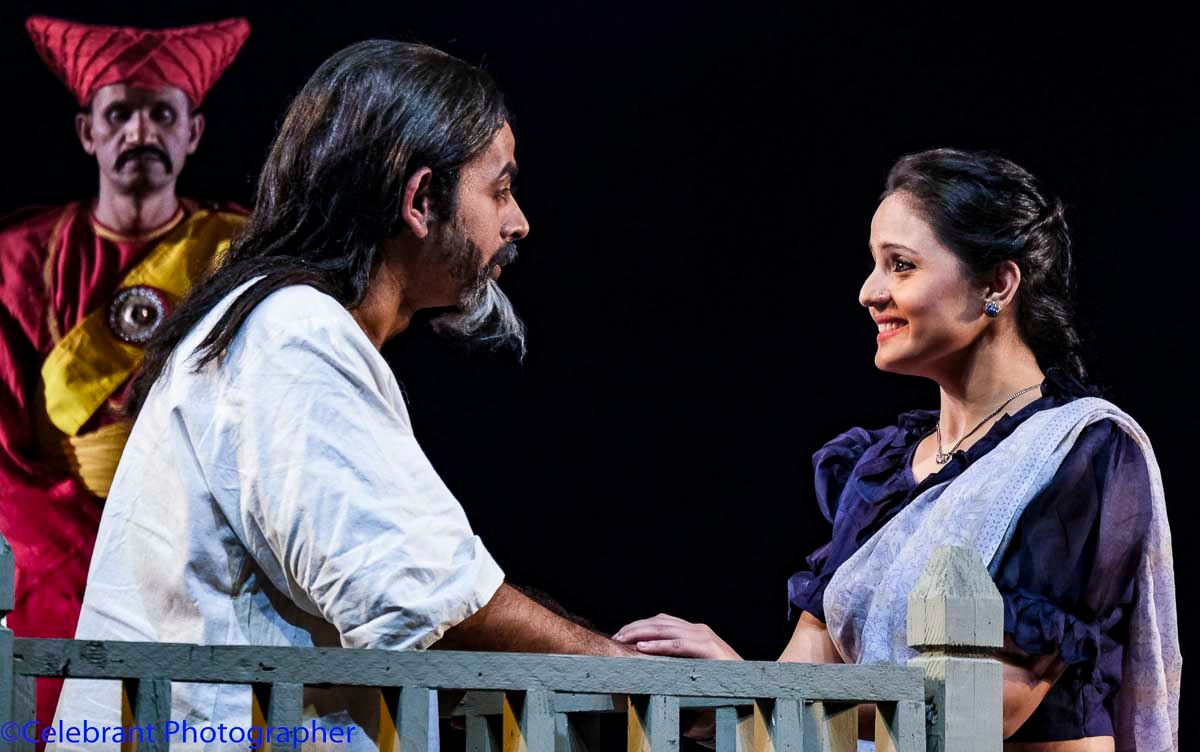
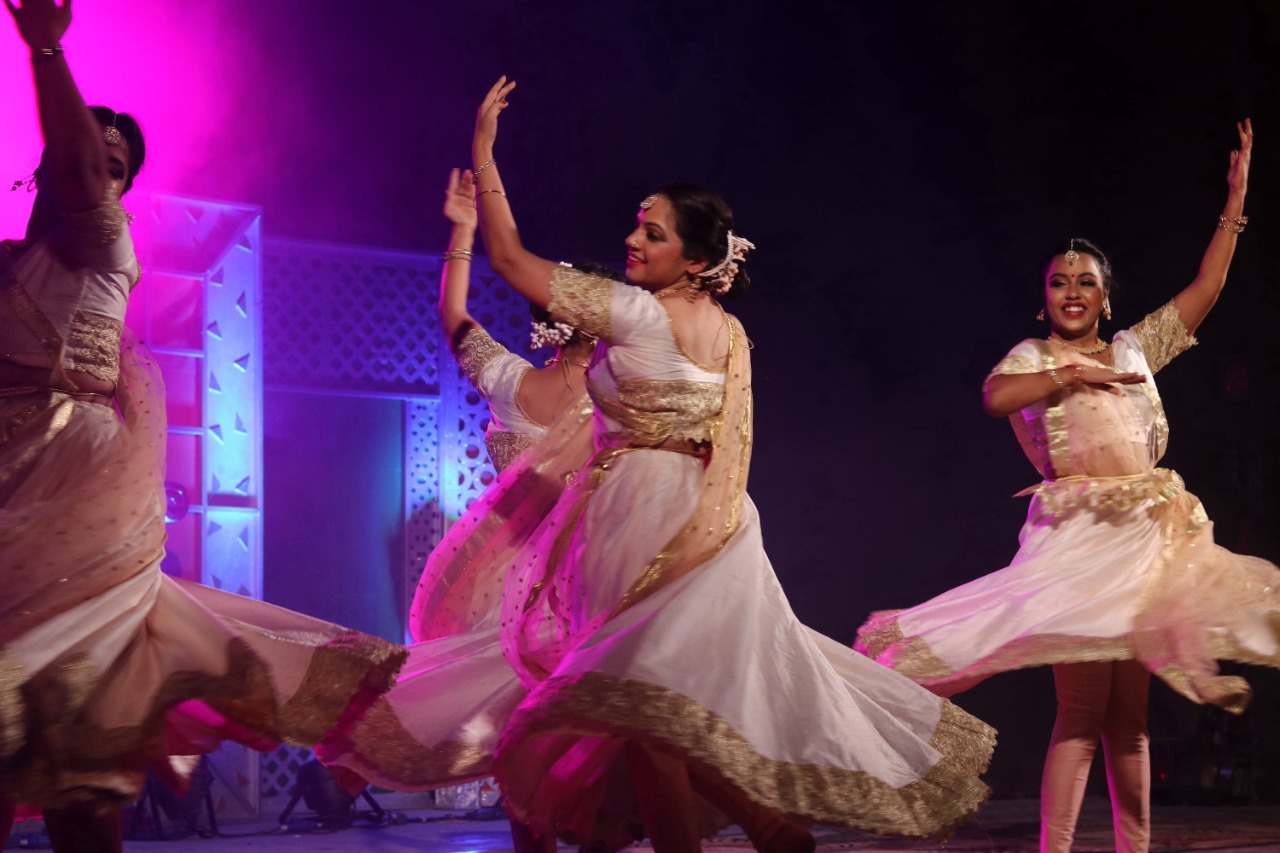
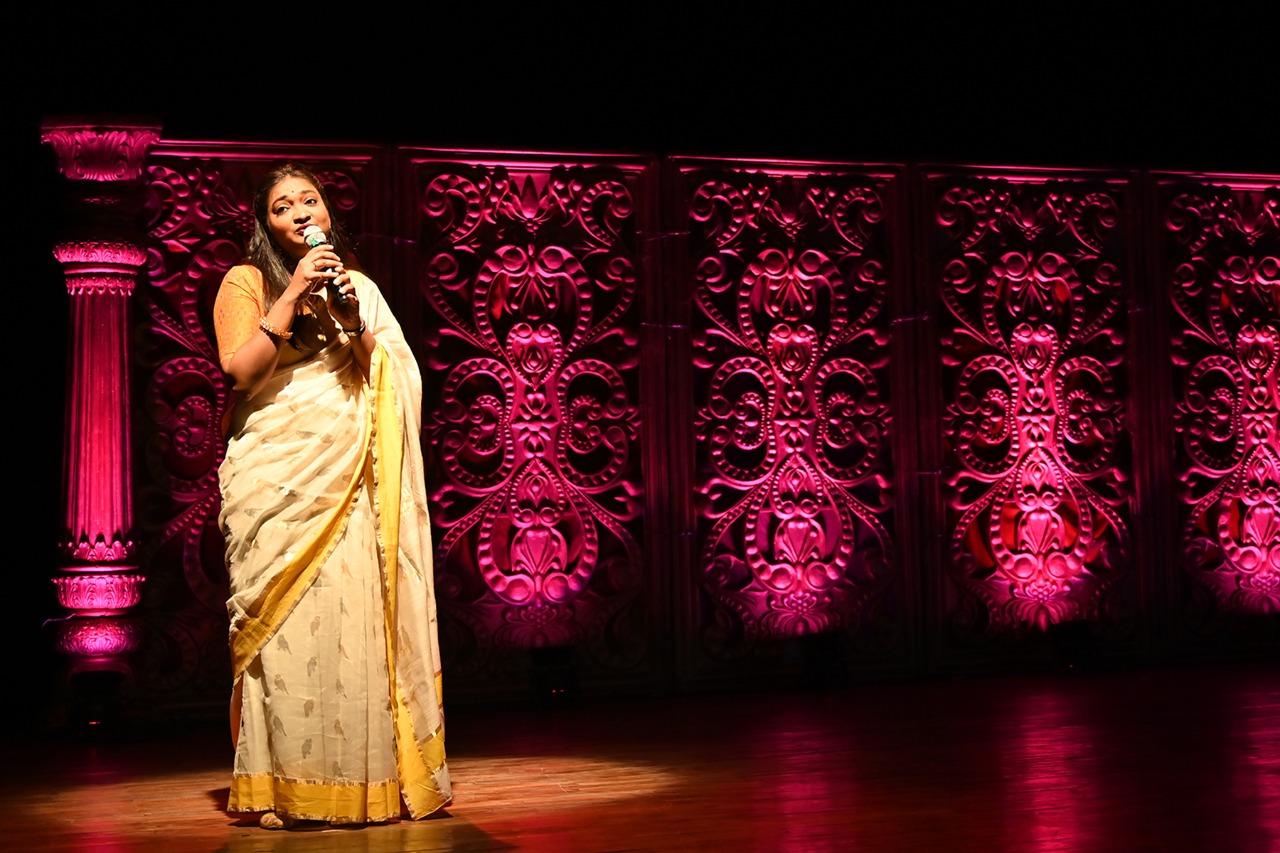
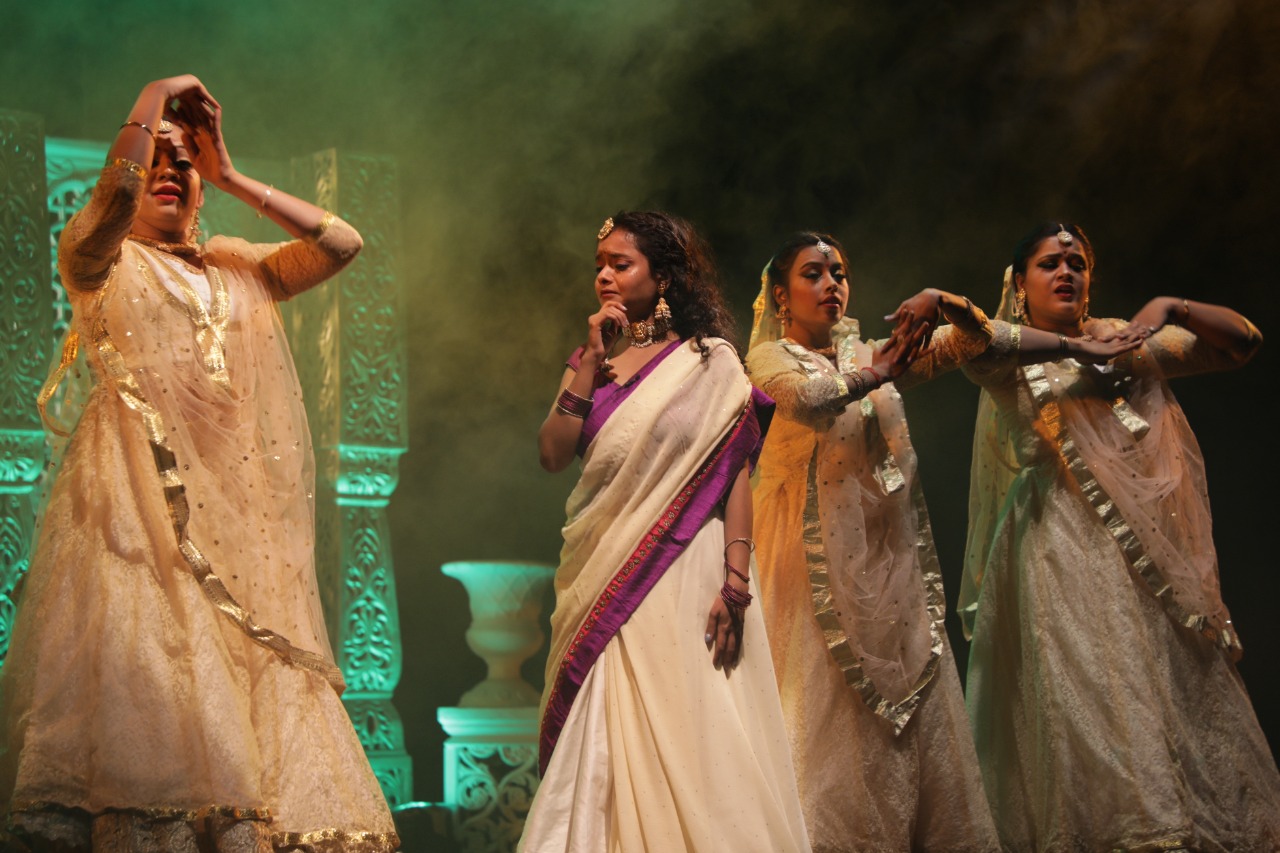
Tamasha is considered a major traditional dance form of the Marathi theatre, which includes celebration filled with dancing and singing and is performed mainly by nomadic theatre groups throughout the Maharashtra region. The word “Tamasha” is loaned from Persian, which in turn loaned it from Arabic, meaning a show or theatrical entertainment.​1​ In the Armenian language, “To do a Tamasha” means to follow an exciting and fun process or entertainment. Unofficially, this word has come to represent commotion or display full of excitement.​1​ The traditional form of Tamasha was inspired by a lot of other art forms like Kathakali, Kaveli, ghazals etc.

The region of Maharashtra had a long theatrical tradition, with early references to the cave inscriptions at Nashik by Gautami Balashri, the mother of the 1st-century Satavahana ruler, Gautamiputras Satakarni. The inscription mentions him organizing Utsava’s a form of theatrical entertainment for his subjects.​1​ Tamasha acquired a distinct form in the late Peshwa period of the Maratha Empire and incorporated elements from older traditional forms like Dasavatar, Gondhal, Kirtan etc. Traditional Tamasha format consisted of dancing boys known as Nachya, who also played women’s roles, a poet-composer known as Shahir, who played the traditional role of Sutradhar, who compered the show. However, with time, women started taking part in Tamasha.​2​

Marathi theatre marked its journey at the beginning of 1843.​3​ In the following years, Tamasha primarily consisted of singing and dancing, expanded its range and added small dramatic skits known as Vag Natya.​3​ These included long narrative poems performed by the Shahir and his chorus, with actors improvising their lines. There are two types of Tamasha dance forms: dholki bhaari and the older form known as sangeet baari, which contains more music and dance than drama.​4​

The government of Maharashtra has instituted annual awards in the memory of the late Vithabai Narayangavkar Lifetime Achievement Award for those who had extensively contributed to the preservation of the Tamasha Art form throughout the world.​1​

_________________________________
Independent Project by Sezal Chug
Guide: Prof. Manohar Khushalani
__________________________________

  1. 1.
    encyclopedia wikipedia. wikipedia. Tamasha. https://en.wikipedia.org/wiki/Tamasha

  2. 2.
    encyclopedia britannica. tamasha. tamasha. https://www.britannica.com/art/tamasha

  3. 3.
    tourism maharashtra. tamasha. maharashtratourism. https://www.maharashtratourism.net/culture-lifestyle/dances/tamasha.html

  4. 4.


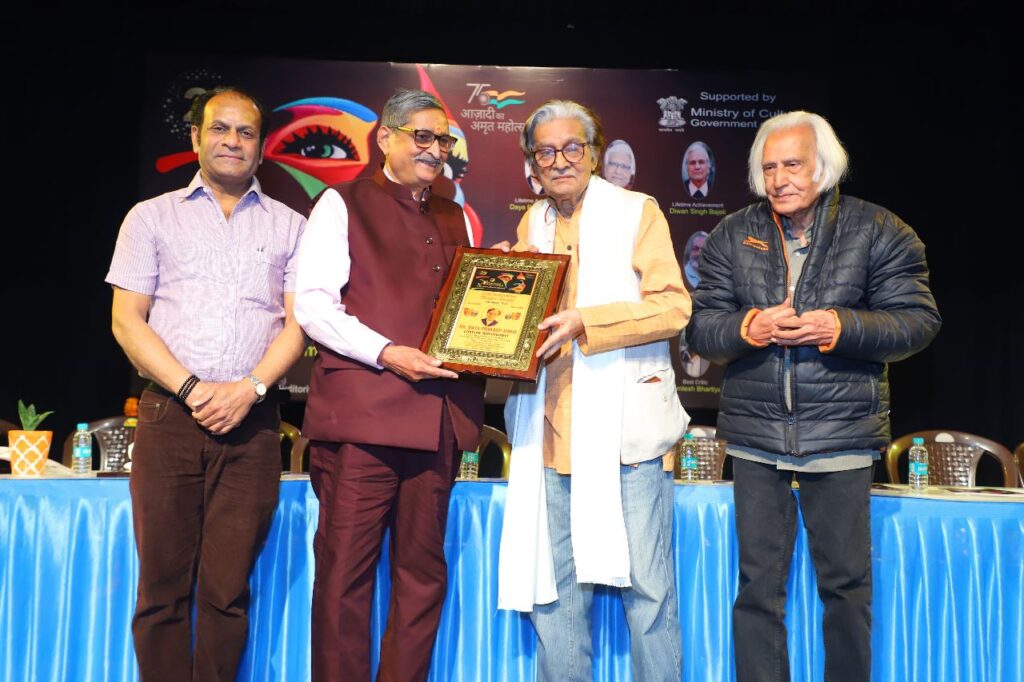
Editor Manohar Khushalani got Natsamrat Best Critic Award this day in 2019

Left to Right Jaidev Taneja, Prof Manohar Khushalani, Shyam Kumar

9th March 2019. The Glittering night of Natsamrat Theatre Awards. This was the most memorable moment of that year for StageBuzz Ed, Manohar Khushalani To be Awarded The 2019 Natsamrat Best Theatre Critic Award. It was indeed a fulfilling moment and an acknowledgement of his decades of consistent and persistent work as a critic for Pioneer (Column: Foot Lights), Mid Day (Culture Cocktail) and of course StageBuzz (Editor). The Award Ceremony was Organised by Shri Shyam Kumar, who is the driving force of the event . Well Known thespian Jaidev Taneja was the Chief Guest

Please listen to Prof. Manohar Khushalani’s Award Citation in the video above
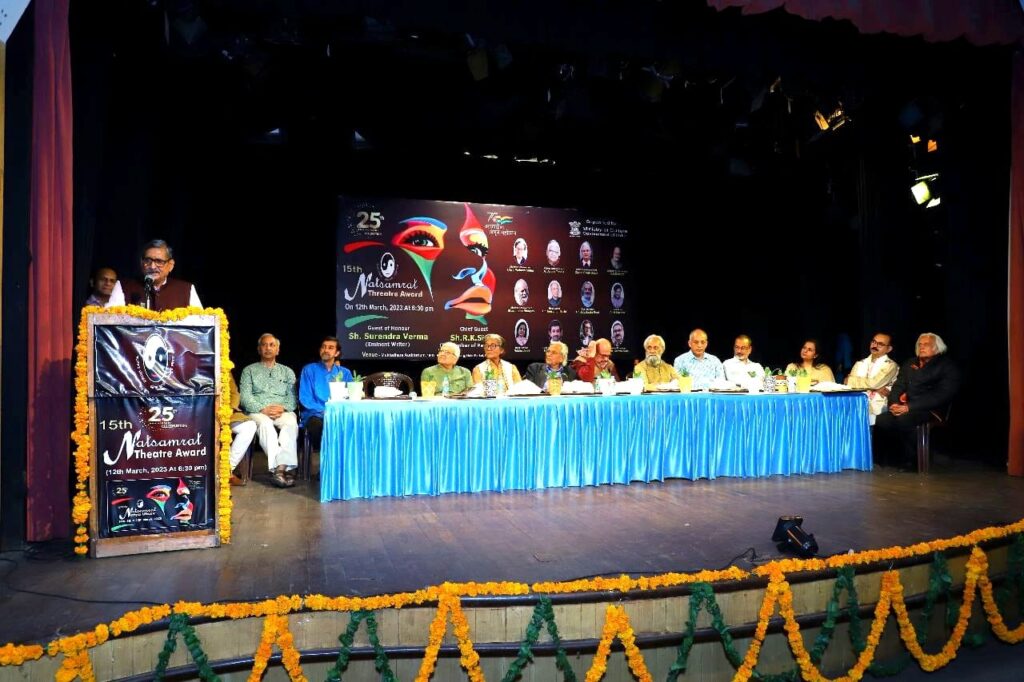
Audience at the Awards
Excited Audience at the Glittering Award Ceremony

Winners of the 11th Natsamrat Theatre Awards:
Best Writer – Danish Iqbal
Best Director – Kichenassamy Madavane
Best Actor – Mohit Tripathi
Best Actress – Mona Chawla
Best Back-stage (Lights) – Himanshu B. Joshi
Best Critic – Manohar Khushalani
Lifetime Achievement – Feisal Alkazi
Theatre Promoter – Lalit Jaiswal

Natsamrat Awards List

During that festival there was never a dull day in Delhi !
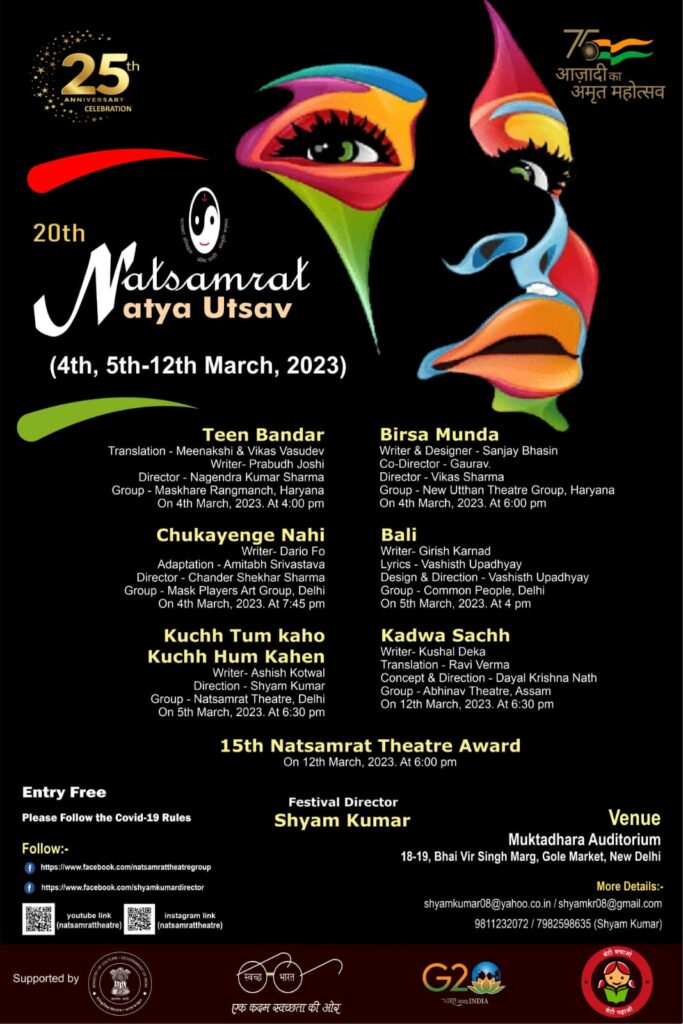
16th Natsamrat Natya Utsav included
10 plays in 5 days | 6 – 10 March | All plays in Hindi
6:30pm and 8pm everyday

Acceptance Speech of Prof. Manohar Khushalani


Pierrot’s Troupe presents a new play on Sahir and it’s all time popular comedy on Ghalib

Sharique Aziz as 29 year old Sahir in SAHIR KA KHAYAL AAYA

After Lockdown Pierrot’s Troupe’s is now returning to ‘Stage’ with its all time popular COMEDY – GHALIB IN NEW DELHI after Lockdown The troupe is also premiering a new play – SAHIR KA KHAYAL AAYA. The latter coincides with Sahir Ludhianvi’s 100th Birth Anniversary on March 8, 2021

The two plays are being staged on MARCH 7, 2021, Sunday, at the LTG Auditorium, Copernicus Marg, New Delhi.

GHALIB IN NEW DELHI – After Lockdown is arguably India’s Longest Running Comedy. Post Lockdown, the play has Mirza Ghalib dealing with newer issues; from Corona to Rihanna to the Kisaan Aandolan.

SAHIR KA KHAYAL AAYA dramatizes the ‘Best of the poet’s Best’, Parchhaiyan, his anti war poem, the longest anti war poem in the last 100 years.

DATE, TIME, PLAY, VENUE

March 7, 2021, Sunday

GHALIB IN NEW DELHI – After Lockdown — 4 pm

(Hindi)

Script & Direction – Dr M Sayeed Alam

SAHIR KA KHAYAL AAYA – 7 PM

(Urdu – the PREMIER show )

Script: Sahir Ludhianvi

Direction – Dr M Sayeed Alam

Conceptualized and Produced by Sundeep Pahwa

LTG Auditorium, Copernicus Marg, Mandi House, New Delhi

Tickets: Rs 1000/750/500/400/300/200/100

Tickets are available at 9810255291, www.bookmyshow.com and the venue

About the Plays:

Ghalib In New Delhi – , After Lockdown (Hindi Comedy): It is India’s most successful and the longest running comedy, being performed since 1997. The play is an extremely funny account of the re-birth of the renowned 19th century poet Mirza Ghalib’s in the 21st century in New Delhi, highlighting his trials, travails and tribulations – from his second birth at the ISBT in Delhi; to staying in a Servant Quarter with a Delhi University student from Patna; to dealing with a Punjaban land lady; to becoming a Page-3 celebrity. 520 shows to its credit.

Script & Direction: Dr M Sayeed Alam

Featuring – M Sayeed Alam, Rahul Paswan, Sumit Bhardwaj, Aarifa Noori, Aman Jha, Aryan Kumar, Sharique Aziz, Asif Khan, Mehu Grover, Yash Malhotra

Sahir Ka Khayal Aaya (Urdu) – The play celebrated Sahir Ludhianvi’s 100th Birth Anniversary on March 8 this year. It is presented as a ‘Monologue’ (performed by Sharique Aziz) as it showcases young Sahir in the state of crafting his long poem Parchhaiyan, arguably the best and definitely the longest anti-war poem of the last 100 years.

Featuring – Sharique Aziz, Abhinav Chaturvedi, Naveen Anand, Poonam Malhotra

For further details:

Call 9810255291 / email: sayeedalam@ymail.com


The significance of props on stage

Loosely described as, “objects used by the actor and those that are placed on stage” props are considered important as long as they serve on the stage.  After the show is over very little attention is given over them and they are loosely packed and kept until further usage.  How many of us have wondered about its deeper significance?  Do we even for one look closely at “ the skull held by Hamlet” or the “ crystal glass unicorn held by Laura” in Glass Menagerie?  Even once does the director care to explain to the actor for him/her to closely touch and feel the object as not only a part of the text but also beyond the whole text.  It should provide a moment of heightened emotion not only for the actor themselves but also for the audience.  Every object is to be placed by the set designer and the director with great fortitude and understanding.

The Natyasastra states that Natya was created to meet the demand of a plaything, it’s a “ Krida” (a source of pleasure and diversion to boredoms, wants the miseries of daily existence).   Therefore an art form can induce a temporary state of diversion of one’s immediate sorrow and an escape into a world of pleasure and happiness. Nataka or drama can do this more efficiently than other art form, because unlike other arts, it is both drisya and sravya, it has visual and aural appeal. It can satisfy us by graceful or spetacular senses presented on the stage, can gratify our ear or heart.  This is efficient only through props that makes the experience of the audience go beyond his reality.

Andrew Sofer, in his book, “ The Stage life of Props” says that, “ the object must be seen as having a sign.” The stage props hence has a strong presence, sometimes as strong as the actor themselves.  As Felix Bossonnet sees the props they are much more than the physical presence they hold.  Props have to be read between the complex relationship between the actor the text and the audience.  It provides a complete whole experience of transmission of the audience into the world of the “ play or krida”.  As Sofer sees the distinctions between the props and the characters should become more and more blurred, it should be amalgamated as one whole.  The responsibility of this hence is not just within the text but by the directors as well as the actors.


A Battle of Life That I Will Win| Bansi Kaul

Celebrated Theatre Director Designer Padmashree Bansi Kaul’s letter of courage and determination on Social Media, as he fights cancer and exhorts everyone to build a better world

A scene from Saudagar Directed by Bansi Kaul

My very dearest friends!
My best wishes and love to all of you… to all those performers from across the country who have the cultural events I designed the most amazing spectacles… and to every person I have met on this journey called life. I have not been able to thank all of you for good wishes on my birthday.

I have been unwell and have been detected with cancer of the brain as well as the lungs. Yet I am sure I will pull through and that we will soon meet again. Your good wishes are my strength.

There is a little folk metaphor, which I think is important for all of us. Nature has given us the choice to call it God or faith to create your own heavens for yourself. Therefore, what you do… you do all kinds of bad deeds to reach that heaven. For this you kill each other… and therefore, when we reach heaven, we realize that our rules and conditions do not work thee. We come face to face with two gates. One leads to the heaven that you have created for yourself… and the other gate is one that gives you the entry to inner peace. There is none of the worldly joys that give us only momentary joy and satisfaction.

This second gate leads to an amazingly beautiful world. So, thus, here too you must decide whether you will enter the gate for which you have fought? The world here no longer works according your whims and fancy. Your rule works so long you are a part of this transient world. In this short-lived world one wants to reach heaven at any cost, be it murder, plunder, or cheating. One is foolish enough to believe that this is best path to heaven.

Every community has its own imagination of what heaven might be. But when one is confronted with those two gates, one must decide which gate to enter… the gate that leads to the heaven that you have imagined or the gate that leads to inner peace, love, kindness and faith, where being there for each other is most important.

There will be no space for making mistakes in this final choice. The decision to enter one of the gates will only, and only, be yours! We are in times where displacements are the rule… displacements from physical spaces, nature, and natural sounds, from cultures, from one’s own family and friends. Scenes of daughters and sons carrying their aged parents across the country to a safer place during the lockdown, and children falling asleep on suitcases being rolled along are etched in my mind. All these painful experiences must be stopped.

Children falling asleep on suitcases being rolled along are etched in my mind – Bansi Kaul

This can happen only when there is a sense of general well-being. Lal Ded says,

“In the midst of the sea, with unspun thread I am towing the boat; would that God grant my prayer and, ferry me too, across…” .

(Lal Vakh. No. 23)

We all need to hold a single rope to tow the boat of goodness, peace, mental and physical well-being, gratitude, kindness, and magnanimity across the sea of life.

So, dear friends… killing, hating, plundering, and cheating… all in the name of belief and faith will bring nothing. All of us must love each other, which can happen only if you get rid of hatred. The act of throwing a stone of hatred at someone has its repercussions. It will rebound. The hurt ultimately comes to oneself.

And so, we must make more and more friends to make the world a better place to live in. We need to pave a strong, durable long-lasting path for the coming generations. Let’s give them a better world. When we say we are 60% young India, let us not forget that after twenty years or so there will be a 100% old India! We must start thinking about this… and think fast. There must be a sense of collective strength. Strength can only be in togetherness, and in togetherness there are memories.

Padmashree Bansi Kaul

I smile reliving these memories. My smile turns into laughter. Laughter celebrates the miniscule cosmic interval between birth and death. In laughter I see celebration and protest at once. It becomes force to cut through every form of negativity. Therefore, laughter must be celebrated! – Bansi Kaul


Theatre Legend Ebrahim Alkazi Passes away / Manohar Khushalani

Ebrahim Alkazi

Theatre doyen and legendary Pedagog Ebrahim Alkazi, who shaped proscenium theatre in India, died peacefully on Tuesday afternoon after suffering a heart attack, his son, Feisal Alkazi, informed us. Feisal told me the whole family was proud of his fathers humongous achievements. A career spanning 74 active years he passed away at 94.

The funeral will take place tomorrow at Jamia Milia VIP Grave Yard. But outsiders have been politely told to stay away, for their own safety, away due to the prevailing pandemic. The entire family comprising among others Feisal Alkazi, Radhika Alkazi, Amal Allana, Nissar Allana were present in Delhi.

Mr. Alkazi, has been the longest serving director of the National School of Drama, produced plays such as Girish Karnad’s “Tughlaq”, Mohan Rakesh’s “Aadhe Adhure” and Dharamvir Bharati’s “Andha Yug”. He mentored generations of actors, including Naseeruddin Shah, Om Puri. M.K. Raina, Bhanu Bharti, Sonu Krishen, Manohar Singh, Surekha Sikri, Uttara Baokar, Dolly Ahluwalia, Ram Gopal Bajaj, the list is endless.

According to Wikipedia, He was born in Pune, Mahrashtra, Alkazi was the son of a wealthy Saudi Arabian business man trading in India and a  Kuwaiti mother.[8] He was one of nine siblings. In 1947, the rest of his family migrated to Pakistan while Alkazi stayed back in India.[9] Educated in Arabic, English, Marathi & Gujarati Alkazi was schooled in St. Vincent’s High School in Pune and later St. Xavier’s College, Mumbai. While he was a student at St Xavier’s, he joined Sultan “Bobby” Padamsee’s English theatre company, Theatre Group. Thereafter he trained at the Royal Academy of Dramatic Art (RADA) in London in 1947.[7] There he was offered career opportunities in London after being honored by both the English Drama League and the British Broadcasting Corporation, however, he turned the offers down in favor of returning home to rejoin the Theatre Group, which he ran from 1950 to 1954.[3]

Early on in his career he got associated with the Bombay Progressive Artists’ Group, which included M.F.Husain, F.N.Souza, S.H.Raza, Akbar Padamsee, Tyeb Mehta, artists who were later to paint from his plays and design his sets.[7] In addition to his directing, he founded the Theatre Unit Bulletin in 1953 which was published monthly and reported on theatre events around India. Afterwards, he established the School of Dramatic Arts and became the principal of Bombay’s Natya Academy.[3]

As the director of the Nationa School of Drama Alkazi revolutionised Hindi theatre by the magnificence of his vision, and the meticulousness of his technical discipline. Here he was associated with training many well-known film and theatre actors and directors. While there he created the Repertory Company in 1964 and directed their productions until he left.

He also founded Art Heritage Gallery in Delhi with his wife, Roshan Alkazi.

Alkazi won many of India’s most prestigious awards, creating an awareness of theater’s sensibility and successfully mixed modern expression with Indian tradition.[3]

He was the first recipient of Roopwedh Pratishtan’s the Tanvir Award (2004) for lifetime contribution to the theatre.[11] He has received awards including the Padma Shri (1966), the Padma Bhushan (1991), and India’s second highest civilian award the Padma Vibhushan in 2010.[12]

He has also been awarded twice by the Sangeet Natak Akademi, India’s National Academy for Music, Dance and Drama. He received the Sangeet Natak Akademi Award in Direction in 1962, and later the Akademi‘s highest award the Sangeet Natak Akademi Fellowship for lifetime contribution to theatre.


Marathi Veteran Actress Lalita Kenkre no more

Lalita Kenkre, a Still from Pandit Raj Jagannath

A popular actor of yester years, Lalita Kenkre, passed away in her sleep peacefully on 28th July 2020 morning. She was 86. Wife of noted theatre director, actor, designer Damoo Kenkre, mother of director Vijay Kenkre, Lalitatai was the sister of Sudha Karmarkar, and along with her, a noted actor herself who did many major roles in Sahitya Sangh and Lalitkaladarsh. She was a student of Parshwanath Altekar and a contemporary and colleague of Vijaya Mehta. Coming from a traditional background of Sangeet Natak, she made a mark in plays by P. L. Deshpande, Vijay Tendulkar, Vidyadhar Gokhale, Shirwadkar. With her passing, Marathi theatre has lost a major actor. Lalitatai did memorable roles in films, especially of Sai Paranjape, Katha being one. मृतात्म्यास सद्गती लाभो.
Lamenting her death, Kamlakar Sontakke said; “Lalita Kenkre was a versatile actor of Mumbai Marathi Sahtya Sangha. She was supportive of young Theatre people and experimental groups. May her soul rest in peace”.

Lilette Dubey adds: “For me she was full of love and warmth .. we rehearsed for 5/6 years in her top flat (which she gave generously to theatre wallahs ) in Kala nagar .. with on the house tea and often snacks ! God bless her .. she will be missed!”

RIP Lalita Kenkre


About Charan Das Sidhu and his Plays by Manohar Khushalani

Dr. C. D. Sidhu

Shakespeare’s Daughter & Other Plays

Shakespeare's Daughter & Other Plays
College Will Be Closed Tomorrow

This article was supposed to be a book review, but because one had known the playwright, Dr. Charan Das Sidhu, so intimately, the personal note is unavoidable. My mind races back to 1978 when I started my theatre career with Badal Sircar’s ‘There is No End’ an English rendition of his Bengali play ‘Shesh Nei’ directed by Tejeshwar Singh. Among the elite IIC Theatre Club audience was a stocky, dark, bespectacled professor of English from Hans Raj College, Delhi University, who spoke in what I later came to know as his irreverently rude but affectionate style. I saw this gentleman again in the next play that I acted in; Utpal Dutt’s Chayanat directed by Rati Bartholomew, and also the next and the next. Out of the 47 odd plays that I acted in, he was invariably there in the audience. This is not to suggest that he was a fan of mine or a critic who was following my career vigorously. I saw him invariably in the audience even in the hundreds of plays in which I too was in the audience. Dr. C.D. Sidhu was an avid theatre connoisseur who can take your breath away by the intensity and seriousness with which he follows theatre of all kinds, good bad and ugly. No wonder that when the Sahitya Akademi Award winner set out to write his first play in his mother tongue, Punjabi, it had to have the wisdom of so much theatre distilled into his script.

May 1979 was the first time I saw the play ‘Bhajno’, written, produced and directed by Dr. Sidhu was in ‘theth’ (pure) Punjabi as it is spoken in rural Punjab. It was a refreshing experience. Because it was very different from the urban Punjabi dialect one had heard all the time in Delhi. The spoken dialect was earthy and one became aware for the first time of the great depth in this vivacious language. The same can be said about his other plays such as Baba Bantu. These plays were also staged at a time when Punjabi theatre had got associated with double entendres. By contrast his theatre came like a breath of fresh air. Writers Workshop has come out with an English translation of his collected works under the title ‘Shakespeare’s Daughter & other plays’ and who could be more competent than the English professor to do it himself. In fact he is also a well known expert on GBS and his book The Pattern of Tragicomedy in Bernard Shaw (published by Bahri and Sons) is a study on Shaw’s dramatic work in the light of his theory of drama in general and of tragicomedy in particular. Some of his students, like Vinod Dua, swear by him as an English literature teacher. “He introduced me to Shaw whose ‘outlook to life’ and Dr. Sidhu’s ‘act of life’ have been a great source of inspiration for me.” Vinod also recalls that although Sidhu was a MA PhD from University of Wisconsin, he wasn’t a victim of snobbery. In fact he had no hesitation in even teaching English BA pass course students – something that lesser qualified Professors would consider infra dig. In those early days of theatre funds were not easily available (not that things have changed radically now) Sidhu was known to have produced his plays by withdrawing funds from his provident fund. Sidhu has been awarded both as a playwright and as a Director. Although opinion about him as a director may vary, there are no two opinions about his abilities as a playwright.

While the scope of this review is not to go into each of the plays in great depth but one will dwell briefly on them in general Indumati and Satyadev was the first play that Dr. Sidhu wrote, way back in 1973 but it saw the light of day many years later. It was planned as a sequel to Kalidas’s Shakuntala. On the surface it appears to be about conflict between Aryans and Tribals. It inks some of his early thoughts about nations, war, peace, truth & falsehood. He has used Icons like Rama, Ravana, Krishna, Manu, Chanakya freely to project the viewpoints they represent and some times his own opinions about the way the lead their life. Laxman is the devoted keeper of his brother, Rama, whose wife he worships while neglecting his own Baba Bantu is about a feudal lord Sarban and his terrorizing a bonded labourer, Bantu, who is also an expert on curing people from snake bites. Bantu has been blessed with these powers on the condition that he cannot refuse to cure anybody of snake bites. While the Landlord sexually exploits Bantu’s daughter, Satti, the landlord’s wife does the same to his son, Bihari – using him as a sex object. In a series of twists and turns, Bihari is electrocuted and Sarban snake bitten but Bantu refuses to heal the oppressor and loses his power of healing in the process. The College Will Be Closed Tomorrow is a seething expose of University politics that cuts mercilessly across political as well as hierarchic divide. Built around a sex scandal and a suicide, it spares neither the leftist nor the rightist, neither the teacher nor the student. Each of the scripts is radical and also radically different from each other. Shakespeare’s Daughter is about the personal renaissance of a newly married Kamla who overcomes her timidity and shyness to emerge as a bold and daring writer thanks to a visitation of William Shakespeare in her dream. The girl is beset with typical in-law problems related to Dowry taunts and blames of Infertility but finally dares to leave her husband – her famous last line to her husband, Dwarka, “I may be a sinner. With Shakespeare’s King Henry V I repeat:

But if it be a sin to covet honour
I am the most offending soul alive
I will continue to commit this sin!
I will continue to covet honour!
All my life!

That thought in fact seems to be the basic string in all his plays. The search for dignity truth and honour


An Opportunity to Look East – IIC Experience | Manohar Khushalani

Being Human The Play
Being Human – The woman with sagging breasts

Condensed Version Published in IIC Diary Nov - Dec 2018
During the North East fest on Monday, the 29th October, 2018, at the Fountain Lawns, the audience was confronted by a disturbing solo performance by actor director, Lapdiang Syiem from Meghalaya, called A Being — Human; Being Human Human Beings. She was supported by a one man multitasking band, Apkyrmenskhem Tangsong, who played a variety of Khasi folk instruments, such as; maryngod, bisli & ksing. The play opened with Syiem emerging from the audience, with sagging breasts provocatively stitched to her costume, challenging at the top of her voice with the agonized delivery of an embryo symbolized by a balloon emerging from her womb. Later many balloons were burst on stage, as if they were marginalised humans whose survival didn’t matter. Besides portraying angst about loss of identity, dislocation and violence, one also perceived reflections of real life events being portrayed abstractly, but, at the same time, the finger pointing at the audience was also implied, though unobtrusively. It was as if they were accomplices in the death of a mother, Ka Likai, who upon learning about the death of her daughter in hands of her current husband, jumped over the water fall, which is named after her – Nohkalikai Falls. Then there is Sophia, the robot programmed to behave like a human being, who is a Saudi citizen, who also wants to bear a child without having a clue about the pangs of child birth. It wasn’t as if she was only challenging the ruling class, Syiem also had a dig at the Khasi tribal society which disowned a woman who married a non Khasi.

The Vibrant ambiance at the IIC North East Festival 2018

Earlier on the same day we had a presentation by Soli Roy about a Manipuri play, Crimson Rainclouds, written by his own mother, Sahitya Akademi Awardee, Binodini Devi (1922–2011). The play draws on the playwright’s dialogues with the eminent sculptor, Ramkinkar Baij (1906-1980), with whom she studied in Santiniketan, and who has left behind a big collection of sculptures and paintings of Binodini. Born a princess, she broke free unhindered by her royal past, to live life to the hilt as a creative commoner, and evolved into an iconic Manipuri modernist, through her outstanding contributions to poetry, visual arts and dance. Collaborating with filmmaker Aribam Syam Sharma, she also scripted his award winning films.

There was a heartwarming poetry reading session by following poets of the North East. Anice Pariat, Anjum Hasan, Mona Zote, Lalnunsanga Ralte, Mamang Dai Guru & T. Ladakhi However all poems read out at the event were in English, some wrote only in that language, others did write also in their mother tongue, but chose to read out only the English ones. Due to lack of space I share a poem only by T. Ladakhi

Memory

Separated by twelve years,
both born in the year of the snake.
She was the youngest child
and he the eldest son.
My uncle is the head of his clan.

Soon after my mother died
just shy of her 53rd birthday,
my uncle stops imprinting his memory
as if it did not matter anymore.
I remember my mother’s tender story,
how he carried her as a fading child on his back
trekking for several days to “Phur Chachu”-*
invoking the gods with his fierce love-
a brother grows taller and taller in a little girl’s eyes.

I meet him now and then since twenty two years ,
drooped are his broad shoulders,
gone is his ruddy vigour.
He bothers me for some tobacco and rum
this time I carry none.
Memory and awareness are the materials of the mind,
but time is a fabrication.
Amidst obviously embarrassed cousins,
he inquires who I am and to state my purpose of visit.
I tell him I’m his kid sister’s son,
he looks at me most incredulous,
my grey beard finally pulling the rug under him.
He beckons me to his side and declares
that I’m a most disgusting low-life liar.
* the holy hot water spring in South-Sikkim, India popular among pilgrims seeking cures.
Condensed Version Published in IIC Diary Nov – Dec 2018
IIC EXPERIENCE: A FESTIVAL OF THE ARTS, 2018 Special Issue


Aurangzeb – a critique of the play by Manohar Khushalani

A review of the play performed at IIC in March 2013
First Published in IIC Diary March April 2013

The story of Aurangzeb is well known. In 1657, Emperor Shahjahan fell ill, leading to a war of succession among his four sons, The main contenders were Dara Shuko and Aurangzeb supported by their sisters, Jahanara and Roshanara respectively,

The Emperor, however, favoured his eldest son Dara, who, was conveniently present at Agra and willing to undertake his financially wasteful project of building a black-marble-masoleum for his father on the other side of Yamuna river facing Mumtaz’s Tajmahal. The playwright, Indira Parthasarthy, through Ideological Interplay and historical references to the earlier secular reign of Akbar, has brought out the inner conflicts of the characters.

The Director K.S. Rajendran has evolved a gripping tale through his presentation. The set was erected in the IIC rose garden. By relocating simple elements such as an arch, a make shift throne, a stool, Rajendran was able to switch the ambience from a palace, to a prison, to a war-zone. It was a treat to watch intense performances by actors playing Aurangzeb (Mahendra Mewati), Roshanara (Priyanka Sharma), Dara, and Shahjahan (Neelesh Deepak). In different productions, one has seen very different interpretation of the same historic event.

Ajoka theatre group from Pakistan presented ‘Dara Shuko’, in Bharat Rang Mahotsav, in 1911, which was totally empathetic to the elder brother Dara. Rajendran’s play empathised with Aurangzeb, highlighting him as a tragic figure who was repentant in his old age. The play was written during Emergency and in some ways reflects the political compulsions of that time as well.

Manohar Khushalani
March 20, 2013

Aurangzeb
Aurangzeb – The Play
First Published in IIC Diary March April 2013