Amazing Presentation of the Drama “Dootvakyam” written by great poet Bhas
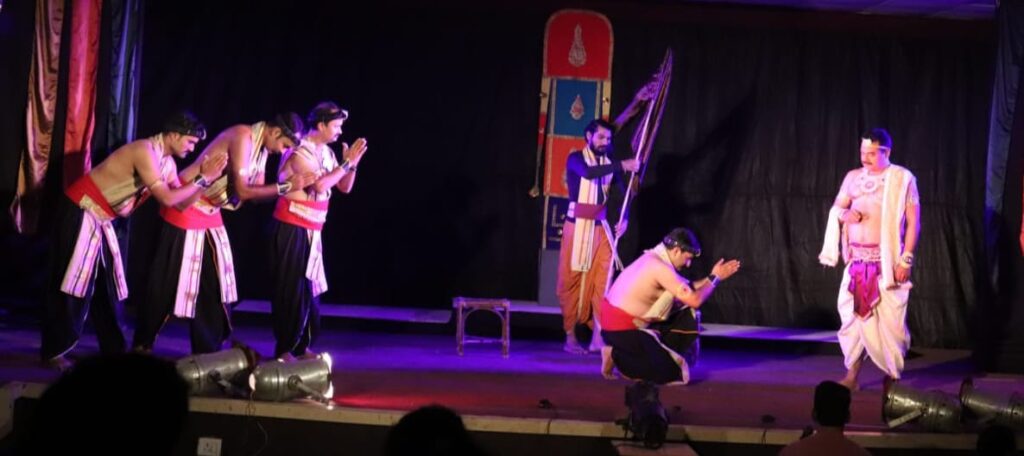
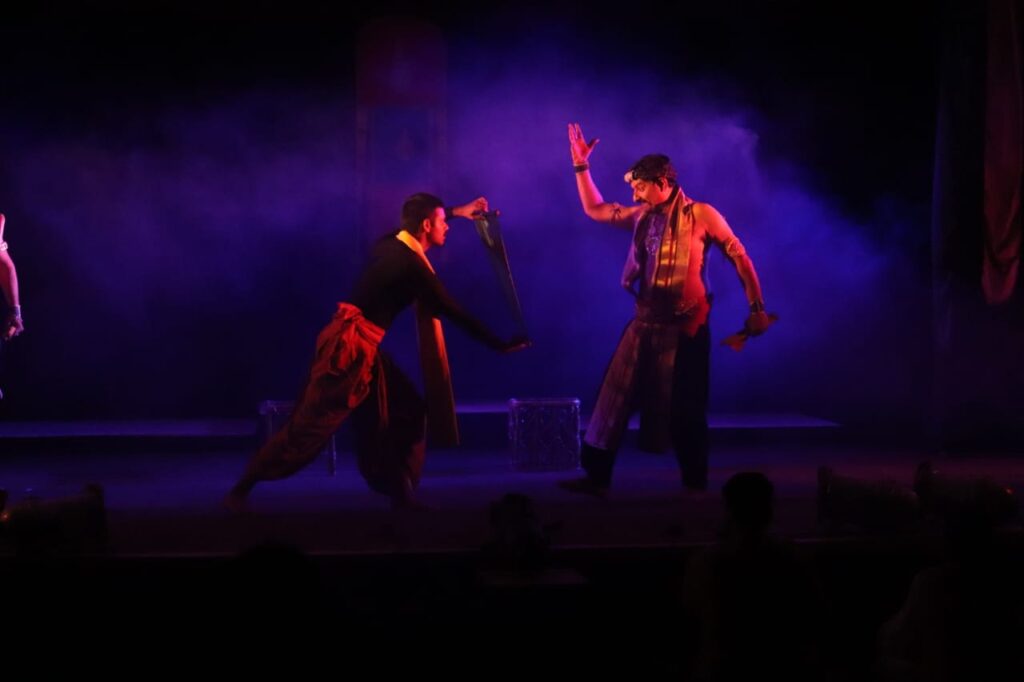
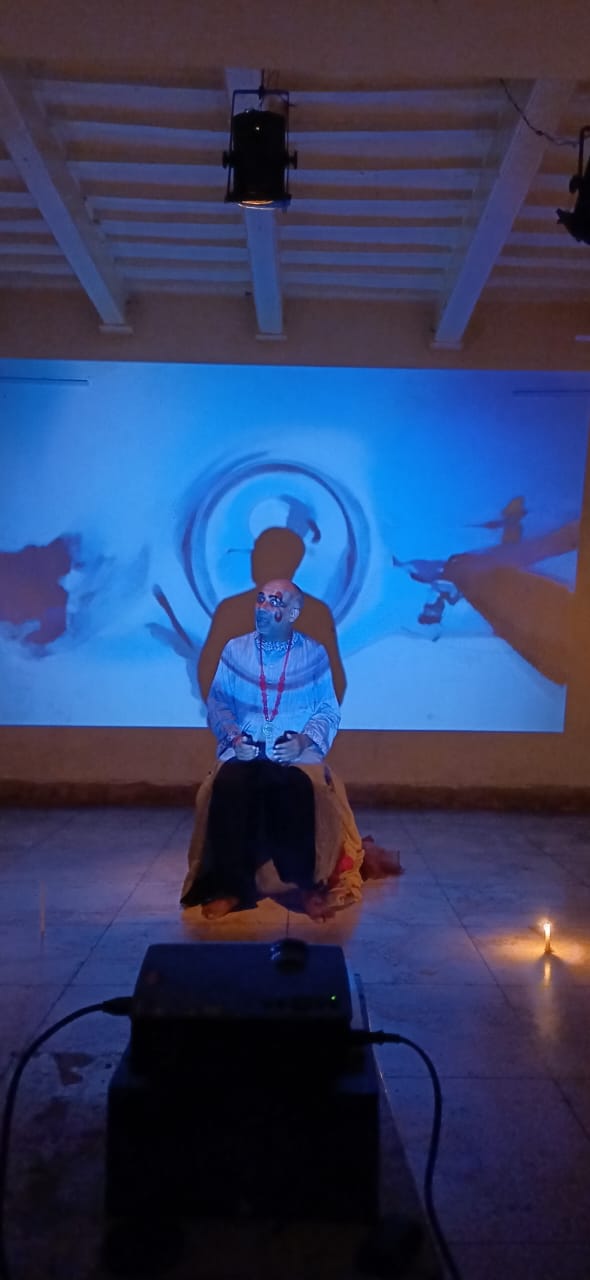
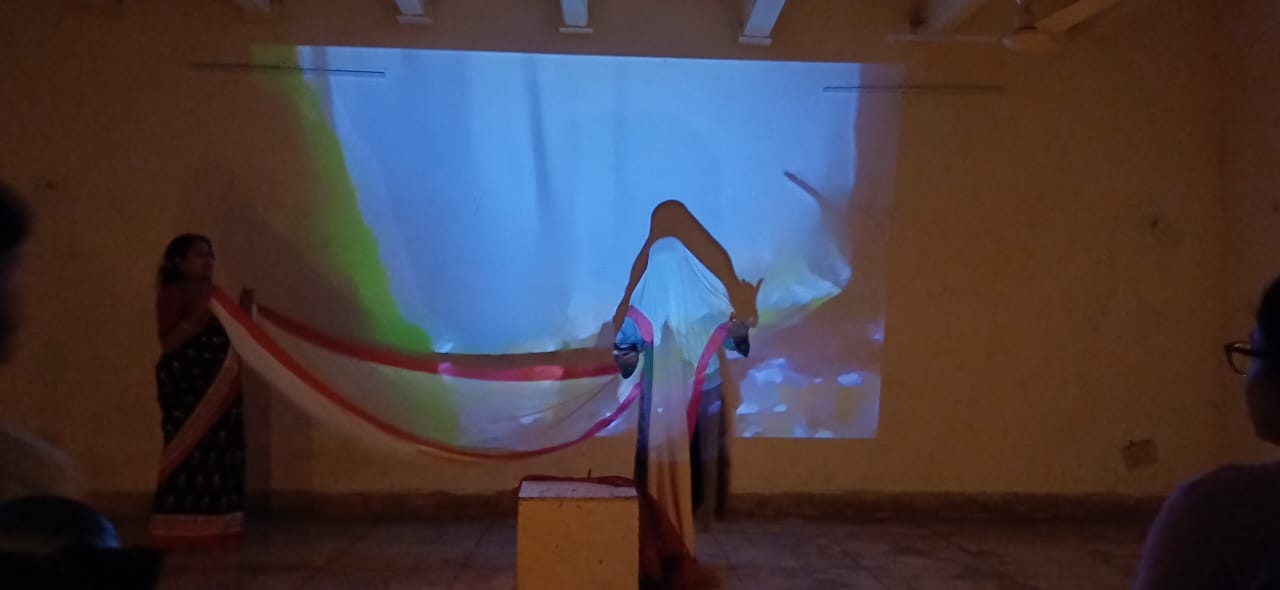
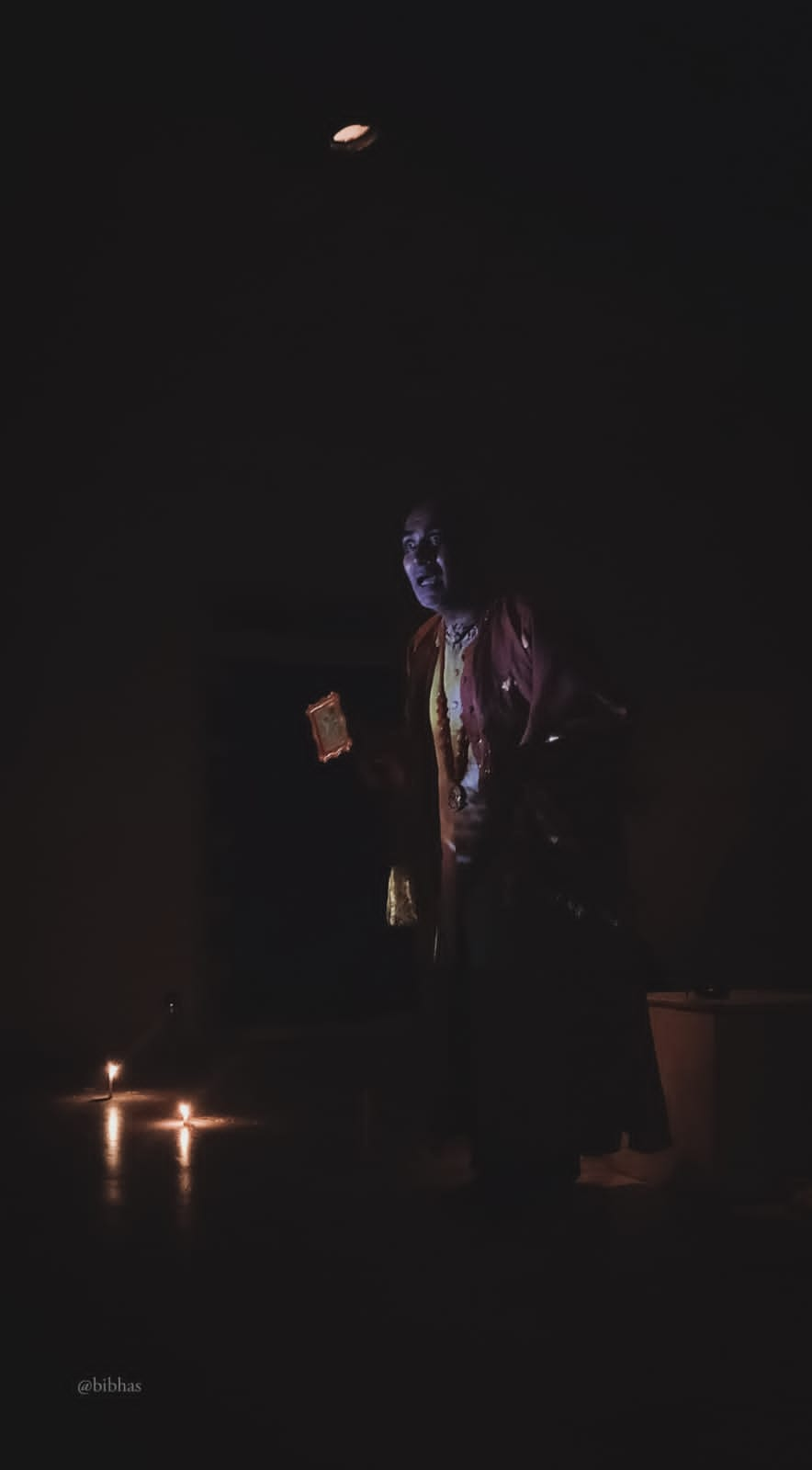
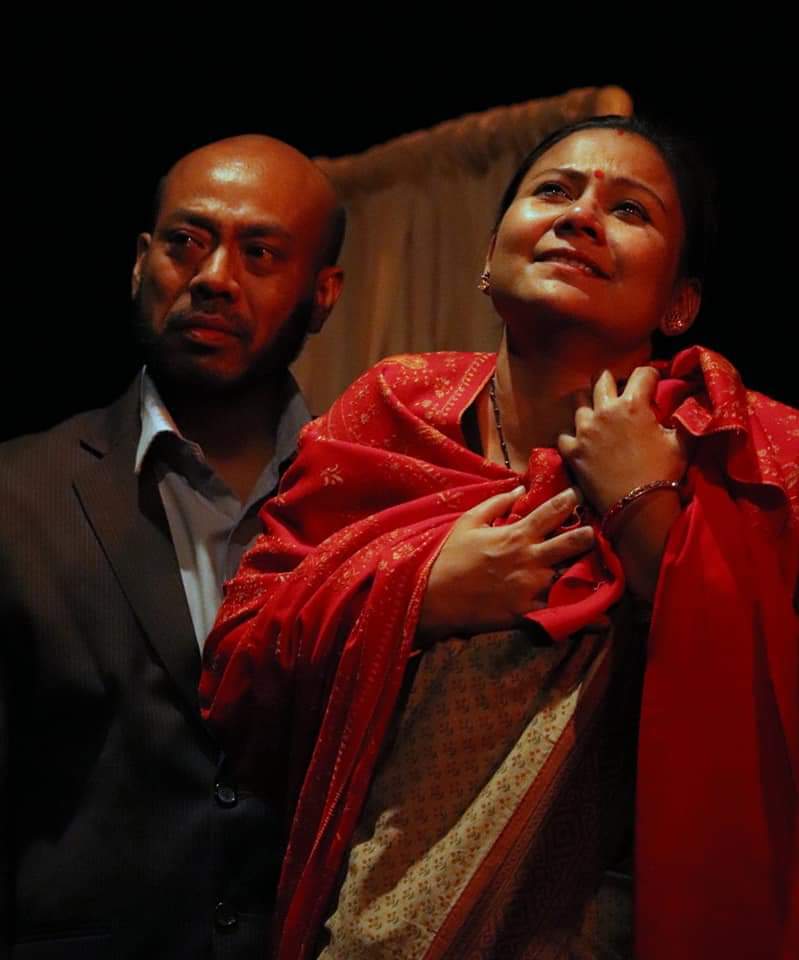
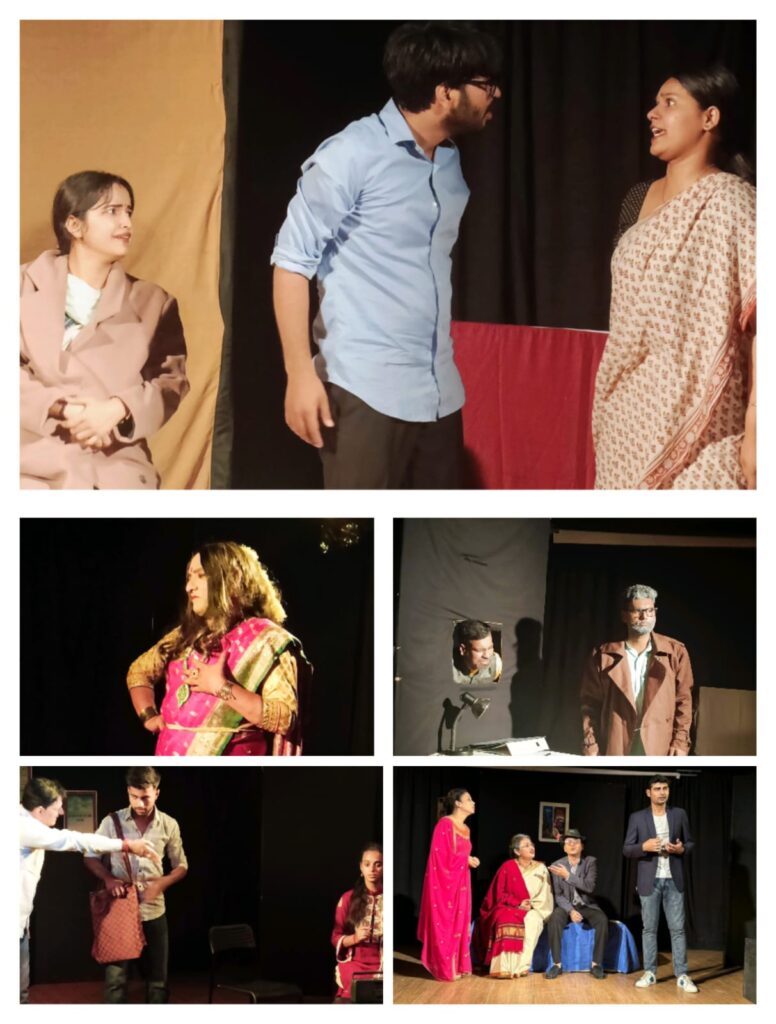
Bhopal – The students from different states of the country, who worked day and night in the nine-day drama workshop (2nd to 9th September), made the presentation of the drama “Dootvakyam” written by Mahakavi Bhas unforgettable with their lively acting.
By Rabindranath Tagore University’s Sanskrit, Prachya Bhasha Shikshan Evam Bhartiya Gyan Parampara Kendra’s PG Diploma in Natyashastra Evam Vishwarangmanch and Master in Performing Arts students enthralled the audience with their wonderful presentation of “Dootvakyam” under the direction of Shri Manoj Nair (Director of Tagore National School of Drama).
It is noteworthy that in ‘Dootvakyam’ the character of Lord Shri Krishna was played by three actors and the characters of Duryodhana and Sudarshan Chakra were played by four actors each. Everyone, with their acting, brought life to the characters on stage and kept the audience engaged till the end.
On this occasion, Senior Poet-Storyteller, Director Vishwa Rang and Chancellor of Rabindranath Tagore University, Shri Santosh Choubey said that ‘Dootvakyam’ is a difficult play. Its presentation is a very challenging task in itself. It is a very happy occasion that the students of Natyashastra accepted this challenge and gave this unique presentation.
Dr. Radhavallabh Tripathi, a well-known litterateur and advisor to the Center of Sanskrit, Prachya Bhasha Shikshan Evam Bhartiya Gyan Parampara Kendra, said that I have seen the presentations of many Sanskrit plays, but I had never imagined such a presentation of ‘Dootvakyam’. It was truly an unforgettable performance. This experiment of playing one character by four actors at the same time is a welcome innovative initiative in the direction of theatrical productions.
At the beginning of the drama presentation, the subject of ‘Dootvakyam’ was highlighted by Sh. Vinay Upadhyay, Director of Tagore Vishwa Kala Evam Sanskriti Kendra. Professor Sangeeta Johri, Dr. Ruchi Mishra Tiwari was also on the stage.
It is noteworthy that the successful coordination of the seven-day drama workshop and the unforgettable event of priesthood ritual workshop and drama presentation were done by Dr. Sanjay Dubey, Co-ordinator, Sanskrit, Prachya Bhasha Shikshan Evam Bhartiya Gyan Parampara Kendra. Great support by Deepak Tiwari, Savitri Singh Parihar, Sanjay Singh Rathore, Abhishek, Sharad Mishra etc.
On this occasion, all the artists and students of priesthood rituals were honored by presenting them certificates and insignia. Tagore National School of Drama had special support in this.
On stage in the play Dutvakyam – J.P. Singh, Nagendra Kumar Sharma, Uma Shankar, Vaidyanath Sharma, Mandeep Kumar Nemewal, Vashishtha Upadhyay, Shraboni Saha, Surendra Kumar Pandey, Tarun Jalota, Sachin Verma, Sanjeev Sharma, Ansh Rathore, Namrata Mali, Vansh Rathore, Neha Rani, Jyoti Upadhyay, Ganesh Madulkar, Ashfaq Noor Khan Pathan lent their talent.
Dr. Sanjay Kumar Dubey and Vikrant Bhatt were the stage managers, Abhishek Deshman was the assistant stage manager, Dr. Anand Kumar Pandey did the stage decoration, Sharad Mishra was in the stage props, Smita Nair and Rashmi Acharya were in costumes, Tagore National School of Drama student’s did the stage decoration. Flute player Nitesh Mangrole, Harmonium player Aagya Dubey, Rhythm and musical support were given by Abhi Srivastava and Jai Ravare, Light Design & Co-Director wereShyam Kumar and the Director of this play is Manoj Nair.
RAMAYANA: FRACTURED, FIXED AND FORETOLD Oglam Presentation- Janardan Ghosh’s Narration.
The Concept:
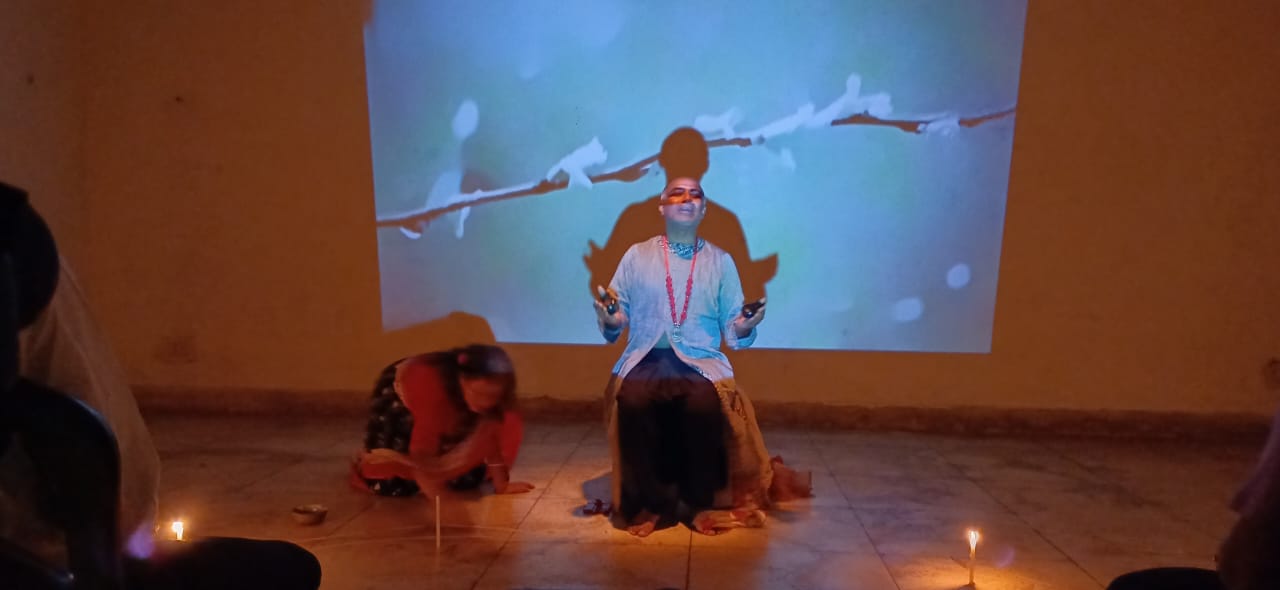
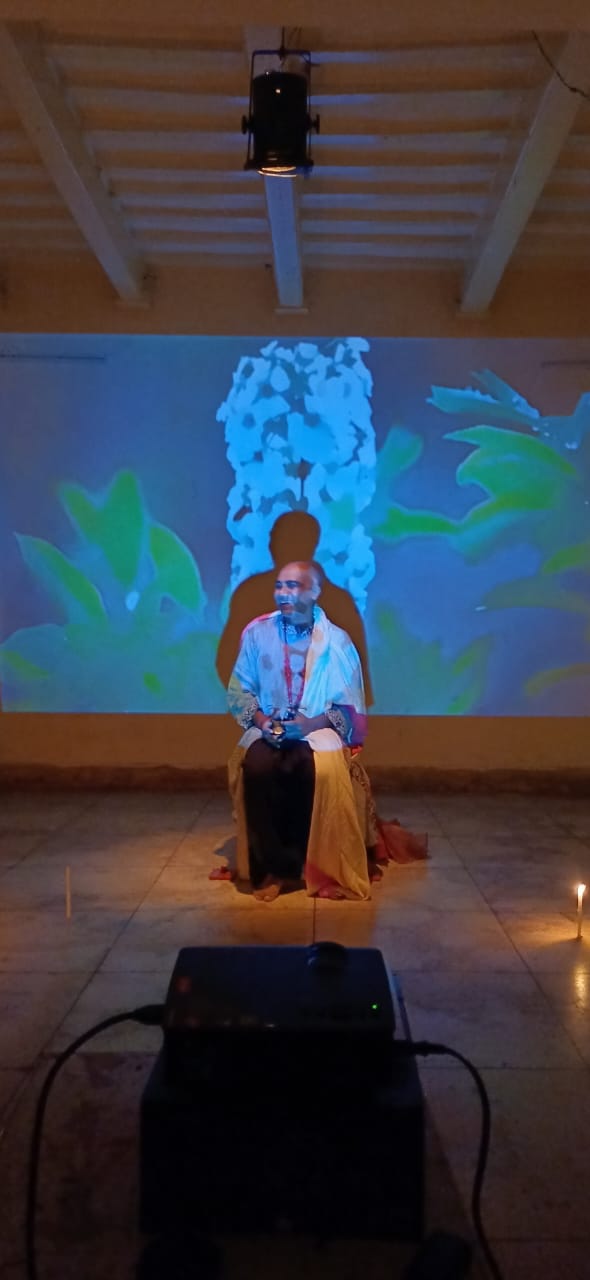
Ramayana has been told and retold over centuries but the difference lies in the way it is reiterated. Not with the perception of recounting a tale but with an intent to reinvent it to unleash the hidden secrets of this unbound narrative we attempt to retell again and again taking the artistic liberty that it affords timelessly to revisit it with an innovative perspective. The project is an enterprise to endorse the epic as a narrative that is much ahead of its times in its intrinsic potential to dislodge our linear interpretations of this colossal tale as a religious account of Hinduism. The endeavour is to re-evaluate the learn by rote method through which we have perpetually studied this epic; any change in the script is a larger than life or a utopian idea. In a country like India where the myth goes beyond the circumference of the story and becomes a ‘sacred tale,’ to conceive certain alterations in the script is a indeed a formidable venture. Yet, this redoubtable interpretation on our part has been an outcome of our humble initiative of making the narrative appear different and hence more thought- provoking as it raises questions on the fundamental aspects of human existence without tampering with the organic theme in a unique way. The Ramayana is fractured, fixed and foretold for an audience of today that’s intelligent enough to accept variations in established Literature if it offers food for thought. This differently abled understanding of the epic cognitively sheds light on the of presence of the elements that demystifies the glory of this mythological narrative making it a poignant tale of a King’s sacrifice, struggle and his confrontation with the ultimate evil that is insurmountably challenging. Accompanying him is the divine feminine- the motherly prakriti, his consort whose worthiness being questioned every moment despite her inevitability in life is a tragic disclosure. When Nature is so serene and comforting, why do we exploit her? Is the question that resounds in every chant of the story teller who happens to have taken the onus of narrating the epic his own way without letting the cliche notions of propriety affect him. It is the kathavachna tradition that comes to the fore in the process wherein the kathavachak tries his level best to arrest the attention of the spectators who have gathered around him to witness his ability of telling a tale fascinatingly.
The alterations made in the tale are the result of an adaptation of the epic on which it is based. Nonetheless, the fact remains that these changes are made to inspire a generation of listeners to re-read the epic with an open mind without being influenced by the halo of divinity that revolves around it. This performance is towards giving Ramayana a form and shape that traverses the boundaries of conventions, religions and even Nations becomes a tale of global reality that surrounds human existence today. Our utilitarian approach towards nature, her exploutation under the garb of progress and development are universally undeniable truths that prevail in this tale of a magnanimous King who readily sacrificed everything in his life. His tales of heroism that prevail in our memory must not be confined to the deeds of valour but beneath there lies a purpose – to make the realization that the victory of good over evil comes with a price to pay. Divine Prakriti is insulted, hurt when the divine masculine shows his worthiness ascertains his valour and she ultimately chooses a silent retreat into the oblivion. Ramayana is indeed fractured at this juncture but the fact remains that it has to be fixed and again told for the generations to come and the Kathakar takes up this responsibility. Everything we see is an illusion, it is just a dramatization of a popular tale but it aims at restructuring and reframing our often erroneous understanding of the tale as synonym of dictation of certain principles. It is therefore that often every time the tale adopts a new form and incidents do not coincide with the actual epic. Shoorpanakha becomes Mareecha and Sita Swayamvar takes place after the exile of Rama and Laxmana in the forest; only to make us comprehend that the kathakaar’s choice to tell a tale remains uninterfered which opens up newer possibilities of engendering a CREATIVE PIECE- retold with a purpose: to enlighten. This is Ramayana – Fractured, fixed and foretold.
The Performative aspect:
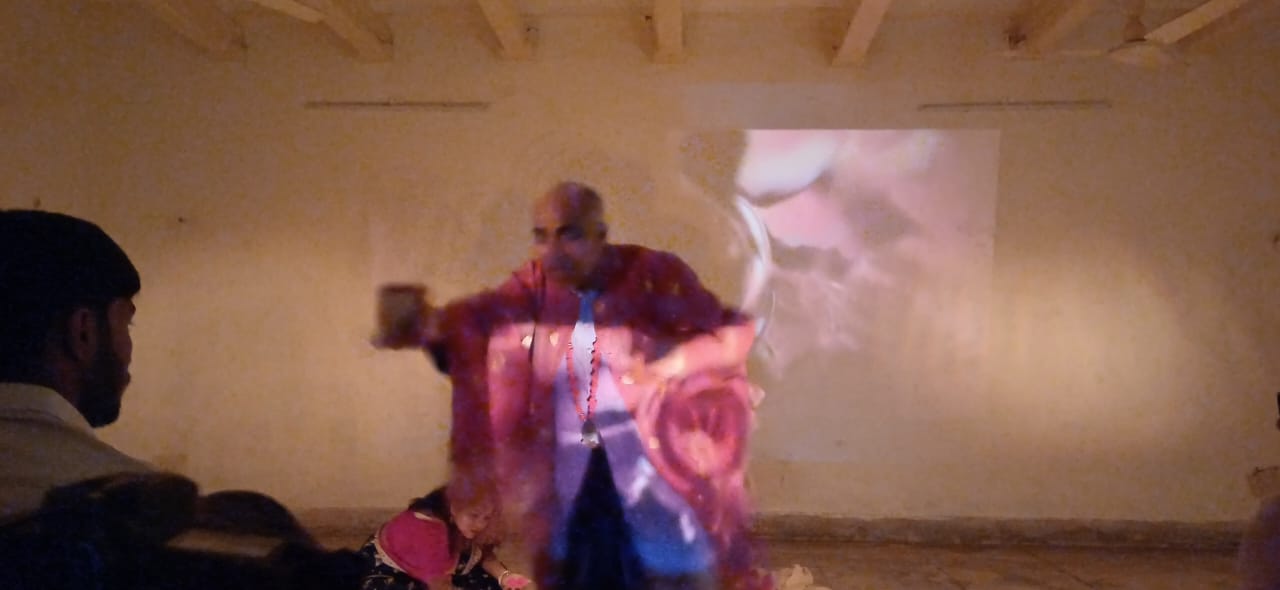
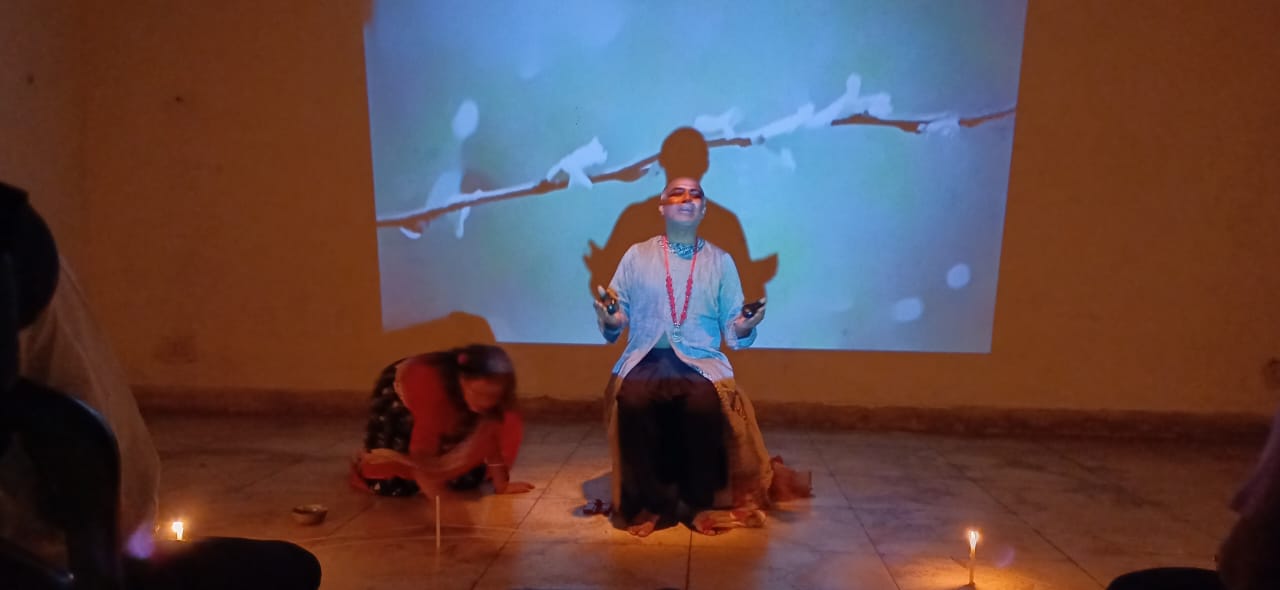
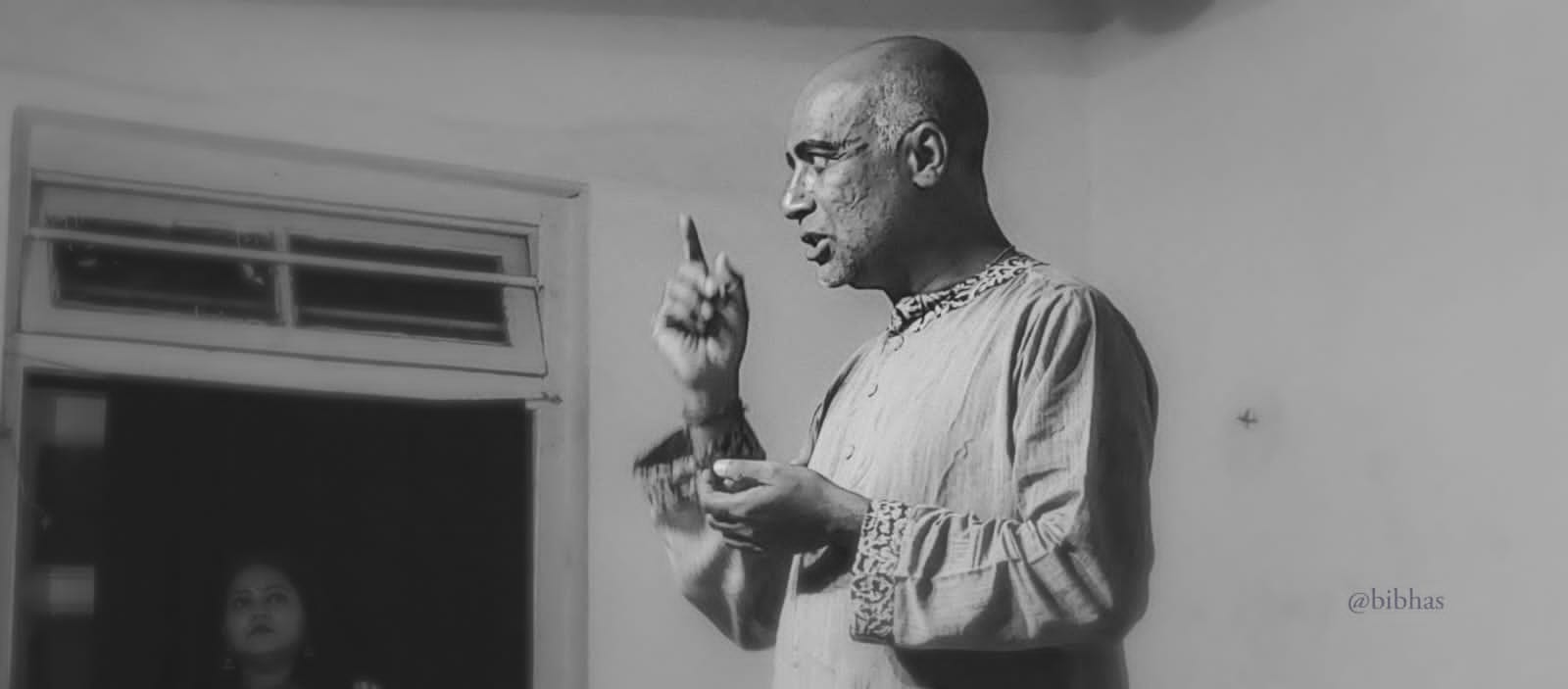
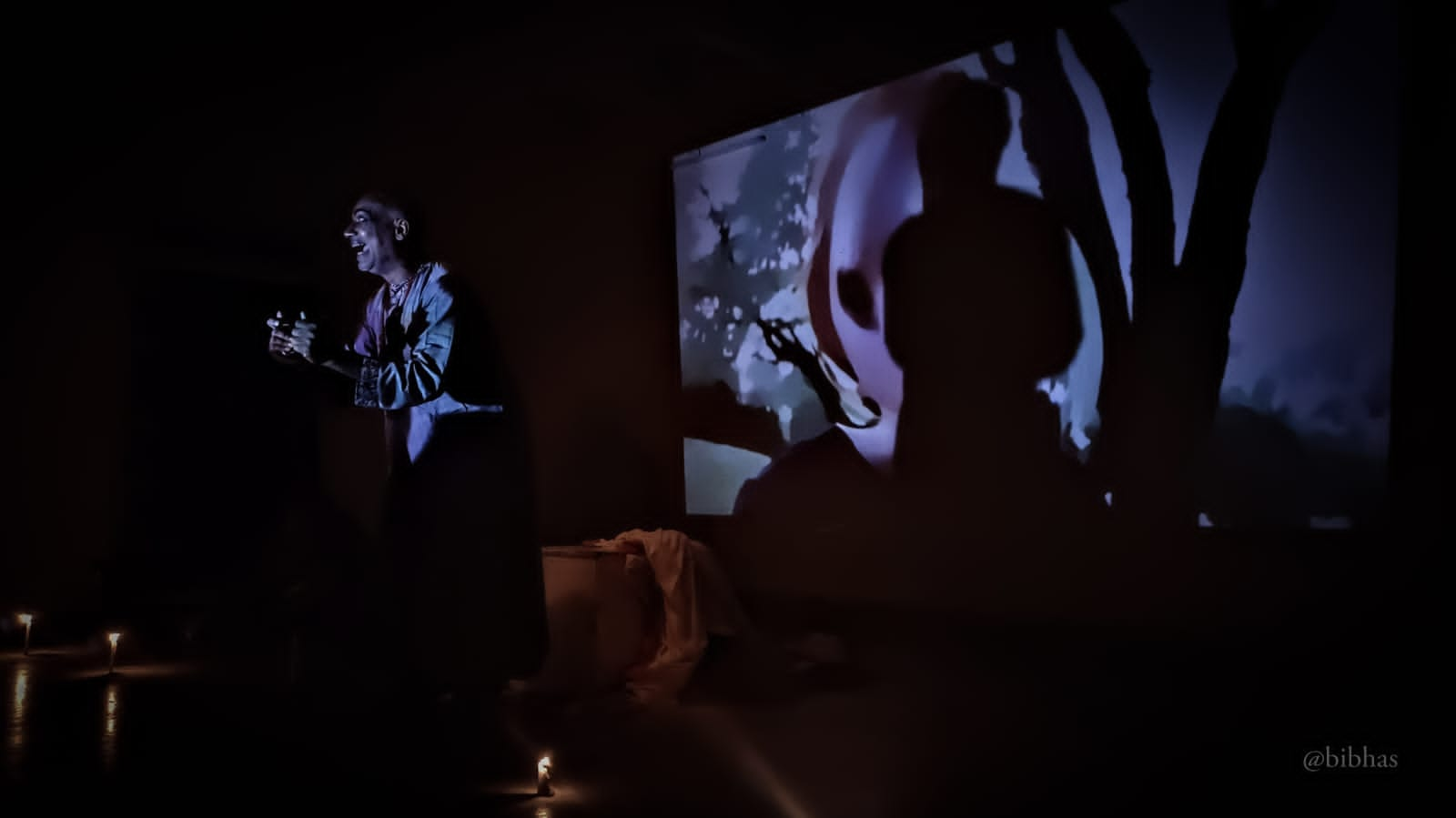
The finer aspects of the kathakar’s( Janardan Ghosh’s) stage presence are intrinsically interwoven in the tale so inseparably that his gait, the gestures, the postures the expressions all depict a conceptual assertion of the Ramayana. The fluidity of the narration is indelible and the intonation is deliberately controlled to suit the parameters of excellent dialogue delivery which ought to have a thunderous proclamation of the epic coupled with a subtle yet effective volume that’s verbose and yet aptly restrained. There is a performative glory inseparably blended with the musical beats of a folk rendition that invites the onlookers to participate in the performance. The Kathakar’s splendid stage presence with his enormous voice modulations make the characters live in stage; needless to say- male or female. There’s a quaint androgyny that Janardan Ghosh establishes on stage with his one man army – himself who appears as a reservoir of actors essaying different roles evocative of the Bahurupi artists that are used to playing diverse roles and yet one at a time. Slow and steady wins the race is the strategem that the Kathakaar deliberately adopts when he narrates simultaneously playing varied roles- Rama, Sita, Shurpanakha and above all the colossal Ravana. The entry of Ghosh defines folk narration that’s charming endearing and at the same time prudent in its discretion of becoming stern when the narration becomes the somber from the recreational. It is a folk teller whose telling of the tale exploiting all the assets of performative aspect become more than conspicuous. He cries and groans and shouts and screams and laughs and proclaims and sits and stands and jumps and circumambulates the stage as if capturing it from all its directions. Yet he releases the stage equally well and comes back to himself as he knows the tale will speak for itself. The brilliance of a learned actor becomes visible in Ghosh’s choice to be Indian in his compassionate and anxious mannerisms of flourishing a folk tale of his nation and yet intellugebtly global in his approach towards narrating it objectively putting up a universal concern: Eco feminism. A subject matter of relevance for all across ages, Sita… a woman of education he so confidently he says and ends it so poignantly saying and in the end she immersed herself in the earth. And we automatically question ” Why? Why do we hurt her – the one who nurtures us so fondly? The divine feminine. Ghosh brings the ties together: Of Sita’s separation from Rana and of her being deserted in the end: Both are aligned. Whether she got accidently separated from him when Ravana abducted her or when he sent her away, in both cases, she is the sufferer. The performative narration impresses upon re-reading the epic independent of the notions of divinity attached to it.
Dr. Payal Trivedi
For comments( if any) please use the comment box given below.
Janardan Ghosh’s Kayantar – Towards the need for Transformation
KAYANTAR- A film co-directed by Rajdeep Paul & Sarmistha Maity
The lead actor in the film, Dr Janardan Ghosh, is really versatile and multi talented. He is a performing artist, academic, theatre director, film actor, playwright, performance coach and storyteller (Katha ‘Koli, a new art of storytelling) whose practice includes the use of traditional theories, contemporary performance vocabulary, and interactive media. His research-based work engages the indigenous practice methods in urban spaces exploring the perspectives of historicity, spiritual consciousness, intertextual dialogue, and body-space dynamics of myths, tales and gossips.
Kayantar- is a poignant tale of religious discrimination that leads to repenting circumstances for those that are forced to quietly endure and hence implicitly exploited to endorse conformity to the extent of losing their identities and eventually their lives. Moreover, it is a tale that has a sub-plot dealing with the pathos of the Bahurupi artists who beg in front of the people for their survival; their art not being recognized as a respectable profession but being condemned as a demeaning activity, pursued by those that are financially underprivileged and become nomadic thus imploring in front of the people for alms in order to make both ends meet.
The film is heart-wrenching as we see how the Bahurupi Muslim artist (played by Dr. Janardan Ghosh) dressed as the Hindu Goddess Kali appears in front of his two children; only to consecutively become crippled and hence forcefully passing on his legacy to his son who dislikes pursuing his father’s profession. The son has a point. He being a Muslim roaming around in the apparel of a Hindu Goddess is disparaged by the religious stalwarts of his community, is mocked at by the children of the village and is boycotted by many conservatives as ‘Bhikhari’ – a pauper. These facts reiterated in an overtly painful and innately stark undertone are enough evidences to make the pangs of the young man believable and evocative of the viewers’ empathy for him.
That the innocent youth who has not acquired this profession by his own choice and it has been rather forced on him comes as a harsh and undeniable truth that grills our thinking capacities to the extent of questioning all our modern theories of global indivisibilities of culture and religion. When the young lad takes an anomalous decision to choose a girl of the rival community and loses his life because of being engulfed in the holocaust of communal riots that take place in his village, our conscience gets stirred and we as viewers of the film are compelled to revise our notions of living in an industrialized, progressive world. We are made to rethink whether the circumferences of culture, creed, race and religion only exist on national borders or are they still prevalent somewhere within our psyches and we are only ignoring these under the pretext of being the civilized community.
Within the framework of a story that so effectively becomes pertinent with the theme of universal relevance as we still find the world divided into castes and communities and people identifying themselves through their religions, there is a very intriguing story of Asia, the young girl who wishes to adorn herself as Kali and pursue her Bahurupi father’s profession with confidence and dignity. The tale comes as an pleasant surprise when Asia is founded engaging herself in painting her body coal black and rejoicing to see herself in the gruesome look. It seems a woman’s reclusive identification of the other dimension of the divine feminine that exists within her apparent demure image of a meek girl.
That Kali chooses Asia’s body to be her abode is also a fact that demands our prudent understanding of the fact that religious differences prevail only on the superficial level as the Bahurupi keeps singing “Apanar Apni fana hole shei bhed jana jai”- Means that realization comes only when the distinction between mine and yours gets erased. Such an indubitable truth of the oneness of divinity is fondly repeated as a backdrop of the entire film makes the theme of the movie apparent- It is not by dividing but it is by uniting that humanity can realize in the oneness of this universe wherein every entity is the fragment of that supreme energy that we call God. The philosophical context in the film does not let the film lose its ties with an integral theme of gender discrimination.
Asia takes the permission of her father to dress up as Kali and pursue her profession as a Bahurupi. Nonetheless, the Bahurupi, her father, gets annoyed with her and says that he cannot allow his daughter to wander on the roads as a prostitute. Why the man who has earned a living with the same profession disallows his daughter to follow his footsteps? The film gives us a jolt when we hear these words of the Bahurupi. If it were such a demeaning profession, why on earth did he adopt it? Was he also forced by his family to adopt it and with great reluctance he went on from door to door dressed up as Kali and asked for money from the people? The film does not answer these questions but raising these queries in our minds the film acts as a thunderbolt when we see a Muslim girl adopting her father’s profession ultimately when her brother dies in the communal riots and she has to earn a living for her home ultimately as her father is crippled and is unable to do anything to make a living. Though she finally opts to become Kali, the intimidating figure of the bloodthirsty goddess who is so venomous becomes the most pensive image of pathos; she has to become Kali only to support her family and this time her father is helpless and cannot stop her even if he wants to. She walks on the railway track fearlessly continuing her journey on the route that has her brother’s remnants that remind us of the gruesome ending that the young boy faced due to his unfortunate choice.
Diluting the conformist image of Kali as a fearsome goddess, Kayantar presents another facet of hers as a sad feminine figure who wanders helplessly for recognition. When she walks on the road men do not fear her ghastly appearance. They in fact dare to tease her which undermines her ferocity only to expose the truth that a woman’s frightening exterior cannot dismantle the atrocities meted out to her in a man’s world. She may be regarded as an epitome of Kali and the goddess may have chosen her to manifest her form but the fact remains that she is an ordinary woman confined within domestic sphere that does not allow her to operate according to her will and discretion. Her life is what a man wants it to be. She may dress up as Kali but she will never be regarded equal to the formidable goddess of the temples and the cemeteries. She will remain as an ordinary woman. When the Bahurupi tries to disclose the truth in front of her thus refusing her to wander on the roads as Kali, it is this harsh reality that he tries to explain to her which remains unadulterated truth pertinent to all times.
That a woman is exploited under the pretext of granting her equal rights and overt sexual violence and tacit manipulation are indeed a part of this so called man’s world even today are not hidden realities but are undeniable truths. Kayantar shows that if Kali wanders as an ordinary powerless woman Asia, she will be shamed. The film aptly demystifies the wrathful image of Kali and extracts the ordinary femininity in her that seeks recognition till date.
When the goddess Kali accidently stepped on Kala- Lord Shiva as per the mythical account, she was unhappy and wailed for the fact that she had made a grave mistake of putting her feet on her husband’s chest; a sinful conduct for a woman as per the conventional theories of Hinduism. It is not Kali’s pathos that is underpinned in the temples when we worship her as the mother goddess. It is her ire that is being continually recognized and the red tongue that lolled accidently out of her mouth due to her unconscious act of putting her feet on Shiva’s chest is ironically regarded as a mark of her fearful image. Kayantar shows the other aspect of this horrific Kali and that is – Kali as the one that resides in the domicile of an artist who earns his morsel of food by emoting her from door to door. When the Kayantar takes place and the Bahurupi allows her to possess him, the possession is just on the level of the exterior. There is no internal possession because the artist cannot afford it. He is supposed to be submissive and not exert his redoubtable image in front of others. He is a beggar.
The film talks about the pathos of the village artists that pursue their profession only as a means of earning the basic necessities in life. With the advent of complex technologies in the realm of entertainment, these artists are deprived of their due recognition. Kayantar – the transformation is of the body and not the soul but this is what the film seems to have intended. The ardour of transforming one’s soul is explained through the restraint that the Bahurupi imposes on himself and his son who both dress up as Kali only because they have to earn money to win their bread and butter. There is no philosophical enlightenment in the process of transforming themselves. It stays at the superficial level even after the Bahurupi keeps singing the song ‘Apnar Apni fana hole shei bhed jana jai- which talks about the need to escalate beyond the boundaries of time and space to realize divinity.
The song remains merely a song and the spiritual message ingrained in it is only a matter of speculation. In the end, the Muslim girl Asia adopting Kali’s image does undermine religious discrimination but it does not become prominent because; the extremely painful state of a girl who takes up a vocation on account of a drastic change that occurs in her life of losing her own brother is a telling tale that completely dilutes the fury in the image she adopts and brings out the agony of an ordinary woman incarcerated in the prison of conformity that she is unable to challenge or disown.
All in all, Kayantar is a film that stimulates us to understand religion beyond the confines of the right and the wrong and urges us to revise our cliché associations of Gods and Goddesses as intimidating figures of the temples who possess their disciples that invoke them in the temple rituals. It certainly is an eye-opener to the fact that the transformation of our soul is needed but is often occluded by our senses governed by selfish motives that thwart the spiritual awakening which engenders the realization of truth.
For comments on the article please write in the box given below:
Doosra Aadmi Doosri Aurat staged to Explore the Complexities of Marriage
भारतवर्ष को अंग्रेजों के चंगुल से छुड़ाने के लिये एक लम्बा संघर्ष चला था. इस में अठारहवीं-उन्नीसवीं शताब्दी में बंगाल में हुए सन्यासियों के विद्रोह से ले कर 1947 तक के सभी सशस्त्र और अन्य संघर्ष सम्मिलित हैं. लगभग पौने दो सौ वर्ष तक चले उस लम्बे संघर्ष की कुछ घटनाओं के बारे में कहानी, उपन्यास इत्यादि लिखे गये. लेकिन इन का अधिकतर इतिहास छिपा ही रह गया. सन 2022 में स्वतन्त्रता के पिचहत्तर वर्ष पूरे होने के अवसर पर, ऐसे अनजाने, भुला दिये गये समरांगण-वीरों के बारे में जानकारी को साधारण जन तक पहुँचाने के लिये अनगिनत कार्यक्रम आयोजित किये गये. ऐसे ही प्रयासों में से एक रहा लेखक-निर्देशक अक्षयवर नाथ श्रीवास्तव का लिखा और मंचित किया गया नाटक ‘आजादी की दीवानी दुर्गा भाभी’.
दुर्गा भाभी के नाम से हम में से कौन परिचित नहीं है? भगत सिंह और चन्द्रशेखर आजाद इत्यादि के साथी रहे भगवती चरण वोहरा की पत्नी थीं दुर्गा भाभी या दुर्गावती देवी. एक रोचक परन्तु सत्य तथ्य है, कि इतने सारे क्रान्तिकारियों में से केवल भगवती चरण वोहरा ही विवाहित थे… शेष लगभग सभी अविवाहित ही थे! इतने सारे पिस्तौल और बम चलाने वाले उग्र क्रान्तिकारियों के बीच यह एक महिला कैसे रहती होगी, और वह भी उन परिस्थितियों में, जहाँ इन लोगों के काम की गोपनीयता के चलते उन्हें अपने घर के आसपास के लोगों के साथ सम्बन्ध बनाने की सुविधा तो नहीं ही रही होगी, यह अपने में एक रोचक कल्पना ही है, जिस पर किसी लेखन ने कुछ नहीं लिखा है!
लेकिन दुर्गा भाभी के जीवन के इस पक्ष का रहस्य सम्भवतः उन की पारिवारिक पृष्ठभूमि में छिपा होगा! प्रयागराज (इलाहाबाद) के शहजादपुर गाँव में पण्डित बांकेबिहारी के यहाँ जन्मी दुर्गावती के पिता कलैक्ट्रेट में नजीर थे, और दादा थानेदार थे, अतः पुलिस और प्रशासन के प्रति साधारण जन के मन में रहने वाला भय दुर्गा के मन में नहीं रहा होगा.
इन सब क्रान्तिकारियों में से भगवती चरण सब से अधिक आयु के थे. सत्ताईस वर्ष की आयु में उन की मृत्यु हो गई थी. दुर्गावती उस समय पर कुल बाईस वर्ष की अवस्था की थीं. इतनी कम आयु में विधवा हो गई दुर्गा भाभी ने अपना बाकी का जीवन भी स्वतन्त्रता के संघर्ष में भाग लेते हुए ही गुजारा. लेकिन वह जीवन कैसा रहा होगा, जिस में न सिर्फ उन के अपने पति, बल्कि एक-एक कर के उन के लगभग सभी प्रमुख साथी भी मारे गये थे? भगत सिंह, सुखदेव और राजगुरु को फाँसी हुई, चन्द्रशेखर अंग्रेजों से लड़ते हुए मारे गये, और भी सभी साथी या तो मारे गये, या फिर जेलों में गये या फिर भूमिगत हो कर रहते रहे. और यही नहीं, एक एकाकी जीवन जीने को मजबूर हुई दुर्गा भाभी और उन के बच रहे कुछ साथियों में से अधिकतर को स्वतन्त्रता-प्राप्ति के बाद भी कोई सम्मान या पहचान भारत की सरकार ने नहीं दिया. ऐसे विकट जीवट वाली दुर्गा भाभी अकेली ही रहती रहीं, और दिल्ली के निकट गाजियाबाद में एक स्कूल चलाती रहीं, जहाँ अक्टूबर १९९९ में उन की मृत्यु हुई.
ऐसी साहसी महिला के जीवन पर नाटक लिख कर उसे मंचित करने का अनुकरणीय काम किया अक्षयवर नाथ श्रीवास्तव ने. जून २०२३ को इस नाटक का प्रदर्शन राष्ट्रीय नाट्य विद्यालय के अभिमंच में देखने को मिला.
दुर्गावती के रूप में तनु पाल और भगतसिंह की भूमिका में शिवम सिंघल ने अपने अभिनय से बहुत अधिक प्रभावित किया. चन्द्रशेखर आजाद की भूमिका में आभास सिंह तथा अन्य भी सभी कलाकारों ने अपने दक्ष अभिनय से प्रभावित किया. लेकिन मुझे लगता है कि पुलिस इंस्पैक्टर और सी.आई.डी. इंस्पैक्टर के चरित्रों को इतना हास्यास्पद बना देने से नाटक की गम्भीरता प्रभावित हुई. ब्रिटिश राज की भारतीय पुलिस के नृशंस कृत्यों को कौन नहीं जानता… किस प्रकार से अपने अत्याचारों से उन्होंने क्रान्तिकारियों को परेशान किया था, यह हम सब को पता है. उन चरित्रों को मजाहिया बना देने से दर्शकों के मन पर होने वाला उन अत्याचारों का अनुभव कमजोर पड़ जाता है.
मंच परिकल्पना में भी कुछ परिवर्तन की आवश्यकता अनुभव होती है. मंच के बाएँ हाथ पर बनाये गये विशालकाय रेलवे स्टेशन का कोई विशेष प्रयोग नहीं हुआ, जब कि उस ने पूरे समय मंच के बड़े हिस्से को घेरे रखा. और जो पूरे नाटक में गतिविधियों का प्रमुख केन्द्र था, भगवतीचरण वोहरा का घर, जिसे बाद में कलकत्ता के घर और अन्य स्थानों के रूप में भी प्रयोग किया गया, वह दबा-दबा सा रहा, जिससे पूरा प्ले-एरिया या अभिनय के लिये उपलब्ध स्थान एक कोने में सीमित हो कर रह गया. मंच पर गतिविधियों के विभिन्न स्थलों के बीच एक अनुपात बनाना पड़ता है, जिस का ध्यान न रखने के कारण यह नाटक उभर कर आ ही नहीं पाया. ऐसी ही समस्या प्रकाश-संयोजन के साथ भी रही, जिस में मंच का प्रकाश लगातार दर्शकों की आँखों पर पड़ कर दृश्यों की दृश्यव्यता को प्रभावित करता रहा. एल.ई.डी. पर्दे के आगे रखी एक लाईट तो पूरे नाटक में दर्शकों की आँखों में चुभती रही. आज के समय में मंच-आलोकन डिजाइनर का क्रीड़ा-स्थल अधिक बन गया है, नाटक के कथानक को दर्शकों तक पहुँचाने में सहायक होने का साधन कम रह गया है. नाटक की दर्शकों तक सम्प्रेषणीयता में बाधक बन रही इस प्रवृत्ति पर गम्भीरता से विचार करना होगा.
हरी सिंह खोलिया रूप-सज्जा के माहिर माने जाते हैं, और इस नाटक में की गई रूप-सज्जा से उन्होंने अपनी सिद्ध-हस्तता को एक बार फिर से स्थापित कर दिया. वस्त्र-विन्यास भी नाटक के अनुरूप ही था. एल.ई.डी. पर्दे का प्रयोग कर के इतने सारे स्थलों को मंच पर बनाने की समस्या का निर्देशक ने कुशलता से हल पा लिया. लगभग अठावन विभिन्न भूमिकाओं वाले इस नाटक में, इतनी अधिक संख्या में कलाकारों के मंच पर आने-जाने इत्यादि सभी चीजों को सम्भालना आसान नहीं होता. इस के लिये मंच-प्रबन्धन के लिये जिम्मेवार व्यक्ति की प्रशंसा करनी होगी, कि नाटक में कहीं कोई विशेष दर्शनीय चूक नजर नहीं आई! मंच पर दो कारों को ला कर घटना को जीवन्त बना देने के लिये अक्षयवर जी की प्रशंसा करनी होगी!
इतनी सारी घटनाओं को दो-ढाई घंटे के नाटक में समेटना आसान नहीं होता. फिर भी, नाटक के आलेख में कुछ चुस्ती लाने की आवश्यकता से इंकार नहीं किया जा सकता. अभी स्वतन्त्रता के संग्राम में अपने जीवन को होम देने वाले हजारों किस्से दबे पड़े हैं. आशा है कि इस नाटक को देख कर अन्य लोग भी अपने जीवन की आहुति देने वाले उन व्यक्तियों के बारे में नाटक बना कर इस यज्ञ में अपना योगदान देंगे.
पश्मीना – दर्द का रिश्ता
पश्मीना – दर्द का रिश्ता — अनिल गोयल
हिन्दी में नया नाट्य-लेखन बहुत कम हो रहा है. जब हिन्दी साहित्य के मठाधीश नाटक को साहित्य की विधा ही नहीं मानते, तो इस में बहुत आश्चर्य की बात भी नहीं है!
ऐसे में, अर्थशास्त्र के विद्यार्थी रहे एक कॉर्पोरेट एग्जीक्यूटिव के द्वारा नाटक लिखा जाना एक सुखद आश्चर्य है. दिल्ली विश्वविद्यालय के श्रीराम कॉलेज ऑफ कॉमर्स से अर्थशास्त्र का अध्ययन, और फिर एम.बी.ए. करने वाले मृणाल माथुर स्कूल और कॉलेज में नाटक देखते और करते थे. शिक्षा पूरी होने के बाद बीस वर्षों तक जीवन विज्ञापन जगत में कॉर्पोरेट एग्जीक्यूटिव के रूप में चलता रहा, लेकिन रचनात्मक अभिव्यक्ति की ज्वाला अन्दर कहीं दबी रही.
आखिर, 2015 में कॉर्पोरेट जीवन की घिसीपिटी नीरस जिन्दगी से उकता कर मृणाल ने कॉर्पोरेट जगत के साथ नाता तोड़ कर स्वतन्त्र कार्य करना प्रारम्भ कर दिया. अब जब कुछ समय अपने लिये मिला, तो मृणाल अपने पहले प्यार नाटक की ओर को मुड़े, नाटकों के लेखक के रूप में. अपनी पुरानी डायरियों और नोट्स को झाड़ा-पोंछा, और अगले छः वर्षों में बारह नाटक लिख डाले!
2018 में अपना पहला पूर्णकालिक नाटक ‘पश्मीना’ मुम्बई में एक प्रतियोगिता में भेजा, तो वह प्रथम तीन में चुन लिया गया. उस नाटक का मंचन साजिदा साजी ने किया. इस के बाद लिखे नाटक ‘अकबर दी ग्रेट नहीं रहे’ को दिल्ली में व्यावसायिक रूप से रंगकर्म करने वाले प्रसिद्ध निर्देशक डॉ. एम. सईद आलम ने उठा लिया, और वह नाटक भी सफल हो गया! पहले दो नाटक सफल हो गये, तो लेखन ही जीवन हो गया! इस के बाद के बाकी नाटक भी कुछ छपे, कुछ छपने की प्रक्रिया में हैं.
कभी प्रोफेशनल लेखक नहीं रहे एक कॉर्पोरेट एग्जीक्यूटिव की नाटक लिखने के पीछे सोच क्या रही, इस प्रश्न के उत्तर में मृणाल बताते हैं कि पिछले लगभग पन्द्रह वर्षों में हमारे समाज में चीजों को केवल एक ही पक्ष की ओर से देखने और दूसरे दृष्टिकोण को पूर्णतया नकारने की जो प्रवृत्ति पनप गई है, उस के प्रति एक वितृष्णा मेरे नाटकों में देखने को मिलेगी. दोनों ही ओर की अच्छी और बुरी दोनों ही चीजों को देखना और दिखाना आज के वर्तमान समाज में और अधिक आवश्यक हो गया है, इसी चीज को अपने नाटकों के माध्यम से मृणाल ने रेखांकित किया है.
आज की चल रही सोच के उलट चलने की भावना क्यों जागृत हुई, उस पर मृणाल बोले, “आजकल नाटकों के निर्देशकों के द्वारा लेखकों को किनारे कर देने की जो प्रवृत्ति विकसित हुई है, जिस में लेखक की आवश्यकता को ही नकार दिया जाता है, ऐसे में रंगमंच में लेखक की आवश्यकता पहले से बहुत अधिक हो गई है. डिवाइज्ड या एक्सपैरिमैंटल नाटक के नाम पर लेखक को रंगमंच से बाहर कर दिया गया है, जिस से नाटक में पात्रों का अन्तर्द्वन्द्व उभर कर नहीं आ पाता… उस में केवल अपने ‘डिजाईन’ को दिखाने की होड़ ही नजर आती है. जिस कन्फ्लिक्ट को, मॉरल डाइलेमा को एक लेखक नाटक में लाता था, उसे एक निर्देशक, ड्रामाटर्ज या डिजाइनर नहीं ला सकता! लेखन एक बिल्कुल ही अलग विधा है!”
उन के द्वारा लिखित आठ नाटकों की नौ प्रस्तुतियों का आयोजन इवैन्ट मैनेजमैंट कम्पनी विब्ग्योर ने ‘नाट्यकुम्भ’ के रूप में दिल्ली के एल.टी.जी. रंगमण्डप में 4 से 11 जून 2023 तक किया. इस समारोह की पहली, और आखिरी प्रस्तुति भी नाटक ‘पश्मीना’ की रही, जिसे पहले दिन साजिदा साजी, और अन्तिम दिन वाले प्रयोग में जफर मोहिउद्दीन ने निर्देशित किया. बाकी सभी नाटकों का एक-एक ही प्रयोग रहा. अन्य नाटक थे, हास्य नाटक ‘अकबर दी ग्रेट नहीं रहे’, ‘दीदी आई.ए.एस.’ और ‘पाँच रुपैया बारह आना’, व्यंग्य ‘तीन तुम्हारी तरफ’ और ‘बिट्वीन यू एंड मी’, हिन्दी-अंग्रेजी नाटक ‘लाल किले का आखिरी मुकदमा’ और अंग्रेजी नाटक ‘गॉड्स लायनेस’, जिस की रीडिंग ही की गई. इन में से कुछ हिन्दी-अंग्रेजी में लिखे गये द्विभाषी नाटक हैं.
टेलीविजन की निरर्थक बहस के आज के युग में मृणाल माथुर अपने नाटकों के माध्यम से समकालीन घटनाओं पर मंथन करते नजर आते हैं. वे दर्शकों को मीडिया से मिलते उपदेशों या भेड़चाल का शिकार न होकर अपनी स्वयं की अन्तर्दृष्टि विकसित करने और अवधारणाओं के पीछे जा कर देखने को कहते हैं, उन्हें अपनी ही सोच और कल्पनाशीलता को उभारने का सन्देश देते हैं.
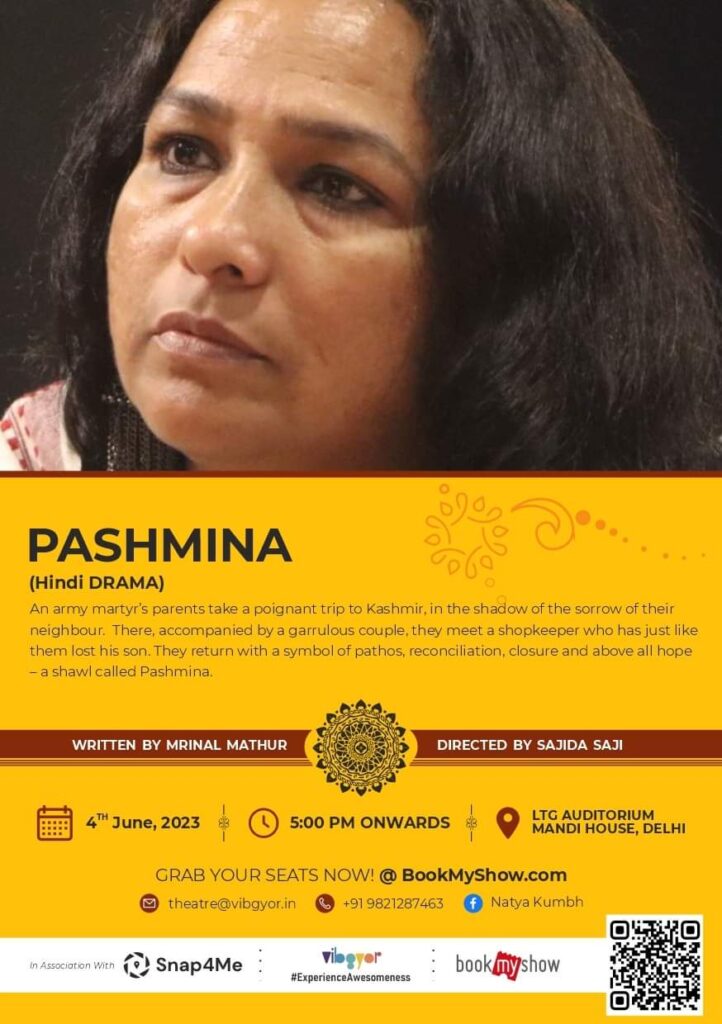
साजिदा साजी द्वारा निर्देशित नाटक ‘पश्मीना’ नाट्यकुम्भ’ का पहला नाटक था. पश्मीना – कश्मीर का ऊनी कपड़ा, जिस से शॉल, मफलर, कोट इत्यादि बनाये जाते हैं. जो ऊष्मा देता है. एक भावशून्य हो चुके जीवन में गति लाने के लिये भी ऊष्मा की आवश्यकता होती है. और पश्मीने और ऊष्मा के इसी सम्बन्ध को लेखक ने अपनी कलम के माध्यम से हम तक पहुँचाया है. इस नाटक में एक मध्यमवर्गीय दम्पत्ति अमर और विभा सक्सेना का बेटा, जो भारतीय सेना में सैनिक था, कुछ समय पूर्व कश्मीर में आतंकवाद की हिंसा का शिकार हुआ था. शहीद होने से पहले, घर आने पर वह अपनी माँ के लिये एक पश्मीने की शॉल लाना चाह रहा था, ऐसा उस ने अपने पत्र में लिखा था. बेटे की मौत से भावशून्य हो गई अपनी पत्नी के जीवन में ऊष्मा लाने के लिये उसी पश्मीना शॉल की खोज में अमर विभा के साथ कश्मीर जाता है. वहाँ उनकी भेंट एक युवा, उद्दाम, चंचल सिक्ख व्यापारी दम्पत्ति से हो जाती है. ये दोनों ही जोड़े पश्मीने की एक छोटी सी दुकान पर जाते हैं, जो लोग स्वयं ही पश्मीने का सामान बनाते हैं. वहाँ शॉल के भाव पर मोलतोल करते हुए दुकानदार के बेटे के भी एक आतंक-विरोधी ऑपरेशन में मारे जाने की बात पता चलती है. कश्मीर में आतंकवाद से उपजी हिंसा को बहुत बार दिखाया गया है. लेकिन सामान्य जन की व्यथा को दोनों ही ओर से एकांगी दृष्टि से ही देखा जाता रहा है. ऐसे में, दोनों पक्षों की पीड़ा को एक साथ दिखाने का यह अभिनव प्रयास ही इस नाटक को विशिष्टता प्रदान करता है.
नाटक का प्रमुख आकर्षण है नाटक के दो प्रमुख कलाकारों साजिदा साजी और जॉय मितई के भावपूर्ण अभिनय के क्षण… कैसे अपने बेटे को कश्मीर के आतंकवाद की हिंसा में गँवा बैठा यह प्रौढ़ दम्पत्ति दर्द की विभिन्न परतों के बीच से गुजरता, उन के बीच एक सूक्ष्म सन्तुलन बनाता हुआ, अपनी भावनाओं पर नियन्त्रण पाने का सफल-असफल सा प्रयास करता, कश्मीर की यात्रा करते हुए अपने जीवन के कुछ अत्यन्त संवेदनशील क्षणों को जीता है. सबसे कारुणिक और संवेदनशील क्षण वे हैं, जब अमर और विभा को शॉल वाले के बेटे के बारे में पता चलता है! शॉल के साथ-साथ जो चीज इस दम्पत्ति को दुकानदार के साथ जोड़ती है, वह है अपने बेटे को खो देने की व्यथा! इस प्रकार का दर्द का सम्बन्ध दर्शकों को दो विपरीत धुरियों पर खड़े इन दोनों परिवारों की व्यथा के द्वारा कश्मीर-समस्या को एक सन्तुलित दृष्टि से देखने को प्रेरित करता है. इस प्रौढ़ माता-पिता और दुकानदार दोनों के ही दर्द एक जैसे हैं, जिस के कारण ये दोनों किसी एक स्तर पर जुड़े हुए भी हैं, जहाँ कोई भी अन्य बाहरी तत्व प्रवेश नहीं कर पाता है – साजिदा और जॉय ने जिस काव्यात्मक कोमलता के साथ, गैर-शाब्दिकता के साथ इन क्षणों को मंच पर जिया है, वह दिल्ली के रंगमंच में आज एक बहुत दुर्लभ चीज है, और वही इस नाटक को दर्शनीय बनाता है.
साजिदा इस नाटक को अभिनेता का नाटक मानती है… जहाँ निर्देशक और मंच पर अन्य सब कुछ भी गौण हो जाता है… केवल अभिनेताओं के द्वारा प्रेषित की जाने वाली संवेदनाएँ, और उन्हें अपनी आँखों और कानों से ग्रहण करते दर्शक ही प्रेक्षाग्रह में रह जाते हैं. और उसी तरीके से साजिदा ने इस नाटक को प्रस्तुत भी किया है… सैट के नाम पर केवल दरवाजों के तीन चौखटे बना दिये गये हैं, जो एक से दूसरे स्थान पर स्थानान्तरित होने का भी प्रतीक हैं, और जिन पर टंगी कपड़े की लम्बी पट्टियों को पश्मीने की दुकान में शालों के रूप में भी प्रयोग कर लिया गया है. मेकअप और किन्हीं विशिष्ट परिधानों की भी आवश्यकता नहीं अनुभव की गई, न ही इस नाटक की गम्भीर बात को कहने के लिये किसी विशेष प्रकाश-व्यवस्था की आवश्यकता हुई. साजिदा को लगा कि इस नाटक में युद्ध की समस्या को एक अलग दृष्टि से देखा गया है, और युद्ध की त्रासदी को बिना कोई बेचारगी का भाव उत्पन्न किये, बिना रोये-धोये, अपनी बात कह दी गई है. किसी अपने के चले जाने के दर्द के क्षण में आदमी सुन्न हो जाता है… इस नाटक में वही क्षण लगातार उपस्थित रहे… जब इन कलाकारों ने कथा के पात्रों के दर्द को केवल अपने अभिनय के द्वारा दर्शकों तक पहुँचा दिया. एक अच्छे नाटक की यही सब से बड़ी खूबी होती है.
साजिदा और जॉय राष्ट्रीय नाट्य विद्यालय से प्रशिक्षण ले कर दिल्ली में नाटक कर रहे हैं… गम्भीरता से, और लगातार, अपनी संस्था ट्रैजर आर्ट एसोसिएशन के माध्यम से. नौटंकी में इन के द्वारा किया गया एक सुन्दर प्रयोग कुछ वर्ष पूर्व मैंने देखा था. अपने चुने हुए व्यवसाय के प्रति पूर्ण निष्ठा और समर्पण ही इस जोड़े के काम को एक अलग महक देता है.
नाटक में सिक्ख जोड़े की भूमिका मोहम्मद शाहनवाज और रितु ने निभाई. दुकानदार की भूमिका में केयूर नन्दानिया थे, उस के बेटे की भूमिका में सूरज और बेटी की भूमिका में रिया पवार थीं. अमर और विभा के बेटे के रूप में थे सैफ सिद्दीकी, और डॉ. कौल की भूमिका अवनीश झा ने निभाई. (चित्र सौजन्य: साजिदा साजी)
Im-Pact: Innovative Digital Theatre Based Corporate Training Practices
Theatre has the ability to transform, to bring about a radical change and also the tool to enhance productivity by opening us creatively. Theatre often makes us work against our own body, our own emotions by getting “into the skin of others”. This art makes us think beyond us, and only create the characters. As we are living right now in insecure times, in total social distancing and also in grave economic implications theatre based digital training programs will solve many of the grave implications.
The economy has deeply impacting not only the daily wagers but also companies such as the aviation sector, education, lifestyle, wellness and beauty just to name a few. What hence is needed is that the company looks for solutions first and foremost to increase the productivity of the employees.
Training of the soft skills like boosting the morale of the employees, improving communication skills, stress management does increase the productivity of the employee; however training has to primarily focus on increasing the revenue of a company and bringing in more sales. For this what is critically needed is that while the company works on the soft skills of the employees they also focus on the solutions to provide ways in which the revenues can be generated.
Here, is where Digital Theatre based Corporate Training Practices comes in. The Digital methods that are focused not “inwards” or simply to “improve the soft skills of the employee” but are “outward” driving most empathetically towards “enhancing production of the company.”
Here, one should realize that one should adopt the means of “gentle power of persuasion” for employees to see and understand the needs of their mother company. Theatre being extremely persuasive and while keeping emotions as the cornerstone can further help in the this “gentle power of persuasion”. The employees should be urged to look beyond themselves, their traditional roles in the company and think of the multiple ways they can reinvent themselves in this stressful situation.
Rewards can be given to good solutions which could mean words of encouragement in a mail forwarded to all employees or even small gifts and monetary benefits. No step should be seen as “not worthy enough”, if it is considered not worthy it enough then it should be analyzed why it is not worthy enough and what can be done to make it more effective.
Theatre does not discard any action but looks at it critically. The same should apply in this Im-pactful theatre- based training practice. We are here looking at times that need innovation, reinvention and reconsideration of what we know. It’s time to SURGE FORWARD AND NOT LAMENT!
Natsamrat Theatre Festival spreads its wings to Mumbai
By Shraboni Saha
After establishing itself in Delhi, Natsamrat is now steadily making a mark in Mumbai as well. It successfully organised the 3rd Mumbai Theater Festival for Maharashtra audience
Natsamrat brought the Kumbh of plays for Mumbaikars i.e. 3rd Mumbai Theater Festival where five different plays were staged on May 26, 27 and 28 at Creative Adda Auditorium, Versova, Andheri West, Mumbai.
On May 26, at 6:30 pm, the play Napunsak, written by Manjul Bhardwaj, was staged and at 8:00 pm, the play Teen Bandar, written by Prabuddha Joshi, directed by Nagendra Kumar Sharma, both plays were staged.
The play Aadhi Raat ke Baad which was written by Dr. Shankar Shesh was staged on 27th May at 6:30 pm and the play Chukayenge Nahi, written by Dario-Fo and adapted by Amitabh Srivastava was staged at 8:00 pm and both the plays are directed by Chandrashekhar Sharma.
On May 28, at 7:30 pm, the play Kambakkht Ishq written by Satya Prakash was staged and the play is directed by Shyam Kumar, director of Natsamrat.
Artists from Delhi, Ambala, Mumbai presented the five different plays at the theater in Mumbai. In these plays, there was humor, adventure as well as social messages for the audience. Seeing the audience of Mumbai, it seemed as if they had a lot of love for theatre, that’s why the entire auditorium was packed on all three days. Natsamrat director Shyam Kumar says that if anyone wants to give something to the society, it can be done through drama and the audience definitely pays attention to it because it does not give stress to the mind, instead it gives a beautiful message through entertainment.
आपदा-काल में भास का सहारा
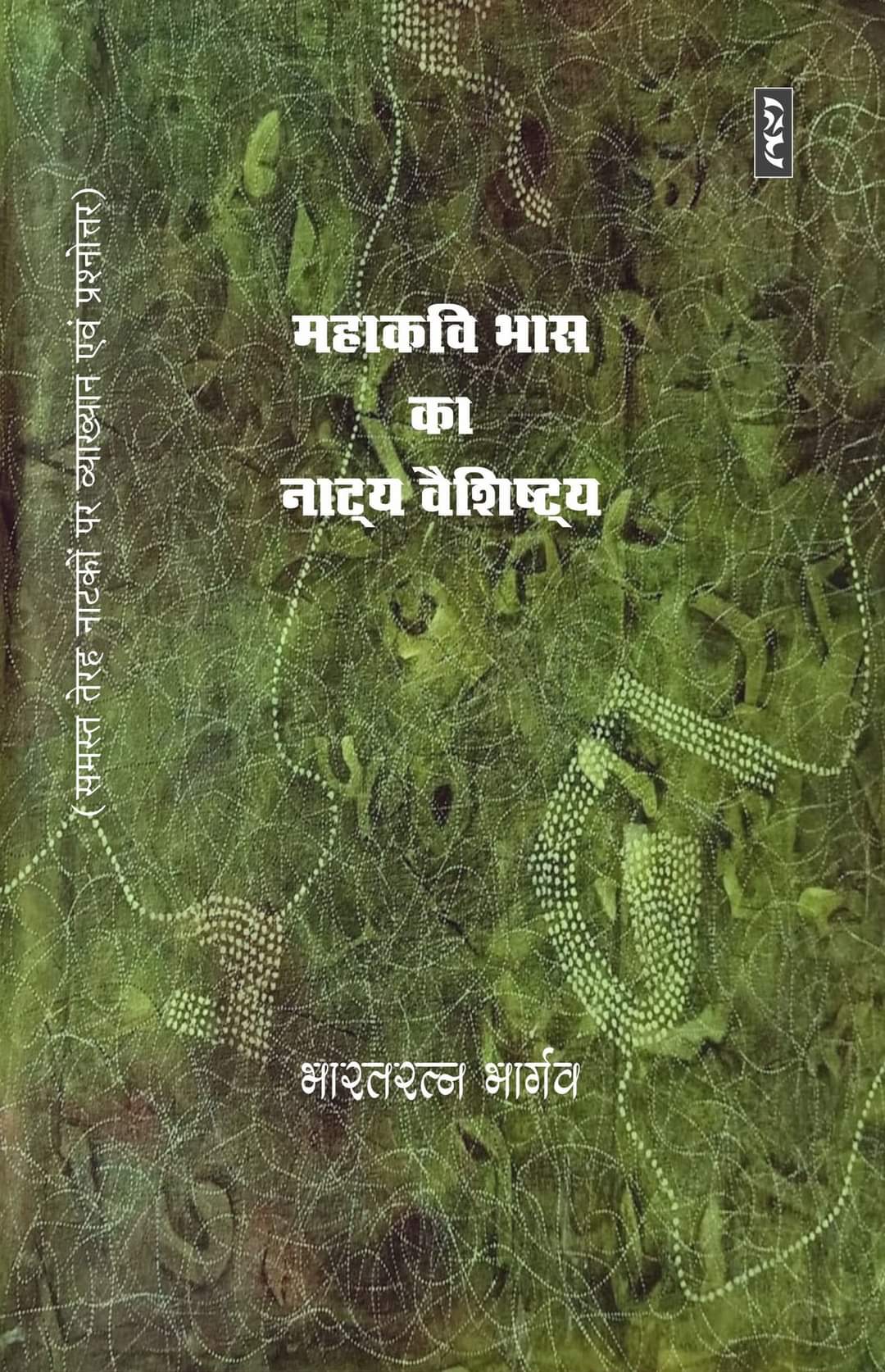
‘आपदा को अवसर में बदलना’ – आजकल यह उक्ति प्रायः सुनने को मिल जाती है. आज के समय की जीवित स्मृति में सबसे बड़ी आपदा रही करोना. सब लोग अपने-अपने घरों के अन्दर बन्द हो जाने को मजबूर हो गये थे. ऐसे में, विज्ञान से ले कर नाटक तक हर विषय पर सैंकड़ों-हजारों लोगों ने ‘ऑनलाइन’ या इन्टरनैट पर चर्चा के माध्यम से आपसी सम्बन्ध और संवाद को चलाये रखा, और करोड़ों मनुष्यों के मानसिक सन्तुलन को बनाये रखने में एक प्रशंसनीय भूमिका निभाई! ऐसी ही एक चर्चा का सहभागी बनने का सौभाग्य मुझे भी मिला. करोना के कालखण्ड में ही ग्वालियर की गीतांजलि गीत ने अपने रंगसमूह ‘मेरा मंच’ के माध्यम से भास के तेरह नाटकों पर भारतरत्न भार्गव के व्याख्यानों की एक श्रृंखला आयोजित की थी. संगीत नाटक अकादमी अमृत सम्मान से सम्मानित, आकाशवाणी, बी.बी.सी. तथा संगीत नाटक अकादमी से जुड़े रहे भारतरत्न भार्गव डॉ. कमलेश दत्त त्रिपाठी तथा कवलम नारायण पणिक्कर जैसे दिग्गजों के साथ काम कर चुके हैं, और सम्प्रति टैगोर फैलोशिप ले कर शोध कर रहे हैं. इन व्याख्यानों की सबसे रोचक बात रही इनका समय! यह व्याख्यानमाला सायं चार बजे से होती थी. उन दिनों में, काम कोई न होने के कारण हम दोपहर में खाना खा कर सो जाते थे. फिर, चार बजे से कुछ ही पहले नींद खुलती थी, भागते-दौड़ते जैसे-तैसे मैं कंप्यूटर खोलता था, कपड़े पहनता था, पत्नी भी जाग जाती थीं, तब तक भारतरत्न जी का व्याख्यान प्रारम्भ हो चुका होता था! व्याख्यान सुनते-सुनते ही पानी पीता था, चाय आ जाती थी, वह भी पीता रहता था, लगता था कि बिस्कुट खा रहा हूँ, और वह नमकीन होता था; कभी नमकीन के चक्कर में बिस्कुट खा जाता था! करोना काल में बचे हुए हम लोगों की बहुत सी दुखद, लेकिन कुछ मधुर, रोमांचकारी स्मृतियाँ भी हैं! उन्हीं में से एक गीतांजलि गीत द्वारा आयोजित व्याख्यानों की यह श्रृंखला भी थी. भास के नाट्य-साहित्य पर आधारित इस श्रृंखला का एक अत्यन्त महत्वपूर्ण पक्ष था प्रतिदिन के व्याख्यान के बाद का प्रश्नोत्तर-काल. इसके लिये भार्गव जी ने यथेष्ट समय माँगा, जिसे गीतांजलि ने मुक्तमन से स्वीकार किया. और सच में, यह श्रृंखला गीतांजलि की श्रृंखला न रह कर भार्गव जी और श्रोताओं की श्रृंखला बन गई! बाद में, सभी ने इसे पुस्तक के रूप में प्रकाशित करवाने का सुझाव दिया. अब सेतु प्रकाशन के संस्थापक-संचालक अमिताभ राय ने, जो इस श्रृंखला से प्रारम्भ से ही इससे जुड़े रहे, इन व्याख्यानों तथा प्रश्न और उत्तरों को ‘महाकवि भास का नाट्य वैशिष्ट्य’ नाम से पुस्तक रूप में प्रकाशित किया है. बातचीत की स्वाभाविकता को बनाये रखने, और इसे आत्मीय संस्पर्श देने के उद्देश्य से इसकी भाषा को यथावत रखा गया है, जो पुस्तक को बहुत पठनीय बना देता है. “ग्यारहवीं–बारहवीं शताब्दी से जो आक्रान्ता आये, उन्होंने तक्षशिला, नालन्दा जैसे विश्वप्रसिद्ध केन्द्रों को ध्वस्त कर दिया, नष्ट कर दिया” – इस प्रकार का क्षोभ प्रकट करने के बाद इन नाटकों को फिर खोज लिये जाने की कहानी भार्गव जी विषय-प्रवेश में सुनाते हैं, और, कि कैसे ये नाटक केरल के देवालयों अर्थात कुताम्बलम में खेले जाते रहे, लेकिन खोज लिये जाने के लगभग सत्तर वर्षों के बाद भी ये नाटक हमारे लिये अपरिचित ही रहे, और कैसे सन 1974 में शान्ता गाँधी के द्वारा भास के ‘स्वप्नवासवदत्ता’ नाटक को अमेरिका के हवाई विश्वविद्यालय में सफलतापूर्वक खेलने पर भारत के लोगों की नींद टूटी, और उनका ध्यान इन नाटकों की ओर गया. भार्गव जी को पणिक्कर जी ने बताया कि केरल में कुड़ियाट्टम, कथक्कली और नाट्यशास्त्र के विद्वान अप्पुकुट्टन नायर ने तभी केरल संगीत नाटक अकादमी के सचिव बने पणिक्कर जी को कुड़ियाट्टम और नाट्यशास्त्र से परिचित करवाया, जिससे पणिक्कर जी संस्कृत नाटकों के प्रति आकृष्ट हुए. बाकी सब तो जाना-पहचाना इतिहास है. बाद में पणिक्कर जी ने कालिदास संस्कृत अकादमी में ‘मध्यमव्यायोग’ नाटक का मंचन करके उत्तर भारत के लोगों को भास के नाटकों से परिचित करवाया. भार्गव जी बताते हैं कि इन नाटकों की सबसे बड़ी विशेषता है इनके कथानक. कालिदास से पहले के काल में रहे भास के तेरह में से छः नाटक महाभारत पर आधारित हैं. दो नाटक, ‘अभिषेक’ और ‘प्रतिभा’ रामायण पर आधारित हैं. एक नाटक ‘बालचरित’ कृष्ण की कथाओं पर आधारित है. ‘स्वप्नवासवदत्ता’, ‘प्रतिज्ञा यौगन्धरायण’, ‘अविमारक’ और ‘चारुदत्त’, ये चार नाटक उनकी मूल कृतियाँ मानी जाती हैं. ‘मेरा मंच’ के माध्यम से भास के तेरह नाटकों पर व्याख्यानों की श्रृंखला, वहाँ उठे प्रश्न और जिज्ञासाओं, और श्रोताओं की रुचि ने भार्गव जी को इन नाटकों के हिन्दी भाषा में पाठान्तर की भूमिका तैयार कर दी. पाठान्तर वाले भास के इन सभी तेरह नाटकों को सेतु प्रकाशन ने ही ‘भास नाट्य समग्र’ के नाम से छापा है. भास के नाटकों के अन्य अनुवादों या पाठान्तरों और भार्गव जी के पाठान्तर में मूल अन्तर यह है, कि उन्होंने इन नाटकों का पद्यात्मक पाठान्तर किया है. यह पाठान्तर करते समय उन्होंने ‘नाट्यशास्त्र में निर्देशित संहिता के अनुसार’ तनिक छूट भी ली है, जिससे ‘इन नाटकों की समकालीन उपयोगिता में यत्किंचित वृद्धि हो सके’. इसीलिये वे इसे अनुवाद न कह कर पाठान्तर कहते हैं, जिससे कि आंगिक और वाचिक अभिनय में भाव, राग तथा ताल के तात्विक गुणों का समन्वय हो सके. सबसे अच्छी बात है, कि इन दोनों पुस्तकों को पाठकों को उचित मूल्य पर उपलब्ध करवाने के लिये प्रकाशक ने इन्हें पेपरबैक में छापा है, जिससे ये पुस्तकें साधारण जन के लिये बहुत आसानी से सुलभ हो सकेंगी. भास की विलक्षण प्रतिभा को समझने के लिये ‘महाकवि भास का नाट्य वैशिष्ट्य’ का पढ़ना आवश्यक है! और भास के नाटकों को पढ़ने के लिये दूसरी पुस्तक ‘भास नाट्य समग्र’ का पढ़ना तो आवश्यक है ही! और यदि पाठक ‘भास नाट्य समग्र’ को भास के नाटकों के संस्कृत संस्करणों के साथ रख कर पढ़ेंगे, तो उन्हें इन प्राचीन नाटकों के आज के समय में प्रासंगिक होने का भान हो सकेगा!
गली दुल्हन वाली
गली दुल्हन वाली टिप्पणी — अनिल गोयल
दिल्ली की रामलीला से अपने अभिनय-जीवन का प्रारम्भ करने वाले सुभाष गुप्ता 1975 में ‘नाटक पोलमपुर का’ में समरू जाट की भूमिका से ‘अभियान’ रंगसमूह से जुड़े. अभियान की स्थापना इसके कुछ ही पहले, 1967 में, दिल्ली के कुछ उत्साही रंगकर्मियों ने की थी. सुभाष गुप्ता के द्वारा ‘अभियान’ के लिये रूपान्तरित और निर्देशित नाटक ‘गली दुल्हन वाली’ का प्रदर्शन 15 अप्रैल 2023 को दिल्ली के लिटिल थिएटर ग्रुप प्रेक्षागृह में हुआ. यह नाटक मीरा कान्त की इसी नाम की कहानी पर आधारित है. केवल सन्दर्भ के लिये, मीरा कान्त अपनी इस कहानी को स्वयं भी एकल नाटक के रूप में रूपान्तरित कर चुकी हैं.
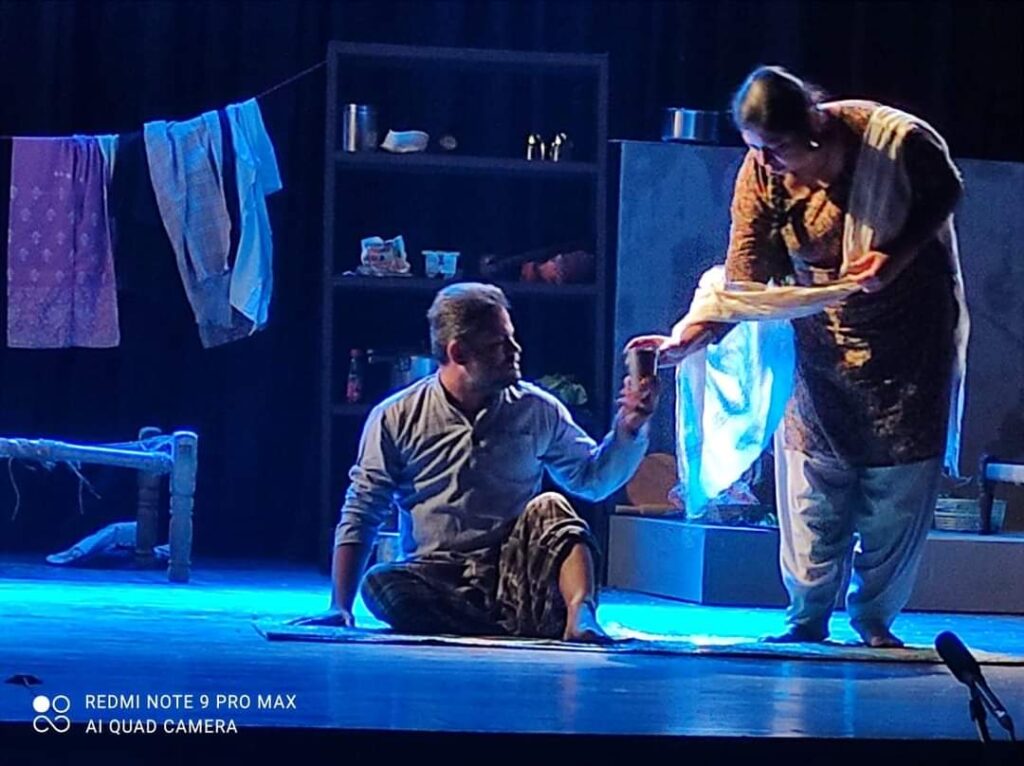
‘गली दुल्हन वाली’ नगीना नाम की एक अनपढ़ स्त्री के संघर्ष की कथा है. नगीना विवाह के पश्चात् एक कसाई रज्जाक की ‘दुल्हन’ बन कर आती है, और अपने पति के द्वारा पीटे जाने और दुर्व्यवहार का शिकार होती है. वह जिस गली में रहती है, वह गली ही नगीना के दुल्हन वाले रूप का वहन करती हुई ‘गली दुल्हन वाली’ के नाम से पहचानी जाने लगती है. नगीना काफी समय तक अपने पति के दुर्व्यवहार को सहती रहती है. लेकिन जब वही सब कुछ उसके बच्चों के साथ होता है, तो वह इस सब को अस्वीकार करके अपने बच्चों की रक्षा के लिये खड़ी हो जाती है. वह शिक्षा को ही अपने बच्चों के उद्धार का माध्यम मानती है, और इस विषय पर अपने पति से किसी समझौते के लिये तैयार नहीं होती. अपनी नाबालिग बेटी के एक बड़ी वय के आदमी के साथ विवाह के प्रश्न पर वह खुल कर अपनी बेटी की रक्षा में आ जाती है. उसके पड़ोस में रहने वाली एक हिन्दू महिला, गौरी की माँ एक पड़ोसन के नाते उसके इस संघर्ष में उसका साथ निभाती है. किस प्रकार से अत्यन्त साधारण से लगने वाले प्राणी छोटे-छोटे संघर्ष कर के समाज में बड़े परिवर्तन ले आते हैं, इस नाटक को देखने से नजर आता है. यह नाटक मनुष्य की इच्छा-शक्ति के बल को रेखांकित करता है. अपने पति से लगातार पिटते रहने वाली वह अनपढ़ स्त्री एक सीमा के बाद, केवल अपनी इच्छा-शक्ति के बल पर ही, उसके विरुद्ध खड़ी हो पाती है और उसके सामने झुकने से इंकार कर देती है.
बहुत वर्ष पूर्व, दिल्ली में एक बंगाली नाटक ‘शानु रॉयचौधरी’ में स्वातिलेखा सेनगुप्ता को एकल अभिनय करते देखा था. भाषा का अवरोध होते हुए भी, लगभग ढाई घंटे के नाटक में मंच पर स्वातिलेखा अकेले ही लगातार दर्शकों को बांधे रही थीं. कुछ वैसा ही अनुभव इस नाटक में श्रुति मेहर नोरी को नगीना की भूमिका में देख कर हुआ. सुभाष गुप्ता ने इस एक-पात्रीय कहानी को रूपान्तरित करते हुए नगीना के पति रज्जाक का भी चरित्र नाटक में बना दिया है. रज्जाक की भूमिका में नीतीश पाण्डे के पास सीमित ही सम्भावनाएँ उपलब्ध थीं, जिनका उन्होंने अच्छे से उपयोग किया. लेकिन नगीना के चरित्र में विद्यमान अपार सम्भावनाओं का श्रुति ने भरपूर उपयोग किया, और नाटक को दर्शनीय बनाया. नीतीश और श्रुति दोनों ही कलाकार हैदराबाद के निवासी हैं, हालाँकि नीतीश का मूल स्थान उत्तर भारत है.
और इसी कारण, नाटक के संवादों में विशुद्ध पुरानी दिल्ली या दिल्ली छः के उच्चारण को प्राप्त कर लेने का श्रेय नाटक के निर्देशक को भी जाता है. हैदराबाद के भारी-भरकम लहजे वाली उर्दू को छोड़ कर उन्होंने श्रुति से पुरानी दिल्ली वाले लहजे को इस नाटक में बहुत सफलता के साथ प्रयोग करवाया. दिल्ली छः की भाषा का उसकी बारीकियों को जाने बिना ही विभिन्न फिल्मों में बड़ा व्यापारिक उपयोग किया गया है. लेकिन सुभाष गुप्ता का स्वयं का बचपन वहाँ बीता है, अतः वे इस नाटक की भाषा के साथ न्याय कर पाये हैं.
एकल नाटक में एकरसता या मोनोटोनी की समस्या सदैव ही रहती है. यों भी, दिल्ली का आजकल का दर्शक बहुत जल्दी ऊब जाता है. ऐसे में, एक तो नाटक के आलेख को सम्पादित करके कुछ छोटा करने की आवश्यकता है. दूसरे, इस नाटक में एकरसता की समस्या कुछ अधिक ही अनुभव की गई, विशेषकर नाटक के पूर्वार्द्ध में, जब तक रज्जाक का प्रवेश नहीं हुआ था. दर्शकों को बांधे रखने के लिये निर्देशक को इस पक्ष पर विचार करना होगा. आलेख में कुछ छोटे-मोटे परिवर्तन करके नगीना के इस सशक्त चरित्र को कुछ और अधिक बहुआयामी बनाने की सम्भावनाएँ नाटक में हैं. लगातार फ्लैशबैक में चलने वाले इस नाटक में, गली में बहुत सी घटनाएँ घटित होती हैं. गली में घटित होने वाली घटनाओं को दिखाने के लिये, घर के दरवाजे को किसी अन्य स्थान पर स्थानान्तरित करके भी बहुत सशक्त तरीके से प्रस्तुति की एकरसता को समाप्त किया जा सकता है. इससे नगीना और रज्जाक दोनों ही का चरित्र और अधिक उभर कर आयेगा.
एकल नाटक होने के कारण कलाकारों के परिधान में बहुत अधिक सम्भावनाएँ नहीं थीं. और अभियान तो बिना टीम-टाम के, अपनी सादगीपूर्ण, यथार्थवादी प्रस्तुतियों के लिये ही जाना जाता है. फिर भी, फ्लैशबैक के दृश्यों में यदि एकाध स्थान पर कलाकारों के परिधान बदले रहते, तो नाटक की एकरसता को तोड़ा जा सकता था.
अभियान पिछले पचपन वर्षों से अधिक से नाटक करता आ रहा है. उनके पास मंच पर और मंच के पीछे एक बहुत सशक्त टोली है. उस सशक्त आधार को प्रयोग करके, और कुछ नये नाटकों और आलेखों का प्रयोग करके अभियान दिल्ली के सुप्तप्रायः रंगमंच-जगत में नई जान फूँकने की क्षमता रखता है. इसके साथ ही साथ, उनके पास अपना एक बहुत सशक्त दर्शक-वर्ग भी है. ऐसे में दिल्ली के दर्शकों की अभियान से कुछ अलग विषयों पर, और कुछ नये नाटकों की अपेक्षा करना अनुचित नहीं होगा! हिन्दी में पुराने और नये भी बहुत से अच्छे नाटक हैं. आशा है कि अभियान इस ओर ध्यान देगा.
आजकल दिल्ली में नाटक करने के लिये प्रेक्षागृह तीसरे पहर दो बजे ही मिल पाता है! और पाँच या छः बजे शो होता है. उसके पहले कलाकारों के द्वारा एक रिहर्सल भी जरूरी होती है. ऐसे में, मंच-आलोकन करने वाले व्यक्ति को कठिनाई से एक-दो घंटे का ही समय लाइट-डिजाईन करने के लिये मिलता है! इतने कम समय में क्या मंच-आलोकन सम्भव है? और यदि यह सम्भव नहीं है, तो क्या दिल्ली में मंच-आलोकन की कला समाप्त हो जायेगी? इस प्रश्न पर दिल्ली के रंगकर्मियों को गम्भीरता से विचार करना होगा, और इस विषय में कुछ कदम उठाने ही होंगे; अन्यथा, आजकल की तथाकथित “इंटैलीजैंट लाइट्स” मंच-आलोकन की प्रयोगशीलता को समाप्त कर देंगी!