Folk Theatre of India: Koothu

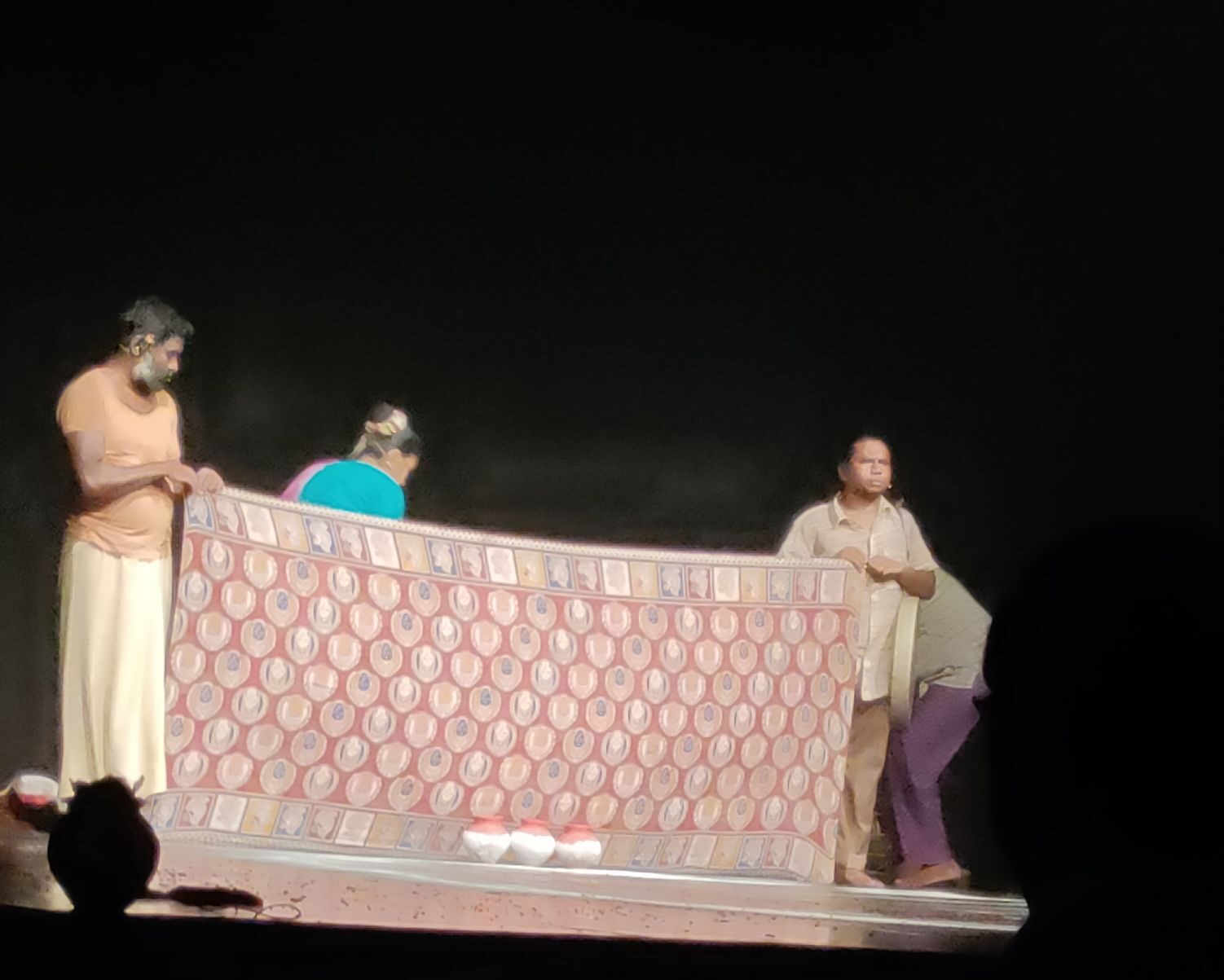
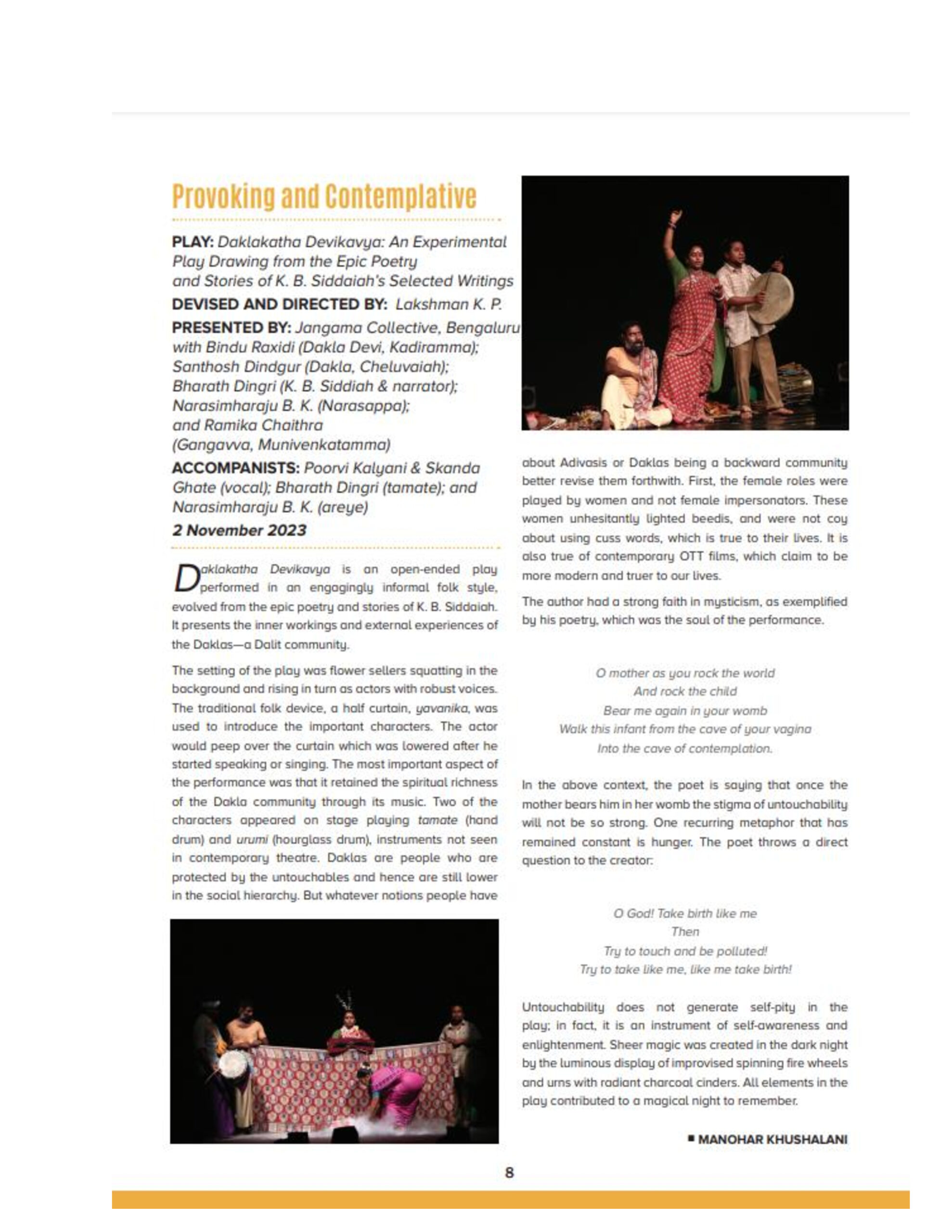
Koothu which is also called Therukoothu is a Tamilian art form that incorporates dancing and music in the backdrop of narration and presentation of epics in the Tamil Language. The Dravidian society has been a harbour of cultural nourishment since time immemorial. It is believed that the Koothu had originated in the early days of the Dravidian Tamilakam.

The term Koothu refers to two performing arts viz. Terukuttu and Kattaikkuttu. In contemporary times, the two terms have an interchangeable usage. However, in medieval times, the two terms referred to two entirely different dramatics art forms. Kattaikkuttu consists of performances that take place overnight at a stationary fixed place. Terukuttu often refers to mobile and non-stationary performances that usually take place in a procession.

The prominence in its growth was achieved by Koothu during the medieval eras wherein during the Sangam era. This peak is clearly reflected in the Sangam literature which lay a preface to the nurturing of the natagam(drama), isai(music) and iyal(dance). The Sangam literature also etched out the fact that the Koothu acted as a medium for the education of religion, tradition and history in the rural strata of society.

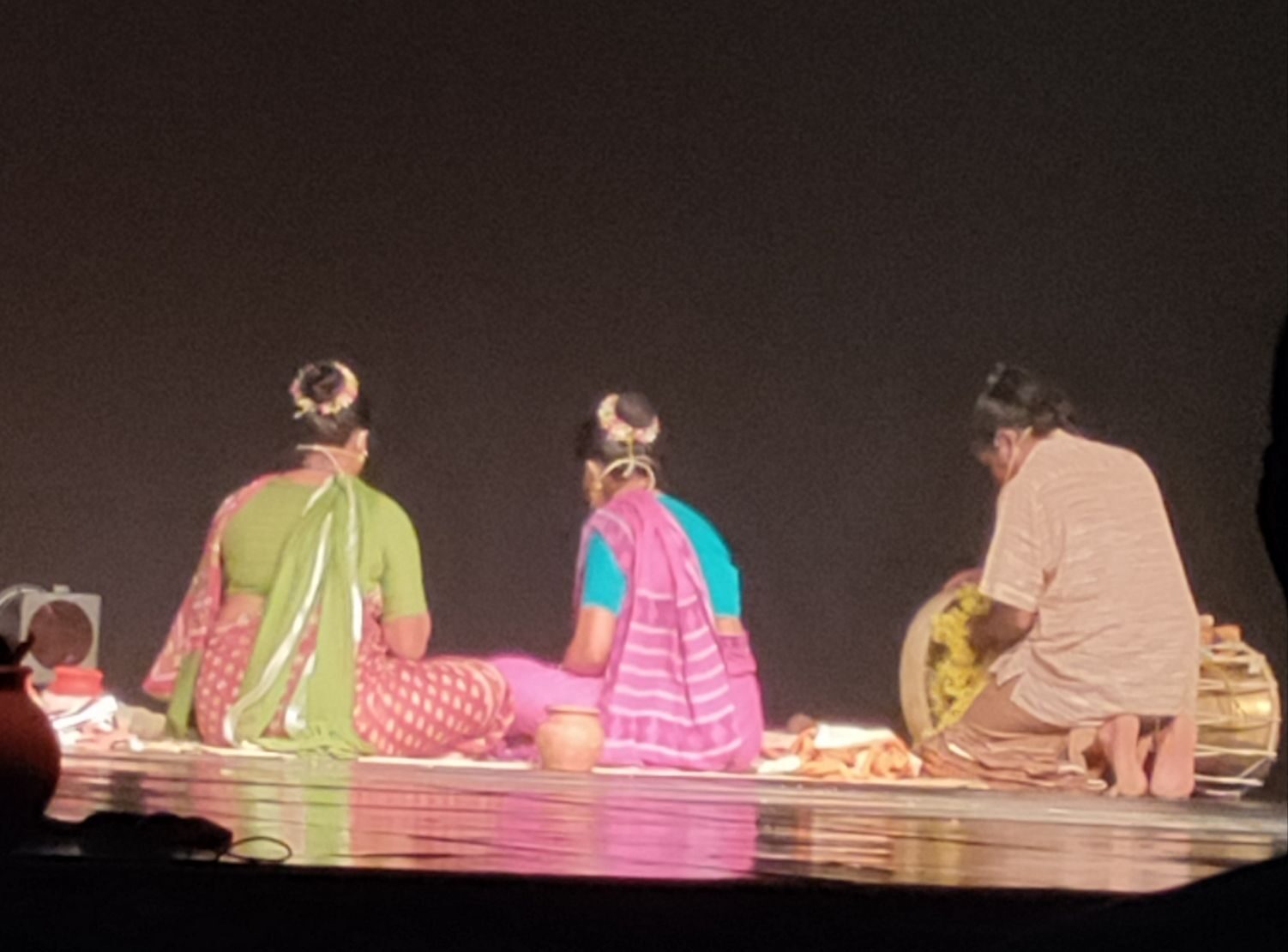
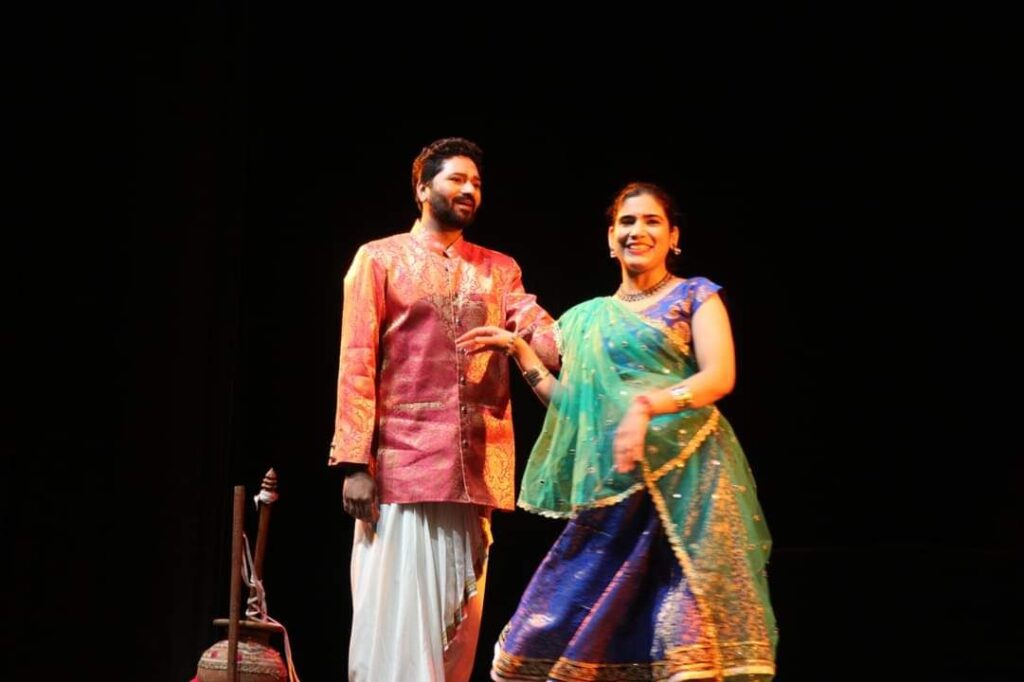
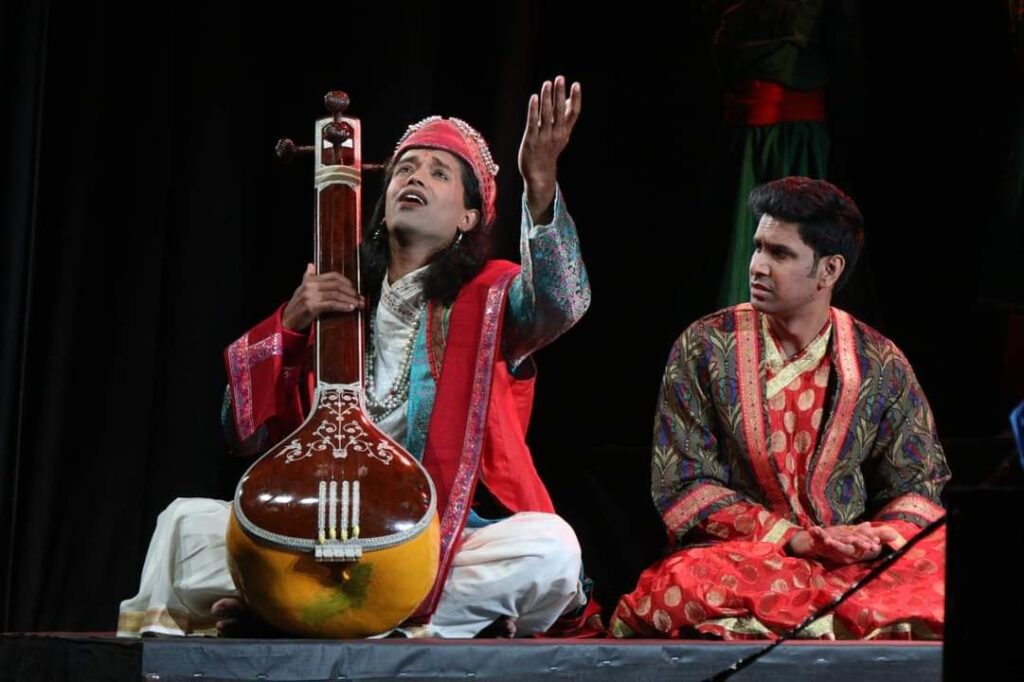
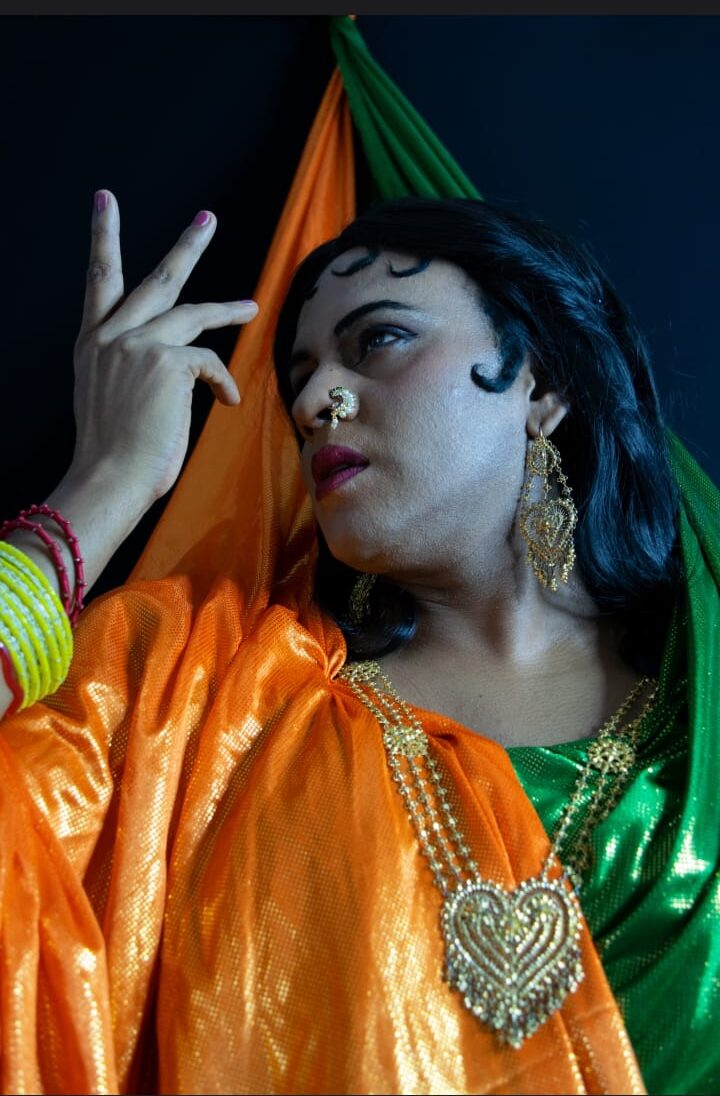
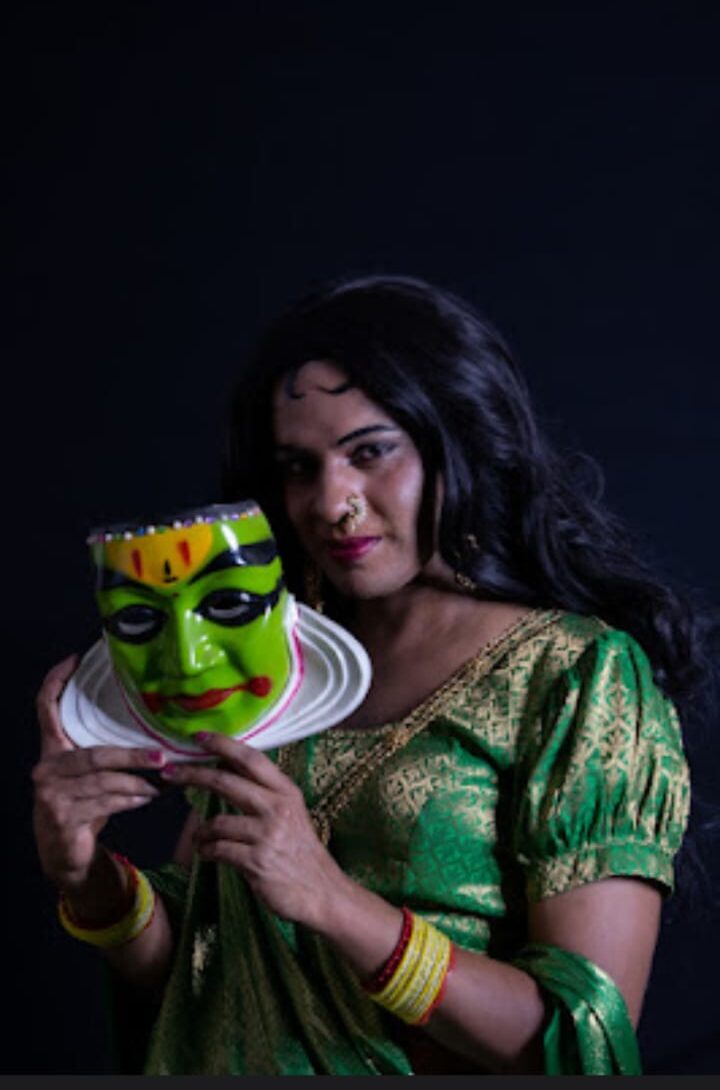
Kothu, in its inherent settings, does not include any spoken dialogues, it only consists of songs and music. The dance of Koothu has an informal structure and tone to it, with the backdrop of performances being the depiction of scenes from the Hindu mythologies like Ramayana and the Mahabharata along with some Tamil classics. Heavy, colourful and intricate costumes blended with elaborated and extravagant makeup are used by the performers in the drama. Sparkling shoulder plates, towering head gears and wide skirts. Since no amplification instruments are used, the performers are trained to sing in their voices at a high pitch so that they can amass the entire audience.

Koothu had been traditionally a male-centric theatre form, however with the change of times female participation has significantly increased. Over the years, there had been no institution for formal education of Koothu, however recently the koothu pattari (workshops for koothu) and an array of dedicated schools have been set up to save the dying art.

Independent Project by Abhinav Sharma

Guide ⇒ Prof. Manohar Khushalani

References :

  1. Therukoothu, The Street Theatre of Tamilnadu
  2. Theru Koothu: A Tamil street theatre tradition in danger of fading into oblivion has found a new lease on life


THE LOCKDOWN LOVER that LOCKS YOU DOWN!

Lockdown Lover

A CRITICAL REVIEW
By Dr. Payal Trivedi

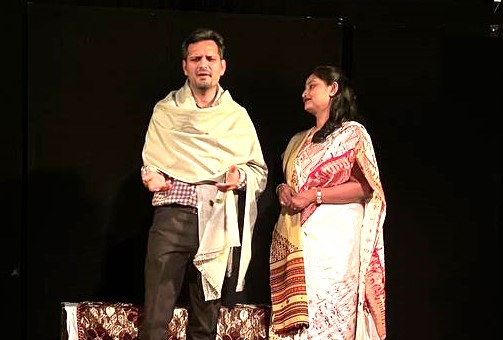
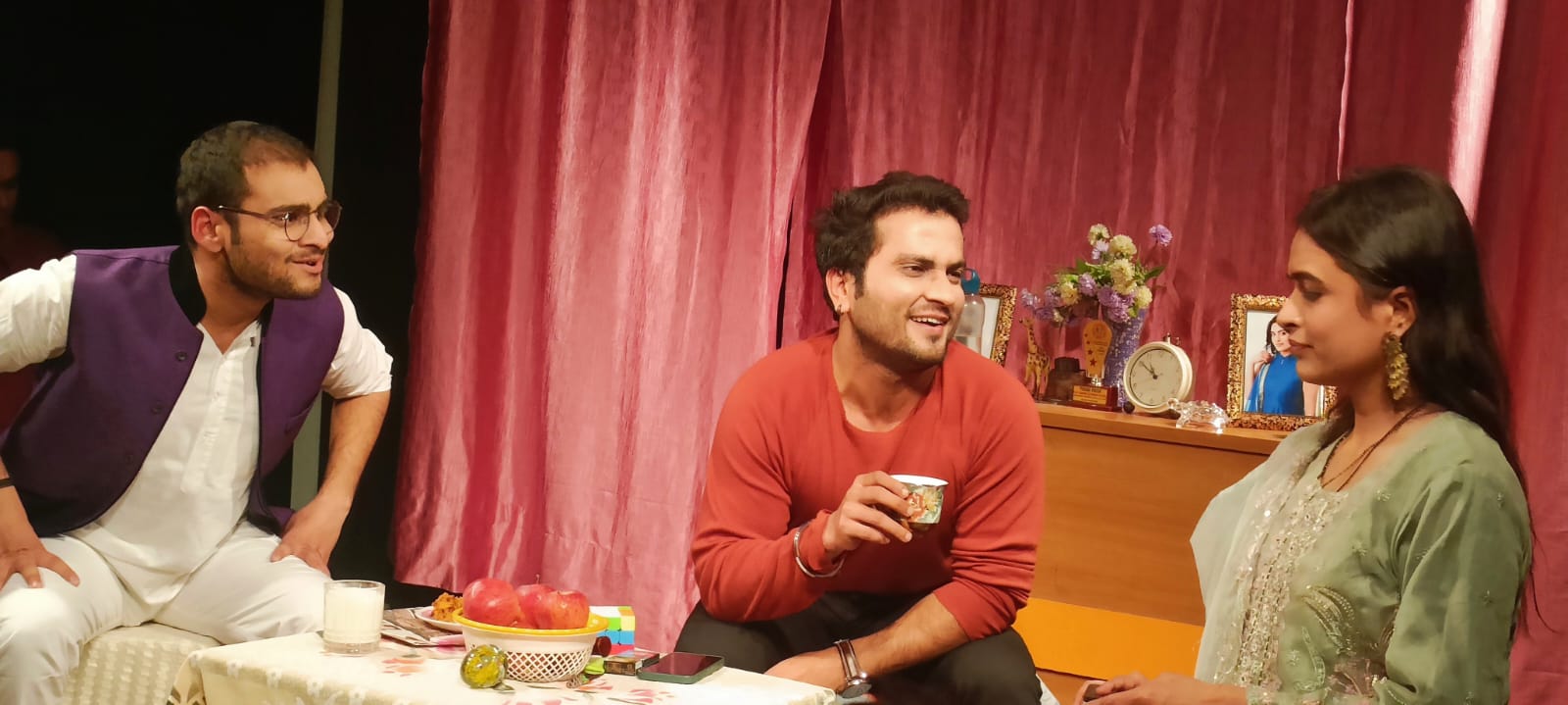
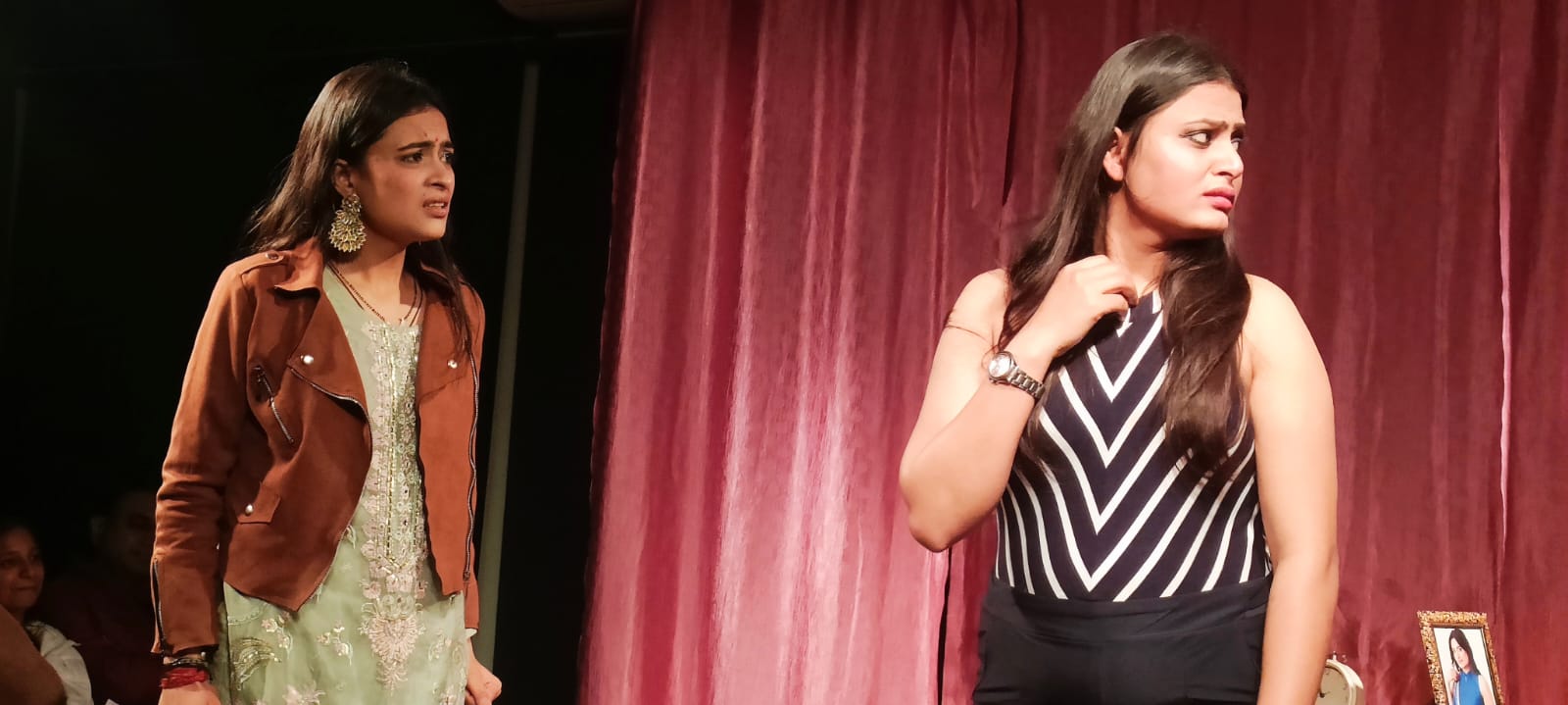
Well, any theatre performance is meant to entertain is an understatement today because we have all come to terms with the fact that theatre is much more than simply a mode of refreshment. Investing our time and energy in beholding any performance ought to enable us enough food for thought not just by being didactic but by helping us realize our weaknesses, our flaws and misdemeanours that may have led us to falsely believe in the material notion of scepticism that seems to have crept in all our walks of life today. We tend to always engage in self doubt, of essentially questioning the obvious and of incessantly negating all possibilities of giving stability to our lives. All that today’s worldly compartments of propriety and impropriety have given us is a bizarre set of meaningless precepts. These we follow mechanically with the fear of being ostracized by the so called normal society or flout entirely as a means of blatant rebuttal against the stringent myopic framework that often surrounds rules made for whom we label the ‘Normal Man’. The category of the ‘normals’ includes those that bear the onus of proclaiming ‘acting’ according to the stipulated socio-cultural norms as a mark of sanity. This excludes any kind of aberration which may disturb the so called normal setting of a ‘settled home and family’ we humans often propagate as an insignia of ‘orderly mental health’. Unfortunately for us, anything anyone does different from having a perfectly settled home is conventionally considered unhealthy and the primary cause of mental illness.

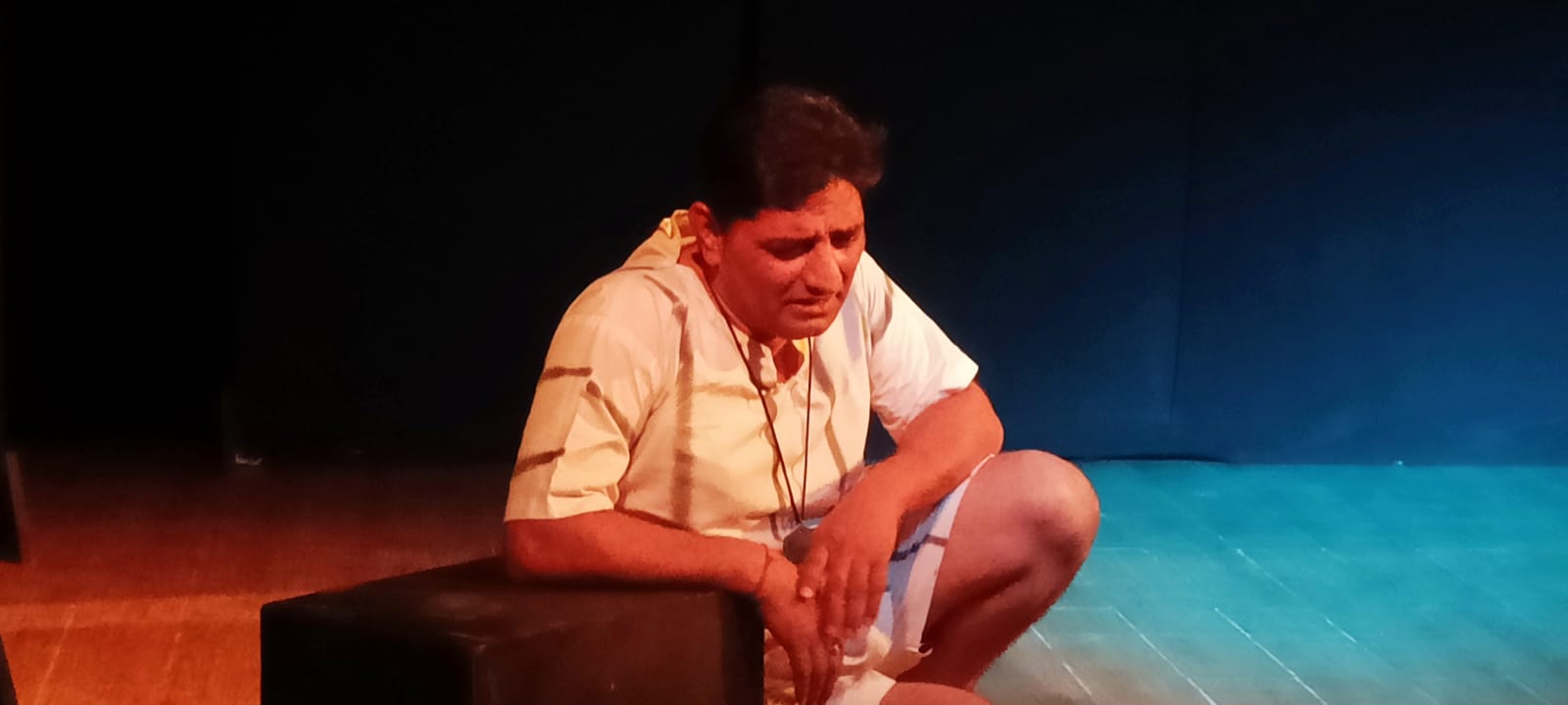
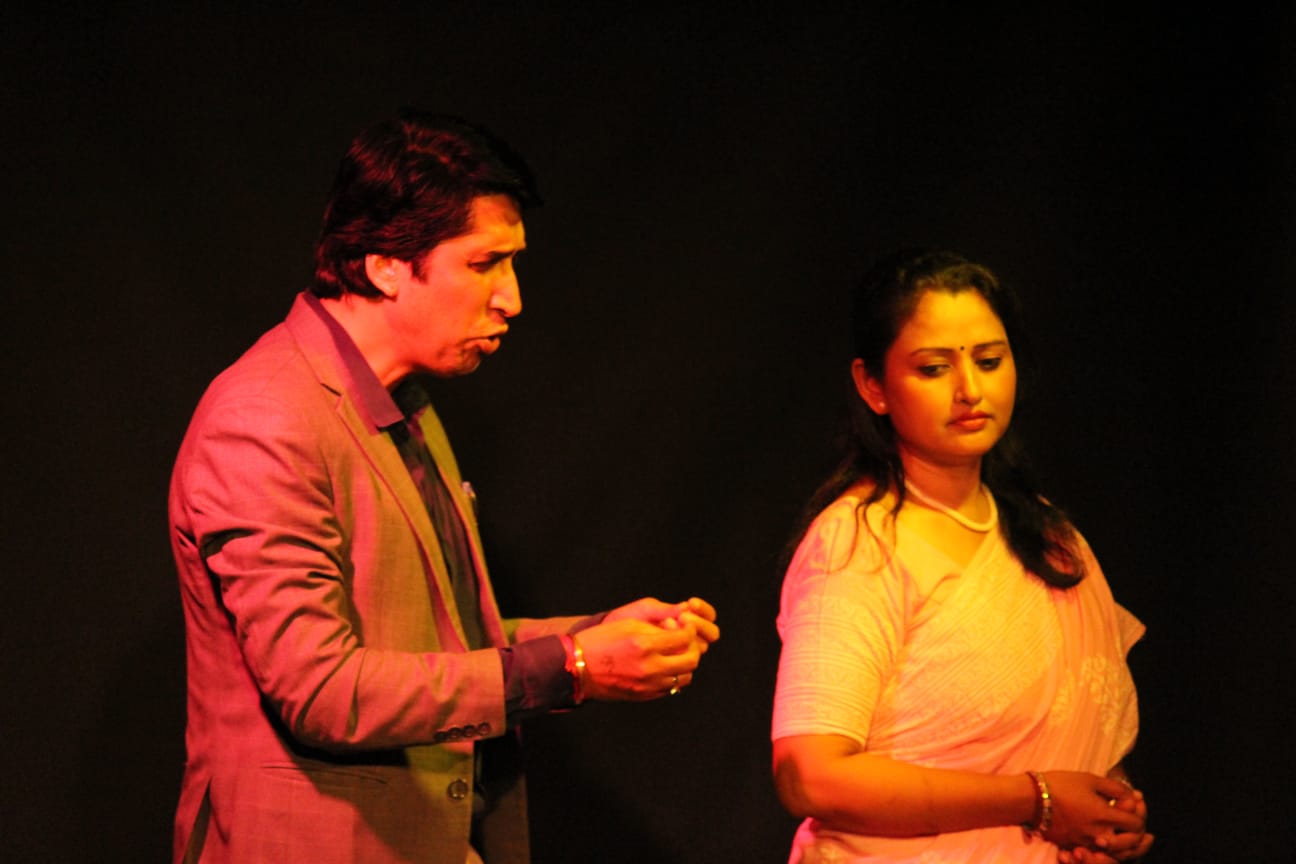
Well, the message is simple and clear but is conveyed through an essentially ‘vague’ motivation towards choosing ‘absurd’ mode of theatrical performance that leads the motto of laying bare this extremely vital issue hay ways. First and foremost, the disorderly array of character shifting that we come across mars the charm of this rendition at its very onset. That stage cannot capture the nuances of facial expressions is a matter of common understanding and therefore, it is obvious that when the actor shifts from one character to another, the performance does not seem to deal efficiently with this change simply because it is not required prominently to showcase the difference. When there is an overbearing energy that tries to dominate or suppress the other and the explicit resistance of the other is being displayed with repressed tendencies, it obviously should impart a lesson of a ‘toxic relationship and its repercussions’ when in this performance it comes out as an ‘enforced torture’ upon the audience to make them forcefully assent to the ‘failure of values’. This failure is so anointed with the cumbersome obsession of anomaly that can be seen in the character using the ‘whip’ that acts as a paradigm of inexplicable violence that puzzles due to the lack of clarity. A more structured absurdism(If I am permitted to use this expression) would have made it intelligible rather than prolix one, the performance chooses to adopt the ‘heightened potency of absurdism’ that is needless and I feel is so overwhelming that it almost nullifies the importance of conveying at least, ‘some’ meaning.

I do feel that proportionate dose of the vaccine called ‘absurdism’ can boost our immunity but an overdose may completely lead to multiple organ failures and not being sarcastic at all as a viewer I definitely felt that is performance is beyond my level of comprehension. It is possible that this is ‘heightened intellectual apex that perhaps an ordinary theatre person as I may not be able to reach; definitely possible and I accept this with all humility!

A talented and popular theatre artist as Tathagata Chowdhury fails to cast a long lasting impression with his extraneous attempts to correlate absurd theatre with Indian bourgeois set up. This is simply because; the hypocrisy of today’s English speaking Indian families with ultra modern outlook ultimately boils down to having a settled home with children. This is not dual mindset I suppose but is an outcome of the age old Indian mentality of being culturally rooted to one’s customary adherence to tradition that seldom permits anomalous living. When Chowdhury tries to target the contemporary Indian society with its loopholes that disallow normalcy to them, he does not take into account the fact that the apparent aberration of tradition in India is equally a facade like its retention of its values is. That’s the reason that he cannot think beyond a ‘shattered morality’ tendency of the Indian modern class and is unsuccessful in his attempt to impress with his absolutely vague acting. In my opinion, it is a failed attempt of displaying absurdity ‘par excellence’ that gets ruined due to the pressure of creating an intellectual feast that often becomes tasteless when the ingredients are overused. We get a feel of being LOCKEDDOWN by absurdity of this lockdown lover who seems to have lost completely his senses in the motif of explaining the senselessness that prevails in our lives today; a fact that certainly cannot be denied but such bizarre engagement with the theme? I leave it to the viewers anyways.

Finally, I do acknowledge that drama is a means of self analysis that forbids insinuating anyone under any circumstance. This review is simply meant to give an unbiased outlook towards a performance and does not intend to dictate any opinion. Rest assured, it’s simply my personal perception folks!


Manohar Khushalani’s Team Building Exercises

This Exercise I use often in my theatre classes, but in smaller groups. Working with a large group provides a very exciting possibility, for me. The idea is to sensitize participants to their own vocal potential. To experiment with variations and nuances in sound. Participants learn to listen not only to each other but also to sounds in the environment within and without the space they are in. Results vary,  it can create a catharsis in some cases, but a very powerful bonding in all cases.  We start the interactive exercise by asking people to lie on the carpeted floor together in alternate circles with heads together or feet together. Those who cannot lie can sit on chairs in circles facing each other or with their backs to each other .

While representative images have been chosen to illustrate this complex interactive game., you can watch the video of the entire exercise shot by my dear friend Stuti Samanvay during one of my workshops with my students. The relevant links on TheStageBuzz Youtube channel are cited at the bottom. You can also watch the student feedback videos on the same channel
Please Subscribe to TheStagebuzzChannel to see many such training videos on Theatre and Cinema by clicking on the link below
https://youtube.com/user/TheStageBuzz?sub_confirmation=1

Circle with feet together

Everyone is asked softly by the conductor to relax.  In fact he gives them auto suggestion to relax each part of their body muscle by muscle and joint by joint, helping them to lose awareness of their bodies. When they are fully relaxed and kind of mesmerized,  they are asked to listen to sounds within the hall. Some special sounds are created by volunteers. Example:  tearing a piece of paper.  Flapping of cloth.  Shaking  a Keychain.  There will be many ambient sounds they will be expected to recall later

Participants sitting on chairs

In the next step they are asked to listen to sounds outside the room. Those can be ambient sounds or sounds created in the corridors outside. Participants will be able to listen exclusively to external sounds without listening to sounds inside the room.

A very subtle beat is created, very softly,  with recorded sound of some percussion instrument(s)

Now in any one circle one participant starts a vocal abstract sound. The participant next to him adds with his own sound. One by one everyone in the circle adds his own vocal bit. Until they all create their own vocal band. The same exercise is repeated in all circles.

Participants-creating collective sounds

There is a gradual build up in the hall as every circle resonates with each other’s sounds. They are asked to see to it that what they create should not be noise. They should listen to each other within the circle and without the circle. The percussion sound played on the speaker system provides a reference beat for all groups

Circle with heads together

In some circles, people who are feeling more active can all sit up in their respective positions maintaining their orchestral vocal compositions.

Sitting Posture
Sitting Posture

People who were sitting in chairs can get up move either in circle shoulder to shoulder or walk in circles.

Circle shoulder to shoulder
Participants walking in circles

Everything can end in an euphoric crescendo or in a soft sublime end. The climax will depend on the collective choice of mood. At the end if the participants feel upto it, they can share their experiences.  Which from my past experience can be very positive.

By now you must be very excited to see the actual workshop conducted by Prof. Manohar Khushalani. Please watch the film of the actual workshop and listen to participants feedback here:


Folk Theatre of India: Jatra

The word Jatra implies a journey. Jatra theatre form is based in the regions of Orissa, Eastern Bihar and Bengal. As of the early 2000s, the Jatra’s had a troupe of around 55 groups based in Calcutta and generated a revenue of around $21million USD every year.

Sri Chaitanya, a prominent saint during the Bhakti moment is credited to be the inventor and the promoters of this music enriched form of theatre. It is widely believed that the first spectacle of the play was also done by Sri Chaitanya wherein he played the role of the Rukmini in the play, Rukmini Haran (the play was based on a story in the life of Lord Krishna).

The first stage of Jatra includes a musical concert with the aim to attract an audience. Following, the concert the four-hour-long plays commence. The scene transitions and the endings are marked with dramatic monologues, dances and rich melodic music. Open-air venues are employed for a Jatra performance with the stages being highly minimal in nature and having little to no props giving the actors the freedom and the space.

The composition of the cast is heavily inclined towards the male, with the female characters inter spread. After the 19th century, with the changing society, the female contribution in the cast of Jatra plays has increased significantly which is an affirmation of the ever-changing and ever-evolving nature of the theatre form. The performers join the Jatra troupes or groups at a very young age and they follow a hierarchy of roles. Like Sutradhar in the Ankiya Naat, the Jatra also has two characters Vivek and Niyati which are omnipresent and interact with the audience via dance movements and commentary. The modern alter-ego of Jatra includes loud music, lightning and catchy dialogues. Jatra performances are usually done at weddings and festivities. The peak of the Jatra season arrives in the Durga Pooja times.

Jatra has survived the turmoil of the time were successfully and has waved through the currents only to grow and profess. The reason for this growth is the very nature of Jatra, which provides it with an ability to adapt and acclimatize with the changing fabric of society and to incorporate the new dynamics and life.

Independent Project by Abhinav Sharma
Guide ⇒ Prof. Manohar Khushalani

References :

  1. Jatra Bengali Folk Theatre
  2. Jatra, The Bengali Folk Theatre of East India and Bangladesh


Looking at Alternate Spaces for Performance in Delhi – NCR

Putting up any production can be most daunting for most theatre practitioners in India. It is customary for most Indian directors who many times, run small amateur theatre groups to not only foot all bills but also look after the needs of the artists involved. The most challenging of this cost is that of the auditoriums. Most proscenium auditoriums in Delhi and Gurgaon can cost anywhere between 15,000 ( around $220) to 1,00,000 ( around $950) depending on its size and capacity. Furthermore, there is a long waiting list to get the required dates, most weekends getting booked almost a year ahead! Hence, the supply versus the demand is either beyond one’s means or it requires tremendous patience for the group to perform.

The need for finding alternate spaces for performances hence is rapidly growing which is being met to some extent by a few in India. There are several around Mumbai but here the article will focus on two spaces created. The first one in that of the group, Rang Parivartan, in the growing rich cosmopolitan Gurgaon created by Mahesh Vasistha and the second one , the Teesri Manjil, of Ruchika Theatre group, created by Feisal Alkazi in South Delhi. It is important to focus on these two spaces, as the city of Delhi besides being the capital of India, is the Mecca of theatre training, while Mumbai largely focuses on film production and the thriving industry of Bollywood.

Delhi, has been timelessly known for its intense theatre training that is both affordable and also provides the correct knowledge to the aspiring actors. The prestigious National School of Drama is situated here, along with Sri Ram Centre, the school of Arts and Aesthetics at Jawaharlal Nehru University that offers not only the masters course in performance studies but also a Ph.D in theatre and also the newly formed Ambedkar University that offers bachelors and masters in Performance studies are also located here. Besides this we also have an a diploma course offered in theatre by Indira Gandhi Open University, that is lesser than $25 for six months, as an distance program.

As training in theatre is of high value in Delhi, there is a need for students to experience the stage as much as possible. It becomes impossible for students to do theatre without the experience of a stage,lights or sets. Both Mahesh Vashistha and Feisal Alkazi have found the answers and that too within their own homes! Both these thespians have created beautiful auditoriums within the upper floors of their homes. Both these spaces are intimate and are not open for the public, which in other words means is not for commercial gains but rather for training and also for holding small intimate shows for a discerning audience.

Feisal is of the opinion that one must allow theatre to enter homes and allow the audience to become a part of his large family. He says, ‘ Most actors have been with me for as much as 25 years and above and they have been an integral part of my life, hence I see new audiences as the same. I am just extending the Teesri Manjil,or my third floor to my family who should not be taken as some disconnected people.’ Radhika Alkazi echoes much the same as she receives each one of her guests with warmth and enthusiasm and both she and her son Arman take immense joy in serving each guests fresh home made kebab rolls, biryani and wine.

Mahesh Vashistha whose students have painstakingly made the auditorium with him extends his performance space free of charge to theatre practitioners not only across Delhi and Gurgaon but anyone who wishes to perform there. Both these auditoriums might seem like one as small steps but careful attention has been given both by Feisal and Mahesh regarding the technicals of an auditorium. Feisal has painstakingly thought of the lighting ( having over 20 set lights including pars and LEDS and a dimmer) and the correct sound proofing of the stage. Mahesh has not only kept the lights and stage setting in mind but has also kept the make up rooms in mind of the actors, and also has carefully insulated the place.

It is heartening to see such magic being created and to be lucky even to have open access to these performance spaces. Such free flowing needs based training venues are going to bring more thespians to do the same with their homes. This will make as Feisal wishes and does, a family of theatre and not mere disconnected spectators who come and do not feel the intimacy of theatre due to the daunting presence of the mighty auditoriums.

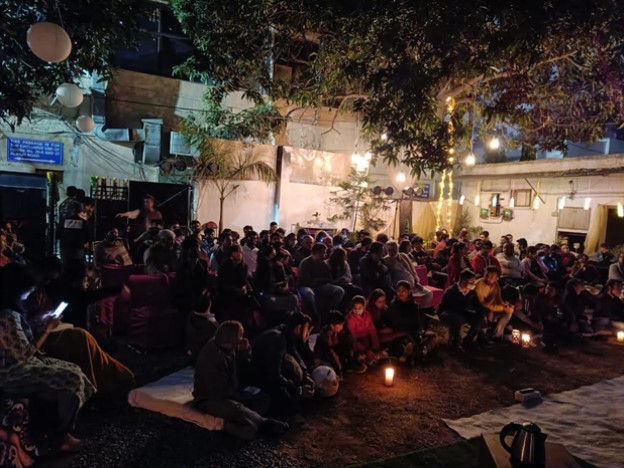
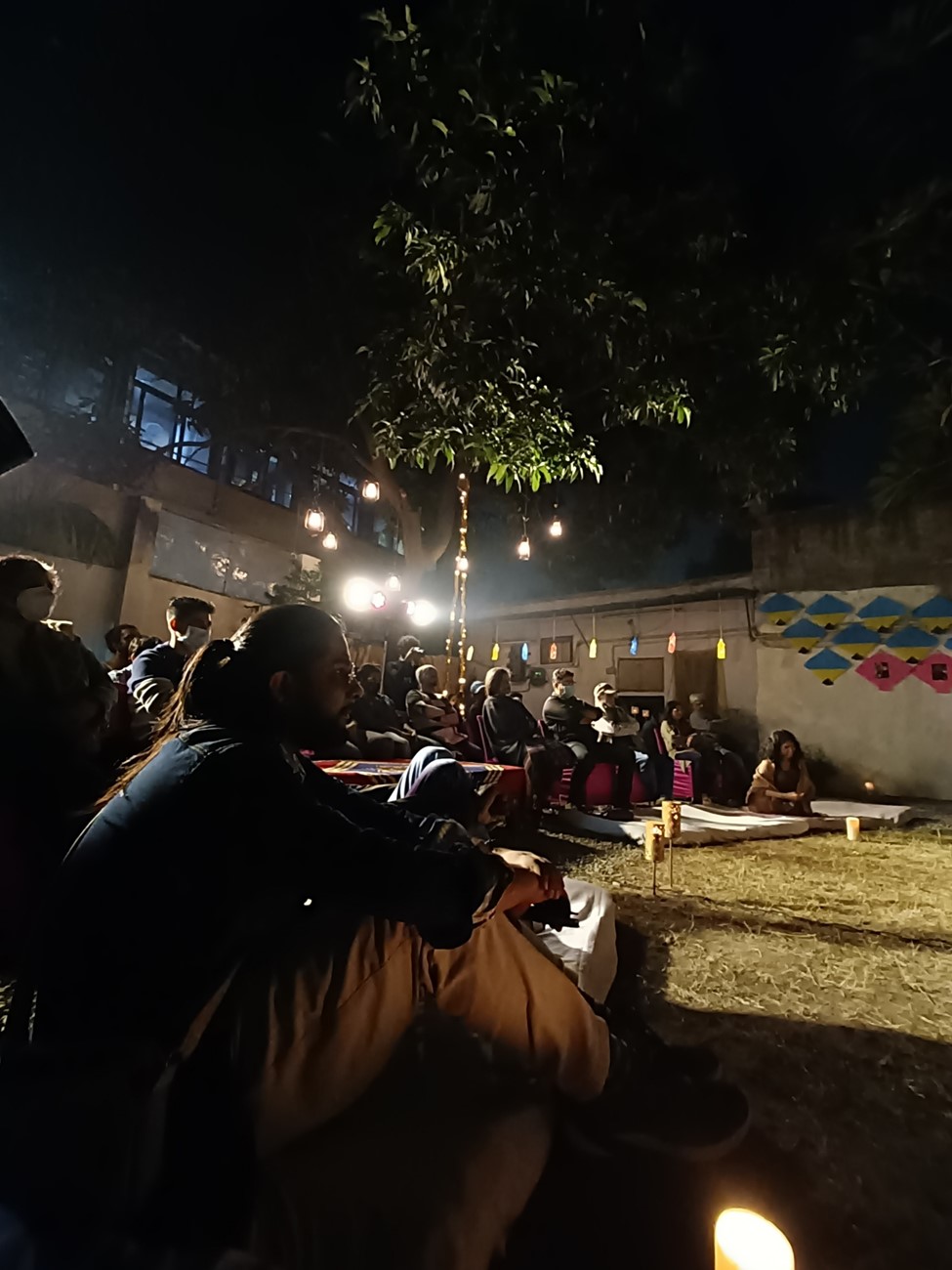
The informal performance spaces have come up because theater is becoming un-affordable because of lack of revenue and astronomical cost of auditorium spaces in Delhi. Leaving you images of some of these spaces which offer hope for survival of Amateur theatre in Delhi. More about it in the next piece by Gouri Nilakantan


Playwriting for Children

Children Performing

Its 2017, a time to retrospect in the new year and yet bask in the old. I was rummaging through my old files on the internet and came across a few plays I had written for children. It was both enlightening and amazing to see the play across the screen, I re read them renewed interest…yes they spoke…I could see the language across the stage, the actors and the magical sets with the green yellow hues across the stage and the twinkling lights. Each one of the childrens’ plays that had been written by me made sense to me and the actors. It made me wonder if they were worth publishing and whether it would be liked by others. I was just not sure, since such few plays are actually published and find their way into the market.

So essentially what makes a good play script for children? What makes it “tick”? What will create an market for the scripts to be published. This reminds me an incident that made me realize what “ not to do “ in a children’s play.

In my early years of my career as a theatre person I was teaching drama for children between the kids of 8-14 in a prestigious school in Gurgaon. The principal, a very uptight and proper person requested me to write a script on Mother’s day. I was excited since I really had not written much before it would be challenging to write something that was interesting enough to watch. I decided to write a script set in contemporary Urban India, a place like Gurgaon and then use an ancient time period as the main episode in a flashback. So I decided to show the changes in time by changes in the way we speak English. After much deliberation I decided to use slang and words like “ cool” “ dude” “ yaar” etc in my script. I thought I had created a masterpiece. Actually I was quite delighted.

I was surprised that the principal called me to her room, I was confident that she had liked the script so much she wanted to congratulate me in person. As soon as I walked in, she seemed a trifle upset and set the script before me. I was shocked to see my entire script covered in huge red circles. Cuts and cross marks all across the page. It looked like my the results of class tenth maths exam paper. Each of my contemporary words had been circled and crossed out. I was indignant..all I could say was “ why…”. She sternly told me how improper my English was and how I could no use such words. She insistent that I choose not to use any colloquial language in my script since “ it would spoil the vocabulary of the children.” I tried to reason out with her that since the play was set in urban Gurgaon the actors had to use such words. But my protests was put down by her adamant refusal to see reason.

That incident made me realize that something was wrong in the way people understood children’s scripts. They read it through the spectacles of an adult and forget that they are first and foremost plays meant for young actors. Hence plays written for children need not follow rules of grammar and conventional usage of speech. Neither they need to make sense, for example, in the musical Wizard of Oz, the girl is thrown a tornado and her whole house is lifted in it. Charlie and the Chocolate factory we see Agustus Gloop being thrown into the rubbish bin by squirrels. All they need to be is appealing to the child and the adult viewer. They need to interesting! In all my plays that I have written for kids, I have only kept the child in mind and shall continue doing so

I would like to end this by only giving the 10 golden pointers to be kept in mind while writing children’s plays.

1) Do not be afraid of using contemporary language and one can even throw in few phrases in Hindi, if the need be. Make it Hinglish if you want.

2) Children love comedy. They might not have the same taste as adults and might find things like “ farting” “ throwing up” comic. Add them to the script, they just add to the flavour. Please do not become prudish.

3) Another thing that fascinates children is the idea of mystery and surprise, you can use them too.

4) One should avoid, small sentences. We sometimes like to say a lot when we try and explain things. For eg. If a child has to say, “ ma I will back soon.” He can say, “ ma I will be back soon…please don’t die worrying don’t go out me and ringing up all the neighbours and searching for me all over the block. I will be back by 7 and that’s a promise!”

5) Do not worry about repeating yourself. For eg. Son says, “fine”. It can be; son says, “ fine ma…ma fine…are you listening FINE!”

6) Do keep it in mind that adults will also watch your show, so you can throw punches at them which might make them laugh. For eg. Son: Ma, why do all mothers have to say that you must eat dal, roti chawal…why can’t they say we will make healthy home made pizzas for dinner tonite! OK I DONT MIND EATING A DOUBLE CHEESE PIZZA WITH BROCOLLI TOPPING!!!

7) Don’t be eager to finish the script in 3 pages, any good script should be at least 10 pages long, 12 font roman single spaced.

8) Dont forget minor characters…please don’t make children into trees and make them wave their hands in the air doing nothing, make it interesting like a “ old white haired talking tree” or a “ saucy sarcastic cactus”.

9) Do add a song or a jungle or some silly rhymes they make the script more readable and watchable.

10) Last but not the least, enjoy the task…and forget daunting principals…goodluck!!!


Folk Theatre of India: Bhand Pather

Bhand Pather is the traditional theatre that is enacted in the Kashmir Valley. Historically Bhand Pather, represented the secular fabric of the valley with both the Muslims and the Pandits being a part of the performances. Post-1990, due to all the upheaval in the Kashmiri social structure Bhand Pather has had a significant impact for it stood as an emblem of peace, harmony and brotherhood. Since then there has been a tinge of decrease in the glory and the brilliance of the Bhand Pather.

The word ‘Bhand’ means the traditional and the age-old folklore entertainers from India, Nepal, Pakistan. Historians are of the opinion, that the Bhands entered the Kashmir Valley from Persia due to the onset of Muslim royal courts in India around the 14th Century. Bhand Pather is etymologically derived from two Sanskrit language words “Bhana”, which is a drama of satire and is sourced on the Natyashastra by Bharata, and “Pather” which means a character in a play.

The folk theatre is an amalgamation and a unique striking blend of singing, acting and storytelling. Farce is the centric component of this art form which is complemented by the satirical and the humorous Pathers or storylines.

The abode of Bhands in modern-day Kashmir is predominantly in Gondpora, Shaangus and Muhipora of the Anantnag district. They are also found in some other places like Kokernag, Frisal, Qayamooh.

Bhand Pather is considered as an ancestral endowment, a knowledge a skill that is passed down the generation as legacy and with the will to keep the theatre form alive. The Kashmiri societal fabric is the central theme of all the plays and is at the very core of these performances. The nature of the theatre asks the performance to be lively, energetic and high interactive. The play performances are designed such that they are best enjoyed in open spaces such as under the shades of lofty Chinars, open compounds, in weddings with the aim to invoke satire, humour and bring a reflection to the society. A conscious effort has been made to ensure that plays do not deal with tragic subjects.

The form had thrived and grown manifolds during the peaceful times in the valley. However, with the rise of anti-societal elements, the art form has given the theatre form a huge setback. Society must progress towards peace and let the lost theatre form regain its formal glory.

Independent Project by Abhinav Sharma

Guide ⇒ Prof. Manohar Khushalani

References :

  1. The Other Kashmir Problem
  2. ‘REVISITING BHAND PATHER’


Natsamrat NatyaUtsav Schedule March 2022

Natsamrat Natyautsav Season 2022

During the six-days there will be participation from ten different directors on one platform. The directors are: Chandershekhar Sharma, Vishaw Deepak Trikha from Rohtak, Rajesh Tiwari, Ashraf Ali, Varun Sharma, Sunil Chauhan and Shyam Kumar and the plays are ‘Lajwanti’ , ‘Gadhe Ki Barat’ , ‘Kambakht Ishq’, ‘Jaanch Padtal’ , ‘Charandas Chor’ ,‘Aadhe Adhure’ ‘Digdarshak’ , ‘Shikasta Booton Ke Darmiyan’ ‘Chuhal’ & ‘Ek Ruka Hua Faisla’.


19th NATSAMRAT NATYA UTSAV and 14th NATSAMRAT THEATRE AWARD opens 11th March

Over Ten Theatre Groups will participate in the theatre festival

NATSAMRAT Natya Utsav has now come of age. Oscar Wilde once said,

“I regard theatre as the greatest of all art forms, the most immediate way in which a human being can share with another the sense of what it is to be a human being”.

If you agree, head to a fun fest that is all set to salute the spirit of Indian Theatre, Organized by Natsamrat Theatre, the 19th Natsamrat Natya Utsav which is all set at comedy, romance and tragedy-emotions that are key to any well-lived life at Narenjayan Studio Auditorium, 53, Bharati Artist Colony, Vikas Marg, New Delhi-110001.

Audience at the Awards
Always a jam-packed Auditorium at the performances and the Awards

Natsamrat has been at the forefront of Capital’s amateur theatre movement for the last 24 years, presenting entertaining and socially conscious theatre, participating in the prestigious theatre festivals and organizing every year theatre festival featuring work of leading theatre directors. Under the inspiration guidance of its founding director Shyam Kumar, a seasoned director and actor, Natsamrat has instituted awards which are given away every year to theatre practitioners –
directot, actor (male and female), playwright, backstage performer, critic, lifetime achievement,
theatre promoter – of eminence.

During the six-days we will have participation from ten different directors on one platform. The directors are:
Chandershekhar Sharma, Vishaw Deepak Trikha from Rohtak, Rajesh Tiwari, Ashraf Ali, Varun Sharma, Sunil Chauhan and Shyam Kumar and the plays are ‘Lajwanti’ on 11th March at 3:30 pm & ‘Gadhe Ki Barat’ at 6:30 pm, ‘Kambakht Ishq’ is on 12th March at 6:30 pm, ‘Jaanch Padtal’ is on 13th March, at 6:30 pm, ‘Charandas Chor’ will be performed on 14th March at 3:30 pm & ‘Aadhe Adhure’ at 6:30 pm, ‘Digdarshak’ on 15th March at 3:30 pm and ‘Shikasta Booton Ke Darmiyan’ at 6:30 pm and on 16th March ‘Chuhal’ at 3:30 pm & ‘Ek Ruka Hua Faisla’ at 6:30 pm.

The event will also witness the 14th Natsamrat Theatre Award in eight categories – Best Writer, Best Director, Best Actor, Best Actress, Best in Back-stage, Best Critics, Lifetime Achievement Award and Best Theatre Promoter for those who have contributed significantly to the theatre. The award committee is consisted of award-winning playwright D.P.Sinha, Writer & Critic Jaidev Taneja, Writer & Critic Diwan Singh Bajeli, Award-winning light designer R.K.Dhingra and Writer & Director J.P.Singh.. at Muktadhara Auditorim, Banga Sanskritik Bhawan, 18-19, Bhai Vir Singh Marg, Gole Market, New Delhi-110001.


Symbolism and Stanislavsky

Powered By EmbedPress

According to the Merriam Webster dictionary, Symbolism is defined as- the art or practice of using symbols especially by investing things with a symbolic meaning or by expressing the invisible or intangible by means of visible or sensuous representations: such as
a: artistic imitation or invention that is a method of revealing or suggesting immaterial, ideal, or
otherwise intangible truth or states.

b: the use of conventional or traditional signs in the representation of divine beings and spirits.
However, Symbolism signified something much deeper than its modern counterpart, for the
French, The Russians, and the Belgians in the 19th century. Symbolism was an art movement
of French, Russian and Belgian origin in poetry and other arts seeking to represent absolute
truths symbolically through language and metaphorical images.

Symbolism was a reaction in favor of spirituality, imagination, and dreams. symbolism originated
in the revolt of certain French poets against the rigid conventions governing both technique and
theme in traditional French poetry, as evidenced in the precise description of Parnassian poetry.
The Symbolists wished to liberate poetry from its expository functions and its formalized oratory
in order to describe instead the fleeting, immediate sensations of man’s inner life and
experience. They attempted to evoke the ineffable intuitions and sense impressions of man’s
inner life and to communicate the underlying mystery of existence through free and highly
personal use of metaphors and images that, though lacking in precise meaning, would
nevertheless convey the state of the poet’s mind and hint at the “dark and confused unity” of
inexpressible reality. Some writers, such as Joris-Karl Huysmans, began as naturalists before
becoming symbolists; for Huysmans, this change represented his increasing interest in religion
and spirituality. Certain of the characteristic subjects of the Decadents represent naturalist
interest in sexuality and taboo topics. Still, in their case, this was mixed with Byronic
romanticism and the world-weariness characteristic of the fin de siècle period.

Such masterpieces as Verlaine’s Romances sans paroles (1874) and Mallarmé’s L’Après-midi
d’un faune (1876) sparked a growing interest in the nascent innovations of progressive French
poets. The Symbolist manifesto itself was published by Jean Moréas in Le Figaro on September
18, 1886; in it, he attacked the descriptive tendencies of Realist theatre, Naturalistic novels, and
Parnassian poetry. He also proposed replacing the term décadent, which was used to describe
Baudelaire and others, with the terms symboliste and symbolisme. Many little Symbolist reviews
and magazines sprang up in the late 1880s, their authors freely participating in the
controversies generated by the attacks of hostile critics on the movement. Mallarmé became the
leader of the Symbolists, and his Divagations (1897) remains the most valuable statement of the
movement’s aesthetics. In their efforts to escape rigid metrical patterns and to achieve freer
poetic rhythms, many Symbolist poets resorted to the composition of prose poems and the use
of vers libre (free verse), which has now become a fundamental form of contemporary poetry.
The Symbolist movement in poetry reached its peak around 1890 and began to enter a precipitous decline in popularity about 1900. Symbolist works had a strong and lasting influence
on much British and American literature in the 20th century, however. Their experimental
techniques greatly enriched the technical repertoire of modern poetry, and Symbolist theories
bore fruit both in the poetry of W.B. Yeats and T.S. Eliot and in the modern novel as represented
by James Joyce and Virginia Woolf, in which word harmonies and patterns of images often take
preeminence over the narrative.

Symbolist painters favoured works based on fantasy and the imagination. The Symbolist
position in painting was authoritatively defined by the young critic Albert Aurier, an enthusiastic
admirer of Paul Gauguin, in an article in the Mercure de France (1891). He elaborated on
Moréas’s contention that the purpose of art “is to clothe the idea in sensuous form” and stressed
the subjective, symbolical, and decorative functions of an art that would give visual expression
to the inner life. Symbolist painters turned to the mystical and even the occult in an attempt to
evoke subjective states of mind by visual forms.

Dramatists also took their lead from the French Symbolist poets, especially from Mallarmé. As
drama critic for La Dernière Mode during the 1870s, Mallarmé opposed the dominant Realist
theatre and called for a poetic theatre that would evoke the hidden mystery of man and the
universe. Drama, for Mallarmé, should be a sacred rite in which the poet-dramatist revealed the
correspondences between the visible and invisible worlds through the suggestive power of his
poetic language. For the Symbolist playwright, the deeper truths of existence, known
instinctively or intuitively, could not be directly expressed but only indirectly revealed through
symbol, myth, and mood. The principal Symbolist playwrights were Maurice Maeterlinck in
Belgium and Auguste Villiers de L’Isle-Adam and Paul Claudel in France. Also influenced by
Symbolist beliefs were the Swedish playwright August Strindberg and the Irish poet and
dramatist W.B. Yeats.

In 1904, Stanislavski finally acted on a suggestion made by Chekhov two years earlier that he
stages several one-act plays by Maurice Maeterlinck, the Belgian Symbolist. Despite his
enthusiasm, however, Stanislavski struggled to realize a theatrical approach to static, lyrical
dramas. When the triple bill consisting of The Blind, Intruder, and Interior opened on 15 October,
the experiment has deemed a failure. Meyerhold, prompted by Stanislavski’s positive response
to his new ideas about Symbolist theatre, proposed that they form a “theatre studio” (a term
which he invented) that would function as “a laboratory for the experiments of more or less
experienced actors.” The Theatre-Studio aimed to develop Meyerhold’s aesthetic ideas into new
theatrical forms that would return the MAT to the forefront of the avant-garde and Stanislavski’s
socially conscious ideas for a network of “people’s theatres” that would reform Russian
theatrical culture as a whole. Central to Meyerhold’s approach was the use of improvisation to
develop the performances.

When the studio presented a work-in-progress, Stanislavski was encouraged; when performed
in a fully equipped theatre in Moscow, however, it was regarded as a failure and the studio
folded. Reflecting in 1908 on the Theatre-Studio’s demise, Stanislavski wrote that “our theatre
found its future among its ruins.” Nemirovich disapproved of what he described as the malign
influence of Meyerhold on Stanislavski’s work at this time.