An Identity for Kumar Gandharva
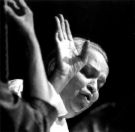
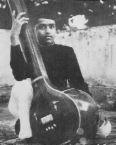 Kumar Gandharva (L) In Full Bloom (R) Younger Day
This paper is an attempt to trace two aspects of creative artists: ‘Bildungsroman’ (novel of formation) and ‘Künstlerroman’ (novel of the artist). The subject of the former is the development of the protagonist’s mind and character, in the passage from childhood through varied experiences- and often through spiritual crisis-into maturity, which usually involves recognition of one’s identity and role in the world. The latter, the ‘artist novel’ represents the growth of an artist from childhood into the stage of maturity that signalizes the recognition of the protagonist’s artistic destiny and mastery of an artistic craft.
Generations of Indians, for hundreds of years, have grown up singing Kabir, from oral traditions to classical traditions, from rustic village mandalis to sounds polished and honed through years of riyaaz and sadhana. Among the classical sounds one of the most prominent and far reaching voices is that of Pandit Kumar Gandharva (KG) (1924-1992) a voice both rich in its classical understanding of ragas, a voice imbued with the meaning of the text it attempts to deliver, and a voice capable of creating mystery and a reverence about the depth and colossus of the literature it has set out to explore. This paper tries to trace the sojourn of Shivaputra Komkali to the iconic Kumar Gandharva: the crisis of identity and the development of the artist from the prosaic to the poetic, from the mundane to the spiritual.
————————
At the outset it may be noted that the present attempt is not an exercise in voice analysis as much as to understand why is it that KG’s voice stands out on the firmament of Indian music in its rendition of Kabir, while numerous others sing the poet saint, equally well, if not better? Why is it that generations of people seem touched to their inner core by his singing more than that of any other musician of the tradition (of classical music) or training? What is it, that makes Kumar Gandharva a mystery and an enigma that reaches a peak during his Kabir bhajans?
The above concerns are explored on the basis of observation and logical reasoning. It relies on the observations of some people who had learnt with Kumarji himself, reading about him, working on Kabir in my own musical journey and interacting with a number of people who associated with Kabir’s thought and philosophy and KG, people who had heard KG in person, people who learnt his music with his students, critics and admirers, his own students and followers. KG is an enigma that not only haunts but also continues to grow right in front of us. “Time”, according to Van der Post (1975), “has a knack of putting the truly great…well ahead of us, rather than in the past darkening so fast behind.” KG today looms larger on the scene of the human spirit than he did in his own lifetime.
Kumarji belongs to the class of artists whose echoes linger on in the aural memories of millions all over India, a formidable legacy for anyone to carry forward and a giant task to comprehend. Much like Kabir, he grew up in a manner never experienced before him; he was a man detached from his times, the institutions of his times and the sensibilities attached to those institutional structures. If Kabir was a weaver who simply and irreverently composed verses that shook the frame of all tradition and authority; KG equally powerfully shook the tradition of music and stepped aside from the main current of being ‘certified’ by any one gharana( school of music). Given his extraordinary ability to sing any and all of them with equal facility- the choice to not affiliate him to any one gharana was a great act of rebellion, an act unheard of in his time, a radical breakaway from the prevalent order and injecting a new level of thought into the entire gamut of Hindustani music’s exploratory process.
“Sunta hai guru gyani, gagan mein awaaj ho rahi jhini jhini…” (meaning, the one anointed by the guru, hears…hears an inaudible, imperceptible cosmic sound) is a very popular bhajan of Kabir sung by KG. This song alone can be an initiation for one into the world of both Kabir and Kumarji and numerous listeners venture unsuspectingly near KG and Kabir, coming with the quest for enquiry aflame in their minds about the nature of everything and perhaps the most significant being WHO AM I? Those questions of philosophy, which have haunted the human mind eternally, assume a new light when put forth by Kabir and when KG spoke in that voice, says Raghava Menon (2001), “The Kabir Bhajans on the other hand are laden with the monochrome of timelessness.”
How did KG become what he became is a question that one wishes to examine in this piece- the voice, the identity, the expression, the intensity, the depth and so on. Though Kumarji is a subject worthy of many studies that have been carried out and no doubt will be carried out in future too, I will restrict this presentation to the psychological aspects alone and the process of ‘individuation’ within the theoretical framework developed by C.G. Jung.
The Child: A Crisis in Identity
It is very well known about Kumar ji that he was a child prodigy. A prodigy is always a challenge for society to understand, for s/he confuses everyone with his/her prowess and ability. It seems uncanny and is given various connotations depending upon the arena where the prodigy has appeared. In the field of music prodigies are not only found once every few years, their method also remains similar. Society down the ages has largely been based on conformity; and individuality is frowned upon for it is perceived as a threat to the prevailing institutions. In such a situation reports Menon(2001),
Kumar was born with a supernatural memory…He could…reproduce a three-minute record of any of the well-established musicians of the day with a fidelity that made his singing of them seem like musical photographs. Considering the number of years that these musicians had spent in mastering their art, this eerie facility of a seven-year-old lad seemed miraculous…People who had no interest nor understanding of music came in hordes to hear him and look upon him…(p.40)
Literature abounds about KG telling us about his genius and the fact that how while he was just a little boy he had become the cynosure of all eyes, a crowd puller and a musician par excellence. “But what surprised Kumar …was not his ability to sing but the response he had on those who heard him. For that he was not prepared. All he thought he was doing was…he sang it (a song that he heard) the best way he could”(Menon, 2001, p. 49).
When a small boy of seven comes under public gaze what could be the possible effect on the developing ego of the child? What would he have thought about himself and about his admirers? How would he have dealt with all the adulation or to that extent not only him, how do all ‘celebrity’ children handle an invasion into their lives by effusive adults who they do not understand?
From the viewpoint of the child whose developing concept of self is subject to the kind of exposure that KG was receiving at that point in his life and he was being celebrated for his singing, his ‘voice’ was paradoxically was not his own- he was an accurate imitator, an excellent mimic and the world was adulating his ability to mimic; not necessarily his musicianship. Like a small boat that is tossed in the giant sea of careless waves Kumar’s ego had been laid bare for the world to examine, study, wonder about and comment upon. A child was in the ‘limelight’ without knowing why, or assimilating in the true sense the reason for being there. Psychologically, all children who are in the ‘public eye’ undergo this phenomenon of ‘premature exposure’ without having the ego strength to deal with the impact of it and someday face the possibility of a neurosis or hopelessness.
When the ego is sufficiently developed it can handle success and failure, criticism and appreciation with a fair degree of equanimity. But a child imitating an adult, and being adulated for that ability will sooner or later only come to feel confused about his/her own identity*.
*Another famous and celebrated artist currently on the world music scene is Michael Jackson, also considered a child prodigy. Much later as the whole world now witnesses a lot of his childhood pain surfaces in the form of abnormalities which showed up in adult life, to the confusion and surprise of the world. If we extend the analysis about the lack of ego strength in the child, whose concept of self is not well defined it appears to be true in this case too.
The Personality
Author, voice instructor, and singer Carolyn Sloan (1999), reflecting on the process of self-discovery through the voice says,
“I have learned that singing is about self-examination and observation, though not self-criticism…. Along with courage and ability to question, experiment, and observe, a singer also must have an unfailing persistence and desire to solve what may seem to be unsolvable mysteries…. A singer must become become his or her own ally, searching for clues and solving these mysteries for him or herself. A singer needs to become a detective…. We must balance our need to control with a necessity to let go so our true voices can surface. We do not create the voice. The voice is and creates us. It teaches us that we must be open to being stimulated and to experiencing our lives without inhibition. As a singer, it is imperative to be a spiritual master (p.5).”
A voice is like an identity. Every human being needs a ‘voice’. In effect voice is the expression of the individuality of a person. It is not necessarily a speaking voice alone, it is an expression of the soul of the individual- it can be a ‘voice’ that expresses itself through speech, through writing, painting, gardening, cooking, cleaning, teaching, farming, or any other vocation. A ‘voice’ is not limited to the function of the larynx alone. It is a multifaceted, multi-hued, aesthetic expression of the inner life of a person. As many roles a person perform in life or society, at least that many are the visible expressions of his/her individuality or ‘voices’.
Voice is the fundamental aspect of a singer. When a singer is appreciated for excellent rendition of another’s singing, in a sensitive individual it may produce confusion about who actually is being celebrated- the original voice or the cover-version. In such a state, it becomes urgent and necessary for the child to search himself out, for it is evident that he is not being celebrated for himself but because he can be somebody else. This search for identity, when it is felt becomes the struggle.
In discussing about primal therapy, Arthur Janov (1970) talks about development from the point of view of a child, “Struggle is what keeps a child from feeling his hopelessness. It lies in being the performer…Instead of being himself he struggles to become another version of himself. Sooner or later the child comes to believe that this version is the real him…. It is that moment of icy, cosmic loneliness, the bitterest of all epiphanies. It is the time when he begins to discover that he is not loved for what he is and will not be (p. 29).” 7
KG was not known to be neurotic as a child or as an adult but one is wont to believe that precocity had its internal roots in a troubled spirit. Raghava Menon (2001) sheds light on this aspect too, “He merely puzzled over these issues inwardly…merely suffered quietly…. The problem was what to do, (p.64)…”
So, a search for his own inner expression would have begun long ago in the soul of the child. It would no longer be enough to merely ape another great artist, because the inward restlessness demanded an original release, an outlet- not merely a borrowed identity. Kumar Gandharva had set out on the path of “ ‘individuation’- a process referred to by Swiss psychologist C.G.Jung as a search for self; an expression of that biological process by which every living thing becomes what it is destined to become from the beginning” (Gandhi, 2001, p. 20).
At a later point in his life when he came in touch with Anjani Bai Malpekar, who took him into the realm of the science of sound, or Nada Yoga, did he for the first time have a real glimpse of what he had sought all along? Before that, he was seeking without knowing. The inability to ask anyone or ask the exact questions for want of a facilitating environment (both then and now) produced suffering. These experiences of pain, the beginning of the individuation is in fact transformative experiences that may be viewed as “… the dark and bitter night of the soul…” shares Raghava Menon (2001, p64). And interestingly, this is the view of transpersonal psychology too.
Experience of change, transformation or transition is in fact a point of crisis in the life of an individual. How the human encounters and deals with the process, assimilates the change and transforms himself and his destiny is the essence of transpersonal experiences. Stanislav Grof and Cristina Grof (1990), the former being among the pioneering figures in the transpersonal psychology movement say, “One can also encounter experiences of fear, loneliness, insanity, or death during transpersonal sequences originating from collective or universal domains. The transpersonal realms contain both light and dark elements, and both the ‘positive’ and the ‘negative’ can inspire fear…However, the fact that fear sometimes arises when an individual moves into the realms of light and beauty is somewhat perplexing” (p. 48)
When the artist began to question the environment around him it became imperative for him to understand who he was himself, what was the singing that he needed to do and what was the way ahead of him? Kumar needed to find his own face and distinguish it from the numerous faces that were being mirrored within him in his day-to-day quest. His struggle became introverted and was not limited to a search for voice and identity alone; it became a quest for affiliating the soul. Even when he went to study music at the house of his guru Professor Deodhar, he remained aloof about affiliating himself to any gharana; chronicles Menon (2001) “…while there was a flexibility with respect to Kumar on the characteristics of Gharana, he was inflexible in his vision of what music should be, boundless, beyond frontiers and paradigms (p. 89).”
Kumar Gandharva was a musician first and he, had already examined the structures of the gharanas while still a child, so now the need was to find his own voice, his own identity from within the musical tapestry he had seen, studied and examined all his young days. At this point perhaps, his Guru gave him a teaching assignment “Kumar was designated to teach all those students who did not have too clear a picture of what style they wanted most to follow. In a certain sense this was a wise technique to adopt for Kumar himself was not still quite decided on what contour he himself was to give his art” (Menon, 2001, p. 89)
As yet, he had not found a way out for himself. He was troubled and occasionally happy. Troubled, because of the restlessness that gnawed at his heartstrings constantly and making him unsure where his precocity and genius were headed after all. The hero who is on the path of inner transformation has to face all his demons and fears when they come face-to-face with him. Few are moments of passing joy for an individual who cannot share the pain of his quest with anyone. But fortunate are those who do not give up in spite of the uncertainty.
Janov (1970) further elaborates on the need for authenticity, “Because we were unified human beings, the real self will constantly press to surface and make those mental connections. If there were no intrinsic need to be whole, then the real self could be put away for good; it would lie peacefully within us and never make any attempt to intrude into our behaviour. What drives neurosis is the need to be whole again, the need to be our natural selves. The unreal self is the barrier, the enemy which must finally be destroyed (p. 41).”
The unconscious in us is always pressing to express itself, mostly through dreams and fantasies, sometimes through experiences of illness too. When a young man seeks himself from all the haze that surrounds him, in some voices he finds a resonance of his own inner calling. The search had started finding results. While discussing about self-realization of the unconscious, Anthony Stevens (1982) notes that, “everything in the unconscious seeks outward manifestation, and the personality too desires to evolve out of its unconscious conditions to experience itself as a whole…It is not I who create myself, rather I who happen to myself (p. 140).”
A Break from Tradition
From the child who apes every audible sound in its environment to its nearest degree possible to becoming an artiste par excellence was a singular journey. Often in the musical tradition one is taught that the lyrics or the poetry of the work is subservient to the mood of the raga. That means every ‘khayal’ or ‘bandish’ of a raga should sound like the raga from which it is born and not have a distinct identity of its own. Kumarji was among one of the few people who dared to challenge this fixity. For him every lyrical form had its own life and needed to be honored for its own sake, and not alone the sake of the raga. “This quality is one of the principal characteristics of the Kumar Gandharva Gayaki,” points out Menon (2001), further elaborating, “Kumar sang out of the Bandish and not out of the Raga. He subordinated the Raga to the Bandish, never letting the Raga take priority over the Bandish. This was a unique turnaround in the culture of the Hindustani classical musical heritage. This was the cause of the passion and intensity with which Kumar invested his performance. His Raga Vistara took on the lineaments of the Bandish on account of which the Raga has come to exist. So he showed the possibilities the Raga in that particular embodiment of the Bandish he had chosen to sing. This was the consequence of a highly developed and delicate literary grasp of the nature of the words of a language and the way they are spoken while being sung ( P. 86-87).
There is one significant point in the biography of KG, which many ascribe as the reason for maturity of his musical thought. That was a six-year long, near fatal illness that he faced, in the course of which he was forbidden from singing. The only voices that he could hear were the folk singers of his neighbouring areas. This prolonged absence from active singing was a return to the inner environs for KG, and that is where he honed his art in a new way “This is a well-understood practice and is often called Mauna Sadhana, which irrigates and fertilizes the unconscious mind of the Sadhak (Menon, 2001, p. 84)”
Though Kumar had reached heights in his musicianship early enough, this period of forced withdrawl and a near brush with death, deepened his insights into the world of the ‘swara’. Possibly this was also the time when he became more inclined towards the bhakti tradition in poetry.
Illness and Transformation
A life of seeking becomes a life of pain, questions and uncertainty. Since many do not tread this path the seeker is usually left alone to look for answers till the next person can come and point out a little of the way ahead. Illness is usually a time that leaves many a person alone with not much else except their inner reservoirs to fall back on- as it did Kumarji. It was an experience of silence, an experience of using the ear to a new end, an experience of growing from the soil of, Dewas, Malwa, “Dewas was a singing country…. The folk do not sing in the strict sense. They are telling things to each other and this speech sounds like song…. A folk tune does not have Raga, what it has are the seeds of feeling…. Lying in bed he discovered this simple truth” (Menon, 2001 P. 93).
In finding out this simple truth maybe Kumar Gandharva found himself out. And now it was a new journey that stared ahead of him-the internal journey having borne fruition but the world outside much the same. This is not an unknown phenomenon for the Grofs’ having experienced an entire gamut of transpersonal experiences share, for example, someone who returns to a familiar situation may find the culture and the individuals within it unreceptive to his or her new capacities.
The reborn hero must enter the long-forgotten atmosphere where men who are fractions imagine themselves to be complete. He has to confront society with his ego-shattering, life-redeeming elixir, and take the return blow of reasonable queries, hard resentment, and good people at a loss to comprehend. Because of the magnitude of their transformative experiences… they may also face the very real problem that the everyday world around them is often not very receptive to their newfound discoveries” (C. Grof & S. Grof, 1990, p. 214).
After having completed a long journey (though visibly in a short span of time) in classical music, inverting it within himself- moving away from the realm of ragas to the kingdom of the swara, becoming fully musically quiet, except for the aural input of the folk singers that went into him, Kumarji brought about a most extraordinary change in his life through a lateral technique of riyaaz- simply through his ear and silent practice. It was as if he fought the tuberculosis by dint of sheer willpower- a triumph of the spirit. In terms of therapy this is termed as psychoneuroimmunology- where the immune system gets an impetus from the mind to fight illness and combat the disease. Music therapy and a lot of holistic practices these days are increasingly orienting themselves towards this multimodal approach.
Poetic Underpinings of Kumar Gandharva’s Gayaki
Though bhakti singing in the form of bhajan has been practiced long before KG appeared, he seems to have established a new method in the tradition- not for him a bhajan where the facial expressions of the singers “…have to show any devotion or faith in the syrupy fashion of our inheritance”…(Menon, 2001, p. 100). Kumar Gandharva brought Kabir (and the bhajan) to life simply because of his fusion of the folk and classical forms of music with poetry. Placing the poetry into the rustic countryside ambience it had grown out of, his songs acquired a new root, never before seen in bhajan singing. One sometimes wonders what made him choose Kabir’s Nirgun bhakti as his ‘voice’ over the sagun bhakti (Not that he limited his repertoire of bhajans to Nirgun bhakti alone) As in the Nirgun tradition, the deity is a formless, divine entity, Kumarji ascribed that same formlessness to the ‘swara’. Kabir’s poetry is an ocean of spiritual philosophy.
Concluding Comments
Kumar Gandharva brings to life his words with new meanings, because for the first time a singer explores the swara in the same objectivity as the poet who utters the syllables. In other words the soul of the artist becomes the voice of the man. So there is no separation between the two identities. When one man sees within him another completely reflected, automatically the former’s poetry becomes the latter’s expression. There is a merger. “Thus does the Self accord itself recognition through that organ of consciousness-the ego- which it has given rise to. In one place Jung defines ego as a ‘relatively constant personificantion of the unconscious itself, or as the Schopenhauerian mirror in which the unconscious becomes aware of its own face” (Anthony, 1982,P.140)
In triumphing over illness, Kumarji rewrote the script of his life. He used his own music to heal himself out of a near death situation and gave succour to innumerable others after that. The myth of the wounded healer came alive once again for the world. Thus Kumarji, demonstrated in his own lifetime the power of healing that music offers, opened out new avenues. Possibly without realizing he became one of the most eminent case studies for music therapy in India, rendering both the lyrical content of Kabir to its full glory and his own musical improvisation to carve out a hitherto unknown, unforeseen, uncharted path for all those who dare to follow; in the process literally and figuratively becoming the ‘voice’ of Kabir for the times we live in.
References
Gandhy, Rashna Imhasly (2001). The psychology of love: Wisdom of Indian mythology. New Delhi: Roli Books.Grof, Cristina & Grof, Stanislav, (1990). The stormy search for the self-A guide to personal growth through transformational crisis. New York: Penguin.Janov, Arthur (1970). The primal scream, primal therapy: The cure for neurosis. London: Abacus.Menon, Raghava R. (2001). The musical journey of Kumar Gandharva. New Delhi: Vision Books. Sloan, Carolyn (1999). Finding your voice. New York: Hyperion.Stevens, Anthony (1982). Archetyp: A natural history of the self. London: Routledge.
Van der Post, Laurens (1975). Jung and the story of our time. New York: Vintage Books.