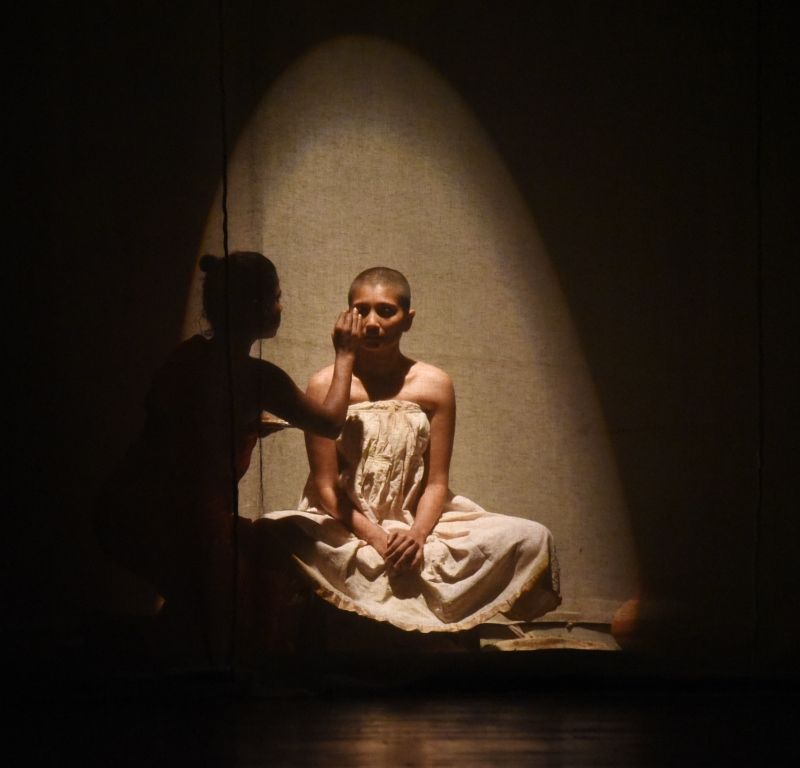
Jashnebachpan : Dry Leaf

Dry Leaf
Director: Agung Gunawan
Group: Sampang Agung Centre for Performing Arts (SACPA), Indonesia
Language: Javanese
Duration: 1 hr

About the Group
Sampang Agung Centre for Performing Arts (SACPA) is located at Pelem village in East Java (Indonesia). The centre strives for the preservation of Javanese cultural heritage and traditions, and its members are committed to further exploration on new artistic ways of expression submerged within such heritage and also the contemporary arts. SACPA’s performers (known as Breathing Forest Dance Theatre) have been recognised by the unique movements in the choreography of their performances inspired by the day to day movements of the village and the interactions of humans, animals, spirits and nature. ‘Whiffling of the Forest Gamelan Ensemble’ is a music group formed in 2015 at SACPA. Under the direction and mentorship of the established musician and composer, Johan Adiyatma Baktiar, the ensemble offers distinctive and theatrical Javanese gamelan based music.

About the Play
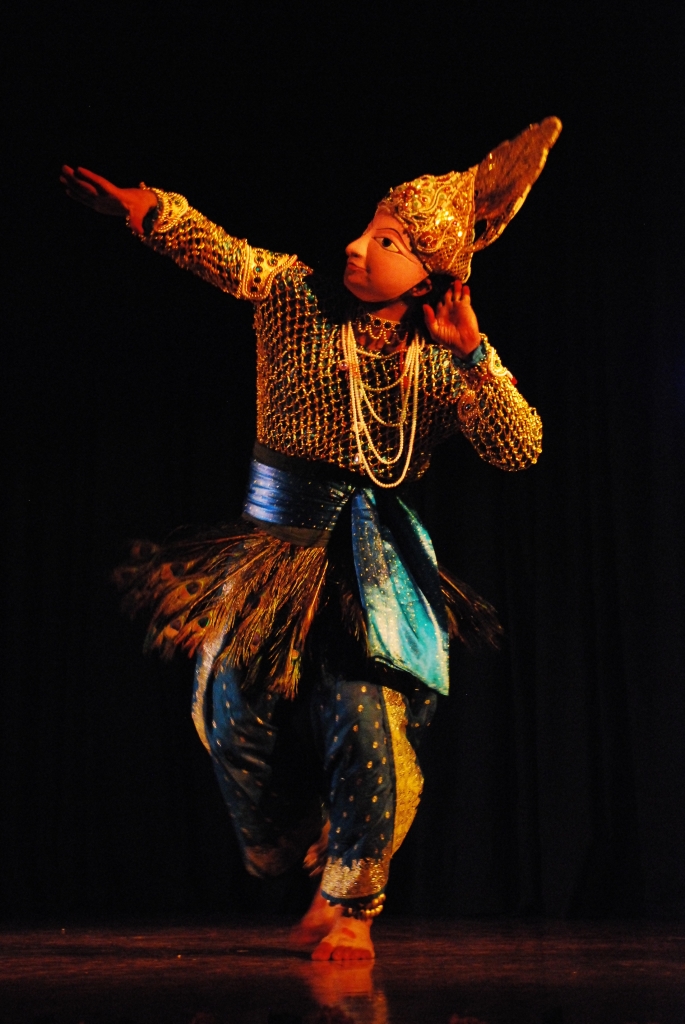
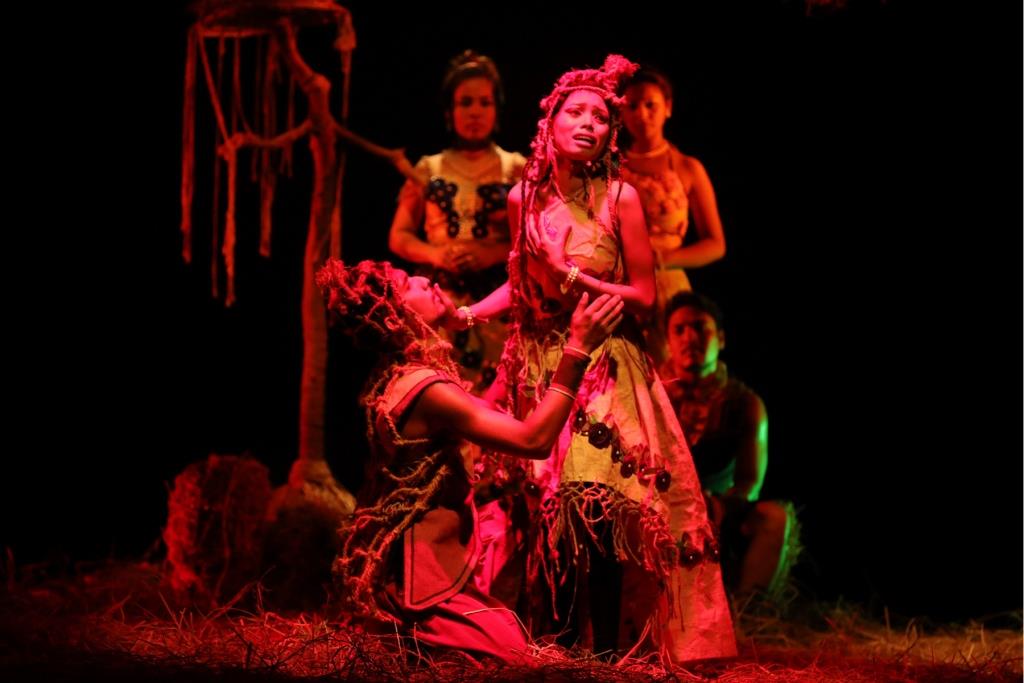
A fallen leaf never hates the wind. It falls itself as it does. Never against anything, there is only sincere acceptance and surrender. Wisdom offered by the harmony of the four elements of nature – Fire, Wind, Water, and Earth – shapes the expressions and characters in the body. Nature as a human being sometimes becomes the axis of problems, while nature quietly and permanently creates peace. Lessons from the fallen leaf to understand peace – whenever it should fall it falls, whatever makes it fall, it lets it do so, and wherever it takes off, the leaf will not complain and accept what God gives.

Director
Born in 1971, Agung Gunawan is a renowned and established dancer, artistic director, choreographer and vocalist. Since the beginning of his career in 2006 as an independent solo dancer and choreographer, he has worked with many multi-disciplinary artists, in companies and projects both inside and outside Indonesia.
He was a founder and artistic director of the Arts Island Festival from 2010 to 2014, and of Pelem Festival since 2016. His motivation to create the festivals was a manifestation of his conviction that “If they are not accessible to the poor, the arts are neither innovative nor revolutionary”. This belief has been the pillar of his daily practice. Currently, he is based in the rural village in East Java, as a co-director of SACPA, and a choreographer of ‘Breathing Forest Dance Theatre’ while continuously touring numerous countries for performances and projects.

Director’s Note
After having undergone years of intensive training and performances as a Yogyakarta classical court dancer in Indonesia, I moved to the country side in East Java, named Pelem village in 2008. At first, I felt that traditional dance and theatre performance in the village had not been refined and was edgy. However, it struck me that their dance was full of energy, intensity and power of human creativity of arts. I sat in the forest for hours, searching for the meaning of the relationship between art and life, myself and nature, and nature and local people – now our people. A leaf is such a symbolic and artistic metaphor for me – it grows, and turns brown, and falls as it is. It is such a simple, peaceful life which casts a question to me. What is it behind the last moment of the leaf, not complaining and in total surrender? How does this relate to us, human beings?

Cast & Credits
On Stage
Performers (Breathing Forest Dance Theatre)
Anes Ayu Pratiwik
Ariesta Maharani
May Widhiyastuti
Yasinta Wenda Mulasari
Fitria Dania Julianti
Umi Royani
Very Muharyanti
Windiasari
Musicians (Whiffling of the Forest Gamelan Ensemble)
Anang Setiawan
Aryasa Yusuf Pratama
Deasylina da Ary
Diana Nur Hayati
Johan Adiyatma Baktiar
Anik Puji Rahayu
Agung Gunawan

Off Stage
Operation Manager Takashi Takiguchi
Production Assistant Kien Fei Lee

Design & Direction Agung Gunawan

Contacts
Sampang Agung Centre for Performing Arts (SACPA)
Jln. Punung-Gondosari Km 6,5
Krajan 1, Pelem, Pringkuku, Pacitan, Jawa Timur, Indonesia, 63552
M: +61 478 634 052 (English)
M: +62 823 28282801 (Indonesian)
E: info@takashitakiguchi.com
W: https://sacpa-pelem.com
Media/Enquiry: Takashi Takiguchi (ImPermanence Productions)


Jashnebachpan: Celeberating Childhood


Nine-day little actor’s theatre festival Jashnebachpan begins

  • Around 500 artists from across the globe will be a part of the fest.
  • Children from Sri Lanka and Indonesia will showcase their art form
  • 10 directors are making debut this time at Jashnebachpan
  • Seminar will be held to discuss the importance of theatre in children 

New Delhi, November 17, 2018: With a colourful representation of the various folk dance and music from the diverse states of India including Assam, Rajasthan, Punjab and Manipur under the guidance of Dr. Laique Hussain, National School of Drama today inaugurated the much-awaited biannual theatre festival for children, Jasnebachpan, at the lush green lawns of the campus amid much fanfare.

The grand opening ceremony of the 14th edition of the theatre carnival saw the presence of Shri Arun Goel, Secretary, Ministry of Culture and eminent theatre personality-director Shri Rudraprasad Sengupta. Also present were Dr Arjun Deo Charan, Acting Chairman NSD, Suresh Sharma, director-in-charge, NSD, and Abdul latif Khatana, Chief TIE Co.

Shri Arun Goel said festivals like Jashnebachchan help them to develop their personality.

 “I congratulate the National School of Drama for organising the 14th edition of the international theatre festival for children. Besides organizing festivals for children, they also organise various short term courses like Sunday Club, which is a very good initiative. Theatre is something which is not given to us by the colonial powers, rather it is our own art form which was born in our own land and has been practiced since ages,”Arun Goel said.

 Shri Rudraprasad Sengupta, who was one of the guest of honours at the event, dedicated the recognition bestowed to him to the various theatre workers in the country.

“I am thankful to my NSD friends for honouring me. I don’t know whether I am worthy of this honour. But I am glad to receive the honour. I am accepting this honour on behalf of all the theatre workers, who probably don’t have money to give shape to their craft. Theatre is expensive and it needs money more money than any other art form because it doesn’t depend upon technology. Man power is involved in every stage,”Rudraprasad Sengupta highlighted.

 Dr Arjun Deo Charan pointed out why theatre is important in a child’s life.

“Theatre plays an important role in children’s life because it raises the observation power in a child. As plays are mostly based on the issues of our society, therefore it raises awareness among the kids and enable them to become a responsible citizen,” said Arjun Deo Charan.

Abdul Latif Khatana shared the highlights of this year’s Jashnebachpan.

“We have plays talking about various issues be it gender discrimination or parent-child relationship. We also have theatrical interpretation of Ramayana and Alice & Wonderland. This time we have three-year old play group to 133-year old play group,”he said.

Suresh Sharma said, “Ministry of Culture has allotted Rs 180 crore for the betterment of NSD. We have also proposed the formation of four new Sanskar Rang Toli and we are assured that ministry will help us in expanding theatre across the country.”

The opening ceremony act titled as Udaan was comprised of four presentations by groups — Thangata Pung Cholam (Manipur), Kalboliya (Rajasthan), Gotipua (Odisha) and Bhangra/folksong (Punjab). Even folk dances from Assam (Bihu), Sikkim (Lion Dance), Nagaland (Kabul Naga Dance) and Manipur (Stick Balance) were received with loud applause from audience.

Almost 800 underprivileged kids from various NGOs across Delhi and NCR attended and enjoyed the opening ceremony. The idea behind this initiative was to bring those children to the mainstream and inculcate enthusiasm for art and culture along with entertainment at a global platform.

Debuted in 1998, Jashnebachpan, is a venture of T.I.E Company of NSD, started in order to contribute to the growth and development of children’s theatre across the country. Post its successful stint year after year; it has now become one of the largest and most important theatre festivals in India for children. This year 23 plays will be staged in the four auditoriums – Sammukh, Abhimanch, Abhikalp and Little Theatre Group (LTG).


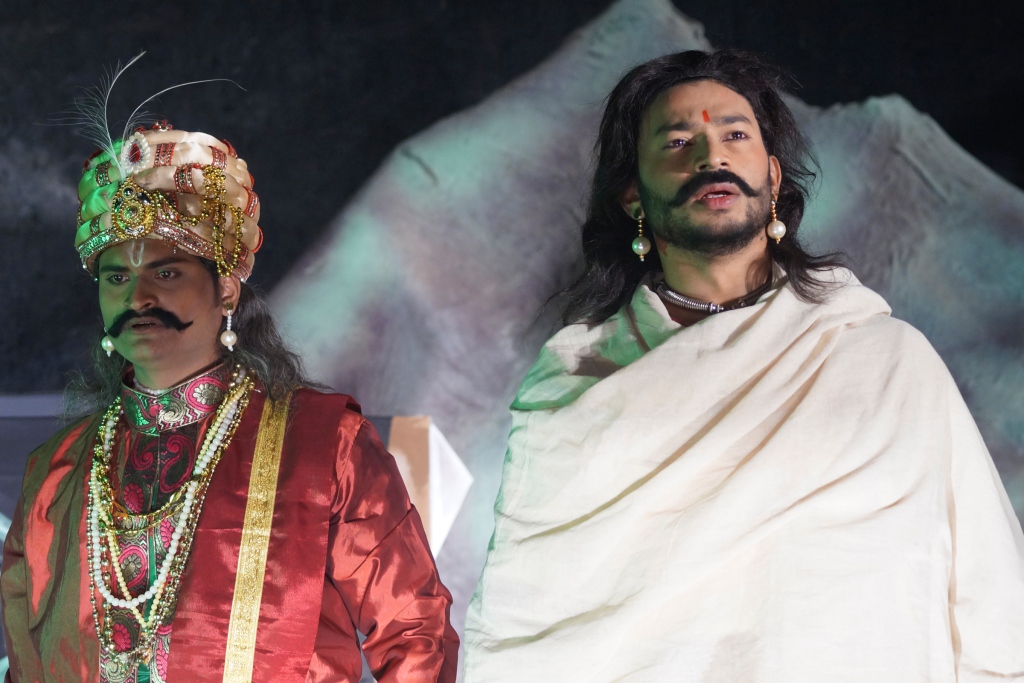
Tathagat, the play by Abhishek Majumdar

Tathagat is
A play presented by Jana Natya Manch is written and directed by Abhishek Majumdar. Music is by M.D. Pallvi

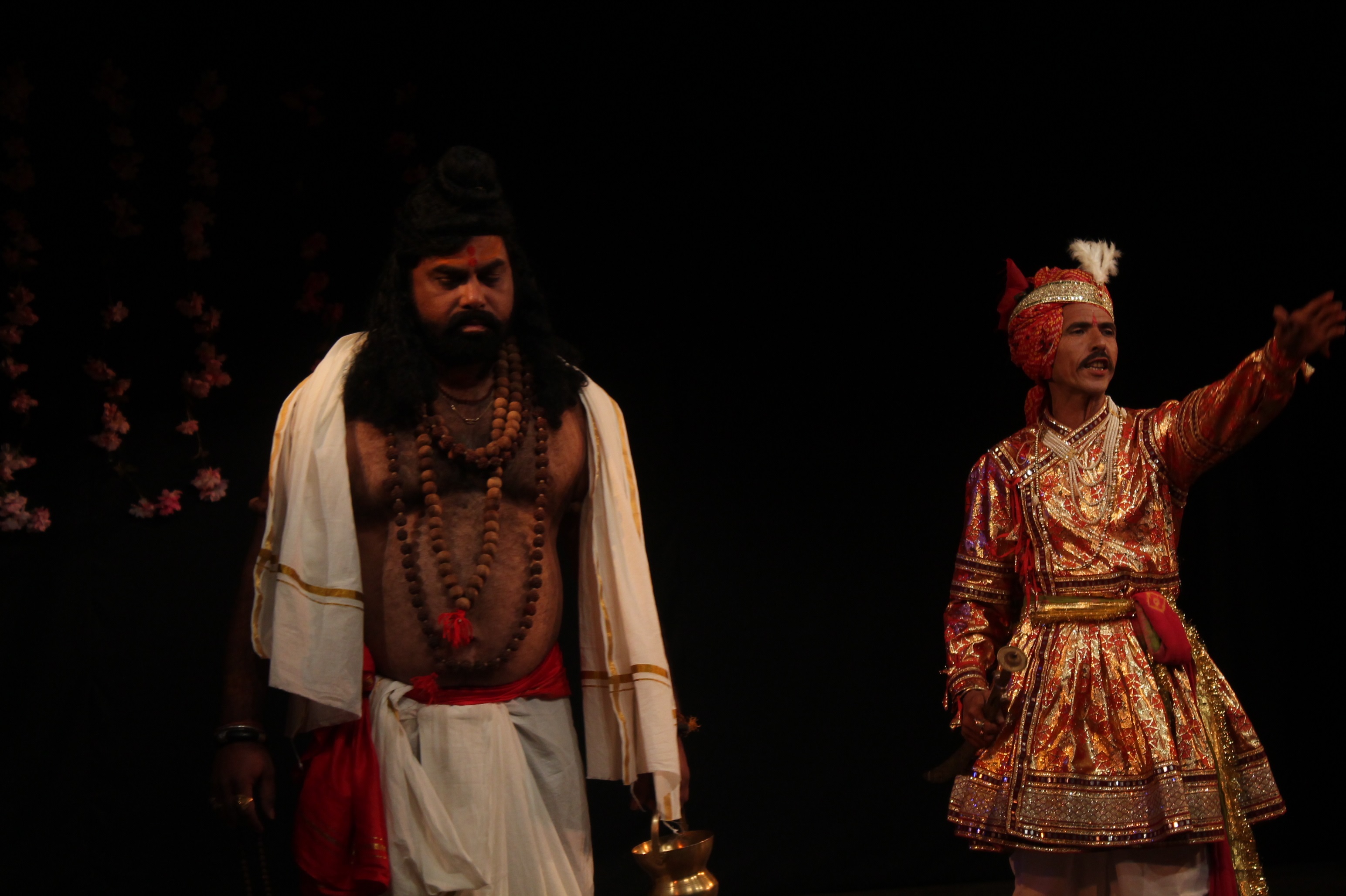
Set in an imaginary Buddhist kingdom in ancient India, Tathagat explores the ideas of caste and gender, rebellion and nationalism, freedom and courage.

Haridas, a shudra sculptor, has carved a statue of Buddha out of black stone with three missing fingers. He is sentenced to death as a traitor. On insistence of the queen, the king agrees to listen to Haridas’s plea in the court.

Expanding on the idea of tark (reason) in Buddhist philosophy, this play through the story of a vain king, a defiant queen, the rebellious sculptor, a courageous daasi, and a conniving courtier, examines the difference between a ‘traitorous’ and a ‘rebellious’ act.

Hindi, approx. 35 mins

Two shows of _Tathagat_ coming up that you can catch:
– Tuesday 14 Aug, 1 pm, AUD Kashmiri Gate Campus.
– Thursday 16 Aug, 6 pm, Sabarmati Hostel, JNU.
_Tathagat_ is Jana Natya Manch’s latest production, written and directed by Abhishek Majumdar, with music by MD Pallavi.


Weekend Drama Workshop starting 4th August’18


Nostalgia Street by Manohar Khushalani


Politicians Make Touchy Celebs by Manohar Khushalani


Lights ! Camera ! Action ! by Manohar Khushalani


NSD Hosts the 8th Theatre Olympics – India 2018

About Theatre Olympics
The Theatre Olympics was established in 1993 at Delphi, Greece. As an international theatre
festival, the Theatre Olympics presents some of the greatest theatre practitioners from
around the world, offering a platform where despite ideological, culture and language
differences, dialogue is encouraged. Since 1993, the Theatre Olympics has been held seven
times in: Japan (1999), Russia (2001), Turkey (2006), South Korea (2010), China (2014), and
Poland (2016).

17th February 2018: Imprinting her name in the global theatre map, India on this day
threw the floor open to the 8th Theatre Olympics, the largest theatre festival of the world,
being hosted for the first time in India by the National School of Drama, under the aegis of
Ministry of Culture, Government of India. Shri Venkaiah Naidu, Hon’ble Vice President of
India, along with Union Minister of State for Culture (IC) Dr. Mahesh Sharma, inaugurated
the mega event at the historic Red Fort.

“The 8 th Theatre Olympics will take Indian culture and heritage to the world and bring the
world to us. Art has the power to unite people across the globe. India believes in the culture
of Vasudhaiva Kutumbakam which means the entire universe is one, which is an integral part
of the Indian cultural and theatrical tradition,” said Vice President of India Shri Venkaiah
Naidu on the occasion

“Through the 8 th Theatre Olympics, we meet the rich theatrical tradition of India and we
encourage the articulation of a free and collective voice which will defend the value of the
theatre tradition, research, and experimentation,” said Chairman of International
Committee of Theatre Olympics, Mr. Theodoros Terzopoulos.on the occasion

The video film, prepared by students of IIIT, Delhi, shows some of the major highlights of the festival including glimpses of Directors Meet in which Theatre Directors interacted with Theatre Critics, Theatre Students, Theatre Buffs a day after the show and so many other highlights like the Food and Theatre Bazar. It captures the festive ambience of the event


Theatre Olympics: First time in India


Kartik

The Play & Director’s Note
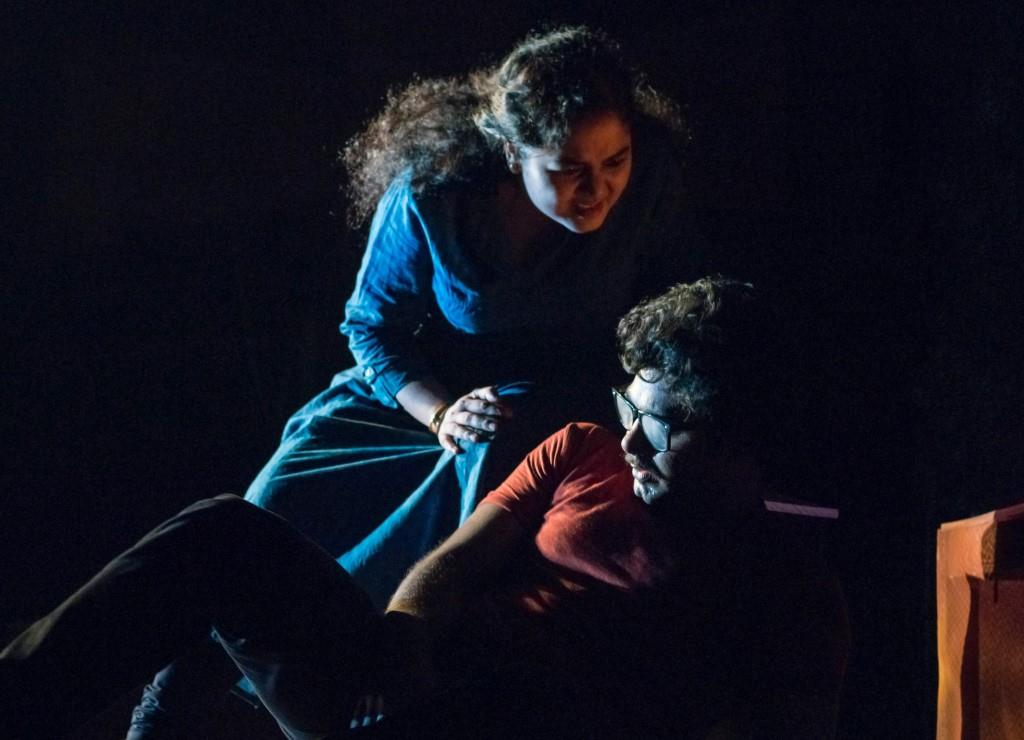
This play has a storyline that could have been based on tomorrow morning's newspaper headlines. Using the wonderful theatrical device of three actors playing the central character of Kartik, we are able to enter his fractured world. We simultaneously see him as he was before the accident that changed his life; we also see him as he is immediately after the accident, recovering in hospital, at home and in school; as well as when he is an adult. The play brings together the present, past and uture in a seamless whole. It has been a fascinating journey with the actors and my own team. We have interviewed teenagers, their parents and teachers; watched their interactions in school, home and on the metro; created improvisations; spent hours mastering the intricate choreography; enjoyed the shopping for clothes that capture today's Delhi; and worked hard at creating over 36 characters,
played by just 14 actors!

The Director
Educationist, theatre director and activist, Feisal Alkazi lives and works in New Delhi. Over the past forty years he has carved his own niche with his group, Ruchika. He has directed over 200 plays with adults in Hindi, English and Urdu. Most recently, two plays, Noor and A Quiet Desire, written by him have been produced. In addition, he has directed over 100 productions for schools all over India. Ruchika also runs a training program in theatre for children since 1997. Feisal has written 24 books as well and is a counsellor with Sanjivani. In the field of disability, he has directed 30 films and produced several plays.

The Group
The Theatre-in-Education Company (Sanskaar Rang Toli) of the National School of Drama was established on October 16, 1989, and is one of the important educational resource centres in the  country. The TIE Co. consists of a group of actor-teachers working-with and performing-for children. The major focus of the company is to perform creative, curriculum based, and participatory plays in school, designed and prepared specially for children of different age groups. The company holds a one month long intensive Summer Theatre Workshop for Children organized in May-June every year. TIE Co. has participated in many international theatre festivals and symposia in countries including Poland, China, Philippines and Japan. Jashn-e-Bachpan and Bal Sangam are biannual festivals
organised by the company where it invites plays by and for the children from different parts of the country.

Cast & Credits
Sutradhar Kartik Manoj Kumar
Old Kartik, Gym Teacher, Shashank Manish Saini
New Kartik Mridul Anand
Mummy Aparna Kapoor
Papa, Changezi, Bhaiji Mahesh Kumar
Raghav Manoj Sharma
Himanshu, New Dancer Tasabber Ali
Nancy Jyoti Bala
Doctor Fatima, Rubina, Announcer Jyotsana
Inspector, Nurse1 Nidhi S Sasthri
Anshika, Nurse2, Vicky Soumita Kundu
Anthony, Shiny Piyush Verma
Drug Peddler, Teacher Kaleem Zafar

All Street Voices & Dancers Jyotsana , Aparna Kapoor, Soumita Kundu, Piyush Verma,

Mahesh Kumar, Manoj Sharma, Nidhi S Sasthri

Choreographer Vishwa Kant Singha
Assisted by Sandeep Kashyap
Costume Design Shaik Sheeba
Assisted by Jyotsana
Set, Poster & Brochure Design Jagan Shah
Assisted by Kamal Kumar
Light Design Mona Chawla
Assisted by Joginder Singh, Dhirender Kumar
Light Design Mona Chawla
Assisted by Joginder Singh, Dhirender Kumar
Music Operation Sheel/Vikram Jeet Singh
Stage Manager & Property Nidhi S. Sasthri
Tailor Saroj Silswal, Akhtar Ali
Sound S. Manoharn, Pratap Singh, Subhanjan
Photography & Videography Deepak Kumar
Assistant TIE Co. B.S Rawat
Administration Staff Pirat Singh Negi, Darmiyan Singh, Shailender Kumar,

Neha Bhatt

Attendant Md. Rashid, Pawan Kumar
Chief of TIE Co. Abdul Latif Khatana
Asst. Director Mona Chawla
Translation & Adaptation Kiran Deep Sharma
Design & Direction Feisal Alkazi


Sukhanshi Bhandato Amhi by Abhiram Bhadkamkar

The Play
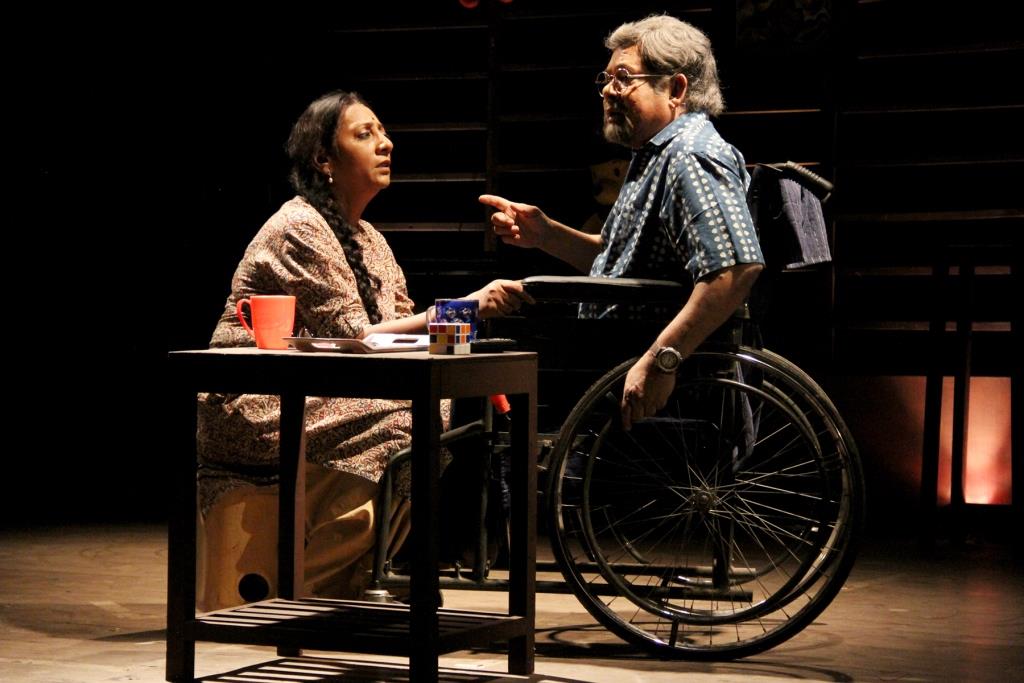
Dr Shridhar is enjoying a successful, happy and rich lifestyle with his beautiful wife Mita and teenage son Akshay. He wants to build a multi-utility hospital as a future provision for Akshay. He eyes a central piece of land to build his dream hospital. But the land is reserved as children’s playground. He is prepared to use his political influence and monetary powers to acquire the land. And then enters Sada (Sadashiv) in Dr Shridhar’s life. Sada, a schizophrenic patient, was jailed for killing his own wife and son, in his schizophrenic state. Throughout the treatment period, Sada keeps on asking intriguing questions, and throws some challenging situations at Dr Shridhar and Mita. The play finishes on an interesting and unexpected turn.

The Director
Napolian Almeida was born in Vasai, Maharashtra, India in Christian family. Napolian’s father was a teacher in a Marathi medium school. His father always encouraged the children to read books. Napolian developed interest in reading books about drama and plays. He started performing at a very young age. The challenges and difficulties faced during the early years motivated Napolian to study more about acting and acquire formal training from workshops. Napolian’s theatre career then progressed by active participation in dramas for organizations like Nutan
Mandal, Jeevan Darshan, Jeevan Jyoti, St Xavier’s Club and currently in Australia with Marathi Association Sydney Incorporated. Though an engineer by profession, Napolian continued to follow his passion in acting and direction. He
has acted and directed many plays including one-act plays and has won awards.

The Playwright
Abhiram Bhadkamkar is an alumnus of National School of Drama. His acting in films has won him accolades. Abhiram has explored many possibilities of expression in various art forms, and created a niche for himself as a multidimensional artist. Abhiram is adroitly active in feature films, plays and literature. He has been successful in making a mark on the front of writing plays, novels and screen plays; conceiving films as a director; and expressing as an actor. His plays are performed in Hindi, Kannad and Guajarati in addition to Marathi theatre. His collection of stories and novels are published by publishers/ publications of repute. Some of his popular plays / production are Hasat Khelat, Pahuna, Jyacha Tyacha Prashna (Sawal Apna Apna), Ladi Najaria, Dehbhan, and Sukhanshi Bhandto Amhi.

The Group
The team of Sukhanshi Bhandato Amhi are members of the Marathi Association Sydney Incorporation (MASI). MASI is a non-profit community organisation established more than 27 years ago. MASI promotes Marathi language, culture and customs through Marathi Akashwani Sydney, Marathi school, and cultural events and drama activities. Theatre is one of the iconic interests of Marathi community. Members of Sukhanshi Bhandato Amhi are volunteers and come from various professions. Despite being busy with their professional career, they are passionate about Performing Arts and theatre activities. This passion and interest brings them together and keeps them energised and motivated even through the initial settlement challenges. Members of MASI have staged a drama activity almost every year. Few names to mention here are Ghashiram Kotwal, Mala Kahi Sangayachay, Durga Ban Gayi Gauri, etc.

Cast & Credits

Mrs Pradhan Apoorva Athawale
Dr Shridhar Napolian Almeida
Kamalabai and Suman Nilima Berde
Sadashiv Chinmay Abhyankar
Mita Manasi Gore
Akshay Mandar Pathak
Lights Makarand Bildikar
Background Music Nitin Kundap
Stage Ahirwad Athawale, Ganesh Gavde, Charudatta Bhadkamkar
Costumes Sanjyot Samudra, Olivia Almeida
Make-up Sanjyot Dongre
Playwright Abhiram Bhadkamkar
Direction Napolian Almeida