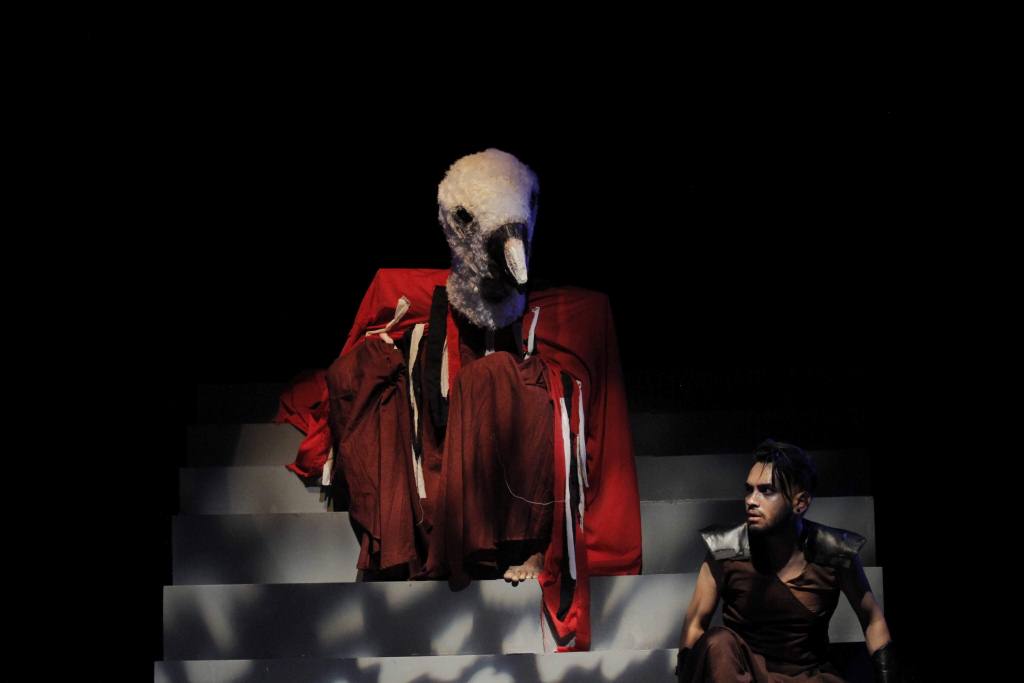
Jit Sarkar’s BAPU Director: Samir Biswas

Playwright: Jit Sarkar

Director: Samir Biswas

Group: Mangolik, Kolkata

Language: Bengali

Duration: 1 hr 50 min.

The Play

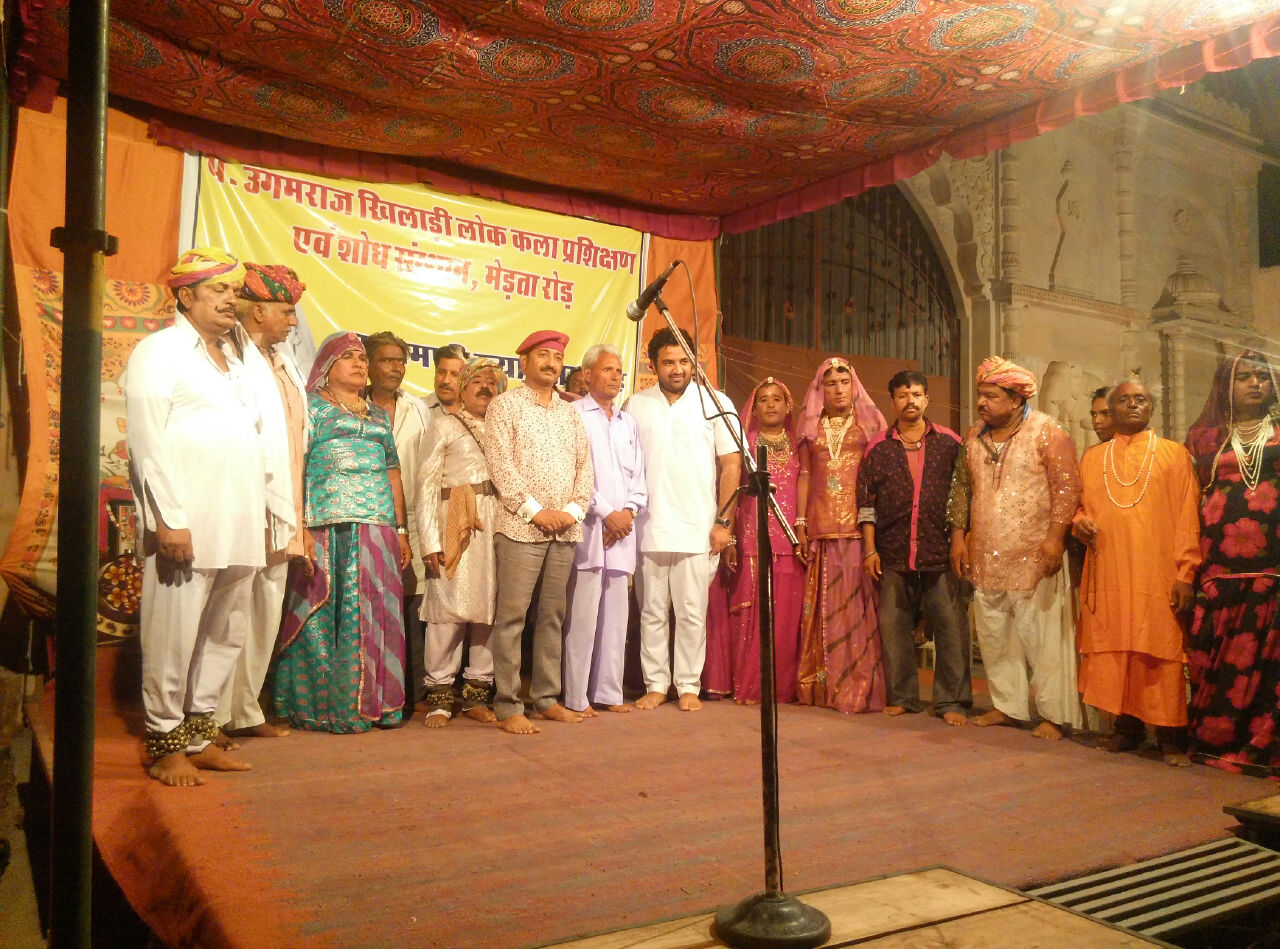
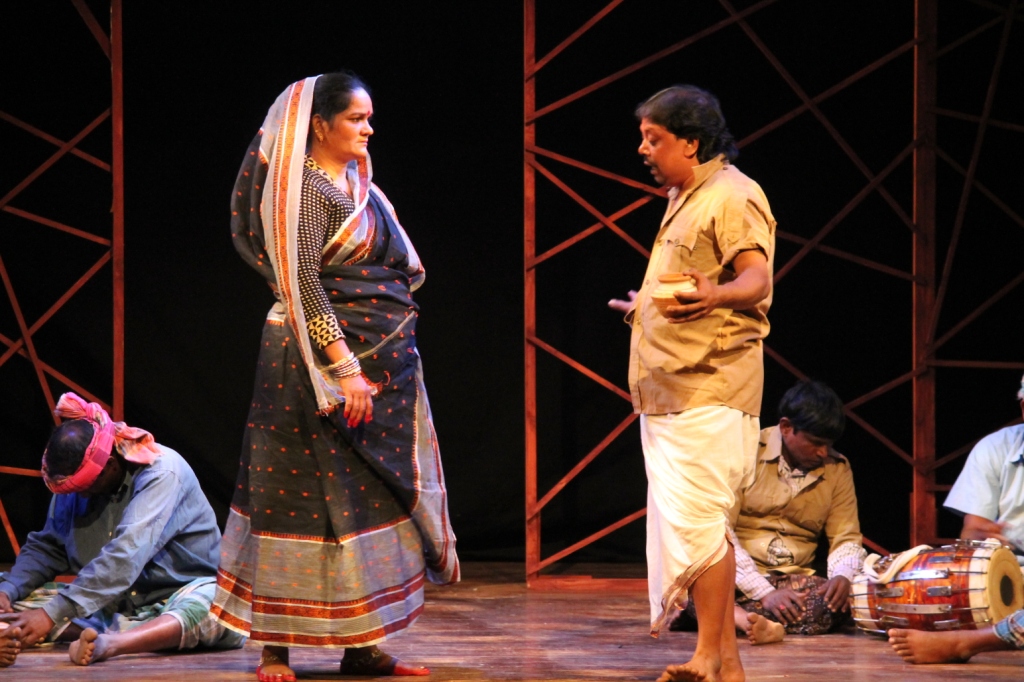
Mohandas Karamchand Gandhi was one of the prime leaders at the forefront of India’s fight for freedom from British rule. He was a leading architect, who eschewed violence in every form, of non-violent civil disobedience that would influence the world. When the protest at Chouri Choura against using British goods and attires, became violent Gandhi shouldered its responsibility and called for a cease of Non-co-operation Movement and Satyagraha and began five days fast subsequently. He was arrested and interned to the Sabarmati jail for six years on charges of instigating public through his anti-establishment literature. From the jail in South Africa Gandhi wrote on Satyagraha to spread the message of peaceful protests. Madeleine Slade, daughter of British Rear-Admiral Sir Edmond Slade, was an ardent admirer of his and was inspired enough to live in the ashram. Gandhi renamed her, Mirabehen. The British prime minister, Winston Churchill cast aspersions on BAPU’s attire referring him as “half-naked fakir”. Followers reacted but Bapu accepted it to describe the true condition of Indians under the British rule. He was left alone after wife Kasturba, his partner and fellow-fighter in the freedom struggle, passed away. We hereby try to recreate the essential relevance of Mahatma Gandhi’s vision for coming generations in, Bapu.

Director’s Note

The entire world is now a victim to intolerance which is a painful cause of concern for us. Our vast India is in panic by acts of violence. The warmth of father – son relationship is corroding and an icy coldness is spreading across the nation. We are meant for reviving the warmth of human values whereas factors of jealousy and brutality prevail. At this crucial juncture we refresh our collective memory by invoking an inspiring life of Mohandas Karamchand Gandhi also called, Bapu, as a reminder to our society. This Indian activist through his honesty, dedication and perseverance handled the non-violent movement and inspired movements for civil rights and freedom across the world winning hearts of the common masses. This flash back is a tribute to our freedom fighters.

The Director

Born on 12th April, 1947 his career on stage started as child artist in Tagore’s play, Dakghar in the role of Amal. His fascination for drama and allied arts grew with age joining a theatre group in 1962. He started his group, Mangolik on 12th December, 1968. He has also worked with other major groups like Rangarup, Chetna, Samabeta Prayash etc. as an actor and director in last 50 years. He acted in the lead role in film, Manush Bhoot and the play Bapu.

He has received the Drama Academy of India’s Jyosthna Makha Das Smarak Samman and Lebedev Drama awards.

The Playwright

Jit Sarkar has consistently scripted several radio dramas, TV documentaries, telefilms, serials and films in Hindi and Bengali ever since his career as writer began in 1982.  Some of his acclaimed works are – Dayen (The Witch) and Sundari (Quest for Beauty) Hindi feature films selected in children’s film section of the 4th Kolkata Film Festival 1998 and Samporko in Bengali selected in the 9th Kolkata Film Festival 2003 under telefilm section.

The Group

Formed on 12th December, 1968 Mangolik, is one of the few groups that have managed to sustain their creativity in Bengali theatre. Its founder, veteran actor-director, Samir Biswas has devoted his entire life to acting and designing serious theatre. They do not gather performers for their own sake rather believe in doing responsible theatre for social change and harness new talents. It seeks encouragement and inspiration from the audience. It grooms members towards struggle that is an inherent nature of theatre. The group celebrated its golden jubilee last year only.

Cast & Credits

Bapu: Samir Biswas

Nathuram Godse: Shouvik Majumdar

Mahadev Desai: Soumya Biswas

Kasturba Gandhi: Upali Ghosh Bose

Madeleine Slade (Mirabehn): Debjani Mukherjee

Harilal: Debashish Ganguly

Md. Ali Jinnah: Samiran Mukhopadhyay

Sardar Vallabh Bhai Patel: Ujjal Biswas

Jawaharlal Nehru: Partho Roy Chowdhury

Lakhan: Nanigopal Pramanik

Manu Gandhi: Sanchita Chowdhury

Abha Chatterjee: Satabdi Bose

Nayar: Sudip Chatterjee

Rioters, Revolutionaries & Ashramwasi: Murari Chakraborty, Adrija Basu, Tanish Chatterjee, Priyotosh Dhar, Khokan, Biswas, Ashim Bose, Sanatan Hari

Lights: Bablu Sarkar

Music: Shanto Adhikary

Make Up: Ramen Chakraborty

Set: Swapan Das


Watch The Director’s Meet for the play


Probir Guha’s TITAS EKTI NODIR NAAM

Playwright & Director: Probir Guha

Group: Alternative Living Theatre, Kolkata

Language: Bengali

Duration: 2 hr 10 mins

The Play

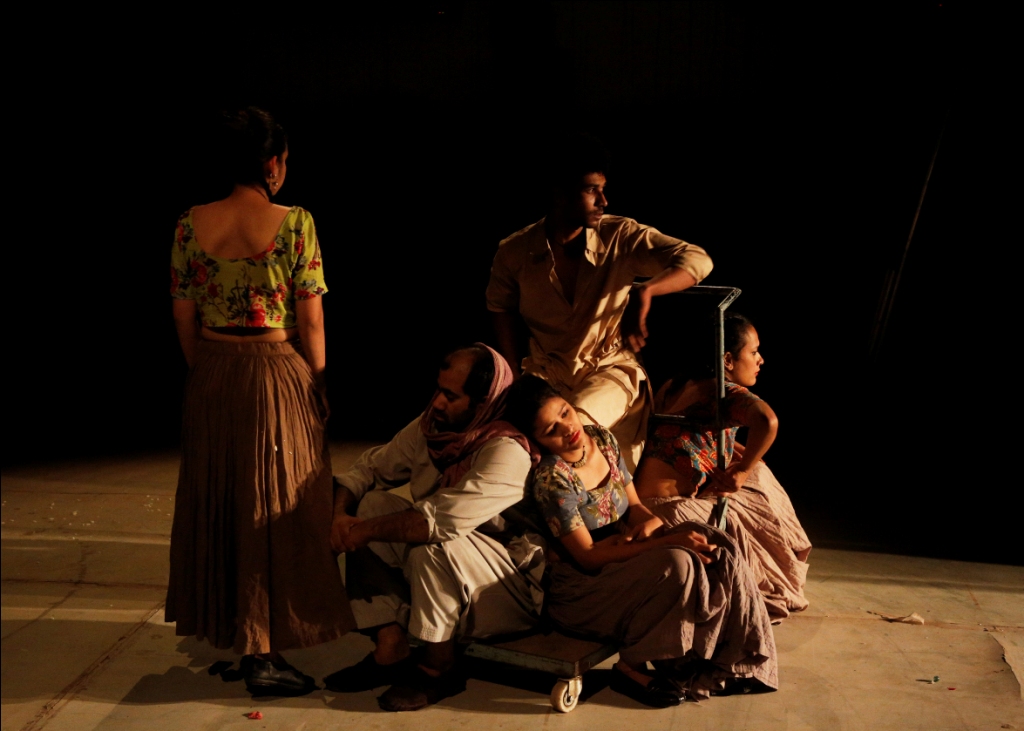
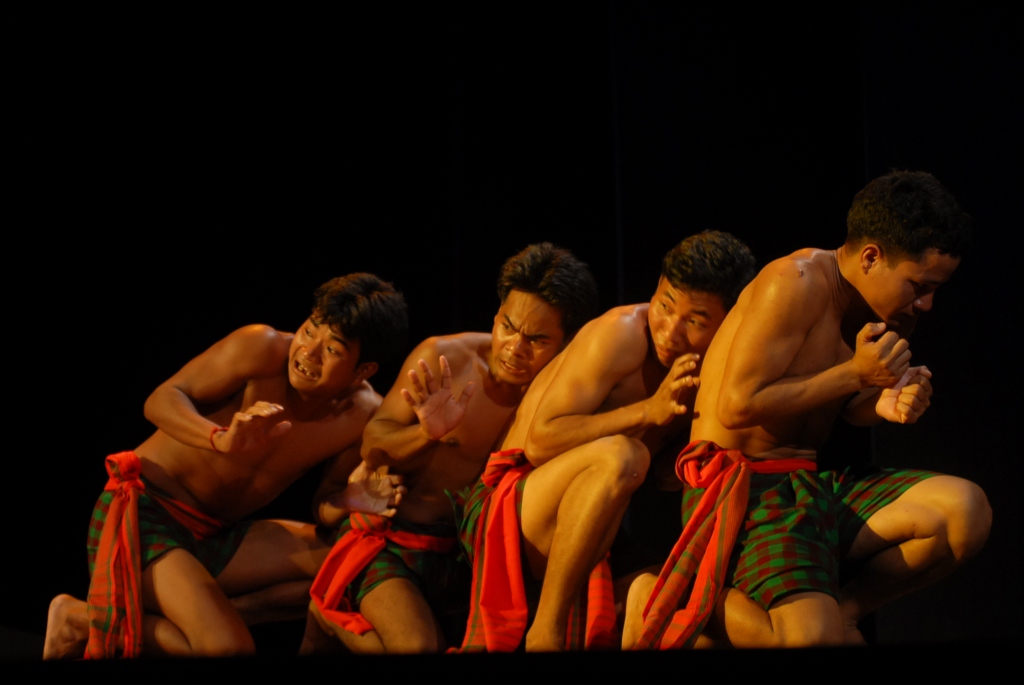
On the centenary year of Adwaita Mullaburman, we decided to prepare a play based on his momentous novel, Titas Ekti Nadir Naam. The play talks about fishermen societies residing on the banks of Titas in Bangladesh. The play talks about Titas’s change throughout years and its effect on the socio-economic structure of societies around. The love and loss of the main characters is the central attraction of this play. The play enters into climax when the fishermen society finds out that Titas is drying up. What will the fishermen do now? How will they survive? How does it really feel to lose the only means of life? How does it feels to lose a river?

Director’s Note

The plan of making Titas Ekti Nadir Naam was there since my college days. The novel had a great influence on me, and I always wanted to express those elements with my language, my way of understanding. The first attempt at this play was in Tripura some years ago. Then in 2015, I directed this play but due to some unexpected situation we could not work with the play anymore, but the urge stayed. In 2017 I remade, rearranged, and rejuvenated the play in my style under the banner of my theatre group Alternative Living Theatre. Hope my attempt at this classic piece will be acceptable to the audience.

The Director & Playwright

Born on 5th May, 1947, acclaimed playwright and director Probir Guha embarked on his career as a street theatre activist after graduation from Calcutta University. Initially he began working in Kolkata but soon becoming disillusioned with elitism, he established his own company, the Living Theatre, in 1977 at Khardaha. In 1991, Living Theatre was renamed as Alternative Living Theatre. From then till now he has been working as a writer-director of this group of rural-urban thought. He has worked with many renowned directors of theatre and dance worldwide. He is also a lecturer and teacher at several theatre schools and universities. Guha has been a common name among Alternative Theatre activists. He has received the Sangeet Natak Akademi Award for his excellence, along with other felicitations and awards for his contribution in alternative theatre practice.

The Group

Living Theatre was formed by Mr. Probir Guha in 1977 at Khardaha, a suburb in West Bengal. Later in 1990 it was renamed and re-registered as Alternative Living Theatre. It was formed with an earnest resolution to break the clichéd rules of theatre. It was determined that it would not merely entertain people, but will work towards waking them, as it believes that not just entertainment but theatre can also be the voice of the grass-root people. It dealt with difficulties of marginal people so instead of heading for the city it started penetrating into the interior of the villages and has performed in a small class room for ten years. Hence it has discarded monotonous grammatical acting and has experimented and evolved a new aesthetics of theatre where physicality is the language. Later on, it built its residential workshop and rehearsal space named Akhara at Madhyamgram, where theatre lovers from all over the world come to learn.

Cast & Credits

On Stage: Aftar Ali, Bikash Bose, Arkajyoti Ganguly, Avijit Biswas, Dhiman Bhattacharya, Pritam Chakraborty, Debobrata Banerjee, Raja Biswas, Santanu Sarkar, Chirantan Chakraborty, Sujoy Chakraborty, Anasua Das, Mousumi Sengupta, Anushka Sen, Ria Das, Ankita Ghosh, Abheepsha Ghosh, Sylvia Sharma Bhattacharya, Swagata Sen

Live Musicians: Subhadeep Guha, Chakrapani Dev, Madhuparna Debnath, Sushruta Goswami

Art & Set Designer: Arpita Burman

Costume Designer: Arpita Burman

Light Designer: Sadhan Parui

Light Execution: Samar Parui

Music Designer: Subhadeep Guha

Choreography: Sanchaita Basu

Production Controller: Shilpi Sarkar

Novelist: Adwita Mullabarman

Script & Direction: Probir Guha


Sophocles’ King Oedipus Director: Ashim Das

Playwright: Sophocles

Director: Ashim Das

Group: Fame School of Dance, Drama & Music, Bangladesh

Language: Bengali

Duration: 1 hr 20 mins

The Play

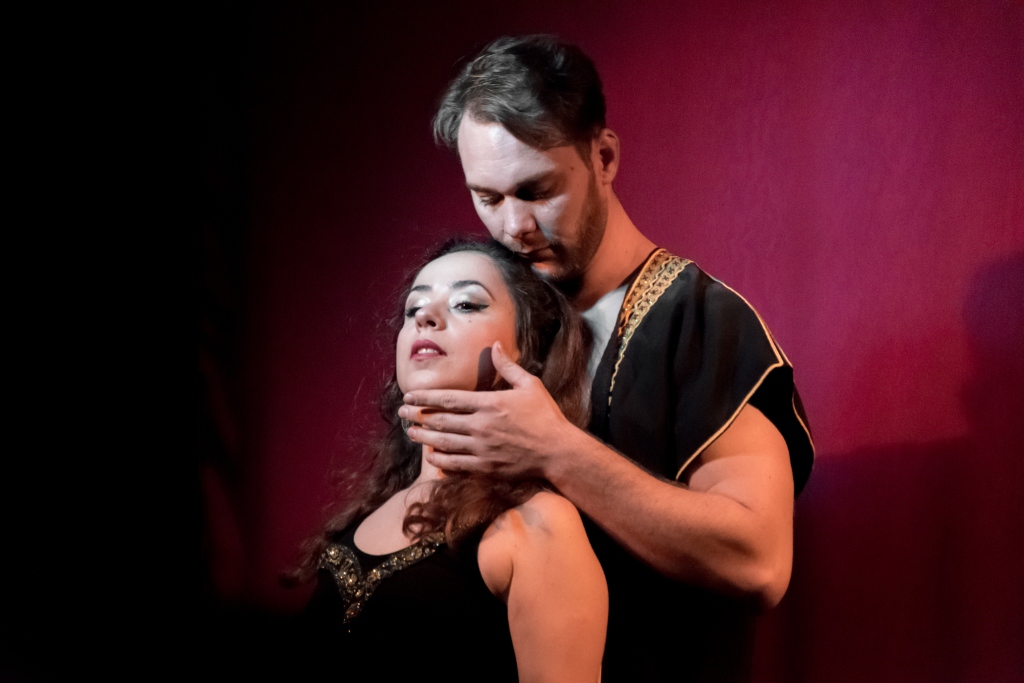
The abode of Cadmus was burnt to ashes because of the wrath of the Gods. After a long struggle Cadmus and his later posterity came to power one after another. At one point Oedipus came to the throne of Thebes. But predestined suffering dragged him to the brink of the formidable sin, and execution of the Oracle came true without his prior-knowledge. The Oracle said that he was destined one day to kill his father and to become his own mother’s husband. At the end of the play, after the truth finally comes to the light, Jocasta hangs herself, and Oedipus, horrified at his patricide and incest, precedes to gouge out his own eyes in despair. Then on an empty space the Chorus repeats the common Greek maxim, that ‘no man should be considered fortunate until he is dead’.

Director’s Note

Staging the Theban play, King Oedipus, the first and the best one of the Trilogy, of the great master playwright Sophocles was a challenge for me. I read Oedipus and other plays more than a 100 times. In every read I was thrilled, mesmerized and spell-bound by the knitting of plots and use of the riddles, and the power of the unwritten. References to eyesight and vision, both literal and metaphorical, are very frequent in all three plays of the trilogy. Quite often, the image of clear vision is used as a metaphor for knowledge and insight.

The Director

A graduate from National school of Drama, Ashim Das is the Director of Fame School of Dance, Drama & Music, Chittagong, Bangladesh. He is an Assistant Professor of the Department of Dramatics, University of Chittagong, Bangladesh. Has directed and designed more than 80 plays. He has adapted a number of classics and written some plays for children. Ashim has conducted several workshops on acting and direction, organized by Bangladesh Group Theater Federation and others. He has traveled to UK and France on the invitation of Human Rights Forum, UK, and Marie de Paris. He received the Zakaria Smriti Padok and the best director award for the play The Madwoman of Chaillot in International French Drama Festival, Dhaka.

The Playwright

Sophocles (496-406 B.C.) born in Colonus, not far from Athens, was one of the best dramatists in his age. Sophocles tragedies gained recognition as among the best dramas written at a time when competition was at its highest. The fact that his works are studied today, approximately 2,400 years after they were written is a testament to the power of his words and the impact that his stories have on current culture.

The Group

Fame School of Dance, Drama & Music was established in 1998 at Chittagong. In addition to other courses, it provides a year-long theatre appreciation course in acting and design, and a short course on acting, inspired by the teaching methodology of NSD. Some of the plays staged by the group include Antigone, Catastrophe, All That Fall, The Leader, The Lesson, A Trilogy (Oedipus, Oedipus at Colonus & Antigone), Raktakarabi, George Dandin, The Mad Woman of Chaillot, etc.

Cast & Credits

Oedipus: Mubidur Rahman Sujat

Jocasta: Ashrafa Hossain

Creon: Dipta Chakraborty

Tiresias: Kamal Barua

Boy leading Tiresias: Anwesha Das

Priest, Messenger: Hasibul Alam

Shepherd: Kamal Barua

Attendant: Bappi Sikder

Guard: Md. Jahed Ali

Little Ismene & Antigone: Titly Biswas & Anwesha Das

Chorus of Theban Elders: Poly Chowdhury Boby, Utpal Dasgupta, Bappi Sikder, Khadijatul Kubra Rishika, Sabiha Binte Jashim, Syful Sarder, Md Farhadul Abedin, Umme Kulsum Farhana, Md. Jahed Ali, Md. Farhad Hossain, Poly Chowdhry, Regan Barua

Citizens of Thebes: Boby, Utpal, Hasib, Bappi, Ashrafa, Rishika, Sabiha, Syful, Farhad, Jahed, Farhana, Pappu, Poly, Regan, Anwesha & Titly.

Music, Light, Costume & Set Design: Ashim Das

Choreography: Tilottoma Sengupta

Music Control: Mohammed Rukan Uddin

Props Making: Amlan Barua

Mask Making : Showkat Ali

Technical Assistant: Ali Afsar Bhuiyan

Make-up: Shahenoor Sarwar

Set Making: Abdul Malek

FOH: Fameans

Production Manager: Showmen Rudra


Tripurari Sharma’s SHIFA… THE HEALING Director: Teekam Joshi

Playwright: Tripurari Sharma

Director: Teekam Joshi

Group: Individual,Delhi

Language: Hindi

Duration: 1 hr 35 mins

The Play

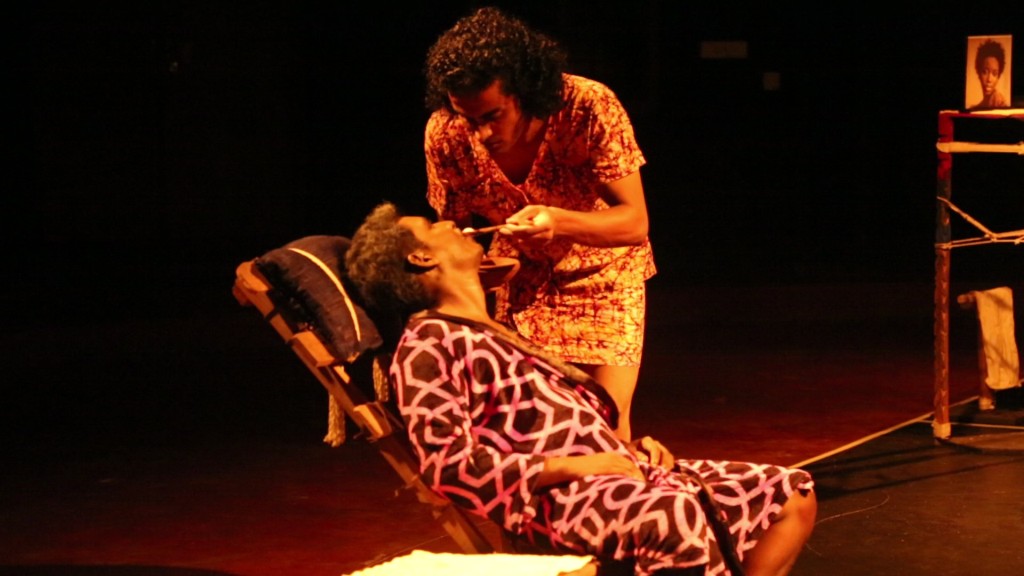
Shifa is based on HIV+ people talking about the positivity of life, and about searching within oneself to find a new way of life. It is a play within a play where three real characters share their life experiences with the audience, not for consolation but about social stigma, discrimination, empowerment, acceptance and primarily, healing.

Director’s Note

One needs an inspiration for doing things, and I had several for doing this play. The first reason was Shri Ravi Nagar Ji, and the second was the need to fight against odds like illness, loneliness, stigma and discrimination that one sees and feels all around in society. Theatre can be inspiring, entertaining, and a platform for sharing. But sharing needs courage, and this play gives you that courage, to talk about those deeper experiences which you generally don’t and can’t share. This play is like opening a window on those subjects about which society has many reservations. I would like to convey my humble thanks to Tripurari Sharma Ji who gave me the permission to do it.

The Director

Teekam Joshi did P.G. diploma in Dramatic Arts from National School of Drama in 2001. He has received many awards including SangeetNatakAkadmiBismillah Khan YuvaPuruskar, Nat Samrat, IftekharAkadmi Award, and State Youth Festival Award. He has worked with the National School of Drama Repertory Co. and has been anexpert faculty for NSD extension program;visiting faculty at NSD for acting, voice and speech;visiting faculty at NSD Sikkim Centre,Gangtok for acting;Actor (consultant) Kingdom of Dreams;Associate and Assistant Director for NSD students productions;Associate Director of some NSD repertory productions;expert faculty for communication skills in different private universities;Executive Director of Aaj Theatre company(founded by BhanuBharti);Artistic Director of Unicorn Actor’s Studio;and Artistic Director of Flying Feather’s Art Association. He has participated in many national and international festivals.Teekam has worked with eminent theatre personalities like HabibTanvir, B.V.Karanth, Mohan Maharishi, M.K.Raina, BansiKaul, BhanuBharti, AnuradhaKapur, Kirti Jain,Ramgopal Bajaj,Robin Das, Tripurari Sharma, Rita Ganguly,D.R.Ankur, KavalamNarayan Panniker, John RusselBrown, WamanKendre, Prasanna, Kumar Verma, AlokChatterji, Sanjay Upadhyay, Raghunandan, K.S.Rajendran, Suresh Sharma, Bapi Bose, Ashok SagarBhagatetc.

The Playwright

Tripurari Sharma completed her diploma in direction from National School of Drama in 1979. She is a playwright, translator and director of repute. She has written and directed various plays for groups and institutions all over India. She has conducted workshops all over India and abroad. She has also written scripts of critically acclaimed films like Mirch Masala and HazarChaurasi Ki Maa. She has been honoured with the Sanskriti award and SangeetNatakAkademi award. Ms. Sharma retired as Professor of Acting fromNational School of Drama.

Cast & Credits

Sanjeev: Teekam Joshi

Chhaya: Nalini R Joshi / Nidhi Mishra

Barkha: PriyadarshiniPooja / ShradhaVasdev

Vinay: Manish Karnatak / Vaibhav Raj

Nani: GauriDewal / MuskanDua

Purush: Shaurya Shankar

Stage Manager: Harshvardhan / RajatDahiya

Reporter: MuskanDua / GauriDewal

Doctor: Akshay Sharma

Prof. Ganapati: AniruddhSagar

Students: Harshvardhan, Rajat, Akshay, Muskan, Shradha, Pooja

Child Artist: Nandini R Joshi , Lucky Lakshya

Group Actors: Harshvardhan, Rajat, Akshay, Akash, Muskan,Shradha, Nidhi, Nalini,     Praveen Parashar, Nirbhay Jain, Vaibhav Raj, Nikhil Singh Bhatti

Music: LateShri Ravi Nagar

Light Design: SoutiChakraborty

Set Design: Rajesh Singh

Sound Design: Sandy Singh

Poster Image: Indira Tiwari

Poster, Brochure & Video: Happy Ranjit

Choreography: HarshitKhatana

Sculpture: AniruddhSagar

Property: Sachin Shrivastav

Production Manager: GauriDewal

Production Assistant: Vaibhav

Sound Operation: ShubhamPaliwal


Pratap Phad’s ANANYA

Playwright & Director: Pratap Phad

Group: Suyog Production, Mumbai

Language: Marathi

Duration: 2 hrs 30 mins

The Play

We often get inspired by various icons but seldom an ordinary person, who is just like one of us, steps out of all stereotypes, to do something unimaginable. This is a story of an ordinary girl, Ananya, who possesses the potential to do something extra – ordinary. Being a bright student, she was always showered by praise and her confidence never seemed to cease. She was a free girl with a lot of ambitions and had also got engaged to the person she saw a future with. Everything was pretty and full of sunshine until she meets with an accident. Things start turning upside down in no time and begin to change. But she doesn’t quit. What she does to overcome the obstacles becomes a story which is beyond one’s wildest imagination.

The Director & Playwright

Pratap M. Phad, born on 15th August 1980, has written & directed various one act plays and experimental plays in Marathi and Hindi. He has been awarded with the Best Play and Best Director at Malhar ’03, TESPO 2005-06, Parangat Sanman ’08 and various other competitions. For Ananyaa, he has been awarded Best Director Maharashtra Shasan Puraskar, 2018, Best Writer Sanskruti Kala Darpan Puraskar 2018, Shreshtha Natakakar Aacharya Atre Puraskar 2018. He has also worked and contributed in film industry.

The Group

Mr. Sudhir Bhat formed Suyog Production on 1st January 1985. In 32 years, around 80 plays were produced by Suyog production. Moruchi Mavashi, Gandhi Viruddha Gandhi, Vyaki aani Valli, Sandhyachaya, Char Divas Premache, Sunder Me Honar, Mitra, Lekure Udand Jhali are some of the best plays of Suyog Production. Dilip Prabhavalkar, Prashant Damale, Bharat Jadhav, Vijay Chavhan, Atul Parchure, Vandana Gupte, Bharati Aacharekar and Neena Kulkarni are amongst the known personalities who have performed under this production. Suyog Production is one of the best production houses in Marathi theater industry. Ananyaa is 85th presentation of Suyog Production and in 2018 Ananyaa received 34 awards in various competitions.

Cast & Credits

Baba: Pramod Pawar               

Ananyaa: Rutuja Bagwe               

Priyanka: Anagha Bhagare  

Dhananjay (Dada): Vishal More               

Shekhar Sarpotdar: Karan Bendre               

Jay Dikshit: Siddharth Bodke  

Setting: Pravin Gavali aani Mandali

Lights: Devidas Shivgan, Akshay Jadhav

Music and Projector: Prathamesh Bhuvad, Ruchir Chavhan, Sanjay Umbarkar

Make-up and Hair Dressers: Sharad Sawant, Jyotsna, Chhaya

Costume and Property: Pravin, Prashant, Nilesh

Manager: Santosh Mahadik

Producer: Rajesh Patil, Sandesh Bhat, Pratap Phad


G. Krishanan’s ABIMANYA SUNDARI THIRUKALYAM, Director: D. Elumalai

Playwright: G. Krishanan

Director: D. Elumalai

Group: Sri Thanthoni Amman Therukkuthu Nadaga Sabha, Thiruvannamalai

Language: Tamil

Duration: 1 hr 30 mins

The Play

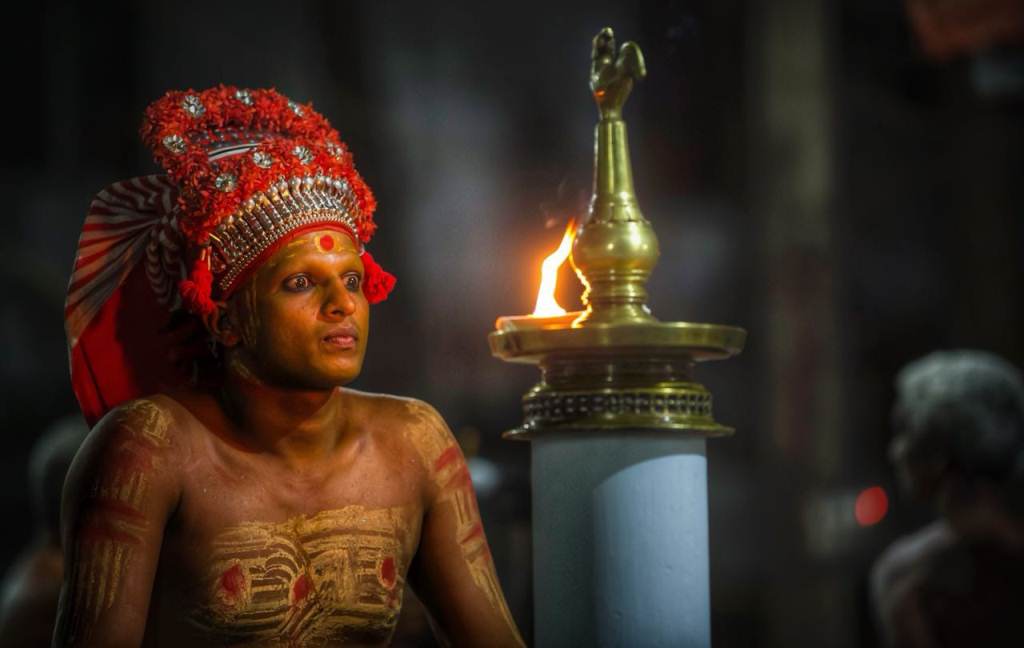
Duryodhana’s son, Lakshmana Kumaran, is eligible to marriage and Sakuni suggests he may be married to the daughter of Dhurgapuri’s Lord  Krishna. Duryodhana agrees and goes to Dhurgapuri Darbar. Entering, Duryodhana asks Lord Krishna to marry his daughter to his son. But Krishna decided to first speak with his wife. Duryodhana agrees. Mangalakshmi, wife of Lord Krishna, listenes to Krishna, but reminds him that he has promised his daughter’s marriage to Arjun’s son. Lord Krishna says that as Arjun has lost almost all his land, we must reconsider the match. They finally decide to marry their daughter to Duryodhan’s son and announcement of the same intent is made. When their daughter, Sundari, hears this, she gets upset, and sends a message to Abhimanyu through Vayu Bhagvan that he should come immediately and marry her. Abhimanyu gets the message and straightaway sets out to stop the wedding.

Director’s Note

This play is dramatized from Mahabharata’s story of Abhimanya Sundari Thirukalyanam. It was performed in our rural villages. The audience would eagerly wait for Sundari’s entry. Whenever we performed this play, the Kattiya Karan (Narrator), makes jokes and adds humour to the whole play.

The Director

At the age of sixteen, after finishing his school, D. Elumalai underwent training with two Koothu teachers, Kishtappa Meshtri and Srinivasa Meshtri. He learnt Adavu and songs from them. Later he joined Purisai Kalaimamani Subramaniya Thambirar Therukoothu group as an actor. There he learnt Adavu from Kannappa Thambiran and Sambanthan in 1987-88. He founded the Sri Thanthoniamman Therukoothu Nadaga Sabha in the year 1997. He gave training to Thalai -K-kol, a modern theatre group in Pondichery and organised the performance of Nadu Koothan there. In 2006-2008, he got trained in Therukoothu at Pondichery University. He also conducted a 10 days’ workshop at National School of Drama’s Bangalore Centre. He is the chief trainer for Therukoothu. He got Kalai Nan Mani award from the Government of Tamil Nadu.

The Playwright

G. Krishnan has been writing for the last 30 years. His plays have been translated in German and French. He teaches Thabasu and Krishnan Doodhu to the village youths. Thakkayagam, Arjunan Thabasu, Lavakusha, Baratham, Sundari thirukalyam are some of his famous plays.

The Group

Sri Thanthoniamman Therukoothu Nadaga Sabha is the leading Tamil folk Theatre group that promotes the traditional folk art form of Therukoothu. It was established in 1985 by a Group of folk theatre enthusiasts who were involved in promoting Therukoothu in the districts of Thiruvannamalai, Kanchipuram, Chennai, Vellore, Dharumapuri, Pondicherry. They have performed in the National Theatre festival (19th BRM at New Delhi) and have also conducted a number of workshops with college students, foreign research scholars and school children.

Cast & Credits

On Stage: Ravichandran, Madhavan, Vijay, A. Ramakrishnan, M. Haridass, Ethiraj, E. Manikandan, Subramanian, Mukundan, Elavarasu, S. Rajesh, Venkatesan,

Harmonium: Seetharaman

Mirudangam: Krishnamoorthy

Mughaveenai: S. Chandiran

Lighting: E. Sukumar

Design & Props: E. Suresh

Translator & Coordinator: M. Manivanna


Ram Gopal Bajaj, the founder of Bharangam to be felicitated on the Inaugural


National School of Drama’s 20th Bharat Rang Mahotsav, the International Theatre Festival of India, is Back with a Bang; Gears Up to Dazzle India

The International theatre festival of India, Bharat Rang Mahotsav, BHARANGAM,  will kick off in New Delhi on 1st February, 2019 and culminate on 21st February, 2019 and will cover 6 cities in India with 111 shows and various allied events.

A key feature of the inaugural ceremony of the festival is the felicitation of its founder Ram Gopal Bajaj, who was the Director of National School of Drama. It was his visualisation of the idea of bringing best of theatre from India and later all over the world, to help the students of NSD to see the possibilities of theatre and also an experience for the audience to absorb and be enriched. 

Bharat Rang Mahotsav (BRM), the annual theatre festival is organized by the National School of Drama (NSD), was established two decades ago, by Ramgopal Bajaj to stimulate the growth and development of theatre across India. Originally a national festival showcasing the work of the most creative theatre workers in India, BRM has evolved to international scope, hosting theatre groups from around the world, and is now the largest theatre festival of Asia. Till date, BRM was celebrated in New Delhi and has travelled to several cities in India, presenting an overwhelming 1787 plays, and riveted thousands of audiences who basked in the glory of heart-winning stories and superior performances.

The 20th edition of BRM will include various national and international performances, and associated events such as, ‘Director’s Meet’, ‘Living Legends’, and ‘Master Class’. This year, the festival pays a tribute to Mahatma Gandhi, the ‘Father of the Nation’, on his 150th birth anniversary and will stage plays depicting the Gandhian philosophy and the dilemmas Bapu had as a person. The 20th Bharat Rang Mahotsav also hold parallel festival in other cities including Dibrugarh (Assam), Varanasi (Uttar Pradesh), Ranchi (Jharkhand), Mysore (Karnataka), and Rajkot (Gujarat).

The 21-day long festival will stage plays in Hindi, English, and other regional and international languages. International productions from Bangladesh, Poland, Russia, Sri Lanka, the Czech Republic, Italy, Nepal, Romania, and Singapore will also enthrall the audience during the festival.


Apart from plays, the festival will also host folk performances and other traditional performing art forms, street plays by around 50 dramatic societies of colleges in Delhi, and national and international seminars discussing the theatre scenario in India and abroad.BRM is organized by National School of Drama (NSD), an autonomous institution under the Ministry of Culture, Govt. of India and one of the foremost theatre training institutions in the world.

20th Bharat Rang Mahotsav (BRM), the largest theatre festival in Asia, organized by the National School of Drama (NSD), is all set to bring its bouquet of plays, interactive sessions, and other cultural events to cheer up the winter afternoons of theatre enthusiasts in the city.

The inaugural ceremony will be held at Kamani auditorium on 1st February, 2019 at 6:00 PM followed by the performance of ‘Karanth ke Rang’, directed by Amod Bhatt. The 50-minute long performance is a medley of songs composed by late Shri B V Karanth, a stalwart of Kannada and Hindi theatres. Shri Karanth was a prolific composer of songs and scripts for theatre and directed and acted in many productions.

The festival, which enters its 20th edition this year, is celebrating the 150th birth anniversary of Mahatma Gandhi – 4 of the plays to be staged on the life, philosophy, and principles of the ‘Father of the Nation’. The festival will host 69 Indian and 15 foreign plays across India, selected after screening. Additionally, 9 folk productions, 5 plays by NSD diploma students, 1 production from the Sikkim center of NSD, 3 plays by the NSD Repertory as well as 5 invitee plays by eminent theatre practitioners will captivate the theatregoers across India.

The national capital will host 89 plays: 25 plays in Hindi, 16 in Bengali, 5 in Kannada, 2 in Marathi, 2 in Odia, 2 in Gujarati, 2 in Manipuri, 3 in English, 2 in Assamese, 2 in Malayalam and 1 each in Maithili, Telugu, Nepali, and Sanskrit, in addition to 15 foreign plays, the festival also brings 8 folk performances to theatre aficionados in the city.

The 21-day long festival this year will include plays in Hindi, English, and other regional languages. International productions from countries such as Bangladesh, Poland, Russia, Sri Lanka, the Czech Republic, Italy, Nepal, Romania, and Singapore as well as non-verbal, folk, and multi-lingual performances will enthrall the audience during the theatrical spectacle.

The performances in New Delhi will be held at Bahumukh and Chahumukh (7:30 PM), Open Lawn (6:00 PM), and Abhimanch (8:30 PM) at the NSD’s Bahawalpur House campus as well as nearby Sri Ram Centre (4:00 PM), LTG (5:30 PM), and Kamani (7:00 PM) auditoriums.

Apart from the spellbinding performances and interaction with thespians and eminent personalities from the world of theatre, the festival in Delhi will also have 2 international and 2 national seminars on theatre. The national seminars to be held in New Delhi will attend to the topic ‘Is Modern Theatre Inclusive?’ and will hold sessions dedicated to ‘Notion of State and Representation’, ‘Unrepresented Form’, and ‘Non-Governmental Curating and Funding Policy’.

Besides, the NSD campus will be abuzz with street plays, ambience shows, and ‘Theatre Bazar’, a motley of stalls offering a range of products and culinary delights. The youth forum shows will comprise performances by dramatic societies of nearly 50 colleges in Delhi while ambience performances will bring folk dance and other traditional performing art forms.

In keeping with its concerted efforts to promote theatre among people and take select performances to other parts of the country, the NSD arranges parallel festivals in Dibrugarh (4th to 10th February, 2019), Varanasi (7th to 13th February, 2019), Ranchi (9th to 15th February, 2019), Mysore (11th to 17th February, 2019), and Rajkot (13th to 19th February, 2019).

“The art of theatre is the oldest and the strongest medium that conveys human emotions in a manner that defies temporal boundaries. We are delighted to usher in the Bharat Rang Mahotsav to its 20th year and have made all efforts to bring a selection of quality plays, choosing the best out of 960 submissions. There are 9 folk performances being presented in Delhi as well as invitee plays and productions in regional languages. We have tried to accommodate as many young theatre enthusiasts as we can, since the institution aim to foster the growth of young talents through the platform of BRM,” says Shri Suresh Sharma, Director In-charge, National School of Drama (NSD).

“Theatre is a celebrated art form across the world and I am happy that this festival gives us a chance to witness many of the plays which have received critical acclaim globally. BRM aims at bringing together people and hence, we have spread the festival across the country so that theatre reaches more and more people. BRM has been a very successful festival attracting a lot of audience, including first-timers and we hope a similar run this year too,” says Dr. Arjun Deo Charan, Acting Chairman, NSD Society.

About National School of Drama (NSD)

The National School of Drama is one of the foremost theatre training institution in the world and the only one of its kind in India. It was set up by the Sangeet Natak Akademi as one of its constituent units in 1959. In 1975, it became an independent entity and was registered as an autonomous organization under the Societies Registration Act XXI of 1860, fully financed by the Ministry of Culture, Government of India. It offers 3-years training program in every aspect of theatre with a special focus on the practical implementation of theories. The NSD has two performing wings – the Repertory Company and Theatre-in-Education Company (TiE) that started in 1964 and 1989, respectively.


The Music and the Muse / Prateeksha Sharma

An Identity for Kumar Gandharva

Kumar Gandharva  (L) In Full Bloom   (R) Younger Day

This paper is an attempt to trace two aspects of creative artists: ‘Bildungsroman’ (novel of formation) and ‘Künstlerroman’ (novel of the artist). The subject of the former is the development of the protagonist’s mind and character, in the passage from childhood through varied experiences- and often through spiritual crisis-into maturity, which usually involves recognition of one’s identity and role in the world. The latter, the ‘artist novel’ represents the growth of an artist from childhood into the stage of maturity that signalizes the recognition of the protagonist’s artistic destiny and mastery of an artistic craft.

 Generations of Indians, for hundreds of years, have grown up singing Kabir, from oral traditions to classical traditions, from rustic village mandalis to sounds polished and honed through years of riyaaz and sadhana. Among the classical sounds one of the most prominent and far reaching voices is that of Pandit Kumar Gandharva (KG) (1924-1992) a voice both rich in its classical understanding of ragas, a voice imbued with the meaning of the text it attempts to deliver, and a voice capable of creating mystery and a reverence about the depth and colossus of the literature it has set out to explore. This paper tries to trace the sojourn of Shivaputra Komkali to the iconic Kumar Gandharva: the crisis of identity and the development of the artist from the prosaic to the poetic, from the mundane to the spiritual.

————————

At the outset it may be noted that the present attempt is not an exercise in voice analysis as much as to understand why is it that KG’s voice stands out on the firmament of Indian music in its rendition of Kabir, while numerous others sing the poet saint, equally well, if not better? Why is it that generations of people seem touched to their inner core by his singing more than that of any other musician of the tradition (of classical music) or training? What is it, that makes Kumar Gandharva a mystery and an enigma that reaches a peak during his Kabir bhajans?  

The above concerns are explored on the basis of observation and logical reasoning. It relies on the observations of some people who had learnt with Kumarji himself, reading about him, working on Kabir in my own musical journey and interacting with a number of people who associated with Kabir’s thought and philosophy and KG, people who had heard KG in person, people who learnt his music with his students, critics and admirers, his own students and followers. KG is an enigma that not only haunts but also continues to grow right in front of us. “Time”, according to Van der Post (1975), “has a knack of putting the truly great…well ahead of us, rather than in the past darkening so fast behind.” KG today looms larger on the scene of the human spirit than he did in his own lifetime.  

Kumarji belongs to the class of artists whose echoes linger on in the aural memories of millions all over India, a formidable legacy for anyone to carry forward and a giant task to comprehend.  Much like Kabir, he grew up in a manner never experienced before him; he was a man detached from his times, the institutions of his times and the sensibilities attached to those institutional structures. If Kabir was a weaver who simply and irreverently composed verses that shook the frame of all tradition and authority; KG equally powerfully shook the tradition of music and stepped aside from the main current of being ‘certified’ by any one gharana( school of music). Given his extraordinary ability to sing any and all of them with equal facility- the choice to not affiliate him to any one gharana was a great act of rebellion, an act unheard of in his time, a radical breakaway from the prevalent order and injecting a new level of thought into the entire gamut of Hindustani music’s exploratory process.

 “Sunta hai guru gyani, gagan mein awaaj ho rahi jhini jhini…” (meaning, the one anointed by the guru, hears…hears an inaudible, imperceptible cosmic sound)   is a very popular bhajan of Kabir sung by KG.  This song alone can be an initiation for one into the world of both Kabir and Kumarji and numerous listeners venture unsuspectingly near KG and Kabir, coming with the quest for enquiry aflame in their minds about the nature of everything and perhaps the most significant being WHO AM I? Those questions of philosophy, which have haunted the human mind eternally, assume a new light when put forth by Kabir and when KG spoke in that voice, says Raghava Menon (2001), “The Kabir Bhajans on the other hand are laden with the monochrome of timelessness.”

How did KG become what he became is a question that one wishes to examine in this piece- the voice, the identity, the expression, the intensity, the depth and so on. Though Kumarji is a subject worthy of many studies that have been carried out and no doubt will be carried out in future too, I will restrict this presentation to the psychological aspects alone and the process of ‘individuation’ within the theoretical framework developed by C.G. Jung.

 The Child: A Crisis in Identity 

It is very well known about Kumar ji that he was a child prodigy. A prodigy is always a challenge for society to understand, for s/he confuses everyone with his/her prowess and ability. It seems uncanny and is given various connotations depending upon the arena where the prodigy has appeared. In the field of music prodigies are not only found once every few years, their method also remains similar. Society down the ages has largely been based on conformity; and individuality is frowned upon for it is perceived as a threat to the prevailing institutions. In such a situation reports Menon(2001),

Kumar was born with a supernatural memory…He could…reproduce a three-minute record of any of the well-established musicians of the day with a fidelity that made his singing of them seem like musical photographs. Considering the number of years that these musicians had spent in mastering their art, this eerie facility of a seven-year-old lad seemed miraculous…People who had no interest nor understanding of music came in hordes to hear him and look upon him…(p.40)  

Literature abounds about KG telling us about his genius and the fact that how while he was just a little boy he had become the cynosure of all eyes, a crowd puller and a musician par excellence. “But what surprised Kumar …was not his ability to sing but the response he had on those who heard him. For that he was not prepared. All he thought he was doing was…he sang it (a song that he heard) the  best way he could”(Menon,  2001, p. 49).

            When a small boy of seven comes under public gaze what could be the possible effect on the developing ego of the child? What would he have thought about himself and about his admirers? How would he have dealt with all the adulation or to that extent not only him, how do all ‘celebrity’ children handle an invasion into their lives by effusive adults who they do not understand?

From the viewpoint of the child whose developing concept of self is subject to the kind of exposure that KG was receiving at that point in his life and he was being celebrated for his singing, his ‘voice’ was paradoxically was not his own- he was an accurate imitator, an excellent mimic and the world was adulating his ability to mimic; not necessarily his musicianship. Like a small boat that is tossed in the giant sea of careless waves Kumar’s ego had been laid bare for the world to examine, study, wonder about and comment upon. A child was in the ‘limelight’ without knowing why, or assimilating in the true sense the reason for being there. Psychologically, all children who are in the ‘public eye’ undergo this phenomenon of ‘premature exposure’ without having the ego strength to deal with the impact of it and someday face the possibility of a neurosis or hopelessness.

When the ego is sufficiently developed it can handle success and failure, criticism and appreciation with a fair degree of equanimity. But a child imitating an adult, and being adulated for that ability will sooner or later only come to feel confused about his/her own identity*.

*Another famous and celebrated artist currently on the world music scene is Michael Jackson, also considered a child prodigy. Much later as the whole world now witnesses a lot of his childhood pain surfaces in the form of abnormalities which showed up in adult life, to the confusion and surprise of the world. If we extend the analysis about the lack of ego strength in the child, whose concept of self is not well defined it appears to be true in this case too.

 The Personality

Author, voice instructor,  and  singer Carolyn Sloan (1999), reflecting on the process of self-discovery through the voice says,

I have learned that singing is about self-examination and observation, though not self-criticism…. Along with courage and ability to question, experiment, and observe, a singer also must have an unfailing persistence and desire to solve what may seem to be unsolvable mysteries…. A singer must become become his or her own ally, searching for clues and solving these mysteries for him or herself. A singer needs to become a detective…. We must balance our need to control with a necessity to let go so our true voices can surface. We do not create the voice. The voice is and creates us. It teaches us that we must be open to being stimulated and to experiencing our lives without inhibition. As a singer, it is imperative to be a spiritual master (p.5).”

A voice is like an identity. Every human being needs a ‘voice’. In effect voice is the expression of the individuality of a person. It is not necessarily a speaking voice alone, it is an expression of the soul of the individual- it can be a ‘voice’ that expresses itself through speech, through writing, painting, gardening, cooking, cleaning, teaching, farming, or any other vocation. A ‘voice’ is not limited to the function of the larynx alone. It is a multifaceted, multi-hued, aesthetic expression of the inner life of a person. As many roles a person perform in life or society, at least that many are the visible expressions of his/her individuality or ‘voices’.

Voice is the fundamental aspect of a singer. When a singer is appreciated for excellent rendition of another’s singing, in a sensitive individual it may produce confusion about who actually is being celebrated- the original voice or the cover-version. In such a state, it becomes urgent and necessary for the child to search himself out, for it is evident that he is not being celebrated for himself but because he can be somebody else. This search for identity, when it is felt becomes the struggle.

In discussing about primal therapy, Arthur Janov (1970) talks about development from the point of view of a child, “Struggle is what keeps a child from feeling his hopelessness. It lies in being the performer…Instead of being himself he struggles to become another version of himself. Sooner or later the child comes to believe that this version is the real him…. It is that moment of icy, cosmic loneliness, the bitterest of all epiphanies. It is the time when he begins to discover that he is not loved for what he is and will not be (p. 29).” 7

KG was not known to be neurotic as a child or as an adult but one is wont to believe that precocity had its internal roots in a troubled spirit. Raghava Menon (2001) sheds light on this aspect too, “He merely puzzled over these issues inwardly…merely suffered quietly…. The problem was what to do, (p.64)…”

So, a search for his own inner expression would have begun long ago in the soul of the child. It would no longer be enough to merely ape another great artist, because the inward restlessness demanded an original release, an outlet- not merely a borrowed identity. Kumar Gandharva had set out on the path of “ ‘individuation’- a process referred to by Swiss psychologist C.G.Jung as a search for self; an expression of that biological process by which every living thing becomes what it is destined to become from the beginning” (Gandhi, 2001, p. 20).

At a later point in his life when he came in touch with Anjani Bai Malpekar, who took him into the realm of the science of sound, or Nada Yoga, did he for the first time have a real glimpse of what he had sought all along? Before that, he was seeking without knowing. The inability to ask anyone or ask the exact questions for want of a facilitating environment (both then and now) produced suffering. These experiences of pain, the beginning of the individuation is in fact transformative experiences that may be viewed as  “… the dark and bitter night of the soul…” shares Raghava Menon (2001, p64). And interestingly, this is the view of transpersonal psychology too.

          Experience of change, transformation  or transition is in fact a point of crisis in the life of an individual. How the human encounters and deals with the process, assimilates the change and transforms himself and his destiny is the essence of transpersonal experiences. Stanislav Grof and Cristina Grof (1990), the former being among the pioneering figures in the transpersonal psychology movement say, “One can also encounter experiences of fear, loneliness, insanity, or death during transpersonal sequences originating from collective or universal domains. The transpersonal realms contain both light and dark elements, and both the ‘positive’ and the ‘negative’ can inspire fear…However, the fact that fear sometimes arises when an individual moves into the realms of light and beauty is somewhat perplexing” (p. 48)

When the artist began to question the environment around him it became imperative for him to understand who he was himself, what was the singing that he needed to do and what was the way ahead of him?  Kumar needed to find his own face and distinguish it from the numerous faces that were being mirrored within him in his day-to-day quest.  His struggle became introverted and was not limited to a search for voice and identity alone; it became a quest for affiliating the soul.  Even when he went to study music at the house of his guru Professor Deodhar, he remained aloof about affiliating himself to any gharana; chronicles Menon (2001) “…while there was a flexibility with respect to Kumar on the characteristics of Gharana, he was inflexible in his vision of what music should be, boundless, beyond frontiers and paradigms (p. 89).”

Kumar Gandharva was a musician first and he, had already examined the structures of the gharanas while still a child, so now the need was to find his own voice, his own identity from within the musical tapestry he had seen, studied and examined all his young days. At this point perhaps, his Guru gave him a teaching assignment “Kumar was designated to teach all those students who did not have too clear a picture of what style they wanted most to follow. In a certain sense this was a wise technique to adopt for Kumar himself was not still quite decided on what contour he himself was to give his art (Menon, 2001, p. 89)

As yet, he had not found a way out for himself. He was troubled and occasionally happy. Troubled, because of the restlessness that gnawed at his heartstrings constantly and making him unsure where his precocity and genius were headed after all. The hero who is on the path of inner transformation has to face all his demons and fears when they come face-to-face with him. Few are moments of passing joy for an individual who cannot share the pain of his quest with anyone. But fortunate are those who do not give up in spite of the uncertainty.

Janov (1970) further elaborates on the need for authenticity, “Because we were unified human beings, the real self will constantly press to surface and make those mental connections. If there were no intrinsic need to be whole, then the real self could be put away for good; it would lie peacefully within us and never make any attempt to intrude into our behaviour. What drives neurosis is the need to be whole again, the need to be our natural selves. The unreal self is the barrier, the enemy which must finally be destroyed (p. 41).”

The unconscious in us is always pressing to express itself, mostly through dreams and fantasies, sometimes through experiences of illness too. When a young man seeks himself from all the haze that surrounds him, in some voices he finds a resonance of his own inner calling. The search had started finding results. While discussing about self-realization of the unconscious, Anthony Stevens (1982) notes that, “everything in the unconscious seeks outward manifestation, and the personality too desires to evolve out of its unconscious conditions to experience itself as a whole…It is not I who create myself, rather I who happen to myself (p. 140).”


A Break from Tradition

From the child who apes every audible sound in its environment to its nearest degree possible to becoming an artiste par excellence was a singular journey. Often in the musical tradition one is taught that the lyrics or the poetry of the work is subservient to the mood of the raga. That means every ‘khayal’ or ‘bandish’ of a raga should sound like the raga from which it is born and not have a distinct identity of its own. Kumarji was among one of the few people who dared to challenge this fixity. For him every lyrical form had its own life and needed to be honored for its own sake, and not alone the sake of the raga. “This quality is one of the principal characteristics of the Kumar Gandharva Gayaki,” points out Menon (2001), further elaborating, “Kumar sang out of the Bandish and not out of the Raga. He subordinated the Raga to the Bandish, never letting the Raga take priority over the Bandish. This was a unique turnaround in the culture of the Hindustani classical musical heritage. This was the cause of the passion and intensity with which Kumar invested his performance. His Raga Vistara took on the lineaments of the Bandish on account of which the Raga has come to exist. So he showed the possibilities the Raga in that particular embodiment of the Bandish he had chosen to sing. This was the consequence of a highly developed and delicate literary grasp of the nature of the words of a language and the way they are spoken while being sung ( P. 86-87).

          There is one significant point in the biography of KG, which many ascribe as the reason for maturity of his musical thought. That was a six-year long, near fatal illness that he faced, in the course of which he was forbidden from singing. The only voices that he could hear were the folk singers of his neighbouring areas. This prolonged absence from active singing was a return to the inner environs for KG, and that is where he honed his art in a new way “This is a well-understood practice and is often called Mauna Sadhana, which irrigates and fertilizes the unconscious mind of the Sadhak (Menon, 2001, p. 84)”

Though Kumar had reached heights in his musicianship early enough, this period of forced withdrawl and a near brush with death, deepened his insights into the world of the ‘swara’. Possibly this was also the time when he became more inclined towards the bhakti tradition in poetry.


Illness and Transformation

A life of seeking becomes a life of pain, questions and uncertainty. Since many do not tread this path the seeker is usually left alone to look for answers till the next person can come and point out a little of the way ahead. Illness is usually a time that leaves many a person alone with not much else except their inner reservoirs to fall back on- as it did Kumarji. It was an experience of silence, an experience of using the ear to a new end, an experience of growing from the soil of, Dewas, Malwa, “Dewas was a singing country…. The folk do not sing in the strict sense. They are telling things to each other and this speech sounds like song…. A folk tune does not have Raga, what it has are the seeds of feeling…. Lying in bed he discovered this simple truth” (Menon, 2001 P. 93).

In finding out this simple truth maybe Kumar Gandharva found himself out. And now it was a new journey that stared ahead of him-the internal journey having borne fruition but the world outside much the same. This is not an unknown phenomenon for the Grofs’ having experienced an entire gamut of transpersonal experiences share, for example, someone who returns to a familiar situation may find the culture and the individuals within it unreceptive to his or her new capacities.

The reborn hero must enter the long-forgotten atmosphere where men who are fractions imagine themselves to be complete. He has to confront society with his ego-shattering, life-redeeming elixir, and take the return blow of reasonable queries, hard resentment, and good people at a loss to comprehend. Because of the magnitude of their transformative experiences…  they may also face the very real problem that the everyday world around them is often not very receptive to their newfound discoveries” (C. Grof & S. Grof, 1990, p. 214).

After having completed a long journey (though visibly in a short span of time) in classical music, inverting it within himself- moving away from the realm of ragas to the kingdom of the swara, becoming fully musically quiet, except for the aural input of the folk singers that went into him, Kumarji brought about a most extraordinary change in his life through a lateral technique of riyaaz- simply through his ear and silent practice. It was as if he fought the tuberculosis by dint of sheer willpower- a triumph of the spirit. In terms of therapy this is termed as psychoneuroimmunology- where the immune system gets an impetus from the mind to fight illness and combat the disease. Music therapy and a lot of holistic practices these days are increasingly orienting themselves towards this multimodal approach.


Poetic Underpinings of Kumar Gandharva’s Gayaki

Though bhakti singing in the form of bhajan has been practiced long before KG appeared, he seems to have established a new method in the tradition- not for him a bhajan where the facial expressions of the singers “…have to show any devotion or faith in the syrupy fashion of our inheritance”…(Menon, 2001, p. 100).  Kumar Gandharva brought Kabir (and the bhajan) to life simply because of his fusion of the folk and classical forms of music with poetry. Placing the poetry into the rustic countryside ambience it had grown out of, his songs acquired a new root, never before seen in bhajan singing. One sometimes wonders what made him choose Kabir’s Nirgun bhakti as his ‘voice’ over the sagun bhakti (Not that he limited his repertoire of bhajans to Nirgun bhakti alone) As in the Nirgun tradition, the deity is a formless, divine entity, Kumarji ascribed that same formlessness to the ‘swara’. Kabir’s poetry is an ocean of spiritual philosophy.


Concluding Comments

Kumar Gandharva brings to life his words with new meanings, because for the first time a singer explores the swara in the same objectivity as the poet who utters the syllables. In other words the soul of the artist becomes the voice of the man. So there is no separation between the two identities. When one man sees within him another completely reflected, automatically the former’s poetry becomes the latter’s expression. There is a merger. Thus does the Self accord itself recognition through that organ of consciousness-the ego- which it has given rise to. In one place Jung defines ego as a ‘relatively constant personificantion of the unconscious itself, or as the Schopenhauerian mirror in which the unconscious becomes aware of its own face” (Anthony, 1982,P.140)

In triumphing over illness, Kumarji rewrote the script of his life. He used his own music to heal himself out of a near death situation and gave succour to innumerable others after that. The myth of the wounded healer came alive once again for the world. Thus Kumarji, demonstrated in his own lifetime the power of healing that music offers, opened out new avenues. Possibly without realizing he became one of the most eminent case studies for music therapy in India, rendering both the lyrical content of Kabir to its full glory and his own musical improvisation to carve out a hitherto unknown, unforeseen, uncharted path for all those who dare to follow; in the process literally and figuratively becoming the ‘voice’ of Kabir for the times we live in.


References

Gandhy, Rashna Imhasly (2001). The psychology of love: Wisdom of Indian mythology. New Delhi: Roli Books.Grof, Cristina & Grof, Stanislav, (1990). The stormy search for the self-A guide to personal growth through transformational crisis.  New York: Penguin.Janov, Arthur (1970). The primal scream, primal therapy: The cure for neurosis. London: Abacus.Menon, Raghava R. (2001). The musical journey of Kumar Gandharva. New Delhi: Vision Books. Sloan, Carolyn (1999). Finding your voice. New York: Hyperion.Stevens, Anthony (1982). Archetyp: A natural history of the self.  London: Routledge.  

Van der Post, Laurens (1975).  Jung and the story of our time.  New York: Vintage Books.


Discourses on Music / Prateeksha Sharma


Music- A Path to Wholeness

The author practicing on the Veena

Music is the essence of life, spirit and creation. To understand our musical selves is the beginging of our journey to becoming whole from the disjointed, often scattered selves we become as a result of socialisation and accularization. When we turn to music we unknowingly turn to mother nature who coded music into us even while we were being formed from the various elements, and in this turning we connect ourselves to our inner deeper selves- sometimes which does not reveal itself to us in our mechanisitic daily survival rigmarole. Wordsworth, in his autobiographical poem, The Prelude, in a reflective passage of Book 1 says,

Dust as we are,

the immortal spirit grows

Like harmony in music

-William Wordsworth

Though we come from the five elements and return back to them, the spirit creates newer vistas for itself and continues to scale heights that the body alone cannot scale. The spirit grows while the body withers. Such is nature’s playground. And the more the spirit grows, greater is the harmony it produces- within itself and with the world around. Such is music; such is life. Music is a reflection that mirrors every aspect of life, within its infinite folds, shades, hues and contours.

According to Yaksa, who codified the explanations for the word sangīta, around 500 B.C. the word sangita is explained by its symbolic substitute word bharatabha from bhava(emotion), ra from raga (the modal-scalar framework for melody), and ta from tala (the rhythmic and metric structure). The specific Bharata invoked in the definition of sangita is the legendary sage who is said to be the author of the Natyashastra, the most important early treatise on music and theatre[i]. This explanation of music clearly portrays how from time immemorial the Indians have known about the inextricable link between emotions, melody and rhythm.

The word ‘music’ etymylogically comes from the  ‘muses’- Greek goddesses who inspired poets, painters, musicians etc. The word traces its history via Old French musique and Latin musica, to Greek mousike, a noun use of mousikos ‘of the muses’, an adjective derived from mousa ‘muse’- John Ayto[ii] aptly comments :

“the specialisation of the word’s  meaning began in Greek- first to ‘poetry sung to music,’and subsequently to ‘music’ alone.

According to the Greeks, Apollo was the patron god of music, dance and poetry. He earned the epithet of ‘musagetes’ –the leader of the muses[iii]. Interestingly Apollo was also the patron god of the healing arts, medicine and archery (Recall the number of hospitals and clinics named after him) Thus, music became synonymous with healing from the dawn of time.

[i] Rowell, Lewis (1992)  first Indian edition 1998. Music and Musical Thought in Early India. New Delhi: Munshiram Manoharlal Publishers Pvt.Ltd.

[ii] Ayto, John (1997), Bloomsbury Dictionary of Word Origins, Delhi: GOYLSaaB

[iii] Mythology: myths, legends and fantasies, (2003) UK: Grange Books


Chakras and Sound

Late 18th century A.D Kangra school Painting of Yogin with six chakras

In addition to our visible, gross body we also have the subtle body in the form of an energy field around it. The physical body contains the most dense and therefore visible energy. This energy continues forming layers of energy fields around the body which are not usually visible to the naked eye. This magnetic field energy that surrounds the body is called “aura”. The aura is created by the energy of the chakras- the psychic, whirling energy processing centres of the body. According to yogic theory, there are approximately 72,000 nadis, astral nerve tubes, the most important of which is the sushumna, the astral body counterpart to the spinal cord. On either side of it are two nadis known as ida and pingala, which correspond to the left and right sympathetic cords in the physical body[i]. There are six points in the body where these three nadis intersect and these points also correspond in location to the major nerve ganglia (cervical plexus, solar plexus, sacral plexus and so forth) located along the spine in the physical body. In healthy people, the chakras are vibrant and spin with vigour, while in those who are not well the chakra petals are dull and spin sluggishly, says the American Hindu priest Thomas Ashley-Farrand[ii]. Interestingly, these chakras respond to the sound of Sanskrit, a fact which was noticed by ancient Indian mystics with “second sight”, the ability to see clearly in the subtle realm. These outcomes were carefully written down and can be found in the Vedas, the Upanishads and the Yoga Sutras of Patanjali. It took time before the sages arrived at the mechanism behind the impact of Sanskrit on the chakras. And they concluded that the total number of petals or spokes composing those six chakras is fifty. Similarly, the Sanskrit alphabet consists of fifty letters, with each one corresponding to a particular petal of a chakra. When a mantra built from the language is chanted, our chakras vibrate in tune with the Sanskrit sounds because Sanskrit is … “an energy-based language first and a meaning-based language second”. Not all the words of the Sanskrit mantras have meanings. It is the energy coming from the subtle body that provides the key to the effectiveness of the mantra chanting. Each chakra has a corresponding Bija mantra or sound vibration. Irrespective of who chants the mantra, at the sound of the Bija mantra, the chakras spin with greater energy and vigour, giving corresponding strength to the body. It is also said that the chakras correspond to the musical scale with each chakra representing one swara of the octave.

Human society uses music in various ways. Some of it is used in education for those who become musicians or those who endeavour to develop a fine aesthetic appreciation of life, in particular the arts, around them. It is utilized in religious ceremonies and rituals, as a means of entertainment and in imparting health to the body. Each of these applications of music is explained briefly.


[i] Vishnu Devananda, Swami (1995: third edition), Meditation and Mantras  New York City: Om Lotus Publishing Company

[ii] Ashley-Farrand, Thomas (2003) Shakti MantrasTapping the great goddess energy within, New York: Ballantine Books.


Music Education

Republic Day Parade- A School Band

There are two aspects of music education- music in education and music as education. Training in music from an early age for the purpose of discipling the mind and making a career out of some aspect of music constitutes music education. When a child begins to train in music in a systematic manner a number of changes occur in the personality of the child- from discipling to becoming methodical, refinement of senses, time management (as the child also is involved with academic pursuits due to that age). It is   a boost to the self-confidence of the individual as his/her musical ability sets them apart from their peers and the artiste is a source of attaction for everyone around.  Since music tends to be a performing art, the necessary exposure to the stage automatically makes the child confident and able to deal with issues related to shyness, introversion, and fear of public speaking. After the training phase, the next phase of the musician is to contribute to the social fabric in the same capacity- a role which maybe performed as a teacher, an entertainer, a healer, in the industry or attached to a spiritual organisation.

Music in education is a somewhat different application of music, in which music is utilised to improve the educational output of students. The main impact of music here is felt due to its ability to let students involve themselves in group musical experiences, which allow an expression of emotion in a medium other than speech. These experiences could be ranging from singing, playing musical instruments together, writing lyrics and setting them to music to making musical plays and productions and so forth.  A competitive, performance oriented production with such activities has been seen to bring about both behavioural and academic improvements in healthy school going children as well as those suffering from mental handicaps, hearing handicaps and various other neurological and/or developmental disabilities. Such musical experiences not only foster socialisation, but also bring about group cohesiveness, enhancement of interpersonal skills, learning due to imitative behaviour and more adapted socially cooperative mannerisms.


Music in Healing

Music appeals to the emotional side of the human nature. Music stirs, births, expresses, fires, harnesses, channelizes and tempers emotions. Music precedes the development of language as a form of expression. That is because music is present in nature even before the human is born as an individual or a species. In his bid to emulate the sounds of nature man becomes musical. And yet in amputating himself from this connection with nature, in the process of socialization and civilization the human loses touch with the lyre within, coming to a point of dis-ease or an absence of ease.

Man has instinctively known forever about the healing aspects of music. Speaking about this knowledge in context of Indian music, Alain Daniélou the late Director of the International Institute for Comparative Music Studies and Documentation, Berlin, opines that “a general Sanskritic theory of music, termed Gāndharva Veda, was elaborated at a very early date.” He continues saying that it seems that the Gāndharva Veda studied every use of musical sound, not only in different musical forms and systems but also in physics, medicine and magic.  Music makes the human ‘whole’- in harmony and in balance.   Don Campbell says that bringing a body in to balance requires observing the orchestra in it’s entirety, it’s current condition and past experience, it’s inherent strengths, it’s potential for improvement. And the real genius of healing lies in teaching the body, mind, and heart to discover and play their own music-not something that has been dictated by social norms. If one is to examine healing in terms of emotion, then the process of healing involves the transformation of one kind of emotion into another. The Natyashastra of Bharata mentions about nine primary emotions or rasa-s. Rasa is the Permanent Mood when it is revealed through enjoyment[i]. The nine[1]accepted Rasa-s are: the Erotic (Sringara), the Comic (Hasya), the Pathetic (karuna), the Furious   (Raudra), the Heroic (Vira), the Fearful (Bhayanaka), the Odious (Bibhatsa), the Marvellous (Adbhuta) and the Tranquil (Santa). The catalytic process of music is aimed at transforming the dominant emotion into another emotion or reducing the severity of the emotional experience, incase the dominant emotion is a disease producing condition or itself an offshoot of the disease. For example sadness at one extreme becomes depression, which can in an extreme case also lead to a suicidal tendency. Music used appropriately with this emotion can aid in an expression that may not be spontaneously available to the individual due to disease related pathology.

It has been noticed that during conditions of illness, it is human tendency to revert to prayer, because of the impact faith has on the psyche, and the immune system. The greater is the patient’s faith that they will get well and the more they silently pray, the lesser is their expectation from medical cures alone and also greater is the likelihood of them becoming well due to their own willpower. The reason is twofold: first, prayer takes the mind of the patient away from the disease and negative thoughts. Secondly, it gives a positive affirmation to the body’s own immune system to fight the disease. Music unobstrusively becomes a catalyst in this process.

If one is to use music for therapeutic purposes, it is crucial to understand two principles: Entrainment and Isoprinciple. Entrainment is simply the principle from physics that tells us that our biorhythms tend to synchronize with the rhythm, tempo, or pulse of the music. We instinctively choose slow music when we want to calm down and faster music when we want to energize ourselves. The isoprinciple states that in order to change a person’s mood with music, one must first begin with music that reflects the state he/she is in to start with. If one is feeling depressed one cannot simply put on “happy” music to change the mood. It must be done slowly and carefully.

When we mention the term music therapy we need to remember that in therapy, music is specifically used to achieve non-musical goals.  Music can both be used as an alternative, stand-alone therapy as well as a complementary therapy in addition to traditional medical procedures.

There are four levels of music therapy practice:

  • Auxiliary level: All functional uses of music for non-therapeutic but related purposes;
  • Augmented level: Music therapy used to enhance the efforts of other treatment     modalities
  • Intensive level: Induces significant changes in the client’s current situation
  • Primary level: Singular role in meeting the main therapeutic needs of the client.

Music therapy is an interpersonal process in which the therapist uses music and all its facets- physical, emotional, mental, social, aesthetic and spiritual- to help clients to improve or maintain help. The music used in therapy maybe specially created by the therapist or client or it maybe drawn from the existing literature in various styles and periods.[ii]


[1] Bharata admitted eight rasas, but later writers admitted nine rasa including Śānta or Śāma

[i] Prajyananda, Swami (2002)  A Historical Study of Indian Music. New Delhi: Munshiram Manoharlal Publishers Pvt.Ltd.

[ii] Bruscia, Kenneth (1991) Case Studies In Music Therapy, (2nd ed.)  Barcelona Publishers,


Some Concerns in Designing Therapy

To utilise music in its therapeutic aspect we need to identify music that corresponds to our various emotions. If a particular melody attracts us, we could examine what is so special about it. Is it the lyrics, the voice, the intonation of the words, the interplay of instruments, the use of silence in the song or something else? However, when we use music as a complement to certain other procedures we have to study all the above aspects as well as the musical abilities of the individual who is the recipient of the treatment, and their preferences regarding the setting. There can be many a setting for a therapy exercise in music- from a community centre to a hospital ward, the studio of the therapist to the school-room, even a park or the home of the patient.  In terms of participation it can be an individual who receives therapy, a couple, a family, a group or any other set of like-minded people.

Then one has to choose the kind of musical experience –between listening to music, recreating music, making new music and an appropriate musical medium, whether it would be the voice of the participants or instrument, or a combination of them. Similarly, one needs to carefully choose what music to use- some existing music, which is known to both or known to one alone or a new music to be created jointly. Once these factors have been accounted for music therapy can be designed for any kind of disease or condition: from childbirth and immature babies to patients suffering from cancer, HIV/AIDS and those with burns and other trauma. It can also be used in treatment of psychiatric illnesses of schizophrenia, substance abuse, depressions, phobias and for rehabilitation to neurological conditions of multiple sclerosis, stroke, autism, developmental delays and handicaps, Alzheimer’s and Parkinson’s Diseases. Even in operation theatres the use of music can help in carrying out a safe surgery by reducing the stress levels of all involved, with a possible reduction of the dosage of anasthesia required by the patient and in post-surgical recovery. Further uses may be to promote self-actualization, to stimulate developmental growth, to manage pain and to treat musical problems.


The Owl and the Pussy Cat / Seema Bawa


Actors: Kavita Dang and Kumud Mishra                           Director: Satyajit Sharma

The Owl and the pussy cat went to sea in a beautiful pea green boat…

Thrown together in a low-rent bachelor’s flat instead of a ‘pea-green boat’, the odd couple in this highly amusing Bill Manhoff comedy, is certainly not at sea! ‘The Owl’, Felix played by Kumud Misra, a highly accomplished actor, is a self-styled intellectual author – while ‘the Pussycat’ played by Kanika Dang, is a wannabe actress and model – however, to pay the bills she entertains gentleman callers, a prostitute but not promiscuous.

Having noticed the stream of gentlemen caller at her apartment through his binoculars, the peeping owl does his ‘civic’ duty by informing the superintendent of the building. The pussycat with nowhere to spend the night seeks revenge by imposing on the owl for a bed. And then, through a battle of wits, words, and wisdoms they both start to ‘educate’ each other as well as the audience in ways they never knew they could.

The current production by Dotted Line Productions has wisely kept it simple and has not endeavored to create convoluted and over intellectualized caricatures of the protagonists. The director, Satyajit Sharma, an NSD Alumni with several outstanding acting and directorial performances to his credit, takes two great actors who handle some good old fashioned repartee rather well; coupled with adept handling of a witty script to put together an eminently watchable show.

The play focuses on two people who get to know each other, have sex, and eventually fall in love. As in most romantic comedies, one-liners abound and the protagonists are shown falling from their own self constructed identities. The fight in Felix’s apartment after Doris barges in at the beginning is hilarious. She gets upset by his use of big words, but eventually buys her own guide to extending one’s vocabulary. He is horrified by her “filthy” animal existence exemplified in his use of words like gutter slime and filth for her, but delights in the new experiences she has to offer. The two show each other new ways of looking at things and which is why Doris and Felix’s chemistry works for the audience. It’s is akin to what happens in real life. Their romance is played for laughs, but it’s also sweet and touching. Felix, like most men, has to have a near nervous breakdown before deciding Doris is the one for him through a bitter-sweet dream sequence that evokes meta-theatre. As each displays their softer selves, the audience realizes they have more in common than they think. The two are in transition; looking for that obscure goal of success; he in writing, she in acting. This shared ground draws them together and reflects to the audience a very real struggle that we all experience in relationships.

Odd couples, whether of the same or different sexes have been a comedy formula for decades. The play enthralls with its at times salty language. Most importantly, Kumud and Kanika have a very definite chemistry. Though Kanika’s is better delineated and in intrinsically is the more outrageous and attractive character (being the underdog) in the script, it does not steal the focus. Kumud interprets the inherent wimpy-ness and prissyness of the character with a paradoxical male strength and libido. This makes for a powerful performance that converts the essentially mono-dimensionality of the character into a rather complex and conflicted one. The interlude when the wimpy Felix transforms briefly to a randy ‘baby’ is remarkably executed with Kumud performing from each pore of his being.  Kanika has put in a lot of effort into building her character but while she is able to bring to fore the tartness of Doris, the vulnerability written into the character does not come out as well as it may have. Though this prostitute has a heart and it shows.  While the play per se is not deep enough to allow for great acting, it does give scope to the two protagonists to demonstrate impressive technical finesse; the director who is apparently debuting for the group needs to be complemented for this.

In order to be memorable theater, the discovery by Felix and Doris that they are good for each other need  not be revelatory in the vein of a metaphysical revelation, but should be funny. The director and his cast achieve this with ease. The humor in “The Owl and The Pussycat,” depends largely on sarcasm, insult and the sort of logic that has Doris announce: “I may be a prostitute, but I’m not promiscuous.” A lot of the humor of the play depends on language and the “play” thereon. Much is made of the fact that Doris doesn’t understand words like despicable, aesthetic, assimilate and intrinsic while Felix who seeks to define himself through words or concepts finds them completely incapable of addressing his feelings for Doris. A comedy based largely on language and timing is always a difficult ask and the current production delivers in aces.

Directorial skill is amply demonstrated in terms of technique, stage craft and spatial usage. The fundamentals of good stagecraft such as blocking, body language and use of space have a refreshing rehearsed certainty and professionalism fast disappearing from current productions.  Interludes of well chosen music pieces and the intermittent use of gaps during the play deserve to be commended. This despite the somewhat inadequate lighting arrangement around the proscenium of the LTG auditorium