Looking at Alternate Spaces for Performance in Delhi – NCR
Studio Safdar, 2253E, Shadi Khampur,Delhi 110008
Putting up any production can be most daunting for most theatre practitioners in India. It is customary for most Indian directors who many times, run small amateur theatre groups to not only foot all bills but also look after the needs of the artists involved. The most challenging of this cost is that of the auditoriums. Most proscenium auditoriums in Delhi and Gurgaon can cost anywhere between 15,000 ( around $220) to 1,00,000 ( around $950) depending on its size and capacity. Furthermore, there is a long waiting list to get the required dates, most weekends getting booked almost a year ahead! Hence, the supply versus the demand is either beyond one’s means or it requires tremendous patience for the group to perform.
The need for finding alternate spaces for performances hence is rapidly growing which is being met to some extent by a few in India. There are several around Mumbai but here the article will focus on two spaces created. The first one in that of the group, Rang Parivartan, in the growing rich cosmopolitan Gurgaon created by Mahesh Vasistha and the second one , the Teesri Manjil, of Ruchika Theatre group, created by Feisal Alkazi in South Delhi. It is important to focus on these two spaces, as the city of Delhi besides being the capital of India, is the Mecca of theatre training, while Mumbai largely focuses on film production and the thriving industry of Bollywood.
Delhi, has been timelessly known for its intense theatre training that is both affordable and also provides the correct knowledge to the aspiring actors. The prestigious National School of Drama is situated here, along with Sri Ram Centre, the school of Arts and Aesthetics at Jawaharlal Nehru University that offers not only the masters course in performance studies but also a Ph.D in theatre and also the newly formed Ambedkar University that offers bachelors and masters in Performance studies are also located here. Besides this we also have an a diploma course offered in theatre by Indira Gandhi Open University, that is lesser than $25 for six months, as an distance program.
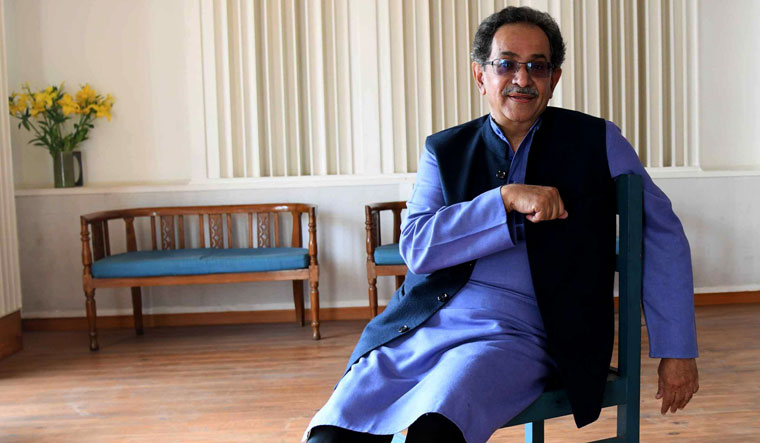
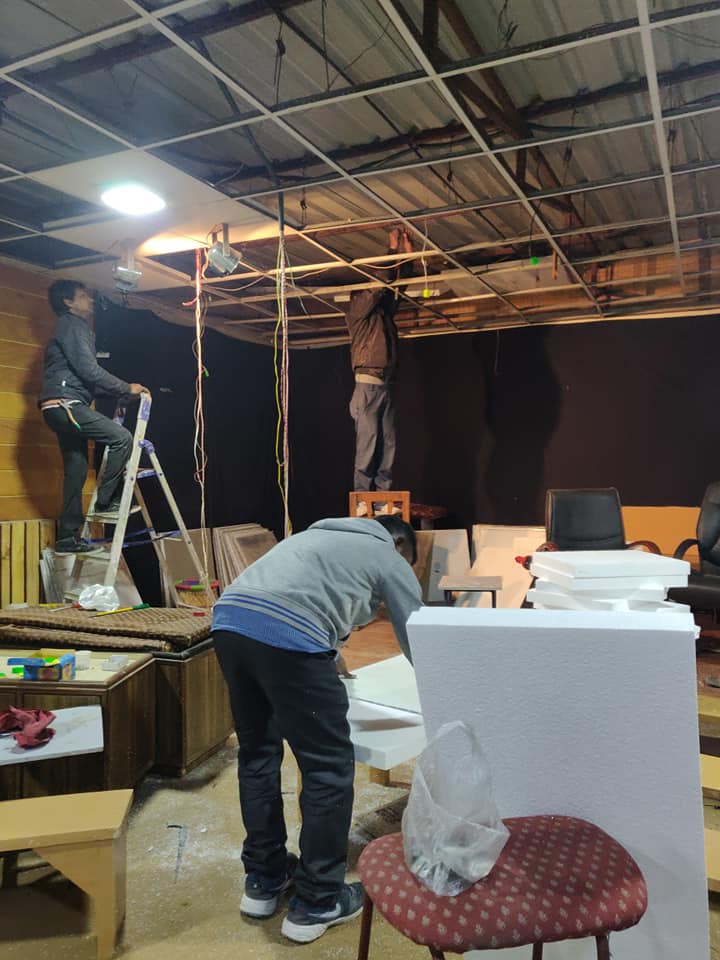
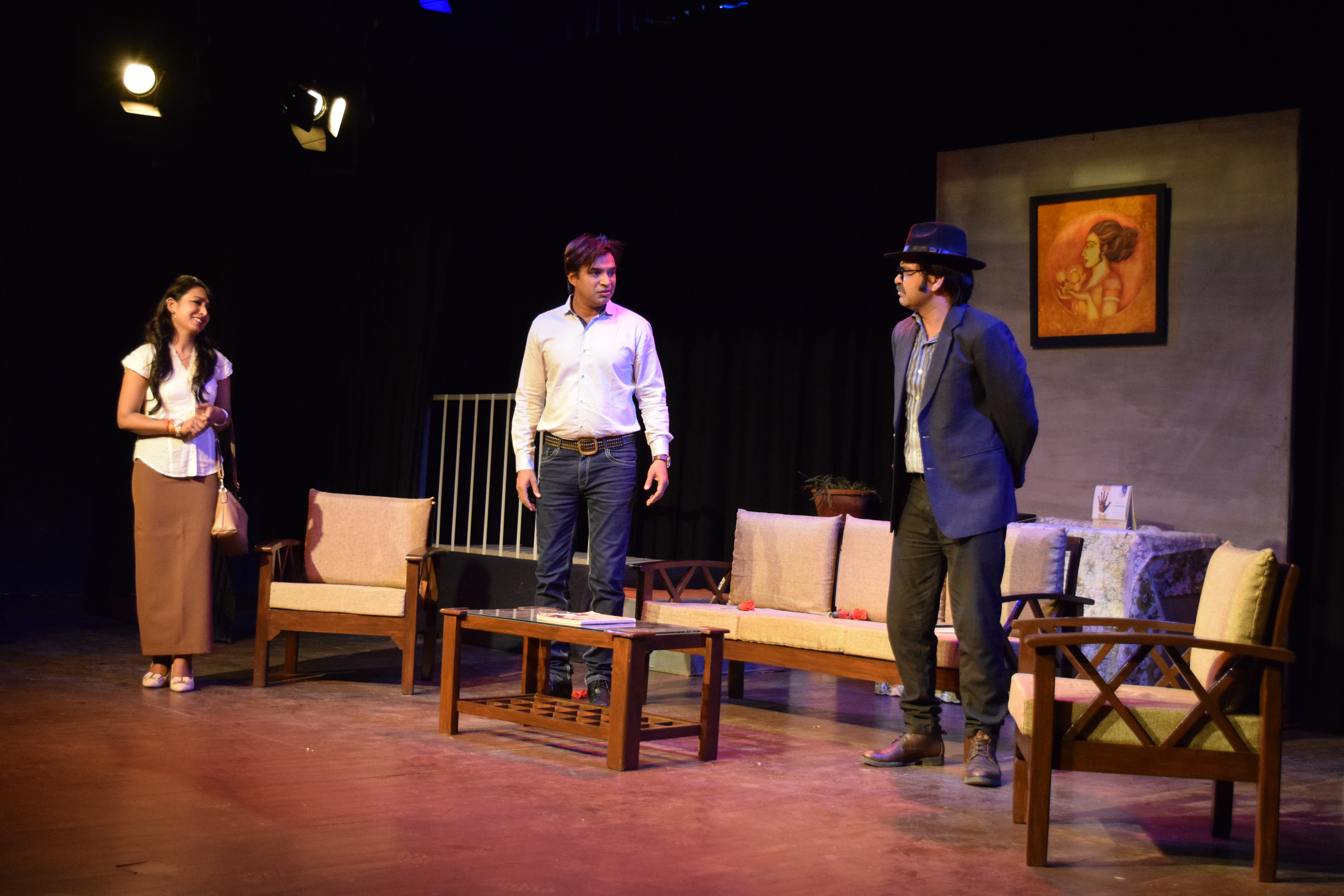
Feisal Alkazi and his private rehearsal space – Teesri Manzil, South Delhi
As training in theatre is of high value in Delhi, there is a need for students to experience the stage as much as possible. It becomes impossible for students to do theatre without the experience of a stage,lights or sets. Both Mahesh Vashistha and Feisal Alkazi have found the answers and that too within their own homes! Both these thespians have created beautiful auditoriums within the upper floors of their homes. Both these spaces are intimate and are not open for the public, which in other words means is not for commercial gains but rather for training and also for holding small intimate shows for a discerning audience.
Feisal is of the opinion that one must allow theatre to enter homes and allow the audience to become a part of his large family. He says, ‘ Most actors have been with me for as much as 25 years and above and they have been an integral part of my life, hence I see new audiences as the same. I am just extending the Teesri Manjil,or my third floor to my family who should not be taken as some disconnected people.’ Radhika Alkazi echoes much the same as she receives each one of her guests with warmth and enthusiasm and both she and her son Arman take immense joy in serving each guests fresh home made kebab rolls, biryani and wine.
Mahesh Vashistha whose students have painstakingly made the auditorium with him extends his performance space free of charge to theatre practitioners not only across Delhi and Gurgaon but anyone who wishes to perform there. Both these auditoriums might seem like one as small steps but careful attention has been given both by Feisal and Mahesh regarding the technicals of an auditorium. Feisal has painstakingly thought of the lighting ( having over 20 set lights including pars and LEDS and a dimmer) and the correct sound proofing of the stage. Mahesh has not only kept the lights and stage setting in mind but has also kept the make up rooms in mind of the actors, and also has carefully insulated the place.
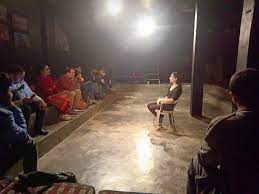
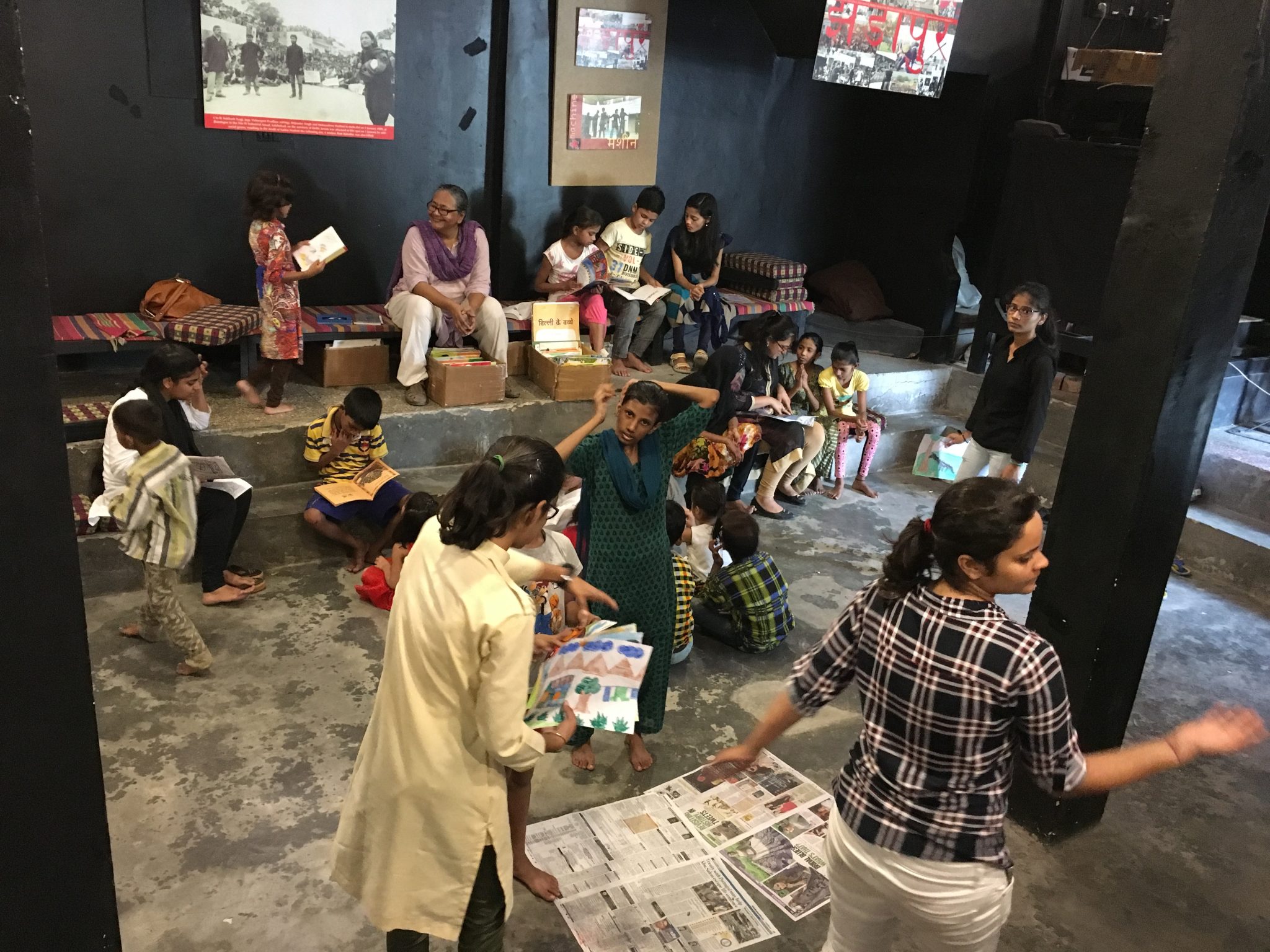
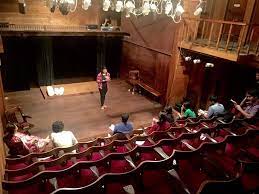
Akshara Theatre – Baba Khadak Singh Marg, DelhiKaala Dibba Actor Factor Studio 3rd Floor, 416/2 Ghitorni Market
It is heartening to see such magic being created and to be lucky even to have open access to these performance spaces. Such free flowing needs based training venues are going to bring more thespians to do the same with their homes. This will make as Feisal wishes and does, a family of theatre and not mere disconnected spectators who come and do not feel the intimacy of theatre due to the daunting presence of the mighty auditoriums.
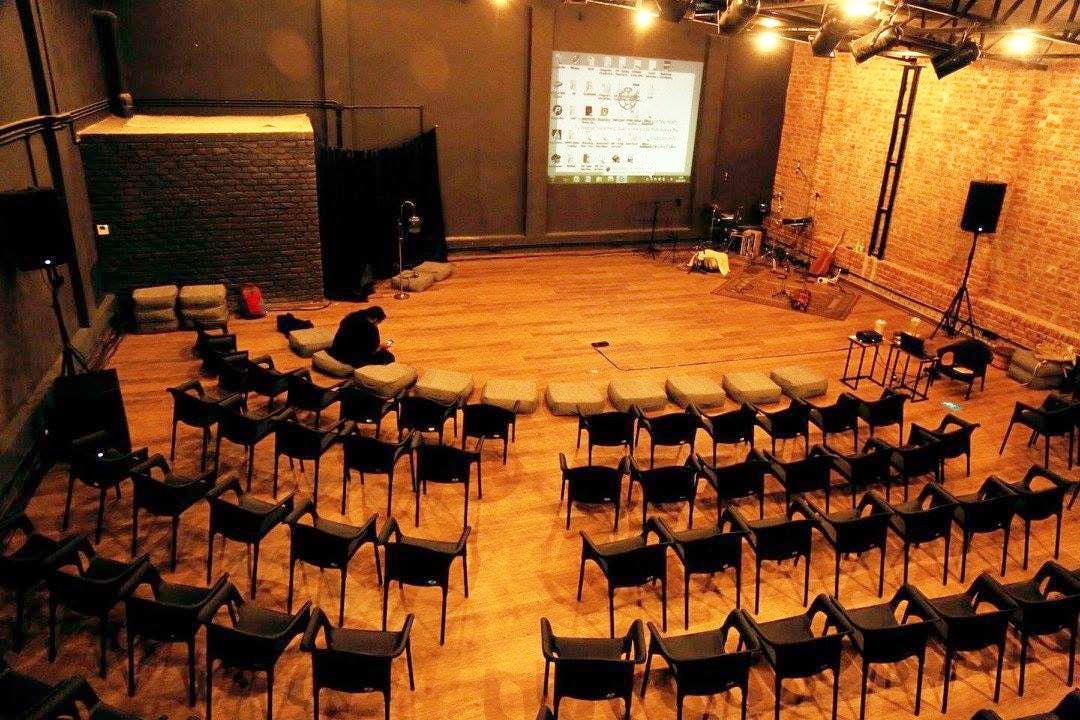
Black Box Theatre, A 68, Okhla Industrial Estate, Phase 2, Delhi
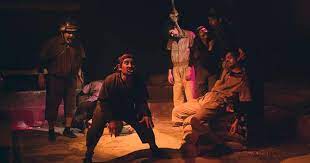
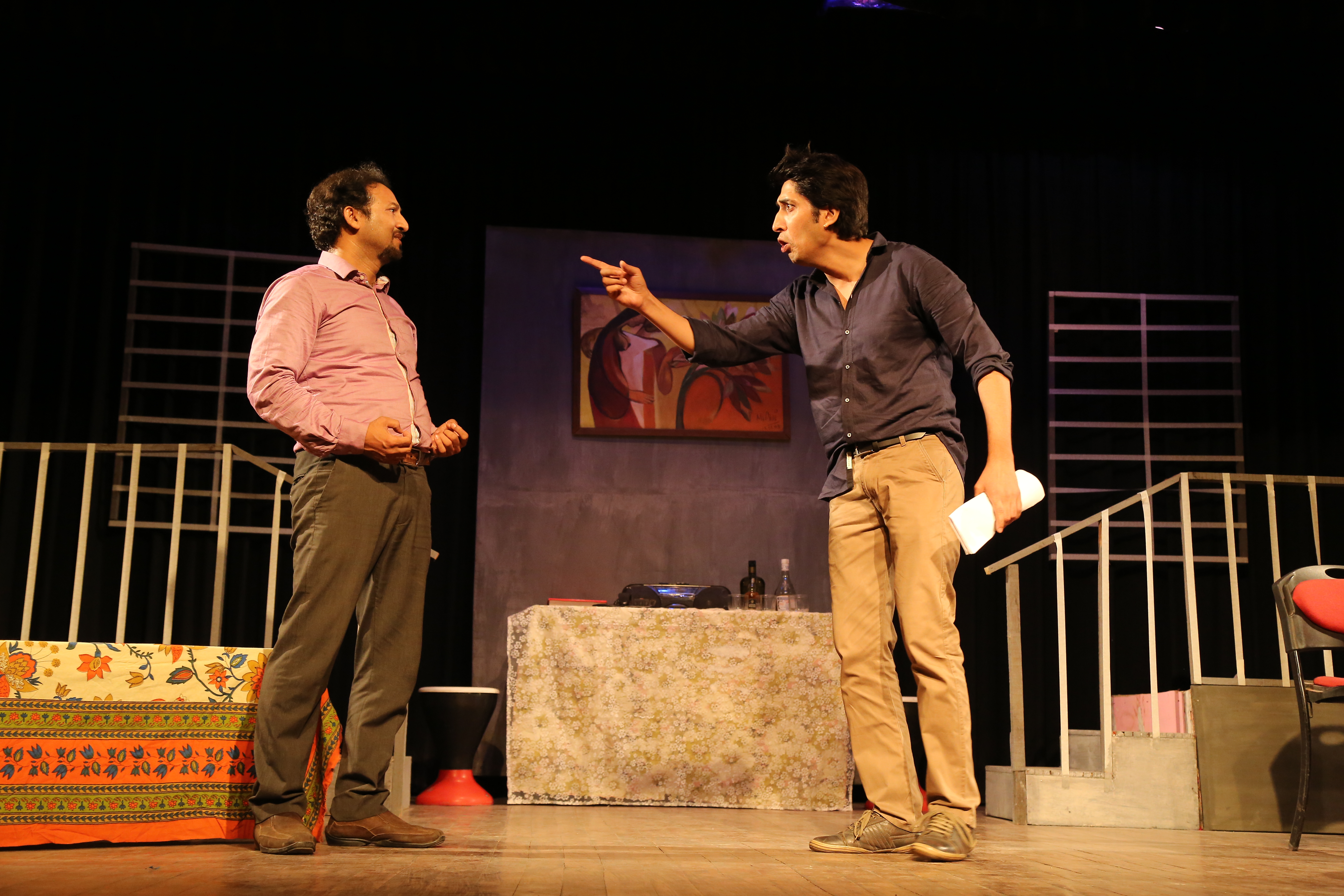
The informal performance spaces have come up because theater is becoming un-affordable because of lack of revenue and astronomical cost of auditorium spaces in Delhi. Leaving you images of some of these spaces which offer hope for survival of Amateur theatre in Delhi. More about it in the next piece by Gouri Nilakantan
Playwriting for Children
Its 2017, a time to retrospect in the new year and yet bask in the old. I was rummaging through my old files on the internet and came across a few plays I had written for children. It was both enlightening and amazing to see the play across the screen, I re read them renewed interest…yes they spoke…I could see the language across the stage, the actors and the magical sets with the green yellow hues across the stage and the twinkling lights. Each one of the childrens’ plays that had been written by me made sense to me and the actors. It made me wonder if they were worth publishing and whether it would be liked by others. I was just not sure, since such few plays are actually published and find their way into the market.
So essentially what makes a good play script for children? What makes it “tick”? What will create an market for the scripts to be published. This reminds me an incident that made me realize what “ not to do “ in a children’s play.
In my early years of my career as a theatre person I was teaching drama for children between the kids of 8-14 in a prestigious school in Gurgaon. The principal, a very uptight and proper person requested me to write a script on Mother’s day. I was excited since I really had not written much before it would be challenging to write something that was interesting enough to watch. I decided to write a script set in contemporary Urban India, a place like Gurgaon and then use an ancient time period as the main episode in a flashback. So I decided to show the changes in time by changes in the way we speak English. After much deliberation I decided to use slang and words like “ cool” “ dude” “ yaar” etc in my script. I thought I had created a masterpiece. Actually I was quite delighted.
I was surprised that the principal called me to her room, I was confident that she had liked the script so much she wanted to congratulate me in person. As soon as I walked in, she seemed a trifle upset and set the script before me. I was shocked to see my entire script covered in huge red circles. Cuts and cross marks all across the page. It looked like my the results of class tenth maths exam paper. Each of my contemporary words had been circled and crossed out. I was indignant..all I could say was “ why…”. She sternly told me how improper my English was and how I could no use such words. She insistent that I choose not to use any colloquial language in my script since “ it would spoil the vocabulary of the children.” I tried to reason out with her that since the play was set in urban Gurgaon the actors had to use such words. But my protests was put down by her adamant refusal to see reason.
That incident made me realize that something was wrong in the way people understood children’s scripts. They read it through the spectacles of an adult and forget that they are first and foremost plays meant for young actors. Hence plays written for children need not follow rules of grammar and conventional usage of speech. Neither they need to make sense, for example, in the musical Wizard of Oz, the girl is thrown a tornado and her whole house is lifted in it. Charlie and the Chocolate factory we see Agustus Gloop being thrown into the rubbish bin by squirrels. All they need to be is appealing to the child and the adult viewer. They need to interesting! In all my plays that I have written for kids, I have only kept the child in mind and shall continue doing so
I would like to end this by only giving the 10 golden pointers to be kept in mind while writing children’s plays.
1) Do not be afraid of using contemporary language and one can even throw in few phrases in Hindi, if the need be. Make it Hinglish if you want.
2) Children love comedy. They might not have the same taste as adults and might find things like “ farting” “ throwing up” comic. Add them to the script, they just add to the flavour. Please do not become prudish.
3) Another thing that fascinates children is the idea of mystery and surprise, you can use them too.
4) One should avoid, small sentences. We sometimes like to say a lot when we try and explain things. For eg. If a child has to say, “ ma I will back soon.” He can say, “ ma I will be back soon…please don’t die worrying don’t go out me and ringing up all the neighbours and searching for me all over the block. I will be back by 7 and that’s a promise!”
5) Do not worry about repeating yourself. For eg. Son says, “fine”. It can be; son says, “ fine ma…ma fine…are you listening FINE!”
6) Do keep it in mind that adults will also watch your show, so you can throw punches at them which might make them laugh. For eg. Son: Ma, why do all mothers have to say that you must eat dal, roti chawal…why can’t they say we will make healthy home made pizzas for dinner tonite! OK I DONT MIND EATING A DOUBLE CHEESE PIZZA WITH BROCOLLI TOPPING!!!
7) Don’t be eager to finish the script in 3 pages, any good script should be at least 10 pages long, 12 font roman single spaced.
8) Dont forget minor characters…please don’t make children into trees and make them wave their hands in the air doing nothing, make it interesting like a “ old white haired talking tree” or a “ saucy sarcastic cactus”.
9) Do add a song or a jungle or some silly rhymes they make the script more readable and watchable.
10) Last but not the least, enjoy the task…and forget daunting principals…goodluck!!!
Folk Theatre of India: Bhand Pather
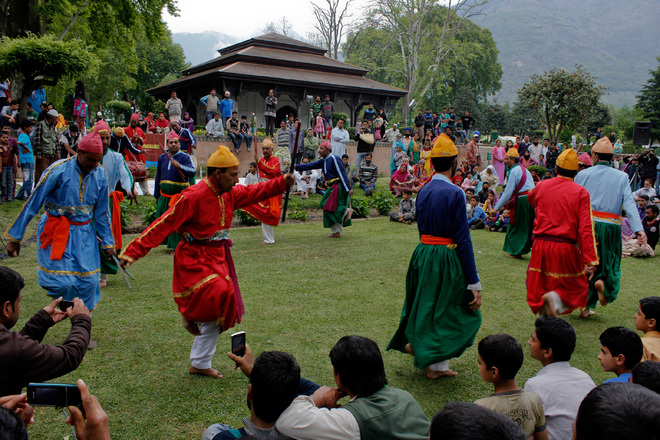
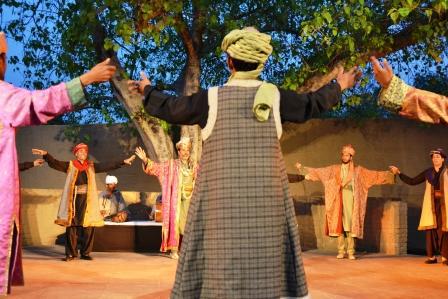
Bhand Pather is the traditional theatre that is enacted in the Kashmir Valley. Historically Bhand Pather, represented the secular fabric of the valley with both the Muslims and the Pandits being a part of the performances. Post-1990, due to all the upheaval in the Kashmiri social structure Bhand Pather has had a significant impact for it stood as an emblem of peace, harmony and brotherhood. Since then there has been a tinge of decrease in the glory and the brilliance of the Bhand Pather.
The word ‘Bhand’ means the traditional and the age-old folklore entertainers from India, Nepal, Pakistan. Historians are of the opinion, that the Bhands entered the Kashmir Valley from Persia due to the onset of Muslim royal courts in India around the 14th Century. Bhand Pather is etymologically derived from two Sanskrit language words “Bhana”, which is a drama of satire and is sourced on the Natyashastra by Bharata, and “Pather” which means a character in a play.
The folk theatre is an amalgamation and a unique striking blend of singing, acting and storytelling. Farce is the centric component of this art form which is complemented by the satirical and the humorous Pathers or storylines.
The abode of Bhands in modern-day Kashmir is predominantly in Gondpora, Shaangus and Muhipora of the Anantnag district. They are also found in some other places like Kokernag, Frisal, Qayamooh.
Bhand Pather is considered as an ancestral endowment, a knowledge a skill that is passed down the generation as legacy and with the will to keep the theatre form alive. The Kashmiri societal fabric is the central theme of all the plays and is at the very core of these performances. The nature of the theatre asks the performance to be lively, energetic and high interactive. The play performances are designed such that they are best enjoyed in open spaces such as under the shades of lofty Chinars, open compounds, in weddings with the aim to invoke satire, humour and bring a reflection to the society. A conscious effort has been made to ensure that plays do not deal with tragic subjects.
The form had thrived and grown manifolds during the peaceful times in the valley. However, with the rise of anti-societal elements, the art form has given the theatre form a huge setback. Society must progress towards peace and let the lost theatre form regain its formal glory.
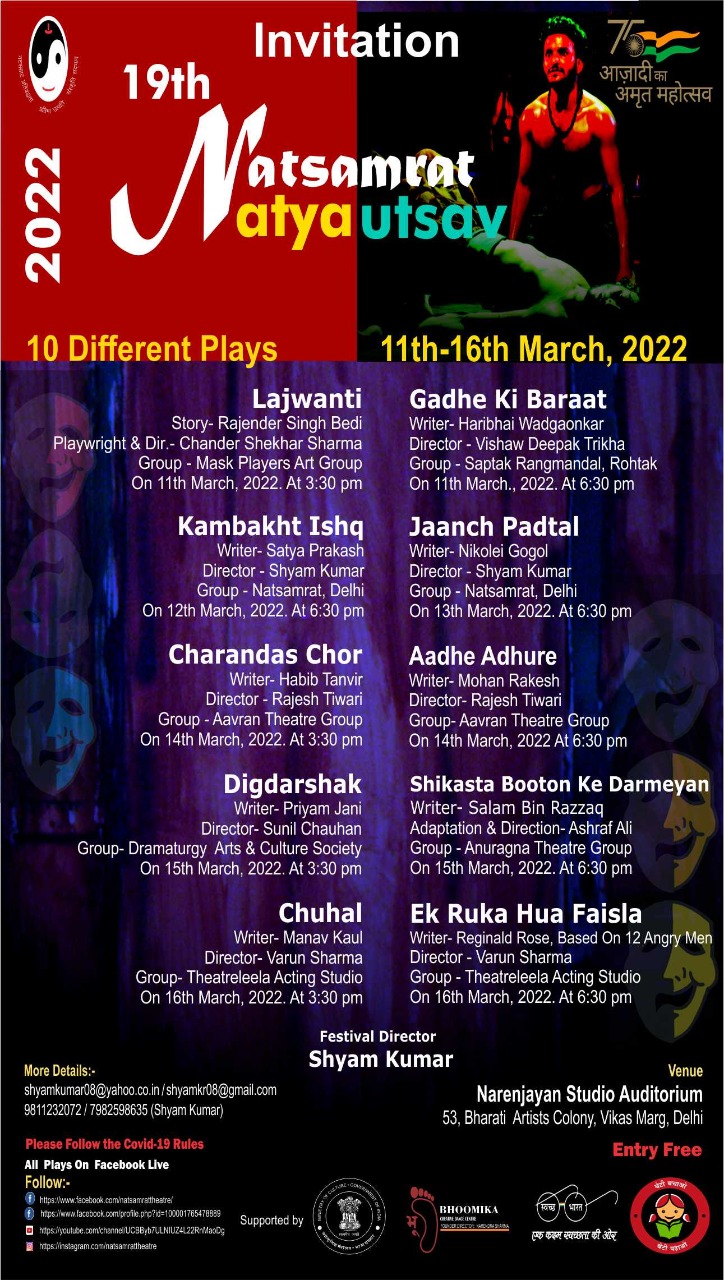
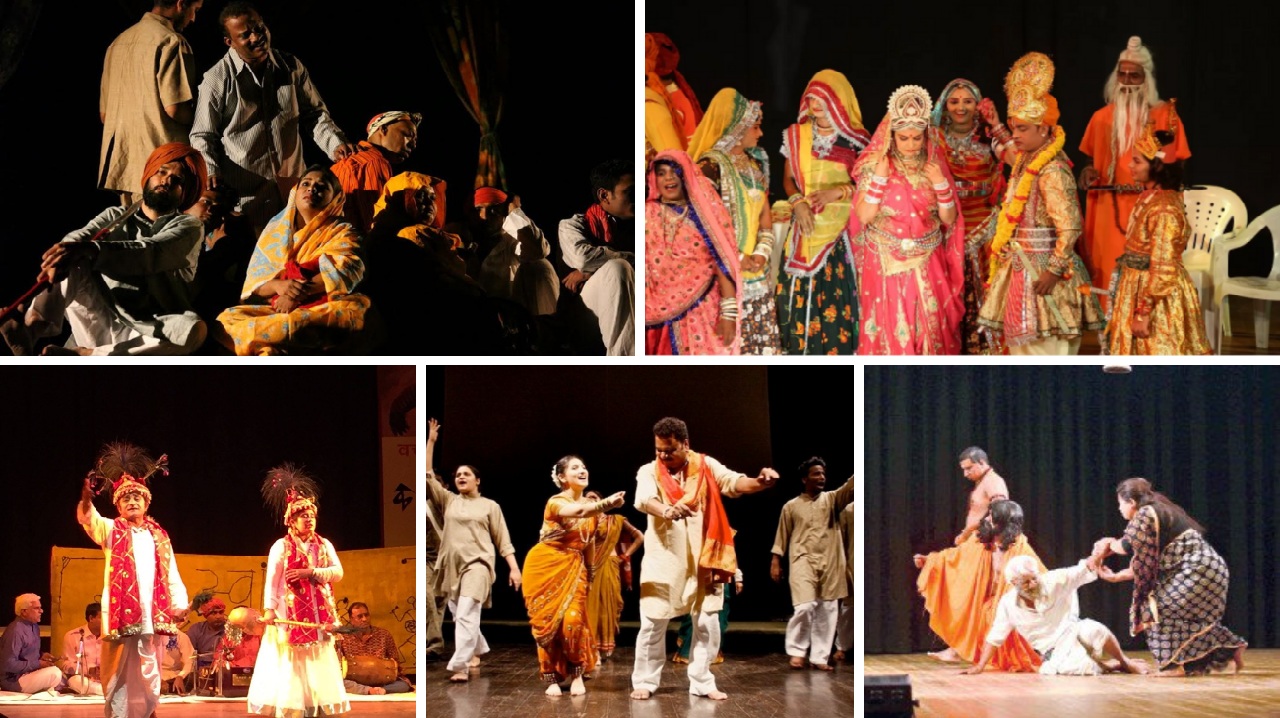
During the six-days there will be participation from ten different directors on one platform. The directors are: Chandershekhar Sharma, Vishaw Deepak Trikha from Rohtak, Rajesh Tiwari, Ashraf Ali, Varun Sharma, Sunil Chauhan and Shyam Kumar and the plays are ‘Lajwanti’ , ‘Gadhe Ki Barat’ , ‘Kambakht Ishq’, ‘Jaanch Padtal’ , ‘Charandas Chor’ ,‘Aadhe Adhure’ ‘Digdarshak’ , ‘Shikasta Booton Ke Darmiyan’ ‘Chuhal’ & ‘Ek Ruka Hua Faisla’.
19th NATSAMRAT NATYA UTSAV and 14th NATSAMRAT THEATRE AWARD opens 11th March
Over Ten Theatre Groups will participate in the theatre festival
NATSAMRAT Natya Utsav has now come of age. Oscar Wilde once said,
“I regard theatre as the greatest of all art forms, the most immediate way in which a human being can share with another the sense of what it is to be a human being”.
If you agree, head to a fun fest that is all set to salute the spirit of Indian Theatre, Organized by Natsamrat Theatre, the 19th Natsamrat Natya Utsav which is all set at comedy, romance and tragedy-emotions that are key to any well-lived life at Narenjayan Studio Auditorium, 53, Bharati Artist Colony, Vikas Marg, New Delhi-110001.
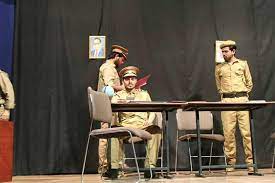
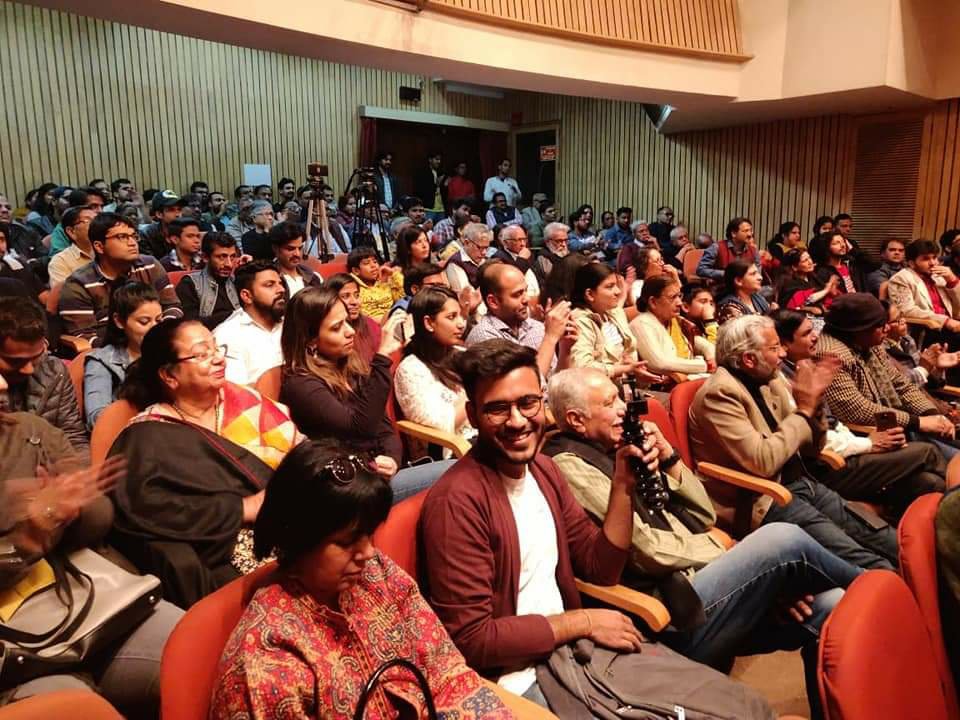
Always a jam-packed Auditorium at the performances and the Awards
Natsamrat has been at the forefront of Capital’s amateur theatre movement for the last 24 years, presenting entertaining and socially conscious theatre, participating in the prestigious theatre festivals and organizing every year theatre festival featuring work of leading theatre directors. Under the inspiration guidance of its founding director Shyam Kumar, a seasoned director and actor, Natsamrat has instituted awards which are given away every year to theatre practitioners – directot, actor (male and female), playwright, backstage performer, critic, lifetime achievement, theatre promoter – of eminence.
During the six-days we will have participation from ten different directors on one platform. The directors are: Chandershekhar Sharma, Vishaw Deepak Trikha from Rohtak, Rajesh Tiwari, Ashraf Ali, Varun Sharma, Sunil Chauhan and Shyam Kumar and the plays are ‘Lajwanti’ on 11th March at 3:30 pm & ‘Gadhe Ki Barat’ at 6:30 pm, ‘Kambakht Ishq’ is on 12th March at 6:30 pm, ‘Jaanch Padtal’ is on 13th March, at 6:30 pm, ‘Charandas Chor’ will be performed on 14th March at 3:30 pm & ‘Aadhe Adhure’ at 6:30 pm, ‘Digdarshak’ on 15th March at 3:30 pm and ‘Shikasta Booton Ke Darmiyan’ at 6:30 pm and on 16th March ‘Chuhal’ at 3:30 pm & ‘Ek Ruka Hua Faisla’ at 6:30 pm.
The event will also witness the 14th Natsamrat Theatre Award in eight categories – Best Writer, Best Director, Best Actor, Best Actress, Best in Back-stage, Best Critics, Lifetime Achievement Award and Best Theatre Promoter for those who have contributed significantly to the theatre. The award committee is consisted of award-winning playwright D.P.Sinha, Writer & Critic Jaidev Taneja, Writer & Critic Diwan Singh Bajeli, Award-winning light designer R.K.Dhingra and Writer & Director J.P.Singh.. at Muktadhara Auditorim, Banga Sanskritik Bhawan, 18-19, Bhai Vir Singh Marg, Gole Market, New Delhi-110001.
Symbolism and Stanislavsky
Powered By EmbedPress
According to the Merriam Webster dictionary, Symbolism is defined as- the art or practice of using symbols especially by investing things with a symbolic meaning or by expressing the invisible or intangible by means of visible or sensuous representations: such as a: artistic imitation or invention that is a method of revealing or suggesting immaterial, ideal, or otherwise intangible truth or states.
b: the use of conventional or traditional signs in the representation of divine beings and spirits. However, Symbolism signified something much deeper than its modern counterpart, for the French, The Russians, and the Belgians in the 19th century. Symbolism was an art movement of French, Russian and Belgian origin in poetry and other arts seeking to represent absolute truths symbolically through language and metaphorical images.
Symbolism was a reaction in favor of spirituality, imagination, and dreams. symbolism originated in the revolt of certain French poets against the rigid conventions governing both technique and theme in traditional French poetry, as evidenced in the precise description of Parnassian poetry. The Symbolists wished to liberate poetry from its expository functions and its formalized oratory in order to describe instead the fleeting, immediate sensations of man’s inner life and experience. They attempted to evoke the ineffable intuitions and sense impressions of man’s inner life and to communicate the underlying mystery of existence through free and highly personal use of metaphors and images that, though lacking in precise meaning, would nevertheless convey the state of the poet’s mind and hint at the “dark and confused unity” of inexpressible reality. Some writers, such as Joris-Karl Huysmans, began as naturalists before becoming symbolists; for Huysmans, this change represented his increasing interest in religion and spirituality. Certain of the characteristic subjects of the Decadents represent naturalist interest in sexuality and taboo topics. Still, in their case, this was mixed with Byronic romanticism and the world-weariness characteristic of the fin de siècle period.
Such masterpieces as Verlaine’s Romances sans paroles (1874) and Mallarmé’s L’Après-midi d’un faune (1876) sparked a growing interest in the nascent innovations of progressive French poets. The Symbolist manifesto itself was published by Jean Moréas in Le Figaro on September 18, 1886; in it, he attacked the descriptive tendencies of Realist theatre, Naturalistic novels, and Parnassian poetry. He also proposed replacing the term décadent, which was used to describe Baudelaire and others, with the terms symboliste and symbolisme. Many little Symbolist reviews and magazines sprang up in the late 1880s, their authors freely participating in the controversies generated by the attacks of hostile critics on the movement. Mallarmé became the leader of the Symbolists, and his Divagations (1897) remains the most valuable statement of the movement’s aesthetics. In their efforts to escape rigid metrical patterns and to achieve freer poetic rhythms, many Symbolist poets resorted to the composition of prose poems and the use of vers libre (free verse), which has now become a fundamental form of contemporary poetry. The Symbolist movement in poetry reached its peak around 1890 and began to enter a precipitous decline in popularity about 1900. Symbolist works had a strong and lasting influence on much British and American literature in the 20th century, however. Their experimental techniques greatly enriched the technical repertoire of modern poetry, and Symbolist theories bore fruit both in the poetry of W.B. Yeats and T.S. Eliot and in the modern novel as represented by James Joyce and Virginia Woolf, in which word harmonies and patterns of images often take preeminence over the narrative.
Symbolist painters favoured works based on fantasy and the imagination. The Symbolist position in painting was authoritatively defined by the young critic Albert Aurier, an enthusiastic admirer of Paul Gauguin, in an article in the Mercure de France (1891). He elaborated on Moréas’s contention that the purpose of art “is to clothe the idea in sensuous form” and stressed the subjective, symbolical, and decorative functions of an art that would give visual expression to the inner life. Symbolist painters turned to the mystical and even the occult in an attempt to evoke subjective states of mind by visual forms.
Dramatists also took their lead from the French Symbolist poets, especially from Mallarmé. As drama critic for La Dernière Mode during the 1870s, Mallarmé opposed the dominant Realist theatre and called for a poetic theatre that would evoke the hidden mystery of man and the universe. Drama, for Mallarmé, should be a sacred rite in which the poet-dramatist revealed the correspondences between the visible and invisible worlds through the suggestive power of his poetic language. For the Symbolist playwright, the deeper truths of existence, known instinctively or intuitively, could not be directly expressed but only indirectly revealed through symbol, myth, and mood. The principal Symbolist playwrights were Maurice Maeterlinck in Belgium and Auguste Villiers de L’Isle-Adam and Paul Claudel in France. Also influenced by Symbolist beliefs were the Swedish playwright August Strindberg and the Irish poet and dramatist W.B. Yeats.
In 1904, Stanislavski finally acted on a suggestion made by Chekhov two years earlier that he stages several one-act plays by Maurice Maeterlinck, the Belgian Symbolist. Despite his enthusiasm, however, Stanislavski struggled to realize a theatrical approach to static, lyrical dramas. When the triple bill consisting of The Blind, Intruder, and Interior opened on 15 October, the experiment has deemed a failure. Meyerhold, prompted by Stanislavski’s positive response to his new ideas about Symbolist theatre, proposed that they form a “theatre studio” (a term which he invented) that would function as “a laboratory for the experiments of more or less experienced actors.” The Theatre-Studio aimed to develop Meyerhold’s aesthetic ideas into new theatrical forms that would return the MAT to the forefront of the avant-garde and Stanislavski’s socially conscious ideas for a network of “people’s theatres” that would reform Russian theatrical culture as a whole. Central to Meyerhold’s approach was the use of improvisation to develop the performances.
When the studio presented a work-in-progress, Stanislavski was encouraged; when performed in a fully equipped theatre in Moscow, however, it was regarded as a failure and the studio folded. Reflecting in 1908 on the Theatre-Studio’s demise, Stanislavski wrote that “our theatre found its future among its ruins.” Nemirovich disapproved of what he described as the malign influence of Meyerhold on Stanislavski’s work at this time.
Folk Dances of India: Bhangra
Punjab, the land of five rivers, is brimmed with energetic people full of life and colours. The folk dance of Punjab, Bhangra is a very vibrant and vivacious dance form being the ideal representative of the dynamism of the people and the state.
Historically, Bhangra dates back to the 14th to 15th century to celebrate the harvesting season. Eventually, Bhangra seeped into every happy occasion in the Punjabi culture. Earlier, the Bhangra was an amalgamation of music, beats of dhol (drum), chimta and the tumbi. In contemporary times the beats of dholki are an integral part of Bhangra. An array of other instruments such damru, dhad, dhafli etc. are also now being used in the Bhangra beats.
Bhangra is a fusion of numerous folk dances spread throughout the geography of Punjab. These dances include Jhummar, which has a 16-beat dhol cycle, from Jhang-Sial, Sialkoti from Sialkot, Sammi etc. With the flow of time, a uniform bhangra routine formulated with the local dance forms being specific sections in routine.
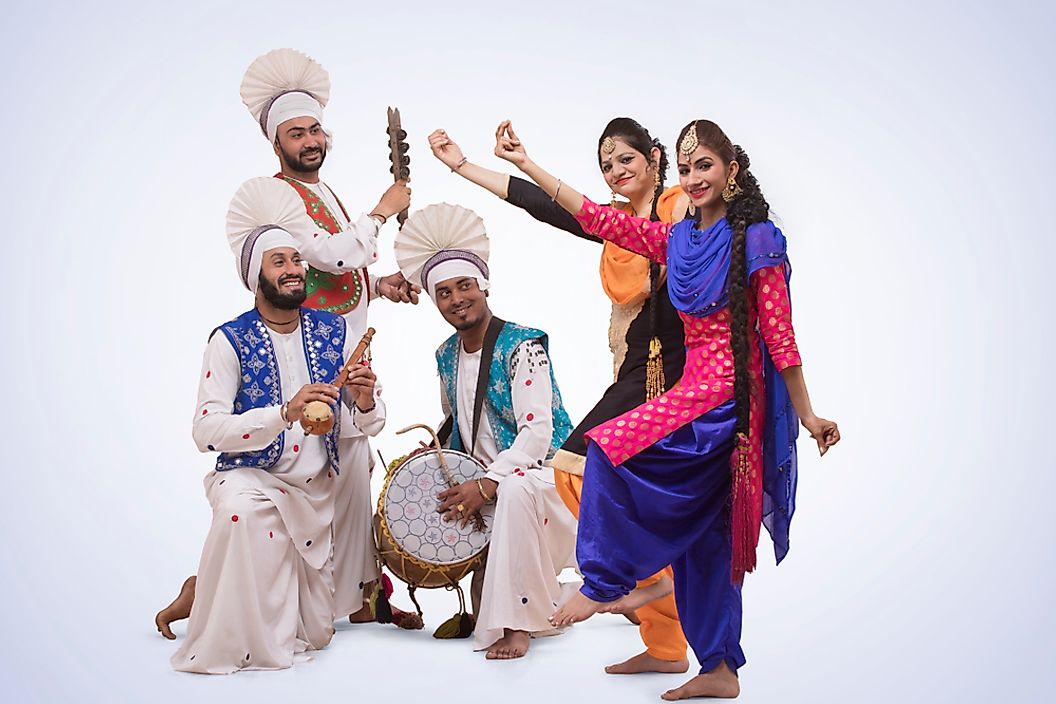
The Bhangra dress, known as ‘Bhangra Vardiyan’, comprises bright, bold colours which symbolize the celebratory and commemorative nature of the occasion. Each colour, shade holds a deep meaning like green symbolizes prosperity, yellow symbolizes mustard and the red colour is the symbol of the occasion itself. The wide array and degree of movements in Bhangra require that the dresses must allow the dancers to move freely.
The music of Bhangra has its roots in the societal issues with love, money, relationships, marriages etc. forming the base of a number of Bhangra songs. The Bhangra songs are sung in form of couplets called Bholis. The traditional Punjabi romances such as Heer Ranjha, Sassi Punnu, Mirza Sahiba etc. time and then find themselves in these Bholis. The brave deeds and heroic accounts of freedom fighters are also a part of the Bhangra music world.
The rate of evolution of Bhangra is exponential. Despite the evolution, the result is a rich diversity in Bhangra throughout the world. No matter what the style is all Bhangra dancers agree to the fact core principles of Bhangra which are that Bhangra is a dance of strength, power, grace and energy. In midst of bhangra comes the feeling of complete freedom and passion which sets free the human mind to utter joy and celebration.
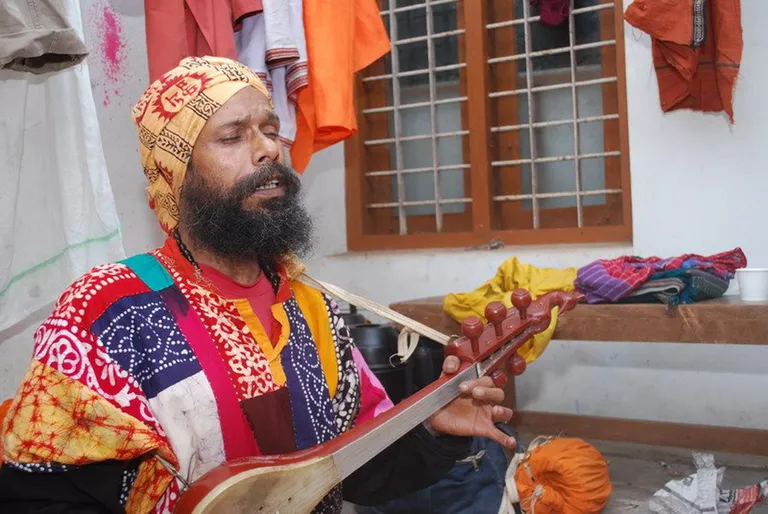
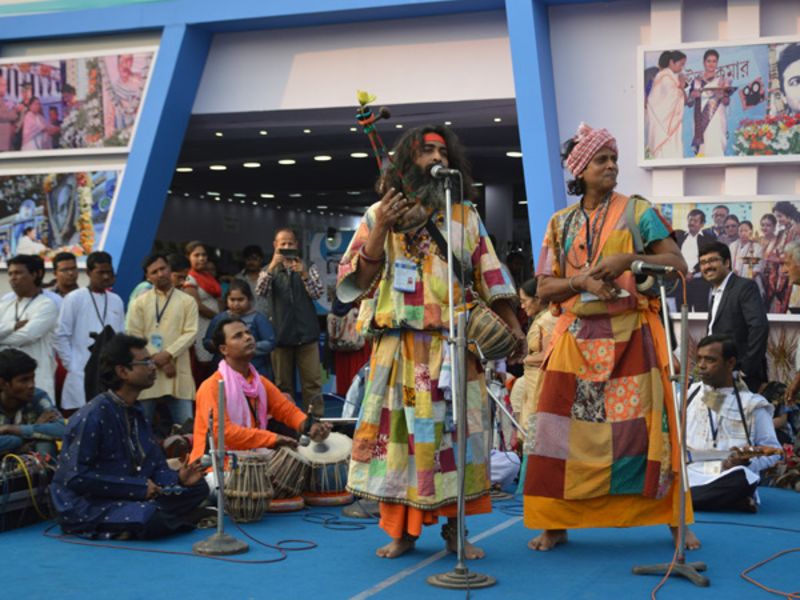
The Baul music which is predominantly spread in the Bengali region of India is a form of music that is infused with the elements of Sufism, Vaishnavism, Tantra and Buddhism. The Baul Music has been included in the Masterpieces of the Oral and Intangible Heritage of Humanity by UNESCO in 2005.
There is an inherent contrast in the composition of the Baul music, it describes and celebrates the celestial in a very earthly tone and manner. Due to this very liberal and open-ended interpretation of love, it is within the nature of the Baul music to be devotional in its spirit and soul. The Baul music transcends religion and enshrines the belief of love across the superficiality of religious lines.
The great Bengali poet Rabindranath Tagore had his work heavily influenced by the Baul music which can be evidently seen in his famous Rabindra Sangeet.
The Baul music is representative of the deep belief and preaching of mysticism in Bengali folklore. The lyrics of the Baul Sangeet are a manual of deep mysticism and longing with the mystic and the divine. Metaphysical topics also found their way in the contents of the lyrics. They stress staying unattached and unconsumed by the delights of life even while getting a charge out of them. A significant piece of their way of thinking is “Deha tatta”, an otherworldliness identified with the body rather than the brain. They look for the divine nature in people.
The Baul songs have an inherent inclination in adapting and acclimatizing to the ever-changing times and in incorporating and infusing in them the contemporary economic and societal changes.
The instrument that was most commonly used is Ektara, which is a single-stringed instrument that has a plucked drum. The Ektara is usually carved from the epicarp of a gourd and then combined with bamboo giving the instrument an earthly connection, an expression that is at the core of the spirit of the Baul music. The other instruments include the dotara which is a fretless tube with a long neck, the khamak which is a single-headed drum with an attached string.
The Baul music is currently thriving through the states of West Bengal, Jharkhand, Bihar and in Bangladesh with Baul music finding its way in the hinterlands via fairs, melas and festivals.
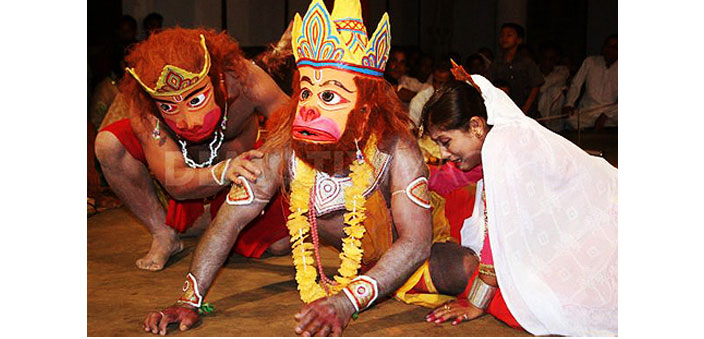
Assam has been a pioneer and the forefront leader in the evolution and development of dramatic traditions and rituals in the northeastern states of India. One such form of folk theatre that has emerged from Assam is Ankiya Naat, which is a collection of single act plays.
The history of Ankiya Naat goes way back into medieval times. It is widely believed that saint and social reformer Srimata Sankardeva was the brain behind these beautiful and intricate one-act plays. The language used in the plays is a careful blend of the Assamese poetic language dominant in medieval times, which is formally called Brajavali. The plays find Lord Krishna as a thematic centre.
There exists a special presentation of the plays in the backdrop of rich melodious music. This is called Bhoana. The play performance comprises dances, live instruments, singers and performers dressed in elaborate costumes.
Ankiya Naat performance begins with an invocation and a benediction in the Sanskrit language which is followed by presenting encomium to the Assamese Gods. The language of the encomium is Brajavali. After this, the performance moves into a prelude which is called Purvaranga. The backdrop of the performance is set up and enriched by the playing of traditional percussion instruments. These instruments are backed up by cymbals. The singers and the musician duo which is called the Gayan and the Bayan work together to produce a rich interactive musical experience.
The music is played in the performance is played at two paces namely the Bor-Dhemali and the Saru-Dhemali. The instruments used in the performance are played with hand movements that are of exaggerated nature. A central point of all the Ankiya naat performances is the Sutradhaar which essentially is the producer and the commentator. The Sutradhaar is omnipresent during the entire presentation keeping the audience affixed. The Sutradhar enters after the end of the prelude, and from this point onward the actual play performance begins.
The main aim behind the invention of the Ankiya Naat was that the art and the stories should be accessible to the common folks in medieval Assam, wherein a majority of the population had very little literacy. To further assist the audience an explanation was added after each scene of the performance ended
Ankiya Naat is the representation of the fine heritage of art and drama that has been endowed from the medieval Assamese period. It incorporates a passion for people and the praise for Lord Krishna.
Girish Karnad – Remembering A Multifaceted Mesmerising Actor, Writer, Director
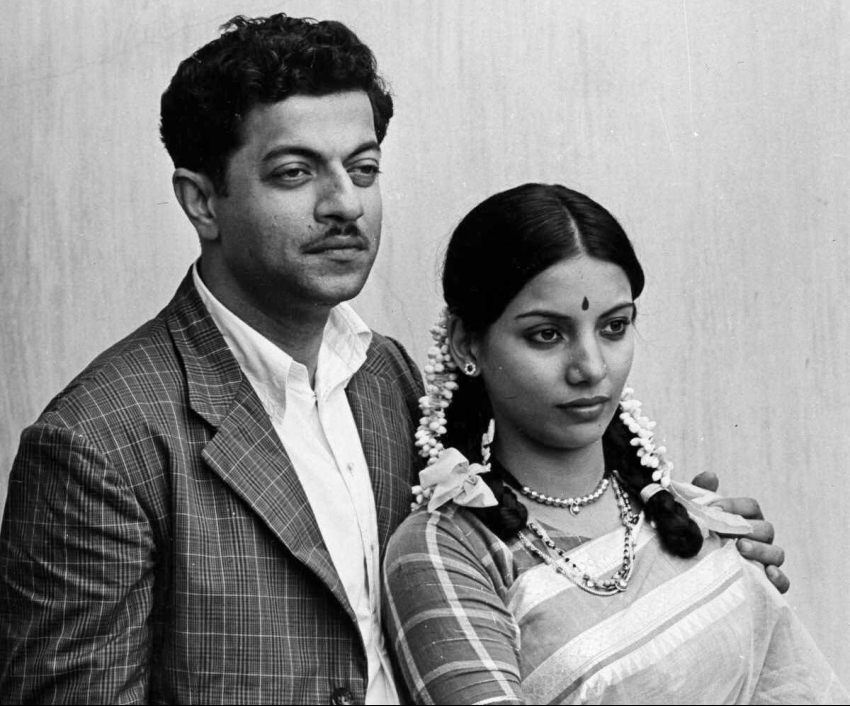
Girish Karnad’s demise on 10 June 2019 marked the end of an era in Indian Theatre. He was 81 and for the last two years suffering from a respiratory ailment that forced him to carry a portable oxygen cylinder and a thin tube across his nostrils; this however, did not prevent him from attending Gauri Lankesh’s first death anniversary and solidarity meet where the friends and admirers of the courageous journalist murdered by goons of the Hindu Right Wing, had gathered in the name of sanity and humanity.
Karnad’s passing was headline news and even those who did not know that he was one of creators of modern Indian theatre and its most intellectual contributor were aware of his highly influential presence because of his activities in other fields namely the cinema as an actor and director, and on Television, where he is remembered as Swami(Nathan)’s father in the hugely popular Television series Malgudi Days, directed by Shankar Nag, based on R.K. Narayan’s evocative short novel Swami and his Friends set in the fictional small town of Malgudi in the Madras Presidency in British India.
All said and done, his genuine versatility taken into account, he will still be remembered as a playwright who used history and (Hindu) mythology to make often telling connections with the mores of contemporary world and how they reflected the socio-political mood of the times. This is all the more creditable because his plays proved to be consistently popular and their performances well attended not only in Bangalore and other parts of Karnataka but vast stretches of India as well, over forty years or more.
Modern Indian Theatre has not really been a paying proposition except in small pockets of Bengal and Maharashtra, even there the progenitors usually sustained their Theatre activities doing other jobs: Utpal Dutt financed his highly successful Bengali productions with his earnings from commercial Hindi and Bengali films where he was very popular and well paid. On a smaller scale, Ajitesh Bandopadhyay, a charismatic stage actor and producer also used a similar strategy, when for a while he was a sought after character actor in Bengali films but had not resigned from his lectureship at a Kolkata College. How the brilliant, irascible Shambhu Mitra, sustained himself and his theatre Troup, Bahurupi, is anyone’s guess. Mitra, though, appeared in some Bengali films as an actor and as director was considered good enough to be hired by Raj Kapoor to do Jagte Raho in Hindi, and the same in Bengali as Ek Din Ratre. Having said that one may add, that neither Shambhu Mitra nor Ajitesh Bandopadhyay were professional playwrights, Utpal Dutt did write plays but only three namely Manusher Adhikare, Tiner Talvar, and Jalianwala Bagh actually hold up as gripping plays.
Girish Karnad’s case was different, he was a playwright whose plays were translated and staged in many Indian languages, in Hindi, Marathi, Gujarati, Malayalam, Telugu, Tamil, Bengali. He was paid a small royalty for the groups that staged them were cash-strapped and their efforts were appreciated by audiences who bought tickets at a very moderate price. Capitalism and its implementation in the financing and the sustaining of the arts, namely the Theatre had not allowed as yet the sale of exorbitantly priced tickets, that has become a norm in metropolitan India in the last decade.
Strange as it may sound, Karnad became a playwright by accident. He wanted to be a poet and write poems in English, win the Nobel Prize for literature; he declared tongue-in-check in a documentary made on him by K.M. Chaitanya for Sangeet Natak Akademi possibly five years ago. He wanted to be with the likes of T.S Eliot, W.H. Auden and others, of course destiny had others plans for him.
He read Mathematics and Statistics for his B.A. at Karnataka Arts College, Dharwad and stood First in the University of Karnataka. This enabled him to proceed to Bombay to pursue a Master degree in Maths and Statistics. It was from there he applied for a Rhodes Scholarship and got it. His father Dr.Raghunath Karnad was not happy with the idea, neither was his mother Krishna bai. His parents were uneasy about their son going off to England (though they would have been proud, in retrospect). They did not know if he would choose to settle down there or marry a white woman!
The result of his parents reservations on his sailing to England (even Rhodes Scholars had to travel by ship in those days) was the writing of the first draft of Yayati, based on an episode from the Mahabharata. The play was written in Karnada, the language of his endeavours in the Theatre. The story of Yayati was of the protagonist being cursed by his teacher Shukracharya for his infidelity. Yayati, then asks one of his sons, Puru, to give him his youth as a sacrifice! Karnad observed in the SNA documentary on him that the idea for the play may have been triggered off by the reactions of his parents just before his journey to England. Yayati’s first draft did not overly impress G.B. Joshi, the publisher- owner of Manohar Granthamala, Dharwad. He told the fledgling playwright that he was moved by the monologue of a dasi (female servant) towards the end of the play! It was polite way of saying try again! A re-write was read by G.B. Joshi and Manoharan, an astute literary man, and the news that Manohar Granthamala shall publish Yayati helped Karnad make-up his mind to come back to India for good.
The Rhodes Scholarship enabled him to read for a PPE (Politics, Philosophy, Economics) Degree at Magdalen College, Oxford. He also became the became the President of the Oxford Students Union, a singular honour for a student. Oxford opened up his horizons and at the same time taught him to focus on his own cultural inheritance. He knew, perhaps because of his training in Mathematics how to clearly and logically.
On return journey to India, by ship he wrote Tuglak, based on his readings on the 13th Century Sultan of Delhi Mohammad Bin Tuglak, also considered by many to be a mad genius who was prevented by his emotional affliction from achieving the social and political harmony he craved. Tuglak, over time became Karnad’s most successful play. Even today, in some corner of India it is being staged in a local language.
The year 1963 saw him back in India and with a job at the Oxford University Press in Madras (now Chennai). He was in the city till 1970 and also became associated with the Madras Players, a group of serious amateurs that did plays in English. Tuglak was staged by them, and shortly after, by Alyque Padamsee in Bombay (Mumbai) also in English. But a translation in Hindustani opened the flood-gates for the play. Ebrahim Alkazi, the Charismatic director of the National School of Drama, in Delhi, staged it at Purana Quila, a dramatic, stark, pre-Mughal fort that gave it both scale and eloquence. The play for no fault of Karnad’s became his calling card over the years-with the uninitiated.
He became a film actor and give a resounding performance as the school master driven mad by the kidnapping of his beautiful wife by the lustful brothers of the local Zamindar. He also gave a fine account of himself in Swami directed by Basu Chatterjee. He appeared as an actor in films and Television, not only because he could test himself in another medium but also to buy the freedom to pursue his activities in the Theatre, namely writing plays.
It has always difficult for playwrights and theatre directors, actors to support themselves financially and pursue their goals with dedication. One was left wondering how Vijay Tendulkar, the famous Marathi playwright manage financially. His plays, even the most successful ones like Ghasiram Kotwal, Sakharam Binder, Khamosh Adalat Jari Heye and Panchi Aesey Aate Hein, would not have brought in substantial royalties as most of the time they were produced by serious amateur groups with limited finances. Tendulkar’s forays into Parallel cinema as a script writer would have brought in steady but modest financial rewards. He did write the scripts for 14 relatively low budget films. Tendulkar managed to support his career as a playwright,y post -1970, as a film script writer.
Karnad, because of his activities in the cinema, and to an extent Television, was able to acquire a certain financial equilibrium to continue with his writing for the theatre. Badal Sarkar, his confrere from Bengal, was the Chief Town Planner of Calcutta. He resigned from this job as it impinged on his activities as a playwright and a theatre producer. He gave up the proscenium theatre for which he had written highly successful plays like Evan Indrajit, Pagla Ghora, Balki Itihas, Hiroshima, Saari Raat. He became an ardent activist of the street theatre, deriving his inspiration from the folk theatre of Eastern India.
Karnad’s making of a playwright was almost an accident. It was when the manuscript of Yayati was vetted with a hawk-eye by Prof. Keertinath Kurtukoti, his exceptionally kind and erudite mentor then living and working in Baroda, he was able to do a rewrite that was acceptable to G.B. Joshi at Manohar Granthamala. It was published in Kannada and caught on quickly. There were stage productions all over Karnataka to begin with, and then all over India.
He observes about his first play: “Oddly enough the play owed its form not to the innumerable mythological play I had been brought up on, and which had partly kept these myths alive for me, but to Western playwrights whom until then I had only read in print. Anouilh (his Antigone particularly) and also Sartre, O’Neill, and the Greeks. That is, at most intense moment of self-expression, while my past had come to my aid with a ready-made narrative within which I could contain and explore my insecurities, there had been no dramatic structure in my own tradition to which I could relate myself.” (Introduction to Three plays, Naga-Mandala, Hayavadana, Tuhlaq, O.U.P. 1994)
Making the theatre his vocation rather a profession was not easy. Karnad had to literally buy his freedom by working as actor in films and Television, directing films and making the most of the Fellowships and Awards that he got. His friend from the Manohar Granthamala days, the truly exceptional translator and fine poet A.K. Ramanujan, had deservedly become a celebrated scholar at the University of Chicago in the US, saw to it that Girish Karnad got the Fulbright Fellowship and wrote Nagamandala and got it produced by the students of the Drama Faculty of the University.
He managed his finances astutely and avoided being called a ‘rebel without claws’! He was certainly not a rebel against the establishment in his formative years. He came from the well-educated Karnataka middle-class, still under the spell of pre-independence idealism. In S.M. Chaitanya’s SNA documentary on him, Karnad says on camera, standing on the steps of an old bungalow in Dharwad that he had lived there as a child with the family when his father was posted in the town, and that Mahatma Gandhi had lived in one of the rooms on the premises! He also adds that he is the present owner of the property.
Dharwad figures prominently in Chaitanya’s documentary for many reason: first, because of G.B. Joshi and Manohar Granthamala, the publishing house that brought modern literature to the Kannada language; second, because it gave Karnad a start and then made him a writer; third, because he came to meet the major literary figures in the language, including Bendre, the great poet who always had an open house, and would happily grant forty five minutes even to an aspiring writer and sent him on his way after his son gave the traditional pinch of sugar.
Dharwad laid the foundation for the young Karnad’s literary future and also gave him, despite his genuine aptitude for Mathematics and Statistics, the confidence to study abroad and become a writer. As a youngster he used to do pretty good sketches of his heroes – the moderns of the English language like T.S. Eliot, W.H. Auden, and Sean O’Casey, who, incidentally, responded to Karnad’s request for an autographed letter by saying that he (Karnad) ought to become a writer so that others may ask for his autograph!
Dharwad also has the Someshwara temple, which, in popular lore has a connection with antiquity. It was in the tank of this temple that the boy Karnad learnt to swim. It is through this town flows the Shalmali river. He suggested to his wife Saraswati that they name their first born, a daughter, be named Shalmali, rather than Ganga or Jamuna, which were too far away for comfort. Thus the daughter of the Karnad’s was/is named Shalmali Radha.
Karnad’s literary journey had been marked by ups and downs and his quest of finding the right form for the right material been continuous.
His choice of a language for literary expression was curious. Not without a touch of humour. “While preparing for the trip [Oxford], amidst intense emotional turmoil, I found myself writing a play. This took me by surprise, for I had fancied myself as a poet, had written poetry through my teens, and had trained myself to write in English, in preparation for the conquest of West. But here I was writing a play [Yayati] and in Kannada too, the language spoken by a few million people in South India, the language of my childhood. A greater surprise was the theme of the play, for it was taken from ancient Indian mythology from which I had believed myself alienated.” (Author’s Introduction, three plays, Naga-Mandala, Hayavadana, Tuhlaq, O.U.P. 1994)
The choice of such material would not be surprising in retrospect. He had said in the SNA documentary, that his doctor father on his retirement from service in the British Indian Government in 1942-43 was given in a three-year extension and posted to Sirsi, a malaria-ridden settlement in Maharashtra. It was there that he learnt all his “Itihaasa and [tales from the] Puranas” and which stayed with him for life. His exposure to folk theatre was indeed important for his development as a writer.
“In my childhood, in a small town in Karnataka, I was exposed to two theatre forms seemed to represent irreconcilably different worlds. Father took the entire family to see plays staged by troupes of professional actors called natak companies which toured the countryside throughout the year. The plays were staged in semi-permanent structures on proscenium stages, with wings and drop curtains, and were illuminated by petromax lamps.” And then he follows up with the second example: “Once the harvest was over, I went with the servants to sit up nights watching the more traditional Yakshagana performances. The stage, a platform with a back curtain, was erected in the open air and lit by torches.” (Author’s Introduction, three plays, Naga-Mandala, Hayavadana, Tuhlaq, O.U.P. 1994)
He, like Tendulkar and Sarkar, was a product of post-independence modern Indian Theatre that dealt with the social and political problems of the day, each influencing the other. Karnad, in the SNA docu he said he considered Bijon Bhattacharya’s, Nabanna to be the forerunner of modern Indian theatre for it was written as an immediate reaction to Bengal Famine of 1943 in which 3.5 million died. The British responsible for holocaust believed that the figures of the dead were 5 million! There was a bumper harvest that year but the Second World War was on and the Japanese were marching through Burma towards India. All the boats meant for transporting the rice were burnt to impede the possibility of a Japanese invasion, what could be transported to the British army, was done, the rest was left to rot or dumped into the sea or seized by the Marwari black marketers in Calcutta. This digression aside, Nabanna was an epoch- making play. Karnad also criticized Rabindranath Tagore’s plays for being ‘too poetic’ and short on action though he readily admitted that Tagore was a great poet and had influenced important poets across languages in India in his time and a generation later.
The crypto-communist (at least he was one in his youth) Vijay Tendulkar took the Nabanna lesson to heart, and further developed it to his advantage. His important plays are set in contemporary times, and even Ghashiram Kotwal, a period piece about evil doings in public life during the Peshwa period seems like it is talking about India today.
Badal Sarkar, the Civil Engineer from Bengal Engineering College, Shibpur, who also got a Masters in Comparative literature from Jadavpur University in 1992 at age sixty four, began writing about the problems of individuals from an urban middle-class stand point, the classic example being Evam Indrajit, gradually lost faith in the existing socio-political system, including its pseudo-Marxist avatar the Communist Party of India-Marxist (CPI-M) that ran West Bengal and employed him as Chief Town Planner, a position he surrendered in 1975. He took to street theatre, mainly in small-town and rural Bengal. A new string of plays based on folk theatre forms emerged : to mention a few, Baghala Charit Manas, Dwirath, Ore Bihanga, Manushe Manushe, Janma-Vumi Aaj.
Karnad’s choice of subject to reflect the psychological and socio-political realities of our times is unusual. If Yayati, Hayavadana (based on Thomas Mann’s Transposed heads via Katha Saritsagara) and Nagmandala are set in ancient times, and Tuglaq and The Dream of Tipu Sultan, respectively from early to late medieval times, they do reflect the structure of existing societies and the classes within patriarchy and its values and have a modern ring to them. In each of plays, that number just under a dozen, including the last experimental one, Broken Images, that had an actress interacting with her image on a television screen. He was trying to juxtapose what are considered to be eternal verities with the ethical and moral demands of the contemporary world.
He writes in the introduction to Tale-Danda, set in medieval times that has enormous relevance for our times. ‘’ During the two decades ending in AD 1168, in the city of Kalyan, a man called Basavanna assembled a congregation of poets, mystics, social revolutionaries and philosophers. Together they created an age unmatched in the history of Karnataka for its creativity, courageous questioning and social commitment. Spurning Sanskrit, they talked of God and man in the mother-tongue of the common people. They condemned idolatry and temple worship. Indeed, they rejected anything ‘static’ in favour of the principle of movement and progress in human enterprise. They believed in the equality of sexes and celebrated hard, dedicated work. They opposed the caste system, not just in theory but in practice. This last act brought down upon them the wrath of the orthodox. The movement ended in terror and bloodshed.’’
‘’ Tale -Danda literally means death by beheading (Tale: Head. Danda Punishment).’’
It is difficult to ignore the reverberations these words carry for our times. In the last hundred years or more, there has been a steady erosion of human values: the introduction of mustard gas in World War-I, the dropping of the Atom bomb over Hiroshima and Nagasaki in Japan by the Americans to end World War-II and the holocaust in the same war, that resulted in the most gruesome deaths of six million Jews at the hands of the Nazis. After that all morality and ethics in the world (not excluding India) seems to have collapsed- hopefully not for good. Karnad’s play-writing must be appreciated in this perspective both for its artistry and courage.
He was after all an enlightened believer in rationality, in the efficacy of civil behaviour in civil society and a conscientious citizen and artiste. Towards the end when he was barely able to get about, be it to express outrage along with many concerned fellow citizens after the murder of Gauri Lankesh, and other equally heinous happenings. He proudly carried small placards around his neck that said, ‘Not in My Name!’ and on another occasion, ‘I am an Urban Naxal!’ He knew how to protest in a forceful, civilised and peaceful manner.
Girish Karnad was singularly lucky in finding a soul mate like Saraswati Ganapathy, a doctor trained in New York who married him when he was forty two and became his anchor. Together they had two lovely children; the first Shalmali Radha, a daughter, and the second a son, Raghu. The family served on many an occasion as his emotional and moral compass.
He had resigned as director of Film and Television Institute Pune, in 1975 after the imposition of the Emergency by Prime Minister Indira Gandhi; when he died there was/is an insidious, certainly more dangerous, undeclared Emergency in place with the BJP in power for yet another term. He had faced both events with grace and courage and practised his vocation in the arts with utmost sincerity.