The End and the Future of Theater

NYC Theatre District – Will it be the same?

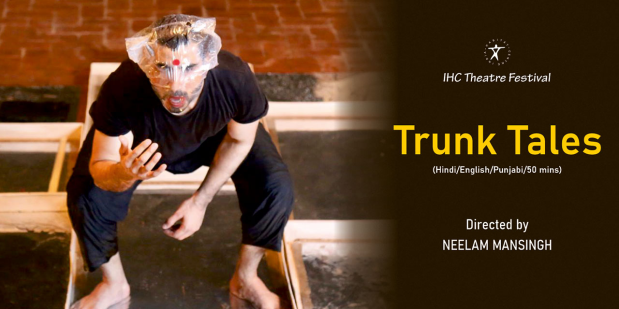
Theater halls have opened in the UK and Australia, and the lights will shine bright on Broadway after two years. It is too early to say whether the policymakers are being over-optimistic or careless. But for most of the world, specifically, India, theater shows will not go live for at least a couple of years. And even when the theaters open with safety protocols, the theater may not remain a financially viable business. Is it the end of theater as we know it? Is it the end of an art form that has been performed for at least 5,000 years? But then theater has survived the plague and the Spanish Flu. Before we speculate about the future, let’s take a moment to investigate the past.

The first obituary of the theater was written in the 1920s when the talkies ushered in a new era of entertainment. But not only did the theater survive the competition from cinema, the Broadway Book Musicals became a billion-dollar industry around the time. The first real blow to small regional and off-off-Broadway theater came from the television in the 1960s when a television set became a household item. But that did not stop Tennessee Williams and Arthur Miller from writing great plays. They forced the audience to return to the theaters. Harold Pinter, Beckett, Albee, and more recently Mamet created scintillating works for the stage despite the competition from the cinema and the television industry. The competition challenged theater to become more daring and intelligent.

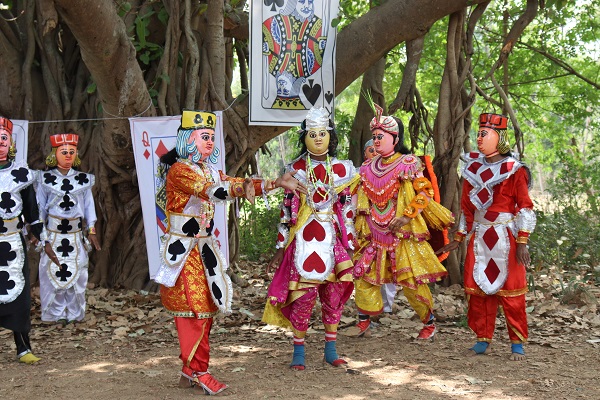
Yakshagana

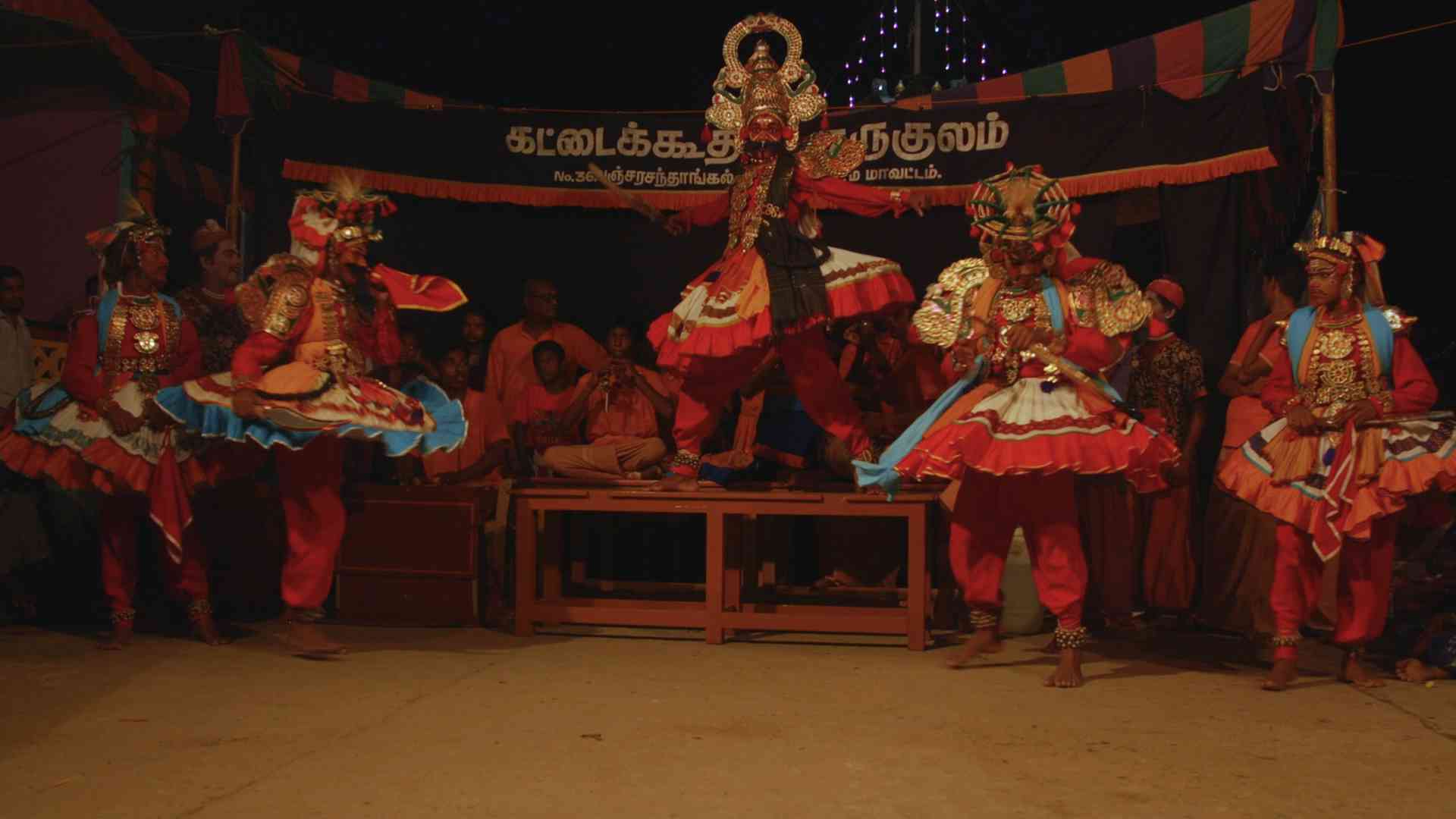
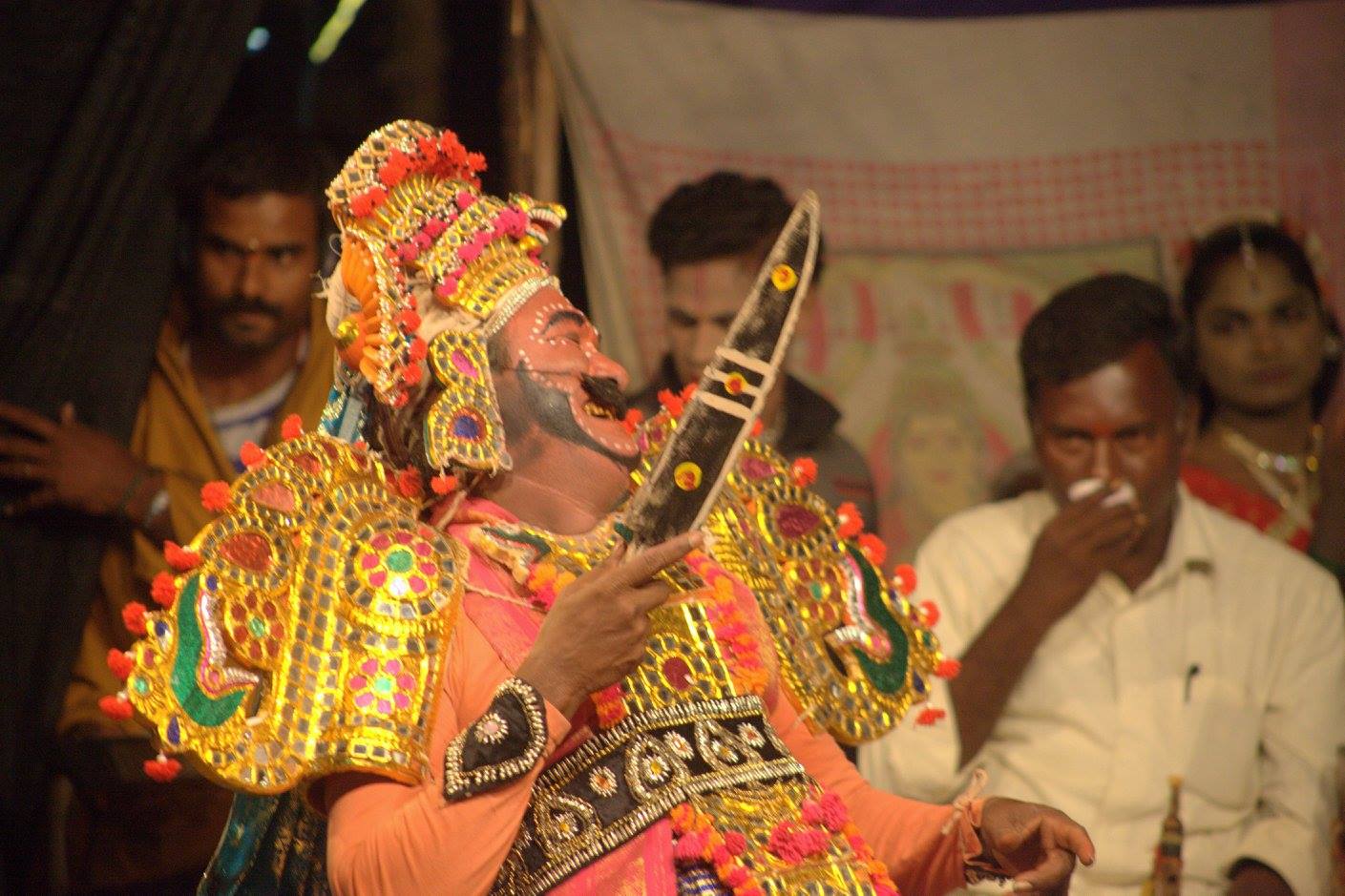
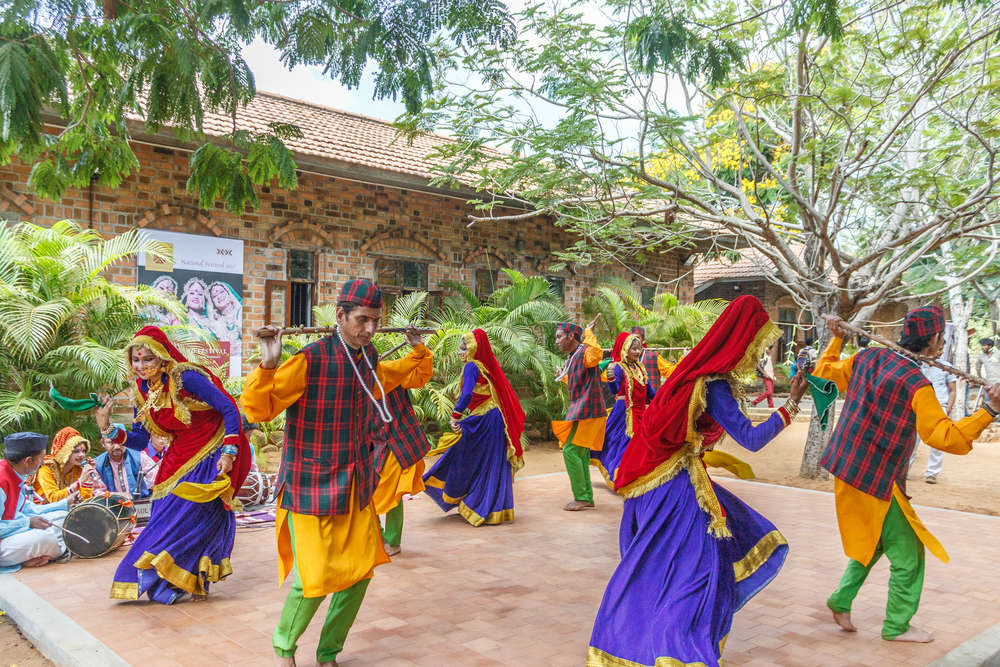
Talking of India, we must first understand that the Indian theater is more diverse than anywhere else in the world. Indian theater is in part sacred, ritualistic, and regional.  There is a deep wide chasm between the text-centric theater that is performed in the cities and the traditional theater that exists in rural India. The traditional Indian forms of performance like nautanki, pandavani, bhavai, terukkuttu, yakshagana and even the classical theater Koodiyattam have a significant regional presence and local patronage. Some of these forms are a few thousand years old and we can assume they have survived epidemics, attacks by Mughal invaders, World wars, famines, floods, earthquakes, poverty, and competition from TV and cinema. Did they survive because they spoke to the audience in their dialect? Are they immortal because they tell the local stories of the land?  Or did they survive because of their sacred-spiritual nature and patronage by the temples? The temples were the seats of arts and any attack on the temple was an assault on the arts and the artists of the land. Hence this continuity of art forms is no small miracle. But the urban theater has neither local patronage nor loyalty of committed artists. Therefore, it is starting to crumble under competition from OTT and entertainment in the digital space.

Modern theater, such as we see in the cities, lacks the spectacle of traditional theater and sometimes even entertainment. The traditional theater is non-realistic and highly stylized. The costumes, make-up, body movements, gestures, music and accentuated abhinaya/acting create a performance that is moving, surreal and mesmerizing. The modern theater relies heavily on dialogue and story-telling through realistic verbal acting. The sitcoms on TV and binge-worthy shows on the OTT are also pivoted around the story and dialogue. Why would someone watch a dramatic performance cramped in a theater when they could watch drama on their phones sitting on their couch or even the toilet seat? It isn’t just the ease of watching drama on the phone, but the addiction to the phone that has become an impediment. Not to fault the story-telling. The shows are gripping and fast-paced. But then it is so easy to manipulate the audience and keep them hooked till the end. There are formula sheets, beats, and tricks that every writer in the industry uses to keep you glued to your phone.

The straight plays in Delhi and even Mumbai theaters be it English or the regional languages are laced with activism. Polemics has replaced aesthetics. Left-leaning plays have so much propaganda thrown in the script that the audience can see through it. Can we really blame the audience for not wanting to watch social activism on stage? Directors think they can compensate aesthetic appeal with lighting but they forget the audience is not here to watch a sound and light show. The audience craves good stories. It wants to see life through a clean lens. The audience is done watching Brecht, Beckett, Karnad, and Tendulkar. Bedroom comedies are passé. OTT gives the audience enough sex, comedy, and violence. What can you give them on stage that TV and cinema can’t?

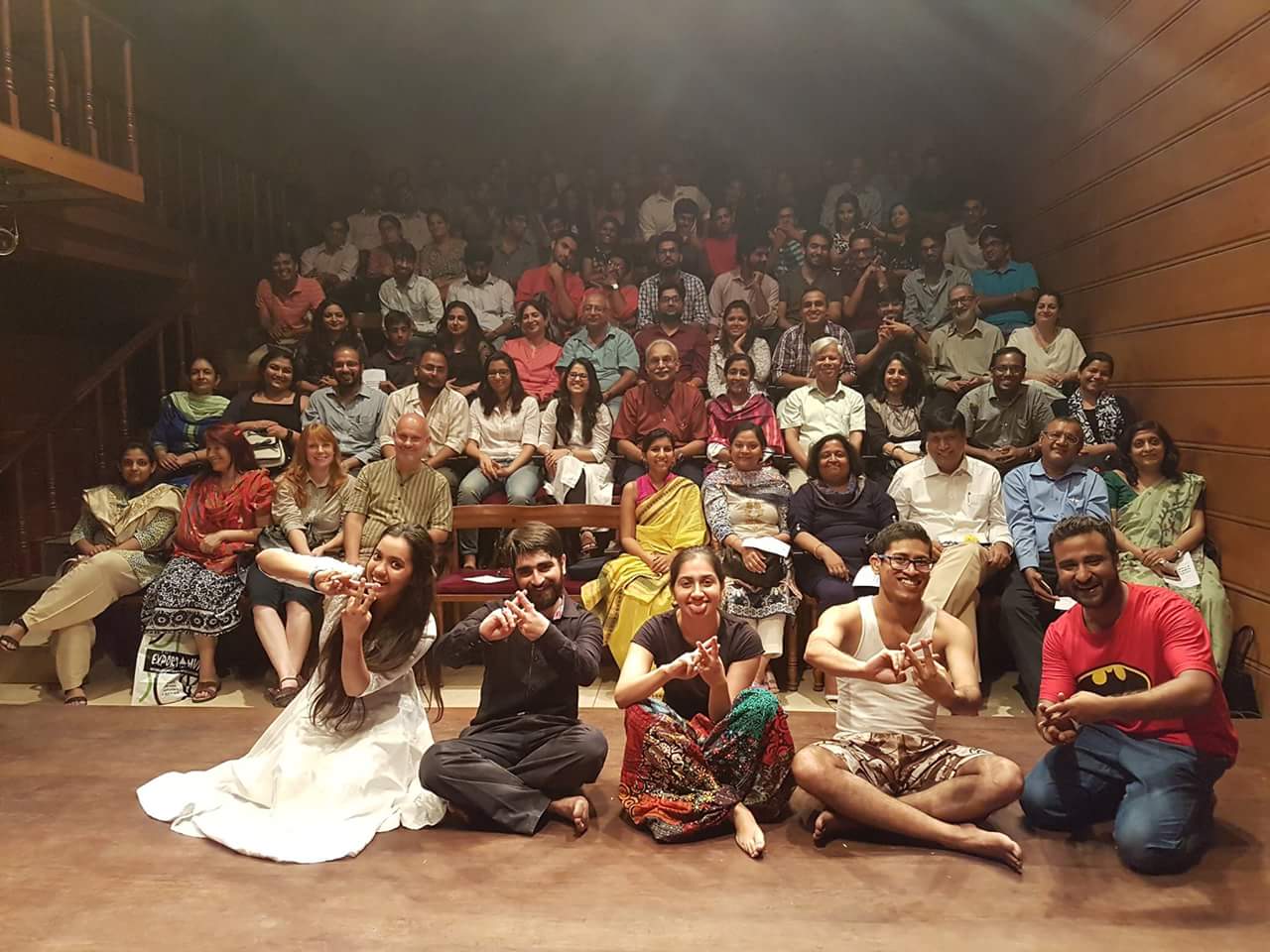
Audience at the Awards

The irony is the directors and actors who are flag bearers of socialism in the theater circle abandon their ideals to work for the commercial OTT and Cinema. The crew and extras are treated as third rate citizens in Bollywood, worse than apartheid, but the champions of social equality on stage never raise their voice against the injustice. And let’s not even discuss the underbelly of theater where fresh actors are made to sweep floors in the name of training. While the artists in traditional art forms are committed to the tradition and the art, the modern actors distance themselves from the theater as soon as they break into the TV/OTT industry. Without fresh ideas and dedicated theater practitioners, theater as we know in Indian cities, is at the brink of extinction.

The pandemic has given us distance and time away from the theater and rehearsal halls to re-imagine our future. It has been a time to experiment and create many futures of theater. Theater companies and individual practitioners moved the theater online within a few months into the pandemic. Broadway HD has been streaming ace-quality theater productions shot on multiple cameras since 2015. National Theater and the Royal Opera House streamed their old productions at the start of the lockdown in UK. The Melbourne Theater Company has recently launched its Digital Theater version where they stream their running shows for a limited time. Going forward, all their productions will be available to watch online for $25. While the digital productions are a great option for the theater aficionados, but a good digital production needs multiple cameras and sophisticated editing.

Watching theater production with limited camera movement can be a tad boring because our minds compare it to the cinema and TV shows. Our minds are accustomed to two second shots. Watching an hour-long play set in the same space, in more or less the same frame becomes tiring unless it’s a fast-paced comedy like ‘One Man, Two Guvnors’, by National Theater. The musicals lose their grandness on the small screen. Lest we forget, the audience goes to the Musicals for live music. The experience of watching a musical on a small screen is unsatisfying.

Independent theater groups experimented with and adapted short stories for online presentations. It started with some artists performing or even reading short stories and plays live on Zoom. The production quality of the online plays was worse than YouTube content because they were shot on phone without professional lighting and sound equipment. The shows were under 30 minutes to accommodate the audience’s attention span. Story-telling was restricted by time and technology. As time passed these experiments faded away and it became clear that the future of theater is not online.

One future of theater could be virtual reality theater that has been in the making since 2016. National Theater has launched a studio where they will use virtual and augmented reality to create shows for a communal virtual experience. It’s the high-tech, AI technology used for immersive story-telling. But this future requires a capital investment of 100 plus cameras, edit suites, and technical crew on top of the cast and the musicians. How many companies can produce this kind of theater? How many of us can afford a ticket to this show?

Of the many futures of theater, one future could have its origin in the past. Richard Schechner, a performance theorist and a veteran performer has been working with Natyashastra for over four decades. Dr. Bharat Gupt, a classical theorist and Natyashastra expert, is mentoring students in Greece, Romania, India and the US to create performances using the principles of Natyashastra. These performances are an organic convergence of music, movement, myth, abhinaya and story. Theater makers could look to Irish story telling as one kind of performance. This is our time to study the past so that we can shape a meaningful future.

Whatever form the theater takes from here, it has to become more immersive, aesthetic, poetic, non-realistic, surreal, intense, and communicative. The stories have to break fresh ground. The writers have to muster courage to experiment with the shape and the structure of the story. The performers have to make a connection with the audience. Theater has to go beyond activism and entertainment to become truly transformative and cathartic.


Folk Dances of India: Ghoomar

Dhanak Preet ki sar pe odh kar ghoomar ghoomar ghoome

O lalak reet sab jag ki chhord kar ghoomar ghoomar ghoome

Dhola wale thaant, ghoomar ghoomar ghoome re baisa, ghoomar ghoome re

Ghoomar Lyrics, Padmaavat

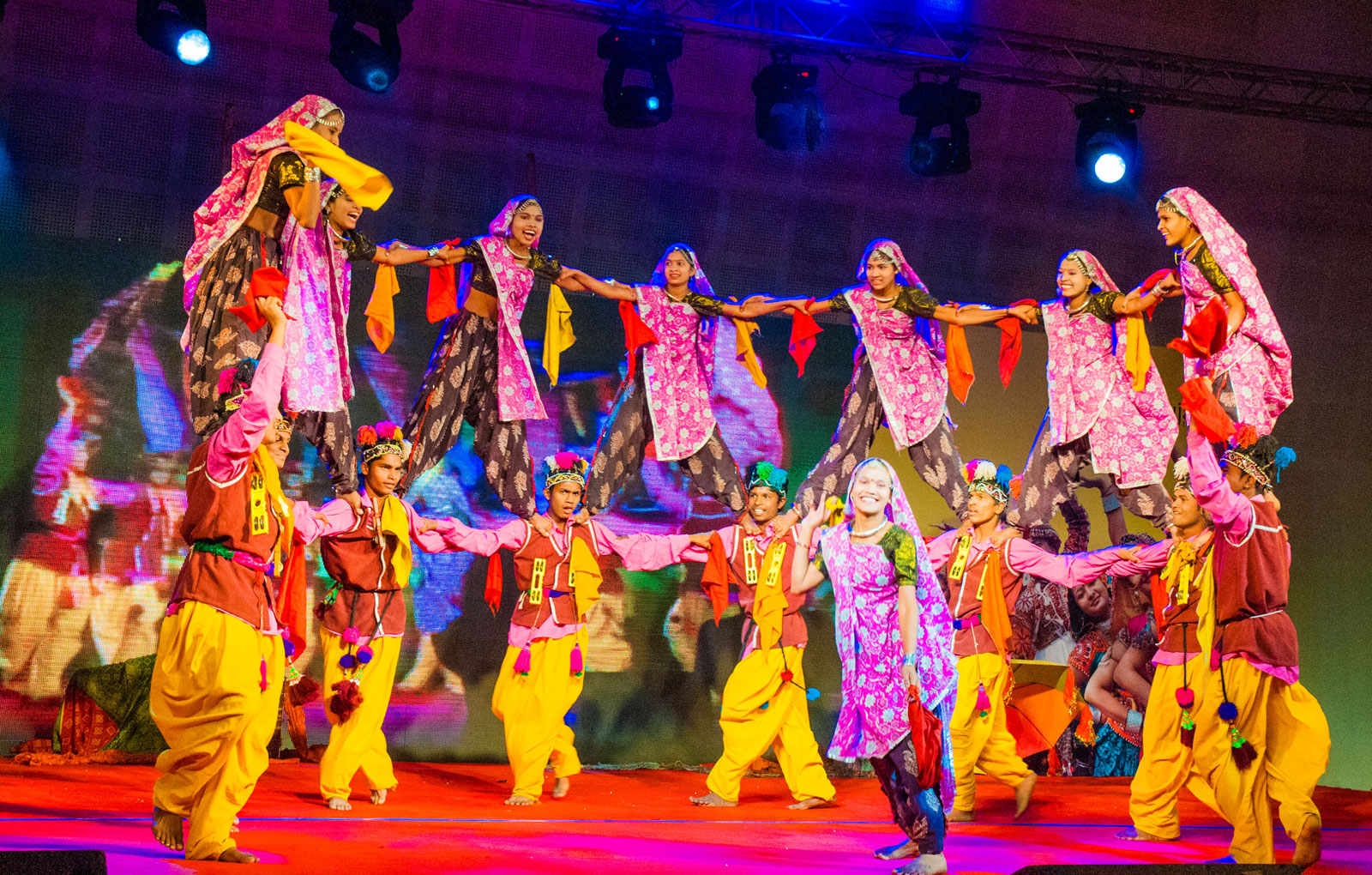
Rajasthan is well famous for its vibrant traditions, enthusiastic dance forms and elegant culture. Ghoomar is just another spectacle of this diversity and culture that started with the Bhil tribe to worship Goddess Sarasvati and is now embraced by other Rajasthani communities.​1​ Typically performed by women, Ghoomar gained popularity during the reign of Rajputanas, who ruled Jaipur after defeating the Bhils. It is believed that the two communities embraced this folk dance form to signify peace.​1​

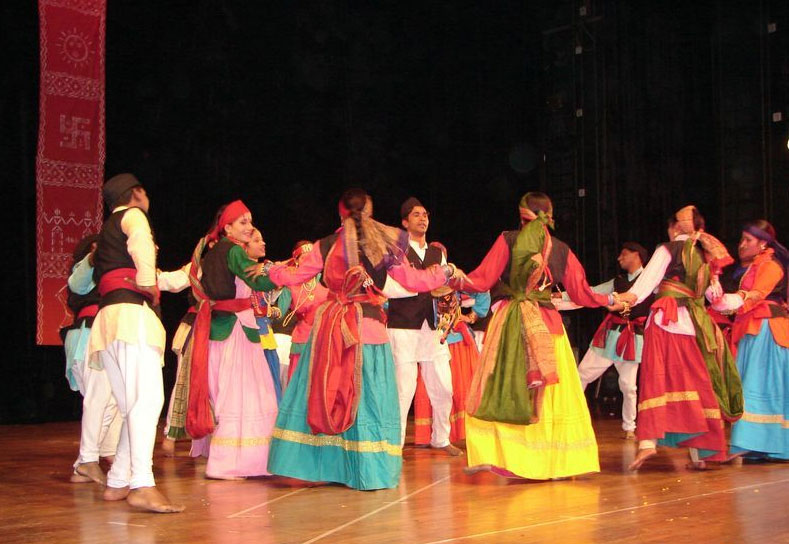
This Folk dance is performed by a group of women moving circularly, swirling and twirling around in their flowing robes called ‘ghagharas’, a traditional Rajasthani long skirt. This spectacular folk dance derived its name from ‘ghoomna’ and is elegantly showcased by women wearing a veil, ‘ghoonghat’ on their head covering their face.​2​ The upbeat rhythm and graceful and elegant gestures like pirouettes, finger-snapping, beating palms, and other foot movements maintain the tempo. This splendid spectacle fills the body with enthusiasm and zeal for our old long-standing Indian traditions.

According to rituals, it is mostly performed by the newly married bride on being welcomed to her new marital home. Ghoomar is often celebrated at weddings, festivals and other religious occasions too.​2,3​ This folk dance symbolizes the transformation of young girls to womanhood in the Rajput community and traditionally performed in wedding attire.​3,4​ Kundan, mirror and silver jewellery are used as accessories for the celebration. Women are seen wearing joyous, vibrant colours of red, orange, pink with heavy embroidery and mirror work. They cover their face with a veil threaded with lace and zari borders.​2,4​ These bright colours signify prosperity and high enthusiasm filled within the community.

Ghoomar is famous all over India and is being performed by various artists and celebrities in movies. Deepika Padukone took more than a month to learn this folk dance to get her footwork right for the film Padmavati. ​4​

In today’s world, this dance is performed by all ages of women worldwide and is cherished as a historically and culturally significant entertainment folk dance form.​3​ It showcases the rich culture of Rajasthan through aesthetically pleasing movement and traditional attire. Tourism in Rajasthan has boosted due to the peculiarities of regions, their manner of dressing, traditions, and folk dances. Ghoomar was a tribal dance that graduated to a folk routine that has now assumed international proportions thanks to a vibrant culture and its recognition as a pride of India.

_________________________________
Independent Project by Sezal Chug
Guide: Prof. Manohar Khushalani
__________________________________

  1. 1.
    Wikipedia E. Ghoomar. The free Encyclopedia. https://en.wikipedia.org/wiki/Ghoomar

  2. 2.

  3. 3.

  4. 4.
    RajasthanDirect the. Ghoomar. rajasthandirect. https://www.rajasthandirect.com/culture/dance/ghoomar


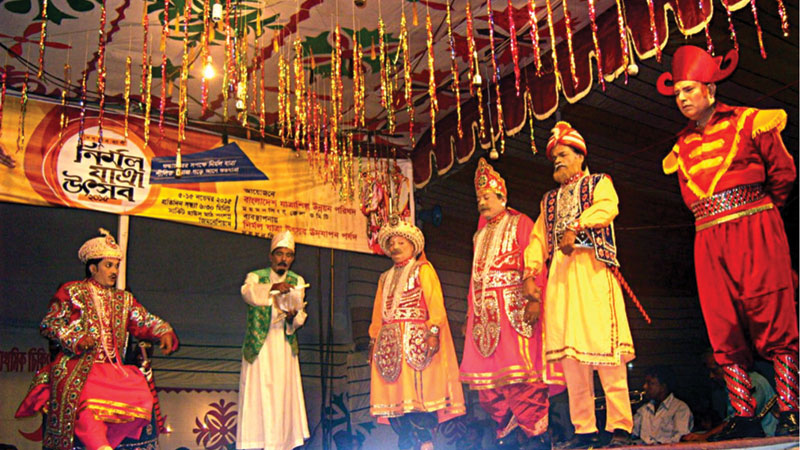
Folk Theatre of India: Nautanki

Everything that makes Indian Theatre more special | IWMBuzz

Nautanki is one of South Asia’s most famous folk theatre performances, especially in northern India. Nautanki was the most significant source of entertainment in most of the cities and villages in north India.​1​ Nautanki’s rich musical compositions and humorous storylines hold a strong influence over rural people’s imagination. Nautanki, also known as svang, originated in the late 19th century in Uttar Pradesh and steadily gained popularity.​2​ Nautanki’s origins lie in the Saangit, Bhagat, and Swang musical theatre traditions of Northern India. One Saangit called Saangit Rani Nautanki Ka became so popular that the whole genre’s name became Nautanki.​1​

File:DevendraSharma SultanaDaku.jpg - Wikimedia Commons

Nautanki performances can be performed anywhere where some space is available that can accommodate a few hundreds or thousands of people. Sometimes this place is made available by village Chaupal or the village community centre.​3​ Other times the school playgrounds can also be used as a performance site. A Nautanki stage is usually elevated and is made up of wooden cots that the local villagers generally provide. A few decades ago, since there was no electricity in Indian villages, the light was provided either by giant lanterns or Petromax, a device run by kerosene oil. Traditional Nautanki performances usually start late at night and go until dawn the next day without any intermission.​4​

North Indian Folk Theatre - Nautanki - Melodramatic rendition of popular or  historical tales accompanied by musical sco… | North indian, The  incredibles, Orchestras
India: Rangapat Theatre's "Dharmashoke": A New and Fresh Look into  His/Herstory | The Theatre Times

Traditionally storylines of nautanki performances were inspired from folklore or are sometimes based on mythological themes, stories of contemporary heroes etc.​3​ For example, nautanki plays such as Bhakt Moradhwaj and BSatya-Harishchandra are based on mythological themes, whereas Indal Haran and Puranmal originated from folklore. ​2​Pandit Ram Dayal Sharma, a renowned Nautanki maestro and Dr Devendra Sharma have co-authored many new Nautankis.​2​ These recent Nautanki performances focus primarily on social messages such as health, women’s empowerment, dowry etc. These issues generate awareness among the poorer sections of society and create a sense of togetherness. It brings locals together to stand against the atrocities of the community and fight for their rights.

Bidesia" - The Folk Theatre of Eastern India | The Theatre Times

Nautanki was introduced in America by Dr Devendra Sharma, a Nautanki artist, singer, writer and director. The participants in his nautanki performances are usually engineers, doctors, and other Indians living in America, who are given a rare opportunity to connect with their cultural roots.​2​ At the same time, these performances have exposed other communities in America to Indian culture.
Nautanki has undoubtedly been a valuable part of our hearts and will survive in the future and flourish in multiple contexts to secure a special place in our culture.

_________________________________
Independent Project by Sezal Chug
Guide: Prof. Manohar Khushalani
__________________________________

  1. 1.
    devnautanki H. devnautanki. A Brief History of the Nautanki Performance Tradition. http://www.devnautanki.com/about_history.html

  2. 2.
    the free encyclopedia W. Nautanki. Wikipedia. https://en.wikipedia.org/wiki/Nautanki

  3. 3.

  4. 4.
    sahapedia S. shades-nautanki-north-indias-operatic-theatre. sahapedia. https://www.sahapedia.org/shades-nautanki-north-indias-operatic-theatre


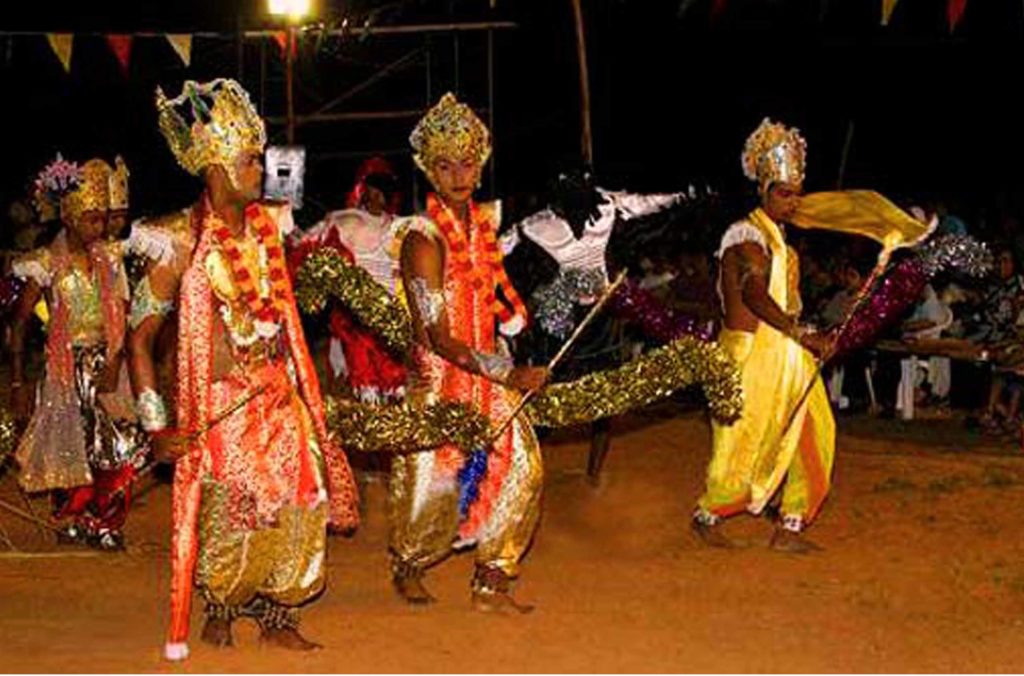
Folk Theatre of India: Yakshagana

Hidimba Kalyana - Yakshagana Part I 2019 - YouTube

Yakshagana is a traditional folk art developed in the western parts of Chikmagalur districts in Karnataka and Kasaragod district in Kerala. Yakshagana comprises music, dance, theatre, costumes, and makeup with a blend of unique style and forms.​1​ It is said to have evolved from pre-classical music forms and theatrical arts during the Bhakti movement. Yakshgana is referred to as ‘Thenku thittu’ towards the south from Dakshina Kannada to Kasaragod in Tamil Nadu, whereas it is referred to as ‘Badaga Thittu’ north of Udupi.​1​ Both of these forms are equally played all over the region. Yakshagana is inspired by ancient Hindu literature like Ramayana, Mahabharata, Bhagavata and other Hindu and Jain epics. Yaksha-gana means the song (gana) of a Yaksha. Yakshas were an exotic tribe mentioned in Sanskrit literature.​1​

Yakshagana is a product of the Vaishnava bhakti movement, which originated in southern India from the fifth to the seventh centuries. It emphasizes the love and devotion for Lord Vishnu as the chief means for spiritual perfection.​2​ Existing folk music and dances were adopted to create new performing arts to spread and propagate the message of love and devotion among the common folk. Yakshagana is also a result of this blend of existing dance and drama.

Let muktesaras run Yakshagana Mela: Karnataka HC | Deccan Herald

A Yakshagana performance usually consists of background music played by a group of musicians and percussionists, also known as the himmela and a dance and dialogue group known as the mummela, who together enact poetic epics on stage.​1​

Yakshagana Bayalata (Open-air Field Drama) “Mahishasura Mardhini” – A true  physical sensation!!

In the early 19th century, Yakshagana began to see a significant change from its traditional strict forms. Practitioners of the day produced several new compositions. The early 20th century saw the birth of ‘tent’ troupes, giving performances to audiences admitted by ticket only. Gas lights were replaced with electrical lights, seating arrangements improved, folk epics and fictional stories formed the modern thematic base of the discipline.​3​
The Yakshagana form that we witness today results from a prolonged evolution that drew its essence from ritual theatre, temple and secular arts, and the artists’ imaginations—all interwoven over several hundred years.​3​

_________________________________
Independent Project by Sezal Chug
Guide: Prof. Manohar Khushalani
__________________________________

  1. 1.
    wikipedia Y. Yakshagana. wikipedia. https://en.wikipedia.org/wiki/Yakshagana

  2. 2.
    karnatakatourism yakshagana. yakshagana. karnatakatourism. https://www.karnatakatourism.org/destinations/yakshagana/

  3. 3.


Folk Dances of India: Raas Leela

Raas Leela, commonly referred to as Krishna dance, is a folk dance form that predates ancient history and is part of the traditional stories of Krishna in which he dances with his lover, Radha. Raas means aesthetics, and Leela means to act or play, which translates to “play of aesthetics”.​1​

The Raas Leela takes place when the Gopis of Vrindavana sneak away from their families to the forest to dance with Krishna throughout the night after hearing Krishna’s flute’s sound.​2​ Raas Leela is considered to be an expression of passion and love for our special person. Raas Leela is a popular dance form in Mathura and Vrindavana’s regions in Uttar Pradesh, especially during the festivals of Janmashtami and Holi. It is observed as one of the State Festivals of Assam, which usually is celebrated during Late November.​3​

Swami Sri Uddhavaghamanda Devacharya, a prominent saint and a disciple of the world-renowned Swami Sri Harivyasa Devacarya in the early 15th Century, started this whole idea of performances of Raas Leela in Vrindavan, Mathura.​1​ Swami Uddavaghamanda trained his students, the Brahmachari, to play the parts that appeared in the songs like “The Vani literature of Vraja” to get a visual representation of the Leela that was being described. Many people were sceptical of this idea of the enactment of Raas Leela on stage.​3​ However, traditions say that Lord Krishna himself appeared to empower the actors to represents the love between Krishna and Radha and remind people of the core values behind Raas Leela. This popular dance form has been performed worldwide and is enjoyed by people at festivals, celebrations and get-togethers.

__________________________________
Independent Project by Sezal Chug
Guide: Prof. Manohar Khushalani
__________________________________

  1. 1.
    the free encyclopedia W. Raas Leela. encyclopedia. https://en.wikipedia.org/wiki/Raslila

  2. 2.
    sadhguru isha. raas-leela-dance-passion. isha.sadhguru. https://isha.sadhguru.org/in/en/wisdom/article/raas-leela-dance-passion

  3. 3.
    timesofindia indiatimes. raas-leela-of-unconditional-love. timesofindia. https://timesofindia.indiatimes.com/raas-leela-of-unconditional-love/articleshow/4250112.cms


Spic Macay – Pt. Rajan Mishra – IIT Delhi Program

IIT Delhi, Diamond Jubilee Program 2021 April – May

The pandemic is growing rapidly all over the world. With aim of spreading hope and remembering Pandit Rajan Mishra ji (who passed away on the 25th of April), SPIC MACAY dedicates its online 3-day IIT Delhi Diamond Jubilee year program to him, the details of which are given in the link:
https://spicmacay.org/rendezvousiitdelhidj

🎥🎬 April 30th, 6:00 pm, Friday:
Cinema Classic “Hirak Rajar Deshe” by Shri Satyajit Ray,
followed by an interaction with the expert, Tuhinabha Majumdar ji
Link: bit.ly/smcinemaclassic

🙇‍♂️1st May, 3:00 pm, Saturday Afternoon :
Great Masters Series- Vidwan Lalgudi G Jayaraman,
followed by an interaction with G J R Krishnan ji
Link: bit.ly/smlivezoom

🎤🎻🎼May 1st, 6:00 pm, Saturday Evening:
Classical Evening Series with Vidushi Nandini Bedekar
(Hindustani vocalist)
Link: bit.ly/smlivezoom

🎨May 2nd, 12 noon, Sunday:
Craft and Folk Series with Shri Rajaram Sharma
(Pichwai Painting)
Link: bit.ly/smvolunteermeet


Folk Theatre Forms of India: Tamasha

Tamasha is considered a major traditional dance form of the Marathi theatre, which includes celebration filled with dancing and singing and is performed mainly by nomadic theatre groups throughout the Maharashtra region. The word “Tamasha” is loaned from Persian, which in turn loaned it from Arabic, meaning a show or theatrical entertainment.​1​ In the Armenian language, “To do a Tamasha” means to follow an exciting and fun process or entertainment. Unofficially, this word has come to represent commotion or display full of excitement.​1​ The traditional form of Tamasha was inspired by a lot of other art forms like Kathakali, Kaveli, ghazals etc.

The region of Maharashtra had a long theatrical tradition, with early references to the cave inscriptions at Nashik by Gautami Balashri, the mother of the 1st-century Satavahana ruler, Gautamiputras Satakarni. The inscription mentions him organizing Utsava’s a form of theatrical entertainment for his subjects.​1​ Tamasha acquired a distinct form in the late Peshwa period of the Maratha Empire and incorporated elements from older traditional forms like Dasavatar, Gondhal, Kirtan etc. Traditional Tamasha format consisted of dancing boys known as Nachya, who also played women’s roles, a poet-composer known as Shahir, who played the traditional role of Sutradhar, who compered the show. However, with time, women started taking part in Tamasha.​2​

Marathi theatre marked its journey at the beginning of 1843.​3​ In the following years, Tamasha primarily consisted of singing and dancing, expanded its range and added small dramatic skits known as Vag Natya.​3​ These included long narrative poems performed by the Shahir and his chorus, with actors improvising their lines. There are two types of Tamasha dance forms: dholki bhaari and the older form known as sangeet baari, which contains more music and dance than drama.​4​

The government of Maharashtra has instituted annual awards in the memory of the late Vithabai Narayangavkar Lifetime Achievement Award for those who had extensively contributed to the preservation of the Tamasha Art form throughout the world.​1​

_________________________________
Independent Project by Sezal Chug
Guide: Prof. Manohar Khushalani
__________________________________

  1. 1.
    encyclopedia wikipedia. wikipedia. Tamasha. https://en.wikipedia.org/wiki/Tamasha

  2. 2.
    encyclopedia britannica. tamasha. tamasha. https://www.britannica.com/art/tamasha

  3. 3.
    tourism maharashtra. tamasha. maharashtratourism. https://www.maharashtratourism.net/culture-lifestyle/dances/tamasha.html

  4. 4.


Folk Dances of India: Bihu

Bihu is the indigenous folk dance part of the Assamese culture mainly performed in Assam, India. It is a traditional dance centered around the red colour theme, signifying joy, vigour and celebration.​1​ Celebrated by both men and women, this merry dance emphasizes the Assamese tradition’s cultural roots when the Ahom king Rudra Singha (1696-1714) invited Bihu dancers on the special occasion Rongali Bihu in 1694. This inherited tradition started generations ago when the local farmers celebrated the harvest and enjoyed this ceremonial dance. It symbolizes the beginning of the agricultural season in the Northern parts of India.​2​

The word ‘Bihu’ is derived from the Sanskrit word ‘Bishu’, which refers to asking blessings and prosperity from the Gods during harvest season.​1​ The songs and dance movements symbolize a deep interconnect between nature, culture and civilization of the region. This folk dance is performed at the three different Bihu dance festivals, namely Bohag Bihu, Kongali Bihu and Bhogali Bihu.​3​ It represents the integral relationship between agriculture and fertility; it embodies growth and celebrates bountiful harvests and abundance. It helps strengthen the sense of identity and belongingness among the Assamese people and reignites the spirit of sharing and trust.​4​ These traditions of songs and dances depict the feeling of support and love of the community with each other.

This traditional folk dance is manifested in numerous delicacies, snacks, and savouries prepared and relished by the locals, the quintessential among them being the Pithas.​5​ These are prepared way ahead of the occasion and are an excuse for the womenfolk to socialize and celebrate togetherness and bond. Some varieties used for Bhogali snacks are Bora-dhan, Malbhog-dhan, Beji-Dhan and Sokua-dhan. ​5​

In this traditional dance, women are dressed in chadormekhela, usually made of muga silk combined with traditional ornaments like Gaam kharu, dhul biri, jun biri, golpata etc. ​1​This outfit’s beauty is increased by adding a Kopou phool and red bindi, which makes the women look like an enchantress. The men wear a traditional dhoti and gamocha and embrace the traditional Indian culture with a piece of red cloth around their waist called tongali. ​1​

This folk dance not only symbolizes celebration but also youthful passion, joy and seduction. On the night of the festival, locals light a bonfire and spend their time singing and dancing around the Meji. The next day, in the early morning, the ashes of this bonfire are scattered around the farmland to increase fertility and production.​3​ Most performances include men playing musical instruments like drums, pipes and flutes while women dance with their hands above their hips at the back and palms facing outwards, swaying while slightly bending forward.

The spirit of harmony and togetherness plays a vital role in modern-day Assamese society and symbolizes the Assamese cultural identity. It has also gained immense international recognition as it was performed globally at the London Olympics in 2012. Being a spectacle of teamwork and collaboration, this harvest Bihu festival essentially resonates with the essence of Traditions, customs and rituals coming from a rural-agricultural setting.

_________________________________
Independent Project by Sezal Chug
Guide: Prof. Manohar Khushalani
__________________________________

  1. 1.
    encyclopedia W. Bihu dance. From Wikipedia, the free encyclopedia. https://en.wikipedia.org/wiki/Bihu_dance

  2. 2.

  3. 3.

  4. 4.

  5. 5.


Folk Dances of India: Mohiniyattam

India is one of the world’s oldest civilizations globally, and it encompasses a kaleidoscopic variety and rich cultural heritage. We have strengthened our socio-economic hold in the world ever since Independence. However, our classical heritage is something to be cherished since the very beginning of civilization. One of India’s famous classical dances that represent the historical enchantress avatar of the Hindu god Vishnu was developed in Kerala called Mohiniyattam.​4​ According to the mythological text, Vishnu took Mohini’s form to distract the demon Bhasmasura, while the gods took the elixir of immortality from the churning of the celestial oceans and thus saved the world from destruction.​2​ The Mohini myth forms the heart of every Mohiniyattam performance as it stands for good prevailing over evil.​2​

The earliest mention of this word can be found in the 16th-century text Vyavaharamala. The dance was systematized in the 18th century but later ridiculed as a Devdasi prostitution system during the British Raj, where it faced many bans.​2​ The socio-political conflict ultimately led to the revival and reconstruction of Mohiniyattam by the people of Kerala, particularly the poet Vallathol Narayana Menon. Since then, Mohiniyattam has not only been the focus of academic study but has also been integrated across India into the curricula of other art schools and universities.​1​

Like most classical dances, its roots come from the ancient Hindu Sanskrit performance arts named Natya Shastra. It follows the delicate, eros-filled and feminine Lasya style performed by a woman after extensive training. ​3​Mohiniyattam’s repertoire includes Carnatic style music, singing and performing a play by expressing your feelings in a musical. The song is typically a hybrid of Malayalam-Sanskrit and is called Manipravalam.​1​ Through delicate footsteps, undulating body motions, and subtle but poignant facial expressions, Mohiniyattam projects the essence of feminine grace-a quality. It is also noteworthy for their shringara (erotic) depictions of divine love.​2​

The South Indian Classical Music Ensemble for Mohiniyattam included a vocalist, a toppi maddalam (barrel drum) and a vina (long-necked lute). However, in the modern world, toppi maddalam is replaced by a mridangam (double-headed drum), and the vina is substituted by a violin. Manipravala, a literary mixture of Malayalam and Sanskrit, is the language of song texts.​3,5​

Mohiniyattam comprises 40 various basic movements called adavukal characterized by the swaying of hips and the gentle movements from side-to-side with straight body posture. Like most other classical dance forms in India, this dance utilizes the sign language (mudra) mentioned in the ancient Hastha Lakshanadeepika treatise to convey the story.​5​ These mudras are expressed through the fingers and palms of the hands. Mohiniyattam emphasizes acting and expressing emotions through a musical performance wherein the performer identifies herself with the character and resonates her sentiments in the compositions like the Padams and Pada Varnams.​5​ A white sari, bordered with broad golden brocade (called kasavu in Malayalam) forms the simple but elegant attire for Mohiniyattam.​3​ This costume provides it with a unique identity among classical dance forms of India. It leaves the audience with an awe of the performer.

For many years now, Indian Classical dance has been one of the most influential folk forms globally. Foreigners are mesmerized by our rich cultural capital and continue to remain in awe of our history and our styles’ evolution. The choreography, costumes, jewellery, and makeup continue to inspire, dazzle, and dominate the global cultural market. This proves that the finesse and richness of our heritage are alive and will grow with generations to come.

_____________________________________
Independent Project by Sezal Chug. Guide Prof. Manohar Khushalani
_____________________________________

  1. 1.
    Tourism K. Mohiniyattam. KERALA TOURISM . Accessed February 23, 2021. https://www.keralatourism.org/kerala-article/2010/mohiniyattam-classical-dance/81

  2. 2.
    Britannica E. Mohiniyattam. Indian dance. Accessed February 23, 2021. https://www.britannica.com/art/mohini-attam

  3. 3.
    CCRT G. Mohiniyattam Dance. CCRT. Accessed February 23, 2021. http://ccrtindia.gov.in/mohiniyattam.php

  4. 4.
    Wikipedia encyclopedia. Mohiniyattam. Wikipedia, the free encyclopedia. Accessed February 23, 2021. https://en.wikipedia.org/wiki/Mohiniyattam

  5. 5.
    Utsavpedia .com. Mohiniyattam. Mohiniyatam Dance style. Accessed February 23, 2021. https://www.utsavpedia.com/cultural-connections/the-spell-bounding-dance-mohiniyattam/


Folk Dances of India: Kathakali

Kathakali is a major classical dance form from Ancient India. It is a “story play” of art that includes elaborate, colourful makeup, beautiful mesmerizing costumes and face masks traditionally performed by male dancers. It is a Hindu folk dance performed in the Malayalam speaking southwest region of Kerala. Kathakali is derived from Katha, which means “story or a traditional tale”, and Kalī means “performance or art”.​1​ Kathakali is a long tradition that symbolizes the eternal fight between good and evil. It was given its pres­ent form by Mahakavi Vallathol Narayan Menon, the founder of the Kerala KalaMandalam.

Being a more relatable form of art strikes a chord with the public as it embodies their customs and religions. It involves vigorous and florid movements, stylized gestures and loads of facial expressions. These gestures are broad and robust, and faces are made from face paint which look like masks. The characters of Kathakali express their emotions and the story through songs from the background and their unique loud expressions. Dances rely on hand gestures, known as mudra, to convey the soul of the story.​2,3​ Costumes, makeup and face masks are the most distinguishing features of this classical dance. There are several kinds of costumes including, Sathwika (the hero), Kathi (the villain), Minukku (females), and Thatti.​1​ Each character is easily recognizable by his makeup, costume and mask. This costume consists of a full skirt and heavy jacket with embellished garlands and jewellery.​4​ The musical notes of Kathakali are similar to the traditional classical music of South India; however, the instruments used are different. Chenda, idakka, and shuddha madalam are the most common instruments used.​3​ It leaves a spellbound experience to its viewers and performs epic Indian ancient folklore with the most intricate and mesmerizing movements.

Kathakali combines drama, dance, music, storytelling, costumes, makeup and devotion into a divided experience. It brings humanity into Hinduism and expresses emotions beyond words.​2​ These temple rituals have evolved into a vibrant drama that encircles the essence of being a human. It provides a spectacle to live and an opportunity to view the ancient lifestyle and heritage preserved for centuries.​5​ This theatre has now reached the doors of the most powerful forms of storytelling in the world theatre and unlocked appreciation for Indians worldwide. Kathakali unlocked the mystery of the Sanskrit poems and made them accessible to the broader community.

___________________
Independent Project by Sezal Chug
Guide: Prof Manohar Khushalani
__________________

  1. 1.

  2. 2.

  3. 3.
    britannica britannica. kathakali. britannica. https://www.britannica.com/art/kathakali

  4. 4.
    Indian Folk dance chandrakantha. Kathakali. chandrakantha. https://chandrakantha.com/articles/indian_music/nritya/kathakali.html

  5. 5.
    background kathakali. kathakali. kathakali.net. https://www.kathakali.net/background