Folk Theatre Forms of India: Tamasha

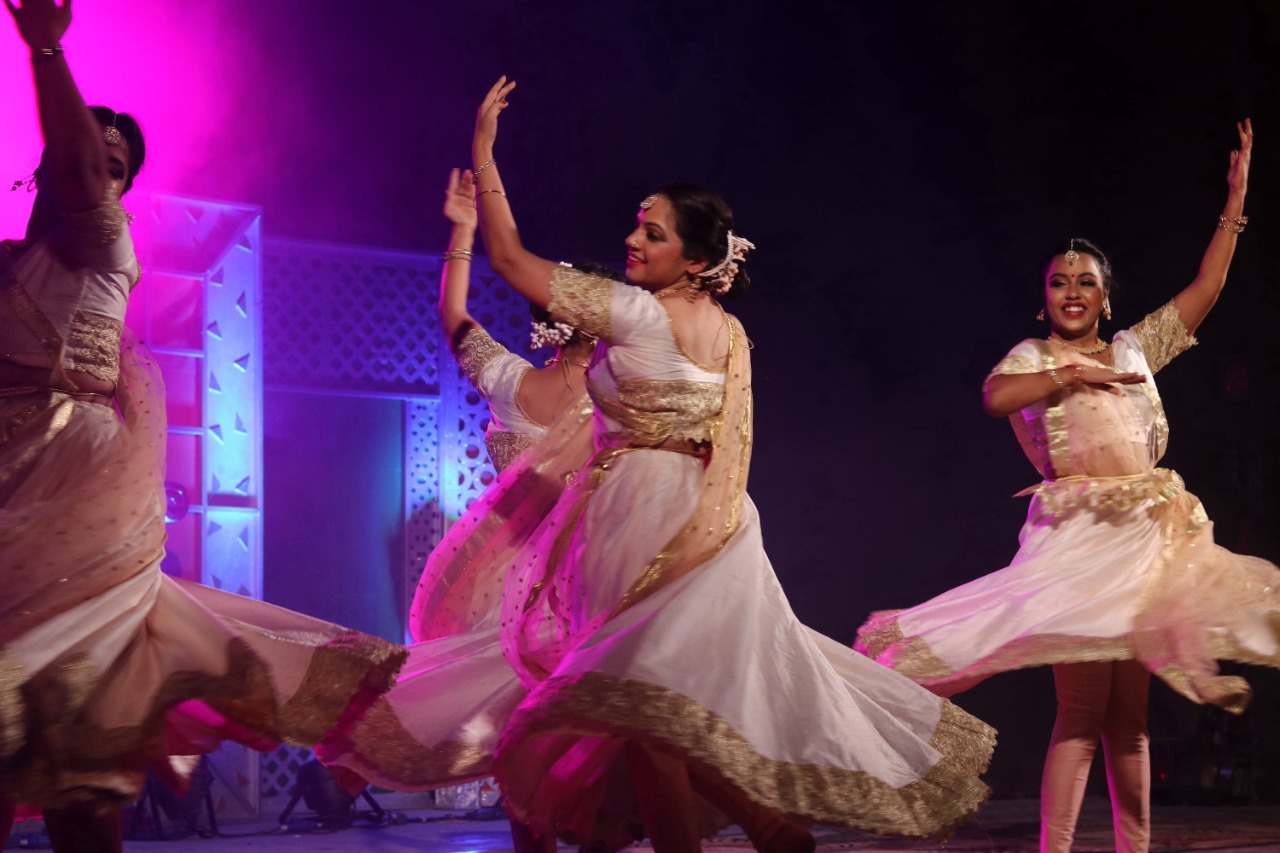
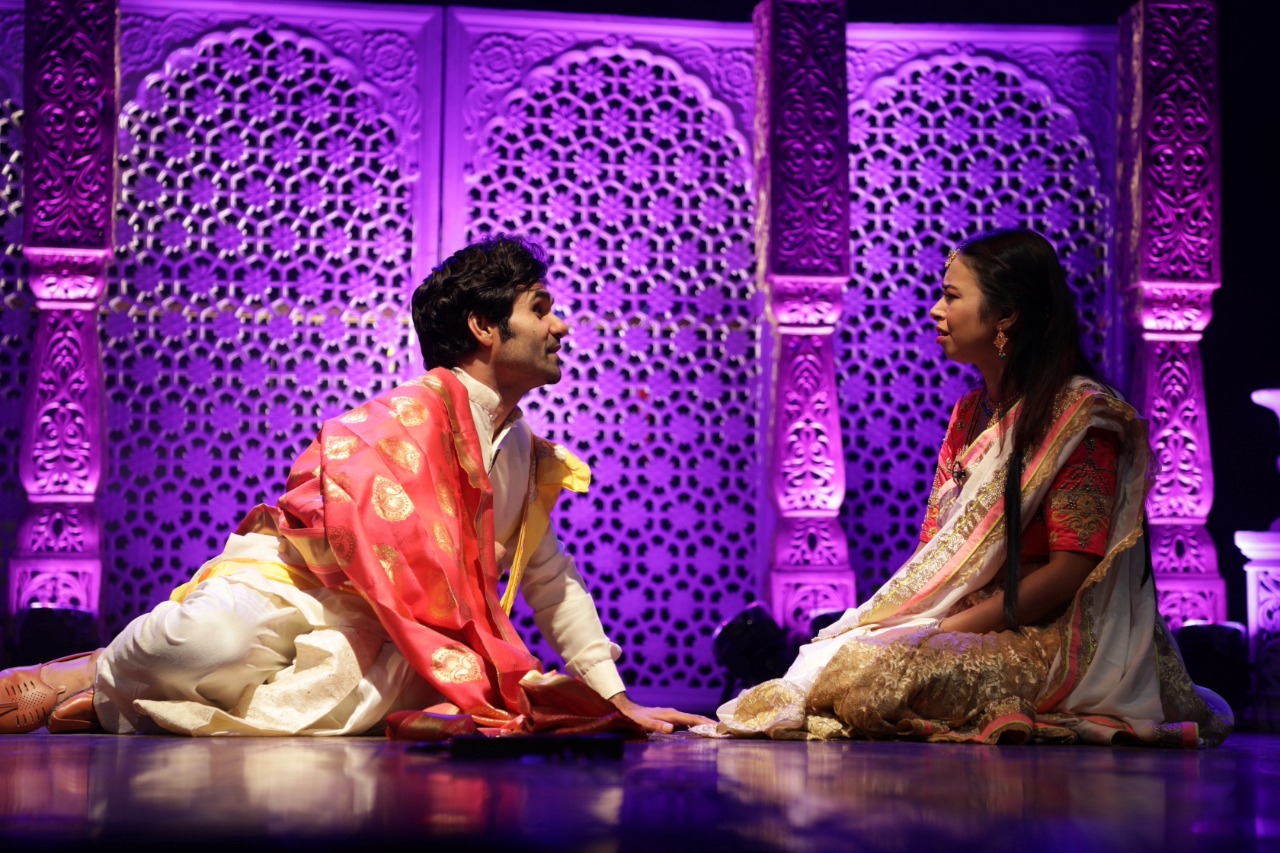
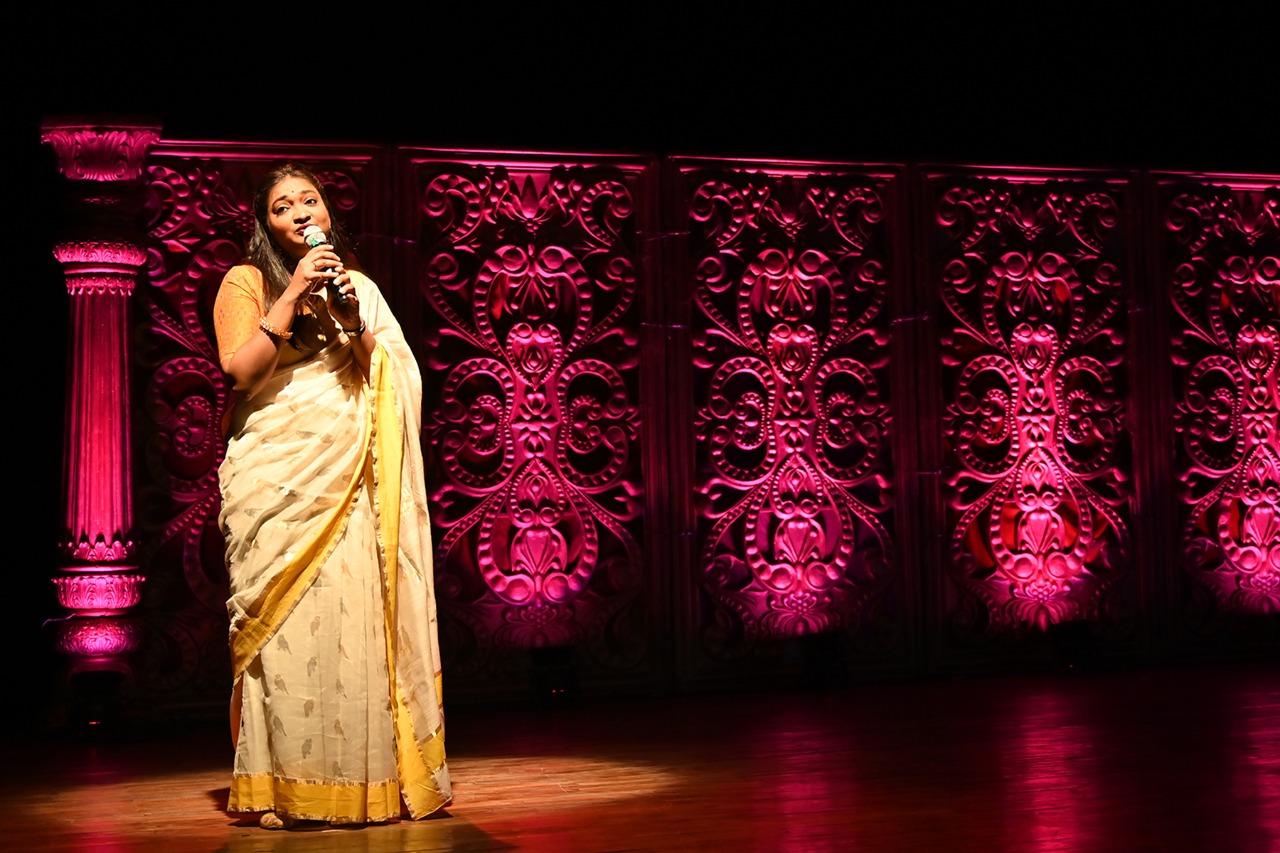
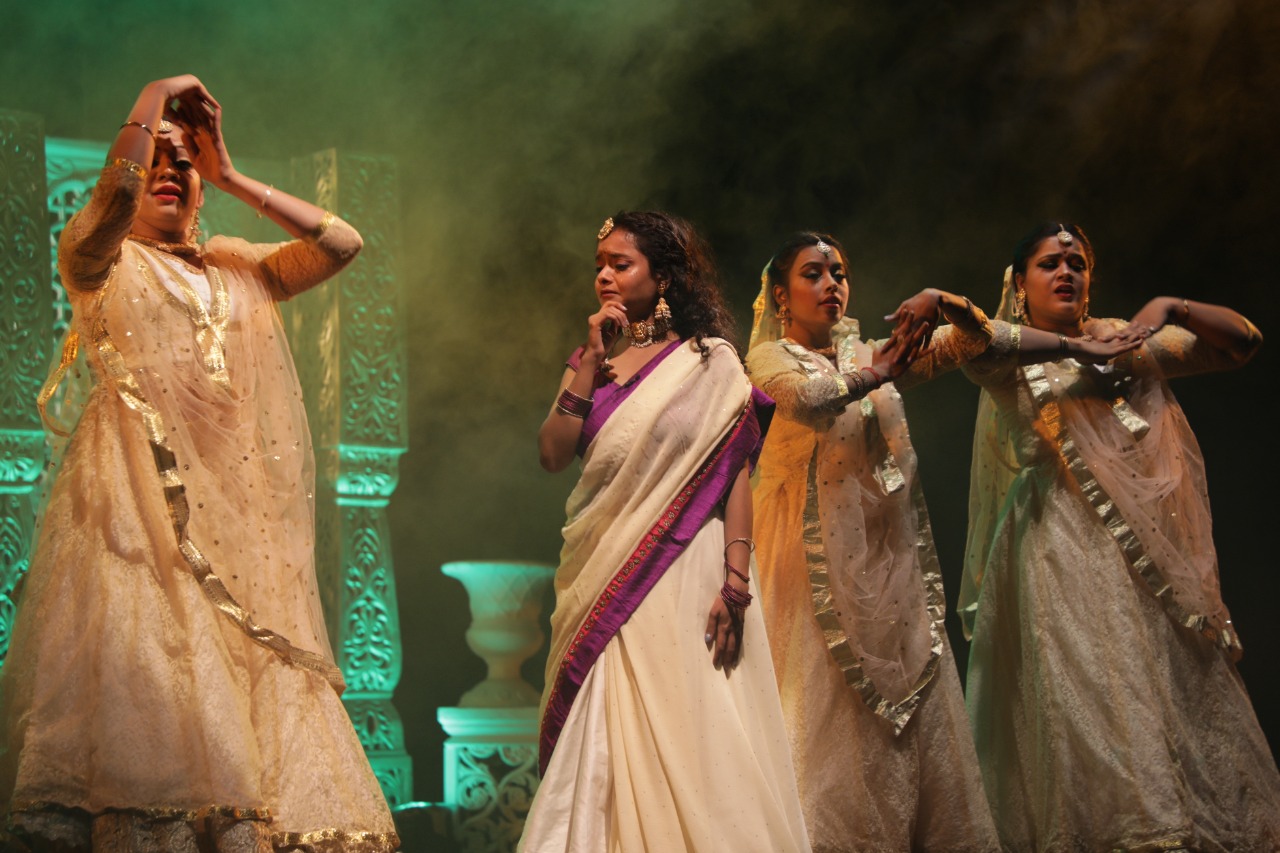
Tamasha is considered a major traditional dance form of the Marathi theatre, which includes celebration filled with dancing and singing and is performed mainly by nomadic theatre groups throughout the Maharashtra region. The word “Tamasha” is loaned from Persian, which in turn loaned it from Arabic, meaning a show or theatrical entertainment.​1​ In the Armenian language, “To do a Tamasha” means to follow an exciting and fun process or entertainment. Unofficially, this word has come to represent commotion or display full of excitement.​1​ The traditional form of Tamasha was inspired by a lot of other art forms like Kathakali, Kaveli, ghazals etc.

The region of Maharashtra had a long theatrical tradition, with early references to the cave inscriptions at Nashik by Gautami Balashri, the mother of the 1st-century Satavahana ruler, Gautamiputras Satakarni. The inscription mentions him organizing Utsava’s a form of theatrical entertainment for his subjects.​1​ Tamasha acquired a distinct form in the late Peshwa period of the Maratha Empire and incorporated elements from older traditional forms like Dasavatar, Gondhal, Kirtan etc. Traditional Tamasha format consisted of dancing boys known as Nachya, who also played women’s roles, a poet-composer known as Shahir, who played the traditional role of Sutradhar, who compered the show. However, with time, women started taking part in Tamasha.​2​

Marathi theatre marked its journey at the beginning of 1843.​3​ In the following years, Tamasha primarily consisted of singing and dancing, expanded its range and added small dramatic skits known as Vag Natya.​3​ These included long narrative poems performed by the Shahir and his chorus, with actors improvising their lines. There are two types of Tamasha dance forms: dholki bhaari and the older form known as sangeet baari, which contains more music and dance than drama.​4​

The government of Maharashtra has instituted annual awards in the memory of the late Vithabai Narayangavkar Lifetime Achievement Award for those who had extensively contributed to the preservation of the Tamasha Art form throughout the world.​1​

_________________________________
Independent Project by Sezal Chug
Guide: Prof. Manohar Khushalani
__________________________________

  1. 1.
    encyclopedia wikipedia. wikipedia. Tamasha. https://en.wikipedia.org/wiki/Tamasha

  2. 2.
    encyclopedia britannica. tamasha. tamasha. https://www.britannica.com/art/tamasha

  3. 3.
    tourism maharashtra. tamasha. maharashtratourism. https://www.maharashtratourism.net/culture-lifestyle/dances/tamasha.html

  4. 4.


Folk Dances of India: Bihu

Bihu is the indigenous folk dance part of the Assamese culture mainly performed in Assam, India. It is a traditional dance centered around the red colour theme, signifying joy, vigour and celebration.​1​ Celebrated by both men and women, this merry dance emphasizes the Assamese tradition’s cultural roots when the Ahom king Rudra Singha (1696-1714) invited Bihu dancers on the special occasion Rongali Bihu in 1694. This inherited tradition started generations ago when the local farmers celebrated the harvest and enjoyed this ceremonial dance. It symbolizes the beginning of the agricultural season in the Northern parts of India.​2​

The word ‘Bihu’ is derived from the Sanskrit word ‘Bishu’, which refers to asking blessings and prosperity from the Gods during harvest season.​1​ The songs and dance movements symbolize a deep interconnect between nature, culture and civilization of the region. This folk dance is performed at the three different Bihu dance festivals, namely Bohag Bihu, Kongali Bihu and Bhogali Bihu.​3​ It represents the integral relationship between agriculture and fertility; it embodies growth and celebrates bountiful harvests and abundance. It helps strengthen the sense of identity and belongingness among the Assamese people and reignites the spirit of sharing and trust.​4​ These traditions of songs and dances depict the feeling of support and love of the community with each other.

This traditional folk dance is manifested in numerous delicacies, snacks, and savouries prepared and relished by the locals, the quintessential among them being the Pithas.​5​ These are prepared way ahead of the occasion and are an excuse for the womenfolk to socialize and celebrate togetherness and bond. Some varieties used for Bhogali snacks are Bora-dhan, Malbhog-dhan, Beji-Dhan and Sokua-dhan. ​5​

In this traditional dance, women are dressed in chadormekhela, usually made of muga silk combined with traditional ornaments like Gaam kharu, dhul biri, jun biri, golpata etc. ​1​This outfit’s beauty is increased by adding a Kopou phool and red bindi, which makes the women look like an enchantress. The men wear a traditional dhoti and gamocha and embrace the traditional Indian culture with a piece of red cloth around their waist called tongali. ​1​

This folk dance not only symbolizes celebration but also youthful passion, joy and seduction. On the night of the festival, locals light a bonfire and spend their time singing and dancing around the Meji. The next day, in the early morning, the ashes of this bonfire are scattered around the farmland to increase fertility and production.​3​ Most performances include men playing musical instruments like drums, pipes and flutes while women dance with their hands above their hips at the back and palms facing outwards, swaying while slightly bending forward.

The spirit of harmony and togetherness plays a vital role in modern-day Assamese society and symbolizes the Assamese cultural identity. It has also gained immense international recognition as it was performed globally at the London Olympics in 2012. Being a spectacle of teamwork and collaboration, this harvest Bihu festival essentially resonates with the essence of Traditions, customs and rituals coming from a rural-agricultural setting.

_________________________________
Independent Project by Sezal Chug
Guide: Prof. Manohar Khushalani
__________________________________

  1. 1.
    encyclopedia W. Bihu dance. From Wikipedia, the free encyclopedia. https://en.wikipedia.org/wiki/Bihu_dance

  2. 2.

  3. 3.

  4. 4.

  5. 5.


Folk Dances of India: Mohiniyattam

India is one of the world’s oldest civilizations globally, and it encompasses a kaleidoscopic variety and rich cultural heritage. We have strengthened our socio-economic hold in the world ever since Independence. However, our classical heritage is something to be cherished since the very beginning of civilization. One of India’s famous classical dances that represent the historical enchantress avatar of the Hindu god Vishnu was developed in Kerala called Mohiniyattam.​4​ According to the mythological text, Vishnu took Mohini’s form to distract the demon Bhasmasura, while the gods took the elixir of immortality from the churning of the celestial oceans and thus saved the world from destruction.​2​ The Mohini myth forms the heart of every Mohiniyattam performance as it stands for good prevailing over evil.​2​

The earliest mention of this word can be found in the 16th-century text Vyavaharamala. The dance was systematized in the 18th century but later ridiculed as a Devdasi prostitution system during the British Raj, where it faced many bans.​2​ The socio-political conflict ultimately led to the revival and reconstruction of Mohiniyattam by the people of Kerala, particularly the poet Vallathol Narayana Menon. Since then, Mohiniyattam has not only been the focus of academic study but has also been integrated across India into the curricula of other art schools and universities.​1​

Like most classical dances, its roots come from the ancient Hindu Sanskrit performance arts named Natya Shastra. It follows the delicate, eros-filled and feminine Lasya style performed by a woman after extensive training. ​3​Mohiniyattam’s repertoire includes Carnatic style music, singing and performing a play by expressing your feelings in a musical. The song is typically a hybrid of Malayalam-Sanskrit and is called Manipravalam.​1​ Through delicate footsteps, undulating body motions, and subtle but poignant facial expressions, Mohiniyattam projects the essence of feminine grace-a quality. It is also noteworthy for their shringara (erotic) depictions of divine love.​2​

The South Indian Classical Music Ensemble for Mohiniyattam included a vocalist, a toppi maddalam (barrel drum) and a vina (long-necked lute). However, in the modern world, toppi maddalam is replaced by a mridangam (double-headed drum), and the vina is substituted by a violin. Manipravala, a literary mixture of Malayalam and Sanskrit, is the language of song texts.​3,5​

Mohiniyattam comprises 40 various basic movements called adavukal characterized by the swaying of hips and the gentle movements from side-to-side with straight body posture. Like most other classical dance forms in India, this dance utilizes the sign language (mudra) mentioned in the ancient Hastha Lakshanadeepika treatise to convey the story.​5​ These mudras are expressed through the fingers and palms of the hands. Mohiniyattam emphasizes acting and expressing emotions through a musical performance wherein the performer identifies herself with the character and resonates her sentiments in the compositions like the Padams and Pada Varnams.​5​ A white sari, bordered with broad golden brocade (called kasavu in Malayalam) forms the simple but elegant attire for Mohiniyattam.​3​ This costume provides it with a unique identity among classical dance forms of India. It leaves the audience with an awe of the performer.

For many years now, Indian Classical dance has been one of the most influential folk forms globally. Foreigners are mesmerized by our rich cultural capital and continue to remain in awe of our history and our styles’ evolution. The choreography, costumes, jewellery, and makeup continue to inspire, dazzle, and dominate the global cultural market. This proves that the finesse and richness of our heritage are alive and will grow with generations to come.

_____________________________________
Independent Project by Sezal Chug. Guide Prof. Manohar Khushalani
_____________________________________

  1. 1.
    Tourism K. Mohiniyattam. KERALA TOURISM . Accessed February 23, 2021. https://www.keralatourism.org/kerala-article/2010/mohiniyattam-classical-dance/81

  2. 2.
    Britannica E. Mohiniyattam. Indian dance. Accessed February 23, 2021. https://www.britannica.com/art/mohini-attam

  3. 3.
    CCRT G. Mohiniyattam Dance. CCRT. Accessed February 23, 2021. http://ccrtindia.gov.in/mohiniyattam.php

  4. 4.
    Wikipedia encyclopedia. Mohiniyattam. Wikipedia, the free encyclopedia. Accessed February 23, 2021. https://en.wikipedia.org/wiki/Mohiniyattam

  5. 5.
    Utsavpedia .com. Mohiniyattam. Mohiniyatam Dance style. Accessed February 23, 2021. https://www.utsavpedia.com/cultural-connections/the-spell-bounding-dance-mohiniyattam/


Folk Dances of India: Kathakali

Kathakali is a major classical dance form from Ancient India. It is a “story play” of art that includes elaborate, colourful makeup, beautiful mesmerizing costumes and face masks traditionally performed by male dancers. It is a Hindu folk dance performed in the Malayalam speaking southwest region of Kerala. Kathakali is derived from Katha, which means “story or a traditional tale”, and Kalī means “performance or art”.​1​ Kathakali is a long tradition that symbolizes the eternal fight between good and evil. It was given its pres­ent form by Mahakavi Vallathol Narayan Menon, the founder of the Kerala KalaMandalam.

Being a more relatable form of art strikes a chord with the public as it embodies their customs and religions. It involves vigorous and florid movements, stylized gestures and loads of facial expressions. These gestures are broad and robust, and faces are made from face paint which look like masks. The characters of Kathakali express their emotions and the story through songs from the background and their unique loud expressions. Dances rely on hand gestures, known as mudra, to convey the soul of the story.​2,3​ Costumes, makeup and face masks are the most distinguishing features of this classical dance. There are several kinds of costumes including, Sathwika (the hero), Kathi (the villain), Minukku (females), and Thatti.​1​ Each character is easily recognizable by his makeup, costume and mask. This costume consists of a full skirt and heavy jacket with embellished garlands and jewellery.​4​ The musical notes of Kathakali are similar to the traditional classical music of South India; however, the instruments used are different. Chenda, idakka, and shuddha madalam are the most common instruments used.​3​ It leaves a spellbound experience to its viewers and performs epic Indian ancient folklore with the most intricate and mesmerizing movements.

Kathakali combines drama, dance, music, storytelling, costumes, makeup and devotion into a divided experience. It brings humanity into Hinduism and expresses emotions beyond words.​2​ These temple rituals have evolved into a vibrant drama that encircles the essence of being a human. It provides a spectacle to live and an opportunity to view the ancient lifestyle and heritage preserved for centuries.​5​ This theatre has now reached the doors of the most powerful forms of storytelling in the world theatre and unlocked appreciation for Indians worldwide. Kathakali unlocked the mystery of the Sanskrit poems and made them accessible to the broader community.

___________________
Independent Project by Sezal Chug
Guide: Prof Manohar Khushalani
__________________

  1. 1.

  2. 2.

  3. 3.
    britannica britannica. kathakali. britannica. https://www.britannica.com/art/kathakali

  4. 4.
    Indian Folk dance chandrakantha. Kathakali. chandrakantha. https://chandrakantha.com/articles/indian_music/nritya/kathakali.html

  5. 5.
    background kathakali. kathakali. kathakali.net. https://www.kathakali.net/background


Folk Dances of India: Garhwali

Folk music, dance and theatre represent the traditions and cultural richness of an area. It sheds light on rural life, which is closely associated with inherent customs. Uttrakhand has a vibrant culture, and the diverse, authentic folk dance forms reflect the same. The fascinating mythical dancing damsels that dwell on the snow-clad peaks of the Himalayas are the inspiration of most folk dances.​1​ These folk dances mainly performed in groups while worshipping or celebrating. These folk dances are influenced by the public’s divine connection with “Natraja”, Lord Shiva, and the relationship of “Pandava” in Mahabharata to the Garhwali Himalaya. Dancing and theatre run in the veins of the Garhwali, the locals of the Garhwali region celebrate their joys and sorrows through dance.​1​ The five most popular dances of the Garhwali locals and their stories behind them are below.

Pandav Nritya
The Pandava Nritya describes the tale of the five brothers in the Hindu mythology of Mahabharata. This traditional cultural dance is a 10-12 day celebration that depicts the various stages of their lives.​2​ It is believed that the energies of the five Pandavas enter the body of performing artists during the stage performance, which ends with a grand feast organized for the entire village. It is a simple narration of Mahabharata’s story and is enacted during the occasion of Diwali in the popular districts of Chamoli and Pauli Garhwal.​2​

Bhotia Dance
The Bhotiya tribe of the Gharhawali region, just as their name is well known for the dance of the dead.​1​ The folk dance performed by the locals is closely linked to the death rituals. A popular belief amongst these locals is that souls of the dead live in cattle’s body even after the human body dies. By performing this dance, they believe that these souls of the dead would be liberated from the animal’s body, and these elders would attain peace.​2​

Barada Nati
The folk dance of Jaunsar Bhawar area of Chakrata Tehil in Uttrakhand is performed on the eve of religious festival and celebrations.​2​ Both men and women participate and bring colours to this celebration with their fascinating colourful traditional costumes.

Bajuband
This is folk dance depicting love and sacrifice between shepherds and their flock. It is a love dialogue between a man and a woman sung and performed by the locals in folklore. It represents the love and passion that a Shepard has and to what extent does he go to protect his flock from intruders.​2​

Basanti
This folk dance is performed during the spring season when flowers bloom and new life is glowing in the int valleys of the hills of the Garhwal region. It sets the tone for the harvest season and brings new joys of celebration to the local community.

Khuded
These folk songs depict the suffering of a woman due to separating from her husband. The woman curses the circumstances in which she is separated. She is filled with sorrow and passion, which shows her love for her husband. ‘Laman’ and ‘Pawada’ are a few folk songs sung during this time, making us feel the agony and misery of this separation.​1​

Many theories surround these folk dances say that the souls of the young unmarried girls who died with no funeral rites or the daughters of Ravana who offered them to Lord Shiva as his handmaidens.

Folklore of Uttarakhand represent the love, passion, agony, sacrifice, misery, and compassion of these locals and help us relate to them to share their feelings.

  1. 1.
    euttaranchal website. Folk Dance of Uttarakhand. euttaranchal. https://www.euttaranchal.com/culture/folk-songs-and-dances-of-uttarakhand.php

  2. 2.
    timesofindia website. 5 folk dances of Uttarakhand and the related legends. timesofindia. https://timesofindia.indiatimes.com/travel/things-to-do/5-folk-dances-of-uttarakhand-and-the-related-legends/as75626901.cms


Folk Dances of India: Kuchipudi

Kuchipudi is one of the major Indian classical dance folk forms performed in India. It derives its name from its village of origin, Kuchelapuram and is one of the favourite dance forms of Lord Krishna.​1​ It is considered to be a form of dance-drama that is well known under the generic name of Yakshagaana. Similar to other dance forms, Kuchipudi has its roots that originated from Sanskrit Natya Shastra, the foundations of performing arts.

In the 17th century, Yakshagana created by Siddhendra Yogi, a talented Vaishnava poet whose inspiration for the art form is said to have come from Lord Krishna in a dream.​2​ He had a dream in which Lord Krishna came and asked him to compose a dance-drama based on the myth of the bringing of paarijaata flower for Sathyabhaama, the most beloved queen of Krishna. It led to the creation of Bhaamaakalaapam, which Yogi composed and is still practised in different parts of the world.​2​ The disciples of Siddhendra Yogi have written several plays, which are performed and celebrated to date.

Kuchipudi is known for its fast rhythms and fluid movements, creating a blend of delicacy and strength. In this dance form, a male dancer usually wears an Agnivastra, which included a dhoti, whereas a female dance wears a sari. Modern Kuchipudi acquired its pres­ent form in the 20th century. Several people were responsible for moving it from the villages to the performance stage. One of the most notable was guru Lakshminarayan Shastry.

Traditionally, all males performed Kuchipudi until a colonial-era when Lakshminarayana revolutionized the concepts of this art form. He introduced females to the art form, along with the idea of solo-dancing.​3​ After him, many other visionaries have moulded it into its pres­ent shape.

In today time, the concepts laid out by Lakshminarayana have cemented their place in our minds for eternity. The Kuchipudi performance is accompanied by a live orchestra comprising of singing and percussions. The hand gestures, also called mudras and facial expressions, are stylized to convey a wide range of complex sentiments and feelings.​2​ The whole body is responsible for communicating the emotions which arise from the song.

Kuchipudi has for sure occupied a special place among other Indian classical dance forms by being a country-wide celebrated dance folk form and is recognized worldwide in many international traditional festivals.

  1. 1.
    Kalakendram K. Kairali Kalakendram. Asha Sharath . https://www.kairalikalakendram.com/online_class

  2. 2.
    Classical Dances I. Indian Classical Dances. Indian Culture Study Material . https://exampariksha.com/8-indian-classical-dances-indian-culture-study-material-notes/

  3. 3.
    Ballet D. Shantala Shivalingappa. Danza Ballet. https://www.danzaballet.com/shantala-shivalingappa/


Part of an Independent Research Project by: Sezal Chugh / Guide: Prof. Manohar Khushalani


Folk Dances of India: Kalbeliya

Irrespective of whether you have been to Rajasthan, you would have definitely seen or heard about the desert state’s iconic Kalbeliya dance. Visuals of Rajasthan women twirling at a dizzying pace, their carefully crafted clothes and jewellery, are engraved in our collective memory. The dance can be seen everywhere at festivals, in folk dance events, on tv.

Kalbeliya, a Rajasthani tribe commonly known as the saperas, trace their ancestry back to a small district of Kanlipar, Rajasthan.​1​ These scheduled tribes lead a nomadic life and travel from places to places frequently. Their traditional occupation is catching snakes and trading snake venom; however, they are seen as street performers at many cultural festivals worldwide. Kalbeliya men carried cobras in cane baskets from door to door in villages while their women sang and danced for the masses. Dance is an integral part of this mesmerizing vagabond gypsy tribe.

They have been a fringe group in our ever-growing society and continue to live outside villages in makeshift camp areas called deras. Over the generations, they have acquired a keen sense of understanding of the local flora and fauna. They are well known for their herbal remedies for various ailments, which also acts as an alternate income source. Repercussions of the Wildlife Act of 1972 pushed these Kalbelias out of their forests’ comfort zone and into the fast-moving lives of the cities where they are left to fend for themselves. This community has developed a rich cultural heritage, leading to widespread recognition, which draws visitors nationally and internationally. The Kalbelia folk songs and dances of Rajasthan were declared a part of UNESCO’s Intangible Heritage List in 2010.

This traditional dance form performed and enjoyed by the Kalbeliyan community of Rajasthani snake charmers encompasses swirling and graceful movements that make this dance a treat to behold.​2​ Their dances and songs are a matter of pride and a marker of belonging for the Kalbelias, which reflect the imaginative adaptation of this group of snake charmers to ever-changing socioeconomic circumstances in their Rajasthani society.​2​ Women wear bright and black flowing skirts, shimmering jewellery dancing to the beats of traditional musical instruments played by men. The classic musical instruments used during these festivities are the pungi, a woodwind instrument traditionally played to capture snakes, the dufli, the khanjari, a percussion instrument, and the morchang khuralio and the dholak to create the rhythm on which the dancers perform. These dancers try to replicate a serpent’s movements while performing this joyous and vigorous folk art form. They wear an Angrakhi on the top and Lehengha on the bottom, covering their head with an Odhani.​3​ They are tattooed in traditional designs and covered in clothes with small mirrors and shiny threads which represent them. These clothes are filled with hand-embroidered bright red and black hues to express the feeling of celebration and ignite a sense of belongingness that soothe the eyes and atmosphere during a festival.​3​

​2​

Kalbelia folk songs are based on their folklore and mythology with memorable characters and dances from their ancestry and culture. They have a reputation for composing lyrics spontaneously and improvising songs during performances.​3​ These songs, dances and even clothes are part of a long-standing tradition handed down from generation to generation. They neither come with texts nor training manuals but simply passed through word of mouth using these mythological stories.​3​

An academy has been set up in Copenhagen, Denmark by “Gulabo Sapera’s Music and Dance School” for this globally acknowledged art form. With the ever-rising popularity of folk arts, this dance form has only improvised over the years. It has become a freedom of expression for these women who are pushed into a life of poverty and rules which govern their culture and control their ideas. This tribe enlightens us about our traditions and brings out the true essence of a gypsy lifestyle and identity. Presently, the largest population of Kalbelias resides in the Pali district, followed by Ajmer, Chittorgarh and Udaipur. The Kalbelias are very happy-go-lucky people and have a genuinely positive attitude towards life. They are satisfied with what they have and live together in peace and harmony.​3​

_____________________________
Independent Project by Sezal Chug
Guide: Prof. Manohar Khushalani
________________________________

  1. 1.
    The Free Encyclopedia W. Kalbelia. From Wikipedia, the free encyclopedia. Published February 1, 2007. Accessed February 22, 2021. https://en.wikipedia.org/wiki/Kalbelia

  2. 2.
    Incredible I. Incredible India . Kalbeliya. Published February 22, 2021. Accessed February 22, 2021. https://www.incredibleindia.org/content/incredible-india-v2/en/destinations/jaisalmer/kalbeliya.html

  3. 3.
    issuu .com. Kalbeliya. The Saperas of Rajasthan  . Published February 22, 2021. Accessed February 22, 2021. https://issuu.com/swarnaliroy5/docs/craft_doc-_kalbeliya_final_single_c


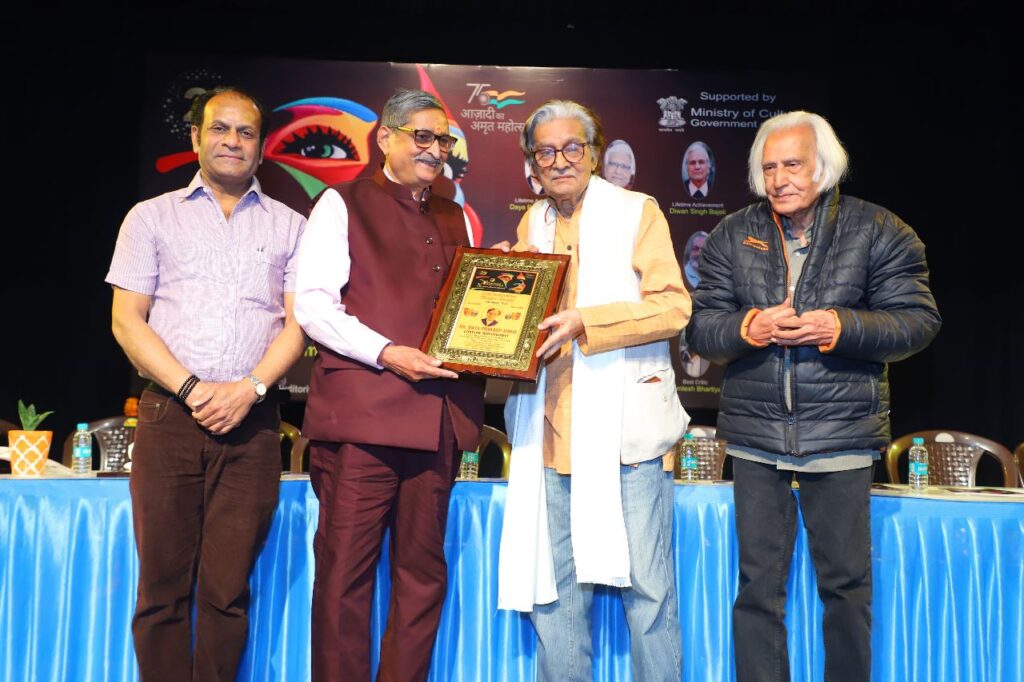
Editor Manohar Khushalani got Natsamrat Best Critic Award this day in 2019

Left to Right Jaidev Taneja, Prof Manohar Khushalani, Shyam Kumar

9th March 2019. The Glittering night of Natsamrat Theatre Awards. This was the most memorable moment of that year for StageBuzz Ed, Manohar Khushalani To be Awarded The 2019 Natsamrat Best Theatre Critic Award. It was indeed a fulfilling moment and an acknowledgement of his decades of consistent and persistent work as a critic for Pioneer (Column: Foot Lights), Mid Day (Culture Cocktail) and of course StageBuzz (Editor). The Award Ceremony was Organised by Shri Shyam Kumar, who is the driving force of the event . Well Known thespian Jaidev Taneja was the Chief Guest

Please listen to Prof. Manohar Khushalani’s Award Citation in the video above
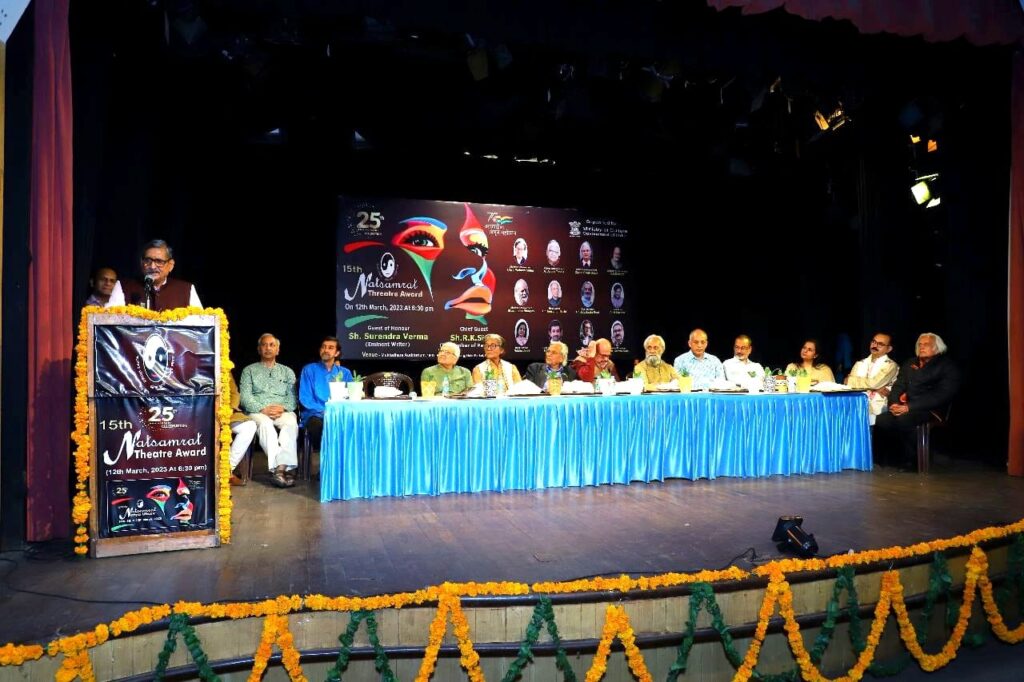
Audience at the Awards
Excited Audience at the Glittering Award Ceremony

Winners of the 11th Natsamrat Theatre Awards:
Best Writer – Danish Iqbal
Best Director – Kichenassamy Madavane
Best Actor – Mohit Tripathi
Best Actress – Mona Chawla
Best Back-stage (Lights) – Himanshu B. Joshi
Best Critic – Manohar Khushalani
Lifetime Achievement – Feisal Alkazi
Theatre Promoter – Lalit Jaiswal

Natsamrat Awards List

During that festival there was never a dull day in Delhi !
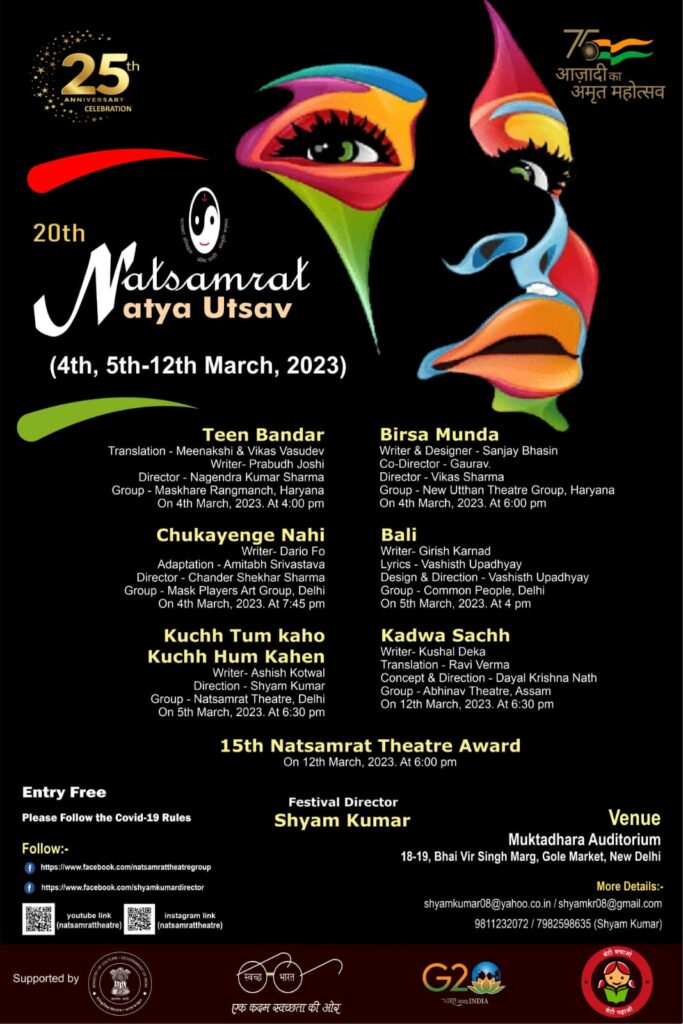
16th Natsamrat Natya Utsav included
10 plays in 5 days | 6 – 10 March | All plays in Hindi
6:30pm and 8pm everyday

Acceptance Speech of Prof. Manohar Khushalani


Pierrot’s Troupe presents a new play on Sahir and it’s all time popular comedy on Ghalib

Sharique Aziz as 29 year old Sahir in SAHIR KA KHAYAL AAYA

After Lockdown Pierrot’s Troupe’s is now returning to ‘Stage’ with its all time popular COMEDY – GHALIB IN NEW DELHI after Lockdown The troupe is also premiering a new play – SAHIR KA KHAYAL AAYA. The latter coincides with Sahir Ludhianvi’s 100th Birth Anniversary on March 8, 2021

The two plays are being staged on MARCH 7, 2021, Sunday, at the LTG Auditorium, Copernicus Marg, New Delhi.

GHALIB IN NEW DELHI – After Lockdown is arguably India’s Longest Running Comedy. Post Lockdown, the play has Mirza Ghalib dealing with newer issues; from Corona to Rihanna to the Kisaan Aandolan.

SAHIR KA KHAYAL AAYA dramatizes the ‘Best of the poet’s Best’, Parchhaiyan, his anti war poem, the longest anti war poem in the last 100 years.

DATE, TIME, PLAY, VENUE

March 7, 2021, Sunday

GHALIB IN NEW DELHI – After Lockdown — 4 pm

(Hindi)

Script & Direction – Dr M Sayeed Alam

SAHIR KA KHAYAL AAYA – 7 PM

(Urdu – the PREMIER show )

Script: Sahir Ludhianvi

Direction – Dr M Sayeed Alam

Conceptualized and Produced by Sundeep Pahwa

LTG Auditorium, Copernicus Marg, Mandi House, New Delhi

Tickets: Rs 1000/750/500/400/300/200/100

Tickets are available at 9810255291, www.bookmyshow.com and the venue

About the Plays:

Ghalib In New Delhi – , After Lockdown (Hindi Comedy): It is India’s most successful and the longest running comedy, being performed since 1997. The play is an extremely funny account of the re-birth of the renowned 19th century poet Mirza Ghalib’s in the 21st century in New Delhi, highlighting his trials, travails and tribulations – from his second birth at the ISBT in Delhi; to staying in a Servant Quarter with a Delhi University student from Patna; to dealing with a Punjaban land lady; to becoming a Page-3 celebrity. 520 shows to its credit.

Script & Direction: Dr M Sayeed Alam

Featuring – M Sayeed Alam, Rahul Paswan, Sumit Bhardwaj, Aarifa Noori, Aman Jha, Aryan Kumar, Sharique Aziz, Asif Khan, Mehu Grover, Yash Malhotra

Sahir Ka Khayal Aaya (Urdu) – The play celebrated Sahir Ludhianvi’s 100th Birth Anniversary on March 8 this year. It is presented as a ‘Monologue’ (performed by Sharique Aziz) as it showcases young Sahir in the state of crafting his long poem Parchhaiyan, arguably the best and definitely the longest anti-war poem of the last 100 years.

Featuring – Sharique Aziz, Abhinav Chaturvedi, Naveen Anand, Poonam Malhotra

For further details:

Call 9810255291 / email: sayeedalam@ymail.com


The significance of props on stage

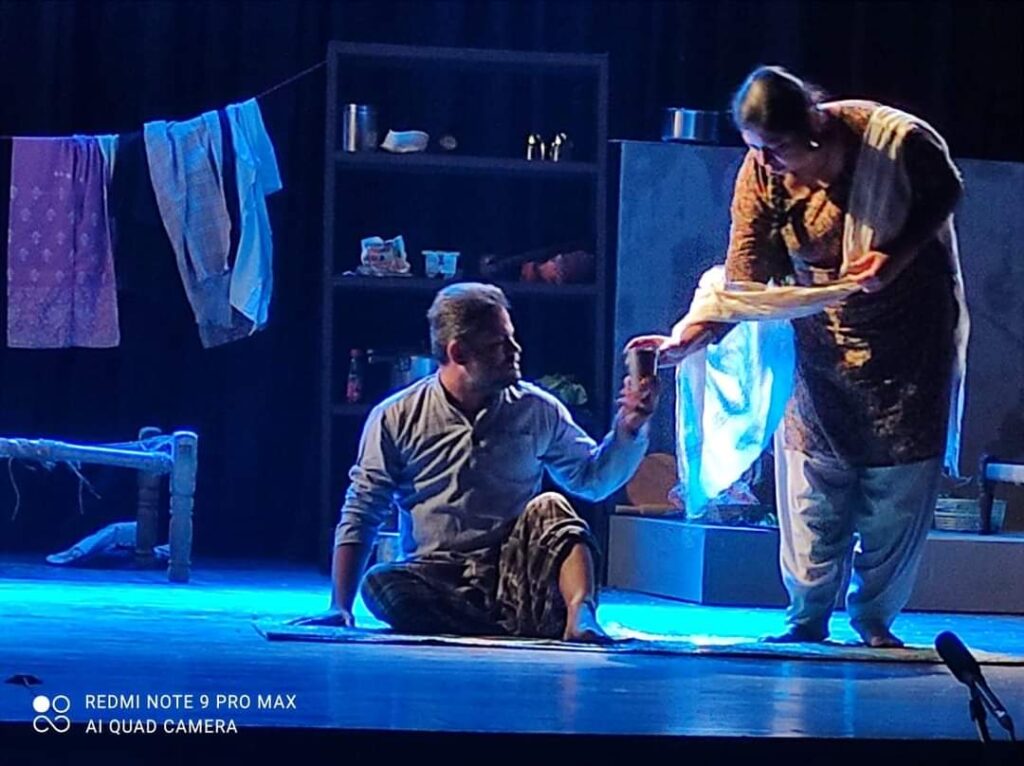
Loosely described as, “objects used by the actor and those that are placed on stage” props are considered important as long as they serve on the stage.  After the show is over very little attention is given over them and they are loosely packed and kept until further usage.  How many of us have wondered about its deeper significance?  Do we even for one look closely at “ the skull held by Hamlet” or the “ crystal glass unicorn held by Laura” in Glass Menagerie?  Even once does the director care to explain to the actor for him/her to closely touch and feel the object as not only a part of the text but also beyond the whole text.  It should provide a moment of heightened emotion not only for the actor themselves but also for the audience.  Every object is to be placed by the set designer and the director with great fortitude and understanding.

The Natyasastra states that Natya was created to meet the demand of a plaything, it’s a “ Krida” (a source of pleasure and diversion to boredoms, wants the miseries of daily existence).   Therefore an art form can induce a temporary state of diversion of one’s immediate sorrow and an escape into a world of pleasure and happiness. Nataka or drama can do this more efficiently than other art form, because unlike other arts, it is both drisya and sravya, it has visual and aural appeal. It can satisfy us by graceful or spetacular senses presented on the stage, can gratify our ear or heart.  This is efficient only through props that makes the experience of the audience go beyond his reality.

Andrew Sofer, in his book, “ The Stage life of Props” says that, “ the object must be seen as having a sign.” The stage props hence has a strong presence, sometimes as strong as the actor themselves.  As Felix Bossonnet sees the props they are much more than the physical presence they hold.  Props have to be read between the complex relationship between the actor the text and the audience.  It provides a complete whole experience of transmission of the audience into the world of the “ play or krida”.  As Sofer sees the distinctions between the props and the characters should become more and more blurred, it should be amalgamated as one whole.  The responsibility of this hence is not just within the text but by the directors as well as the actors.