Delhi Kala Utsav 2026 – A Grand Confluence of Culture, Creativity and National Spirit
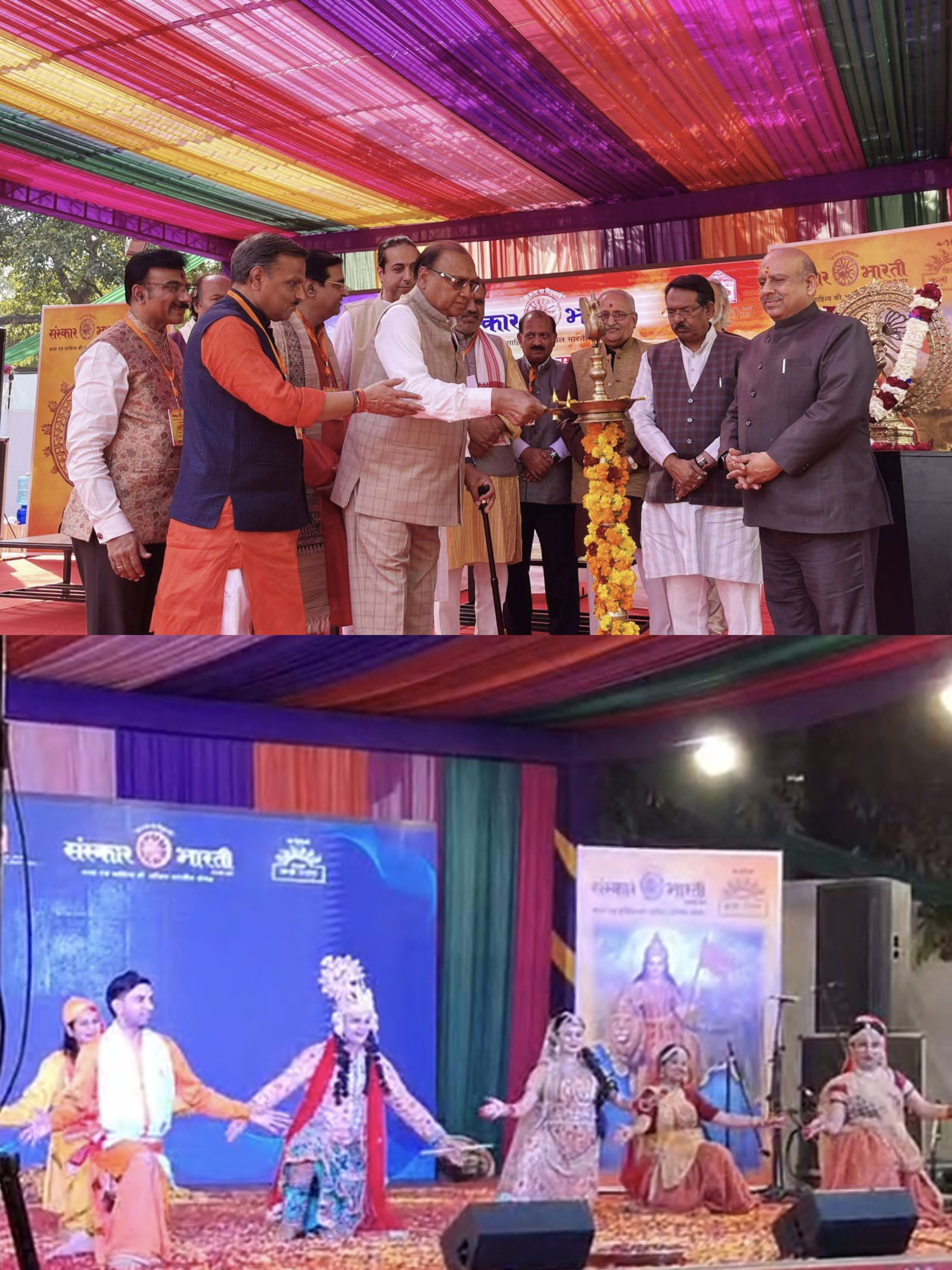
Organised by Sanskar Bharati, Delhi Prant, the Delhi Kala Utsav 2026, held on 28th February and 1st March at Rabindra Bhavan Complex, Mandi House, emerged as a vibrant celebration of India’s artistic and cultural legacy. Spread over two enriching days, the festival brought together music, dance, theatre, visual arts and literature, presenting a holistic reflection of India’s creative spirit.
The festival commenced with the traditional ceremonial lighting of the lamp, symbolising the eternal flame of Indian culture and collective consciousness. The inaugural session was graced by Hon’ble Union Minister of State for Road Transport and Highways Shri Harsh Malhotra Ji, Hon’ble Shri Vijay Kumar Ji, Akhil Bharatiya Sah-Vyavastha Pramukh, Hon’ble Speaker of Delhi Legislative Assembly Shri Vijender Gupta Ji, Hon’ble Shri Vijay Kumar Ji, Regional Organisation Minister of Sanskar Bharati, Shri Ashok Tiwari Ji, Kendriya Karyalaya Sachiv, Sanskar Bharati, and Shri Prabhat Kumar Ji, President, Delhi Prant, Sanskar Bharati. Their esteemed presence added dignity and national significance to the occasion.
Following the inauguration, the distinguished guests were warmly welcomed in keeping with Indian tradition. Shri Omprakash Aggarwal Ji felicitated Hon’ble Shri Harsh Malhotra Ji. Shri Mahendra Gupta Ji welcomed Hon’ble Shri Vijay Kumar Ji (Akhil Bharatiya Sah-Vyavastha Pramukh). Smt. Aarti Arora Ji greeted Hon’ble Shri Vijender Gupta Ji. Shri J.P. Singh Ji felicitated Hon’ble Shri Vijay Kumar Ji (Regional Organisation Minister), while Shri Prashant Kumar Ji welcomed Shri Ashok Tiwari Ji, Kendriya Karyalaya Sachiv. Thereafter, Shri Prabhat Kumar Ji delivered the welcome address, eloquently outlining the vision and cultural commitment behind the festival.
Throughout the festival, audiences were captivated by a rich array of performances. Classical music recitals, folk dances, group singing, dance-dramas and theatrical presentations reflected the diversity and depth of India’s artistic traditions. The festive spirit of “Holi Mangal Milan” added colour and warmth to the atmosphere, transforming the venue into a lively cultural hub.
A major highlight of the event was the painting exhibition, which showcased compelling artworks inspired by Indian values, folk traditions, spirituality and contemporary themes. Visitors engaged deeply with the visual narratives, appreciating the creativity and expressive power of the participating artists.
Adding a literary dimension to the celebration, a vibrant Kavi Sammelan was organised, where poets recited thought-provoking and emotionally resonant compositions on themes of nationalism, society and cultural identity. The session received an enthusiastic response, enriching the intellectual and emotional fabric of the festival.
The festival also incorporated artistic tributes marking significant national milestones, including 75 years of the Constitution of India and 150 years of “Vande Mataram,” thereby connecting artistic expression with national remembrance and responsibility.
Delhi Kala Utsav 2026 stood as a testament to the unifying power of art. It reaffirmed that culture is not merely a reflection of heritage, but a living and dynamic force that strengthens society and nurtures national consciousness.
Artistic Expression: Freedom and Boundaries — A Thought-Provoking IGNCA Symposium Marking 75 Years of the Indian Constitution
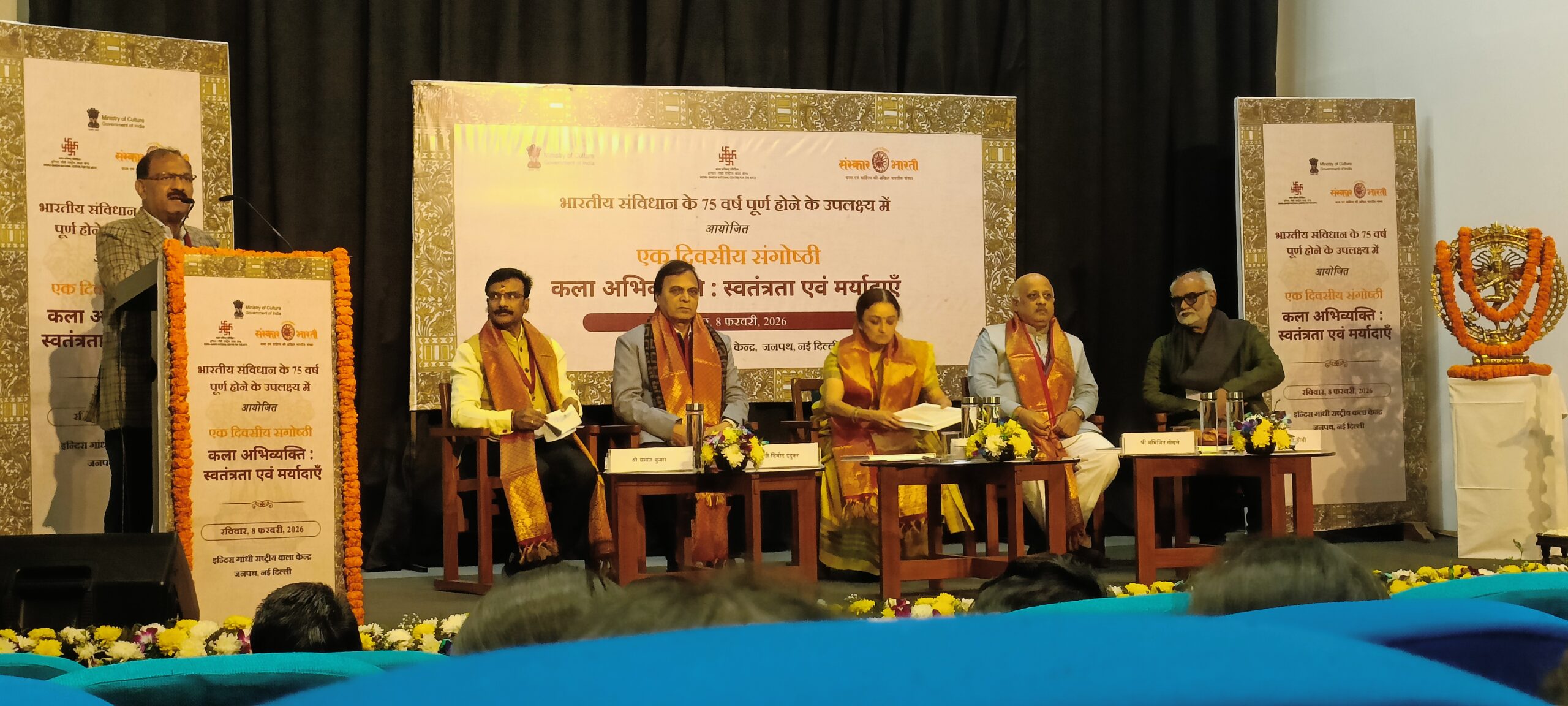
New Delhi, 8 February 2026: Commemorating 75 years of the Indian Constitution, a one-day national symposium titled “कला अभिव्यक्ति : स्वतंत्रता एवं मर्यादाएँ” was jointly organised by the Ministry of Culture, Sanskar Bharati and the Indira Gandhi National Centre for the Arts (IGNCA). Held at the IGNCA auditorium on 8 February 2026, the event unfolded in a dignified yet intellectually vibrant atmosphere, emerging as a meaningful cultural platform that explored the dynamic relationship between art, constitutional values and contemporary society during the ongoing Amrit Mahotsav period.
The programme commenced with a ceremonial lamp-lighting by Dr. Sachchidanand Joshi, Dr. Sandhya Purecha, Shri Abhijeet Gokhale, Shri Vinod Narayan Indurkar and Shri Prabhat Kumar. In their opening remarks, the speakers highlighted the intrinsic connection between the Constitution, culture and artistic practice. They emphasised that the Indian Constitution is not merely a legal framework but a living embodiment of cultural consciousness — one that empowers artists with freedom of expression while simultaneously reminding them of social responsibility and ethical boundaries.
The first session, devoted to literature, featured insightful reflections by Dr. Sachchidanand Joshi, Dr. Alka Sinha and Shri Kishor Makwana. The panel discussed literature as a bridge between power structures, social realities and human sensitivity. Speakers observed that while the Constitution grants writers the freedom to articulate truth fearlessly, it also calls for thoughtful and responsible use of language.
In the second session on visual arts, Dr. Nandlal Thakur, Shri Neeraj Gupta and Ms. Situ Kohli explored the evolving landscape of contemporary and digital visual expression. They emphasised that visual art communicates beyond words and holds the power to mirror society. Constitutional freedoms, they noted, enable artists to challenge norms and provoke dialogue, provided that sensitivity and cultural balance remain central to creative practice.
The third session, centred on performing arts, brought together Dr. Sandhya Purecha, Shri Chetan Joshi and Ms. Vidya Shah. Through discussions on theatre, music and stage traditions, they reflected on the stage as a powerful medium for social engagement. Artists, they suggested, carry the responsibility to foster awareness, inclusivity and dialogue through their performances.
Cinema formed the focus of the fourth session, where Shri Atul Pandey, Shri Mustaza Ali Khan and senior journalist-film critic Shri Anant Vijay examined the wide-reaching influence of films on society. The panellists stressed the delicate balance between creative liberty and social accountability, highlighting the growing relevance of ethical storytelling in contemporary media landscapes.
During the valedictory session, Sanskar Bharati’s National Organisation Secretary Shri Abhijeet Gokhale drew connections between Bharat Muni’s Natyashastra, the rights and duties enshrined in the Constitution, and the need for contextually relevant artistic creation. He underscored that artistic freedom achieves its true significance only when aligned with cultural awareness and societal responsibility.
A distinctive feature of the symposium was the presentation of short street plays before each session, offering audiences an engaging thematic introduction. Complementing the discussions was an exhibition showcasing the contributions of women artisans involved in the making of the Constitution and highlighting the artistic dimensions embedded within its spirit.
Overall, the symposium emerged as an enriching and reflective cultural initiative — encouraging artists, scholars and audiences to re-examine the Constitution’s 75-year journey through the lens of creative practice. By fostering dialogue across disciplines, the event reinforced the enduring role of art as both a mirror to society and a catalyst for thoughtful change.
AIKYAM 2025 Concludes at Ajanta–Ellora with a Vibrant Tribute to UN@80
By Kanika Bansal
AIKYAM Concludes at Ajanta–Ellora with a Vibrant Tribute to UN@80 Artists, scholars and delegates from over 30 countries convened over three days to celebrate India’s heritage and shared global values
India’s tourism sector is witnessing strong growth, with 20.57 million international arrivals and over 2.94 billion domestic tourist visits in 2024, reinforcing the country’s global cultural influence In 2024, Maharashtra recorded the highest foreign tourist inflow among all Indian states, receiving 3.71 million international visitors Chhatrapati Sambhajinagar (Aurangabad), Maharashtra, November 22, 2025: Sopaan’s flagship cultural initiative, AIKYAM 2025, successfully concluded its three-day celebration (November 21-23, 2025) today at the UNESCO World Heritage Sites of Ajanta and Ellora. The event marked the 80th anniversary of the United Nations through an immersive convergence of art, heritage, diplomacy and sustainability. Set amid the breathtaking rock-cut caves of Ajanta and Ellora, AIKYAM 2025 brought together global cultural practitioners, historians, artists and diplomats for a rare celebration of India’s timeless wisdom and living traditions. The event witnessed the presence of key dignitaries from UNESCO, Maharashtra Tourism and the Municipal Corporation of Chhatrapati Sambhajinagar, alongside ambassadors, diplomats and
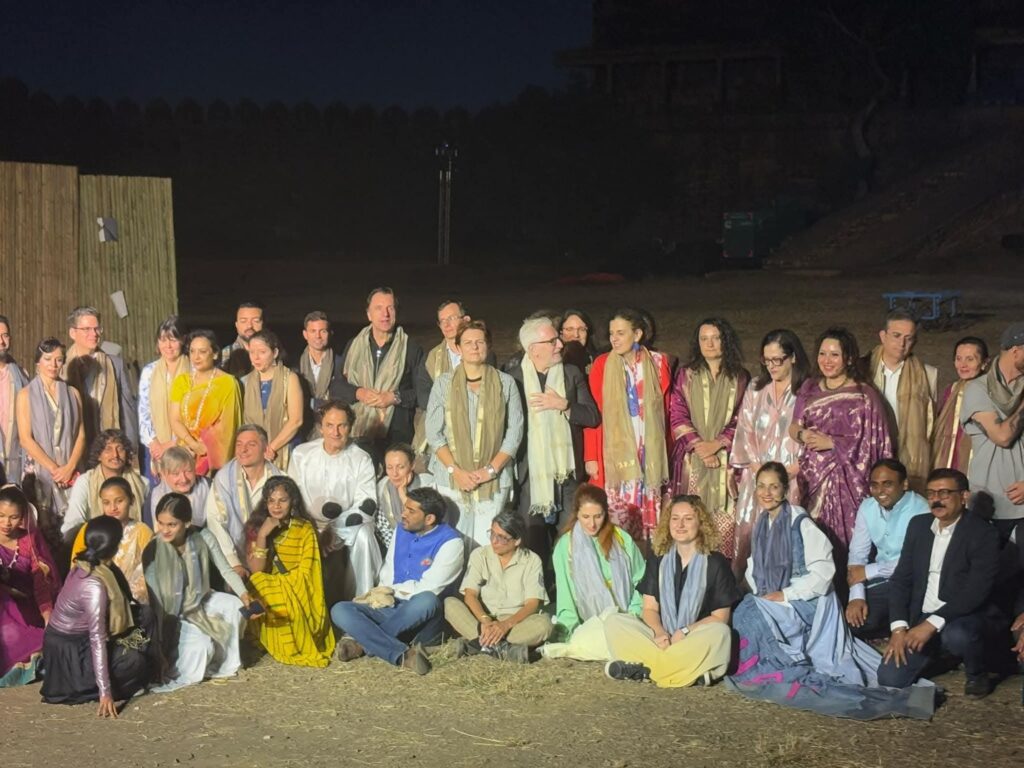
Cultural Ambassadors from over 30 countries were amongst the attendees
cultural representatives from over 30 countries. Among the distinguished attendees were Shri Sanjay Khandare, Principal Secretary, Maharashtra Tourism, Dr. Timothy Curtis, Director, UNESCO Regional Office in India, and Shri G. Sreekanth, Municipal Commissioner of Chhatrapati Sambhajinagar. Their participation reinforced AIKYAM’s core message of global unity, responsible cultural tourism and the harmonious blending of tradition with modern innovation. Several senior diplomats, including the High Commissioners of the United Kingdom and New Zealand; the Ambassadors of France, China, the Netherlands, Belgium, Sweden, Switzerland, Spain and Thailand; and the Country Head of UNDP, also graced the festival. Shri Sanjay Khandare, Principal Secretary, Maharashtra Tourism, said, “Maharashtra stands at the forefront of India’s tourism landscape, committed to becoming a premier global cultural destination, with the Ajanta and Ellora caves serving as living expressions of our civilisational depth and artistic brilliance. As we commemorate 80 years of the United Nations, we gather for AIKYAM, a celebration rooted in the philosophy of Vasudhaiva Kutumbakam, reminding us that the world is one family and reflecting Maharashtra’s legacy of bridging faiths, fostering art and inspiring unity across centuries. In 2024, the state recorded India’s highest foreign tourist inflow with 3.71 million international visitors. Our outlook remains strong as we continue to enhance infrastructure, visitor services and opportunities across key destinations. It is our goal that every traveller leaves with an experience that is enriching, memorable and deeply connected to our cultural soul. In the spirit of Vasudhaiva Kutumbakam, we hope Maharashtra’s cultural richness inspires harmony across nations and strengthens unity in diversity.”
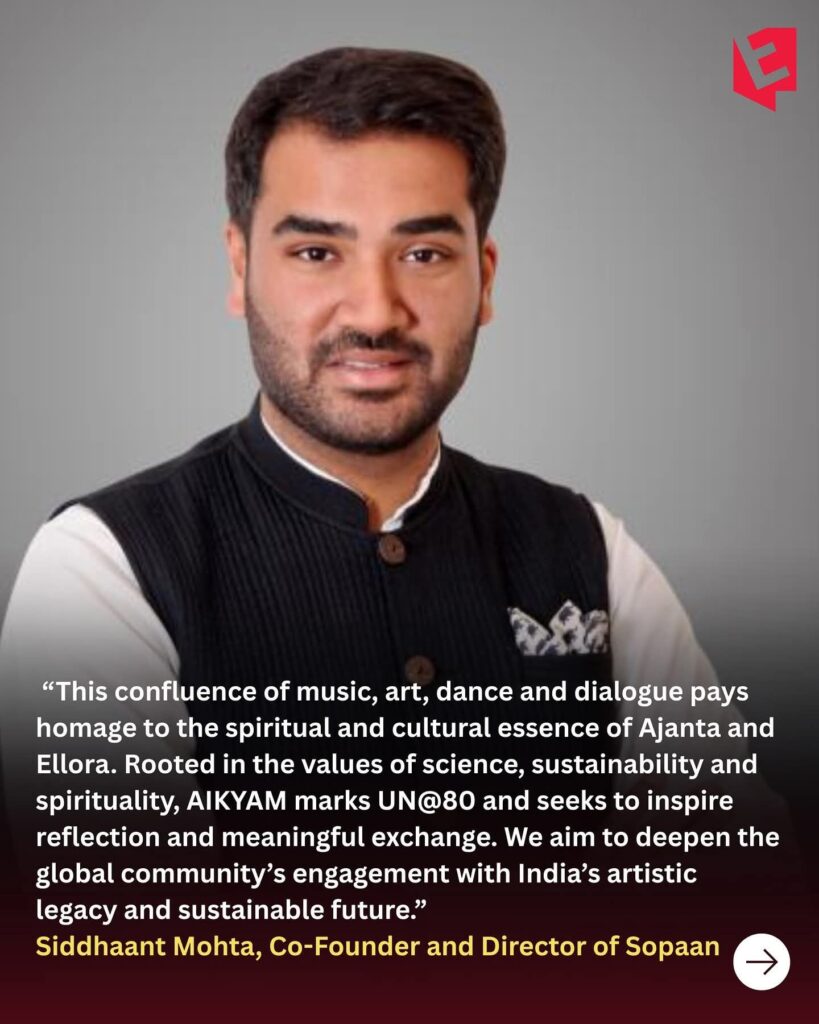
Siddhaant Mohta, Co-Founder and Director of Sopaan, said, “AIKYAM is a strategic initiative that reimagines how heritage, performance and dialogue can come together to build global understanding. Conceived as an immersive three-day journey, it transforms the sacred cave complexes of Ajanta and Ellora into living stages for unity and exchange. Drawing from Sopaan’s experience curating cross-cultural programmes with the royal families of Jaisalmer and Gwalior, and with the Delhi Government at Purana Qila, AIKYAM marks 80 years of the United Nations. We stand
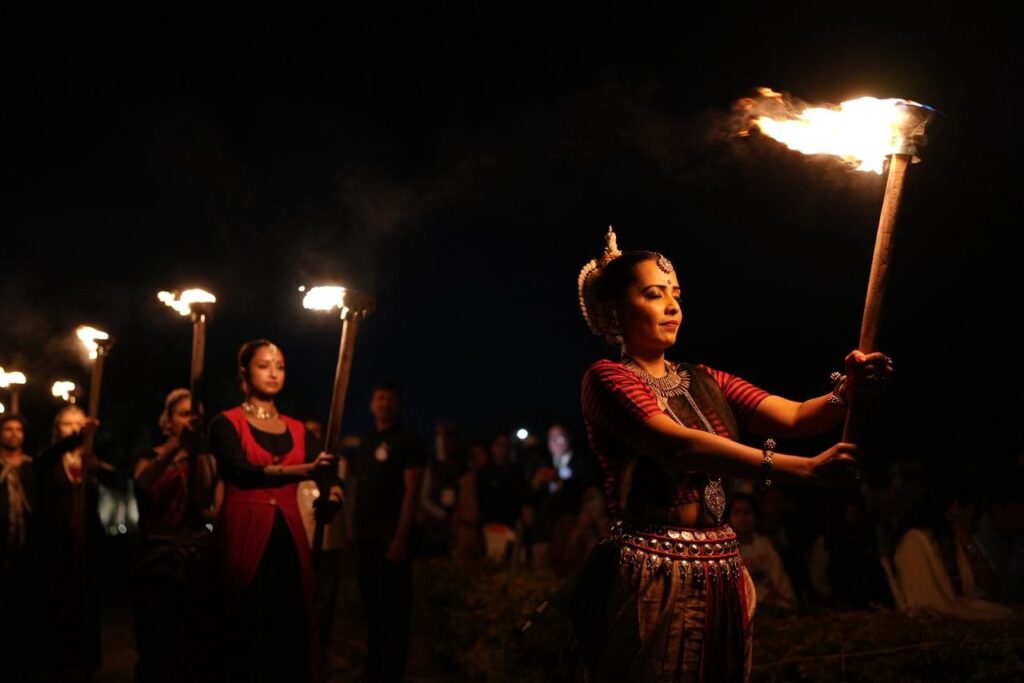
at a global pedestal where we amalgamate a unique confluence of art, culture and spirituality to echo the United Nations’ founding ideals of peace, cooperation and a shared global future.” Dr. Timothy Curtis, Director, UNESCO Regional Office in India, remarked, “Ajanta and Ellora, among the earliest Indian sites inscribed on the UNESCO World Heritage List, stand as dynamic Indian repositories of philosophy, creativity, and shared human endeavor. Their legacy, rooted in artistic excellence, scientific prowess and in the coexistence of diverse traditions, reminds us of what humanity can achieve together. In a rapidly changing world, these sites call on us to renew our commitment to dialogue, cooperation and collective action. AIKYAM 2025 brings this spirit to life, demonstrating how cultural heritage is not just a record of human achievement but a roadmap for building dialogue, understanding, and collective action in the spirit of UN@80 and our shared future.” Extending his welcome, Shri G. Sreekanth, Municipal Commissioner of Chhatrapati Sambhajinagar, noted, “Celebrated amid the timeless grandeur of our UNESCO World Heritage Sites, AIKYAM beautifully bridges our cultural heritage with innovation. As we commemorate UN@80, this event highlights Maharashtra’s commitment to honouring tradition while embracing the future.” AIKYAM 2025, celebrating oneness, was a vibrant convergence of culture, heritage and global dialogue centred at the Ajanta and Ellora caves. As dusk gathered, the forecourt of the monolithic Kailasa Temple, Ellora, carved from a single rock to honour Lord Shiva, became an open-air amphitheatre. The evening opened with a Shiva Invocation by HH Maharani Raseshwari Rajya Laxmi of Jaisalmer and Nick Booker, whose Sanskrit chants and interpretations evoked the cosmic principle of Aikyam. This was followed by AIKYAM Omkara, choreographed by Gauri Sharma Tripathi and performed by international artists using Kathak, Bharatnatyam and Odissi, to embody the universal rhythm of creation, continuum and dissolution. Intellectually, the event featured a major lecture by historian William Dalrymple, “The Golden Road: How Ancient India Transformed the World,” which connected India’s civilisational ethos to the UN’s global vision, alongside talks by other thought leaders, including Dr. Timothy Curtis and Booker. Complementing the performances and talks, the festival featured significant artistic and historical recreations, underscoring its theme of global cultural dialogue. A highlight was the musical recreation of the historic 1967 UN General Assembly concert by Pandit Ravi Shankar and Yehudi Menuhin, expertly performed by Pandit Shubhendra Rao and Dutch cellist Saskia Rao-de Haas, emphasising dialogue as audible harmony. Brazilian artist Sergio Cordeiro also contributed with a live mural reinterpreting the Ajanta murals in a contemporary idiom. The overall experience was enriched by curated heritage tours to sites like the Daulatabad Fort and Bibi ka Maqbara, textile showcases of Paithani and Himroo, and a celebration of Maharashtrian cuisine, culminating in contemplative visits to the Ajanta caves on the final day. Cultural tourism accounts for nearly 40% of tourist arrivals in India, and the country’s heritage tourism market, valued at USD 19.9 billion in 2024, is projected to reach USD 27.1 billion by 2033. AIKYAM 2025 positioned heritage as a powerful tool for cultural exchange, sustainability and global connection, further strengthening India’s soft power footprint. Anchored in the philosophy of oneness of science and spirituality, humanity and nature, AIKYAM 2025 showcased India’s alignment with the UN Sustainable Development Goals while celebrating the artistic and spiritual genius of ancient civilisations. Founded by Ambassador Monika Kapil Mohta and Siddhaant Mohta, Sopaan continues to build immersive cultural journeys that honour India’s heritage while fostering meaningful global dialogue. As AIKYAM 2025 drew to a close, the resonance of its message remained clear, that culture, when shared, becomes a bridge between people, nations and the collective future of humanity. The success of the festival was supported by its key partners and sponsors, including Endurance Technologies, Trident Group, JSW, RMZ Corp, VFS Global, TVS Motors, Bharat Forge, SPP Pumps, Volvo, Kalpataru Projects, CBSL Group, ZF Group and IndiGo.
About Sopaan Sopaan crafts rich, bespoke events that represent Indian cultural heritage on the world stage, bringing historical sites alive in a contemporary context and creating meaningful cross-cultural connections. By blending music, dance, fashion, painting, sculpture, textiles, cinema, architecture and cuisine, Sopaan creates enriching sensory experiences that celebrate India’s living culture with ancient roots and an exciting future. With a mission to craft the world’s cultural connections with India, Sopaan has partnered with state governments, royal families and renowned curators to showcase the country’s incredible history and extraordinary people against the backdrop of its timeless heritage. About Maharashtra Tourism The Government of Maharashtra is committed to promoting the state’s diverse tourism offerings, spanning heritage, culture, nature and adventure. With world-renowned destinations such as the UNESCO World Heritage Sites of Ajanta and Ellora, the vibrant cities of Mumbai and Pune and serene hill stations like Mahabaleshwar and Lonavala, Maharashtra offers a rich tapestry of experiences. Through initiatives that enhance infrastructure, promote sustainable and eco-tourism and celebrate cultural festivals such as the Ganesh Festival and Hindavi Swarajya Mahotsav, Maharashtra Tourism continues to highlight the state’s unique heritage and vibrant spirit while ensuring memorable and responsible travel for all visitors. Media Contact:Kanika Bansal: +91 98995 74833, kanika.b@jaibo.com Anjali Sharma: +91 98993 02902, anjali.s@jaibo.com
Natsamrat’s Theatrical Showcase: A Vibrant Tapestry of Emotion, Satire, and Humour
On May 24, 31, and June 1, Delhi’s L.T.G. Auditorium at Mandi House came alive with a rich blend of theatre as Natsamrat, a prominent performing arts group, presented a trio of compelling plays. Each piece offered a distinct flavour—ranging from heartfelt drama to sharp satire and uproarious comedy—beautifully reflecting the artistic breadth and emotional depth of contemporary Indian theatre.
Tender Reflections: Kambakht Ishq
Staged on May 31 at 3:00 PM, Kambakht Ishq, penned by Satyaprakash, offered a poignant look into the emotional needs of the elderly. Through the lives of two aging individuals coping with loneliness, the play delicately unraveled themes of companionship, vulnerability, and the quiet ache of growing old. With subtle dialogue and restrained yet powerful performances, the production struck a deep emotional chord with its audience, rendering it one of the most moving performances of the festival.
Comic Wit and Social Satire: The Proposal
Staged twice—on May 24 at 11:30 AM and again on June 1 at 3:00 PM—Anton Chekhov’s iconic one-act play The Proposal was brought to life with remarkable flair. What begins as a simple marriage proposal spirals hilariously into a heated argument over land and pets. The actors’ crisp comic timing, expressive body language, and fluid stage presence transformed the absurdity into biting social satire. It was a delightful reminder that laughter, when layered with irony, becomes a powerful mirror to societal quirks.
Laughter with a Message: Kallu Nai MBBS
Inspired by Molière’s classic farce and performed on May 24 at 12:30 PM, May 31 and June 1 at 4:15 PM, Kallu Nai MBBS followed the misadventures of a drunk barber who is forcibly made to act as a doctor. Behind the laugh-out-loud moments lay darker undertones of domestic abuse and the systemic marginalization of women. The fast-paced narrative, witty dialogues, and exaggerated characters created a comic spectacle that managed to entertain while prompting deeper thought.
Direction and Technical Excellence
All three plays were skillfully directed by Shyam Kumar, whose vision and theatrical sensibility were evident in the seamless staging. The ensemble cast—Vishwajeet, Munmun, Shivangi, Aman Kumar, Dhananjay, Raman Kumar, Rajan, and Saumya—delivered heartfelt and dynamic performances. Behind the scenes, the production team added immense value: Sunil Rathore and Suraj Singh (stage management), Himanshu and Nisha (assistant stage managers), Payal and Raj Rani (makeup), Rohit Prasad and Rekha Devi (costumes), and Vansh Rathore (music coordination).
Natsamrat’s theatrical offering was more than a cultural event—it was a celebration of theatre’s power to evoke, provoke, and connect. Through humour, emotion, and satire, the festival reminded us that the stage is not just a space for performance, but a living, breathing dialogue with society itself.
Grace and Glory: Padma Shri Nalini-Kamalini Illuminate Kala Sankul Symposium
The monthly cultural symposium held at Sanskar Bharati’s central office, Kala Sankul, has blossomed into a vibrant celebration of Indian art and heritage, where the essence of tradition comes alive in its most graceful form. This month’s gathering was made truly special by the presence of the Chief Guest, Padma Shri Smt. Nalini-Kamalini, the renowned Kathak duo, whose distinguished contribution to Indian classical dance brought gravitas and inspiration to the evening.
The program began with the auspicious lighting of the ceremonial lamp, symbolizing the light of knowledge and culture. The ceremony was conducted by Padma Shri Shrimati Nalini-Kamalini, Sh. Vijay Kumar (Regional Organizational Secretary, Sanskar Bharati), Sh. Ashok Tiwari (President, Kala Sankul), Smt. Shruti Sinha, and Sh. Raj Upadhyay (Coordinator, Performing Arts, Delhi Region).
The cultural performances commenced with a mesmerizing Kathak recital by Ms. Anjali Munjal, who beautifully portrayed the depth of classical dance through an elegant blend of laya, taal, and expressive bhaav. She was followed by Ms. Damini Bisht, whose powerful Kathak performance, enriched with emotive expressions and rhythmic finesse, captivated the audience.
The evening reached a deeper resonance when the Chief Guest, Padma Shri Shrimati Nalini-Kamalini, took to the stage to address the gathering. Kamalini ji shared,
“Art is not merely an expression—it is the beauty of the soul, shaped by years of devotion and discipline. It refines the individual and uplifts society.”
She emphasized the value of consistency, purity, and dedication in artistic practice, highlighting art’s transformative power as a tool for national development.
“In today’s world,” she said, “art awakens inner consciousness, fosters social unity, and becomes a powerful medium for cultural resurgence.”
The symposium was gracefully anchored by Garima Rani and Shri Vishwadeep, who maintained a seamless flow and upheld the dignity of the evening. The event was enriched by the presence of many eminent personalities from the cultural sphere, including Sh. Pradeep Mohanty (Registrar, National School of Drama), Kathak Guru Subhash Ji, Chhau exponent Sapan Acharya Ji, renowned Kathak artist Anu Sinha, Deepali Sinha, and the duo Vikash-Aparna, among others.
The success of the event was the result of sincere efforts by a committed team of volunteers: Shraboni Saha, Sneha Mukherjee, Sakshi Sharma, Bharti Dang, Priyanka, Nandini, Aanchal, Ayushi, Sakshi, Tarushi, Senior Theatre Artist Shyam Kumar, Kuldeep Sharma, O.P.Sagar, Saurabh Tripathi, Raman, Harshit, Digvijay Pandey, Brijesh, Shivam, Satyam, and Mrityunjay—whose dedication brought vitality to the entire celebration.
Toward the end, Smt. Shruti Sinha delivered a heartfelt vote of thanks, expressing gratitude to all artists, dignitaries, and organizers. The symposium concluded with the collective chanting of the Shanti Mantra, a sacred moment that left an everlasting impression of the divinity and elegance of Indian art and culture in the hearts of all present.
“पछ्याण”: A Vivid Exploration of Identity Through the Art of Uttarakhand
Held from May 19 to 22, 2025, at Kala Sankul, Sanskar Bharati’s esteemed cultural centre in New Delhi, the group art exhibition “पछ्याण” (meaning identity) is a compelling tribute to the artistic spirit of Uttarakhand. Organized by the Rangeet Art Centre, Haldwani (Nainital), the exhibition aims to give national visibility to the region’s artists—both emerging and established.
This thoughtfully curated event showcases contemporary artworks that are deeply rooted in the cultural soil of Uttarakhand. It presents a striking fusion of folk traditions and modern expression, offering viewers a fresh perspective on the region’s identity, struggles, and everyday beauty.
The inaugural event was attended by notable figures including Shri Ashok Tiwari (Central Executive Member & Secretary, Sanskar Bharati), Shri Digvijay Pandey (Manager, Kala Sankul), Shri Himanshu Dabral (Programme Coordinator, Lalit Kala Akademi), and senior artists Naval Kishore and Ajay Sameer, who lent their support and presence to the cause of regional art.
The artworks featured in पछ्याण reflect the landscapes, lifestyles, and layered emotions of mountain life. From the role of women in society to the quiet resilience of remote communities, each canvas tells a story with nuance and sincerity. In some works, traditional folk art forms like Aipan are reimagined through a contemporary lens—bridging past and present in powerful visual narratives.
The exhibition includes works by a diverse group of artists: Tshering Negi, Priyoum Talukdar, Kusum Pandey, Papil Manna, Maninder Singh, Shanu Sharma, Chetan Joshi, Kaveesh Nabiyal, Ritika Bhatt, Dipanshu Dugtal, Khasti Palari, Riya Kabdal, and Archita Padiyar. Despite their varied techniques and themes, what unites them is a shared commitment to giving voice to Uttarakhand’s cultural heritage.
Located in the heart of Delhi, Kala Sankul is more than just a gallery—it is a dynamic space for artistic exchange rooted in Indian knowledge traditions. The venue regularly hosts panel discussions, performances, and cultural programs, making it an ideal platform for showcasing regional creativity on a national stage.
In essence,पछ्याण is not merely an art exhibition—it is a cultural statement. It reaffirms the idea that art, when grounded in identity and tradition, can transcend regional boundaries and speak to a larger collective consciousness.
Samarpan 2025: A Celebration of Silent Heroes and Selfless Service
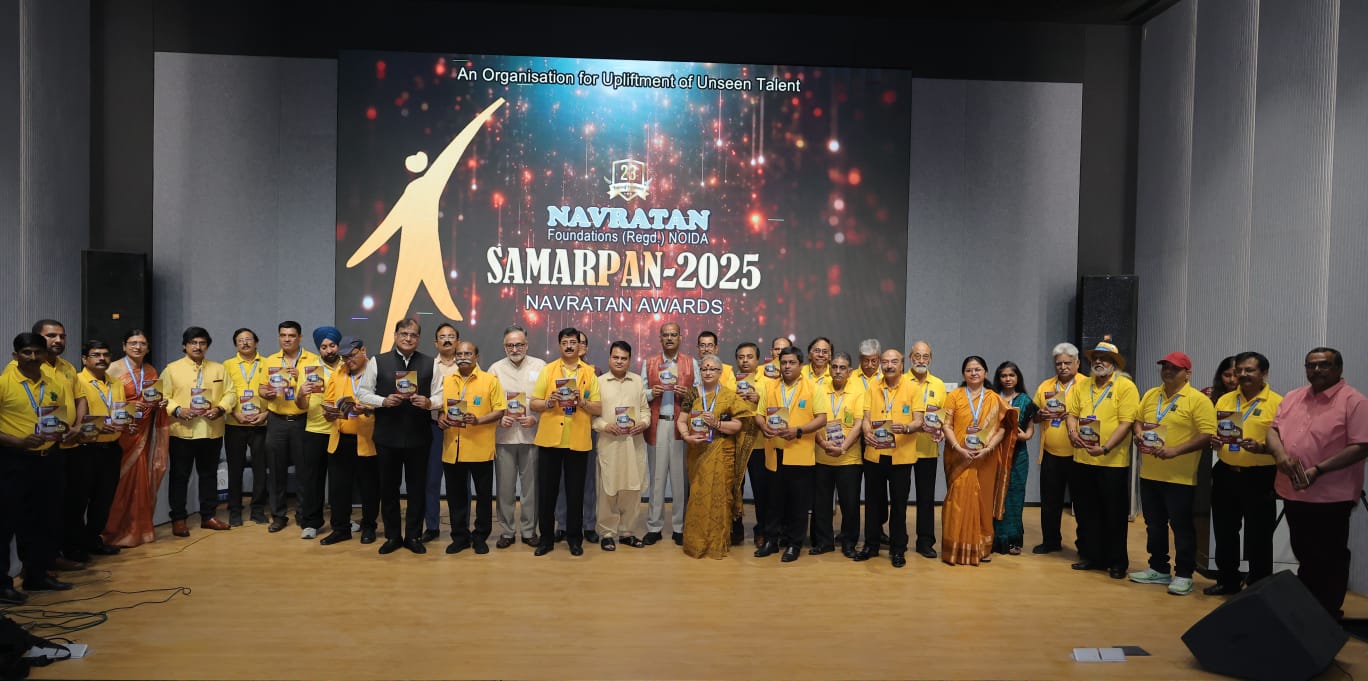
Noida – Where there is empathy, there is creation. Where there is compassion, there is upliftment. And when both transform into duty, events like “Samarpan” are born. What began as a pledge by “Navratan Foundations” 23 years ago — to bring the marginalized into the mainstream — has, in 2025, evolved into a moving celebration of service and humanity.
Held at the NEA Auditorium in Noida, the event began with a soulful Ganesh Vandana — not just a tradition, but a luminous beginning that symbolized the awakening of humanity. In that light stood the unsung heroes of India, whose quiet service has shaped society from the shadows. From Chandan Kumar Dubey, hailing from a remote district in Bihar, to Vicky Yadav, who tirelessly fights for the rights of the disabled and underprivileged children in Noida’s slums; from PARI, a Delhi-based organization giving voice to rape survivors, to Ananya Paul Dodmani of Dharwad, an embodiment of women’s dignity — every honoree was a beacon of hope and humanity.
This was no ordinary award ceremony. It was a heartfelt salute to those whose hands support the frail, whose smiles ignite hope in the hopeless. It was a recognition of silent strength and tireless compassion.
Justice Arvind Srivastava (Retd.), Chief Patron of the Foundation, proudly proclaimed, “Navratan is not merely an institution, it is a sensitive soul. Over 22 years, it has honored more than 500 selfless changemakers through the Samarpan Awards.” This year, approximately 15 remarkable individuals were honored with shawls, commemorative mementos, and cash prizes of ₹11,000 and ₹21,000 in heartfelt appreciation of their service.
Former District Magistrate N.P. Singh, in a deeply moving address, stated, “If I were to call any organization a saint, it would be Navratan. And if I were to name a true servant of society, it would be its founder, Dr. Ashok Srivastava.”
Dr. Ashok Srivastava, Founder and President of Navratan Foundation, warmly welcomed and thanked all dignitaries and attendees, extending his gratitude for their presence and encouragement.
The evening turned truly unforgettable when renowned singer Diwakar Sharma and other artists filled the hall with the magic of music. The fusion of melody and service resonated like a spiritual experience — a symphony of devotion and dedication.
Over 500 eminent guests attended the event, adding grace and gravitas. Among them were: Pradeep Chaturvedi (former Secretary, Rajya Sabha), Vimla Batham (Chairperson, Women’s Commission), Jameel Ahmad (international speaker), Rohit Srivastava (from Canada), Vaidya Achyut Kumar Tripathi (AYUSH Ministry), Vipin Malhan (NEA President), and many more.
Distinguished guests included Rajeev Srivastava (Principal Secretary, Election Commission), Vinod Mishra, Dr. V.S. Chauhan, Varsha Srivastava, Wing Commander Ashish Saxena, Dr. Kalpana Bhushan, Acharya Gautam Rishi, Aditya Gildiyal, Anu Khan, Colonel Amitabh Amit, Rakesh Sinha, Rajnish Sharma, Group Captain G.C. Mehra, Mridula Saxena, and other respected personalities from across the country.
In essence, ‘Samarpan’ was not just an annual celebration — it was a poem of social consciousness, an aarti of service, and a festival of compassion that echoed a powerful truth: Until every eye at the farthest end of society glows with self-respect, our service remains incomplete.
Navratan Foundation’s unwavering efforts continue to be a shining inspiration for all those who dare to dream of a better world — and have the courage to make it a reality.
Beyond Boundaries: The Artistic Splendor of Nritya Shikhar Mahotsav 2025
The “Nritya Shikhar Mahotsav 2025,” held at Triveni Kala Sangam in New Delhi, emerged as a grand celebration of the dignity and tradition of Indian classical dance. Organized by the Urvashi Dance Music Art & Culture Society, the festival introduced art enthusiasts to various classical dance styles while elevating Indian cultural heritage to new heights.
On this occasion, Shri Prabhat Kumar, President of Sanskar Bharti Delhi, graced the event as the chief guest. The festival also honored esteemed personalities from the arts world. Pandit Vijay Shankar Mishra, Shri Ashok Jamanani, and Shri Ashok Jain were presented with the Urvashi Kala Samman. Distinguished guests such as Shri Ashok Tiwari (Secretary, Sanskar Bharti), Padma Shri awardee and renowned Odissi dancer Smt. Madhavi Mudgal, and Shri Pradeep Kumar Pathak (Secretary, Kala Chaitanya) added further prestige to the event with their presence.
The festival featured mesmerizing performances in various classical dance styles like Kathak, Odissi, and Chhau. Among them, a standout performance was delivered by the dynamic young Kathak dancer Vishwadeep from the Jaipur Gharana.
Vishwadeep’s performance was among the most powerful and talked-about presentations of the event. Trained in the Jaipur Gharana tradition, this young artist brought to life the strength, emotion, and rhythmic excellence of Kathak. He began with Chaturbhuj, depicting the four-armed form of Lord Vishnu through expressive dance. His dynamic gestures, balanced movements, and fluid expressions made the performance truly memorable.
Following that, he presented a dance drama titled Ravan, which portrayed the complexities of Ravan’s personality and his inner psychological turmoil. This unique choreography blended traditional Kathak elements with deep emotional storytelling. Directed and choreographed by the acclaimed Kathak guru Shama Bhate, the piece preserved the purity of the dance form while offering a fresh perspective.
Vishwadeep’s performance was not limited to technical brilliance; through his expressions and body language, he powerfully conveyed the varied emotions within Ravan—pride, power, wisdom, and self-reflection. Especially gripping was his portrayal of Ravan’s internal struggle, which left the audience spellboun.
His mastery over footwork, rhythmic patterns (chakradhars and parans), and emotional depth made the performance unforgettable. The audience greatly appreciated his energy, technical finesse, and expressive storytelling. His presentation was not just a classical dance recital, but a dramatic narrative that showcased Kathak as a potent medium for storytelling. When he embodied Ravan on stage, it felt as though the entire auditorium was witnessing a pivotal moment from an epic, with Ravan in deep introspection. Vishwadeep performed with such natural ease that it didn’t feel like a traditional dance performance—it felt like a living, breathing theatrical experience.
The hall erupted in applause after his performance. It would not be an exaggeration to say that Vishwadeep’s presentation made “Nritya Shikhar Mahotsav 2025” a cultural milestone that will be remembered for years to come.
Other notable performances included Pune’s Ameera Patankar and Delhi’s Shobha Bisht. Shobha’s Odissi performance beautifully blended devotion, grace, and feminine dignity. The Chhau performance, directed by Guru Ajay Bhatt, was packed with energy and heroic expression (veer rasa).
The Kathak duet by Gaurav and Himani demonstrated the power of dialogue and harmony in dance. Their performance showcased a unique balance of creativity, technique, and synchronization.
Smt. Rekha Mehra, President of the Urvashi Dance Music Art & Culture Foundation, played a pivotal role in making the event a resounding success. Her dedication to dance and commitment to culture imbued the festival with both dignity and artistic excellence.
“Nritya Shikhar Mahotsav 2025” was more than just a cultural event—it was a living celebration of tradition, showcasing the continuity and creativity of Indian classical dance. For both performers and audiences, it was an inspiring experience that will be cherished for a long time.
Celebrating Art and Culture: Highlights from the Monthly Art Symposium at ‘Kala Sankul’
The monthly art symposium organized by Sanskar Bharati at its central office, ‘Kala Sankul,’ on Sunday, December 29, 2024, was a resounding success. This cultural gathering celebrated the diverse aspects of Indian art and culture, making it a perfect blend of education.
The symposium’s highlight was the keynote address by the esteemed art critic and cultural activist, Shri Arvind Ojha Ji. His insightful discourse on “Indian Artistic Traditions and Contemporary Art Trends” captivated the audience. Shri Ojha eloquently explained how all art forms are interconnected and serve as powerful carriers of knowledge. He emphasized that art enhances the quality of life, restores balance during times of disruption, and brings a sense of purpose and justification to human existence. He also pointed out that conveying knowledge through art has always been an effective method of reaching society. Shri Ojha’s remark that beauty and morality have always been closely aligned in our traditions struck a deep chord with the attendees.
Adding to the charm of the event were mesmerizing stage performances. Yajyata Gaba Ji’s group delivered a soul-stirring sitar recital, while Niharika Safaya and her troupe presented a vibrant dance ballet. Both performances were met with overwhelming appreciation from the assembled art connoisseurs, leaving an indelible impression.
The event attracted several prominent artists, art teachers, and a large number of art enthusiasts from across Delhi-NCR. The program was seamlessly hosted by Garima Rani, and a heartfelt vote of thanks was delivered by Vishwadeep, acknowledging the efforts of all contributors.
The success of the event was made possible by the collective efforts of numerous dedicated individuals, including Raj Upadhyay, Shyam Kumar, Pradeep Pathak, Raman Kumar, Anchal Kumari, Tarushi, Anjali Kumari, Sakshi Sharma, Saurabh Kumar, Harshit Kumar, Raman Kumar, Brajesh Vishwakarma, and Satyam Kumar. Special recognition was given to the ‘Kala Sankul’ management team, led by Digvijay Pandey, Mrityunjay Kumar, and Sushank, for their impeccable organization and coordination.
This symposium was not only a celebration of artistic excellence but also an inspiration for artists and cultural enthusiasts alike. By fostering greater awareness and appreciation for the arts, the event reinforced the enduring relevance of India’s artistic heritage in contemporary times.
Dramatic Showcase: Masters in Performing Arts (Drama) Present’s Two Plays “Kaalchakra” and “Bank Manager” at Rabindranath Tagore University
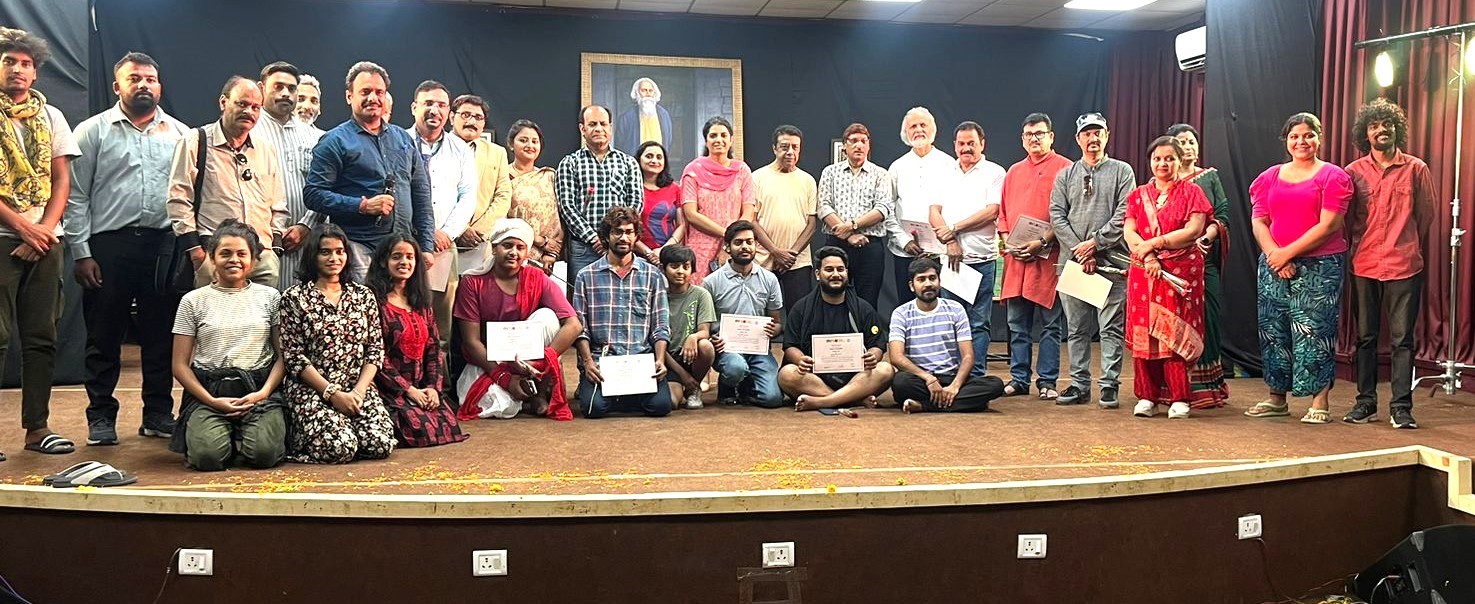
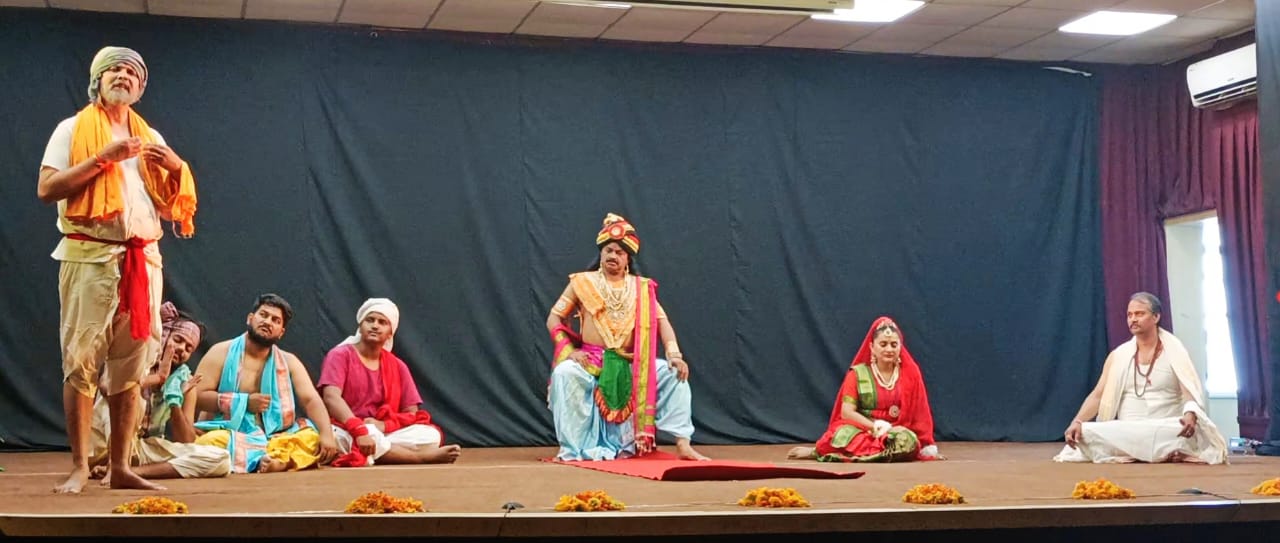
A three-day workshop (28 to 30 in 2024) was organized at Rabindranath Tagore University under the Faculty of Sanskrit Prachaya Bhasha Kendra Manviki Udaar Kala Sankay. Its participants were students of Masters in Performing Arts (Drama). Two plays were prepared by them. The play “Kaalchakra” written and directed by J.P. Singh and the other play “Bank Manager” written by Anton Chekhov and directed by Shyam Kumar were staged in the Sharada Auditorium of the University on 30 May. The play “Kaalchakra” is based on the legend of Raja Bhoj and Gangu Teli, in which the lead roles were played by J.P. Singh as Raja Bhoj and Tarun Jalota as Gangu Teli. Vaidyanath Sharma as Vaidya and Amatya, Vashishtha Upadhyay played the role of Ang Raj, Jyoti Upadhyay as Chandramukhi, Ashfaq as Musician, Vansh Rathore as Singer, Neeraj played the role of Dwarpal and Lights Designed by Shyam Kumar. The play Kaalchakra was started with a Jarjar Puja as per the rules of Natyashastra. A unique amalgamation of music and acting was seen in the play.
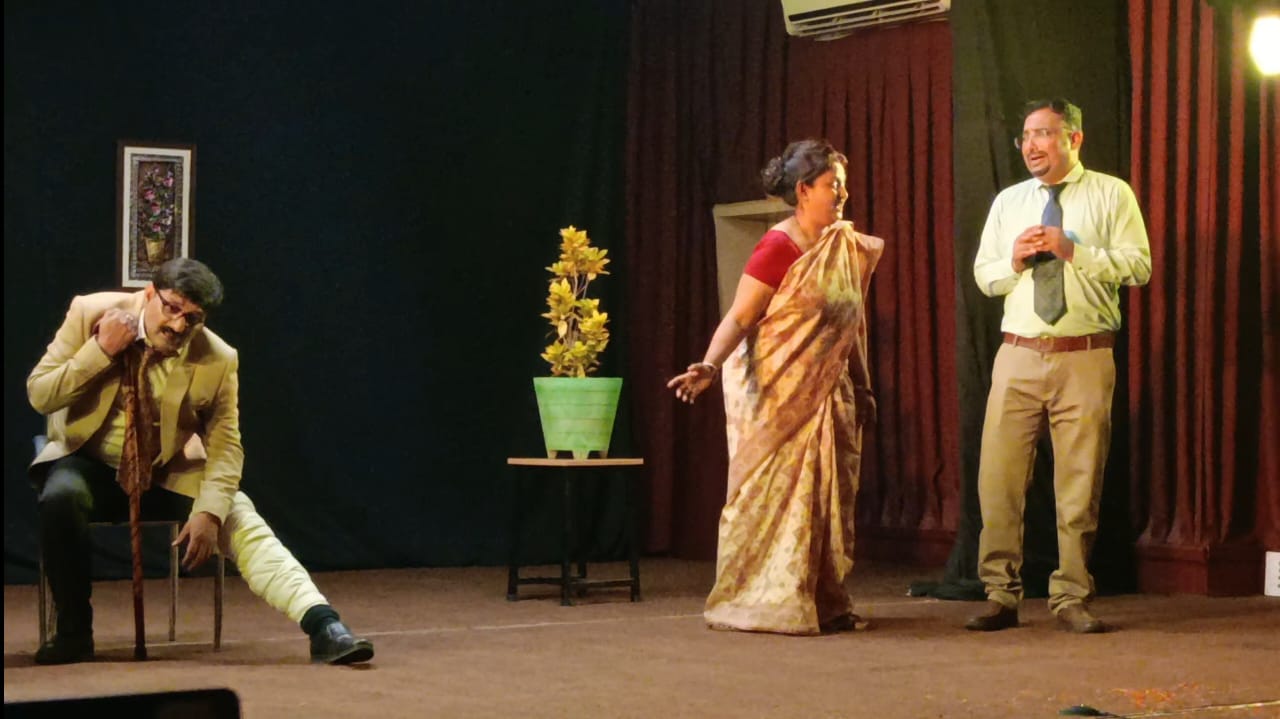
The second story full of humour “Bank Manager” is about a woman who comes to a bank, forces the manager to fulfill her unreasonable demands, the play is full of some humorous exchange of dialogues between the two and ends with the manager literally losing his mind. Nagendra Sharma played the role of the bank manager, the role of the woman was played by Shraboni Saha, Sachin Verma played the role of the assistant manager, music was directed by Vansh Rathore and lighting was designed and directed by Shyam Kumar.
In both the presentations, senior theatre artist and former director of M.P.S.D. Alok Chatterjee and the Vice-Chancellor of the University Dr. Aditi Chaturvedi Vats and the Vice Chancellor of the University graced their dignified presence as the chief guests. Alok Sir appreciated the play and praised the acting of all the artists. Dr. Aditi Chaturvedi Vats called the students’ presentation commendable and called it the heritage of the University. All the students were given certificates after the play. The coordinators of this workshop were Dr. Sanjay Dubey and Dr. Savitri Singh Parihar, co-coordinator Dr. Deepak Tiwari, cooperation from the Faculty of Humanities and Liberal Arts and Mr. Sharad Mishra, Abhishek Deshmane.