Indian New Year Cultural Evening at “Kala Sankul”: A Graceful Confluence of Tradition and Classical Aesthetics

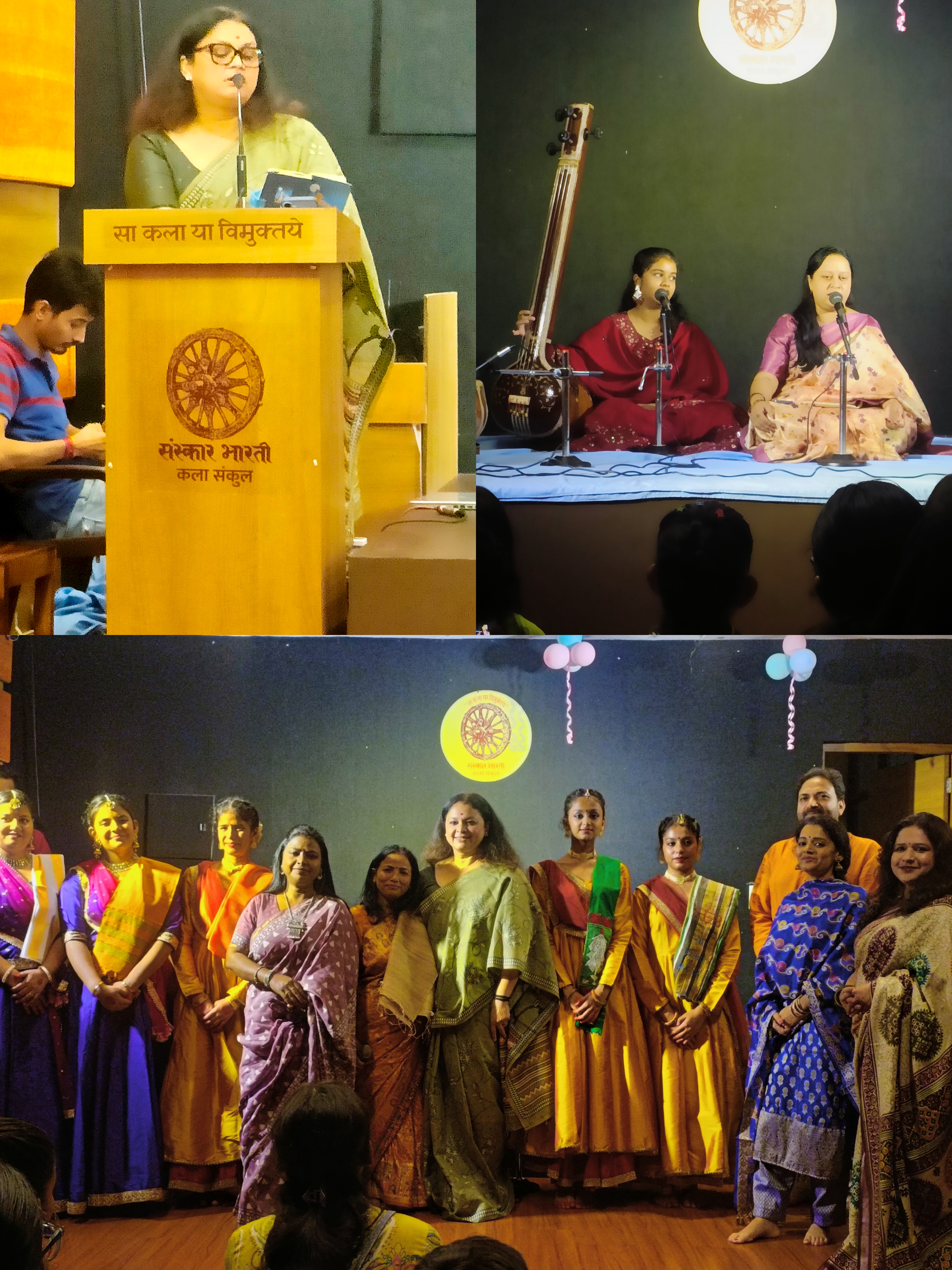
New Delhi, March 19, 2026 — Marking the auspicious occasion of the Indian New Year, a grand cultural evening organized by Sanskar Bharati – Kala Sankul transformed the capital’s cultural landscape into a vibrant celebration of heritage and artistic excellence. The Indian New Year is not merely a change of date; it symbolizes renewal, cultural awakening, and a reaffirmation of timeless values.

Celebrated on Chaitra Shukla Pratipada, which heralds the beginning of Vikram Samvat 2083, the event was hosted at the central office auditorium of Kala Sankul, located on Deen Dayal Upadhyay Marg. The evening stood as a vivid reflection of India’s rich traditions, classical art forms, and cultural consciousness.

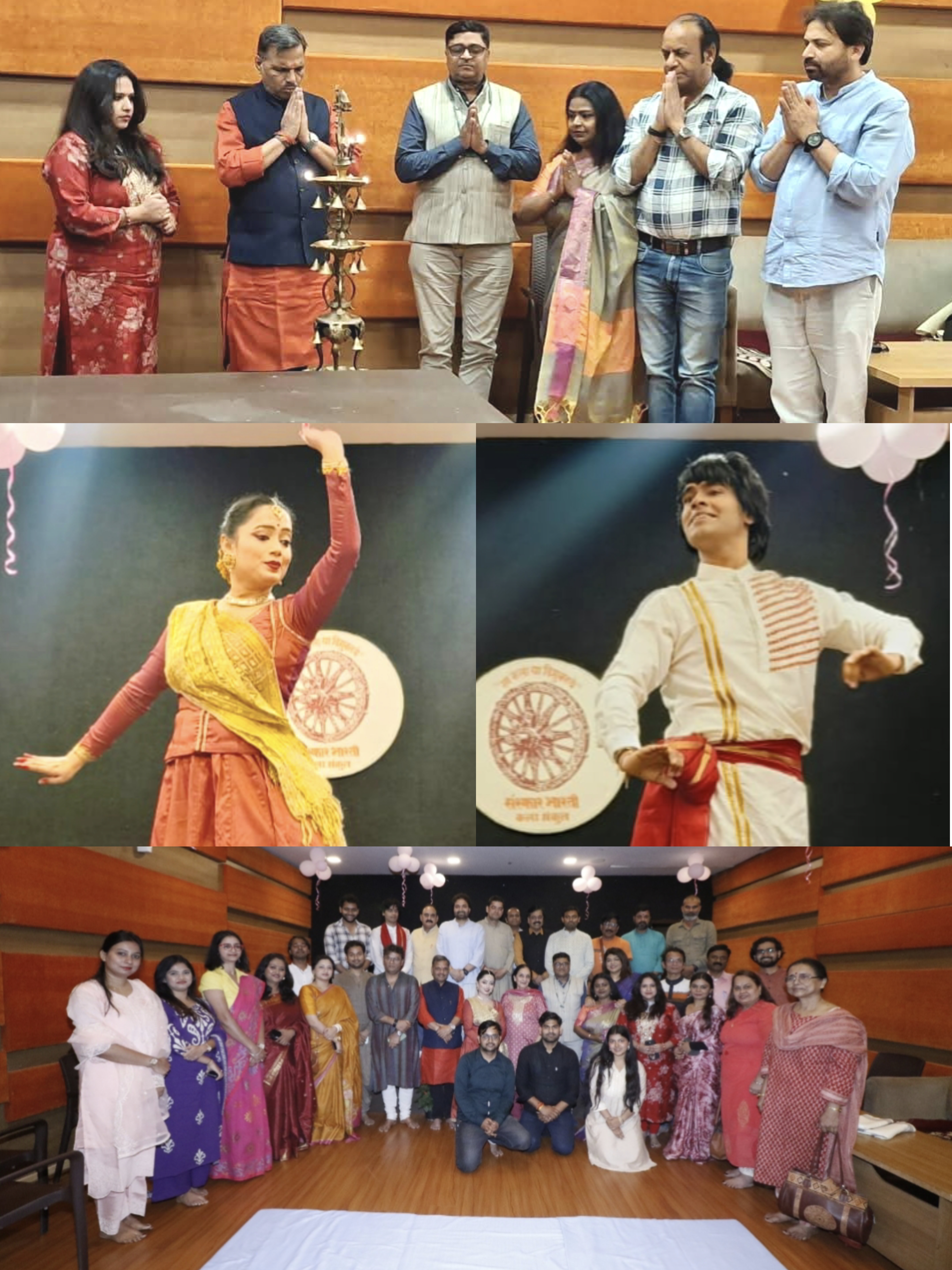
The program commenced with a ceremonial lamp lighting by Chief Guest Shri Ravi Shankar, Director of Sanskriti Adhyayan Kendra and Editor of Ganananchal, along with Shri Ashok Tiwari (Central Office Secretary, Sanskar Bharati), renowned dancer Shruti Sinha, and senior theatre practitioners Raj Upadhyay and Shyam Kumar.

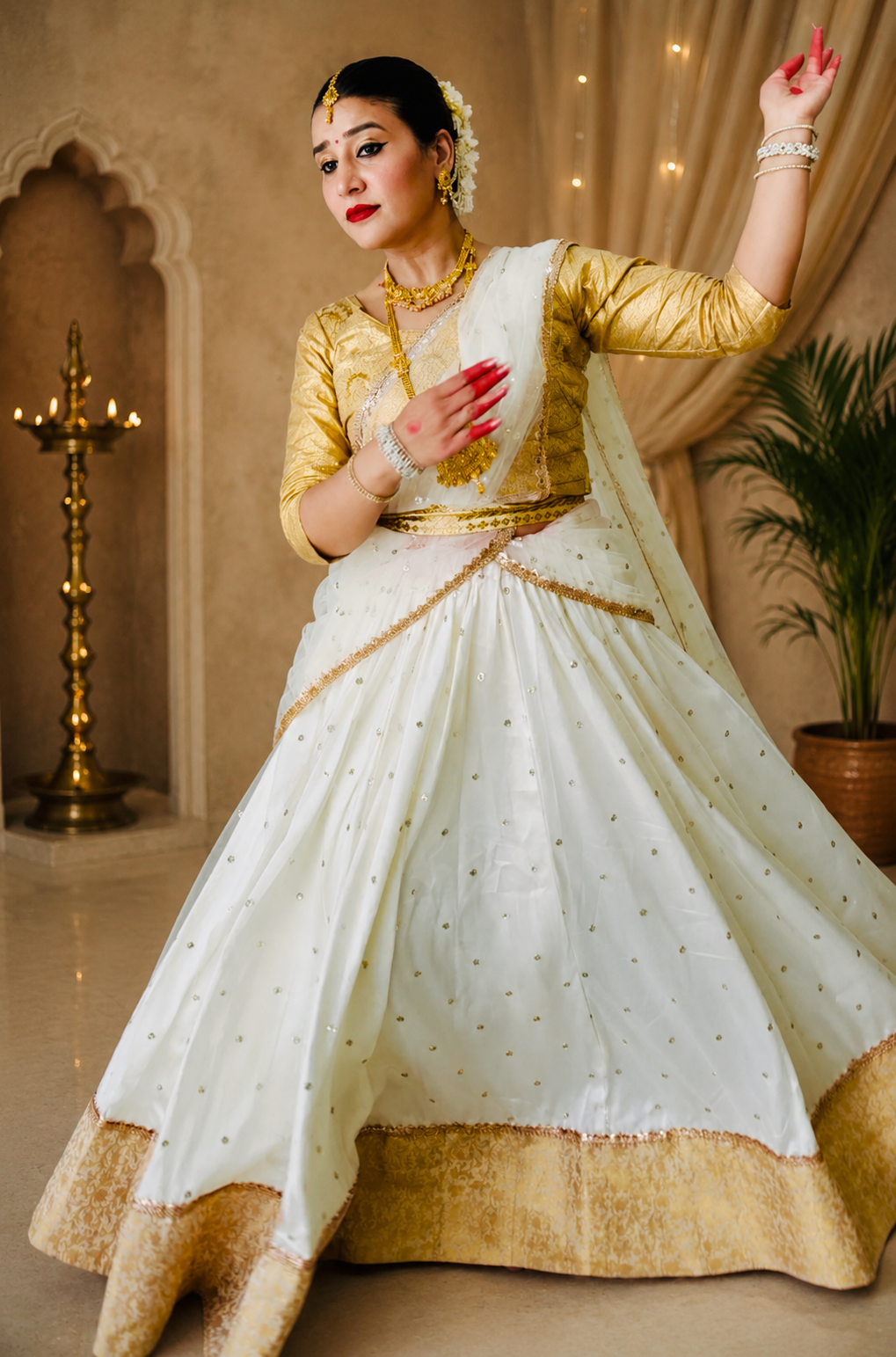
The highlight of the evening was a series of captivating Kathak performances. Smt. Sangeeta Dastidar mesmerized the audience with her powerful and emotive presentation, marked by depth, discipline, and remarkable stage presence. Her performance elevated the artistic tone of the evening. Sh. Akshar Tekchandani enthralled the audience with his dynamic expression, showcasing a refined balance of rhythm (taal), tempo (laya), and emotion (bhaav).

In his address, Chief Guest Shri Ravi Shankar eloquently spoke about the cultural and scientific significance of the Indian New Year. Emphasizing the relevance of traditional Indian timekeeping systems, he advocated for their revival and deeper integration into contemporary life, especially among the younger generation. His speech was both enlightening and inspiring.

The event was gracefully anchored by Shraboni Saha (Mun Mun), whose articulate presentation added coherence and charm to the proceedings. The vote of thanks was delivered by Shruti Sinha, followed by a serene rendition of the Shanti Mantra by Brijesh.

The success of the evening was made possible through the collective efforts of numerous artists, theatre practitioners, and contributors, including Raj Upadhyay, Shyam Kumar, Jitendra Kumar, Bharti Dang, Sneha Mukherjee, Nandini Kumari, Tarushi Singh Rajora, Sakshi Sharma, Lavanya, Garima Rani, Brijesh Vishwakarma, Vijender, and Harshit Goyal.

Overall, the cultural evening at Kala Sankul emerged as a dignified and impactful celebration of the Indian New Year—strengthening the bond between people and the rich artistic and cultural traditions of India.


A Celebrated Voice of Hindi Theatre Honoured: Jaivardhan (J. P. Singh) Conferred with Sahitya Bhushan Samman

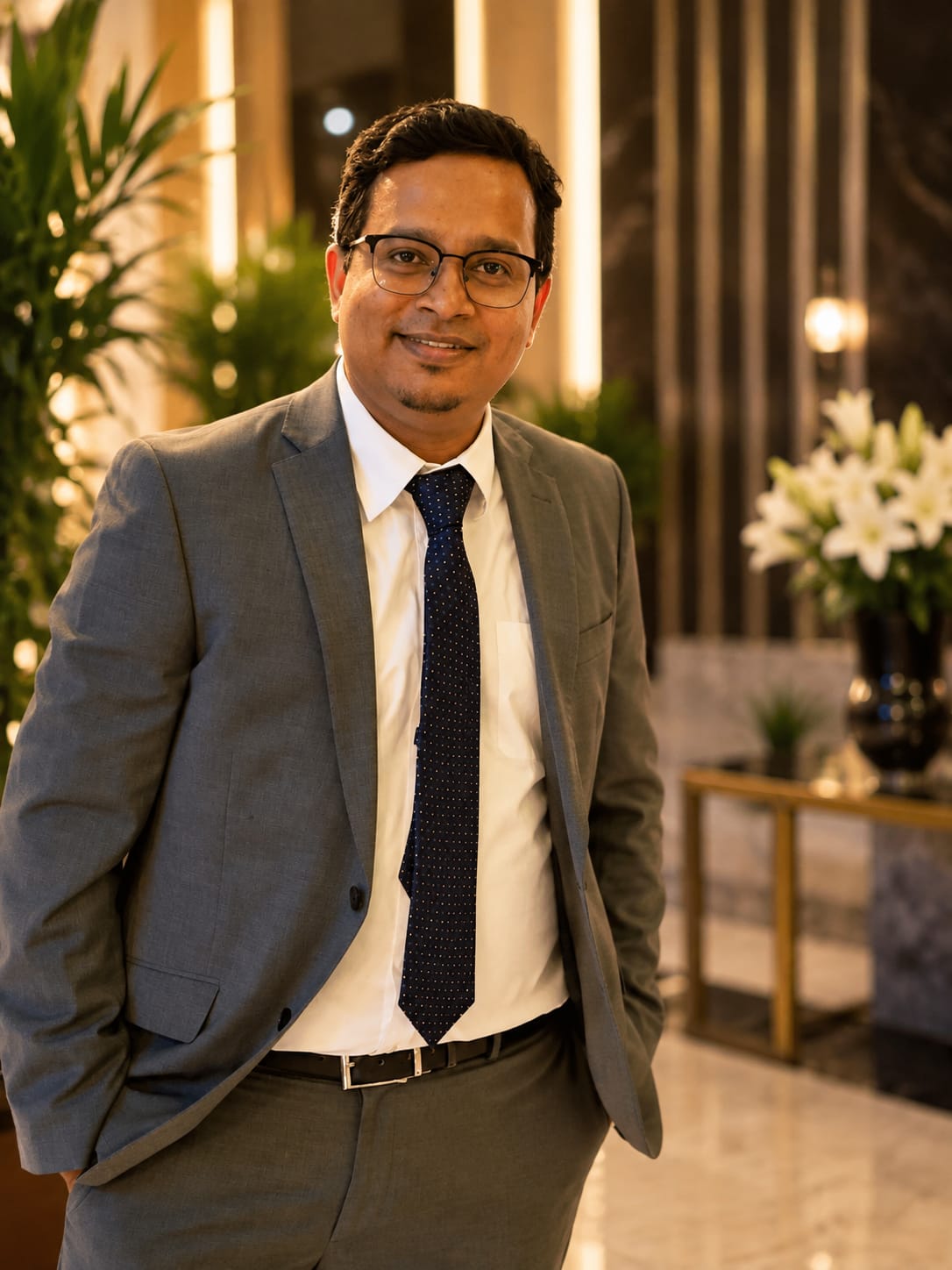
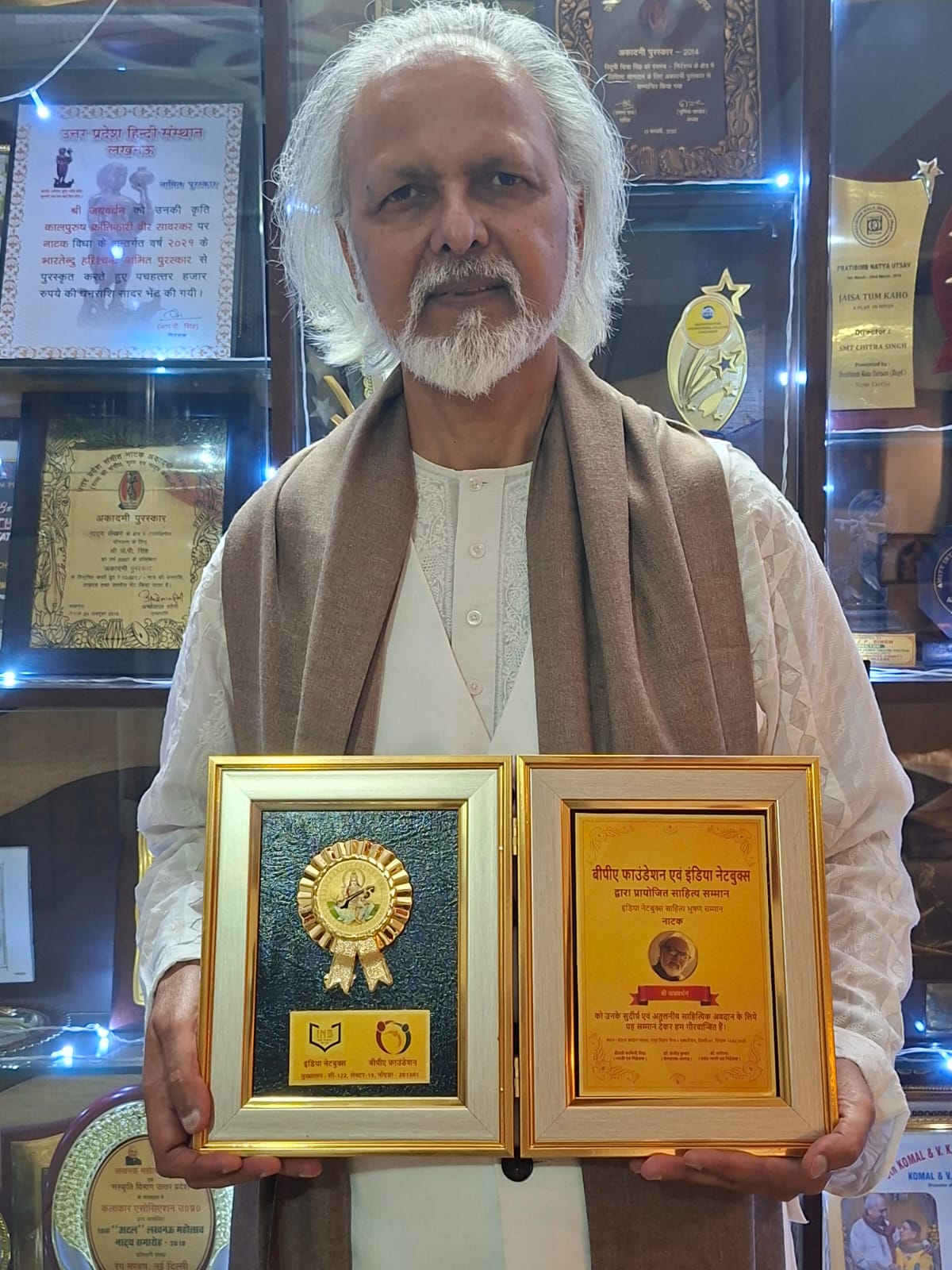
On 14 March 2026, a dignified and culturally significant ceremony held at Crowne Plaza, Mayur Vihar, New Delhi, marked a proud moment for Hindi theatre as veteran playwright Jaivardhan (J. P. Singh) was conferred with the prestigious “Sahitya Bhushan Samman.” Organized by BPA Foundation and India Netbooks, the event brought together eminent figures from the world of literature and theatre, lending it both gravitas and warmth. The honour was presented by noted writer Mamta Kalia and distinguished playwright Pratap Sehgal, making the occasion even more memorable.

This recognition stands as a fitting tribute to Jaivardhan’s long and impactful contribution to Hindi dramaturgy. Widely known in theatre circles as J. P. Singh, he has carved a niche for himself through decades of dedicated creative pursuit. His body of work, comprising 22 full-length plays and 6 children’s plays, reflects remarkable thematic diversity, ranging from social and historical narratives to deeply psychological explorations. His writing is distinguished by powerful dialogue, strong characterization, and an inherent sense of stagecraft that makes his plays both intellectually engaging and theatrically effective.

Among his notable works are Jhansi Ki Rani, Arjent Meeting, Gandhari, Babu Harishchandra, Kissa Maujpur Ka, Kalpurush, Yugpurush, Paro, and Nirjan Karavas. These plays have been widely performed across India and abroad, demonstrating their enduring relevance and appeal. His successful dramatic adaptation of Munshi Premchand’s classic novel Godaan further highlights his creative versatility and sensitivity toward literary heritage.

Jaivardhan’s contributions have been acknowledged by several prestigious institutions over the years. He has received honours from the Uttar Pradesh Sangeet Natak Akademi, Uttar Pradesh Hindi Sansthan (Lucknow), and various theatre organizations in Delhi. Notably, the World Hindi Secretariat, Mauritius awarded him first prize for his play Kalachakra, and the Bhartendu Natya Akademi, Lucknow conferred upon him an honorary title, underscoring his stature in the field.

Beyond writing, his involvement in the administrative and cultural spheres has also been substantial. His long tenure of approximately 31 years with the Sahitya Kala Parishad, Delhi, significantly contributed to the enrichment of the capital’s theatrical environment. Currently serving as an Associate Professor in the Film and Drama Department at Amity University, Noida, he continues to inspire and mentor a new generation of theatre practitioners.

Jaivardhan is not only a prolific playwright but also an accomplished director and actor, embodying a truly multifaceted theatrical personality. The conferment of the “Sahitya Bhushan Samman” is therefore not merely a recognition of his individual achievements, but also a celebration of the enduring tradition of Hindi theatre—one that continues to reflect society, history, and human sensibilities with depth and power.


Jalam Amritam: A Theatrical Reflection on Water and the Five Elements at Kala Sankul

At the theatre seminar organized at Kala Sankul by Sanskar Bharati, Abhigyan Natya Association, Delhi presented a compelling staging of “Jalam Amritam.” The research-based music and dance theatre production was written by Dr. Madhu Pant and directed by senior theatre practitioner Nisha Trivedi. Rooted in the philosophy of the five elements (Panchamahabhuta), the play examined the fractured relationship between humanity and nature in the context of contemporary ecological crises.

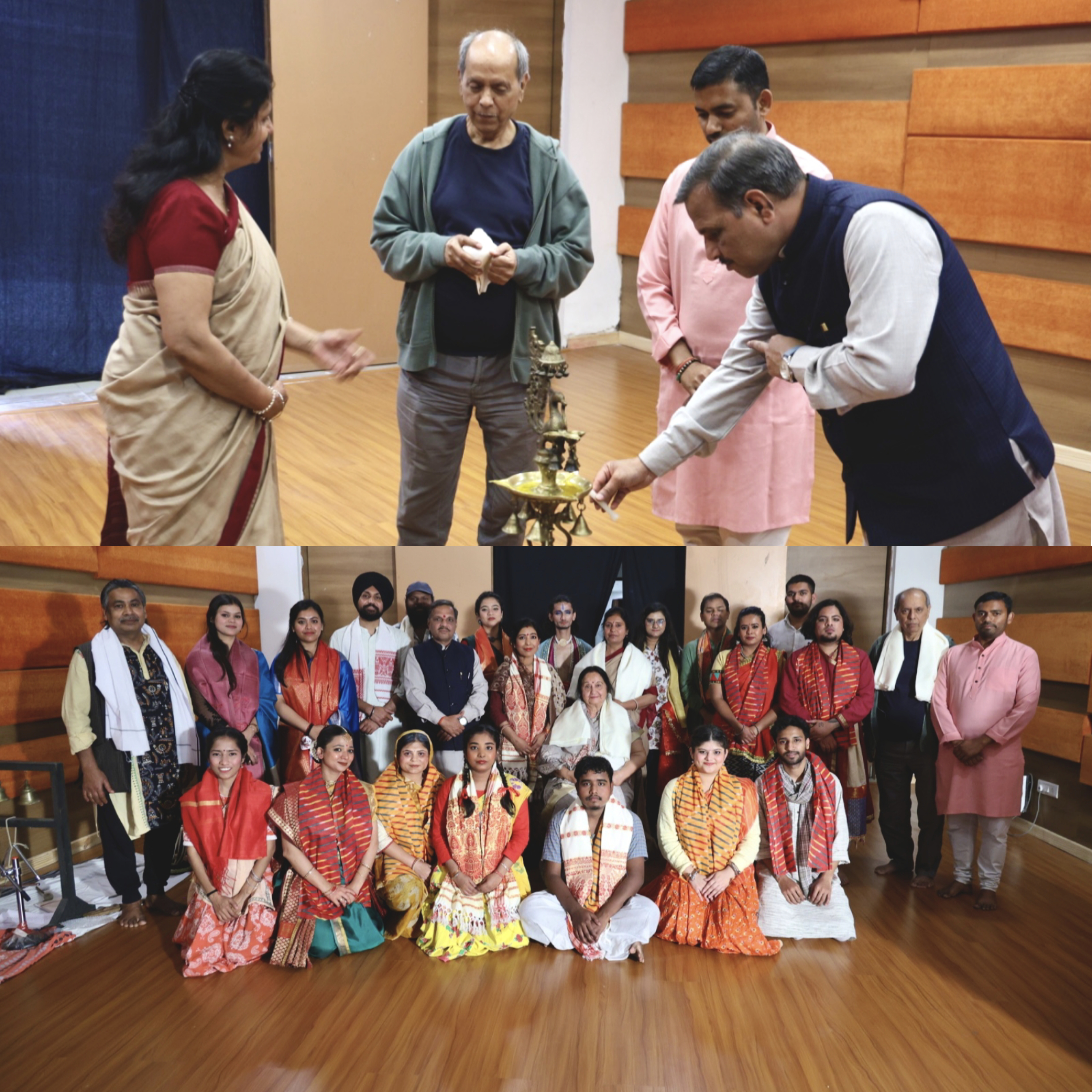
The programme formally commenced with a traditional ceremonial lamp-lighting (Deep Prajwalan), symbolizing the invocation of wisdom and creative energy. The lamp was lit by Shri Ashok Tiwari, Central Office Secretary of Sanskar Bharati Kala Sankul; Dr. Madhu Pant, the playwright; Nisha Trivedi, the director; senior theatre practitioner Lokendra Trivedi; and seminar convener Brijesh.


Kala Sankul: Vision and Cultural Commitment

Kala Sankul is dedicated to nurturing creative thought, cultural awareness, and value-based consciousness through art and literature. It is not merely a venue for performances, but a vibrant center for intellectual exchange and creative dialogue. Engaging with contemporary issues through an Indian cultural perspective and positioning art as a medium of social awareness remain its defining characteristics.

A production like “Jalam Amritam” strongly reflects and fulfills this vision.


Theme and Presentation

Opening with a Vedic invocation, the play re-established water as the sacred and life-sustaining element among the five elements of nature. Through evocative visuals and symbolic characterization, it portrayed environmental degradation—drying rivers, deforestation, and the commodification of water in the name of development.

Characters such as Varun and Prithvi embodied nature’s anguish. Group choreography and symbolic stagecraft enhanced the emotional depth of the narrative.


Music, Research, and Stagecraft

The production’s strength lay significantly in its music and research. The contribution of Lokendra Trivedi in music composition and research was especially noteworthy. He seamlessly blended Vedic tonalities with traditional and contemporary musical textures, transforming the performance into a deeply immersive and spiritual experience.

The choreography by Bhumikedhwar Singh demonstrated a balanced integration of classical and folk elements, marked by expressive movement and emotional intensity.

Lighting and sound design were thematically aligned and impactful, while costumes and props remained simple yet symbolically meaningful.


Post-Performance Review Discussion

A review discussion followed the performance, during which audience members shared thoughtful reflections. Many described the play not merely as an environmental narrative but as a call for introspection and responsibility. Young participants emphasized the importance of practicing water conservation in daily life, while senior attendees appreciated the cultural and Vedic grounding of the production.


Conclusion

At the conclusion of the programme, Shri Ashok Tiwari delivered an inspiring address, stating:

“Kala Sankul is not merely a building, but a temple of artists and art. It is a sacred space where creation becomes a form of spiritual practice and expression guides the conscience of society. We believe in addressing contemporary issues through art to foster awareness and positive transformation. Kala Sankul will continue to advance creative dialogue through such initiatives.”

His words resonated deeply with the spirit of the evening and reaffirmed the institution’s commitment to socially conscious artistic engagement.

The event was gracefully anchored by Mun Mun. The vote of thanks was delivered by Shruti Sinha, and the seminar concluded with a peace invocation led by convener Brijesh. The dedicated efforts of seminar members — Garima Rani, Sneha Mukherjee, Shyam Kumar, Raj Upadhyay, Ritambhara, Mrityunjay, and Bijendra Kumar — contributed significantly to the success of the event.


Overall Assessment

The synergy of Dr. Madhu Pant’s writing, Nisha Trivedi’s sensitive direction, Lokendra Trivedi’s research-driven musical composition, and Bhumikedhwar Singh’s expressive choreography made “Jalam Amritam” a powerful and memorable theatrical experience.

More than a performance, the production stands as a cultural appeal to restore water to its rightful reverence as “Amrit” — the nectar of life.


Vanhans & Six Seasons Launched Together at NSD Under ‘Shruti’ During Bharat Rang Mahotsav 2026

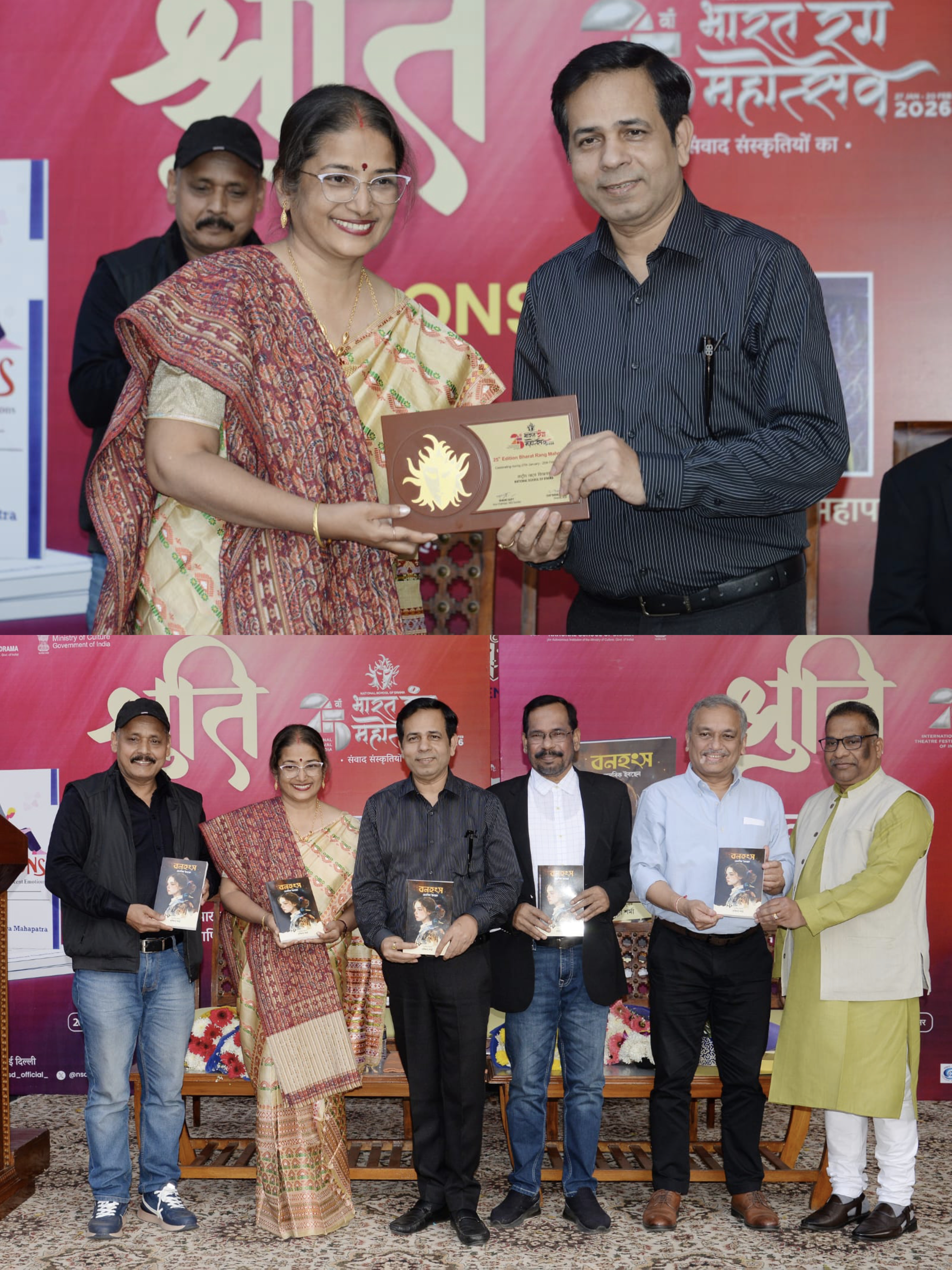
In a remarkable literary moment at the National School of Drama, two significant works — Vanhans and Six Seasons — were jointly launched under the prestigious ‘Shruti’ segment of Bharat Rang Mahotsav 2026.

The books were formally released by the Director of the National School of Drama, Chittaranjan Tripathy, in the presence of eminent theatre personalities and literature enthusiasts.


Vanhans – Dakshina Sharma’s Assamese Adaptation of Ibsen

Vanhans is an Assamese adaptation of Henrik Ibsen’s celebrated play The Wild Duck, translated and reimagined by Dakshina Sharma.

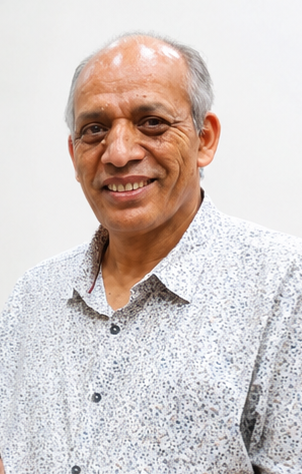
Dakshina Sharma is a dynamic contemporary theatre practitioner — an accomplished actor, director, playwright, and translator. Over the years, she has consistently worked toward building a meaningful dialogue between Indian languages and world literature.

What distinguishes her work is her deep sensitivity to text. She does not merely translate words; she recreates emotional landscapes. In Vanhans, she carefully retains the psychological depth, symbolic layers, and cultural tensions of Ibsen’s complex dramaturgy, while making it organically accessible to Assamese readers and audiences.

Adapting Ibsen — a playwright known for his intricate psychological realism — into Assamese was undoubtedly a formidable task. Speakers at the event acknowledged that Sharma’s scholarly engagement, linguistic precision, and refined theatrical sensibility have made this ambitious endeavour a resounding success.

Guest speaker Parag Samarah particularly praised Vanhans, noting that the adaptation preserves the soul of the original while speaking authentically to Assamese sensibilities. He also read selected excerpts in Assamese, allowing the audience to experience the lyrical strength and dramatic resonance of the text firsthand.


Six Seasons – Bhaskar Chandra Mahapatra

The second book launched on the occasion was Six Seasons, written in English by noted Odia playwright Bhaskar Chandra Mahapatra.

Speakers described Six Seasons as a reflection of the expanding multilingual canvas of Indian theatre writing. By choosing English as his medium, Mahapatra situates regional sensibilities within a wider literary framework, reinforcing the evolving and interconnected nature of contemporary Indian dramaturgy.


A Celebration of Multilingual Indian Theatre

This joint launch stood as a powerful testament to the spirit of Indian theatre — where languages are not barriers but bridges.

Under the vibrant platform of Bharat Rang Mahotsav, the confluence of a Norwegian classic reimagined in Assamese and an English play by an Odia dramatist symbolised the creative dialogue between global literature and Indian linguistic traditions.

The evening reaffirmed that theatre, at its core, transcends geography and language — continually creating new meanings through cultural exchange and artistic courage.


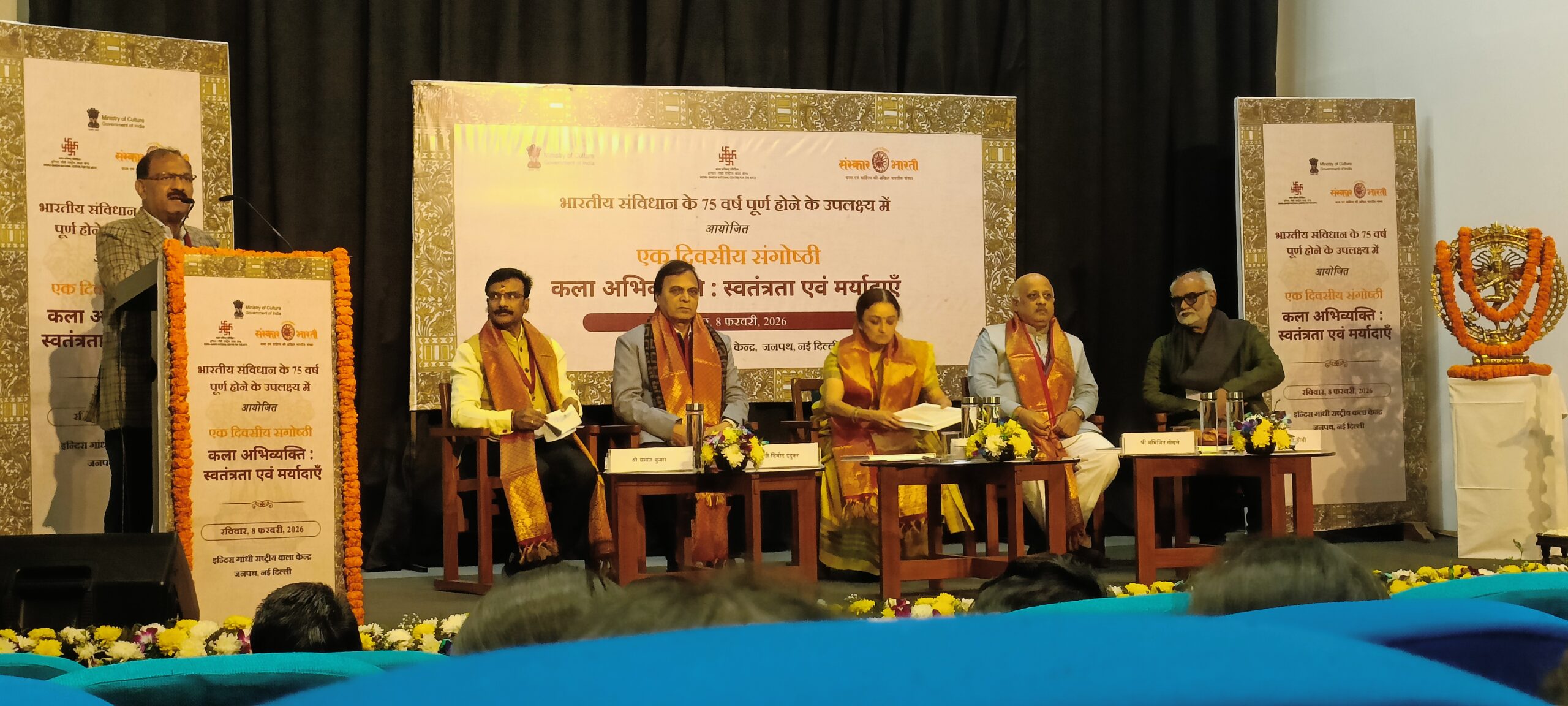
Artistic Expression: Freedom and Boundaries — A Thought-Provoking IGNCA Symposium Marking 75 Years of the Indian Constitution

New Delhi, 8 February 2026:
Commemorating 75 years of the Indian Constitution, a one-day national symposium titled “कला अभिव्यक्ति : स्वतंत्रता एवं मर्यादाएँ” was jointly organised by the Ministry of Culture, Sanskar Bharati and the Indira Gandhi National Centre for the Arts (IGNCA). Held at the IGNCA auditorium on 8 February 2026, the event unfolded in a dignified yet intellectually vibrant atmosphere, emerging as a meaningful cultural platform that explored the dynamic relationship between art, constitutional values and contemporary society during the ongoing Amrit Mahotsav period.

The programme commenced with a ceremonial lamp-lighting by Dr. Sachchidanand Joshi, Dr. Sandhya Purecha, Shri Abhijeet Gokhale, Shri Vinod Narayan Indurkar and Shri Prabhat Kumar. In their opening remarks, the speakers highlighted the intrinsic connection between the Constitution, culture and artistic practice. They emphasised that the Indian Constitution is not merely a legal framework but a living embodiment of cultural consciousness — one that empowers artists with freedom of expression while simultaneously reminding them of social responsibility and ethical boundaries.

The first session, devoted to literature, featured insightful reflections by Dr. Sachchidanand Joshi, Dr. Alka Sinha and Shri Kishor Makwana. The panel discussed literature as a bridge between power structures, social realities and human sensitivity. Speakers observed that while the Constitution grants writers the freedom to articulate truth fearlessly, it also calls for thoughtful and responsible use of language.

In the second session on visual arts, Dr. Nandlal Thakur, Shri Neeraj Gupta and Ms. Situ Kohli explored the evolving landscape of contemporary and digital visual expression. They emphasised that visual art communicates beyond words and holds the power to mirror society. Constitutional freedoms, they noted, enable artists to challenge norms and provoke dialogue, provided that sensitivity and cultural balance remain central to creative practice.

The third session, centred on performing arts, brought together Dr. Sandhya Purecha, Shri Chetan Joshi and Ms. Vidya Shah. Through discussions on theatre, music and stage traditions, they reflected on the stage as a powerful medium for social engagement. Artists, they suggested, carry the responsibility to foster awareness, inclusivity and dialogue through their performances.

Cinema formed the focus of the fourth session, where Shri Atul Pandey, Shri Mustaza Ali Khan and senior journalist-film critic Shri Anant Vijay examined the wide-reaching influence of films on society. The panellists stressed the delicate balance between creative liberty and social accountability, highlighting the growing relevance of ethical storytelling in contemporary media landscapes.

During the valedictory session, Sanskar Bharati’s National Organisation Secretary Shri Abhijeet Gokhale drew connections between Bharat Muni’s Natyashastra, the rights and duties enshrined in the Constitution, and the need for contextually relevant artistic creation. He underscored that artistic freedom achieves its true significance only when aligned with cultural awareness and societal responsibility.

A distinctive feature of the symposium was the presentation of short street plays before each session, offering audiences an engaging thematic introduction. Complementing the discussions was an exhibition showcasing the contributions of women artisans involved in the making of the Constitution and highlighting the artistic dimensions embedded within its spirit.

Overall, the symposium emerged as an enriching and reflective cultural initiative — encouraging artists, scholars and audiences to re-examine the Constitution’s 75-year journey through the lens of creative practice. By fostering dialogue across disciplines, the event reinforced the enduring role of art as both a mirror to society and a catalyst for thoughtful change.


Dr. Kumkum Dhar and Dr. Harekrishna Meher Honored with Sanskar Bharti’s Bharatmuni Samman 2024

New Delhi, February 22, 2025: Union Minister for Tourism and Culture, Shri Gajendra Singh Shekhawat, stated today that India is undergoing a cultural renaissance, and as we move forward in this direction, it is essential for everyone to remain vigilant and aware.

Shri Shekhawat was addressing dedicated artists and literary figures at the “Bharatmuni Samman – 2024” event organized by Sanskar Bharati. On this occasion, he honored renowned Kathak dancer Dr. Kumkum Dhar, who trained at the Lucknow Kathak Kendra, and esteemed modern Sanskrit poet and lyricist Dr. Harekrishna Meher with the “Bharatmuni Samman – 2024.” The award included a commemorative memento, a certificate of honor, and a cash prize of ₹1.51 lakh.

Shri Shekhawat emphasized that there could be no greater recognition in the field of arts and culture than the Bharatmuni Samman. He praised the awardees for their dedication to preserving and revitalizing India’s ancient art and culture, reiterating that the nation is experiencing a cultural resurgence and urging caution and awareness as it progresses.

Expressing her gratitude, Dr. Kumkum Dhar stated that receiving an award named after Maharishi Bharatmuni, the author of the Natya Shastra—revered as the Fifth Veda—was deeply moving. She thanked the selection committee and emphasized that art purifies the human mind and instills discipline in life. She added that those devoted to artistic pursuits uphold values and patriotism.

Renowned Sanskrit scholar and lyricist Dr. Harekrishna Meher, another recipient of the Bharatmuni Samman – 2024, described Sanskar Bharati’s recognition of the literary world as a matter of great pride. He expressed his deep gratitude for the honor, considering it a privilege for himself as well as a moment of pride for his home state, Odisha.

Suresh Soni, a senior member of the Rashtriya Swayamsevak Sangh (RSS) national executive, captivated the audience with his insightful address. He highlighted Maharishi Bharatmuni’s lifelong dedication and stated that success comes through intense perseverance. He commended the two honorees for their lifelong commitment to their respective art forms.

Soni elaborated on the unique worlds of words and melodies, colors and lines, and emotions and expressions, underscoring that Bharatmuni’s Natya Shastra brought them all together in a unified form. Amidst resounding applause, he further remarked, “Mathematics and music together define the world. For global welfare, it is essential for humanity to be cultured. Without values and ethics, a nation cannot progress, and it is Sanskar Bharati’s mission to instill cultural values throughout India. In this endeavor, art remains the most powerful medium.”

The event was also attended by Dr. Mysore Manjunath, National President of Sanskar Bharati, and Shri Ashwin Dalvi, its All-India General Secretary. They expressed their pride in honoring distinguished artists and literary figures in the name of Maharishi Bharatmuni.

The prestigious Bharatmuni Samman was introduced last year by RSS chief Mohan Bhagwat during the Kala Sadhak Sangam in Bengaluru. The inaugural awards were conferred upon Mumbai-based painter Shri Vijay Dasharath Acharekar and Sindhudurg’s folk artist Shri Ganpat Sakharam Masge.

This annual honor is awarded in two categories each year, with recipients selected by a jury based on nominations from institutions, art universities, and individual recommendations.


India vs Srilanka: 1st ODI turned into a tie

By Sunil Sarpal

It was a tipsy-topsy turn of events in the 1st ODI.  The pendulum of the match kept shifting from one side to another and vice versa.  The pitch was providing assistance to both seamers as well as spinners. alike and the life of batsmen was not a cake walk.  In a situation like this,  the batsman has to keep reinventing their game to suit the conditions and leave aside their natural flare and instinct. 

If we take stock of Rohit Sharma’s innings,  he looked like playing on a different surface, fearless and instinctive.  He was hitting the ball as if there is no devil in the wicket.  Sri Lanka’s slow ball bowlers were the most difficult to negotiate.  They are crafty and posed end number of problems for Indian batters with variations and guile. 

India restricted Sri Lanka to a paltry total of 230 runs on the board.  On this pitch it is considered to be a par score.  Rohit Sharma provided a flying start to India innings with a 50 runs in the first power play itself.  Shubham Gill got out to an outrageous short when not been able to score up the ante. Virat Kohli too could not got going in his usual dominating fashion .and chose to play mostly on the backfoot because the ball was coming slowly after pitching.  He was out  playing to a front foot ball on the back foot.   Apart from  Rohit, no other batter could capitalise on the good start provided to the innings.  Shivam Dube hit some lusty blows in the end and levelled the score.  Rest of the batters could not score all important one run and the match was resulted in a tie. 

Hardik Pandya is a genuine all rounder but his omission from the side is haunting India the most.  He brings in both batting as well as bowing in equal measure to India’s cause, as a result, an important cog in India’s wheel.  He should be replaced with either Arshdweep or Siraj.  Bhuvneshwar Kumar is another wicket taking option a few time ago.  Ravinder Jadeja too is good enough all rounder in this variety of the game.  In Gavaskar’s comments, KL Rahul though gifted but does not have self belief to deliver at this level.  India has other options such as Rishab Pant, Ishan Kishan and Sanju Samson to chose from. 

Another important take away from this match is that since India does not produce spinner friendly wickets back home, its batter struggle on such wickets abroad.  India needs to prepare both spinning as well as fast pitches in equal proportion to overcome any eventuality at International level. 


Indian Cricket: The Way Forward

By Sunil Sarpal

Some of the issues in Indian Cricket need deliberation  :-

1)    After the triumph in T-20 World Cup, Indian Cricket set an example of winning streak.  Both Rohit Sharma and Virat Kohli have stepped down from inclusion in T-20 squad.  They may be in the age group of 35-36 years but because of their reputation and performance at the highest level of cricket, India could lift the trophy.  It is Rohit’s all out attack up-front the order gives India an edge over their opposition and create a panic like situation in opposition camp.  He set the stage on fire with his trade mark pulls and hooks that the following batsmen need not indulge in hara kiri shot selection and play their normal self to guide India home.  On the other hand, Virat Kohli’s stay at the wicket gives stability to the side.  He is reputed to be the most prolific run-getting machine on whose shoulder India always shine.  Taking retirement from T-20 when both of them in their pink form is a half-baked decision.  It is time for both of them to stay in the team for a longer period of time so that in their benign presence the new generation like Shobham Gill and Rinku Singh are nurtured.  Once these new comers provide steller performance to the team’s case, the vetern Rohit and Virat should ease out of the T-20 format.  Being new comers to International cricket, both Shubham Gill and Rinku Singh may not feel the heat of International pressure and succumb to pressure.  

2)    This apart the fabulous performers such as Rituraj Gaekwad and Tilak Verma not being considered for India cap.  It is but natural if a batsman perform consistently and not considered for India cap, his confidence level is shattered and he looks for different ways and means to evolve his game.  Such a scenario may back firing and prove debilitating results for the players.  The Selection Committee should introduce rotation policy on the lines suggested by Australian Cricket and give chance to budding cricketers.  

3)    With the completion of Rahul Dravid’s tenure as India Coach, the onus of doing the coaching falls on the shoulders of Gautam Gambhir.  Gautam may bring good amount of experience to the table but is known to be temperamental.  There have been a number of instances during his playing when this was found to be so.  If the performance of past coaches are taken into consideration, the most successful ones such as Gary Kirsten and John Wright, both were cool headed and resolved any issue amicably.  

BCCI should take into consideration the above contentious issues seriously and work out future strategy accordingly.  


Cricket Coach: Despite a heavy remuneration there were few takers – Why?

by Sunil Sarpal

The job of coaching Team India in Cricket is a prestigious assignment and carries heavy annual contract. But these days the aspirants for this job are far and few because of the demand attached to this job – Looks like thorns attached to this job.

When asked by BCCI President to the out-going Indian Coach, Rahul Dravid, Would you be interested in renewing your contract further, he said NO . Not Interested. Previous coaches do not speak-out as to the reason why they are disinclined to take up this assignment any more.

Earlier Sehwag, Laxman and even Ganguly were eager to take up this assignment but now none applying any more. The reason attributable to their disinclination is as under :-

1) BCCI who appoints the coach and make payment to him is authorised to ask any kind of clarifications from the coach :-

– It could be composition of the team.
– Non-selection of some players
– Why a non-performing cerebral cricketer not rested and replaced

2) The coach has also to ensure that all players are physically and emotionally in the best frame of mind.

3) If there is a lacunae appearing in the technique of a player, it has to be addressed and corrected ASAP.

4) Coach has to ensure that all players are regular in training and exercise.

5) There is no room for any mis-understanding to take place among players. If there takes place any spat or difference of opinion between players, it is the moral responsibility of the coach to thrashed out amicably so
that the playing unit performs cohesively.

6) Man-management where a number of stars having high stakes in the side.

7) How to handle new comers knocking the door with exceptional talent and performance but unable to sneak in because of non-availability of spots.

8) Un-earthing new talent and recommending them for competitive cricket such as county cricket in England.

The demand of this job is enormous, as a result, talented and experienced past cricketers are no more inclined to take up this assignment. .


Pyjama Cricket: THE CHANGING FACE OF CRICKET

By Sunil Sarpal

Cricket is such a beautiful sport that it occupies a permanent place in the heart of its die -hard follower.  But, of late, the game has lost its character dramatically with the advent of shorter versions of the game.  This  version is just like eating fast food.  As food in its proper form when consumed fulfills the appetite of a person and fast food, on the other hand,  just fills the tummy.  The same way, those astute followers of the game who have tasted the five day version do not enjoy one bit of  this slam bang type of cricket and boredom envelops them instantly. 

The real tussle between bat and ball is what it calls the real test of a cricketer.

The followers have witnessed how West Indies’  4-pronged fast bowling attack was up against Sunil Manohar Gavaskar.   His defiance, air-tight defense and restrained attack was the hallmark of a batting genius.  The West Indies attack was relentless, one after the other,  hitting the deck hard and targeting Gavaskar’s scalp protected head.  Gavaskar was always found up to the task.  His perseverance,  determination and unflinching application, what to play and what not to.    It was a sight to capture.

Now, it seems the game has lost its character and truth-fullness. 

You bowl and I hit is the mantra in vogue.  If I am able to hit it is my luck and if not it is yours. 

During those days,  till such time if the ball does not start hitting the sweet spot of the willow,  the batsman would not unleash his strokes  Neither the aeriel route was preferred over ground shots.  Nowadays,  the trend has changed. 

Players are desperate to play IPL because it has become a money spinning wheel.  They earn money in crores, just playing one season of IPL consisting of 2 months tournament in a calendar year. 

The shorter version first came into force when Kerry Packer introduced night cricket under flood light.

Nowadays money plays a pivotal role in a shorter version of the game and this  has resulted in the cricket to a PYJAMA CRICKET. 

Courtesy X