Guru Purnima Celebration at Sanskar Bharati, Delhi – A Sacred Confluence of Art, Devotion, and Tradition

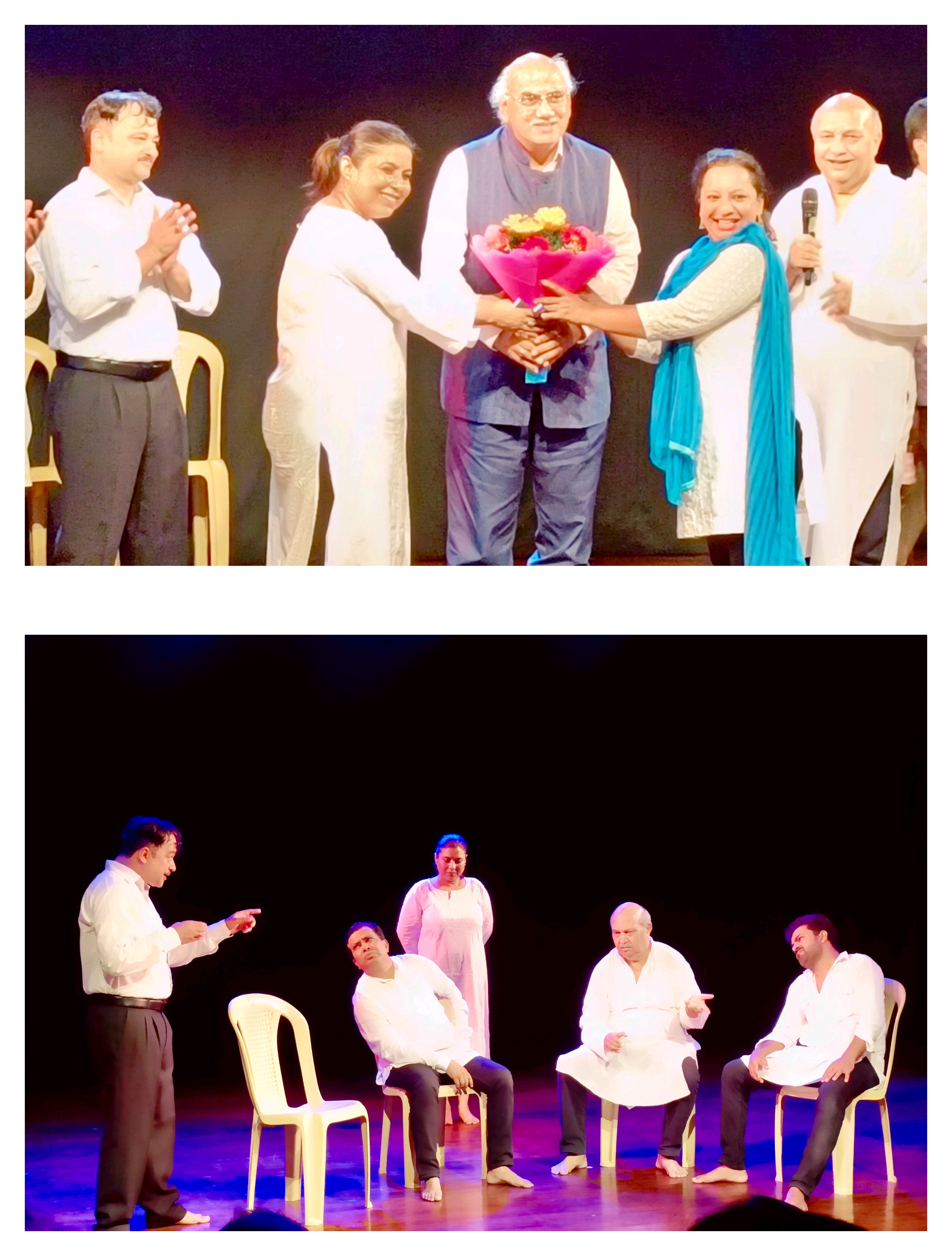
On the auspicious day of 10th July 2025, the Guru Purnima Celebration held at the Kala Sankul premises of Sanskar Bharati, New Delhi, transformed into a vibrant cultural expression of India’s eternal guru-shishya tradition — not just in words, but through the language of dance, music, and soul.

The program began with Nataraja worship and Guru Vandana, infusing the atmosphere with a rare spiritual luminosity. The sacred invocation was not merely a ritual—it became a journey of surrender, discipline, and artistic elevation.
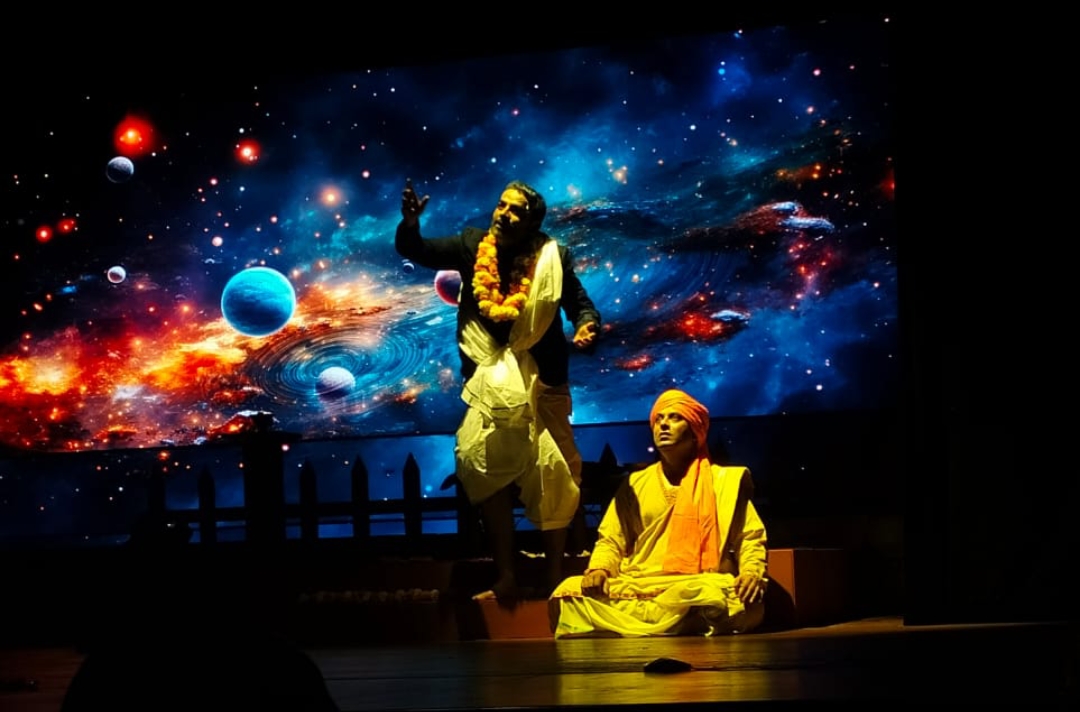
To confine Nataraja merely as the “Lord of Dance” would be to overlook His cosmic magnificence. This deeper essence came alive in the words of Chief Guest, Sh. Murari Sharan Shukla, who eloquently remarked that Nataraja is not a symbol bound to art alone, but the embodiment of motion and universal consciousness itself. His reflection echoed through the hearts of the audience:

“The posture of Nataraja resonates with the movement of the cosmos—it is the rhythmic expression of Shiva’s creative power.”

Though Sh. Shukla’s address came at the culmination of the event, its philosophical resonance permeated every segment of the evening.

The musical trio that followed offered a melodic glimpse into the richness of Indian ragas. Yagyata Gaba’s performance reflected youthful innocence intertwined with musical maturity. Then came Urja Akshara, who rendered a composition in Raga Desh, evoking the musical aroma of the monsoon. Finally, the ensemble presentation by disciples of Sneha Mukherjee – Manya Narang, Ruhi Jaiswal, Lavanya Sinha, and Siddh Jaiswal – stood as a living testimony to the bond between guru and disciple.

Their collective performance glowed not only with technical finesse but with grace, harmony, and discipline. It was an offering, filled with sweetness and reverence, a melody wrapped in devotion.

The sequence of dance performances that followed created a visual symphony for the soul. Nandini’s Kathak recital, a tribute to her guru Smt. Shruti Sinha, was a dance of devotion – an artistic pranam. Through the rhythm, expression, and precision of Kathak, she sculpted an unspoken homage to her teacher. The event was anchored gracefully by Garima Rani, whose poised compering added charm to the proceedings.

This celebration was far more than an annual ritual – it emerged as a sacred yajna, where each disciple offered their art in heartfelt tribute to their guru. Every act on stage was not just a performance, but a living sentiment – of respect, surrender, and the continuation of a timeless legacy.

This Guru Purnima will be remembered not only for its artistic brilliance, but because it upheld a profound truth:

That the Guru is the light of life, and Art is the language of that light.

Sanskar Bharati must be lauded for keeping this flame alive — not just on stage, but in the spirit of every participant. In honoring the guru, they honored the very soul of Indian cultural heritage.


From Gita to Natyashastra: Dr. Sachchidanand Joshi Illuminates India’s Cultural Legacy

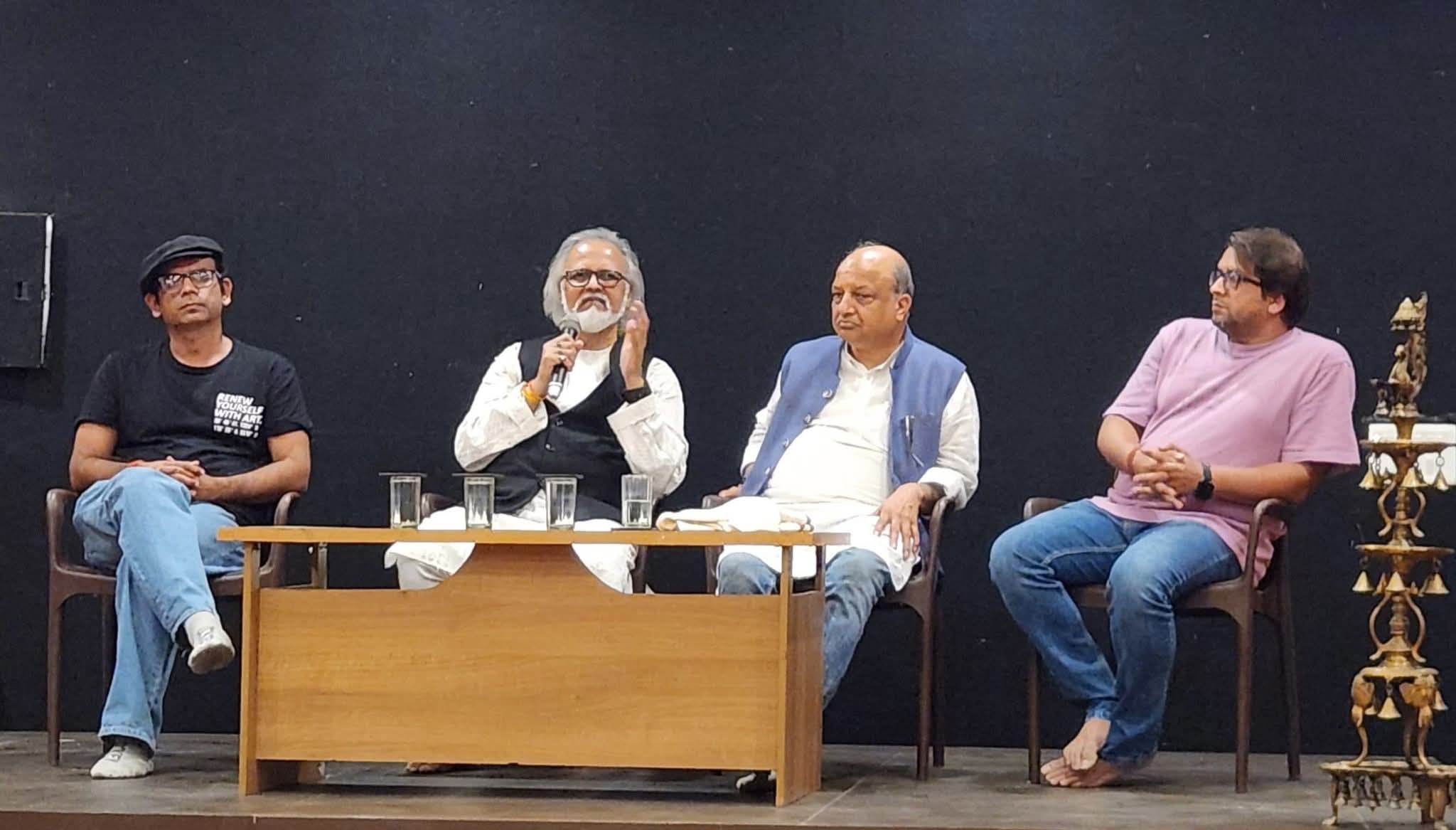
New Delhi – The monthly symposium held at Kala Sankul, the central office of Sanskar Bharati, became a resplendent celebration of Indian classical heritage and cultural contemplation. Designed to merge the profound legacy of India’s traditional arts with contemporary discourse, the event stood as a testament to the enduring relevance of our civilizational ethos.

At the core of the symposium was an enchanting performance of Sattriya—the classical dance form rooted in the 15th-century Vaishnavite devotional movement of Assam, pioneered by the great saint Srimanta Sankardev through his Ankiya Naat. In a performance that stirred both the senses and the spirit, dancers Sukanya Barua and Sumanya Kashyap brought the divine art form to life. Their presentation, steeped in rigorous training, aesthetic sensitivity, and rhythmic precision, unveiled the spiritual depth and narrative beauty intrinsic to Sattriya.

Complementing the artistic experience was an intellectually enriching keynote address by Dr. Sachchidanand Joshi, Member Secretary of the Indira Gandhi National Centre for the Arts (IGNCA), Delhi. In his address, he eloquently advocated for the inclusion of the Bhagavad Gita and the Natyashastra in UNESCO’s World Heritage List. “The Gita is not merely a religious scripture,” he emphasized, “but a timeless philosophy of life; and the Natyashastra, the scientific foundation of Indian artistic consciousness.” His words resonated deeply, drawing attention to the unfortunate irony that many of India’s priceless spiritual texts remain better preserved abroad than within our own institutions.

Shri Joshi also raised a critical concern regarding the preservation of India’s manuscript wealth—while India houses the largest number of ancient manuscripts globally, the number of scholars actively studying and interpreting them remains alarmingly low. His reflections served not just as commentary, but as a call to action—urging institutions, artists, and scholars toward research and revival.

The symposium saw the gracious presence of distinguished personalities from the cultural and academic domains. Among them were Dr. Vinod Narayan Indurkar, Chairman of CCRT; Sh. Rahul Kumar, Deputy Director, CCRT; renowned Odissi exponent Kasturi Patnaik; Sh. Jitendra Kumar, Convenor of the Visual Arts Department, Sanskar Bharati Delhi; Shri Raj Upadhyay, Performing Arts Convenor; playwright Sh. Alok Shukla; art critic Shashi Prabha Tiwari, along with many other senior artists, scholars, and cultural connoisseurs.

A large team of dedicated volunteers played an integral role in the successful execution of the event. Key contributors included Convenor Garima Rani, Co-convenor Vishwadeep, Sneha Mukherjee, Eminent Theatre Director Shyam Kumar, Shraboni Saha, Saurabh Triathi, Harshit Goyal, Pradeep Pathak, Muskan, Khushi, Kriti, Sakshi Sharma, and Tarushi, whose behind-the-scenes efforts were deeply appreciated.

The proceedings were elegantly compered by senior anchor Bharati Dang, whose poise and eloquence added grace to the evening. The formal vote of thanks was delivered by Sh. Kuldeep Sharma, convenor of the theatrical wing, and the event concluded on a tranquil note with the chanting of the Shanti Mantra.

More than just a cultural evening, this symposium served as a meaningful reminder of India’s vast artistic and philosophical legacy. It illustrated how, even in an age of rapid modernization, there remains a deep well of tradition from which we continue to draw inspiration. It reaffirmed that tradition and progress are not opposing forces—but vital companions on the journey of cultural continuity.


Theatrical Brilliance at Rabindranath Tagore University: A Journey from Chekhov’s Irony to Bhasa’s Tragedy

On June 14 and 16, 2025, the Faculty of Humanities and Liberal Arts at Rabindranath Tagore University, Bhopal, witnessed the powerful staging of two stylistically diverse plays — “Chekhov Ki Duniya” and “Urubhanga”. These productions were presented by the students of the MPA (Drama) and PG Diploma in Natyashastra as part of a national theatre workshop held from May 7 to 16, marking the culmination of their second semester curriculum. Through these performances, the students skillfully bridged classical Indian theatrical traditions with modern experimental aesthetics.

The two productions stood as compelling contrasts. While one portrayed the ironic absurdities of modern Western society through humour, the other breathed life into the deep emotional undercurrents of Indian mythology through poignant tragedy.

“Chekhov Ki Duniya” — A Humorous Reflection of Social Irony

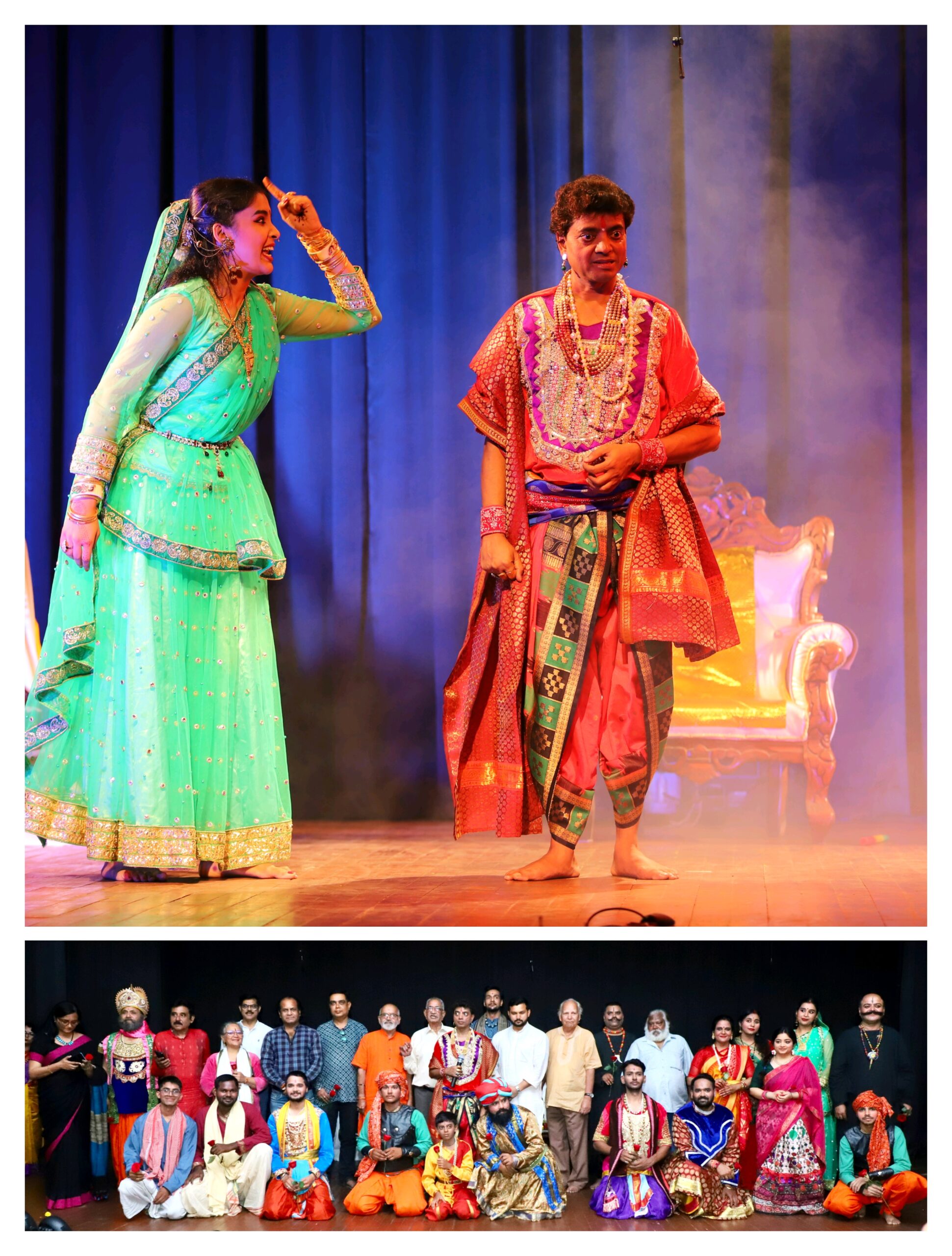
Staged on June 14, “Chekhov Ki Duniya” was based on three comic one-act plays by Russian literary master Anton Chekhov — Cheeenk, The Bank Manager, and Surgery. Under the seasoned direction of Shyam Kumar and co-direction of Shraboni Saha, the play brought forth the complexities hidden in seemingly trivial incidents. From the social awkwardness triggered by a simple sneeze, to the oppressive nature of bureaucratic banking systems, and the cold commercialization of healthcare — each vignette was rendered with biting humour and subtle irony.

The ensemble cast brought these stories to life with remarkable authenticity. Sehej Harjai served as the narrator, with Ankit Chaudhary (Pyare Mohan), Tanshree Rane (Pyare Mohan’s wife), Sainand Valvaikar (General), and Oindrila Goswami (General’s wife) portraying Chekhovian characters with flair. Supporting roles by Santosh Rajput (Bank Manager), Sauptik Bhattacharya (Assistant Manager), Pooja Kewat (Woman), Praveen Namdev (Compounder), Davinder Singh Grover (Patient), and Deepak Bhardwaj (Audience Member) were met with hearty applause from both guests and viewers.

The backstage team worked with admirable precision. Stage management was handled by Davinder Singh Grover and Sehej Harjai. Costumes were designed by Deepak Bhardwaj, Santosh Grover coordinated props, lighting by Praveen Namdev, and musical direction was led by Vansh Rathore.

“Urubhanga” — A Mythological Tragedy That Stirred the Soul

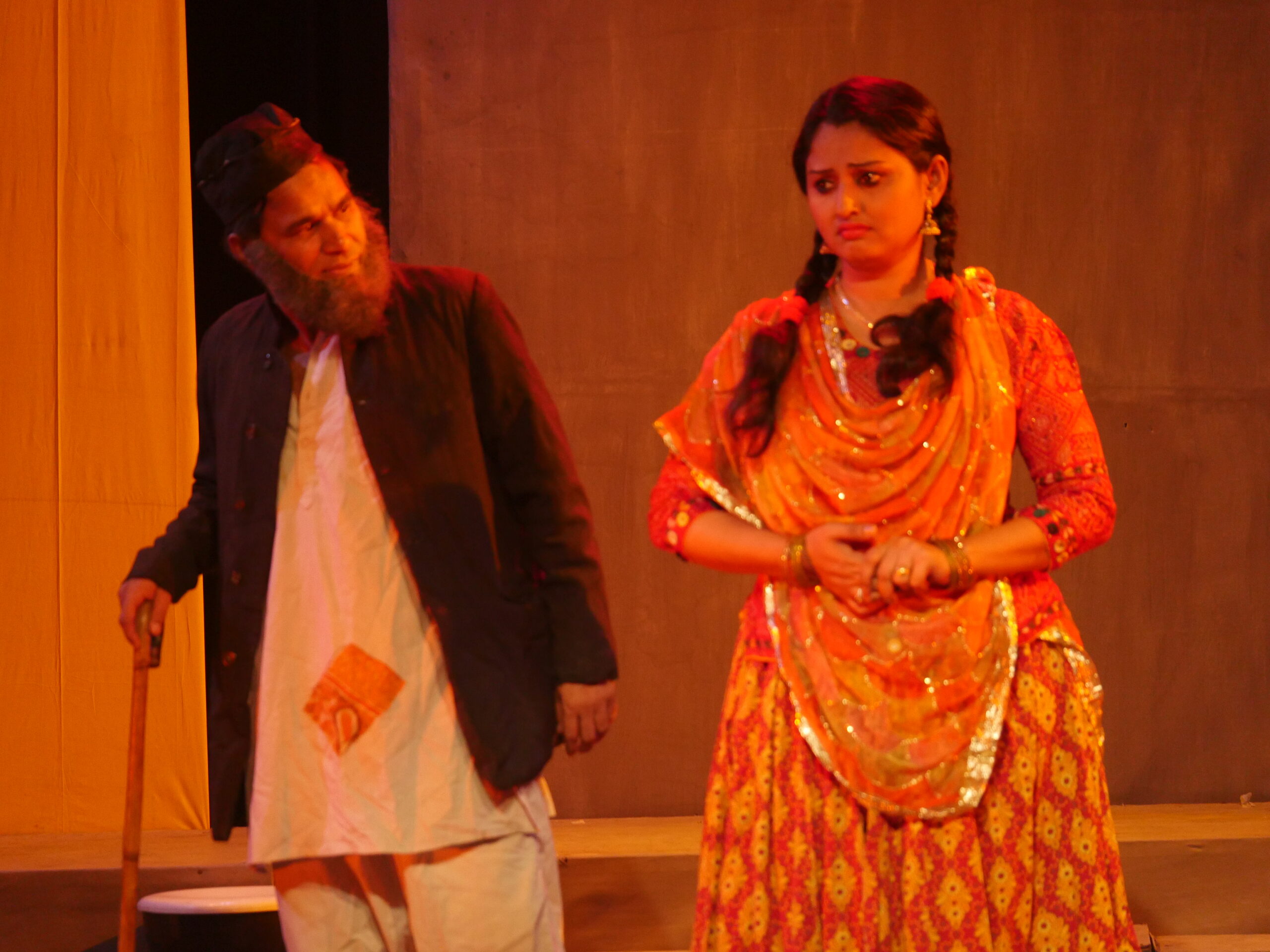
Performed on June 16, “Urubhanga” is a poignant classical tragedy written by the Sanskrit playwright Bhasa. The play explores the psychological turmoil, remorse, and transformation of a wounded Duryodhana on the eighteenth day of the Mahabharata war. Under the direction of Dr. Sheetanshu Tripathi, the production delved into the devastating aftermath of war and internal conflict, deeply moving the audience.

Shubham Srivastava’s sensitive and intense portrayal of Duryodhana left an indelible mark. As the narrator, Pankaj Diwan effectively connected the audience with both the intellectual and emotional threads of the narrative. Supporting roles were performed by Adeeb Ansari, Sanjay Singh Negi (Ashwatthama), Prateek Chauhan (Dhritarashtra), Neeraj (Krishna), Richa Kalra (Gandhari), Shikha (Pauravi), Nisha Kudaikar (Malavi), Shubham Shivalikar (Durjaya), Unnish Pratap Singh (Baladeva), and the younger characters — Rahul Gupta, Prashant Kumar (Harshit), and Kartik Namdev — all delivering memorable performances.

The scenic design and costuming, supervised by Deepak Bhardwaj with active involvement from Kartik Namdev, enriched the stage with symbolic depth and aesthetic elegance.

Both performances were graced by distinguished guests — Chancellor Shri Santosh Choubey, Vice-Chancellor Prof. R. P. Dubey, and Dr. Prasad Bhide from Central Sanskrit University, Bhopal. After witnessing “Chekhov Ki Duniya”, the Chancellor lauded it as a sharp portrayal of social reality and commended both cast and crew. Regarding “Urubhanga”, Dr. Bhide praised its seamless fusion of ancient dramaturgy with modern theatrical techniques. Vice-Chancellor Prof. Dubey described both plays as commendable and emphasized the importance of sustaining such creative academic endeavours at the university.

The entire event was coordinated under the guidance of Dr. Sanjay Kumar Dubey, Dr. Savitri Singh Parihar, and Sh. Abhishek Deshmukh, whose leadership transformed this semester-end production into a rich academic and cultural experience.

“Chekhov Ki Duniya” and “Urubhanga” stand as testaments to the theatrical acumen, emotional insight, and creative potential of the students at Rabindranath Tagore University. These productions point towards a promising future — where tradition meets innovation, theory meets experience, and Indian roots engage meaningfully with global perspectives.


Natsamrat’s Theatrical Showcase: A Vibrant Tapestry of Emotion, Satire, and Humour

On May 24, 31, and June 1, Delhi’s L.T.G. Auditorium at Mandi House came alive with a rich blend of theatre as Natsamrat, a prominent performing arts group, presented a trio of compelling plays. Each piece offered a distinct flavour—ranging from heartfelt drama to sharp satire and uproarious comedy—beautifully reflecting the artistic breadth and emotional depth of contemporary Indian theatre.

Tender Reflections: Kambakht Ishq

Staged on May 31 at 3:00 PM, Kambakht Ishq, penned by Satyaprakash, offered a poignant look into the emotional needs of the elderly. Through the lives of two aging individuals coping with loneliness, the play delicately unraveled themes of companionship, vulnerability, and the quiet ache of growing old. With subtle dialogue and restrained yet powerful performances, the production struck a deep emotional chord with its audience, rendering it one of the most moving performances of the festival.

Comic Wit and Social Satire: The Proposal

Staged twice—on May 24 at 11:30 AM and again on June 1 at 3:00 PM—Anton Chekhov’s iconic one-act play The Proposal was brought to life with remarkable flair. What begins as a simple marriage proposal spirals hilariously into a heated argument over land and pets. The actors’ crisp comic timing, expressive body language, and fluid stage presence transformed the absurdity into biting social satire. It was a delightful reminder that laughter, when layered with irony, becomes a powerful mirror to societal quirks.

Laughter with a Message: Kallu Nai MBBS

Inspired by Molière’s classic farce and performed on May 24 at 12:30 PM, May 31 and June 1 at 4:15 PM, Kallu Nai MBBS followed the misadventures of a drunk barber who is forcibly made to act as a doctor. Behind the laugh-out-loud moments lay darker undertones of domestic abuse and the systemic marginalization of women. The fast-paced narrative, witty dialogues, and exaggerated characters created a comic spectacle that managed to entertain while prompting deeper thought.

Direction and Technical Excellence

All three plays were skillfully directed by Shyam Kumar, whose vision and theatrical sensibility were evident in the seamless staging. The ensemble cast—Vishwajeet, Munmun, Shivangi, Aman Kumar, Dhananjay, Raman Kumar, Rajan, and Saumya—delivered heartfelt and dynamic performances. Behind the scenes, the production team added immense value: Sunil Rathore and Suraj Singh (stage management), Himanshu and Nisha (assistant stage managers), Payal and Raj Rani (makeup), Rohit Prasad and Rekha Devi (costumes), and Vansh Rathore (music coordination).

Natsamrat’s theatrical offering was more than a cultural event—it was a celebration of theatre’s power to evoke, provoke, and connect. Through humour, emotion, and satire, the festival reminded us that the stage is not just a space for performance, but a living, breathing dialogue with society itself.


Reviving a Queen’s Legacy: Theatrical Tribute to Ahilyabai Holkar

(A Review Based on a Conversation with Director Rohit Tripathi)

On 31st May 2025, the two-day theatre festival was organized by Sanskar Bharti, Panchkula, commenced with a powerful and evocative performance of “Ahilyabai Holkar” by Upstage Art Group at the Atma Auditorium of Jainendra Gurukul School, Panchkula. The play brought to life the extraordinary story of a visionary queen — a social reformer, protector of Dharma, and a skilled strategist — who rose above the constraints of a patriarchal society to lead her kingdom with wisdom, compassion, and unwavering moral strength.

More than a retelling of history, the production served as a mirror to contemporary society. It reflected timeless themes of women empowerment, religious tolerance, and justice-driven governance. Ahilyabai was not merely portrayed as a ruler, but as a “Lokmata” — the revered mother of the people — who embodied the balance between tradition and progressive change.

Director Rohit Tripathi, in a conversation following the performance, emphasized that the production aimed to present Ahilyabai’s life not as a distant legend, but as a living, breathing inspiration for today’s audience. His strong visual language, disciplined stagecraft, and seamless scene transitions gave the play a grand yet intimate presence. The actors’ coordination and spatial awareness maintained a fluid rhythm throughout, keeping the audience deeply engaged.

Playwright Mukesh Jha infused the script with emotionally resonant dialogues and a well-structured dramatic arc. Through Ahilyabai’s character, he challenged entrenched societal evils like the Sati tradition, the denial of women’s education, and the suppression of female agency. His writing was both poetic and purposeful.

Sanpa Mandal’s portrayal of Ahilyabai was nothing short of commanding. Her voice modulation, physical poise, and expressive gaze captured the grace, resolve, and inner turmoil of a leader burdened with duty.
Sharad Tyagi convincingly embodied Malharrao, lending gravitas to the fatherly mentor figure.
Divyanshu brought youthful intensity and idealistic conflict to the role of Khanderao, while Shikha Arya as Gautamibai added warmth and quiet strength.
The supporting cast — Nirbhay, Mohit Bajaj, Sahil Nirola, Vijay Kumar, Arun Amay, Piyush Dwivedi, and Priya Rai — performed their roles with commendable dedication and natural energy.

Costume design by Chandrakanta was both period-appropriate and visually impactful, grounding the characters in historical realism.
Rajeev Ranjan’s music score elevated the emotional cadence of the play, blending traditional motifs with a contemporary sensibility.
Lighting and stage design created striking tableaus, particularly in scenes depicting the royal court, battlefield, and moments of grief.

With an audience of over 500 in attendance, the performance concluded to a resounding standing ovation. This reception was not merely an appreciation of production quality, but a testament to how deeply the story resonated with the viewers.

“Ahilyabai Holkar” stood not simply as a historical drama, but as a powerful reminder of the enduring legacy of moral courage, cultural wisdom, and feminine leadership. It served as a beacon for modern India, where the values of compassion, discipline, and reform still need strong voices.

Rohit Tripathi and his team have not just staged a play — they have revived a legacy. Their effort ensures that the spirit of Ahilyabai Holkar will continue to inspire generations, both on stage and beyond.


Three Days of Percussion Magic: Kala Chaitanya’s Tabla-Dholak Workshop in Priyadarshini Vihar

New Delhi, Priyadarshini Vihar –From May 27th to 29th, Kala Chaitanya Society organized a grand three-day Tabla and Dholak workshop at the Priyadarshini Vihar Club. The workshop was conducted by Dr. Shrikant Shukla, an awardee of the Uttar Pradesh Sangeet Natak Akademi and a distinguished expert in Tabla and Dholak. Art enthusiasts from Delhi-NCR and nearby regions participated with great enthusiasm.

The workshop was completely free of cost and open to individuals of all age groups. Participants received intensive training in the fundamentals of Tabla and Dholak, including basic techniques, understanding of rhythmic cycles (taals), hand coordination, and practical aspects of rhythm and tempo.

Sh. Vishavdeep, the President of Kala Chaitanya Society and an internationally acclaimed Kathak artist, shared that the objective of this workshop was not only to impart training but also to preserve and pass on vanishing art forms to future generations. He remarked,”Just as ancient languages like Prakrit and Pali faded away due to lack of preservation, many art forms are also nearing extinction. It is our collective responsibility to ensure that cultural conservation does not remain confined to words, but is practiced at a grassroots level”.

The Society’s Secretary, Sh. Pradeep Kumar Pathak, emphasized that the initiative aimed to connect people from all walks of life with music. He believes that engagement with the arts positively influences one’s mindset, sensitivity, and social behavior.

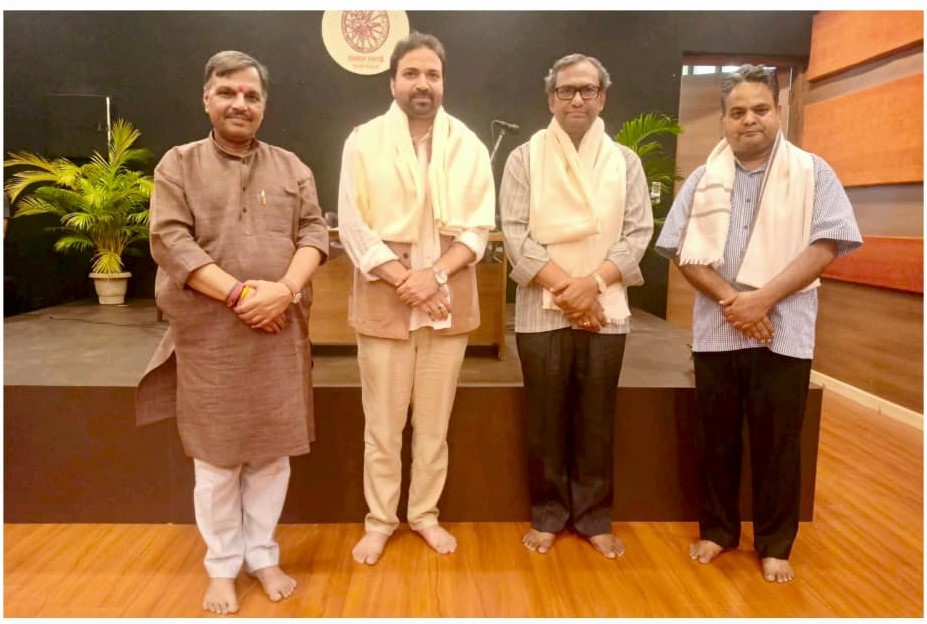
The workshop commenced with a ceremonial welcome by Sh. Ashok Tiwari, Secretary of Sanskar Bharati – Kala Sankul, who felicitated Dr. Shrikant Shukla with a traditional angavastram. The event was graced by several esteemed personalities, including senior Kathak guru Sh. Subhash Chandra, renowned theatre artist and Head of the Theatre Department at Modern School, Delhi, Sh. Raj Upadhyay, Secretary of Priyadarshini Vihar Club, Smt. Shikha Sobti, and Head of Dance at Mata Gujri School, Smt. Ruchika Bagga.

Over the course of three days, the workshop fostered an atmosphere of inspiration and deep emotional engagement. Participants described the experience as invaluable and expressed a keen desire for more such initiatives in the future.


Grace and Glory: Padma Shri Nalini-Kamalini Illuminate Kala Sankul Symposium

The monthly cultural symposium held at Sanskar Bharati’s central office, Kala Sankul, has blossomed into a vibrant celebration of Indian art and heritage, where the essence of tradition comes alive in its most graceful form. This month’s gathering was made truly special by the presence of the Chief Guest, Padma Shri Smt. Nalini-Kamalini, the renowned Kathak duo, whose distinguished contribution to Indian classical dance brought gravitas and inspiration to the evening.

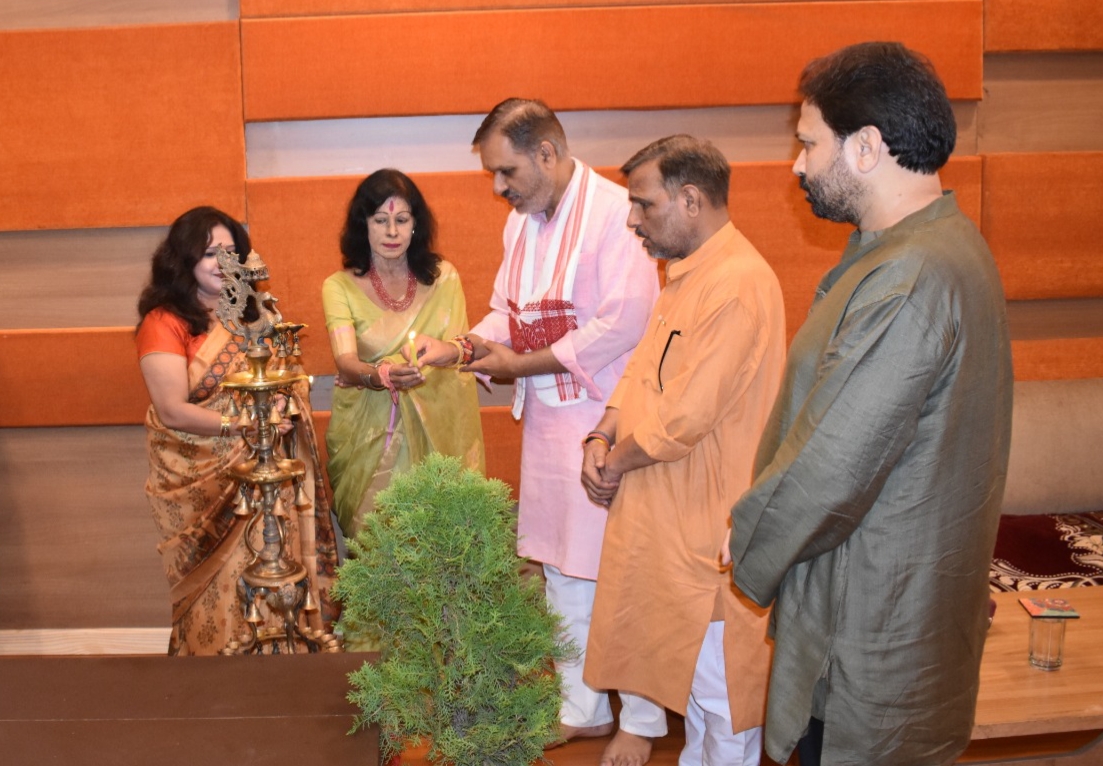
The program began with the auspicious lighting of the ceremonial lamp, symbolizing the light of knowledge and culture. The ceremony was conducted by Padma Shri Shrimati Nalini-Kamalini, Sh. Vijay Kumar (Regional Organizational Secretary, Sanskar Bharati), Sh. Ashok Tiwari (President, Kala Sankul), Smt. Shruti Sinha, and Sh. Raj Upadhyay (Coordinator, Performing Arts, Delhi Region).

The cultural performances commenced with a mesmerizing Kathak recital by Ms. Anjali Munjal, who beautifully portrayed the depth of classical dance through an elegant blend of laya, taal, and expressive bhaav. She was followed by Ms. Damini Bisht, whose powerful Kathak performance, enriched with emotive expressions and rhythmic finesse, captivated the audience.

The evening reached a deeper resonance when the Chief Guest, Padma Shri Shrimati Nalini-Kamalini, took to the stage to address the gathering. Kamalini ji shared,

“Art is not merely an expression—it is the beauty of the soul, shaped by years of devotion and discipline. It refines the individual and uplifts society.”

She emphasized the value of consistency, purity, and dedication in artistic practice, highlighting art’s transformative power as a tool for national development.

“In today’s world,” she said, “art awakens inner consciousness, fosters social unity, and becomes a powerful medium for cultural resurgence.”

The symposium was gracefully anchored by Garima Rani and Shri Vishwadeep, who maintained a seamless flow and upheld the dignity of the evening. The event was enriched by the presence of many eminent personalities from the cultural sphere, including Sh. Pradeep Mohanty (Registrar, National School of Drama), Kathak Guru Subhash Ji, Chhau exponent Sapan Acharya Ji, renowned Kathak artist Anu Sinha, Deepali Sinha, and the duo Vikash-Aparna, among others.

The success of the event was the result of sincere efforts by a committed team of volunteers: Shraboni Saha, Sneha Mukherjee, Sakshi Sharma, Bharti Dang, Priyanka, Nandini, Aanchal, Ayushi, Sakshi, Tarushi, Senior Theatre Artist Shyam Kumar, Kuldeep Sharma, O.P.Sagar, Saurabh Tripathi, Raman, Harshit, Digvijay Pandey, Brijesh, Shivam, Satyam, and Mrityunjay—whose dedication brought vitality to the entire celebration.

Toward the end, Smt. Shruti Sinha delivered a heartfelt vote of thanks, expressing gratitude to all artists, dignitaries, and organizers. The symposium concluded with the collective chanting of the Shanti Mantra, a sacred moment that left an everlasting impression of the divinity and elegance of Indian art and culture in the hearts of all present.


“पछ्याण”: A Vivid Exploration of Identity Through the Art of Uttarakhand

Held from May 19 to 22, 2025, at Kala Sankul, Sanskar Bharati’s esteemed cultural centre in New Delhi, the group art exhibition “पछ्याण” (meaning identity) is a compelling tribute to the artistic spirit of Uttarakhand. Organized by the Rangeet Art Centre, Haldwani (Nainital), the exhibition aims to give national visibility to the region’s artists—both emerging and established.

This thoughtfully curated event showcases contemporary artworks that are deeply rooted in the cultural soil of Uttarakhand. It presents a striking fusion of folk traditions and modern expression, offering viewers a fresh perspective on the region’s identity, struggles, and everyday beauty.

The inaugural event was attended by notable figures including Shri Ashok Tiwari (Central Executive Member & Secretary, Sanskar Bharati), Shri Digvijay Pandey (Manager, Kala Sankul), Shri Himanshu Dabral (Programme Coordinator, Lalit Kala Akademi), and senior artists Naval Kishore and Ajay Sameer, who lent their support and presence to the cause of regional art.

The artworks featured in पछ्याण reflect the landscapes, lifestyles, and layered emotions of mountain life. From the role of women in society to the quiet resilience of remote communities, each canvas tells a story with nuance and sincerity. In some works, traditional folk art forms like Aipan are reimagined through a contemporary lens—bridging past and present in powerful visual narratives.

The exhibition includes works by a diverse group of artists:
Tshering Negi, Priyoum Talukdar, Kusum Pandey, Papil Manna, Maninder Singh, Shanu Sharma, Chetan Joshi, Kaveesh Nabiyal, Ritika Bhatt, Dipanshu Dugtal, Khasti Palari, Riya Kabdal, and Archita Padiyar.
Despite their varied techniques and themes, what unites them is a shared commitment to giving voice to Uttarakhand’s cultural heritage.

Located in the heart of Delhi, Kala Sankul is more than just a gallery—it is a dynamic space for artistic exchange rooted in Indian knowledge traditions. The venue regularly hosts panel discussions, performances, and cultural programs, making it an ideal platform for showcasing regional creativity on a national stage.

In essence,पछ्याण is not merely an art exhibition—it is a cultural statement. It reaffirms the idea that art, when grounded in identity and tradition, can transcend regional boundaries and speak to a larger collective consciousness.


Samarpan 2025: A Celebration of Silent Heroes and Selfless Service

Noida – Where there is empathy, there is creation. Where there is compassion, there is upliftment. And when both transform into duty, events like “Samarpan” are born. What began as a pledge by “Navratan Foundations” 23 years ago — to bring the marginalized into the mainstream — has, in 2025, evolved into a moving celebration of service and humanity.

Held at the NEA Auditorium in Noida, the event began with a soulful Ganesh Vandana — not just a tradition, but a luminous beginning that symbolized the awakening of humanity. In that light stood the unsung heroes of India, whose quiet service has shaped society from the shadows. From Chandan Kumar Dubey, hailing from a remote district in Bihar, to Vicky Yadav, who tirelessly fights for the rights of the disabled and underprivileged children in Noida’s slums; from PARI, a Delhi-based organization giving voice to rape survivors, to Ananya Paul Dodmani of Dharwad, an embodiment of women’s dignity — every honoree was a beacon of hope and humanity.

This was no ordinary award ceremony. It was a heartfelt salute to those whose hands support the frail, whose smiles ignite hope in the hopeless. It was a recognition of silent strength and tireless compassion.

Justice Arvind Srivastava (Retd.), Chief Patron of the Foundation, proudly proclaimed, “Navratan is not merely an institution, it is a sensitive soul. Over 22 years, it has honored more than 500 selfless changemakers through the Samarpan Awards.” This year, approximately 15 remarkable individuals were honored with shawls, commemorative mementos, and cash prizes of ₹11,000 and ₹21,000 in heartfelt appreciation of their service.

Former District Magistrate N.P. Singh, in a deeply moving address, stated, “If I were to call any organization a saint, it would be Navratan. And if I were to name a true servant of society, it would be its founder, Dr. Ashok Srivastava.”

Dr. Ashok Srivastava, Founder and President of Navratan Foundation, warmly welcomed and thanked all dignitaries and attendees, extending his gratitude for their presence and encouragement.

The evening turned truly unforgettable when renowned singer Diwakar Sharma and other artists filled the hall with the magic of music. The fusion of melody and service resonated like a spiritual experience — a symphony of devotion and dedication.

Over 500 eminent guests attended the event, adding grace and gravitas. Among them were: Pradeep Chaturvedi (former Secretary, Rajya Sabha), Vimla Batham (Chairperson, Women’s Commission), Jameel Ahmad (international speaker), Rohit Srivastava (from Canada), Vaidya Achyut Kumar Tripathi (AYUSH Ministry), Vipin Malhan (NEA President), and many more.

Distinguished guests included Rajeev Srivastava (Principal Secretary, Election Commission), Vinod Mishra, Dr. V.S. Chauhan, Varsha Srivastava, Wing Commander Ashish Saxena, Dr. Kalpana Bhushan, Acharya Gautam Rishi, Aditya Gildiyal, Anu Khan, Colonel Amitabh Amit, Rakesh Sinha, Rajnish Sharma, Group Captain G.C. Mehra, Mridula Saxena, and other respected personalities from across the country.

In essence, ‘Samarpan’ was not just an annual celebration — it was a poem of social consciousness, an aarti of service, and a festival of compassion that echoed a powerful truth:
Until every eye at the farthest end of society glows with self-respect, our service remains incomplete.

Navratan Foundation’s unwavering efforts continue to be a shining inspiration for all those who dare to dream of a better world — and have the courage to make it a reality.


Katha Ek Kans Ki: A Timeless Tale Told Anew


(April 22, 2025 – Brahmapur, Odisha | National Theatre Festival by Odisha Sangeet Natak Akademi)

In a special conversation at the NSD, Rohit Tripathi, senior theatre practitioner and founder of Upstage Art Group, spoke about his recently staged play ‘Katha Ek Kans Ki’.

The play was presented on April 22, 2025, as part of the National Theatre Festival organized by the Odisha Sangeet Natak Akademi at Biju Patnaik Cultural Auditorium in Brahmapur, Odisha. Written by Padma Shri Daya Prakash Sinha and directed by Rohit Tripathi, the play reimagines the mythological character Kans in a contemporary socio-political context.

Padma Shri Daya Prakash Sinha has skillfully retained the essence of Kans while presenting his character with deep psychological layers—on one side, he appears as a ruthless, tyrannical ruler, and on the other, he emerges as a music lover, emotionally fragile, lonely, and vulnerable human being. This duality adds depth to the narrative, making the character complex and compelling. Through this mythological tale, the playwright reflects the contradictions, challenges, and dilemmas of our current times.

The role of Kans was portrayed with striking intensity by Sahil Singh Sethi, whose powerful stage presence left a lasting impression. The supporting cast—including Nitin Tyagi, Ujjwal Raj, Priya, Nikita Gupta, Abhishek, Arjun, Ritesh, Aryan, and Rajesh—also gave commendable performances. Backstage, Mukesh Jha contributed significantly to the smooth execution of the production.

During our conversation, Rohit Tripathi expressed that his commitment to theatre extends far beyond the stage. He shared that after the performance, when the return journey had to be arranged, none of the team had confirmed train tickets. In such a challenging situation, he personally arranged flight tickets for the entire cast and crew from his own funds. It is heartwarming to know that even today, there are directors who show such deep dedication not only to their art but also to their fellow artists.

Katha Ek Kans Ki is not just a mythological retelling—it is a relevant, thoughtful, and stirring theatrical creation that resonates deeply with the present.