Kala Sankul Hosts Engaging Symposium on Indian Art and the Role of CCRT

New Delhi.
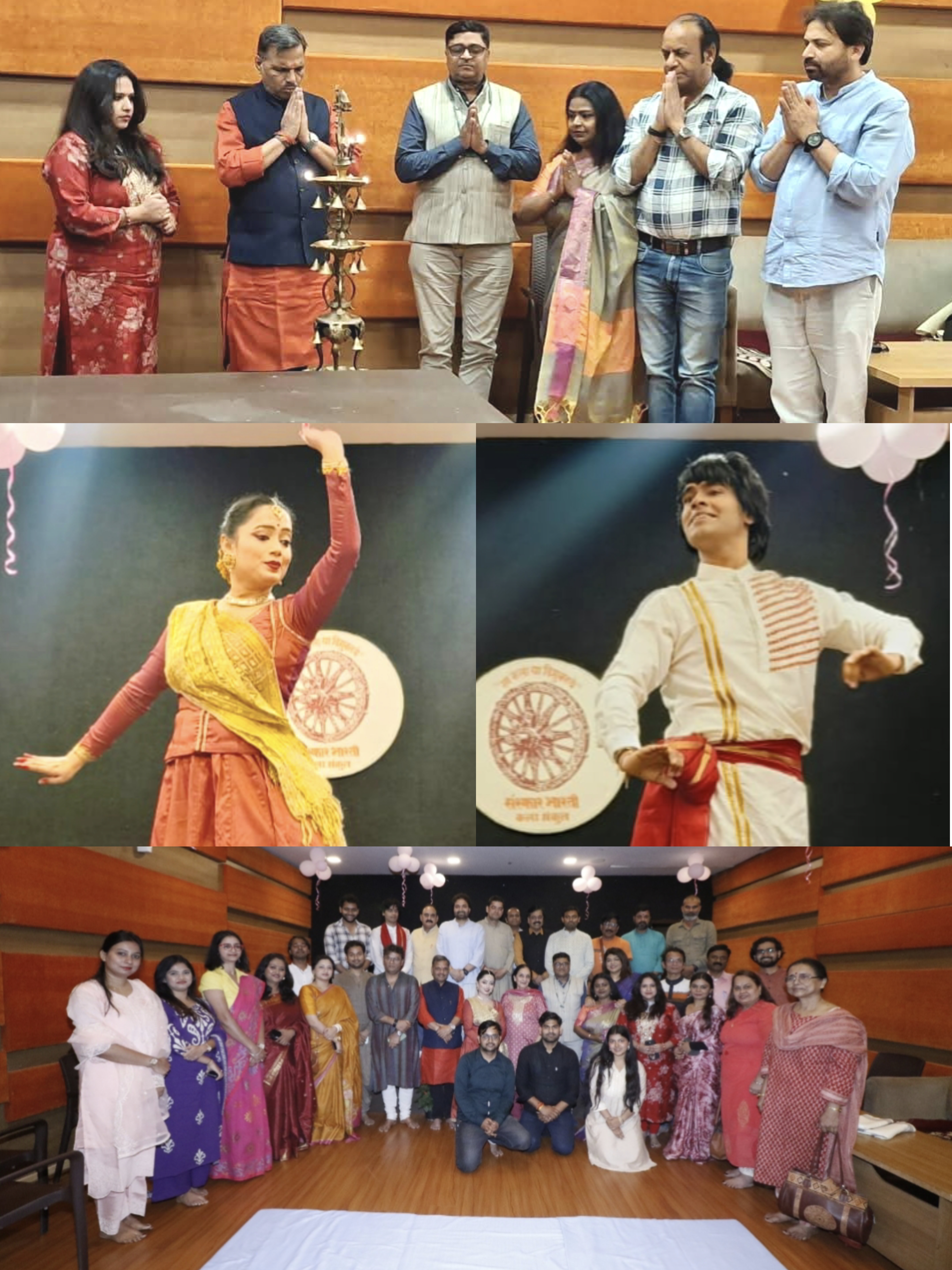
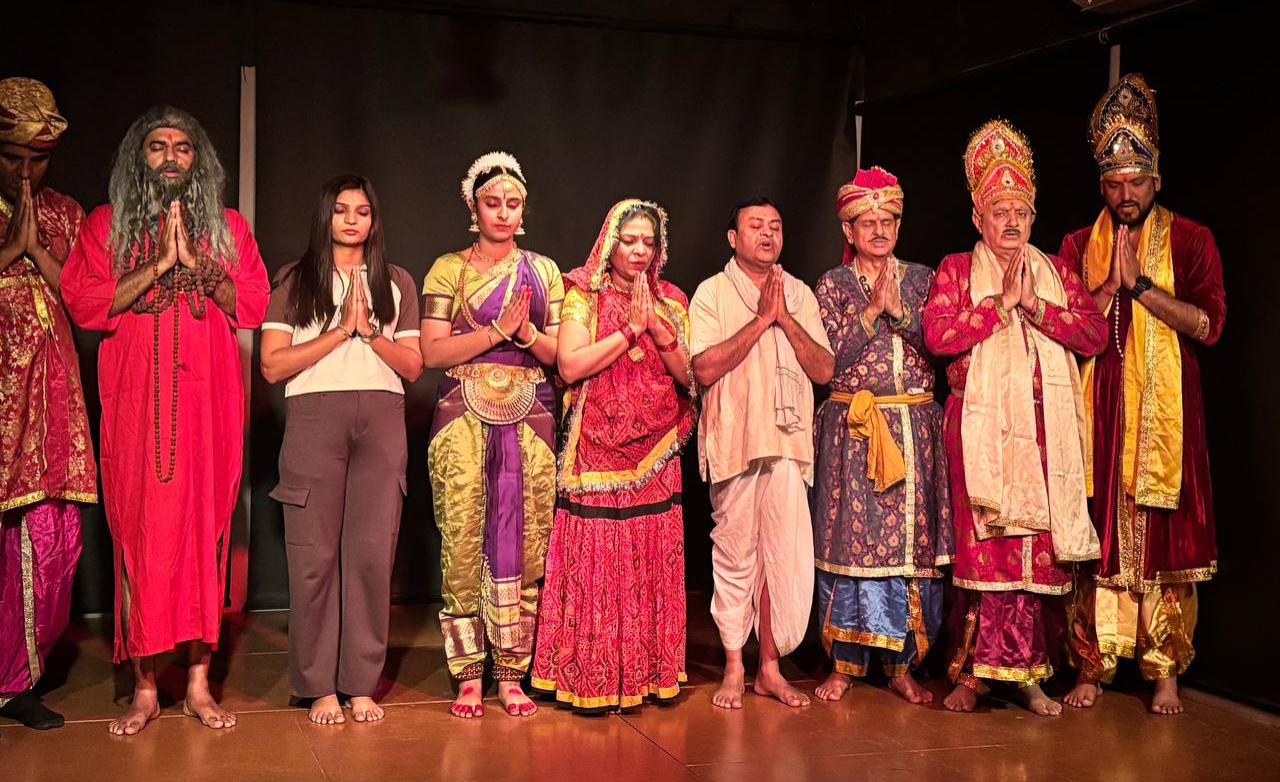
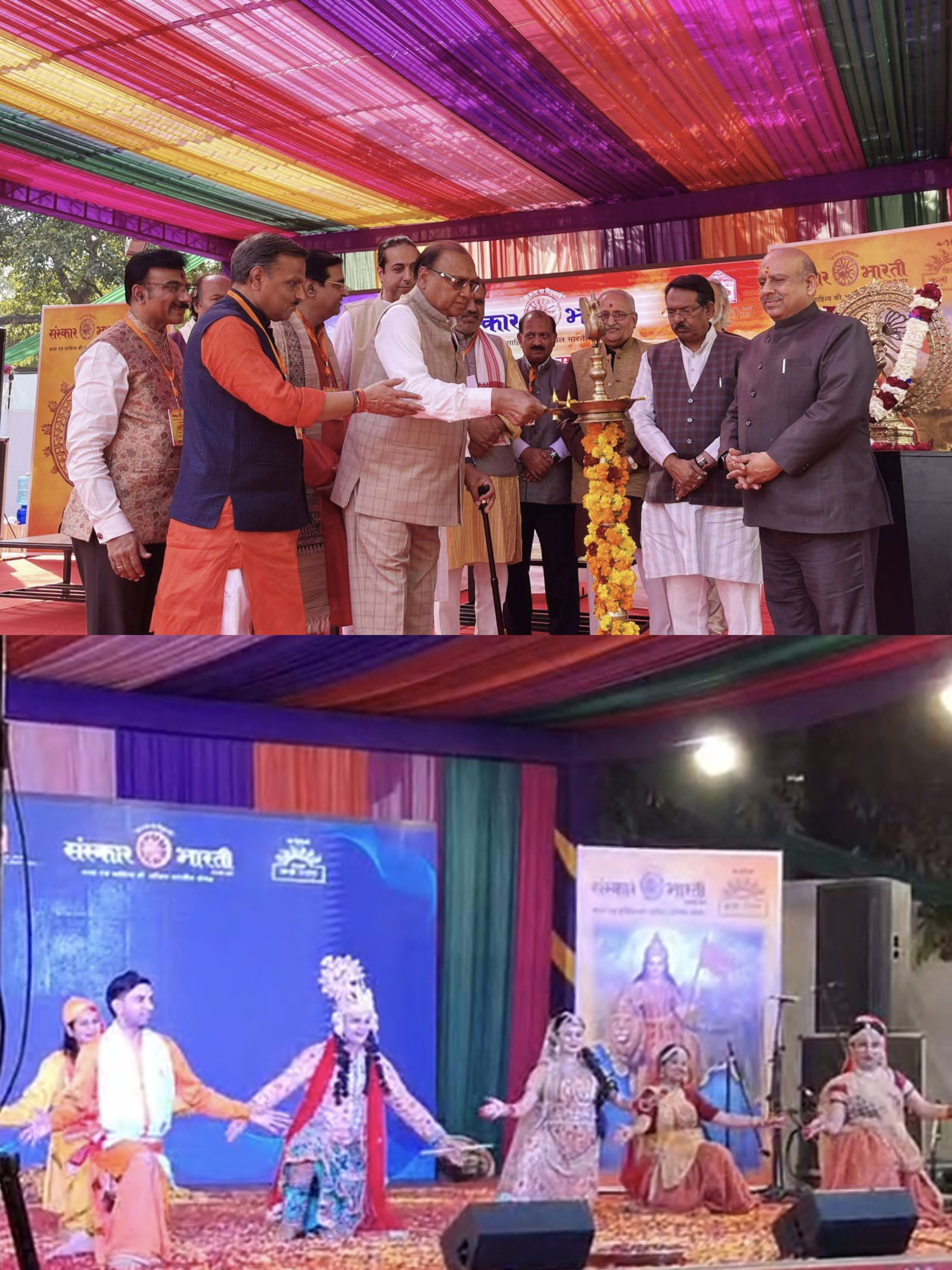
The central office “Kala Sankul” of Sanskar Bharati hosted a meaningful symposium that brought together artistic perspectives, creative expression and cultural dialogue under one roof. The event marked three successful years of the Kala Symposium Series, making the gathering a moment of both reflection and renewal.

The program commenced with a traditional lamp-lighting ceremony performed by the Chief Guest Dr. Vinod Narayan Indurkar (Chairman, CCRT), Symposium Convener Shruti Sinha, Co-convener Vishwadeep Ji, Program Coordinators Sakshi Sharma and Sneha Mukherjee.

With the theme “The Role of CCRT in the World of Art from an Indian Perspective,”
Dr. Indurkar delivered the keynote address. He emphasized that:

“Indian art is not merely an act of expression — it is a worldview, a way of life. Our responsibility is to carry this consciousness forward to the next generation through structured institutional efforts.”

He highlighted CCRT’s contribution in preserving India’s folk and classical traditions, supporting artists, and strengthening cultural awareness at the national level. His address offered a deep insight into how policy, pedagogy and cultural values interconnect in shaping India’s artistic future.

Artistic Presentations Enrich the Dialogue

The symposium was further elevated by soulful performances.
Ujra Akshara, Prof. (Dr.) Rachna and Sadhit Kaushal presented musical renditions that echoed the cultural spirit of India. Aparna Sarathe and Aman Pandey expressed philosophical ideas through Kathak, transforming thought into movement and emotion.
These artistic offerings ensured that the gathering was not only intellectually stimulating but also emotionally resonant.

A Gathering of Artists, Scholars and Young Voices

The event witnessed enthusiastic participation from artists, cultural practitioners, scholars, students and young art enthusiasts.
The symposium concluded with a shared resolve to revitalize cultural awareness and sustain the continuity of Indian artistic heritage.

Organizing Team and Contributors

The successful execution of the monthly symposium was supported by:
Harshit Goyal, Sneha Mukherjee, Garima Rani, Pradeep Pathak, Priyanka, Nidhi Tiwari, Deepti, Brijesh Kumar, Vijender Kumar, Sushank and Mrityunjay Ji.
Kuldeep Sharma skillfully conducted the proceedings.

Kala Sankul’s Commitment

Kala Sankul reaffirmed its mission:

“This platform will continue to recognize and encourage artists and institutions that bring forward the sensitive, meaningful and socially relevant questions of art, culture and the nation with a constructive and courageous vision.”


A Graceful Beginning: Inauguration of the Padmashri Daya Prakash Sinha Theatre Studio & Art Gallery


Delhi witnessed a moment of cultural significance as the Disha Group of Visual and Performing Arts inaugurated the Padmashri Daya Prakash Sinha Theatre Studio & Art Gallery on 2–3 December 2025. The ceremony, dignified and heartfelt in its essence, was formally opened by Shri Somesh Ranjan, senior social worker and son-in-law of the late Daya Prakash Sinha. The event brought together eminent personalities from the fields of art, culture, education, and theatre — including Subodh Sharma (RSS/Sanskar Bharati), veteran theatre artist J.P. Singh, senior critic Anil Goyal, theatre personalities Shyam Kumar and Anil Sharma, critic-performer Munmun, Principal Ravindra Kumar, community figure Lala Rajkumar, renowned sculptor Devidas Khatri, and cultural coordinator Dinesh Agrawal

Founded in 1990, the Disha Group has carved a notable space in Indian theatre with more than 26 productions staged across the country. For this studio initiative, Dr. Satya Prakash (Secretary) and Sampa Mandal (Theatre Director) played a pivotal role in shaping the vision and the event. Dr. Prakash described the studio as a free, open creative space where young artists can rehearse, experiment, and grow without any financial barriers. Significant contributions were also made by members Sandhya Verma, Neelima Verma, and Varuna Verma, whose dedication strengthened the foundation of this cultural endeavour.

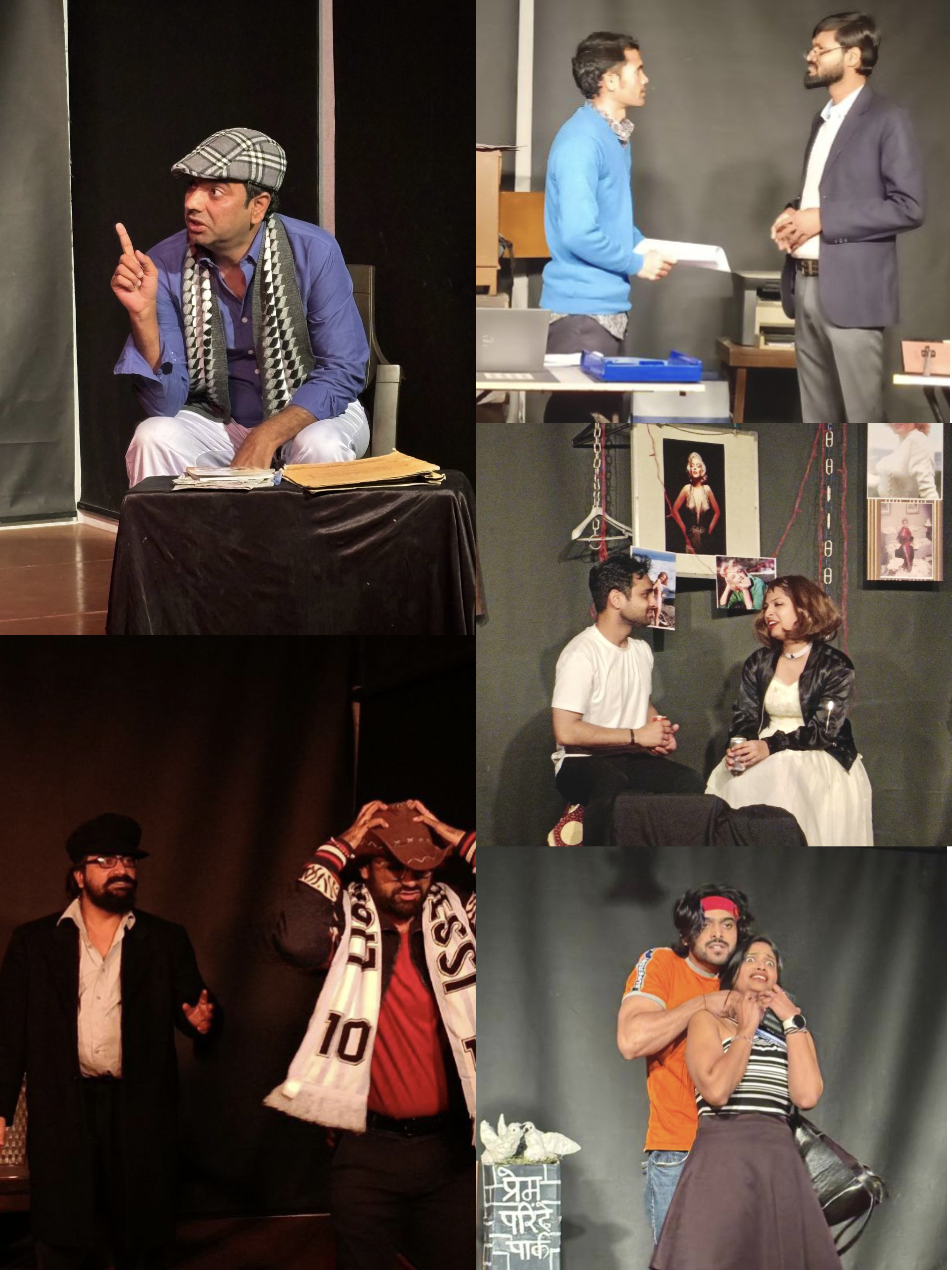
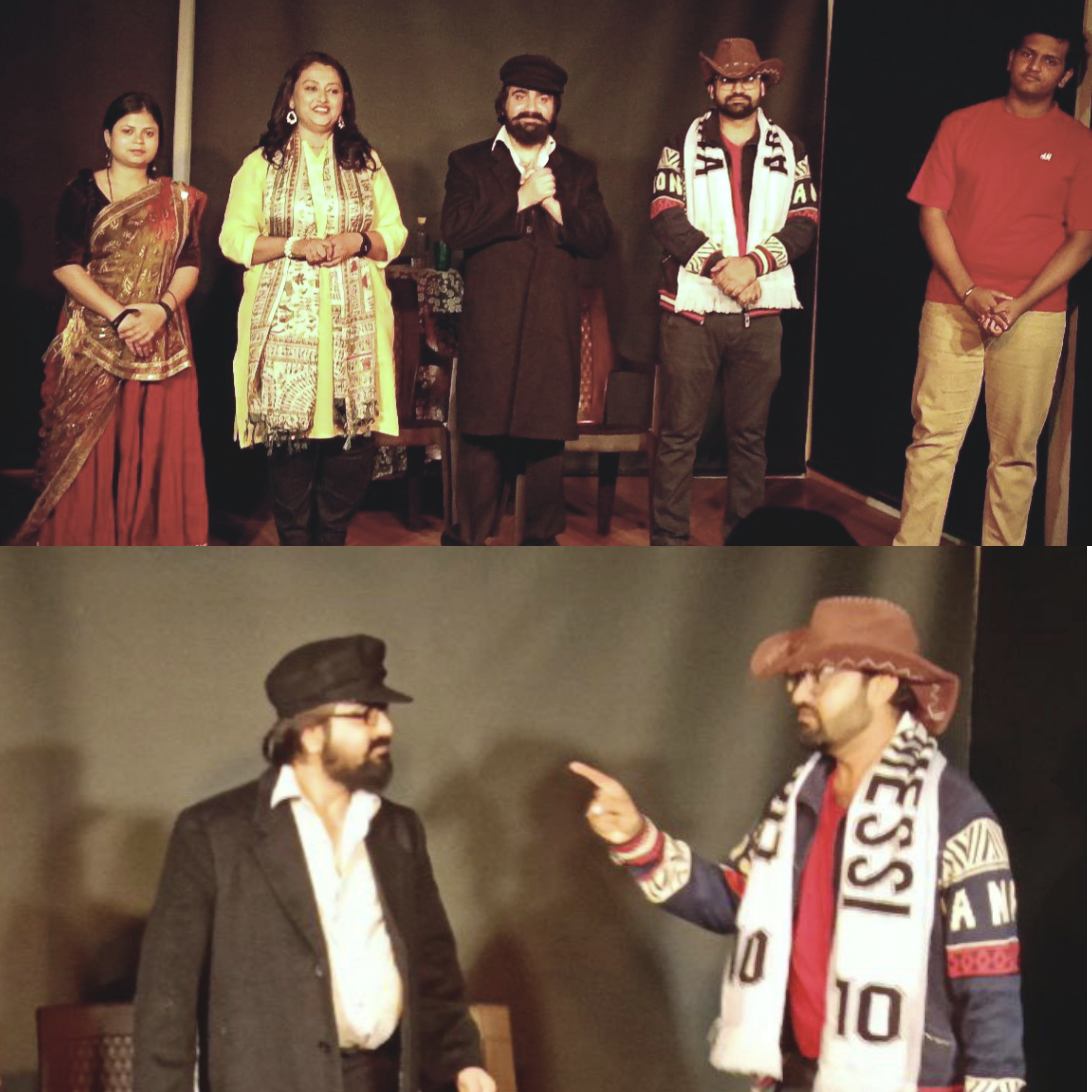
Following the inauguration, AAOMA – The Third Space Foundation presented two plays based on the writings of Daya Prakash Sinha. The first, “Naak Ka Sawal,” a sharp humorous satire, kept the audience thoroughly engaged. Ankit Chaudhary (Thakur), Udit Koli (Pandey ji), and Shreerag M.S. (Kunwar) delivered lively and well-timed performances that evoked continuous laughter. The second play, “Purane Chawal,” unfolded with emotional depth and sincerity. Shikha Arya (Chadmilal), Gagan Chaudhary (Ranjit), Kishlay Raj (Dheer), and Mohammad Siraj (Harish) portrayed the inner conflicts of their characters with remarkable nuance and sensitivity.

Behind the scenes, technical support by Aditya Mukul (Music/Lights), Kashish (Costume/Makeup), and Vipin Kumar & Mohan Koli (Camera) ensured a seamless theatrical experience. Both plays were directed by Meeta Mishra, whose thoughtful staging and rhythmic pacing elevated the aesthetic appeal even with minimal resources.

The next day offered a moment of pure artistic resonance through the Odissi presentation of Tiara Tripathi, who performed a soulful tribute to the late Daya Prakash Sinha. Trained under the acclaimed Guru Madhavi Mudgal since the age of five, Tiara has immersed herself in the Odissi tradition for over 15 years, performing at prestigious festivals including the Youth Festival and Konark Festival, and at institutions such as Sangeet Natak Akademi and National School of Drama.

Her chosen piece, “Khela Lola,” an Oriya champu from Kishora Chandranand Champu, brought forward the subtle charm of Radha being teased by her friend for desiring the unattainable. The choreography — shaped by legends like Guru Kelucharan Mohapatra and Madhavi Mudgal — allowed Tiara to display both expressive finesse and technical mastery. Her command over abhinaya, clean geometry of movement, and serene stage presence created a performance that was at once evocative and deeply poetic.

Holding both BA and MA degrees in Dance and awarded the Scholarship for Young Artists, Tiara’s artistic journey now extends into the intersection of dance and mental health. As the founder of the Mudrika Art Foundation, she continues to nurture interdisciplinary collaborations in contemporary, Odissi, semi-classical movement, and therapeutic arts. Her presentation stood as one of the evening’s most memorable highlights — a luminous blend of devotion, skill, and artistic maturity.

The ceremony was smoothly anchored by Praveen Kumar Bharti, while the organisational support of Harish Tiwari (President), Madhulika Singh (Vice-President), Kewal Krishna Bhatia (Vice-President), and Surendra Verma (Treasurer) ensured a highly successful event.

The inauguration of the Padmashri Daya Prakash Sinha Theatre & Art Culture Studio emerges as a meaningful cultural milestone — honouring a towering figure of Indian theatre while opening new pathways for training, experimentation, and innovation. It marks the arrival of a vibrant creative hub, offering young performers a dedicated space to learn, explore, and contribute to Delhi’s ever-evolving theatrical landscape.


Art, Theatre, and Thought: ‘Fireplace’ Captivates Kala Sankul Audience”

Delhi’s cultural landscape comes alive every month, and the last Sunday at Kala Sankul has become a beacon of creativity, where literature, theatre, and thought-provoking dialogue converge. This is not just an event—it is a continuous celebration of artistic consciousness, fostering empathy, conversation, and the resilience of the human spirit. In this ongoing journey, the play Fireplace took center stage this month 30th November, 2025, leaving an indelible echo in the hearts of its audience.

The event began with a ceremonial lamp lighting, graced by distinguished guests: Sh Abhijeet Gokhale, Akhil Bhartiya Sangathan Mantri of Sanskar Bharti; Sh. P.K. Mohanti, Registrar of the National School of Drama; Play Director Rohit Tripathi; and Mr. Raj Upadhyay. Their presence lent both dignity and gravitas to the occasion.

Addressing the audience, Sh. Abhijeet Gokhale ji said,
“We must never forget the pain of Kashmir in 1990, yet we must unite to usher in a new dawn.”
His words perfectly mirrored the spirit of the play—acknowledging historical pain while urging hope and collective resilience.

Some plays are simply watched; others are felt deep within. Upstage Art Group’s “Fireplace” belongs to the latter. It masterfully evokes the tragedy of 1990s Kashmir, the displacement, and dreams buried under the ashes of broken homes, touching the audience with raw sensitivity.

Dr. Rajiv Mishra’s script approaches Kashmir’s suffering not with blame, but through the lens of human compassion, truth, and memory. Director Rohit Tripathi’s vision avoids melodrama, opting for a precise, measured, and deeply moving performance. The play’s message is clear: it is not against any community, but a poignant voice for the innocents scorched by violence.

The cast delivered performances that transcended acting. Tripathi’s Baba carried profound grief and hidden fragility; Vipin Jagga as Kaleem Dar embodied calm humanity; Ashutosh Banerjee as Rahul Raina exuded sharp intensity; and Anamika Sagar’s Sarita Dutt portrayed heart-wrenching anguish. Moments on stage blurred the line between performance and audience, drawing viewers completely into the story.

Tripathi’s direction deserves special acclaim. He wove silence into the narrative as a language itself—a silence that struck deeper than dialogue ever could.

The technical team amplified the play’s impact: Parag Sharma’s lighting sculpted mood, Tarun Mishra’s sets created immersive spaces, Naresh Kumar’s music enriched the emotional texture, and Chandrakanta’s costumes added authenticity and depth.

The event’s seamless execution owed much to volunteers Shyam Kumar, Mun Mun, Sneha Mukherjee, Harshit Goyal, and Pradeep Pathak, while stage management by Vishwadeep ensured elegance and precision. Raj Upadhyay delivered the vote of thanks, and the evening concluded with a serene chant, marking a dignified and unforgettable cultural experience.

“Fireplace” was more than a play—it was a journey into memory, grief, resilience, and hope, resonating long after the final curtain fell


Stories, Laughter and Emotions: Natsamrat Delhi’s Four-Play Showcase Captivates Audiences

Eight performances, four plays, and one unforgettable theatrical experience.

Natsamrat Delhi brought a dynamic theatrical celebration to the LTG Auditorium, Mandi House, with its four-day showcase held on 9, 10, 15 and 16 November 2025. Through eight performances of four thoughtfully selected plays, the event highlighted the richness and diversity of Indian theatre while offering audiences a memorable blend of humour, sentiment and social insight.

The festival opened with The Proposal, Anton Chekhov’s timeless comedy of manners. The production delighted audiences with its sharp wit and expressive performances, turning a simple marriage proposal into a whirlwind of hilarious arguments over land and a beloved dog. The actors captured Chekhov’s satire with perfect timing, keeping viewers engaged and amused throughout.

Touching the emotional core of the festival, Satya Prakash’s Kambakht Ishq explored the inner world of two elderly individuals battling loneliness. The play’s sincerity, gentle humour and heartfelt dialogues resonated deeply with spectators. Its portrayal of companionship and emotional vulnerability brought a quiet poignancy that lingered long after the curtain closed.

The showcase continued with Chekhov ka Sansar, which presented two of Chekhov’s notable stories with a beautiful balance of humour and introspection. The play captured the writer’s subtle emotional currents, highlighting the contradictions of human nature and the understated wit that defines his storytelling.

Providing a lively comedic high point, Kallu Nai MBBS—inspired by Molière—brought the house down with its spirited performances and fast-paced energy. Revolving around a drunken barber forced to impersonate a doctor, the play offered uproarious humour while subtly commenting on social issues such as domestic violence and gender dynamics.

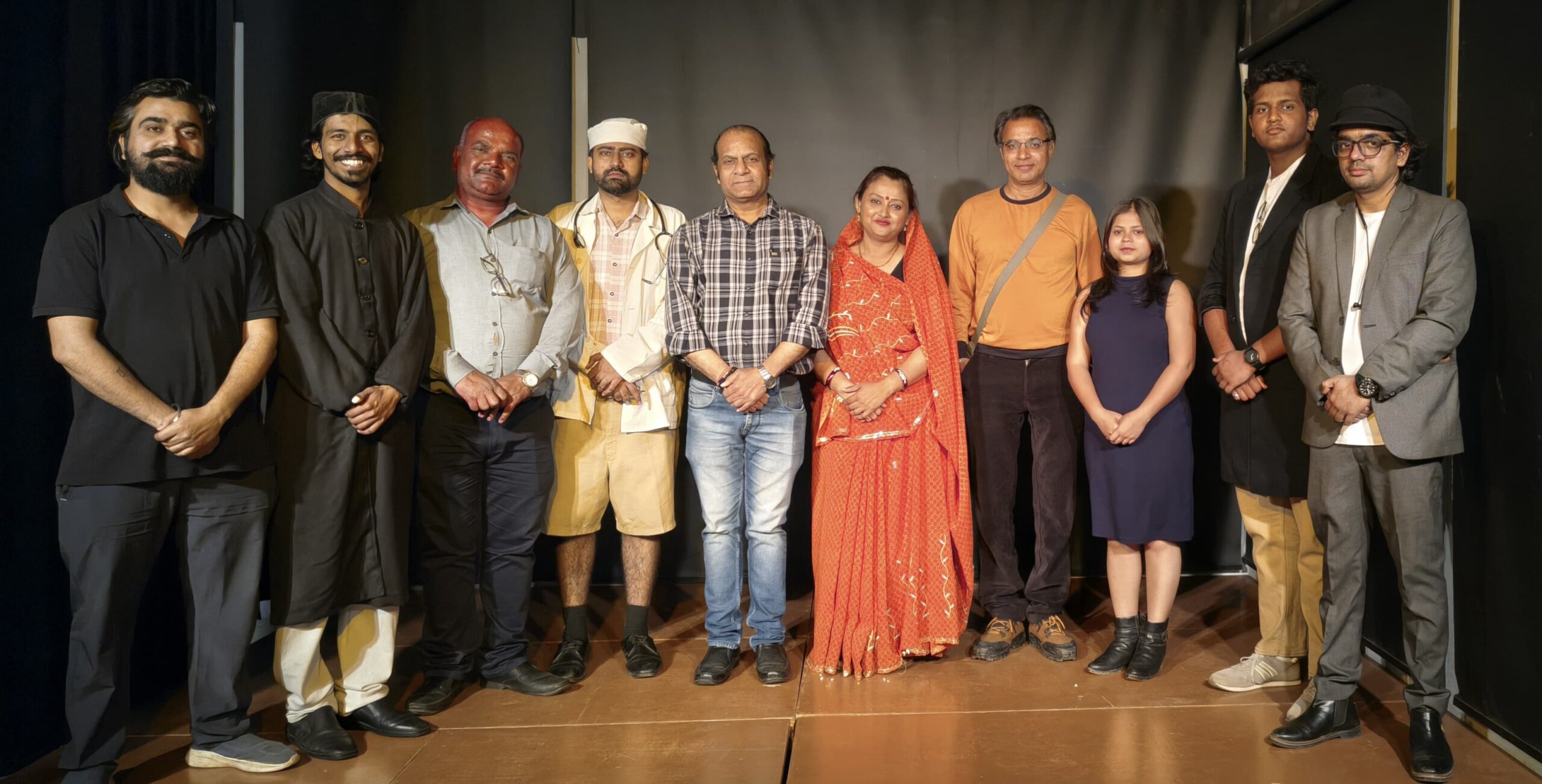
All four plays were directed by Shyam Kumar, whose thoughtful interpretation and cohesive vision shaped the entire festival. The ensemble cast—featuring Vishwajeet, Munmun, Shivangi, Aman Kumar, Vansh Rathore, Raman Kumar, Rajan K Batheja and others—delivered compelling and engaging performances. Supporting them was a dedicated backstage team, including stage managers Sunil Rathore and Suraj Singh, assistant stage managers Himanshu and Nisha, makeup artists Payal and Raj Rani, costume assistants Rohit Prasad and Rekha Devi, and music operator Vansh Rathore.

Audience Reactions

The showcase drew enthusiastic responses from theatre lovers, many of whom praised the emotional breadth and artistic clarity of the performances.

“It felt like watching four different worlds unfold on one stage. Each play had its own charm.”Audience Member

“Kambakht Ishq brought tears to my eyes. Such honest performances—it stayed with me long after the show.”Senior Theatre Enthusiast

“We came for the comedy, but Chekhov surprised us! The humour and sensitivity were beautifully balanced.”Young Couple

“Kallu Nai MBBS had the entire hall roaring with laughter. Brilliant timing by the actors!”College Group

“A refreshing blend of classic storytelling and contemporary relevance. Truly a rewarding experience.”Regular Visitor

The warm applause and heartfelt reactions reflected the lasting impact of Natsamrat Delhi’s November showcase—a testament to the enduring power of theatre to inspire, entertain and connect audiences across generations.


Lokmata Ahilyabai Holkar” — A Powerful Confluence of History, Grace and Dramatic Sensitivity

Presented by the Hindi Academy, Delhi, the play “Lokmata Ahilyabai Holkar” emerged as a compelling blend of historical narrative, dignity and emotional depth, commemorating the 300th birth anniversary of Ahilyabai Holkar. Staged on 19th November, 2025 at the L.T.G. Auditorium, the production not only illuminated her exemplary courage and administrative acumen but also brought alive her profound humanitarian vision.

The event gained special prominence with the presence of Hon’ble Chief Minister of Delhi, Mrs. Rekha Gupta, Mr. Kapil Mishra (Hon’ble Minister, Department of Art, Culture & Language, Delhi), and Mrs. Bansuri Swaraj. Their presence elevated the cultural stature of the evening and energized the audience.

Addressing the gathering, Hon’ble Chief Minister Mrs. Rekha Gupta highlighted Ahilyabai’s life, her benevolent leadership and her unwavering commitment to justice. She noted that in ancient times women enjoyed education and equal rights, but circumstances changed drastically after the arrival of the Mughals—leading to restrictions and seclusion. In such a period, Ahilyabai stood as a shining example of strength, wisdom and progressive thought.

Hon’ble Minister Mr. Kapil Mishra and Ms. Bansuri Swaraj also emphasized the need to bring Ahilyabai Holkar’s ideals to the forefront, stating that her life continues to inspire society even today.

The event was further graced by Guest Mrs. Rashmi Singh (IAS), Secretary – Department of Art, Culture & Language. Under the leadership of Mr. Sanjay Kumar Garg, Secretary of the Hindi Academy, the entire programme unfolded with grace and coherence. All dignitaries appreciated the artistic excellence of “Lokmata Ahilyabai Holkar”.

The play’s director Rohit Tripathi transformed the narrative into a visually engaging experience with refined staging, balanced emotional transitions and well-structured dramatic movements. Writer Mukesh Jha brought historical events to life with clarity, flow and an engaging dramatic texture. Despite the narrative’s breadth and the many characters involved, the presentation remained cohesive, gradually rising in intensity and drawing the audience closer to the towering personality of Ahilyabai.

In the lead role, Shampa Mandal delivered a restrained yet powerful performance, capturing Ahilyabai’s resilience, compassion and unshakeable resolve. Her expressions, dialogue delivery and emotional precision made the character truly come alive.
Disha Gupta, as young Ahilya, added depth and charm through her expressive performance and graceful movements.

As Malharrao, Sharad Tyagi portrayed calm authority and dignified strength, leaving a lasting impact. Guneet Singh (as Khanderao) and Nirbhaya Kartavya (as Tukoji Rao, Vishwas Rao) brought emotional complexity and internal conflict to their characters with impressive conviction.

Despite the large ensemble, each artist—
Shikha Arya, Aryan Mavi, Gagan, Jai Prakash, Ankit Chaudhary, Aryan Singh, Mayur, Dhananjay, Sachin, Kritika Gaur, Ridhaan Gaur, Mohammad Siraj, and Ayushi Tripathi—maintained energy, rhythm and continuity throughout, helping the historical canvas unfold seamlessly on stage.

The backstage team added commendable depth to the production:

  • Chandrakanta Tripathi’s costumes preserved historical authenticity,
  • Tiara Tripathi’s choreography infused visual elegance and rhythm,
  • Rajeev Ranjan’s music enriched the emotional atmosphere.

This production by Upstage Art Group, Delhi, stands as a testament to how research, sensitive writing and cohesive direction can transform history from something that is merely narrated into something profoundly experienced.
The play reminded the audience that Ahilyabai was not just a ruler—she was a true Lokmata, whose compassion and strength still resonate across generations


A Profound Solo Performance of “Paagal Ki Diary”

On the evening of 12th November in Laxmi Nagar, Delhi, the cultural organization “Shyama Gautam”, Ranchi presented the solo play Paagal Ki Diary at 191 School Block, with the support of Third Bell Art & Cultural Society and of 13th November in Mitra Rangmanch, Patparganj, Delhi. Based on Lu Xun’s celebrated short story “A Mad Man’s Diary”, the play was adapted for the stage by Rajesh Kumar and performed as well as directed by Malay Mishra.

The narrative follows the inner journey of a man whose sensitivity compels him to see the world through an unsettling new lens. As he questions long-accepted beliefs, habits and inherited ideas, his diary becomes a reflection of his turmoil—filled with doubt, fear, rebellion and a relentless search for meaning. Malay Mishra portrayed this psychological depth with remarkable intensity, drawing the audience into the character’s fractured inner world.

His performance stood out as the strongest pillar of the production. With subtle shifts in expression, controlled modulation of voice, and a body language that oscillated between restlessness and eerie stillness, he brought the protagonist’s mental disintegration vividly to life. There were moments when the boundary between the stage and the audience seemed to dissolve, making viewers feel as though they had stepped into the character’s mind themselves.

The stage design was minimal yet deeply evocative—a chair, a bookshelf and a handful of objects that created the claustrophobic atmosphere of a solitary, enclosed world. The lighting played a crucial role in shaping the emotional landscape, moving from dim warmth to stark illumination and creating a visual rhythm that mirrored the protagonist’s spiralling thoughts.

The play resonates on multiple levels. Beyond depicting one man’s struggle, it raises unsettling questions about the pressures and unquestioned traditions that often shape human behaviour. The blend of satire and sensitivity allows the story to comment on the fragility of perception and the elusive nature of what society calls “normal”.

As the play progresses, the character’s anxiety intensifies, and this emotional surge reaches the audience as well. Many viewers later described the experience as gripping, disturbing and poignantly insightful. Despite its serious tone, the play holds attention throughout, leaving a lingering impact.

Ultimately, “Paagal Ki Diary” emerges as a powerful theatrical experience—one that goes beyond entertainment to explore the conflicts, contradictions and silent battles within the human mind. Malay Mishra’s direction and performance elevate the narrative to an impressive artistic height. The Delhi staging by “Shyama Gautam”, Ranchi turned out to be a memorable evening of profound thought and compelling theatre.


35th Urdu Drama Festival: “Jeb Qatra” — A Living Portrayal of Manto’s Human Sensitivity

New Delhi | November 12
The 35th Urdu Drama Festival at Shri Ram Centre, Mandi House, came alive with emotion and introspection as Adakar Theatre Society presented “Jeb Qatra”, a sensitive stage adaptation of Saadat Hasan Manto’s celebrated short story. The play was directed by Himmat Singh Negi, with Prince Rajput as the assistant director.

🌙 A Mirror to the Human Conscience

Few writers have captured human vulnerability like Manto. His world is one where morality blurs, and truth emerges in the unlikeliest of hearts. “Jeb Qatra” (The Pickpocket) unfolds the story of a thief who, after stealing a woman’s purse, is struck by remorse upon realizing her pain. What begins as a simple act of theft becomes a journey of awakening — revealing that compassion and humanity never truly die within us.

Manto’s world is not black and white — it’s painfully, beautifully human.”

🎬 Direction: Simplicity with Depth

Director Himmat Singh Negi handled the play with remarkable restraint and clarity. Using minimal stage material and precise visual language, he transformed Manto’s prose into a living, breathing experience. Through dialogue, gesture, and silence, Negi underlined a universal truth — “Humanity is the real religion; Hindu and Muslim are but names.”

The lighting and music intertwined beautifully to highlight emotional shifts, while the staging remained both symbolic and grounded — a hallmark of thoughtful direction that never overshadows the writer’s soul.

🌟 Performances that Breathe Life into Words

Javed Sameer (as Kashi) and Nidhi Mahawan (as Bimla) led the cast with extraordinary poise and authenticity. Their chemistry, command over Urdu diction, and emotional restraint brought Manto’s text vividly to life.
Director Himmat Singh Negi, appearing briefly as the character Pandit, made a lasting impact through his controlled yet powerful presence.

The ensemble — Asif Khan, Mukesh Gupta, Nikunj Raj, Deepika Bisht, Mayank Tiwari, Sachin, Ishika Khankwal, Deepika Sharma, Angel Suryavanshi, Prateek, Ashish Singh, Mohammad Umar, Suraj, and Rahul — delivered strong performances that maintained rhythm and realism throughout.

“Each performer seemed to live inside Manto’s sentences, not merely act them.”

🎨 Behind the Curtains: The Invisible Strength

The backstage team lent quiet brilliance to the performance. The play’s lighting, designed by Dev, deepened the emotional tone, while Sham Najim Khan’s music lent poignancy and flow. Nikunj, Ashish, and Dalchand designed costumes that reflected cultural subtlety and simplicity. The make-up by Umar and Angel was balanced and character-driven, while Rishabh, Mukesh, and Mayank handled sets and properties with an understated elegance that allowed the focus to remain on the actors and emotions.
Together, they created a seamless aesthetic that reflected Manto’s realism — raw, restrained, and real.

💭 Final Takeaway

Jeb Qatra” was not merely a performance — it was a conversation between stage and soul. The fusion of Manto’s empathy, Negi’s direction, and the ensemble’s sincerity crafted an experience that lingered beyond the final curtain.

Manto’s stories are not meant just to be read — they are meant to be felt, staged, and lived.

As the audience rose in applause, it was clear that this rendition of “Jeb Qatra” had not only entertained but touched hearts — reminding us that even in darkness, humanity glows quietly within.


“Abhi Raat Baaki Hai” — A Deeply Moving Portrayal of Human Struggle and Social Reality

Presented under the joint banner of Drishyama Trust and Disha Group of Visual and Performing Arts, the acclaimed Marathi playwright Jayant Pawar’s play “Abhi Raat Baaki Hai” was staged on October 24, 2025, at 6:30 p.m. in the Sammukh Auditorium at the National School of Drama (NSD), New Delhi.

Based on insights shared by Dr. Satya Prakash, the play draws inspiration from the industrial strikes of the 1980s, portraying the struggles of the working class. It powerfully reflects the economic disparities that divide society and the fragile emotional bonds that hold families together.

The narrative centers around Aai, a mother who, after her husband’s death, strives to keep her family united amid growing emotional and financial turmoil. Her four children, each absorbed in their own ambitions and conflicts, gradually drift apart — one toward literature, another into sports, one down a destructive path, and the daughter misled under the guise of work.

Shampa Mandal, who both directed the production and essayed the role of Aai, delivered a performance marked by depth, restraint, and emotional precision. Her portrayal of maternal resilience and fatigue formed the beating heart of the play.

The ensemble cast — Shikha Arya, Aditya Mukul, Gagan Chaudhary, Aryan Singh, Sufiyan, Sachin, Mani, Saif, and Udit — performed with sincerity and control. Deepak Rana’s stage design authentically recreated the humble atmosphere of a working-class home, while Dhirendra’s lighting and Vishal Jodi’s music amplified the emotional cadence of the narrative.

The costume design teamNitin Tiwari, Nitish Kumar, Chanchal Agarwal, and Neeraj Singh — enhanced the realism of the characters, supported by Vikas Verma’s photography, Noor Khan’s videography, Madhvi’s post-production, and props by Udit Kohli and Aryan Singh.

Mr. P.K. Mohanty, Registrar of the National School of Drama, who attended the show, praised the direction and performances, calling it “an artistically accomplished and emotionally stirring experience.”

According to Dr. Satya Prakash, the audience was deeply moved by the performance. “There was a profound silence in the hall — the kind that speaks of shared empathy,” he observed. “This play did not just unfold on stage; it lingered in the hearts of those who watched it.”

In essence, “Abhi Raat Baaki Hai” stood out for its thoughtful direction, powerful performances, and sensitive depiction of social and emotional realities. It was not merely a play — it was an experience that resonated long after the curtain fell.


Kala Sankul Brings Art, Reflection and Devotion Together through “Yugpurush”

New Delhi, October 26, 2025 — A thought-provoking Theatrical Review Symposium was organized at Kala Sankul, the cultural hub of Sanskar Bharati, on Sunday. The event commenced with the traditional lighting of the lamp, symbolizing the illumination of knowledge and creativity. Present on the occasion were Mr. Ashok Tiwari, Convenor of Kala Sankul; Mr. Rajesh Jain “Chetan”, Chief Guest; Mr. J.P. Singh, playwright and director of the featured play; and veteran theatre artist Mr. Avtar Sahni and Mr. Raj Uadhyay.

Kala Sankul, a vital initiative of Sanskar Bharati, aims to bring together the diverse dimensions of Indian art and culture on a shared platform. It is not only a space for artists to engage in dialogue, critical reflection, and self-exploration, but also a medium for the promotion of Indian life values and creative traditions.

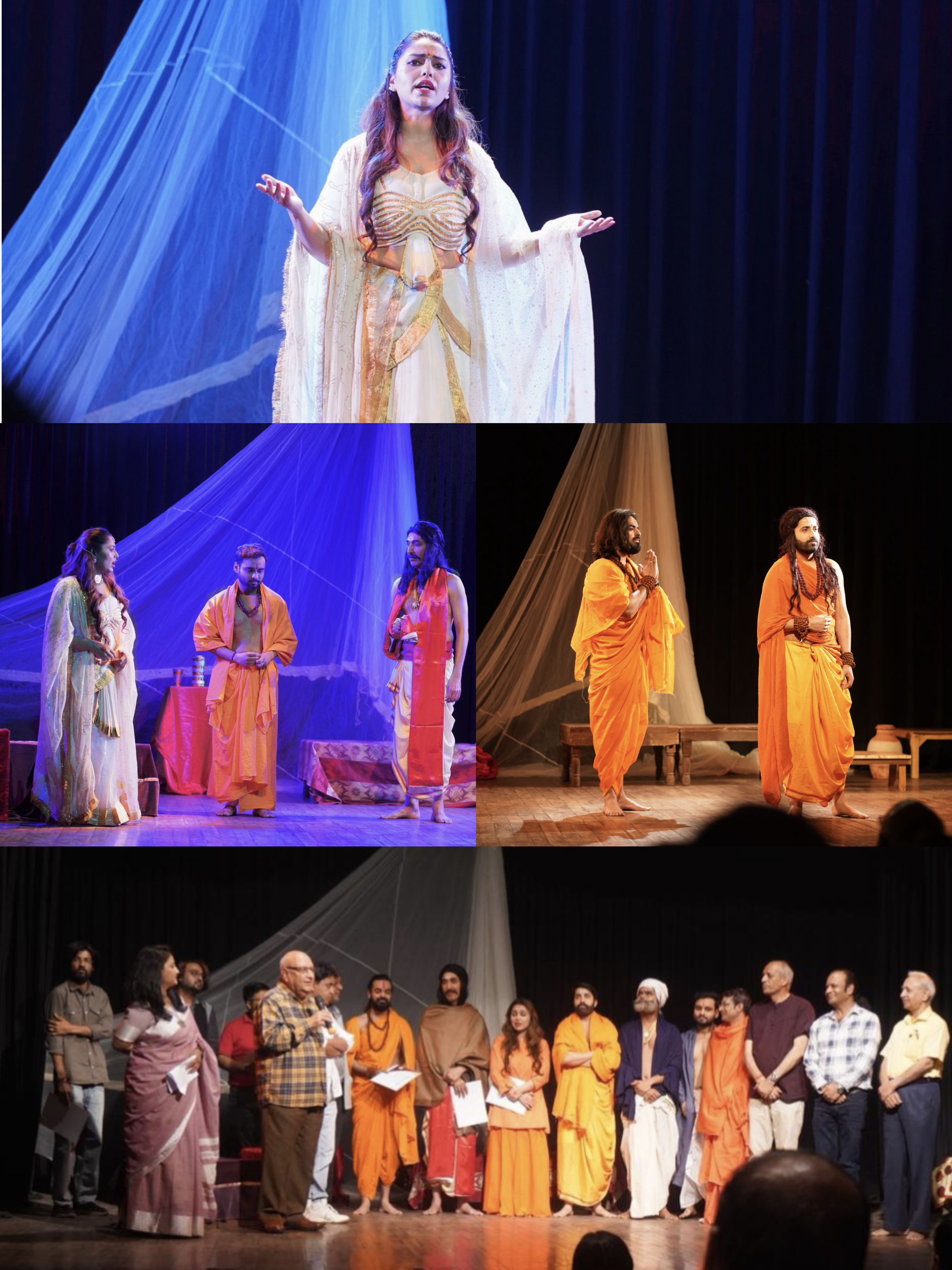
As part of this ongoing initiative, a theatrical review session was held on “Yugpurush”, a play presented by Rangbhoomi Delhi. The play is based on the lives of Sri Ramakrishna Paramhansa and Swami Vivekananda, portraying the era when young Narendra had not yet become Vivekananda but was progressing toward self-realization and spiritual awakening.

Before the discussion, select impactful scenes from the play were screened for the audience. This was followed by an engaging interaction with the play’s director Mr. J.P. Singh, along with Mr. Vipin Kumar (as Ramakrishna Paramhansa), Mr. Sudhir Rikhari (as Swami Vivekananda), and Chief Guest Mr. Rajesh Jain “Chetan”.

During the session, Mr. Rajesh Jain recited one of his beautiful poems, which resonated deeply with the spiritual essence of “Yugpurush.” The discussion explored how the actors internalized such profound and spiritual roles—how portraying these revered personalities influenced their own perspectives and inner journeys.

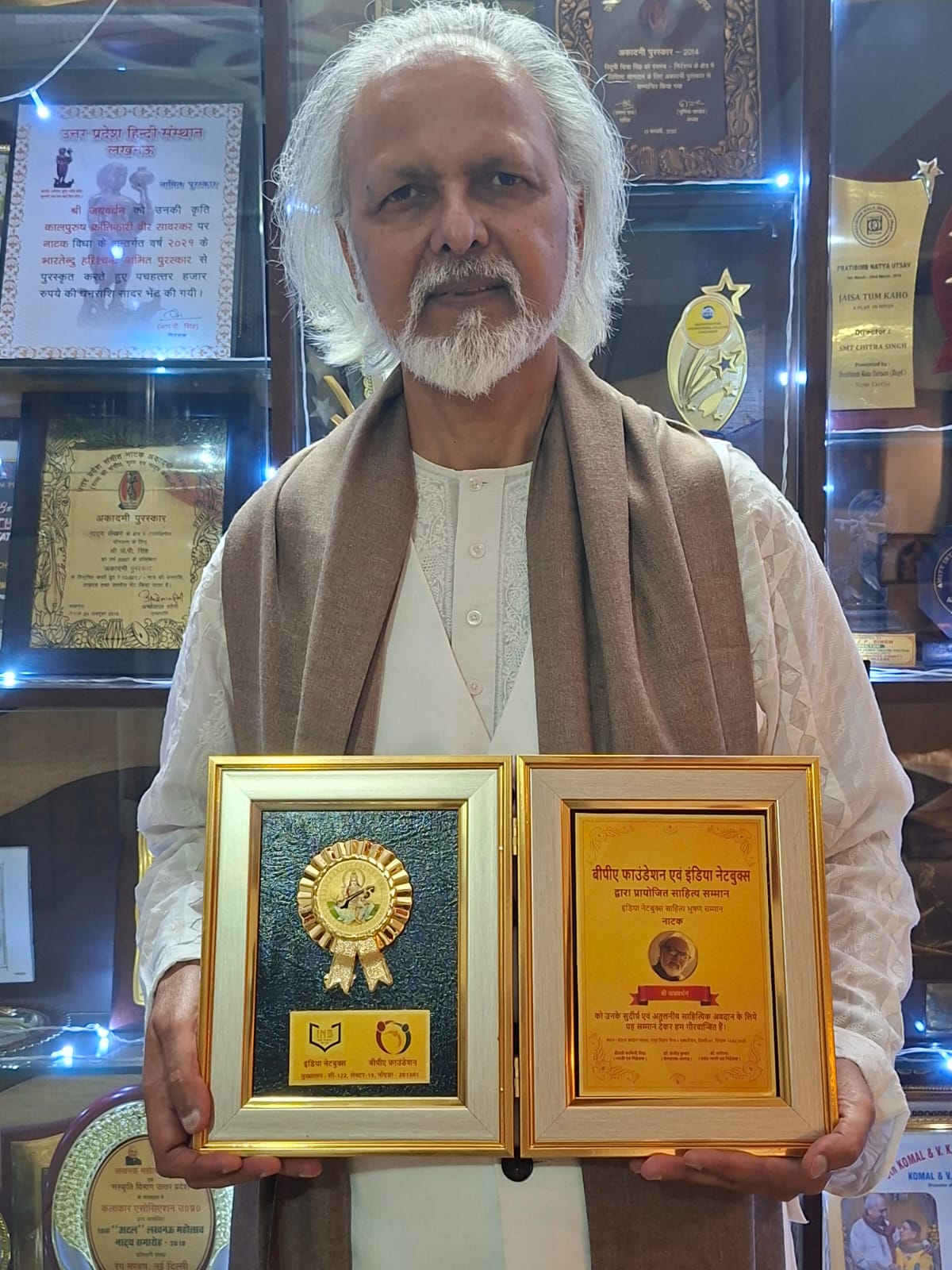
Playwright Mr. Jayvardhan (J.P. Singh) shared insights into the creative process, explaining that “Yugpurush” is rooted in the sacred guru-disciple relationship, where both teacher and student act as reflections and complements of one another—together forming a spiritual unity that continues to inspire generations.

Following the review, Mr. Sudhir Rikhari rendered a soulful bhajan that filled the hall with emotional and devotional serenity, perfectly complementing the theme of the play. The musical moment brought an air of peace and reverence, leaving the audience deeply moved.

The play also featured notable performances by Arun Sode, Tripti Johri, Shuddho Banerjee, Gaurav Verma, Jitendra Chauhan, Ravi Parcha, Kaustubh Pandey, Anurag Malik, Sangeeta Suyal, Shreya Agarwal, and Hari Singh Kholiya. All the artists were felicitated by the Kala Sankul family with traditional angavastras and potted plants as a mark of respect.

The success of the event was made possible through the dedication of many committed contributors, especially Ms. Bharti Dang, who served as the Convenor and gracefully anchored the entire evening. Special appreciation was also extended to Shruti Sinha, Garima Rani, Sneha Mukherjee, Raj Upadhyay, Shraboni Saha, and Harshit Goyal, whose efforts and enthusiasm ensured the program’s memorable success.

With every monthly symposium, Kala Sankul strengthens its resolve to celebrate India’s artistic heritage and inspire new generations of creative thinkers. It stands as a living testament to the belief that art, when rooted in cultural values, becomes a guiding force for individual and social transformation.


Shyam Swami: A Journey from Stage to Screen

The theatrical journey of Shyam Swami, which began in the historic lanes of Bikaner, Rajasthan, has evolved over the years into a significant cultural odyssey, seamlessly bridging the worlds of stage and screen. His earliest tryst with performance took place during his school years, where weekly assemblies became a platform for reciting poems, narrating stories, and enacting skits. His selection for a drama in the annual function further nurtured this emerging passion for theatre.

A pivotal moment arrived before his college years when he was selected for the Theatre Summer Workshop organized by the Jodhpur Sangeet Natak Akademi. This workshop provided him with an intensive introduction to various theatrical forms and techniques. It was here that he played the lead role in Charpai, written by Suresh Awasthi and directed by S.D. Chauhan — a performance that marked his first significant step as a theatre practitioner.

Following this, Swami became associated with the Marudhara Theatre Society. Under the direction of Ashok Joshi, he performed the lead role in Tidorav, a Rajasthani play authored by Harish Bhadani, which was successfully staged across the state in nine performances. During this period, he also participated in a National School of Drama (NSD) workshop conducted by Vagish Kumar Singh. The workshop resulted in the creation of Ek Ped Ki Kahani, an environment-themed play that was performed over 37 times throughout Rajasthan and received widespread acclaim from audiences.

Upon completing his graduation, Swami moved to Delhi for professional reasons. Although he stepped away from active theatre for a period, his engagement with the art continued through regular attendance at performances. A fortuitous meeting with director Ashok Talwar at Shri Ram Centre opened new avenues, leading to his selection for a role in the television serial Vaidik Kaleen Nariyaan. This opportunity brought him closer to the worlds of acting and production, marking the beginning of a new phase in his artistic journey.

Swami then fully embraced production work, collaborating with some of the most eminent figures in Indian theatre and cinema, including Tigmanshu Dhulia, Gulzar Sahab, Sagar Sarhadi, and Meghna Gulzar. His passion for theatre remained constant, reflected in his significant contribution to the production of Amal Allana’s teleplay Devyani Ka Kehna, a noteworthy milestone in his career.

During the Commonwealth Games, he undertook the production responsibilities for NSD professor Hema Singh’s acclaimed solo play Zindagi Madhur Hai, Kuman Senu Mein, which was successfully performed more than thirteen times across India, including at the Bharat Rang Mahotsav. His dual role as actor and production member in the Parsi play Khoobsurat Bala, directed by Vagish Kumar Singh and Hema Singh for the Theatre Olympics, stands as a highlight of his theatrical career.

Years of active involvement in both theatre and screen ultimately inspired him to establish the Skin and Stage Foundation (Trust). Today, Shyam Swami brings together his acting expertise and production experience to lead this institution as a vibrant cultural initiative. His journey exemplifies how dedication, passion, and creativity can converge to shape a meaningful artistic legacy, contributing to both traditional theatre and contemporary media.