Pooja Rathore: A Journey of Passion, Dedication, and Artistic Excellence
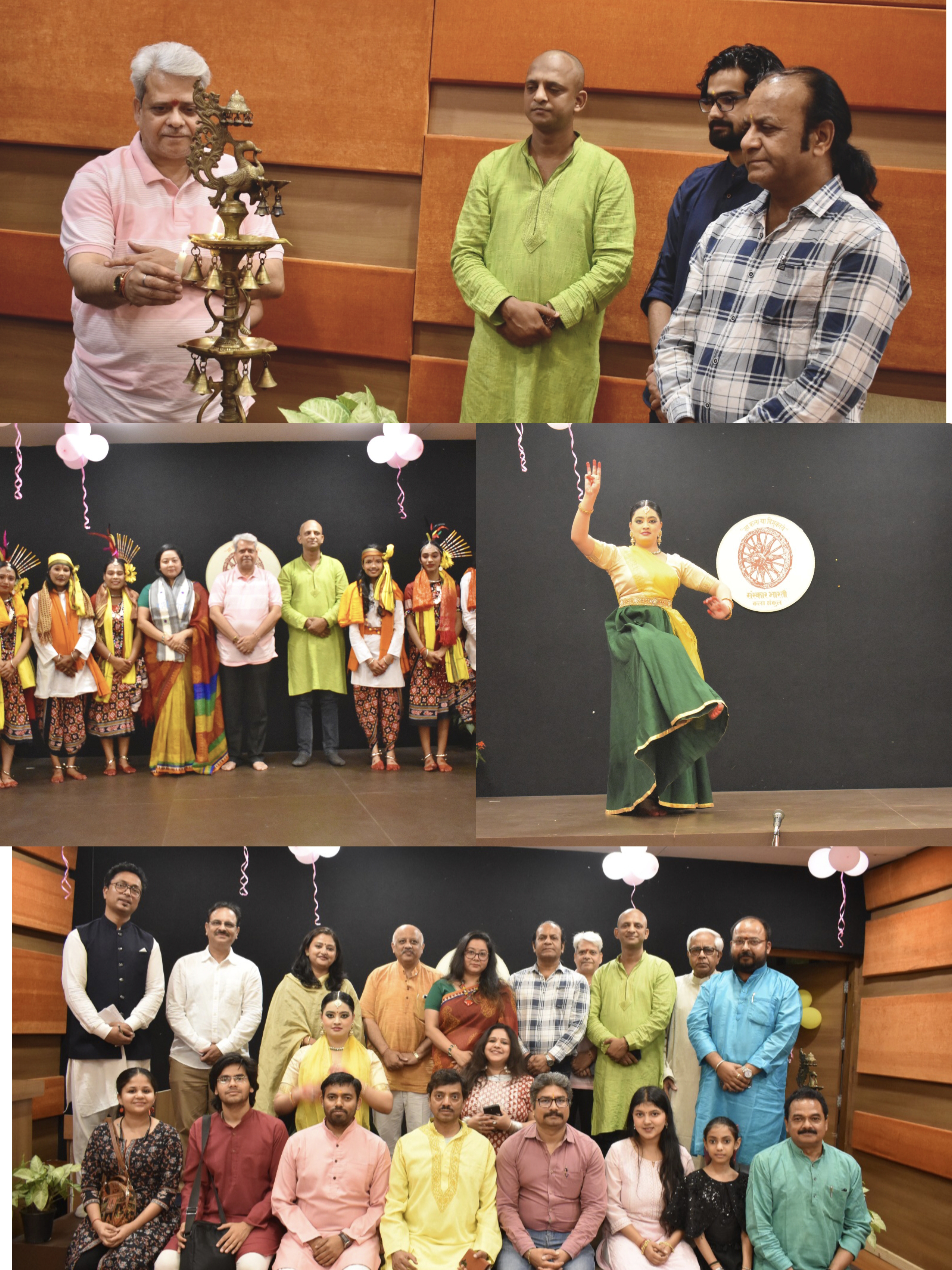
Held on 7 June at the auditorium of Bhai Joga Singh Public School, Karol Bagh, New Delhi, Tarang – Dance Stage Show was more than just a cultural presentation; it was a celebration of dedication, discipline, and artistic growth. Organized by Vivekratz Dance Academy, the event provided a vibrant platform for emerging performers to showcase their talent before a live audience. The evening featured a variety of dance presentations by artists of different age groups, reflecting the richness of India’s performing arts tradition and the enthusiasm of a new generation of performers.
A significant contribution to the event came from AadharshilaKala Kendra, an organization committed to nurturing young talent through training in Kathak and providing students with opportunities to perform on stage. Under the guidance of renowned Kathak guru Smt. Durga Basak, several aspiring dancers presented graceful performances that reflected both technical skill and artistic maturity. Through her dedicated teaching, Smt. Basak has been instrumental in preserving and promoting the classical dance tradition while inspiring young learners to pursue their artistic aspirations.
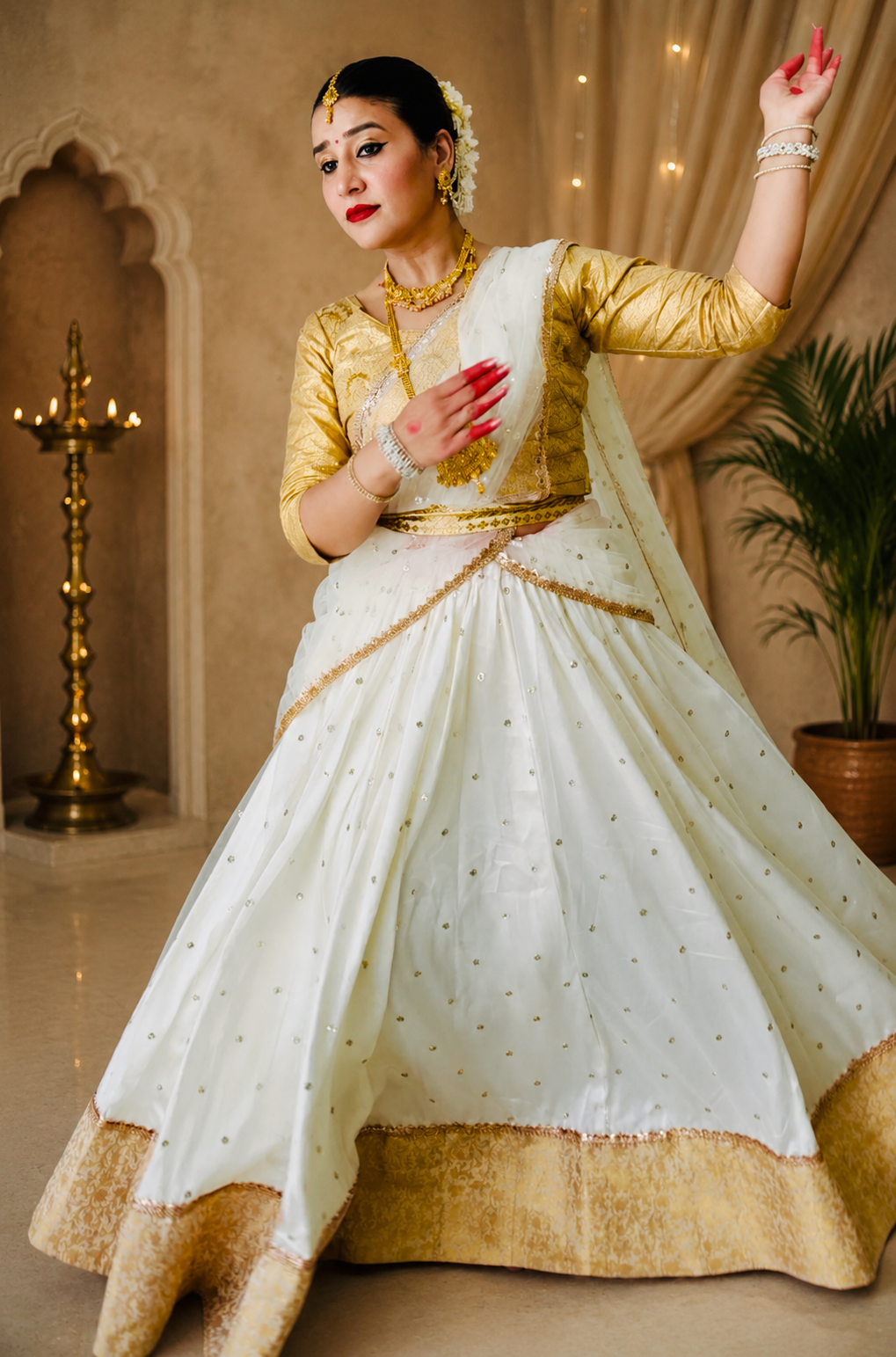
Among the many promising performers who graced the stage, Pooja Rathore stood out as an inspiring example of how passion and perseverance can keep a dream alive.
For Pooja Rathore, learning Kathak was not merely a hobby but a cherished childhood dream. From an early age, she aspired to immerse herself in the beauty and discipline of this classical dance form. However, as life progressed, she focused on building a successful career and eventually established herself as a respected Interior Designer. Yet the dream of becoming a Kathak dancer remained alive within her. Rather than allowing that dream to fade, she chose to pursue it with determination and dedication. Under the guidance of Smt. Durga Basak, she finally transformed her childhood aspiration into reality, proving that it is never too late to follow one’s passion and fulfill a long-held dream.
Today, Pooja successfully balances her professional achievements with her artistic pursuits. Years of disciplined training and sincere commitment have enabled her to develop a confident stage presence and a deeper understanding of Kathak’s intricate rhythms, graceful movements, and expressive storytelling. Her journey demonstrates that artistic aspirations need not be sacrificed in the pursuit of a professional career.
At Tarang – Dance Stage Show, Pooja’s performance was a reflection of that remarkable journey. Her elegant footwork, rhythmic precision, expressive abhinaya, and confident presence captivated the audience and earned warm appreciation. Watching her perform, one could sense not only her technical proficiency but also the fulfillment of a dream nurtured since childhood.
The event ultimately highlighted the importance of institutions such as AadharshilaKala Kendra and mentors like Smt. Durga Basak, who provide aspiring artists with both training and opportunities to shine. Through performers like Pooja Rathore, Tarang demonstrated how dedication, guidance, and perseverance can transform childhood dreams into artistic reality, inspiring many others to pursue their passions regardless of where life may lead them.
“Paanch Rang Ek Sang”: A Culminating Theatre Presentation at Rabindranath Tagore University
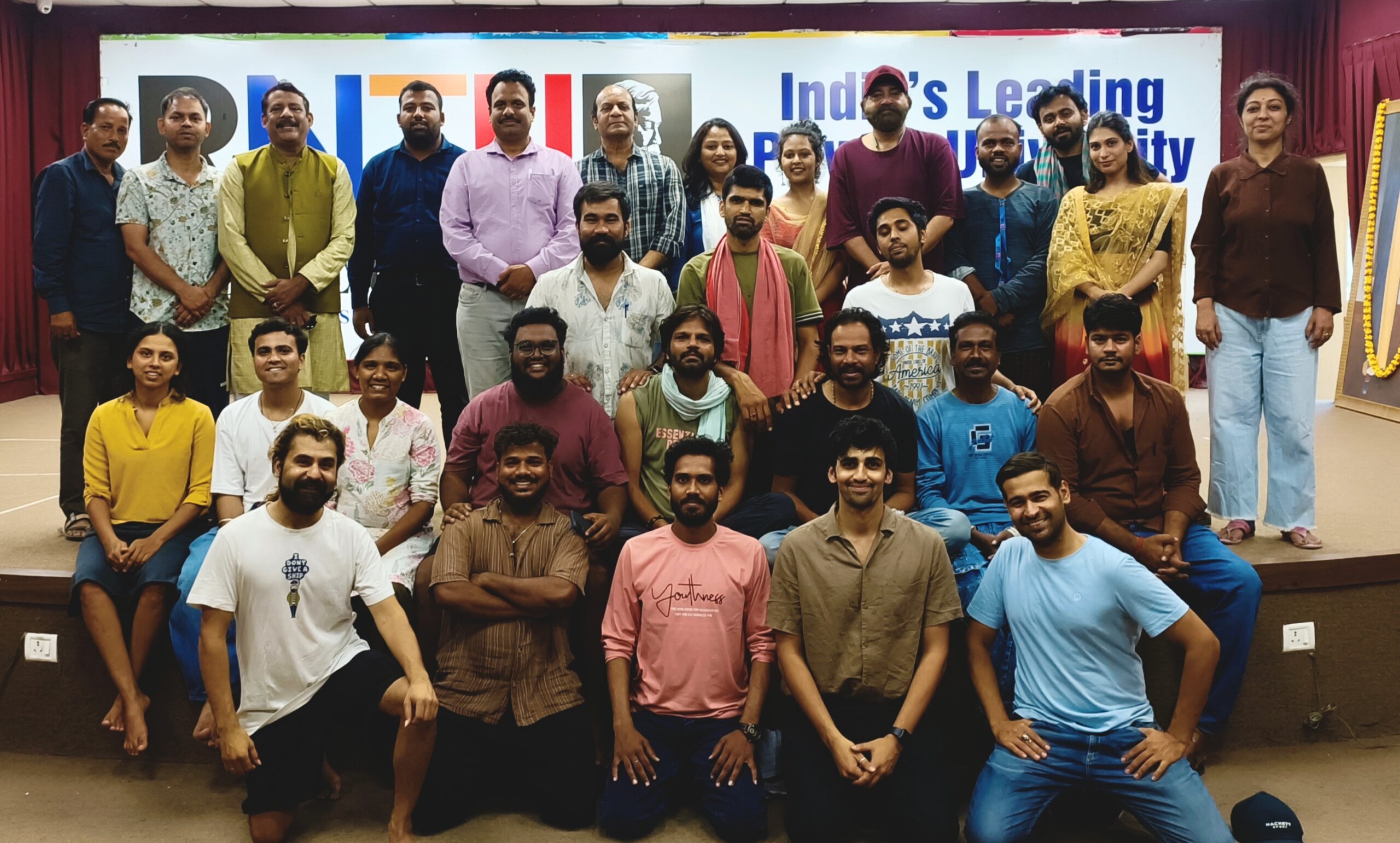
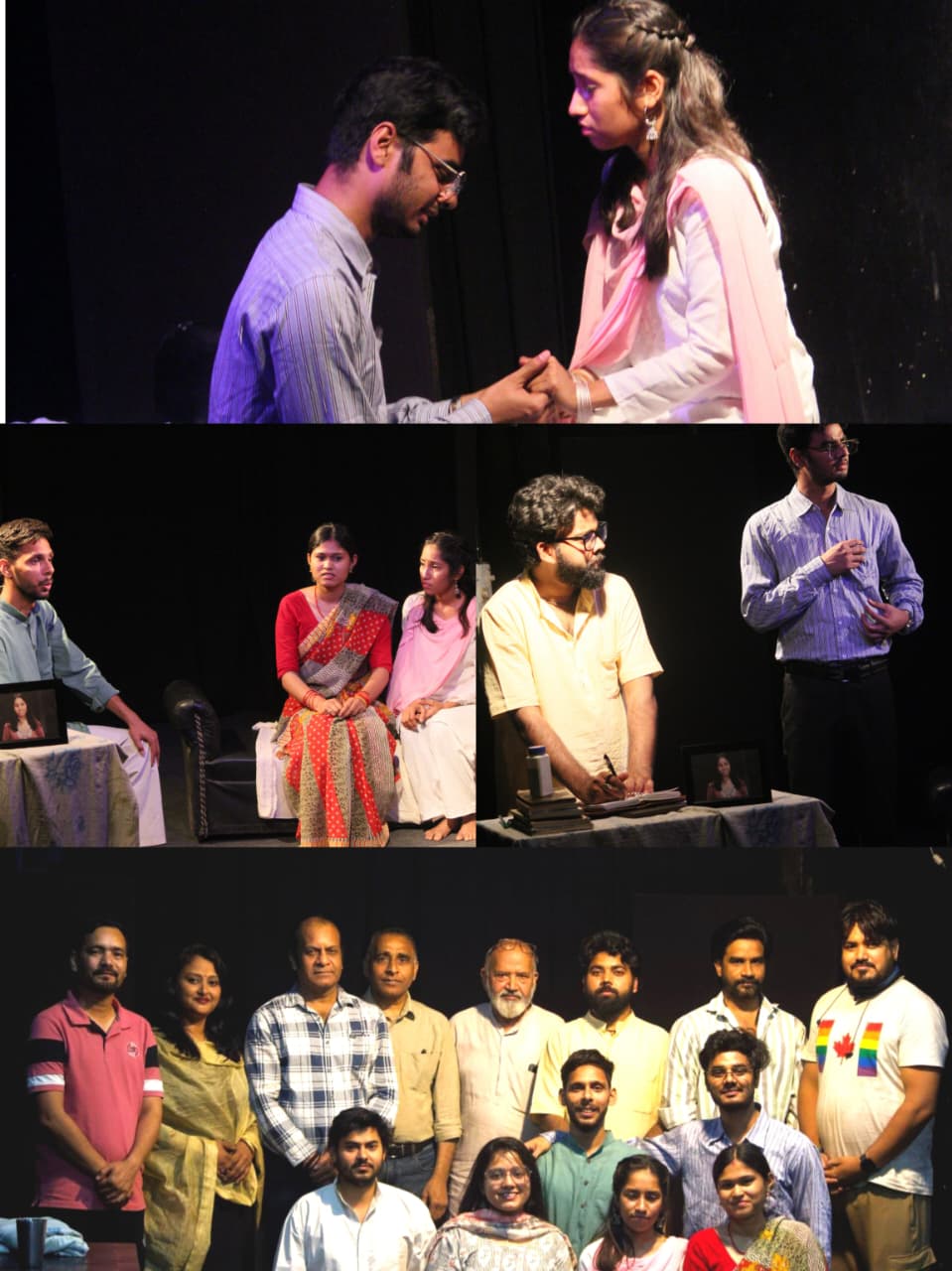
As part of the valedictory session of the Nine-Day National Workshop (29 May – 6 June 2026) organized by the Sanskrit Prachya Bhasha Evam Bhartiya Gyaan Parampara, Rabindranath Tagore University, Bhopal, the fourth-semester students of the Master of Performing Arts (Drama) programme presented an engaging theatrical production titled “Paanch Rang Ek Sang.” The workshop focused on key aspects of theatre-making, including playwriting, stage design, makeup, and lighting design, with the objective of introducing students to the holistic process of theatrical production. The final presentation reflected the creative explorations, practical exercises, and collaborative learning undertaken during the workshop.
The workshop was conducted under the training and mentorship of renowned theatre practitioner Shyam Kumar from Delhi. Drawing upon his extensive experience and practical insights in theatre, he guided participants through diverse aspects of performance, stagecraft, visual composition, and theatrical presentation. The scene work and creative exercises developed during the workshop gradually evolved into a complete theatrical production, providing students with valuable hands-on experience in the art and craft of theatre.
Presented under the title “Paanch Rang Ek Sang” the production brought together five distinct stories—Lal Kothi, Bhookh, Satyamev Jayate, Dafa Ek Shav Teen… Ek Gunah, and Unheard Voices. While each narrative explored a unique theme and emotional landscape, together they reflected various dimensions of contemporary society.
One of the most remarkable aspects of the presentation was the active involvement of students in every stage of the creative process. Beyond acting, they assumed responsibility for writing, direction, costume design, music composition, makeup, and stage management, demonstrating a comprehensive understanding of theatrical production. The scene work and theatre exercises developed throughout the workshop were gradually transformed into a cohesive dramatic structure, enabling participants to engage with every dimension of performance-making and apply their learning in a practical setting.
The success of the presentation was made possible through the dedicated efforts of Adeeb Ansari, Ankit Chaudhary, Oindrila Goswami, Prashant Kumar, Sainand Sadanand Valvaikar, Bishal Barua, Davinder Singh Grover, Himadri Vyas, Kartik Kumar Namdev, Pooja Kevat, Sahaj Kumar Harjai, Unish Pratap Singh, Deepak Bhardwaj, Himanshu Tiwari, Pankaj Diwan, Prateek Chauhan, Praveen Kumar Namdev, Rahul Gupta, Sanjay Singh Negi, Nisha Kundaikar, Tanashree Rane, Santosh Rajput, Shubham Shivalkar, and Shubham Srivastava. Representing different regions of the country, these young theatre practitioners displayed remarkable talent, discipline, creativity, and collective commitment. Their contributions extended far beyond performance, encompassing significant involvement in the technical and artistic aspects of the production, thereby strengthening the overall impact of the presentation.
The workshop was jointly organized by the Sanskrit Prachya Bhasha Evam Bhartiya Gyaan Parampara, Vishwarang Foundation, and the Faculty of Humanities and Liberal Arts. It was conducted under the patronage of Dr. Aditi Chaturvedi, Pro-Chancellor, and Dr. Sangeeta Johari, Registrar, whose support encouraged innovative and practice-based learning in the performing arts. The workshop was successfully coordinated by Dr. Sanjay Kumar Dubey and Dr. Savitri Singh Parihar, with Abhishek Deshmane serving as the Convener. Their collective efforts provided students with a meaningful platform to learn, experiment, collaborate, and express their creative potential through theatre.
More than a concluding performance, “Paanch Rang Ek Sang” emerged as a celebration of creative learning, collaboration, and artistic exploration. The production demonstrated how workshop-based training can empower young artists to transform ideas into performance while gaining a deeper understanding of the many dimensions of theatre-making. It stood as a testament to the transformative power of theatre education and the vibrant creative energy of emerging performers.
A Celebration of Heritage, Harmony, and Dialogue: Sanskar Bharati’s Cultural Symposium Explores the World’s Ancient Traditions
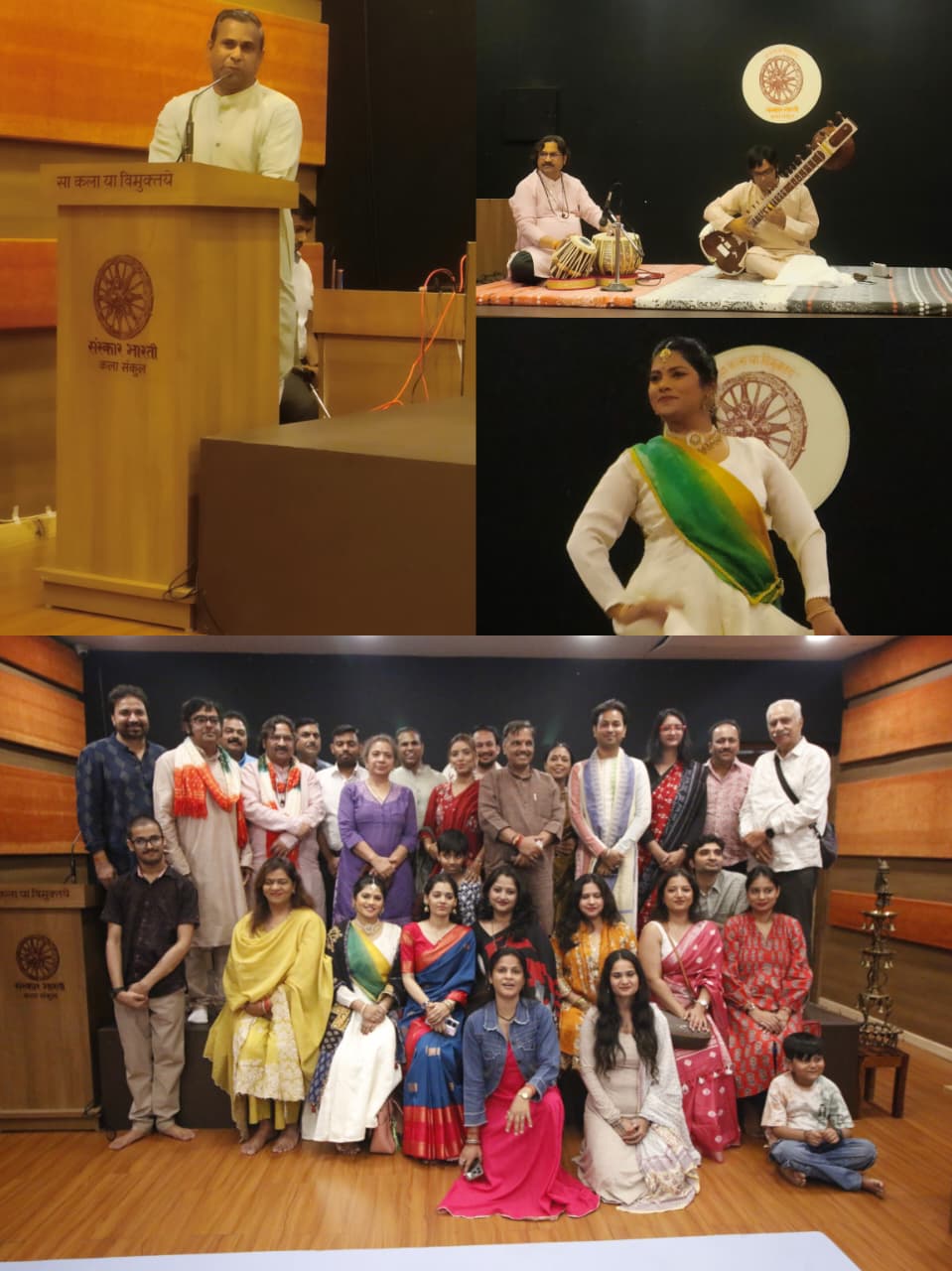
New Delhi, May 31: The cultural symposium “Ancient Traditions of the World”, organized by the Kala Sankul of Sanskar Bharati, unfolded as a captivating confluence of music, dance, and intellectual discourse. Blending artistic excellence with thought-provoking dialogue, the evening offered audiences a rich exploration of India’s cultural heritage while drawing meaningful connections with ancient civilizations across the globe.
The event was organized as part of Kala Sankul’s ongoing monthly cultural dialogue series, a thoughtful initiative aimed at nurturing awareness and appreciation of India’s rich artistic and civilizational heritage. The series brings together distinguished practitioners, scholars, and audiences to engage with subjects that bridge art, culture, history, and philosophy. By encouraging dialogue through music, dance, literature, and scholarly discourse, Kala Sankul aspires to strengthen cultural consciousness and promote a deeper understanding of the values that connect diverse traditions across time and geography.
The programme commenced with a traditional lamp-lighting ceremony, led by Chief Guest Sandeep Kaveeshwar, National Organising Secretary, International Center for Cultural Studies (ICCS), New Delhi, alongside Ashok Tiwari, Central Office Secretary of Sanskar Bharati, and Raj Upadhyay. The ceremonial inauguration was followed by the rendition of Sanskar Bharati’s anthem, setting a dignified and culturally resonant tone for the evening.
The artistic journey began with a mesmerizing performance by renowned sitar virtuoso Pandit Pankaj Vishal, accompanied by celebrated tabla maestro Ustad Mustafa Hussain. Their masterful interplay of melody and rhythm transformed the auditorium into a space of deep musical immersion. The delicate nuances of the sitar, seamlessly woven with the expressive cadence of the tabla, showcased the timeless beauty and sophistication of India’s classical music tradition. The performance not only demonstrated technical brilliance but also evoked the meditative and spiritual essence that lies at the heart of Indian classical music.
The evening continued with an enchanting Kathak recital by acclaimed dancer Kripa Tendulkar. Rooted in the rich aesthetics of the Lucknow Gharana, her performance reflected a graceful synthesis of expression, rhythm, technique, and storytelling. Through intricate footwork, elegant movements, and evocative abhinaya, she captivated the audience and reaffirmed the enduring relevance of Indian classical dance in contemporary cultural life. Her presentation beautifully illustrated how traditional art forms continue to evolve while remaining deeply connected to their cultural roots.
Following the performances, Chief Speaker Sandeep Kaveeshwar delivered an insightful address on the theme “Ancient Traditions of the World.” He highlighted the remarkable cultural parallels that emerge when studying ancient civilizations across continents. Drawing attention to shared symbols, philosophies, artistic practices, and spiritual traditions, he emphasized the importance of exploring these interconnected histories to better understand humanity’s collective cultural inheritance. He noted that many elements of Indian culture find echoes in diverse civilizations around the world, opening new avenues for comparative cultural study and dialogue. His lecture was both enlightening and reflective, encouraging the audience to view world cultures through a lens of mutual respect, curiosity, and understanding.
One of the defining strengths of the event was its seamless organization and graceful presentation. Ritambhara, serving as the compère for the evening, guided the programme with warmth, clarity, and poise, ensuring a smooth transition between performances and discussions. Her engaging presence helped maintain the flow and coherence of the evening’s diverse segments.
The event concluded with a formal vote of thanks delivered by Vishwadeep, who expressed gratitude to the artists, speakers, guests, organizers, and attendees for their contribution to the success of the symposium. This was followed by a serene recitation of the Shanti Mantra by Brijesh, bringing the gathering to a contemplative and harmonious close.
The success of the symposium was made possible through the dedicated efforts of the Kala Sankul team. Garima Rani, Shraboni Saha, Sneha Mukherjee, Pradeep Pathak, Mrityunjay, and Bijendra Kumar played instrumental roles in planning and executing the event, contributing significantly to its smooth and successful realization.
More than a cultural programme, the symposium emerged as a meaningful platform for dialogue between India’s artistic traditions and the ancient cultural legacies of the world. Through the harmonious union of music, dance, and scholarship, the evening celebrated the enduring power of culture to connect communities, transcend geographical boundaries, and illuminate humanity’s shared heritage. The event stood as a reminder that in an increasingly interconnected world, the study and celebration of ancient traditions continue to inspire cultural understanding, intellectual exchange, and collective reflection.
“Gandhari: Beyond the Blindfold” — A Powerful Theatrical Experience of Pain, Resistance and Inner Turmoil
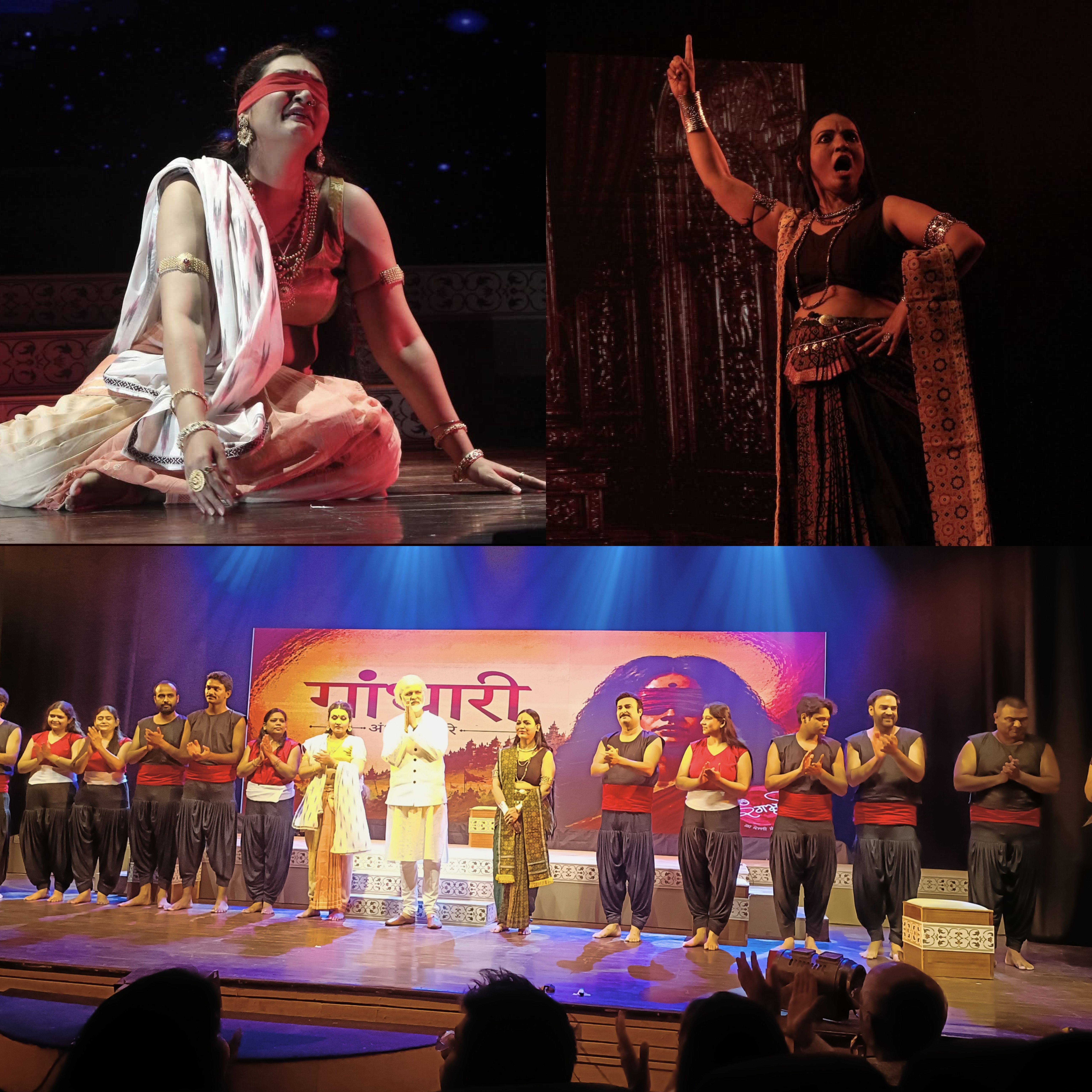
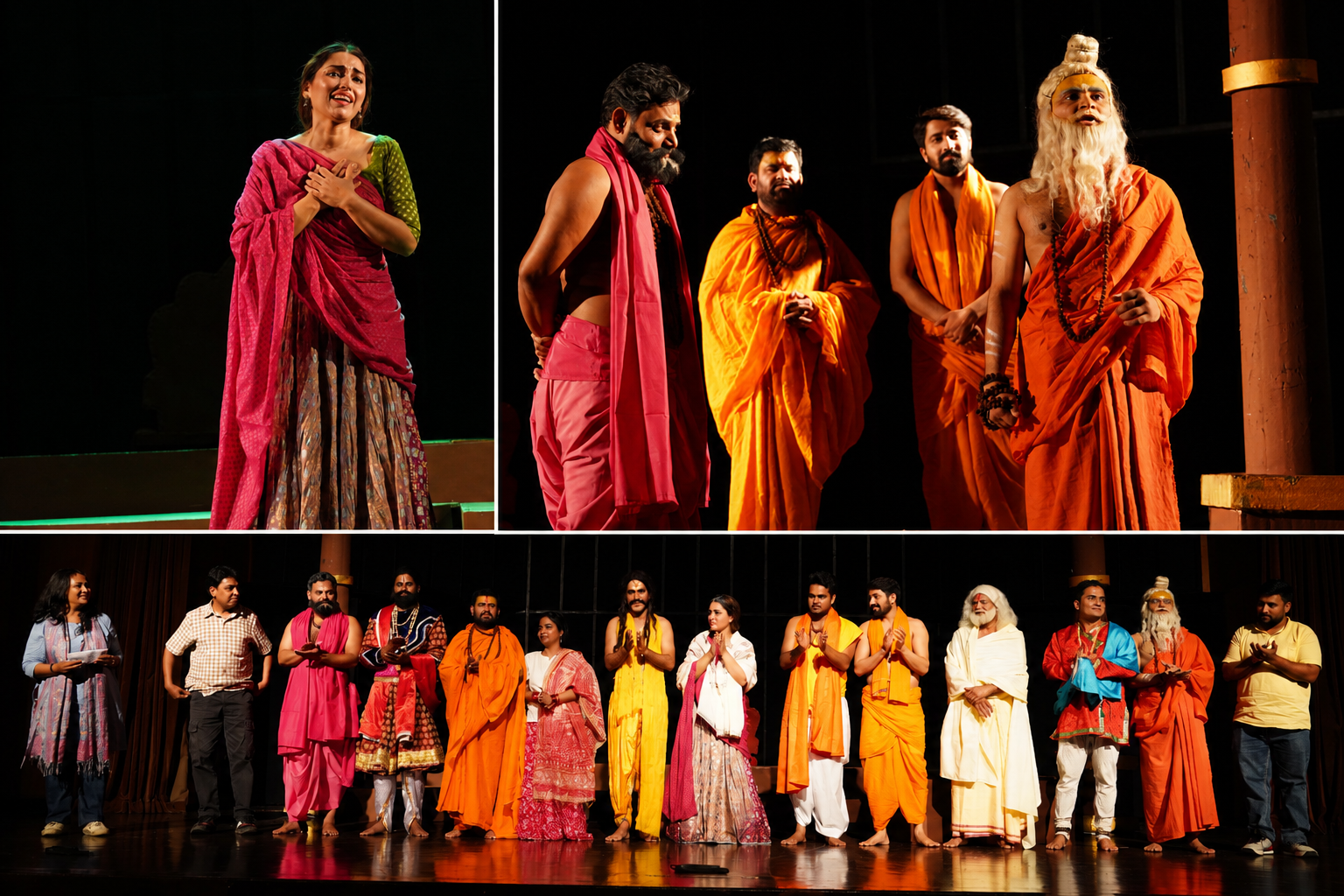
On 22 May 2026, at the iconic in Mandi House, Delhi, Rangbhoomi Delhi presented “Gandhari: Beyond the Blindfold”, a deeply moving theatrical production that transformed the epic narrative of the Mahabharata into a profound exploration of womanhood, grief, motherhood, silence, and resistance.
The auditorium was completely packed, and from the very first moment, the performance created an atmosphere of intense engagement and emotional anticipation. The audience remained immersed throughout the production, experiencing every moment with complete stillness and attention.
A Beautiful and Immersive Opening
The play opened with a visually mesmerizing scene. Gandhari sits on the stage holding a Veena, and as the soft, soothing notes of the instrument slowly begin to resonate through the auditorium, a serene and emotionally rich atmosphere takes shape. The delicate melody beautifully reflects Gandhari’s pure, graceful, and compassionate inner world.
The music does not simply introduce the play — it gently draws the audience into Gandhari’s emotional universe. Soon after, the Sutradhar enters, and the narrative begins unfolding layer by layer. It was an opening filled with poetic beauty and theatrical sensitivity.
The Vision of J.P. Singh / Jayvardhan
The greatest strength of the production lies in its writing and direction. J.P. Singh, who writes under the pen name Jayvardhan, deserves immense appreciation for creating and directing such an emotionally layered and symbolically rich theatrical experience.
His direction proves that meaningful theatre is not dependent on elaborate sets or spectacle, but on emotional truth, rhythm, symbolism, and sensitivity. Every movement on stage, every silence, every pause, and every transition appears carefully crafted.
The symbolic treatment of characters, the restrained performances, the use of masks, music, lighting, and stage movement together create a theatrical language that feels both poetic and deeply human. The actors are able to perform with such emotional depth because of the clarity and precision of the director’s vision.
Rather than presenting the Mahabharata as a grand mythological spectacle, J.P. Singh focuses on the emotional and psychological suffering hidden within its characters — especially Gandhari. This approach gives the production contemporary relevance and emotional intensity.
Anamika Sagar as Gandhari — The Soul of the Production
If the production has a heartbeat, it is undoubtedly Anamika Sagar’s portrayal of Gandhari. Her performance is deeply internal, emotionally restrained, and extraordinarily powerful. She transforms Gandhari from a mythological figure into a living, breathing woman filled with pain, dignity, helplessness, anger, and maternal grief.
Her body language, vocal depth, expressions, and even her silences communicate volumes. There are moments when she says nothing, yet the audience can feel the emotional storm raging within her.
The most unforgettable sequence comes after the war, when Gandhari mourns the death of her hundred sons and her suppressed anger toward Krishna finally erupts. The scene is emotionally devastating.
Anamika Sagar portrays the unbearable pain of a mother shattered by loss with such honesty and intensity that the entire auditorium falls silent. Her grief feels real, raw, and deeply human. The emotional impact of the scene sends chills through the audience, while many viewers are left visibly teary-eyed.
What makes her performance exceptional is that she balances Gandhari’s tenderness and rage with remarkable control. She never overacts; instead, she allows the pain to emerge gradually from within, making the character unforgettable.
Tripti Johri’s Transformative Performance
As the Sutradhar, Tripti Johri delivers a remarkable and highly versatile performance. She not only narrates the story but also embodies multiple characters from the Mahabharata, including Kunti, Sanjay, Draupadi, and the maidservant.
Without relying on elaborate costume changes, she differentiates each character through voice modulation, body movement, rhythm, and expression. Her transitions between characters are smooth, convincing, and emotionally engaging.
Her portrayal of Draupadi is particularly striking. The emotional intensity in those scenes is so powerful that it repeatedly sends shivers through the audience. The pain, humiliation, anger, and emotional vulnerability expressed through her performance leave a deep impact, and several moments visibly move the audience to tears.
Masks, Symbolism and Visual Language
Another remarkable aspect of the production is its symbolic visual design. Several characters appear wearing masks, transforming them into representations of power, violence, emotional blindness, and the dehumanizing effects of war.
The symbolic staging gives the play a haunting philosophical depth and creates striking visual imagery without relying on excessive theatrical decoration.
In the play Gandhari, The Female Visual Group included Poonam Singh, Mansi Brar, Shreeya Kumar, Sangeeta Suyal, and Jyotsna Chakrabarty, while the Male Visual Group comprised Arun Sode, Ravi Parcha, Jitender Chauhan, Pawan Chauhan, Bhanu Sethi, Kaustubh Pandey, Anurag Malik, Atul Dhingra, and Prithviraj Chauhan.
Lighting and Music as Emotional Forces
The lighting design was exceptionally beautiful and atmospheric. The interaction between darkness and focused light reflected the psychological states of the characters with remarkable precision.
Music by Bharati Dang was truly remarkable. From the very beginning, the soft and soothing notes of the Veena created an atmosphere of serenity and emotional depth inside the auditorium. The gentle melody beautifully reflected Gandhari’s graceful and compassionate inner self.
As the narrative progressed, the music evolved alongside Gandhari’s emotional journey — carrying her silence, sorrow, motherhood, helplessness, and inner conflict with extraordinary sensitivity. Rather than functioning merely as background sound, the music became an emotional extension of the characters themselves.
In several moments, the music seemed to breathe with the actors, enhancing the emotional depth of every scene and enriching the poetic texture of the production.
The backstage team featured Akhya Jaywardhan for Design & Publicity, Costume Design, and Visual Concept, while Ved Phoja managed Set Execution, Harish Kholia was responsible for Makeup, and Atul Mishra handled Light Execution. Costumes were managed by Dalchand, and Visual Projection was created by Sanobar Bari. Videography was handled by Noor Khan, Photography by Ansh Jaywardhan, and Props by Jitender Chauhan and Akhya.
The Production Assistants were Pawan Chauhan and Ravi Parcha, Public Relation was managed by Amar Saha, and the Box Office team included Gaurav Verma, Vashisth Upadhyay, Jatin Joshi, Rakesh Sharma, Naman Bharadwaj, and Jyoti Upadhyay. The Stage Manager was Arun Sode, while Jitender Chauhan served as the Assistant Director. Together, the entire cast and backstage team made Gandhari a memorable theatrical presentation.
A Theatre Experience That Stays With You
“Gandhari: Beyond the Blindfold” is far more than a retelling of the Mahabharata. It is a deeply human story about motherhood, trauma, silence, feminine resistance, and emotional survival.
Through the combined brilliance of Jayvardhan’s writing, J.P. Singh’s direction, Anamika Sagar’s hauntingly powerful performance, Tripti Johri’s transformative acting, and Bharati Dang’s emotionally resonant music, the production becomes an unforgettable theatrical experience.
This is the kind of theatre that does not end when the curtain falls — it remains alive within the audience long after they leave the auditorium.
🎭 “Madhavi” — A Stirring Theatrical Reflection on Power, Sacrifice, and Womanhood
The stage of the India Habitat Centre recently witnessed an emotionally charged and intellectually layered presentation of “Madhavi”, brought to life by Anuragna Theatre Group under the direction of Ashraf Ali. Adapted from the celebrated literary work of Bhisham Sahni, the production unfolded not merely as a retelling of a mythological narrative, but as a deeply resonant exploration of the emotional and social realities imposed upon women across generations.
From its opening moments, the play established an atmosphere of emotional intensity and moral conflict. The narrative of Madhavi — a woman repeatedly sacrificed in the name of duty, ambition, and patriarchal expectations — emerged as painfully relevant even within a contemporary social context. The production questioned the structures that normalize female sacrifice while glorifying male pride and authority, making the performance feel both timeless and urgently modern.
✨ A Visionary Directorial Approach
Director Ashraf Ali handled the text with remarkable maturity and restraint. Instead of relying solely on the grandeur of mythology, he focused on the emotional truth embedded within the story. His interpretation transformed Madhavi into a living social discourse — one that examined exploitation, emotional abandonment, and the silent endurance expected from women.
The staging remained aesthetically balanced throughout, with carefully designed visual transitions and thoughtfully constructed dramatic spaces. Every movement on stage appeared purposeful, allowing the emotional weight of the scenes to unfold naturally. The director’s command over rhythm and silence played a significant role in maintaining the audience’s engagement and emotional involvement.
🌟 Performances Rich in Emotional Depth
The ensemble cast contributed meaningfully to the production’s overall impact, delivering performances marked by sincerity and dramatic conviction.
Bhanu Pratap Singh, portraying Yayati, brought a commanding presence to the stage, effectively embodying the authority and emotional detachment of the character. As Marich, Gaurav Verma delivered a composed and convincing performance that added further texture to the dramatic narrative.
One of the strongest performances of the evening came from Vinay Kumar as Galav. He captured the character’s internal contradictions — his ambition, ego, helplessness, and moral confusion — with notable subtlety. His portrayal allowed the audience to witness the complexity of a man trapped between idealism and self-interest.
At the center of the production stood Paribhasha Mishra as Madhavi, whose performance became the emotional soul of the play. With extraordinary control and emotional honesty, she portrayed Madhavi’s suffering, resilience, vulnerability, and quiet defiance. Her expressions, pauses, and stage presence communicated layers of pain and suppressed strength, making the character deeply human rather than symbolic. Her performance drew the audience into Madhavi’s emotional world and remained one of the most memorable aspects of the production.
Javed Sameer, in the role of King Haryashch, added gravitas to the narrative, while Khilanand Bhatt as Raj Jyotish delivered his role with convincing authority.
Vidya Dutta, portraying the maidservant, contributed emotional realism to several scenes through a grounded and natural performance. Meanwhile, Himmat Singh Negi as King Divodas introduced moments of wit and playfulness that offered temporary relief from the emotional heaviness of the narrative. His energetic portrayal created a delicate balance within the dramatic structure.
As the Vidushak, Bilal Khan sustained the stage’s dynamism with confidence and expressive timing. Chirag Goyal, portraying Vishwamitra, delivered a performance marked by calm intensity and dignity, lending the character a powerful spiritual and philosophical presence. Ankit Sati, in the role of Tapas, also played his part with sincerity and effectiveness.
🎼 Technical Elements That Strengthened the Narrative
The technical execution of the production complemented the performances beautifully and contributed significantly to the immersive quality of the play.
Rahul Chauhan’s lighting design skillfully shaped the emotional atmosphere of each sequence, using light and shadow to heighten tension, isolation, and introspection.
The background score composed by Rajesh Pathak enriched the emotional landscape of the production, subtly reinforcing the mood without overpowering the performances.
Equally noteworthy was the makeup design by Ravi Parcha, which enhanced the visual authenticity of the characters and supported the period setting of the play.
💭 A Production That Leaves a Lasting Impact
More than a theatrical adaptation, “Madhavi” emerged as a mirror to society’s enduring power structures and gender inequalities. The production compelled the audience to reflect on the emotional cost of sacrifice imposed upon women and the systems that continue to celebrate such suffering as virtue.
With its layered storytelling, emotionally compelling performances, thoughtful direction, and strong social relevance, the play succeeded in creating a theatrical experience that was not only artistically engaging but also deeply unsettling in the most meaningful way. “Madhavi” lingered in the minds of its viewers long after the curtains fell, reaffirming the enduring power of theatre as a medium of social reflection and emotional truth.
Kala Sankul Monthly Seminar: Preserving Indian Cultural Values in Dramatic Writing
New Delhi | April 26, 2026
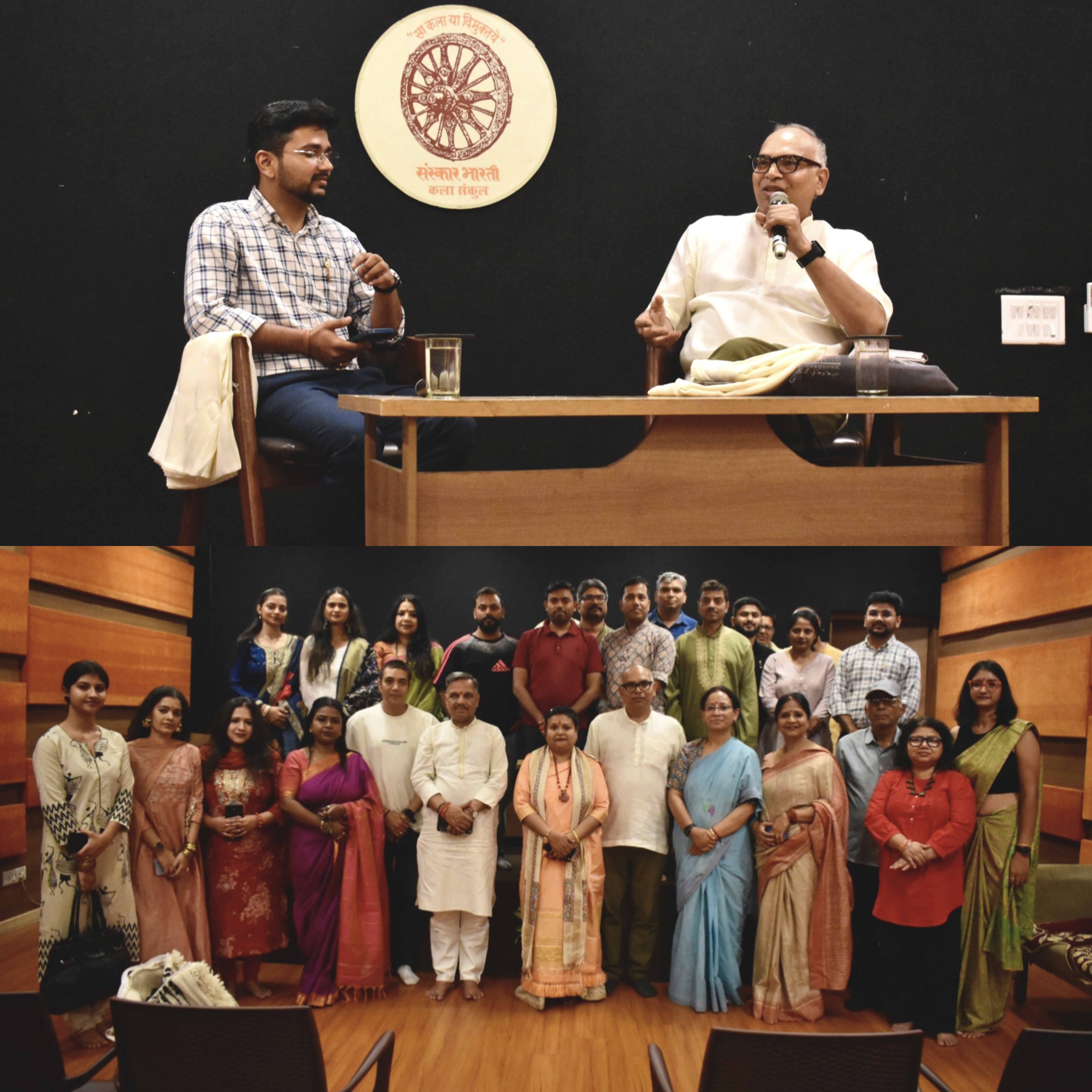
In a dignified, intellectually vibrant, and culturally enriching atmosphere, Sanskar Bharati’s Kala Sankul successfully organized its prestigious monthly seminar at Kala Sankul, 33 Deen Dayal Upadhyay Marg, New Delhi.
Kala Sankul’s monthly seminar series is dedicated to creating a meaningful cultural platform where artists, scholars, writers, and intellectuals come together to discuss contemporary challenges related to Indian art, literature, theatre, and heritage. Through these regular seminars, Kala Sankul aims to strengthen cultural consciousness, inspire creative dialogue, and preserve India’s timeless civilizational values for future generations.
This month’s compelling theme, “Challenges in Preserving Indian Cultural Values in Dramatic Writing,” inspired deep reflection and scholarly discussion among distinguished participants.
A Traditional and Auspicious Beginning
The seminar commenced with the traditional ceremonial lamp lighting, symbolizing knowledge, wisdom, and the continuity of India’s cultural legacy. The inaugural ceremony was graced by senior theatre personality Mr. Suman Kumar, Sanskar Bharati’s Central Office Secretary Mr. Ashok Tiwari, National School of Drama Repertory Chief Mr. Rajesh Singh, and renowned Kathak exponent Pratibha Ji. Their presence added immense grace and significance to the occasion.
Powerful Reflections on Indian Theatre and Cultural Preservation
As the chief guest and keynote speaker, Mr. Suman Kumar delivered a deeply insightful address, emphasizing that Indian theatre is not merely an artistic medium but an inseparable part of the nation’s cultural heritage. He observed that in an era shaped by globalization and rapid modernization, preserving the essence of Indian cultural identity in dramatic writing has become increasingly challenging.
He strongly asserted that playwrights and theatre practitioners bear a moral and creative responsibility to protect and promote Indian values through their literary and theatrical works. Drawing inspiration from folk traditions, indigenous narratives, and Indian philosophical thought, he noted, can make dramatic writing more authentic, impactful, and culturally rooted.
His central message resonated strongly:
Creative expression must serve as a powerful vehicle for preserving India’s cultural soul.
A Shared Intellectual Vision
The seminar witnessed unanimous agreement among scholars, artists, and cultural thinkers that the new generation of playwrights must remain deeply connected to their cultural roots in order to create meaningful, relevant, and enduring theatrical literature.
Expertly Conducted and Thoughtfully Moderated
The event was skillfully conducted by the accomplished compere Bharti Dang Ji, whose eloquence added vibrancy to the proceedings. The discussions were effectively moderated by analyst, social thinker, and young litterateur Mr. Varun Soni, who provided intellectual depth and direction to the dialogue. The formal vote of thanks was gracefully presented by dancer Shruti Sinha.
Distinguished Presence from the Cultural Fraternity
The occasion was further elevated by the presence of numerous eminent personalities from the fields of art, literature, and theatre, including Odissi dancer Dr. Chandana Roul, sitar maestro Mr. Umashankar Ji, senior journalist Anita Chaudhary, Mrs. Renu Khantwal, theatre artist Bhupesh Joshi, Mr. Divakar Dubey, Mr. Praveen, and several other respected dignitaries.
Behind the Success
The successful execution of this intellectually significant seminar was made possible through the dedicated contributions of Garima Rani, Sneha Mukherjee, Ritambhara, Sakshi Singh, Priyanka Poudel, Deepika Thakur, and Swati Sharma, whose efforts were widely appreciated.
A Continuing Commitment to Cultural Awakening
In conclusion, participants strongly emphasized the importance of organizing such seminars regularly, recognizing them as essential forums for promoting artistic awareness, preserving cultural values, and nurturing India’s rich intellectual and creative traditions.
Kala Sankul continues to emerge as a vital force in shaping cultural discourse and reinforcing the foundations of Indian artistic heritage.
I’ve restructured it into a more creative, polished web-page style with highlighted key statements, bold emphasis, and a professional narrative flow suitable for digital publication.
The event commenced with the traditional ceremonial lamp lighting, graced by chief guest and senior theatre personality Mr. Suman Kumar, Sanskar Bharati’s Central Office Secretary Mr. Ashok Tiwari, National School of Drama Repertory Chief Mr. Rajesh Singh, and renowned Kathak exponent Pratibha Ji. This auspicious beginning set the tone for an engaging and meaningful discourse.
In his keynote address, chief guest Mr. Suman Kumar emphasized that Indian theatre’s rich legacy forms an inseparable part of the nation’s cultural heritage. He observed that in an era increasingly influenced by globalization and modernity, preserving the essence of Indianness in dramatic literature has become a profound challenge. Nevertheless, he stressed that playwrights and theatre practitioners carry a moral responsibility to safeguard and promote Indian cultural values through their creative expressions.
He further highlighted that drawing inspiration from folk traditions, indigenous narratives, and Indian philosophical thought can significantly enrich dramatic writing, making it more vibrant, authentic, and impactful. Other speakers and participants echoed similar sentiments, agreeing that emerging playwrights must remain rooted in their cultural foundations to create meaningful and powerful theatrical works.
The seminar was skillfully anchored by noted compere Bharti Dang Ji, while analyst, social thinker, and young litterateur Mr. Varun Soni effectively moderated the discussions, ensuring a dynamic and insightful exchange of ideas. The formal vote of thanks was delivered by dancer Shruti Sinha.
The occasion witnessed the esteemed presence of several prominent personalities from the fields of art, literature, and theatre, including Odissi dancer Dr. Chandana Roul, sitar maestro Mr. Umashankar Ji, senior journalist Anita Chaudhary, Mrs. Renu Khantwal, theatre artist Bhupesh Joshi, Mr. Divakar Dubey, Mr. Praveen, and many other distinguished guests.
The successful execution of the seminar was greatly supported by the dedicated efforts of Garima Rani, Sneha Mukherjee, Ritambhara, Sakshi Singh, Priyanka Poudel, Deepika Thakur, and Swati Sharma, whose contributions were widely appreciated.
Concluding the event, participants collectively emphasized the importance of organizing such seminars regularly, noting that these intellectual and cultural exchanges provide renewed direction, inspiration, and momentum toward preserving and promoting India’s artistic and cultural consciousness.
“Astitva” – A Powerful Theatrical Reflection on Struggle, Identity, and Survival
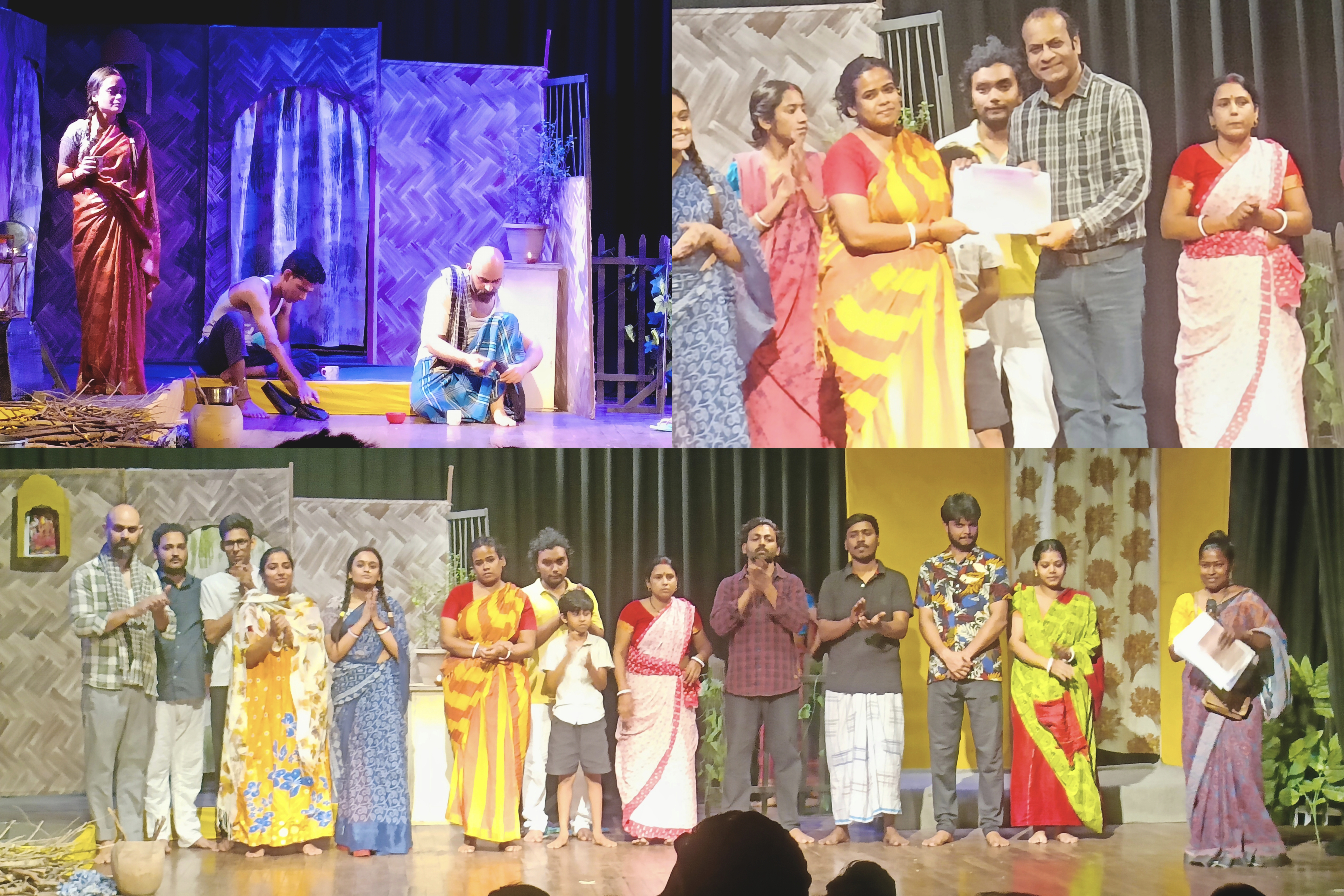
On 16th April, at Muktadhara Auditorium, Gole Market, New Delhi, Drishyam Trust presented the poignant play “Astitva”, written and directed by Sampa Mandal. The production emerged as a deeply moving theatrical experience that explored the emotional and socio-economic struggles within a fragmented family structure.
Set against the backdrop of a Bengali household, Astitva unfolds the story of a family that, despite having several members, lacks a stable male figure to shoulder responsibility. At the center of this narrative is Shabbo, a resilient woman who becomes the sole pillar of the household. Through her journey, the play examines themes of sacrifice, gender roles, emotional neglect, and survival under pressure. Her children—Nirmala, Parvati, and Abhijeet—represent different shades of vulnerability and conflict, while the absence and indifference of the male members intensify the crisis within the family.
As the narrative progresses, Shabbo is seen working in others’ homes to sustain her family, often borrowing money and enduring humiliation. The play skillfully portrays how even in such dire circumstances, familial bonds weaken instead of strengthening. The climax is both tragic and thought-provoking, culminating in Shabbo’s ultimate act of despair, leaving the audience shaken yet introspective about societal apathy and the cost of silent endurance.
The performances were sincere and emotionally grounded. Shikha Arya, as Maa (Shabbo), delivered a compelling portrayal filled with depth and restraint. Harsh Sharma (Subhash), Mani Thareja (Nirmala), Astha Sharma (Parvati), and Gagan Chaudhary (Abhijeet) contributed effectively to the layered family dynamics. Sachin Kumar (Mama) added nuance to the unfolding tension. The ensemble of neighbors—Koyena Mondal, Kiran Sharma, Megha, Prashant Kumar, Muhammad Siraj, Laxmi Khang, and Shamshad Ali—brought a sense of realism and community presence to the stage. The child actor Daksh Sharma stood out with a natural and unaffected performance.
Behind the scenes, the technical team played a crucial role in enhancing the narrative impact. Aditya Mukul (props) ensured authenticity in the visual detailing, while Arun Mishra’s costume design reflected the socio-economic background of the characters effectively. The set designed by Sudeep Biswas remained minimal yet functional, allowing the performances to take center stage. The music, curated by Sampa Mandal, subtly heightened the emotional undertones without overpowering the scenes. Video support by Saif Ali Khan and poster design by Gagan Chaudhary complemented the production aesthetically. Shikha Arya, as Assistant Director, provided strong support in maintaining the coherence and rhythm of the performance.
At the conclusion of the play, the evening was further marked by a gesture of appreciation, as the artists were felicitated with certificates by senior theatre practitioners Shyam Kumar and Dr. Satya Prakash, acknowledging their dedication and contribution to the theatrical arts.
What makes Astitva stand out is its unflinching honesty. It does not rely on dramatic exaggeration but instead presents a stark, realistic portrayal of life’s hardships. The play raises important questions about familial responsibility, societal indifference, and the emotional toll of unacknowledged labor—especially that of women.
In conclusion, “Astitva” is not just a play but an experience that lingers. It compels the audience to reflect on the meaning of existence, dignity, and human connection. Drishyam Trust’s presentation, under the thoughtful direction of Sampa Mandal, succeeds in delivering a performance that is both artistically rich and socially relevant.
“Gutur-Gu! Gutur-Gu!” — A Playful Symphony of Laughter, Music and Meaning
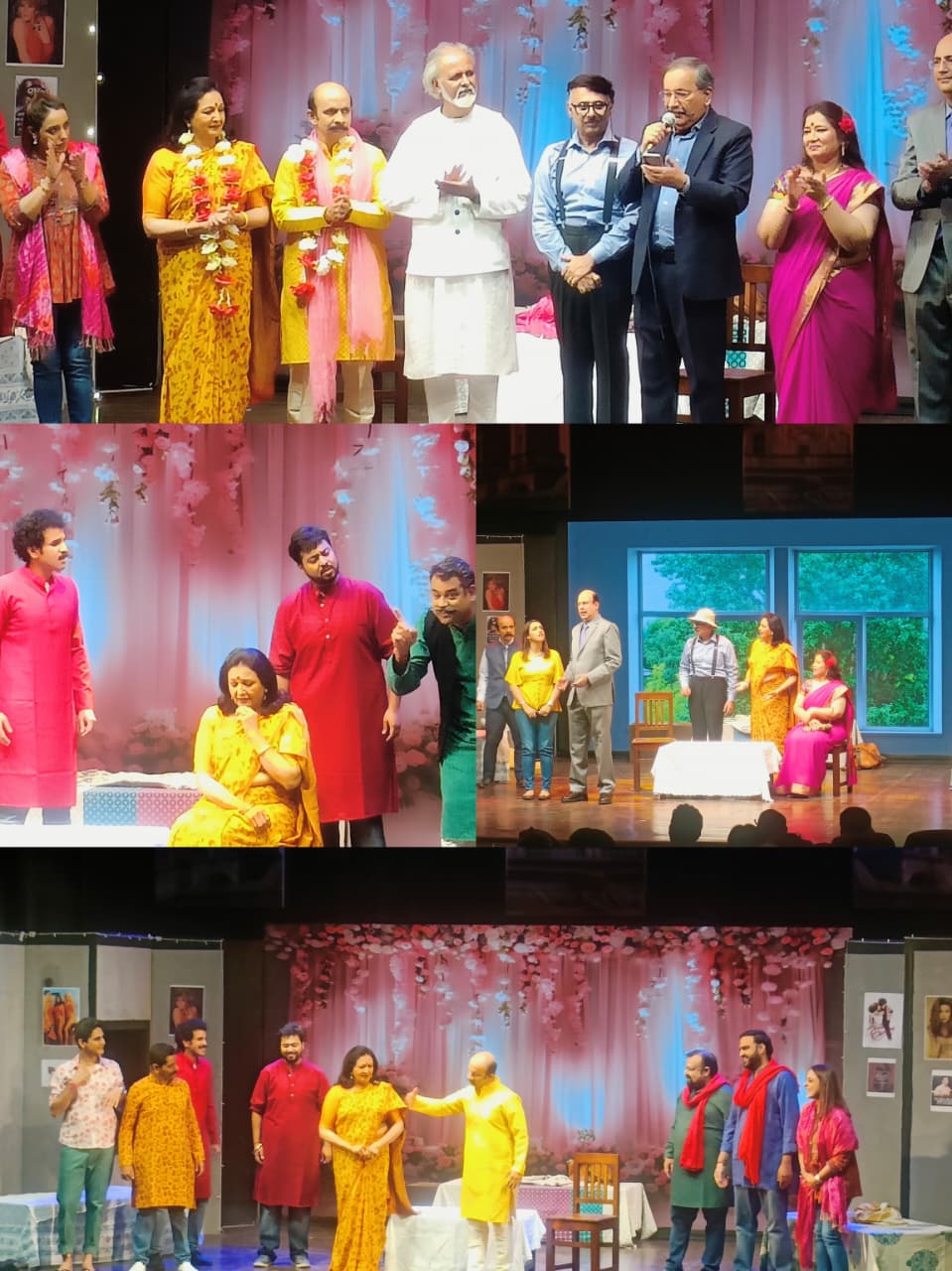
In a theatrical landscape where comedy often skims the surface, “Gutur-Gu! Gutur-Gu!” stands out as a refreshing blend of humour layered with emotional depth. This vibrant production, presented by Modern School Old Students’ Association as its landmark 60th show, was staged at Shri Ram Centre, New Delhi from April 2 to 4, 2026. What unfolded on stage was not just a comedy of situations, but a carefully crafted experience that kept the audience laughing, reflecting, and thoroughly engaged.
Presented under the direction and design of J. P. Singh, this production—originally based on Prof. Toradmal’s Marathi work—emerges as a lively Hindustani farcical comedy, with strong creative support from co-director Aditi Sharad. A seasoned theatre practitioner with nearly four decades of experience, Singh brings to the stage a keen understanding of rhythm, timing, and emotional layering. His direction ensures that the narrative flows effortlessly—never overstaying its welcome, never losing its energy. There is a sense of control and confidence in the staging that allows both humour and emotion to breathe naturally.
The play opens on a strikingly memorable note. Pradeep Kukreja’s poetic introduction is a delightful prelude that immediately wins over the audience. With a lyrical cadence and a sharp comic edge, his performance evokes laughter and applause in equal measure. It is not merely an introduction—it is an invitation into the world of the play, setting the tone with finesse and flair.
Set against the familiar yet ever-engaging backdrop of a university hostel, the narrative celebrates the carefree spirit of youth with infectious enthusiasm. The characters move through a world of friendships, harmless mischief, budding romances, and playful banter. These moments are crafted with such ease and relatability that the audience finds itself smiling in recognition. There is an unmistakable warmth in these scenes—an echo of shared memories and youthful abandon.
Yet, what elevates “Gutur-Gu! Gutur-Gu!” beyond a light-hearted comedy is its emotional undercurrent. Running parallel to the youthful vibrancy is the quieter, more introspective world of senior teachers. Their loneliness, their subtle anxieties about ageing, and their attempts—sometimes humorous, sometimes poignant—to reconnect with a fading sense of youth are portrayed with sensitivity and nuance. This juxtaposition creates a compelling duality: laughter on the surface, introspection beneath.
The ensemble cast delivers a consistently engaging performance, bringing authenticity and charm to every scene. The on-stage chemistry between Rashmi Vaidialingam, Sanjiv Saluja, and Attin Rastogi was exceptional, with their impeccable comic timing adding great charm to the performance. Sanjeev Saluja and Roopak Kathpalia contribute effectively with their nuanced performances, while Attin Rastogi adds a distinct presence on stage.
Among the younger ensemble, Sivain Vaidialingam, Sachin Wahi, and Sahil Arora infuse the play with energy and spontaneity. Their natural comic timing and effortless interactions make the lighter moments truly enjoyable. Vaidehi Sharma brings grace and balance to the narrative, while Rajkamal Sharma, Roopak Kathpalia, Kshitz Sanghi, Aakash Narula, Aarti Arora Khanna, Mohit Agrawal, Bhanu Sethi, Nandini Sharma, Pawan Kumar, Reet Bhatia and Ridhi Dish ensure that the ensemble remains cohesive and lively throughout.
One of the most delightful aspects of the production is its clever use of popular film tunes woven seamlessly into the narrative. These musical interludes act as emotional cues as well as comic enhancers—heightening the impact of scenes without ever feeling forced. At times nostalgic, at times playful, they keep the audience connected and add a rhythmic charm to the storytelling.
The technical aspects of the play—its stage design and lighting—are marked by a refreshing simplicity. Choreography by Bharti Dang. Rather than overwhelming the narrative, they complement it, allowing the performances and the writing to take centre stage. The pacing of the play is particularly commendable; it moves with a steady rhythm that keeps the audience invested from beginning to end.
What ultimately makes “Gutur-Gu! Gutur-Gu!” memorable is its ability to strike a delicate balance. It entertains without being frivolous, and it reflects without becoming heavy-handed. It reminds us that behind every burst of laughter, there often lies an unspoken truth—and it is in acknowledging both that theatre finds its true power.
In the end, this is not just a play you watch—it is an experience you carry with you. Light-hearted yet meaningful, humorous yet humane, “Gutur-Gu! Gutur-Gu!” leaves you smiling… and thinking, long after the curtain falls.
“Kala Sankul” in New Delhi Highlights the Role of Art in Society and Nation Building
Organized by Sanskar Bharati on 29 March 2026 in New Delhi, “Kala Sankul” featured a meaningful seminar alongside a vibrant cultural program, emerging as an excellent confluence of art and thought. The central theme of the discussion—“Indian Art Discourse and the Role of Artists in Nation Building”—sparked a deep and thought-provoking dialogue, highlighting the relevance of artistic expression in shaping society.
The evening began on a traditional note with the ceremonial lighting of the lamp by Chief Guest Mr. Ashish Kumar Anshu (Writer & Director), along with Digvijay Ji, senior theatre practitioner Shyam Kumar, and Mrityunjay Ji, setting a tone of dignity and cultural reverence. The moment was further marked by a warm gesture of respect, as Abhijeet Gokhale, All India Organization Secretary of Sanskar Bharati, felicitated the chief guest with an angavastram, symbolizing India’s rich heritage of honoring artistic excellence.
As the performances commenced, the stage transformed into a canvas of artistic brilliance. Renowned Kathak artist Ms. Sneha Sharma captivated the audience with a mesmerizing performance, where her command over expression (bhava), rhythm (laya), and intricate footwork (taal) reflected the timeless elegance of Indian classical dance. Each movement carried grace and precision, leaving the audience spellbound.
The energy of the evening took a vibrant turn with the Sambalpuri folk dance presentation by Kala Kalp Cultural Institute, which brought alive the spirit of folk traditions. The performance by Sudharani Geru, Supriya Pradhan, Dishita, Subhashree Sahoo, Deepshika, and Ipshita Behura was marked by remarkable synchronization, enthusiasm, and expressive storytelling. Their collective rhythm and colorful presentation beautifully reflected the simplicity and vitality of rural cultural life.
Adding intellectual depth to the evening, Chief Guest Mr. Ashish Kumar Anshu shared his thoughts on “Indian Art Discourse and the Role of Artists in Nation Building.” He emphasized that art is not merely a form of expression but a powerful medium of social transformation, urging artists to remain socially conscious and sensitive. His address was both thought-provoking and inspiring, leaving a lasting impact on the audience.
The flow of the program was seamlessly maintained by Kuldeep, whose engaging and effortless anchoring ensured a lively and cohesive experience throughout the event. The evening concluded on a serene and spiritual note with a Shanti Mantra presentation by Brijesh, filling the atmosphere with a sense of calm and introspection.
The success of the event was the result of the collective dedication and collaboration of numerous artists and contributors. Notable among them were Shyam Kumar, Raj Upadhyay, Vishwadeep, Jitendra Kumar, Shraboni Saha, Sneha Mukherjee, Garima Rani, Ritambara, Brijesh Vishwakarma, Vijender, and Harshit Goyal, whose unwavering support and commitment made the program both memorable and impactful.
In essence, “Kala Sankul” was more than just a cultural event; it emerged as a dynamic platform where art, thought, and society converged in meaningful dialogue, inspiring the audience with renewed energy and a deeper appreciation for the arts.
“Nadi Pyasi Thi”: A Hauntingly Beautiful Exploration of Human Emotions and Relationships
New Delhi | March 26–27, 2026 — The stage came alive with intensity and introspection as “Nadi Pyasi Thi, presented by the Disha Group of Visual and Performing Arts, unfolded as a deeply moving, thought-provoking, and emotionally layered theatrical experience. Supported by the Ministry of Culture, Government of India, the production was seamlessly coordinated by Dr. Satya Prakash Verma, directed with finesse by Suraj Kumar, and guided by Sampa Mandal, whose artistic vision resonated throughout the performance.
The play was staged on March 26 at Mitra Rangmanch Auditorium, Madhu Vihar, followed by an equally compelling presentation on March 27 at Padma Shri Daya Prakash Sinha Theatre Studio and Art Gallery, Bhajanpura, where it left audiences visibly moved and contemplative.
Rooted in the ideas of eminent writer Dharamvir Bharati, the play delves into the intricate psychological layers of orthodoxy, insecurity, and possessiveness that often shape human relationships. The central metaphor of the “river” is profoundly evocative—flowing endlessly on the surface, yet internally parched, symbolizing the unfulfilled desires and emotional void that linger within the human soul.
The narrative is driven by five key characters—Rajesh, Shankar, Sheila, Padma, and Krishna—portrayed with remarkable depth and authenticity by a talented ensemble cast. Suraj Kumar (Shankar), Gagan Chaudhary (Rajesh), Aditya Srivastava (Krishna), Megha (Padma), Disha Negi (Sheila), and Pushkar Sagar (Shankar/Doctor’s Assistant) delivered power-packed performances, marked by natural dialogue delivery and compelling on-stage chemistry, which brought the story vividly to life.
Behind the scenes, the technical team added significant value to the production’s emotional impact. Payal Dhirashri’s music beautifully underscored the narrative’s emotional depth, while Naresh Singh and Neera Singh’s lighting design enhanced the psychological nuances of each scene. Costume designers Nitish Jha and Anjana Tiwari ensured visual authenticity, and Sandhya Verma’s makeup lent a lifelike presence to every character.
Director Suraj Kumar deserves special mention for his restrained yet powerful storytelling approach. By steering clear of unnecessary theatrics and focusing on the core emotional essence, he ensured that the narrative remained intimate, immersive, and impactful. The fluid scene transitions, controlled pacing, and rhythmic dialogue delivery kept the audience engaged till the very end.
In essence, “Nadi Pyasi Thi” is more than just a play—it is a poignant mirror to the human condition, reflecting the complexities of the mind, the fragility of relationships, and the silent struggles within. With its compelling narrative, nuanced performances, and thoughtful direction, the production stands out as a memorable and soul-stirring theatrical experience.