The Exodus Needs a Companion / Gouri Nilakantan

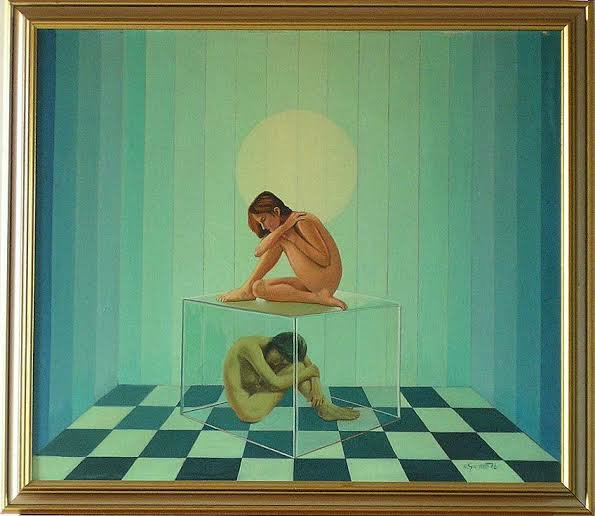
A home is without any doubt a safe space, an extant that has the infinite capacities to being ourselves; where our clothes need not be washed or ironed and made to be presentable all the time; our unkempt unshaven looks draws no contempt from the gazing mirrors; cutlery can be limited to eating straight out of the pizza box  with greasy tissues thrown carelessly all over the floor; and leisure is our pass time and idyllic conversations the only competing games. The debate arises then, if  we choose to keep this space out of bounds for others, however familial or close.  It is the truth that only when we get this free entitlement to closing these doors of our room, shutting  out those as being totally  non transgerressable, barring these latitudes out of anyone’s reach, do we get a veracious sense of belonging.  The arguments arise loud and the cacophony grows louder  only when we keep these augmented heavens exclusive  for our winged flights, leaving others alone and far behind in what they see as their black earth.

Adoring such realities, one, is discerned to be “ unconventional” or can I say “ odd” to the normal public eye.  However, if we all sieve through the thoughts running in our minds, we  come to this realization, that all of us wish for an exclusive home, that only belongs to us and only to us.  This hearth does not see the privilege only of the “single status” fancy holding few, but to all, men, women or children.  All, I see as wanting to  create an expanse of an unparalleled area that echoes our only headrooms.  We  then come to conclude that we are faithfully heard.  Our tete-a tete might be  limited to the capacity of recording random intramural thoughts, however, inner, however wordless, or however out of tune for others,  it forever plays as a  beautiful melody for our ears.

We, unfortunately, are created as social byproducts and often have to assume suggestive capacity giving roles, inundated with responsibility and risk.  The risk that we can carve out then, for our own employment seems much easier and much more responsible. If created exclusively  for us,  they are results of accurate victories as  being free of failure in the eyes of others. As the endeavours seeked  are for our own purview; and we are un-mockingly forgiving towards ourselves, we sense a literal liberty.  Thus  being unrestrained from scorn, and disdain, we seek everlasting joy in solitude, and  despite being born into a home,  I see the human mind seeking and wandering eternally in the search of this unerring habitat. If our birth homes can define and allow such unconfined liberties, uncontested un-contemptuous ways,  will only then, this never ending sojourns of seeking of ours to belong, cease and stop to identify the true borders of a hinterland.  Let’s become companions to the exodus of the few and return thus to our realistic homes.


The Prosaic Names the Profound

The real hero is always a hero by mistake; he dreams of being an honest coward like everybody else. Umberto Eco

 While we envision ourselves as heroes, we wish not to be called cowards.  We are living constantly in fantasies where we can rescue our own fears, our steps on our trepidations to us are totally daring.  While we wish, therefore, to be proudly displayed as shiny, victorious, golden, medals, however, they are nothing but self-created fallacies.  Are we really glories of validations or are we just self “constructed monomyths”?  We are only “heroes by mistake”.  While we have carefully constructed these high titled “notions” of being brave hearted warriors, these, unfortunately, are lying on the grounds of fiction; many times, they are only much “larger visions” of our invented individualistic personas. 

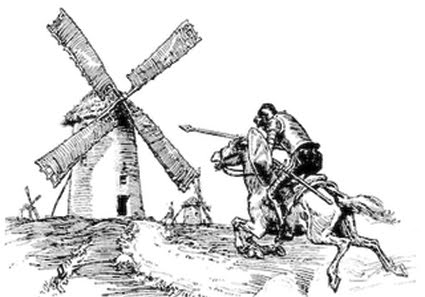
I do not wish here to destroy the embarking of the soul, in the tireless pursuit of life, or undermine human effort, but by creating ourselves as champions we are only becoming Don Quixote, wishing to somehow windmill away the troubled clouds soaring above us.  It sounds cynically true, but many times, we run behind the falsities of the moments but save our energy in doing mundane tasks and giving validity to the common.  I see the monotony having power, the vitality and momentum, that we fail to recognise, lies many times in the never ending, repetitive tasks of life.  This gives us only the much-needed vivacity to be a champion, a true victorious one.

Vibrancy comes not from creating something new and novel all the time, but in the unchanging ways we have adapted ourselves into.   The ordinary is the one that creates the true promise of the monomyth. We can find that much needed mentor in our everyday practices, who will help us thus discover the elixir of life and make us reach victory.  The observation of these humdrums will deliver the individual from the “cowardice of performing the ordinary” into the awakening of the hero. The paladin should be recognised in repetitive ticking; the recognition of the monomyth accordingly awakens the apostle, because of performing these monotonous instances.  

The honesty in recognising ourselves as cowards, to release the conventional within us to flow freely, creates an instant of true heroism to emerge.  This approach to “the innermost cave” as Christopher Vogler rightly determines, helps us to cross over to the thresholds of the uneventful one to being the victorious one.   While we all seek victory upon our daily returns and celebrate, much like the monomythical heroes that we have heard in the tales of our toothless and wrinkled grandmother; we are, therefore, trained not to give the due respect needed rightfully to the insignificant.  The honour we bestow on sometimes the dry, dull, and commonplace will turn the tables around and noteworthy ones will emerge. So, permit the unvarying and unvaried to herald the significant, entitle the dull to be bright, and… the prosaic will name the profound.                      


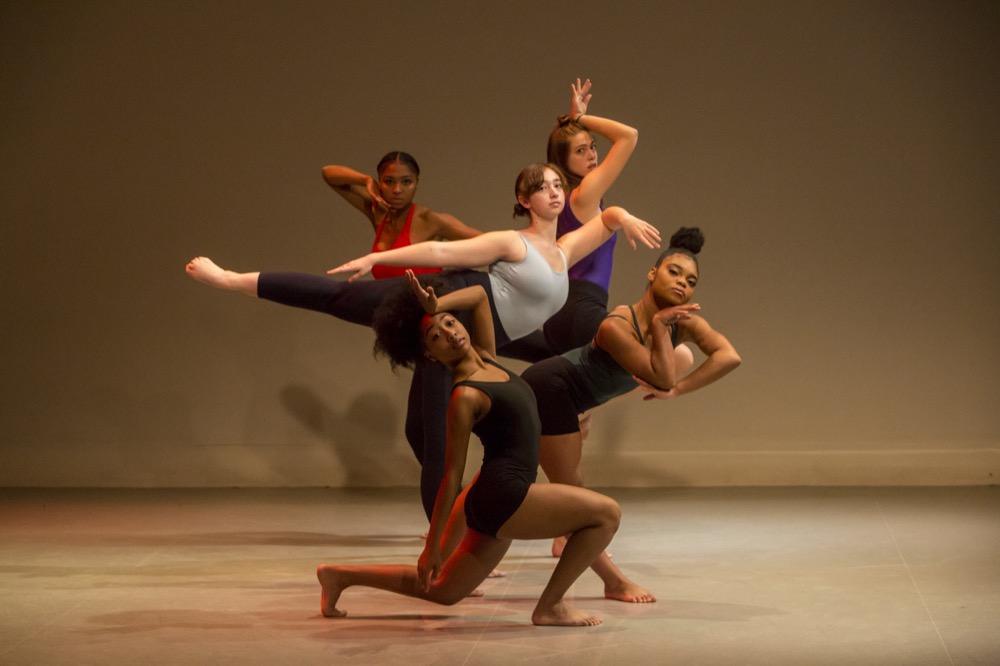
The Dance of the Hyperbole

Students showcase the penultimate piece, “Hyperbole,” in the Washington University Dance Theatre​*​

Living for the last two years masked behind a sanitized cloth; with a social distancing even from our loved ones, yet in the same home; sleeping alone in our rooms with our soft pillows as our only bedside companions; not being able to share our tea with our gossiping greying cacophonous neighbour; or even not being able to lend our inner stories to our restless dreams; we are constantly today, creating an artificial world.  In this excessive superficiality will we forget we are alive? Do we have voices? Do we have real living pain and words that can be penned?  My answer is NO.  We as humans are never created with a loss of memory and total negligence to ourselves.  We are created instead of choosing to forget, choosing to see our lives as three eased dots…

I see these moments of the easing gentle pauses, the “life moments of truth”.  For we as artists, as creators, those little dots are seconds of life, where we can shape and spawn, grow words into lines, lines into paragraphs – of stories, love songs, and poetry of yearnings and being alive in protests. 

These small breaths, to many, are simply just hyperboles of grammar, however, to the artist, these are intensely alive, strong, emphatic forceful portions of feelings, of coming to belong to what he only knows is the only truth…his art form.

Let us not even once, then, discount these as mere undecorated flecks, but as gigantic astronomical atoms, that pinpoint to the immense creativity and churning in the human mind.  If just one of these little mites gets charged, we create a gigantic reaction in our minds.  That chemical reaction is sure to explode, not to destroy but to give birth to a new vision. Despite, us being confined sometimes only to our bed, our Dunlop spring jail does not cause us fatigue or despondency, but becomes a renewed vigour to explore maybe a new set of chord structures; a grand opening line of a play; a brilliant myriad vision of the landscape; or the shy yellow golden sun waiting to be captured in your mobile phone. 

So, the point here is to urge one to carefully mark these seconds of the speckles in your life, and turn it around to something beyond our sight, even more, farfetched than we can imagine.  I see this applying to all, not only to the artsy right-sided brainers but also to the privileged, analytical, left-sided companions.  For we all, need those little moments where we can break into a song, rush and jump to paint, stroking colours green hues or act out each intense dialogue we only wish to hear again and again.  Come let’s join in the dainty dance of the hyperbolic few!     


  1. ​*​
    Photo by Jerry Naunheim Jr./WUSTL


Myth of Social Media / Gouri Nilakantan

The world is nothing but staged, we are living each day rehearsed in our make believe world of happiness and tears and enjoying the facades of living the “real- unreal”. I see this anomaly of the world depicted every minute in the social construct of a demonic, hedonistic, ‘practiced everyday journal keeping’ of facebook and twitter.

This self indulging practice that we are consumed with, becomes thus our daily practice show, our daily practice rehearsal, and our daily practice “for viewership and arduous, colossal, consumerism”.

We are therefore living in our own moments of suspended disbelief, where we see ourselves as the ‘heroes of change’, ranging writing words of protests; enjoying the moments of glory in well taken pictures of the rising sun; or the intense moments of rising passion through well documented pictures of the white marbled Taj in pale white moonlight.

Yet, despite all these “high moments”, why do we feel alone?Why do we cry ourselves to sleep? Why do we constantly check the messages of that unknown stranger on facebook through the night? My answer might seem simplistic, the answer is nothing but the “untruth of reality”.

When we realize that we are creating our own make believe script, that is false, and that strangers on facebook might cease to be the “ideal” guy or girl we so desperately need; our myths are broken. When we see that these myths are broken we are only foolish to create more; we reuse our old photos for more such destroying social interactions.

Let us for one moment only, see this as stages of representations – as we are only actors doing functionary parts of the unwritten and anonymous text of facebook and twitter. We might cease not to laugh along with that ‘unknown stranger’ who we take to bed with us, without the feelings of being in an adulterous relationship, or even without a sense of a single minute of pride of feeling an intimate part of being a part of a stranger’s life. We are not strangers to others but to ourselves.

This terrible system of social media that we have created is only for our own downfall and decay. It’s time now to become real, to remove masks, to meet and greet the living and mourn for the living dead. Let us not get wasted by looking at the keyboard, and creating our downfall and realize the folly before we become strangers to ourselves. One never knows, one day we might not even see our own eyes and not even know for whom we are laughing or for whom we should cry. Let us, my dear friend, ourselves, only cry for ourselves today.


The significance of props on stage

Loosely described as, “objects used by the actor and those that are placed on stage” props are considered important as long as they serve on the stage.  After the show is over very little attention is given over them and they are loosely packed and kept until further usage.  How many of us have wondered about its deeper significance?  Do we even for one look closely at “ the skull held by Hamlet” or the “ crystal glass unicorn held by Laura” in Glass Menagerie?  Even once does the director care to explain to the actor for him/her to closely touch and feel the object as not only a part of the text but also beyond the whole text.  It should provide a moment of heightened emotion not only for the actor themselves but also for the audience.  Every object is to be placed by the set designer and the director with great fortitude and understanding.

The Natyasastra states that Natya was created to meet the demand of a plaything, it’s a “ Krida” (a source of pleasure and diversion to boredoms, wants the miseries of daily existence).   Therefore an art form can induce a temporary state of diversion of one’s immediate sorrow and an escape into a world of pleasure and happiness. Nataka or drama can do this more efficiently than other art form, because unlike other arts, it is both drisya and sravya, it has visual and aural appeal. It can satisfy us by graceful or spetacular senses presented on the stage, can gratify our ear or heart.  This is efficient only through props that makes the experience of the audience go beyond his reality.

Andrew Sofer, in his book, “ The Stage life of Props” says that, “ the object must be seen as having a sign.” The stage props hence has a strong presence, sometimes as strong as the actor themselves.  As Felix Bossonnet sees the props they are much more than the physical presence they hold.  Props have to be read between the complex relationship between the actor the text and the audience.  It provides a complete whole experience of transmission of the audience into the world of the “ play or krida”.  As Sofer sees the distinctions between the props and the characters should become more and more blurred, it should be amalgamated as one whole.  The responsibility of this hence is not just within the text but by the directors as well as the actors.


Schedule: 21st Bharat Rang Mahotsav Feb 2020

If you are at wits end on which play to see, just check out the preview in this E-Mag itself (www.stagebuzz.in), under the Category: Theatre


Stake holders in Artistic Practices: An Economic Model

When we hear the word stake holders, it reminds us of a company, with a marketing head looking into profits for the company.  Do we see a theatre company to be functional as a profit making company, most unfortunately no!  In India, with a strong tradition of socialism and the IPTA and the ideas of being the catalyst for change and activism we often fail to see a theatre company to have an economic model behind it.  With increasing globalisation and now India adapting itself into a more and more global economy, theatre should also not fail to look at the most important aspect of being an economically strong and viable model.  This hence will create more and more stake holders in artistic practices.


In India, the practices are dependent highly on grant giving bodies and neglect to get into even selling tickets for their shows.  The management practices are highly lacking and often times publicity is given the last minute emphasis and impetus.  Often one sees that it is the management students, despite their little formal training students doing a much better job at marketing and public relations.  What we really lack today is an equally  strong focus on theatre management.  Theatre in India should go much beyond waiting for the god in form to a government grant to arrive or to wait for a private benefactor to knock the doorsteps of the company.


The stake holders of a theatre company is thus not the role of only the producer and the director but the entire team.  Unless and until the theatre company does not make profits it will impossible to give any monetary renumeration to the actors.  The actors hence will be forced to look for work beyond theatre and get more and more into films ( if lucky) or be forced to act in sometimes absurd television serials in which they might go largely unnoticed.


We lack a strong focus and determination to get beyond the mechanics of staging a play and not looking at marketing in specific and general terms.  This input will also be able to not keep a record of all the old audiences but also create new ones and go to places that were unexplored before.  Theatre management will also make sure that designing of the publicity, posters, brochures and handouts are created in most effective manner.  One can perhaps see the role of the theatre manager as the most important person as he is the chief operative officer of the theatre company.  His role is that of an COO like any other important company.  Its time now to hence consider this role as a pivotal one and make sure that each theatre company has the focus and determination to start raking profits.  The time is now to act!


Significance of Props- Gouri Nilakantan

Actors Props

Loosely described as, “objects used by the actor and those that are placed on stage” props are considered important as long as they serve on the stage.  After the show is over very little attention is given over them and they are loosely packed and kept until further usage.  How many of us have wondered about its deeper significance?  Do we even for one look closely at “ the skull held by Hamlet” or the “ crystal glass unicorn held by Laura” in Glass Menagerie?  Even once does the director care to explain to the actor for him/her to closely touch and feel the object as not only a part of the text but also beyond the whole text.  It should provide a moment of heightened emotion not only for the actor themselves but also for the audience.  Every object is to be placed by the set designer and the director with great fortitude and understanding.

The Natyasastra states that natya was created to meet the demand of a plaything, it’s a “ Krida” (a source of pleasure and diversion to boredoms, wants the miseries of daily existence).   Therefore an art form can induce a temporary state of diversion of one’s immediate sorrow and an escape into a world of pleasure and happiness. Nataka or drama can do this more efficiently than other art form, because unlike other arts, it is both drisya and sravya, it has visual and aural appeal. It can satisfy us by graceful or spetacular senses presented on the stage, can gratify our ear or heart.  This is efficient only through props that makes the experience of the audience go beyond his reality.

Andrew Sofer, in his book, “ The Stage life of Props” says that, “ the object must be seen as having a sign.” The stage props hence has a strong presence, sometimes as strong as the actor themselves.  As Felix Bossonnet sees the props they are much more than the physical presence they hold.  Props have to be read between the complex relationship between the actor the text and the audience.  It provides a complete whole experience of transmission of the audience into the world of the “ play or krida”.  As Sofer sees the distinctions between the props and the characters should become more and more blurred, it should be amalgamated as one whole.  The responsibility of this hence is not just within the text but by the directors as well as the actors.


Khamohsi

Aksar baat karne ki kosish main Zubaan Khamosh kyu nahi reh jaata

Kyu nahi gum main asoon nikalte nahi

Kya duniya ki aagosh main yese sawaar hui

ki angaar baraste hain asoon nahi

Kya aise haalaat sahi

kya sirf angaare hi ankhon ka ujala bankar rahe

Aur awaaz uski asoon

Ek baar sirf tum meri  nami bhari ankhon ko hi meri pechaan banao aur usi main meri baaton ki nishaani rakhna


To be eternally lived

Her crumpled clothes still lies on her beloved bed

Her uncombed stands of hair lying still

They are not strands of shredded shrouds

But create the wave of tumultuous lived lives

of moments …of minutes…the hands of the clock lying still

To be unwound by her alone to live…to be eternally lived