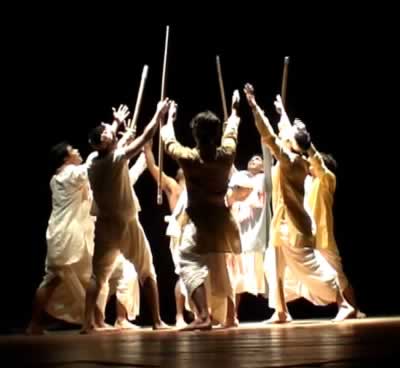
Jamal-E-Begum Akhtar by Vidushi Rita Ganguly

The Play

Jamal-E-Begum Akhtar, a solo performance, is being presented by, Prof. Vidushi Rita Ganguly (Padmashree), the well-known theatre artist and vocalist. The presentation is based on the life and times of her own Guru Mallika-e-Ghazal, Begum Akhtar. The play has evolved over the years as a result of Prof. Ganguly’s long association with Begum Akhtar as her pupil and her extensive research on the professional woman musicians of the country and the music that thrived in the royal courts of yesteryears. The present play is in Hindustani language and is an adaptation of a Bangla play of the same title, which was recently performed in Bangladesh with resounding success.

The play is designed in free story telling format, which necessarily precludes any fixed written text. With her gift as a storyteller, she takes recourse to improvising the text as the play develops. This is perhaps for the first time that an ekal is being staged on the life of a legendary artiste.

Begum-Akhtar

Begum Akhtar (7 October 1914 – 30 October 1974), was a well-known Indian singer of GhazalDadra, and Thumri genres of Hindustani classical music. She received the Sangeet Natak Akademi Award for vocal music, and was awarded Padma Shri and Padma Bhushan (posthumously) by Govt. of India. She was given the title of Mallika-e-Ghazal (Queen of Ghazals).

Begum Akhtar was born in Bada Darwaza, Town Bhadarsa, Bharatkund, Faizabad District, Uttar Pradesh. Her father, Asghar Hussain, a young lawyer who fell in love with her mother Mushtari and made her his second wife, subsequently disowned her and his twin daughters Zohra and Bibbi (Akhtar). Akhtar was barely seven when she was captivated by the music of Chandra Bai, an artist attached to a touring theatre group. At her uncle’s insistence she was sent to train under Ustad Imdad Khan, the great sarangi exponent from Patna, and later under Ata Mohammed Khan of Patiala. Later, she travelled to Calcutta with her mother and learnt music from classical stalwarts like Mohammad Khan, Abdul Waheed Khan of Lahore, and finally she became the disciple of Ustad Jhande Khan.


The Director

Born and brought up in Lucknow, Professor Rita Ganguly was drawn to music since her childhood. The daughter of freedom fighter and founder of the National Herald, the eminent litterateur, Dr K L Ganguly, Rita was encouraged from an early age towards academic advancement as well as artistic excellence.
She regularly performs a two and a half hour solo play on her mentor, Begum Akhtar which has travelled throughout the world at all major theatre festivals. It is also her homage to the gurus of dance, music and theatre who have influenced her own life, and contributed to world culture through their commitment to truth. She pioneered a multimedia production on the 7 stages of Sufism, entitled Ruh-e-ishq, celebrating 50 yrs of India’s independence.
For her outstanding contribution in the field of classical music, she has been the recipient of a slew of awards. These include the Padmashree, the Sangeet Natak Akademi Award for Ghazal Gayakee, the Priyadarshi Award, the Rajiv Gandhi Shiromani award, Critics Circle of India award and most recently, the Lifetime Achievement Award from the Broadcasters Association, Ministry of Information & Broadcasting.

Concept, Research, Design & Script                         Prof Rita Ganguly


Dahananta by Debasis Majumdar

The Play

This is a tale of a lower middle class septuagenarian couple Akinchan and Sabarni- lonely, isolated and deserted. Their elder son Abhirup, a methodical careerist lives in Oklahoma with his family. Their daughter, Ratnasree and son-in-law Romit, who stay in Delhi, can be called selfish, covetous and hypocrites. Their youngest son, Dhritirup, an extremist yields to his political belief of terrorism by sacrificing himself in a police encounter. Grief engulfs the couple. They mourn Dhritirup’s death and keep the sorrow within themselves. Abhirup and Ratnasree avoid their parents and gradually, the couple becomes more alienated and insecure.

Their loneliness and isolation compels them to think, what will happen to either of them if one of them dies?   Who will provide them a shelter or lend a hand of support? Such questions bother them, thereby making their life a burden. Both of them decide to consume sleeping pills. But was that inevitable?  Another fold of this play raises a question on the future of our socio-political scenario. The quasi-fascist politics that prevails under the veil of democracy, the terrorism or the ideology of Rabindranath Tagore to search humanity within one’s self – which one of these ideologies will survive?

The Director & Playwright

Shri Debasis Majumdar was born in Baktiarpur, Bihar in 1950 and grew to adulthood in Kolkata amidst the political turbulence of the early 1970s. Starting as a poet in Bengali, he found his true calling as a dramatist with the production of Dansagar (1975) based on Premchand’s well-known story Kafan. Shri Majumdar formed the theatre group ‘Sudrak’ in 1977 and launched its first production Amitakshar in the same year. The play subsequently won the West Bengal Natya Akademi’s Award (1980) and was translated and performed in several Indian languages. In Hindi, Amitakshar was named as Tamrapatra. Out of some forty plays and numerous critical essays written by him, Samabartan, Ishabasya, Asamapta, Chandalini, Pratinidhi, Swapna Santati, Rangamati and Dahananta are some of his most notable plays. These plays were produced by Sudrak and have been published in various literary periodicals. Shri Majumdar has been the recipient of various awards like the prestigious Sangeet Natak Akademi Award (2005) and State Natya Akademi Award for his plays, AmitaksharSwapna Santati and Rangamati.


The Group

‘Sudrak’ came into existence on 9th October 1977. With its first production, Amitakshar in 1978, Sudrak established itself as one of the leading theatre groups, involved in the Experimental Theatre Movement of Bengal. Besides the appreciation received from the audience, Amitakshar received applause from eminent personalities like Satyajit Ray, Shambhu Mitra, Samaresh Basu, Ganesh Pain etc. The play is considered as one of the best ten original plays ever written in Bengal and has been translated into seven national languages.

Some of the remarkable plays by Sudrak are Amitakshar, Ishabasya, Chandalini (Based on Rabindranath Tagore’s Chandalika), Rangamati, Pakhiwala, Sahajsajan, Dahananta andParyabarto.

Apart from theatre,  Sudrak publishes ‘Natya Patra : Sudrak’  each year. The group also publishes books based on theatre like Tripti Mitra. Since, 2008 Sudrak conducts National Theatre Festival, called ‘Sudrak Utsav’ at the Academy of Fine Arts, Kolkata. Besides the theatre festival, the group also organizes exhibitions on painting and sculpture.

Playwright & Director  Debasis Majumdar


Joymoti by Anup Hazarika

The Play

The play Joymoti, is about an iron lady of 17th century Assam history, who with her fortitude and self sacrifice  entirely changed the course of destiny of the ‘Ahom Empire’ when the atrocious ruling of a certain class of the Ahom royal family were about to lead the entire Ahom kingdom to its doom. The play not only gives information about Joymati’s life but also focuses on her inner thoughts and mental power.

Director’s Note

“What Joymati might have thought during her days of sufferings?”—were the key questions haunting us before preparing the play. We were searching for the answer in the available references in the Assam history and other forms of literature. Our discussions with various persons who spent much of their time in the scholarly study of Assam history and particularly on the Ahoms were other resources and inspirations in writing and shaping up the play. But still our search is on; hope someday we will get the answer.

Playwright & Director

Anup Hazarika, the playwright & director of the play Joymoti, graduated from National School of Drama in 1990. He specialized in acting. So far he has directed 32 stage plays for both amateur and mobile theatre of Assam. He established his group Baa (The Creative Breeze) in 1995. As an actor he acted in 72 stage plays, 21 feature films, more than fifty television serials, tele-films and a number of radio plays. Apart from that he enjoys translating plays & dramatizing plays from different stories & novels. He has already translated Mohan Rakesh’s Ashadh Ka Ek Din into Assamese and staged the play under his direction in 1993. In the year 2008 he was awarded the best light designer’s award by The Mahindra Excellence in Theatre Awards (Meta) & in 2007 he was awarded the best supporting actor’s award by the Govt. of Assam for his performance in Assamese cinema. Presently he is working at Regional government Film & Television Institute, Kahilipara, Guwahati as a lecturer of Acting

The Group

 BA (A Cultural Organization), of Guwahati, Assam was established in the year 1995, by a group of active theatre workers. So far the group has staged several plays including Arun Sarma’s Agnigarh, Mahendra Borthakur’s Sinsa Paneer Mass, Jimoni Choudhury & Pakija Begum’s Menaka and Habib Tanvir’s Charandas Chor. Apart from producing stage plays the group has organized production oriented intensive theatre workshops and children theatre workshops in collaboration with National School of Drama and Sangeet Natak Akademi in Guwahati.


Gambhira-Gambhira by Parimal Tribedi

The Play

The play tells the story of Bhubhan, a Gambhira artist. Bhubhan believes that without truth, Gambhira is not possible. What we see today, Bhuvan says, is not the original Gambhira. It’s only a mike, a mike to announce various projects like sanitation, literacy, health etc. It has lost its voice. The vandana that they once sang to please lord Shiva is now sung to please the political leaders. The voice which once spoke against the social follies and foibles, now advertises different projects.

 Director’s Note

I was born and brought up in a village. In those days there was no television. Radio was the possession of only rich people. So we found our sources of entertainment only in Jatra, Alkap, Manosa Gan, Kirtan, Gambhira and other forms of folk theatre. Among these ‘Gambhira’ was the most powerful medium to depict the follies of the society of the time. It spoke the truth. It spoke for the common people. But now, days have changed. Entertainment has several fountainheads and in the crowd of media and hordes of TV channels the true ‘Gambhira’ is lost. I miss it. I miss its real flavor, its power to speak the truth.

As ‘Gambhira’ has its own distinct identity and it bears the folk identity of Malda district, it was difficult to give it a dramatic shape. I have gone through a lot of experiments and studies. Its language, tone, song, dance, body movement, costume, and theme – every part of it needed an in-depth attention. It was not an easy task to string all the parts into a single thread. We have to arrange workshops, seminar and several sessions of talks with the Gambhira artists to bring clarity on each part of Gambhira. The play took about eight months to get prepared. In these eight months we tasted the real flavor of Gambhira and earned a great experience.

 The Director & Playwright

Director, actor, playwright and founder of ‘Malda Malancha’, Parimal Tribedi is a well-known theatre personality in Bengali Theatre and is a Member of Paschimbanga Natya Akademy. For the last twenty one years he has been leading his present group ‘Malda Malancha’ in the mofussil district, Malda. In these years he has directed nearly fifty plays. He has written 15 plays which has been staged and highly acclaimed.

Some of the noted plays written by Parimal Tribedi are Gambhira GambhiraRanir Ghater BrittantoBhalo ManushRatanUdas PujaAsamayer Bhabna, Lotun Jevan, Swasti and Lajja. He has directed almost all these with his group.

 The Group

A group of young but competent theatre workers led by Sri Parimal Tribedi formed ‘Malda Malancha’ in 1993 to devote itself to the task of promoting the glorious tradition of experimental theatre movement. “Malancha” ventured to produce some significant modern plays, both original as well as in translations. “Malda Malancha” also organises theatre festivals every year and conducts seminars and theatre workshops.


Darshak by Priyamvad

The Play

Once again they entered into the shiny yet dark…real yet dreamy…cave of love which was built with memories, sorrows and pain. When life has to pay heavily in return to the desires to live, they were in their own magical world. Her body was breathing the coldness and he thought that she is surrendering. She was there…right there… and her soul could see clearly through her body that only the body was needed by him. He always said that the soul doesn’t participate and starts to play an audience when there is this fear or doubt, only bodies are the active participants…. And that night soul did the same while the bodies reacted to the desires.

Time passed by and again they met. Her body looked sad and ugly. Still they were ready to enter the cave of love….. Again…. And so they entered. He was wearing his clothes…. Soul was an audience again…. When suddenly she uttered ….

Director’s Note

Hum jaadu ke andar the….usi tarah jaise prem aur swapn ya dukh ke andar hote hain…”

These were the lines which inspired me to work on the story and to adapt it as a play. The so called love between a man and a woman is the very manifestation of convenient desires. The entire life keeps revolving around the search for eternal love and satisfaction, both physical and spiritual, dealing with responsibilities and finally getting nowhere…..and we start living in installments. What’s going to happen when Soul is the audience or when Soul is the active player.

The Director

Sadanand Patil, began exploring the theatre in the year 1987 in Katni, Madhya Pradesh. In the year 1994, he started to work with “Rang-vidushak (Bhopal)” under the direction of the maestro Bansi Kaul and continued till 2001 with the group. In 2001, entered National School Of Drama and graduated in acting and then worked with the NSD Repertory Company for six years where he got the opportunity to explore the art under the legends like Late B.V. Karanth, Late Bhaskar Chandravarkar, Habib Tanvir, Naseeruddin Shah, Anuradha Kapur, Prasanna, Ram Gopal Bajaj, Devendra Raj Ankur, Rob Clare and many other stalwarts.

Having over two thousand performances and more than hundred plays to his credit, presently he works with Kingdom Of Dreams.

The Writer

Priyamvad is best known for his fictions in Hindi. His widely acclaimed novels include,  Ve Wahan Qaid Hain,  Parchhai Naach,  Chhutti ke Din ka Chorus  and  Dharmsthal. His collections of stories like “Khargosh” and  “Aainaghar” attracted the immediate attention of the readers and critics alike for their content and style. He has been the guiding spirit behind the last 19 Kathaakaar Sammelan Sangman. Two films, Anwar and Khargosh, were based on his short stories.

Story – Priyamvad

Direction – Sadanand Patil


Of Mice and Men by

The Play & Director’s Note

Of Mice and Men takes place during America’s Great Depression, which lasted from the stock market crash of October 1929 until 12 years later when World War II began. One result of the depression was  lack of steady jobs, which resulted in an increase in the number of itinerant workers. For the most part, these itinerant workers were men who traveled from town to town seeking short-term employment. The play addresses the real hopes and dreams of working- class America. It raises the lives of the poor and dispossessed to a higher symbolic level. Of Mice and Men tries to explain what it means to be human. It touches on several themes: the nature of dreams, the nature of loneliness, man’s propensity for cruelty, powerlessness and economic injustices, and the uncertainty of the future. Nearly all of the characters admit, at one time or another, of having a profound sense of loneliness and isolation the characters are rendered helpless by their isolation, and yet, even at their weakest, they seek to destroy those who are even weaker than they are. Steinbeck records a profound human truth: oppression does not come only from the hands of the strong or the powerful. The novel suggests that the most visible kind of strength—that used to oppress others—is itself born of weakness.

The farm, of which George and Lennie dream, does not exist in reality but it, is very real in their minds, where they will have self –respect and independence. It becomes a symbol of their relationship and the re-telling of the dream becomes a ritual. In opposition to this symbol is the bunkhouse which represents the cruel world of reality, where we see discrimination, cruelty, insensitivity and suspicion. This production evolved during a workshop with Rang Vinayak Theatre Group. Apart from struggling hard to portray the complex characters the young actors contributed in many other ways. They added certain hand properties, made set props, even brought suitable costumes.


The Director

Hema Singh, a well known actor, a graduate of NSD’s Integrated Course, worked with NSD Repertory Company for 10 years. She has done major roles with eminent national and international directors. She was awarded with NSD’s prestigious ‘Manohar Singh Smriti Award’ for her contribution to theatre in 2008. She has acted in tele-films and serials with directors like Shyam Benegal and M.S.Sathyu. Her portrayal of Imarti Devi in a T.V. serial has fetched her ‘Indian Television Academy Award ‘for Best Actress in a negative role’. She has done innovative work in the field of Parsi theatre and presentation of poetry on stage. She has assisted famous Parsi style actor Late Master Fida Hussain ‘Narsi’ at NSD for 6 years. Apart from 15 productions in Parsi style to her credit, she has directed plays of other genres such as Hot Air, Gadar, Jasma Odhan & Chainpur ki Dastan.

Presently, she is an Associate Professor of Acting at NSD.

The Author

The winner of the 1962 Nobel Prize in Literature, John Steinbeck was an American author of twenty-seven books, including sixteen novels, six non-fiction books, and five collections of short stories. He is widely known for the comic novels Tortilla Flat (1935) and Cannery Row (1945), the multi-generation epic East of Eden (1952), and the novellas Of Mice and Men (1937) and The Red Pony (1937). The Pulitzer Prize-winning The Grapes of Wrath (1939) is considered Steinbeck’s masterpiece. Many of his works are considered classics of Western literature.

The Group

Established in 2007 by Dr. Brijeshwar Singh, ‘Rang Vinayak Rang Mandal’ is a cultural wing of Daya Drishti. In 2010 Rang Vinayak formed its own Theatre Repertory which has now 30 artists. It  has been hosting theatre festivals, showcasing works of eminent  theatre directors . It has also been organizing Children theater workshops, giving them a cultural platform. It’s widely acclaimed productions of different genres are Adarsh Hindu Hotel , Jab Shaher Hamara Sotha Hai, AMidsummer  Night’s Dream, Mattavillas , ReunionSaiyaan Bhaye Kotwal and Chainpur ki Dastan.                                                                           

Design & Direction    Hema Singh 


Akoopar by Shri Dhruv Bhatt

The Play

Akoopar is based upon the first novel in the history of Gujarati literature, which deals with the life of Maldharis and their relationship with lions, nature and the animals of Sasan Gir- the last homage of Asiatic lion. Written by Shri Dhruv Bhatt, this play won two awards this year.

Director’s Note

Akoopar is the only play in Gujarati theatre, based on life of Maldharis. The unnamed narrator, who is a painter, has an assignment to paint the elemental form of Earth, under a grand project. The artist is an outsider who gradually unfolds the inner world of the Gir forest.

To create and understand reality, a team of artists and technicians stayed in Gir forest for ten days, in turns. They met a lot of Maldharis, forest officers, staff, rescue operators and forest guides. To bring authenticity to the play, natural sounds of forest, lions, leopards, other animals and Maldharis were recorded. In addition marasiya (death songs), marriage songs and dohas (couplets) were also recorded.

The costumes were made in Sasan village and jewellery as well as properties for the play, was also purchased from there.

The Director

Creative Director and Managing Trustee of JT Memorial Foundation, Aditi Desai pursued a career in theatre since childhood under the guidance of her father, Shri Jashwant Thaker. She developed herself from an actress to an activist, trainer, director, producer, film maker and script writer. Her key areas of interest are theatre, video film making, development of popular educational material and Gender and theatre training. She has directed 18 plays and made 21 documentaries, docu-drama, video-spots and programmes based on various social and environmental issues. She has also acted in plays directed by Bharat Dave, Naushil Mehta, Raju Barot and many more. Desai has worked extensively in Regional Television, feature films, documentaries and radio in last twenty two years.  She has been the pioneer of street theatre in Gujarat, on issues pertaining to women and has conducted over sixty theatre training workshops in Gujarat and Rajasthan.  Desai has also been a faculty member and course coordinator for theatre in J.G. School of Performing Arts.


The Playwright

Born on 8th May 1947 in Gujarat, Shri Dhruv Bhatt was always interested in writing fictions and plays since childhood. He retired as a Section Manager from an engineering firm. Some of his notable works are Khovayelun Nagar, Agnikanya, Samudrantike, Tattvamasi, Atarapi, Shruvantu, Gaye Tena Git, Karnalok and Lovely Paan House. His work, Samudrantike has been awarded by Gujarati Sahitya Parishad as a rural novel, by Gujarati Sahitya Academy as a travelogue, by Marwadi Sammelan as best literary work and by Goverdhanram Tripathi Award committee as a novel. His works Gaye Tena Git, Akoopar, Karnalok and Tattvamasi have been awarded by Gujarati Sahitya Academy.


The Group

Jashwant Thaker (1915-1991) was the doyen of Gujarati theatre. He initiated the Navi Rangbhoomi Movement in Gujarati and was the founder member of the Gujarat chapter of IPTA aka Lok Natya Sangh. To honor his memory, JT Memorial Foundation was set up in 2005.

The Foundation works towards development communication, with a focus on gender. It believes that communication and training can be used to strengthen oppressed people and catalyse social movements. They create productions to empower children, youth, women and community members. All the plays under this foundation are usually in Gujarati. Some of their plays are Agnikaya, Akoopar, Kasturba, Savitribai Phule,Patra Mitro, Udan Charkaldi, Kaagdo, Prem etc.


Play It, So 17 Dances About Something

The Play

It’s 2044. Janina, Jan and Janka start working on an experimental documentary. In one of the rooms of a well-maintained museum theater, while making use of some former technologies (MacBookPro, overhead projector, etc.), costumes (Milan Fashion Week, 2013) and emotions (early twenty-first century cinema, dance, theater), Janina, Jan and Janka try to play out that SOMETHING that was the THING.

Directors’ Note

In 2012, with a symbolic show Celebration so the end and Once Again, we closed two decades of the existence of Dada Theatre. With the performance , Play it, So 17 Dances About Something,  we’re going to enter a new Dada Epoch, by loosening the shackles binding all artistic creation of such a long-lived form. Please let us not reveal the inspiration and intentions that accompanied us while working on Play it. The inspiration and intentions are, in fact subject to constant evolution until the premiere day. To those impatient, we can offer a short note announcing the show. However, we cannot resist not mentioning that we’re approaching 100th anniversary of the first emanation of Dada (Zürich 1916). Hence, once again we would like to publicly confess our belief that, since that memorable event, everything has only been as it is, and can no longer be any different. Play It, So 17 Dances About Something, is a collective brainchild of three Dada artists: Anna Steller, Katarzyna Chmielewska and Leszek Bzdyl, the co-founders of this one of a kind and legendary Theatre.

The Directors

Leszek Bzdyl – A dancer, actor, choreographer, director as well as founder and artistic director of Dada von Bzdülöw Theatre, he has been involved in a professional stage career since 1987. He graduated from Department of Philosophy and History, University of Wrocław, in 1990 and founded Dada von Bzdülöw Theatre in 1993 with Katarzyna Chmielewska. He has been awarded by the Minister of National Education (1999), the Marshal of the Pomerania Region (2006) and Theatre Pasta International Theatre Awards – India (2007) for his artistic achievements. In 2010, he was conferred with a ‘Meritorious for Polish Culture’ medal, by the Minister of Culture and National Heritage.

 Katarzyna Chmielewska – A dancer, choreographer, director, dance teacher as well as founder & artistic director of Dada von Bzdülöw Theatre, Katarzyna graduated from the State Ballet School in Gdańsk (1984-1993), following which she studied at P.A.R.T.S in Brussels (1996-1997). She has been involved with numerous Polish cultural institutions e.g.: the Ballet Group of the Baltic State Opera House, Gdańsk (1993-1994), Gdańsk Dance Theatre (1994-1995), City Theatre, Gdynia (1997-2000), Klub Żak, Gdańsk (2000-2008) and Wybrzeże Theatre, Gdańsk (2008-present). She has been awarded by the Mayor of Gdańsk and the Marshal of the Pomerania Region for outstanding and lifetime artistic achievement.

Anna Steller – A dancer, performer and choreographer, Anna has been an actress and dancer in Dada von Bzdűlőw Theatre, since 2003. Since 2004, she has been performing with ‘Read My LipsTheatre’. In 2005, she co-established ‘Good Girl Killer’ collective. She is a proud recipient of the Dance Web Scholarship for the 2003 Impulstanz dance workshops and festival in Vienna. In 2012, Steller was awarded by the Marshal of the Pomerania Region for her outstanding achievement in the field of dance and theatre.

The Group

Dada von Bzdülöw Theatre is an independent group of professional dancers and actors staging performances, in cooperation with home and foreign cultural institutions, such as: Teatr Wybrzeże, Gdańsk,  Klub Żak, Gdańsk,  Dance Advance, Philadelphia, USA, Les Hivernales, Avignon, France, Old Brewery,/Poznań and Teatr Nowy, Łódź; Nuova Foundation, Poznań. Since 2008, it is affiliated with Teatr Wybrzeże, Gdańsk, and has been regularly staging all its premiere & repertoire performances there. As of today, Dada has produced more than 45 performances, some of its productions are, Play it, so 17 dances about something, Enclave 4/7, Invisible Duets, Le Sacre, Caffè Lattè and Red Grass.

Directed, Choreographed by:
 Katarzyna Chmielewska, Anna Steller, Leszek Bzdyl


NSD’s 13th Bharat Rang Mahotsav Theatre Festival to open Festival featuring 81 productions

CHARANDAS_PHOTO_14

Still from Charandas Chor the Opening Play

National School of Drama, 6th Jan 2010

The National School of Drama is one of the foremost theatre training institutions in the world and the only one of its kind in India. Set up by Sangeet Natak Academy in 1959 as one of its constituent units, it became an independent entity in 1975 registered as an autonomous organization, fully financed by the Ministry of Culture, Government of India.

The school has two performing wings; Repertory and Theatre–in-Education. In 1999, the school organized its first National Theatre Festival, which was christened Bharat Rang Mahotsav, generally held during January each year. The festival, since it is hosted by a training institute such as the NSD, in fact works as training tool, by offering drama students an opportunity to view national and international performances, on one platform. Since there are very few functioning repertories in India and many productions do not enjoy long run, the festival is a rare opportunity to see so much together.

13th BRM  

The 13th Bharat Rang Mahotsav, marks the beginning of the New Year with another milestone for the prestigious National School of Drama (NSD), as its annual national and international theatre festival opens with concurrent shows at multiple venues in Mandi House over two weeks from 7 to 22 January 2011. The BRM or Theatre Utsav, as it is popularly known, has come to be regarded as one of the largest and most important theatre festivals in Asia.

In keeping with the tradition of presenting outstanding theatre that allows for meaningful engagement, this year also the BRM will be presenting a rich fare of 81 productions selected out of nearly 450 proposals received from across India and from around the world. Taking forward the ‘Young Experimenters’ component of last year, BRM 13 also includes productions by graduates of the school in a synthesis of experience, new energy and vision.

Indian Component

The 13th BRM is inaugurated this year with an energetic and lively production of Habib Tanvir’s Charandas Chor from Assam directed by one of NSD’s alumni, Anup Hazarika.The works of eminent contemporary Indian playwrights like Girish Karnad’s Bikhre Bimband Dharamveer Bharati’s Suraj Ka Saatwan Ghoda are presented in striking new productions, alongside classics like Ibsen’s Lady of the Sea (Sagara Kanyaka) and Some Stage Directions for Henrik Ibsen’s John Gabriel Borkman, Alexander Pushkin’s Little Big Tragedies and Tagore’s ‘ A Wife’s Letter’ and ‘Bisarjan’. Shakespearean texts are re-explored in Macbeth and Othello (Reshmi Rumaal) while the human predicament in times of political turmoil is seen in Hamlet Machine, Samanadraba Mami, Gaddi Charan Di Kaahal Bari Si, Sharel Sha among others. Wishing to pay respects to Shyamanand Jalan, one of the most eminent of the 70’s generation of theatre director/actors who passed away recently, we have an evening devoted to him entitled Homage which showcases scenes from some of Jalan’s most outstanding productions produced by Padatik, Kolkata.

In dance/choreographed pieces like Grey is Also a Colour and Sweet Sorrow the focus is on inventing a movement based visual language. Zindagi Madhur hai Kumansenu mein, Quality Street, Khatijabai of Karmali Terrace and Salaam India revisit and reinterpret the received texts; While original scripts form the basis of Before The Germination..,Dreams of Taleem, Park, Mathemagician and Tritiyo Anko among others.From puppet plays to mime to dance/choreographed pieces to devised and experimental work in new media; the festival offers something for everyone.

International Dimension

This year the Festival will be hosting 23 productions drawn from 20 countries – China, Pakistan, Chile, France, UK, Bolivia, Chile, Japan, Egypt, Argentina, London, Germany, Sri Lanka, USA, Poland, Bangladesh, Nepal, Serbia, Ukraine, Italy and Norway.

At the forefront of the international section this year we have three theatre productions from France. The classic opera by Beaumarchais, Le Barbier de Seville, will be seen in a spectacular adaptation with a French director, Eric Vigner, directing a group of Albanian actors of the National Theatre of Tirana. Also from France is In Vivo, a dance piece, “Silent Words” a mime performance by Laurent Decol, as well as a photographic exhibition on the Footsbarn Theatre.

It is for the first time that there is such a large component from Latin America. We have the opportunity to see some contemporary works with Santa Maria de Iquique: Revenge of Ramon Ramon and a puppet performance Pueta Peralta (Chile), En un Sol Amarillo(Bolivia), Muare (Argentina). The foreign component like the overall festival is as eclectic as it is diverse. From China we have “The Amorous Lotus Pan” based on the original Sichuan opera of the same name. My Country, Life for Remembrance & The Quest (Egypt), Miranda (UK), He who Burns, Forest (USA), Surprised Body Project(Italy/Norway) are all fine examples of physical theatre. One can also find unique conceptualization in Ugetsu Monogatari (Japan) and All About Love (Ukrainian), while plays like Songs of Euripides, Brecht-The Hardcore Machine revisit received text. From the SAARC countries we have Khariko Ghera (Nepal), Khwabon Ke Musafir and Dara ( Pakistan), Makarakshaya-The Dragon (Sri Lanka), Aroj Charitammrito (Bangladesh) andStones and Mirrors (Afghanistan).

Festival in Chennai

In keeping with the practice started four years ago of sharing the fare invited for the festival at Delhi with another city, a part of the repertoire for BRM 13 will travel to Chennai with 19 of the invited productions for the Festival slated there from January 11 to 20, 2011. BRM Chennai will be presented at two venues Sir Mutha Venkatasubba Rao Concert Hall and Museum Theatre in the city.

Other Allied Events

The Festival, as a melting point of different cultures provides a unique opportunity for enjoyment of theatre as well as professional interaction. A series of synergetic wrap around programmes that have been organized around the Festival comprises ‘Meet the Director’ which includes talks & interactive sessions with some of the directors/designers on Performance Language/Scenography/Set & Light  Design. Three Photographic exhibitions include Abhi-Vyakti, an exhibition celebrating the actor, working methodologies of Asian theatre schools (part of Asia-Pacific Bureau of Drama Schools meet); and an exhibition on the Footsbarn Company, France. There will be other programmes like, a special performance of dance and music by Min Tanaka & Aki Takahashi, French mime by Laurant Decol, solo performances based on African  themes, four improvised performances on garbage called The Garbage Project and a performance on Social Gaming. The Asia PacificDrama Schools’ Workshop and Festival will also be a part of the allied events.

The Scale 

The 81 performances and dozens of associated events in Delhi take place at seven venues – the Kamani Auditorium, the Shri Ram Centre, the LTG Theatre and the four venues within the premises of the NSD—Abhimanch, Sammukh, Bahumukh and Open Air besides its studio spaces like Abhikalp and TIE Space.

There are simultaneous performances and events spread over five to six venues each day during the two week run in Delhi and 18 productions at the two venues in Chennai during an eight day run there. BRM 13 will host around 3,000 theatre people from acrossIndia and the world. As in the past, the festival shows are expected to run to full houses, attracting nearly 70,000 spectators in Delhi and about 10,000 viewers in Bhopal.

To design, mount and coordinate a festival of this size in two cities involves a logistical feat that the NSD manages with élan because of its highly trained technical personnel, faculty and staff and the commitment they bring to the cause of theatre worldwide.

The mega event is an opportunity for the professionals, public and students alike to engage with the process and practice of contemporary theatre arts.


A Young Dancer’s First Solo

A Young Dancer’s First Solo
-Manohar Khushalani

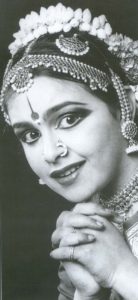
An Arangetram in dance is like an airplane pilots first solo flight – an announcement to the worldthat you have arrived and can now go it alone. Shruti Gurudanti is still in school, in class twelve, she had her Bharatanatyam Arangetram this Sunday after having practised dance since the age of eight. The debut performance was also the dancer’s personal saga of courage – despite a knee operation last November, she chose to go ahead with the show. Shruti’s performance was technically flawless. Credit would also go to her Guru, Vasanthi Sridhar, who was able to inspire her to work so hard for her performance.

Gurudanti’s rendition started with Pushpanjali in Raga Tala Malika. An offering of flowers to the audience, with brisk and agile light footed movements which built up toa crescendo of the pulsating beat of percussion. This was followed by Khanda Allaripu set to Khanda Jati. This is a short and crisp item symbolising the flowering or openingup of the body as a warm up for the more difficult pieces that follow. Shruti used fluid movements of the shoulder with neck and eye rolls to embellish this dance sequence. In Jatiswaram, which is a combination of jati (rhythmic syllables) and swara, the dancer used side stepping with symmetrical and circular movements of the arms. She gave an inspired performance of pure Nritya, drawing repeated applause of the audience.

shruti gurudanti4
Above: Shruti Gurudanti

Not many of the celebrated Gurus these days create worthy disciples, for fear of creating competition for themselves. An insecurity that Guru Sridhar does not suffer from.Under the aegis of Prashanti Natya Nilayam, she has conjured up a number of collective Arangetramn’s and Dance Drama’s to introduce her young disciples to the real world.


Above: (L) Guru Vasnathi Shridhar
(R) Shruti Gurudanti
Varnam was the piece de resistance of the show. Through abhinay the danseuse described the naughty Krishna and how he enchants the Gopis with his pranks. The vanishing trick is used by him while playing hide and seek with the Gopis, and the audience is bemused by the intriguing confusion he creates in their mind by insisting that he was always there. The transformation of this prankster to a full fledged artist by melodiously playing the flute along with the accompanying instruments to placate the agitated gopis is a popular sequence in Bharatanatyam. The nayika is so much in love with Krishna that she has lost consciousness of her own existence.
Shruti displayed a range of expressions as she recreated the Draupadi cheer haransequence playing the wily Duryodhan and the anguished Draupadi alternatively. The sequence included the sight of the little Krishna dancing on the poisonous snake Kaaliya Varnam was set in Ragam “Mohanam”, Talam “Adi”.

Padam “Padari” set to Ragam “Kamboji” Talam “Roopakam”, is a endearing interplay between the nayika who has recently fallen in love and her sakhi who is her confidante. The sakhi pretends not to care or bother about what she was being told. She only appears to admire her own self and strut about without a care in the world. The nayika ultimately pleads to her sakhi to go fetch her lord for her. Shruti concluded her recital with the Tillana. in Ragam “Kadanakuduralam” and Talam “Adi”. The young danseuse displayed a great promise, provided she applied herself and internalised the moods of abhinay. Something that will follow with age and practice.