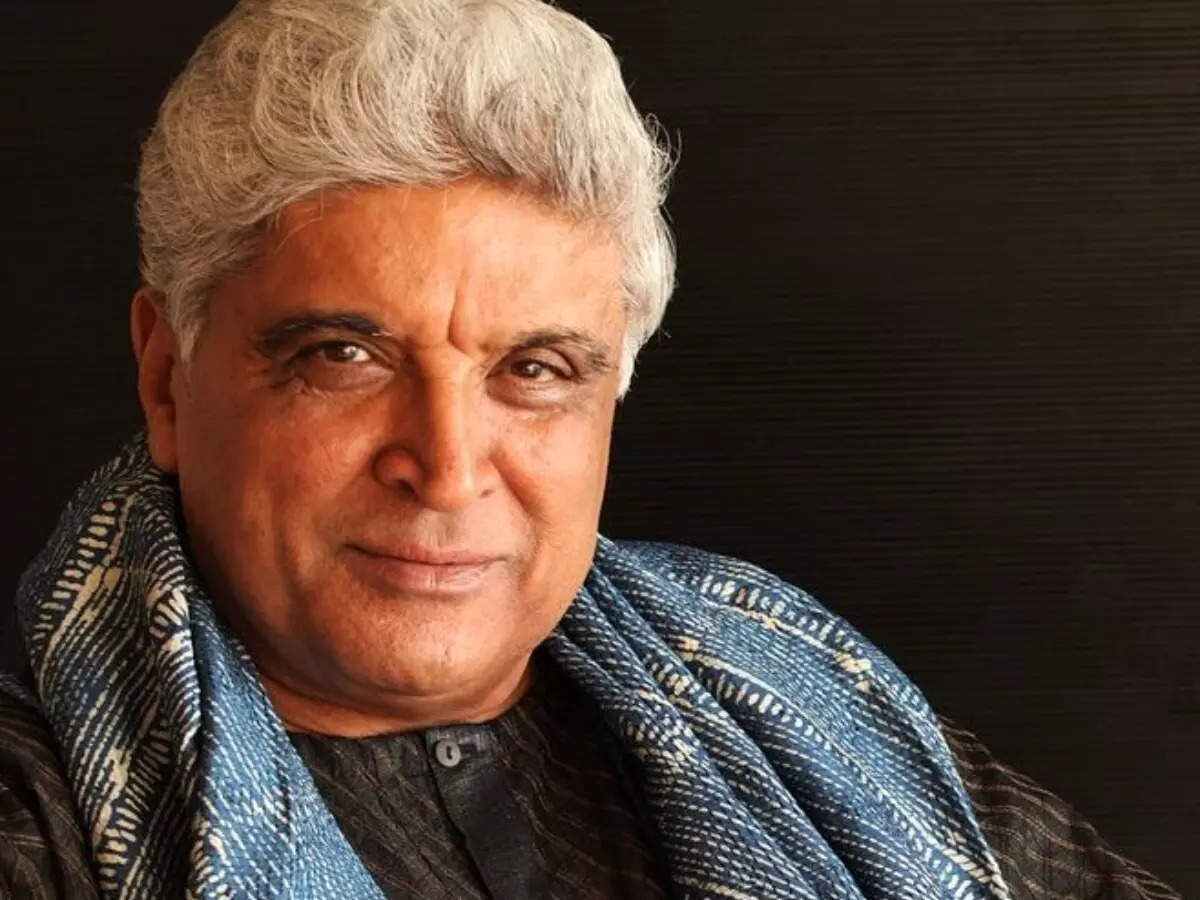
India International Centre New Delhi, recently organised an evening evening with Javed Akhtar, where the celebrated poet recited his outstanding poetry and conversed candidly with Anil Shrivatav and audience.
Shri Shyam Sharan, President India International Centre introduced the legendary poet and writer Javed Akhtar as apart from being an author and a poet, was also an outstanding lyricist, script writer who has been awarded with several awards and honors from home and beyond.
Anil Srivastav, engaged with Javed Akhtar in a candid conversation as he talked against casteism and fundamentalism. He used the metaphor of toy very appropriately and said most of us are happy with toys as a child and not when grown up.
He said lineage, heritage didn’t give any pride as the genes are not as important as the environment of poetry that made him. He recited wonderfully with great sensitivity two of his brilliant poems, waqt(Time) and Anshu(Tears) to the appreciative audience overflowing in the auditorium.
He took it as a compliment when asked by Allok Srivastav that though he calls himself an atheist still he wrote of Lord Shiva’s tandava, He went on to say that an author has to write differently in different situations that the script demands. He made an extremely significant statement that , “We have to surrender to time and norms.” And also mentioned that we are living in a bubble and everyone wants to be victorious. Instead we have to look for yesterday’s innocence, respect, honesty and surrender. He talked of the golden era of Hindi film songs with great appreciation as common people don’t attend philosophy classes but learn from good film songs.
One very significant statement the erudite poet mentioned is that Hindi and Urdu are of the same origin . Urdu is written in Persian script while Hindi is written in Devanagari and eventually the script is just Hindustani .According to him Hindi and Urdu merged together bringing the best poetry and literature though only time will tell what is good literature. With ghazals, nazm, shayari and splendid conversation a splendid evening passed in an overflowing auditorium with Jadunama or journey of Javed Ji in hands of the captive audience.
Mandira Ghosh
Note Jadunama is about a writer, poet, lyricist, and political activist. It is also about this one man’s struggle since childhood to become what he is today and to create a hallmark of success in everything he does. Named Jadu at birth, it was Javed sahab’s father, Jan Nisar Akhtar’s poem, ‘Lamha, lamha kisi jadoo ka fasana hoga (Every moment will be the story of a certain magic)’ that was the inspiration behind the name. When the little boy was in kindergarten, everyone realised that Jadu was not a serious name and to have a word as close to Jadu as possible, he was renamed Javed (meaning ‘eternal’), Akhtar (meaning ‘star’)—Eternal star! Not only has he remained in the limelight ever since, he continues to shine brightly like the eternal star!
Javed Akhtar (born 17 January 1945) is an Indian screenwriter, lyricist and poet. Known for his work in Hindi cinema, he has won five National Film Awards,[1] and received the Padma Shri in 1999 and the Padma Bhushan in 2007,[2] two of India’s highest civilian honours.
Playwriting for Children
Its 2017, a time to retrospect in the new year and yet bask in the old. I was rummaging through my old files on the internet and came across a few plays I had written for children. It was both enlightening and amazing to see the play across the screen, I re read them renewed interest…yes they spoke…I could see the language across the stage, the actors and the magical sets with the green yellow hues across the stage and the twinkling lights. Each one of the childrens’ plays that had been written by me made sense to me and the actors. It made me wonder if they were worth publishing and whether it would be liked by others. I was just not sure, since such few plays are actually published and find their way into the market.
So essentially what makes a good play script for children? What makes it “tick”? What will create an market for the scripts to be published. This reminds me an incident that made me realize what “ not to do “ in a children’s play.
In my early years of my career as a theatre person I was teaching drama for children between the kids of 8-14 in a prestigious school in Gurgaon. The principal, a very uptight and proper person requested me to write a script on Mother’s day. I was excited since I really had not written much before it would be challenging to write something that was interesting enough to watch. I decided to write a script set in contemporary Urban India, a place like Gurgaon and then use an ancient time period as the main episode in a flashback. So I decided to show the changes in time by changes in the way we speak English. After much deliberation I decided to use slang and words like “ cool” “ dude” “ yaar” etc in my script. I thought I had created a masterpiece. Actually I was quite delighted.
I was surprised that the principal called me to her room, I was confident that she had liked the script so much she wanted to congratulate me in person. As soon as I walked in, she seemed a trifle upset and set the script before me. I was shocked to see my entire script covered in huge red circles. Cuts and cross marks all across the page. It looked like my the results of class tenth maths exam paper. Each of my contemporary words had been circled and crossed out. I was indignant..all I could say was “ why…”. She sternly told me how improper my English was and how I could no use such words. She insistent that I choose not to use any colloquial language in my script since “ it would spoil the vocabulary of the children.” I tried to reason out with her that since the play was set in urban Gurgaon the actors had to use such words. But my protests was put down by her adamant refusal to see reason.
That incident made me realize that something was wrong in the way people understood children’s scripts. They read it through the spectacles of an adult and forget that they are first and foremost plays meant for young actors. Hence plays written for children need not follow rules of grammar and conventional usage of speech. Neither they need to make sense, for example, in the musical Wizard of Oz, the girl is thrown a tornado and her whole house is lifted in it. Charlie and the Chocolate factory we see Agustus Gloop being thrown into the rubbish bin by squirrels. All they need to be is appealing to the child and the adult viewer. They need to interesting! In all my plays that I have written for kids, I have only kept the child in mind and shall continue doing so
I would like to end this by only giving the 10 golden pointers to be kept in mind while writing children’s plays.
1) Do not be afraid of using contemporary language and one can even throw in few phrases in Hindi, if the need be. Make it Hinglish if you want.
2) Children love comedy. They might not have the same taste as adults and might find things like “ farting” “ throwing up” comic. Add them to the script, they just add to the flavour. Please do not become prudish.
3) Another thing that fascinates children is the idea of mystery and surprise, you can use them too.
4) One should avoid, small sentences. We sometimes like to say a lot when we try and explain things. For eg. If a child has to say, “ ma I will back soon.” He can say, “ ma I will be back soon…please don’t die worrying don’t go out me and ringing up all the neighbours and searching for me all over the block. I will be back by 7 and that’s a promise!”
5) Do not worry about repeating yourself. For eg. Son says, “fine”. It can be; son says, “ fine ma…ma fine…are you listening FINE!”
6) Do keep it in mind that adults will also watch your show, so you can throw punches at them which might make them laugh. For eg. Son: Ma, why do all mothers have to say that you must eat dal, roti chawal…why can’t they say we will make healthy home made pizzas for dinner tonite! OK I DONT MIND EATING A DOUBLE CHEESE PIZZA WITH BROCOLLI TOPPING!!!
7) Don’t be eager to finish the script in 3 pages, any good script should be at least 10 pages long, 12 font roman single spaced.
8) Dont forget minor characters…please don’t make children into trees and make them wave their hands in the air doing nothing, make it interesting like a “ old white haired talking tree” or a “ saucy sarcastic cactus”.
9) Do add a song or a jungle or some silly rhymes they make the script more readable and watchable.
10) Last but not the least, enjoy the task…and forget daunting principals…goodluck!!!
When Theatre Meets Patriotism
Sanskar Bharati’s Monthly Art Seminar Celebrates India’s Cultural Spirit
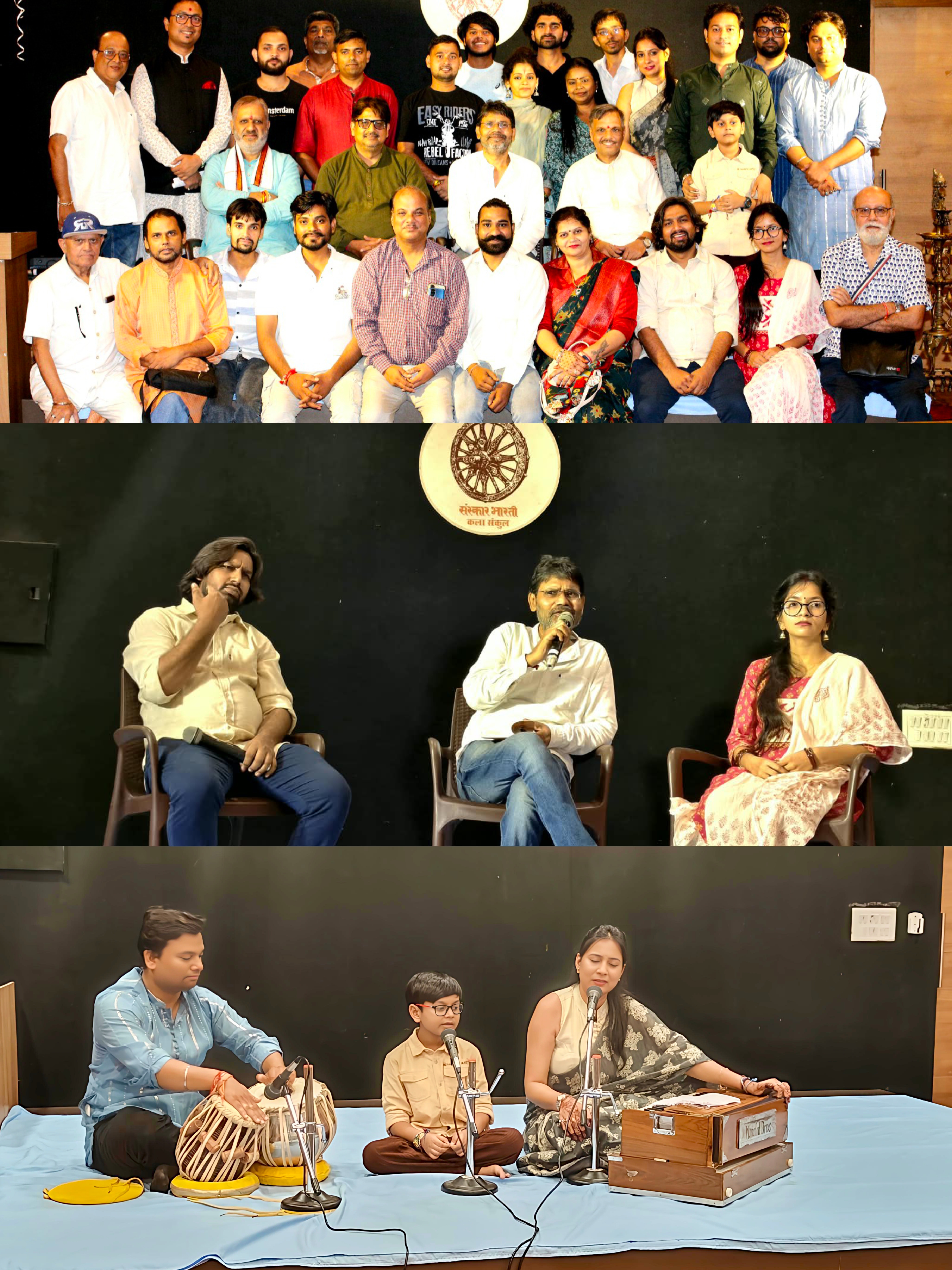
New Delhi, August 30, 2026: The Kala Sankul in New Delhi came alive with the spirit of patriotism, theatre and Indian cultural consciousness as Sanskar Bharati hosted its monthly Performing Arts Seminar. The programme brought together theatre practitioners, artists and cultural thinkers for an engaging evening centred on the power of theatre to preserve history, memory and national values.
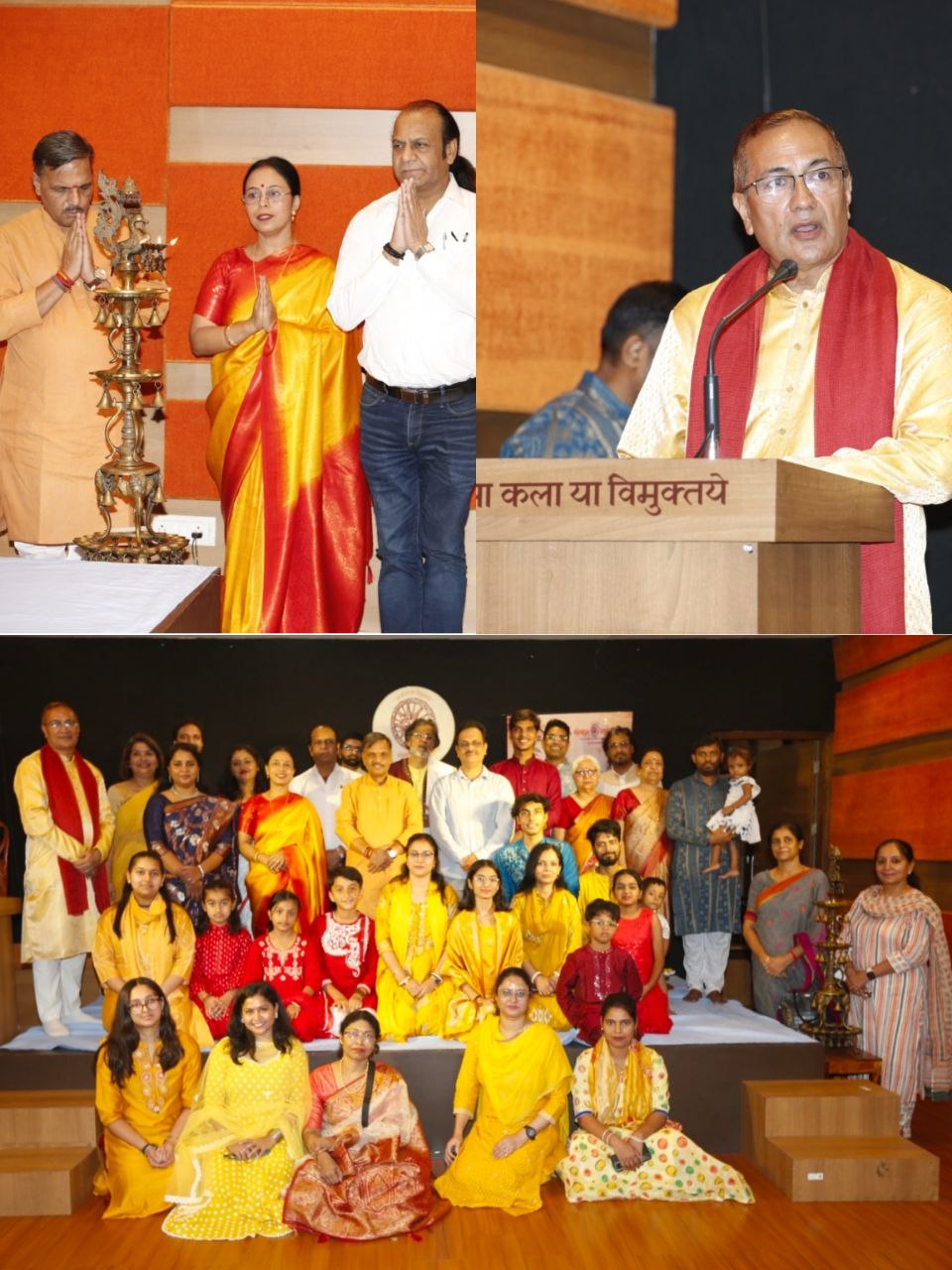
The event was inaugurated with the ceremonial lighting of the lamp by renowned theatre personality, playwright, director and journalist Alok Shukla, along with Sanjay Chaudhary, All India Minister of Sanskar Bharati, Vijay Kumar, Regional Organising Secretary, and other distinguished guests.
The programme opened with a soulful patriotic song presented by Aparna Jaiswal, creating an atmosphere filled with pride and national sentiment.
The central focus of the evening was a discussion on Alok Shukla’s acclaimed play ‘Azaadi Ke Sindoori Rang’, followed by an expressive reading of selected excerpts from the play. Through its powerful theatrical language, the presentation brought alive memories of India’s freedom struggle, the sacrifices of its national heroes and the spirit of an independent India.
The discussion also highlighted the larger role of theatre in society. Speakers observed that theatre is not merely a medium of entertainment; it is also a powerful cultural form through which collective memories, emotions, values and historical consciousness can be passed from one generation to another.
One of the significant aspects of the discussion was the relationship between history and performance. When history enters the theatrical space, it moves beyond books and dates and becomes an experience that audiences can emotionally connect with. Azaadi Ke Sindoori Rang was appreciated for its ability to communicate patriotism while also encouraging reflection on the values associated with India’s freedom movement.
Vijay Kumar and Sanjay Chaudhary also participated in the discussion and spoke about the holistic vision of Indian art traditions. They emphasised that Indian art has always carried a social and cultural responsibility alongside its aesthetic dimensions. They described Azaadi Ke Sindoori Rang as a play rich in patriotic sentiment and capable of offering meaningful direction to society, stressing that such productions should be staged across different parts of the country.
The event was attended by the play’s director Sunil Chauhan, Sakshi Chauhan, artists associated with the production and several personalities from the cultural and artistic fraternity. Their presence added to the spirit of dialogue and exchange that defines the monthly seminar.
The evening at Kala Sankul ultimately reaffirmed the continuing relevance of theatre as a space where art, history and cultural identity meet. At a time when historical memories are increasingly mediated through different forms of communication, live theatre retains its unique ability to make the past visible, immediate and emotionally resonant.
The programme was conducted by Kuldeep Sharma, while Vishwadeep Sharma delivered the vote of thanks. The successful organisation of the seminar was supported by team members Shruti Sinha, Ritambhara, Brijesh, Raj Upadhyay, Mrityunjay, Sushank and Vijendra, whose contribution was appreciated.
Rahul Bhoj: A Life in His Own Rhythm
From music and culture to entrepreneurship, a journey driven by passion
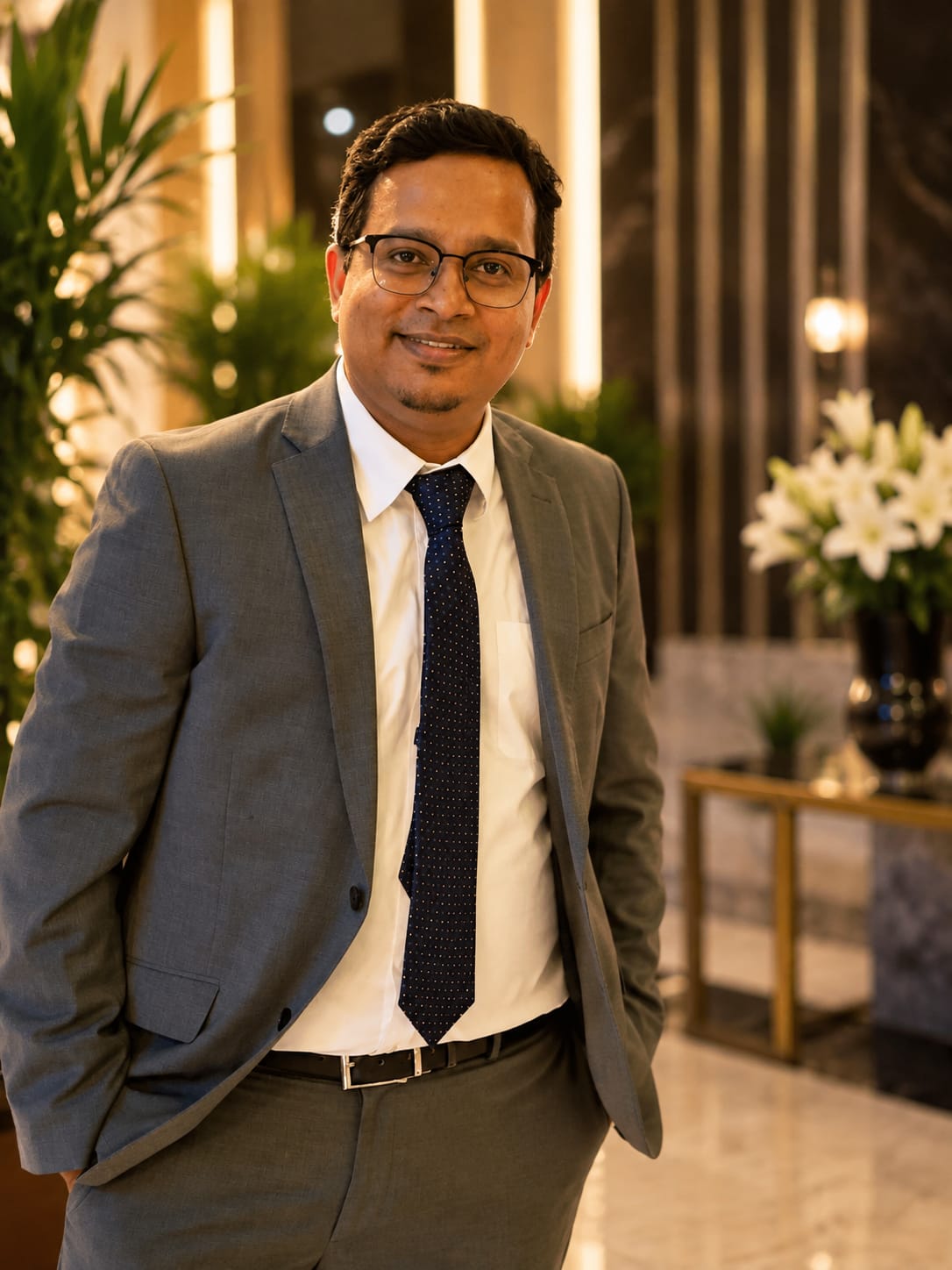
Malaysia: Some people build their lives around a single identity. Others carry several passions within them and allow each one to shape their journey. Rahul Bhoj belongs to the latter. An entrepreneur with an artist’s sensibility, an engineer’s analytical mind and a deep connection with Indian culture, his journey is as diverse as it is inspiring.
His professional journey is backed by a strong academic foundation. After completing engineering, he pursued an MBA and an MSc, and is currently pursuing his PhD. But beyond his formal qualifications, what stands out is his constant curiosity and willingness to keep learning.
Long before the world of business became a major part of his life, music had already found its place in it. Rahul has been associated with both the guitar and the tabla, bringing together two very different musical traditions. His love for music eventually led him to form his own band, Rhythm Rangers. While his professional responsibilities continued to grow, he never allowed this creative side of his personality to disappear.
That artistic spirit perhaps explains something distinctive about Rahul’s personality. He comes from a world where numbers, strategy, technology and business decisions matter, yet he has always retained an appreciation for rhythm, creativity and culture.
Today, Malaysia is his workplace and the centre of his entrepreneurial journey. Through Aroona Solutions, Rahul has built a strong presence in the business world.
The scale of his professional responsibilities is significant. Thousands of people today work under his leadership, making his role much larger than that of simply running a business. It involves creating opportunities, building teams, taking important decisions and guiding a large workforce towards a common vision.
Yet perhaps the most interesting part of Rahul’s story is the contrast between this large professional world and the simplicity of the person behind it.
Despite the scale of his business and the responsibilities that come with leading thousands of people, Rahul remains connected to the small joys of life. There is still a child within him who finds happiness in uncomplicated moments—playing with his son Kairav, spending time with his wife Chandrani, and enjoying the warmth of his own little world away from the demands of work.
For Rahul, Malaysia may be his karmabhoomi, but India continues to live in his heart. His connection with Indian culture is not merely nostalgic. It finds expression through his association with music, particularly the tabla, and through the values and cultural sensibilities that remain a part of his life even while living thousands of miles away from India.
His story is therefore not just about entrepreneurship. It is about carrying different worlds together. The precision of an engineer, the vision of an entrepreneur, the curiosity of a lifelong learner and the sensitivity of an artist—all coexist in one personality.
Perhaps that is what makes Rahul Bhoj’s journey particularly interesting for a cultural page. His success has taken him into the corporate world, but his creative instincts have remained alive. His professional life may be measured in businesses, teams and responsibilities, but his personal identity continues to find space for music, culture and the simple pleasures that keep life grounded.
From the rhythms of the tabla and guitar to the rhythm of business, Rahul Bhoj has travelled a long way. And while his professional world has grown enormously, the connection with the artist within him remains intact.
He may have built his success in Malaysia, but he continues to carry a piece of India with him—and perhaps that is the rhythm that has stayed constant throughout his journey.
The Power Control in Our Hands
We make choices everyday and we also learn that we have to live with those choices and even if they don’t prove to be what we desired, we had no options. What if I say no we have the possibilities and the capacity to find alternatives as we have the power control to choose our future. It simply lies within our responses to situations. We don’t need to allow ourselves to loose control every time but within our positivity we can show how we are influencing not only our behaviour to others and also ourselves. The tiny ripples are enough to keep your peace and no tsunamis of reactions are needed. Drawing boundaries is peace however its not a battle ground where we need to hold a gun to everyone’s head. We can create our safe space just by expressing strongly how we feel by the choice of our words and not by loud dramatic actions alone.
One needs tension to show our feelings and that’s agreeable but the value of tension is only when used rarely. That makes us from being described as the eternal victim to the empowering one. We will be valued for both our passivity as well as proactivity. That’s what will make us all the true author of our own story and we become the captain of the soul. Well its ok to fall, but is it not better to stand up again without the boxing gloves in our hands! The obstacle blocks will now become the building stones for our path for our success. Let us keep the power control in our hands now forever!
While doing so we will be clearly able to see how to influence others without harming ourselves or those within our sphere. We will hence finally know how to be kind to ourselves first, unlocking our potential for growth and success. Believe me when I say I sleep soundly now as I know I have built a future that I deserve, safe. caring and protected by my power control alone! Enjoy the tranquility created forever to soak in the new comfort of our innings in our new days to come!
‘Mola’: When History Comes Alive Through the Pen of Dr. Harisuman Bisht
A compelling blend of history, cultural memory and human sensitivity
History often survives in books as a record of rulers, wars and political changes. Theatre, however, has the ability to take that history beyond facts and dates and bring its human dimension before us. Dr. Harisuman Bisht’s play ‘Mola’ is an interesting example of this approach. Set against the historical backdrop of the Garhwal region, the play brings together political upheaval, cultural memory, human relationships and the changing role of the artist.
What makes Mola particularly engaging is not merely the historical subject it chooses, but the manner in which Dr. Bisht transforms historical material into a dramatic and accessible narrative. He does not treat history as something distant or frozen in the past. Instead, he looks for the people behind the events—their anxieties, conflicts, aspirations and suffering.
The historical setting of the Garhwal Shah dynasty and the Gorkha expansion provides the framework for the play. Yet the writing does not remain confined to royal courts and political manoeuvring. The consequences of political conflict gradually reach ordinary people, allowing history to be viewed from a more human perspective.
History beyond kings and battles
One of the strengths of Bisht’s writing is the way he moves away from a purely ruler-centric version of history. Political events are important, but what matters equally is their impact on society.
The story brings together historical figures and imagined characters, allowing the author to enter spaces that conventional historical records may not fully explore. Through this creative approach, personal relationships, emotional conflicts and questions of identity become part of the larger historical narrative.
This is where Mola acquires its dramatic character. History provides the foundation, while imagination and human emotion give it movement.
Rather than simply asking what happened, the play makes us consider what those events meant to the people who lived through them.
A sensitive understanding of the artist
At the centre of this historical world stands Molaram, a poet and painter. His presence gives the play another important dimension—the relationship between art and power.
Molaram’s artistic identity is not presented merely as an individual talent. As the political and social atmosphere around him changes, his sensitivity towards the suffering of people also grows. His journey gradually moves beyond artistic expression and personal recognition towards a larger social responsibility.
This is perhaps one of the most thought-provoking aspects of Bisht’s writing. Without turning the play into a direct lecture on art and society, he raises a fundamental question: What is the responsibility of an artist towards his or her own time?
Through Molaram, art becomes more than an ornament of the court. It becomes a way of observing society and responding to its pain.
Bringing another voice into history
The character of Soma adds an important emotional and social layer to the narrative. Her struggle introduces questions of dignity, violence and resistance within the historical framework.
Her presence also prevents the story from becoming exclusively male and political. Through her, the author allows the reader to encounter another kind of historical experience—one shaped by vulnerability, courage and resistance.
The contrast between Molaram’s response to injustice through artistic sensitivity and Soma’s more direct resistance creates an interesting parallel. Their paths are different, but both are connected by a refusal to remain passive before injustice.
The cultural landscape of the hills
Another striking feature of Mola is the cultural texture created through language and local traditions. Garhwali, Kumaoni and Nepali linguistic influences, folk songs, local expressions and references to regional customs contribute to the sense of place.
This regional flavour does not appear merely as decoration. It becomes an essential part of the historical world that Bisht is recreating.
The reader is not simply told that the story belongs to the hills; the language and cultural references allow that landscape to emerge organically. The world of the play consequently carries the sound and memory of the region within it.
A writer who understands the visual nature of theatre
Bisht’s theatrical sensibility is also visible in the manner in which different spaces and situations are brought into the narrative. The court, the ashram, the settlement, the riverside and the world of the artist create a changing visual landscape.
The use of dialogue, monologue and internal expression gives the characters room to reveal not only what they do but also what they think and feel.
The dialogues are largely simple and accessible, while regional speech adds authenticity. The Hindi translations of regional dialogues also make the cultural material more accessible to a wider readership.
This balance between regional identity and accessibility is an important feature of the writing.
The past speaks to the present
Perhaps the most significant achievement of Mola is that its historical setting does not isolate it from contemporary concerns.
Questions of political conflict, internal divisions, external intervention, the suffering of ordinary people, women’s dignity and the social responsibility of artists continue to resonate beyond the period depicted in the play.
That is why the work does not feel like an attempt merely to reconstruct a forgotten historical episode. It uses the past to make the present think.
The play quietly reminds us that when a society is divided by internal struggles for power, the consequences are often borne by those who have the least influence over political decisions. At the same time, it asks what role artists and intellectuals can play when society is passing through such turmoil.
A distinctive historical imagination
Dr. Harisuman Bisht’s achievement in Mola lies in bringing together historical fact, imaginative reconstruction, regional culture and human emotion without allowing the historical background to overwhelm the dramatic narrative.
His writing gives history a human face. The past is not presented merely as something that happened long ago; it becomes an experience that can still speak to the concerns of the present.
Mola therefore deserves attention not only as a historical play but also as a work that reflects on the relationship between art, society and power. Through its cultural rootedness and human perspective, it invites the reader to look at history from beyond the throne—to look towards the people, their struggles and the artists who witnessed their times.
In Mola, Dr. Harisuman Bisht does not simply recreate history; he gives it a human voice. And it is through that voice that the past becomes visible, relevant and alive for the present.
Sanskar Bharati Kala Sankul Hosts ‘Guruvandan’: An Evening of Musical Devotion, Tradition and the Timeless Guru–Shishya Legacy
New Delhi, July 26, 2026: In the Indian cultural tradition, the Guru is revered as the guiding force who illuminates the path of knowledge, art and self-realisation. Celebrating this timeless bond of reverence, gratitude and dedication, Surangan and Sanskar Bharati Kala Sankul jointly hosted ‘Guruvandan’ – a special Guru Purnima Music Celebration and Cultural Gathering at the Sanskar Bharati Kala Sankul auditorium in New Delhi.
The evening unfolded as a graceful confluence of Indian classical music, devotion and the enduring Guru–Shishya tradition, leaving the audience with an experience that was as soulful as it was musically enriching.
An Auspicious Beginning with Nataraja Vandana
The programme commenced with the ceremonial worship of Nataraja, the divine embodiment of dance, rhythm and cosmic creativity, followed by the collective rendition of the Sanskar Bharati Dhye Geet. The opening immediately created an atmosphere of spiritual serenity and artistic anticipation.
The first musical presentation featured the disciples of internationally acclaimed classical vocalist Vidushi Dr. Nabnita Chowdhury. Through Ganesh Vandana, Saraswati Vandana and a Guru Vandana composed in Raga Charukeshi, the young artistes beautifully expressed their reverence for their Guru and the tradition they have inherited through rigorous musical training.
Their performance was marked by discipline, tonal precision and a deep sense of devotion. Shri Sudip Chowdhury provided accomplished tabla accompaniment, adding rhythmic depth and elegance to the presentation.
Miyan Malhar Brings the Monsoon Alive
The evening then moved into the evocative world of monsoon music with the arrival of young classical vocalist Smt. Jayantika Dey from Varanasi.
Her rendition of Raga Miyan Malhar, perfectly suited to the season, created an atmosphere of musical freshness and emotional intensity. Her command over the raga, mature voice culture and expressive interpretation drew warm appreciation from the audience.
She followed the raga presentation with a soulful thumri, bringing an intimate touch of emotion, lyrical beauty and aesthetic refinement to the evening.
The performance was beautifully supported by Shri Aritro Chowdhury on tabla and renowned harmonium accompanist Janab Zakir Dholpuri. Their sensitive and well-balanced accompaniment complemented the vocalist without overshadowing the central melodic expression.
The Sitar Creates a Mesmerising Finale
The musical evening reached its culmination with an exquisite sitar recital by acclaimed Kolkata-based sitarist Pandit Partho Bose.
His performance unfolded through the nuanced progression of alap, jor, jhala and gats, revealing both the meditative depth and technical brilliance of the sitar tradition. His command over the instrument, coupled with a profound understanding of raga, drew the audience into the contemplative world of Indian classical music.
Shri Sudip Chowdhury accompanied him on tabla with remarkable rhythmic sensitivity, creating a compelling dialogue between melody and rhythm.
A Distinguished and Thoughtful Stage Presentation
The entire programme was conducted with grace and intellectual depth by Shri N. K. Mishra, senior disciple of Vidushi Dr. Nabnita Chowdhury, former Director General of Police and former Special Director of the Intelligence Bureau (IB).
His poised, articulate and scholarly stage presentation added another dimension to the evening. His understanding of music and the Guru–Shishya tradition helped connect the various segments of the programme into a coherent and meaningful cultural narrative.
A Celebration Beyond Music
‘Guruvandan’ was not merely a concert; it was a celebration of the values that sustain Indian artistic traditions—discipline, devotion, learning, humility and the sacred relationship between Guru and Shishya.
Each presentation reflected a different facet of this tradition. From the devotional opening to the raga-based vocal performances and the final sitar recital, the evening demonstrated how classical music continues to preserve and transmit India’s cultural memory from one generation to the next.
The People Behind the Evening
The success of the programme was also made possible by the dedicated efforts of the members of Sanskar Bharati Kala Sankul and Surangan. Special appreciation goes to Shri Raj Upadhyay, Shri Shyam Kumar, Smt. Garima Rani, Smt. Sneha Mukherjee, Shri Brijesh, Shri Bijendra and Shri Mrityunjay, whose commitment, teamwork and tireless efforts contributed significantly to the smooth and dignified conduct of the event.
Their collective contribution reflected the spirit of cultural service that lies at the heart of such initiatives.
A Grateful Closing
The evening concluded with a heartfelt vote of thanks by Shraboni Saha (Mun Mun), who expressed gratitude to the revered Gurus, artistes, organisers, collaborators and music-loving audience for making the celebration meaningful and memorable.
The concluding Nataraja Aarti brought the evening to a serene close, filling the auditorium with an atmosphere of devotion, gratitude and spiritual warmth.
‘Guruvandan’ ultimately emerged as more than a Guru Purnima celebration. It became a living tribute to the Guru–Shishya tradition and the timeless spirit of Indian classical music—a tradition that continues to inspire, nurture and illuminate generations of artistes and rasikas alike.
A Little Bit of Sanity Goes a Long Way
As a theatre artist and performer I always was led to believe that insanity or eccentricity is a part of being more aesthetic. However, I always seemed to think the other way. While being a little irregular always helps in creativity, as being mundane and everyday seems to find an overload in our creative work. We all are entertainers after all and its within the discords of the humdrum, we all seem to find our harmonious chords, that enthrall our audiences. However what if I claim that its in the regularity, in the moments of sanity I have found my true peace would I be mocked by my fellow thespians?
I would like to urge you to look at the value of sanity, the value of being together in the disjointedness of our careers. When I for instance talk to my friends who are lawyers, teachers, heads of academic institutions or doctors, I get insight into the value of lives that see beyond the stage. They help me focus back into my world and help me launch into the painful yet happy insanity of my vocation, yes they are my pillars! They help me sharpen my tools as they help me realise what it means to be living real in the world. They assist me in reaping the fruits of my labour.
I know that many times I am not a expected guest at a party and I find myself socially awkward many times. I am capable of making a wrong move or saying something innocuous like, ” don’t you think this bright blue does not suit the vibe here?” I can hear myself sitting quietly in a corner and if I do get attention I get flustered and wanting to move away from the spotlight. My conventional friends teach me the value of me being at ease and the value of soundness in my disjointedness. I suggest strongly for all of us who are artists to find a few friends who are regular and talk to them, take their suggestions and even if you don’t want to you will only gain a 2 am friend who will be willing to hear you as much as you will want to hear them. Take out your phone, scroll and find your lost companions to sing along a new song mindlessly, mindful!
A Feather Found
We often get dismayed, disheartened, and many times with no spirits. Our flights seem only imaginative and futile as our feathers to that journey are weighted down by our own inner fears. But, what if I say everyday a new feather will be found, will I be termed as the hopelessly optimistic one? Optimism has a great values as it creates you the vision to find that gizmo to take you across the horizon across the high tide. Sometimes it is just lying there unused and unnoticed until that one day when you take that soft launching pad to soar through. It thus is just a few steps away only to be noticed by our eyes. We can create that wonderous journey, which will then define our success story. Even if we are only short birds of flight like the peacocks, we can dazzle our thoughts by the bright and pretty sapphire blues dancing to the joyous beats of the day! It sounds exciting does it not?
You many smirk and think, ” there she goes again”, but I often get disappointed myself and truthfully out of energy. In those moments I just take large steps back to see everything in totality as though I am measuring the sky. I simply break it down and after a few days of rest, I literally scrounge and search, rummaging through through my mind to find my golden ticket. Even if I find a little rope to tug me out, I feel happy enough to become overjoyed later. So my dear friends all wish to say is ” Nil Desperandum” never despair, as we have that frill to dress our day bright forever, just a few corners away!
‘Aapatnama’: A Powerful Theatrical Reflection on India’s Emergency
New Delhi | 8 July 2026
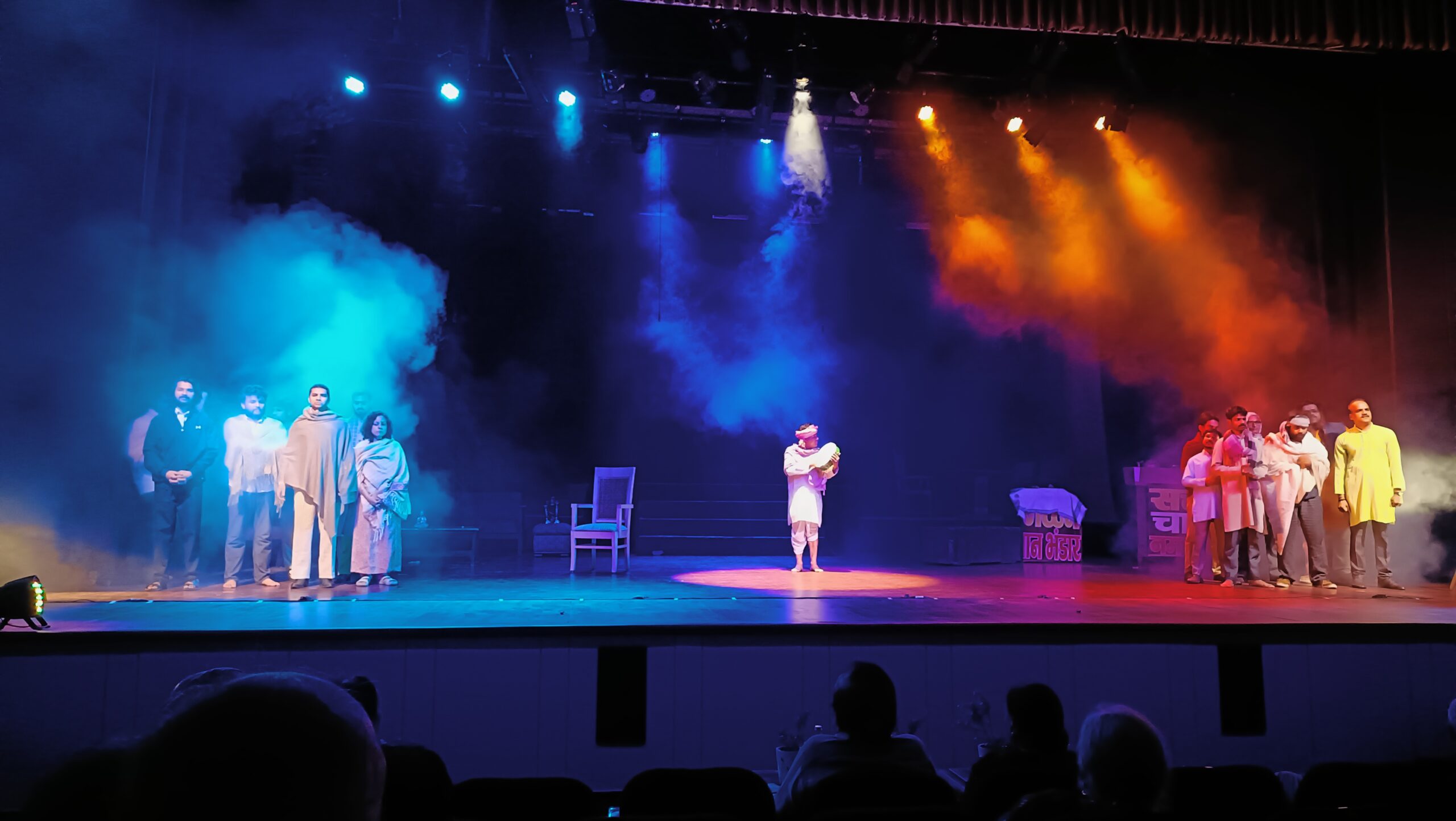
Kamani Auditorium witnessed a deeply moving theatrical experience as ‘Aapatnama’, based on Anil Goyal’s acclaimed novel Naya Savera, was staged under the auspices of the Hindi Academy, Department of Art, Culture & Languages, Government of Delhi. Adapted and directed by Sunil Rawat, the production revisited one of the most defining chapters of India’s post-independence history—the Emergency of 1975.
Rather than presenting history as a mere sequence of political events, Aapatnama brings to life the stories of ordinary people whose lives were transformed by fear, uncertainty, and state control. The production portrays the atmosphere of censorship, arbitrary arrests, restrictions on civil liberties, and the silent struggles of countless families. The controversial forced sterilization drive also finds its place within the narrative, illustrating how government policies deeply affected the everyday lives of common citizens.
At the heart of the production is Anil Goyal’s compelling writing. His narrative goes beyond political commentary, capturing the courage, resilience, and quiet resistance of people who endured one of the darkest periods in India’s democratic journey. The play succeeds in transforming historical memory into an emotionally engaging theatrical experience.
One of the production’s greatest strengths was its music. Thoughtfully woven into the narrative, the songs became an emotional bridge between scenes, enriching the storytelling and adding depth to the dramatic moments. Their powerful lyrics and soulful compositions remained with the audience long after the performance ended.
The ensemble cast delivered sincere and engaging performances, creating a convincing portrayal of life during the Emergency. The principal cast included Kapil Pal, Komal Munshi, Raj Sharma, Prasoon Narayan Srivastava, Komal Singh, Prajanya Arora, Meenakshi Rajdan, Priyanka, Abhishek Anand, Ishwarchand, Aarav, Ritesh, Aditya, Vikramaditya, and Vishnu. The production was further elevated by Rajeev Singh’s music, Dalchand’s costume design, Divyang’s lighting, and Rashid Khan’s makeup, all of which contributed significantly to the overall theatrical experience.
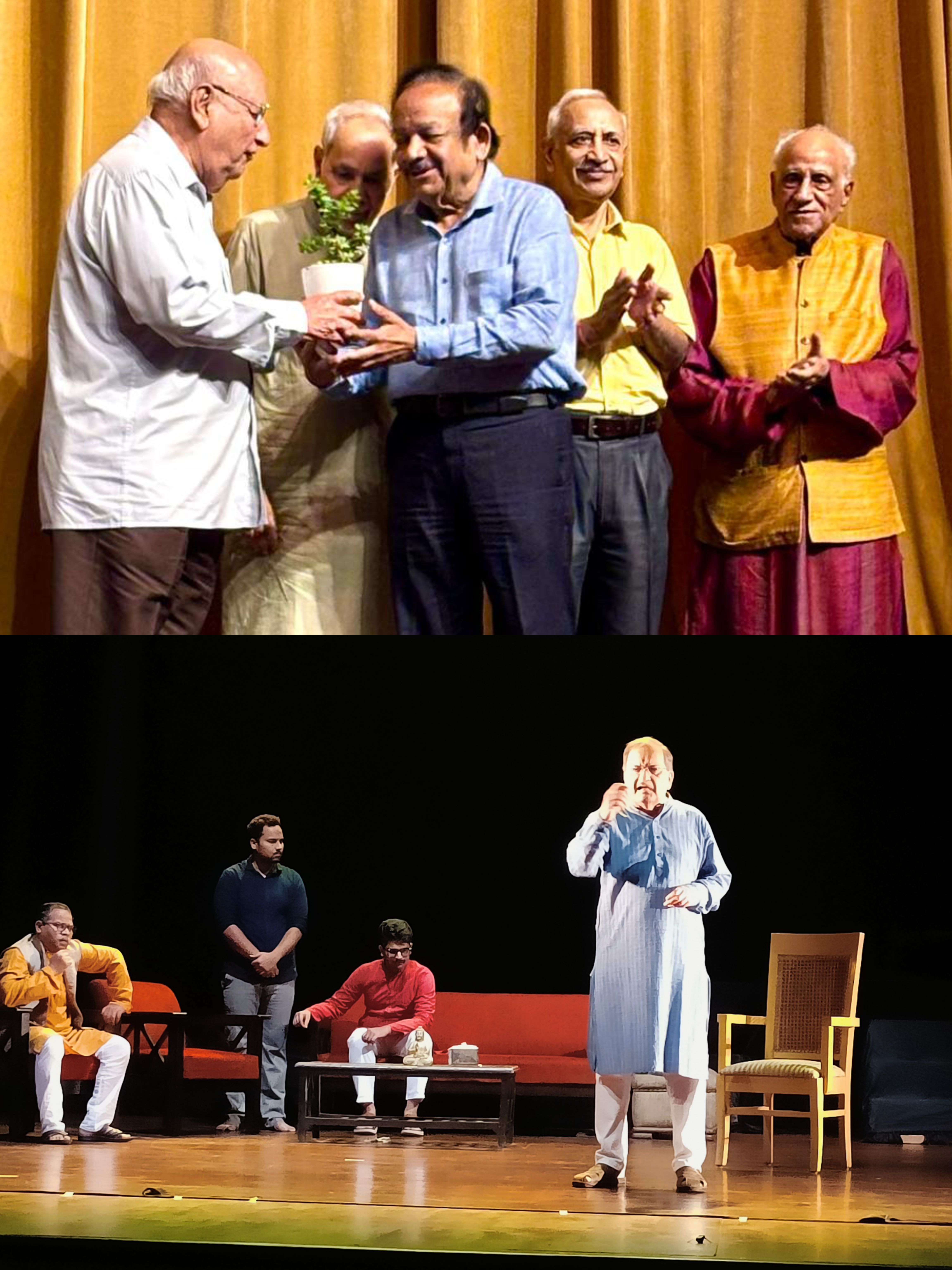
The evening was graced by several distinguished personalities, including former Union Health Minister Dr. Harsh Vardhan, Ram Bahadur Rai, Chairman of the Indira Gandhi National Centre for the Arts, senior journalist K.N. Gupta, eminent playwright Prof. Pratap Sehgal, and renowned theatre writer Dr. Harisuman Bisht, along with leading theatre practitioners, journalists, and literary figures. Adding a profound historical dimension to the occasion were individuals who had been imprisoned during the Emergency, as well as those who had courageously provided shelter to people during those difficult times.
In his address, Ram Bahadur Rai described the production as a significant effort to preserve an important chapter of India’s history through literature and theatre. Dr. Harisuman Bisht praised Anil Goyal for his insightful portrayal of the period and the remarkable way in which historical realities were woven into the narrative.
The evening concluded with the introduction of the entire cast, warmly applauded by the audience. As a gesture of appreciation, Dr. Harisuman Bisht felicitated director Sunil Rawat by presenting him with a sapling, symbolizing creativity, growth, and the enduring spirit of theatre.
More than a historical play, Aapatnama is a poignant reminder of the value of freedom, democracy, and human dignity. With its compelling narrative, evocative music, committed performances, and thoughtful direction, the production emerged as an unforgettable theatrical experience that left the audience reflecting on the lessons of history and their relevance today.
Rabindranath Tagore University Pays Tribute to Teejan Bai with Sanskrit Theatre Performances
The Centre for Sanskrit, Oriental Languages and Indian Knowledge Systems at Rabindranath Tagore University presented a remarkable evening of classical theatre on 6 July 2026 at 2:30 PM in the Sharda Auditorium. The performances were staged by the students of the Master of Performing Arts (MPA) and Postgraduate Diploma in Natyashastra programmes.
The event featured Hindi adaptations of two celebrated Sanskrit classics—Bhagavadajjukam, written by Maharshi Bodhayana, and Urubhangam, composed by the renowned playwright Mahakavi Bhasa. The entire theatrical presentation was dedicated as a heartfelt tribute to the legendary Pandavani exponent and Padma Vibhushan awardee, Teejan Bai, celebrating her unparalleled contribution to India’s rich performing arts tradition.
The programme was graced by Mr. Sanjay Srivastava, Director, MPSD, as the Chief Guest, while Prof. Sanjeev Gupta, Pro Vice-Chancellor, Rabindranath Tagore University, presided over the event. Prof. Verma attended as a distinguished guest. Addressing the gathering, Mr. Srivastava applauded the students for their impressive performances and encouraged them to pursue theatre with dedication, discipline, and artistic commitment.
The productions were directed by eminent Sanskrit theatre director Dr. Santosh Sahu. The event was organised under the guidance of Dr. Sanjay Dubey, Head of the Centre for Sanskrit, Oriental Languages and Indian Knowledge Systems, and Dr. Savitri Singh Parihar, Programme Coordinator.
The cast included Naveen Chandra, Anil Kumar, Vipin Kumar, Sangeeta Suyal, Anshuman Miglani, Amrit Raj, Naman Mishra, Rohit Singh, Sheetanshu Pal, Aman Kumar Kushwaha, Nitin Srivastava, Sandeep Rathore, Vanshika Pandey, Meghna Agrawal, Swati Srivastava, Swati Singh, Shubham Srivastava, Himanshu Rai, Avi Pandey, and Ravi, all of whom received widespread appreciation for their compelling performances.
The musical score was collaboratively arranged by Tarun Thakur, Vanshika Pandey, Aman Kumar, and Sheetanshu Pal. Rohit Rajak, Shubham Pandey, and Naveen Chandra served as Assistant Directors, while Rohit Rajak handled the lighting design. Technical support for the production was provided by Abhishek Deshmane.
The event concluded with a standing ovation and resounding applause, reflecting the audience’s appreciation for the students’ artistic excellence and the successful presentation of India’s classical theatrical heritage. The production served as a fitting tribute to Teejan Bai, reaffirming the timeless relevance of Sanskrit drama in contemporary performance culture.
When Life Goes in Yawns
Many times we don’t know why we are feeling unfulfilled, despite our desires being met, despite having the house going, despite the hot meals made for everyone, and yet despite the occasional meet and greet, why do we feel our lives going in a complete slow motion graph. The road of our lives seems endlessly straight and we seem to long for minor bumps to break that motoring monotony. Yes, life is a yawn and sometimes and we just don’t know how to shake off our half dazed, in and out effect, and create a gigantic colourful prism. How we wish we had the steering wheel in our hands to make our journey a wonderful exciting Ferris wheel of gigantic complexity.
Those minutes might not, never come, as no one wants to go on risk taking roller coasting ride, but yes we can create a few moments of magic. We can add sprinkles of joy on little cup cakes of passing time. What we need to do to bake that little blue puff cream of joy, is simply take “time off”. That should be your little “me time” ! Maybe a walk around the aisle of a mall simply window shopping, drinking a cup of that awesome hot expresso, or going to your nearby book store and reading a couple of pages, or simply walking the friendly dog of your neighbour whom you love to pat so much! So, its not so tough to identify that single solid moments, that might break the daily humdrum and make you sing an occasional happy tune. This could be your own special loony tune to come back to happiness of your day to days. Enjoy the bake me downs forever in your life, my special me time friend and enjoy the bumpity bumps!