Kathak at Kala Sankul: Where Tradition Meets Contemporary Vision
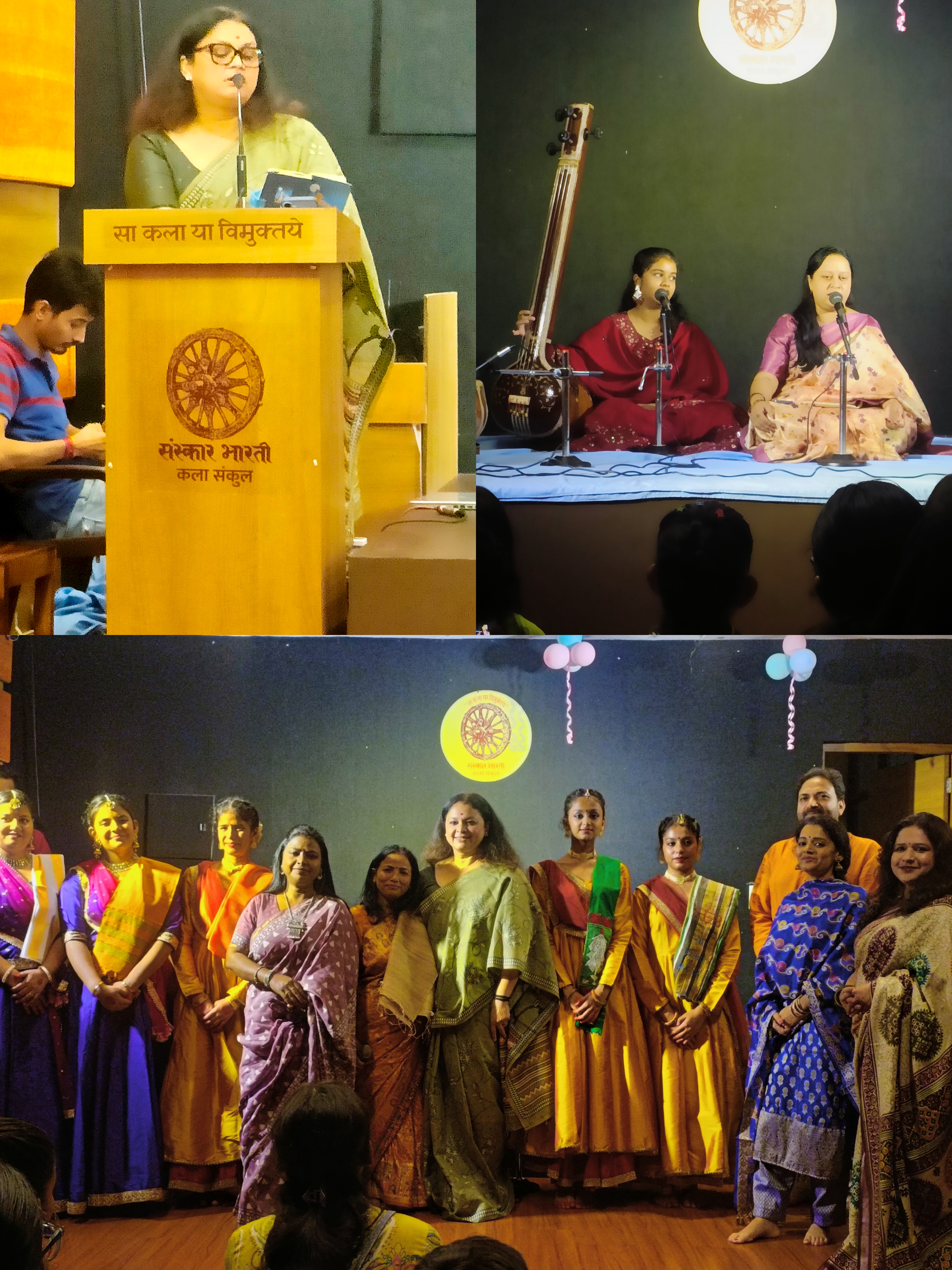
Kala Sankul, the cultural centre of Sanskar Bharati, at 33 Deen Dayal Upadhyay Marg, New Delhi, has steadily emerged as a space where Indian art traditions, cultural dialogue and contemporary artistic practices come together. Through its regular programmes, seminars and cultural presentations, Kala Sankul provides artists and audiences with an opportunity to engage with different dimensions of Indian culture. Continuing this tradition, the centre hosted a seminar and cultural programme on Sunday, September 27, on the theme “Contemporary Kathak from an Indian Perspective: Tradition, Innovation and Expression.”
The evening brought together music, Kathak and thoughtful discussion, creating a setting in which the classical tradition could be viewed not only through its established grammar but also through the experiences of contemporary practitioners. Renowned Kathak dancer Gauri Diwakar attended as the chief guest and speaker, sharing perspectives from her own artistic journey and reflecting on the continuing evolution of Kathak.
The programme opened with a soulful solo vocal recital by Dr. Dipit Vats, setting a dignified classical tone for the evening. Yuvrashi accompanied him on the tanpura, while Suraj Kumar and Anmol Vimal provided support on tabla and harmonium. The interplay of voice, rhythm and instrumental accompaniment created an atmosphere that immediately connected the audience with the aesthetic world of Indian classical music.
The musical presentation was followed by a Kathak performance by the Preeti Sinha Group. The dancers brought together traditional Kathak movements, rhythmic footwork, expressive gestures and abhinaya in a well-coordinated stage presentation. The precision of the footwork, the interplay of rhythm and movement, and the coordination between the dancers and musicians were among the highlights of the performance.
What made the presentation particularly engaging was its balance between classical discipline and stage appeal. Without moving away from the fundamental vocabulary of Kathak, the performers created a presentation that communicated its energy and beauty to the contemporary audience. The rhythmic patterns and coordinated movements added a distinct dynamism to the evening.
The performance led naturally into the central conversation of the programme, with renowned Kathak dancer Gauri Diwakar sharing insights from her artistic journey. Rather than limiting her address to a theoretical discussion, she drew upon experiences from her life as a Kathak dancer to illuminate the various dimensions of the seminar’s theme.
Through anecdotes and examples from her own journey, Diwakar spoke about the role of training, sadhana and stage experience in carrying a classical tradition forward. She reflected on the relationship between tradition and experimentation, the changing nature of the stage, and the role of the younger generation in taking Kathak into new spaces.
One of the important aspects of her address was the question of innovation. She emphasised that experimentation can become meaningful when an artist understands the tradition from which the art form has evolved. Her observations brought attention to the relationship between the classical grammar of Kathak and the possibilities offered by contemporary performance.
Diwakar also touched upon the interconnectedness of dance, music, rhythm, taal and expression. Her personal experiences made these ideas accessible and helped the audience understand Kathak not merely as a sequence of movements, but as a comprehensive artistic tradition shaped by rigorous training and continuous practice.
The discussion around the theme also opened up questions about the contemporary possibilities of Kathak. How can an artist innovate without losing the identity of the form? How does a classical tradition respond to changing performance spaces and audiences? And how can the younger generation engage with tradition while finding its own artistic language? These questions gave the seminar a contemporary relevance while keeping its focus firmly rooted in the Indian classical tradition.
The presence of music and dance alongside the discussion gave the programme a distinctive character. Instead of treating the seminar and cultural presentations as separate components, the evening allowed the audience to experience the relationship between artistic practice and intellectual dialogue.
Vishwadeep conducted the programme, maintaining a smooth flow between the performances and the seminar. Sneha Mukherjee, the convenor of the seminar, played an important role in coordinating the event. The programme concluded with a vote of thanks by Shruti Sinha.
The collective contribution of the Kala Sankul family was also an important part of the evening. Raj Upadhyay, Shraboni Saha (Munmun), Ritambhara, Pradeep Pathak and Harshit, along with other members of the Kala Sankul family, contributed to the coordination and arrangements behind the programme. Their efforts ensured that the different components of the evening came together in an organised and cohesive manner.
The programme at Kala Sankul ultimately emerged as more than a cultural presentation. It became a meeting point of music, dance, experience and dialogue. Dr. Dipit Vats’s vocal recital created the musical foundation, the Preeti Sinha Group brought the rhythmic vocabulary of Kathak to the stage, and Gauri Diwakar’s reflections connected the classical tradition with the questions facing contemporary practitioners.
In bringing performance and conversation together, the evening offered a thoughtful glimpse into the continuing journey of Kathak—an art form deeply anchored in tradition, yet constantly engaging with the changing world around it.