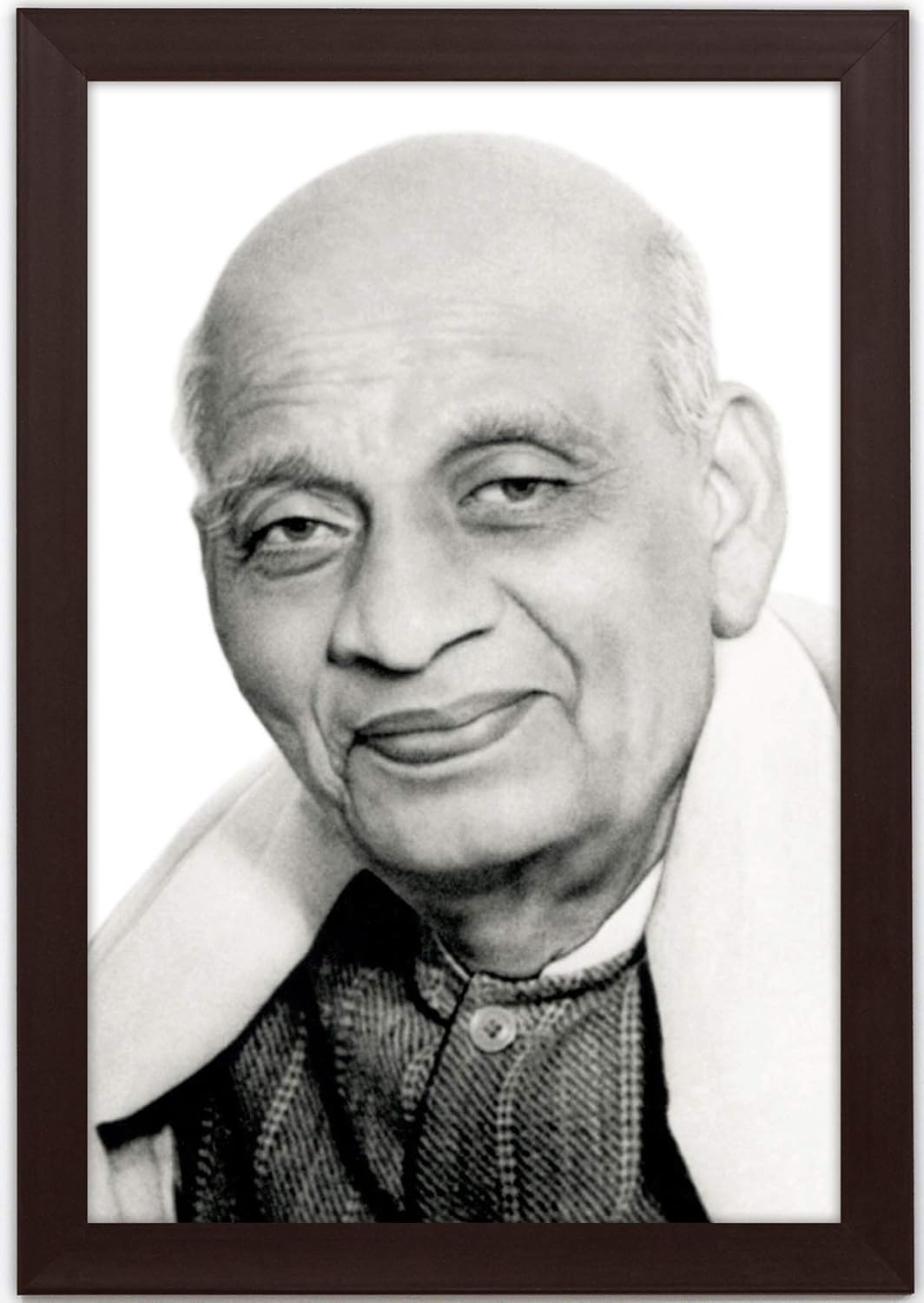
JODAE E- SARDAR- NOT A Play- AN EYE OPENER
A few sentiments often expressed non-verbally make more sense than those expressed verbally. This is true indeed but nonetheless; there are some emotions that sprout in our hearts and blossom only when they are expressed or else they hover around us making us more and more restless. Such is the power of organic art that the recipient is motivated to verbalize its effect dispensing with the requirement of diplomacy or tactic of any kind. I feel, like an unadulterated attempt with a known script based on a biography of an extraordinary leader, today’s play Sardar based on Shri Vallabbhai Patel’s life legacy, Jodae – e- sardar (Play presented by Gujarat Rajya Sangeeta Natak Akademi Gandhinagar Directed by revered theater director Manish Baradia) emerged as a spectrum of empathetic delight rousing patriotic emotions leaving behind any biased or jingoistic assertion on Indian freedom fight. The play was proudly presented by Sanskardham, an educational institution that fosters the holistic development of compassionate, innovative, and competent thinkers – Ahmedabad. The institution’s effort to house the production of this play in its premises is indeed a step towards cultivating NEP 2020s virtue of ensuring that our students become empathetic citizens. It is not simply a retrieval of history that can enable the youth of today to reflect on ethical goals of life. It is reliving its essence. Jodae-e- sardar proves it.
Putting forth a strong critique of the British atrocities meted out in India during a particular time period when struggle for independence was the salient feature of the Indian nation [and hence the goal of many visionaries like Gandhi and Sardar Patel] the play nowhere forces us to psychologically or pragmatically make any attempts to imagine a decolonized India. It instead convinces us that the choice that a leader makes at a certain time period is an outcome of the socio-political historical context and situation that has nothing to do with any cultural, social or national prejudice. Sardar is one such play that ceases to advocate any anti-British or anti-Pakistani terrain in spite of apparently propagating the majestic leader Sardar Vallabbhai Patel’s anti-British or anti-Pak credence that manifested itself in the form of Gandhian Satyagraha. Comprehending the unmixed meaning of Satyagraha as an uproar against ‘injustice’ more than against ‘anybody’ the play becomes a mirror of the inspiring leader’s journey from being a fearless lad who fiercely burns his abscess with a hot iron rod to his transformation into a colossal and formidable Sardar who fights for justice and wins the Bardoli Satyagraha.
Another striking feature the play brings forth is Sardar’s education as a lawyer depended upon borrowed books from his fellow mates since he could not afford buying them, the play has it in the form of the most memorable dialogue, “The man who completed his education borrowing books from others, has his place in history books today.” What a remarkable feature of his life. Perhaps many of us would not have known such a facet of the life of this praiseworthy man.
The backbone that stands with him, his wife Zaverba creates a short but an unforgettable impact with her memorable dialogue, “Jeevan na chella shwas sudhi” which acts as a strong source of Sardar Patel’s sacrifice of spending his life in her memory after her death and fostering his children. What becomes noteworthy is that when he receives the news of his wife’s demise, he is in a court fighting a case and chooses to execute his duty rather than getting immersed in sorrow; a very painful sacrifice.
This renunciation or sacrifice continued as Sardar decided to join the freedom struggle against the British rule, participating in each of India’s major fights against the British rule boycott of the Simon commission, The Quit India movement etc. earns respect for him as an important leader among the major freedom fighters of India. Governed by the sole objective of making the country independent, Sardar Patel finally emerges as the guardian of India when the play shows his indelible contribution in retaining India’s unity in spite of the innumerable attempts to fragment India that was one of the most prominent set backs India could have witnessed after its independence.
Certainly, the entire play admirably fertilizes aggression of Indian independence protests and struggle. The boycott of the British rule through the upholding of SWADESHI movement- Charkha, Khadi etc. is musically and dramatically depicted through dance instead of making it a vehement protest on the stage which could have given it a cliché appearance. The director smartly dilutes the tension of a serious subject matter through intermittent insertion of playful music and dance wherein the dancers through the bright costumes and impressive moves not only brings contemporary appeal for the youth watching the drama but also sieves the qualities of a period drama and saves it from being typecasted as a history play. Instead, Jodesardar manages to make us admire our leader who left us the priceless treasure of independence without amassing any wealth for himself. The closure of the play with his daughter’s beautiful words, “aaje amari pita putri ni jodi tuti gayi’ brings tears in the eyes and we surely do not regret this transition from practical people to emotional humans. This is indeed what Sardar did to me.
I profoundly realized how vital it is to relive the memoirs of those leaders who fought for truth and honesty and who enlightened the world that – Respect and love for a Nation is a matter of self-esteem and pride on our nation is our Birth right. This excludes personal interests and benefits and therefore, when Sardar Patel indubitably accepts Mahatma Gandhi’s decision to have Pandit Jawaharlal Nehru as the Prime Minister of India, he earns our admittance as the respected Chairman of Sanskardham Dr. R.K. Shah rightly stated- “ Had he been chosen, the condition of our country would have been different.”
Sardar is an eye-opener and not a historical account. A Must-watch. A brilliant story, a brilliant narration, a brilliant performance text that is a paradigm of an institution in theatrical excellence. When the closure of the play speaks – When after his death, it was found that his legacy had nothing but two pairs of clothes 160 rupees and one cow, we cannot help but weep at the greatness of this man and marvel at the prudence of the director who chose such episodes from the long life of this leader that could make this play truly memorable.
Dr. Payal Trivedi