Kaveri Abrol Explores Divine Duality Through Bharatanatyam in “Dvi-itva”
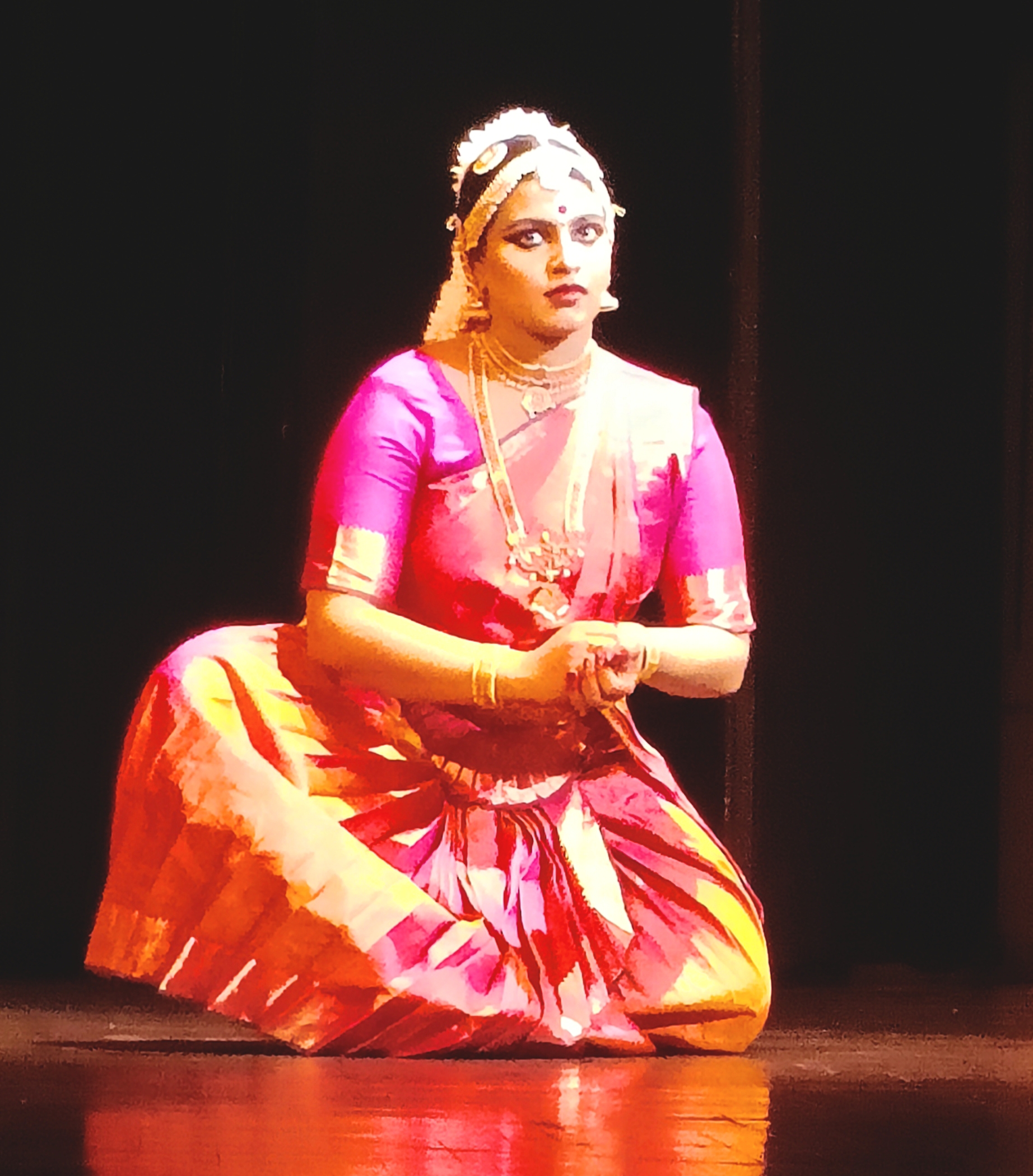
The Bharatanatyam recital “Dvi-itva: Divine Duality” was presented by Kaveri Abrol, disciple of National Award–winning Acharya Jayalakshmi Eshwar, on 4 February at 7:00 PM at The Stein Auditorium, India Habitat Centre, New Delhi. Conceptualised and choreographed by Acharya Jayalakshmi Eshwar, the performance followed a traditional mārgam structure, exploring the philosophical duality of Purusa and Prakrti—consciousness and creative force—through layered narratives, expressive abhinaya, and precise nṛtta.
Daughter of Professor Seema Bawa and Dr. Ashish Abrol, Kaveri has been training in the Guru–Shishya Parampara under Acharya Jayalakshmi Eshwar since the age of eight.
The recital opened with Ganapati Taalam in Gambhira Nattai raga and Adi tala, choreographed by Acharya Jayalakshmi Eshwar. The invocation established a contemplative atmosphere as the dancer portrayed Ganesha’s iconographic paradoxes—Ekadanta and Sukesa—with devotional restraint. The piece emphasised surrender and introduced the evening’s central theme of divine duality.
The expansive Vanajaksa Varnam (Bihag raga, Adi tala, composer T. R. Subramaniam) formed the conceptual core. Through multiple episodes involving Rukmini, Draupadi, Satyabhama, and the devotees of Braja, the dancer explored diverse emotional and philosophical registers surrounding Krishna. Her measured abhinaya and expressive clarity enabled seamless transitions between devotion, surrender, pride, and grace, allowing the rasa to unfold organically.
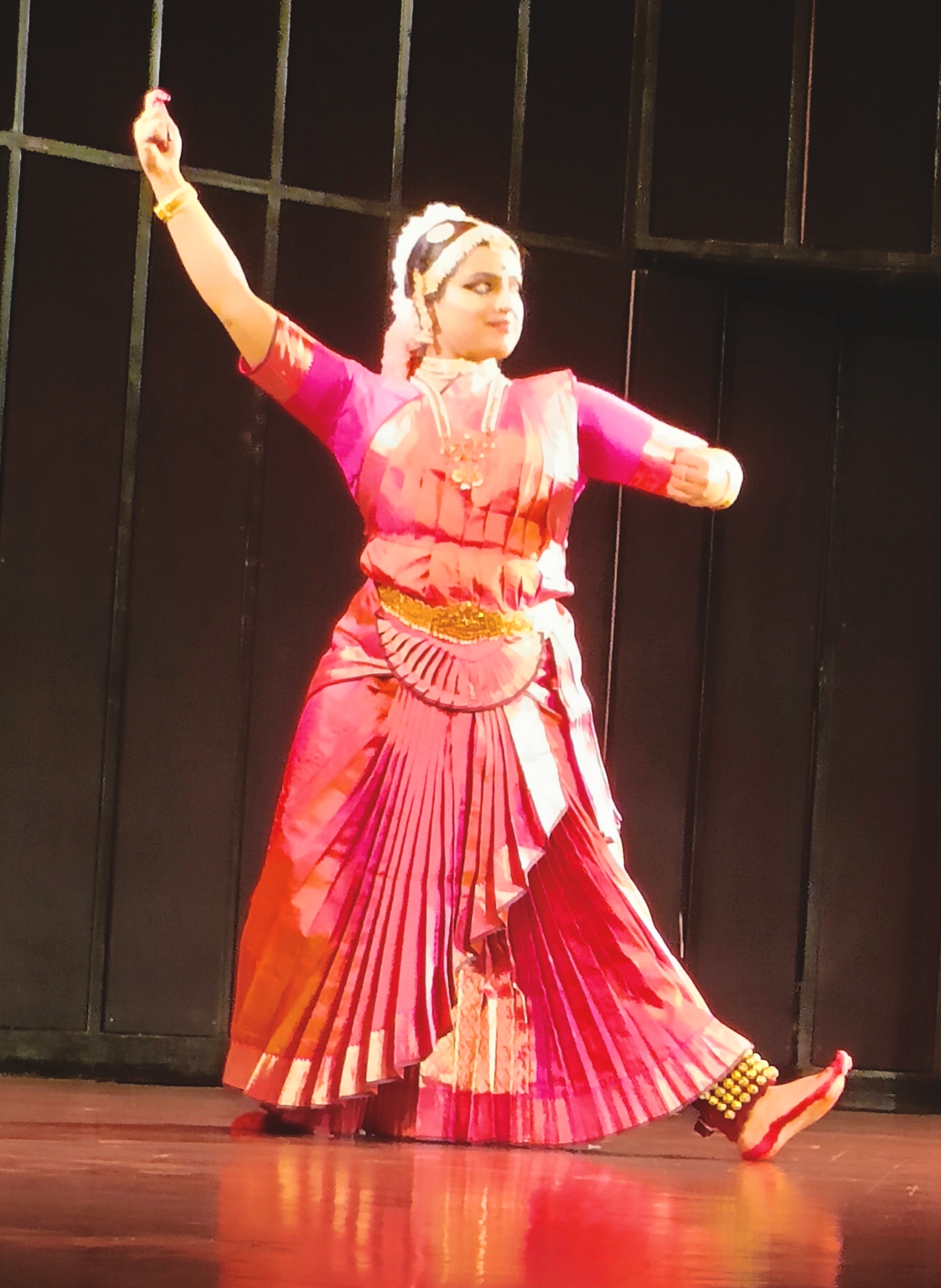
In Varattam Svami, a padam in Saveri raga and Misra Capu tala presented in the Kalākṣetra tradition, the dancer embodied a khandita nayika expressing longing and gentle reproach toward Lord Murugan. The intimate portrayal balanced emotional intensity with classical restraint, revealing the duality between deity and devotee through nuanced expression and subtle humour.
A highlight of the evening was Pasa Khelat Hai, composed in Raga-malika and Tala-malika, choreographed by Acharya Jayalakshmi Eshwar. Through the symbolic game between Radha and Krishna, the dancer explored divine leela, where apparent victory and defeat dissolve into spiritual unity. Her imaginative abhinaya, fluid transitions, and philosophical sensitivity enriched the narrative with depth and resonance.
The recital concluded with a vibrant Kuntaravaraḷi Tillana (Kuntaravaraḷi raga, Adi tala, composer Dr. Balamurali Krishna), a rhythmically charged finale that showcased technical agility, energetic leaps, and confident command over laya and space. The evening ended with a reflective verse from Saundarya Lahari by Ādi Sankaracarya, bringing the philosophical journey to a contemplative close.
Kaveri Abrol’s performance reflected a rare synthesis of intellectual engagement and instinctive artistry, where technique functioned not as display but as a vehicle for meaning. Her movements carried an internal rhythm that suggested deep listening and immersion in the music, allowing transitions between nritya and abhinaya to appear seamless and organic. She demonstrated a refined awareness of stage architecture, using stillness as effectively as motion, and allowing silence to hold emotional weight alongside gesture. Particularly impressive was her ability to sustain dramatic tension without resorting to overt theatricality; instead, she trusted the classical idiom and allowed subtle shifts in gaze, breath, and timing to shape the narrative. This restraint lent her performance a quiet authority, revealing a dancer who is not merely executing choreography but actively thinking and evolving within the tradition.
Overall, “Dvi-itva: Divine Duality” emerged as a disciplined and intellectually engaging Bharatanatyam recital that balanced conceptual clarity with emotional depth. Through refined technique, expressive maturity, and thoughtful choreography, Kaveri Abrol offered an evening rooted in sattva—a harmonious blend of devotion, reflection, and artistic sincerity.