Review of Merry Christmas(movie) in the light of Western Classical Music
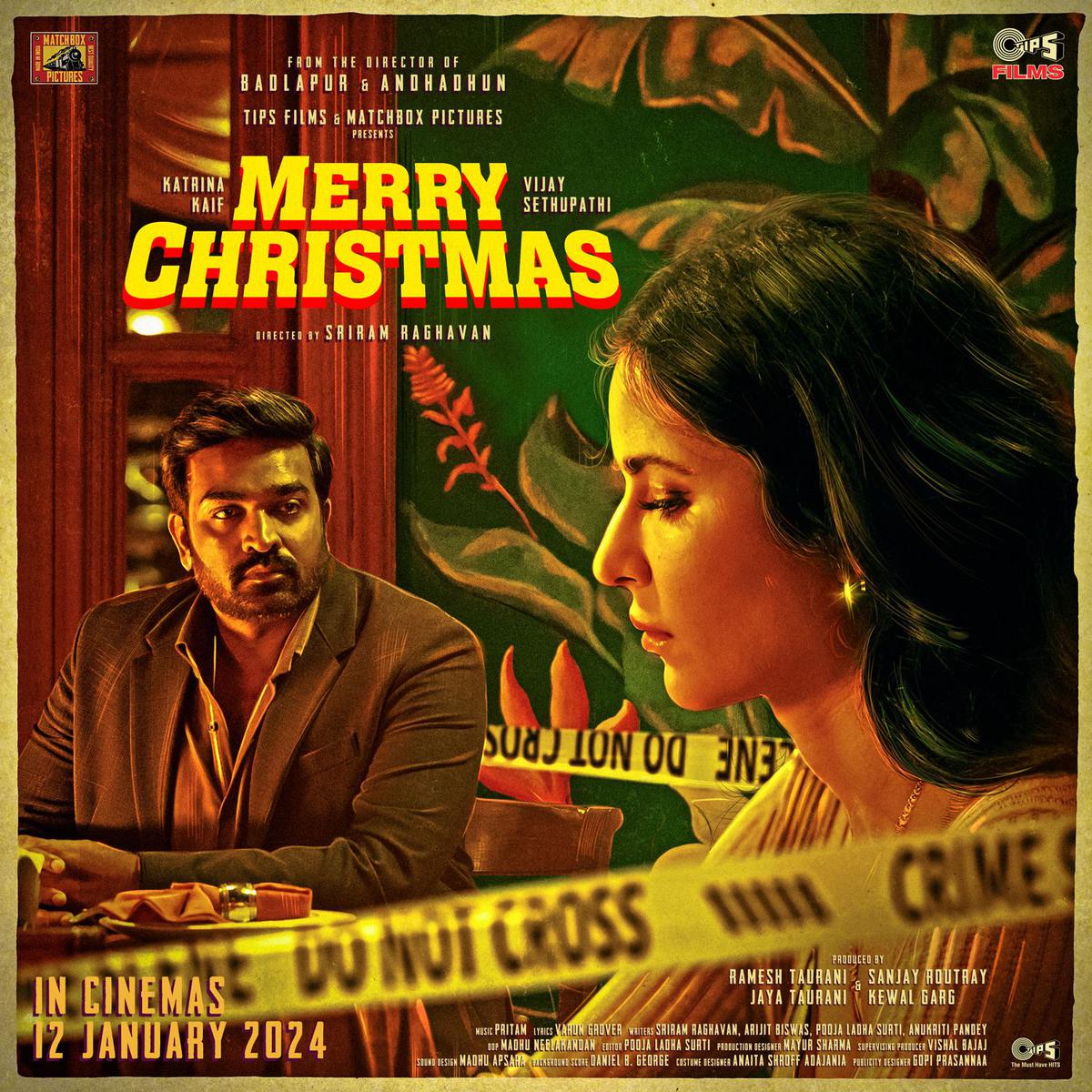
I am a big fan of filmmaker Sriram Raghavan and after Andha Dhun the expectations were high. His recent film Merry Christmas did not fail to amuse me. It was a rapturous experience to see his film in theatre. Witty dialogs, on screen flirting, old world charm of Bombay (not Mumbai as he wrote in title roll) and a Hitchcockian drama in a Victorian set up is all I needed for a thorough entertainment. However, there is more to it if you see details and feel the film. The screenplay is doubtlessly taut with twists and turns every 15 minutes; there is God in details. The visuals of Victorian Gothic and Art Deco buildings of Mumbai added a splendour. Particularly for people who like Mumbai, this movie is a treat because Bombay seeps into it as a character. With an overtone of Christmas, the choice of cityscape cannot be better than Bombay in whole of India.

I never knew Katrina Kaif has so much left in her in terms of acting and histrionics. In Bollywood and regional films of India an actress is outdated after few years being in her peak. She is generally shown and seen as a Diva and an item number. Most of the actresses are out of business before they hit mid-life. So, in that kind of background Katrina has made a comeback and what a comeback it is!!  Her charm added to her free willy nature of the character and surprisingly her histrionics later on exhibited the violence and cruelty in that character. Vijay Setupathy made “Non-Acting” his acting style. His witty one liners, awkward dance and subtle expressions made my day. His method acting made it a superb watching experience. And I must mention Sanjay Kapoor, who, in a brief role, was hilarious.

The movie is a dark comedy, a Noir film where two lonely souls with chequered past and shades of grey cross paths on a Christmas night and gets locked forever. You may love or hate the ending but last 15 minutes was extraordinary. And now comes the role of Western Classical Music in creating and maintaining the mood of this film.

I have observed earlier in Andhadhun how beautifully Sriram Raghavan used Beethoven’s Symphony no.5 to show the jarring visuals and rapturous moments. Similarly, the background music in “Merry Christmas” was heavily influenced by Western Classical Music. For example, during the gunshot the crescendo of Grieg’s Peer Gynt Suite no 1,“In the hall of the Mountain King” superbly helped to muffle the crime. If you hear this classical music piece you will relate how the slow tempo initially is growing to a thundering crescendo eventually within few minutes. For your reference I am pasting the Youtube link below. If you see the film you can relate to what I mean.

Similarly, to add class, Maria was playing Habanera from Carmen by Bizet. Listen to the video. Ronnie was constantly saying “Oh she is a classy woman.” In India, due to a colonial hangover, anything Western means sophistication and it implies that to enjoy western classical music, Opera particularly one needs good education and sophistication, which is treasured by many. So the Habanera from Carmen is a great choice to exemplify class.

And in the end Vivaldi’s Winter played for almost 10 minutes to the perfection. Starting with the Pizzicato which exemplified the sprinkling of doubt in the police officer’s mind, it moves on to a rise in tempo and tone, where swiftly the hidden things expose fast climaxed with the exchange of ring between two souls with tormented past. There is anxiety, hope, romance, despair, magic realism and baffle in that last 5 minutes superbly portrayed by Vivaldi’s Winter. Nowhere in Bollywood I expected Vivaldi’s Winter to personify the swift changes of human behaviour amidst the movie characters. Sriram Raghavan deserves a special mention for this intelligent use of western classical music to evoke and maintain feelings in a film.

Earlier I have observed use of Western Classical Music pieces in a Satyajit Ray movie or Shyam Benegal movie. For example, Gluck’s Melodie from Orpheus and Euridicce was used in “Jana Aranya” by Ray and he also borrowed Mozart’s Symphony no 25 in Feluda theme in “Joy baba Felunath” or Mozart Symphony “Jupiter” and Requiem mass in songs of “Hirak Rajar Desh e”. Kamaleswar Mukherjee used Beethoven Symphony 5 first movement in his “Meghe dhaka tara”. Shyam Benegal films like Kalyug, Trikal or Mammo used music of Beethoven and Mozart. However, in Bollywood use of Western classical music motifs are few and far. In a refreshing take, Sriram Raghavan has used Vivaldi, Grieg and Bizet in “Merry Christmas” to reflect and set the mood.

Overall, the movie “Merry Christmas” brings a point that “Content is King” in an industry flooded with Jawaans, Pathaans and Animal. Merry Christmas is a thoroughly entertaining movie where you have to sit on the edge not to miss the details. Particularly the edgy ending was something a movie goer will remember for a long, long time. In fact, Merry Christmas opens a new year of pure filmmaking and story telling in Bollywood

_______Biswa Prasun Chatterji.


लन्दन की गैसलाइट दिल्ली में

समीक्षा: अनिल गोयल

लन्दन की गैसलाइट दिल्ली में
1965 के आसपास एक फिल्म आई थी, ‘इन्तकाम’. रहस्य और रोमांच से भरपूर एक क्राइम थ्रिलर. साठ और सत्तर के दशकों में ऐसी अनेक फिल्में आईं… सुनील दत्त और लीला नायडू की ‘ये रास्ते हैं प्यार के’, विनोद खन्ना की ‘इम्तिहान’ इत्यादि. फिर फिल्मों का यह जॉनर या श्रेणी समाप्त हो गई. बाद में टेलीविजन पर ‘करमचन्द’ के नाम से जासूसी सीरियल आया, परन्तु उसमें भरा मसखरापन उसकी गम्भीरता को प्रभावित करता था. उसके कुछ समय बाद एक लोकप्रिय धारावाहिक ‘ब्योमकेश बख्शी’ आया, जो एक बंगाली कहानी पर आधारित था. दिल्ली के अंग्रेजी रंगमंच पर तो ऐसे क्राइम थ्रिलर लगातार खेले जाते रहे हैं, परन्तु हमारे हिन्दी रंगमंच पर ‘क्राइम थ्रिलर’ की विधा को बहुत कम प्रयोग किया गया है.
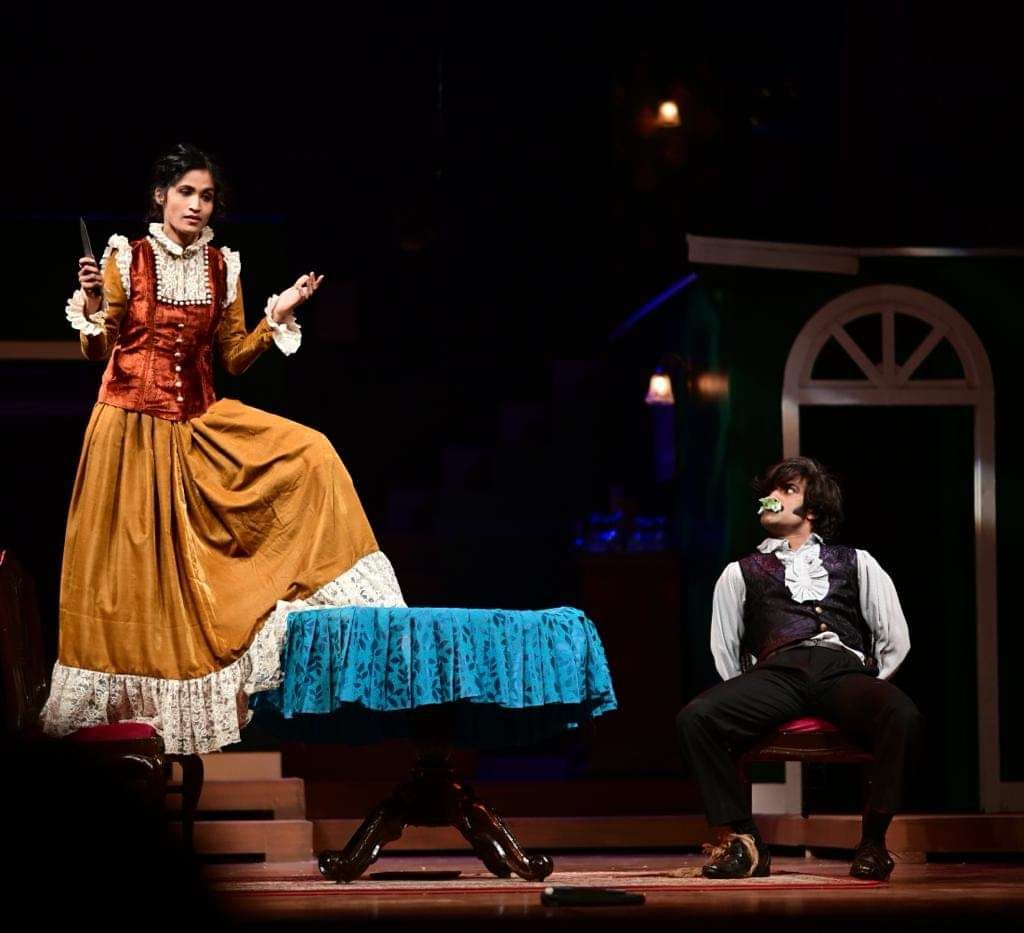
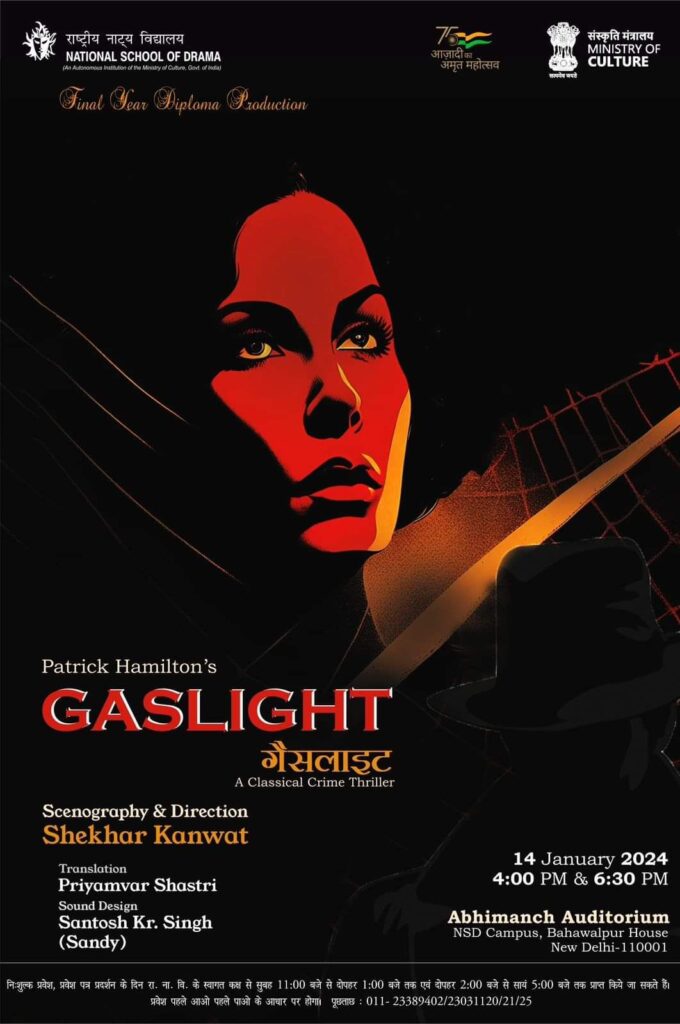
राष्ट्रीय नाट्य विद्यालय (रानावि) के तीसरे वर्ष के विद्यार्थी शेखर काँवट ने अपनी पढ़ाई पूरी होने के बाद, ब्रिटिश उपन्यासकार और नाटककार पैट्रिक हैमिल्टन के क्राइम थ्रिलर नाटक ‘गैसलाइट’ को अपनी डिप्लोमा प्रोडक्शन के लिए मंचित किया. इसका हिन्दी में अनुवाद प्रियम्वर शास्त्री ने किया है.
बहुत वर्षों से रानावि में डिप्लोमा प्रोडक्शन के लिए प्रयोगात्मक या एक्सपेरिमेंटल थिएटर, अथवा सीन-वर्क ही प्रस्तुत किया जाता रहा है, या फिर ‘डिवाईज्ड’ प्ले… पूरा नाटक करने की क्षमता वहाँ के विद्यार्थी बहुत कम प्रदर्शित कर सके. सीन-वर्क विद्यार्थियों के प्रशिक्षण का एक हिस्सा हो सकता है, किसी विद्यार्थी की नाटक को दर्शकों के सामने प्रस्तुत करने की क्षमता को वह नहीं दरशा सकता. तीन वर्ष की स्नातकोत्तर पढ़ाई करने के बाद प्रयोगात्मक या एक्सपैरिमैंटल नाटक, ‘डिवाईज्ड’ प्ले या सीन वर्क को डिप्लोमा प्रोडक्शन के रूप में सामान्य जन-दर्शकों के सामने प्रस्तुत करना उस विद्यार्थी की क्षमता को सार्वजानिक रूप से प्रदर्शित करने से रोकना ही कहा जा सकता है! साथ ही, दर्शकों ने भी ऐसे ‘नाटकों’ से अपने को धोखा खाया हुआ ही अनुभव किया है, जिससे दर्शक रंगमंच से दूर ही हुए हैं.

ऐसे में शेखर काँवट के द्वारा अपने में एक सम्पूर्ण नाटक का प्रस्तुत किया जाना चाहे एक नई परम्परा का निर्माण कर रहा है, या फिर एक पुरानी, भुला दी गई परम्परा को फिर से जीवित कर रहा है, लेकिन वह दर्शकों के लिए एक सुखद अनुभव अवश्य रहा. और नाटक तो दर्शकों के ही लिए होता है. डिजाईन, एक्सपैरिमैंट, ‘डिवाईज्ड’ प्ले या सीन वर्क सामान्य दर्शक के लिए नहीं होते.
और शेखर ने इस नाटक को प्रस्तुत करते समय दर्शकों के प्रति अपनी जिम्मेवारी को पूरी सफलता के साथ निभाया है. नाटक की कहानी लन्दन की एक धुंध भरी सन्ध्या में एक समृद्ध व्यक्ति जैक के घर की है, जिसमें जैक अपनी पत्नी को पागल सिद्ध करना चाहता है. उस घर में पहले भी एक हत्या हो चुकी है. अब से लगभग डेढ़ सौ वर्ष पूर्व उस समय पर, लन्दन में सन्ध्याकाल में घर की बत्तियाँ या लाइट्स गैस से जलती थीं, और वही सांयकाल की चाय का भी समय होता था… उसी से पैट्रिक ने अपने नाटक का नाम ‘गैसलाइट’ रखा.
नाटक में लाइट्स शेखर ने स्वयं डिजाईन की थीं, जिनका ऑपरेशन शेखर की सहपाठी पस्की ने किया. लाइट्स, कॉस्टयूम, सैट्स, दृश्य-परिकल्पना, पोस्टर और निर्देशन, सभी कुछ शेखर काँवट का था. नाटक में एक अच्छी चीज रही धुएँ का कम से कम प्रयोग – धुंध भरी सन्ध्या का दृश्य होने पर भी, शेखर ने धुंध दिखाने के लिये केवल प्रारम्भ के कुछ क्षणों में ही धुएँ का प्रयोग किया था, उसके बाद फिर नहीं किया. अकारण मंच पर धुएँ का प्रयोग न केवल दृश्य को अनचाही छद्मता प्रदान करता है, बल्कि हमारे रंगकर्मियों के स्वास्थ्य को कितनी हानि पहुँचा रहा है, यह उन्हें समझना होगा!
एक अचम्भित कर देने वाला परिवर्तन विद्यार्थियों के इस वर्ष की पहली डिप्लोमा प्रस्तुति में नजर आया, और वह था प्रस्तुति में बाहर के विशेषज्ञों के ‘मार्गदर्शन’ का प्रयोग न करना. डिप्लोमा किसी विद्यार्थी की उसके परिक्षण-काल की अन्तिम परीक्षा होती है… ‘पासिंग आउट ऑफ ए ग्रेजुएट’. और परीक्षा में तो यही देखना होता है कि विद्यार्थी ने अपने तीन वर्षों में यहाँ क्या सीखा. उसमें यदि वह सभी बाहर के विशेषज्ञों के सहयोग या ‘मार्गदर्शन’ के द्वारा ही अपना काम दिखा रहा है, तो फिर कैसे यह समझा जायेगा, कि उसने स्वयं ने तीन वर्षों के प्रशिक्षण में क्या सीखा? इस बार विद्यालय की ओर से विद्यार्थियों को कहा गया कि अपने डिप्लोमा के लिये वे नाटक को स्वयं ही तैयार करेंगे; उन्हें जो भी सहायता रानावि से चाहिए, वह उन्हें मिलेगी, लेकिन डिप्लोमा के नाटक को उन्हें स्वयं अपने से ही तैयार करना होगा. बाहर की तकनीकी सहायता यदि कहीं आवश्यक है, तो वह मिल सकेगी, लेकिन बाहरी मार्गदर्शन इत्यादि नहीं होंगे! पता चला है कि अभ्यास के समय पर विद्यालय के अध्यापक रिहर्सल में आकर बैठते थे, उसका निरीक्षण करते थे. इसी के चलते, इस नाटक में केवल ध्वनि प्रवाह या साउंड डिजाईन के तकनीकी काम को सन्तोष कुमार सिंह ‘सैंडी’ ने किया (जिन्हें पश्चिमी संगीत पर अच्छी पकड़ है), बाकी सभी काम इन विद्यार्थियों ने स्वयं किये! और उसके सुखद परिणाम निकले… दर्शक, जो किसी भी नाटक की सफलता के सर्वोच्च निर्णायक होते हैं, इस नाटक से बहुत प्रसन्न नजर आये… जिनके लिये, शेखर कहता है कि उसने यह नाटक तैयार किया था! नाटक में दर्शक के प्रति शेखर की निष्ठा स्पष्ट नजर आती थी, “इंटेलेक्चुअलिटी से दूर रह कर मैंने यह नाटक तैयार किया था; मैं ऐसा नाटक नहीं बनाना चाहता था जो दर्शकों की समझ में ही ना आये”! इसीलिये मैंने नाटक के बाद किसी दर्शक को शेखर को रंगमंच का तारेंतिनो कहते हुए सुना!
इस परिवर्तन के लिए राष्ट्रीय नाट्य विद्यालय के नये निदेशक चित्तरंजन त्रिपाठी विशेष रूप से अभिनन्दन के पात्र हैं. वे स्वयं यहीं से पढ़े हुए हैं, और बहुत सारी चीजों की आवश्यकता और अनावश्यकता को गहरे से समझते हैं. इस प्रकार का परिवर्तन लाने के लिये अकादमिक परिषद को तैयार करना अवश्य ही कठिन रहा होगा. आशा है कि भविष्य में विद्यालय में और भी अनेक अपेक्षित परिवर्तनों को वे ला सकेंगे. इस प्रकार के परिवर्तन से शेखर को स्वयं भी प्रस्तुति के समय पर बहुत मन्थन करना पड़ा, लेकिन परिणाम सुखद ही रहे!
नाटक के मंच की परिकल्पना दो-मंजिला बॉक्ससैट के रूप में की गई थी, जिस का प्रयोग बहुत कठिन होता है. रॉबिन दास, राजेश बहल जैसे गिने-चुने सैट-डिजाइनर्स ही इस प्रकार के प्रयोग कुशलतापूर्वक करते रहे हैं. परन्तु शेखर ने बहुत कुशलता से इस तकनीक का प्रयोग करके इस नाटक को लुभावना बना दिया. शेखर का लाइट्स का प्रयोग भी सुन्दर था, जिसमें दर्शकों की आँखों पर बहुत कम प्रकाश आ रहा था. एक अच्छी बात यह रही, कि शेखर ने इस नाटक को हिन्दी में प्रस्तुत करके भी इस अंग्रेजी नाटक को “रूपान्तरित” करने का प्रयास न करके नाटक को उसके मूल स्वरुप में प्रस्तुत करने का जोखिम उठाया, जिसकी स्वीकार्यता कठिन होने का खतरा था. लेकिन दर्शकों ने नाटक को बहुत सराहा!
नाटक की सबसे सुन्दर चीज थी इसके अभिनेताओं का अभिनय! जैक की युवा पत्नी बेल्ला के रूप में प्रियदर्शिनी पूजा ने सबसे अधिक प्रभावित किया. अपनी पत्नी को पागल बना देने का षड्यन्त्र रचने वाले एक धनी और क्रूर व्यक्ति जैक के रूप में मनोज यादव का अभिनय भी किसी से कम नहीं था… उसके लम्बे बालों ने सचमुच जैक के चरित्र को ठीक से उभारने में मदद की. पुलिस अधिकारी रफ के रूप में अमोघ शाक्य ने सभी दर्शकों को प्रभावित किया. घर की सहायिकाओं के रूप में आईशा चौहान और अंजली नेगी ने भी छोटी भूमिकाएँ होने के उपरान्त भी अपनी उपस्थिति सशक्त रूप से स्थापित की, विशेषकर ऑपेरा-गायन के द्वारा, या फिर घर के मालिक के साथ के अपने प्रेम-प्रसंग को लेकर. पुलिस के सिपाही के रूप में सौरभ पांडे और सुनील थे. अपने सैट्स और प्रकाश-परिकल्पना, तथा कलाकारों से ऑपेरा के गायन का प्रयोग करवा कर शेखर ने नाटक में ब्रॉडवे का वातावरण निर्मित कर दिया था!
रानावि से निकलने के बाद शेखर की आगे की राह क्या रहेगी, यह तो कैसे जाना जा सकता है! लेकिन इस नाटक के रूप में प्रदर्शित उसकी अपने काम में कुशलता उसके अपने और उसके सभी साथियों के उज्जवल भविष्य की परिचायक तो है ही!


Star Fades, Brilliance Shines On

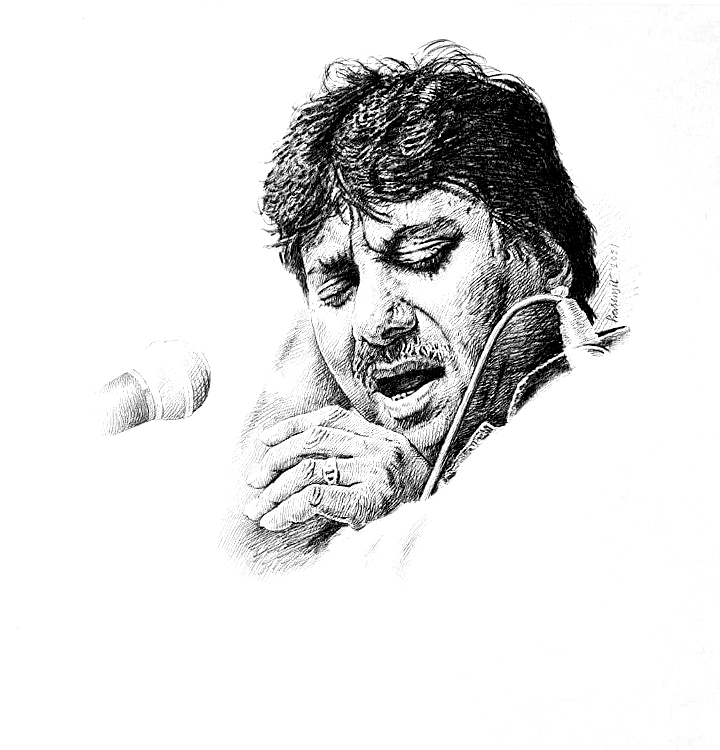
The departure of Ustad Rashid Khan leaves a void in the realm of Indian classical music, casting a shadow of sorrow and emptiness that will endure for a considerable time. Rashid Khan, synonymous with the ethereal world of ‘Anya Ek Bhuban,’ crafted by his resonant and masculine voice, embarked on an enchanting musical journey, seamlessly navigating from one note to another—a phenomenon known in the musical lexicon.

The mere mention of Rashid Khan conjures up a nostalgic image. Thirty-two years ago, on a chilly January evening, I left Tollyganj’s studio and found solace on a roadside tea shop bench, accompanied by cinematographer Kamal Nayak and film director Arun Guhathakurta. At the other end of the bench, a young man joined us. Kamal Nayak inquired, ‘Have you heard of Rashid Khan?’ Back then, he wasn’t yet ‘Ustad Rashid Khan,’ but his fame was burgeoning. Though I had encountered his name in Desh magazine’s music reviews, I did not get an opportunity to experience his highly lauded singing. We struck up a conversation, and over a cup of tea, we acquainted ourselves. Politeness adorned his demeanour, and after a brief encounter, we each resumed our places. Later, I discovered that he studied music at the Music Research Academy, residing with the renowned Ustad Nisar Hussain Khan across the street.

Months after our meeting, Rashid Khan’s vocal performance in an audio cassette, featuring Raag Bageshri and Desh, hit the shelves. In response to our encounter, I purchased the cassette—a delightful experience. His voice, youthful, humble, and enchanting, resonated with a subtle echo of Pandit Bhimsen Joshi’s energy, Ustad Aamir Khan’s solemnity, and Ustad Nisar Khan’s Tarana’s rapid pace. Yet, amidst these influences, Rashid Khan’s voice possessed a distinct identity, brimming with new energy.

In a concise span, Rashid Khan left an indelible mark on the music industry—successive gramophone records, and live concerts domestically and internationally—thrusting him into the limelight among his generation’s talented musicians. Pandit Bhimsen Joshi heralded him as the future of Indian classical music. His desire to break free from the traditional ‘Gharana’ constraints set him on a journey to explore the expansive world of music, incorporating Sufi influences. He ventured into creating new melodies, even lending his voice to classical songs in films, such as ‘Kahe Ujari Mori Nind’ and ‘Tore Bina Mohe Chen Nahi.’

Rashid Khan’s enthusiasm extended beyond film songs; he collaborated with popular Bengali singer Nachiketa to experimentally sing Rabindra Sangeet. Their rendition, based on Raags, with interludes featuring Ustad’s ‘bandis,’ showcased a unique approach, distinct from previous interpretations by Pandit Ajay Chakraborty and Swagatalakshmi Dasgupta. Among his notable achievements was his Krishna Bhajan for Times Music. He often performed in duets with Pandit Bhimsen Joshi, including Bhajans. These bhajans not only reflected the influence of Joshi but also showcased the positive effects of that association.

Recognized by the government with the Padma Shri and Padma Bhushan awards, Rashid Khan achieved success, and honours, and, tragically, departed at a relatively young age—a reality difficult to accept.

Having witnessed several live performances, I regret not having had the chance to meet him except once at the Kolkata airport. A brief interaction revealed his affability, especially upon noticing ‘Aakashbani’ on my visiting card. Classical musicians, it seemed, felt a closer connection when reminded of Aakashbani.

Rashid Khan, initially disinterested in music as a child, imparted his musical knowledge to his son Armaan from a young age. Armaan, emerging as a talented singer and accomplished guitarist, undoubtedly carries the influence of his father.

As the stars extinguish, their brilliance magnifies in the darkness.


20 जनवरी होगा बिफ़्फ़ का धमाकेदार आयोजन। धरती पर चमकेंगे फ़िल्मी सितारे।

लेख: डॉ तबस्सुम जहां

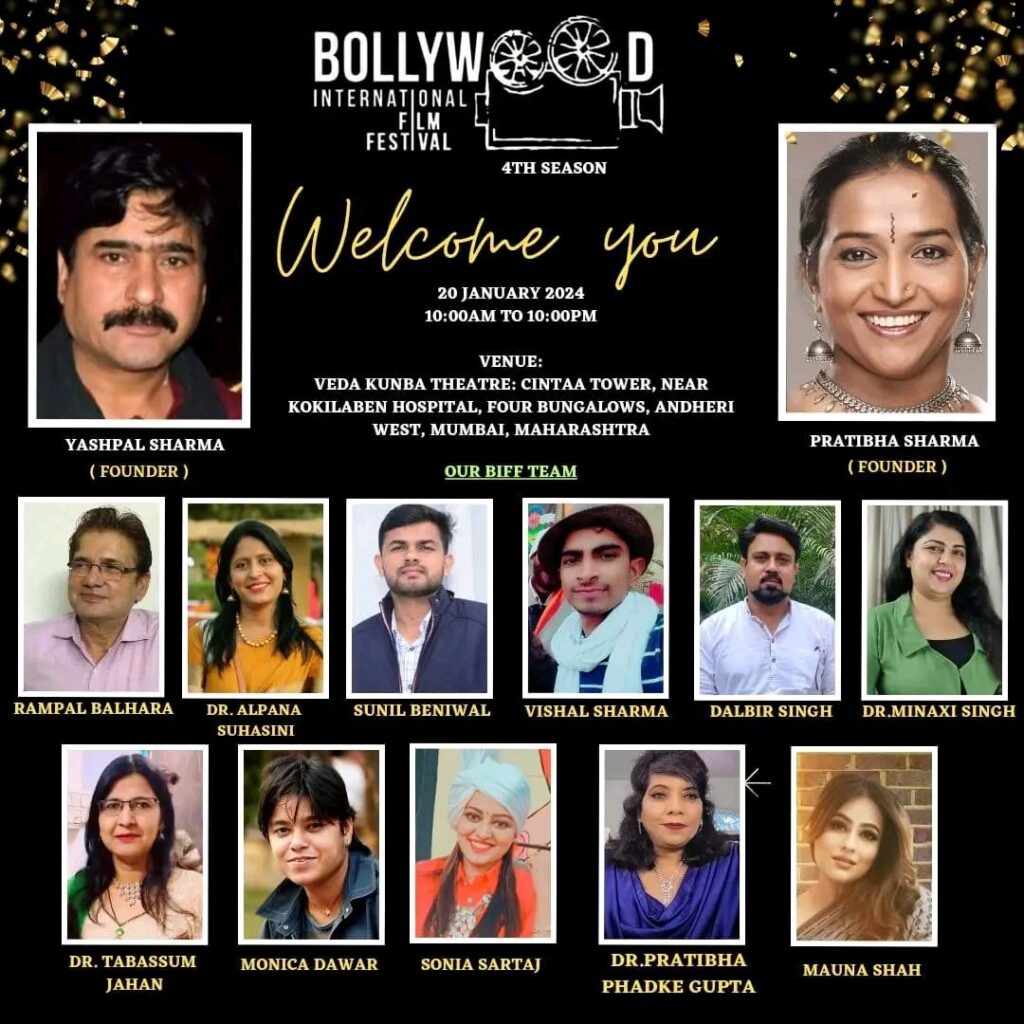
बॉलीवुड इंटरनेशनल फ़िल्म फेस्टिवल का चौथा आयोजन मुंबई में होने जा रहा है। हर साल की तरह इस बार भी सिनेमा जगत की अनेक बड़ी हस्तियाँ इसमें शिरक़त करेंगी। यह कार्यक्रम इस बार भी मुंबई में 20 जनवरी 2024 को वेदा कुनबा थियेटर, अँधेरी वेस्ट में होने जा रहा है। बॉलीवुड एक्टर डायरेक्टर प्रतिभा शर्मा तथा सुप्रसिद्ध एक्टर डायरेक्टर यशपाल शर्मा बॉलीवुड इंटरनेशनल फ़िल्म फेस्टिवल के संस्थापक व आइकॉन फेस हैं।

बता दें कि बॉलीवुड इंटरनेशनल फ़िल्म फेस्टिवल की स्थापना प्रथम लॉकडाउन से पहले 2020 में हुई थी। तब से इसके लगातार तीन कामयाब सेशन हो चुके हैं। 2020-2021दो सालों से अनवरत ऑनलाइन होने वाले इस फेस्टिवल का ऑफलाइन संचालन तीसरी बार पिछले बरस 17-18 दिसंबर को मुंबई के ओशिवारा हारमनी मॉल अंधेरी में हुआ था। इसका चौथा एक दिवसीय सेशन इस बार भी 20 जनवरी 2024 को वेदा कुनबा थियेटर, अँधेरी वेस्ट मुंबई में होने जा रहा है।

बिफ़्फ़ अपने तीन बरस की कामयाब यात्रा कर चुका है। वर्तमान समय के कमर्शियल दौर में बॉलीवुड इंटरनेशनल फिल्म फेस्टिवल का एक ही उद्देश्य है कि दर्शकों तक ज़्यादा से ज़्यादा स्तरीय व बेहतरीन फ़िल्मे पहुँचाएं। फ़िल्म जगत से जुड़े नए लोग फ़िल्म जगत से जुडी बारिकियों को समझें, सीखे और इसका लाभ उठाते हुए कम संसाधनों के साथ भी अच्छी फ़िल्म निर्माण कर सके। बॉलीवुड इंटरनेशनल फ़िल्म फेस्टिवल उन लोगों के लिए काम करता है जिनके पास प्रतिभा तो हैं परंतु मंच और अच्छे मार्गदर्शन का अभाव है। यह मंच नई प्रतिभाओं को आगे लाता है। फेस्टिवल मे होने वाली मास्टर क्लास से इन नई प्रतिभाओं को मार्गदर्शन मिलता है। बिफ़्फ़ मुंबई मे फ़िल्म जगत से सम्बंधित लोग अपनी फीचर फ़िल्म, शॉर्ट फ़िल्म, डॉक्यूमेंट्री, मोबाइल फ़िल्म, स्टूडेंट्स फ़िल्म, एनीमेशन फ़िल्म और म्युज़िक वीडियो इसके अलावा सिनेमा पर आधारित पुस्तके भी भेज सकते हैं। चयनित बेहतरीन फ़िल्म को वर्ष के अंत में होने वाले फ़िल्म फेस्टिवल में दिखाया जाता है। बेहतरीन कैटेगरी को अवार्ड भी दिया जाता है।

बिफ़्फ़ मुंबई मंच की सशक्त हस्ताक्षर हिंदी सिनेमा तथा रंगमंच के बेहतरीन और लाजवाब एक्टर यशपाल शर्मा और उनकी पत्नी प्रतिभा शर्मा किसी परिचय के मोहताज नहीं हैं। लगान फ़िल्म में अपने ज़बरदस्त अभिनय का लोहा मनवाने वाले यशपाल शर्मा ने फ़िल्म यहाँ, अनवर, गुनाह, दम, वेलकम टू सज्जनपुर, गैंग्स ऑफ वासेपुर 2, गंगाजल, राउडी राठौड़, सिंह इज़ किंग सरीखी फिल्मों में अपने अभिनय का बेहतर प्रदर्शन किया वहीं दादा लख्मीचंद जैसी क्लासिकल संगीतमय फ़िल्म बना कर डायरेक्शन के क्षेत्र में भी बुलन्दी के सभी झंडे गाड़ दिए। वहीं दूसरी ओर प्रतिभा शर्मा एक्टर डायरेक्टर होने के साथ यह एक समाज सेविका के रूप में भी जानी जाती हैं जिनका ‘पहल फाउंडेशन’ आर्थिक संकट में फंसे कलाकारों की सहायता करता है। इनकी रचनाधर्मिता की बात करें तो इनकी तक़रीबन सभी छोटी बड़ी फिल्में, डॉक्यूमेंट्री तथा कविताएं व कहानी स्त्री जागरूकता व स्त्री सशक्तिकरण की बुलन्द आवाज़ हैं।

यशपाल शर्मा तथा प्रतिभा शर्मा ने बताया कि आज के कमर्शियल दौर में बॉलीवुड इंटरनेशनल फिल्म फेस्टिवल का एक ही उद्देश्य है कि दर्शकों तक ज़्यादा से ज़्यादा स्तरीय व बेहतरीन फ़िल्मे पहुँचाएं। फ़िल्म जगत से जुड़े नए लोग फ़िल्म जगत से जुडी बारिकियों को समझें, सीखे और इसका लाभ उठाते हुए कम संसाधनों के साथ भी अच्छी फ़िल्म निर्माण कर सके। बिफ़्फ़ की शुरु होने के बारे में प्रतिभा शर्मा बताती हैं कि यह फेस्टिवल बातों-बातों में शुरु हुआ था और जैसे ही बॉलीवुड इंटरनेशनल फ़िल्म फेस्टिवल नाम दिमाग में आया तो इसे आनन फानन तुरंत ही रजिस्टर्ड कर लिया गया। हालांकि इसे लाने के पीछे हमारा एकमात्र उद्देश्य अच्छे सिनेमा को प्रमोट करना है। यशपाल शर्मा इसके मक़सद और उद्देश्य के संबंध में बताते हैं कि जो लोग अच्छे टैलेंटिड हैं, अच्छे कलाकार हैं अच्छे डायरेक्टर व एक्टर हैं वो लोग कई बार फेस्टिवल को लेकर इनसिक्योर महसूस करते हैं कि पता नहीं इतनी बड़ी-बड़ी फिल्में फेस्टिवल में आएंगी तो पता नहीं उनका नम्बर आएगा या नहीं। पर मैं उनको भरोसा दिलाता हूँ कि अगर उनकी फ़िल्म में दम है या उनकी एक्टिंग में दम है तो बॉलीवुड इंटरनेशनल फ़िल्म फेस्टिवल उनको ज़रूर सिलेक्ट करेगा और उनको सम्मानित करेगा व उनको अवार्ड देगा।

बॉलीवुड इंटरनेशनल फ़िल्म फेस्टिवल उन लोगों के लिए काम करता है जिनके पास प्रतिभा तो हैं परंतु मंच और अच्छे मार्गदर्शन का अभाव है। यह मंच नई प्रतिभाओं को आगे लाता है। फेस्टिवल मे होने वाली मास्टर क्लास से इन नई प्रतिभाओं को मार्गदर्शन मिलता है।

वर्तमान में देश विदेश में अनेक छोटे बड़े फ़िल्म फेस्टिवल हो रहे हैं अन्य फेस्टिवल से इतर बिफ़्फ़ कैसे ख़ास है या बिफ़्फ़ ने कैसे अपनी छवि बाक़ी फेस्टिवल से अलग बनाई है इस संबंध में प्रतिभा शर्मा कहती हैं कि उनकी जो ज्यूरी है वह बहुत स्पेशल है। नेशनल और इंटरनेशनल अवार्ड विनिंग ज्यूरी है। उनके शब्दों में “हम निष्पक्ष होकर सारा फैसला देते हैं। पहले हम लोग जो होम ज्यूरी हैं वो देखती हैं वो इस तरह फाईनल फैसला लेते हैं उसके बाद चयन होता है फिल्मों का। इस तरह बहुत ही ट्रांसपेरेंसी होती है। इसमे हम किसी की फ़िल्म अच्छी हो तभी अवार्ड देते हैं।” यशपाल शर्मा के अनुसार “आजकल बहुत सारे फेस्टिवल हो रहे हैं लेकिन मैंने जितने भी फेस्टिवल देखें हैं 90% फेस्टिवल उनकी मैनेजमेंट में गड़बड़ी, उनका एक अच्छा सिनेमा दिखाने में गड़बड़ी, उनका अपने दोस्तों का सिनेमा दिखाने की गड़बड़ी यानी वह केवल अपने कुछ लोगों का सिनेमा दिखाते हैं जिन्हें वह प्रमोट करना चाहते हैं। जब कोई फ़िल्म चल रही है किसी फेस्टिवल के अंदर और वह लोगों को बोरिंग लगे अच्छी न लगे, उसका मानक सही न हो यानी उसकी डिग्निटी सही न हो, फ़िल्म की क्वालिटी अच्छी न हो तो असल में हम अपने दर्शकों को तोड़ रहे होते हैं और उनको जोड़ नहीं रहे होते हैं। केवल कुछ लोगों को खुश करने के लिए दिखा रहे होते हैं।” उनके अनुसार उनके बिफ्फ में ऐसा बिल्कुल नहीं होगा। वे बताते हैं कि पिछले सेशन में बहुत लोग हमारे खिलाफ़ हो गए थे कि हमारी फ़िल्म क्यों नहीं दिखाई। वह फिल्में ज्यूरी ने सिलेक्ट नहीं की थीं इसलिए नहीं दिखाई। हमें इस बात का कोई ग़म नहीं है हम अपनी क्वालिटी के तौर पर अपना फेस्टिवल आगे बढ़ाते रहेंगे और आगे चलते रहेंगे।

बिफ़्फ़ मुंबई का पिछला तीसरा आयोजन मुंबई में हुआ जो अपने आप में बेहद सफल रहा। महीनों तक देश विदेश में इस फेस्टिवल की चर्चा होती रही। खासतौर पर यह फेस्टिवल दो दिन दिखाई जाने वाली सामाजिक फिल्मों को लेकर अधिक चर्चा में रहा। प्रतिभा शर्मा बताती हैं कि बिफ़्फ़ अपने सामाजिक दायित्वों को पूरी तरह से निभा रहा है। वार्षिक फेस्टिवल के अलावा हम लेट्स टॉक के मंच पर सिनेमा जगत से जुड़े कलाकारों व सेलिब्रिटी को बुलाकर विविध विषयों पर चर्चा की जाती है । सिर्फ़ एक्टिंग ही नहीं या सिर्फ़ निर्देशन ही नहीं या फ़िर संगीत ही नहीं बल्कि फ़िल्म से जुड़े सभी पहलुओं पर। तो एक सर्वांगीण चर्चा जो इस मंच पर होती है और मेरे ख़्याल से जिस मंच पर सर्वांगीण चर्चा होती है वो स्वयं अपने आप मे एक सामाजिक दायित्व निभा रहा है। उनके कथानुसार “बिफ़्फ़ अपना सामाजिक दायित्व निभा रहा है या नहीं यह तो दर्शक तय करेंगे और दर्शकों का, लोगों का अभी तक हमें बहुत प्यार मिला है तो मेरे ख़्याल से हम लोग सही जा रहे हैं।” यशपाल शर्मा का भी मानना है कि उनके बिफ़्फ़ में इंडियन फिल्में और विदेशी फिल्में दोनों शामिल हैं चाहे वह शॉर्ट फ़िल्म हों चाहे फ़ीचर फ़िल्म हों, चाहे डॉक्यूमेंट्रीज़ हों या वेबसीरीज़ हों या बाक़ी हों तो इसलिए इसमें जो विदेशी अच्छा सिनेमा है वो हम को देखने को मिलता है। और जो हमारा अच्छा सिनेमा है वो विदेशियों को देखने को मिलता हैं। पिछले फेस्टिवल में मुझे अभी तक याद है कितनी सारी विदेशी फिल्में आई थीं जिनको देखना अपने आप में कमाल का अनुभव था। हमको एक अच्छा दर्शक भी होना है क्योंकि सिनेमा देख कर हम बहुत कुछ सीखते हैं। तो हमारे फेस्टिवल में एक मेला जैसा लगा है तीन साल। और बक़ायदा लोगों ने ख़ूब देखा है सिनेमा और तारीफ़ भी की है। सैंकड़ों मैसेज भी आए हैं। यह बहुत बड़ी उपलब्धि है हमारा यही मक़सद है कि विदेशी सिनेमा भारतीयों तक पहुँचे और भारतीय सिनेमा विदेशियों तक पहुँचे बिफ़्फ़ ने दोनों जगह आशातीत सफलता पाई है।

प्रतिभा शर्मा और यशपाल शर्मा बताते हैं कि बिफ़्फ़ में लोग फीचर फ़िल्म, शॉर्ट फ़िल्म, डॉक्यूमेंट्री, मोबाइल फ़िल्म, स्टूडेंट्स फ़िल्म, एनीमेशन फ़िल्म और म्युज़िक वीडियो इसके अलावा सिनेमा पर आधारित पुस्तक भी भेज सकते हैं। चयनित बेहतरीन फ़िल्म को जनवरी में होने वाले फ़िल्म फेस्टिवल में दिखाया जाएगा। इतना ही नहीं बेहतरीन कैटेगरी को अवार्ड भी दिया जाएगा।

बिफ़्फ़ फेस्टिवल सीज़न 4 जनवरी में मुंबई में होगा उसके लिए ज़ोरो शोरो से तैयारियां हो रही हैं एक ख़ास बात जो बिफ़्फ़ को अन्य फेस्टिवल से अलग करती है वो इसकी रचनाधर्मिता के प्रति लगाव है यही कारण है कि इस बार पहली बार लोगों की सिनेमा जगत विषय पर लिखने वाले लेखकों को भी फेस्टिवल में शामिल किया गया है प्रतिभा शर्मा और यशपाल शर्मा चूंकि स्वयं लेखन और साहित्य जगत में रूचि रखते हैं इसलिए फेस्टिवल में उन पुस्तकों को भी शामिल किया गया है जो सिनेमा से जुड़ी हैं। चयनित पुस्तकों को भी अवार्ड दिया जाएगा।


लेखक: डॉ तबस्सुम जहां

पुस्तक ‘दूसरी हिंदी’ मे कविताएं संकलित। इनकी प्रथम लघुकथा चौथी दुनिया समाचार पत्र में छपी। इसके बाद समय-समय पर अनेक कहानियां, लघुकथाएं, कविताएँ, पुस्तक समीक्षा, फ़िल्म समीक्षा, आलेख, आलोचनात्मक समीक्षा देश-विदेश की विभिन्न प्रतिष्ठित पत्र-पत्रिकाओं जैसे सदभावना दर्पण, संवदिया, पुरवाई (ब्रिटेन), हम हिंदुस्तानी (अमेरिका), साहित्यकुंज (कनाडा), नेशनल एक्सप्रेस, विभोम स्वर, सामायिक सरस्वती, विश्वगाथा, आगमन, अनुस्वार, पैरोकार, आधुनिक साहित्य पत्रिका, हस्ताक्षर, जामिया हिंदी विभाग की पत्रिका ‘मुजीब’ तथा लोकस्वामी, लोकमत, मुस्लिम टुडे, यूनिवर्सल कवरेज, चौथी दुनिया, भारत भास्कर, दैनिक भास्कर, इंदौर समाचार पत्र, डेल्ही हंट, अमृतविचार, हरिभूमि, 4 pm, दैनिक जनवाणी, जनहित इंडिया, प्रातः काल समाचार पत्र, मीडिया केयर, देश रोज़ाना, उजाला, विशेष दृष्टि तथा सिटी एयर, क़ुतुब मेल, फॉलोअप, समाचार वार्ता, पार्लियामेंट स्ट्रीट, पैरोकार वार्ता के अलावा अनेक प्रतिष्ठित वेबसाइट और अनेक अखबारों में प्रकाशित हों चुकी हैं।


Captivating Acts and Compelling plays: Natsamrat’s Theater Extravaganza Leaves Mumbai Spellbound

Natsamrat staged four different plays at Creative Adda Auditorium, Versova, Andheri (W), Mumbai where the plays were greatly appreciated by the audience.

The first play, “Kuch Tum Kaho Kuch Hum Kahein,” written by Ashish Kotwal, was performed on January 6th at 7:00 PM at the Creative Adda Auditorium, Versova, Andheri West, Mumbai. The play revolves around two individuals, an elderly doctor, Dr. Anand, who has created a small world for himself through his profession, and a lively woman named Manasi, who enjoys life in her unique way. Despite their different perspectives on life, Dr. Anand has closed the doors to happiness, while Manasi, having endured her sorrows, strives to move forward and embrace life. The main actors, Vivek Sharma and Munmun, displayed a captivating chemistry on stage, alternating between witty banter and providing support to each other. The behind-the-scenes team, including director Shyam Kumar, lyrics by Rakesh Kodinya, Singer Ishan Tyagi, stage manager Sunil Rathore, stage properties by Suraj Singh, make-up by Payal Rani, costume by Chhobi Saha, Sound operated by Aman and other back stage team, contributed to the success of the play.

On January 6th at 8:15 PM, the second play, “Besahara Aurat,” written by Anton Chekhov and directed by Fareed Ahmed. The story, featuring Munmun in the lead role and Vivek Sharma as the bank manager, Assistant played by Jagbir Choudhary and Helper by Aman was filled with laughter and poignant moments. Stage Management by Vishwajeet, stage property by Lokesh, make-up by Raj Rani, Light Design by Natsamrat’s director Shyam Kumar. The play showcased the sweet and sour exchanges between the main characters, leaving a lasting impression on the audience. Shyam Kumar, the director of Natsamrat, brought this beautiful play to the Mumbai audience.

As part of the “Fourth Mumbai Theatre Festival” by Natsamrat on January 9th, two plays were staged. The first play, based on Harishankar Parsai’s story titled “Nithalla,” adapted by Kuldeep Kunal & Directed by Nagender Kumar Sharma, was presented as a solo performance by own Nagender Kr. Sharma, receiving much appreciation from the audience. The story revolves around an idealistic person, Nithalla, who dedicates his life to selfless deeds, challenging the societal trend that recognizes only those who work for their own gain.

The second play, “Veer Savarkar,” written, enacted, and directed by Nagendra Kumar Sharma, depicted the journey of Savarkar in the struggle for independence. The emotional portrayal of Savarkar’s sacrifices left the audience moved. Both plays were presented with the support of Haryana Kala Parishad.

In conclusion, the “Fourth Mumbai Theatre Festival” organized by Natsamrat showcased a variety of plays, each leaving a distinct impact on the audience. The meticulous direction, powerful performances, and thoughtful themes made the festival a memorable experience for the Mumbai audience. Shyam Kumar, the director of Natsamrat, and the entire team received well-deserved appreciation for their efforts in bringing quality theatre to the city.


Daklakatha Devikavya – Provoking and Contemplative

A review by Manohar Khushalani for IIC DIARY

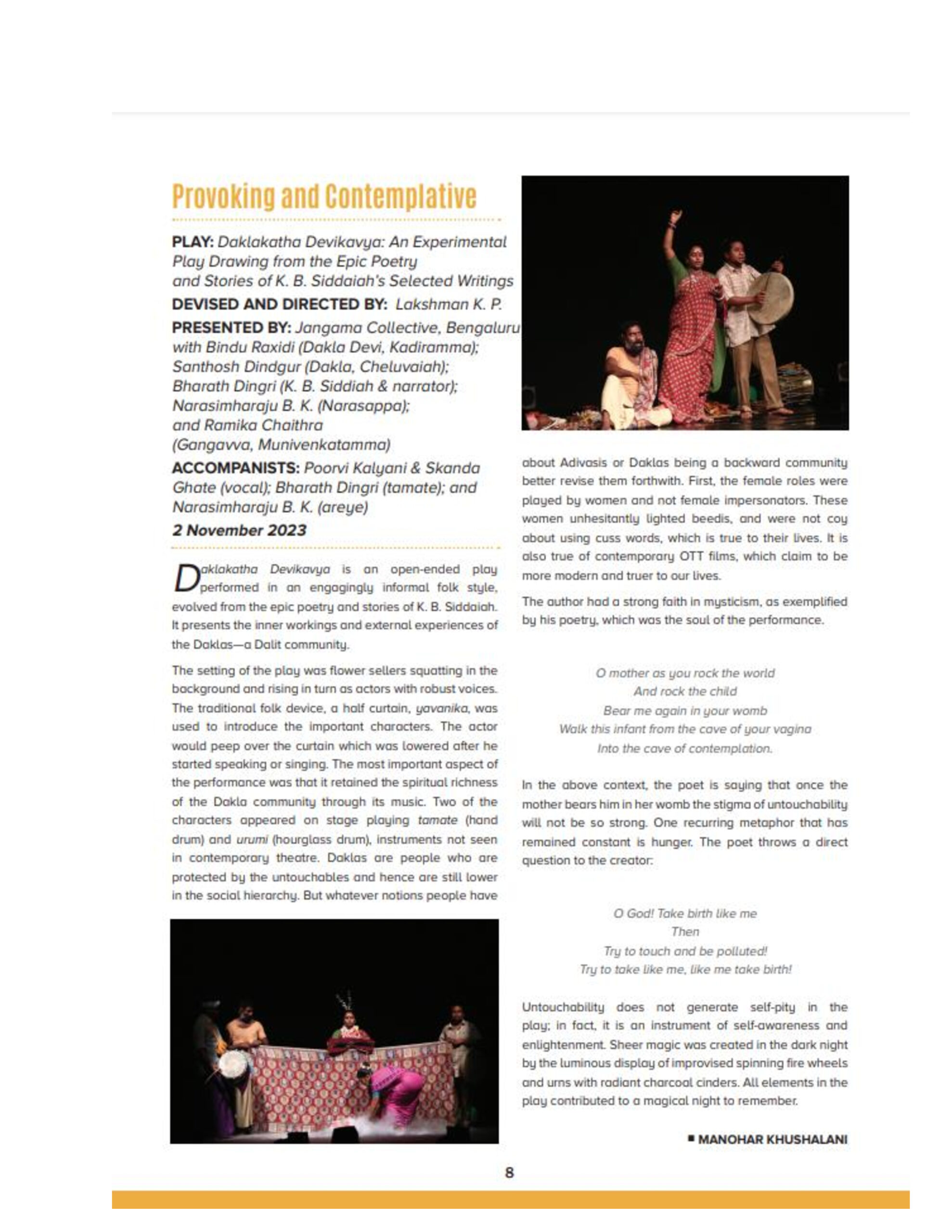
Daklakatha Devikavya is an open ended play performed in an engagingly
informal folk style, evolved from the epic poetry and stories of K.B. Siddaiah’s .
It was Directed by Lakshman K.P. It presents the inner workings and external
experiences of the Daklas — a Dalit community.
 
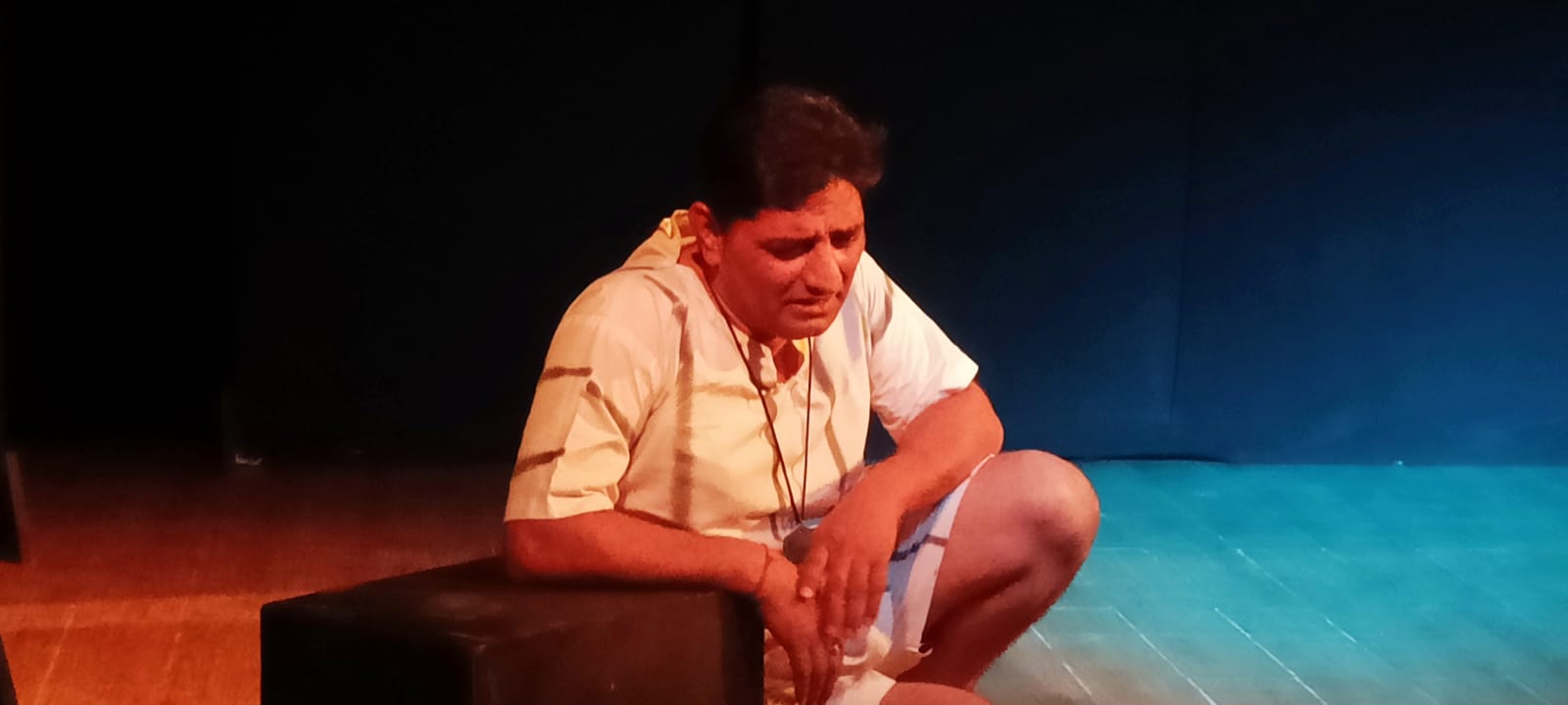
Presented by Jangama Collective, Bengaluru with Bindu Raxidi (Dakla Devi,
Kadiramma); Santhosh Dindgur (Dakla, Cheluvaiah)l; Bharath Dingri (K.B.
Siddiah & narrator); Narasimharaju B.K. (Narasappa); and Ramika Chaithra
(Gangavva, Munivenkatamma)
 
Accompanists who also added tone and tenor to the performance were: Poorvi
Kalyani & Skanda Ghate (vocal); Bharath Dingri (tamate); and Narasimharaju
B.K. (arevadya)

The Flower Sellers

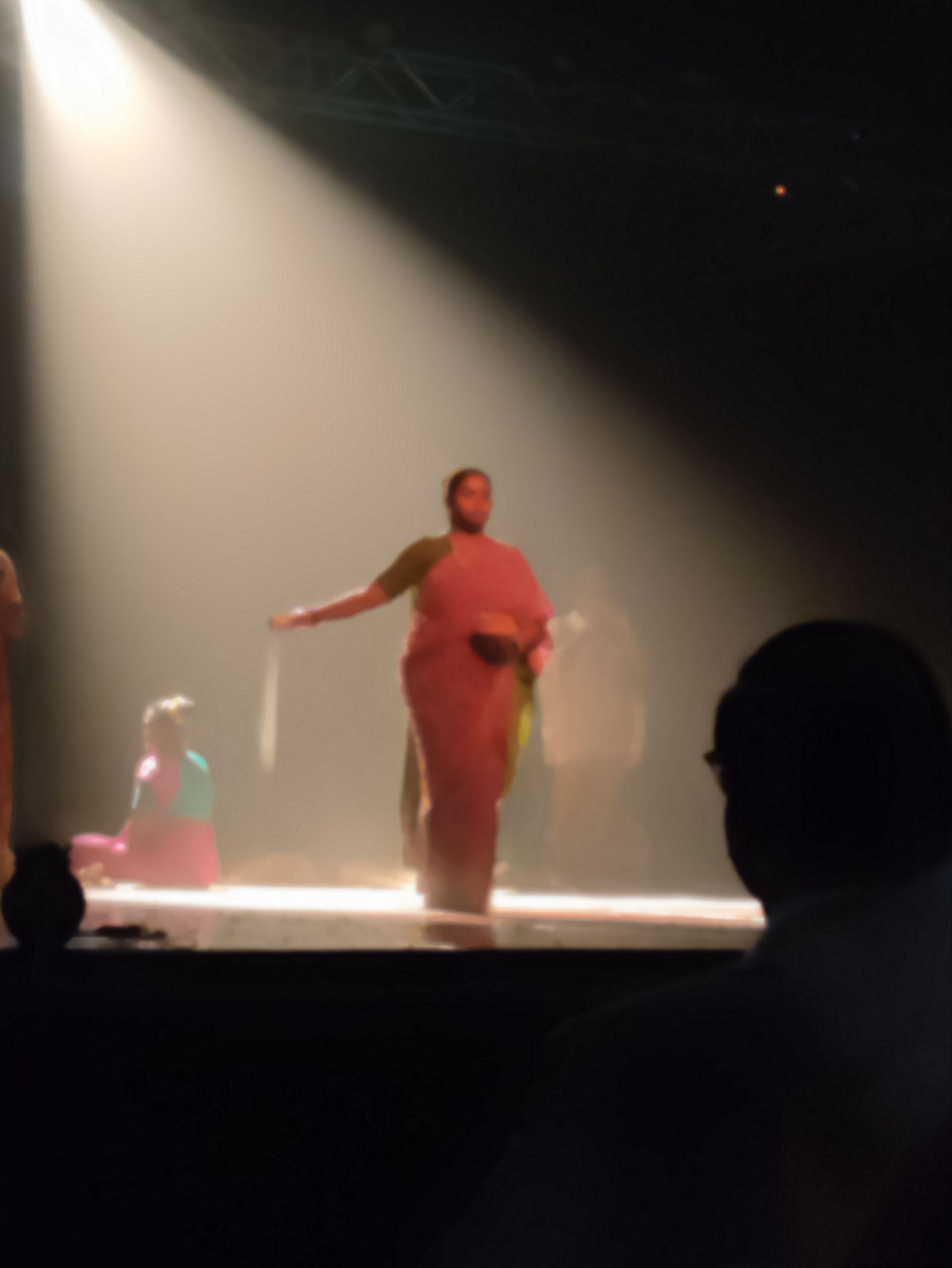
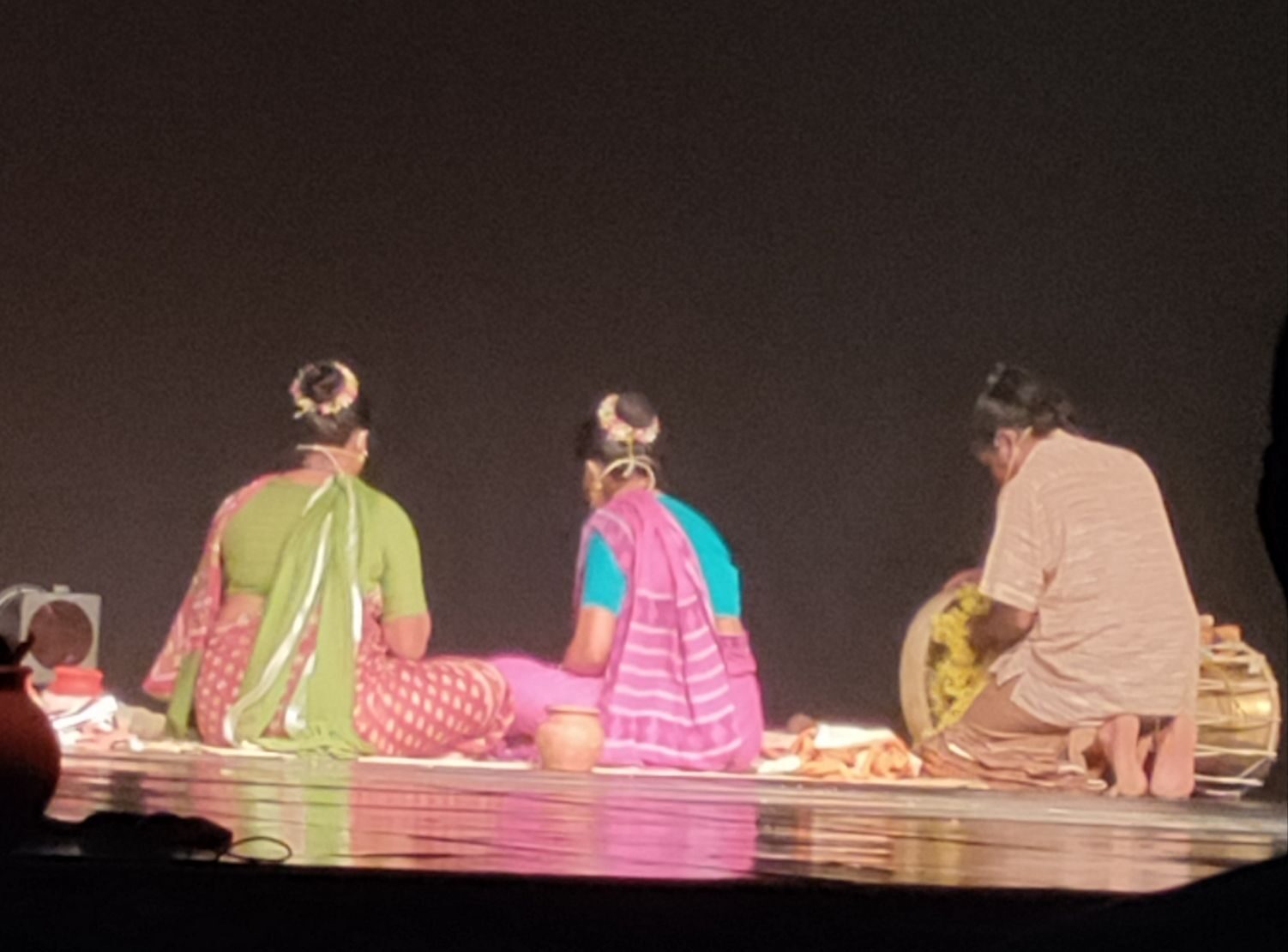
The setting of the play had flower sellers squatting in the background and
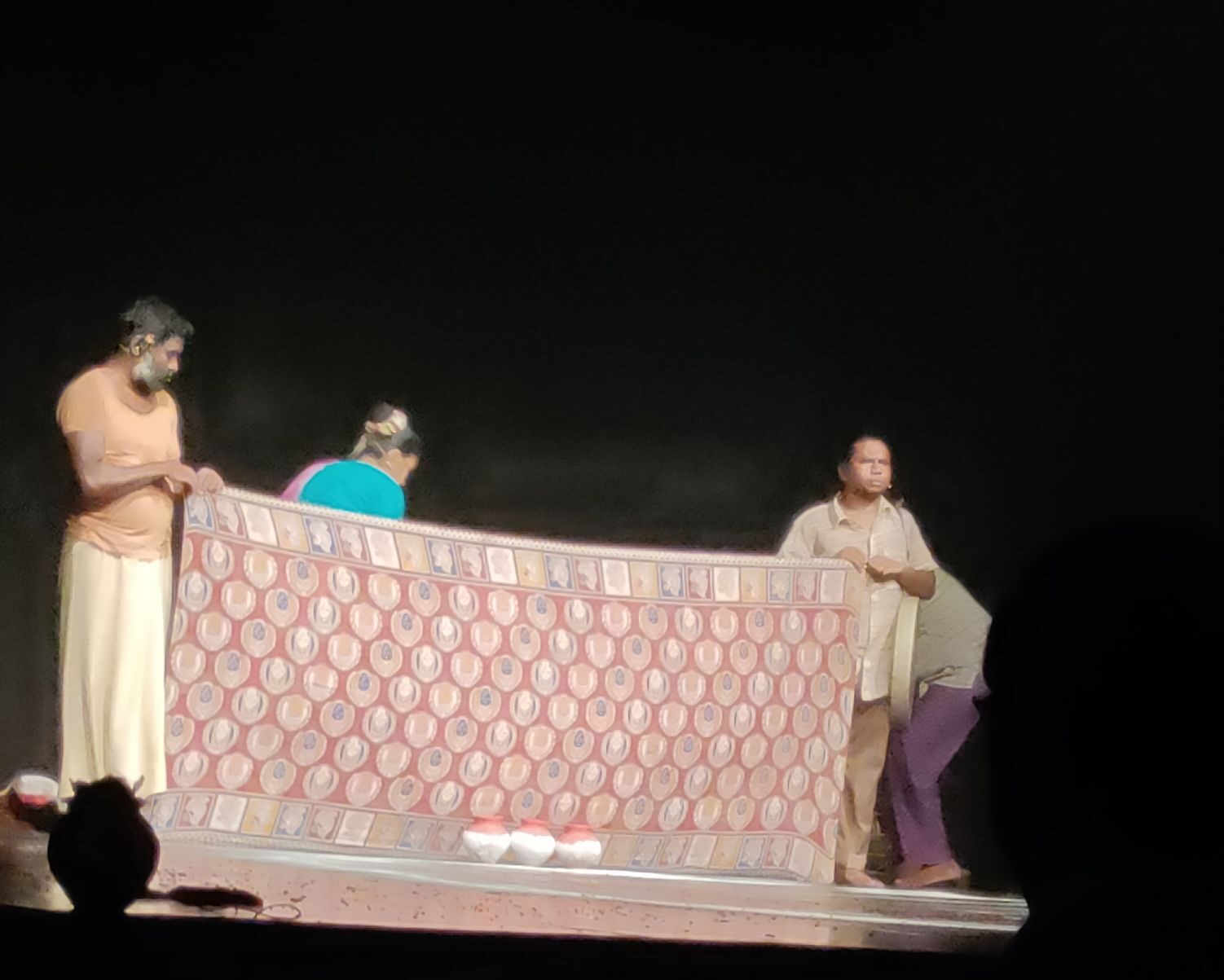
rising in turns as actors with robust voices. The traditional Folk device, a half
curtain, known as, Yavanika, was used to introduce the important characters.
The actor would peep over the curtain which was lowered after he started
speaking or singing.

The Yavanika
The Traditional Yavanika

The most important aspect of the performance was that it
retained the spiritual richness of the Dakla community, through its music. Two
of the characters appear on the stage playing tamate (hand drum) and
arevadya (urmi), instruments not seen in contemporary theatre. Daklas are
people who are protected by the untouchables and hence are still lower in the
social hierarchy. But whatever notions people have about Adivasis or Daklas
being a backward community, better revise them forthwith. First of, the
female roles were done by women and not female impersonators. These
women unhesitantly lighted beedis, and were not coy about using cuss words,
which is true to their life. It is also true of contemporary OTT films, which claim
to be more modern and truer to our life.

The author had a strong faith in mysticism as exemplified by his poetry which
was the soul of the performance:

O mother as you rock the world
And rock the child
Bear me again in your womb

Walk this infant from the cave of your vagina
Into the cave of contemplation.

Here in the above context the poet brings out that once the mother bears him
in her womb the stigma of untouchability will not be so strong. One recurring
metaphor that has remained constant is hunger. The poet throws a direct
question to the creator:

O God! Take birth like me
Then
Try to touch and be polluted!
Try to take like me, like me take birth!

Untouchability does not generate self-pity in the play, in fact it is an instrument
of self-awareness and enlightenment. Sheer magic was created in the dark
night by luminous display of improvised spinning fire wheels urns with radiant
charcoal cinders. All elements in the play contributed to an experience of a
magical night to remember.

Watch the entire play on You Tube:

The article as published in IIC Diary (Oct-Nov 2023)


नाटक “बैजू बावरा”

समीक्षा — अनिल गोयल
मराठी और बंगाली रंगमंच से आक्रान्त होने की सीमा तक प्रभावित रहे हिन्दी रंगमंच में कुछ चरित्र, विशेषकर भारतीय इतिहास, संस्कृति और धर्म से जुड़े हुए लोग किनारों पर ही रहे… जिसमें विभिन्न विचारधारावादी बौद्धिकों का बहुत बड़ा योगदान रहा. हालांकि, हमारे फिल्म-जगत ने ऐसे अनेक व्यक्तियों पर फिल्में बनाईं. स्थिति में परिवर्तन आने से, नकार दिये गये ऐसे कुछ चरित्र अब रंगमंच के प्रकाश-पुंज की परिधियों में आ रहे हैं.

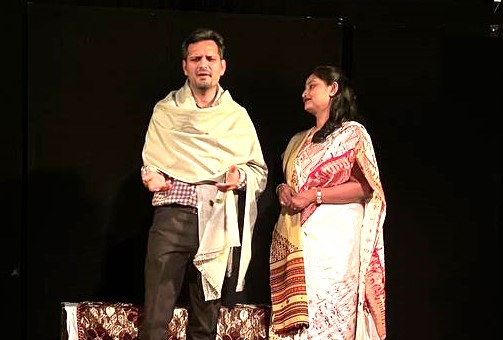
ऐसे ही एक महान संगीत-नायक बैजू बावरा के जीवन पर 2024 के जनवरी माह की चौथी तिथि को अरविन्द सिंह चन्द्रवंशी ने अपना नया नाटक ‘बैजू बावरा’ दिल्ली के श्रीराम सैंटर में गाँधी हिन्दुस्तानी साहित्य सभा के सौजन्य से प्रस्तुत किया. नाटक का लेखन विशाल सिंह और अरविन्द सिंह ने किया है.

यह नाटक एक बार फिर से इस बहस को जन्म देता है कि क्या उन व्यक्तियों का कोई अस्तित्व कभी रहा होगा, जो राजदरबारों में नहीं रहे, जिनका उल्लेख राजाओं-बादशाहों के द्वारा लिखवाये गये इतिहास में नहीं है, और जिनकी भव्य राजसी समाधियाँ या मजारें नहीं बन सकीं! ऐसे अनेक ऐतिहासिक लोगों के योगदान को उनके अपने क्षेत्रों के दिग्गज तो स्वीकार करते हैं, परन्तु हिन्दी रंगकर्मी अपनी दृष्टि उन दिग्गजों तक नहीं पहुँचाना चाहते. एक वर्ग कुछ गैर-ऐतिहासिक चरित्रों पर ‘अनारकली’ और ‘मुगले आजम’ जैसी फिल्में बना लेता है. परन्तु दूसरा वर्ग तुलसी, मीरा, सूरदास, रसखान, बैजू बावरा, शिवाजी, महाराणा प्रताप, नेताजी सुभाषचन्द्र बोस और इन जैसे अनगिनत महान चरित्रों को गुमनामी के अन्धेरों में खोये रहने को ही विवश करता आया है.

इस बहस से बाहर निकल कर, आज के काल के हिन्दी रंगमंच के परिदृश्य में, अत्यन्त सीमित साधनों में इस प्रकार के एक ऐतिहासिक नाटक को करना साहस का नहीं, अपितु दुस्साहसिक कृत्य ही कहा जायेगा! अरविन्द की इस नाटक की यह पहली प्रस्तुति थी, जिस कारण से इस प्रस्तुति से बहुत अधिक अपेक्षाएँ की भी नहीं गई थीं. और एक संगीतमयी नाटक में सबसे पहली आवश्यकता होती है गायक-अभिनेताओं की. आज की तिथि में दिल्ली में गायक-अभिनेताओं की खोज करना रेगिस्तान में पानी ढूँढ़ने के समान ही होगा. पर्वतीय कला केन्द्र से जुड़े कुछ रंगकर्मियों को छोड़ दें, तो बाकी अभिनेता और अभिनेत्रियों को इस विषय में कोई विशेष दक्षता प्राप्त नहीं है. ऐसे में, इस नाटक का क्या भविष्य होगा? इस प्रश्न का उत्तर तो भविष्य ही दे पायेगा! हाँ, अभिनेताओं ने अपनी ओर से भरपूर मेहनत करके नाटक के विषय को दर्शकों तक पहुँचाने में कोई कसर नहीं छोड़ी.

इस नाटक में मंच-आलोकन ने निराश ही किया… आज यदि रंगमंच के प्रकाश-आयोजक नृत्य के लिये बनाई गई लाईटें नाटकों में प्रयोग कर रहे हैं, मंच के पीछे से दर्शकों की ओर को, उनकी आँखों पर प्रकाश फेंक रहे हैं, जर्क या झटके के साथ प्रकाश को खोल और बन्द कर रहे हैं, अकारण ही पूरे नाटक में धुएँ का प्रयोग कर रहे हैं, तो वे रंगमंच को हानि ही पहुँचा रहे हैं. रंगमंच एक सामूहिक प्रक्रिया है. यदि प्रकाश, संगीत, परिधान इत्यादि किसी भी क्षेत्र का व्यक्ति एकाधिक बार रिहर्सल में आ कर विषय को समझने की चेष्टा नहीं करता, तो नाटक कैसे उठ पायेगा? आज मुम्बई में फिल्म इंडस्ट्री में भी, गानों के गायन के समय पर इस सामूहिक प्रक्रिया को एकल बना दिया गया है, जहाँ पहले से रिकार्डेड ट्रैक्स हैं, एक गायक आते है और गा कर चला जाता है, फिर कभी और, दूसरा गायक आता है और अपनी पंक्तियाँ गा कर चला जाता है, तो उस गाने में भाव और फिल्म के दृश्य के लिये आवश्यक कोमल संवेदनाएँ कैसे पैदा होंगी? बहुत सुनियोजित तरीके से हिन्दी फिल्म संगीत की हत्या की जा रही है. आशा है कि दिल्ली के रंगकर्मी इससे कुछ सीखेंगे और अपने काम को एक सामूहिक प्रक्रिया के रूप में ही स्वीकार करेंगे… अन्यथा दिल्ली के रंगमंच के दरवाजे सदा के लिये बन्द हो जाने वाले दिन शायद बहुत दूर नहीं होंगे!

एक अछूते विषय को लेकर नाटक करने के लिये अरविन्द सिंह को फिर बधाई!


INDIA vs SOUTH AFRICA – TWO TEST SERIES, an EPILOGUE

By Sunil Sarpal

Match Winners: Bumrah, Siraj and Shami

It was a very short series to judge who the real winner is. Generally when Team India visits Australia, New Zealand, South Africa and England, they take some time to acclimatize and take a stock of the pitch behaviour, weather conditions etc. etc. And in the process the first encounter is won by the host country, taking early advantage in the series.

Generally, in India for fast bowlers the rise of the ball is knee high, whereas, in Australia it is waist high. It therefore becomes a different ball game in India viz-a-viz Australia. In England and New Zealand, the swing imparted by fast bowlers is alarming in proportion. Life for a batsman becomes very difficult in such conditions. That is the reason, life for Indian batters becomes very difficult early on.

Every other batter is not Sachin Tendulkar who used to get adjusted with any condition quickly, be it swing, pace, spin, height imparted by the bowlers.

In South Africa, India had to face the ignominous defeat in the first test in trying conditions. Only KL Rahul could post a century from Indian side.

In the second test, India got the early advantage when SA captain after winning the toss elected to bat first. In a situation when Indian batters were low in confidence after facing first test defeat, they were somewhat relieved off SA fast bowling attack.

Indian pace attack, in particular, Mohd. Siraj bowled magnificently and took 6 SA wickets and India resultantly cleaned up SA with a paltry score of 55 runs on the board. The die had been cast by Mohd. Siraj in the second test and the pendulum shifted in favour of India. India took a lead of 100 odd runs in the first innings.

Bumrah did a Siraj in the second innings when he too scalped six SA wickets and India tasted SA defeat on their own soil.

Three Indian pacers from time to time have created havoc in the opposition camp, namely Bumrah, Siraj and Shami.

India is fortunate to have the services of veterans; Rohit Sharma and Virat Kohli in it’s ranks. The other batters viz Gill, Iyer and Rahul take full advantage of their benign presence.

In a team where there is no room for the recuperating Rishab Pant, his replacement, KL Rahul, is doing a yoeman’s job for the team with both bat and gloves behind the stumps.

Team India at the moment is hard to challenge and put aside or be dislodged in most conditions.


Is anarchy acceptable in the name of artistic freedom? The magic of OTT.

Anant OTT

Book Review by
Utpal Datta

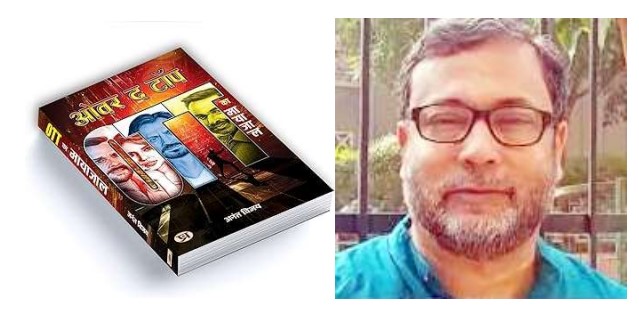
OTT platforms, a new addition to the media, have become competitors to cinema and television programs, raising a few uncomfortable questions. Does OTT concern discern viewers? Is the tasteless and obscene content on OTT platforms a result of the absence of a censor board? Is this the beginning of a dangerous practice for society and culture? Journalist and author Anant Vijay seeks answers to these questions through his Hindi book ‘OTT Ka Mayajal.’ This is his latest book and probably the first Indian book on OTT. Anant Vijay, a national award-winning film critic, journalist, literary critic, and political analyst, reveals all these identities through this book. The writing style reflects more of his journalistic mentality than a writer’s, making the book easy to read, even for non-Hindi-speaking readers familiar with Hindi.

OTT is a platform primarily for movies and similar content. This book mainly discusses programs aired in Hindi. During the pandemic, cinemas were closed, people were under house arrest, and television became the sole means of entertainment for cinema lovers. At the same time, OTT platforms became well-established in the minds of the audience, and OTT directors started planning to provide the audience with a new taste. OTT had old popular movies replaced by new ones, especially those that failed in theatres. At one point, cinemas opened, but due to the limited audience and the popularity of OTT, new Hindi films were released on this platform. Filmmaking for OTT started, and web series in the style of a TV series also began.

Most web series used elements like obscene abuse, violent scenes, and explicit sexual content to attract a larger audience. While censor boards for movies monitor such scenes, many producers took unimaginable liberties due to the lack of controls for OTT, resulting in chaos in the world of creation.

Some directors are notably aggressive, using verbal abuse to grab the audience’s attention. The unhindered and uncontrolled environment of OTT platforms is reflected in his encouragement in the series ‘Sacred Games.’ Anant Vijay rightly comments, ‘When there is no bondage and no need to apologize, freedom turns into anarchy.’ He also wrote, ‘In fact, such people use abuse, violence, and sexual scenes to cover up their incompetence.’

Not only have movies or series been created for the OTT platform with sexually violent elements, but also series with wholesome entertainment and reality. The author balances the subject with detailed discussions of several such series and maintains his responsibilities as an author.

Author Anant Vijay carefully observes and explains the clever construction of a ‘fake narrative’ through OTT programs. The same narrative of anti-Hindu and Muslim praise created in Hindi films is seen differently in OTT. The brains of political power control agendas and promotion tactics under the guise of entertainment. It involves either the creator’s political beliefs or profit motives or the goal of obtaining the blessings of an influential force. When analysing the present from a political perspective, two things are needed – political knowledge of the past and the ability to predict the future in light of it. The author rightly considers the political background while discussing the web series ‘Leila’ by the once-famous filmmaker Deepa Mehta. “Art was turned into a rehearsal ground for politics”. He further elaborates by explaining that this was done after the last two Lok Sabha elections. There are many reasons why a distorted image was created of the political dispensation and promoted by portraying some organizations as radical. It can be assumed that a part of that agenda was Deepa Mehta’s ‘Leila.’ Although ‘Leila’ is told as a fictional story, it combines the, so-called grim future it depicts with the image of the agenda. Anant Vijay has informatively analysed many other such agendas. The web series ‘Jubilee’ also beautifully describes how the Russian Communist Party used Indian films as part of their agenda. The author also refers to Dev Ananda’s autobiography ‘Romancing with Life’ in support of this.

Overall, this book analyses both the artistic work and the process of agenda-building through the latest entertainment medium in depth and can provide the reader with thought. In India, the relationship between art and politics has been judged in a one-sided manner. This book has broken down that wall of limitations. This is the real power of the book.

The book is published by Prabhat Prakashan, and the price is Rs 300. The book must be translated into regional languages.

It is worth mentioning that the author dedicated the book to the Maa Kamakhya Temple and released it for sale.